

Submitted:
03 February 2025
Posted:
04 February 2025
You are already at the latest version
Abstract
Despite calls to counter profit- and consumption-driven urbanization, dense, concreted and overheated urban spaces remain a reality. However, the ideological assumptions and priorities for creating livable urban space are only the part of the operation chain that is the construction investment process (CIP). It’s participants (Theoreticians, Investors, Designers, Contractors, Controllers, Users) can play a role in addressing adverse urban changes through shared values. The research aimed to determine the nature of the values reflected in the attitudes of CIP participants, as identified through interviews with 12 expert representatives. The documented statements were divided into phrases relating to a single event/feature/value and assigned in tables to both CIP participants and attitude types. Drawing on C. G. Jung’s theory, six attitudes toward the CIP were identified: Thinking, Feeling, Perception, Creativity, and Equilibrium. Feeling emerged as the most frequently mentioned value, followed by Thinking. Designers and Investors garnered the most attention within the CIP, while Designers and Users exhibited the most controversial attitudes. General and specialized Contractors were rated the most favorably. The study concludes with a detailed characteristic of the attitudes and values of the six participant groups, highlighting their contributions and challenges in the construction investment process.
Keywords:
sustainable urban space
; urban space development
; livability of space
; code of conduct
; common good
; public benefits
; non-financial factors
; people
; planet and profit
; human factor
; business ethics
1. Introduction
In a village next to one of the authors’ homes, a new shopping center was built. The only new tree that appeared with it was an iron one. On the surrounding fields and meadows, new housing estates were built one after another, mainly gated communities. As we enter Warsaw, the capital of Poland, we see more and more oppressive architecture, which deteriorates the comfort of life for the residents, and lowers their standard of living. Concreted and over-dense cities, suburbs, and villages with no space for anything except roads and parking lots are slowly becoming a reality for many cities. Once one of the authors shared her opinion on this subject with a fellow architect. He raised his head from blueprints and replied with sheer surprise: “Who cares?”. The authors have always thought that professionals involved in the development process should stand guard over an essential value – the livability of space for people and the environment. Are they wrong?
Why is the question of values important in the investment process, especially the process of space development? Whether it is about successfully combating climate change, or making the neighborhood a livable, public space more friendly, the chain of action culminates in the development stage. Thus, the participants of the process can help counteract adverse changes as custodians of the common good. And here the question arises: quis custodiet ipsos custodes?
Land management is regulated not only by binding law, but also a code of conduct for people and communities in the spirit of values. Here lies the need for actual knowledge, good will, reliability, imagination, and the desire to support a good cause. Someone initiates urban projects, someone pays for them, someone greenlights them, and someone benefits from them. This means that each participant in the development process in some way upholds the standards and values that will contribute to public benefit. The authors of this publication are not alone in their view. When addressing the construction industry management problem, non-financial factors that influence satisfactory business activity are raised. Environmental, Social and Governance (ESG) issues, combined with business ethics, become important for long-term company valuation, investment decision-making and capital allocation. Key players of investment and construction process must demonstrate to stakeholders and the public that they are committed to optimal performance when it comes to the basic triad: people, planet and profit [1].
When studying the approach of other authors to the question of attitudes and values related to them represented by participants in the construction investment process (CIP), several trends can be noticed. The first one is related to the analysis of the attitudes of the participants (or, more broadly, stakeholders) of the CIP as an important human factor. It is the factor that goes beyond conventional economic and social approaches used to evaluate the investment process in designing projects and policies [2]. In the context of CIP, all investment proposals and decisions are perceived as “human constructions” [3]. In many papers on the topic, research results serve the improved efficiency of the CIP and are of an applied nature. Many studies also aim at finding the causes of inefficiency of the CIP [4] and getting to the heart of problems and conflicts that hinder its efficient operation [2]. Some authors point to disruption of cooperation between CIP participants, as the most significant professional and project execution in the construction industry [5]. On the other hand, attention is paid to improving efficiency of the CIP by emphasizing the role of its participants in maintaining the quality of work or achieving synergy resulting from their full cooperation. This is to be facilitated by the realization of the interests of all participants [6].
Efficiency of the CIP, as a result of the attitudes of its participants is also associated with obtaining a high-class final product [7] and user satisfaction, which is largely influenced by the designers’ methodological workshop. Their professionalism is intended to arouse in users a satisfying perceptive experience and positive feelings. [8]. The authors also point out that the quality of work of the participants of the CIP and the ethics of their attitudes, supports the promotion of the investment process [7].
The second research trend focuses on exploring the attitudes of CIP participants regarding their relationship to public benefits. This includes explaining attitudes and attitude changes towards promoting pro-environmental behavior [9] and engaging more deeply in land use management [10]. The authors note that this can also be influenced by stakeholder perspectives, which impacts their preferences in this respect [11]. In terms of considerations on the attitudes of CIP participants on public benefits, the authors are looking for optimal solutions for the triple bottom line of people, planet and profit [1]. They also point to the importance of cooperation between government and social capital to provide public goods based on ethical rights. [12]. When ethics are lacking in the attitudes of CIP participants, this results in the inefficiency of this process [4]
The third research trend is also notable. It points to the connection between ethics and the construction industry [1] and values related to it. On the one hand, thanks to virtues such as: trust, commitment and reliability, the productivity of CIP increases [5]. On the other hand, the authors point to a specific system created by value chain participants in construction [13]. It is also interesting to look at the CIP as a system of creating value for the stakeholders themselves, which, as the authors write, cannot be separated from ethics [14].
The research presented below will fill the research gap by identifying the attitudes and the related values which are observed in participants of the CIP, as they are important in terms of their meaning for this profession. The research undertaken in this publication falls within the scope of basic research and aims to understand this phenomenon. Authors designed a study, which aims to explore the attitudes of development process participants, as a Polish contribution to the discussion on values. At the outset, the following research questions were formulated: What types of attitudes and values can be taken into account? Which attitude will prove to be leading? What values characterize the attitudes of individual groups of participants of the development process?
2. Materials and Methods
3.1. Basic Theory
The starting point for exploration of the attitudes represented in the CIP (investment construction process) from the point of view of values, was one of Carl G. Jung's theories. It addressed the four functions of the psyche and the resulting four approaches to reality that enable a person to orient themselves in the world [15], [16]. These approaches are: Thinking, Feeling, Perception and Intuition (along with the associated positives and negatives). The first two, thinking and feeling approaches, are in nature both perceiving and evaluating reality. They are distinguished by different, contrasting points of view. In the thinking approach, intellectual abilities are used to adapt to people and circumstances. This type of attitude is evaluated by emphasizing objective assessment (“true”, “proven”, “logical”), and is directed towards objective facts. In the feeling approach, it is about searching and finding one’s way through a different type of evaluation – feelings. It is the expression of one's own opinions and intentions, a subjective assessment of values, and a selection of a love object following love, respect or, for example, compassion. By means of the feeling approach one subjectively decides whether something is pleasant or unpleasant, important or less important.
Using two consecutive approaches – perception and intuition, we perceive reality without evaluation. Perception approach facilitates observation of the surrounding world through the senses: events, phenomena and people as they are. In this approach we are interested in what we have in front of our eyes, we live here and now without thinking about the meaning of events. We see the trees, not the forest. Perception gives birth to gourmets, refined aesthetes, wonderful playmates who subordinate everything to joyful consumption.
The opposite of the perceptive approach is the intuitive approach. The intuitive type is able to derive information other than those coming from sensory impressions. They “get” the overall meaning of things, see the connections, notice mood, causes, effects, and possibilities. The intuitive approach allows for capturing patterns, meaning and significance, connection networks in the world around us, as well as the potential that lies in other people or new solutions.
The theory described above was adapted for research and focused on four attitudes towards reality and the values associated with them. The authors' boldness to follow this procedure resulted from the suggestion of Jung himself. In “Man and His Symbol”, [16] the philosopher encouraged readers to use the typology he proposed as a foundation for organizing different/new phenomena related to the human psyche1.
To adapt Jung's theory to the research problem in question, the term “approach” (the theory of four approaches to perceiving reality) and the term “attitude” (included in the title of the paper) were first defined. “Approach” is the way one treats someone or takes up something [17]. “Attitude” is a behavior, judgment or feeling towards various tangible and intangible entities (positive or negative, favorable or unfavorable) modeled by situational factors [18]. The attitude towards a given entity is influenced by emotions, behavior, views and knowledge about it [19]. Both concepts speak about a person's orientation towards an entity, but the term “attitude” includes a broader spectrum of meanings and values, as well as emotions. The authors decided that it would be more appropriate to connect it with the investment and construction process.
Another basic element of the research concerned the participants of the CIP. They were selected based on Polish construction law [20], which lists the following groups of participants in the construction process: investor, designer, construction manager and investor's supervisory inspector. For the purpose of the research, and for the sake of simplicity (while retaining the essence of their role in the investment and construction process), they were named: investors, designers, contractors, controllers. To this group the authors added two groups of participants:
- Theoreticians: scientists and creators of ideas and manifestos; they were included because authors assumed that every action begins with an idea or concept – c.f. In the beginning was the Word... (John 1:1) [21]).
- End-users of the facilities created in the construction process, such as houses, roads, workplaces, public utility buildings, as well as commercial and service facilities.
To sum up: based on Jung's theory of four approaches to reality and the selected group of six participants of the CIP (construction investment process), the research aimed to determine the nature of the values noticed in the attitudes of the participants in this process by selected representative experts.
In research hypothesis No 1., it was assumed that that this process, being strongly linked to law, industry standards and technical sciences, will impact mainly the values associated with the Thinking approach. The remaining approaches: Feelings, Perception and Intuition will prove to be marginal. Research hypothesis No 2. assumed that participants who will receive the most positive indications (phrases) will be theoreticians and designers due to their specialized education and creative skills.
3.2. Methods
Due to the vast scope and complexity of the matter in question, the study was to focus solely on identifying the problem outlined in the introduction. The authors decided to embark on an exploratory study focused on the opinions of selected experts associated with the Polish investment and construction industry.
The character of the attitudes of the participants was identified using in-depth interviews with twelve carefully selected representative experts selected from the six groups of participants of the investment and construction process: theoreticians, investors, designers, contractors, controllers, and users.
The representative experts were selected starting from key informants. These were professionals with at least ten years of professional experience, known to the authors, operating in the construction investment industry in Warsaw and the Mazowieckie Province. Using a snowball method, key informants indicated professionals who are believed to stand out for their effectiveness in six professional fields of the CIP. Upon determining the pool of expert representatives, it was also ensured that they represented the private sector, as well as public (state- and local government-owned enterprises) and social sectors (e.g. NGOs). All candidates were first assigned to six groups of participants of the CIP. Next, they were divided into two sub-groups: private and public sector representatives. Finally, one respondent was drawn from each sub-group, and so twelve experts were selected.
In the first stage of the study, each expert was asked what they valued most in the attitudes of each group of participants (Theoreticians, Investors, Designers, Contractors, Controllers, Users), and what aggravated or annoyed them most about these attitudes.
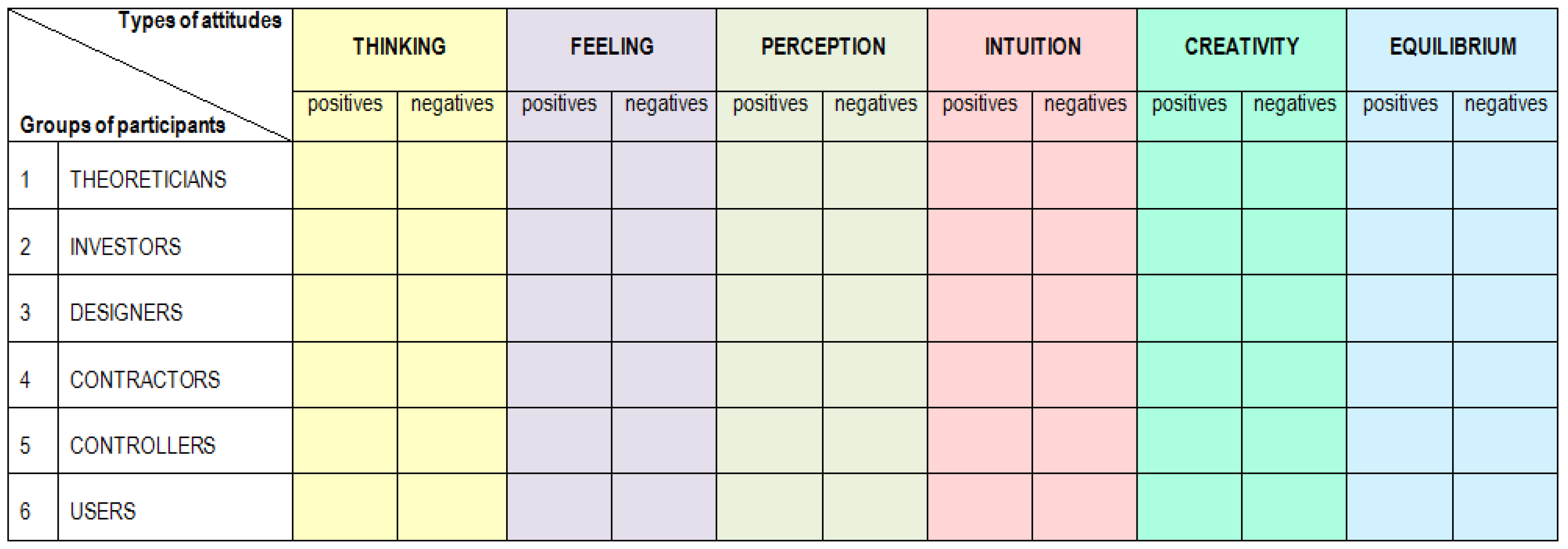
The interviews were conducted during face-to-face meetings in 2023. Each of them lasted on average about two hours. Documented statements were divided into phrases relating to a single event/feature/value. All phrases (629) were entered into Table 1. First, authors took into account the group of participants to whom a phrase was assigned (left side of the table). Then, the phrases were classified into types of values (top row). Those were based on Jung’s attitudes towards reality as Thinking, Feeling, Perception and Intuition. In the course of the research, the four basic approaches to reality and the values associated with them were juxtaposed with the experts’ statements and supplemented. The characteristics of attitudes and values was also expanded. As a result of these activities, two additional attitudes emerged: Creativity and Equilibrium.
Ultimately, 629 phrases inserted in Table 1 were subjected to further study. Based on qualitative analysis, including comparative analysis and examination of the relationships between individual phrases, a characteristic of the CIP participant groups was developed. The characteristics were supplemented with the results of quantitative analysis regarding individual groups of participants identified as per:
- the largest number of indications
- quantitative share of indications in a set
- percentage of responses in a set
- phrases linked to types of attitudes
- relationships between attitudes and related values assigned to participants of the investment process
- share of positive and negative phrases.
Further research indicated the attitudes and values emerging from the phrases analyzed. Following a discussion of the research results, the most important conclusions and observations from the research were presented.
3. Results
In the course of the study of the four attitudes: Thinking, Feeling, Perception and Intuition were enriched with additional values that are in line with those assigned to a given attitude by Jung (as presented above).
Based on the respondents’ statements, two further attitudes were identified: Creation and Equilibrium. They were described using values emerging from interviews with representative experts. What characterizes all six attitudes?
THINKING emphasizes objective assessment: “true”, “proven”, “logical” (the values described by Jung are marked in gray). It respects facts, acting in accordance with professional knowledge, law and industry standards. Thinking orders facts and phenomena according to optimal conditions, quantification, agency in light of the law and common sense (the above values are also accompanied by negatives).
FEELING subjectively decides whether something is “right” or “wrong”, important or less important. Since Jung classified values in the ethical and human sense in this group, authors added to it empathy, commitment, and acting with a mission based on social good, social justice, and feelings: love, or other sentiment, as well as negatives (e.g., greed, hypocrisy, or negligence).
PERCEPTION facilitates the awareness of the surrounding world, the events, phenomena and people through the senses, and as they are. It is about senses, hedonism, beauty and pleasure, or their opposites.
INTUITION allows for capturing patterns, meaning, significance and networks of connections in the surrounding world and also to notice cause-and-effect sequences along with the opposites of the above-described values.
CREATION is the value of creating something new for the sheer joy of the act of creation. It is the categorical imperative of a creator, searching for and opening up to “different and new”, as well as sharing one's discoveries (including the opposites of the above values).
EQUILIBRIUM is striving for harmony, choosing mature solutions, taking balanced actions, thinking and acting on many platforms, covering a wide scope, influencing the entire process, along with their opposites.
In the course of the research, 629 phrases were obtained, which were assigned to six groups of participants of the investment process. In the comparison, which took into account the number of phrases relating to individual participants (Figure 1) it can be observed that respondents paid the most attention to two groups: Designers (170 phrases) and Investors (146 phrases). The fewest phrases were devoted to Theoreticians (69).
The phrases selected in the study concerned both positive and negative values observed/experienced by the respondents (Figure 2) Overall, respondents indicated slightly more positive values than negative ones (316 phrases to 313).
The most positive phases were attributed to two groups: Investors (78 phrases) and Designers (77 phrases). The fewest phrases were associated with Users (28 phrases). On the other hand, the group with the most negative phrases was also Designers (93 phrases). The next group was Investors (68). The groups that collected the least number of negative phrases were Theoreticians (31 phrases) and Contractors (32 phrases).
The above lists of positive and negative values associated with the participants of the investment process must be supplemented with the relationships that can be observed in the individual groups of participants (Figure 3).
The chart shows that the groups where negative values dominate in terms of the number of phrases describing positive and negative values are Users (28:46), Designers (77:93), and Controllers (37:46). The participants with dominant positive values are Contractors (55:32), Investors (78:68) and Theoreticians (38:31). In terms of a ratio of positive to negative phrases, the highest was recorded for Contractors (1.72), Theoreticians (1.26), and Investors (1.18) (Figure 4).
Taking into account the number of phrases assigned to individual attitudes and values that describe them (Figure 5), the following dominate: Feeling (220 phrases) and Thinking (206 phrases). The next three attitudes are: Perception (70 phrases), Intuition (55 phrases) and Equilibrium (49 phrases). The fewest phrases were assigned to Creation (29).
Looking at the number of phrases in individual types of attitudes, a number of relationships can be observed (Figure 6). Most phrases related to Thinking were assigned to Investors and Designers, while the least to Users (16 phrases) and Theoreticians (17 phrases). Notably, the attitude Feeling is most often combined with Designers (48 phrases), Investors (47 phrases), Users (38 phrases) and Controllers (35 phrases). The participants who were assigned the fewest phrases related to Feeling were the Theoreticians (25 phrases). Perception clearly belongs to Designers (35 phrases). The largest number of phrases related to Intuition was assigned to Investors (15 phrases) and Controllers (11 phrases). Attitude Creation was the most frequently observed phrases attributed to Designers (15 phrases), and secondly, Investors (7 phrases). Attitude Equilibrium was most often combined with Investors (14 phrases), Designers (12 phrases) and Theoreticians (10 phrases).
Below is a summary of the number of phrases in each type of attitude, expressed as a percentage (Figure 7). The list below presents attitudes that significantly influence the characterization of individual CIP participants:
- Thinking is most noticeable in Contractors
- Feeling is most noticeable in Users
- Perception and Creation is most noticeable in Designers
- Intuition is most noticeable in Users
- Equilibrium is most noticeable in Theoreticians; it also constitutes a significant share in the group of Investors and Controllers.
4. Discussion
The question of values and attitudes represented by participants of the construction investment process (CIP) is linked to the view that the human factor is extremely important in this context [2], [3], [6], [7], [13]. The research results confirm this view, despite the earlier assumptions noted in the hypothesis. It assumed that that this process, being strongly linked to law, industry standards and technical sciences, will impact mainly the values associated with the Thinking approach. The remaining approaches: Feelings, Perception and Intuition will prove to be marginal. When the study was first initiated, the authors were convinced that the experts' statements would mainly highlight rational attitudes related to professional knowledge, logical thinking, facts and law. However, the research results showed how important the emotional attitude related to the right or wrong, empathy, commitment is, as well as acting with a mission based on social good, social justice, love, or sentiment. This is indicated by the percentage of phrases concerning values related to Feelings recorded in the study was higher than those related to Thinking (220:206). Therefore, it is fair to conclude that the main “human factor” in the attitudes of the CIP is the Feeling attitude. Moreover, the values associated with the Feeling attitude are not merely marginal; they are often the first to be noticed, whether in a positive or negative context.
The obtained characteristics of the attitudes of individual CIP participants is not strictly related to the problem of efficiency in the process raised by other authors [2], [4], [6], [7]. However, it can be observed that the values indicated by experts could contribute to it. This is particularly visible in the case of negative values indicated by representative experts such as: wishful thinking, conformism, reliance on routine, giving up without a fight, making significant decisions without adequate education, unwillingness to learn, failure to deliver projects according to best practices, refusal to correct mistakes, disregard for design quality, lack of broader knowledge and cause-and-effect thinking, fear of new technologies, and postponement of recommended repairs or maintenance.
Furthermore, a number of values, referring to the effectiveness of the CIP also touched on the sphere of conflicts between the CIP participants observed by other authors. [5]) [2]. These included, among others: greed, dishonesty, bending the law, manipulation, refusal to strive for agreement, cheating on costs, shifting responsibility to others, stubbornness when confronted with mistakes, underestimating opponents, triggering negative emotions, avoiding responsibility for errors, ignoring deadlines, encroaching on the areas of competence of other professionals, being aggressive towards competitors, and indulging in negative emotions and conflicts that solve nothing.
Many of the values identified by the representative experts pertain to positive traits that enhance the quality of work and, consequently, the efficiency of the CIP. They also include values associated with ensuring the high quality of the final product – the construction project, or the finished facility. These included, among others: fostering a style of understanding, thinking outside the box, employing competent professionals and respecting their opinions, promoting cooperation and communication, relying on facts and logic, clearly presenting criteria, needs, and expectations, setting clear boundaries – legal, financial, ethical, and social, possessing expert knowledge, experience, and competencies in various fields, making work more coordinated and efficient, and using the language of technology and law, along with common sense, moderation, partnership, and dialog. Although it was not the subject of the study either, CIP efficiency was also linked to the satisfaction of facility users. [8]
Many of the values described by the experts also pertain to the process itself. For example, good investors understand who their clients are and feel a sense of social responsibility toward users. They take pride in user satisfaction. A good investor respects social, cultural, and ethical values while considering the well-being of future users. Designers are attentive to people's needs; constructors have respect for users. During the constructing process Controllers safeguard security and users’ rights.
The research also drew attention to an interesting phenomenon described by other authors. It consists of transforming knowledge, principles and norms used in the designing process (i.e. professional activities belonging to the attitude Thinking ) into the feelings and emotions of users [8]. In our study, representative experts pointed out the process that takes place in the work of Designers. They “transform knowledge, emotions, experiences, sensations, intuition and creativity into real shapes and new technology”, as one of the representative experts put it. Therefore, “designers are both visionaries and engineers, creators and realists”. In addition, it has been shown that this process is preceded by a preliminary stage, where Designers themselves experience reality through their senses (Perception) and take into account values related to attitude Feeling.
The experts have also linked many values to public benefit activities, a topic also discussed by many authors. [1], [9]–[12]. These values were associated with Theoreticians who formulate a “culture of speech”, direct the style of understanding by creating ethical norms, and by going beyond their own place and time, they “see local-for-global”. These values also concerned Investors who respect social, cultural, aesthetic and ethical values, and are no stranger to acting with a mission as they think about the well-being of future users. Designers were also no stranger to public goods activities, as they respect the landscape, the place and environment, similar to Controllers who safeguard security and user rights. Last but not least, Users can fight for the issues that are important to them (e.g. global warming or social public space).
In the study, the experts pointed to a number of values that connect the CIP (and more broadly, the construction industry) with ethics [1] [5] [14]. The word “ethics” appeared many times in the experts’ statements, also in the context of understanding by creating ethical norms. The research results also noted negative values related to the lack of ethical standards among CIP participants. These included a lack of professional ethics, dishonesty, bending the law, falsifying costs, shifting responsibility to others, using misleading visuals to deceive investors and users, ignoring design quality, avoiding accountability for errors, introducing substandard materials and technologies, concealing mistakes, disregarding the consequences of their actions, breaking laws and rules, disrupting priorities, and engaging in corruption.
Considering the interesting conclusion of other authors that the CIP is a specific system of values, including ethical, created for the stakeholders themselves [14], it must be said that this research confirms it.
While research hypothesis no. 1 concerned the attitude that would be assigned the most values, hypothesis no. 2 assumed that participants who will be assigned the most favorable ratio of positive to negative phrases will be Theoreticians and Designers due to their specialized education and creative competences. However, the research results indicated that participants who had a predominance of positive phrases were Constructors (especially companies providing comprehensive services and specialist companies), in the first group (ratio 1.72), Theoreticians in the second group (1.26), and Investors in the third group (1.18). What was interesting was that the group of participants with a predominance of negative phrases included Designers with a ratio of 0.83. Last but not least were Users (0.63).
The percentage share of phrases concerning particular attitudes assigned to individual groups of participants indicates the dominant sphere of influence. It turns out that there is no leading attitude that would be most pronounced among the majority (at least four) of participants. And so, attitude Thinking is most pronounced among Contractors, Feeling among Users, Perception and Creation among Designers, Intuition among Users and Equilibrium among Theoreticians (also constituting a significant share among Investors and Controllers). It can be concluded that in terms of the values they recognize, the individual CIP participants complement each other.
Finally, the authors would like to draw attention to the views of two participants regarding their motivation, which does not concern financial gains and industry awards. Instead, it stems from the gratitude of users, expressed through simple, spontaneous “thank yous,” and, on the other hand, from their care for the spaces they inhabit. This is because it gives them the feeling that they have really done something good.
5. Conclusions
To characterize the attitudes of six groups of participants of the CIP, and the values associated with them, six groups of participants of the process were selected as a result of the research.
Also, six attitudes were formulated, which included the four indicated by Jung and two additional ones identified in the course of research. These six attitudes are assigned values described/indicated by Jung and selected in the course of research by representative experts, in the spirit of Jung.
Taking into account the initial assumption regarding the assumed advantage of attitude Thinking, it turned out that hypothesis No. 1 has not been confirmed. The most frequently indicated attitude was Feeling, and only then came Thinking.
Referring to hypothesis no. 2 regarding the largest number of positive indications, it should be noted that the largest number of them was obtained by Designers. However, considering the fact that they received the largest number of phrases and the unfavorable ratio of positive to negative phases, Designers turned out to be the most controversial group. In turn, the participants whose attitude gained the most positive image (the best ratio of positive to negative phrases) were Contractors, especially companies providing comprehensive services and specialist companies. Thus, hypothesis No. 2 was partially confirmed.
The additional attitude identified – Creation – though it did not receive many entries, remains significant. It aligns with the global trend of developing soft skills and encouraging a creative approach to problem-solving in all areas of life.
Another additional attitude Equilibrium indicates the need for an attitude of dialog, balanced judgments and messages, multi-functional attitudes, interdisciplinary knowledge, broadly understood responsibility, agency and openness to diverse views and needs in the construction investment process. The participant who is particularly predisposed to this attitude is the Investor.
In the conclusion of the research, a characteristic of attitudes of six groups of participants of the construction investment process (Investors, Designers, Contractors, Controllers, Users and Theoreticians) are presented as follows:
THEORETICIANS were the least important to the study’s respondents. On the other hand, please note that more positive than negative phrases were assigned to them (Figure 3). Theoreticians have a special position – they are the first to:
- discover new phenomena and name them (unnamed things do not exist)
- define the language to be used and formulate a “culture of speech”
- link in the path from theory to practice
- direct the style of understanding by creating ethical norms.
In addition, by going beyond their own place and time, they are able to “see local-for-global”. Thanks to the meta-view, they rise above dozens of problems to synthesize them. Being creative, they can afford to think outside-the-box.
If Theoreticians sin, they are plagued by the lack of imagination, empathy, “understanding the essence of the image,” routine, the desire for authoritarianism, and the “Besserwisser attitude”, with a scientific jargon. Their problem is also conformism, giving up without a fight, disregarding the “human factor,” intuitiveness, or beauty.
The position of the INVESTOR gives the greatest control and power over the investment process. And the greatest responsibility. Investors are a driving force, which allows them to create the framework for the project.
A good Investor acts as a “creative producer.” They know what they are doing, and why. They also know who their client is (they feel socially responsible towards users, and “are happy with their satisfaction”). The good Investor has intellect, respects social, cultural, aesthetic, and ethical values, and is no stranger to acting with a mission. They employ competent professionals and then respect their opinions.
Investors are responsible for the style of cooperation and communication (using facts and logic, and clearly presenting criteria, needs, and expectations). They set clear boundaries: legal, financial, ethical, and social. The good Investor thinks about the well-being of future users.
The problem is that with such a power over the investment process, control and enormous agency, Investors do not need to have special knowledge or authorization. The faulty logic of faulty law prevails here: “people with no adequate education decide on many important things.” Other “sins” of the Investor include greed, lies, and bending the law.
If the Investors do not want to, they do not have to strive to reach an agreement, understand technologies, or learn about the needs of users. They do what they want, because “there is no one who will stop them.” Instead of communicating, they manipulate, remain in conflict, accept pseudo-aesthetics, and place others in “feudal dependence.”
The respondents' attention was mostly focused on DESIGNERS (e.g., mainly architects, but also interior and landscape designers, as well as architects). What impressed the experts (apart from designing the adequate form, function, and usability, as repeatedly noted) was the “soul of the project”. Designers also can reveal a world of unique forms, scenery, and images. They can demonstrate an unknown reality from a perspective that would never have occurred to their audience. They can also transform knowledge, emotions, experiences, sensations, intuition and creativity into real shapes and new technology. The Designers are therefore both visionaries and engineers, creators, and realists. They are attentive to people's needs, they respect the landscape, the Place and environment (‘hug bats and salamanders’). They are interested in learning about phenomena, acquiring knowledge and experience, as well as creative thinking.
... and everything would be great if it were not for their dark side. The results of the research indicated that Designers are a quite controversial group, which has received a lot of critical opinions. Some of the Designers:
- Can, but do not want to: learn, get involved, have a mission or idea.
- Should, but do not: deliver projects according to best practices, correct their mistakes, respect experts and the needs of users, use their own resources.
… and even if they can and want to do the above, in the pursuit of earnings, they have neither time nor space for it.
- They shouldn't, but they do: over-invest, manipulate costs, shift responsibility to contractors and investors, act stubbornly when confronted with mistakes, dismiss their opponents as ignorant, follow trends blindly or resist change, take the easy route with “copy-paste” solutions, conform to investors' demands, provoke negative emotions, prioritize their own vision over the well-being of the space, use attractive visuals to deceive clients, and replace genuine talent with arrogance.
- They have to do, but ignore: obligatory supervision, quality of design, responsibility for errors; professional ethics and deadlines.
- They lack: broader knowledge, engineering sense, commitment, “the essence of their profession.”
- They exhibit inflated traits: an oversized ego, arrogance, greed, wishful thinking, and a tendency to encroach on the areas of expertise of other professionals.
The greatest positive surprise was the group of CONTRACTORS. While authors expected lots of negative feedback on this group, the Contractors (especially general contractors or highly specialized companies) received the highest percentage of positive comments. Contractors are currently at the forefront of new technologies. They have expert knowledge, experience, and competence in various areas, necessary to correct design errors, pick up work after others, and make work more coordinated and efficient. They used the language of technology and law, common sense and moderation, partnership, and dialog. Their path to success is cooperation and respect (for themselves and work, for the investors, employees, users, and for other professionals). They are creative and flexible in finding optimal solutions.
Among the negatives, in some cases, their lack of professionalism in terms of knowledge and competence stands out. Next is fear of new technologies, failing to fulfill contracts, ignoring the blueprints by introducing poor quality materials and technologies. Respondents spoke of a “culture of greed” that pushes Contractors to be dishonest, conceal mistakes, ignore the consequences of their actions and act aggressively towards competitors.
CONTROLLERS, due to their professional knowledge and experience, are able not only to control the quality of the work, but also to be “a bridge” between the investor and the contractors. They speak the language of facts: they demand facts, rely on facts, score points according to facts, and are relentless in this respect. They not only evaluate but also propose pragmatic solutions to problems. In their case, the values associated with Intuition, especially cause-and-effect thinking, are not just an advantage, but their essential attribute (please note that in Jung's theory described in the introduction, the "non-judgmental" character of Intuition was clearly emphasized. Nevertheless, Jung himself wrote about the possibility of combining two or more approaches to reality in the human psyche. In the case of Controllers, the essence of their professional attitude required the support of the Intuition attitude by the Thinking attitude). During the constructing process, Controllers safeguard security, and users’ rights. To perform their task, they need a balanced personality and high personal culture.
The shortcomings of this group result often from the lack of professional knowledge, competence, imagination, “unwillingness to learn” new things, and finally – lack of professional ethics. This results in bending or even breaking the law and rules, disruption of priorities, corruption, and lack of respect for oneself and others.
USERS have a lot of faults (the largest percentage of negative traits). In the opinions of our experts, they lack basic knowledge on technology, aesthetics, spatial order, and economics. They also show “mental laziness” to learn new things and indulgence in bad emotions and conflicts that solve nothing.
Users are stuck in a “culture of shortage,” as demonstrated in the consent to cheap materials and short-lasting technologies. It also shown in a lack of imagination regarding the consequences of one's actions, e.g., postponing recommended repairs or maintenance works.
However, it turns out that Users also have some strengths: first of all, “the power to make things happen”, because Users can fight for the issues that are important to them. Many users also have a lot of common sense and good ideas. Their creativity and “collective wisdom” are revealed during workshops conducted by specialists. It also turns out that users can encourage other participants in the process (Investors, Designers and Contractors) by showing gratitude. This happens when Users send other CIP participants their thanks, honor them with awards, or spontaneously take care of places and facilities created for them.
6. Summary
The above study is not a global report. It is exploratory in nature and merely draws attention to certain phenomena. Authors hope the results of the study will become a starting point for discussion on the effective construction investment process for public benefit.
The research presented, as mentioned above, only outlines the problem of the importance of values in the scientific, design and implementation processes related to construction investments. Therefore, research into professional ethics should be continued, with studies focusing on values for each of the previously described participants in the investment process. We also propose research into the contemporary essence of values associated with Carl G. Jung’s particular approaches to reality.
| 1 | An example of a contemporary yet unusual application of Jung's psychological theories can be seen in issues related to the transcendent function of the psyche, which influence the appeal of assuming roles in board games [22]. Another bold attempt at adapting Jung's theory of myths and archetypes is viewing ufology through the lens of a fledgling mythology [23]. |
Author Contributions
Conceptualization, Agnieszka Kępkowicz; methodology, Agnieszka Kępkowicz; software, Agnieszka Kępkowic.; validation, Dorota Mantey.; formal analysis, Agnieszka Kępkowicz; investigation, Agnieszka Kępkowicz; resources, Agnieszka Kępkowicz; data curation, Agnieszka Kępkowicz; writing—original draft preparation, Agnieszka Kępkowicz; writing—review and editing, Agnieszka Kępkowicz; supervision, Agnieszka Kępkowicz, Halina Lipińska; project administration, Agnieszka Kępkowicz; funding acquisition, Halina Lipińska.
Funding
This research received no external funding.
Institutional Review Board Statement
Not applicable.
Informed Consent Statement
Informed consent was obtained from all subjects involved in the study.
Data Availability Statement
Not applicable.
Acknowledgments
We would like to thank His Magnificence the Rector of the University of Life Sciences in Lublin, Prof. Krzysztof Kowalczyk, for the subvention, thanks to which this publication will enter the world community.
Conflicts of Interest
The authors declare no conflicts of interest.
References
- Roukoz, K.; Ersenkal, D. Environmental, Social and Governance-related Challenges in the Construction Industry (CIC 2023). 2023. [Google Scholar] [CrossRef]
- Grimble, R.; Chan, M.-K. Stakeholder analysis for natural resource management in developing countries. Nat. Resour. Forum 1995, 19. [Google Scholar] [CrossRef]
- Karlsson, B.; Kurkkio, M.; Hersinger, A. The role of the controller in strategic capital investment projects: bridging the gap of multiple topoi. J. Manag. Gov. 2019, 23. [Google Scholar] [CrossRef]
- Nnaemeka J, A.; Kalu A, A. A critical analysis of unethical professional practices in the construction industry in Southeast Nigeria. Res. J. Environ. 2021. [Google Scholar] [CrossRef]
- Deep, S.; Gajendran, T.; Jefferies, M. A systematic review of ‘enablers of collaboration’ among the participants in construction projects. Int. J. Constr. Manag. 2021, 21. [Google Scholar] [CrossRef]
- Magomedov, M.G.; Pavlyuchenko, E.I. SYSTEMIC APPROACH TO INTERACTION MANAGEMENT OF PARTICIPANTS OF THE INVESTMENT PROCESS IN CONSTRUCTION. Her. Dagestan State Tech. Univ. Tech. Sci. 2018, 45. [Google Scholar] [CrossRef]
- Kishchenko, T. Research of infrastructure of investment and construction process. Ways to Improv. Constr. Effic. 2022, 1. [Google Scholar] [CrossRef]
- Usable, K.I. How do you feel? Understanding emotions to craft satisfying experiences. Part of KeepItUsable LTD registered 14090311. 2019. Available online: https://www.keepitusable.com/blog/understanding-emotions-to-craft-satisfying-experiences/ (accessed on 16 March 2023).
- Gatersleben, B.; Murtagh, N.; Abrahamse, W. Values, identity and pro-environmental behaviour. Contemp. Soc. Sci. 2014, 9. [Google Scholar] [CrossRef]
- Wang, J.; Aenis, T. Stakeholder analysis in support of sustainable land management: Experiences from southwest China. J. Environ. Manage. 2019, 243. [Google Scholar] [CrossRef] [PubMed]
- Brown, G.; de Bie, K.; Weber, D. Identifying public land stakeholder perspectives for implementing place-based land management. Landsc. Urban Plan. 2015, 139. [Google Scholar] [CrossRef]
- Kang, J.; Tong, C.; Dantong, T. The Theory, Practice and Improvement in Providing ‘Rights – Ethical Public Goods’ with PPP. Int. Res. J. Econ. Manag. Stud. 2022, 2. [Google Scholar] [CrossRef]
- Uvarova, S.S.; Orlov, A.K.; Kankhva, V.S. Ensuring Efficient Implementation of Lean Construction Projects Using Building Information Modeling. Buildings 2023, 13. [Google Scholar] [CrossRef]
- Freeman, R.E. Strategic management: A stakeholder approach; 2015. [Google Scholar] [CrossRef]
- Jung, C.G. Analytical Psychology: Its Theory & Practice (The Tavistock Lectures), 2nd ed.; Routledge, 2014. [Google Scholar]
- Jung, C.G. Approaching the Unconscious. In Man and his symbols; 1973; pp. 43–139. ISBN 0-385-05221-9. [Google Scholar]
- Polish Dictionary. Available online: https://sjp.pwn.pl/slowniki/podej%C5%9Bcie.html (accessed on 24 September 2024).
- Leone, C. A review: Eagly, A.H., & Chaiken, S. (1993). The psychology of attitudes. New York: Harcourt, Brace, & Janovich. Criminol. Crim. Justice 1995. [Google Scholar]
- Rosenberg, M.J.; Hovland, C.I.; McGuire, W.J.; Abelson, R.P.; Brehm, J.W. Attitude organization and change: An analysis of consistency among attitude components. (Yales studies in attitude and communication.), Vol. III; 1960. [Google Scholar]
- Poland, P.O. Ustawa Prawo budowlane (Dz.U. nr 89/1994, poz.414 z późniejszymi zmianami). Dz.U. z 2024, poz.725, 834, 1222 vol. Dz.U.nr 89. 2024. [Google Scholar]
- Holy Bible: English Standard Version (ESV); Collins, 2012.
- Stulika, O. Board Role Games as a Factor in the Development of the Transcendent Function of the Psyche. Visnyk V. N. Karazin Kharkiv Natl. Univ. A Ser. Psychol. 2020. [Google Scholar] [CrossRef]
- Morgan, E. Sacred Skies: UFOs and the Religious Function of the Psyche. Psychol. Perspect. 2023, 66. [Google Scholar] [CrossRef]
- Kępkowicz, A.; Lipińska, H. Standing up for public benefit: an exploration of the attitudes of investment process participants. In Who will guard the guards themselves?. In Proceedings of the 3th Global Summit on Advances in Earth Science and Climate Change, Barcelona, Spain, 26-27 September 2024. [Google Scholar]
Figure 1.
Groups of participants most frequently described by representative experts.
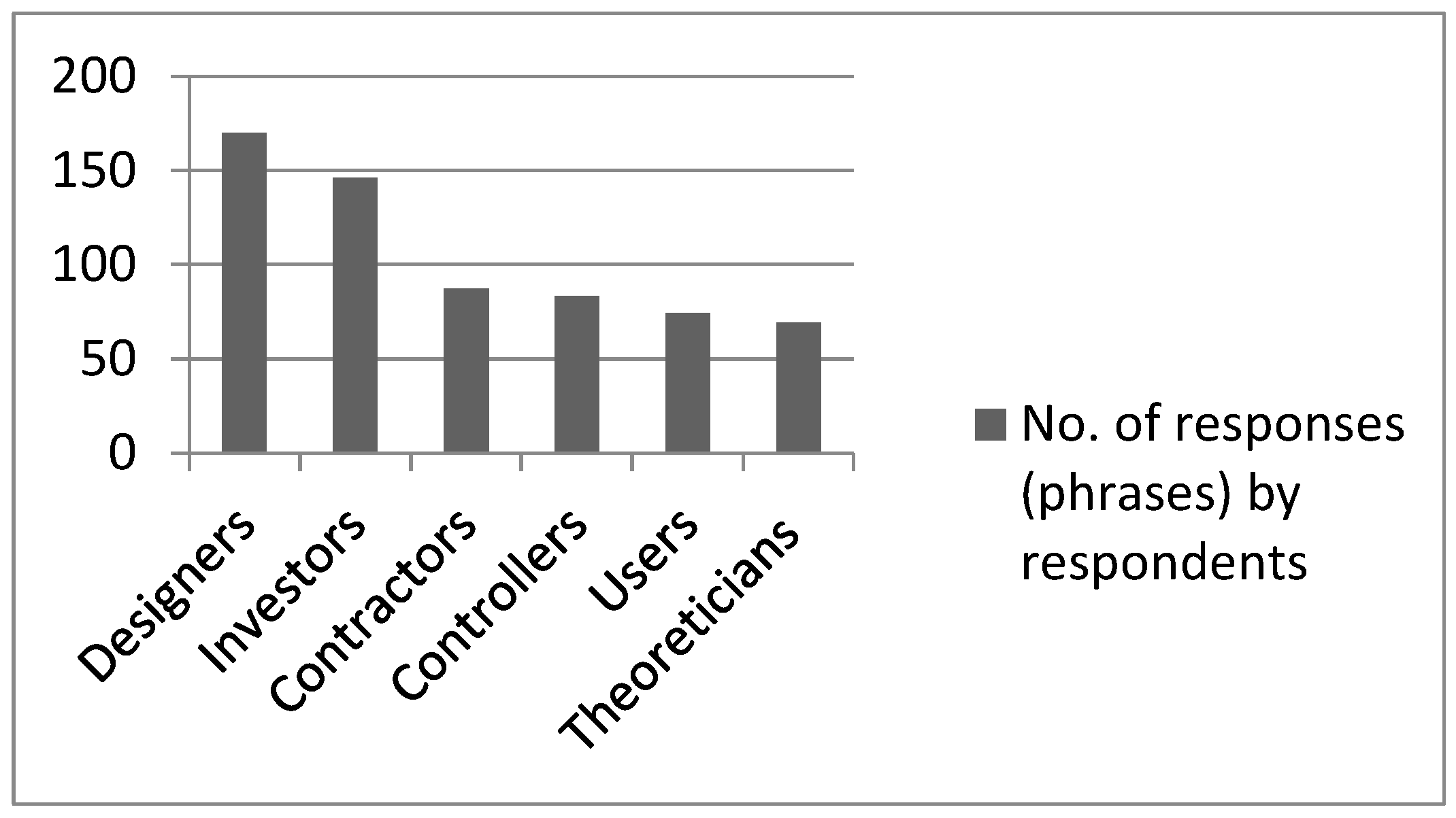
Figure 2.
Quantitative ratio of positive and negative indications (phrases) in total.
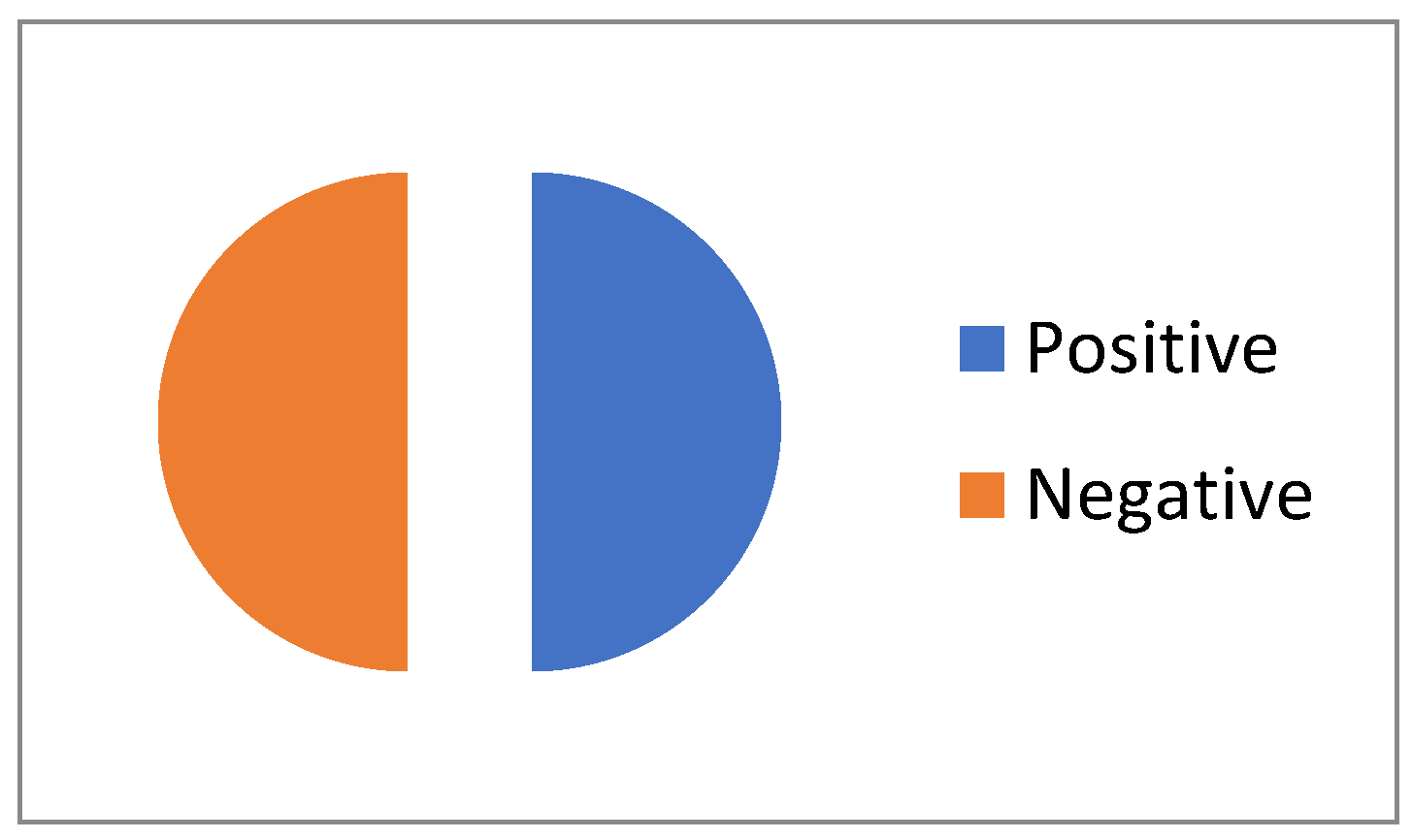
Figure 3.
The number of positive and negative phrases in relation to particular groups of participants.
Figure 3.
The number of positive and negative phrases in relation to particular groups of participants.
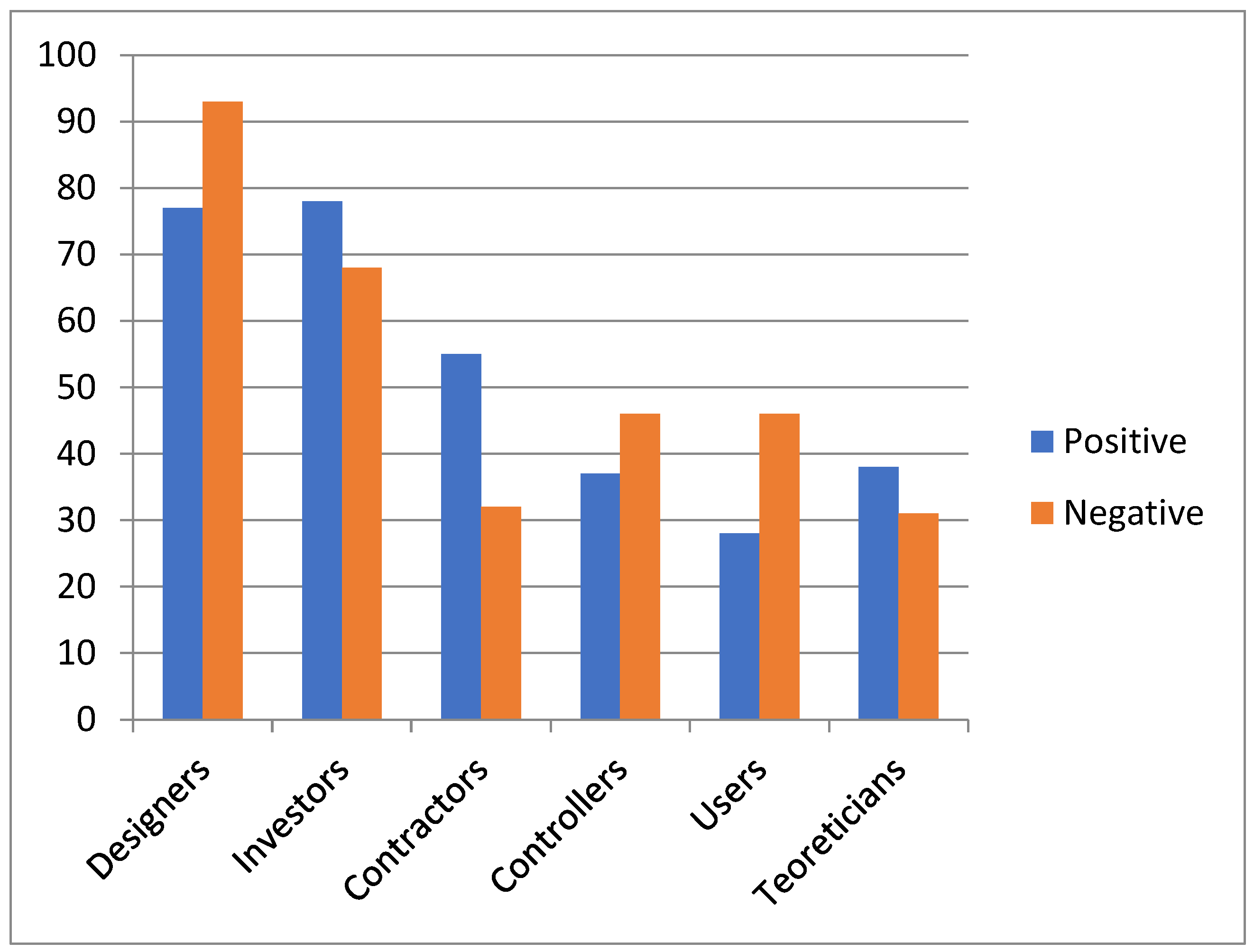
Figure 4.
The most and the least favorable ratio of positive to negative phrases relating to particular groups of participants.
Figure 4.
The most and the least favorable ratio of positive to negative phrases relating to particular groups of participants.
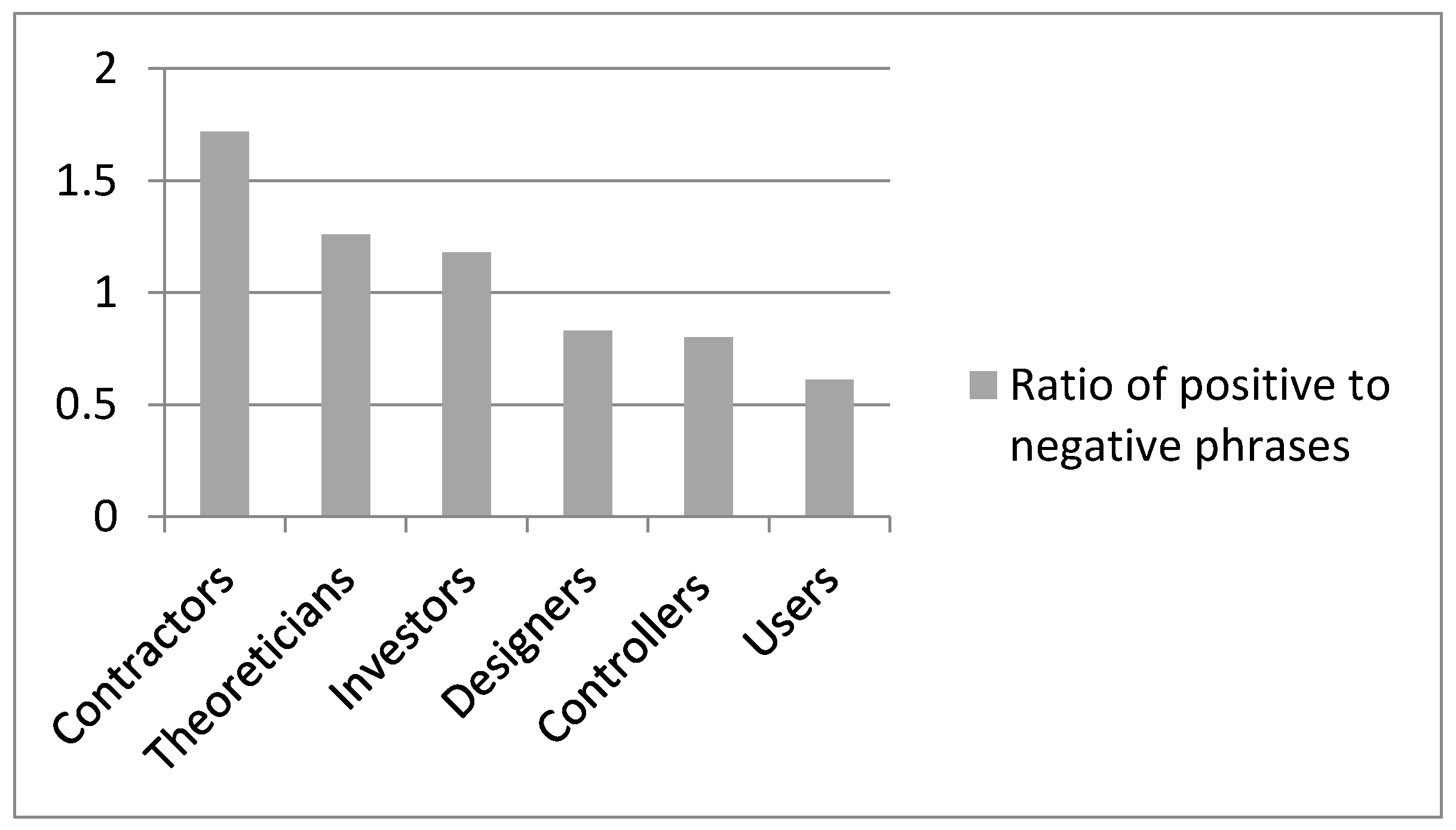
Figure 5.
No. of phrases associated with particular attitudes and types of values associated with them.
Figure 5.
No. of phrases associated with particular attitudes and types of values associated with them.
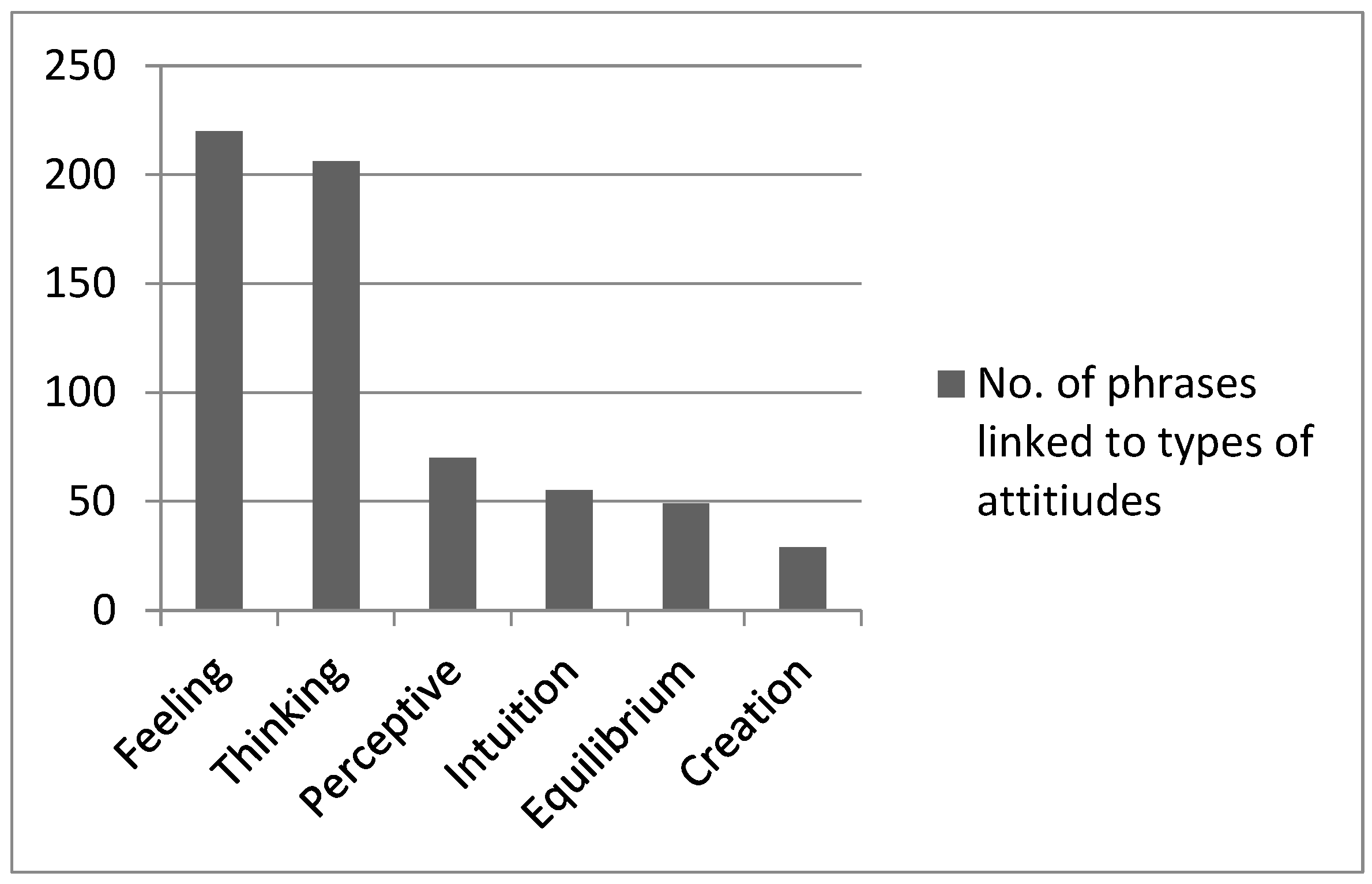
Figure 6.
Relationships between attitudes and values related to them assigned to participants of the CIP (no. of phrases in a quantitative ratio).
Figure 6.
Relationships between attitudes and values related to them assigned to participants of the CIP (no. of phrases in a quantitative ratio).
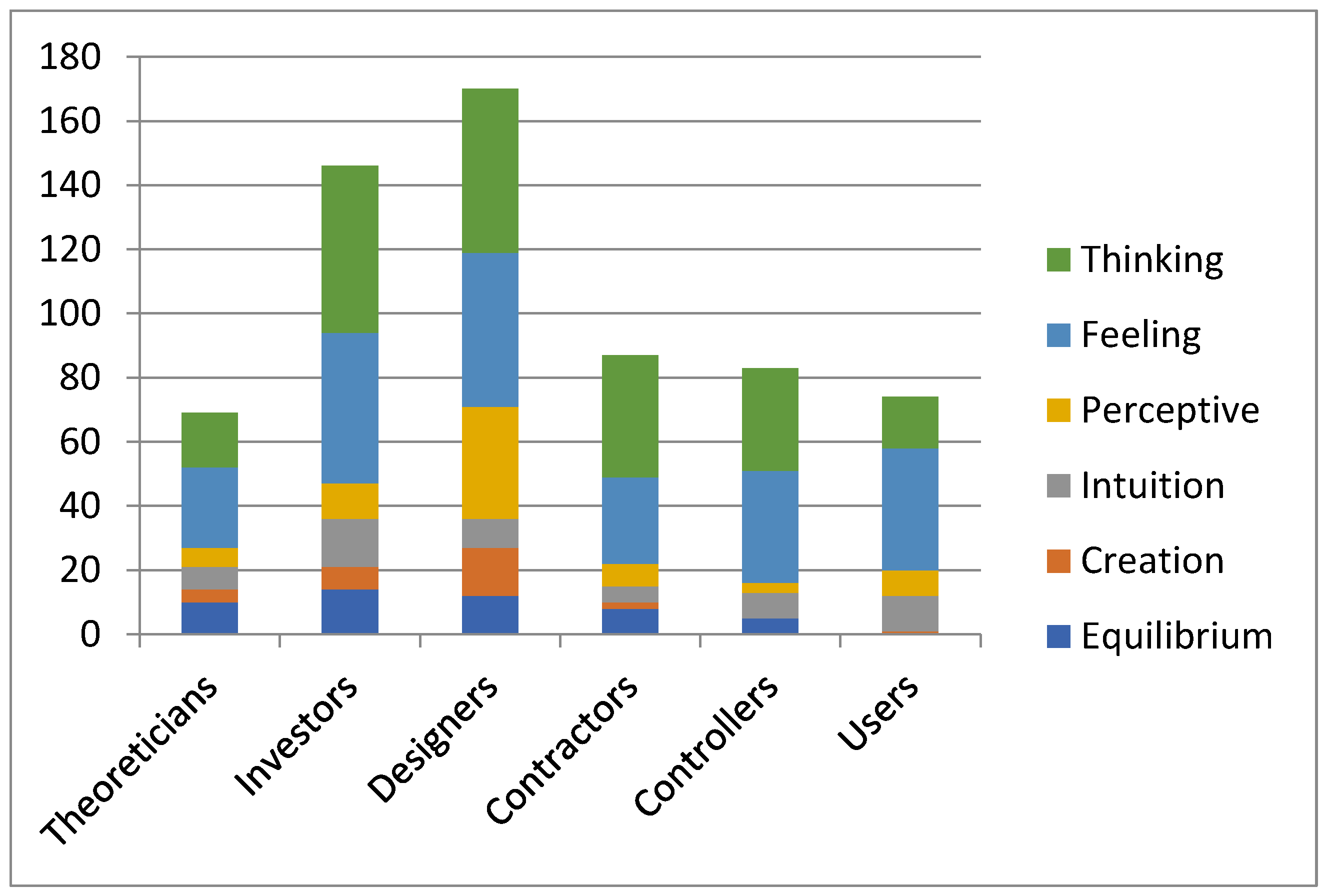
Figure 7.
Relationships of attitudes and related values assigned to participants of the investment process (number of phrases in percentage).
Figure 7.
Relationships of attitudes and related values assigned to participants of the investment process (number of phrases in percentage).
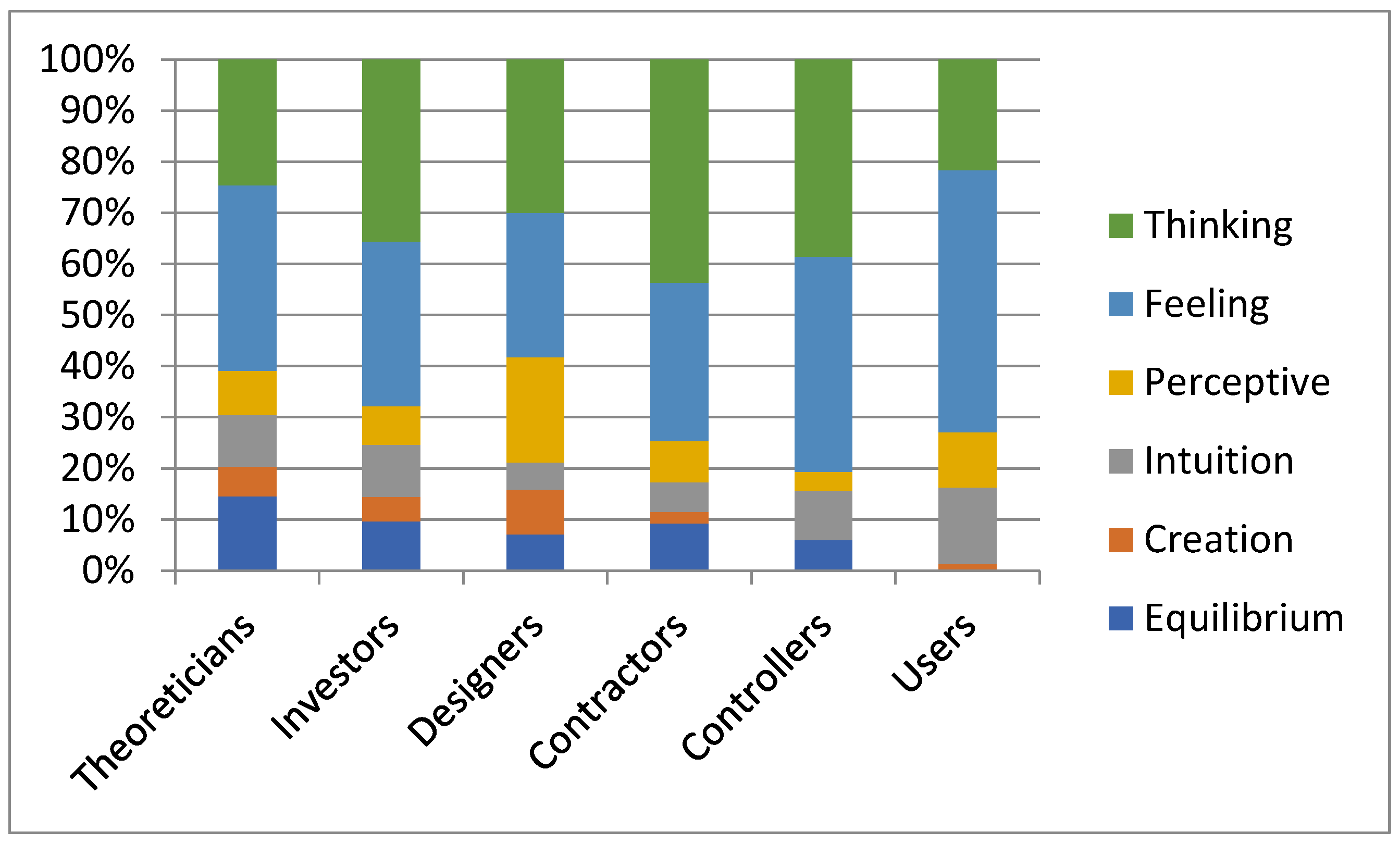

Table 1.
Arrangement of the collected responses.
Disclaimer/Publisher’s Note: The statements, opinions and data contained in all publications are solely those of the individual author(s) and contributor(s) and not of MDPI and/or the editor(s). MDPI and/or the editor(s) disclaim responsibility for any injury to people or property resulting from any ideas, methods, instructions or products referred to in the content. |
© 2025 by the authors. Licensee MDPI, Basel, Switzerland. This article is an open access article distributed under the terms and conditions of the Creative Commons Attribution (CC BY) license (http://creativecommons.org/licenses/by/4.0/).
Copyright: This open access article is published under a Creative Commons CC BY 4.0 license, which permit the free download, distribution, and reuse, provided that the author and preprint are cited in any reuse.


