

Submitted:
02 February 2025
Posted:
04 February 2025
You are already at the latest version
Abstract
Tablets have long been employed across a variety of educational domains. Given the ongoing debate regarding their effect on skill and knowledge development, especially among very young learners, a study was conducted to evaluate their effectiveness against conventional educational materials. The study involved 76 kindergarten students, employing a between-subjects design to investigate basic literacy skills. These skills included letter name identification and letter sound recognition. To measure knowledge acquisition, evaluation tests were administered, and questionnaires were used to collect data on students' motivation, engagement, and enjoyment. The findings revealed that tablets significantly enhanced the targeted skills compared to conventional materials. Tablets were also rated higher in enjoyment, engagement, and motivation. Importantly, these factors significantly impacted learning outcomes with tablets, while they had no effect in the case of conventional materials.
Keywords:
kindergarten students
; letter name identification
; letter sound recognition
; literacy skills
; tablets
1. Introduction
From a young age, children become acquainted with reading and writing processes even before physically interacting with a text and decoding its content; in essence, before becoming literate. Literacy can be defined as the ability to read and write [1]; both are considered essential life skills. As children progress from infancy, they embark on a journey toward literacy as their literacy skills naturally evolve [2]. Early literacy is related to the initial experiences that lay the groundwork for reading and writing. This early or emergent literacy is a crucial developmental phase where young children progressively grasp the functionalities of both spoken and written language [3]. During this stage, children are introduced to books, games, and activities designed to familiarize them with letters, sounds, and language; in that way, they acquire essential skills prior to entering formal education [4].
Emergent reading, defined as the process by which children begin to associate printed words with their meanings, starts early in a child's life and progresses until they achieve conventional reading and writing skills [5]. Key elements of emergent reading development encompass alphabet knowledge, print concepts, oral language skills, and phonological awareness [6]. Phonological awareness involves the ability to recognize and manipulate sound segments in spoken language, while phonics instruction deals with the correspondence between sounds and letters in written language. Similarly, phoneme identification, or the recognition of individual letter sounds (phonemes), is essential [7]. Letter identification, the ability to identify the letters of the alphabet, is fundamental to the above process [5]. As foundational skills, letter identification and letter sound recognition are critical for establishing the ability to read and write, allowing children to decode words and comprehend their meanings. They are considered vital for early literacy, significantly impacting students' future reading performance [8]. In essence, these skills are critical for transitioning from the stage of learning to read to that of reading to learn. Consequently, the enhancement of these skills has become a central priority in early childhood education.
The swift advancement of technology has undeniably created boundless opportunities for educators and students alike. The modern educational landscape now offers limitless possibilities for extending the learning process beyond the confines of the traditional classroom. Participants have unprecedented access to global knowledge through suitable digital devices [9]. In fact, the integration of technology into kindergarten education has demonstrated significant promise in supporting the development of children’s literacy skills. A range of technological interventions, including video lessons, augmented reality (AR), and digital applications, have been utilized. These tools effectively engage young learners, while delivering measurable enhancements in their abilities (e.g., [10,11]).
On the other hand, mobile devices such as tablets and smartphones eliminate the need for fine motor skills required for operating computers, due to their intuitive tactile interfaces that rely on simple finger-based operations, characterized by actions like tapping and swiping. This user-friendliness enables young children to use them with ease [12]. Because of that, they have facilitated young children to early immerse in the digital realm [13]. Additionally, tablets play a supportive role in developing media competency, an essential skill for effective navigation of the digital world [14]. In this respect, their integration into early childhood education is part of a larger movement towards ICT-based learning models, which are considered instrumental in preparing learners to adapt to a rapidly evolving technological landscape [15]. Their integration into this educational level has been investigated across various fields, such as phonics, natural sciences, and mathematics (e.g., [16,17], yielding mixed yet predominantly positive results. Tablets provide an engaging platform for young children, enhancing their motivation and enjoyment, and can be as effective as traditional methods when coupled with appropriate guidance.
However, integrating tablets into early childhood education, presents challenges despite their potential benefits. In addition, their efficacy in educational settings depends on several critical factors, including the role of teacher guidance and the design of educational applications. As it will be further elaborated in the coming sections, the above also hold true in the context of using tablets for enhancing kindergarten students' basic literacy skills such as letter name identification and letter sound recognition.
Considering these factors, a study was designed and conducted to explore the impact of tablets on kindergarten students' basic literacy skills. It specifically focused on letter name identification and letter sound recognition skills. The effectiveness of tablets was assessed in comparison to conventional educational materials. Furthermore, a comparative analysis of the students' perceptions and attitudes was performed. Information concerning the study's design, methodology, and results are provided in the following sections.
2. Background
2.1. Very Young Students and Emergent Literacy Skills
As mentioned in the "Introduction," early literacy encompasses the reading and writing knowledge and skills that young children acquire before attaining conventional literacy, forming the basis for advanced literacy abilities [18]. It comprises foundational skills such as oral language, letter recognition, phonological awareness (the ability to identify, hear, and manipulate individual sounds in spoken words), alphabet knowledge, and understanding print concepts like text directionality [19], all essential for children's development [20]. Importantly, early literacy extends beyond mere reading and writing; it also involves cultivating a positive attitude toward literacy and learning. Early literacy skills equip young children for reading and writing and are crucial for establishing a base for formal education, bridging the gap between emergent and conventional literacy. As such, this phase is generally relevant to preschool and early primary school years.
In terms of reading, children progress through several stages of development, as outlined by [21], who identified these phases as the emergent reader, the beginning reader, the fledgling reader, the transitional reader, the fluent reader, and the independent reader. According to her, early emergent readers are individuals who are not yet reading and possess minimal knowledge of the alphabet. These learners are typically in pre-kindergarten to mid-kindergarten and can recognize fewer than half of the alphabet. Emergent readers exhibit limited to no proficiency in recognizing high-frequency words and struggle with text tracking, accompanied by a lack of phonological awareness. As these children enhance their understanding of the alphabet and begin to develop phonological awareness, understanding of print concepts, the ability of tracking print, and the ability to recognize high-frequency words, they transition into the emergent reader category [6,21]. Once they have achieved mastery in letter recognition, phonological awareness, and print concepts, and are progressing towards greater comprehension skills, they are classified as beginning readers. Due to individual developmental differences, a kindergarten class may consist of early emergent readers up to beginning readers.
Early literacy skills serve as indicators of future success in reading and writing. In fact, empirical research demonstrated that early proficiency in these areas is a strong predictor of subsequent reading success and overall literacy achievement [6,8]. For instance, it was pointed out that fundamental skills essential for learning to read, like phonological awareness, develop early in life and are indicative of future reading outcomes [22]. Researchers also emphasized the strong basis for oral language, print concepts, phonological awareness, and alphabet knowledge as predictors of early literacy success [6]. Phonological awareness, in particular, was highlighted in the literature as a significant predictor of future reading success, making it an essential focus area for educators [22]. Furthermore, it was noted that phonological awareness (and automatized naming) were moderate predictors of conventional literacy outcomes [23]. The authors also demonstrated that there is a significant correlation between the reading skills developed in preschool or kindergarten and subsequent reading achievements. The ability to recognize letters is a strong indicator of kindergarten year-end accomplishment [5]. Moreover, the proficiency in reading and writing by first grade can often be predicted by the quantity of alphabet letters students learned in kindergarten [24].
Several studies have concentrated on determining which emergent literacy skill best predicts future literacy success. Phonological awareness and written language awareness have been identified as particularly crucial components in models of identification and early intervention [18]. According to others [25], alphabet knowledge and phonological awareness were the two most crucial emergent reading skills for pre-kindergarten children. Others concluded that the ability to recognize letters significantly enhanced children's understanding of the specific relationship between letters and phonemes [5]. It was also suggested that recognizing letter names and letter sounds account for a significant portion of the variability in literacy skills [26]. Others indicated that letter-sound knowledge facilitated children's understanding of the alphabetic principle (the recognition that language comprises discrete sounds and that letters systematically represent these sounds), helps them to accurately decode words, and forms the foundation for phonics instruction, requiring children to apply letter-sound associations to comprehend increasingly complex spelling patterns [27]. The importance of alphabet recognition cannot be overstated, because it involves critical foundational skills. As such, teaching children to recognize, identify, and name lowercase letters, as well as match upper- and lowercase letters is quite important [24]. Given the above it seems that letter name identification and letter sound recognition are crucial for developing phonological awareness, which, in turn, is essential for achieving reading fluency and comprehension [26].
As literacy skills are fundamental components of our world, there are both societal and educational pressures on children to not only read proficiently but to do so at an early age. On the other hand, emergent readers require support in acquiring literacy skills such as letter identification, letter sound recognition, and the functioning of print [28]. Thus, ensuring that young children are equipped with the necessary literacy capabilities to be school-ready is absolutely necessary. Although full-text, fluent reading is generally achieved at the lower grades of primary school, the development of emergent reading skills at the kindergarten level is crucial for initiating the reading process. In kindergarten education, among other objectives, students must demonstrate letter-sound knowledge by identifying and naming uppercase and lowercase letters, producing correct sounds for the majority letters, and understanding that a sequence of letters corresponds to a sequence of sounds. Furthermore, they are expected to apply letter-sound correspondence proficiently when reading and writing [29].
The cultivation of such skills can be significantly enhanced through educational interventions and tools, which have been proven effective in augmenting children's literacy outcomes. Research indicated that behavior modification strategies have a substantial positive impact on enhancing letter recognition skills [30]. Furthermore, it has been observed that children who engage in repetitive activities focusing on naming and writing the alphabet without meaningful context are unlikely to retain or effectively apply their knowledge of the alphabet over time [6]. The use of visual cues, such as images, supports the process of writing [31]. Previous studies have demonstrated that play-based, developmentally appropriate interventions focused on letter recognition and phoneme identification can significantly enhance the emergent reading skills of young children, providing them with a solid foundation for becoming proficient readers [22]. Letter sound recognition should concentrate on auditory skills, enabling children to hear and replicate sounds before linking them to written letters [32]. This approach aligns with the natural developmental sequence in literacy acquisition [33]. Multisensory interventions, such as phonemic awareness activities led by teachers and parents and multi-sensory games, have demonstrated effectiveness in enhancing letter sound recognition skills. These methods offer engaging and interactive learning experiences that reinforce emergent reading abilities [34]. It has to be noted that it is equally important to consider individual differences among children, such as cognitive abilities and socio-economic status, which can impact the acquisition of these skills [25,33].
2.2. Tablets, Very Young Students, and Literacy Skills with a Focus on Letter Name/Sound Identification
ICTs have been widely used in kindergarten education in the context of fostering literacy skills. For instance, online testing platforms have been used to assess phonological awareness, including both syllable and phoneme recognition [35]. Game-like software applications have proven particularly beneficial in improving phonological awareness and letter-sound knowledge, especially in the case of socioeconomically disadvantaged students [36]. Moreover, Android-based applications utilizing AR have successfully facilitated letter identification skills. The interactive nature of AR technology enhances engagement and learning outcomes, although low-spec devices may encounter technical challenges [37]. Automated speech recognition systems have been employed to train phonological awareness, achieving heightened accuracy in discerning children's speech patterns [38]. Furthermore, technological interventions utilizing educational robots, have effectively promoted letter-naming and phoneme detection skills, particularly benefiting children at risk of learning disorders [14]. These tools underscore the critical role of integrating technology into educational practices to enhance phonological skills.
In recent years, a novel educational approach that integrates technology has captured the interest of researchers and educators alike, that of mobile learning. This approach leverages mobile devices such as smartphones, tablets, and other portable technologies to facilitate learning across various contexts. These devices allow for learning to occur anytime and anywhere, providing flexibility and accessibility that traditional learning environments may lack. Mobile learning supports both formal and informal educational experiences, enabling personalized and self-directed learning paths [39]. In fact, the use of tablets has been associated not only with better learning outcomes but also with higher levels of motivation and enjoyment in learning activities. This is particularly evident in the context of natural sciences, where students using tablets reported greater enjoyment compared to those using conventional methods [16]. The interactive and tactile nature of tablets makes learning more engaging for young children, fostering active participation in educational activities [40]. The use of tablets in creative activities, such as storytelling, drawing, and music creation, has been shown to enhance young children's creativity [41]. Studies have reported positive effects of tablet use on problem-solving skills and self-efficacy among young learners, suggesting that these devices can support cognitive development in early childhood [40].
Various studies have investigated the application of tablets for supporting emergent literacy development such as letter identification, phonological awareness, and writing among kindergarten students, underscoring both the advantages and challenges of incorporating this technology into early education (e.g., [42,43]). In terms of learning outcomes, the results were mostly positive. The effectiveness of these tools was often mediated by the type of multisensory experiences and adult scaffolding provided [42]. For example, some studies found that tablet-assisted literacy instruction can be as effective as conventional methods, especially when guided by teachers [44]. In another study involving preschool children, a trend was observed where exclusive tablet users showed enhanced phonological awareness, although these improvements were not statistically significant when caregiver characteristics were considered [45]. The use of iPads in literacy instruction has been associated with gains in phonemic awareness and alphabetic principles, although the impact varied based on demographic and instructional variables [46]. A systematic review of the literature indicated that mobile applications generally have positive effects on literacy development, though the design features of applications and the role of adults are crucial factors [40].
Yet, it can be supported that the literature in this field is, somehow, limited. Indeed, in a recent systematic review of the literature [47], the authors examined 668 studies involving children aged 4-12 in mainstream primary, elementary, and kindergarten education settings. These studies focused on the use of mobile devices, to enhance literacy or numeracy learning. Out of the total, only 18 studies met the criteria for inclusion. The findings revealed a positive, statistically significant combined effect, indicating that children participating in math or literacy interventions using mobile devices achieved better numeracy or literacy outcomes compared to those using alternative devices (e.g., laptops or desktop computers) or engaging in conventional classroom activities without such devices. Yet, the authors suggested that these results should be approached with caution due to the risk of bias assessments. The review highlighted the necessity for more rigorous research to determine what works best, under what circumstances, and for which groups, regarding the use of mobile devices to support learning.
In another recent literature review addressing the integration of tablets in phonological awareness and phonics instruction [48], the researchers identified just 14 studies conducted between 2010 and 2022 that met their inclusion criteria. They concluded that tablet-assisted instruction can be as effective as traditional methods, offering students a distinct learning advantage under the guidance of educators. Furthermore, the study highlighted several innovative and inclusive features that tablet-assisted learning can offer young children, including self-paced learning, game-based experiences, and one-on-one instruction. Despite these promising findings, the authors noted that the application of tablet-assisted phonological awareness and phonics instruction remains in its early stages, while the current evidence is limited in demonstrating how tablets can be fully integrated into the curriculum for phonological awareness and phonics. Therefore, they also suggested that further empirical research and insights into educators' experiences are essential to fully understand the educational potential of these technologies in phonological awareness and phonics instruction.
In the context of letter name/sound recognition and phonological awareness, educational applications and tablets have been effective in engaging very young students, and motivating them to practice these skills [49]. Other studies focusing on preschoolers involved in similar activities, demonstrated that tablets' tactile interface also facilitated collaboration among students [49] and interactive learning, enhancing emergent literacy skills [42,43]. Similar were the results of another study on iPad integration in kindergarten, which highlighted the importance of creation-based tasks, to engage students in digital literacy practices and foster agency and collaboration [50]. In addition, the tactile feedback from tablets can make writing exercises more engaging for young learners, potentially leading to increased motivation and practice [41]. Self-directed learning enhanced with game elements and customized applications significantly boosted learning outcomes [44]. It was also found that preschoolers who frequently used tablets at home for writing demonstrated a superior understanding of letter names and sounds compared to their peers who used tablets less often [51]. Tablets, with their multimodal features, offer children an alternative method to acquire skills and knowledge by engaging with interactive activities and receiving visual and audio feedback from applications [52]. Their interactive nature allowed children to engage with letters and sounds in a multisensory manner, which can facilitate learning and knowledge retention [43].
Interestingly, research indicated that young children’s knowledge of the alphabet improved through tablet use, even when the devices were not employed for language related activities per se [53]. This suggests that children may enhance their alphabet knowledge simply by using tablets, which often requires the use of partial alphabet cues, such as initial letters, to locate and operate applications.
Nevertheless, tablets' success in improving letter and sound recognition skills depends on several factors, including the role of teacher guidance and the quality of educational applications (e.g., [42,45]). Teachers have integrated the use of tablets to facilitate interaction with mobile learning applications, focusing on phonological awareness and phonics [54,55]. Studies indicated that teacher guidance is critical in maximizing the educational benefits of applications, and their involvement is essential in directing students' use of tablets to ensure optimal learning outcomes [44]. They also play a pivotal role in fostering media competence, ensuring that technology enhances rather than distracts from learning [14]. Therefore, the integration of tablets in education should be complemented by teacher-led instruction to effectively support the development of phonological awareness and phonics skills [44]. Yet, educators face the challenge of integrating tablets into curricula while adhering to educational standards and maintaining a play-based learning environment. Thus, integration requires balancing digital and conventional teaching methods effectively [56].
Moreover, the effectiveness of tablets in literacy education depends on the quality of the applications utilized. Not all applications are designed with educational goals in mind, which can hinder learning outcomes [43]. Phonological awareness instruction should involve clear explanations of what students are required to do, supported by models or examples, and manipulatives that represent sounds. It should also offer ample opportunities for students to engage in practice through interactive activities [8]. Similarly, effective phonics instruction should systematically introduce letter-sound correspondences in a logical sequence, provide practice with reading words both in isolation and within context, and ensure frequent and rapid practice [8]. When tablets serve as the instructional medium, it is imperative that these recommended practices are preserved. Applications should incorporate these methodologies, presenting knowledge and skills in a manner that is both developmentally appropriate for learners and accurate in terms of content [57]. Thus, it is essential to select high-quality educational applications to promote literacy skills effectively [43,58]. The effectiveness of tablets can also be influenced by the context in which they are used, further highlighting the need for careful selection and integration of this technology in educational settings [40,43].
While these devices can enrich learning experiences and boost motivation, they also raise concerns related to developmental, educational, and social aspects. The use of stylus and touch interfaces can help children practice writing in a digital format, which may complement traditional handwriting practices [42,59]. However, the use of a stylus introduces challenges due to the slippery surface, potentially hindering motor control and negatively impacting writing performance. In contrast, traditional handwriting with a pencil has been shown to be more effective in enhancing letter identification and visuospatial skills, though keyboard training on tablets showed superior performance in word writing and reading [59]. Excessive screen time has been associated with socioemotional impairments, potentially affecting children's relationships and academic performance. Indeed, research suggested that children exposed to multimedia devices, including tablets, may exhibit increased pediatric symptoms and developmental issues [60]. The design of many children's applications, which often includes features like autoplay and vibrant colors, can hinder toddlers from transitioning away from tablet use. This design can lead to behavioral issues [61]. There is a strong polarization in how parents perceive and allow the use of tablets. Some view them as educational tools, while others see them as toys, leading to inconsistent usage practices [62]. The use of tablets can interfere with the development of foundational social skills, such as communication and collaboration, if not properly integrated into social learning contexts [63]. Careful consideration of these challenges is necessary to ensure that introducing tablets into early education is beneficial rather than harmful.
2.3. Statement of the Problem, Issues in Current Research
Despite the growing integration of technology in early childhood education, particularly the use of tablets to enhance literacy skills among kindergarten students, significant research gaps remain. In detail:
- While systematic reviews have identified the positive impacts of tablets and mobile devices on literacy and numeracy outcomes, these findings are tempered by methodological limitations, including small sample sizes and potential biases [47]. This underscores the need for robust empirical research to delineate the conditions and groups that benefit most from tablet integration in early education.
- Existing studies have underscored the potential of tablets as effective tools for improving emergent literacy skills, such as letter name identification and letter sound recognition. However, the body of literature on these applications remains fragmented and insufficiently comprehensive (e.g., [47,48]).
- Additionally, the effectiveness of ICT interventions often hinges on adult participation and pedagogical scaffolding, as indicated by studies that demonstrate the necessity of teacher guidance in tablet-assisted literacy instruction [42,45]. Nonetheless, the extent to which such guidance can mitigate disparities in outcomes remains underexplored, particularly regarding variances tied to demographic and instructional factors [46].
- Attention must also be paid to the quality of educational applications, as not all are crafted with pedagogical efficacy in mind, leading to potential gaps in learning outcomes [43]. While the utilization of applications should adhere to phonological awareness and phonics instructional recommendations, current applications may fail to meet these criteria [57].
3. Method
To address the research gaps and issues identified in the preceding section, a research project was designed and implemented, to examine the effectiveness of tablets relative to conventional educational materials. The focus was on basic literacy skills, namely letter name identification and letter sound recognition, as these not only align well to the current curricula for kindergarten students but also are crucial for the development of kindergarten students' literacy skills. A between-subjects research design with two groups was applied; the control group utilized conventional educational materials, while the experimental group engaged with tablets. As it was theorized that sex and prior knowledge play a role in the learning outcomes, it was also decided to take into considerations their effects. Moreover, to ensure the reliability and validity of the data, three sessions per group were conducted. Each session for both the experimental and control groups lasted two instructional hours and was conducted once a week.
The following research hypotheses were formulated:
- H1. Compared to conventional materials and controlling for the effects of participants' sex and prior knowledge, tablets have a significantly greater impact on kindergarten students' learning outcomes, in the area of letter identification/letter sound recognition.
- H2. Compared to conventional materials and controlling for the effects of participants' sex and prior knowledge, tablets have a significantly greater impact in kindergarten students' retention of knowledge, in the area of letter identification/letter sound recognition.
- H3a-c. Compared to conventional materials and controlling for the effects of participants' sex, tablets exhibit a more substantial effect on kindergarten students' (a) engagement, (b) enjoyment, and (c) motivation, in the area of letter identification/letter sound recognition.
- H4a-c. Engagement (a), enjoyment (b), and motivation (c), influence kindergarten students' learning outcomes, in the area of letter identification/letter sound recognition.
- H5a-c. Engagement (a), enjoyment (b), and motivation (c), influence kindergarten students' retention of knowledge, in the area of letter identification/letter sound recognition.
3.1. Participants
A convenience sample comprising 84 students from four kindergarten schools in a Greek city was utilized. Participants were aged between four and six years. An essential inclusion criterion was that the students had no prior instruction in the subjects explored in the study. To further ensure that this criterion was met, the study was conducted at the beginning of the school year. Predominantly native Greek students belonging to the middle-class in terms of their socioeconomic status were involved. Their sex and age distribution are further detailed in Section "4. Results." Participants were equally divided, with half assigned to the control group and the remainder to the experimental group. Approval for the study was granted by the Ethics and Research Committee of the Department of Primary Education, University name omitted for review. Given the involvement of minors, written consent was obtained from the students' parents and legal guardians.
3.2. Materials
As previously mentioned, the decision was made to conduct three sessions of two teaching hours each for every group. Consequently, it was decided each session to be dedicated to a letter of the Greek alphabet, namely the letters"α," "ε," and "o." The activities for both groups adhered to the following pedagogical principles:
- Although the activities were somewhat repetitive, substantial efforts were made to ensure that the context was meaningful. This approach aimed to facilitate students' retention and application of their knowledge [6]. For instance, students were not only instructed to write the uppercase and lowercase versions of each letter but also to draw objects that include the respective letter.
- The use of visual cues, such as images, was extensively integrated, as these support the writing process [31].
- Emphasis was placed on letter-sound recognition. This enabled children to hear and replicate the sounds of letters and link them to the written ones [32].
- The majority of activities were designed to be play-based, as this method is known to enhance the reading and writing skills of young learners [22]. For example, there were activities in which students were asked to find pairs of letters on a set of flipped cards and match letters/objects and sounds.
The following materials were utilized for the control group:
- A video projector and a CR player for presenting videos and songs related to the session's focus letter.
- Cards of objects, cards with both the upper- and lowercase versions of letters, and audio recordings of words, for guessing, pairing, and matching activities.
- Paper and pencils for activities related to drawing letters and objects having a specific letter.
- Worksheets including the session's activities.
As for the experimental group, although the digital learning material could have been presented through various methods (e.g., web pages), it was decided to develop three applications (one for each letter) that, in several parts of them, took advantage of the capabilities offered by AR technology. AR involves the overlay of data onto the real world, enabling visualization and interaction in real time. Devices such as smartphones, tablets, AR glasses, and head-mounted displays facilitate this integration [64]. This technology significantly captures the attention of students and enhances the educational process by providing them with multiple opportunities to engage with content in a more authentic and meaningful manner [9]. Research has demonstrated that the use of AR is a powerful tool for teaching young students, rendering learning more engaging, interactive, and effective [65]. In the context of language learning for very young learners, AR has been shown to improve comprehension and participation, making it an indispensable tool for teaching complex subjects simply and effectively [66]. Furthermore, this technology supports the development of emergent literacy skills by offering interactive reading experiences. For instance, AR applications can facilitate rapid letter naming and enhance comprehension by presenting letters and words in a 3D format [67]. Moreover, the use of AR in early literacy learning has been associated with increased motivation and self-efficacy, as children find the interactive and immersive nature of AR applications appealing [68].
For the development of the applications Blippbuilder (https://www.blippar.com/) was used. It is a development platform, designed to enable users to create immersive and interactive AR content. It offers a user-friendly interface combined with a set of features that allow creators to upload, arrange, and animate 3D models, images, videos, and other multimedia elements within an augmented environment, without necessitating advanced programming skills.
The applications followed the same design principles and shared the same interface. Each application was activated using a card that featured the letter that was the session's focus. The content was divided into three sections, each activated by tapping the corresponding button: the initial, "theoretical" part introduced foundational concepts (e.g., the letter and the letter sound; the second section provided an initial set of activities related to the letter under study; and the third section offered a series of more complex activities.
In the "theoretical" component, students could access a video by selecting the "video" button. This video belonged to an educational animated series dedicated to teaching the letters and phonetic sounds of the Greek alphabet. The series employs humorous and surreal narratives, integrating pedagogical methods with elements of fairy tales and television language (e.g., https://www.youtube.com/watch?v=d60yvZ0FU5s&t=237s). By selecting the "sound" icon, students could hear the sound of the letter, while the "music" icon played a song associated with the letter. Additionally, the "letter" icon revealed 3D representations of the upper- and lowercase versions of the letter. The applications included several 3D objects, which had a name beginning with the letter under study. When students tapped these objects, the written form of the object's name along with its sound was displayed. The "pencil" icon launched an external drawing application that enabled students to practice writing the letter or draw pictures of objects starting with this letter, using their index finger.
The activities included in the second and third sections of the applications were developed using LearningApps (https://learningapps.org/display?v=pgkfhz7sc23), had game-like characteristics, and, as in the "theoretical" part, were launched by tapping their respective buttons. The activities encompassed both the identification of letter names and the recognition of letter sounds and, as previously mentioned, their level of complexity differed depending on whether they belonged to the second or third section of an application. To give a few examples, the activities required students to determine whether an object displayed on the screen began with a specified letter, to categorize objects that commenced with a particular letter, to match sounds with objects that started with the letter under examination, and to decide whether a randomly selected letter corresponded with the initial letter of a randomly selected object, which began with the letter being studied (Figure 1).
The applications, with the exception of the external ones, utilized the capabilities of AR, as the letters, buttons, cards, and objects appeared to float all around the classroom.
Prior to the beginning of the project, the applications were evaluated using a small group of students (not included in the study) to identify issues and potential areas for improvement. The multimedia materials utilized in the applications, such as cards and images of objects and letters, were reproduced in printed form for use as conventional materials. The videos and songs were also identical in both groups. It is also important to emphasize that to further solidify the validity of the results, every activity included in the applications was matched with its conventional counterpart. For instance, the digital activity requiring students to determine if a randomly chosen letter matched the initial letter of a randomly chosen object was adapted into a conventional activity, by employing a set of cards featuring letters and another set displaying objects. Students were instructed to select one card from each stack and decide whether they matched. As for the activities focused on letter-sound recognition, in the experimental group, the phonetic properties of letters and words were introduced through audio recordings. In the control group, teachers were responsible for articulating the sounds.
3.3. Instruments
For the purpose of data collection, several tools were utilized: (i) a pre-test to examine students' prior knowledge, (ii) three evaluation tests (one for each session), (iii) a post-test to measure knowledge retention, and (iv) a questionnaire. The pre-test was administered one week before the study commenced, and the evaluation tests were administered at the conclusion of each corresponding session. The post-test took place approximately one month after the project concluded, while the questionnaire was distributed during the final session with each group. Considering the young age of the participants and their limited reading and writing abilities, it was essential to adapt the data collection methods to suit their developmental stage, while maintaining data integrity and validity. To address this, the evaluation tests and questionnaires were completed individually, with kindergarten teachers verbally presenting the questions before students recorded their responses. Importantly, no fixed time constraints were imposed on completing the evaluation tests and the questionnaire. To ensure clarity and make necessary adjustments, the tests and questionnaire were piloted with a small group of non-participating students. This step was critical in confirming the comprehensibility of the questions and enhancing the overall design to better suit the target audience.
Due to the lack of standardized tests tailored to the study's learning subjects and educational level, the evaluation tests (including the pre- and post- ones) were specifically developed for this purpose. The questions (between 10 to 15 questions in each test) were designed as activities, allowing participants to express their understanding while reducing the likelihood of random guessing. It is crucial to highlight that the questions were of escalating difficulty and resembled the activities conducted during the sessions, ensuring that students were acquainted with and comfortable performing the tasks required of them. Approximately half of the questions focused on selecting suitable images or letters (upper- or lowercase), matching letters with pictures, and making simple drawings of objects having a specific letter in their name. It is important to note that the instructions for these tasks were delivered orally and not provided in written form. If they had been written, students could have easily identified the requested letters by referring to the instructions. Similarly, the remaining questions were also presented orally and pertained to letter name-sound correspondence. For instance, students were asked to determine whether a specific letter appeared in several words read aloud by the teacher. Examples of questions from these evaluation tests are available in Appendix I.
The questionnaire adapted items from a validated modular scale to evaluate factors affecting the learning experience in digital educational applications such as games [69]. For the purposes of this study, three factors were selected, aligning with those explored in H3a-c: motivation (three items), enjoyment (three items), and engagement (three items). To improve the questionnaire's user-friendliness, emoticons were adopted instead of the conventional five-point Likert-type scale (as shown in Figure 2, where the left-hand emoticon represents none/not at all, and the right-hand emoticon signifies a lot/very much. The questionnaire is available in Appendix II.
3.4. Procedure
Prior to the main sessions, a familiarization session was held to acquaint the experimental group of students with the use of tablets and applications. During this introductory session, students interacted with a couple of applications that were not part of the main study. During sessions, students were organized into groups of three (Figure 3). This grouping method is highly effective for this age cohort, as it fosters an environment conducive to collaboration, idea exchange, and mutual support among participants [70]. To facilitate the learning process, pre-existing groups were utilized.
A modified version of the 5E instructional method [71] was followed to both groups. Specifically, the focus was placed on the first three stages: (i) Engage, where students' interest is sparked and they initially interact with the subject matter; (ii) Explore, where students analyze the information from the presented material; and (iii) Explain, where students utilize the newly acquired knowledge and skills. Throughout all stages, teachers provided support, guidance, and coordination, while actively encouraging students to engage in discussions and exchange ideas. In the Engage phase, the teachers initiated discussions by presenting a letter and detailing the missions that the young "explorers" were tasked with. During the Explore phase, students interacted with the learning material, presented through tablets (and the relevant applications) or through worksheets and conventional materials. In the Explain phase, students shared their findings and experiences with the class and engaged with additional more demanding, in terms of difficulty, activities, either using tablets or a new set of worksheets.
In the experimental group, each student was allocated 15 minutes to interact with the applications, while the remaining team members observed and offered assistance on navigation and key focal points. This structure ensured that all students could engage with the application, fostered teamwork and mutual support, and prevented the coordination issues that teachers might have from handling all groups simultaneously. In both conditions it was observed that groups actively discussed their observations with enthusiasm and provided mutual assistance.
4. Results
4.1. Initial Data Processing
As noted in the previous section, a total of 82 students participated in the study, divided into two groups (control group = teaching with conventional materials, experimental group = teaching with AR). Due to the absence of some students in one or more sessions, they were excluded from the data analysis. Consequently, 38 students were involved in each group. The distribution of boys and girls was approximately equal in both groups (20 boys and 18 girls in the control group, and 21 boys and 17 girls in the experimental group).
For the analysis of the results from the evaluation tests, these were graded on a 100-point scale. Subsequently, a new variable representing the average performance of students on the evaluation tests was calculated. Regarding the questionnaires, their internal consistency was evaluated for both the overall instrument and its individual factors, using Cronbach's alpha coefficient. In all instances, the value of α exceeded the threshold of .70 (0.71 for the control group, .76 for the experimental group, and .70 to .88 for the individual factors), indicating an acceptable internal consistency [72]. Subsequently, three new variables were computed to represent the average responses of students for each factor's questions. The data were then input into SPSS 29 for further analysis. Details concerning the mean and standard deviation for all study variables, categorized by participant group and gender, are presented in Table 1.
4.2. Analysis of the Evaluation Tests and Questionnaire
To provide a clearer understanding of the differences between the two groups, both in the evaluation tests and the post-test (H1 and H2), it was deemed essential to control for the influence of sex and prior knowledge, as these factors could significantly impact the results. Consequently, the appropriate statistical procedure identified was the analysis of covariance (ANCOVA). Regarding the questionnaire factors (H3a-c), it was also considered necessary to examine the effect of sex. Therefore, in this scenario as well, ANCOVA was deemed the most suitable statistical method.
Prior to conducting the analysis, the suitability of the dataset for ANCOVA was assessed. During this preliminary examination, it was observed that the residuals of the dependent variables deviated significantly from the normal distribution. This departure from normality necessitated the adoption of an alternative methodological approach. Consequently, Quade's test of equality of conditional population distributions, a non-parametric alternative to ANCOVA, was selected for the analysis [73]. The results derived from this analytical technique are presented in Table 2.
4.3. Analysis of the Factors Affecting Learning Outcomes
The next step was to investigate the extent to which the questionnaire factors (Engagement, Enjoyment, and Motivation) influenced the outcomes of the evaluation tests and the post-test results in both groups (H4a-c and H5a-c). While a multiple linear regression is the recommended statistical method to verify these effects, the violation of the assumption of normality in the residuals' distribution (as previously noted), led to a different approach. Specifically, given the nature and distribution of the variables, a generalized linear model was deemed more appropriate. For this analysis, the Gamma distribution with a log link function was utilized. The dependent variables were the results from the evaluation tests and the post-test, while the three factors from the questionnaire served as covariates. Given the small sample size, the bootstrapping technique was applied with a sample of 1,000 iterations to ensure robustness of the results. The analysis outcomes for the evaluation tests are presented in Table 3, and the results for the post-test are detailed in Table 4.
4.4. Summary of the Results, Response to the Research Hypotheses
Taking into consideration the aforementioned results and to address the research hypotheses, the following observations can be made:
- ■
- In the evaluation tests, after accounting for the effects of sex and prior knowledge, a statistically significant difference was observed between the groups [F(1, 74) = 7.50, p = .008]. The effect size was medium. Thus, the different instructional media had an impact on students' cognitive outcomes, with the experimental group using AR outperforming the control group, which was taught using conventional materials. Therefore, H1 is confirmed.
- ■
- The post-test analysis, after controlling for the effects of sex and prior knowledge, also revealed a statistically significant difference between the groups [F(1, 74) = 5.09, p = .027]. The effect size was medium. Consequently, the different instructional media influenced the retention of knowledge, with the experimental group demonstrating better retention than the control. Thus, H2 is confirmed.
- ■
- Regarding engagement, after controlling for sex effects, a statistically significant difference emerged between the groups [F(1, 74) = 23.46, p < .001]. The effect size was large. The experimental group showed greater engagement compared to the control group. This result confirms H3a.
- ■
- In terms of enjoyment, the analysis indicated a statistically significant difference between the groups [F(1, 74) = 9.84, p = .002]. AR was perceived to offer a more enjoyable experience compared to conventional materials. The effect size was medium. Consequently, H3b is accepted.
- ■
- Investigating motivation, a statistically significant difference was observed between the groups, with AR deemed to provide greater motivation for learning compared to conventional materials [F(1, 74) = 16.91, p < .001]. The effect size was medium to large. Thus, H3c is also accepted.
- ■
- When examining the factors impacting the results of the evaluation tests, enjoyment and motivation were influential in the control group (p = .022 in both cases), while all factors played a role in the experimental group (p = .007 for engagement, p = .004 for enjoyment, and p = .031 for motivation). Hence, H4a-c is fully accepted for the experimental group and partially (H4b and c) for the control one.
- ■
- Regarding the factors influencing post-test outcomes, no factor played a significant role in either the experimental or control group. Therefore, H5a-c is rejected for both groups.
5. Discussion
In the contemporary educational landscape, literacy activities for very young students encompass both conventional learning resources and an array of digital devices and applications. These digital tools offer enhanced flexibility, portability, and convenience over conventional materials, which has driven researchers to explore their applications within classroom environments. Indeed, as it will be elaborated in the coming sections, the study's results provide evidence that affirm the effectiveness of tablets in improving kindergarten students' basic literacy skills, particularly in understanding letter name identification and letter sound recognition, skills that are crucial for young students' future literacy success (e.g., [6,8,22,23].
5.1. Discussion of the Findings Related to H1 and H2
The findings related to H1 and H2 provide critical insights into the impact of tablet-based interventions on letter identification and letter sound recognition among kindergarten students. They demonstrate that tablet usage yielded a statistically significant improvement in learning outcomes compared to conventional educational materials. After controlling for variables such as sex and prior knowledge, the experimental group showed superior performance in evaluation tests and better retention of knowledge, evidenced by scores on the post-test. These results align with previous literature that highlighted technology's role in augmenting literacy skills (e.g., [10,11]. The results of the study also confirm the role of tablets in literacy education and their superiority over alternative devices or conventional classroom activities [47,48]. While existing research points to the potential of tablets in fostering emergent literacy skills through multisensory engagement and interactive learning experiences (e.g., [37,42,43,46,52,55]), the study's findings suggest that applications running on tablets, by integrating visual and auditory stimuli, can take this a step further by actively engaging young learners in immersive educational environments. These environments can facilitate deeper cognitive processing and knowledge retention, supporting claims by researchers who noted such advantages, in similar (e.g., [40,42,54,55]) or different educational contexts (e.g., [6,47]).
In addition, the study's findings underscore the value of interactive technology in fostering effective learning environments as suggested by others [42,43]. The medium effect size observed in the evaluation tests, though it can be viewed as not completely satisfactory, it reinforces, on the other hand, the notion that integrating tablets in early childhood education can result in meaningful gains in students' foundational literacy skills. Moreover, the medium effect size observed in enhancing knowledge retention supports the argument that tablets offer enduring educational benefits. This substantiates earlier assertions in the literature about the promising role of tablets in shaping sustainable educational outcomes [16,43].
However, the discussion would be incomplete without acknowledging other factors that might have affected the learning outcomes. Taking into consideration the fact that the use of tablets was accompanied with a form of teaching, the reliance on teacher scaffolding emerges as a crucial factor that cannot be overlooked, reaffirming conclusions made by past research (e.g., [42,45,48]). Furthermore, students collaborated and were also engaged in self-directed learning (at least at some stages of the teaching method that was followed). Given that, it can be supported that the positive learning outcomes can also be attributed to these factors, as suggested by others [45,50].
Past research has suggested several strategies that might be beneficial in enhancing kindergarten students' literacy skills. Such strategies include engaging students in repetitive activities with meaningful context [6], the use of visual cues [31], play-based activities [22], and multi-sensory activities [34]. As all the above were incorporated in the applications developed for this study, it is plausible that they also contributed in the learning outcomes being in favor of tablets.
It is also plausible that the utilization of AR technology, up to a certain degree, contributed to the better performance of students in the experimental group. Research consistently highlighted the effectiveness of this technology in capturing student attention and enhancing the educational process [9], improving comprehension and participation of young students in tasks related to language learning [66], due to the interactive experiences it offers [67].
Lastly, the necessity of high-quality educational applications is also a crucial factor, as not all applications are developed equally, with some lacking pedagogical soundness [43,57]. Ensuring that the applications used are both technically sound and their educational content aligns with developmental and curricular standards is essential to maximizing the potential benefits of tablets in literacy education. In this respect and considering that the applications used in this study were somehow "amateurish," as they were not developed by professionals, one can suggest that the learning outcomes could have been even better if professionally developed ones were used.
5.2. Discussion of the Findings Related to H3a-c
The results related to H3a-c offer further insights into why learning outcomes were better when tablets were utilized. Indeed, these results provide evidence supporting the hypothesis that tablets significantly enhance kindergarten students' engagement, enjoyment, and motivation in the context of letter identification and letter sound recognition, as compared to conventional materials. The use of tablets demonstrated a notable superiority in engaging students, which is in alignment with the existing literature (e.g., [37,40,41,49], underscoring that their interactive and tactile nature is quite effective in fostering active participation [409], and in enhancing emergent literacy skills [42,43]. The large effect size observed for engagement indicates that tablets are particularly proficient in capturing and maintaining young learners' attention, a critical component for effective learning in early childhood education. The use of AR technology is also likely to have contributed to the increased engagement of students, as it captures their attention [9], rendering the learning process more engaging, interactive, and effective [65].
Moreover, the study found that tablets compared to conventional materials, made learning a more enjoyable experience. This finding corroborates previous studies that highlight the potential of digital tools to not only facilitate learning but also make it an enjoyable process [16,41]. The medium-sized effect in enjoyment suggests that tablets provide an engaging alternative to conventional methods, offering a playful and immersive way for children to practice foundational literacy skills. This aligns with the notion that enjoyable learning contexts can lead to improved educational outcomes by increasing students' willingness to participate and persist in educational activities [16].
Motivation also significantly increased among students using tablets. The medium to large effect sizes for motivation further substantiate the role of tablets as effective tools for fostering a love of learning. This is consistent with past research which emphasized the role of tablets and educational applications in motivating children to engage more deeply with learning materials, particularly in literacy (e.g., [41,49]). Moreover, the use of AR may also have played a role, as it is associated with increased motivation due to its interactive and immersive nature [68].
5.3. Discussion of the Findings Related to H4a-c and H5a-c
The findings related to hypotheses H4a-c further emphasize the significant impact of engagement, enjoyment, and motivation on kindergarten students' learning outcomes, particularly during letter identification and sound recognition tasks using tablets. These findings also substantiate the assertion that the tactile and interactive nature of tablets offers distinct educational advantages, probably due to their innovative and inclusive features [48]. As the evidence clearly demonstrate the capacity of tablets to not only motivate but also actively engage students in literacy learning in an environment that they enjoy using, they also provide further support to prior research that emphasized the critical role of tablets in fostering emergent literacy skills (e.g., [42,43]). On the other hand, although tablets proved to be more effective than conventional materials in enhancing students' motivation, enjoyment, and motivation, as demonstrated in the previous section, the direct impact of these factors on learning, stresses the need to carefully integrate tablets within a comprehensive pedagogical framework that explicitly addresses these factors, in order to maximize their impact.
Nevertheless, varied results in the control group highlight a nuanced interaction between these emotional and cognitive factors and conventional learning tools. Specifically, while enjoyment and motivation were significant predictors of learning outcomes, engagement did not exhibit the same level of influence, hinting at differential engagement dynamics based on medium-specific characteristics. Previous research has also highlighted the limited engagement potential of conventional methods in comparison to tablets (e.g., [16]). This suggests that while conventional methods can foster intrinsic enjoyment and motivation, they may fall short in engaging students as effectively as technology-enabled solutions.
The inquiry into H5a-c demonstrated that none of these affective variables significantly impacted the retention of knowledge in both groups. In the case of tablets, this probably indicates a dissipation of the initial engagement and motivational effects over time or following the removal of the interactive platform. This further suggests that while tablets can elevate immediate learning outcomes through enhanced student engagement, motivation, and enjoyment, the long-term retention of knowledge might necessitate additional strategies, potentially integrating periodic reinforcement or blended learning models that incorporate intermittent engagement with technology. Such sustained methodological interventions might mitigate the waning impact of entertainment-oriented learning strategies, ensuring lasting educational benefits.
In conclusion, the study's findings as a whole, advocate in favor of the use of tablets in early childhood education in the context of basic literacy skills, though there are some considerations related to their long-term impact on knowledge.
5.4. Implications for Research and Practice
The study contributes valuable evidence on the efficacy of tablets in boosting basic literacy skills of kindergarten students but also in establishing a more engaging and responsive learning environment, compared to conventional instructional materials. It quantified these effects and gathered data on student perceptions and emotions. The implications of these findings unveil interesting insights for researchers, educators, and software developers engaged in the realm of early childhood education. For researchers, the study highlights the promising potential of tablets to enhance learning outcomes in letter name and sound identification. The significant differences observed when utilizing tablets compared to conventional resources underscore the need for further exploration into the mechanisms through which tablets enhance these skills, including identifying contributing factors and their interactions.
For software developers, the study's outcomes emphasize the importance of designing educational applications for mobile devices specifically for young audiences. The findings highlight the necessity to refine these applications to optimize their educational impact. Despite the positive influence on learning outcomes, there is the need need for developers to design applications aligned with kindergarten students' developmental stages. Developers are encouraged to continuously innovate by integrating features that enhance user engagement, such as game elements and adaptive difficulty levels, helping to maintain high levels of enjoyment and motivation among young users. Developers should also consider incorporating adaptive features to cater to varied learning styles and abilities, ensuring that their applications remain inclusive and accessible to a wide spectrum of learners.
Educators can extract from this study the significance of incorporating tablets into early childhood educational settings to close gaps in basic literacy skills. Given the study's findings, the increased engagement, enjoyment, and motivation associated with tablets suggest that these devices can be powerful assets in cultivating a positive and engaging learning environment for young children. Educators are thus encouraged to include tablets (and applications running on them) in their teaching strategies. It is also crucial to design classroom activities that complement the interactive and experiential nature of tablets, ensuring that conventional educational objectives are achieved while capitalizing on the unique strengths of tablets.
By demonstrating significant improvement over conventional materials, the study's findings advocate for broader adoption and implementation of tablets in early education, provided they are effectively integrated with proper pedagogical support and high-quality content design. Such insights are indispensable for educational policy makers aiming to harness technology's full potential in literacy education. Yet, the development of the applications utilized in this study demanded both time and expertise. Although these tasks are manageable for individuals with intermediate to advanced skills, it is unlikely that educators have the necessary time, resources, or motivation to engage in such activities, given their current workloads. Therefore, it is essential for educational policy makers to provide educators with tablets and a repository of ready-to-use applications. In-service training programs could be proven useful as they can equip teachers with the necessary skills to enhance their proficiency in creating and implementing these applications. Moreover, since integrating tablets and associated activities into existing teaching frameworks requires additional time, it is crucial for education policymakers to consider revising school schedules and curricula.
5.5. Limitations and Future Work
The study presents several limitations that need consideration. An important one is the sample size; a larger one would significantly improve the findings' reliability and robustness. Additionally, the young age of the respondents raises questions about the accuracy of their responses. The research's concentration on kindergarten students and a particular subject limits the broad applicability of the results. Furthermore, the number of sessions conducted may fall short of producing substantive conclusions. While the study compared tablets with conventional materials, it did not investigate other technologies or methods, leaving unresolved whether tablets surpass these alternatives. The analysis also accounted for a narrow range of factors influencing learning outcomes; including a broader spectrum could have enriched the understanding of critical elements affecting learning through tablets. The instructional approach employed may serve as a limiting factor; it is plausible that alternative teaching methodologies could have yielded different outcomes.
Future investigations are strongly encouraged to address these limitations to derive more reliable insights. Expanding the demographic scope to include more diverse socioeconomic groups and educational backgrounds, alongside larger sample sizes, will enhance the understanding of shared and differing experiences with tablets. It is recommended to explore additional literacy domains and application types. Researchers should also consider integrating factors like cognitive load, application quality, and application design principles to gain a better understanding of elements critical to learning outcomes when using tablets. Incorporating qualitative data through interviews and observations will also contribute to a more comprehensive perspective. Furthermore, studies with limited session numbers are susceptible to the "novelty effect," potentially distorting findings; thus, longitudinal studies are crucial for a more in-depth exploration of tablets' educational potential. Lastly, although the study accounted for variables like sex and prior knowledge, limitations in the statistical procedures prevented the detailed quantification of the impact of these factors. Also, given that developmental stages significantly influence outcomes, as suggested in existing literature, future research should be specifically structured to investigate the impact of this factor.
6. Conclusions
The study provides evidence that integrating tablets into kindergarten education can significantly enhance basic literacy skills, specifically letter name identification and letter sound recognition. In addition, when tablets are utilized, they not only positively affect cognitive outcomes but also significantly enhance engagement, enjoyment, and motivation among young learners compared to conventional educational materials. These results advocate for a broader implementation of tablets in early childhood settings, highlighting their role as powerful enablers of literacy education. They offer unique interactive and multisensory experiences that conventional materials often lack. Moreover, it is possible that the incorporation of AR features in the applications further amplifies these effects by creating immersive learning environments that support deeper cognitive processing and retention. While the study underscores the positive impact of tablets, it also points to the need for high-quality educational applications and effective pedagogical strategies. The success of tablet integration hinges on the quality of content and the scaffolding provided by educators. Therefore, it is imperative for software developers to design educational applications that are pedagogically sound and developmentally appropriate. Concurrently, educators should be equipped with the necessary tools and training to integrate tablets seamlessly into their curricula.
In conclusion, as educational landscapes evolve, recognizing and harnessing the potential of digital tools like tablets will be essential for shaping effective and engaging learning environments. In this context, the research contributes valuable insights to the discourse on technology in education and calls for further exploration to optimize the use of tablets in developing crucial literacy skills.
Author Contributions
All authors contributed equally to the study. All authors have read and agreed to the published version of the manuscript.
Funding
The study received no funding.
Institutional review board statement
The research was conducted in accordance with all pertinent legislation and institutional protocols. The Research Ethics Committee of the Department of Primary Education, University of the XXXX (omitted for the review process) reviewed and approved the methodologies and practices of this study (protocol code 14232/4-17-2024).
Informed consent statement
The parents and legal guardians of the participating students were briefed and their informed consent was obtained. The privacy and rights of the students involved were protected; no personal data were collected and/or processed.
Data Availability Statement
Data will be made available on reasonable request from the corresponding author.
Conflicts of Interest
The authors declare that have no conflict of interest.
Appendix I
Sample questions from the evaluation tests
| Match the images to the letter that each one begins with. | Color red the stars having the letter "σ", blue the ones having the letter "ε", and yellow the ones with the letter "o" (the instructions were conveyed orally and were not provided in written form). |
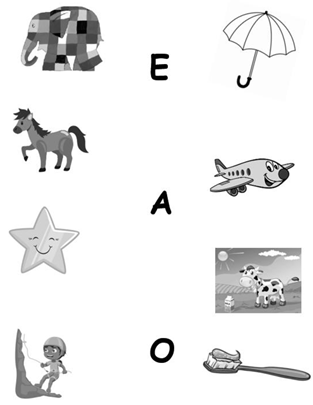 |
 |
| Draw something beginning with the letter "ε" (the instructions were conveyed orally and were not provided in written form). | |
 | |
| Circle the umbrellas having the letter "ο" (the instructions were conveyed orally and were not provided in written form). | |
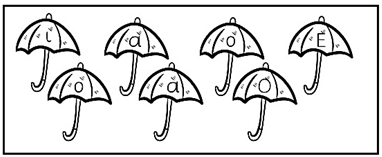 |
Appendix II
The questionnaire used in this study

| Factor | Item |
|---|---|
| Engagement | I was deeply concentrated in the applications |
| I forgot about time passing while using the applications | |
| I felt detached from the outside world while using the applications | |
| Motivation | The applications did not hold my attention* |
| When using the applications, I did not have the impulse to learn more about the learning subject* | |
| The applications did not motivate me to learn* | |
| Enjoyment | I think the applications were fun |
| I felt bored while using the applications* | |
| I really enjoyed studying with these applications |
Notes. * = Item for which its scoring was reversed; the word "applications" was replaced with the phrase "conventional materials" in the control group.
References
- Harris, T. L, & Hodges, R. E. (1995). The literacy dictionary. International Reading Association.
- Battle, D. (2009). Multiculturalism, language, and emergent literacy. In P. M. Rhyner (Ed.), Emergent literacy and language development promoting learning in early childhood (pp. 192-234). The Guilford Press.
- Rohde, L. (2015). The comprehensive emergent literacy model: Early literacy in context. Sage Open, 5(1), 2158244015577664. [CrossRef]
- Wulandari, R. A., Hafidah, R., & Pudyaningtyas, A. R. (2020). The effect of augmented reality (AR) flashcard on early literacy of early childhood. Proceedings of the 4th International Conference on Learning Innovation and Quality Education, 1-5. ACM. [CrossRef]
- Erekson, J. A., Opitz, M. F., & Schendel, R. (2020). Understanding, assessing, and teaching reading: A diagnostic approach (8th ed.). Pearson.
- Casbergue, R. M., & Strickland, D. S. (2016). Reading and writing in preschool: Teaching the essentials. The Guilford Press.
- McGee, L. M., & Richgels, D. J. (2012). Literacy's beginnings: Supporting young readers and writers (6th ed.). Pearson.
- Honig, B., Diamond, L., Gutlohn, L., Cole, L. C., Hudson, R. F., Lane, H. B., Mahler, J., & Pullen, P. C. (2018). Teaching reading sourcebook (3rd ed.). Academic Therapy Publications.
- Fitria, T. N. (2023). Augmented reality (AR) and virtual reality (VR) technology in education: Media of teaching and learning: A review. International Journal of Computer and Information System (IJCIS), 4(1), 14-25.
- Jack, C., & Higgins, S. (2019). Embedding educational technologies in early years education. Research in Learning Technology, 27, 1-17. [CrossRef]
- Soyoof, A., Reynolds, B. L., Neumann, M., Scull, J., Tour, E., & McLay, K. (2024). The impact of parent mediation on young children’s home digital literacy practices and learning: A narrative review. Journal of Computer Assisted Learning, 40, 65-88. [CrossRef]
- Nacher, V., Jaen, J., Navarro, E., Catala, A., & González, P. (2015). Multi-touch gestures for pre-kindergarten children. International Journal of Human-Computer Studies, 73, 37-51. [CrossRef]
- Price, S., Jewitt, C., & Crescenzi, L. (2015). The role of iPads in pre-school children’s mark making development. Computers & Education, 87, 131-141. [CrossRef]
- Apelboim-Dushnitzky, G., & Tova, O. (2025). Promoting letter-naming and initial-phoneme detection abilities among preschoolers at risk for specific learning disorder using technological intervention with two types of mats: With and without target letter forms. Journal of Educational Computing Research, 62(8), 2020-2041. [CrossRef]
- Rubio, A. D. J. (2024). Integration of the tablet in a Spanish early childhood education classroom. In New approaches in mobile learning for early childhood education (pp. 60-90). IGI Global. [CrossRef]
- Fokides, E., & Zachristou, D. (2020). Teaching natural sciences to kindergarten students using tablets: results from a pilot project. In S. Papadakis & M. Kalogiannakis (Eds.), Mobile learning applications in early childhood education (pp. 40-60). IGI Global. [CrossRef]
- Schacter, J., & Jo, B. (2017). Improving preschoolers’ mathematics achievement with tablets: A randomized controlled trial. Mathematics Education Research Journal, 29, 313-327. [CrossRef]
- Justice, L. M., & Pullen, P. C. (2003). Promising interventions for promoting emergent literacy skills: Three evidence-based approaches. Topics in Early Childhood Special Education, 23(3), 99-113. [CrossRef]
- Jones, M. E., & Christensen, A. E. (2022). Early literacy: Essential understandings. In Constructing strong foundations of early literacy (pp. 1-13). Routledge. [CrossRef]
- Peixoto, V., Alegria, R., & Pestana, P. (2023). Early literacy intervention program: Closing the linguistic gap of socially disadvantaged children. In Closing the educational achievement gap for students with learning disabilities (pp. 163-212). IGI Global. [CrossRef]
- Tyner, B. (2019). Climbing the literacy ladder: Small-group instruction to support all readers and writers, preK-5. ASCD.
- Kruse, L. G., Spencer, T. D., Olszewski, A., & Goldstein, H. (2015). Small groups, big gains: Efficacy of a tier 2 phonological awareness intervention with preschoolers with early literacy deficits. American Journal of Speech-Language Pathology, 24(2), 189-205. [CrossRef]
- Lonigan, C. J., Purpura, D. J., Wilson, S. B., Walker, P. M., & Clancy-Menchetti, J. (2013). Evaluating the components of an emergent literacy intervention for preschool children at risk for reading difficulties. Journal of Experimental Child Psychology, 114(1), 111-130. [CrossRef]
- McGee, L. M. (2007). Transforming literacy practices in preschool: Research-based practices that give all children the opportunity to reach their potential as learners. Scholastic.
- Celano, D. C., & Neuman, S. B. (2019). Using the village to raise a reader. Teaching Young Children, 13(1), 30-34.
- Evans, M. A., Bell, M., Shaw, D., Moretti, S., & Page, J. (2006). Letter names, letter sounds and phonological awareness: An examination of kindergarten children across letters and of letters across children. Reading and Writing, 19, 959-989. [CrossRef]
- Huang, F. L., Tortorelli, L. S., & Invernizzi, M. A. (2014). An investigation of factors associated with letter-sound knowledge at kindergarten entry. Early Childhood Research Quarterly, 29(2), 182-192. [CrossRef]
- Fountas, I. C., & Pinnell, G. S. (2017). Guided reading: Responsive teaching across the grades. Heinemann.
- Heroman, C., Burts, D. C., Berke, K. L., Bickart, T. S., Nelson, H. P., Taub, L., & Boyle, K. (2010). Objectives for development & learning: Birth through kindergarten. Teaching strategies GOLD. Teaching Strategies.
- Fauke, J., Burnett, L., Powers, M. A., & Sulzer-Azaroff, B. (1973). Improvement of handwriting and letter recognition skills: A behavior modification procedure. Journal of Learning Disabilities, 6(5), 296-300. [CrossRef]
- Schickedanz, J. A. (1999) Much more than the ABCs: The early stages of reading and writing. National Association for the Education of Young Children.
- Davison, S. (2000). Identifying initial letter sounds. Practical Pre-School, 2000(22), 23. [CrossRef]
- Dodd, B., & Carr, A. (2003). Young children’s letter-sound knowledge. Language, Speech, and Hearing Services in Schools, 34, 128-137. [CrossRef]
- Solichah, N., & Fardana, N. A. (2024). Exploring multisensory programs as early literacy interventions: a scoping review. International Journal of Evaluation and Research in Education (IJERE), 13(5), 3411-3418. [CrossRef]
- Kiss, R., & Csapó, B. (2024). Technology-based assessment of phonological awareness in kindergarten. International Journal of Early Childhood, 1-25. [CrossRef]
- Kartal, G., & Terziyan, T. (2016). Development and evaluation of game-like phonological awareness software for kindergarteners: JerenAli. Journal of Educational Computing Research, 53(4), 519-539. [CrossRef]
- Pramarta, P., & Irfan, I. (2024). Android based letter recognition application with augmented reality implementation. Journal of Intelligent Decision Support System (IDSS), 7(2), 203-209. [CrossRef]
- Maranan, J. R. (2022). An automated speech recognition system for phonological awareness of kindergarten students in Filipino. Proceedings of the 2022 25th Conference of the Oriental COCOSDA International Committee for the Co-ordination and Standardisation of Speech Databases and Assessment Techniques (O-COCOSDA) (pp. 1-7). IEEE. [CrossRef]
- Authors, A. (2020). The reference will be added after the review process.
- Herodotou, C. (2018). Young children and tablets: A systematic review of effects on learning and development. Journal of Computer Assisted Learning, 34(1), 1-9. [CrossRef]
- Dezuanni, M., Dooley, K., Gattenhof, S., & Knight, L. (2015). Introduction: iPads in the early years: developing literacy and creativity. In iPads in the Early Years (pp. 1-11). Routledge. [CrossRef]
- Grigorakis, I. (2020). The impact of mobile learning via touch-screen tablets in emergent literacy development. In Mobile learning applications in early childhood education (pp. 61-81). IGI Global. [CrossRef]
- Neumann, M. M., & Neumann, D. L. (2017). The use of touch-screen tablets at home and pre-school to foster emergent literacy. Journal of Early Childhood Literacy, 17(2), 203-220. [CrossRef]
- Parry, C. R. L., Kumar, S., & Gallingane, C. (2024). Integration of tablets in phonological awareness and phonics instruction: A Systematic review. Journal of Research in Childhood Education, 38(4), 559-576. [CrossRef]
- Chowsomchat, J., Boonrusmee, S., & Thongseiratch, T. (2023). Swipe, tap, read? Unveiling the effects of touchscreen devices on emergent literacy development in preschoolers. BMC pediatrics, 23(1), 625. [CrossRef]
- Cubelic, C. C., & Larwin, K. H. (2014). The use of iPad technology in the kindergarten classroom: A quasi-experimental investigation of the impact on early literacy skills. Comprehensive Journal of Educational Research, 2(4), 47-59.
- Dorris, C., Winter, K., O'Hare, L., & Lwoga, E. T. (2024). A systematic review of mobile device use in the primary school classroom and impact on pupil literacy and numeracy attainment: A systematic review. Campbell Systematic Reviews, 20(2), e1417. [CrossRef]
- Chun-Ru, L. P., Swapna, K., & Caitie, G. (2024) Integration of tablets in phonological awareness and phonics instruction: A systematic review. Journal of Research in Childhood Education, 38(4), 559-576. [CrossRef]
- Giugni, C. C. (2015). Pre kindergarten students increased letter recognition ability through the use of educational apps on tablets for classroom instruction [Master theses, Dominican University of California]. [CrossRef]
- Fink, M. (2018). Effective iPad integration in the kindergarten literacy curriculum through creation-based literacy tasks: An action research study [Doctoral dissertation, University of Pittsburgh].
- Neumann, M. M. (2014). An examination of touch screen tablets and emergent literacy in Australian pre-school children. Australian Journal of Education, 58(2), 109-122. [CrossRef]
- McKenzie, S., Spence, A., & Nicholas, M. (2018). Going on Safari: The design and development of an early years literacy iPad application to support letter-sound learning. Electronic Journal of E-Learning, 16(1), 16-29.
- Parks, A. N., & Tortorelli, L. (2021). Impact of a district-wide one-to-one technology initiative on kindergartners’ engagement and learning outcomes. Journal of Research in Childhood Education, 35, 602-615. [CrossRef]
- Culatta, B. E., Setzer, L. A., & Hall-Kenyon, K. M. (2022). Incorporating digital literacy materials in early childhood programs: Understanding children’s engagement and interactions. In Handbook of research on acquiring 21st century literacy skills through game-based learning (pp. 671-696). IGI Global. [CrossRef]
- Lauricella, A. R., & Jacobson, M. (2022). iPads in first grade classrooms: Teachers’ intentions and the realities of use. Computers and Education Open, 3, 100077. [CrossRef]
- Schriever, V. (2019). Digital technology in kindergarten: Challenges and opportunities. In I. Management Association (Ed.), Early childhood development: Concepts, methodologies, tools, and applications (pp. 1541-1560). IGI Global. [CrossRef]
- Carson, K. L. (2020). Can an app a day keep illiteracy away? Piloting the efficacy of reading Doctor apps for preschoolers with developmental language disorder. International Journal of Speech-Language Pathology, 22(4), 454-465. [CrossRef]
- Neumann, M. M., & Neumann, D. L. (2014). Touch screen tablets and emergent literacy. Early Childhood Education Journal, 42, 231-239. [CrossRef]
- Mayer, C., Wallner, S., Budde-Spengler, N., Braunert, S., Arndt, P. A., & Kiefer, M. (2020). Literacy training of kindergarten children with pencil, keyboard or tablet stylus: The influence of the writing tool on reading and writing performance at the letter and word level. Frontiers in Psychology, 10, 3054. [CrossRef]
- Rocha, B., Ferreira, L. I., Martins, C., Santos, R., & Nunes, C. (2023). The dark side of multimedia devices: Negative consequences for socioemotional development in early childhood. Children, 10(11), 1807. [CrossRef]
- Munzer, T. G., Miller, A. L., Wang, Y., Kaciroti, N., & Radesky, J. (2020). Tablets, toddlers, and tantrums: the immediate effects of tablet device play. Acta Paediatrica, 110(1), 255-256. [CrossRef]
- Buchner, A., & Wierzbicka, M. (2018). Tablet terra incognita: Research note on the role of tablets in digital parenting of preschool children. Polish Sociological Review, 203, 413-421.
- Blackwell, C. K. (2020). Social Hazards or Helpers?: The Role of Mobile Media in Early Childhood Social Development. In S. Papadakis & M. Kalogiannakis (Eds.), Mobile learning applications in early childhood education (pp. 281-301). IGI Global. [CrossRef]
- Delgado-Algarra, E. J., Roman Sanchez, I. M., Ordonez Olmedo, E., & Lorca-Marín, A. A. (2019). International MOOC trends in citizenship, participation and sustainability: Analysis of technical, didactic and content dimensions. Sustainability, 11(20), 5860. [CrossRef]
- Rini, D. R. (2023). 3D animal illustration flashcard as a learning media innovation in early childhood education. Proceedings of the International Conference on Art, Design, Education and Cultural Studies (ICADECS) (pp. 182-187). KnE Social Sciences. [CrossRef]
- Ying, W., Barkhaya, N. M. M., & Sanmugam, M. (2024). A review of augmented reality tools for preschool student learning language. In Power of Persuasive Educational Technologies in Enhancing Learning (pp. 242-255). IGI Global. [CrossRef]
- Pan, Z., López, M., Li, C., & Liu, M. (2021). Introducing augmented reality in early childhood literacy learning. Research in Learning Technology, 29. [CrossRef]
- Piatykop, O. I., Pronina, O. I., Tymofieieva, I. B., & Palii, I. D. (2022). Early literacy with augmented reality. Educational Dimension, 6, 131-148. [CrossRef]
- Authors, A. (2019). The reference will be added after the review process.
- Harlen, W., & Qualter, A. (2014). The teaching of science in primary schools (6th ed.). David Fulton Publishers. [CrossRef]
- Bybee, R. W. (2014). The BSCS 5E instructional model: Personal reflections and contemporary implications. Science and Children, 51(8), 10-13. [CrossRef]
- Hair, J. F., Babin, B. J., Anderson, R. E., & Black, W. C. (2019). Multivariate Data Analysis (8th ed.). Pearson Prentice.
- Quade, D. (1967). Rank analysis of covariance. Journal of the American Statistical Association, 62(320), 1187-1200. [CrossRef]
Figure 1.
Screenshots from the applications.
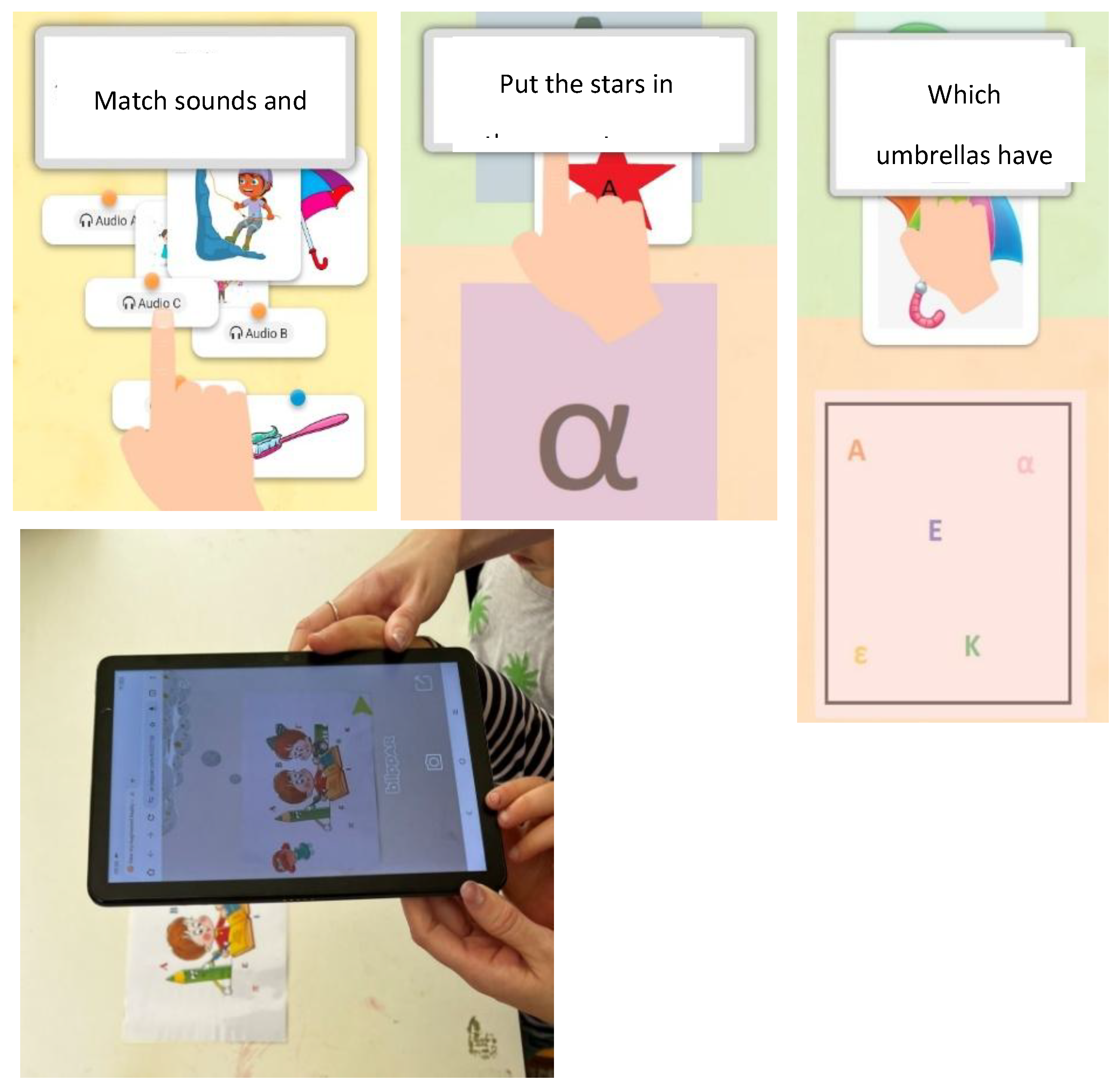
Figure 2.
Sample questions from the questionnaire.
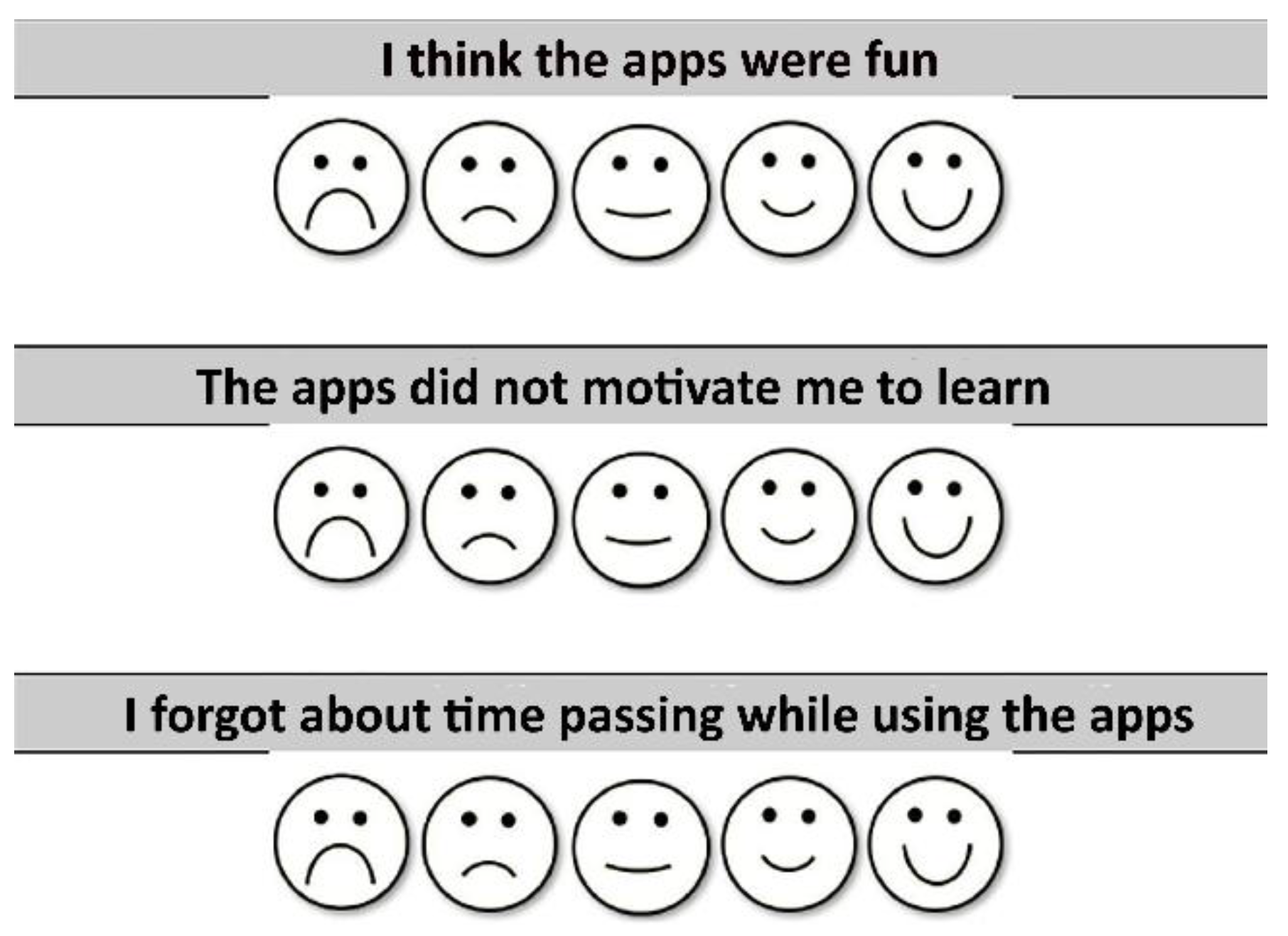
Figure 3.
Screenshots from the sessions.
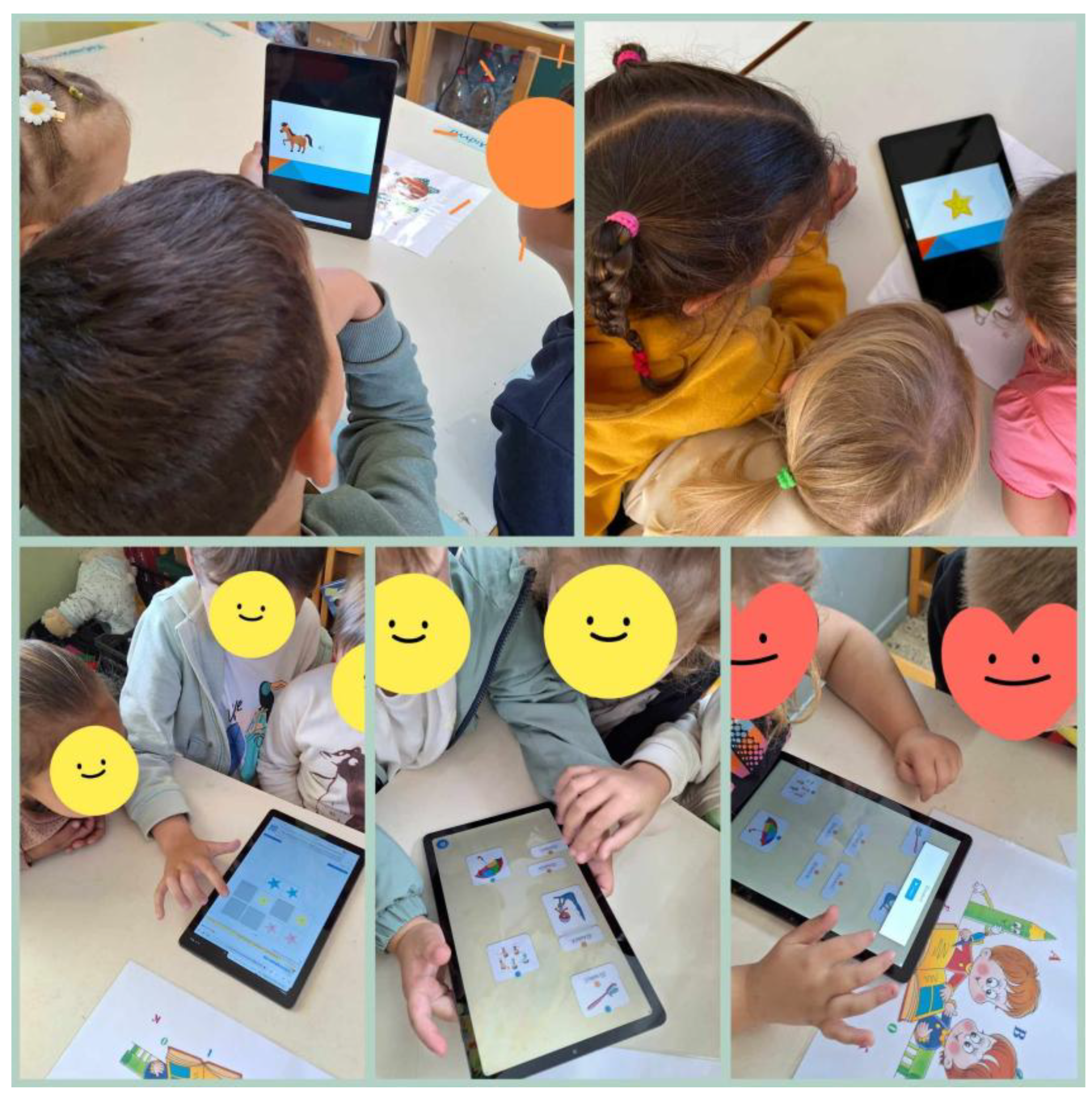
Table 1.
Descriptive statistics for the study's variables.
| Variable |
Control group (N = 38) |
Experimental group (N = 38) |
||||||
| Boys (n = 20) | Girls (n = 18) | Boys (n = 21) | Girls (n = 17) | |||||
| M | SD | M | SD | M | SD | M | SD | |
| Pre test | 81.25 | 15.63 | 80.83 | 18.00 | 80.71 | 22.38 | 81.76 | 15.61 |
| Evaluation tests | 85.83 | 10.92 | 89.63 | 8.62 | 91.59 | 8.34 | 93.86 | 5.85 |
| Post test | 80.17 | 10.73 | 86.11 | 15.65 | 86.51 | 14.32 | 91.18 | 9.93 |
| Engagement | 3.98 | 0.42 | 4.08 | 0.49 | 4.46 | 0.62 | 4.57 | 0.36 |
| Enjoyment | 4.28 | 0.35 | 4.46 | 0.40 | 4.49 | 0.63 | 4.72 | 0.35 |
| Motivation | 3.98 | 0.40 | 4.09 | 0.51 | 4.52 | 0.63 | 4.41 | 0.68 |
Table 2.
Quade's ANCOVA results.
| Evaluation tests | Post test | Engagement | Enjoyment | Motivation | |
|---|---|---|---|---|---|
| dfh | 1 | 1 | 1 | 1 | 1 |
| dfe | 74 | 74 | 74 | 74 | 74 |
| F | 7.50 | 5.09 | 23.46 | 9.84 | 16.91 |
| r (effect size) | .30 (medium) | .25 (medium) | .49 (large) | .34 (medium) | .43 (medium to large) |
| Pairwise comparison (control vs experimental) | |||||
| t | -2.74 | -2.26 | -4.84 | -3.14 | -4.11 |
| p | .008 | .027 | < .001 | .002 | < .001 |
Note. dfh and dfe are the hypothesis and error degrees of freedom.
Table 3.
The results of the genderized linear model for the evaluation tests.
| Group | Variable | B | Bootstrap | ||||
|---|---|---|---|---|---|---|---|
| Bias |
Std. Error |
p | 95% Confidence Interval | ||||
| Lower | Upper | ||||||
| Control | Engagement | -.015 | .000 | .033 | .640 | -.080 | .050 |
| Enjoyment | .140 | .000 | .052 | .022 | .031 | .244 | |
| Motivation | .084 | .001 | .036 | .022 | .016 | .157 | |
| Experimental | Engagement | .051 | -.001 | .017 | .007 | .015 | .082 |
| Enjoyment | .070 | -.002 | .016 | .004 | .034 | .099 | |
| Motivation | .032 | .001 | .013 | .031 | .007 | .058 | |
Table 4.
The results of the genderized linear model for the post-test.
| Group | Variable | B | Bootstrap | ||||
|---|---|---|---|---|---|---|---|
| Bias |
Std. Error |
p | 95% Confidence Interval | ||||
| Lower | Upper | ||||||
| Control | Engagement | .026 | -.002 | .073 | .701 | -.151 | .147 |
| Enjoyment | .226 | .004 | .117 | .124 | .025 | .488 | |
| Motivation | -.046 | .001 | .070 | .477 | -.201 | .084 | |
| Experimental | Engagement | .051 | >.001 | .102 | .665 | -.128 | .258 |
| Enjoyment | .078 | .002 | .089 | .334 | -.134 | .231 | |
| Motivation | .040 | .003 | .054 | .369 | -.044 | .182 | |
Disclaimer/Publisher’s Note: The statements, opinions and data contained in all publications are solely those of the individual author(s) and contributor(s) and not of MDPI and/or the editor(s). MDPI and/or the editor(s) disclaim responsibility for any injury to people or property resulting from any ideas, methods, instructions or products referred to in the content. |
© 2025 by the authors. Licensee MDPI, Basel, Switzerland. This article is an open access article distributed under the terms and conditions of the Creative Commons Attribution (CC BY) license (http://creativecommons.org/licenses/by/4.0/).
Copyright: This open access article is published under a Creative Commons CC BY 4.0 license, which permit the free download, distribution, and reuse, provided that the author and preprint are cited in any reuse.


