

Submitted:
29 January 2025
Posted:
29 January 2025
Read the latest preprint version here
Abstract
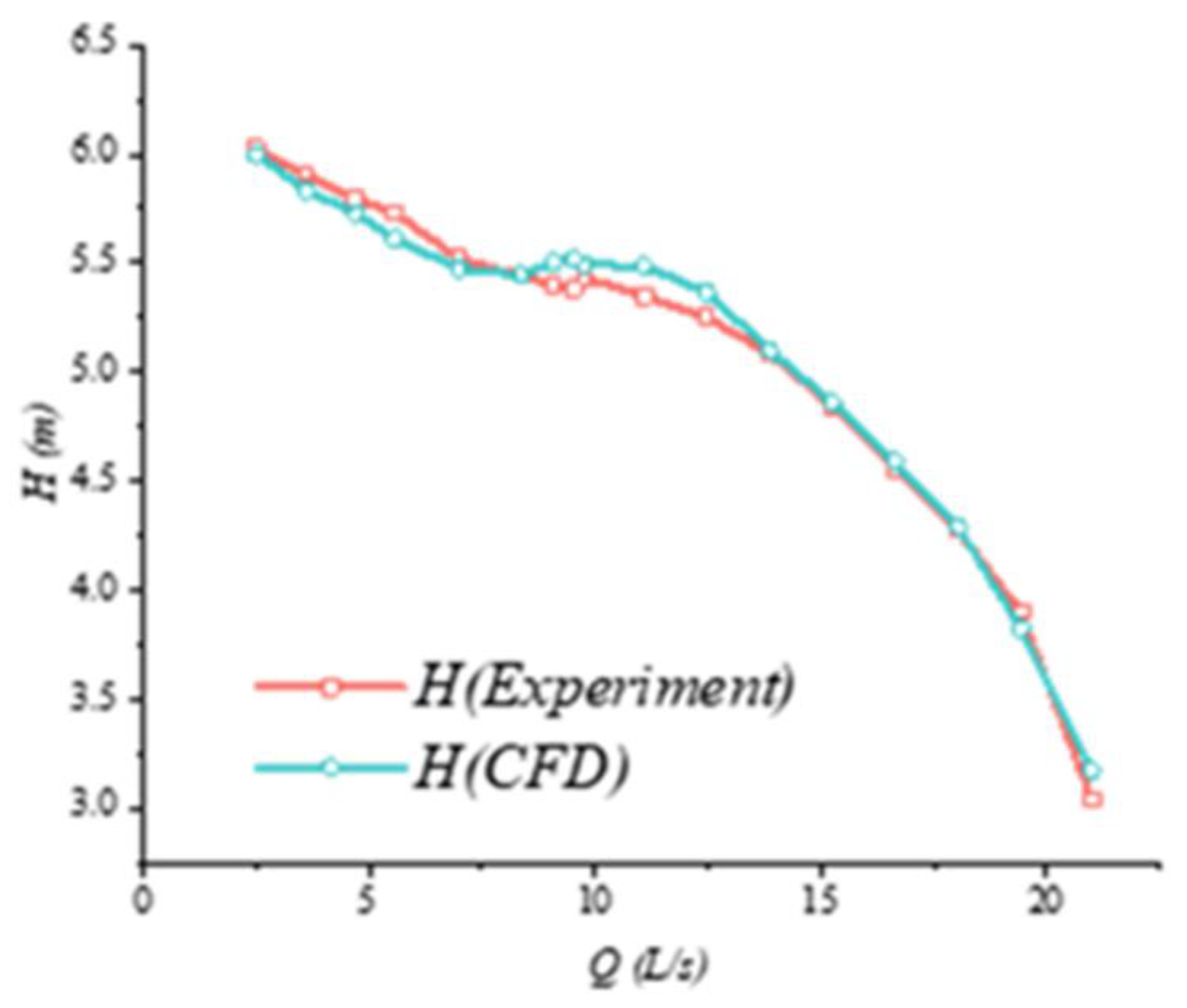
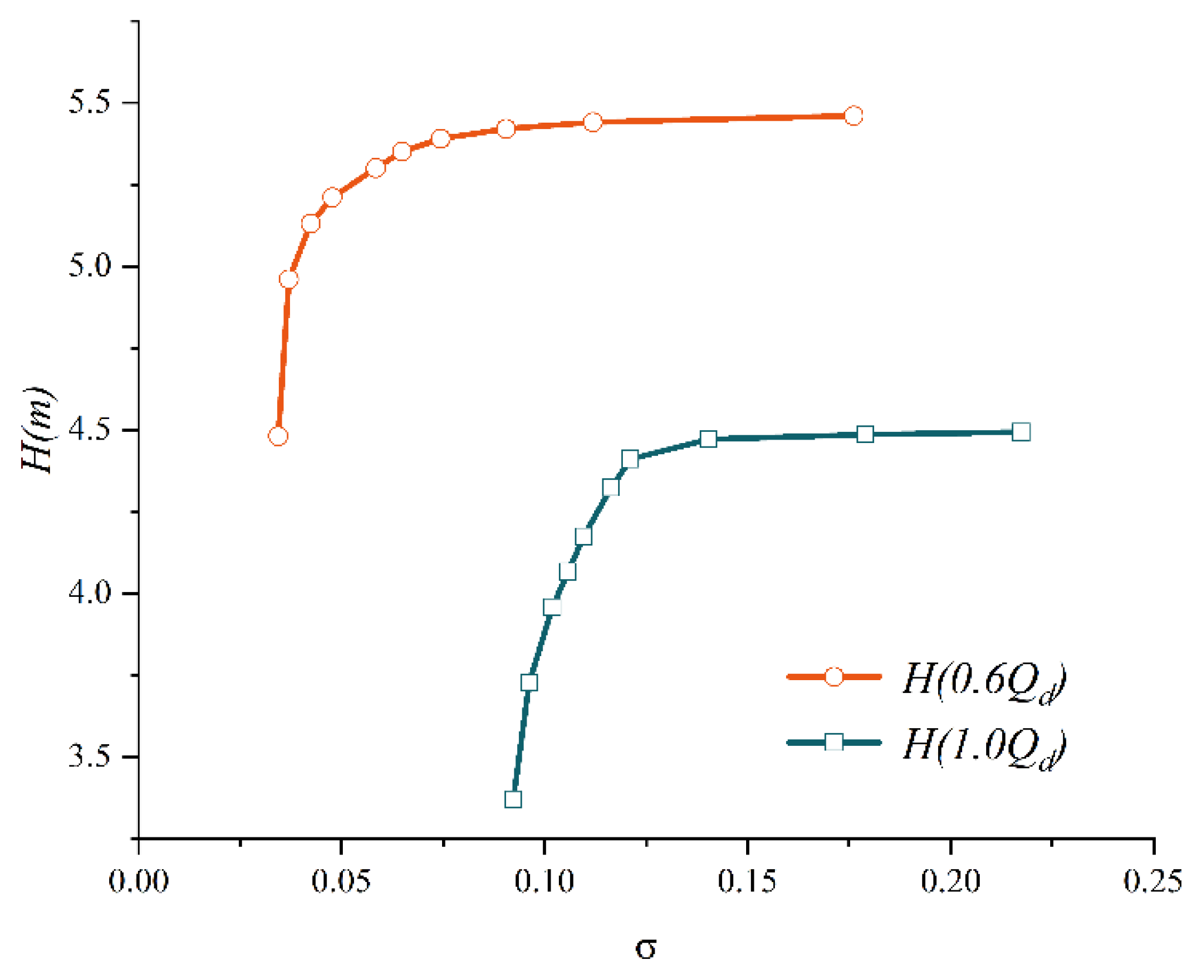
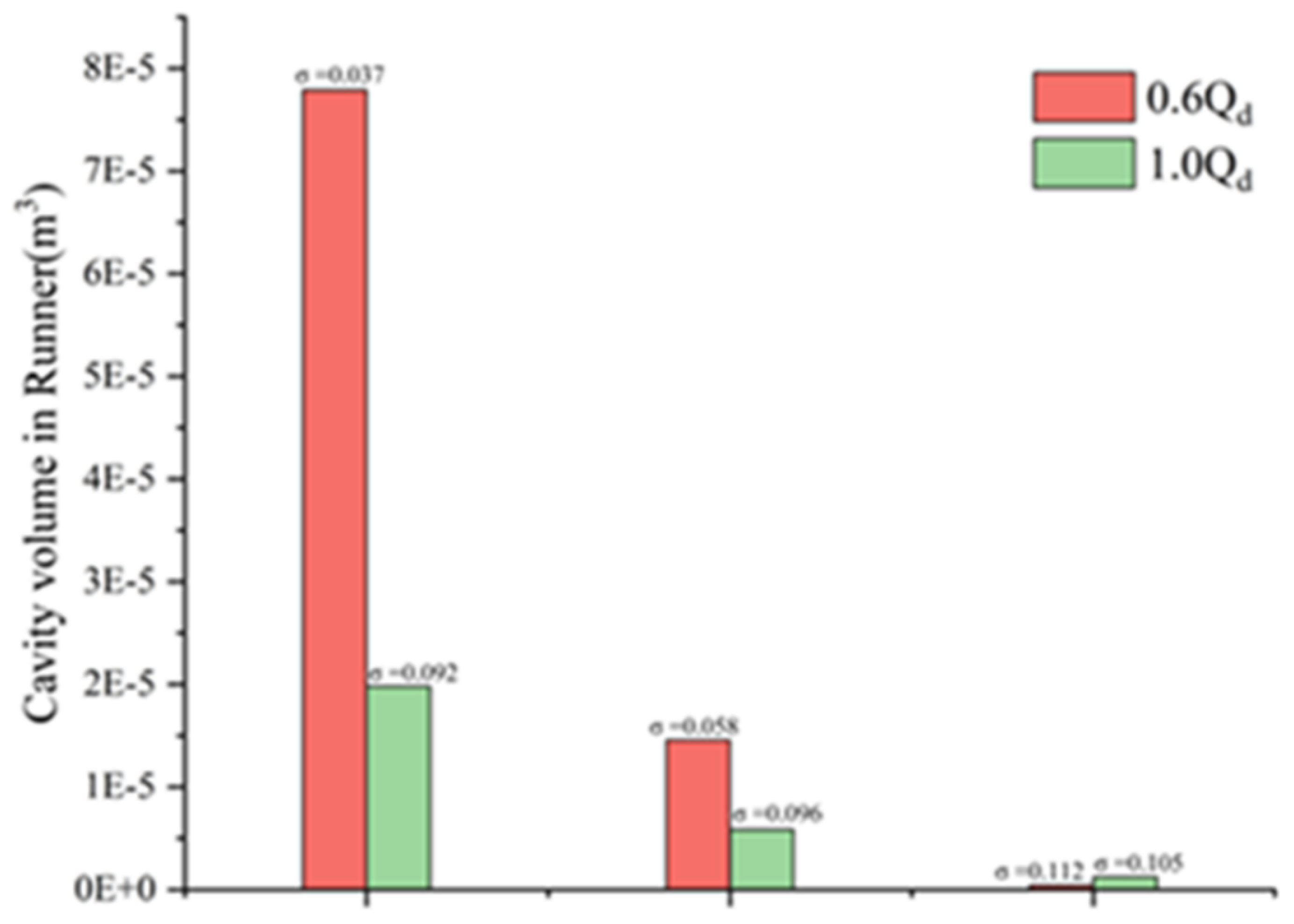
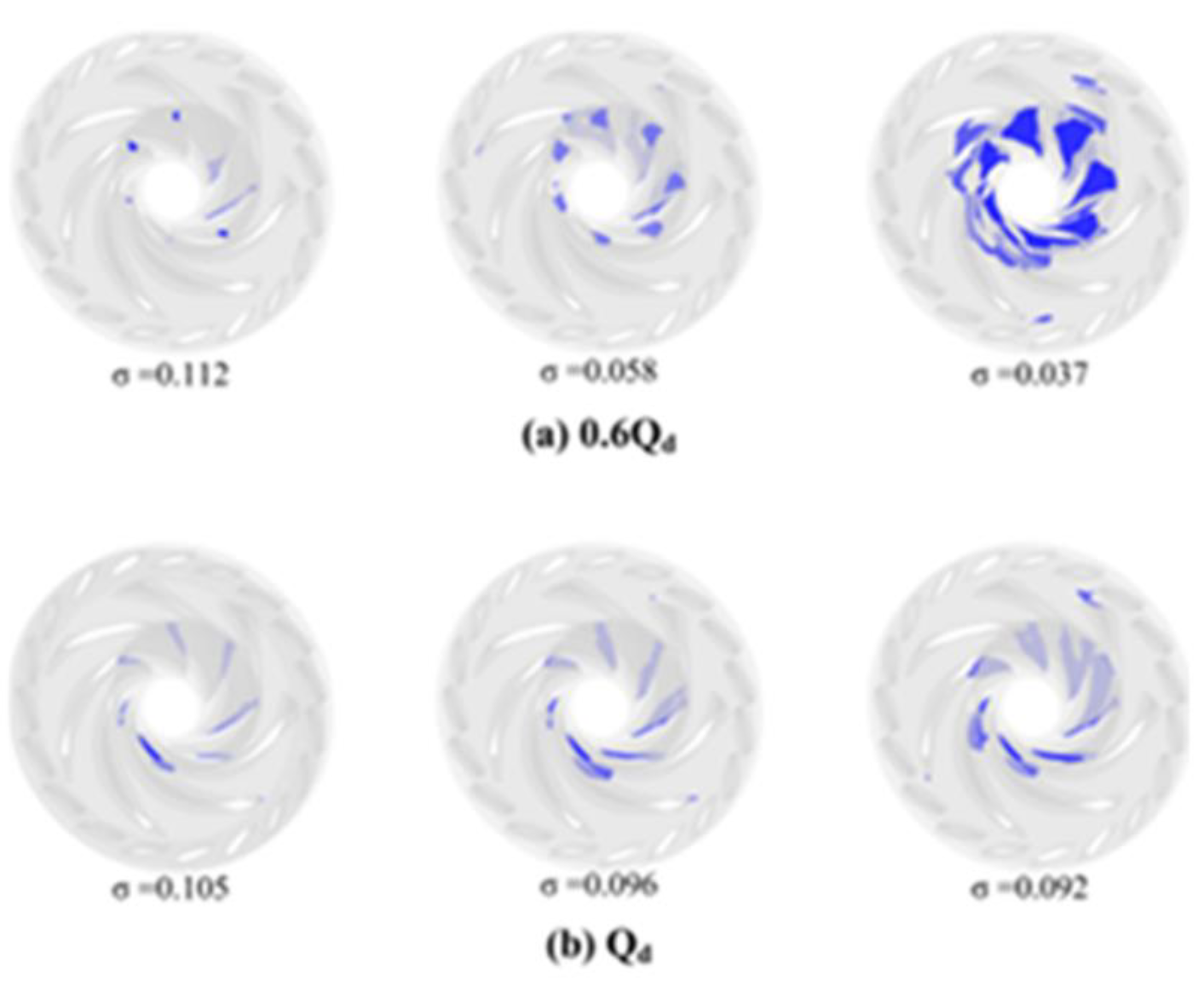
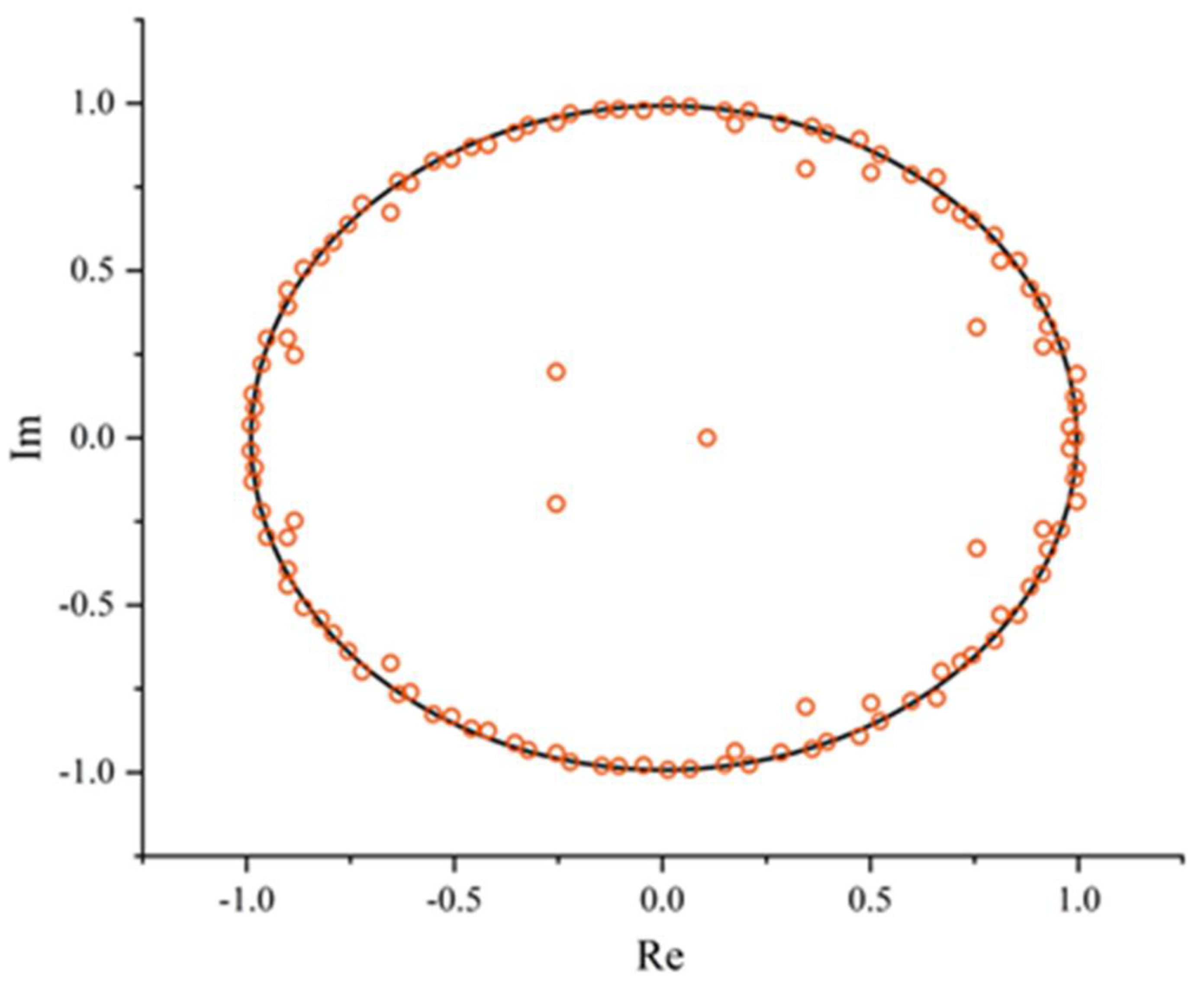
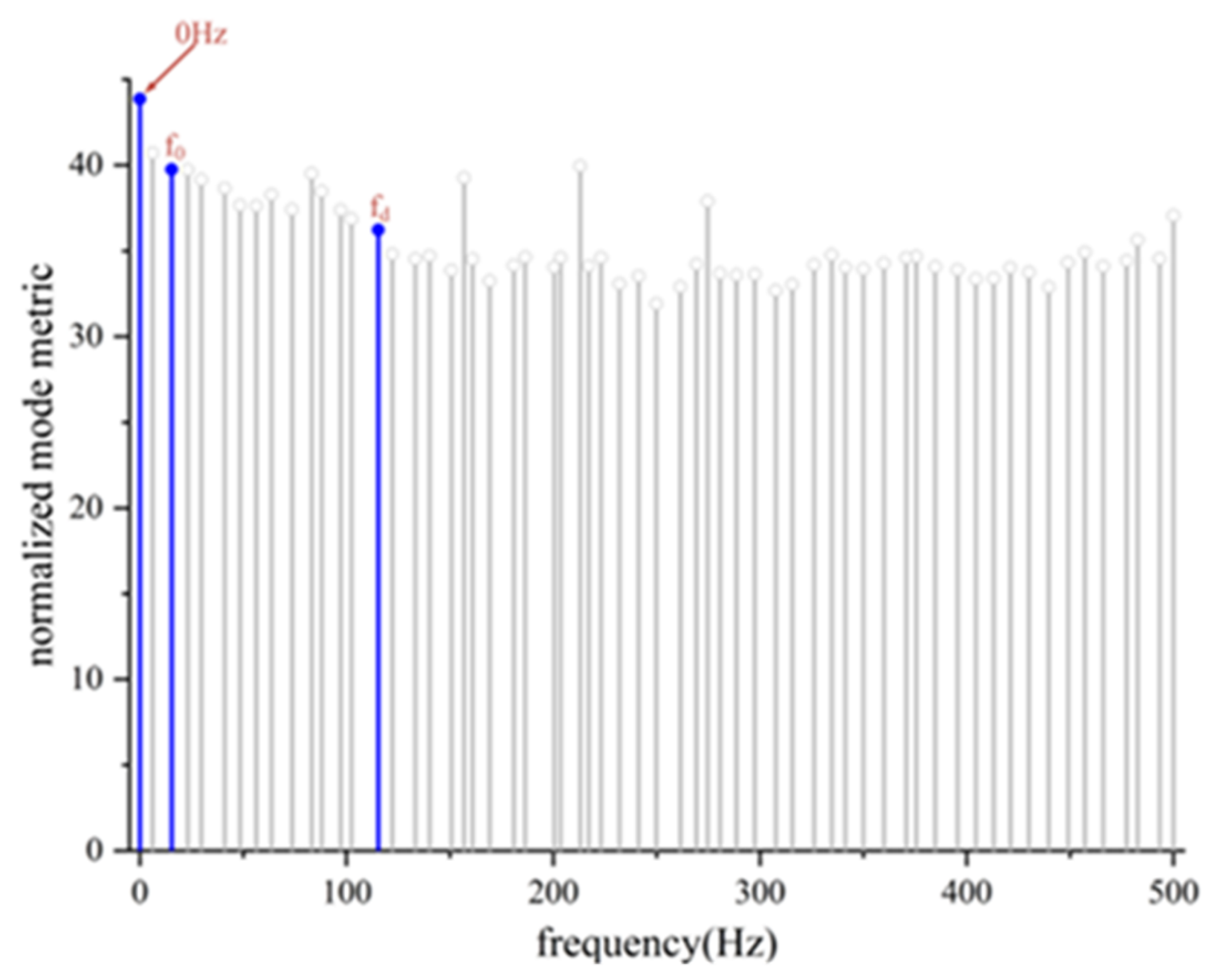
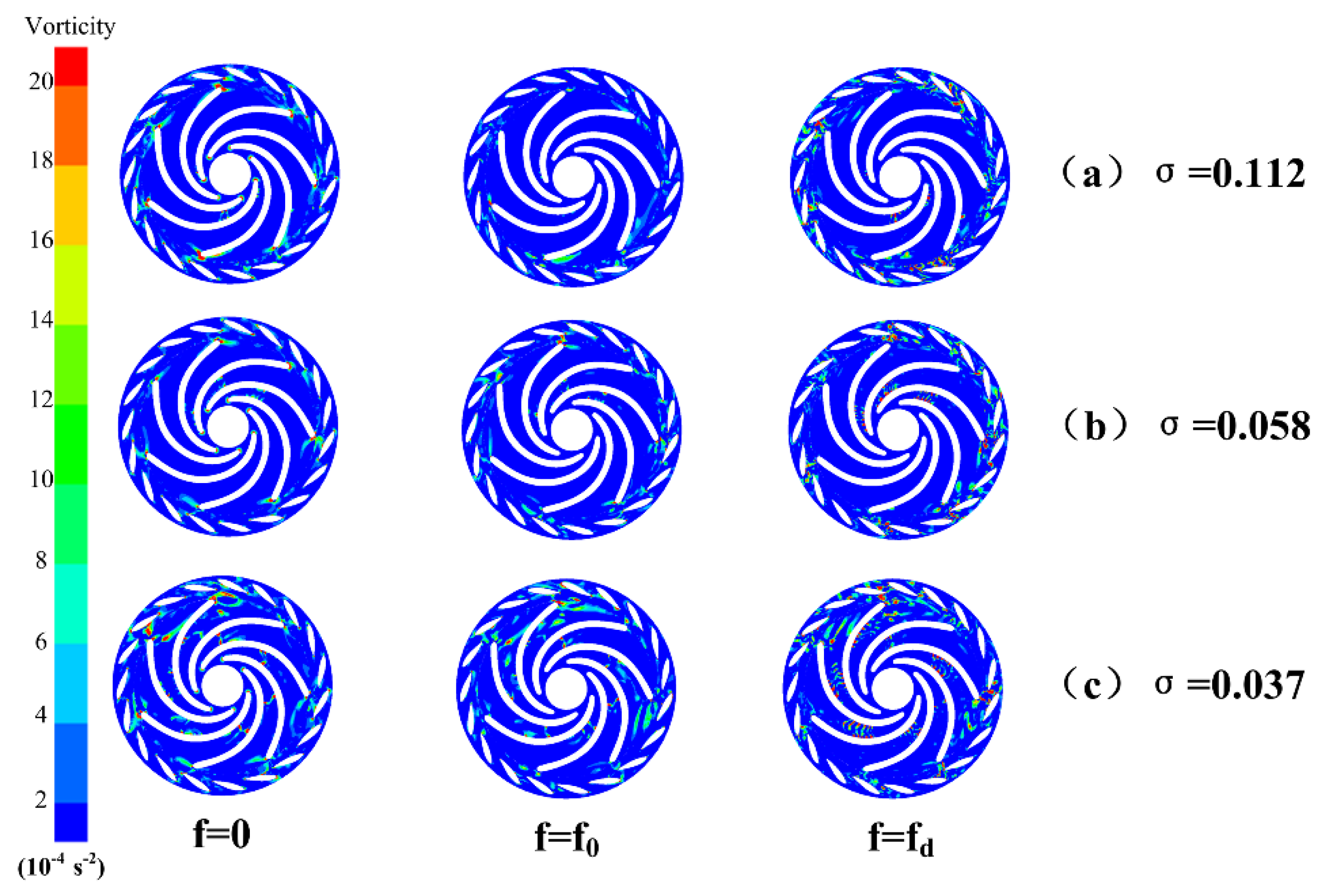
Cavitation phenomena significantly impact pump-turbine performance, necessitating a thorough investigation of their characteristics. This study employs experimental and numerical simulations to evaluate pump-turbine performance, confirming the accuracy of the numerical methods used. The simulations analyze the cavitation flow field, comparing cavitation distribution and velocity streamlines at various stages. The Q-criterion and entropy production methods identify vortex structures and energy loss areas, revealing that increased cavitation leads to more vortices of varying scales, resulting in higher entropy production and reduced energy efficiency. Proper Orthogonal Decomposition (POD) and Dynamic Mode Decomposition (DMD) techniques further analyze the cavitation flow field over time, highlighting key energy loss regions and vortex dynamics. The findings indicate that lower-order POD modes correspond to dominant vortex structures, while increased cavitation leads to a rise in vortex numbers and complexity. DMD analysis shows varying evolution patterns of vortices across scales. This research provides valuable insights into the unstable characteristics of cavitation flow fields in pump-turbines under low-flow conditions.
Keywords:
1. Introduction
2. Research Object
2.1. Pump Turbine Parameters
2.2. Experiment Method
3. Numerical Simulation Methods
3.1. Numerical Simulation Setup
3.2. Snapshot POD Method
3.3. DMD Method
4. Results and Discussion
4.1. Analysis of Cavitation Characteristics
4.2. Analysis of Energy Dissipation Characteristics in Cavitating Flow Fields
4.3. POD Analysis of Vorticity Field
4.4. DMD Analysis of Vorticity Field
5. Conclusion
Author Contributions
Funding
Data Availability Statement
References
- Ambec, S.; Crampes, C. Electricity Provision with Intermittent Sources of Energy. Resource and Energy Economics 2012, 34, 319–336. [Google Scholar] [CrossRef]
- Guezgouz, M.; Jurasz, J.; Bekkouche, B.; Ma, T.; Javed, M.S.; Kies, A. Optimal Hybrid Pumped Hydro-Battery Storage Scheme for off-Grid Renewable Energy Systems. Energy Conversion and Management 2019, 199, 112046. [Google Scholar] [CrossRef]
- Pommeret, A.; Schubert, K. Optimal Energy Transition with Variable and Intermittent Renewable Electricity Generation. Journal of Economic Dynamics and Control 2022, 134, 104273. [Google Scholar] [CrossRef]
- Rehman, S.; Al-Hadhrami, L.M.; Alam, Md.M. Pumped Hydro Energy Storage System: A Technological Review. Renewable and Sustainable Energy Reviews 2015, 44, 586–598. [Google Scholar] [CrossRef]
- Widén, J.; Carpman, N.; Castellucci, V.; Lingfors, D.; Olauson, J.; Remouit, F.; Bergkvist, M.; Grabbe, M.; Waters, R. Variability Assessment and Forecasting of Renewables: A Review for Solar, Wind, Wave and Tidal Resources. Renewable and Sustainable Energy Reviews 2015, 44, 356–375. [Google Scholar] [CrossRef]
- Xu, L.; Kan, K.; Zheng, Y.; Liu, D.; Binama, M.; Xu, Z.; Yan, X.; Guo, M.; Chen, H. Rotating Stall Mechanism of Pump-Turbine in Hump Region: An Insight into Vortex Evolution. Energy 2024, 292, 130579. [Google Scholar] [CrossRef]
- Liu, Y.; Gong, J.; An, K.; Wang, L. Cavitation Characteristics and Hydrodynamic Radial Forces of a Reversible Pump–Turbine at Pump Mode. J. Energy Eng. 2020, 146, 04020066. [Google Scholar] [CrossRef]
- Tao, R.; Xiao, R.; Wang, F.; Liu, W. Cavitation Behavior Study in the Pump Mode of a Reversible Pump-Turbine. Renewable Energy 2018, 125, 655–667. [Google Scholar] [CrossRef]
- Zhang, L.; Jing, X.; Wang, Z.; Chang, J.; Peng, G. Analysis of Francis Pump-Turbine Runner Cavitation Flows in Pump Mode. In Proceedings of the Volume 2: Fora; ASMEDC: Vail, Colorado, USA, January 1 2009; pp. 131–134.
- Li, G.; Hou, W.; Wang, H.; Qin, H.; Zhu, G. Study on Cavitation Performance of High Water-Head Pump Turbine Based on CFD. Power System and Clean Energy 2017, 33, 131–136. [Google Scholar]
- Hao, Y.; Tan, L. Symmetrical and Unsymmetrical Tip Clearances on Cavitation Performance and Radial Force of a Mixed Flow Pump as Turbine at Pump Mode. Renewable Energy 2018, 127, 368–376. [Google Scholar] [CrossRef]
- Meng, Q.; Shen, X.; Zhao, X.; Yang, G.; Zhang, D. Numerical Investigation on Cavitation Vortex Dynamics of a Centrifugal Pump Based on Vorticity Transport Method. JMSE 2023, 11, 1424. [Google Scholar] [CrossRef]
- Wu, J.; Qiu, N.; Zhu, H.; Xu, P.; Si, Q. Numerical Analysis of Vortex Structure in Centrifugal Pump Based on Unsteady Cavitation Flow. Journal of Xihua University 2023, 42, 90 − 99. [Google Scholar]
- Zhang, Y.; Liu, K.; Li, J.; Xian, H.; Du, X. Analysis of the Vortices in the Inner Flow of Reversible Pump Turbine with the New Omega Vortex Identification Method. J Hydrodyn 2018, 30, 463–469. [Google Scholar] [CrossRef]
- Ruan, H.; Guo, P.; Yu, L.; Zhou, C. ; CHAO, W.;Li, X.Cavitation induced flow instability mechanism of pumptubine under pump conditions. Journal of Drainage and Irrigation Machinery Engineering. 2021, 41, 779–786. [Google Scholar]
- Gong, R.; Wang, H.; Chen, L.; Li, D.; Zhang, H.; Wei, X. Application of Entropy Production Theory to Hydro-Turbine Hydraulic Analysis. Sci. China Technol. Sci. 2013, 56, 1636–1643. [Google Scholar] [CrossRef]
- Li, D.; Gong, R.; Wang, H.; Xiang, G.; Wei, X.; Qin, D. Entropy Production Analysis for Hump Characteristics of a Pump Turbine Model. Chin. J. Mech. Eng. 2016, 29, 803–812. [Google Scholar] [CrossRef]
- Yu, A.; Wang, Y.; Lv, S.; Tang, Q. Numerical Analysis of the Cavity Vorticity Transport and Entropy Production in a Micropump. International Communications in Heat and Mass Transfer. 2024, 159, 108144. [Google Scholar] [CrossRef]
- Lumley, J. The structure of inhomogeneous turbulent flows. Atmospheric turbulence and radio wave propagation. 1967, 166–178. [Google Scholar]
- Schmid, P.; Sesterhenn, J. Dynamic Mode Decomposition of Numerical and Experimental Data. Journal of Fluid Mechanics 2008, 656. [Google Scholar] [CrossRef]
- Lu, J.; Wu, F.; Liu, X.; Zhu, B.; Yuan, S.; Wang, J. Investigation of the Mechanism of Unsteady Flow Induced by Cavitation at the Tongue of a Centrifugal Pump Based on the Proper Orthogonal Decomposition Method. Physics of Fluids 2022, 34. [Google Scholar] [CrossRef]
- Yang, G.; Zhang, D.; Shen, X.; Pan, Q.; Pang, Q.; Lu, Q. Investigation on Flow Instability in the Hump Region of the Large Vertical Centrifugal Pump under Cavitation Conditions Based on Proper Orthogonal Decomposition. Physics of Fluids 2024, 36. [Google Scholar] [CrossRef]
- Yang, J.; Feng, X.; Liao, Z.; Pan, K.; Liu, X. Analysis on the Mechanism of Rotating Stall Inner a Pump Turbine in Pump Mode Based on the Proper Orthogonal Decomposition. Journal of Fluids Engineering 2023, 145, 091202. [Google Scholar] [CrossRef]
- Xie, Q.; Chen, L.; Zhang, G.; Sun, T. Analysis of unsteady cavitation flow over hydrofoil based on dynamic mode decomposition. Chinese Journal of Theoretical and Applied Mechanics 2020, 52, 1045–1054. [Google Scholar]
- Lu, J.; Liu, J.; Qian, L.; Liu, X.; Yuan, S.; Zhu, B.; Dai, Y. Investigation of Pressure Pulsation Induced by Quasi-Steady Cavitation in a Centrifugal Pump. Physics of Fluids 2023, 35. [Google Scholar] [CrossRef]
- Sirovich, L. Turbulence and the dynamics of coherent structures. I. Coherent structures. Quarterly of applied mathematics 1987, 45, 561–571. [Google Scholar] [CrossRef]
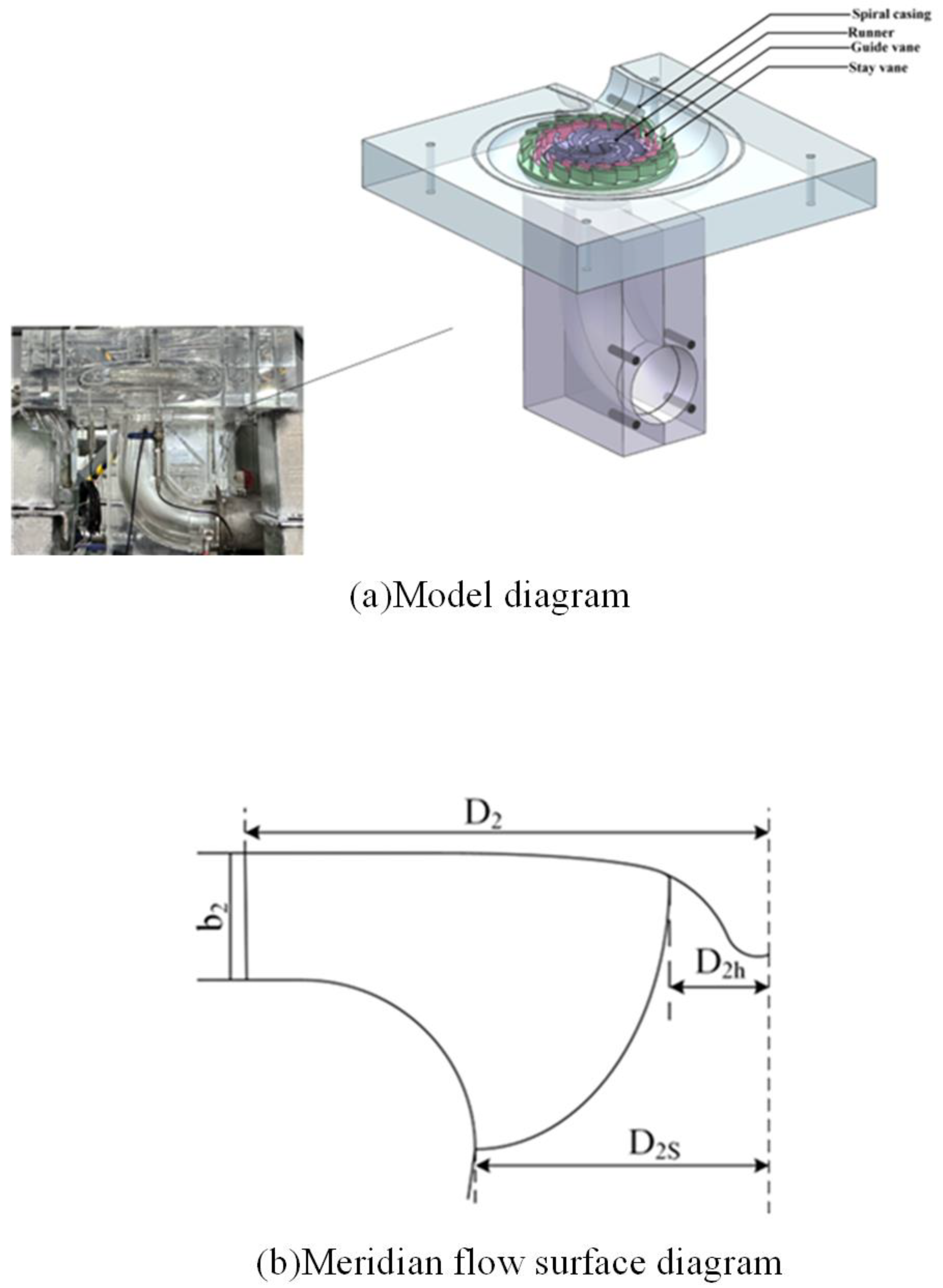
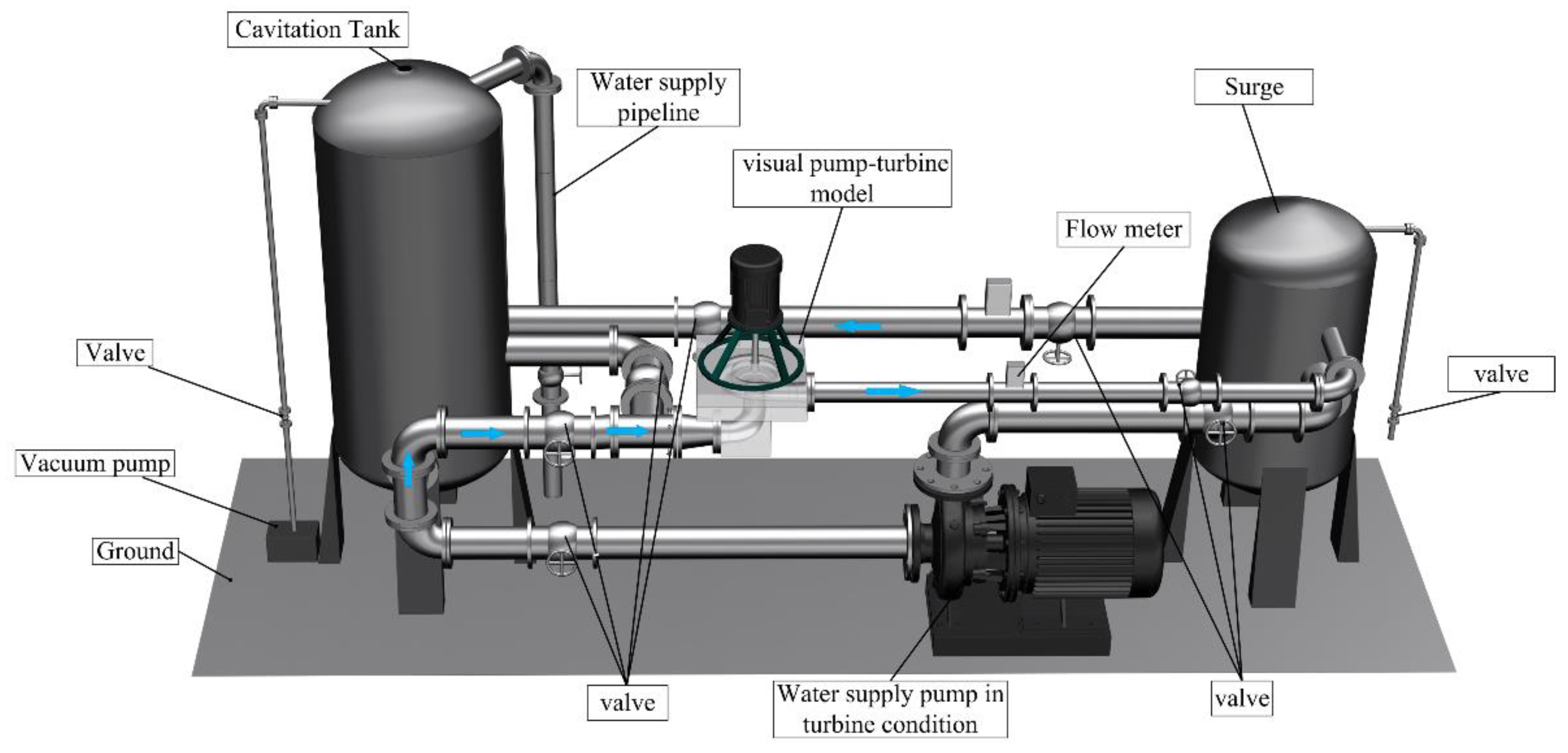
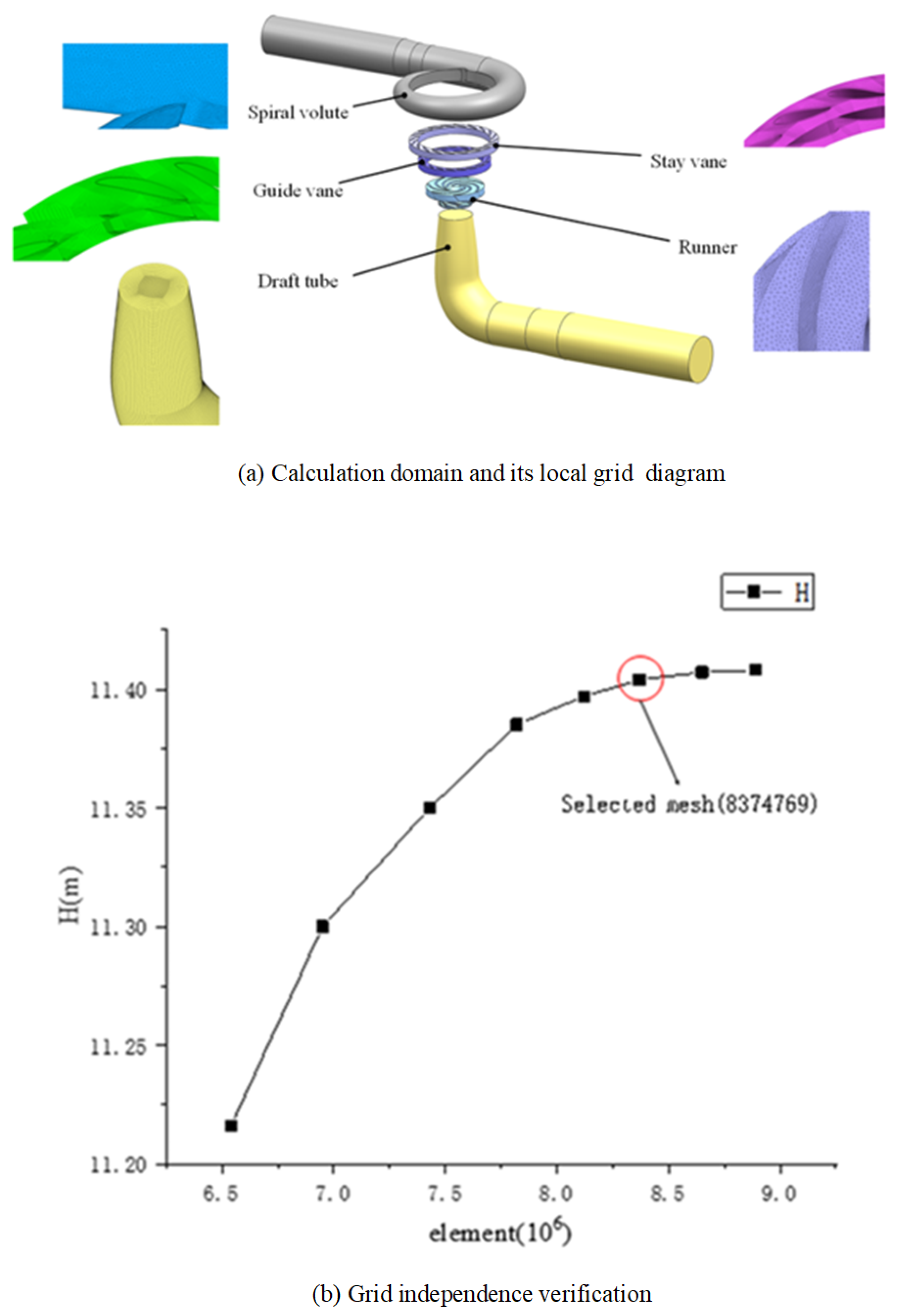
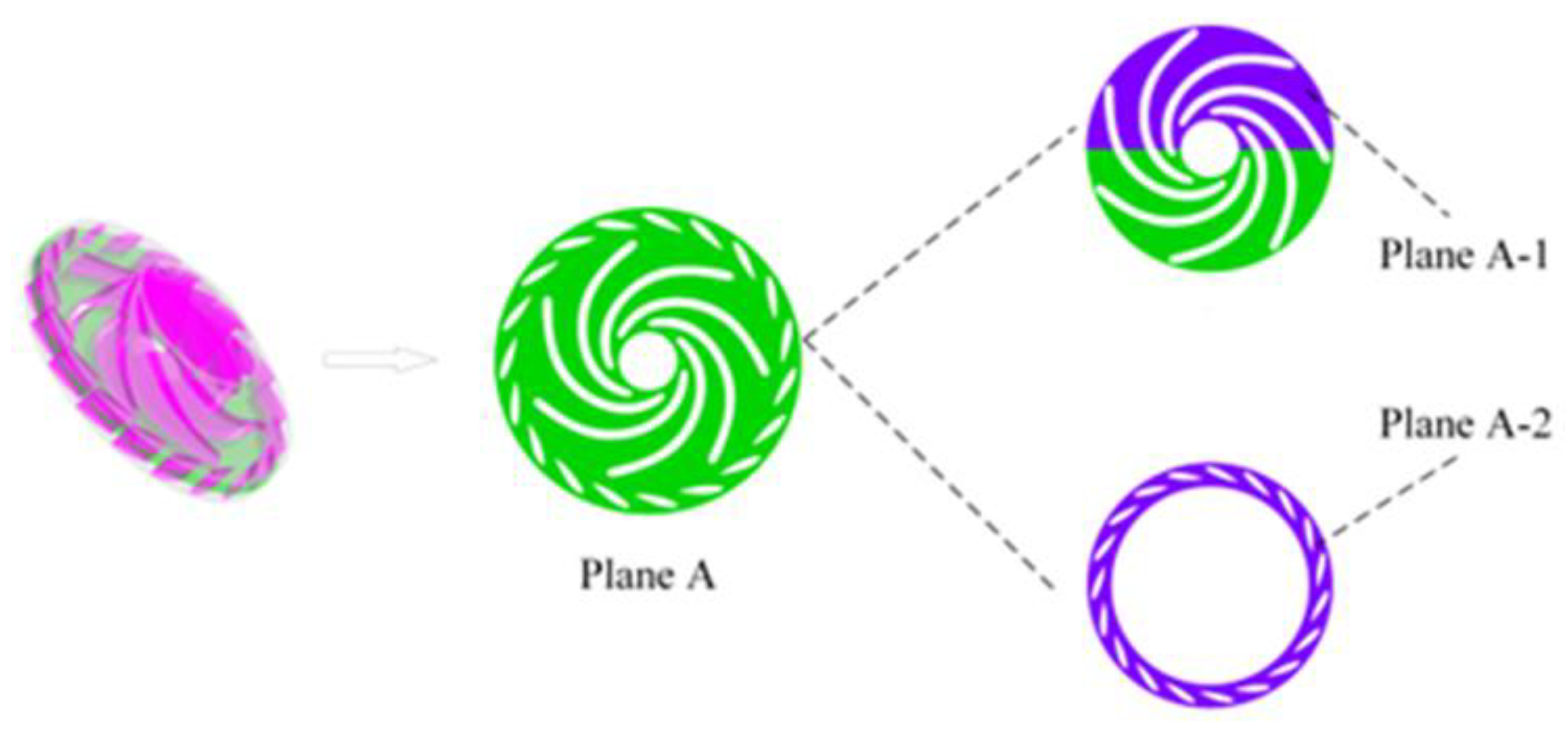

| parameters | Value | Unit |
| Draft tube inlet diameter D1 Runner diameter D2 Hub diameter D2h shroud diameter D2S Runner outlet width b2 Runner blades ZR Stay vane ZS Guide vane ZG Rotational speed n Design flow Qd Design head Hr |
164 200 22.8 57.41 23.88 7 20 19 1000 15.25 4.5 |
mm mm mm mm mm pcs pcs pcs r/min L/s m |
| part | grid cell | Grid type |
| Spiral volute Stay vane Guide vane Runner Draft tube TotalDesign head Hr |
1,261,554 1,196,164 1,937,354 1,505,854 2,473,843 8,374,769 |
Tetrahedral Hexahedral Hexahedral Tetrahedral Hexahedral / |
Disclaimer/Publisher’s Note: The statements, opinions and data contained in all publications are solely those of the individual author(s) and contributor(s) and not of MDPI and/or the editor(s). MDPI and/or the editor(s) disclaim responsibility for any injury to people or property resulting from any ideas, methods, instructions or products referred to in the content. |
© 2025 by the authors. Licensee MDPI, Basel, Switzerland. This article is an open access article distributed under the terms and conditions of the Creative Commons Attribution (CC BY) license (http://creativecommons.org/licenses/by/4.0/).


