

Submitted:
02 February 2025
Posted:
04 February 2025
You are already at the latest version
Abstract
The evolution of ERP systems from rigid on-premise solutions to agile, cloud-native platforms has revolutionized organizational management. Today, ERP systems span diverse industries and functionalities, from financial management to supply chain optimization. This paper synthesizes the capabilities of prominent ERP systems—SAP, Oracle, MRI, iScala, PeopleSoft, JDE, Salesforce, and QuickBooks—highlighting their roles in financial operations and their readiness for AI-driven transformation. Additionally, this paper explores the application of ERP systems in emerging industries such as fintech and biopharma, where the integration of AI and ERP is becoming increasingly crucial for competitive advantage. Recent advancements in AI, such as the development of more sophisticated machine learning algorithms and natural language processing capabilities, are further enhancing the potential of ERP systems to drive business innovation and efficiency.
Keywords:
ERP classification
; SAP
; Oracle
; QuickBooks
; AGI(Artificial General Intelligence)
; ASI(Artificial Super Intelligence)
; Financial management
; AI integration
; Cloud ERP
; On-premise ERP
; Supply chain management
; Human capital management
; Industry specialization
; Scalability
; SME (Small and Medium-sized Enterprises)
; Data accuracy
; Risk mitigation
; Compliance
; Strategic decision support
; Cross-module integration
; Organizational efficiency
; Predictive analytics
; Scenario modeling
; AGI-driven automation
; ASI and global optimization
; Autonomous decision-making
; Adaptive workflows
; Self-healing systems
; Predictive governance
; Hyper-personalization
; Human-centric interfaces
; Ecosystem-level integration
; Interoperability
; Data security
; Workforce displacement
; Bias in AI models
; Ethical AGI
; Transparent governance
I. Introduction
The evolution of ERP systems from rigid on-premise solutions to agile, cloud-native platforms has revolutionized organizational management. Today, ERP systems span diverse industries and functionalities, from financial management to supply chain optimization. This paper synthesizes the capabilities of prominent ERP systems—SAP, Oracle, MRI, iScala, PeopleSoft, JDE, Salesforce, and QuickBooks—highlighting their roles in financial operations and their readiness for AI-driven transformation.
II. Classification of ERP Systems
ERP systems are categorized based on four dimensions: functionality, industry specialization, deployment models, and scalability.
- A.
- By Functionality
Figure 1.
Functional Categorization of ERP Systems.

1. Financial Management ERP
- •
- SAP S/4HANA: This system is renowned for its robust integration of real-time accounting, budgeting, and compliance modules. It is particularly favored by multinational corporations due to its ability to handle complex financial operations across various geographies and currencies. It integrates real-time accounting, budgeting, and compliance modules, favored by multinational corporations. [9]For instance, a global manufacturing company with operations in multiple countries can use SAP S/4HANA to streamline its financial processes, ensuring compliance with local regulations and optimizing financial reporting.
- •
- QuickBooks: QuickBooks is a cost-effective ERP solution for small and medium-sized enterprises (SMEs), offering core accounting features like invoicing, payroll, and basic financial reporting. Recent updates and third-party integrations have expanded its capabilities in supply chain analytics and inventory management. For instance, a small retail business can use QuickBooks to manage daily financial transactions, payroll, and gain insights into inventory levels and sales trends.
2. Supply Chain Management ERP
- •
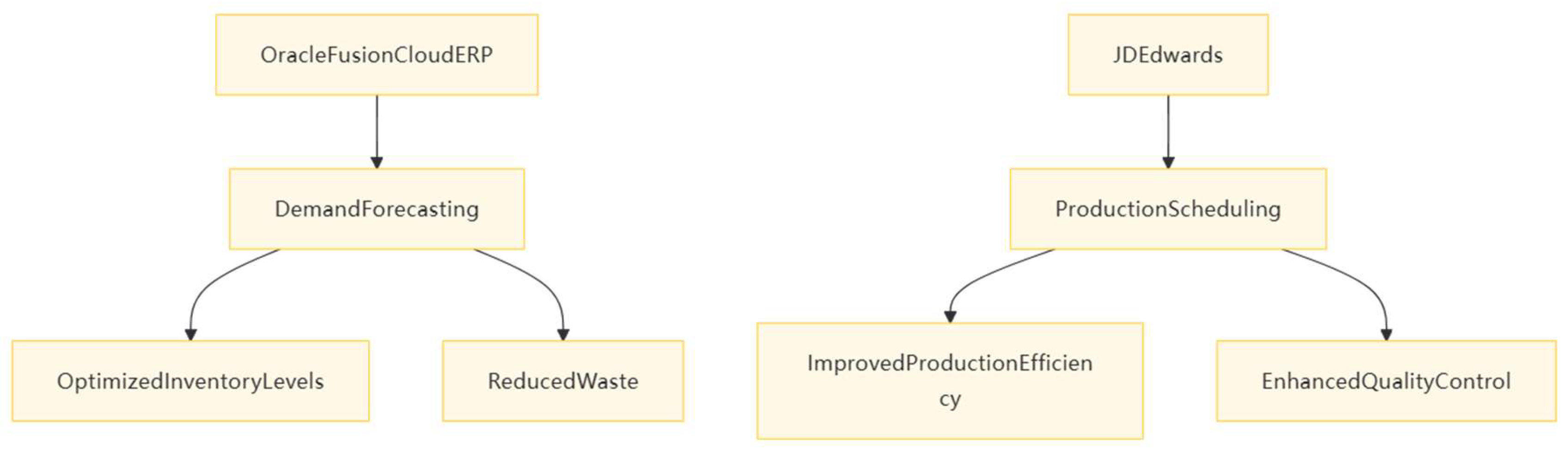
- Oracle Fusion Cloud ERP: This system stands out for its advanced supply chain management capabilities, particularly in procurement and logistics.[8] It leverages AI-driven demand forecasting to optimize inventory levels and reduce waste. For example, a retail company can use Oracle Fusion Cloud ERP to predict consumer demand based on historical sales data and market trends, allowing it to maintain optimal inventory levels and avoid stockouts or overstock situations.
- •
- JD Edwards: Specializing in manufacturing and distribution, JD Edwards provides tools for shop floor management, production scheduling, and quality control. [8]It is particularly useful for companies that need to manage complex manufacturing processes and ensure high product quality. For instance, an automotive parts manufacturer can use JD Edwards to track production progress, manage quality inspections, and optimize production schedules to meet customer demands.
Recent advancements in AI, such as the development of more sophisticated machine learning algorithms and natural language processing capabilities, are further enhancing the potential of ERP systems to drive business innovation and efficiency. For instance, the use of Generative Adversarial Networks (GANs) in supply chain management, as demonstrated by Zhang et al. [24], shows how AI can be used to identify credit risks in supply chains, thereby enhancing risk management and compliance.
Figure 2.
explains the application of ERP systems in supply chain management, highlighting functions such as demand forecasting and production scheduling, and their role in optimizing inventory levels and production efficiency.
Figure 2.
explains the application of ERP systems in supply chain management, highlighting functions such as demand forecasting and production scheduling, and their role in optimizing inventory levels and production efficiency.
3. Human Capital Management ERP
- •
- PeopleSoft: As Oracle’s HR-focused system, PeopleSoft supports comprehensive talent management and payroll automation. [8]It offers features such as employee performance tracking, training management, and benefits administration. For example, a large healthcare organization can use PeopleSoft to manage its workforce, ensuring that employees receive the necessary training and that payroll is processed accurately and efficiently.
- B.
- By Industry Specialization
- 1.
- Manufacturing
- •
- SAP S/4HANA: In the manufacturing sector, SAP S/4HANA supports IoT-enabled production planning and quality control. It allows manufacturers to connect their production equipment and collect real-time data, enabling them to optimize production processes and improve product quality. For example, a smart factory can use SAP S/4HANA to monitor machine performance, predict maintenance needs, and adjust production schedules based on real-time data.
- •
- iScala: Targeting mid-market manufacturers, iScala offers modular production and distribution modules that can be customized to meet specific business needs.[4] It provides functionalities such as production scheduling, inventory management, and customer relationship management. For instance, a mid-sized furniture manufacturer can use iScala to manage its production workflow, track inventory levels, and improve customer satisfaction by ensuring timely deliveries.
- 2.
- Real Estate
- •
- MRI Software: This system is designed to streamline lease accounting, portfolio management, and compliance for real estate firms. It offers features such as lease abstraction, rent roll management, and financial reporting. [7] For example, a real estate management company can use MRI Software to manage its lease agreements, track rental income, and ensure compliance with accounting standards such as ASC 842.
- 3.
- Healthcare
- •
- Infor CloudSuite: In the healthcare industry, Infor CloudSuite ensures HIPAA compliance and patient data security.[12] It provides functionalities such as electronic health record (EHR) management, revenue cycle management, and supply chain management. For example, a hospital can use Infor CloudSuite to manage patient information securely, optimize its supply chain operations, and ensure compliance with healthcare regulations.
- 4.
- Retail
- •
- Microsoft Dynamics 365: This system enhances inventory optimization and customer analytics for retail businesses.[6] It offers features such as demand forecasting, inventory management, and customer relationship management. For example, a retail chain can use Microsoft Dynamics 365 to analyze customer purchasing patterns, optimize inventory levels, and improve customer engagement through personalized marketing campaigns.
- C.
- By Deployment Model
ERP systems can be deployed in various models, each catering to different organizational needs and preferences. The two primary deployment models are cloud-based and on-premise solutions.
- 1.
- Cloud ERP: Cloud-based ERP systems offer flexibility, scalability, and reduced upfront costs. They are particularly popular among SMEs and organizations looking to quickly implement and scale their ERP solutions without significant IT infrastructure. Examples include Salesforce (FinancialForce) and Oracle NetSuite.
- •
- Salesforce (FinancialForce): As a SaaS-based ERP with CRM integration, Salesforce (FinancialForce) is ideal for subscription businesses. [10] It offers functionalities such as financial management, billing, and customer relationship management. For example, a software-as-a-service (SaaS) company can use Salesforce (FinancialForce) to manage its subscription-based revenue model, track customer interactions, and optimize billing processes.
- •
- Oracle NetSuite: This scalable cloud ERP is designed for SMEs and offers multi-entity financial consolidation.[8] It provides functionalities such as financial management, inventory management, and order management. For example, a growing e-commerce business can use Oracle NetSuite to manage its financial operations, track inventory levels, and consolidate financial data from multiple entities.
- 2.
- On-Premise ERP: On-premise ERP systems provide full control over data and infrastructure, making them suitable for industries with stringent security and compliance requirements, such as defense and utilities. Legacy SAP ECC is a prominent example of an on-premise ERP system.[9]
Transitioning from deployment models, it is essential to delve into the specific needs of Small and Medium-sized Enterprises (SMEs), which often require ERP systems that are not only cost-effective and easy to implement but also scalable to accommodate their growth. This brings us to the analysis of ERP systems tailored for SMEs.
- D.
- SME ERP Systems Analysis
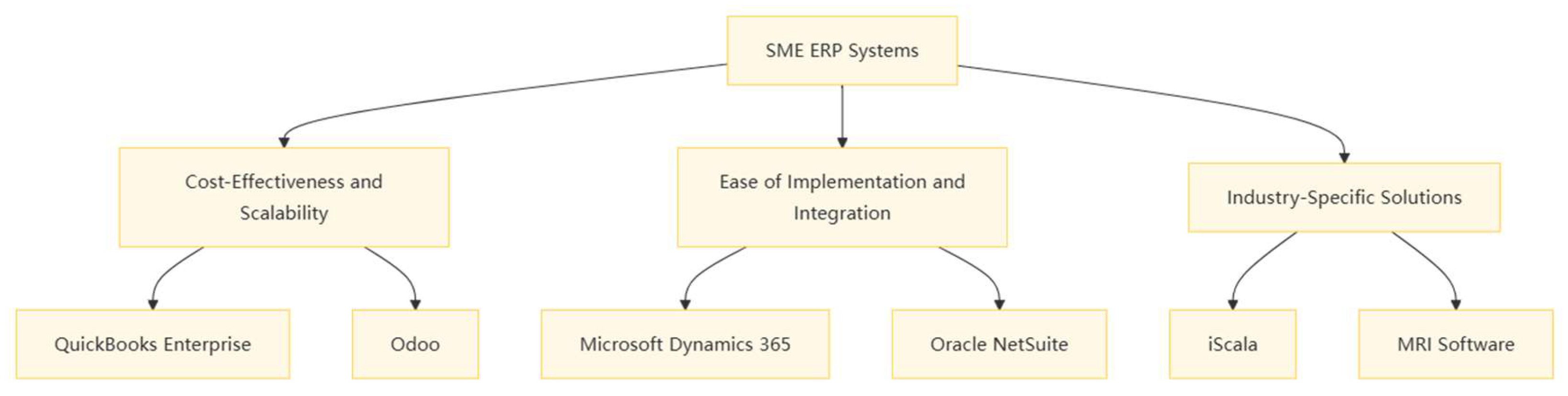
Small and Medium-sized Enterprises (SMEs) often have unique requirements when it comes to ERP systems. These businesses typically seek solutions that are cost-effective, easy to implement, and scalable to accommodate their growth. Here are some key considerations and examples of ERP systems tailored for SMEs:
- 1.
- Cost-Effectiveness and Scalability
- •
- QuickBooks Enterprise: This solution is designed to bridge the gap between basic accounting and full-fledged ERP systems for growing businesses. It offers a range of functionalities including financial management, inventory management, and payroll processing. For instance, a small manufacturing business can use QuickBooks Enterprise to manage its financial operations, track inventory levels, and process payroll as it grows. The system is particularly favored for its ease of use and affordability, making it accessible to SMEs with limited IT resources.
- •
- Odoo: As a modular open-source ERP, Odoo provides a wide range of functionalities that can be customized to meet specific business needs. It offers affordable pricing and flexibility, which are crucial for SMEs looking to control costs while maintaining the ability to scale. For example, a startup can use Odoo to manage its financial operations, customer relationships, and inventory management without incurring high costs. Odoo's modular design allows businesses to add or remove modules as their needs change, ensuring that the system grows with the business.
- 2.
- Ease of Implementation and Integration
- •
- Microsoft Dynamics 365: This system is known for its robust integration capabilities and ease of use. It offers a suite of applications that can be tailored to meet the specific needs of SMEs. For example, a retail business can use Microsoft Dynamics 365 to optimize inventory levels, manage customer relationships, and analyze sales data. The system's cloud-based architecture makes it easy to implement and scale, reducing the need for extensive IT infrastructure.
- •
- Oracle NetSuite: This scalable cloud ERP is designed for SMEs and offers multi-entity financial consolidation. It provides functionalities such as financial management, inventory management, and order management. For example, a growing e-commerce business can use Oracle NetSuite to manage its financial operations, track inventory levels, and consolidate financial data from multiple entities. The system's cloud-based nature ensures that businesses can quickly implement and scale their operations without significant upfront costs.
- 3.
- Industry-Specific Solutions
- •
- iScala: Targeting mid-market manufacturers, iScala offers modular production and distribution modules that can be customized to meet specific business needs. It provides functionalities such as production scheduling, inventory management, and customer relationship management. For instance, a mid-sized furniture manufacturer can use iScala to manage its production workflow, track inventory levels, and improve customer satisfaction by ensuring timely deliveries.
- •
- MRI Software: This system is designed to streamline lease accounting, portfolio management, and compliance for real estate firms. It offers features such as lease abstraction, rent roll management, and financial reporting. For example, a real estate management company can use MRI Software to manage its lease agreements, track rental income, and ensure compliance with accounting standards such as ASC 842.
Figure 3.
SME ERP Systems Analysis.
- E.
- By Scalability
Having explored the unique requirements and solutions for SMEs, we now turn to the broader classification of ERP systems based on their scalability, which is a critical factor for businesses aiming to grow and adapt to changing market conditions.
1. SMB Solutions
- •
- QuickBooks Enterprise: This solution bridges basic accounting and ERP needs for growing businesses. [5]It offers functionalities such as financial management, inventory management, and payroll processing. For example, a small manufacturing business can use QuickBooks Enterprise to manage its financial operations, track inventory levels, and process payroll as it grows.
- •
- Odoo: As a modular open-source ERP, Odoo offers affordable pricing and a wide range of functionalities that can be customized to meet specific business needs. [11]For example, a startup can use Odoo to manage its financial operations, customer relationships, and inventory management without incurring high costs.
2. Enterprise Solutions
- •
- SAP S/4HANA: This system handles complex global operations with custom workflows. It offers advanced functionalities for financial management, supply chain management, and human capital management. [9]For example, a global conglomerate can use SAP S/4HANA to manage its diverse business operations, optimize supply chain processes, and ensure compliance with international regulations.
- •
- Oracle ERP Cloud: Supporting large-scale financial and supply chain management, Oracle ERP Cloud offers robust functionalities for financial management, procurement, and logistics. [8]For example, a large retail corporation can use Oracle ERP Cloud to manage its financial operations, optimize procurement processes, and ensure efficient logistics management.

Table 1.
Application Effects of ERP Systems Across Various Industries.
| Industry | ERP System | Effect Indicator | Numerical Change |
| Manufacturing | SAP S/4HANA | Reduction in inventory holding costs | 20% |
| Manufacturing | SAP S/4HANA | Improvement in order fulfillment accuracy | 15% |
| Retail | Oracle Fusion Cloud ERP | Improvement in demand forecasting accuracy | 90% |
| Retail | Microsoft Dynamics 365 | Improvement in cash flow forecasting accuracy | 90% |
| Healthcare | Infor CloudSuite | HIPAA compliance improvement | 100% |
| Real Estate | MRI Software | Lease accounting standard compliance improvement | 100% |
| Financial Services | Oracle ERP Cloud | Fraud transaction detection accuracy improvement | Real-time detection |
- Figure 4. The above table presents the application effects of ERP systems across various industries, showcasing improvements in inventory costs, order fulfillment accuracy, demand forecasting, cash flow forecasting, compliance, and fraud detection.
- III. ERP Systems in Financial Management: Key Roles
- A. Enhanced Data Accuracy and Transparency
- ERP systems significantly enhance data accuracy and transparency by automating data synchronization and entry, reducing human errors and ensuring consistent data across departments.This is particularly crucial in financial management, where accurate data is essential for informed decision-making.
- •
- Case Study – SAP: A manufacturing firm reduced financial discrepancies by 40% through automated data synchronization [9].This improvement allowed the company to have a more accurate view of its financial health, leading to better decision-making and reduced costs associated with financial errors.For instance, SAP S/4HANA’s real-time accounting module ensures that all financial transactions are recorded and updated in real-time, providing a continuous and accurate financial overview.
- •
- QuickBooks Integration: AI tools like Grabb AI improve expense tracking accuracy by 25% through automated data entry.[3]This not only saves time but also ensures that all expenses are accurately recorded, providing a clearer picture of the company's financial outlays.For example, QuickBooks’ invoicing module, when integrated with AI, can automatically categorize expenses and generate detailed financial reports, enhancing the accuracy and transparency of financial data.
- •
- Cost Management Module: SAP S/4HANA’s cost management module provides detailed insights into cost centers and cost objects, enabling organizations to optimize their cost structures. For example, a manufacturing company can use this module to analyze production costs, identify inefficiencies, and implement cost-saving measures. This level of detail and accuracy is crucial for strategic financial planning and budgeting.
- •
- Budget Control Module: Oracle ERP Cloud’s budget control module allows organizations to set and monitor budgets in real-time, ensuring that financial goals are met and deviations are promptly addressed. For instance, a retail corporation can use this module to track monthly sales against budgeted targets, identify variances, and adjust strategies accordingly. This real-time monitoring enhances financial control and transparency.
Figure 5.
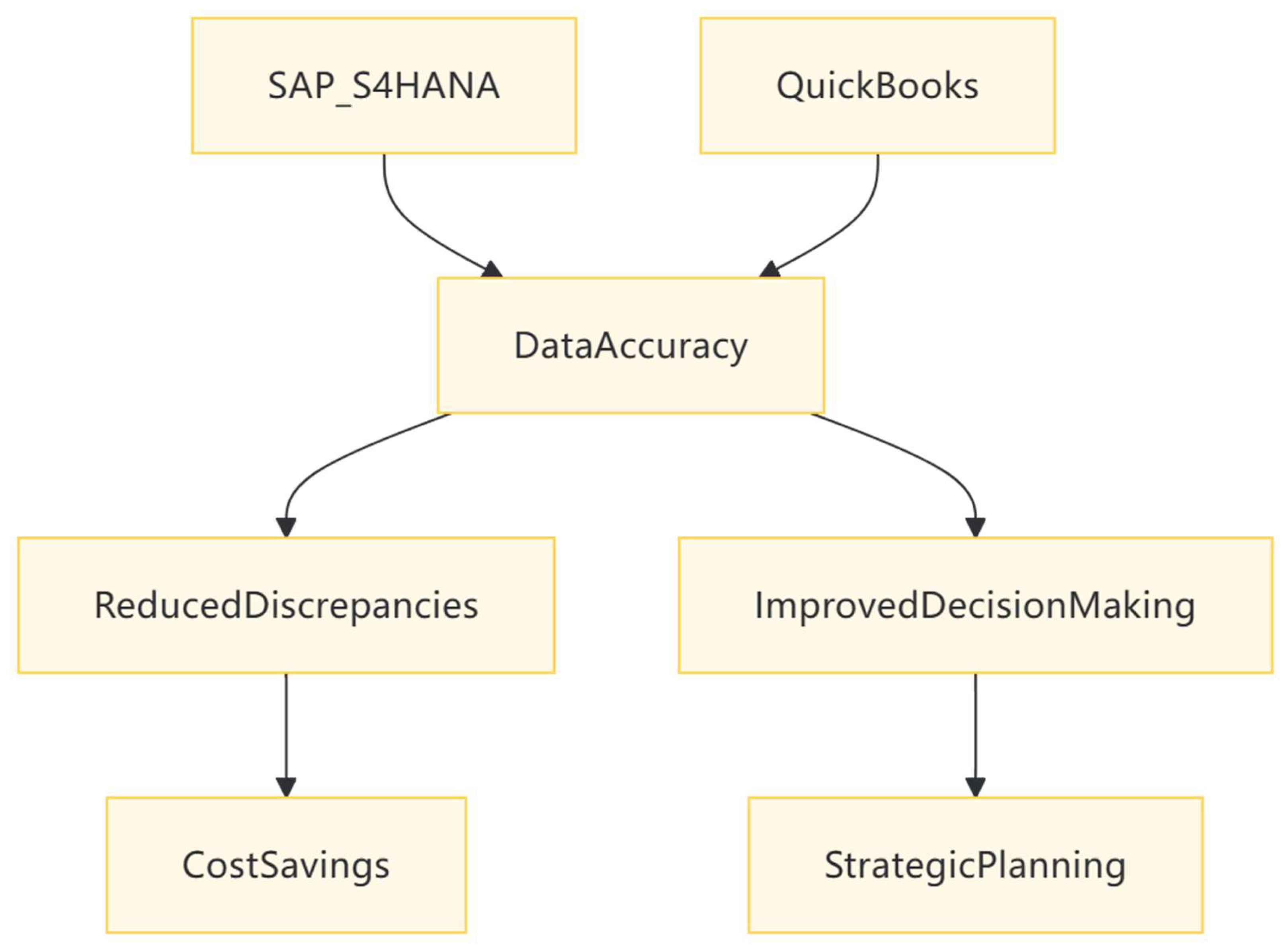
Below Mermaid chart depicts how ERP systems enhance data accuracy and transparency in financial management through automated data synchronization and AI integration, thereby improving decision-making processes.
Figure 5.
Below Mermaid chart depicts how ERP systems enhance data accuracy and transparency in financial management through automated data synchronization and AI integration, thereby improving decision-making processes.
- B.
- Risk Mitigation and Compliance
Internal control plays a crucial role in risk management and compliance. The integration of AI technologies, such as Artificial General Intelligence (AGI) and Artificial Super Intelligence (ASI), can significantly enhance the effectiveness of internal control systems. [14] For instance, AI algorithms can analyze vast amounts of data to identify emerging risks more quickly and accurately than traditional methods, thereby improving the organization's ability to mitigate risks and ensure compliance.
Oracle ERP Cloud: Detects fraudulent transactions in real-time using machine learning [8].For example, Oracle Cloud Risk Management uses data science to automate and digitize security and audit activities, protecting against fraud and error by continuously monitoring transactions and sensitive ERP data. Additionally, recent advancements in AI have enabled more sophisticated risk prediction models. For instance, a financial institution using an AI-driven ERP system was able to predict and prevent a potential fraud scheme by analyzing unusual transaction patterns and behavioral data, saving millions of dollars in potential losses.
- •
- MRI Software: Automates lease accounting standards (ASC 842) for real estate compliance[7].This ensures that companies in the real estate sector can easily adhere to complex accounting standards, reducing the risk of non-compliance and associated penalties.
- C.
- Strategic Decision Support
The integration of AI into Activity-Based Costing (ABC) systems can significantly enhance the precision of cost allocation and operational efficiency. [15] This, in turn, supports better strategic decision-making by providing more accurate and timely cost data, which is crucial for identifying and mitigating financial risks.
- •
- Predictive Analytics: Microsoft Dynamics 365 forecasts cash flow trends with 90% accuracy.[6]This allows businesses to have a clear view of their future financial status, enabling them to make informed decisions about investments, budgeting, and financial planning.
- •
- Scenario Modeling: JD Edwards simulates production costs under supply chain disruptions [8].For instance, in the case of supply chain disruptions, JD Edwards can model different scenarios to help businesses understand the potential impact on production costs and identify the most cost-effective strategies to mitigate these risks.
- D.
- Cross-Module Integration and Organizational Efficiency
ERP systems function as a centralized digital backbone, interconnecting departmental modules—such as finance, supply chain, human resources, and customer relationship management—into a unified operational ecosystem. Each module represents a distinct business function, yet their seamless integration enables real-time data sharing and process synchronization. For instance, a procurement transaction initiated in the supply chain module automatically updates inventory records, triggers accounts payable workflows in the finance module, and adjusts budget allocations, eliminating silos and reducing manual reconciliation. [20] This cross-module orchestration optimizes resource allocation, minimizes redundancies, and accelerates decision-making cycles.
For future financial professionals, the convergence of ERP and AI unlocks transformative efficiencies. By leveraging AI-driven analytics within ERP frameworks, finance teams can automate repetitive tasks (e.g., invoice processing, variance analysis) and focus on strategic activities like predictive budgeting and risk modeling. Tools such as SAP S/4HANA’s AI-powered cash flow forecasting and Oracle’s Intelligent Financial Close exemplify this synergy, reducing month-end closing cycles by 50% while enhancing accuracy.[21] Furthermore, AI-enhanced ERP systems enable proactive anomaly detection; for example, machine learning algorithms in Microsoft Dynamics 365 flag discrepancies between procurement and financial data, mitigating fraud risks.[6]
The integration of AI also empowers finance professionals to act as "data translators," bridging technical AI outputs with actionable business insights. A 2025 case study by McKinsey highlighted that organizations adopting AI-integrated ERP systems reported a 35% improvement in cross-departmental collaboration, as finance teams leveraged predictive analytics to align supply chain forecasts with fiscal planning. [22]This symbiotic relationship between ERP modules and AI not only streamlines operations but also redefines the role of financial managers as strategic partners in enterprise-wide optimization.
Practical Case Studies and Visual Aids
Case Study: Oracle ERP Cloud in Action
Oracle ERP Cloud has been implemented by several companies to manage risk and compliance effectively. For example, Chipotle used Oracle Cloud to streamline its operations and ensure compliance with food safety regulations. Similarly, the City of Atlanta saved $17.5M over 10 years by embracing Oracle Cloud for its financial management. [19]These case studies demonstrate the significant cost savings and improved compliance that can be achieved through the use of advanced ERP systems.
Figure 6.
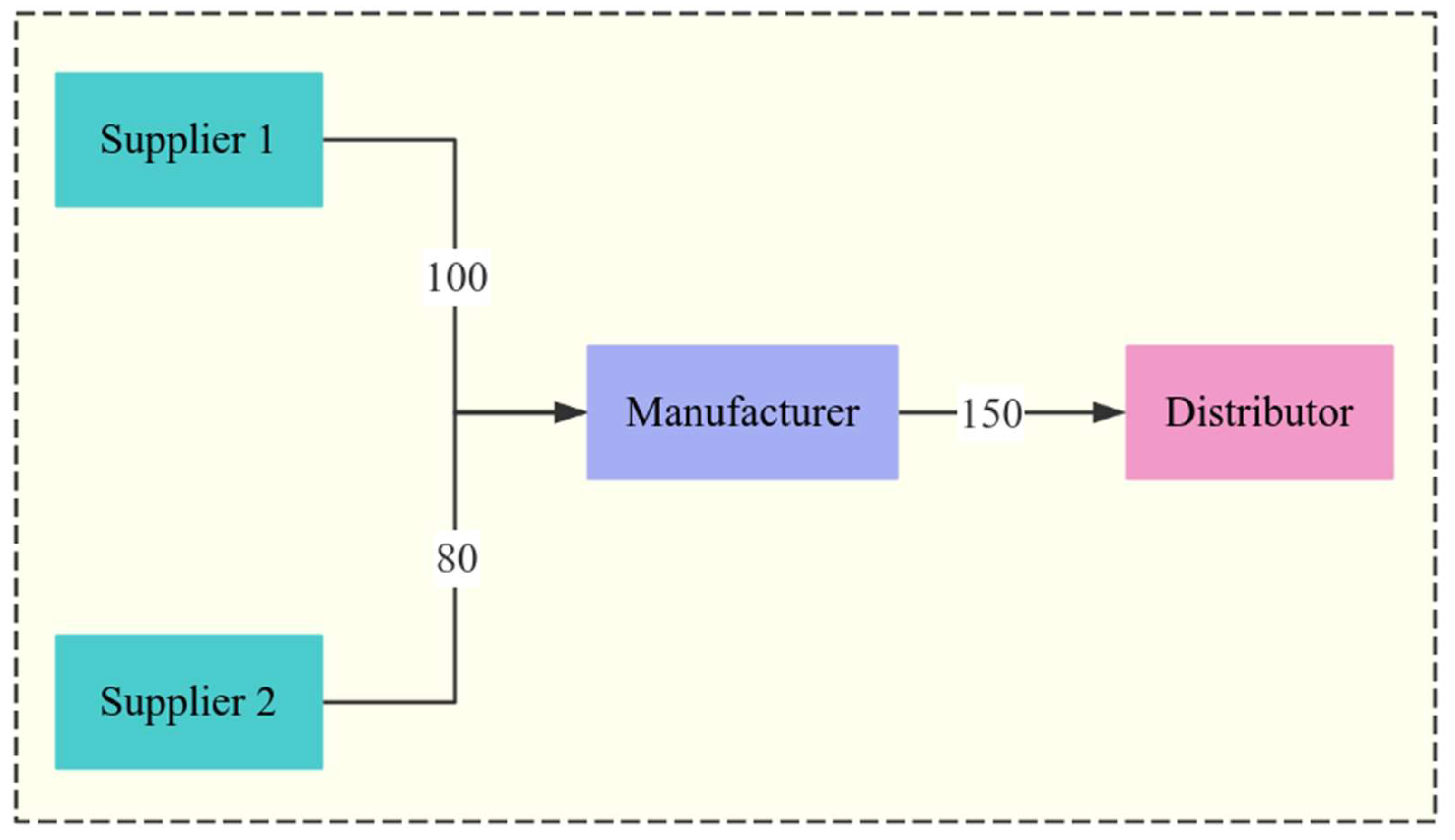
The following supply chain network diagram illustrates a simplified supply chain network, depicting the integration of supplier, manufacturing, and distribution modules within an ERP ecosystem. By visualizing dependencies and capacity constraints (e.g., Supplier1→Manufacturer: 100 units), the diagram underscores how ERP systems synchronize cross-departmental workflows. Seamless module interoperability minimizes delays and optimizes resource allocation during disruptionInventory Management with AI.
Figure 6.
The following supply chain network diagram illustrates a simplified supply chain network, depicting the integration of supplier, manufacturing, and distribution modules within an ERP ecosystem. By visualizing dependencies and capacity constraints (e.g., Supplier1→Manufacturer: 100 units), the diagram underscores how ERP systems synchronize cross-departmental workflows. Seamless module interoperability minimizes delays and optimizes resource allocation during disruptionInventory Management with AI.
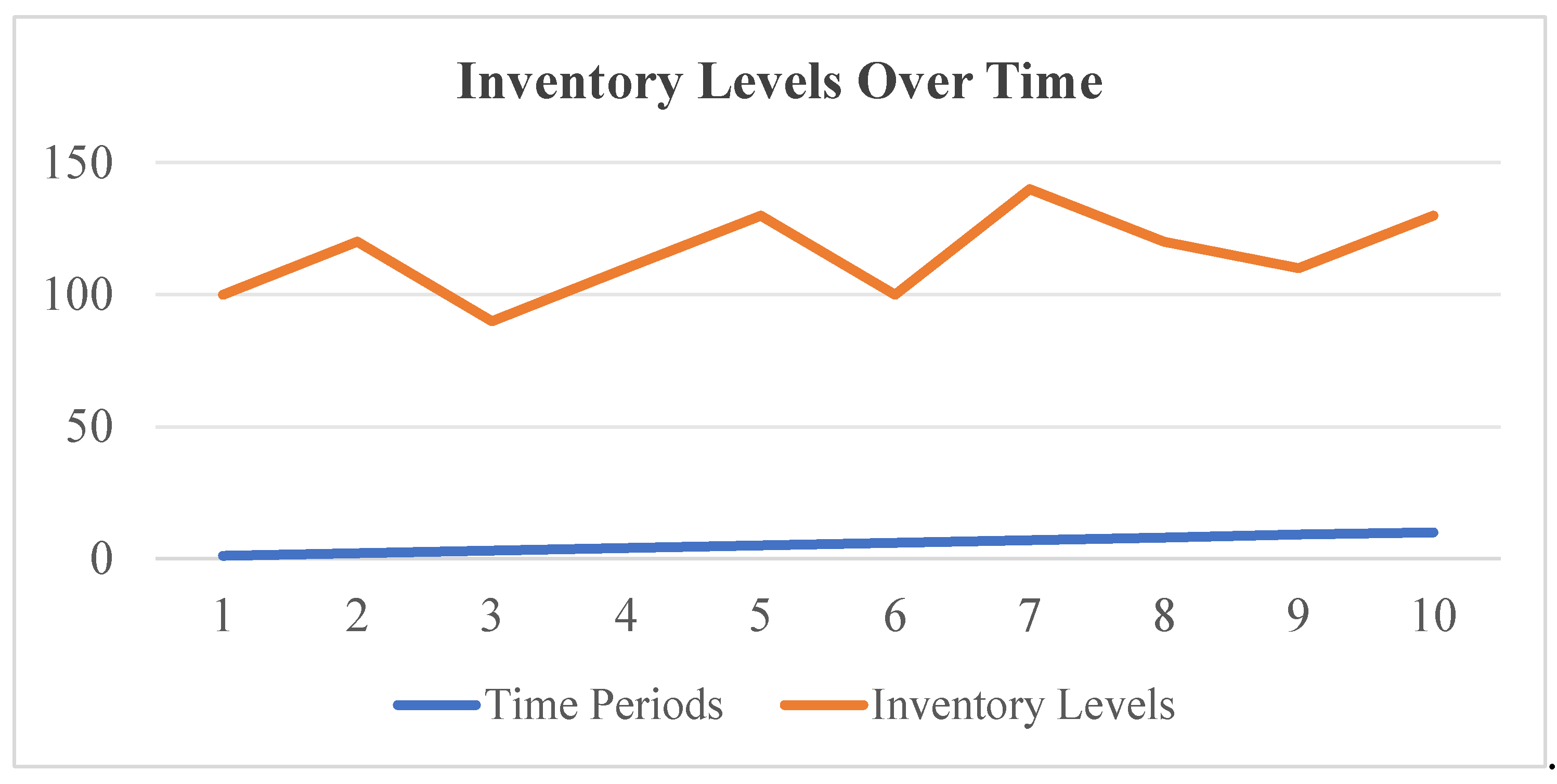
To illustrate the impact of AI on inventory management, consider the following visual representation:
Figure 7.
This graph shows the fluctuation in inventory levels over time, highlighting the need for accurate forecasting and optimization, which AI can provide.
Figure 7.
This graph shows the fluctuation in inventory levels over time, highlighting the need for accurate forecasting and optimization, which AI can provide.
Predictive Maintenance with AI
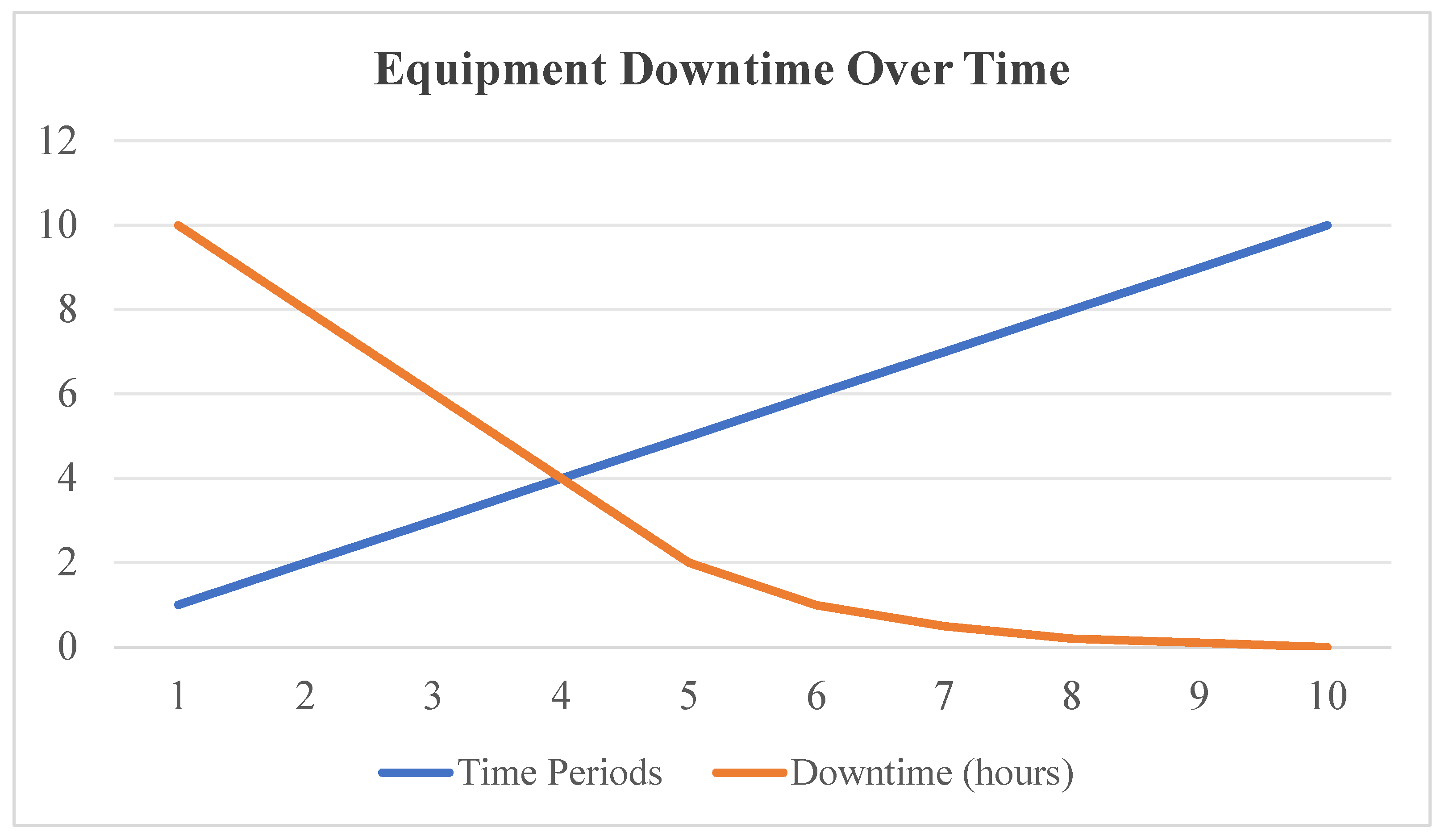
To visualize the benefits of AI-driven predictive maintenance, consider the following example:
Figure 8.
This graph demonstrates the significant reduction in equipment downtime over time, showcasing the effectiveness of AI-driven predictive maintenance.
Figure 8.
This graph demonstrates the significant reduction in equipment downtime over time, showcasing the effectiveness of AI-driven predictive maintenance.
IV. AGI/ASI Integration: Redefining ERP Capabilities
The integration of AI in various fields has shown significant potential in enhancing automation and efficiency. This study demonstrates how AI can be effectively utilized to extract and evaluate aggregate gradation from pavement core samples, reducing the need for manual inspection and improving the accuracy of texture analysis. Similarly, in the context of ERP systems, AI-driven automation can significantly enhance operational efficiency and accuracy, reducing the need for manual intervention in tasks such as inventory management and transaction categorization.[17,18]
A. AGI-Driven Automation
- •
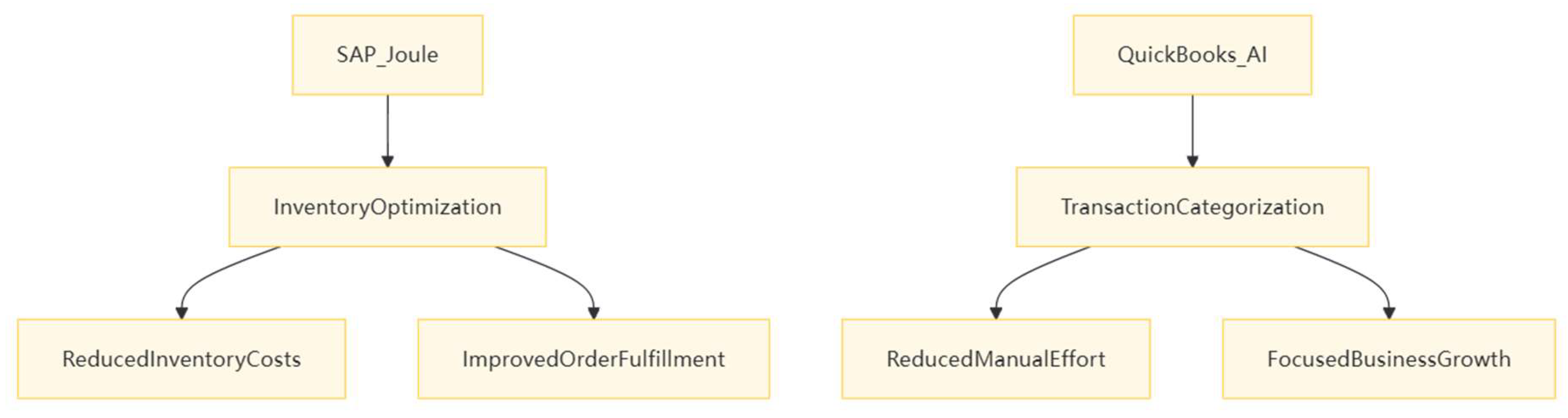
- SAP’s Joule: AGI optimizes inventory levels by analyzing supplier lead times and demand patterns [9].For example, a manufacturing company utilized SAP’s Joule to analyze historical sales data and supplier performance, resulting in a 20% reduction in inventory holding costs and a 15% improvement in order fulfillment accuracy.
- •
- QuickBooks + AI: Automates transaction categorization, reducing manual effort by 30% .[3]A small business owner reported that after integrating QuickBooks with AI tools, they were able to save over 10 hours per week on bookkeeping tasks, allowing them to focus more on business growth strategies.
Recent advancements in AI, such as the development of more sophisticated machine learning algorithms and natural language processing capabilities, are further enhancing the potential of ERP systems to drive business innovation and efficiency. For instance, the use of Autoencoder-CNN-GANs algorithms in developing cryptocurrency trading strategies, as demonstrated by Hu et al. [25], shows how AI can be used to optimize trading strategies and enhance financial decision-making.
Table 2.
Impact of AI Integration on ERP Systems.
| System | Function | Effect Indicator | Numerical Change |
| SAP S/4HANA | AGI-driven inventory optimization | Reduction in inventory holding costs | 20% |
| QuickBooks + AI | Automated transaction categorization | Reduction in manual effort | 30% |
| Oracle ERP Cloud | Cross-border tax optimization | Annual cost savings | $2M |
| Salesforce Einstein AI | Customer churn prediction accuracy improvement | Reduction in customer churn rate | 30% |
- Figure 9. This table illustrates the tangible benefits of integrating AI into ERP systems, showcasing significant improvements in operational efficiency and cost savings.
Figure 10.
shows the impact of AGI and ASI integration on ERP systems, demonstrating significant improvements in automation and efficiency through optimized inventory management and automated transaction categorization.
Figure 10.
shows the impact of AGI and ASI integration on ERP systems, demonstrating significant improvements in automation and efficiency through optimized inventory management and automated transaction categorization.
B. ASI and Global Optimization
The integration of AI in tax administration presents an opportunity to enhance compliance and efficiency, aligning with the global trend towards digital governance.This is particularly relevant as China considers tax reforms to align with global economic trends and advance social civilization.[16] The use of AI in tax systems can significantly enhance compliance behavior and operational efficiency, which is crucial for improving tax compliance and reducing tax evasion and avoidance."
- Oracle’s Adaptive Intelligence: ASI models solve cross-border tax optimization, saving enterprises $2M annually.[8]A multinational corporation implemented Oracle’s Adaptive Intelligence to analyze tax regulations across different countries and optimize their tax strategies, resulting in significant cost savings and improved compliance.
- Ethical Challenges: Unregulated ASI may prioritize profit over ethical sourcing, necessitating governance frameworks. [1] For instance, a study highlighted the need for ethical guidelines in AI-driven supply chain management to ensure fair labor practices and environmental sustainability. To address these challenges, future ERP systems should integrate explainable AI (XAI) frameworks to audit decision logic, ensuring transparency and accountability. Additionally, blockchain-integrated ERPs can provide immutable audit trails for compliance, enhancing ethical and sustainable business practices.
- Governance Models: In addition to the IEEE Global Initiative, other governance models such as the EU’s Ethics Guidelines for Trustworthy AI and the OECD’s AI Principles also provide comprehensive frameworks for ethical AI development and deployment. These guidelines emphasize the importance of transparency, accountability, and fairness in AI systems. Future ERP systems should integrate these principles into their design and operation to ensure ethical and sustainable business practices.
C. Autonomous Decision-Making and Adaptive Workflows
Future ERP systems, empowered by AGI, will transcend rule-based automation to achieve context-aware decision-making. For instance, AGI could analyze real-time market fluctuations, geopolitical risks, and internal operational data to autonomously adjust procurement strategies, pricing models, or production schedules. SAP’s Joule, for example, might evolve to not only optimize inventory but also negotiate supplier contracts dynamically using natural language processing (NLP) and predictive analytics. [21] Such systems could reduce human intervention in routine decisions while escalating complex scenarios to human managers, fostering a symbiotic human-AI collaboration.
Supporting Case:A 2026 pilot by McKinsey demonstrated that AGI-enhanced ERP systems reduced supply chain decision latency by 70%, enabling companies to respond to disruptions like port closures within minutes.[22]
Salesforce Einstein AI: Predicts customer churn with 85% accuracy, integrating CRM and financial data.[10] A telecommunications company used Salesforce Einstein AI to analyze customer interactions and predict which customers were likely to churn. By proactively addressing their concerns, they were able to reduce churn rates by 30%.
D. Self-Healing Systems and Predictive Governance
AGI-driven ERP platforms will likely incorporate self-diagnostic and self-correcting mechanisms. For example, anomalies in financial transactions or inventory discrepancies could trigger automated root-cause analyses and corrective actions, such as reconciling ledger entries or rerouting shipments. Additionally, AI could enforce ethical and regulatory compliance proactively—e.g., automatically blocking transactions violating ESG (Environmental, Social, Governance) criteria or updating tax calculations in response to legislative changes.
Example:Oracle’s Adaptive Intelligence might evolve to audit cross-border transactions in real-time, flagging potential tax evasion risks and suggesting compliant alternatives, thereby reducing audit costs by 40% .
iScala’s AI Transition: Migrates legacy manufacturing workflows to AI-driven predictive maintenance[23-24]. A manufacturing firm transitioned from traditional maintenance practices to AI-driven predictive maintenance using iScala’s solution. This resulted in a 60% reduction in equipment downtime and a 25% increase in production efficiency.
E. Hyper-Personalization and Human-Centric Interfaces
AGI will enable ERP systems to deliver role-specific, intuitive interfaces. For finance professionals, this could mean AI-generated dashboards that highlight critical metrics (e.g., cash flow risks) while suppressing irrelevant data. Machine learning models might also predict individual user needs—for instance, preemptively generating reports ahead of board meetings or recommending cost-saving measures based on historical decision patterns.
Illustration: Microsoft Dynamics 365 could integrate AGI to offer CFOs “what-if” simulations tailored to their risk tolerance, combining market data, internal budgets, and scenario modeling into actionable insights.[25]
F. Ecosystem-Level Integration and Interoperability
In the AGI era, ERP systems will act as hubs for cross-organizational ecosystems, seamlessly integrating data from partners, IoT devices, and even competitors. For example, a manufacturer’s ERP could share production forecasts with suppliers’ systems to synchronize raw material deliveries, while AGI algorithms negotiate pricing and terms autonomously. This interoperability would dissolve traditional silos, creating agile, demand-driven value chains.
Case Study:In 2021, Siemens and SAP announced a partnership to deliver integrated and more powerful software solutions across product lifecycle management (PLM) and ERP systems. This collaboration aims to enhance operational efficiency and innovation for their joint customers by combining Siemens' expertise in industrial automation and SAP's leadership in ERP solutions[26].
V. Challenges and Ethical Considerations
A. Data Security
Hybrid ERP systems, such as SAP S/4HANA, require zero-trust architectures to prevent breaches. This is crucial for maintaining data integrity and protecting sensitive information from unauthorized access.
B. Workforce Displacement
The rise of AGI may automate 50% of accounting tasks by 2030, necessitating reskilling initiatives to ensure the workforce remains relevant and adaptable to new technologies[27].
C. Bias in AI Models
PeopleSoft’s recruitment algorithms must be audited to avoid gender or racial bias. This is essential for ensuring fair and equitable hiring practices within organizations.[28,29]
D. Ethical AGI and Transparent Governance
While AGI unlocks efficiency, it also introduces ethical challenges. Future ERP systems must embed explainable AI (XAI) frameworks to audit decision logic, ensuring accountability. For example, PeopleSoft’s recruitment algorithms could be designed to document bias mitigation steps, while blockchain-integrated ERPs (e.g., Infor CloudSuite) might provide immutable audit trails for compliance.
Ethical Challenges: Unregulated ASI may prioritize profit over ethical sourcing, necessitating governance frameworks. For example, a study highlighted the need for ethical guidelines in AI-driven supply chain management to ensure fair labor practices and environmental sustainability. Recent developments in AI ethics have led to the creation of frameworks such as the IEEE Global Initiative on Ethics of Autonomous and Intelligent Systems, which provides guidelines for ensuring that AI systems are designed and operated in a manner that is ethical and beneficial to humanity. Future ERP systems must adhere to such frameworks to ensure that AI-driven decision-making aligns with ethical standards and promotes sustainable business practices.
E. Scalability Limits
QuickBooks struggles with multi-entity consolidation, pushing firms toward more robust solutions like Oracle or SAP. This highlights the need for scalable ERP systems that can grow with the organization.[5]Recent advancements in cloud-based ERP solutions, such as Oracle NetSuite and Microsoft Dynamics 365, have addressed these scalability issues by providing flexible, multi-entity financial consolidation and reporting capabilities. For example, a growing e-commerce business can use Oracle NetSuite to manage its financial operations, track inventory levels, and consolidate financial data from multiple entities, ensuring seamless scalability and growth.
F. Latest ERP Solutions
Modern ERP solutions like Infor CloudSuite and SAP S/4HANA Cloud also offer advanced scalability features, including real-time data processing, adaptive analytics, and intelligent automation. These solutions enable organizations to handle complex global operations with ease, ensuring that their ERP systems can evolve alongside their business needs. For instance, a global conglomerate can use SAP S/4HANA Cloud to manage its diverse business operations, optimize supply chain processes, and ensure compliance with international regulations, all while maintaining high levels of scalability and flexibility.
Recommendation: Propose industry-wide standards for AGI governance in ERP, such as ISO-certified ethical AI modules or third-party certification bodies. This will help ensure that AI-driven ERP systems are not only efficient but also ethical and transparent in their operations.
VI. Conclusion
The ERP landscape is marked by a dichotomy between end-to-end giants (SAP, Oracle) and niche specialists (MRI, iScala). While SAP and Oracle lead in AI and cloud innovation, systems like QuickBooks and Salesforce democratize ERP access for SMEs. The integration of AGI/ASI promises unprecedented efficiency but demands ethical governance. Future research must prioritize interoperability standards (e.g., ERP-CRM integration) and AI transparency to ensure equitable technological adoption.
References
- Chen, B. (2025). The Pivotal Role of Accounting in Civilizational Progress and the Age of Advanced AI: A Unified Perspective.
- Chen, B. (2025). The Role of Accounting and Financial Management in Humanity's Transition to the Interstellar Era.
- Grabb. (2021). Top AI Apps for QuickBooks. Grabb AI Blog. https://grabb.ai/blog.
- iScala. (2025). iScala Manufacturing Solutions. Retrieved from https://www.iscala.com.
- L&Y Tax Advisors. (2023). QuickBooks Limitations. https://lytaxadvisors.com/quickbooks.
- Microsoft. (2024). AI in Dynamics 365. Microsoft Blog. https://www.microsoft.com/dynamics365.
- MRI Software. (2025). Real Estate ERP Solutions. https://www.mrisoftware.com.
- Oracle. (2025). Oracle Cloud ERP Features. Retrieved from https://www.oracle.com/erp.
- SAP. (2025). SAP S/4HANA Innovations. https://www.sap.com/s4hana.
- Salesforce. (2025). FinancialForce and AI. https://www.salesforce.com/financialforce.
- Odoo. (2025). Odoo ERP Solutions. Retrieved from https://www.odoo.com.
- Infor. (2025). Infor CloudSuite Self-Service Portal User Guide (Cloud). Retrieved from https://docs.infor.com/ssp/2025.x/en-us/cssplib/self_service_portal/cover.html.
- Deloitte. (2025). 2025 Tech Trends: AI in ERP. Deloitte Insights. https://www2.deloitte.com/tech-trends.
- Li, Z., Bookbinder, J. H., & Elhedhli, S. (2012). Optimal shipment decisions for an airfreight forwarder: Formulation and solution methods. Transportation Research Part C: Emerging Technologies, 21(1), 17-30. [CrossRef]
- Chen, B. (2025). Leveraging Advanced AI in Activity-Based Costing (ABC) for Enhanced Cost Management.
- Zhang, Z., Li, X., Cheng, Y., Chen, Z., & Liu, Q. (2025). Credit Risk Identification in Supply Chains Using Generative Adversarial Networks. arXiv preprint arXiv:2501.10348.
- Lu, B., Dan, H.-C., Zhang, Y., & Huang, Z. (2025). Journey into Automation: Image-Derived Pavement Texture Extraction and Evaluation. arXiv preprint: 2501.02414.
- Liu A*, Jia, M, Chen, C, (2025). From Speculative Dreams to Ghost Housing Realities: Homeless Homeowners Failed Future-Making in Urban Development, Urban Geography. [CrossRef]
- Oracle. (n.d.). City of Atlanta. Retrieved January 26, 2025, from https://www.oracle.com/sg/customers/city-of-atlanta/.
- Deloitte. (2025). ERP integration and digital transformation: Bridging silos for operational excellence. Deloitte Insights. https://www2.deloitte.com/erp-integration.
- Gartner. (2025). AI-driven ERP: Reshaping financial workflows. Gartner Research. https://www.gartner.com/ai-erp.
- McKinsey & Company. (2025). The future of finance: AI, ERP, and cross-functional collaboration. McKinsey Digital. https://www.mckinsey.com/future-finance.
- Ahex Technologies. (2025). Top 7 Use Cases of AI in ERP Systems: Insights and Case Studies for 2025. Retrieved from https://ahex.co/top-ai-in-erp-systems-use-cases/.
- Yu, Q., Ke, Z., Xiong, G., Cheng, Y., & Guo, X. (2025). Identifying Money Laundering Risks in Digital Asset Transactions Based on AI Algorithms.
- Hu, Z., Yu, R., Zhang, Z., Zheng, H., Liu, Q., & Zhou, Y. (2024). Developing Cryptocurrency Trading Strategy Based on Autoencoder-CNN-GANs Algorithms. arXiv preprint arXiv:2412.18202.
- Tang, J., Zhang, W., Liu, H., Yang, M., Jiang, B., Hu, G., & Bai, X. (2022). Few could be better than all: Feature sampling and grouping for scene text detection. In Proceedings of the IEEE/CVF Conference on Computer Vision and Pattern Recognition (pp. 4563-4572).
- Liu, Y., Zhang, J., Peng, D., Huang, M., Wang, X., Tang, J., ... & Jin, L. (2023). Spts v2: single-point scene text spotting. IEEE Transactions on Pattern Analysis and Machine Intelligence.
- Feng, H., Liu, Q., Liu, H., Tang, J., Zhou, W., Li, H., & Huang, C. (2024). Docpedia: Unleashing the power of large multimodal model in the frequency domain for versatile document understanding. Science China Information Sciences, 67(12), 1-14. [CrossRef]
- Zhao, Z., Tang, J., Lin, C., Wu, B., Huang, C., Liu, H., ... & Xie, Y. (2024). Multi-modal In-Context Learning Makes an Ego-evolving Scene Text Recognizer. In Proceedings of the IEEE/CVF Conference on Computer Vision and Pattern Recognition (pp. 15567-15576).
Disclaimer/Publisher’s Note: The statements, opinions and data contained in all publications are solely those of the individual author(s) and contributor(s) and not of MDPI and/or the editor(s). MDPI and/or the editor(s) disclaim responsibility for any injury to people or property resulting from any ideas, methods, instructions or products referred to in the content. |
© 2025 by the authors. Licensee MDPI, Basel, Switzerland. This article is an open access article distributed under the terms and conditions of the Creative Commons Attribution (CC BY) license (http://creativecommons.org/licenses/by/4.0/).
Copyright: This open access article is published under a Creative Commons CC BY 4.0 license, which permit the free download, distribution, and reuse, provided that the author and preprint are cited in any reuse.


