

Submitted:
27 January 2025
Posted:
28 January 2025
You are already at the latest version
Abstract
The Central Dogma remains a basic tenant and guideline for basics of Biology. While exceptions are well known, expansions are rarely explored. Here we propose the New Central Dogma which outlines the role of epigenetics and briefly introduces how human intervention bends the nature of the Central Dogma. As the Central Dogma is employed as an introductory framework, we hope that additions are added such that the New Central Dogma elaborates to DNA> RNA> PROTEINS> BRAINS> BEHAVIOR EPIGENETICS. These additions will provide an updated introductory model as well as demonstrating the value of applying basic protein synthesis mechanisms to the cognitive and neural sciences.
Keywords:
Central Dogma
; Epigenetics
; Psychology
; Neuroscience
“The limitation of the Central Dogma is not that it is wrong, but rather the dogma limits our minds. The entire focus of Crick’s statements was on the transmission of information. However, the transmission of information explains nothing beyond those limited goals, albeit essential, but limits our horizons in appreciating not only the complex functions and activities of cells but also the interactions—dynamic as they are—in multicellular organisms” (Hewitt, 2020).
What is The Central Dogma?
Most psychologists are aware of Francis Crick, who, along with Rosalind Franklin, James Watson, and Maurice Wilkins, are credited with discovering the double-helix structure of DNA which confirmed that nucleic acids were the underlying structures of heredity. This work in the early 1950’s is often taught as providing the molecular lynchpin to Darwin’s theory of Natural Selection. Integral to Biology, and lesser known in the world of Psychology, is the fact that Crick outlined the Central Dogma (CD), a catchy terminology given to the notion that DNA is transcribed into RNA which then translates into Proteins. The critical notion behind this work is both in terms of expression and heredity, connecting genotype and phenotype.
As indicated, the Central Dogma is the description of one of the most fundamental biological processes. And while it is true that Crick speculated in 1957 that DNA was the underlying product in synthesizing proteins, a number of ideas about the Central Dogma must be amended to this understanding. The first, and most important, is that proteins do not translate backwards to DNA. That is, once ‘information’ is used to make that protein, the information does not flow backwards. Looking at his original notes, this is a critical idea. What is remarkable is that Crick’s arrows do not extend between RNA and DNA. The later discovery of reverse transcription makes Crick’s diagram even more impressive as it allowed for this possibility.
Most scientists take the CD and the later description of codons to demonstrate how basic heredity units build life through amino acids and proteins. This idea is now so critical to biology that it co-exists (and co-mingles) with the Theory of Evolution as a second basic law of life. There is evidence that Crick was more tentative than ‘dogma’ implies and his use of such a definitive word was not his intention. However, it is likely that by placing the idea as irrefutable fact, even if accidental, the CD became something that is now taught in all biology classes. The fact that the original CD is supported by all available data accrued over the last decades reinforces Crick as a thinker that few can match.
The research on epigenetics does not violate these principles. The role of the expression of nucleic acids was not fully understood initially, but as discoveries began to be reported, the directionality of information flow has been confirmed. That said, the notion that nucleic acids are the only form of genetic, heritable transmission is not correct. Briefly stated, the more that is discovered about, for example, prions, the more they appear capable of ‘nucleic acid-like’ activity, including having a single protein template for multiple variants which expands our understanding of epigenetics.
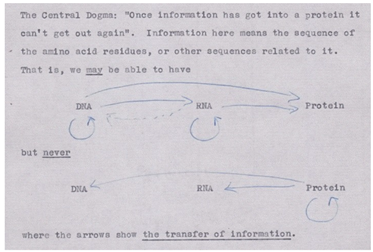
60 years ago, Francis Crick changed the logic of biology. PLoS Biol. 2017 Sep 18;15(9):e2003243. doi: 10.1371/journal.pbio.2003243. PMID: 28922352; PMCID: PMC5602739.
The New Central Dogma
Countless products are the result of genetic expression and the interactions between these products and existing constituents that are complex and difficult to isolate. Of unique importance, however, is the brain and related systems, as their existence plays a direct role in directing behavior which, as we will see, is one component of a new way of envisioning inherited genetic processes. With the rise of epigenetics, we now know the importance that brains, behaviors, and the inherited acquired expressional elements have in describing basic life processes. Simply put, if proteins are a final product of the ‘old’ CD, the New Central Dogma (NCD) adds the brain, behavior, and epigenetics. Specifically, proteins produce the brain, the brain enables behaviors, and behaviors direct epigenetics.
Like the CD, the NCD in its short form (proteins produce brains, brains enable behavior, and behaviors direct epigenetics) is an oversimplification and instead serves as a handy guide to introduce or describe the overall process.
One critical idea is as follows. The human brain bypasses traditional evolutionary mechanisms (i.e., Natural and Sexual selection such that significant changes can be wrought without genetic encoding. This ‘step’, the added concept of Behavior, has defied many ‘laws’ of evolution. We do not think Artificial Selection is an exception to the CD, as it traditionally implies human intervention enacting traditional evolutionary principles, namely, selection. Instead, we think that intentional teaching, self-awareness, grammar, theory-of-mind, suicide, birth control, etc… has made human behavior a significant step in how we contemplate genetics. This is, even without considering our implementation of CRISPR and related technologies (also products of human behavior), the interplay between mental state attribution and developmental cognition in a brain so dependent on others input is why the final step of ‘protein’ is hardly that.
In other words, human brains and human behaviors are so aberrant compared to any other life form that they change the basics of genetics. The CD is incomplete without them and psychology as a science is incomplete without integrating the NCD.
A second critical component is the role of epigenetics.
History of Epigenetics
The importance of epigenetics, or the impact environment plays in genetics, was first presented by Jean-Baptiste Lamarck (Villota-Salazar, Nubia Andrea et al., 2016). Lamarck’s belief that the interaction between the environment and individuals was a key factor in the evolution of species (Villota-Salazar, Nubia Andrea et al., 2016). At odds with Darwin’s theory of evolution, 19th century academia rejected Lamark’s notion as acquisitional learning did not appear transgenerational (Villota-Salazar, Nubia Andrea et al., 2016). It was not until the early 20th century when the origin of the word “Epigenetics” first began to emerge (Villota-Salazar, Nubia Andrea et al., 2016). Coined by Conrad Hal Waddington, the new relationship between preformationism and epigenesis would take a series of groundbreaking and compounding discoveries before a working definition of epigenetics was surmised (Villota-Salazar, Nubia Andrea et al., 2016).
At present, epigenetics would include the observable changes in the expression of individual genes otherwise unexplained by an individual’s DNA sequence, meiotic, or mitotic processes (Felsenfeld, 2014; Riggs et al. 1996; Riggs and Porter 1996;). H.J. Muller, a Nobel prize winning American geneticist, was another initial contributor to the idea of epigenetics. He put forth the notion that chromosomal displacements, or translocations, could generate a wide array of phenotypic changes, not observed by fellow progeny of the same species (Felsenfeld, 2014; Muller, 1930). Muller (1930) created a mutation index by observing induced mutations, caused by x-rays (i.e., artificial evolution), and spontaneous naturally occurring mutations. Research indicated that when observing white or star eyes, rudimentary or miniature wings, and forked bristles, mutations are consistent in both controlled and sample test groups. Thus, Muller (1930) pioneered the notion that, once inherited, gene expression can vary based on environmental factors.
The manipulation of gene expression and gene diversity was further researched at Rockefeller University by Vincent Allfrey in 1964 (Verdin et al. 2015). Allfrey identified the importance of structural histones, their role in transcription and protein modification in addition to the effect of their subsequent acetylation and methylation. Histones are structural proteins that are central to forming nucleosomes, a protein complex that aids in the chromatin organization (Mariño-Ramírez-2005). As a core particle in DNA condensation, these structural proteins allow for the reversible process of winding and unwinding genetic material in order to be copied, transcribed, and translated (Mariño-Ramírez-2005). By exposing calf thymus tissue to the antibiotic Puromycin, Alfred (1964) was able to demonstrate that histones could regularly be both methylated and acetylated post completion of the original polypeptide chain. Through his observation, Alfred and researchers concluded these varying chemical states were effective at inhibiting RNA synthesis and their corresponding translation of functional proteins. Alfred’s framework was instrumental as it acknowledged that alternation of histones was not only possible post inheritance but would cause changes in cellular functions (Verdin et al. 2015). It is also important that upon building on Vincent Allfrey work in 1964, Dr.Yang Shi and colleagues (2004) defined a key participant in both epigenetic regulation and inheritance to be the discovery of histone demethylase (HDM). HDM gave credence to the idea that not only histone modification was a reality, but it was also reversible (Shi et al. 2013).
Other notable contributors to the field of epigenetics include Holliday, as well as J. E. Pugh and A. D. Riggs, who independently proposed the importance of DNA methylation and its robust outcome on gene expression (Holiday et al., 1975). DNA methylation, the addition of a methyl-group (CH 3) to a DNA molecule, is the most researched epigenetic modification. Aiding in the stability of a genome, about 98% of DNA methylation occurs on cytosine in CpG sites (Angeloni and Bogdanovic, 2019; Jin et. al, 2013)).
The addition of a methyl-group (CH 3) to cytosine at the C5 position most often involves the methyl donor, S-adenosyl-L-methionine (SAM) (Angeloni et al., 2019; Jin et al., 2013).
Although their default state is most commonly densely methylated in CpG islands, Cytosine-guanine (CpG) dinucleotide sites can exist in a methylated or unmethylated state cause silencing of gene expression respectively. The insertion of a methyl group can cause a gene to become active or inactive by altering the structure of the DNA (Loaeza-Loaeza et al., 2020), without changing the DNA sequence.
- Define DNA Methylation (addition of a methyl-group (CH 3) to a DNA molecule) and demethylation of the CpG site
- Unmethylated CpG promoter site, gene is expressed
- Methylated at CpG promoter site, gene is silenced (also can silence an inhibitor which causes expression)
DNA methylation is largely at play within genomic regulatory processes during development. Both DNMT3A and DNMT3B are de novo methyltransferases that are dynamically expressed during prenatal brain development (Spiers et al., 2015). Covalent modification of DNA is an essential step of development that is accomplished through methylation, guided by the DNMT genes. This mechanism was outlined during an experiment which inactivated the DNMT3A and DNMT3B genes, resulting in the blockage of de novo methylation in early embryos (Okano et al., 1999).
Acetylation, a hallmark in epigenetics, is another type of modification that can change protein functions by causing alterations to their solubility, surface properties, and hydrophobicity (Christensen et al. 2019). First observed by Allfrey and colleagues (1964), the addition of acetyl groups via acetyltransferases and their removal by deacetylases have provide much insight to how and why modifications to genomes can occur regardless of individual’s DNA sequence, meiotic, or mitotic processes (Felsenfeld, 2014; Riggs et al. 1996; Riggs and Porter 1996;). When concerning microorganism metabolisms, Christensen and researchers (2019) noted that acetyltransferases, used by Listeria monocytogenes, and deacetylases, utilized by Rhodopseudomonas palustris, aid in the formation of metabolites such as acetyl phosphate and acetyl coenzyme A. As these metabolites are essential cofactors in many biological processes, the extent to which an organism can add or remove acetyl groups at the genetic level can have dramatic effects.
Lee et al. (1993), of the Ambros and Ruvkun group, announced the discovery of microRNA (miRNA) providing an additional development in the field of epigenetics (O’Brain et al. 2018). Non-coding RNAs (ncRNAs) including, but not limited to, microRNAs (miRNAs) are expressed transcripts that do not code for proteins (Ratti et al., 2020). Non-coding RNAs can bind to messenger RNAs (mRNAs) and inhibit the translation from RNA to protein, as well as inhibit or alter the function of genes. NcRNAs also guide the positioning of nucleosomes along genomes, which alters accessibility to DNA (Hübel et al., 2019). Lee and researchers (1993) observed irregular heterochronic developmental patterns (e.g., the absence of adult structures like vulvas or cuticles and the prevention of eggs laying) in Caenorhabditis elegans concluding that miRNA produced by the transcription of the lin-4 gene was inhibiting the expression of the lin-14 gene through antisense complementary binding. This discovery, afforded through restriction fragment length polymorphism, attributed the noted abnormalities to the genesis of single stranded, small, and ncRNA fragments or miRNA (Lee et al., 1993). After its discovery in 1993, miRNA has proven to be an integral part of epigenetics. More current research provides evidence that miRNA can affect symmetrical neurodevelopment, tissue formation, and cardiac morphology (Bhaskaran, 2013).
Current State of Epigenetics
Many scientists and researchers brought emerging evidence that further enhanced Epigenetics. Epigenetics had grown to become a widely recognized subdiscipline of biology (Jablonka, E, et al., 2002). Epigenetics began with discussions regarding the nature of the components that drive organismal development and has progressed to events like as DNA and histone modifications, the chromosomal theory of inheritance, and the biological activity of small noncoding RNAs (Villota-Salazar, Nubia Andrea et al., 2016). The known molecular mechanisms of epigenetic regulation offer a comprehensive explanation for the functioning of biological systems and place the influence of the environment as a key determinant of cellular differentiation that give rise to a phenotype (Villota-Salazar, Nubia Andrea et al., 2016).
These epigenetic mechanisms are reversible but very stable and exert a significant impact on the regulation of gene expression. The cells of a given organism have the same genome but from the embryonic stage, different types of cells arise that express different genes, granting cellular differentiation. The research that gave rise to the notion of epigenetics, such as those by Holliday and Pugh, Riggs (1975), and others, were mostly conducted in eukaryotes and concerned the localization of genetic information in cells as well as the modification of DNA and histones (Villota-Salazar, Nubia Andrea et al., 2016). This ushered in a new era of epigenetic research, referring to the primary molecular pathways that support epigenetics. The molecular mechanisms underlying epigenetics have been related to a variety of diseases and ailments, including cancer.
Cancer was the first human disease associated with epigenetic changes (Lee, J, E, et al., 2022). Most research in cancer epigenetics focused on mutations that deregulate the expression of specific chromatin-modifying enzymes (CMEs) in cancer. Others have focused on environmental factors (cigarette smoking, nutrition, stress, etc.) that leads to an increase of DNA methylation seen at multiple cytosine-phosphate-guanine (CpG) sites (Roby Joehanes et al., 2016). Cancer was the first human disease associated with epigenetic changes (Lee, J, E, et al., 2022). Carcinogenesis can result from aberrations of genome DNA methylation that include hypermethylation and hypomethylation of promoter or first exon of cancer-related genes (Luczak, Michał W et al., 2006). Hypermethylation of the promoter and first exon leads to transcriptional silence and inhibition of tumor suppressor genes (Delpu, Yannick et al., 2013). However, hypomethylation of regulatory DNA regions promotes transcription of protooncogenes, retrotransposons, and genes encoding proteins involved in genomic instability and cancer cell metastasis (Luczak, Michał W et al., 2006). Despite no evidence of identified actors in DNA demethylation, overexpression of DNMTs are described in various cancers such as colon, breast, and acute and chronic leukemia (Delpu, Yannick et al., 2013). Many epistatic genes, including those involved in apoptosis and cell cycle regulation, are silenced as a result of DNA hypermethylation.
There are several genes identified and are present in different epigenetic mechanisms which involve carcinogenesis. The N-terminal tails of histones are epigenetically modified by histone acetyltransferases (HATs), histone deacetylases (HDACs), and histone methyltransferases (HMTs). These histone post-translational modifications (PTMs) have been extensively linked to cancer, both at the global level across the genome and at specific gene loci (Audia, James E et al., 2016). There are four primary families of HDACs, class 1,2,3,4 that operate on proteins involved in tumor migration, metastasis, and growth and target cortactin (HDAC6), p53 (HDAC5), and others (Audia, James E et al., 2016). In addition, several writers of histone modifications, such as lysine methyltransferases (KMT) and its subset were known to contribute to the initiation and progression of lung cancer (Lee, J, E, et al., 2022). This adds to the complexity in our understanding of the oncogenic process. Each miRNA is typically found in cancer-associated genomic regions, including fragile locations where tumor suppressor genes are present.
The term epi-miRNAs refers to miRNAs that directly or indirectly target epigenetic machinery effectors (Fabbri, Muller et al., 2010). First evidence of the existence of epi-miRNAs was obtained in lung cancer cells lines, where a family of miRNAs directly targets de novo DNA methylation, DNMT3a and DNMT3b (Fabbri, Muller et al., 2010). This finding leads to a global DNA hypomethylation of cancer cells. Lujambio et al. (2008) treated three lymph-node metastatic cell lines with 5-Azacytidine, a DNA methylation inhibitor. He found three miRNAs with cancer-specific CpG island hypermethylation: miR_148a, miR_34b/c, and miR_9. These data demonstrate that promoter hypermethylation of these three miRNAs is significantly related with metastasis development in human cancers (Lujambio, A. et al., 2008; Fabbri, Muller et al., 2010). The identification of an epigenetic regulation of miRNAs and the existence of epi-miRNAs has shown that miRNAs and epigenetics are intertwined biological effectors of gene regulation (Fabbri, Muller et al., 2010).
Epigenetics challenges Darwinism, Neo-Darwinism, and classical genetics by acknowledging the possibility of a new system of quickly evolving transgenerational phenotypic variation. We anticipate that by examining abnormal methylation patterns and other changes in chromatin components, we will be able to better assess risk, diagnose diseases early, and track disease development. Because epigenetic alterations are reversible, understanding how and why specific epigenetic marks differ in tumor cells may lead to novel techniques of treatment and transform medicine (Jablonka, E, et al., 2002).
Prions
Prions differ from normal proteins in that a single amino acid sequence may produce multiple stable conformational states. The most notable aspect of this difference is the existence of a conformational state that exhibits dominance after its formation in the cell; some prions are able to recruit monomers in order to maintain their oligomeric conformation throughout cell divisions. This is known as a self-templating, amyloidogenic, oligomeric aggregated state (Eisenberg & Jucker, 2012).
Protein synthesis that takes place in neuronal synapses presents prion-like behavior in a way that supports epigenetic processes. Cytoplasmic polyadenylation element binding protein (CPEB) is a binding protein that mediates processes including cell division and development (Richter, 2007). Neuronal CPEB found in model organism Alpysia exists in both monomeric and amyloidogenic oligomeric states, similarly to prions. The argument for epigenetics is made here, in the fact that the transition between these states is made due to physiological signals, and once the oligomeric state is entered, the ability to propagate stably is achieved.
In some cases, environmental factors have the capability to convert proteins from its nonprion form to its self-sustaining aggregated state. These self-sustaining proteins are not always functional, but they do have the capacity to present toxic and pathogenic traits.
Disorders and the New Central Dogma
Alcohol Use Disorder
New central Dogma, in consideration of genetic changes resulting in behavioral practices, can be visualized in Alcohol Use Disorder (AUD). When considering twin studies, AUD has a genetic inheritability of roughly 50%; as such, this disorder is equally attributed to environmental factors as it is to genetic factors (Verhulst et al. 2015). AUD is closely associated to the following genes: ADH1B (Alcohol dehydrogenase), ALDH2 (Aldehyde dehydrogenase-2), and GABRA2 (gamma-aminobutyric acid type A receptor subunit alpha2) (Edenberg et al. 2013; Mallard et al. 2022). The noted genes play a role in the digestion of alcohol and neurological function, respectably. Although there is not one distinct gene that AUD can be attributed to, these sets of DNA codes greatly influence an individual’s ability to both process and develop habitual alcohol consumption (Edenberg et al. 2013).
The relationship between genes, proteins, and behavior is strengthened by individuals who lack ALDH2 and ADH1B genetic sequences as these subsequently become translated into dehydrogenases, which are essential proteins in the breakdown of ethanol. Processed in the liver, ethanol metabolism is a two-step reaction that begins with the oxidation of ethanol to acetaldehyde and concludes with acetaldehyde’s conversion to acetate (Edenberg et al. 2013). Edenbeg and colleagues (2013) note that the lack of these enzymes translated by the genetic sequences, ALDH2 and ADH1B, cause an accumulation of the intermediate compound acetaldehyde. Toxic in nature, excess acetaldehyde will produce negative symptoms such as nausea, tachycardia or palpitations, dizziness, narrowing of airways, increases skin temperature, and flushness in individuals (Edenberg et al. 2013; Quertemont et al. 2006). Also noted by Edenbergand and researchers (2015), it is due to these ailments that individuals lacking ALDH2 and ADH1B are far less likely to develop AUD or even consume alcohol. Edenberg (2015) suggested that individuals living in Taiwan are 12-19% less likely to develop AUD given that they are lacking ALDH2 and ADH1B and are prone to excess acetaldehyde resulting in the described negative symptomatology. The noted research is a testament to the extent DNA plays on a person’s behavior.
GABRA2 is an additional gene sequence that contributes greatly to over consumption of alcohol. Associated with the alcohol-related reward process, GABRA2 gene codes for the formation of the alpha-2 subunit of the GABA receptor (Mallard et al. 2018). As a primary inhibitory neurotransmitter, GABRA2 is pivotal in hampering nerve transmissions and reducing neural excitability (Allen et al. 2023). Due to the imbalance between GABAergic neurons and glutamate neural transmission in the central nervous system (e.g., thalamus, basal ganglia, hypothalamus, and hippocampus) the reward systems induced by alcohol consumption are misappropriated (Allen et al. 2023). This skewed neurological response will increase the likelihood of alcohol overconsumption as the effects of ethanol would manifest as a state of heightened stimulation while reducing many of the obstructive effects of intoxication (Mallard et al. 2018). Evidence shows that the variations in the GABRA2 gene result in decreased effect of negative symptomatology which could correlate to negative behaviors such as increased alcohol consumption.
Anorexia Nervosa
Anorexia nervosa (AN) is a complex eating disorder (ED) where individuals self-impose extreme weight loss and experience the overvaluation of body shape (Morris, 2007). Unfortunately, anorexia has the highest mortality rate out of any other psychiatric disorders, with about 5% of the patients dying after four years of being diagnosed (Auger, et al., 2021).
What Causes AN?
According to the Cleveland Clinic, factors that may cause or have been linked to AN are genetics, chemical changes in the brain, trauma, environment, especially society and culture, and other accompanying mental health disorders (2024).
Behavior of Individuals with AN
Three of the most common behaviors that individuals with anorexia nervosa partake in are food intake restriction, “body-image checking”, and over exercising their bodies with the goal of limiting and/or burning calories. Other common behaviors can include purging swallowed food, participating in physical activity or sports, taking laxatives, and the usage of dietary supplements or weight loss medication (Morris, 2007). The main goal of these behaviors is to lose weight and/or burn off calories consumed to prevent weight gain. This will be examined further due to the psychiatric and metabolic features of the disorder.
Classifications of AN
According to the ICD (International Classification of Diseases), to be diagnosed with AN, an individual must meet all of the following: the individuals’ body weight is maintained 15% or less, or their body mass index (BMI) is 17.5 or less, the weight loss is self-induced through vomiting, exercising, supplements, and the avoidance of “fatty foods”, the individual’s body image is distorted due to a specific psychopathology involving the dread of being overweight, developing an endocrine disorder involving the hypothalamic pituitary-gonadal axis by amenorrhea (abnormal absence of menstruation) in women and the loss of sexual interest in men, and lastly, if the onset of the disorder is before puberty, then puberty will be delayed and/or absent. The individual will stop growing, girls will not develop breasts, and the genitals of boys will remain juvenile (Morris, 2007).
According to the DSM-5, anorexia nervosa is classified as a feeding and eating disorder. To be diagnosed with anorexia, by the DSM-5, an individual must restrict their intake of energy in comparison to their requirements, causing a low body weight, the individual must have an intense fear of gaining weight or becoming overweight, a disturbed image of their own body, a lack of menstruation in females, and restricted eating and/or purging foods (2016).
The Genes Associated with AN
There are a plethora of environmental factors that are associated with AN such as sociocultural influences, parental influence, trauma around food and/or eating, stressful life events, etc., (Mazzeo & Bulik, 2009). However, more studies have been linking chromosomal regions, genes, and brain regions to an individual developing or experiencing AN. Researchers have found the heritability of AN to be between 50%-60% through monozygotic (MZ) twin studies, dizygotic (DZ) twin studies, and familial studies (Paolacci, et al., 2020). A disruption commonly found in those with AN is within the serotonin pathway. Serotonin, 5-HT, is responsible for numerous neuropsychological processes, including eating behaviors and appetite, fear, anxiety, and memory (Paolacci, et al., 2020). Individuals with AN, and those that have recovered from AN, have continuous 5-HT disruptions, which suggests that serotonergic disturbances may be a molecular marker for AN (Pinheiro, 2009). Polymorphisms to the serotonin 1D receptor (HTR1D) and opioid receptor (OPRD1) located on chromosome 1 have also been associated with AN (Bergen et al., 2003). The genes for these two receptors assemble on a region of chromosome 1.
The brain of Individuals with AN
When studying individuals with AN, researchers should be aware of the accompanying effects the disorder can introduce such as metabolic, endocrine, and electrolyte disruptions (Frank & Kaye, 2012). In the ill state of AN, these disruptions can potentially alter the results of functional magnetic resonance imaging (fMRI), positron emission tomography (PET), photon emission computed tomography (SPECT), and regional cerebral glucose metabolism (rCGM) scans, making studies on AN more inconclusive.
A common dysfunction known of individuals in the critical state of AN is the association with reduced thickness in cortical gray matter (GM) and volume in white matter (WM) (Doose, et al., 2023). Patients with AN have been found to have the suspected reduced thickness in cortical GM, but also reduced levels of N-acetyl aspartate (Doose, et al., 2023), one of the most plentiful metabolites in the brain of humans (Rebelos, et al., 2022). It has been concluded that N-acetyl aspartate correlates with neuronal function and density, therefore a decrease in this metabolite can cause significant changes to brain functions.
As previously mentioned, a common behavior of AN is the fear of gaining weight, which can transpire into the fear of eating foods, especially highly caloric foods. With the use of fMRI, brain stimulation was seen in the bilateral anterior cingulate cortex (ACC) when ill AN individuals and remitted AN individuals were shown photos of food (Frank & Kaye, 2012). Interestingly, the ACC is responsible for fear processing memory (de Lima et al., 2022) and cost-benefit evaluations (Croxson, et al., 2009). Individuals with AN continuously think about the food and/or calories that are being taken in, which goes hand in hand with evaluating the cost and benefit perceived within the disorder. However, only remitted AN individuals showed stimulation in the lateral prefrontal regions, which is responsible for cognitive control, and suggests that the prefrontal cortex may be activated to restrict and not restrict food (Frank & Kaye, 2012).
DNA Methylation
The diet of any organism, including humans, is crucial for proper survival, reproduction, and growth. Individuals with AN have a dysfunctional diet that subseed daily dietary requirements. A study completed by Steiger, et al. in 2023 that researched DNA methylation in women with AN resulted in the association of decreased methylation alterations with severity in illness and a decreased BMI. During active AN, lower BMIs are typically caused by the malnutrition of little to no food, so these findings are consistent with other data because dietary nutrients are known to be required for methylation (Steiger, et al., 2023).
The study also found 205 DNA sites that were differently methylated in individuals with an active ED compared to those with no ED, and 162 sites that were differently methylated when comparing active ED and remitted ED groups (Steiger, et al., 2023). Notable genes, SYNJ2, PRKAG2, CSGALNACT1, NEGR1, STAT3, and NR1H3, within these methylated sites have been found in previous AN studies and have been associated with metabolism, immunity, and other psychiatric disorders (Steiger, et al., 2023).
A monozygotic twin study revealed two statistically significant CpGs related to two genes, PPP2R2C and CHST1, both associated with metabolic traits of type 2 diabetes in humans (Iranzo-Taytay, et al., 2022). Additionally, CpGs associated with the genes JAM3 and UBAP2L were found and have previously been related to other psychiatric disorders (Iranzo-Taytay, et al., 2022). Ultimately the studies further suggest that DNA methylations to genes involved in metabolism, immunity, and other disorders have shown an association in individuals with Anorexia Nervosa.
MicroRNAs
MicroRNAs are critical molecules in silencing genes to control gene expression, and can be consumed by humans and other animals (Zhang et al., 2019). Along with the methylated CpGs in genes from DNA methylation, it has been suggested that upregulated miRNAs are associated with type 2 diabetes and malnutrition (Scipioni, et al., 2019). In humans, MiRNAs also have been shown to control processes such as metabolism, development, and diseases (Ross and Davis, 2014).
After AN Recovery
Although malnutrition and AN are associated with dysfunctional DNA methylations to genes, Steiger, et al. also found that individuals in the remitted AN group had similar results in methylation alterations to those in the no ED group, suggesting that methylation function can return to normal (2023).
An additional study by Neyaz, et al. discovered that DNA methylation to the leptin (LEP) gene increased in patients that recovered during a 12-month treatment, which was lower when compared to the same individuals in the active state of AN (2019). The LEP gene is responsible for energy homeostasis and endocrine functions, which can be understood as a weight control factor. Both of these studies deduced that DNA methylation alterations may return to normal after an individual is in remission from the disorder.
Major Depressive Disorder
Major Depressive Disorder (MDD) is most notably influenced by environmental factors. According to concordance twin studies, there is a 37% heritability of MDD which is linked to severity of external stress or abuse (Fernandez-Pujals et al. 2015). Frequent, strong, and prolonged stress in combination with a person’s vulnerability, known as the diathesis-stress model, increases the likelihood and longevity of MDD (Radell et al., 2021). Relatedly, Radell and colleagues (2021) note that early stress in children correlates to an increase in chronology and severity of adult depression which is so profound it can alter the structure and physiology of the brain (e.g., the neural networks involved in the secretion and reuptake of serotonin). Individuals who are exposed to significant trauma may develop feelings of unworthiness, social isolation, low self-esteem, or low self-worth.
The emerging representation of the New Central Dogma holds considerable significance in understanding disorders long studied in the field of physiology. Exploring the intricate processes from DNA transcription to RNA, and subsequent translation, demands a closer examination of the connection between proteins, brain function, and behavior in these disorders. Major Depressive Disorder, rated among the most widespread mental illnesses in the United States, has affected close to 20.1 million adults in 2021, with numerous individuals encountering its impacts at various stages of their lives. (U.S. Department of Health and Human Services., 2023, June).
The detrimental factor, stress, predominantly happens during adulthood and encompasses experiences such as loss of a loved one, financial difficulties, unemployment, relationship breakdowns, academic struggles, severe or chronic health issues, enduring physical pain, and exposure to violent situations.(Minlan Yuan et al., 2023) Moreover, alterations in methylation levels in promoter regions, particularly in CpG islands, have been linked to changes in gene expression—increased methylation leads to decreased gene expression, while decreased methylation results in increased expression. The timing and duration of stress exposure alongside sensitivity periods are crucial factors affecting methylation within the Hypothalamic-pituitary-adrenal (HPA) axis, especially under chronic stress conditions. Studies suggest that the early years of childhood, particularly before the age of three, are critical in this regard, as exposure to life stress during this period can predict changes in DNA methylation patterns, highlighting the long-term impact of early-life stress on epigenetic regulation.
Major Depressive Disorder (MDD) is linked to lower serotonin levels and increased activity of serotonin receptor 2A (5HTR2A), which can lead to decreased serotonin availability for signaling between neurons in the central nervous system. This imbalance contributes to the development of MDD (Cowen et al., 2014). Two key genes, the serotonin transporter gene (5-HTTLPR) and the serotonin receptor 2A gene (5-HTR2A), are involved in regulating serotonin levels. Changes in these genes can result in reduced serotonin levels or activity, which is associated with MDD. Demonstrating the influence of environmental factors, both genes are profoundly impacted by gene-environment interactions, highlighting a correlation between negative environmental stress and an increased risk of developing MDD. (Lohoff et al., 2010)
Prolonged exposure to stress has also been observed to correlate with a decrease in brain-derived neurotrophic factor (BDNF) levels in limbic structures. BDNF, a pivotal member of the Neurotrophin family, holds critical importance in promoting neuron survival and growth, while also regulating neurotransmission, essential for the plasticity involved in learning and memory. This decline in BDNF expression is directly associated with age-related changes. Primarily concentrated in the hippocampus within limbic brain regions, with lesser levels found in the cerebral cortex, BDNF is indispensable for long-term memory storage and the establishment of sensory networks crucial for learning, attention, and impulse control. The reduction in BDNF levels is linked to the degeneration and programmed cell death (apoptosis) of neurons within limbic structures, particularly the hippocampus.Despite initial assumptions regarding its protective role against depressive symptoms such as hopelessness, guilt, and memory deficits, ongoing research indicates a notable decrease in hippocampal volume among individuals with major depression compared to healthy controls. These findings emphasize the critical role of neurotrophic factors in the onset of depression following hippocampal degeneration.
Changes in brain regions associated with Major Depressive Disorder (MDD) encompass anatomical abnormalities, altered brain functions, decreased metabolism, and reduced synaptic plasticity (Hamilton et al., 2008; Zhang et al., 2018). The prefrontal cortex, amygdala, hippocampus, and thalamus emerge as the primary regions implicated in behavior and cognition alterations in individuals with MDD. Particularly, the hippocampus, extensively studied in MDD research, exhibits susceptibility to stress and depression due to its abundance of glutamate and glucocorticoid receptors, leading to morphological changes and decreased volume, which heighten negative emotional responses (Liu et al., 2017). Dysfunctions in the ventromedial prefrontal cortex and dorsolateral sectors are commonly observed, associated respectively with motivational deficits and impaired concentration, while general prefrontal cortex dysfunction contributes to the amplification of sensitivity to negative stimuli (Zhang et al., 2018). Atypical amygdala activity, characterized by increased metabolism, leads to exaggerated responses to emotional stimuli and increased anxiety, while an atypical thalamus fails to suppress negative emotions, resulting in symptoms such as feelings of worthlessness and sadness (Hamilton et al., 2008)(Zhang et al., 2018).
Research has shown that within the hippocampus, the regulation of stress through histone methylation is observable specifically in the dentate gyrus (DG) and CA1 regions, particularly concerning the levels of H3K9me3. Under low-stress conditions, these levels tend to increase, but over chronic stress periods, they decrease significantly. While H3K9me3 is traditionally associated with heterochromatic formation, this study indicates its involvement in chronic stimuli response as well. Interestingly, the use of antidepressants reverses these effects.
A recent study examining the effects of chronic stress and antidepressant treatment on mice, detected distinct patterns of gene expression in susceptible versus resilient strains. In susceptible Balb/c mice, chronic stress led to a decrease in the expression of the Glial cell line-derived neurotrophic factor (GDNF) in the nucleus accumbens (NAc), a brain region associated with reward and motivation. The imipramine treatment reverses this effect through changes in specific epigenetic markers like decreased acetylated H3 and H3K4me3. Conversely, resilient c57bl/6 mice show increased GDNF expression in the NAc after chronic stress, accompanied by different epigenetic changes such as elevated acetylated H3 levels and decreased H3K27me3. These findings underscore the unique reactions to stress and antidepressant treatment observed in vulnerable and resilient mouse strains, accentuating the significance of GDNF and epigenetic mechanisms in the modulation of stress resilience and susceptibility within the nervous system.
Future of the New Central Dogma
Psychiatric disorders are frequently the outcome of interactions between gene variations and environmental variables. Mental illnesses and disorders result in a wide range of disease-causing cues, from neuroendocrine and neuroinflammatory processes to structural and functional abnormalities of neurotransmission in specific parts of the brain (Kular et al., 2018). Epigenetic interaction is a frequently ignored topic in psychiatric or psychological research. Traditional genetic data cannot explain some of the heterogeneity in illness manifestations, which may be due to epigenetic interactions (Abdolmaleky et al., 2005). If there is already a susceptible allele and the level of illness or disorder is not at the threshold, epigenetic mechanisms such as DNA methylation could worsen the background hypo- or hyper- activity, allowing the disease phenotype to be expressed (Abdolmaleky et al., 2005).
Given that epigenetic modifications are sensitive to the environment, stable, and reversible, studies in psychiatry and psychology could represent a promising approach to better understand and treat diseases.
Epigenetics became important in mental disorders/diseases as mutations in genes involved in the epigenetic machinery (writers, readers, or erasers of epigenetic alterations) were discovered in cases of neurodevelopmental and intellectual disability. Epigenetic modifications are being examined further in the context of treating diseases or disorders, like depression. Antidepressants may be able to change or even reverse epigenetic modifications, and it has been claimed that treatment response may be determined by gene methylation (Abdolmaleky et al., 2005). Clinical findings suggest that the methylation state of the serotonin transporter, SLC6A4, promoter may be a useful diagnostic for treatment response prognosis (Abdolmaleky et al., 2005). The reduced response rate to escitalopram, a type of antidepressant, has been associated with promoter hypomethylation of the gene. These findings could be explained by increased activity of serotonin transporters, resulting in insufficient availability of the neurotransmitter in the synaptic cleft (Abdolmaleky et al., 2005). Histone modifications were another epigenetic mechanism that contributed to the reduction of depression. Researchers discovered that utilizing HDAC inhibitors was associated with a decrease in depressive-like behavior. Researchers discovered that infusing MS-275, an HDACi, into the hippocampus, amygdala, or NAc reduces depressive-like behavior (Abdolmaleky et al., 2005).
The current evidence for epigenetic alterations associated with alcohol use is minimal, but it is quickly emerging. Alcohol consumption affects epigenetic systems responsible for adaptive changes in various brain regions, including the prefrontal cortex, hypothalamus-hypophysis-adrenal axis (HPA), mesolimbic dopamine pathways, and endogenous opioid pathways (Rodriguez, F. D., 2021). These regions are mostly related to stress management and reward. Acute alcohol intoxication causes euchromatin in general because DNA and histone methylation are downregulated. Chronic exposure, on the other hand, leads to heterochromatin formation. Drugs that block or modulate the epigenetic machinery have advanced in the realm of treatment (Rodriguez, F. D., 2021). Ponomarev et al. investigated how administering inhibitory medications to alcohol-abusing mice could lead to a decrease in alcohol consumption. Ponomarev et al. demonstrated that decitabine, a chemotherapy treatment, reduced alcohol use, which was connected with modifications in the brain reward pathway. In addition, administering 5-azacytidine to mice that had been intermittently exposed to alcohol reduced the rodents’ excessive alcohol consumption. There are new medications available that have been examined in clinical trials as part of therapy. Furthermore, the usage of HDAC inhibitors was reported to minimize alcohol intake, while the use of non-coding RNA antagonists throughout adolescence demonstrated lower alcohol use (Rodriguez, F. D., 2021).
Anorexia nervosa (AN) is thought to have several causes, including genetic variables, environmental triggers, state-related effects, and social inducements to restrict caloric intake. There were alterations in DNA methylation of two potential genes that were previously involved in the pathophysiology of AN, the LEP gene coding for leptin and the LEPR gene coding for the leptin receptor. (Neyazi, A. et al., 2019). The expression of leptin is regulated by DNA methylation of the LEP gene promoter. Neyazi et al., 2019 analyzed the leptin gene (LEP) and leptin receptor gene, (LEPR) in DNA methylation in blood samples from a large psychotherapeutic trial in which she found patients with full recovery have low DNA methylation of the LEP gene (Neyazi, A. et al., 2019). Further knowledge is needed about the impacts of epigenetics and particularly LEP DNA methylation of AN is needed for targeted treatment options.
References
- Abdolmaleky, H.M.; Thiagalingam, S.; Wilcox, M. Genetics and epigenetics in major psychiatric disorders: dilemmas, achievements, applications, and future scope. American journal of pharmacogenomics: genomics-related research in drug development and clinical practice 2005, 5, 149–160. [Google Scholar] [CrossRef] [PubMed]
- Allen, M.J.; Sabir, S.; Sharma, S. GABA Receptor. In StatPearls. StatPearls Publishing. American journal of psychiatry 2023, 179, 58–70. [Google Scholar] [CrossRef]
- Angeloni, A.; Bogdanovic, O. Enhancer DNA methylation: implications for gene regulation. Essays in biochemistry 2019, 63, 707–715. [Google Scholar] [CrossRef] [PubMed]
- Angeloni, G.; Guerrini, L.; Masella, P.; Bellumori, M.; Daluiso, S.; Parenti, A.; Innocenti, M. What kind of coffee do you drink? An investigation on effects of eight different extraction methods. Food research international (Ottawa, Ont.) 2019, 116, 1327–1335. [Google Scholar] [CrossRef]
- Audia, J.E.; Campbell, R.M. Histone Modifications and Cancer. Cold Spring Harbor perspectives in biology 2016, 8, a019521. [Google Scholar] [CrossRef] [PubMed]
- Auger, N.; Potter, B.J.; Ukah, U.V.; Low, N.; Israël, M.; Steiger, H.; Healy-Profitós, J.; Paradis, G. Anorexia nervosa and the long-term risk of mortality in women. World psychiatry: official journal of the World Psychiatric Association (WPA) 2021, 20, 448–449. [Google Scholar] [CrossRef] [PubMed]
- Bergen, A.; van den Bree, M.; Yeager, M.; et al. Candidate genes for anorexia nervosa in the 1p33–36 linkage region: serotonin 1D and delta opioid receptor loci exhibit significant association to anorexia nervosa. Mol Psychiatry 2003, 8, 397–406. [Google Scholar] [CrossRef] [PubMed]
- Bhaskaran, K.; Gasparrini, A.; Hajat, S.; Smeeth, L.; Armstrong, B. Time series regression studies in environmental epidemiology. International journal of epidemiology 2013, 42, 1187–1195. [Google Scholar] [CrossRef]
- Christensen, D.G.; Baumgartner, J.T.; Xie, X.; Jew, K.M.; Basisty, N.; Schilling, B.; Kuhn, M.L.; Wolfe, A.J. Mechanisms, Detection, and Relevance of Protein Acetylation in Prokaryotes. mBio 2019, 10, e02708–e02718. [Google Scholar] [CrossRef]
- Cleveland Clinic. (2024) Anorexia Nervosa. https://my.clevelandclinic. 9794.
- Substance Abuse and Mental Health Services Administration. DSM-5 Changes: Implications for Child Serious Emotional Disturbance [Internet]. Rockville (MD): Substance Abuse and Mental Health Services Administration (US); 2016 Jun. Table 19, DSM-IV to DSM-5 Anorexia Nervosa Comparison. Available from: https://www.ncbi.nlm.nih.gov/books/NBK519712/table/ch3.
- Cowen, L.E.; Sanglard, D.; Howard, S.J.; Rogers, P.D.; Perlin, D.S. Mechanisms of Antifungal Drug Resistance. Cold Spring Harbor perspectives in medicine 2014, 5, a019752. [Google Scholar] [CrossRef]
- Croxson, P.L.; Walton, M.E.; O’Reilly, J.X.; Behrens, T.E.; Rushworth, M.F. Effort-based cost-benefit valuation and the human brain. The Journal of neuroscience: the official journal of the Society for Neuroscience 2009, 29, 4531–4541. [Google Scholar] [CrossRef] [PubMed]
- Delpu, Y.; Cordelier, P.; Cho, W.C.; Torrisani, J. DNA methylation and cancer diagnosis. International journal of molecular sciences 2013, 14, 15029–15058. [Google Scholar] [CrossRef]
- Doose, A.; Tam, F.I.; Hellerhoff, I.; King, J.A.; Boehm, I.; Gottloeber, K.; Wahl, H.; Werner, A.
- Raschke, F.; Bartnik-Olson, B.; Lin, A.P.; Akgün, K.; Roessner, V.; Linn, J.; Ehrlich, S. Triangulating brain alterations in anorexia nervosa: a multimodal investigation of magnetic resonance spectroscopy, morphometry and blood-based biomarkers. Translational psychiatry 2023, 13, 277. [Google Scholar] [CrossRef]
- Edenberg, H.J.; Foroud, T. Genetics and alcoholism. Nature reviews. Gastroenterology & hepatology 2013, 10, 487–494. [Google Scholar] [CrossRef]
- Eisenberg, D.; Jucker, M. The amyloid state of proteins in human diseases. Cell 2012, 148, 1188–1203. [Google Scholar] [CrossRef]
- Felsenfeld, G. A brief history of epigenetics. Cold Spring Harbor perspectives in biology 2014, 6, a018200. [Google Scholar] [CrossRef] [PubMed]
- Fernandez-Pujals, A.M.; Adams, M.J.; Thomson, P.; McKechanie, A.G.; Blackwood, D.H.; Smith, B.H.; Dominiczak, A.F.; Morris, A.D.; Matthews, K.; Campbell, A.; et al. Epidemiology and Heritability of Major Depressive Disorder, Stratified by Age of Onset, Sex, and Illness Course in Generation Scotland: Scottish Family Health Study (GS:SFHS). PloS one 2015, 10, e0142197. [Google Scholar] [CrossRef] [PubMed]
- Frank, G.K.; Kaye, W.H. Current status of functional imaging in eating disorders. The International journal of eating disorders 2012, 45, 723–736. [Google Scholar] [CrossRef]
- Hamilton, J.P.; Siemer, M.; Gotlib, I.H. Amygdala volume in major depressive disorder: a meta-analysis of magnetic resonance imaging studies. Molecular psychiatry 2008, 13, 993–1000. [Google Scholar] [CrossRef] [PubMed]
- Holliday, R.; Pugh, J.E. DNA modification mechanisms and gene activity during development. Science (New York, N.Y.) 1975, 187, 226–232. [Google Scholar] [CrossRef]
- Hewitt, S.M. Negative Consequences of the Central Dogma. The journal of histochemistry and cytochemistry: official journal of the Histochemistry Society 2020, 68, 731. [Google Scholar] [CrossRef] [PubMed]
- Hübel, C.; Gaspar, H.A.; Coleman, J.R.I.; Hanscombe, K.B.; Purves, K.; Prokopenko, I.; Graff, M.; Ngwa, J.S.; Workalemahu, T.; ADHD Working Group of the Psychiatric Genomics Consortium; et al. Genetic correlations of psychiatric traits with body composition and glycemic traits are sex- and age-dependent. Nature communications 2019, 10, 5765. [Google Scholar] [CrossRef]
- Iranzo-Tatay, C.; Hervas-Marin, D.; Rojo-Bofill, L.M.; Garcia, D.; Vaz-Leal, F.J.; Calabria, I.; Beato-Fernandez, L.; Oltra, S.; Sandoval, J.; Rojo-Moreno, L. Genome-wide DNA methylation profiling in anorexia nervosa discordant identical twins. Translational psychiatry 2022, 12, 15. [Google Scholar] [CrossRef]
- Jablonka, E.; Lamb, M.J. The changing concept of epigenetics. Annals of the New York Academy of Sciences 2002, 981, 82–96. [Google Scholar] [CrossRef]
- Jae Eun Lee, Mi-Young Kim. Cancer epigenetics: Past, present and future, Seminars in Cancer Biology 2022, 83, 4–14. [CrossRef]
- Jin, B.; Robertson, K.D. DNA methyltransferases, DNA damage repair, and cancer. Advances in experimental medicine and biology 2013, 754, 3–29. [Google Scholar] [CrossRef] [PubMed]
- Joehanes, R.; Just, A.C.; Marioni, R.E.; Pilling, L.C.; Reynolds, L.M.; Mandaviya, P.R.; Guan, W.; Xu, T.; Elks, C.E.; Aslibekyan, S.; et al. Epigenetic Signatures of Cigarette Smoking. Circulation. Cardiovascular genetics 2016, 9, 436–447. [Google Scholar] [CrossRef]
- Kular, L.; Kular, S. Epigenetics applied to psychiatry: Clinical opportunities and future challenges. Psychiatry and clinical neurosciences 2018, 72, 195–211. [Google Scholar] [CrossRef] [PubMed]
- Lee, R.C.; Feinbaum, R.L.; Ambros, V. The C. elegans heterochronic gene lin-4 encodes small RNAs with antisense complementarity to lin-14. Cell 1993, 75, 843–854. [Google Scholar] [CrossRef]
- de Lima, M.A.X.; et al. The anterior cingulate cortex and its role in controlling contextual fear memory to predatory threats eLife 2022, 11, e67007. [CrossRef]
- Liu, B.; Liu, J.; Wang, M.; Zhang, Y.; Li, L. From Serotonin to Neuroplasticity: Evolvement of Theories for Major Depressive Disorder. Frontiers in cellular neuroscience 2017, 11, 305. [Google Scholar] [CrossRef] [PubMed]
- Loaeza-Loaeza, J.; Beltran, A.S.; Hernández-Sotelo, D. DNMTs and Impact of CpG Content, Transcription Factors, Consensus Motifs, lncRNAs, and Histone Marks on DNA Methylation. Genes 2020, 11, 1336. [Google Scholar] [CrossRef] [PubMed]
- Lohoff, F.W. Overview of the genetics of major depressive disorder. Current psychiatry reports 2010, 12, 539–546. [Google Scholar] [CrossRef] [PubMed]
- Luczak, M.W.; Jagodziński, P.P. The role of DNA methylation in cancer development. Folia histochemica et cytobiologica 2006, 44, 143–154. [Google Scholar] [PubMed]
- Delpu, Y.; Cordelier, P.; Cho, W.C.; Torrisani, J. DNA methylation and cancer diagnosis. International journal of molecular sciences 2013, 14, 15029–15058. [Google Scholar] [CrossRef]
- Lujambio, A.; Calin, G.A.; Villanueva, A.; Ropero, S.; Sánchez-Céspedes, M.; Blanco, D.; Montuenga, L.M.; Rossi, S.; Nicoloso, M.S.; Faller, W.J.; Gallagher, W.M.; Eccles, S.A.; Croce, C.M.; Esteller, M. A microRNA DNA methylation signature for human cancer metastasis. Proceedings of the National Academy of Sciences of the United States of America 2008, 105, 13556–13561. [Google Scholar] [CrossRef] [PubMed]
- Mallard, T.T.; Savage, J.E.; Johnson, E.C.; Huang, Y.; Edwards, A.C.; Hottenga, J.J.; Grotzinger, A.D.; Gustavson, D.E.; Jennings, M.V.; Anokhin, A.; Dick, D.M.; Edenberg, H.J.; Kramer, J.R.; Lai, D.; Meyers, J.L.; Pandey, A.K.; Harden, K.P.; Nivard, M.G.; de Geus, E.J.C.; Boomsma, D.I.; … Sanchez-Roige, S. (2022). Item-Level Genome-Wide Association Study of the Alcohol Use Disorders Identification Test in Three Population-Based Cohorts. (https://www.sciencedirect. 2161. [Google Scholar]
- Mariño-Ramírez, L.; Kann, M.G.; Shoemaker, B.A.; Landsman, D. Histone structure and nucleosome stability. Expert review of proteomics 2005, 2, 719–729. [Google Scholar] [CrossRef] [PubMed]
- Mazzeo, S.E.; Bulik, C.M. (January 2009). Child Adolesc Psychiatr Clin N Am. 18, 67–82. https://doi.org/10.1016/j.chc.2008.07.003. https://europepmc.org/backend/ptpmcrender.fcgi?accid=PMC2719561&blobtype=pdf.
- Morris, J.; Twaddle, S. Anorexia nervosa. BMJ 2007, 334, 894–898. [Google Scholar] [CrossRef]
- Muller Fabbri, George, A. Calin 4 - Epigenetics and miRNAs in Human Cancer. Advances in Genetics 2010, 70, 87–99. [Google Scholar] [CrossRef]
- Neyazi, A.; Buchholz, V.; Burkert, A.; Hillemacher, T.; de Zwaan, M.; Herzog, W.; Jahn, K.; Giel, K.; Herpertz, S.; Buchholz, C.A.; Dinkel, A.; Burgmer, M.; Zeeck, A.; Bleich, S.; Zipfel, S.; Frieling, H. Association of Leptin Gene DNA Methylation With Diagnosis and Treatment Outcome of Anorexia Nervosa. Frontiers in psychiatry 2019, 10, 197. [Google Scholar] [CrossRef] [PubMed]
- Okano, M.; Bell, D.W.; Haber, D.A.; Li, E. DNA methyltransferases Dnmt3a and Dnmt3b are essential for de novo methylation and mammalian development. Cell 1999, 99, 247–257. [Google Scholar] [CrossRef] [PubMed]
- Paolacci, S.; Kiani, A.K.; Manara, E.; Beccari, T.; Ceccarini, M.R.; Stuppia, L.; Chiurazzi, P.; Dalla Ragione, L.; Bertelli, M. Genetic contributions to the etiology of anorexia nervosa: New perspectives in molecular diagnosis and treatment. Molecular genetics & genomic medicine 2020, 8, e1244. [Google Scholar] [CrossRef]
- Pinheiro, A.P.; Root, T.; Bulik, C.M. The Genetics of Anorexia Nervosa: Current Findings and Future Perspectives. International journal of child and adolescent health 2009, 2, 153–164. [Google Scholar] [PubMed]
- Quertemont, E.; Didone, V. Role of acetaldehyde in mediating the pharmacological and behavioral effects of alcohol. Alcohol research & health: the journal of the National Institute on Alcohol Abuse and Alcoholism 2006, 29, 258–265. [Google Scholar]
- Radell, M.L.; Abo Hamza, E.G.; Daghustani, W.H.; Perveen, A.; Moustafa, A.A. The Impact of Different Types of Abuse on Depression. Depression research and treatment 2021, 2021, 6654503. [Google Scholar] [CrossRef]
- Ratti, M.; Lampis, A.; Ghidini, M.; Salati, M.; Mirchev, M.B.; Valeri, N.; Hahne, J.C. MicroRNAs (miRNAs) and Long Non-Coding RNAs (lncRNAs) as New Tools for Cancer Therapy: First Steps from Bench to Bedside. Targeted oncology 2020, 15, 261–278. [Google Scholar] [CrossRef] [PubMed]
- Rebelos, E.; Daniele, G.; Campi, B.; et al. Circulating N-Acetylaspartate does not track brain NAA concentrations, cognitive function or features of small vessel disease in humans. Sci Rep 2022, 12, 11530. [Google Scholar] [CrossRef]
- Richter, J.D. CPEB: a life in translation. Trends in biochemical sciences 2007, 32, 279–285. [Google Scholar] [CrossRef]
- Rodriguez, F.D. Targeting Epigenetic Mechanisms to Treat Alcohol Use Disorders (AUD). Current pharmaceutical design 2021, 27, 3252–3272. [Google Scholar] [CrossRef]
- Ross, S.A.; Davis, C.D. The emerging role of microRNAs and nutrition in modulating health and disease. Annual review of nutrition 2014, 34, 305–336. [Google Scholar] [CrossRef] [PubMed]
- Shi, Y.G.; Tsukada, Y. The discovery of histone demethylases. Cold Spring Harbor perspectives in biology 2013, 5, a017947. [Google Scholar] [CrossRef]
- Spiers, H.; Hannon, E.; Schalkwyk, L.C.; Smith, R.; Wong, C.C.; O’Donovan, M.C.; Bray, N.J.; Mill, J. Methylomic trajectories across human fetal brain development. Genome research 2015, 25, 338–352. [Google Scholar] [CrossRef] [PubMed]
- Steiger, H.; Booij, L.; Thaler, L.; St-Hilaire, A.; Israël, M.; Casey, K.F.; … Breton, É. DNA methylation in people with anorexia nervosa: Epigenome-wide patterns in actively ill, long-term remitted, and healthy-eater women. The World Journal of Biological Psychiatry 2022, 24, 254–259. [Google Scholar] [CrossRef] [PubMed]
- U.S. Department of Health and Human Services. (2023, June). Major depression. National Institute of Mental Health. https://www.nimh.nih.gov/health/statistics/major-depression.
- Verdin, E. and M. Ott. 50 years of protein acetylation: from gene regulation to epigenetics, metabolism and beyond. Nat Rev Mol Cell Biol 2015, 16, 258–264. [Google Scholar] [CrossRef]
- Verhulst, B.; Neale, M.C.; Kendler, K.S. The heritability of alcohol use disorders: a meta-analysis of twin and adoption studies. Psychological medicine 2015, 45, 1061–1072. [Google Scholar] [CrossRef]
- Villota-Salazar, N.A.; Mendoza-Mendoza, A.; González-Prieto, J.M. Epigenetics: from the past to the present. Frontiers in Life Science 2016, 9, 347–370. [Google Scholar] [CrossRef]
- Yuan, M.; Yang, B.; Rothschild, G.; Mann, J.J.; Sanford, L.D.; Tang, X.; Huang, C.; Wang, C.; Zhang, W. Epigenetic regulation in major depression and other stress-related disorders: molecular mechanisms, clinical relevance and therapeutic potential. Signal transduction and targeted therapy 2023, 8, 309. [Google Scholar] [CrossRef] [PubMed]
- Zhang, F.F.; Peng, W.; Sweeney, J.A.; Jia, Z.Y.; Gong, Q.Y. Brain structure alterations in depression: Psychoradiological evidence. CNS neuroscience & therapeutics 2018, 24, 994–1003. [Google Scholar] [CrossRef]
- Zhang, L.; et al. Dietary microRNA—A Novel Functional Component of Food, Advances in Nutrition, 2019, 10, 711-721, ISSN 2161-8313. [CrossRef]
Disclaimer/Publisher’s Note: The statements, opinions and data contained in all publications are solely those of the individual author(s) and contributor(s) and not of MDPI and/or the editor(s). MDPI and/or the editor(s) disclaim responsibility for any injury to people or property resulting from any ideas, methods, instructions or products referred to in the content. |
© 2025 by the authors. Licensee MDPI, Basel, Switzerland. This article is an open access article distributed under the terms and conditions of the Creative Commons Attribution (CC BY) license (http://creativecommons.org/licenses/by/4.0/).
Copyright: This open access article is published under a Creative Commons CC BY 4.0 license, which permit the free download, distribution, and reuse, provided that the author and preprint are cited in any reuse.