

Submitted:
23 January 2025
Posted:
24 January 2025
You are already at the latest version
Abstract
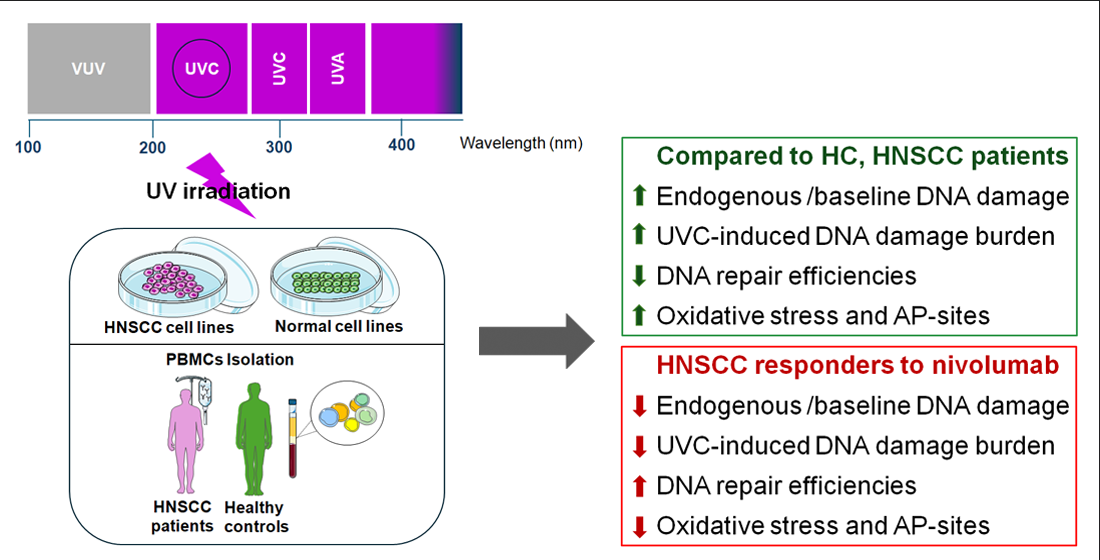
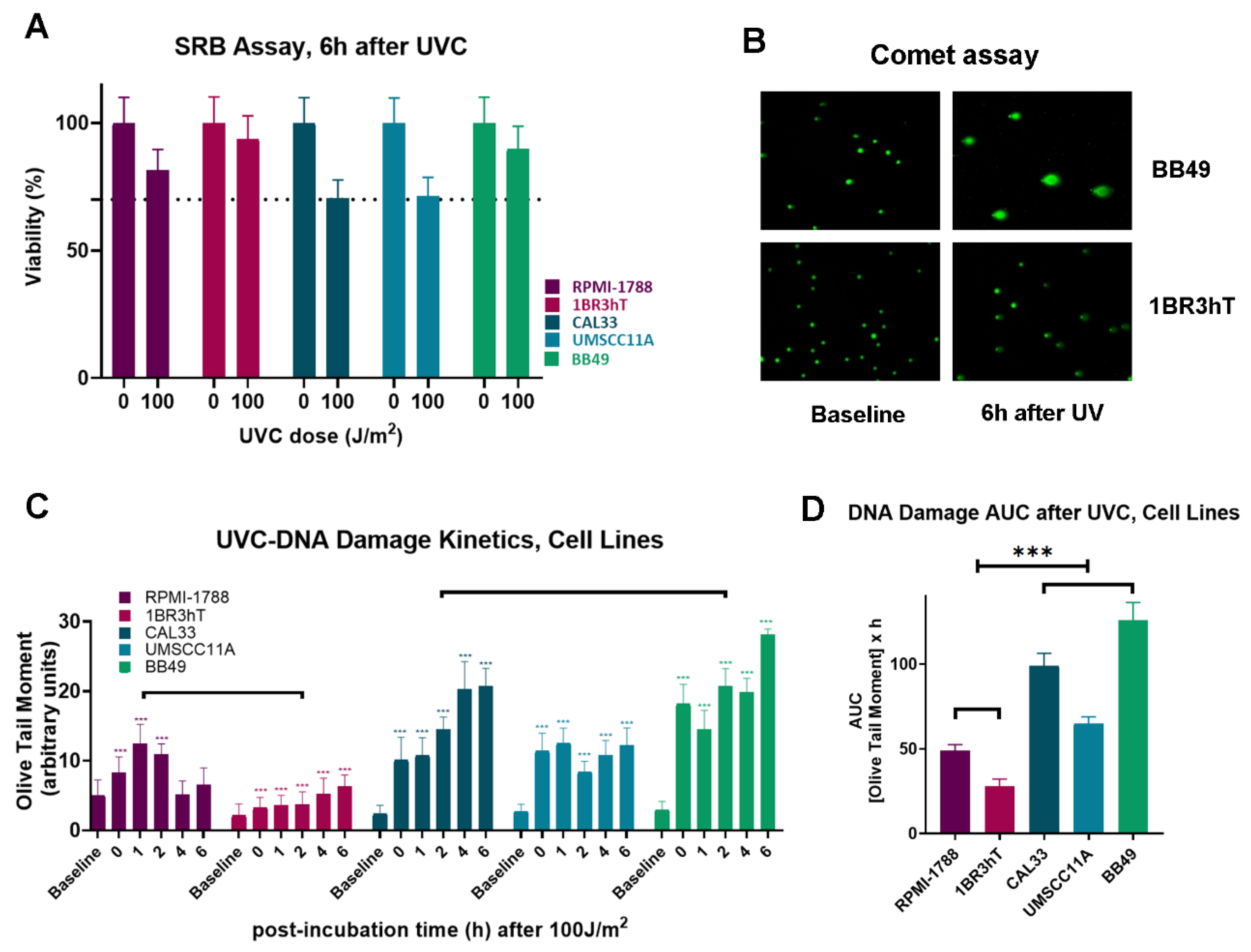
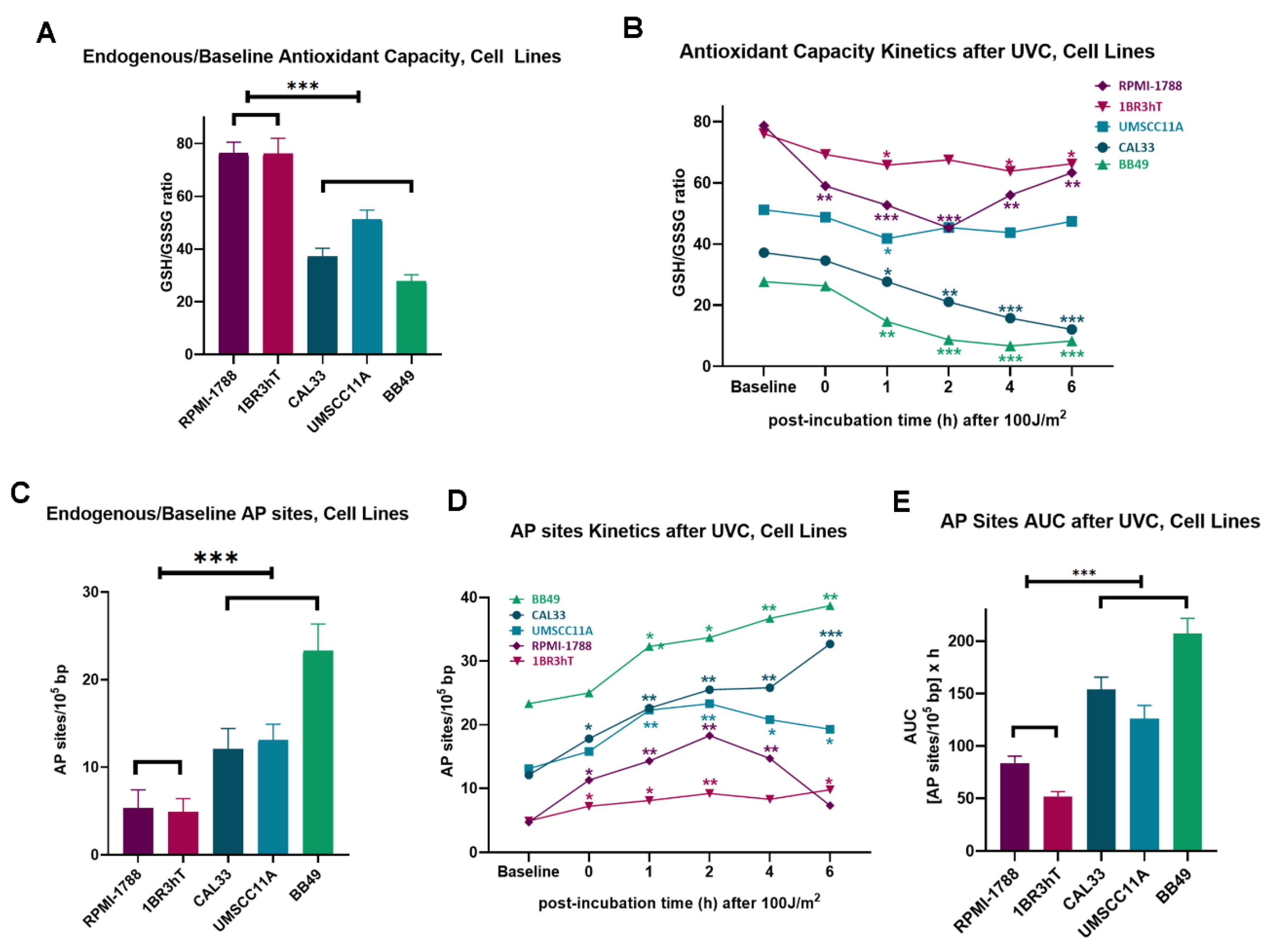
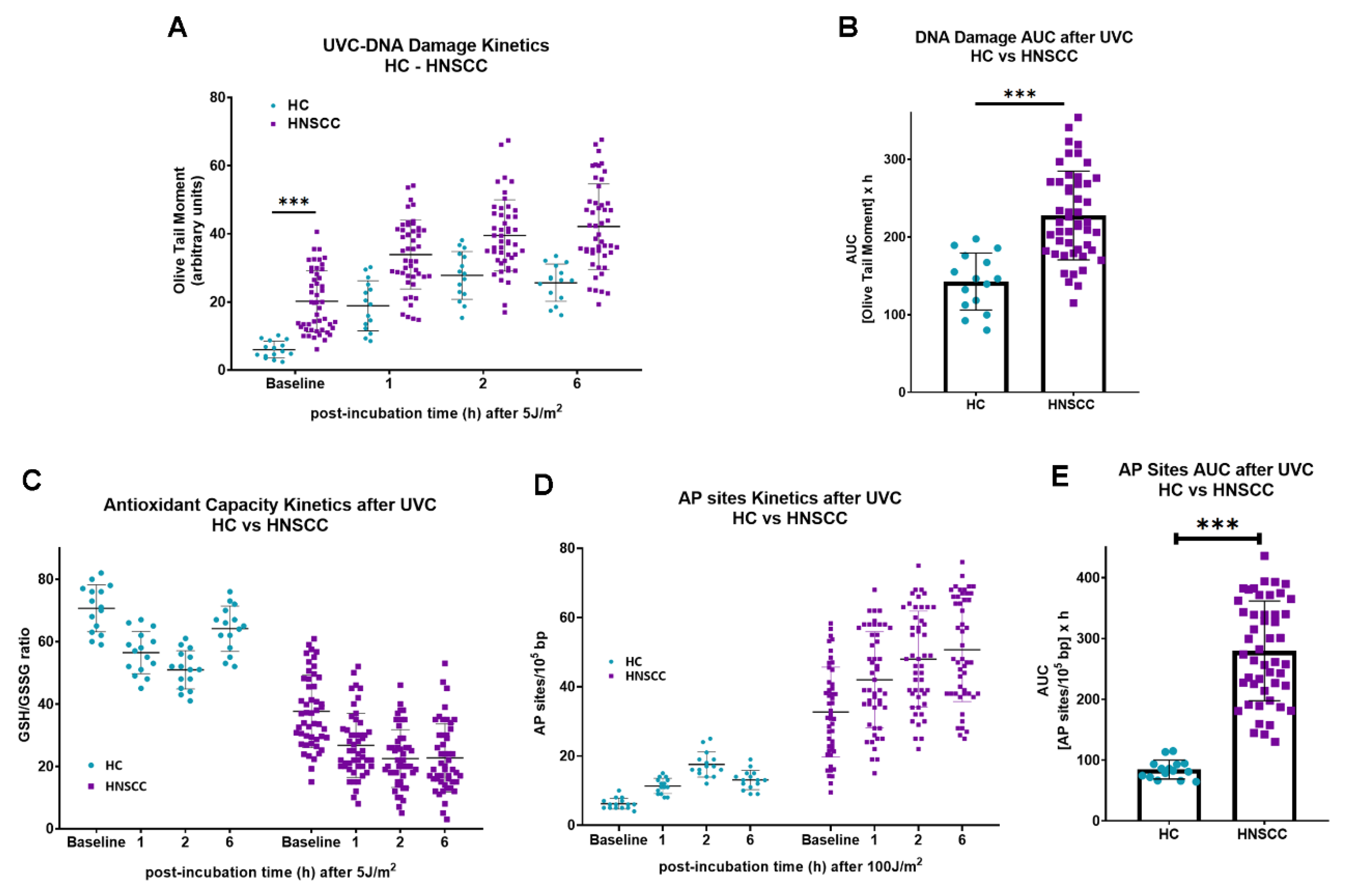
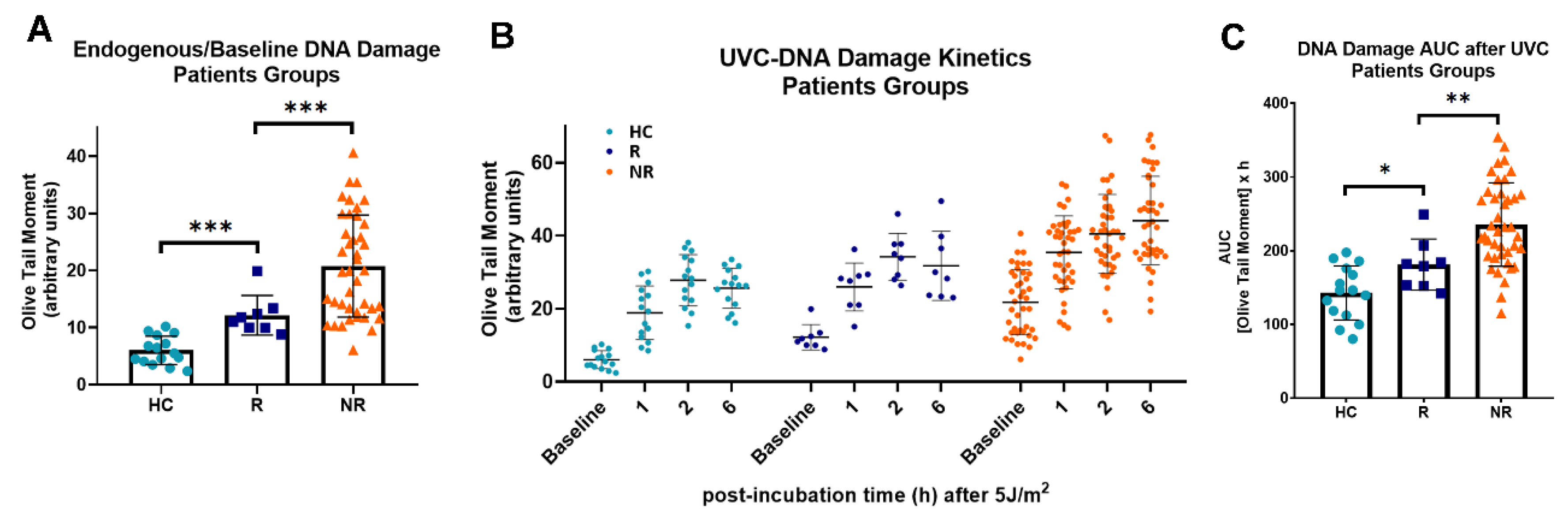
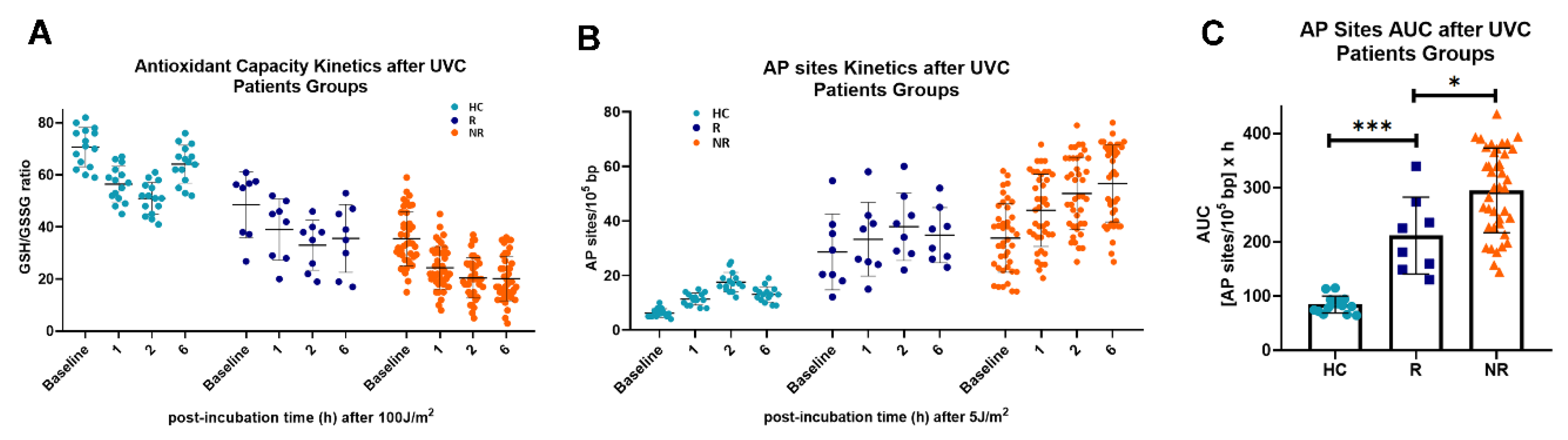
Accumulation of evidence highlights the crosstalk between the DNA damage repair and the immune system. Herein, we tested the hypothesis that in Head and Neck Squamous Cell Carcinoma (HNSCC), DNA repair capacity of patients’ PBMCs correlates with therapeutic response to immune checkpoint blockade. Following in vitro UVC irradiation, oxidative stress, apurinic/apyrimidinic (AP) lesions, endogenous/baseline DNA damage and DNA damage repair efficiency were evaluated in three HNSCC (UM-SCC-11A, Cal-33, BB49) and two normal cell lines (RPMI-1788, 1BR-3h-T), as well as in peripheral blood mononuclear cells (PBMCs) from 15 healthy controls (HC) and 49 recurrent/metastatic HNSCC patients at baseline (8 responders, 41 non-responders to subsequent nivolumab therapy). HNSCC cell lines showed lower DNA repair efficiency, increased oxidative stress and higher AP-sites than normal ones (all P < 0.001). Moreover, patients’ PBMCs exhibited increased endogenous/baseline DNA damage, decreased DNA repair capacity, augmented oxidative stress and higher AP-sites than PBMCs from HC (all P < 0.001). Importantly, PBMCs from responders to nivolumab therapy showed lower endogenous/baseline DNA damage, higher DNA repair capacities, decreased oxidative stress and reduced AP-sites than non-responders (all P < 0.05). Together, we demonstrate that oxidative stress status and DNA repair efficiency evaluated in PBMCs from HNSCC patients correlate with response to immune checkpoint blockade.
Keywords:
1. Introduction
2. Materials and Methods
2.1. Patients
2.2. Cell Lines
2.3. UVC-Treatment
2.4. Viability Assay
2.5. Alkaline Single-Cell Gel Electrophoresis (Comet Assay)
2.6. Oxidative Stress and Apurinic/Apyrimidinic (Abasic; AP) Sites
2.7. Statistical Analysis
3. Results
3.1. DNA Damage Repair and Oxidative Stress in HNSCC Cell Lines
3.2. DNA Damage Repair and Oxidative Stress in PBMCs Derived from HNSCC Patients
4. Discussion
5. Conclusions
Author Contributions
Funding
Institutional Review Board Statement
Informed Consent Statement
Data Availability Statement
Acknowledgments
Conflicts of Interest
References
- Du, E.; Mazul, A.L.; Farquhar, D.; Brennan, P.; Anantharaman, D.; Abedi-Ardekani, B.; Weissler, M.C.; Hayes, D.N.; Olshan, A.F.; Zevallos, J.P. Long-term Survival in Head and Neck Cancer: Impact of Site, Stage, Smoking, and Human Papillomavirus Status. The Laryngoscope 2019, 129, 2506–2513. [Google Scholar] [CrossRef] [PubMed]
- Johnson, D.E.; Burtness, B.; Leemans, C.R.; Lui, V.W.Y.; Bauman, J.E.; Grandis, J.R. Head and Neck Squamous Cell Carcinoma. Nat Rev Dis Primers 2020, 6, 92. [Google Scholar] [CrossRef] [PubMed]
- Economopoulou, P.; De Bree, R.; Kotsantis, I.; Psyrri, A. Diagnostic Tumor Markers in Head and Neck Squamous Cell Carcinoma (HNSCC) in the Clinical Setting. Front. Oncol. 2019, 9, 827. [Google Scholar] [CrossRef] [PubMed]
- Cooper, J.S.; Pajak, T.F.; Forastiere, A.A.; Jacobs, J.; Campbell, B.H.; Saxman, S.B.; Kish, J.A.; Kim, H.E.; Cmelak, A.J.; Rotman, M.; et al. Postoperative Concurrent Radiotherapy and Chemotherapy for High-Risk Squamous-Cell Carcinoma of the Head and Neck. N Engl J Med 2004, 350, 1937–1944. [Google Scholar] [CrossRef]
- Gavrielatou, N.; Vathiotis, I.; Economopoulou, P.; Psyrri, A. The Role of B Cells in Head and Neck Cancer. Cancers 2021, 13, 5383. [Google Scholar] [CrossRef] [PubMed]
- Jackson, S.P.; Bartek, J. The DNA-Damage Response in Human Biology and Disease. Nature 2009, 461, 1071–1078. [Google Scholar] [CrossRef] [PubMed]
- Hakem, R. DNA-Damage Repair; the Good, the Bad, and the Ugly. EMBO J 2008, 27, 589–605. [Google Scholar] [CrossRef]
- Jiang, M.; Jia, K.; Wang, L.; Li, W.; Chen, B.; Liu, Y.; Wang, H.; Zhao, S.; He, Y.; Zhou, C. Alterations of DNA Damage Repair in Cancer: From Mechanisms to Applications. Ann Transl Med 2020, 8, 1685–1685. [Google Scholar] [CrossRef] [PubMed]
- Malamos, P.; Papanikolaou, C.; Gavriatopoulou, M.; Dimopoulos, M.A.; Terpos, E.; Souliotis, V.L. The Interplay between the DNA Damage Response (DDR) Network and the Mitogen-Activated Protein Kinase (MAPK) Signaling Pathway in Multiple Myeloma. IJMS 2024, 25, 6991. [Google Scholar] [CrossRef] [PubMed]
- Pateras, I.S.; Havaki, S.; Nikitopoulou, X.; Vougas, K.; Townsend, P.A.; Panayiotidis, M.I.; Georgakilas, A.G.; Gorgoulis, V.G. The DNA Damage Response and Immune Signaling Alliance: Is It Good or Bad? Nature Decides When and Where. Pharmacology & Therapeutics 2015, 154, 36–56. [Google Scholar] [CrossRef]
- Papanikolaou, C.; Rapti, V.; Stellas, D.; Stefanou, D.; Syrigos, K.; Pavlakis, G.; Souliotis, V. Delineating the SARS-CoV-2 Induced Interplay between the Host Immune System and the DNA Damage Response Network. Vaccines 2022, 10, 1764. [Google Scholar] [CrossRef] [PubMed]
- Jeggo, P.A.; Pearl, L.H.; Carr, A.M. DNA Repair, Genome Stability and Cancer: A Historical Perspective. Nat Rev Cancer 2016, 16, 35–42. [Google Scholar] [CrossRef] [PubMed]
- Psyrri, A.; Gkotzamanidou, M.; Papaxoinis, G.; Krikoni, L.; Economopoulou, P.; Kotsantis, I.; Anastasiou, M.; Souliotis, V.L. The DNA Damage Response Network in the Treatment of Head and Neck Squamous Cell Carcinoma. ESMO Open 2021, 6, 100075. [Google Scholar] [CrossRef] [PubMed]
- Stefanou, D.T.; Kouvela, M.; Stellas, D.; Voutetakis, K.; Papadodima, O.; Syrigos, K.; Souliotis, V.L. Oxidative Stress and Deregulated DNA Damage Response Network in Lung Cancer Patients. Biomedicines 2022, 10, 1248. [Google Scholar] [CrossRef]
- Lee, E.C.Y.; Kok, J.S.T.; Teh, B.T.; Lim, K.S. Interplay between the DNA Damage Response and Immunotherapy Response in Cancer. IJMS 2022, 23, 13356. [Google Scholar] [CrossRef]
- Mouw, K.W.; Goldberg, M.S.; Konstantinopoulos, P.A.; D’Andrea, A.D. DNA Damage and Repair Biomarkers of Immunotherapy Response. Cancer Discovery 2017, 7, 675–693. [Google Scholar] [CrossRef] [PubMed]
- Yarchoan, M.; Johnson, B.A.; Lutz, E.R.; Laheru, D.A.; Jaffee, E.M. Targeting Neoantigens to Augment Antitumour Immunity. Nat Rev Cancer 2017, 17, 209–222. [Google Scholar] [CrossRef] [PubMed]
- Motwani, M.; Pesiridis, S.; Fitzgerald, K.A. DNA Sensing by the cGAS–STING Pathway in Health and Disease. Nat Rev Genet 2019, 20, 657–674. [Google Scholar] [CrossRef] [PubMed]
- Zhang, Q.; Green, M.D.; Lang, X.; Lazarus, J.; Parsels, J.D.; Wei, S.; Parsels, L.A.; Shi, J.; Ramnath, N.; Wahl, D.R.; et al. Inhibition of ATM Increases Interferon Signaling and Sensitizes Pancreatic Cancer to Immune Checkpoint Blockade Therapy. Cancer Research 2019, 79, 3940–3951. [Google Scholar] [CrossRef]
- Nenclares, P.; Rullan, A.; Tam, K.; Dunn, L.A.; St. John, M.; Harrington, K.J. Introducing Checkpoint Inhibitors Into the Curative Setting of Head and Neck Cancers: Lessons Learned, Future Considerations. American Society of Clinical Oncology Educational Book 2022, 511–526. [CrossRef]
- Arfin, S.; Jha, N.K.; Jha, S.K.; Kesari, K.K.; Ruokolainen, J.; Roychoudhury, S.; Rathi, B.; Kumar, D. Oxidative Stress in Cancer Cell Metabolism. Antioxidants 2021, 10, 642. [Google Scholar] [CrossRef] [PubMed]
- Choudhari, S.K.; Chaudhary, M.; Gadbail, A.R.; Sharma, A.; Tekade, S. Oxidative and Antioxidative Mechanisms in Oral Cancer and Precancer: A Review. Oral Oncology 2014, 50, 10–18. [Google Scholar] [CrossRef] [PubMed]
- Mavroeidi, D.; Georganta, A.; Stefanou, D.T.; Papanikolaou, C.; Syrigos, K.N.; Souliotis, V.L. DNA Damage Response Network and Intracellular Redox Status in the Clinical Outcome of Patients with Lung Cancer. Cancers 2024, 16, 4218. [Google Scholar] [CrossRef]
- Maj, T.; Wang, W.; Crespo, J.; Zhang, H.; Wang, W.; Wei, S.; Zhao, L.; Vatan, L.; Shao, I.; Szeliga, W.; et al. Oxidative Stress Controls Regulatory T Cell Apoptosis and Suppressor Activity and PD-L1-Blockade Resistance in Tumor. Nat Immunol 2017, 18, 1332–1341. [Google Scholar] [CrossRef] [PubMed]
- Eisenhauer, E.A.; Therasse, P.; Bogaerts, J.; Schwartz, L.H.; Sargent, D.; Ford, R.; Dancey, J.; Arbuck, S.; Gwyther, S.; Mooney, M.; et al. New Response Evaluation Criteria in Solid Tumours: Revised RECIST Guideline (Version 1.1). European Journal of Cancer 2009, 45, 228–247. [Google Scholar] [CrossRef] [PubMed]
- Vichai, V.; Kirtikara, K. Sulforhodamine B Colorimetric Assay for Cytotoxicity Screening. Nat Protoc 2006, 1, 1112–1116. [Google Scholar] [CrossRef] [PubMed]
- Souliotis, V.L.; Vlachogiannis, N.I.; Pappa, M.; Argyriou, A.; Sfikakis, P.P. DNA Damage Accumulation, Defective Chromatin Organization and Deficient DNA Repair Capacity in Patients with Rheumatoid Arthritis. Clinical Immunology 2019, 203, 28–36. [Google Scholar] [CrossRef] [PubMed]
- Vlachogiannis, N.I.; Pappa, M.; Ntouros, P.A.; Nezos, A.; Mavragani, C.P.; Souliotis, V.L.; Sfikakis, P.P. Association Between DNA Damage Response, Fibrosis and Type I Interferon Signature in Systemic Sclerosis. Front. Immunol. 2020, 11, 582401. [Google Scholar] [CrossRef] [PubMed]
- Haslam, A.; Prasad, V. Estimation of the Percentage of US Patients With Cancer Who Are Eligible for and Respond to Checkpoint Inhibitor Immunotherapy Drugs. JAMA Netw Open 2019, 2, e192535. [Google Scholar] [CrossRef]
- Hsieh, R.W.; Borson, S.; Tsagianni, A.; Zandberg, D.P. Immunotherapy in Recurrent/Metastatic Squamous Cell Carcinoma of the Head and Neck. Front. Oncol. 2021, 11, 705614. [Google Scholar] [CrossRef] [PubMed]
- Vitale, I.; Kroemer, G. Spontaneous DNA Damage Propels Tumorigenicity. Cell Res 2017, 27, 720–721. [Google Scholar] [CrossRef]
- Gkotzamanidou, M.; Sfikakis, P.P.; Kyrtopoulos, S.A.; Bamia, C.; Dimopoulos, M.A.; Souliotis, V.L. Chromatin Structure, Transcriptional Activity and DNA Repair Efficiency Affect the Outcome of Chemotherapy in Multiple Myeloma. Br J Cancer 2014, 111, 1293–1304. [Google Scholar] [CrossRef] [PubMed]
- Souliotis, V.L.; Vougas, K.; Gorgoulis, V.G.; Sfikakis, P.P. Defective DNA Repair and Chromatin Organization in Patients with Quiescent Systemic Lupus Erythematosus. Arthritis Res Ther 2016, 18, 182. [Google Scholar] [CrossRef] [PubMed]
- Stefanou, D.T.; Bamias, A.; Episkopou, H.; Kyrtopoulos, S.A.; Likka, M.; Kalampokas, T.; Photiou, S.; Gavalas, N.; Sfikakis, P.P.; Dimopoulos, M.A.; et al. Aberrant DNA Damage Response Pathways May Predict the Outcome of Platinum Chemotherapy in Ovarian Cancer. PLoS ONE 2015, 10, e0117654. [Google Scholar] [CrossRef] [PubMed]
- Gkotzamanidou, M.; Terpos, E.; Bamia, C.; Munshi, N.C.; Dimopoulos, M.A.; Souliotis, V.L. DNA Repair of Myeloma Plasma Cells Correlates with Clinical Outcome: The Effect of the Nonhomologous End-Joining Inhibitor SCR7. Blood 2016, 128, 1214–1225. [Google Scholar] [CrossRef]
- Dylawerska, A.; Barczak, W.; Wegner, A.; Golusinski, W.; Suchorska, W.M. Association of DNA Repair Genes Polymorphisms and Mutations with Increased Risk of Head and Neck Cancer: A Review. Med Oncol 2017, 34, 197. [Google Scholar] [CrossRef]
- Schena, M.; Guarrera, S.; Buffoni, L.; Salvadori, A.; Voglino, F.; Allione, A.; Pecorari, G.; Ruffini, E.; Garzino-Demo, P.; Bustreo, S.; et al. DNA Repair Gene Expression Level in Peripheral Blood and Tumour Tissue from Non-Small Cell Lung Cancer and Head and Neck Squamous Cell Cancer Patients. DNA Repair 2012, 11, 374–380. [Google Scholar] [CrossRef] [PubMed]
- Shammas, M.A.; Shmookler Reis, R.J.; Koley, H.; Batchu, R.B.; Li, C.; Munshi, N.C. Dysfunctional Homologous Recombination Mediates Genomic Instability and Progression in Myeloma. Blood 2009, 113, 2290–2297. [Google Scholar] [CrossRef]
- Choudhury, J.H.; Choudhury, B.; Kundu, S.; Ghosh, S.K. Combined Effect of Tobacco and DNA Repair Genes Polymorphisms of XRCC1 and XRCC2 Influence High Risk of Head and Neck Squamous Cell Carcinoma in Northeast Indian Population. Med Oncol 2014, 31, 67. [Google Scholar] [CrossRef] [PubMed]
- Sliwinski, T.; Walczak, A.; Przybylowska, K.; Rusin, P.; Pietruszewska, W.; Zielinska-Blizniewska, H.; Olszewski, J.; Morawiec-Sztandera, A.; Jendrzejczyk, S.; Mlynarski, W.; et al. Polymorphisms of the XRCC3 C722T and the RAD51 G135C Genes and the Risk of Head and Neck Cancer in a Polish Population. Experimental and Molecular Pathology 2010, 89, 358–366. [Google Scholar] [CrossRef]
- Senghore, T.; Wang, W.-C.; Chien, H.-T.; Chen, Y.-X.; Young, C.-K.; Huang, S.-F.; Yeh, C.-C. Polymorphisms of Mismatch Repair Pathway Genes Predict Clinical Outcomes in Oral Squamous Cell Carcinoma Patients Receiving Adjuvant Concurrent Chemoradiotherapy. Cancers 2019, 11, 598. [Google Scholar] [CrossRef]
- Mahjabeen, I.; Ali, K.; Zhou, X.; Kayani, M.A. Deregulation of Base Excision Repair Gene Expression and Enhanced Proliferation in Head and Neck Squamous Cell Carcinoma. Tumor Biol. 2014, 35, 5971–5983. [Google Scholar] [CrossRef]
- Singh, A.; Pandey, P.; Tewari, M.; Pandey, H.; Gambhir, I.; Shukla, H.S. Free Radicals Hasten Head and Neck Cancer Risk A Study of Total Oxidant, Total Antioxidant, DNA Damage, and Histological Grade. Journal of Postgraduate Medicine 2016, 62, 96–101. [Google Scholar] [CrossRef] [PubMed]
- Salmon, T.B. Biological Consequences of Oxidative Stress-Induced DNA Damage in Saccharomyces Cerevisiae. Nucleic Acids Research 2004, 32, 3712–3723. [Google Scholar] [CrossRef]
- Hahm, J.Y.; Park, J.; Jang, E.-S.; Chi, S.W. 8-Oxoguanine: From Oxidative Damage to Epigenetic and Epitranscriptional Modification. Exp Mol Med 2022, 54, 1626–1642. [Google Scholar] [CrossRef] [PubMed]
- Jackson, A.L.; Loeb, L.A. Microsatellite Instability Induced by Hydrogen Peroxide in Escherichia Coli. Mutation Research/Fundamental and Molecular Mechanisms of Mutagenesis 2000, 447, 187–198. [Google Scholar] [CrossRef] [PubMed]
- Dequanter, D.; Dok, R.; Nuyts, S. Basal Oxidative Stress Ratio of Head and Neck Squamous Cell Carcinomas Correlates with Nodal Metastatic Spread in Patients under Therapy. OTT 2017, Volume 10, 259–263. [Google Scholar] [CrossRef]
- Sun, W.; Zhang, Q.; Wang, R.; Li, Y.; Sun, Y.; Yang, L. Targeting DNA Damage Repair for Immune Checkpoint Inhibition: Mechanisms and Potential Clinical Applications. Front. Oncol. 2021, 11, 648687. [Google Scholar] [CrossRef] [PubMed]
- Zhou, C.; Lin, A.; Cao, M.; Ding, W.; Mou, W.; Guo, N.; Chen, Z.; Zhang, J.; Luo, P. Activation of the DDR Pathway Leads to the Down-Regulation of the TGFβ Pathway and a Better Response to ICIs in Patients With Metastatic Urothelial Carcinoma. Front. Immunol. 2021, 12, 634741. [Google Scholar] [CrossRef] [PubMed]
- Shi, C.; Qin, K.; Lin, A.; Jiang, A.; Cheng, Q.; Liu, Z.; Zhang, J.; Luo, P. The Role of DNA Damage Repair (DDR) System in Response to Immune Checkpoint Inhibitor (ICI) Therapy. J Exp Clin Cancer Res 2022, 41, 268. [Google Scholar] [CrossRef] [PubMed]
- Wang, Y.; Jiao, X.; Li, S.; Chen, H.; Wei, X.; Liu, C.; Gong, J.; Zhang, X.; Wang, X.; Peng, Z.; et al. Alterations in DNA Damage Response and Repair Genes as Potential Biomarkers for Immune Checkpoint Blockade in Gastrointestinal Cancer. Cancer Biology & Medicine 2022, 19, 1139–1149. [Google Scholar] [CrossRef]
- Lamberti, G.; Andrini, E.; Sisi, M.; Federico, A.D.; Ricciuti, B. Targeting DNA Damage Response and Repair Genes to Enhance Anticancer Immunotherapy: Rationale and Clinical Implication. Future Oncol. 2020, 16, 1751–1766. [Google Scholar] [CrossRef]
- Klein, O.; Kee, D.; Markman, B.; Carlino, M.S.; Underhill, C.; Palmer, J.; Power, D.; Cebon, J.; Behren, A. Evaluation of TMB as a Predictive Biomarker in Patients with Solid Cancers Treated with Anti-PD-1/CTLA-4 Combination Immunotherapy. Cancer Cell 2021, 39, 592–593. [Google Scholar] [CrossRef] [PubMed]
- Dudley, J.C.; Lin, M.-T.; Le, D.T.; Eshleman, J.R. Microsatellite Instability as a Biomarker for PD-1 Blockade. Clinical Cancer Research 2016, 22, 813–820. [Google Scholar] [CrossRef]
- Doroshow, D.B.; Bhalla, S.; Beasley, M.B.; Sholl, L.M.; Kerr, K.M.; Gnjatic, S.; Wistuba, I.I.; Rimm, D.L.; Tsao, M.S.; Hirsch, F.R. PD-L1 as a Biomarker of Response to Immune-Checkpoint Inhibitors. Nat Rev Clin Oncol 2021, 18, 345–362. [Google Scholar] [CrossRef] [PubMed]

| Characteristic | Patient cohort n (%) | ||
|---|---|---|---|
| Age (years ) Median (min, max) |
65 (48, 93) |
||
| Sex | Male | 40 | (81,6) |
| Female | 9 | (18,4) | |
| Smoking | Non smoker | 9 | (18,4) |
| Light smoker | 6 | (12,2) | |
| Heavy smoker | 27 | (55,1) | |
| N/A | 7 | (14,3) | |
| Alcohol | No/Social | 23 | (46,9) |
| Light | 1 | (2,0) | |
| Heavy | 17 | (34,7) | |
| N/A | 8 | (16,4) | |
| Primary site | Lip/Oral cavity | 18 | (36,7) |
| Oropharynx | 13 | (26,5) | |
| Larynx | 16 | (32,7) | |
| Other | 2 | (4,1) | |
| HPV status (oropharynx) | Positive | 2 | (15,3) |
| Negative | 8 | (61,5) | |
| N/A | 3 | (23,1) | |
| Stage | Metastatic | 17 | (34,7) |
| Recurrent | 32 | (65,3) | |
| PD-L1 CPS baseline | <1 | 16 | (32,7) |
| 1-19 | 9 | (18,4) | |
| ≥20 | 8 | (16,3) | |
| N/A | 16 | (32,6) | |
| Best response to immunotherapy | CR/PR | 8 | (16,3) |
| SD | 6 | (12,2) | |
| PD | 35 | (71,5) | |
Disclaimer/Publisher’s Note: The statements, opinions and data contained in all publications are solely those of the individual author(s) and contributor(s) and not of MDPI and/or the editor(s). MDPI and/or the editor(s) disclaim responsibility for any injury to people or property resulting from any ideas, methods, instructions or products referred to in the content. |
© 2025 by the authors. Licensee MDPI, Basel, Switzerland. This article is an open access article distributed under the terms and conditions of the Creative Commons Attribution (CC BY) license (http://creativecommons.org/licenses/by/4.0/).


