

Submitted:
22 January 2025
Posted:
22 January 2025
You are already at the latest version
Abstract
Grape pomace, the primary by-product of winemaking, represents a significant source of valuable aroma compounds with potential applications across various industries. This study reviews the composition and recovery of these compounds, emphasizing the role of grape variety and winemaking methods, including conventional and long-term maceration techniques, in their aromatic profiles. This review examines the diverse categories of aroma compounds found in grape pomace, including terpenes, norisoprenoids, thiols, and esters. It also investigates the impact of factors such as viticultural practices, fermentation methods, and maceration processes on their concentrations and sensory characteristics. The review further discusses the potential of grape pomace valorization, highlighting its importance in creating high-value additives for use in the food, cosmetics, and fragrance industries. Extracted aroma com-pounds represent a valuable resource with the potential for reuse as additives across diverse industries. This study aims to encourage innovative approaches to waste management in the wine industry, contributing to environmental sustainability and resource efficiency.
Keywords:
grapes
; waste
; valorization
; high‐value additives
; by‐products
1. Introduction
Projected population growth will intensify pressure on natural resources and food security, necessitating a holistic global strategy to ensure food stability while protecting ecosystems and biodiversity [1,2]. With a projected two billion population increase by mid-century, the Food and Agriculture Organization (FAO) estimates food production must double from 2012 levels to meet demand, combat hunger, and prevent a food crisis [3]. The food industry faces ongoing challenges in managing significant food waste and by-products, underscoring resource inefficiency [4]. Food by-products from animal processing, dairy, and fruit and vegetable industries have significant environmental, economic, and social impacts. Globally, one-third of all food is wasted, threatening ecosystems due to poor stability, high water content, and pathogen-promoting conditions. Despite limited comprehensive data since the FAO's 2011 estimate, research on food waste is growing [5,6,7,8]. By quantifying food loss and waste, it becomes easier to identify critical points in the supply chain, facilitating a better understanding of the necessary changes that can help reduce food loss and its associated impacts [9].
The fruit and vegetable industry produces large amounts of by-products, including peels, pomace, stems, seeds, and trimmings, which can exceed 50% of fresh fruit weight. Rich in nutrients and therapeutic potential, these by-products represent a significant resource loss [10,11,12]. In the fruit industry, apples, grapes, and exotic fruits are among the most widely consumed products. Beyond their use as fresh produce, these fruits are extensively processed into a variety of products, including juices, alcoholic beverages, and other processed foods (Figure 1). However, the production of these items results in significant quantities of waste and by-products [13].
Grapes (Vitis spp.) are among the most significant fruits globally, with a production of 77.8 million tonnes in 2018. Of this, 57% was used for wine production, resulting in large quantities of waste annually. This waste includes vine shoots, pomace (comprising skins, seeds, and stems), and wine lees, all of which contribute to the environmental footprint of the grape and wine industries. These by-products represent a potential resource for sustainable applications and require innovative strategies for waste management and valorization [15,16]. On average, waste generated from grape processing accounts for approximately 30-35% of the fresh fruit's weight. Notably, grape pomace contains elevated levels of bioactive compounds, which offer significant health benefits. However, the composition and concentration of these bioactive substances are highly influenced by several factors, including the grape variety, cultivation environment, and the specific technological processing methods employed. These variables underscore the importance of tailored approaches in utilizing grape pomace to maximize its nutritional and therapeutic potential [17]. Similar to the case of the banana peel situation, all the different factors impacting the composition of the final grape pomace waste make the valorization of these products more challenging [18,19]. Grape seeds are an excellent source of dietary fiber and are particularly rich in antioxidant compounds, including vitamin E and various phenolic compounds. Research has demonstrated that these bioactive substances offer numerous health benefits, such as aiding in the prevention and management of cardiovascular diseases, exhibiting anti-carcinogenic properties, and positively influencing metabolic disorders. Notably, they have shown significant potential in combating obesity, further underscoring their value in promoting overall health and well-being [20,21,22]. Grape seeds contain a diverse array of beneficial compounds, including phytosterols, proteins, carbohydrates, minerals, and notably, lipids. Lipids make up 10-20% of grape seed composition, making them a valuable resource for oil production. Grape seed oil is particularly rich in unsaturated fatty acids, predominantly linoleic and oleic acids, which contribute to its nutritional value and wide range of applications in both culinary and cosmetic industries [23].
Grape pomace, the most abundant by-product of grape processing, holds significant value due to its rich composition of functional compounds. This versatile by-product has been successfully repurposed in various forms, including natural food additives, nutraceuticals, alcohol production, fertilizers, and other functional ingredients. Its diverse applications highlight its potential for sustainable and innovative uses across multiple industries [24,25]. Grapes are a rich natural source of antioxidants, with high concentrations of phenolic compounds—amounting to approximately 9 kg per tonne - demonstrating their significant value. Among various fruits, grapes are particularly abundant in polyphenols [26]. Studies have reported that up to 83% of the dry matter in grapes and their by-products consist of dietary fibers, with no significant differences observed between grape cultivars [27,28,29]. The insoluble fiber fraction mainly comprises cellulose, hemicellulose, and lignin, while the soluble fraction is represented by uronic acids, which vary depending on the grape type (red or white) [30] additionally, grape pomace contains proteins, accounting for up to 13.8% of the by-product after processing, though this percentage can vary based on the grape variety. These diverse compounds underscore the nutritional and functional complexity of grape pomace (Figure 2), making it a valuable by-product for various applications [19,29].
The aim of this work is to explore the benefits, challenges, and opportunities associated with utilizing aroma compounds from grape pomace, with a focus on their potential for developing food flavor additives, cosmetics, and perfumes. It seeks to highlight their value as a sustainable resource and propose innovative solutions for future applications across various industries.
2. Characterization of Aroma Compounds from Grapes: Profiles and their Impact on Flavor
Winemaking quality is traditionally assessed through various parameters, such as sugar and acid concentrations, phenolic maturity, and, more recently, the aromatic characteristics of the grapes. Aroma not only serves as a key indicator of quality but also plays a crucial role in market competitiveness. The composition of aromatic compounds is influenced by numerous factors, including viticultural practices, regional and seasonal variations, which makes it challenging to define standardized criteria for aromatic quantification across grape varieties. These factors can also impact the genetic expression of the grapes, leading to distinct aromatic profiles between different varieties [31]. Fermentation plays a pivotal role in determining the aromatic quality of wine, contributing significantly to its flavor profile. Many of the aromatic compounds are initially bound, often in glycosidic forms, which can be released through enzymatic or acid hydrolysis during the process [32]. Aroma compounds in grapes are predominantly found in the skins, often in glycosidically bound forms rather than free aglycones. These compounds, including alcohols, esters, acids, terpenes, aldehydes, and ketones, are typically linked to sugars, such as disaccharides. This is why certain winemaking techniques involve leaving the skins in contact with the must for a period, particularly for specific grape varieties [33]. However, not all glycosidically-bound compounds are liberated during fermentation; some may also be released during maturation and storage, further influencing the wine's aromatic characteristics over time [34]. While grapes contain thousands of aroma compounds, these can be broadly classified into grape aroma precursors and wine aromas, the latter of which are developed during the winemaking process.
2.1. C13 – Norisoprenoids
C13-norisoprenoids are among the most significant aroma compounds in grapes. While a few exist in their free form, the majority are in the form of glycosylated conjugates. The formation of C13-norisoprenoids from carotenoids occurs through enzymatic and oxidative cleavage processes, involving enzymes such as dioxygenases and/or glycosidases [35,36]. These compounds have very low sensory thresholds and are highly dependent on the matrix in which they are present. The most common C13-norisoprenoids found in wines include β-damascenone, α-ionone, β-ionone, 1,6-trimethyl-1,2-dihydronaphthalene (TDN), vitispirane, and (E)-1-(2,3,6-trimethylphenyl)buta-1,3-diene (TPB). Among these, β-damascenone and β-ionone are the only ones present at concentrations exceeding their sensory thresholds in the wine matrix. Notably, β-damascenone plays a crucial role in the odorous profile of many fruits, significantly contributing to the aromatic character of various products, including wine [37]. β-damascenone is commonly described with "flowery-fruity" or "cooked apple" notes and has an extremely low sensory threshold in water, at just 2 ng/L. In wines, its concentration can range up to 4.5 µg/L, particularly in sweet wines. On the other hand, β-ionone is associated with "violet" and "raspberry" aromas, with a slightly higher threshold of 7 ng/L in water and up to 3.6 µg/L in wines. The presence or absence of C13-norisoprenoids in grapes and wine can be influenced by various practices and climatic factors, including leaf removal, cover cropping, and irrigation [38,39].
2.2. Terpenes
Glycosidically bound compounds consist of an aglycone linked to a disaccharide, such as pyranoses or furanoses, forming a versatile structure with significant relevance in wine composition. Over 200 aglycones have been identified in wines, representing a diverse array of chemical classes, including terpenes, C13-norisoprenoids, volatile phenols, aromatic phenols, C6 compounds, aliphatic alcohols, aliphatic acids, benzenic compounds, and phenolic acid derivatives [40,41]. Glycosidically bound compounds are prevalent across various plant species and play a crucial role in the wine industry, as they serve as the primary precursors for aromatic compounds released during grape processing. The release of aglycones can occur through enzymatic hydrolysis, which happens during pre-fermentation, alcoholic fermentation, and malolactic fermentation, or via acid hydrolysis, typically occurring during wine aging [34,35]. The acid-catalyzed reaction is highly influenced by factors such as pH, temperature, and the structure of the aglycone compound. In contrast, enzymatic cleavage can occur either sequentially or in a single step, depending on the enzymes involved. For instance, α/β-glucosidase facilitates simple glucosidase cleavage in a single step, while other specific enzymes, such as α-arabinosidase, α-rhamnosidase, and β-glucosidase, target particular sugar linkages. These compounds are primarily located in the grape skins, making the maceration step crucial, especially for certain grape varieties like Muscat and Gewürztraminer, which contain high concentrations of both free and bound terpenols [35,38]. Terpenes are essential varietal compounds in Vitis vinifera grapes, with up to 70 monoterpenes identified across various grape varieties. These compounds are particularly notable for their strong aromatic qualities. Some of the most frequently detected free monoterpenes include linalool, geraniol, nerol, α-terpineol, and citronellol. The concentration of these terpenes is highly influenced by both the specific grape variety and the matrix used for their determination [41,42]. The typical aroma descriptors for various terpenes include floral, rose, green, and herbaceous notes. While much attention has been given to geraniol and linalool as the primary aroma compounds in Muscat varieties, recent studies have shown that several other compounds also contribute to their distinctive aroma. For example, 3,7-dimethylocta-1,5-dien-3,7-diol has been identified in Muscat d’Alexandrie grapes, and 3,7-dimethylocta-1,7-dien-3,6-diol in Muscat Bleu, both of which play a role in the overall aromatic profile [43].
2.3. Sulfur-Derived Organic Compounds (Thiols)
Sulfur-derived organic compounds are primarily associated with thiols, but they can also be present as thioesters, polysulfides, heterocyclics, or sulfides, all of which contribute to the aroma profile. Thiols, in particular, can have a significant impact on the aromatic characteristics of wines, influencing the profile in both positive and negative ways [44]. The majority of thiols in grapes are not found in their free form but rather as precursors bound to glutathione (GSH) and cysteinylated conjugates (Cys). During fermentation, the yeast enzymes break down these precursors, releasing key thiols such as 4-mercapto-4-methylpentan-2-one (4MMP), 3-mercaptohexan-1-ol (3MH), and 3-mercaptohexyl acetate (3MHA). The β-lyase enzymes, present in yeast, facilitate the release of these compounds by taking up the precursors and cleaving the carbon-sulfur bond during the fermentation process [34,42]. The variation in thiol production across different yeast strains has been investigated through genetic modifications of Saccharomyces cerevisiae, specifically by deleting or overexpressing β-lyase genes. The study revealed that thiol precursors such as 4-MMP and 3-MHA were significantly affected. Deletion of the enzyme led to a reduction of up to 95% in their production, while overexpression resulted in a remarkable 100-fold increase in thiol levels [41]. Conjugated thiols are predominantly found in grape skins, and their expression is variety-dependent. 4-MMP was the first compound identified for its contribution to the guava-like aroma in Sauvignon Blanc wines produced in South Africa. Other varieties, including Macabeo, Gewürztraminer, Riesling, Muscat, Colombard, Petite Arvine, Melon B., Semillon, Verdejo, as well as red grape varieties like Grenache, Merlot, and Cabernet Sauvignon, also exhibit significant levels of key thiol compounds such as 4-MMP, 3-MH, and 3-MHA [42,45]. Various viticultural and enological factors can influence the concentration and expression of thiols in grapes. One such factor is the timing of harvest, which has been shown to significantly impact the levels of thiols present in the berries [46]. The distribution of thiol compounds is influenced by both grape variety and winemaking practices, with their biogenesis occurring through three distinct pathways. The first pathway involves cysteinylated precursors, where S-cysteine conjugates are formed via the beta-lyase activity of yeast. Key compounds in this pathway include S-3-(hexane-1-ol)-cysteine (Cys3MH) and S-3-(4-mercapto-4-methyl pentane-2-one)-cysteine (Cys4MMP). The second pathway focuses on glutathionylated precursors, which produce compounds such as S-3-(hexane-1-ol)-glutathione (G3MH) and S-3-(4-mercapto-4-methyl pentane-2-one)-glutathione (G4MMP). The third pathway involves the formation of cysteine-conjugates through the breakdown of L-glutathione (GSH), with intermediates such as L-cysteinyl glycine or γ-glutamylcysteine facilitating this process [47,48]. G3MH and G4MMP were identified as glutathionylated precursors in Sauvignon Blanc wines, playing vital roles in synthesizing aromatic compounds [49,50]. Their pathways involve forming C6 unsaturated compounds, which, through sulfur additions, produce thiols like (E)-2-hexenal, crucial for distinctive wine aromas. [45]. Fruity, floral, and herbaceous aromas are characteristic of thiolic compounds found in grape varieties such as Sauvignon Blanc, Gewürztraminer, and Scheurebe. The threshold concentrations for these compounds are extremely low, starting at 0.8 ng/l for 4MMP and reaching up to 60 ng/L for 3MH in hydroalcoholic solutions. Moreover, the enantiomeric forms of these compounds display distinct olfactory thresholds, with slight variations in their detection limits [51]. The R and S enantiomers of 3MH have similar perception thresholds (50 ng/L and 60 ng/L, respectively), with R evoking grapefruit and S reminiscent of passion fruit. In contrast, 3MHA shows a larger difference: (R)-3MHA gives fruity notes, while (S)-3MHA has herbaceous aromas like boxwood. The detection thresholds for 3MHA are much lower, at 9 ng/L for (R)-3MHA and 2.5 ng/L for (S)-3MHA [45]. In addition to viticultural practices, the grape variety plays a crucial role in modulating the aroma perception of enantiomeric compounds. [52,53,54].
2.4. Methoxypyrazines
Methoxypyrazines (MPs) are nitrogen-containing heterocyclic volatile compounds naturally present in grapes as free volatile compounds. They are primarily responsible for the distinct herbaceous and bell pepper aromas characteristic of certain red wines. The concentration of MPs in wines is closely linked to their initial levels in the grapes from which the wines are produced, highlighting the significant influence of grape composition on the final aromatic profile of the wine [55]. Six types of methoxypyrazines (MPs) have been identified across various species, including 2-methoxypyrazine (MOMP), 3-methyl-2-methoxypyrazine (MEMP), 3-ethyl-2-methoxypyrazine (ETMP), 3-isobutyl-2-methoxypyrazine (IBMP), 3-isopropyl-2-methoxypyrazine (IPMP), and 3-sec-butyl-2-methoxypyrazine (SBMP) [56]. MPs are highly potent aromatic compounds present in wines at trace concentrations, typically between 2 and 30 ng/L. Their strong impact on a wine's aroma profile stems from their remarkably low sensory thresholds, which range from 1–2 ng/L in water to 2–16 ng/L in wine, enabling them to impart noticeable herbaceous and green notes even in minute amounts [57]. Two hypothetical pathways have been proposed for the biosynthesis of SBMP, IPMP, and IBMP. The first involves the amidation of branched amino acids, leucine, valine, and isoleucine, followed by condensation with α- or β-dicarbonyl compounds like glyoxal or acetaldehyde. The second suggests MP synthesis begins with the condensation of two amino acids to form a cyclic dipeptide. IBMP concentration often exceeds its detection threshold, making it the key compound responsible for the distinct green pepper aroma in certain grape varieties. Notably, Cabernet Sauvignon, Merlot, and Sauvignon Blanc are known for their higher levels of IBMP, which greatly impact their aromatic profiles [55]. Excessive levels of MPs can lead to undesirable green and unripe aromas, which negatively impact wine quality. High concentrations are not only unwelcome by consumers but also pose challenges for the wine industry [55].
3. Factors Influencing Aromatic Compounds in Viticulture and Winemaking Processes
The production of aroma compounds is closely linked to various stages of grape development. These compounds undergo multiple biosynthetic pathways, each influenced to varying degrees by climatic conditions, viticultural practices, and winemaking technologies. Vineyard microclimates, in particular, can be altered through various management practices applied throughout the year, such as pruning, leaf removal, trimming, cluster thinning, tilling, irrigation, and fertilization. Recent research has highlighted the significant interaction between vintage, grape variety, and vineyard management practices in shaping the composition of aroma compounds, particularly aroma precursors [58,59,60]. Table 1 presents a selection of studies examining how various viticultural and winemaking factors influence the composition of aroma compounds in different grape varieties.
3.1. Irrigation
Water deficits have become a prevalent challenge in many viticultural regions, exacerbated by the intensifying effects of climate change. These shifts in climate patterns are increasingly impacting grape quality. Notably, the biosynthesis of aroma compounds has been shown to correlate directly with water stress in vines, highlighting the critical role of water availability in shaping the aromatic profile of grapes [59]. Sustainable agriculture practices, such as applying controlled water deficits to induce moderate stress, can promote the development of specific aroma compound families. While studies highlight improvements in the concentration of certain aromatic compounds, a deeper understanding is needed to balance their enhancement and degradation under various water management strategies [58]. Research on the Merlot grape variety in a semi-arid climate revealed that water stress significantly reduced C6 compounds—responsible for green and herbaceous aromas in wine, by up to 62% compared to fully irrigated conditions. Conversely, C13-norisoprenoids, particularly β-damascenone in its bound form, showed increased concentrations under moderate irrigation levels of 35-70% [61]. These findings align with previous studies reporting increased concentrations of C13-norisoprenoids under water stress [62,63,64]. Research on Tocai Friulano and Merlot cultivars further demonstrated significant changes in monoterpene levels under water deficit conditions. In Tocai Friulano, free monoterpenes such as linalool exceeded their sensory threshold (25 µg/L), along with linalool oxide, cis and trans-8-hydroxylinalool, 7-hydroxygeraniol, and geranic acid. In contrast, Merlot exhibited no statistically significant changes in terpene concentration under similar conditions. However, certain compounds, including trans-8-hydroxylinalool, 7-hydroxygeraniol, and geranic acid, showed modest increases, while others displayed inconsistent patterns across the two years studied (2011 and 2012) [65]. In La Mancha, the Chelva variety exhibited an increased concentration of C6 compounds, contradicting previous findings. Regarding terpene content, this variety showed a slight decrease under irrigation treatment [66]. Similarly, research on the Bobal variety, conducted over three vintages (2012, 2013, and 2014), revealed a stronger correlation between water regimes and aroma compound concentrations than between irrigation treatments and vintage. Key compounds influenced by the water regime included benzaldehyde, guaiacol, 4-ethylphenol, 4-vinylphenol, α-ionone, γ-decalactone, syringaldehyde, and vanillin. Interestingly, in contrast to other studies, fully irrigated Bobal vines exhibited higher levels of C13-norisoprenoids. This was attributed to enhanced carotenoid degradation in the grape skin, which was more pronounced under full irrigation conditions [67].
3.2. Leaf Removal
Leaf removal is a common practice in viticulture that improves grape and wine quality. It enhances pesticide effectiveness, reduces grape rot, optimizes yield, and boosts wine quality [68,69]. The influence of leaf removal on aroma compounds varies depending on the cultivar and vintage. Research by Silviotti et al. (2017) found that early leaf removal in Sauvignon Blanc, conducted before or after flowering, had no significant impact on thiol precursors or other aroma compounds. However, these compounds were influenced by the interaction of the treatment timing and yearly variations, altering the microclimate around the grape clusters. A study conducted in Switzerland on Petite Arvine reported a decrease in thiol content following the application of leaf removal practices [70]. Similarly, research on Istrian Malvasia investigated the effects of two leaf removal techniques—hand leaf removal (HLR) and mechanical leaf removal (MLR). While both treatments reduced the overall thiol levels, the more intensive HLR resulted in a significant increase in the concentration of the varietal thiol 3-sulfanylhexan-1-ol, as well as monoterpenes, β-damascenone, and esters. These findings highlight the complex influence of leaf removal on thiol dynamics and other aroma compounds [71]. Conversely, another study, done by Yue et al. (2020) demonstrated that defoliation in Sauvignon Blanc could enhance the concentration of bound and free monoterpenes in both must and wine, depending on the intensity and timing of the intervention [72]. For Semillon, leaf removal before blooming increased specific free and glycoside terpenols and norisoprenoids [69]. Research on red grape varieties, such as Cabernet Franc and Petit Verdot, highlights the significant influence of both cultivar and vintage on aroma compound dynamics mirroring findings in white varieties. Studies revealed that Petit Verdot exhibited a higher concentration of carotenoids compared to Cabernet Franc, primarily due to differences in the pulp-to-skin ratio. However, Petit Verdot also showed a greater degradation of carotenoids under the same leaf removal treatments applied to both cultivars, indicating a cultivar-specific response to vineyard management practices [73]. In Italy, early leaf removal in Nero d’Avola vines increased β-damascone, linalool, and its oxides, with composition varying by harvest timing [74]. Similar modulation of terpenes was observed in Pinot Noir from Oregon, where varying leaf removal intensities (0% to 100%) were applied. The effects appeared to be compound-specific, with β-damascone following a consistent pattern of increased concentration under more intensive defoliation, aligning with previous findings [75].
3.3. Bunch Thinning
Bunch thinning is a viticultural practice employed to regulate the source-to-sink ratio, prevent overcropping, and enhance the accumulation of secondary metabolites, ultimately improving the fruit's composition [59]. This practice has been shown to significantly enhance the concentration of aroma compounds. For example, manual cluster thinning at the early veraison stage in Syrah grapes grown in Palermo, Italy, led to an increase in both varietal and fermentation-derived aromas. The most notable increase was observed in ester compounds, particularly ethyl esters, likely due to the greater availability of precursors in the grapes. Additionally, alcohols and terpenes also showed improved concentrations. Among these, β-phenylethyl alcohol and 3-methylthio-1-propanol were identified with increased levels, although still below their olfactory threshold [76]. The impact of bunch thinning on grape composition is not solely attributed to the thinning itself but also to additional factors such as timing, intensity, and interactions with other treatments, which can help achieve the desired results. Research conducted on Pinot noir grapes in Central Otago at varying thinning intensities (moderate and intense) revealed that aroma compound expression is highly dependent on the intensity of thinning, likely due to the effect of increased light exposure on grape aromas. Compounds like β-damascone and β-ionone showed higher concentrations with more intensive thinning and reduced vigor. A similar trend was observed for monoterpenes and C13-norisoprenoids, whereas medium-chain fatty acids and monocarboxylic esters decreased with more intense thinning [77]. An intriguing study conducted in Croatia found that cluster thinning resulted in higher terpene concentrations compared to defoliation treatments, which led to a reduction in these compounds. Ester compounds, including isobutyl acetate, ethyl lactate, ethyl 2-methylbutanoate, ethyl 3-methylbutanoate, ethyl furoate, and diethyl succinate, also showed higher concentrations in the thinned clusters than in those subjected to defoliation [78]. The timing of cluster thinning plays a crucial role in its impact on grape quality. In a study conducted in China it was found that early thinning had a more pronounced effect on the concentration of norisoprenoids, while terpene levels remained unaffected by the timing of the treatment [79]. These findings contradict other studies, which demonstrated an increase in terpene concentrations, particularly volatile and potentially free terpenes, when cluster thinning was performed one week prior to the onset of ripening [80]. Mechanization of various vineyard tasks has become essential in certain viticultural regions due to labor shortages and cost management. While mechanized practices were once thought to compromise grape quality, recent studies have shown that mechanization can achieve equivalent quality. Cluster thinning, when mechanized, has also demonstrated benefits, such as enhanced aromas, acidity, and astringency. However, these effects are dependent on the grape variety and the timing of the intervention [81].

Table 1.
Factors shaping the development of aroma compounds during viticultural and winemaking processes.
Table 1.
Factors shaping the development of aroma compounds during viticultural and winemaking processes.
| Viticultural/Oenological practice | Grape variety | Registered aroma compound changes | Aroma descriptors* |
|---|---|---|---|
| Irrigation | Merlot [61] | C13-norisoprenois ↑ | Fruity [82], herbaceous, floral [83] |
| Tocai Friulano [65] | Monoterpenes ↑ | Rose, fruity, herbal, citric, floral [84] | |
| Merlot [65] | Monoterpenes ↕ | ||
| Bobal [67] | C13-norisoprenois ↑ | Fruity [82], herbaceous, floral [83] | |
| Leaf removal | Sauvignon Blanc [68] | Thiols ↕ | Fruity, flint, mineral [45,85] |
| Sauvignon Blanc [72] | Monoterpenes ↑ | Rose, fruity, herbal, citric, floral [84] | |
| Semillon [69] | Monoterpenes ↑ | Rose, fruity, herbal, citric, floral [84] | |
| C13-norisoprenois ↑ | Fruity [82], herbaceous, floral [83] | ||
| Cabernet Franc [73] | C13-norisoprenois ↓ | Fruity [82], herbaceous, floral [83] | |
| Petit Verdot [73] | C13-norisoprenois ↓ | Fruity [82], herbaceous, floral [83] | |
| Nero d’Avola [74] | Monoterpenes ↑ | Rose, fruity, herbal, citric, floral [84] | |
| Pinot Noir [75] | Monoterpenes ↑ | Rose, fruity, herbal, citric, floral [84] | |
| Bunch thinning | Syrah [76] | Varietal aromas ↑ | Black pepper, fruity, black olive [86] |
| Esters ↑ | Fruity [87,88] | ||
| Higher alcohols ↑ | Fruity, floral, honey [89] | ||
| Terpenes ↑ | Fruity, floral, muscatel [90] | ||
| Pinot Noir [77] | Monoterpenes ↑ | Rose, fruity, herbal, citric, floral [84] | |
| C13-norisoprenois ↑ | Fruity [82], herbaceous, floral [83] | ||
| Medium-chain fatty acids ↓ | Fruity [91] | ||
| Maraština [78] | Terpene ↑ | Fruity, floral, muscatel [90] | |
| Esters ↑ | Fruity [87,88] | ||
| Cabernet Sauvignon [79] | C13-norisoprenois ↑ | Fruity [82], herbaceous, floral [83] | |
| Terpene ↕ | Fruity, floral, muscatel [90] | ||
| Fertilization | Sauvignon Blanc [92] | Thiols ↑ | Fruity, flint, mineral [45,85] |
| Merlot [83] | Thiols ↑ | Fruity, flint, mineral [45,85] | |
| Sauvignon Blanc [93] | Thiols ↓ | Fruity, flint, mineral [45,85] | |
| Merlot [93] | Thiols ↓ | Fruity, flint, mineral [45,85] | |
| Cabernet Sauvignon [93] | Thiols ↓ | Fruity, flint, mineral [45,85] | |
| Pre-fermentation practices | |||
| Maceratin | Sauvignon Blanc [94] | Thiols ↑ | Fruity, flint, mineral [45,85] |
| Pyrazines ↕ | Green aromas [95] | ||
| Tannat [96] | Esters ↑ | Fruity [87,88] | |
| Higher alcohols ↑ | Fruity, floral, honey [89] | ||
| Monastrell [97] | Esters ↑ | Fruity [87,88] | |
| Acetates ↑ | Citrus, sweet/acid fruit, berry, floral [98] | ||
| Higher alcohols ↑ | Fruity, floral, honey [89] | ||
| Enzyme addition | Mencia [99] | Acetates ↑ | Citrus, sweet/acid fruit, berry, floral [98] |
| Albariño [100] | Terpenes ↑ | Fruity, floral, muscatel [90] | |
| C13-norisoprenois ↑ | Fruity [82], herbaceous, floral [83] | ||
| Pressing pressure | Sauvignon Blanc [101] | Thiols ↑ | Fruity, flint, mineral [45,85] |
| Fermentation practices(Temperature/yeast strain) | Merlot [102] | Terpenes ↑ | Fruity, floral, muscatel [90] |
| Moscatell [103] | Esters ↑ | Fruity [87,88] | |
| Aurore [104] | Esters ↑ | Fruity [87,88] | |
| 3-methyl-1-butanol ↓ | Earthy, solvent [105] | ||
| 2-phenylethanol ↓ | Floral, rose [105] | ||
| Amyl alcohols ↑ | Fusel [106], Herbaceous, whiskey, malt, burnt [107] | ||
| Aurore [104] | Esters ↑ | Fruity [87,88] | |
| 3-methyl-1-butanol ↓ | Earthy, solvent [105] | ||
| 2-phenylethanol ↓ | Floral, rose [105] | ||
| Amyl alcohols ↑ | Fusel [106], Herbaceous, whiskey, malt, burnt [107] | ||
| Syrah [108,109] | Terpenes ↑ | Fruity, floral, muscatel [90] | |
| Sauvognon Blanc [108,109] | Terpenes ↑ | Fruity, floral, muscatel [90] | |
| Tempranillo [110] | Higher alcohols ↑ | Fruity, floral, honey [89] | |
| Verdejo [111] | Higher alcohols ↑ | Fruity, floral, honey [89] | |
| Syrah [112] | Higher alcohols ↑ | Fruity, floral, honey [89] | |
| Soave, Chardonnay [113] | Higher alcohols ↓ | Fruity, floral, honey [89] | |
| Barbera [114] | Higher alcohols ↓ | Fruity, floral, honey [89] | |
| Verdicchio [114] | Esters ↑ | Fruity [87,88] |
↓ - decrease in compound concentration; ↑ - increase in compound concentration; ↕ - Compound concentration remains unchanged or shows insignificant variations; *Aroma descriptors identified in previous studies for compounds present in wines.
3.4. Fertilization
Foliar fertilization has been employed for decades as a means of combating parasitic fungi, but it has been observed to occasionally produce unintended effects on the final product. These observations spurred research into the influence of fertilization on wine composition, particularly in white wines. In a study on Sauvignon Blanc from Bordeaux, nitrogen application (in the form of ammonium nitrate) showed no significant increase in the concentration of volatile thiols. However, nitrogen treatment using urea significantly elevated the levels of 4MMP. Furthermore, a combined application of nitrogen and sulfur enhanced the concentrations of key volatile thiols, including 4MMP and 3MH [92]. In California, the concentration of 3-isobutyl-2-methoxypyrazine (IBMP) in Merlot grapes was found to change under specific conditions. The compound increased notably when full irrigation was combined with supplementary nitrogen application, a response influenced by the shading effect during fruit development. Notably, no other aroma compounds were affected by these treatments in this study [83]. Copper, widely used in pest management and now predominantly as a biopesticide in organic viticulture, has been shown to influence grape aroma profiles. A study conducted in Bordeaux examined the impact of copper on thiol concentrations in three grape varieties (Sauvignon Blanc, Cabernet Sauvignon, and Merlot) revealing noticeable effects on aroma composition [93].
3.5. Pre-Fermentation Practices
Viticultural practices play a significant role in the development of secondary metabolites, but certain technological steps can also influence the expression of these compounds. While primarily linked to vineyard management, the method of harvest—mechanical or manual—has been shown to affect thiol concentrations, particularly in Sauvignon Blanc. In Marlborough, machine-harvested Sauvignon Blanc grapes exhibited higher levels of 3MH and 3MHA compared to hand-picked grapes. The same study also explored cryogenic maceration, which led to a threefold increase in thiol concentrations. Additionally, the mechanical harvesting method was associated with the presence of 2-methoxy-3-isobutylpyrazine (MIBP), a compound absent in hand-harvested grapes [94]. Another study from the same region in New Zealand corroborated these findings. Sauvignon Blanc grapes, harvested both mechanically and manually from five different vineyard sites, demonstrated that varietal thiols were present at significantly higher concentrations in the machine-harvested grapes [115,116].
Pre-fermentative maceration is one of the most widely studied and utilized techniques for enhancing aroma extraction from grapes. Prolonged skin-to-must contact during this process has been shown to significantly improve the extraction of various phenolic and volatile compounds, contributing to a more complex and nuanced aromatic profile [117]. A study on young red wines from Uruguay, made from the Tannat variety, compared cold pre-fermentative maceration with traditional skin maceration, revealing variations across vintages. Ethyl acetate concentrations showed notable increases in 2006 and 2009, while higher alcohols exhibited elevated levels consistently across all four studied years (2006–2010). These changes in aroma composition may be attributed to the influence of non-Saccharomyces yeasts, which have recently been recognized for enhancing the aromatic profiles of various wines [96]. A similar technique was applied to Monastrell grapes in Valencia, with cold soaking conducted under varying parameters. Two temperature ranges (6–8 °C and 0–2 °C, using dry ice) and maceration durations (4 and 8 days) were tested, showing improvements across all methods. Notably, pre-fermentation with dry ice significantly enhanced the production of acetates and esters. These findings align with results from Bastante et al. (2011) and Diana De Santis et al. (2010). Additional compounds, such as diethylglutareate, isobutanol, 2-phenylethanol, and isoamyl alcohols, were also found in higher concentrations under dry ice cold soak conditions. Interestingly, prolonged pre-fermentation time did not necessarily result in a more complex aromatic profile, with the degree of grape maturation emerging as the more critical factor [97,118]. The combination of maceration and hyperoxygenation has emerged as a key factor in enhancing the development and extraction of aroma compounds. This approach notably increased the concentrations of a wide range of volatile compounds, including esters, acids, alcohols, and terpenes. Among these, isoamyl acetate and ethyl decanoate exhibited particularly significant increases in their concentration levels [117].
Various techniques and factors applied during the pre-fermentation and fermentation stages, particularly for red grapes, play a significant role in the extraction and modulation of grape aromas, ultimately shaping the wine's aromatic profile. Pre-fermentative enzyme addition has garnered considerable attention among researchers for its ability to release phenolic and volatile compounds. For instance, hexyl acetate concentrations were observed to increase during enzymatic maceration compared to cryo-maceration. Conversely, hexanal levels tended to decrease with enzyme usage, highlighting the distinct impacts of these approaches on aroma compound composition [99]. A study on Albariño grapes demonstrated that the use of maceration enzymes led to an increase in the concentration of free terpenes and norisoprenoids. These findings align with results from other research, further supporting the role of enzyme application in enhancing these key aromatic compounds [100,119]. The combination of maceration and clarification enzymes exhibited a contrasting effect compared to maceration enzymes alone, particularly in the concentrations of the two previously mentioned aroma compounds. However, other aroma compounds, such as alcohols, fatty acids, and acetates, showed an increase in concentration with enzymatic maceration treatment. This enhancement was found to be more beneficial than in wines produced without any treatment or those treated with enzymatic clarification followed by additional malolactic fermentation [120].
Grape pressing is a crucial stage in the vinification process, playing a significant role in both glutathione extraction and the development of varietal aromas. A study on three different New Zealand Sauvignon Blanc clones, pressed at three distinct pressures (0.4, 1.2, and 2 atm), demonstrated an increase in the concentration of 3MH-S-cys (S-(3-hexanol)-cysteine) across all pressing cycles. However, the accumulation of this aroma compound varied with the applied pressure, with higher atmospheric pressure resulting in a greater concentration of 3MH-S-cys. In contrast, the effect on 2-methoxy-3-isobutylpyrazine (IBMP) was less pronounced, as its concentration was already elevated in the free-run juice [101]. Although it was expected that wines with higher concentrations of 3MH and 3MHA would result from the increased presence of the precursor 3MH-S-cys under more aggressive pressing, an unexpected finding from another study revealed that the highest levels of thiols were actually detected in the free-run wines. This discrepancy may be attributed to increased oxidation in the pressed juices, which could have affected the thiol profile [121].
3.6. Fermentation Practices
Throughout the vinification process, numerous factors can be strategically manipulated to shape the wine's aromatic profile. These include fermentation temperature, availability of molecular oxygen, the type and source of nitrogen, the specific yeast strain used for inoculation, and the composition and quantity of grape-derived solids. Each of these elements plays a crucial role in influencing the development and expression of aroma compounds in the final wine [122]. Aromatic complexity undergoes a significant transformation during alcoholic fermentation, primarily due to the activity of the wine yeast Saccharomyces cerevisiae. This yeast synthesizes a wide range of volatile compounds, including esters, higher alcohols, fatty acids, and sulfur-containing compounds, which contribute to the wine's sensory profile. Additionally, S. cerevisiae facilitates the enzymatic release of varietal aroma precursors present in the grapes, such as glycosidically bound terpenes, norisoprenoids, and thiols, further enhancing the aromatic diversity. The interplay between yeast metabolism, fermentation conditions, and grape-derived precursors is key to the development of the wine's complex aroma bouquet [123].
3.6.1. Temperature
In white wine production, fermentation temperatures are typically maintained between 12°C and 18°C to preserve the wine's fresh and fruity characteristics. This cooler fermentation range slows yeast metabolism, reducing the formation of higher alcohols and volatile compounds that might overshadow delicate fruit and floral aromas [124]. In contrast, red wines are often fermented at higher temperatures, ranging from 20°C to 30°C. These elevated temperatures enhance the extraction of color, tannins, and complex aromas from the grape skins, contributing to the wine's structure and depth [125]. A study on Merlot grapes in Argentina explored the impact of fermentation temperature and Saccharomyces cerevisiae strains, including low-temperature-adapted and commercial strains. While the total volatile compound content remained stable, ester production increased at 15°C for most strains, with one isolated strain showing a different trend. Certain aroma compounds, such as fatty acids, were more influenced by yeast strain than by temperature. Combining thermomaceration with low-temperature fermentation improved aromatic complexity without affecting color or production time, offering an efficient alternative to traditional winemaking [102]. Similarly, research in Spain on Moscatell grapes fermented with commercial S. cerevisiae strains revealed increased levels of fusel alcohols and their esters. Terpenes were found in higher concentrations at a lower fermentation temperature (13°C vs. 25°C), while alcohols also showed elevated content under cooler fermentation conditions [103].
3.6.2. Yeast Strain
The findings from the previous two studies are further supported by research conducted in Poland on the Aurore grape variety, also known as Seibel 5279, Feri Szőlő, Financ Szőlő, or Redei. This study introduced an additional critical factor influencing aroma compound development: the type of yeast employed during fermentation. In addition to the commonly used Saccharomyces cerevisiae, the researchers also utilized a strain of Saccharomyces bayanus, highlighting the significant role yeast selection plays in shaping the aromatic profile of wines. Esters, the dominant volatile compounds in Aurore wines and musts, are closely linked to fruity and desirable sensory properties across wine styles. Unlike yeast strain, fermentation temperature showed minimal impact on ester content. Notably, one S. cerevisiae strain produced the highest ester levels overall, while at higher fermentation temperatures, S. bayanus exhibited superior ester production. Alcohol compounds displayed varied responses to fermentation temperatures. Compounds such as 3-methyl-1-butanol and 2-phenylethanol decreased under cooler conditions, while amyl alcohols exhibited the opposite trend, highlighting the interplay between yeast activity and fermentation parameters in modulating wine composition [104]. Certain non-Saccharomyces yeast strains, such as Lachancea thermotolerans, are increasingly recognized for their contributions to wine aroma and acidification. Known for its ability to enhance wine acidity, L. thermotolerans has also been found to produce aroma compounds that positively influence the sensory profile. It is not the only non-Saccharomyces yeast exhibiting such traits; notable examples include Candida zemplinina, Torulaspora delbrueckii, Schizosaccharomyces pombe, and Pichia kluyveri. In fermentations involving L. thermotolerans, particularly in sequential inoculations with Saccharomyces cerevisiae, studies have reported an increase in terpene compounds, significantly enhancing the aromatic complexity of wines produced from Sauvignon Blanc and Syrah grapes. This highlights the potential of non-Saccharomyces yeasts as tools for modulating wine aroma and structure. [108,109]. Torulaspora delbrueckii was the first non-Saccharomyces yeast to be proposed for commercial wine fermentation, primarily due to its ability to exhibit fermentative characteristics comparable to those of Saccharomyces cerevisiae. Several studies have reported that wines fermented with Torulaspora delbrueckii generally exhibit a reduction in higher alcohol concentrations compared to those produced with pure Saccharomyces cerevisiae fermentations. This reduction enhances the perception of varietal aroma compounds, contributing to a more refined sensory profile [110,111,112]. However, the impact of T. delbrueckii on higher alcohol content is not uniform across strains. Some research indicates an increase in these compounds, highlighting the influence of strain variability on fermentation outcomes [113,114]. Additionally, the concentration of higher alcohols has been found to depend significantly on nitrogen availability and content in the fermentation medium, further emphasizing the multifaceted factors shaping aromatic profiles in winemaking [126]. Canonico et al. (2018) reported a notable increase in ester production during the sequential fermentation of Torulaspora delbrueckii and Saccharomyces cerevisiae in the secondary fermentation of sparkling wines. This finding aligns with other studies that have similarly highlighted the ability of T. delbrueckii to enhance ester concentrations, thereby contributing to greater aromatic complexity. This effect is particularly pronounced in the enhancement of fruity aromas, significantly enriching the sensory profile of the wines [127,128]. An intriguing yeast strain, Schizosaccharomyces pombe, has been utilized in co-fermentation with Lachancea thermotolerans to produce wines characterized by low acetic acid levels, the complete depletion of malic acid, and a significantly higher concentration of total esters compared to wines fermented with commercial Saccharomyces cerevisiae strains [129].
The development of primary and secondary aromas in wine is significantly influenced by yeast activity, fermentation temperature, and other factors during the winemaking process. Researches indicate that non-Saccharomyces yeasts contribute to a broader spectrum of volatile aroma compounds compared to Saccharomyces cerevisiae. This diversity arises from the unique enzymatic profiles of each yeast species, as they produce varying concentrations of extracellular enzymes. These enzymes interact differently with grape-derived precursors, resulting in distinctive effects on the wine's aromatic profile.
4. Volatile Compound Profile of the Grape Pomace
The chemical composition of grape pomace is highly complex and diverse, including various classes of compounds such as alcohols, organic acids, aldehydes, esters, pectins, polyphenols, minerals, and sugars [130]. The complex composition of these compounds underscores their significance in the residual properties of pomace while offering promising ways for recovery and use across diverse applications. This highlights the potential of grape pomace as a valuable resource for creating functional ingredients, bioactive substances, and sustainable byproducts for the food, cosmetic, and pharmaceutical sectors [131,132]
Grape pomace extracts hold great promise for enhancing the sensory characteristics of food products, delivering unique flavors and aromas that boost their appeal to consumers. The sensory effects are largely attributed to the diverse array of volatile organic compounds (VOCs) found in grape pomace, which play a crucial role in defining its distinctive flavor profile [133]. Thanks to their low odor thresholds, these compounds offer significant potential for enhancing and diversifying flavors, opening new avenues for innovation in the food industry [134,135].
The core aroma profile of wine and distilled alcoholic beverages is made up of the same primary groups of volatile compounds - alcohols, esters, acids, aldehydes, and acetals. However, their proportions vary greatly depending on the origins of the raw materials and the processing techniques used [136]. Spirits derived from fermented grape pomace are deeply ingrained in the cultural and culinary traditions of Mediterranean countries, where they are celebrated for their distinctive flavors and rich heritage. Across the globe, various nations produce traditional distilled alcoholic beverages, each reflecting local raw materials, customs, and techniques [137]. The grape pomace serves as a vital ingredient in the creation of these spirits. Through distillation, the process uncovers and amplifies the complex aroma compounds naturally retained in the grape pomace, adding to the unique sensory profile of the final spirit (Table 2). In 2008, a study conducted in Italy examined four grape pomace varieties (Nero d’Avola, Frappato, Cabernet Sauvignon, and Nerello Mascalese), using steam distillation-extraction. The analysis identified a total of 38 volatile compounds across all samples. The dominant class of aroma compounds in the grape pomaces was ethyl esters of aliphatic acids, followed by acetals. Additionally, a small amount of terpenes was detected, particularly in the Frappato variety, though the overall concentration of these compounds was relatively low [130].
A comparative study of Italian and Spanish grape marc spirits, specifically Grappas and Orujos, produced from both monovarietal and plurivarietal grape marcs, revealed notable differences in aroma compound concentrations between the samples. These results emphasize the pivotal role of grape variety in determining the quality and intended use of grape marc in spirit production. Grappas were found to have a lower content of aroma compounds compared to Orujos, a difference that may also be influenced by variations in distillation techniques (Orujos - distilled in alembic, heated directly by fire or in steam distillation unit and the Grappas - distilled in alembic, but in this case, the grape marc was heated with water bath). Notably, the alcohols category exhibited the highest concentration among the analyzed compounds. In contrast, the levels of ethyl esters and acetates, known for contributing to fruity and floral notes [138], showed considerable variability, strongly influenced by the grape variety [139]. Higher alcohols were also identified as the most abundant compounds in experiments involving the distillation of five red grape marc varieties from Greece: Kalambaki, Roditis, Xinomavro, Zambella, and Agiorgitico. 2-Phenyl ethanol, a compound known for imparting a characteristic rose-like aroma to distillates, was found in relatively high concentrations in most grape pomace varieties studied, with the exception of the Xinomavro variety. Methanol was determined, as in all other research, to be under the limits of acceptability based on the Regulation (EU) 2019/787 of the European Parliament and of the Council [140]. Methanol, a toxic compound that can cause blindness and even death if ingested in significant amounts, is produced in grape pomace through the enzymatic degradation of pectin by native pectinases [141]. Microbial activity accelerates pectin breakdown, increasing methanol concentrations in grape pomace distillate. Proper fermentation and distillation management is crucial to minimize methanol and ensure spirit safety [137]. Ethyl acetate, often regarded as the most abundant ester in white wines and known to contribute to altered sensory properties at high concentrations [142], was detected in relatively low amounts. At low concentrations, this compound enhances the aroma with positive sensory attributes [137,142]. The analysis revealed that the grape pomace varieties exhibited lower levels of aldehydes and volatile esters compared to other compounds. The concentrations of other volatile compounds varied significantly depending on the grape variety, highlighting the influence of raw material characteristics on the chemical composition and sensory properties of the final [137]. In Romania, Coldea et al. (2013) investigated the distillation process of various red grape pomaces, though specific varieties were not mentioned. The study confirmed that higher alcohols were the predominant compounds, consistent with findings in similar research. Acetaldehyde, ethyl acetate, and methanol were detected in low concentrations, ensuring the safety of the distillates for human consumption. The predominant aromas imparted by alcohols and acetates are primarily herbaceous and fruity in character [143]. One of the earliest studies on the aroma compounds in grape pomace was conducted in 1983 in France, focusing on the Muscat de Frontignan variety. The study identified 210 volatile compounds, with 73 found in the grape pomace and the remainder in the wine. Acetals were detected in significant quantities, including some identified for the first time. However, their elevated levels in the aromatic extracts were likely influenced by the extraction conditions, which can significantly alter their natural concentrations.The pomace also showed high levels of saturated and unsaturated C6 alcohols and aldehydes, compounds believed to form during the pressing process. These contribute herbal, green, and floral notes, which are vital to the sensory profile of the pomace. Additionally, terpene alcohols and some of their oxides were identified during the compound extraction process. These terpenes are characteristic of Muscat grape varieties, further emphasizing the unique aromatic properties of this grape pomace [144]. A 2020 study stands out as one of the few focused on optimizing enzyme-assisted pre-treatment for extracting aroma compounds from grape pomace.This research explored various extraction methods, assessing the impact of factors such as pre-treatment techniques, enzymatic hydrolysis time, solvent concentration, and distillation duration to identify the most effective approach for maximizing aroma compound recovery. In this study, a total of 65 compounds were identified in Chardonnay grape pomace. These compounds were categorized into the following classes: 16 alcohols, 1 alkane, 1 aldehyde, 9 esters, 3 ketones, 4 phenols, 6 terpenes, and 1 furan. Alcohols were the most abundant class, consistent with findings from other studies. Among them, 1-hexanol was present in the highest concentration, contributing floral and herbaceous notes [145]. Phenols emerged as the second most abundant group, with benzaldehyde, phenylacetaldehyde, and 2-phenylethanol representing the dominant compounds, imparting floral, rose, fruity, and honey-like aromas [145,146]. Although terpenes, along with other compounds such as alkanes, aldehydes, esters, and ketones, were detected in lower concentrations, they significantly influenced the overall aroma profile. Together, these compounds account for a wide spectrum of aroma descriptors, including fruity,floral green, and vegetal notes, showcasing the complex and nuanced aromatic potential of Chardonnay grape pomace [146].
Table 2.
Aroma compounds identified in grape pomaces using distillation techniques.
| Grape pomace (variety) | Region | Particular Examined Parameters | Main volatile compounds | Concentration (µg/mL) |
Aroma descriptor** | References |
|---|---|---|---|---|---|---|
| Chardonnay | Australia | Alcohols | 1-butanol | 0.84 – 0.96 | Alcohol, medicine [147] | [146] |
| 1-hexanol | 1.58 – 9.25 | Floral, cut grass, herbaceous [147,148], woody, resin [149] | ||||
| Esters | 3-methylbutyl acetate | 0.01 – 0.02 | Banana [150] | |||
| Ethyl benzoate | 0.01 – 0.02 | Floral, fruity, chamomile [151] | ||||
| Aldehydes | 2-undecanone | 0.01 | Pineapple, fruity notes [152] | |||
| Phenols | Phenylacetaldehyde | 0.08 – 0.87 | Fruit [152] | |||
| Benzyl alcohol | 0.17 – 0.92 | Chocolate, fig, tobacco [153] | ||||
| 2-Phenylethanol | 0.16 – 0.76 | Floral, rose [105] | ||||
| Terpenes | Nerol | 0.03 | Lime, roses [154] | |||
| Geraniol | 0.21 – 0.22 | Citrus, floral, geranium [150] | ||||
|
Nero d’Avola Frappato Nerello Mascalese Cabernet Sauvignon |
Italy | Esters | Ethyl hexanoate | 0.38 – 1.08 | Anise, caramel, fruit, wine [149] | [130] |
| Ethyl octanoate | 0 – 0.02 | Fruit, must, soap, sweet, waxy [149] | ||||
| Ethyl decanoate | 0.01 – 0.03 | Brandy, fruity, grape [107] | ||||
| Ethyl dodecanoate | 0.01 – 0.02 | Fruit, soap, sweet [149] | ||||
|
Orujos*** |
Spain Italy |
Alcohols | 2-butanol | 0.01 – 0.06 | Alcohol, medicine, off-flavour [147] | [139] |
| 1-propanol | 0.17 - 0.2 | Fusel, alcohol, ripe fruit [155] | ||||
| 3-methyl-1-butanol | 0.52 – 0.89 | Earthy, solvent [105] | ||||
| 2-methyl-1-butanol | 0.16 – 0.3 | Fermented, malt, wine [156] | ||||
| 1-hexanol | 0.03 | Floral, cut grass, herbaceous [147,148], woody, resin [149] | ||||
| 2-phenylethanol | 0.04 – 0.07 | Floral, rose [105] | ||||
| Acetates | Ethyl acetate | 0.3 – 0.45 | Fruity [153], nail polish remover [105] | |||
| Ethyl decanoate | 0.05 – 0.07 | Fruity, apple [151] | ||||
| Ethyl lactate | 0.06 – 0.23 | Solvent [105] | ||||
| Aldehydes and acetal | 1,1-diethoxyethane | 0.04 – 0.9 | Liquorices, nutty, pungent, wood [149] | |||
| Acetaldehyde | 0.23 – 0.25 | Unripe walnut, bruised fruit [157] | ||||
|
Variety not mentioned (red grapes) |
Romania | Aldehydes | Acetaldehyde | 0.03 – 0.04 | Unripe walnut, bruised fruit [157] | [143] |
| Acetates | Ethyl acetate | 0.1 – 0.16 | Fruity [153], nail polish remover [105] | |||
| Alcohols | Methanol | 0.65 - 0.73 | Alcohol [158] | |||
| 1-propanol | 0.03 | Alcohol [151] | ||||
| Isobutylic alcohol | 0.07 – 0.08 | Alcohol, nail polish, fusel [107] | ||||
| Isoamylic alcohol | 0.12 – 0.14 | Fusel [106], Herbaceous, whiskey, malt, burnt [107] | ||||
| Muscat de Frontignan | France | Alcohols | 1-hexanol | ns (+++) | Floral, cut grass, herbaceous [147,148], woody, resin [149] | [144] |
| Cis 2-hexen-1-ol | ns (++) | Grass aroma, appels [159] | ||||
| Cis 3-hexen-1-ol | ns (++) | Green aroma [160] | ||||
| 2-octen- 1-ol | ns (++) | Fresh mushroom [161] | ||||
| 2-phenyl-1-ethanol | ns (+) | Rose [89] | ||||
| Aldehydes | Hexanal | ns (+++) | Floral [152] | |||
| Benzaldehyde | ns (+) | Almond, fragrant [107] | ||||
| Phenylacetaldehyde | ns (+) | Fruit [152] | ||||
| Ketones | 3-hydroxy-2-butanone | ns (+) | Unctuous, milky [162] | |||
| Esters | 3-methylbutyl acetate | ns (+) | Fruity, bananas, pears, acetone [163] | |||
| Hexyl acetate | ns (+) | Redberry [105] | ||||
| Lactones | y-butyrolactone | ns (+) | Creamy, oily, fatty, caramel [164] | |||
| Terpenes | β-citronellol | ns (+++) | Citrus, clove, floral, fresh, green, rose, sour, sweet [107] | |||
| Geraniol | ns (+++) | Citrus, floral, geranium [150] | ||||
| Linalool | ns (+++) | Floral, lavender [107] | ||||
| Nerol | ns (+++) | Lime, roses [154] | ||||
| α-terpineol | ns (++) | Flowers, lilies, sweet [107] | ||||
| Kalambaki, Roditis, Xinomavro, Zambella, Agiorgitico | Greece | Alcohols | Methanol | 0.41 – 0.98 | Alcohol [158] | [137] |
| 1 - propanol | 0.06 – 0.28 | Alcohol [151] | ||||
| 2 – methyl - butanol | 0.13 – 0.83 | Fermented, malt, wine [156] | ||||
| 2 – methyl - propanol | 0.11 – 0.35 | Alcohol, nailpolish, fusel [107] | ||||
| Hexanol-1 | 0 – 0.17 | Floral, cut grass, herbaceous [147,148], woody, resin [149] | ||||
| 3-Methyl-butanol | 0.14 – 0.70 | Fusel [106], Herbaceous, whiskey, malt, burnt [107] | ||||
| Aldehydes | Acetaldehydes | 0.19 – 0.92 | Unripe walnut, bruised fruit [157] | |||
| Esters | Ethyl acetate | 0.15 – 0.66 | Fruity [153], nail polish remover [105] |
*ns – not specified; + - low concentration; ++ - medium concentration; +++ - high concentration; ** Aroma descriptors identified in previous studies for compounds present in wines; ***7 plurivarietals + 12 monovarietal – Albarino, Godello, Treixadura, Mencia), Grappas (4 plurivarietals + 6 red monovarietal – Schiava, Teróldego, Chardonnay, Muller Thurgau).
5. Exploring Sensorial Characteristics in Pomace Valorization: The Impact of Long-Maceration on White Wines
The pomace generally remains in contact with the must or wine for several hours to several days, influenced by factors such as grape type, variety, and the winemaking method chosen. Winemakers carefully adjust this duration to achieve specific attributes in the final product, including color, tannin structure, and flavor complexity. Recently, a unique winemaking style has gained popularity: prolonged macerated white wines, commonly referred to as "orange" wines [165]. This technique involves an extended maceration-fermentation phase, during which the pomace remains in contact with the juice for a significantly longer time than in traditional white wine production. As a result, orange wines exhibit distinctive sensory characteristics, such as enhanced structure, pronounced tannins, and complex flavors, setting them apart from conventional white wines [107].
Maceration plays a crucial role in defining the aromatic profile of wine by enabling the extraction and transformation of key aroma compounds from grape skins, seeds, and occasionally stems. These compounds, such as terpenes, thiols, esters, and phenolics, are integral to shaping the wine's sensory attributes, including its aroma, flavor complexity, and overall character. In different researhes the impact of the maceration of the above mentioned aroma compounds was analyzed. erpenes, which contribute floral and citrus aromas, are primarily extracted from grape skins during maceration. Aromatic varieties like Muscat and Riesling particularly benefit from controlled maceration, which enhances terpene levels and intensifies their characteristic aromas [166]. Thiols, known for their tropical and citrus notes, are especially prominent in Sauvignon Blanc. While extended skin contact can elevate thiol precursor concentrations, excessive maceration may lead to oxidation or suppression of these compounds, diminishing their aromatic impact [167].
Phenolics, also extracted during maceration, interact with volatile compounds in ways that influence aroma perception. Depending on the wine style and grape variety, these interactions can either amplify or diminish specific aromas [168]. Prolonged maceration increases the extraction of tannins and anthocyanins, enhancing spicy, earthy, and robust flavors while potentially overshadowing delicate fruity and floral notes, especially in red wines. Short maceration preserves fresh, fruit-forward aromas, ideal for white and rosé wines, while extended maceration develops deeper, more complex profiles with dried fruits, spices, and earthiness. However, excessive maceration can lead to excessive bitterness and diminish the grape's varietal character [169].
Recent studies on the impact of maceration on aroma compounds have predominantly focused on red wines or white wines subjected to moderate maceration (up to two weeks), as highlighted in earlier research. However, a growing body of work (Table 3) has started to explore the sensory characteristics of white wines subjected to prolonged maceration [170,171,172]. This emerging winemaking method significantly alters the profiles of various aroma compounds, particularly monoterpenes and norisoprenoids [173]. The extended contact with grape skins results in wines with more complex and intense sensory qualities. Notably, fruity and floral aromas were enhanced, with higher concentrations of monoterpenes contributing to pronounced citrus and floral notes. The wines also exhibited an improved mouthfeel, showcasing a richer texture and fuller body. These changes were attributed to the increased release of both aromatic and phenolic
Table 3.
Up-to-date aroma compounds identified in prolonged macerated white wines and their possible odors.
Table 3.
Up-to-date aroma compounds identified in prolonged macerated white wines and their possible odors.
| Grape variety | Class of examined parameters | Volatile compounds | Conc (µg/L) | Aroma descriptor** |
|---|---|---|---|---|
|
Garganega [171] |
Monoterpenes | Linalool | 5.3 – 7.5 | Ginger, flowers ,grape-like , sweet, citrus [158] |
| α-Terpineol | 2.2 – 3.9 | Flowers, lilies, sweet [174] | ||
| Citronellol | 2.4 – 6.7 | Citrus, clove, floral, fresh, green, rose, sour, sweet [149] | ||
| Geraniol | 4.7 – 5.7 | Citrus, floral, geranium [150] | ||
| Esters | Isoamylacetate | 182.5 – 278.9 | Banana, pear [175] | |
| Ethyloctanoate | 305.7–413.0 | Fruit, must, soap, sweet, waxy [149] | ||
| Ethyldecanoate | 90.7–90.9 | Brandy, fruity, grape [174] | ||
| Norisoprenoids | 3-oxo--ionol | 81.2–90.9 | Burnt, spicy [175] | |
| Benzenoids | Vanillin | 12.8–51.3 | Sweet, vanilla [149] | |
|
Verdicchio [171] |
Monoterpenes | Linalool | 5.4 | Ginger, flowers,grape-like, sweet, citrus [158] |
| α-Terpineol | 8.6 | Flowers, lilies, sweet [174] | ||
| Citronellol | 3.1 | Citrus, clove, floral, fresh, green, rose, sour, sweet [149] | ||
| Geraniol | 2.2 | Citrus, floral, geranium [150] | ||
| Esters | Isoamylacetate | 572.8 | Banana, pear [175] | |
| Ethyloctanoate | 649.4 | Fruit, must, soap, sweet, waxy [149] | ||
| Ethyldecanoate | 144.9 | Brandy, fruity, grape [174] | ||
| Norisoprenoids | 3-oxo--ionol | 119.5 | Burnt, spicy [175] | |
| Benzenoids | Vanillin | 117.6 | Sweet, vanilla [149] | |
|
Malvazija istarska [172] |
Monoterpenes | Linalool | 111.65 - 113.91 | Ginger, flowers,grape-like, sweet, citrus [158] |
| Geraniol | 40.22 – 44.79 | Citrus, floral, geranium [150] | ||
| α-Terpineol | 46.52 – 76.68 | Flowers, lilies, sweet [174] | ||
| Norisoprenoides | β-damascenone | 11.08 – 19.27 | Floral, red berries [37] | |
| Alcohols | 1-Hexanol | 4329 – 4752 | Floral, cut grass, herbaceous [147,148] | |
| Fatty acids | Hexanoic acid | 3820 - 9834 | Fruit, Fresh, Sweet [176] | |
| Ethyl 3-methylbutanoate | 46.74 - 53.14 | Fusel [106], Herbaceous, whiskey, malt, burnt [107] | ||
| Ethyl octanoate | 732 - 871 | Fruit, must, soap, sweet, waxy [149] | ||
| 2-Phenethylacetate | 43.27 - 47.89 | Floral, rose [105] | ||
| Isoamyl acetate | 1030 - 1062 | Banana, pear [175] | ||
| Ethyl lactate | 152,14 - 160,33 | Floral, fruity, sweet [177] | ||
|
Malvazija istarska (in oak) [173] |
Monoterpenes | α-Terpineol | 114.7 | Flowers, lilies, sweet [174] |
| Linalool | 37.4 | Ginger, flowers,grape-like, sweet, citrus [158] | ||
| C13-norisoprenoids | Vitispirane | 37.1 | Camphor, spicy, wood [149] | |
| Higher alcohols | Isobutanol* | 48.3 | Alcohol, nail polish, fusel [174] | |
| Isoamyl alcohol* | 243.5 | Fusel [106], Herbaceous, whiskey, malt, burnt [107] | ||
| Esters | Ethyl acetate | 75.1 | Fruity [153], nail polish remover [105] | |
| Ethyl hexanoate | 145.7 | Anise, caramel, fruit, wine [149] | ||
| Ethyl octanoate | 128.1 | Fruit, must, soap, sweet, waxy [149] | ||
| Volatile phenols | 4-Ethylguaiacol | 445.7 | Phenolic, sweet [157] | |
| 4-Ethylphenol | 119.0 | Medicinal, stable [157] | ||
|
Chenin Blanc [178] |
Monoterpenes | Linalool | 1.94 | Ginger, flowers,grape-like, sweet, citrus [158] |
| Alcohols | Isopentanol | 353.3 | Fusel, alcoholic, fermented, pungent, bready, yeasty [179] | |
| Esters | Isoamyl acetate | 183.2 | Banana, pear [175] | |
| Ethyl hexanoate | 295.5 | Anise, caramel, fruit, wine [149] |
* Concentrations expressed in mg/L; ** Aroma descriptors identified in previous studies for compounds present in wines produced through extended maceration in white wine productioncompounds during prolonged maceration. As a result, the wines displayed a wider spectrum of flavors, ranging from ripe fruit to delicate spice and herbal nuances, setting them apart from those made with shorter maceration times [107].
Beyond the sensorial characteristics outlined in Table 3, there is a notable lack of research on the grape pomace left after the production of white wines with prolonged maceration. Investigating this topic would be of significant interest, particularly in determining whether further extraction of aroma compounds from the pomace is possible. Such compounds could potentially be used in other food products, offering additional value. Furthermore, exploring this area could shed light on the mechanisms at play during extended maceration periods, particularly those exceeding one month, providing a deeper understanding of how prolonged maceration influences both the wine and its byproducts.
7. Exploring Future Applications of Aromatic Compounds Extracted from By-Products
The high interest in the extraction of valuable compounds from the horticultural wastes has triggered also the grapegrowing industry. Another factor turning the sector of grapes towards finding new approaches in reusing the grape pomace componds was the elimination of the subsidy to distillation in 2013, throwing the wineries to enhance new ideas and approaches in the waste management [180]. At a first, traditional applications such as animal feed formulas or soil fertilizers were researched. Lately, a deeper characterization of the chemical compounds determined in the grape wastes allowed a wider application spectrum, for example grape-seed oil, dietary fibres, food and health supplements, biofuels and many others [181]. Most of the studies have strongly focused on the phenolic compounds as having several health benefits therefore the potential application of the aroma compounds recovery from the grape wates was evaluated and considered at a lower extent. Up to this point only a few researches focused on the extraction of the aroma compounds from the pomace as a waste [130,182,183,184]. Most of these researches pointed as the main interest an approach in improving the extraction method of the targeted compounds. The step of isolating specific volatile and non-volatile compounds strongly relies on the extraction process. The type of the chosen extraction method will stongly influence the final quality of the products. Generally, as being a solid material the extraction methods most suitable to be used on the waste grape should be the solid-liquid method as it is the method which duplicates the fermentation technology [40].
Aromas are fundamental in defining the sensory experience of food products, directly influencing consumer satisfaction, acceptance, and loyalty. The presence and composition of volatile compounds determine the specific aroma of foods, significantly affecting their flavor and overall quality [185]. Flavor compounds can be synthesized chemically or extracted from natural sources to serve as additives across various industrial applications. However, chemical synthesis often leads to decreased consumer acceptance due to the preference for natural products [186]. Flavors produced through biotechnological methods have gained significant traction, offering sustainable and natural alternatives to chemically synthesized counterparts. This approach aligns with the increasing consumer preference for clean-label, eco-friendly, and health-conscious products. Once extracted, aroma compounds can be repurposed in diverse applications, including creating high-end perfumes, aromatherapy oils, and personal care items in the cosmetic industry. In pharmaceuticals, these compounds are incorporated into formulations to improve the sensory appeal of medicines, making them more palatable and acceptable to patients. Additionally, in the chemical industry, they are used to produce environmentally friendly cleaning products and air fresheners that emphasize natural scents [187].
The versatility and multifunctional nature of these compounds also open avenues for innovative applications, such as bioactive packaging materials that preserve food freshness or functional foods that combine sensory appeal with health benefits. By harnessing biotechnological advancements, industries can address the dual goals of sustainability and innovation, delivering high-quality, natural flavors while meeting evolving consumer demands for ethical and environmentally responsible products [188].
8. Conclusions
Grapes are highly valuable products that contain a wide variety of compounds throughout different parts of their structure, offering diverse applications across multiple industries. Studies reveal that aroma compounds in grapes undergo significant transformations due to various viticultural and winemaking practices.
Techniques such as leaf removal, bunch thinning, maceration, and fermentation have been shown to influence the extraction and concentration of aroma compounds. For example, leaf removal results in a noticeable decrease in thiol compounds, while simultaneously increasing the concentration of terpenes. The effects of bunch thinning depend on the intensity of the practice, and similarly, fermentation can be altered by factors like temperature and yeast strain. Though higher fermentation temperatures have traditionally been used in red wine production, recent research suggests that cooler fermentation temperatures can improve overall aroma perception based on the winemaker's desired outcome. Under cooler conditions, higher alcohols tend to decrease, while esters increase, leading to a more floral aroma profile. Moreover, the introduction of non-Saccharomyces yeast strains, once avoided, has been shown to positively impact wine aroma, unlocking new possibilities for aroma extraction.
Grape pomace extracts present a promising opportunity to enhance the sensory qualities of food products by infusing them with rich, complex flavors and aromas that appeal to consumers. Research has shown that distillation effectively extracts and concentrates a variety of aroma compounds from grape pomace, including terpenes, esters, higher alcohols, and aldehydes. These compounds not only improve flavor profiles but also provide unique sensory experiences that make products more enticing to consumers.
An interesting insight highlighted in this study is the potential of long-macerated white winemaking, which seems to utilize the process at a higher potential compared to traditional maceration techniques. The grape pomace from this method could be valuable for extracting distinctive and appealing aroma compounds with unique profiles. However, there is limited knowledge about this ancient winemaking practice, indicating a need for further research.
The extraction of aroma compounds from grapes is gaining attention due to their vital role in enhancing the sensory appeal and quality of grape-based products. These compounds, responsible for the distinct flavors and aromas of wines and juices, are highly valued across various industries.
In winemaking, they define the unique profiles of grape varieties and production methods, making them essential for premium products. Developing new flavors presents both challenges and opportunities for food innovation, requiring effective aroma delivery systems to optimize sensory impact. Many of these compounds also offer biological benefits, contributing to food stability and health, promoting sustainability, and driving consumer satisfaction.
Author Contributions
Conceptualization, B.-C.B. and V.V.C.; software, B.-C.B.; validation, C.E.L., M.N., S.K. and V.V.C.; investigation, B.-C.B.; resources, V.V.C.; writing—original draft preparation, B.-C.B.; writing—review and editing, C.E.L. and M.N.; visualization, B.-C.B., C.L.C, E.-M.B.; supervision, S.K. and V.V.C. All authors have read and agreed to the published version of the manuscript.
Funding
This research is supported by the doctoral grants program of Iasi University of Life Sciences, Romania.
Data Availability Statement
Not applicable.
Conflicts of Interest
The authors declare no conflict of interest.
References
- Caldeira, C., et al. Quantification of food waste per product group along the food supply chain in the European Union: a mass flow analysis. Resour. Conserv. Recycl. 2019, 149, 479–488. [CrossRef] [PubMed]
- Godfray, H.C., et al.Food security: the challenge of feeding 9 billion people. Science 2010, 327, 812–818. [CrossRef]
- FAO, F.a.A.O.o.t.U.N. The future of food and agriculture: trends and challenges.; Food and Agriculture Organization of the United Nations, [2017] ©2017: Rome, 2017; pp. 163 pages.
- Comunian, T.A.; Silva, M.P.; Souza, C.J.F. The use of food by-products as a novel for functional foods: Their use as ingredients and for the encapsulation process. Trends in Food Science & Technology 2021, 108, 269–280. [Google Scholar] [CrossRef]
- Sheahan, M.; Barrett, C.B. Review: Food loss and waste in Sub-Saharan Africa. Food Policy 2017, 70, 1–12. [Google Scholar] [CrossRef]
- Buzby, J.C.; Hyman, J. Total and per capita value of food loss in the United States. Food Policy 2012, 37, 561–570. [Google Scholar] [CrossRef]
- Beretta, C.; Stoessel, F.; Baier, U.; Hellweg, S. Quantifying food losses and the potential for reduction in Switzerland. Waste Manag 2013, 33, 764–773. [Google Scholar] [CrossRef] [PubMed]
- Xue, L.; Liu, G.; Parfitt, J.; Liu, X.; Van Herpen, E.; Stenmarck, A.; O'Connor, C.; Ostergren, K.; Cheng, S. Missing Food, Missing Data? A Critical Review of Global Food Losses and Food Waste Data. Environ Sci Technol 2017, 51, 6618–6633. [Google Scholar] [CrossRef] [PubMed]
- Kok, M.G.; Castelein, R.B.; Broeze, J.; Snels, J.C.M.A. The EFFICIENT protocol: A pragmatic and integrated methodology for food loss and waste quantification, analysis of causes and intervention design. 2021. [CrossRef]
- Ayala-Zavala, J.F.; Vega-Vega, V.; Rosas-Domínguez, C.; Palafox-Carlos, H.; Villa-Rodriguez, J.A.; Siddiqui, M.W.; Dávila-Aviña, J.E.; González-Aguilar, G.A. Agro-industrial potential of exotic fruit byproducts as a source of food additives. Food Research International 2011, 44, 1866–1874. [Google Scholar] [CrossRef]
- Gomez, M.; Martinez, M.M. Fruit and vegetable by-products as novel ingredients to improve the nutritional quality of baked goods. Crit Rev Food Sci Nutr 2018, 58, 2119–2135. [Google Scholar] [CrossRef] [PubMed]
- Torres-León, C.; Ramírez-Guzman, N.; Londoño-Hernandez, L.; Martinez-Medina, G.A.; Díaz-Herrera, R.; Navarro-Macias, V.; Alvarez-Pérez, O.B.; Picazo, B.; Villarreal-Vázquez, M.; Ascacio-Valdes, J.; et al. Food Waste and Byproducts: An Opportunity to Minimize Malnutrition and Hunger in Developing Countries. Frontiers in Sustainable Food Systems 2018, 2. [Google Scholar] [CrossRef]
- Fierascu, R.C.; Sieniawska, E.; Ortan, A.; Fierascu, I.; Xiao, J. Fruits By-Products - A Source of Valuable Active Principles. A Short Review. Front Bioeng Biotechnol 2020, 8, 319. [Google Scholar] [CrossRef]
- FAO. The State of Food and Agriculture 2019. Moving forward on food loss and waste reduction. 2019. [Google Scholar]
- OIV. Statistical Report on World Vitiviniculture. 2019, 3. [Google Scholar]
- Kammerer, D.; Gajdos Kljusuric, J.; Carle, R.; Schieber, A. Recovery of anthocyanins from grape pomace extracts (Vitis vinifera L. cv. Cabernet Mitos) using a polymeric adsorber resin. European Food Research and Technology 2005, 220, 431–437. [Google Scholar] [CrossRef]
- Garrido, M.D.; Auqui, M.; Martí, N.; Linares, M.B. Effect of two different red grape pomace extracts obtained under different extraction systems on meat quality of pork burgers. LWT - Food Science and Technology 2011, 44, 2238–2243. [Google Scholar] [CrossRef]
- Jin, Q.; O'Hair, J.; Stewart, A.C.; O'Keefe, S.F.; Neilson, A.P.; Kim, Y.T.; McGuire, M.; Lee, A.; Wilder, G.; Huang, H. Compositional Characterization of Different Industrial White and Red Grape Pomaces in Virginia and the Potential Valorization of the Major Components. Foods 2019, 8. [Google Scholar] [CrossRef] [PubMed]
- Antonic, B.; Jancikova, S.; Dordevic, D.; Tremlova, B. Apple pomace as food fortification ingredient: A systematic review and meta-analysis. J Food Sci 2020, 85, 2977–2985. [Google Scholar] [CrossRef]
- Perdicaro, D.J.; Rodriguez Lanzi, C.; Fontana, A.R.; Antoniolli, A.; Piccoli, P.; Miatello, R.M.; Diez, E.R.; Vazquez Prieto, M.A. Grape pomace reduced reperfusion arrhythmias in rats with a high-fat-fructose diet. Food Funct 2017, 8, 3501–3509. [Google Scholar] [CrossRef]
- Averilla, J.N.; Oh, J.; Kim, H.J.; Kim, J.S.; Kim, J.S. Potential health benefits of phenolic compounds in grape processing by-products. Food Sci Biotechnol 2019, 28, 1607–1615. [Google Scholar] [CrossRef]
- Rodriguez Lanzi, C.; Perdicaro, D.J.; Antoniolli, A.; Fontana, A.R.; Miatello, R.M.; Bottini, R.; Vazquez Prieto, M.A. Grape pomace and grape pomace extract improve insulin signaling in high-fat-fructose fed rat-induced metabolic syndrome. Food Funct 2016, 7, 1544–1553. [Google Scholar] [CrossRef]
- Zhao, B.; Gong, H.; Li, H.; Zhang, Y.; Lan, T.; Chen, Z. Characterization of Chinese Grape Seed Oil by Physicochemical Properties, Fatty Acid Composition, Triacylglycrol Profiles, and Sterols and Squalene Composition. International Journal of Food Engineering 2019, 15. [Google Scholar] [CrossRef]
- Antonic, B.; Jancikova, S.; Dordevic, D.; Tremlova, B. Grape Pomace Valorization: A Systematic Review and Meta-Analysis. Foods 2020, 9. [Google Scholar] [CrossRef]
- Jelena Cvejic Hogervorst, U.M., Vladimir Puškaš. 5 - Extraction of Bioactive Compounds from Grape Processing By-Products. Handbook of Grape Processing By-Products 2017. 105–135. [CrossRef]
- Ianni, A.; Martino, G. Dietary Grape Pomace Supplementation in Dairy Cows: Effect on Nutritional Quality of Milk and Its Derived Dairy Products. Foods 2020, 9. [Google Scholar] [CrossRef] [PubMed]
- Karovičová, J.; Kohajdová, Z.; Minarovičová, L.; Kuchtová, V. The Chemical Composition of Grape Fibre. Potravinarstvo Slovak Journal of Food Sciences 2015, 9, 53–57. [Google Scholar] [CrossRef] [PubMed]
- Afonso, S.; Horita, K.; Sousa e Silva, J.P.; Almeida, I.F.; Amaral, M.H.; Lobao, P.A.; Costa, P.C.; Miranda, M.S.; Esteves da Silva, J.C.; Sousa Lobo, J.M. Photodegradation of avobenzone: stabilization effect of antioxidants. J Photochem Photobiol B 2014, 140, 36–40. [Google Scholar] [CrossRef]
- Coelho, M.C.; Pereira, R.N.; Rodrigues, A.S.; Teixeira, J.A.; Pintado, M.E. The use of emergent technologies to extract added value compounds from grape by-products. Trends in Food Science & Technology 2020, 106, 182–197. [Google Scholar] [CrossRef]
- Troilo, M.; Difonzo, G.; Paradiso, V.M.; Summo, C.; Caponio, F. Bioactive Compounds from Vine Shoots, Grape Stalks, and Wine Lees: Their Potential Use in Agro-Food Chains. Foods 2021, 10. [Google Scholar] [CrossRef] [PubMed]
- Bueno, J.E.; Peinado, R.; Moreno, J.; Medina, M.; Moyano, L.; Zea, L. Selection of Volatile Aroma Compounds by Statistical and Enological Criteria for Analytical Differentiation of Musts and Wines of Two Grape Varieties. Journal of Food Science 2003, 68, 158–163. [Google Scholar] [CrossRef]
- Swiegers, J.H.; Bartowsky, E.J.; Henschke, P.A.; Pretorius, I.S. Yeast and bacterial modulation of wine aroma and flavour. Australian Journal of Grape and Wine Research 2005, 11, 139–173. [Google Scholar] [CrossRef]
- Pedroza, M.A.; Zalacain, A.; Lara, J.F.; Salinas, M.R. Global grape aroma potential and its individual analysis by SBSE–GC–MS. Food Research International 2010, 43, 1003–1008. [Google Scholar] [CrossRef]
- J.D. Dunlevy, C.M.K., R.A. Keyzers, P.K. Boss. The Production of Flavour & Aroma Compounds in Grape Berries, 2 ed.; Roubelakis-Angelakis, K.A., Ed. Springer, Dordrecht: 2009.
- Parker, M.; Capone, D.L.; Francis, I.L.; Herderich, M.J. Aroma Precursors in Grapes and Wine: Flavor Release during Wine Production and Consumption. J Agric Food Chem 2018, 66, 2281–2286. [Google Scholar] [CrossRef] [PubMed]
- Barreira, J.C.M.; Arraibi, A.A.; Ferreira, I.C.F.R. Bioactive and functional compounds in apple pomace from juice and cider manufacturing: Potential use in dermal formulations. Trends in Food Science & Technology 2019, 90, 76–87. [Google Scholar] [CrossRef]
- Tomasino, E.; Bolman, S. The Potential Effect of beta-Ionone and beta-Damascenone on Sensory Perception of Pinot Noir Wine Aroma. Molecules 2021, 26. [Google Scholar] [CrossRef]
- Fang Yuan, H.F., and Michael C. Qian. C13-Norisoprenoids in Grape and Wine Affected by Different Canopy Management. Advances in Wine Research, 147–160. [CrossRef]
- Mendes-Pinto, M.M. Carotenoid breakdown products the—norisoprenoids—in wine aroma. Archives of Biochemistry and Biophysics 2009, 483, 236–245. [Google Scholar] [CrossRef] [PubMed]
- Liu, J.; Zhu, X.-L.; Ullah, N.; Tao, Y.-S. Aroma Glycosides in Grapes and Wine. Journal of Food Science 2017, 82, 248–259. [Google Scholar] [CrossRef]
- Andrew L. Waterhouse, G.L.S., David W. Jeffery. Understanding Wine Chemistry; John Wiley & Sons: 2016.
- Ferreira, V.; Lopez, R. The Actual and Potential Aroma of Winemaking Grapes. Biomolecules 2019, 9. [Google Scholar] [CrossRef]
- Marais, J. Terpenes in the Aroma of Grapes and Wines: A Review. South African Journal of Enology & Viticulture 2017, 4. [Google Scholar] [CrossRef]
- Swiegers, J.H.; Kievit, R.L.; Siebert, T.; Lattey, K.A.; Bramley, B.R.; Francis, I.L.; King, E.S.; Pretorius, I.S. The influence of yeast on the aroma of Sauvignon Blanc wine. Food Microbiol 2009, 26, 204–211. [Google Scholar] [CrossRef] [PubMed]
- Roland, A.; Schneider, R.; Razungles, A.; Cavelier, F. Varietal thiols in wine: discovery, analysis and applications. Chem Rev 2011, 111, 7355–7376. [Google Scholar] [CrossRef]
- Pineau, B.; Trought, M.C.T.; Stronge, K.; Beresford, M.K.; Wohlers, M.W.; Jaeger, S.R. Influence of fruit ripeness and juice chaptalisation on the sensory properties and degree of typicality expressed by Sauvignon Blanc wines from Marlborough, New Zealand. Australian Journal of Grape and Wine Research 2011, 17, 358–367. [Google Scholar] [CrossRef]
- Jeffery, D.W. Spotlight on Varietal Thiols and Precursors in Grapes and Wines. Australian Journal of Chemistry 2016, 69. [Google Scholar] [CrossRef]
- Roland, A.; Schneider, R.; Razungles, A.; Le Guerneve, C.; Cavelier, F. Straightforward synthesis of deuterated precursors to demonstrate the biogenesis of aromatic thiols in wine. J Agric Food Chem 2010, 58, 10684–10689. [Google Scholar] [CrossRef] [PubMed]
- Peyrot Des Gachons, C.; Tominaga, T.; Dubourdieu, D. Sulfur aroma precursor present in S-glutathione conjugate form: identification of S-3-(hexan-1-ol)-glutathione in must from Vitis vinifera L. cv. Sauvignon blanc. J Agric Food Chem 2002, 50, 4076–4079. [Google Scholar] [CrossRef] [PubMed]
- Fedrizzi, B.; Pardon, K.H.; Sefton, M.A.; Elsey, G.M.; Jeffery, D.W. First identification of 4-S-glutathionyl-4-methylpentan-2-one, a potential precursor of 4-mercapto-4-methylpentan-2-one, in Sauvignon Blanc juice. J Agric Food Chem 2009, 57, 991–995. [Google Scholar] [CrossRef]
- Peña-Gallego, A.; Hernández-Orte, P.; Cacho, J.; Ferreira, V. S-Cysteinylated and S-glutathionylated thiol precursors in grapes. A review. Food Chemistry 2012, 131, 1–13. [Google Scholar] [CrossRef]
- Sarrazin, E.; Dubourdieu, D.; Darriet, P. Characterization of key-aroma compounds of botrytized wines, influence of grape botrytization. Food Chemistry 2007, 103, 536–545. [Google Scholar] [CrossRef]
- Cerreti, M.; Ferranti, P.; Benucci, I.; Liburdi, K.; De Simone, C.; Esti, M. Thiol precursors in Grechetto grape juice and aromatic expression in wine. European Food Research and Technology 2016, 243, 753–760. [Google Scholar] [CrossRef]
- C. Lund, M.K.T., F. Benkwitz, Mark W. Wohler, C. Triggs, R. Gardner, H. Heymann, Laura Nicolau New Zealand Sauvignon blanc Distinct Flavor Characteristics: Sensory, Chemical, and Consumer Aspects. American Journal of Enology and Viticulture 2009, 60, 1–12. [CrossRef]
- Lei, Y.; Xie, S.; Guan, X.; Song, C.; Zhang, Z.; Meng, J. Methoxypyrazines biosynthesis and metabolism in grape: A review. Food Chem 2018, 245, 1141–1147. [Google Scholar] [CrossRef] [PubMed]
- Sala, C.; Mestres, M.; Martı́, M.P.; Busto, O.; Guasch, J. Headspace solid-phase microextraction analysis of 3-alkyl-2-methoxypyrazines in wines. Journal of Chromatography A 2002, 953, 1–6. [Google Scholar] [CrossRef]
- Sidhu, D.; Lund, J.; Kotseridis, Y.; Saucier, C. Methoxypyrazine analysis and influence of viticultural and enological procedures on their levels in grapes, musts, and wines. Crit Rev Food Sci Nutr 2015, 55, 485–502. [Google Scholar] [CrossRef]
- Hernandez-Orte, P.; Concejero, B.; Astrain, J.; Lacau, B.; Cacho, J.; Ferreira, V. Influence of viticulture practices on grape aroma precursors and their relation with wine aroma. J Sci Food Agric 2015, 95, 688–701. [Google Scholar] [CrossRef]
- Alem, H.; Rigou, P.; Schneider, R.; Ojeda, H.; Torregrosa, L. Impact of agronomic practices on grape aroma composition: a review. J Sci Food Agric 2019, 99, 975–985. [Google Scholar] [CrossRef]
- Cataldo, E.; Salvi, L.; Paoli, F.; Fucile, M.; Mattii, G.B. Effect of Agronomic Techniques on Aroma Composition of White Grapevines: A Review. Agronomy 2021, 11. [Google Scholar] [CrossRef]
- Song, J.; Shellie, K.C.; Wang, H.; Qian, M.C. Influence of deficit irrigation and kaolin particle film on grape composition and volatile compounds in Merlot grape (Vitis vinifera L.). Food Chem 2012, 134, 841–850. [Google Scholar] [CrossRef]
- Bindon, K.A.; Dry, P.R.; Loveys, B.R. Influence of Plant Water Status on the Production of C13-Norisoprenoid Precursors in Vitis vinifera L. Cv. Cabernet Sauvignon Grape Berries. Journal of Agricultural and Food Chemistry 2007, 55, 4493–4500. [Google Scholar] [CrossRef] [PubMed]
- Qian, M.C.; Fang, Y.; Shellie, K. Volatile Composition of Merlot Wine from Different Vine Water Status. Journal of Agricultural and Food Chemistry 2009, 57, 7459–7463. [Google Scholar] [CrossRef]
- Koundouras, S.; Marinos, V.; Gkoulioti, A.; Kotseridis, Y.; van Leeuwen, C. Influence of Vineyard Location and Vine Water Status on Fruit Maturation of Nonirrigated Cv. Agiorgitiko (Vitis vinifera L.). Effects on Wine Phenolic and Aroma Components. Journal of Agricultural and Food Chemistry 2006, 54, 5077–5086. [Google Scholar] [CrossRef] [PubMed]
- Savoi, S.; Herrera, J.C.; Carlin, S.; Lotti, C.; Bucchetti, B.; Peterlunger, E.; Castellarin, S.D.; Mattivi, F. From grape berries to wines: drought impacts on key secondary metabolites. OENO One 2020, 54, 569–582. [Google Scholar] [CrossRef]
- Delgado, J.A.; Osorio Alises, M.; Alonso-Villegas, R.; Sánchez-Palomo, E.; González-Viñas, M.A. Effects of the Irrigation of Chelva Grapevines on the Aroma Composition of Wine. Beverages 2022, 8. [Google Scholar] [CrossRef]
- Lizama, V.; Pérez-Álvarez, E.P.; Intrigliolo, D.S.; Chirivella, C.; Álvarez, I.; García-Esparza, M.J. Effects of the irrigation regimes on grapevine cv. Bobal in a Mediterranean climate: II. Wine, skins, seeds, and grape aromatic composition. Agricultural Water Management 2021, 256. [Google Scholar] [CrossRef]
- Sivilotti, P.; Falchi, R.; Herrera, J.C.; Škvarč, B.; Butinar, L.; Sternad Lemut, M.; Bubola, M.; Sabbatini, P.; Lisjak, K.; Vanzo, A. Combined Effects of Early Season Leaf Removal and Climatic Conditions on Aroma Precursors in Sauvignon Blanc Grapes. Journal of Agricultural and Food Chemistry 2017, 65, 8426–8434. [Google Scholar] [CrossRef]
- Alessandrini, M.; Battista, F.; Panighel, A.; Flamini, R.; Tomasi, D. Effect of pre-bloom leaf removal on grape aroma composition and wine sensory profile of Semillon cultivar. J Sci Food Agric 2018, 98, 1674–1684. [Google Scholar] [CrossRef] [PubMed]
- Verdenal, T.; Zufferey, V.; Dienes-Nagy, A.; Bieri, S.; Bourdin, G.; Reynard, J.-S.; Spring, J.-L. Exploring grapevine canopy management: effects of removing main leaves or lateral shoots before flowering. IVES Technical Reviews, vine and wine, 2087. [Google Scholar] [CrossRef]
- Bubola, M.; Lukic, I.; Radeka, S.; Sivilotti, P.; Grozic, K.; Vanzo, A.; Bavcar, D.; Lisjak, K. Enhancement of Istrian Malvasia wine aroma and hydroxycinnamate composition by hand and mechanical leaf removal. J Sci Food Agric 2019, 99, 904–914. [Google Scholar] [CrossRef]
- Yue, X.; Ma, X.; Tang, Y.; Wang, Y.; Wu, B.; Jiao, X.; Zhang, Z.; Ju, Y. Effect of cluster zone leaf removal on monoterpene profiles of Sauvignon Blanc grapes and wines. Food Research International 2020, 131. [Google Scholar] [CrossRef] [PubMed]
- Hickey, C.C.; Kwasniewski, M.T.; Wolf, T.K. Leaf Removal Effects on Cabernet franc and Petit Verdot: II. Grape Carotenoids, Phenolics, and Wine Sensory Analysis. American Journal of Enology and Viticulture 2018, 69, 231–246. [Google Scholar] [CrossRef]
- Verzera, A.; Tripodi, G.; Dima, G.; Condurso, C.; Scacco, A.; Cincotta, F.; Giglio, D.M.; Santangelo, T.; Sparacio, A. Leaf removal and wine composition of Vitis vinifera L. cv. Nero d'Avola: the volatile aroma constituents. J Sci Food Agric 2016, 96, 150–159. [Google Scholar] [CrossRef] [PubMed]
- Feng, H.; Skinkis, P.A.; Qian, M.C. Pinot noir wine volatile and anthocyanin composition under different levels of vine fruit zone leaf removal. Food Chemistry 2017, 214, 736–744. [Google Scholar] [CrossRef]
- Condurso, C.; Cincotta, F.; Tripodi, G.; Sparacio, A.; Giglio, D.M.L.; Sparla, S.; Verzera, A. Effects of cluster thinning on wine quality of Syrah cultivar (Vitis vinifera L.). European Food Research and Technology 2016, 242, 1719–1726. [Google Scholar] [CrossRef]
- Rutan, T.E.; Herbst-Johnstone, M.; Kilmartin, P.A. Effect of Cluster Thinning Vitis vinifera cv. Pinot Noir on Wine Volatile and Phenolic Composition. J Agric Food Chem 2018, 66, 10053–10066. [Google Scholar] [CrossRef] [PubMed]
- Mucalo, A.; Lukšić, K.; Budić-Leto, I.; Zdunić, G. Cluster Thinning Improves Aroma Complexity of White Maraština (Vitis vinifera L.) Wines Compared to Defoliation under Mediterranean Climate. Applied Sciences 2022, 12. [Google Scholar] [CrossRef]
- Wang, Y.; He, Y.N.; He, L.; He, F.; Chen, W.; Duan, C.Q.; Wang, J. Changes in global aroma profiles of Cabernet Sauvignon in response to cluster thinning. Food Res Int 2019, 122, 56–65. [Google Scholar] [CrossRef] [PubMed]
- Kok, D. Influences of pre- and post-veraison cluster thinning treatments on grape composition variables and monoterpene levels of Vitis vinifera L. cv. Sauvignon Blanc. Journal of Food Agriculture and Environment 2011, 9, 22–26. [Google Scholar]
- Diago, M.P.; Vilanova, M.; Blanco, J.A.; Tardaguila, J. Effects of mechanical thinning on fruit and wine composition and sensory attributes of Grenache and Tempranillo varieties (Vitis vinifera L.). Australian Journal of Grape and Wine Research 2010, 16, 314–326. [Google Scholar] [CrossRef]
- Yuan, F.; Feng, H.; Qian, M.C. C13-Norisoprenoids in Grape and Wine Affected by Different Canopy Management. 2015, 1203, 147–160. [CrossRef]
- Mendez-Costabel, M.P.; Wilkinson, K.L.; Bastian, S.E.P.; Jordans, C.; McCarthy, M.; Ford, C.M.; Dokoozlian, N.K. Effect of increased irrigation and additional nitrogen fertilisation on the concentration of green aroma compounds inVitis viniferaL. Merlot fruit and wine. Australian Journal of Grape and Wine Research 2014, 20, 80–90. [Google Scholar] [CrossRef]
- Black, C.A.; Parker, M.; Siebert, T.E.; Capone, D.L.; Francis, I.L. Terpenoids and their role in wine flavour: recent advances. Australian Journal of Grape and Wine Research 2015, 21, 582–600. [Google Scholar] [CrossRef]
- Espinase Nandorfy, D.; Siebert, T.; Bilogrevic, E.; Likos, D.; Watson, F.; Barter, S.; Pisaniello, L.; Kulcsar, A.; Shellie, R.A.; Keast, R.; et al. The Role of Potent Thiols in “Empyreumatic” Flint/Struck-Match/Mineral Odours in Chardonnay Wine. Australian Journal of Grape and Wine Research 2023, 2023, 1–17. [Google Scholar] [CrossRef]
- Geffroy, O.; Morere, M.; Lopez, R.; Pasquier, G.; Condoret, J.S. Investigating the Aroma of Syrah Wines from the Northern Rhone Valley Using Supercritical CO(2)-Dearomatized Wine as a Matrix for Reconstitution Studies. J Agric Food Chem 2020, 68, 11512–11523. [Google Scholar] [CrossRef] [PubMed]
- Lytra, G.; Tempere, S.; Le Floch, A.; de Revel, G.; Barbe, J.-C. Study of Sensory Interactions among Red Wine Fruity Esters in a Model Solution. Journal of Agricultural and Food Chemistry 2013, 61, 8504–8513. [Google Scholar] [CrossRef] [PubMed]
- Gammacurta, M.; Marchand, S.; Albertin, W.; Moine, V.; de Revel, G. Impact of Yeast Strain on Ester Levels and Fruity Aroma Persistence during Aging of Bordeaux Red Wines. Journal of Agricultural and Food Chemistry 2014, 62, 5378–5389. [Google Scholar] [CrossRef] [PubMed]
- Cordente, A.G.; Espinase Nandorfy, D.; Solomon, M.; Schulkin, A.; Kolouchova, R.; Francis, I.L.; Schmidt, S.A. Aromatic Higher Alcohols in Wine: Implication on Aroma and Palate Attributes during Chardonnay Aging. Molecules 2021, 26. [Google Scholar] [CrossRef] [PubMed]
- Mele, M.A.; Kang, H.M.; Lee, Y.T.; Islam, M.Z. Grape terpenoids: flavor importance, genetic regulation, and future potential. Crit Rev Food Sci Nutr 2021, 61, 1429–1447. [Google Scholar] [CrossRef]
- Csutoras, C.; Bakos-Barczi, N.; Burkus, B. Medium chain fatty acids and fatty acid esters as potential markers of alcoholic fermentation of white wines. Acta Alimentaria 2022, 51, 33–42. [Google Scholar] [CrossRef]
- Lacroux, F.; Trégoat, O.; Van Leeuwen, C.; Pons, A.; Tominaga, T.; Lavigne-Cruège, V.; Dubourdieu, D. Effect of foliar nitrogen and sulphur application on aromatic expression of <em>Vitis vinifera</em> L. cv. Sauvignon blanc. OENO One 2008, 42. [Google Scholar] [CrossRef]
- Darriet, P.B., P; Poupot, C; Bugaret, Y; Clerjeau, M; Sauris, P; Medina, B; Dubourdieu, D Effects of copper fungicide spraying on volatile thiols of the varietal aroma of Sauvignon blanc, Cabernet Sauvignon and Merlot wines. Vitis 2001, 40, 93–99.
- Olejar, K.J.; Fedrizzi, B.; Kilmartin, P.A. Influence of harvesting technique and maceration process on aroma and phenolic attributes of Sauvignon blanc wine. Food Chem 2015, 183, 181–189. [Google Scholar] [CrossRef] [PubMed]
- Wamhoff, H.; Gribble, G.W. Wine and Heterocycles. 2012, 106, 185–225. [CrossRef]
- Gonzalez-Neves, G.; Favre, G.; Gil, G.; Ferrer, M.; Charamelo, D. Effect of cold pre-fermentative maceration on the color and composition of young red wines cv. Tannat. J Food Sci Technol 2015, 52, 3449–3457. [Google Scholar] [CrossRef]
- Álvarez, I.; Aleixandre, J.L.; García, M.J.; Lizama, V. Impact of prefermentative maceration on the phenolic and volatile compounds in Monastrell red wines. Analytica Chimica Acta 2006, 563, 109–115. [Google Scholar] [CrossRef]
- Carpena, M.; Fraga-Corral, M.; Otero, P.; Nogueira, R.A.; Garcia-Oliveira, P.; Prieto, M.A.; Simal-Gandara, J. Secondary Aroma: Influence of Wine Microorganisms in Their Aroma Profile. Foods 2020, 10. [Google Scholar] [CrossRef]
- Mihnea, M.; González-SanJosé, M.L.; Ortega-Heras, M.; Pérez-Magariño, S. A comparative study of the volatile content of Mencía wines obtained using different pre-fermentative maceration techniques. LWT - Food Science and Technology 2015, 64, 32–41. [Google Scholar] [CrossRef]
- Rogerson, F.S.S.; Vale, E.; Grande, H.J.; Silva, M.C.M. Alternative Processing of Port-Wine Using Pectolytic Enzymes Procesado Alternativo Del Vino De Oporto Usando Enzimas PectolÍticos Procesado Alternativo Do ViÑo De Oporto Usando Enzimas PectolÍticos. Ciencia y Tecnologia Alimentaria 2000, 2, 222–227. [Google Scholar] [CrossRef]
- Maggu, M.; Winz, R.; Kilmartin, P.A.; Trought, M.C.T.; Nicolau, L. Effect of Skin Contact and Pressure on the Composition of Sauvignon Blanc Must. Journal of Agricultural and Food Chemistry 2007, 55, 10281–10288. [Google Scholar] [CrossRef] [PubMed]
- Massera, A.; Assof, M.; Sari, S.; Ciklic, I.; Mercado, L.; Jofré, V.; Combina, M. Effect of low temperature fermentation on the yeast-derived volatile aroma composition and sensory profile in Merlot wines. LWT 2021, 142, 111069. [Google Scholar] [CrossRef]
- Beltran, G.; Novo, M.; Guillamon, J.M.; Mas, A.; Rozes, N. Effect of fermentation temperature and culture media on the yeast lipid composition and wine volatile compounds. Int J Food Microbiol 2008, 121, 169–177. [Google Scholar] [CrossRef]
- Samoticha, J.; Wojdyło, A.; Chmielewska, J.; Nofer, J. Effect of Different Yeast Strains and Temperature of Fermentation on Basic Enological Parameters, Polyphenols and Volatile Compounds of Aurore White Wine. Foods 2019, 8, 599. [Google Scholar] [CrossRef]
- Mayr, C.M.; Geue, J.P.; Holt, H.E.; Pearson, W.P.; Jeffery, D.W.; Francis, I.L. Characterization of the key aroma compounds in Shiraz wine by quantitation, aroma reconstitution, and omission studies. J Agric Food Chem 2014, 62, 4528–4536. [Google Scholar] [CrossRef] [PubMed]
- Vilanova, M.; Campo, E.; Escudero, A.; Grana, M.; Masa, A.; Cacho, J. Volatile composition and sensory properties of Vitis vinifera red cultivars from north west Spain: correlation between sensory and instrumental analysis. Anal Chim Acta 2012, 720, 104–111. [Google Scholar] [CrossRef]
- Buican, B.-C.; Colibaba, L.C.; Luchian, C.E.; Kallithraka, S.; Cotea, V.V. “Orange” Wine—The Resurgence of an Ancient Winemaking Technique: A Review. Agriculture 2023, 13, 1750. [Google Scholar] [CrossRef]
- Beckner Whitener, M.E.; Carlin, S.; Jacobson, D.; Weighill, D.; Divol, B.; Conterno, L.; Du Toit, M.; Vrhovsek, U. Early fermentation volatile metabolite profile of non-Saccharomyces yeasts in red and white grape must: A targeted approach. LWT - Food Science and Technology 2015, 64, 412–422. [Google Scholar] [CrossRef]
- Beckner Whitener, M.E.; Stanstrup, J.; Panzeri, V.; Carlin, S.; Divol, B.; Du Toit, M.; Vrhovsek, U. Untangling the wine metabolome by combining untargeted SPME–GCxGC-TOF-MS and sensory analysis to profile Sauvignon blanc co-fermented with seven different yeasts. Metabolomics 2016, 12. [Google Scholar] [CrossRef]
- Belda, I.; Navascues, E.; Marquina, D.; Santos, A.; Calderon, F.; Benito, S. Dynamic analysis of physiological properties of Torulaspora delbrueckii in wine fermentations and its incidence on wine quality. Appl Microbiol Biotechnol 2015, 99, 1911–1922. [Google Scholar] [CrossRef] [PubMed]
- Belda, I.; Ruiz, J.; Beisert, B.; Navascués, E.; Marquina, D.; Calderón, F.; Rauhut, D.; Benito, S.; Santos, A. Influence of Torulaspora delbrueckii in varietal thiol (3-SH and 4-MSP) release in wine sequential fermentations. Int J Food Microbiol 2017, 257, 183–191. [Google Scholar] [CrossRef] [PubMed]
- Loira, I.; Morata, A.; Comuzzo, P.; Callejo, M.J.; González, C.; Calderón, F.; Suárez-Lepe, J.A. Use of Schizosaccharomyces pombe and Torulaspora delbrueckii strains in mixed and sequential fermentations to improve red wine sensory quality. Food Res Int 2015, 76, 325–333. [Google Scholar] [CrossRef]
- Azzolini, M.; Tosi, E.; Lorenzini, M.; Finato, F.; Zapparoli, G. Contribution to the aroma of white wines by controlled Torulaspora delbrueckii cultures in association with Saccharomyces cerevisiae. World J Microbiol Biotechnol 2015, 31, 277–293. [Google Scholar] [CrossRef]
- Nardi, T.; Panero, L.; Petrozziello, M.; Guaita, M.; Tsolakis, C.; Cassino, C.; Vagnoli, P.; Bosso, A. Managing wine quality using Torulaspora delbrueckii and Oenococcus oeni starters in mixed fermentations of a red Barbera wine. European Food Research and Technology 2018, 245, 293–307. [Google Scholar] [CrossRef]
- Herbst-Johnstone, M.; Araujo, L.D.; Allen, T.A.; Logan, G.; Nicolau, L.; Kilmartin, P.A. Effects of Mechanical Harvesting on 'Sauvignon Blanc' Aroma. Acta Horticulturae, 2013; 18, 179–186. [Google Scholar] [CrossRef]
- Allen, T.; Herbst-Johnstone, M.; Girault, M.; Butler, P.; Logan, G.; Jouanneau, S.; Nicolau, L.; Kilmartin, P.A. Influence of grape-harvesting steps on varietal thiol aromas in Sauvignon blanc wines. J Agric Food Chem 2011, 59, 10641–10650. [Google Scholar] [CrossRef] [PubMed]
- Cejudo-Bastante, M.J.; Castro-Vazquez, L.; Hermosin-Gutierrez, I.; Perez-Coello, M.S. Combined effects of prefermentative skin maceration and oxygen addition of must on color-related phenolics, volatile composition, and sensory characteristics of Airen white wine. J Agric Food Chem 2011, 59, 12171–12182. [Google Scholar] [CrossRef] [PubMed]
- Diana De Santis, M.T.F. Effect of prefermentative cold maceration on the aroma and phenolic profiles of a Merlot red wine Italian. Italian Journal of Food Science 2010, 22, 2–8. [Google Scholar]
- Rocha, S.M.; Coutinho, P.; Delgadillo, I.; Cardoso, A.D.; Coimbra, M.A. Effect of enzymatic aroma release on the volatile compounds of white wines presenting different aroma potentials. Journal of the Science of Food and Agriculture 2005, 85, 199–205. [Google Scholar] [CrossRef]
- Armada, L.; Fernández, E.; Falqué, E. Influence of several enzymatic treatments on aromatic composition of white wines. LWT - Food Science and Technology 2010, 43, 1517–1525. [Google Scholar] [CrossRef]
- Patel, P.; Herbst-Johnstone, M.; Lee, S.A.; Gardner, R.C.; Weaver, R.; Nicolau, L.; Kilmartin, P.A. Influence of Juice Pressing Conditions on Polyphenols, Antioxidants, and Varietal Aroma of Sauvignon blanc Microferments. Journal of Agricultural and Food Chemistry 2010, 58, 7280–7288. [Google Scholar] [CrossRef]
- Minas, M.; Dimitrios, T. Contribution of Yeast in Wine Aroma and Flavour. In Yeast, Antonio, M., Iris, L., Eds. IntechOpen: Rijeka, 2017; 10.5772/intechopen.70656p. Ch. 5.
- Morales, M.L.; Fierro-Risco, J.; Callejón, R.M.; Paneque, P. Monitoring volatile compounds production throughout fermentation by Saccharomyces and non-Saccharomyces strains using headspace sorptive extraction. J Food Sci Technol 2017, 54, 538–557. [Google Scholar] [CrossRef]
- Molina, A.M.; Swiegers, J.H.; Varela, C.; Pretorius, I.S.; Agosin, E. Influence of wine fermentation temperature on the synthesis of yeast-derived volatile aroma compounds. Appl Microbiol Biotechnol 2007, 77, 675–687. [Google Scholar] [CrossRef] [PubMed]
- Lerno, L.; Reichwage, M.; Ponangi, R.; Hearne, L.; Block, D.E.; Oberholster, A. Effects of Cap and Overall Fermentation Temperature on Phenolic Extraction in Cabernet Sauvignon Fermentations. American Journal of Enology and Viticulture 2015, 66, 444–453. [Google Scholar] [CrossRef]
- Ruiz, J.; de Celis, M.; de Toro, M.; Mendes-Ferreira, A.; Rauhut, D.; Santos, A.; Belda, I. Phenotypic and transcriptional analysis of Saccharomyces cerevisiae during wine fermentation in response to nitrogen nutrition and co-inoculation with Torulaspora delbrueckii. Food Res Int 2020, 137, 109663. [Google Scholar] [CrossRef]
- Canonico, L.; Comitini, F.; Ciani, M. Torulaspora delbrueckii for secondary fermentation in sparkling wine production. Food Microbiology 2018, 74, 100–106. [Google Scholar] [CrossRef] [PubMed]
- Renault, P.; Coulon, J.; de Revel, G.; Barbe, J.-C.; Bely, M. Increase of fruity aroma during mixed T. delbrueckii/S. cerevisiae wine fermentation is linked to specific esters enhancement. International Journal of Food Microbiology 2015, 207, 40–48. [Google Scholar] [CrossRef] [PubMed]
- Del Fresno, J.M.; Morata, A.; Loira, I.; Bañuelos, M.A.; Escott, C.; Benito, S.; González Chamorro, C.; Suárez-Lepe, J.A. Use of non-Saccharomyces in single-culture, mixed and sequential fermentation to improve red wine quality. European Food Research and Technology 2017, 243, 2175–2185. [Google Scholar] [CrossRef]
- Ruberto, G.; Renda, A.; Amico, V.; Tringali, C. Volatile components of grape pomaces from different cultivars of Sicilian Vitis vinifera L. Bioresour Technol 2008, 99, 260–268. [Google Scholar] [CrossRef] [PubMed]
- Almanza-Oliveros, A.; Bautista-Hernandez, I.; Castro-Lopez, C.; Aguilar-Zarate, P.; Meza-Carranco, Z.; Rojas, R.; Michel, M.R.; Martinez-Avila, G.C.G. Grape Pomace-Advances in Its Bioactivity, Health Benefits, and Food Applications. Foods 2024, 13. [Google Scholar] [CrossRef] [PubMed]
- Karastergiou, A.; Gancel, A.L.; Jourdes, M.; Teissedre, P.L. Valorization of Grape Pomace: A Review of Phenolic Composition, Bioactivity, and Therapeutic Potential. Antioxidants (Basel) 2024, 13. [Google Scholar] [CrossRef] [PubMed]
- Abreu, T.; Sousa, P.; Gonçalves, J.; Hontman, N.; Teixeira, J.; Câmara, J.S.; Perestrelo, R. Grape Pomace as a Renewable Natural Biosource of Value-Added Compounds with Potential Food Industrial Applications. Beverages 2024, 10. [Google Scholar] [CrossRef]
- Spinei, M.; Oroian, M. Structural, functional and physicochemical properties of pectin from grape pomace as affected by different extraction techniques. Int J Biol Macromol 2023, 224, 739–753. [Google Scholar] [CrossRef] [PubMed]
- Câmara, J.S.; Lourenço, S.; Silva, C.; Lopes, A.; Andrade, C.; Perestrelo, R. Exploring the potential of wine industry by-products as source of additives to improve the quality of aquafeed. Microchemical Journal 2020, 155. [Google Scholar] [CrossRef]
- Ledauphin, J.; Guichard, H.; Saint-Clair, J.F.; Picoche, B.; Barillier, D. Chemical and sensorial aroma characterization of freshly distilled Calvados. 2. Identification of volatile compounds and key odorants. J Agric Food Chem 2003, 51, 433–442. [Google Scholar] [CrossRef] [PubMed]
- Gerogiannaki-Christopoulou, M.; Kyriakidis, N.V.; Athanasopoulos, P.E. The evaluation of grape pomace distillates from selected red grape varieties. International Journal of Food Science & Technology 2006, 41, 854–860. [Google Scholar] [CrossRef]
- Soles, R.M.; Ough, C.S.; Kunkee, R.E. Ester Concentration Differences in Wine Fermented by Various Species and Strains of Yeasts. American Journal of Enology and Viticulture 1982, 33, 94–98. [Google Scholar] [CrossRef]
- Cortés, S.; Rodríguez, R.; Salgado, J.M.; Domínguez, J.M. Comparative study between Italian and Spanish grape marc spirits in terms of major volatile compounds. Food Control 2011, 22, 673–680. [Google Scholar] [CrossRef]
- EUR-Lex. REGULATION (EU) 2019/787 OF THE EUROPEAN PARLIAMENT AND OF THE COUNCIL. Official Journal of the European Union 2019, 62, 1–55.
- Aurand, J.-M.; Hodson, G.; Wilkes, E.; Azevedo, S.; Battaglene, T. Methanol in wine. BIO Web of Conferences 2017, 9, 02028. [Google Scholar] [CrossRef]
- Plata, C.; Millán, C.; Mauricio, J.C.; Ortega, J.M. Formation of ethyl acetate and isoamyl acetate by various species of wine yeasts. Food Microbiology 2003, 20, 217–224. [Google Scholar] [CrossRef]
- Coldea, T.E.; Mudura, E.; Ranta, N.; Hadarean, D. The Impact of Grape Marc Distillation Process on the Major Volatile Compounds. Bulletin of University of Agricultural Sciences and Veterinary Medicine Cluj-Napoca. Animal Science and Biotechnologies 2013, 70, 223–229. [Google Scholar]
- Etievant, P.X.; Bayonove, C.L. Aroma components of pomaces and wine from the variety muscat de frontignan. Journal of the Science of Food and Agriculture 1983, 34, 393–403. [Google Scholar] [CrossRef]
- TGSC. The good scents company information system. Available online: http://www.thegoodscentscompany.com (accessed on 1 January 2025).
- Liang, Z.; Pai, A.; Liu, D.; Luo, J.; Wu, J.; Fang, Z.; Zhang, P. Optimizing extraction method of aroma compounds from grape pomace. J Food Sci 2020, 85, 4225–4240. [Google Scholar] [CrossRef] [PubMed]
- Lopez de Lerma, N.; Bellincontro, A.; Mencarelli, F.; Moreno, J.; Peinado, R.A. Use of electronic nose, validated by GC–MS, to establish the optimum off-vine dehydration time of wine grapes. Food Chemistry 2012, 130, 447–452. [Google Scholar] [CrossRef]
- Vazquez-Pateiro, I.; Arias-Gonzalez, U.; Miras-Avalos, J.M.; Falque, E. Evolution of the Aroma of Treixadura Wines during Bottle Aging. Foods 2020, 9. [Google Scholar] [CrossRef]
- Perestrelo, R.; Silva, C.; Camara, J.S. Madeira Wine Volatile Profile. A Platform to Establish Madeira Wine Aroma Descriptors. Molecules 2019, 24. [Google Scholar] [CrossRef]
- Vilela, A. Modulating Wine Pleasantness Throughout Wine-Yeast Co-Inoculation or Sequential Inoculation. Fermentation 2020, 6, 22. [Google Scholar] [CrossRef]
- Kim, B.-H.; Park, S.K. Volatile aroma and sensory analysis of black raspberry wines fermented by different yeast strains. Journal of the Institute of Brewing 2015, 121, 87–94. [Google Scholar] [CrossRef]
- Xia, Y.-n.; Suo, R.; Wang, H.; Cerbin, S.; Wang, J. Analysis on Flavor Compounds of Jujube Brandy from Different Fermentation Heights by HS-SPME-GC/MS, E-nose and E-tongue. American Journal of Food Technology 2017, 12, 332–344. [Google Scholar] [CrossRef]
- Martin, V.; Giorello, F.; Farina, L.; Minteguiaga, M.; Salzman, V.; Boido, E.; Aguilar, P.S.; Gaggero, C.; Dellacassa, E.; Mas, A.; et al. De Novo Synthesis of Benzenoid Compounds by the Yeast Hanseniaspora vineae Increases the Flavor Diversity of Wines. J Agric Food Chem 2016, 64, 4574–4583. [Google Scholar] [CrossRef]
- Ribéreau-Gayon P., G.Y., Maujean A., Dubourdieu D. Varietal Aroma. In Handbook of Enology, 2006. 205–230. [CrossRef]
- Fariña, L.; Villar, V.; Ares, G.; Carrau, F.; Dellacassa, E.; Boido, E. Volatile composition and aroma profile of Uruguayan Tannat wines. Food Research International 2015, 69, 244–255. [Google Scholar] [CrossRef]
- Park, H.J.; Lee, S.M.; Song, S.H.; Kim, Y.S. Characterization of volatile components in makgeolli, a traditional Korean rice wine, with or without pasteurization, during storage. Molecules 2013, 18, 5317–5325. [Google Scholar] [CrossRef] [PubMed]
- Romano, P.; Braschi, G.; Siesto, G.; Patrignani, F.; Lanciotti, R. Role of Yeasts on the Sensory Component of Wines. Foods 2022, 11. [Google Scholar] [CrossRef]
- Tarasov, A.; Giuliani, N.; Dobrydnev, A.; Schuessler, C.; Volovenko, Y.; Rauhut, D.; Jung, R. 1,1,6-Trimethyl-1,2-dihydronaphthalene (TDN) Sensory Thresholds in Riesling Wine. Foods 2020, 9. [Google Scholar] [CrossRef] [PubMed]
- Li, X.-l.; Kang, L.; Hu, J.-j.; Li, X.-f.; Shen, X. Aroma Volatile Compound Analysis of SPME Headspace and Extract Samples from Crabapple (Malus sp.) Fruit Using GC-MS. Agricultural Sciences in China 2008, 7, 1451–1457. [Google Scholar] [CrossRef]
- Nie, C.N.; Gao, Y.; Du, X.; Bian, J.L.; Li, H.; Zhang, X.; Wang, C.M.; Li, S.Y. Characterization of the effect of cis-3-hexen-1-ol on green tea aroma. Sci Rep 2020, 10, 15506. [Google Scholar] [CrossRef]
- Zhang, H.; Pu, D.; Sun, B.; Ren, F.; Zhang, Y.; Chen, H. Characterization and comparison of key aroma compounds in raw and dry porcini mushroom (Boletus edulis) by aroma extract dilution analysis, quantitation and aroma recombination experiments. Food Chem 2018, 258, 260–268. [Google Scholar] [CrossRef]
- Bayarri, S.; Costell, E. Sensory Evaluation of Fruit and Vegetable Flavors. 2010, 10.1002/9780470622834.ch3, 45-57. [CrossRef]
- Scutarașu, E.C.; Luchian, C.E.; Vlase, L.; Nagy, K.; Colibaba, L.C.; Trinca, L.C.; Cotea, V.V. Influence Evaluation of Enzyme Treatments on Aroma Profile of White Wines. Agronomy 2022, 12, 2897. [Google Scholar] [CrossRef]
- Li, Y.; Li, Q.; Zhang, B.; Shen, C.; Xu, Y.; Tang, K. Identification, quantitation and sensorial contribution of lactones in brandies between China and France. Food Chem 2021, 357, 129761. [Google Scholar] [CrossRef] [PubMed]
- Howard, C. Skin contact whites: Perhaps amber is the new “orange”. Wine Vitic. 2017, 32. [Google Scholar]
- Palomo, E.S.; Díaz-Maroto, M.C.; Viñas, M.A.G.; Soriano-Pérez, A.; Pérez-Coello, M.S. Aroma profile of wines from Albillo and Muscat grape varieties at different stages of ripening. Food Control 2007, 18, 398–403. [Google Scholar] [CrossRef]
- Tominaga, T.; Murat, M.-L.; Dubourdieu, D. Development of a method for analyzing the volatile thiols involved in the characteristic aroma of wines made from vitis vinifera l. Cv. Sauvignon blanc. Journal of Agricultural and Food Chemistry 1998, 46, 1044–1048. [Google Scholar] [CrossRef]
- Waterhouse, A.; Sacks, G.; Jeffery, D. Understanding Wine Chemistry; 2016. [CrossRef]
- Şener, H. Effect of Temperature and Duration of Maceration on Colour and Sensory Properties of Red Wine: A Review. South African Journal of Enology & Viticulture 2018, 32. [Google Scholar] [CrossRef]
- Lukic, I.; Lotti, C.; Vrhovsek, U. Evolution of free and bound volatile aroma compounds and phenols during fermentation of Muscat blanc grape juice with and without skins. Food Chem 2017, 232, 25–35. [Google Scholar] [CrossRef] [PubMed]
- Fedrizzi, B.; Versini, G.; Finato, F.; Casarotti, E.M.; Nicolis, E.; Ferrarini, R. Evaluation of the Impact of an Archaic Protocol on White Wine Free Aroma Compounds. 2012, 1104, 117–131. [CrossRef]
- Radeka, S.; Bestulić, E.; Rossi, S.; Orbanić, F.; Bubola, M.; Plavša, T.; Lukić, I.; Jeromel, A. Effect of Different Vinification Techniques on the Concentration of Volatile Aroma Compounds and Sensory Profile of Malvazija Istarska Wines. Fermentation 2023, 9, 676. [Google Scholar] [CrossRef]
- Lukic, I.; Jedrejcic, N.; Ganic, K.K.; Staver, M.; Persuric, D. Phenolic and Aroma Composition of White Wines Produced by Prolonged Maceration and Maturation in Wooden Barrels. Food Technol Biotechnol 2015, 53, 407–418. [Google Scholar] [CrossRef] [PubMed]
- Peinado, R.A.; Moreno, J.; Bueno, J.E.; Moreno, J.A.; Mauricio, J.C. Comparative study of aromatic compounds in two young white wines subjected to pre-fermentative cryomaceration. Food Chemistry 2004, 84, 585–590. [Google Scholar] [CrossRef]
- Slaghenaufi, D.; Ugliano, M. Norisoprenoids, Sesquiterpenes and Terpenoids Content of Valpolicella Wines During Aging: Investigating Aroma Potential in Relationship to Evolution of Tobacco and Balsamic Aroma in Aged Wine. Frontiers in Chemistry 2018, 6. [Google Scholar] [CrossRef]
- Ferreira, V. Volatile aroma compounds and wine sensory attributes. 2010, 3-28. [CrossRef]
- Prezioso, I.; Fioschi, G.; Rustioni, L.; Mascellani, M.; Natrella, G.; Venerito, P.; Gambacorta, G.; Paradiso, V.M. Influence of prolonged maceration on phenolic compounds, volatile profile and sensory properties of wines from Minutolo and Verdeca, two Apulian white grape varieties. Lwt 2024, 192, 115698. [Google Scholar] [CrossRef]
- Wang, J.; Huo, S.; Zhang, Y.; Liu, Y.; Fan, W. Impact of various maceration techniques on the phenolic and volatile composition of Chenin Blanc wines. International Journal of Food Science & Technology 2016, 51, 2360–2366. [Google Scholar] [CrossRef]
- Du Plessis, H.; Du Toit, M.; Nieuwoudt, H.; Van der Rijst, M.; Kidd, M.; Jolly, N. Effect of Saccharomyces, Non-Saccharomyces Yeasts and Malolactic Fermentation Strategies on Fermentation Kinetics and Flavor of Shiraz Wines. Fermentation 2017, 3, 64. [Google Scholar] [CrossRef]
- Fernandez, C.M.; Ramos, M.J.; Perez, A.; Rodriguez, J.F. Production of biodiesel from winery waste: extraction, refining and transesterification of grape seed oil. Bioresour Technol 2010, 101, 7030–7035. [Google Scholar] [CrossRef] [PubMed]
- Chowdhary, P.; Gupta, A.; Gnansounou, E.; Pandey, A.; Chaturvedi, P. Current trends and possibilities for exploitation of Grape pomace as a potential source for value addition. Environ Pollut 2021, 278, 116796. [Google Scholar] [CrossRef]
- Muñoz-González, C.; Rodríguez-Bencomo, J.J.; Martín-Álvarez, P.J.; Moreno-Arribas, M.V.; Pozo-Bayón, M.Á. Recovery of Aromatic Aglycones from Grape Pomace Winemaking By-Products by Using Liquid-Liquid and Pressurized-Liquid Extraction. Food Analytical Methods 2013, 7, 47–57. [Google Scholar] [CrossRef]
- Jelley, R.E.; Herbst-Johnstone, M.; Klaere, S.; Pilkington, L.I.; Grose, C.; Martin, D.; Barker, D.; Fedrizzi, B. Optimization of Ecofriendly Extraction of Bioactive Monomeric Phenolics and Useful Flavor Precursors from Grape Waste. ACS Sustainable Chemistry & Engineering 2016, 4, 5060–5067. [Google Scholar] [CrossRef]
- Rebecchi, S.; Pinelli, D.; Bertin, L.; Zama, F.; Fava, F.; Frascari, D. Volatile fatty acids recovery from the effluent of an acidogenic digestion process fed with grape pomace by adsorption on ion exchange resins. Chemical Engineering Journal 2016, 306, 629–639. [Google Scholar] [CrossRef]
- Calín-Sánchez, Á.; Carbonell-Barrachina Á, A. Flavor and Aroma Analysis as a Tool for Quality Control of Foods. Foods 2021, 10. [Google Scholar] [CrossRef]
- Vilela, A.; Bacelar, E.; Pinto, T.; Anjos, R.; Correia, E.; Gonçalves, B.; Cosme, F. Beverage and Food Fragrance Biotechnology, Novel Applications, Sensory and Sensor Techniques: An Overview. Foods 2019, 8. [Google Scholar] [CrossRef]
- Shaaban, H.; Mahmoud, K.; Amin, A.; Banna, H. Application of Biotechnology to the Production of Natural Flavor and Fragrance Chemicals. Research Journal of Pharmaceutical, Biological and Chemical Sciences 2016, 7, 2670–2717. [Google Scholar]
- Harlander, S. Biotechnology for the Production of Flavoring Materials. In Source Book of Flavors, Reineccius, G., Ed. Springer US: Boston, MA, 1994; pp. 155-175. 10.1007/978-1-4615-7889-5_6.
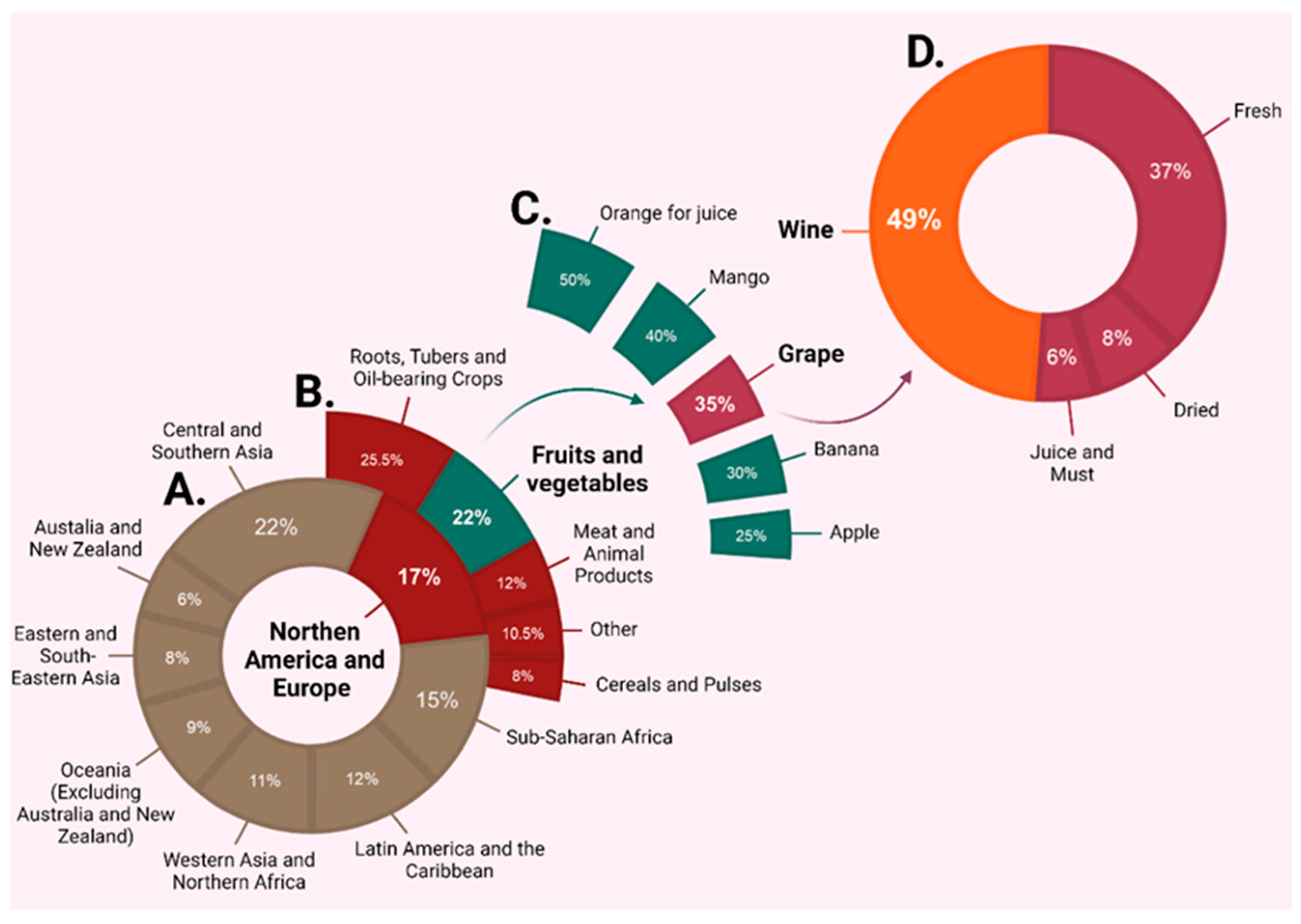
Figure 2.
Overview of the health benefits associated with grape consumption.
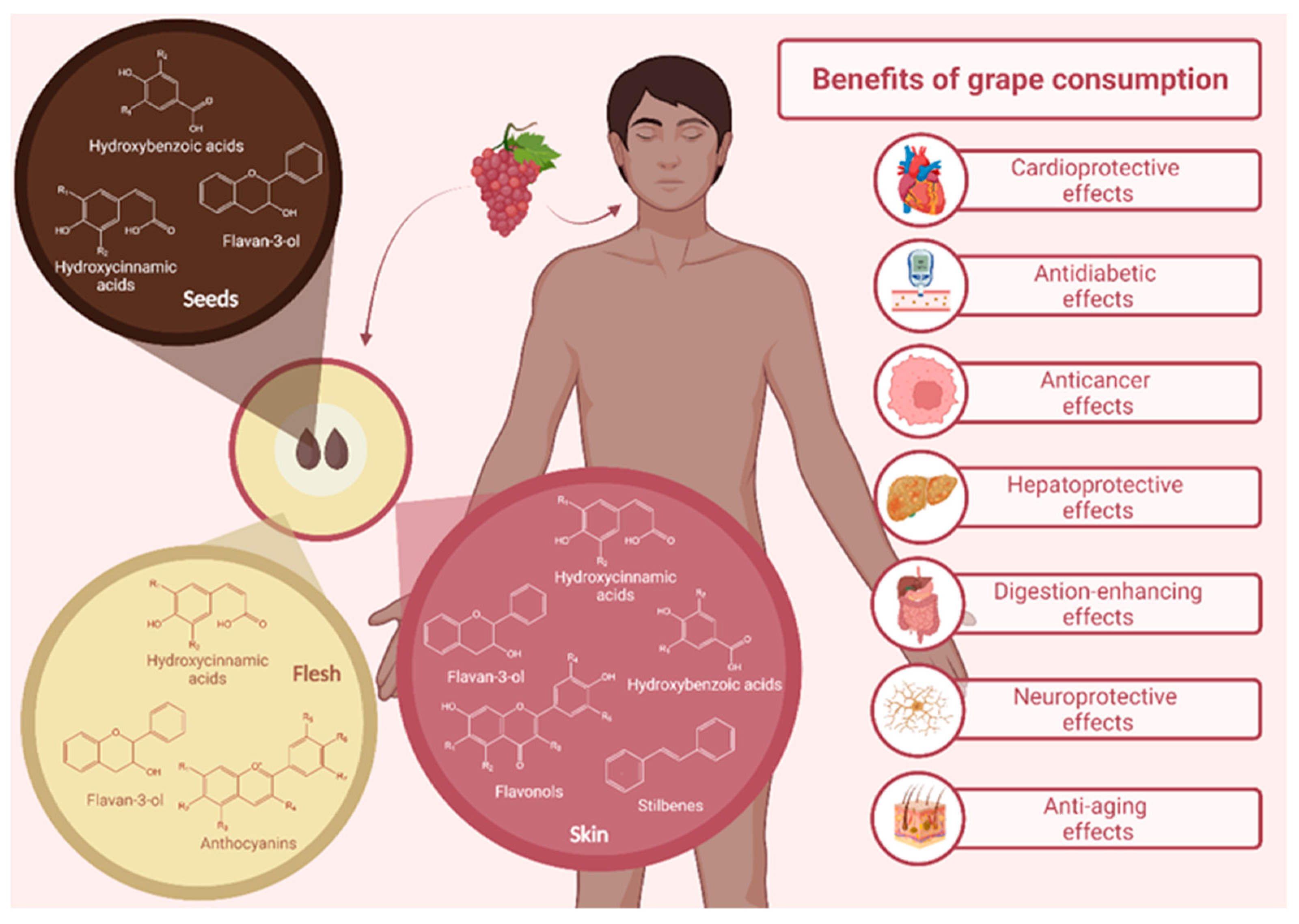
Disclaimer/Publisher’s Note: The statements, opinions and data contained in all publications are solely those of the individual author(s) and contributor(s) and not of MDPI and/or the editor(s). MDPI and/or the editor(s) disclaim responsibility for any injury to people or property resulting from any ideas, methods, instructions or products referred to in the content. |
© 2025 by the authors. Licensee MDPI, Basel, Switzerland. This article is an open access article distributed under the terms and conditions of the Creative Commons Attribution (CC BY) license (http://creativecommons.org/licenses/by/4.0/).
Copyright: This open access article is published under a Creative Commons CC BY 4.0 license, which permit the free download, distribution, and reuse, provided that the author and preprint are cited in any reuse.


