

Submitted:
21 January 2025
Posted:
22 January 2025
You are already at the latest version
Abstract
Population aging and the digital revolution converge, creating challenges and opportunities for the social inclusion of older adults. This study examined social media usage patterns among Brazilian older adults during the COVID-19 pandemic, ex-ploring their associations with sociodemographic factors, health, and well-being. Through an online survey with 441 participants aged 60 or older, we found that WhatsApp® and Instagram® were the most utilized platforms, with a significant in-crease in usage during the pandemic. Higher educational attainment and income were associated with more frequent and diverse social media use, while the presence of comorbidities positively correlated with seeking health information online. Notably, greater engagement in social networks was associated with an improved perception of well-being. The results highlight the potential of social networks as tools for digital inclusion, access to information, and promotion of well-being for older adults, especially in crisis contexts. However, they also reveal socioeconomic disparities in access to and use of these technologies. These findings have significant implications for public pol-icies on digital inclusion and health promotion, suggesting the need for targeted in-terventions to reduce digital inequality among older adults and maximize the potential benefits of social networks for active and connected aging.
Keywords:
1. Introduction
- Identify the main social networks used by Brazilian older adults and their usage patterns;
- Analyze the relationship between sociodemographic and health characteristics with social network use;
- Investigate the association between social network use and indicators of psychological well-being (self-esteem, loneliness, and depressive symptoms);
- Examine the impact of the COVID-19 pandemic on social network usage patterns by older adults.
2. Materials and Methods
2.1. Study Design
2.2. Population and Sample
2.3. Data Collection Instruments
2.4. Data Collection Procedures
2.5. Statistical Analysis
- Descriptive statistics: means, standard deviations, frequencies, and percentages to characterize the sample;
- Student's t-test and ANOVA: for comparisons between groups in continuous variables [31];
- Chi-square test: for associations between categorical variables [32];
- Multivariate logistic regression: to identify predictors of intensive social network use, controlling for confounding variables [33];
- Pearson correlation analysis: to examine relationships between social network use and health/well-being variables [34].
2.6. Ethical Considerations
3. Results
3.1. Sociodemographic Profile of Participants
3.2. Social Media Usage Patterns
3.3. Impact of the Pandemic on Social Media Use
- 86.85% of participants reported being in social isolation;
- 40.82% maintained virtual contact with family;
- 27.89% maintained both in-person and virtual contact with family;
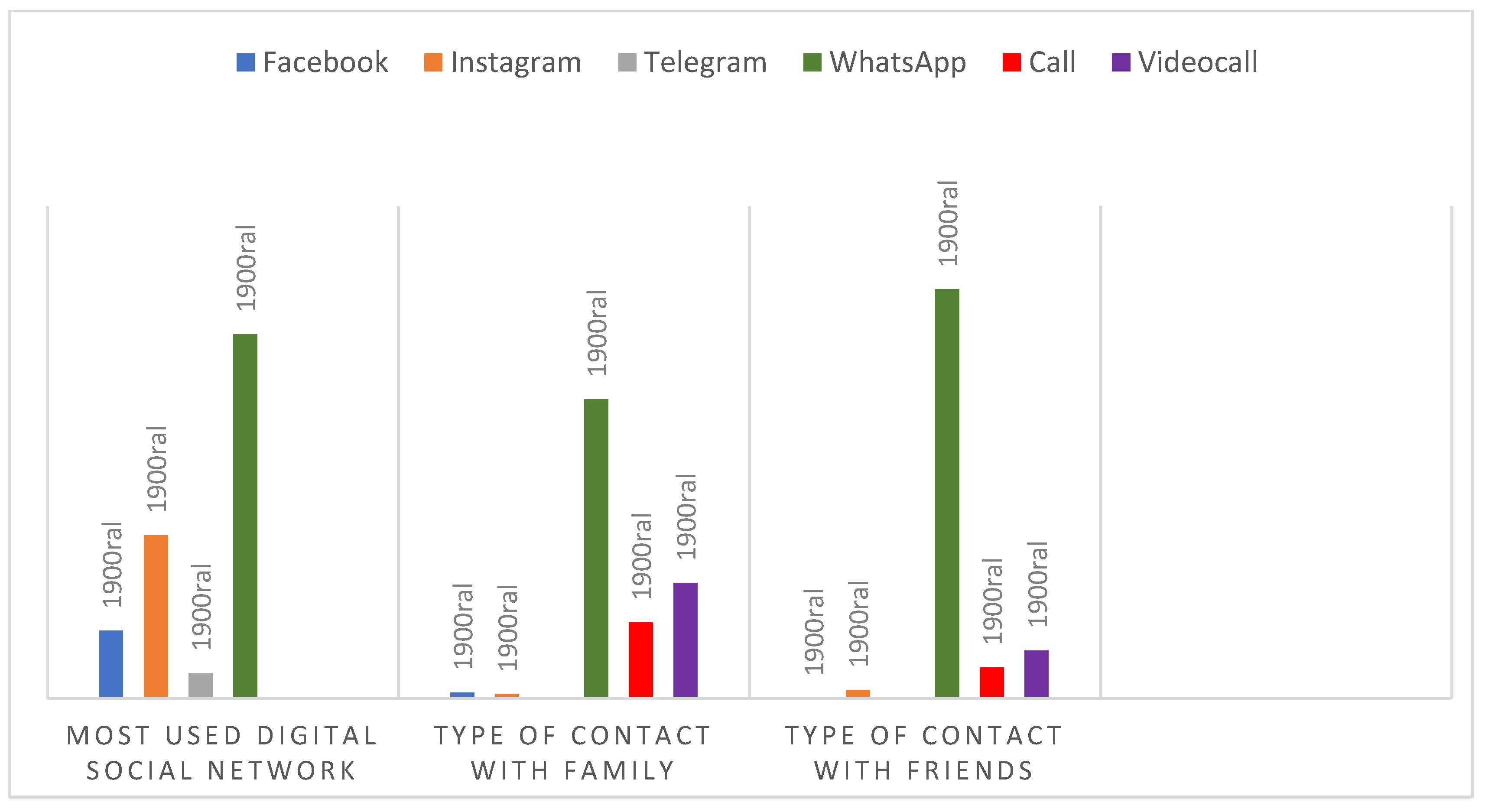
- 75.06% maintained virtual contact with friends, mainly via WhatsApp® (65.99%).
3.4. Relationship Between Sociodemographic Characteristics and Social Media Use
- Age and platform preference: younger participants (60-69 years) tended to use Instagram® more, while older ones preferred WhatsApp®;
- Education and frequency of use: higher education was associated with more frequent social media use;
- Income and platform diversity: participants with higher income used a greater variety of social networks.
3.5. Health Aspects and Their Relationship with Social Media Use
- 84.13% of participants regularly used medications.
- Hypertension (46.71%);
- Back problems (40.59%);
- Insomnia (34.01%);
- Anxiety or panic disorder (32.20%).
- 49.89% of participants had the disease;
- 96.83% were vaccinated, with 75.82% having received four doses of the vaccine.
3.6. Income and Activities of Participants
3.7. Social Media Use and Social Contact During the Pandemic
3.8. Relationship Between Social Media Use and Health Aspects
- Frequency of social media use and number of comorbidities (β = 0.18, p < 0.01);
- Use of social media for health information seeking and presence of chronic diseases (OR = 1.45, 95% CI: 1.22-1.73);
- Greater engagement in social media and better perception of quality of life (β = 0.23, p < 0.001).
3.9. Impact of COVID-19 on Social Media Use
- Participants who had COVID-19 increased their social media use by an average of 2.3 hours/week (p < 0.01);
- Having family members who contracted COVID-19 was associated with an increase of 1.8 hours/week in social media use (p < 0.05);
- 88.21% of participants reported using social media to obtain information about the pandemic.
3.10. Barriers and Facilitators in Social Media Use
3.11. Social Media Usage Patterns by Age Group
- Participants aged 60-69 were more likely to use multiple platforms (p < 0.01);
- Facebook® use was more prevalent among those aged 70-79 (p < 0.05);
- Participants aged 80 or older showed a strong preference for WhatsApp® (p < 0.001).
3.12. Relationship Between Social Media Use and Well-Being Indicators
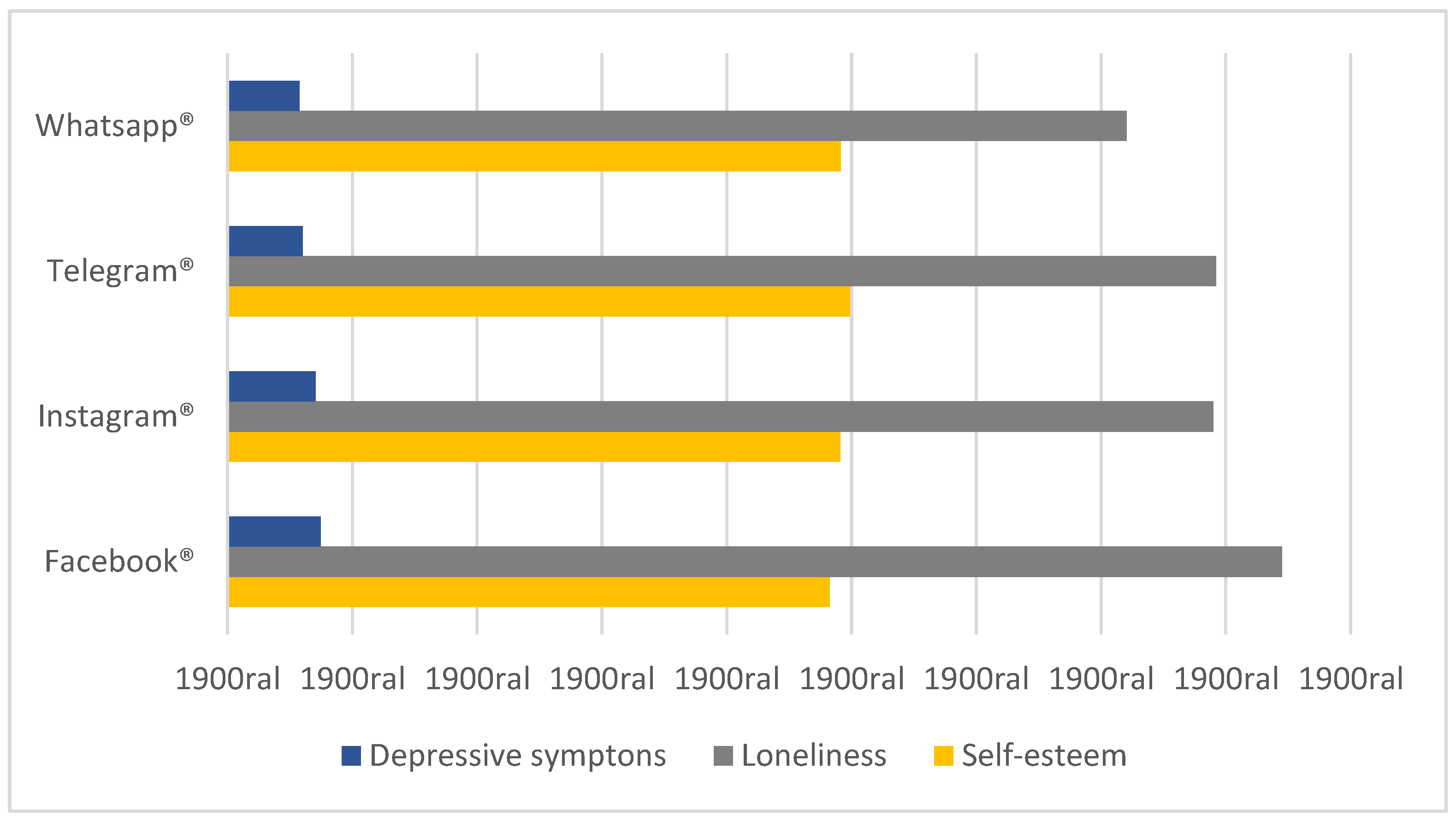
- Life satisfaction (r = 0.31, p < 0.001);
- Perception of social support (r = 0.28, p < 0.001);
- Depressive symptoms (r = -0.22, p < 0.01).
3.13. Use of Social Media for Health Purposes
3.14. Impact of Social Isolation on Social Media Use
- 72.32% increased their frequency of social media use;
- 58.49% reported that social media were "very important" in dealing with isolation;
- 45.17% started using new platforms or digital features.
3.15. Association Between Socioeconomic Characteristics and Usage Patterns
- Higher education (OR = 1.08, 95% CI: 1.03-1.13);
- Monthly income above 5 MW (OR = 1.76, 95% CI: 1.24-2.49);
- Residing in an urban area (OR = 2.13, 95% CI: 1.45-3.12);
- Having more than 3 devices connected to the internet (OR = 1.92, 95% CI: 1.36-2.71).
3.16. Perceptions of the Impact of Social Media on Quality of Life
- Social connection (78.23%);
- Access to information (72.56%);
- Entertainment (68.93%).
- Privacy (32.20%);
- Sleep quality (18.37%).
4. Discussion
4.1. Usage Patterns and Sociodemographic Factors
4.2. Impact of the Pandemic on Social Media Use
4.3. Social Networks, Health, and Well-being
4.4. Barriers and Facilitators
5. Conclusions
5.1. Synthesis of Main Findings
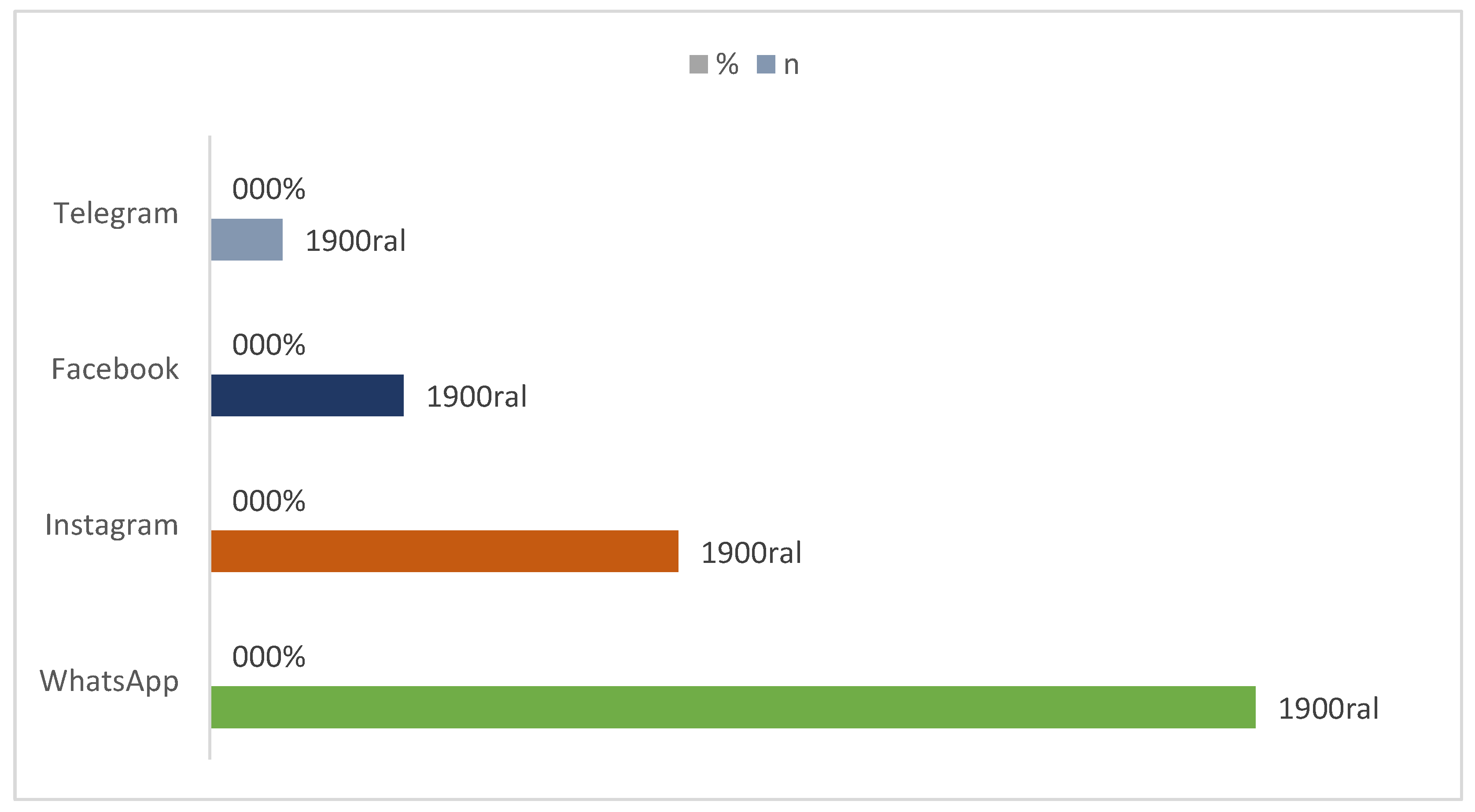
- WhatsApp® was the most used platform (58.74%), followed by Instagram® (26.30%).
- There was a significant increase in social media use during the pandemic, especially among those who had COVID-19 or affected family members.
- Higher education and income were associated with more frequent and diverse use of social networks.
- 88.21% of participants reported using social networks to obtain information about the pandemic.
- A positive correlation was observed between the number of comorbidities and the frequency of social media use for health information seeking.
- Greater engagement in social networks was associated with a better perception of quality of life.
5.2. Response to Study Objectives
- Identifying the main social networks used by Brazilian older adults and their usage patterns.
- Analyzing the relationship between sociodemographic and health characteristics with social media use.
- Investigating the association between social media use and indicators of psychological well-being.
- Examining the impact of the COVID-19 pandemic on social media usage patterns by older adults.
5.3. Practical and Theoretical Implications
- The results suggest the need for digital literacy programs targeted at older adults, especially those with lower education and income.
- There is a demand for initiatives that promote digital safety and provide adequate technical support for older adults.
- The use of social networks as a tool for disseminating health information to older adults shows promise but requires attention to the quality and reliability of information.
- The findings corroborate the applicability of Activity Theory and Continuity Theory in the context of digital technology use by older adults.
- The research contributes to the understanding of Age Stratification Theory in the scope of digital inclusion of older adults.
5.4. Suggestions for Future Research
- Conduct longitudinal studies to establish causal relationships between social media use and well-being indicators in older adults.
- Investigate social media usage patterns by older adults in a post-pandemic context.
- Explore specific interventions to reduce digital inequality among older adults from different socioeconomic levels.
- Examine the long-term impact of social media use on the mental and physical health of older adults.
5.5. Final Consideration on the Relevance of the Study
5.6. Contributions and Limitations of the Study
- Updated profile: This study provides an updated profile of Brazilian older adults who use digital social networks, offering valuable insights into their sociodemographic characteristics and usage patterns during the COVID-19 pandemic.
- Pandemic impact: The research highlights how the pandemic influenced social media use by older adults, contributing to the understanding of changes in communication and socialization patterns of this age group in a context of public health crisis.
- Digital inclusion: The results offer relevant information for the development of digital inclusion policies aimed at the elderly population, considering their specific needs and preferences.
- Practical and theoretical implications: The study demonstrates that digital literacy programs for older adults can have benefits that go beyond the acquisition of technical skills, potentially impacting mental health and quality of life.
- Sampling: The online nature of the research may have introduced a selection bias, excluding older adults without internet access or less familiar with digital technology, limiting the generalization of results.
- Cross-sectional design: The cross-sectional study does not allow establishing causal relationships or observing changes over time in social media use by older adults.
- Self-report: The information collected is based on participants' self-report, which may introduce memory or social desirability biases in the responses.
- Pandemic context: The unique context of the COVID-19 pandemic may have influenced the observed usage patterns, limiting the generalization of results to non-pandemic periods.
5.7. Implications for Future Research
- Longitudinal designs to elucidate the causal direction between social media use and well-being indicators in older adults.
- Inclusion of more diverse samples of older adults, possibly through mixed methods that reach non-internet users.
- Investigations on the long-term impact of social media use on mental health and well-being of older adults.
- Comparative studies between different regions of Brazil to capture the country's socioeconomic and cultural diversity.
- Exploration of how social media usage patterns by older adults evolve in the post-pandemic period.
- Research examining specific interventions to reduce digital inequality among older adults from different socioeconomic levels.
Author Contributions
Funding
Institutional Review Board Statement
Informed Consent Statement
Conflicts of Interest
References
- United Nations - Department of Economic and Social affairs - Population Division. World Population Ageing 2020 Highlights: Living Arrangements of Older Persons. Available online: https://www.un.org/development/desa/pd/ (accessed on 20 January 2025).
- Instituto Brasileiro de Geografia e Estatística (IBGE). Censo 2022. Available online: https://basedosdados.org/dataset/08a1546e-251f-4546-9fe0-b1e6ab2b203d?table=ebd0f0fd-73f1-4295-848a-52666ad31757&utm_term=censoibge2022&utm_campaign=Trend+do+Censo+2022&utm_source=adwords&utm_medium=ppc&hsa_acc=9488864076&hsa_cam=21101952202&hsa_grp=160 (accessed on 20 January 2025).
- Seifert, A.; Cotten, S.R.; Xie, B. A Double Burden of Exclusion? Digital and Social Exclusion of Older Adults in Times of COVID-19. The Journals of Gerontology: Series B 2021, 76, e99–e103. [Google Scholar] [CrossRef] [PubMed]
- Vogels, E.A. The Online Resource for Massachusetts Poverty Law Advocates. 2023. Digital divide persists even as Americans with lower incomes make gains in tech adoption | Mass Legal Services. Available online: https://www.masslegalservices.org/content/digital-divide-persists-even-americans-lower-incomes-make-gains-tech-adoption (accessed on 20 January 2025).
- Mariano, J.; Marques, S.; Ramos, M.R.; Gerardo, F.; Cunha, C.L.D.; Girenko, A.; et al. Too old for technology? Stereotype threat and technology use by older adults. Behav Inf Technol 2022, 41, 1503–1514. [Google Scholar] [CrossRef]
- Paquet, C.; Whitehead, J.; Shah, R.; Adams, A.M.; Dooley, D.; Spreng, R.N.; et al. Social Prescription Interventions Addressing Social Isolation and Loneliness in Older Adults: Meta-Review Integrating On-the-Ground Resources. J Med Internet Res 2023, 25, e40213. [Google Scholar] [CrossRef] [PubMed]
- Xie, B.; Charness, N.; Fingerman, K.; Kaye, J.; Kim, M.T.; Khurshid, A. When Going Digital Becomes a Necessity: Ensuring Older Adults’ Needs for Information, Services, and Social Inclusion During COVID-19. In Older Adults and COVID-19, 1st ed.; Routledge, 2021; pp. 181–191. [Google Scholar] [CrossRef]
- Peek, S.T.M.; Luijkx, K.G.; Rijnaard, M.D.; Nieboer, M.E.; van der Voort, C.S.; Aarts, S.; et al. Older Adults’ Reasons for Using Technology while Aging in Place. Gerontology 2016, 62, 226–237. [Google Scholar] [CrossRef]
- Grey, E.; Baber, F.; Corbett, E.; Ellis, D.; Gillison, F.; Barnett, J. The use of technology to address loneliness and social isolation among older adults: the role of social care providers. BMC Public Health 2024, 24, 108. [Google Scholar] [CrossRef]
- Castro, A.; Vitali, M.M.; Bousfield, A.B.D.S.; Camargo, B.V. Teoria das Representações Sociais e Modelo STAM: Aceitação da Internet entre Idosos. Psicol Teor e Pesqui 2024, 40, e40303. [Google Scholar] [CrossRef]
- Neri, A.L.; Borim, F.S.A.; Fontes, A.P.; Rabello, D.F.; Cachioni, M.; Batistoni, S.S.T.; et al. Factors associated with perceived quality of life in older adults. Rev Saude Publica 2019, 52 (Suppl. 2), 16s. [Google Scholar] [CrossRef] [PubMed]
- Havighurst, R.J. Successful Aging. Gerontologist 1961, 1, 8–13. [Google Scholar] [CrossRef]
- Nimrod, G. Changes in Internet Use When Coping With Stress: Older Adults During the COVID-19 Pandemic. Am J Geriatr Psychiatry 2020, 28, 1020–1024. [Google Scholar] [CrossRef]
- Atchley, R.C. A Continuity Theory of Normal Aging. Gerontologist 1989, 29, 183–190. [Google Scholar] [CrossRef] [PubMed]
- Cornwell, B.; Laumann, E.O. The health benefits of network growth: New evidence from a national survey of older adults. Soc Sci Med 2015, 125, 94–106. [Google Scholar] [CrossRef] [PubMed]
- Baltes, M.M.; Carstensen, L.L. The process of successful aging: Selection, optimization, and compensation. In Understanding human development: Dialogues with lifespan psychology; Springer: Boston, MA, USA, 2003; pp. 81–104. [Google Scholar] [CrossRef]
- Antonucci, T.C.; Ajrouch, K.J.; Manalel, J.A. Social Relations and Technology: Continuity, Context, and Change. Innov Aging 2017, 1. [Google Scholar] [CrossRef]
- Cowgill, D.O. Aging and modernization; Appleton-Century-Crofts: New York, 1972; 331p, ISBN 0390213187. [Google Scholar] [CrossRef]
- Czaja, S.J.; Boot, W.R.; Charness, N.; Rogers, W.A. Designing for Older Adults; CRC Press, 2019. [Google Scholar] [CrossRef]
- Berkman, L.F.; Glass, T. Social Integration, Social Networks, Social Support, and Health. In Social Epidemiology; Oxford University Press: New York, NY, USA, 2000; pp. 137–173. [Google Scholar] [CrossRef]
- Cotten, S.R.; Anderson, W.A.; McCullough, B.M. Impact of Internet Use on Loneliness and Contact with Others Among Older Adults: Cross-Sectional Analysis. J Med Internet Res 2013, 15, e39. [Google Scholar] [CrossRef] [PubMed]
- Riley, M.W.; Johnson, M.; Foner, A. Aging and society: A sociology of age stratification. Russell Sage Foundation: New York, NY, USA, 1972. [Google Scholar]
- Hargittai, E.; Dobransky, K. Old Dogs, New Clicks: Digital Inequality in Internet Skills and Uses among Older Adults. Can J Commun 2017, 42, 195–212. [Google Scholar] [CrossRef]
- Sixsmith, A. Technology and the Challenge of Aging. In Technologies for Active Aging; Springer: Boston, MA, USA, 2013; pp. 7–25. [Google Scholar] [CrossRef]
- Creswell, J.W.; Creswell, J.D. Research design: Qualitative, quantitative, and mixed methods approaches, 5th ed.; SAGE Publications, Inc: Newbury Park, 2017; 304p, ISBN 1506386695. 9781506386690. [Google Scholar]
- Etikan, I.; Musa, S.A.; Alkassim, R.S. Comparison of Convenience Sampling and Purposive Sampling. Am J Theor Appl Stat 2016, 5, 1. [Google Scholar] [CrossRef]
- Moreira, D.G.; Rodrigues, Q.M.; Masako, F.L. Adaptação cultural e validação da versão brasileira da escala de autoestima de Rosenberg. Rev Bras Cir Plást 2004, 19, 41–52. [Google Scholar]
- Barroso, S.M.; Andrade, V.S.D.; Midgett, A.H.; Carvalho, R.G.N.D. Evidências de validade da Escala Brasileira de Solidão UCLA. J Bras Psiquiatr 2016, 65, 68–75. [Google Scholar] [CrossRef]
- Almeida, O.P.; Almeida, S.A. Confiabilidade da versão brasileira da Escala de Depressão em Geriatria (GDS) versão reduzida. Arq Neuropsiquiatr 1999, 57, 421–426. [Google Scholar] [CrossRef]
- R Core Team. RA language and environment for statistical computing; R Foundation for Statistical Computing: Vienna, Austria, 2020. [Google Scholar]
- Zimmerman, D.W. A note on consistency of non-parametric rank tests and related rank transformations. Br J Math Stat Psychol 2012, 65, 122–144. [Google Scholar] [CrossRef]
- McHugh, M.L. The Chi-square test of independence. Biochem Medica 2013, 23, 143–149. [Google Scholar] [CrossRef] [PubMed]
- Sperandei, S. Understanding logistic regression analysis. Biochem Medica 2014, 24, 12–18. [Google Scholar] [CrossRef]
- Schober, P.; Boer, C.; Schwarte, L.A. Correlation Coefficients: Appropriate Use and Interpretation. Anesth Analg 2018, 126, 1763–1768. [Google Scholar] [CrossRef]
- Ministério da Saúde (MS). Resolução nº 466, de 12 de dezembro de 2012. Conselho Nacional de Saúde; Aprova diretrizes e normas regulamentadoras de pesquisas envolvendo seres humanos. Available online: https://www.gov.br/conselho-nacional-de-saude/pt-br/acesso-a-informacao/legislacao/resolucoes/2012/resolucao-no-466.pdf/view (accessed on 5 December 2024).
- Ekwegh, T.; Cobb, S.; Adinkrah, E.K.; Vargas, R.; Kibe, L.W.; Sanchez, H.; et al. Factors Associated with Telehealth Utilization among Older African Americans in South Los Angeles during the COVID-19 Pandemic. Int J Environ Res Public Health 2023, 20, 2675. [Google Scholar] [CrossRef] [PubMed]
- Nef, T.; Ganea, R.L.; Müri, R.M.; Mosimann, U.P. Social networking sites and older users—A systematic review. Int Psychogeriatrics 2013, 25, 1041–1053. [Google Scholar] [CrossRef] [PubMed]
- Ho, I.S.S.; McGill, K.; Malden, S.; Wilson, C.; Pearce, C.; Kaner, E.; et al. Examining the social networks of older adults receiving informal or formal care: a systematic review. BMC Geriatr 2023, 23, 531. [Google Scholar] [CrossRef] [PubMed]
- Gunnes, M.; Løe, I.C.; Kalseth, J. Exploring the impact of information and communication technologies on loneliness and social isolation in community-dwelling older adults: a scoping review of reviews. BMC Geriatr 2024, 24, 215. [Google Scholar] [CrossRef]
- Fagerson, A. Successful Aging in a Time of Wildfires Field Project. In Proceedings of the 105th Annual Meeting American Meteorogical Society, New Orleans; 2025. [Google Scholar]
- Martel, J.; Dembicki, J.; Bubric, K. Applying Human Factors to Modify and Design Healthcare Workspaces and Processes in Response to COVID-19. Ergon Des Q Hum Factors Appl 2025, 33, 25–33. [Google Scholar] [CrossRef]
- Hunsaker, A.; Hargittai, E. A review of Internet use among older adults. New Media Soc 2018, 20, 3937–3954. [Google Scholar] [CrossRef]
- Hülür, G.; Macdonald, B. Rethinking social relationships in old age: Digitalization and the social lives of older adults. Am Psychol 2020, 75, 554–566. [Google Scholar] [CrossRef] [PubMed]
- Hanandini, D. Social Transformation in Modern Society: A Literature Review on the Role of Technology in Social Interaction. J Ilm Ekotrans Erud 2024, 4, 82–95. [Google Scholar] [CrossRef]
- Guess, A.; Nagler, J.; Tucker, J. Less than you think: Prevalence and predictors of fake news dissemination on Facebook. Sci Adv 2019, 5, eaau4586. [Google Scholar] [CrossRef] [PubMed]
- Wang, J.; Zhai, Y.; Shahzad, F. Mapping the terrain of social media misinformation: A scientometric exploration of global research. Acta Psychol (Amst) 2025, 252, 104691. [Google Scholar] [CrossRef]
- Ma, J. The causal effect of Internet use on rural middle-aged and older adults’ depression: A propensity score matching analysis. Digit Heal 2025, 11, 20552076241310041. [Google Scholar] [CrossRef] [PubMed]
- Lopez, R.B.; Courtney, A.L.; Liang, D.; Swinchoski, A.; Goodson, P.; Denny, B.T. Social support and adaptive emotion regulation: Links between social network measures, emotion regulation strategy use, and health. Emotion 2024, 24, 130–138. [Google Scholar] [CrossRef]
- Jafar, Z.; Quick, J.D.; Rimányi, E.; Musuka, G. Social Media and Digital Inequity: Reducing Health Inequities by Closing the Digital Divide. Int J Environ Res Public Health 2024, 21, 1420. [Google Scholar] [CrossRef]

| CHARACTERISTIC | n (%) |
| Age Group | |
| 60 to 69 years | 360 (81.63%) |
| 70 to 79 years | 68 (15.42%) |
| 80 years or older | 13 (2.95%) |
| Sex | |
| Female | 363 (82.31%) |
| Male | 78 (17.69%) |
| Skin Color | |
| White | 386 (87.53%) |
| Mixed | 33 (7.48%) |
| Black | 14 (3.18%) |
| Yellow | 6 (1.36%) |
| Indigenous | 2 (0.45%) |
| Marital Status | |
| With Partner | 256 (58.05%) |
| Without Partner | 185 (41.95%) |
| Education | |
| Mean years of schooling | 17.46 ± 5.84 |
| CHARACTERISTIC | n (%) |
| Monthly income of the older adult | |
| 1 MW | 46 (10.43%) |
| 2 MW | 50 (11.33%) |
| 3 to 5 MW | 140 (31.75%) |
| 6 to 9 MW | 94 (21.32%) |
| 10 MW or more | 101 (22.90%) |
| Don't know | 10 (2.27%) |
| Daily activities | |
| Domestic activities | 136 (30.84%) |
| Paid work | 84 (19.05%) |
| Paid work and others | 89 (20.18%) |
| Sports and dance | 57 (12.92%) |
| Volunteer work | 56 (12.70%) |
| None | 19 (4.31%) |
| FACILITATORS | n (%) | BARRIERS | n (%) |
| Maintaining contact with family/friends | 389 (88.21%) | Privacy concerns | 201 (45.58%) |
| Access to information | 312 (70.75%) | Technical difficulties | 178 (40.36%) |
| Entertainment | 287 (65.08%) | Lack of interest in some platforms | 156 (35.37%) |
| Learning new skills | 201 (45.58%) | Excessive time spent online | 134 (30.39%) |
| Sharing experiences | 189 (42.86%) | Exposure to negative news | 112 (25.40%) |
| PURPOSE | n (%) |
| Seeking health information | 312 (70.75%) |
| Sharing health experiences | 189 (42.86%) |
| Contact with health professionals | 156 (35.37%) |
| Participation in online support groups | 134 (30.39%) |
| Scheduling appointments/exams | 112 (25.40%) |
Disclaimer/Publisher’s Note: The statements, opinions and data contained in all publications are solely those of the individual author(s) and contributor(s) and not of MDPI and/or the editor(s). MDPI and/or the editor(s) disclaim responsibility for any injury to people or property resulting from any ideas, methods, instructions or products referred to in the content. |
© 2025 by the authors. Licensee MDPI, Basel, Switzerland. This article is an open access article distributed under the terms and conditions of the Creative Commons Attribution (CC BY) license (http://creativecommons.org/licenses/by/4.0/).