Preprint
Article

This version is not peer-reviewed.

Sustainable Cultivation of Urochloa Grasses and Associated Mycorrhizae

Submitted:

15 January 2025

Posted:

22 January 2025

You are already at the latest version

Abstract

Perennial grasses have multiple important uses such as forage, cover crops, and intercrops, utilized in pest management and supporting scientific experiments. Among those grasses, Urochloa brizantha is a tropical forage, having vigorous deep roots, commonly used for arbuscular mycorrhizae (AMF) multiplication in glasshouse and nursery, developing infective propagules to be conserved in germplasm banks. Other grass species, such as Urochloa decumbens, is also used for arbuscular mycorrhizae multiplication in addition to its cultivation for guaranteeing the sustainability of livestock systems. In this study, the soil chemical characterization, microcharcoal content and AMF spore identification showed high amount of potassium (K), high microcharcoal content and the occurrence of AMF, most of Glomeraceae. Due to its economic importance for sustainable agricultural production and other uses besides its environmental services, more detailed research is needed on the biotic interactions and inoculant production in these studied grasses.

Keywords: 
;  ;  ;  ;  

1. Introduction

Due to the increasing interest deposited on grasslands for forage cultivation (source of meat and milk) to obtain better food production besides reducing environmental unfavorable emissions, researchers look for decrease nutrient and fertilizers leaching and employ of pesticides, enhancing carbon sequestration, thus improving soil sustainability [1]. However, the deleterious effects of chemical inputs on the soil of monocultures are not totally studied [2]. Fortunately, the effect of manures, wastes, residues, compost, and biochar amendments to the soil systems is increasingly studied worldwide, as organic agroecosystems are more procured. Thus, experiments on the implementation of natural soil conditioners by agriculture are rapidly increasing, and organic or regenerative agriculture adopted the addition of natural residues on horticultural plants and crops. Furthermore, the compatibility among biofertilizers and soil conditioners is also investigated to support sustainable agricultural systems and to deal with the effects of global and especially climatic change. Thus, the mycorrhizal symbiosis, application of compost of selected waste [3], phosphate solubilizing microorganisms, microbial inoculants, and biochar are increasingly explored worldwide. Of particular interest for research are perennial grassland plots of Urochloa brizantha (Figure 1), a tropical forage (source of meat and milk), commonly used for Arbuscular mycorrhizae fungi (AMF) multiplication as this plant species associate with this type of fungi, which highly colonize its roots [4]. developing infective propagules [5]. Urochloa decumbens is also used for arbuscular mycorrhizae multiplication, in addition to its cultivation for ensuring the sustainability of livestock systems. Moreover, these grass species are increasingly used in no-tillage as cover crops (Alves Teixeira et al.2014). [6], such as in coffee trees (Baptistella, 2022). [7]. Some grass species actively propagate benefic microsymbionts after their roots are colonized by the soil microbiota. This is the case of Uroclhoa (Brachiaria) species, which are largely cultivated in pastures and cover crops. Urochloa spp. are frequently selected for intercropping to improve land use and agricultural yields due to their high residue production, and slow decomposition. (Crusciol et al.2023). [8]. The occurrence and life cycle of relevant symbionts such as the AMF in grasslands was previously investigated, especially in Brazil [4]. Reports indicated differences between symbionts AMF species in U. brizantha, However, due to the economic importance of grass species, and due to the lack of detailed data in this topic, more detailed research is needed to better understand the plant interactions with the microbiota. In the present study, with the purpose of examining the AMF associated to grass in experimental farms, the AMF community structure was studied in a plot of U. brizantha grassland. Regarding spore numbers in the soil/ substrate, high values were observed in U. brizantha inoculated with A. longula (850 spores in 50 ml substrate), followed by plants inoculated with Acaulospora colombiana (755 spores) and Acaulospora morrowiae (228 spores, after 120 days of cultivation). It was highlighted the high multiplication potential of Acaulospora longula in Urochloa [4], thus indicating potential prolific species to be included as inoculants.

2. Materials and Methods

2.1. Study Site

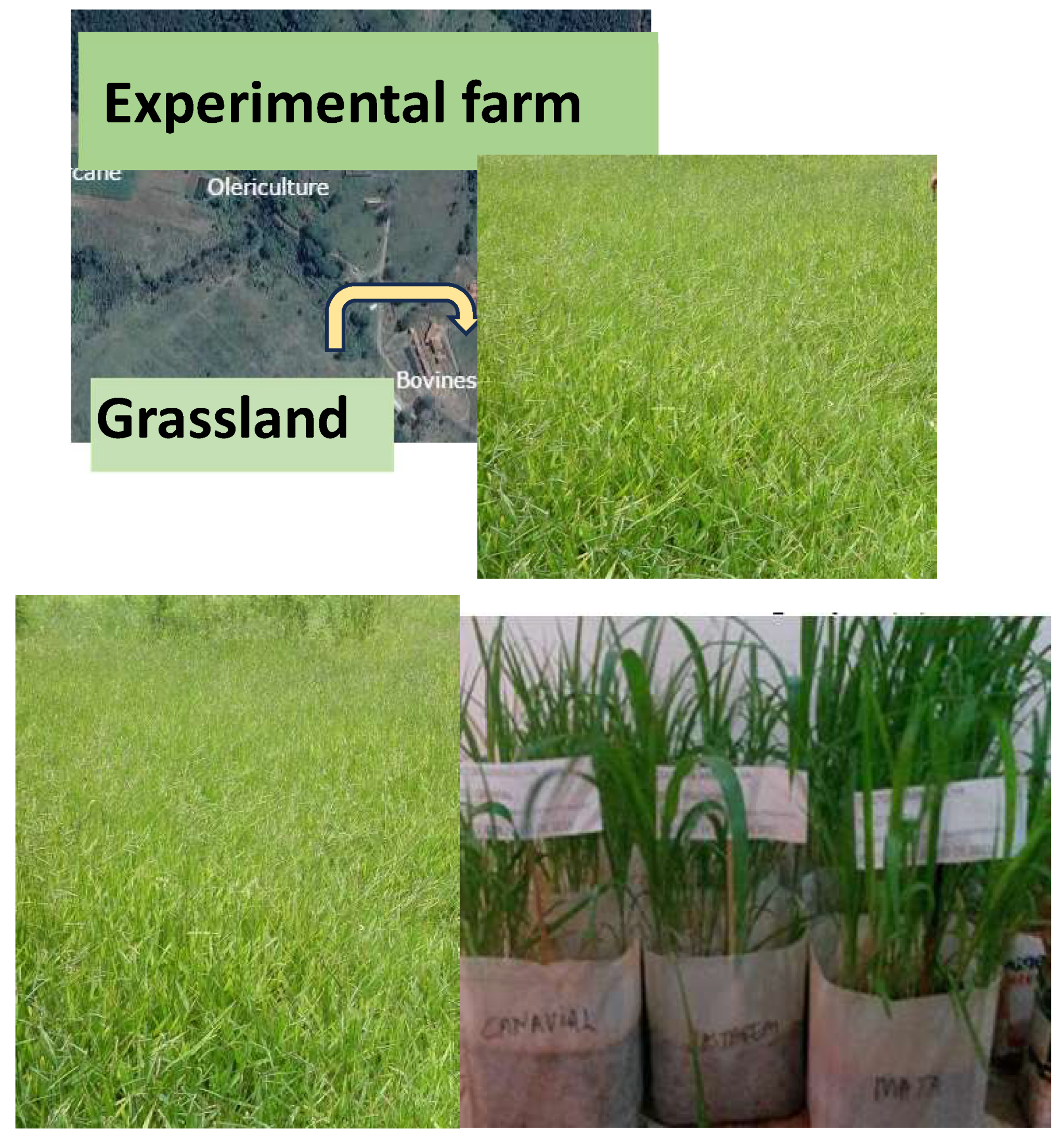
The U. brizantha grassland plot at the experimental farm of EPAMIG (19°42'51.5"S 44°53'37.0"W) in Brazil, South America, (estimated age of cultivation ~25 years, chopped up once a year, (Figure 1) was used to study the AMF community structure. A site of 100 m2 in the farm was selected to take soil samples in a plain area, with U. brizantha pasture, and the samples were collected between February (rainy period) and November (after the dry period) 2015.

2.2. Soil Sampling and Chemical Characterization

Soil samples (three replicate plots (plot size, 5 by 20 m) obtained in February (rainy period) and November 2015 (after the dry period) at the site, were used for determination of chemical soil parameters (Embrapa, 1997) and for AMF spore extraction.

2.3. AMF Spore Isolation and Identification

AMF spores occurring in the soil samples (100g soil) were extracted by wet sieving (Gerdemann and Nicolson, 1963) [9] and were identified using specific descriptions of AMF species. The old and decaying spores with missing clear features were also counted as an approach for viability [10], and the results expressed as percentage of unviable AMF spores.

2.4. Microcharcoal Content

The number of microscopic (>500μm) charcoal fragments (adapted from [11] was measured on the same Petri dishes used for spore isolation at 400 × magnification using a grid, and results were expressed as number of fragments in the subsamples (25g soil).

3. Results

The U. brizantha grass presented a Typic Acrustox soil (Soil taxonomy- USDA, 2022), (Table 1). The region’s soil type was classified as sandy clay loam. The occurrence of AMF, most of Glomeraceae (Table 2), was detected. Compared to other reports, Claroideoglomus was dominant among the isolated species of Glomeromycota (Table 2). The grass soil studied showed exclusive characteristics: high amount of K and higher charcoal content than samples of cultivated sites in the region (Pagano et al, 2020) [12]. This study showed the AMF community associated with grass, as well as potential for AMF inoculant formulation. Different AMF species (Acaulospora longula and Acaulospora colombiana) were previously associated with U. brizantha in greenhouse, Minas Gerais, Brazil, by Barbosa et al. [5].
Table 1. Reports on Urochloa species in Brazil.
Vegetation / Field/ greenhouse Plant species Geographical coordinates Altitude (m asl) Estimated age of cultivation (year) AMF species/Glomalin State Reference
U. brizantha
U. decumbens
Experimental Station of
The Cerrado
Diversispora sp., Scutellospora sp. Glomus sp. Gigaspora sp. GO [4]
Greenhouse U. brizantha 19°42'51.5"S 44°53'37.0"W
628,36 >10 A. colombiana, A. longula/ + MG [5]
[6]
U. brizantha NA SP [7]
U. brizantha 48°26’W; 22°51’ S
740  NA SP [8]
NA: Not available. GO = Goiás; MG= Minas Gerais; SP = São Paulo; + Glomalin content evaluated.
Table 2. Physical-Chemical properties of soil at U. brizantha, in the experimental farm, Minas Gerais state, Brazil.
pH (H2O) 5.4
OC (dag kg-1) NA
Ca (cmolc kg-1) 1.5
Mg (cmolc kg-1) 0.9
Al (cmolc kg-1) 0.7
K mg⋅kg-1 43
P mg⋅kg-1 1.8
Soil texture Clayey- loam
Charcoal content# 19.66
Means of three replicates. NA: Not available. # Mean number of microcharcoal fragments in soil.
Table 3. AMF species found in the U. brizantha grassland soil in the experimental farm, Minas Gerais state, Brazil.
AMF Family AMF species
Ambisporaceae Ambispora appendicula
Claroideoglomeraceae Claroideoglomus etunicatum
Glomeraceae Funneliformes geosporus
Dentiscutataceae Dentiscutata heterogama
Glomeraceae Glomus brohultii
In the present study, the AMF community structure was studied in an U. brizantha grassland in Brazil, The AMF community structure in the U. brizantha grassland showed dominance of Glomeraceae, compared to other reports where Acaulospora and Gigaspora occurred (dos Santos et al. 2022) [9]. In the Urochloa brizantha grass, five genera of Glomeromycota, five species and four unidentified morphotypes were detected (Table 1). The U. brizantha grass showed exclusive characteristics: higher amount of K and higher microcharcoal content (Table 1) than samples of cultivated sites. This study showed the AMF communities associated to the grass at field conditions, as well as potential for AMF inoculant formulation. Different AMF species (Acaulospora longula and Acaulospora colombiana) were previously associated with Urochloa brizantha (Barbosa et al. 2019). [5]. However, to understand the U. brizantha ecology it is necessary to analyze the time of symbiosis establishment, and spore multiplication. The hypothesis of this study is that U. brizantha associates with diverse AMF species, which have different behaviors when colonizing this host plant. We examined arbuscular mycorrhizae associated with this grass in an experimental farm. The community structure was studied in a U. brizantha grassland in Brazil, which showed a greater diversity of AMF compared to previous reports. Moreover, nearly 50 % of unviable AMF spores were estimated. Four genera of Glomeromycota, five species and four unidentified morphotypes were detected (Table 2). The grass showed exclusive characteristics: higher amount of soil organic matter and higher macroaggregates and charcoal content than samples of cultivated sites investigated in the region by Pagano et. al.2020) The present study showed AMF communities associated to U. brizantha, as well as the potential for AMF inoculant formulation.
Figure 1. grassland plot of Urochloa brizantha in Brazil, (A). Sorghum cultivated in pots (B) with U. brizantha soil.
Preprints 146294 g002
Table 2. AMF species associated with Urochloa brizantha at the experimental farm, Minas Gerais, Brazil.
AMF species
Dentiscutataceae
Dentiscutata heterogama
Claroideoglomeraceae
Claroideoglomus etunicatum
Racocetraceae
Racocetra fulgida
Glomeraceae
Funneliformes geosporus
Glomus sp. 1
Glomus sp. 2
Data obtained at 0-20 cm soil depth. a (n = 3).
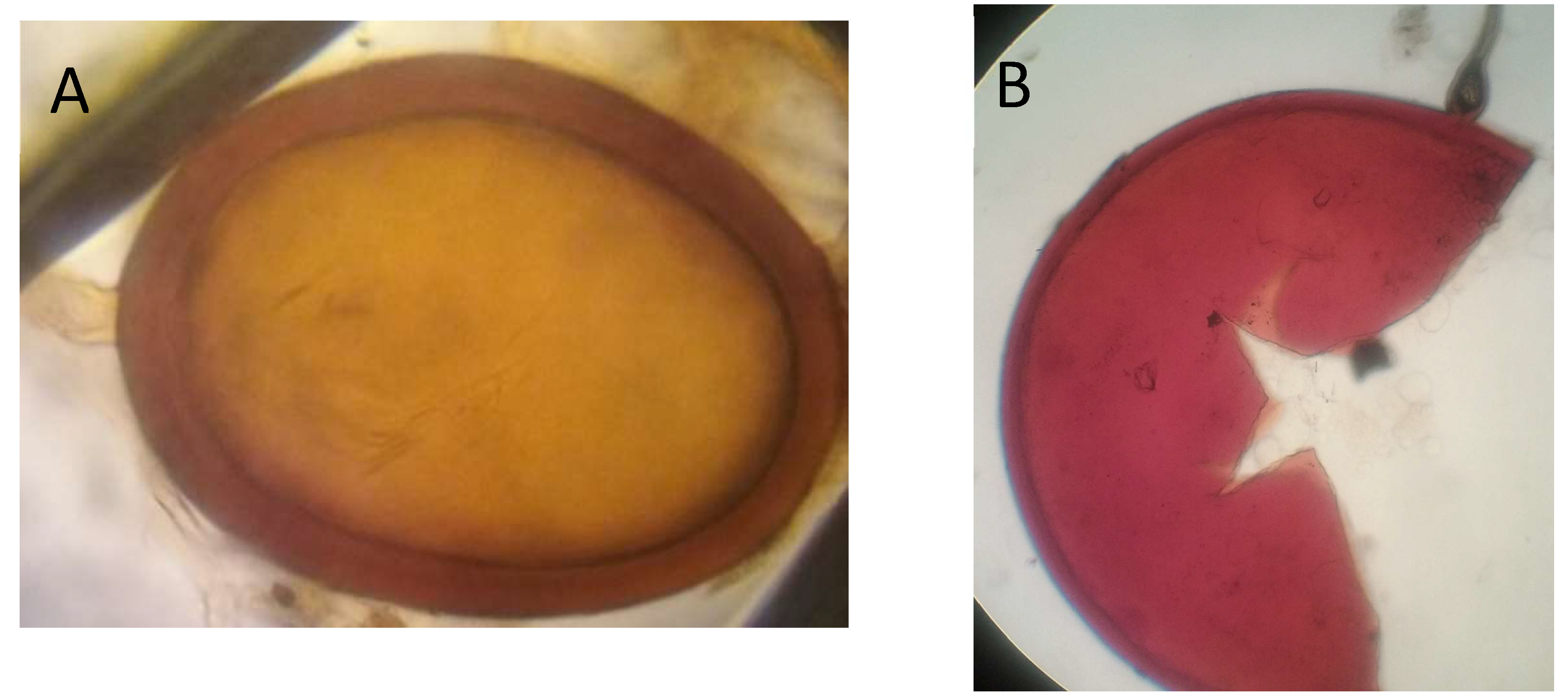
Figure 2. AMF species found in the U. brizantha grassland. Claroideoglomus etunicatum(A).; Dentiscutata heterogama (B).
Preprints 146294 g003

4. Discussion

Most previous reports on Urochloa come from greenhouse experiments, indicating differences between AMF species associated to U. brizantha, A. colombiana, showing the best AMF root colonization percents in a short cultivation time. (Barbosa et al. 2019) found the highest number of spores of Acaulospora longula and A. colombiana, exhibiting the highest mycorrhizal root colonization at 76 days, confirming that the inoculation favored the root growth of U. brizantha in greenhouse. The need of more information for a better understanding of the symbiotic relationships between different AMF species associated to U. brizantha was earlier pointed out.
In the present field study, the results indicated at least five AMF species and other morphotypes, which can be propagated on farm, establishing sustainable Urochloa cultures in tropical agroecosystems and also, Sorghum cultures cultivated in pots with U. brizantha grassland soil. As AMF species vary in their performances for the plant species, it is needed to compile more knowledge to optimize their management. In the present study, the AMF species were mostly from Glomeraceae, which are designated as r-strategists, and are commonly found in anthropized agroecosystems; however, some studies showed the effective potential of Acaulospora. Thus, it is necessary to study the propagules during the cultivation time to better understand the symbiosis in Urochloa species and other promising tropical forages. The production of biological inputs on farm (on rural properties) is also increasing. The production of biological inputs such as inoculants and products for biological pest management is guided by the Ministry of Agriculture, Brazilian Agropecuary Company (EMBRAPA) for monitoring and regulate the quality and safety of tested products.

5.1. Urochloa Species in Cover Crops.

Perennial grasses have been employed as cover crops, and intercrops, besides their use for forage, and were also utilized in pest management and supporting scientific experiments. Among the Urochloa species, U. humidicola and U. decumbens and Brachiaria ruziziensis were investigated [9]. presenting percents of AMF colonization in their roots of 55.78, and 66, respectively. These high values indicate the relevant role of these plant species benefiting soil health through the fungal network provided by AMF, which benefits plants and protects soil. Furthermore, AMF secrets a protein (glomalin), which favors soil aggregation, improving soil quality. In this sense, only one report showed the glomalin content in U. brizantha, which varied from 3.30 to 3.74 mg. g soil -1 when inoculated with Gigaspora margarita and A. longula, respectively [6].
Due to the relevant role of cover crops and intercrops in increasing diversity and sustainability of crops, they are commonly used for several reasons: the residues left after cutting protect the soil and provide nutrients to the next crop or intercropped culture. Urochloa species have vigorous, abundant deep roots, opposed to the more superficial and scarce roots of crops. These grass traits aid carbon sequestration, soil organic matter stabilization and nutrient cycling. Urochloa roots also improve soil physical characteristics and influence soil nutrient dynamics, reducing nutrient losses and enhancing their cycling, which is benefic for nutrient use efficiency in sustainable agriculture. [6]. Furthermore, these cover crops are commonly employed in coffee trees [7] and in many orchards. Thus, meliorating the U. brizantha culture via benefits from AMF and increasing research on the symbionts and related microbiota, will favor sustainable grazy ecosystems destinated to forage and provide sustainable plant systems to reproduce AMF propagules. Therefore, U. brizantha has showed high root colonization (35 %) when inoculated with A. longula; however, low values (16 %) were reported when inoculated with other species, such as G. margarita (16%) or P. occultum (27%). The low root colonization when inoculated with G. margarita may be related to the characteristic slow root colonizer of this AMF species. The cultivation of Urochloa in agroecosystems have multiple benefits, such as reduced risk of soil erosion, better soil structure, higher levels of soil organic matter and biological activity. [6]

5.2. Urochloa Species for AMF Studies

Urochloa brizantha is a tropical forage, having vigorous deep roots, commonly used for arbuscular mycorrhizae (AMF) multiplication in glasshouse and nursery, developing infective propagules for conservation in germplasm banks and, thus, to be used in taxonomy studies of AMF, providing information on the interactions of different AMF for mycorrhizal colonization and spore multiplication to be used in AMF collections and experiments. At the same time, most propagules provide information on the interactions of different AMF for mycorrhizal colonization and spore multiplication to be used in AMF collections. Have unique value for inoculum to be applied in experimental research or in farms. Other grass species, such as Urochloa decumbens, is also used for arbuscular mycorrhizae multiplication. A great number of studies have utilized AMF spores multiplied using Urochloa decumbens for propagation of spores used as inoculum. Among them, field studies on ecological restoration (Pagano et al., 2022) [7] employed inoculated seedlings of native tree species. Traditionally, a mix of dominant AMF species recruited from the local site can be employed. However, it was common to produce inoculum combining two different AMF species ( Gigaspora margarita and Glomus sp. Other studies in greenhouse, (Pedroso et al. 2018 [13]) applied a mixture of spores (Glomus macrocarpum, Paraglomus occultum, and Glomus sp. to inoculate U. brizantha in soil contaminated with heavy metals. They found greater root colonization in inoculated plants, showing beneficial effects of AMF on plant growth and alleviation of soil contaminants.

5.3. Urochloa Species for Carbon Mitigation

Besides the contribution of U. brizantha plants fixing atmospheric CO2, the accumulation of glomalin (a glycoprotein produced by hyphae and spores) in the soil is important due to its role protecting organic carbon, which contributes to the reduction of the CO2 emissions. Thus, improving the growth of Urochloa plants results in a greater photosynthetic activity (increased fixation of atmospheric CO2), favoring the accumulation of organic carbon by roots and increasing the nutrients cycling in the soil/plant system.

6. Conclusions

This study details the AM fungal community associated with Urochloa roots in a grassland ecosystem using morphological methods for spore identification. Moreover, we compile reports on this plant species in tropical South America. Glomeraceae was the most prolific fungal family inhabiting the grassland; however, other AM fungal species were found. We confirmed five AMF species and four morphotypes associated to Urochloa brizantha in a tropical managed soil This study contributes for the selection of highly-efficient inoculants for the mycorrhizal colonization of plant roots, especially, Urochloa species (U. brizantha), at field conditions. For instance, F. geosporus, D. heterogama and C. etunicatum can be indicated as potential inoculants for Urochloa brizantha plots in this tropical region.

Author Contributions

Conceptualization and writing, EJC MP, BY, and NFD.; field and Lab work, MP., EJC. All authors have read and agreed to the published version of the manuscript.

Funding

This research received no external funding.

Acknowledgments

FAPEMIG.

Conflict of interest

The authors declare that they have no conflict of interest.

References

  1. Lambers, H, Cong, W-F. 2022. Challenges Providing Multiple Ecosystem Benefits for Sustainable Managed Systems. Front. Agr. Sci. Eng., 9 (2) 170-176. [CrossRef]
  2. Goldan, E. ; Nedeff, V, Barsan, N.,Culea,M.Panainte-Lehadus, M, Mosnegutu,E.,Tomozei,C., Chitimus, D.; Irimia, D. 2023. Assessment of Manure Compost Used as Soil Amendment—A Review. Processes. [CrossRef]
  3. dos Santos Lucas, L. , Rubio Neto, M.A. de Moura, J., B. Fernandes de Souza, R., Fernandes Santos, M E.; Fernandes de Moura, L, Gomes Xavier, E. J M dos Santos, J.M., Dutra Silva, R. N. S. 2022 Mycorrhizal fungi arbuscular in forage grasses cultivated in Cerrado soil.2022. Scientific Reports, 12:3103. [CrossRef]
  4. Barbosa, M. V., Pedroso, D. de F.,F. Araujo Pinto, J. dos Santos V; Carbone Carneiro, M.A. 2019. Arbuscular mycorrhizal fungi and Urochloa brizantha: symbiosis and spore multiplication. Pesquisa Agropecuaria Tropical 49, 2019. [CrossRef]
  5. Alves Teixeira, R. Gazel Soares, T. Rodrigues Fernandes, A. Martins de Souza Braz, A. 2014. Grasses and legumes as cover crop in no-tillage system in northeastern Pará Brazil, Acta Amaz. [CrossRef]
  6. Baptistella, J.L.C.; Bettoni Teles, AP. Favarin J, Mazzafera, P. 2022 Phosphorus cycling by Urochloa decumbens intercropped with coffee. Experimental Agriculture, 58, 2022, e36.
  7. Crusciol et al. 2023. Lasting effect of Urochloa brizantha on a common bean-wheat-maize rotation in a medium-term no-till system. Frontiers in Sustainable Food Systems 7. [CrossRef]
  8. Baptistella, J. L. C.; de Andrade S. A. L; Favarin J. L.; Mazzafera P. 2020. Urochloa in Tropical Agroecosystems, Frontiers in Sustainable food systems, 4, 119. 4.
  9. 11. Stevenson, J. 11. Stevenson, J., Haberle, S., 2005. Macro Charcoal Analysis: a Modified Technique Used by the Department of Archaeology and Natural History. Palaeoworks Technical Papers, p. 5.108.
  10. Varga, S. , Finozzi, C., Vestberg, M., K Arctic arbuscular mycorrhizal spore community and viability after storage in cold conditions. Mycorrhiza 25. 335–34.
  11. Pagano, MC; Duarte,NF., Corrêa, EJA. 2020. Effect of crop and grassland management on mycorrhizal fungi and soil aggregation. Applied Soil Ecology, 147p. 103385.
  12. Pedroso, D., Barbosa, M.V., dos Santos, J.V. et al. (2018). Arbuscular Mycorrhizal Fungi favor the Initial Growth of Acacia mangium, Sorghum bicolor, and Urochloa brizantha in Soil Contaminated with Zn, Cu, Pb, and Cd. Bull Environ Contam Toxicol 101, 386–391. [CrossRef]
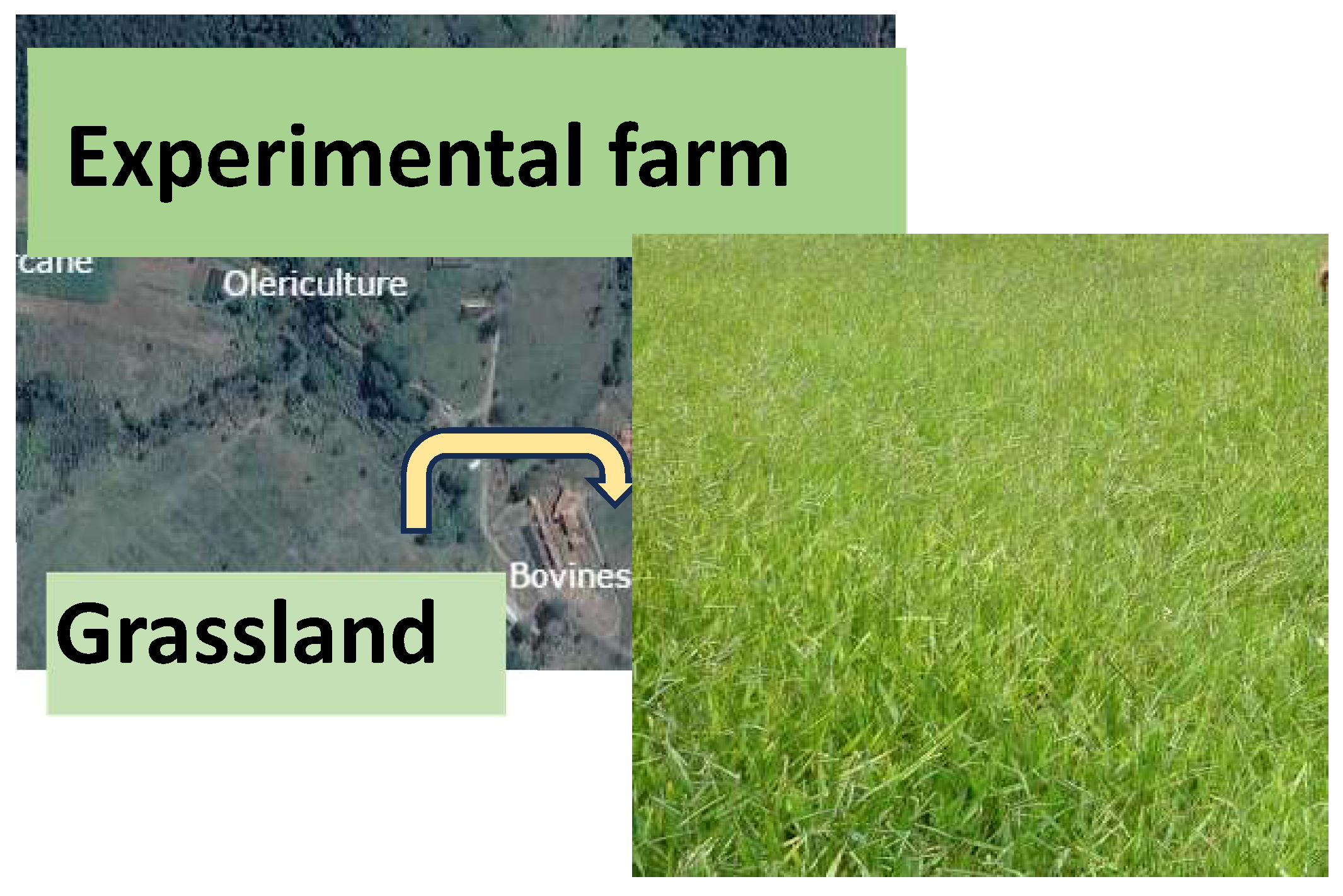
Figure 1. grassland plot of Urochloa brizantha.
Preprints 146294 g001
Disclaimer/Publisher’s Note: The statements, opinions and data contained in all publications are solely those of the individual author(s) and contributor(s) and not of MDPI and/or the editor(s). MDPI and/or the editor(s) disclaim responsibility for any injury to people or property resulting from any ideas, methods, instructions or products referred to in the content.
Copyright: This open access article is published under a Creative Commons CC BY 4.0 license, which permit the free download, distribution, and reuse, provided that the author and preprint are cited in any reuse.
Prerpints.org logo

Preprints.org is a free preprint server supported by MDPI in Basel, Switzerland.

Subscribe

Disclaimer

Terms of Use

Privacy Policy

Privacy Settings

© 2025 MDPI (Basel, Switzerland) unless otherwise stated