

Submitted:
20 January 2025
Posted:
22 January 2025
You are already at the latest version
Abstract
Patients with orthopedic injuries often require cast immobilization therapy using casts. Driving with a cast on the right lower limb restricts many things. This study aimed to investigate the factors associated with driving capacity after orthopedic fixation of the right lower limb in healthy adult volunteers. This study’s hypothesis was that the orthopedic splint immobilization would have delayed reaction when driving simulation. We carried out an experimental study between 17 April 2023 and 19 May 2023 in Daejeon, South Korea. We set up the study in two phases: a driving simulation experiment without immobilization with a cast on the right lower limb and a driving simulation experiment with immobilization with a cast on the right lower limb. The Data collected through the questionnaire was then analyzed in R version 4.2.2. A total of 47 individuals participated in the study with a mean height of 167.68 of which 68.09% were females. Overall, 78.7% of the study participants could not drive after immobilization with a cast on the right lower limb. There was a significant difference between participants who could drive and those who could not drive by height (p = 0.04), age (p = 0.038), and body type (p = 0.046). Our study demonstrates that an individual’s height, age, and skin type are associated with an individual’s driving ability after orthopedic immobilization of the right lower limb. Our findings suggest that regulations regarding the ability to drive after orthopedic immobilization of the right lower limb must be reconsidered.
Keywords:
driving ability
; right lower limb
; orthopedic immobilization
; responses recorded
1. Introduction
Orthopedic injuries are common in daily life. Globally, the burden of orthopedic injuries is increasing and has been reported to cause significant economic burdens [5,21]. A study by P. Hemmann et al. [10] to explore the epidemiology of lower extremity injuries in adults found out that lower extremity fractures increased by 4.5% between 2002 and 2017. In the United States, the gross burden of orthopedic injury is substantial with reports of about 1.6 million emergency orthopedic surgeries in 2020 [13]. In South Korea, in the pre-COVID-19 period, the prevalence of adolescence orthopedic injuries was 3.10% whereas in the pandemic period the prevalence decreased to 2.42% [19]. Despite a temporary decrease in the number of cases of orthopedic injuries as a result of restricted outdoor activities due to the COVID-19 pandemic in 2020, the number of lower limb fracture patients is projected to increase in the post-COVID-19 pandemic period [3,12,19]. In high-income countries, road traffic injuries result to a significant number of deaths in people 15–29 years old, with 75% of deaths occurring in men [23].
Patients with orthopedic injuries often require cast immobilization therapy using casts regardless of surgical intervention, which can last from weeks to months depending on individual recovery [5,10]. During the immobilization period, most individuals experience significant limitations, often leading to major inabilities, one of which is the inability to drive effectively [3,13,19]. The right lower limb is primarily responsible for controlling the accelerator and brake pedal, stability and support, and for handling simple and complex emergencies [25]. Driving with a cast on the right lower limb entails complex physical burdens including restricting the range of joint motion necessary for driving, impairing sensory function, and making fine manipulation difficult [3,13,23]. Also, muscle loss occurs rapidly after casting, limiting the proper use of force [11]. In addition to the physical burden, immobilization of the right lower limb has also been associated with significant mental burden [2].
A study by S. Lissek et al. [14] found that immobilization by cast wearing significantly affected tactile perception and also shrunk the somatosensory cortical map. A study to determine the effects of right lower limb orthopedic immobilization on breaking function also concluded that wearing an immobilization device on the right lower limb lengthens the emergency breaking time [17]. Prior to the study by A. Waton et al.[24], there had been few studies that had investigated the effects of knee restriction on the breaking performance. However, A. Waton et al.[24] in their study showed that there was a significantly longer breaking time among participants who had cast fixed on their right leg than the normal breaking time. A similar study by D. Dammerer et al. [6] also determined that there was significant impairment in break response time within participants who had knee traces on their right leg. These physical and mental changes can pose risks while driving especially during emergencies, resulting in brake and accelerator confusion which could result in road fatalities.
Although there is paucity of data on post-pandemic orthopedic injuries in Korea, the active resumption of daily activities may result to a return to pre-pandemic values. In addition, there are limited studies on factors associated with driving capacity after lower limb immobilization in Korea. Analyzing what factors affect driving capacity after cast on the right lower limb under temporary functional impairment, will provide awareness and data needed for decision making at policy making level. This study aimed to investigate the factors associated with driving capacity after orthopedic fixation of the right lower limb in healthy adult volunteers. This study’s hypothesis was that the orthopedic cast immobilization would have delayed reaction when driving simulation.
2. Materials and Methods
Study Design
We carried out an experimental study to determine the factors associated with an individual’s car driving ability after applying a cast on the right lower limb between 17 April 2023 and 19 May 2023 in Daejeon, South Korea.
Study Participants
Individuals were eligible to participate in this study on condition that they were adults aged between 18 and 59 years. In addition, participants were to possess a valid driver’s license; and use only the right foot for accelerating and braking. The exclusion criteria for this study were a history of drug or alcohol abuse; sleep disorders; musculoskeletal impairment; and/or motion sickness. Prior to the start of this study, all participants provided written informed consent before taking part in the study.
Experiment Setting
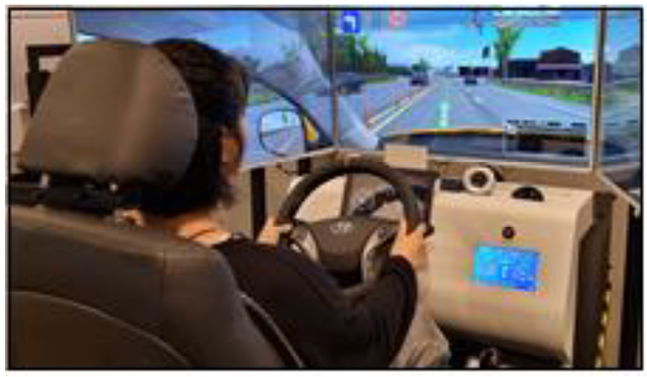
After obtaining administrative authorization, the experiment was done in an indoor driving simulation facility in a driving academy in Daejeon, South Korea (Figure 1). Together with a certified driving instructor we facilitated the session for all participants. The first step of the experiment was familiarization with the driving simulator and instructions for the experiment. Participants were encouraged to sit, adjust the seat and steering wheel as they would normally do in their vehicles. The experiment included, test of driving ability, emergency braking episodes, driving on a straight line track, and be able to maintain a speed of 50 km/h. This experiment was carried out in two phases.
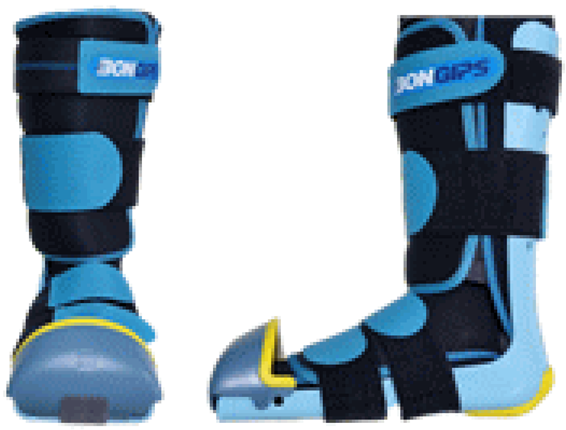
In phase one, participants underwent the driving simulation experiment in their natural state without applying a cast on the right lower limb, after which they were administered a questionnaire by a trained research assistant. In phase two, each participant's right lower limb was immobilized in a cast. Participants were required to walk a distance of 50 meters to become familiar and comfortable with wearing the immobilization device (Figure 2). After which the driving simulator experiment was conducted and a post-experiment questionnaire was administered.
All participants underwent the driving simulation experiment under the same conditions before and after applying the cast using an indoor driving simulation equipment.
Survey Variables
In order to answer the study’s research questions, we developed a structured questionnaire. The survey questionnaire included sections on sociodemographic characteristics, information on when, method and duration since acquisition of participant's driver’s license, physical and mental characteristics related to driving ability before and after immobilization with the cast. The questionnaire was pre-tested, and feedback received. Then the questionnaire was revised and finalized based on the feedback.
The study participants’ sociodemographic variables were first collected and included; age, gender, height, vision (left and right), occupation, level of education, body type and health status. We classified the age into two categories (years old) ≤ 25 and > 25; educational level was grouped into high school graduates (high school degree holders and below) and university/professional degree; occupation was grouped into student and employed. Body type was grouped into Skinny, average and overweight. Study participants were also asked to assess their health status and it was classified into health free / disease and sick.
In order to assess the factors associated with driving ability after immobilization of the right lower limb in Korea, questions were developed based on review of relevant literature. Furthermore, after the practical session with the driving simulator in phases 1 and 2, participants were asked questions on various driving-related abilities which included; accelerator control, physical strain and pain, ability to deal with emergencies, occurrence of traffic collision, brake control/sudden braking, violation of traffic light, adherence to the stop line, safe left and right turns. The questionnaire was estimated to take 10 min on average for each participant at the end of each phase.
Statistical Analysis
Study participant responses from the survey were recorded in Excell, cleaned, and exported to a local installation of R version 4.2.2 for analysis [17]. We started the analysis of data by doing descriptive summary for all variables. The numerical variables were summarized as a mean (±SD), and categorical variables were summarized by frequency and percentage. To evaluate the association between sociodemographic factors and the ability to drive after immobilization with a cast on the right lower limb, student t test was used for numeric variables, and the Fisher’s exact test for categorical variables. To evaluate changes in participant’s drive-related characteristics before and after immobilization with a cast of the right lower limb, McNemar test was used. The level of statistical significance was set at a p-value < 0.05, and all statistical tests were two-tailed.
3. Results
A total of 47 individuals participated in the study with a mean height of 167.68 of which 68.09% were females. In this study, 63.83 % of the participants were students and were aged 25 years and below (36.1%). Most participants acquired their driver’s license (68.09 %) and had an actual driving experience of 3 years and less (82.98 %). Among the study participants, 38.30 % had a previous experience of cast immobilization with 19.15% of them reporting immobilization in the right lower leg (Table 1).
Overall, 78.7% of the study participants had no ability to drive after immobilization with a cast on the right lower limb while 21.3% had driving ability after immobilization. There was a significant difference between participants who had the ability to drive and those who did not have the ability to drive by height (p = 0.04), age (p = 0.038), and body type (p = 0.046) (Table 2).
Furthermore, examined changes in driving-related characteristics before and after immobilization with a cast on the right lower limb. We observed significant changes in the participant ability to brake (p <0.001) and accelerate (p <0.001). There was also a significant difference in changes of compliance with road surface markings (p <0.001), Traffic signal (p <0.001), experiment stop lines (p <0.001) and Safe left and right turns (p <0.001). After immobilization with a cast on the right lower limb. 91.49 % of the study participants reported a mental burden while 61.7% reported experiencing physical pain and/or discomfort (Table 3).
After the experiment, 93.62 % of the study participants reported no intention to drive after immobilization with a cast on the right lower limb and all participants reported increased awareness of incompetent driving and violation of safety obligations after immobilization with a cast on the right lower limb. In addition, participants recommended the need for temporary driving restriction regulations (93.62 %), punishment/fines (82.98 %) and new technological methods (%) that may facilitate driving for individuals requiring immobilization with a cast on the right lower limb.
4. Discussion
Globally, orthopedic injuries occur regularly and most often need immobilization as part of the healing process [7,18]. This immobilization usually hinders individuals’ daily activities including driving. Although many studies have been carried out on different aspects of orthopedic immobilization of the limb, we found no studies on the factors associated with driving ability after orthopedic immobilization of the right lower limb in Korea [14,17,24]. The objective of this study was to determine the factors associated with driving ability after orthopedic immobilization of the right lower limb.
We observed that driving ability was associated to height, age and body type. Previous studies have shown that taller individuals have better visibility and reach, potentially leading to improved control and awareness on the road [22]. Also, empirical literature demonstrates that the relationship between an individual's age and driving ability is complex and multifaceted. While younger drivers may possess quicker reflexes and better physical capabilities, older drivers often have more experience and cautious driving habits [1,4,9,16].
In addition, our studies showed significant changes in abilities to control braking, and accelerator before and after orthopedic immobilization of the right lower limb. This was similar to reports by J. C. Murray et al. [17] who reported that orthopedic immobilization of the right lower limb impairs the driver’s ability to brake and accelerate. A multitude of factors have also been known to affect a driver’s ability to brake or accelerate including age, sex, expectancy when faced with danger, urgency of the situation, and cognitive load on the driver [8]. In addition, in this study, we observed violations of road surface markings, traffic signals, and noncompliance with experiment stop lines, and turns after orthopedic immobilization of the right lower limb. Although a driver’s ability to respect road surface markings, traffic signals and to rapidly bring their vehicle to a stop in situations of emergency is an important characteristic for safe driving, after orthopedic immobilization of the right limb, these functions are impaired [15,20].
The major strength of our study was the use of the driving simulator that provided a controlled and safe environment to assess the impact of immobilization of the right lower limb on driving ability. However, our study had some limitations. In this study none of the participants had lower right limb injuries and, consequently, had no pain, or had other symptoms such as lack of sleep due to pain that could impair the driving ability. Our study supports and adds to previous work suggesting that immobilization of the right lower limb changes the abilities to control braking and accelerator, keeping road surface markings, traffic signals, and noncompliance with experiment stop lines, and turns.
In addition, the sample size was limited and the participants were relatively young and had no comorbidities. Consequently, the results cannot be readily applied to patients with orthopedic injuries. However, we consider that our study represents substantial progress in this field of research, as it provides a glimpse into the factors and the changes associated with immobilization of the right lower limb and the driving ability.5.
Conclusions
Our study demonstrates that an individual’s height, age, and skin type are associated with an individual’s driving ability after orthopedic immobilization of the right lower limb. Our findings suggest that regulations regarding the ability to drive after orthopedic immobilization of the right lower limb must be reconsidered.
6. Patents
This section is not mandatory but may be added if there are patents resulting from the work reported in this manuscript.
Author Contributions
Thanks to all authors. All authors were involved in drafting the article or revising it critically for important intellectual content. All authors approved the final version to be published. Detailed contributions: Study conception and design (YCK, HJY, SJY), acquisition and analysis of data (MSL and BHO), discussions and interpretation of data (YMH, TGK, and YCK), and drafting of the article (SJY, HJY, and YCK). Young Cheol Kim and Dr. Hyun Jin Yoo (yoo15love@gmail.com) had full access to all the data in the study and takes responsibility for the integrity of the data and the accuracy of the data analysis.
Funding
There is no funding source.
Conflicts of Interest
The authors declare that we have no conflict of interest.
Ethical approval: This study was reviewed and approved by the Konyang University Institutional Review Board (IRB number: KYU-2023-02-011-003).
References
- Andrews, E.C.; Westerman, SJ. Age differences in simulated driving performance: compensatory processes. Accid Anal Prev. 2012, 45, 660–668. [Google Scholar] [CrossRef] [PubMed]
- Aydin, N.; Dal Yilmaz, U. "It's Not Just a Plaster Cast, My Leg Is in It!": Patient Experiences: A Qualitative Study. Orthop Nurs. 2022, 41, 347–354. [Google Scholar] [CrossRef] [PubMed]
- Campbell, E.; Zahoor, U.; Payne, A.; Popova, D.; Welman, T.; Pahal, G.S.; Sadigh, P. The COVID-19 Pandemic: The effect on open lower limb fractures in a London major trauma centre - a plastic surgery perspective. Injury. 2021, 52, 402–406. [Google Scholar] [CrossRef] [PubMed]
- Carr, D.; Jackson, T.W.; Madden, D.J.; Cohen, HJ. The effect of age on driving skills. J Am Geriatr Soc. 1992, 40, 567–573. [Google Scholar] [CrossRef]
- Cordero, D.M.; Miclau, T.A.; Paul, A.V.; Morshed, S.; Miclau, T. ; 3rd, Martin, C.; Shearer DW. The global burden of musculoskeletal injury in low and lower-middle income countries: A systematic literature review. OTA Int.
- Dammerer, D.; Giesinger, J.M.; Biedermann, R.; Haid, C.; Krismer, M.; Liebensteiner, M. Effect of knee brace type on braking response time during automobile driving. Arthroscopy. 2015, 31, 404–409. [Google Scholar] [CrossRef]
- Dreinhofer, K.E.; Mitchell, P.J.; Begue, T.; Cooper, C.; Costa, M.L.; Falaschi, P.; Hertz, K.; Marsh, D.; Maggi, S.; Nana, A.; Palm, H.; Speerin, R.; Magaziner, J.; on behalf of: the Fragility Fracture, N.; European Geriatric Medicine, S.; European Federation of National Associations of, O.; Traumatology, International Collaboration of Orthopaedic, N. ; International Geriatric Fracture, S.; International Osteoporosis, F. A global call to action to improve the care of people with fragility fractures. Injury. 2018, 49, 1393–1397. [Google Scholar] [CrossRef]
- Green, M. "How Long Does It Take to Stop?" Methodological Analysis of Driver Perception-Brake Times. Transportation Human Factors. 2000, 2, 195–216. [Google Scholar] [CrossRef]
- Groeger, J.A.; Brown, ID. Assessing one's own and others' driving ability: influences of sex, age, and experience. Accid Anal Prev. 1989, 21, 155–168. [Google Scholar] [CrossRef]
- Hemmann, P.; Friederich, M.; Korner, D.; Klopfer, T.; Bahrs, C. Changing epidemiology of lower extremity fractures in adults over a 15-year period - a National Hospital Discharge Registry study. BMC Musculoskelet Disord. 2021, 22, 456. [Google Scholar] [CrossRef]
- Ikeda, T.; Takeda, K.; Ikeda, M. Acute effect of short-term immobilization on lower leg muscle tissue hardness in healthy adults. J Back Musculoskelet Rehabil. 2023, 36, 941–946. [Google Scholar] [CrossRef]
- Jain, V.K.; Vaishya, R. COVID-19 and orthopaedic surgeons: the Indian scenario. Trop Doct. 2020, 50, 108–110. [Google Scholar] [CrossRef] [PubMed]
- Jarman, M.P.; Weaver, M.J.; Haider, A.H.; Salim, A.; Harris, MB. The National Burden of Orthopedic Injury: Cross-Sectional Estimates for Trauma System Planning and Optimization. J Surg Res. 2020, 249, 197–204. [Google Scholar] [CrossRef] [PubMed]
- Lissek, S.; Wilimzig, C.; Stude, P.; Pleger, B.; Kalisch, T.; Maier, C.; Peters, S.A.; Nicolas, V.; Tegenthoff, M.; Dinse, HR. Immobilization impairs tactile perception and shrinks somatosensory cortical maps. Curr Biol. 2009, 19, 837–842. [Google Scholar] [CrossRef] [PubMed]
- Marecek, G.S.; Schafer, MF. Driving after orthopaedic surgery. J Am Acad Orthop Surg. 2013, 21, 696–706. [Google Scholar] [CrossRef]
- Matthews, M.L.; Moran, AR. Age differences in male drivers' perception of accident risk: the role of perceived driving ability. Accid Anal Prev. 1986, 18, 299–313. [Google Scholar] [CrossRef]
- Murray, J.C.; Tremblay, M.A.; Corriveau, H.; Hamel, M.; Cabana, F. Effects of Right Lower Limb Orthopedic Immobilization on Braking Function: An On-The-Road Experimental Study With Healthy Volunteers. J Foot Ankle Surg. 2015, 54, 554–558. [Google Scholar] [CrossRef]
- Obremskey, W.T.; Metsemakers, W.J.; Schlatterer, D.R.; Tetsworth, K.; Egol, K.; Kates, S.; McNally, M. ; Group* ICMOTW, Group* ICMOTW. Musculoskeletal Infection in Orthopaedic Trauma: Assessment of the 2018 International Consensus Meeting on Musculoskeletal Infection. J Bone Joint Surg Am.
- Park, H.; Kang, H.; Yoon, S.; Jeong, S.; Lee, S. The Effect of the COVID-19 Pandemic on Early Adolescent Fractures in the Republic of Korea. Medicina (Kaunas). 2023, 59. [Google Scholar] [CrossRef]
- Pierson, J.L.; Earles, D.R.; Wood, K. Brake response time after total knee arthroplasty: when is it safe for patients to drive? J Arthroplasty. 2003, 18, 840–843. [Google Scholar] [CrossRef]
- Polinder, S.; Haagsma, J.; Panneman, M.; Scholten, A.; Brugmans, M.; Van Beeck, E. The economic burden of injury: Health care and productivity costs of injuries in the Netherlands. Accid Anal Prev. 2016, 93, 92–100. [Google Scholar] [CrossRef]
- Rudin-Brown, CM. The effect of driver eye height on speed choice, lane-keeping, and car-following behavior: results of two driving simulator studies. Traffic Inj Prev. 2006, 7, 365–372. [Google Scholar] [CrossRef]
- Toroyan, T. Global status report on road safety. Inj Prev. 2009, 15, 286. [Google Scholar] [CrossRef] [PubMed]
- Waton, A.; Kakwani, R.; Cooke, N.J.; Litchfield, D.; Kok, D.; Middleton, H.; Irwin, L. Immobilisation of the knee and ankle and its impact on drivers' braking times: a driving simulator study. J Bone Joint Surg Br. 2011, 93, 928–931. [Google Scholar] [CrossRef] [PubMed]
- Zhang, S.; Kui, H.; Liu, X.; Zhang, Z. Analysis of Musculoskeletal Biomechanics of Lower Limbs of Drivers in Pedal-Operation States. Sensors (Basel). 2023, 23. [Google Scholar] [CrossRef] [PubMed]

Table 1.
Sociodemographic characteristics of study participants (N = 47).
| Variables | Mean ± SD |
|---|---|
| Height | 167.68 ± 8.38 |
| Vision left | 1.004 ± 0.303 |
| Vision right | 0.97 ± 0.31 |
| N (%) | |
| Age group | |
| ≤25 | 36 (76.6) |
| >25 | 11 (23.4) |
| Gender | |
| Female | 32 (68.1) |
| Male | 15 (31.9) |
| Occupation | |
| Student | 30 (63.8) |
| Employed | 17 (36.2) |
| Education level | |
| High school | 25 (53.2) |
| More than | 22 (46.8) |
| Body type | |
| Average | 30 (63.8) |
| Overweight | 11 (23.4) |
| Skinny | 6 (12.8) |
| License acquisition | |
| ≤ 3 years | 32 (68.1) |
| > 3 years | 15 (31.9) |
| Driving experience | |
| ≤ 3 years | 39 (83.0) |
| > 3 years | 8 (17.0) |
| Experience of immobilization on right lower limb | |
| Yes | 9 (19.2) |
| No | 38 (80.8) |
SD: Standard Deviation, N: number.
Table 2.
Bivariate associations between sociodemographic factors and the ability to drive after wearing a cast on the right lower limb.
Table 2.
Bivariate associations between sociodemographic factors and the ability to drive after wearing a cast on the right lower limb.
| Variables | Driving ability after immobilization | P | |
|---|---|---|---|
| Yes | No | ||
| Height | 172.30 ± 9.59 | 166.43 ± 7.69 | 0.04 |
| Vision left | 1.05 ± 0.40 | 0.99 ± 0.28 | 0.82 |
| Vision right | 1.07 ± 0.37 | 0.95 ± 0.29 | 0.54 |
| N (%) | |||
| Age group | 0.038 | ||
| ≤25 | 10 (27.8) | 26 (72.2) | |
| >25 | 0 (0.0) | 11 (100.0) | |
| Gender | 0.704 | ||
| Female | 6 (18.8) | 26 (81.2) | |
| Male | 4 (26.7) | 11 (73.3) | |
| Occupation | 0.07 | ||
| Student | 9 (30.0) | 21 (70.0) | |
| Employed | 1 (5.9) | 16 (94.1) | |
| Education | 0.73 | ||
| High school | 6 (24.0) | 19 (76.0) | |
| More than | 4 (18.2) | 18 (81.8) | |
| Body type | 0.046 | ||
| Average | 4 (13.3) | 26 (86.7) | |
| Overweight | 5 (45.5) | 6 (54.6) | |
| Skinny | 1 (16.7) | 5 (83.3) | |
| License acquisition | 0.46 | ||
| ≤ 3 years | 8 (25.0) | 24 (75.0) | |
| > 3 years | 2 (13.3) | 13 (86.7) | |
| Driving experience | 0.17 | ||
| ≤ 3 years | 10 (25.6) | 29 (74.4) | |
| > 3 years | 0 (0.0) | 8 (100.0) | |
| Experience of immobilization on right lower limb | 1 | ||
| Yes | 2 (4.3) | 7 (14.9) | |
| No | 8 (17.0) | 30 (63.8) | |
P was estimated using the student t-test for numeric variables and Fisher’s exact test for categorical variables.
Table 3.
Changes in participant’s drive-related characteristics before and after immobilization with a cast on the right lower limb.
Table 3.
Changes in participant’s drive-related characteristics before and after immobilization with a cast on the right lower limb.
| Variables | Before | Immobilization | P | ||
|---|---|---|---|---|---|
| Yes | No | Yes | No | ||
| Brake control issues | 9 (19.15) | 38 (80.85) | 35 (74.47) | 5 (10.64) | <0.001 |
| Accelerator control issues | 6 (12.77) | 41 (87.23) | 34 (72.34) | 6 (12.77) | <0.001 |
| Violation of road surface markings | 5 (10.64) | 42 (89.36) | 26 (55.32) | 14 (29.79) | <0.001 |
| Traffic signal violation | 4 (8.51) | 43 (91.49) | 26 (55.32) | 14 (29.79) | <0.001 |
| Compliance with experiment stop lines | 43 (91.49) | 4 (8.51) | 19 (40.43) | 21 (44.68) | 0.001 |
| Safe left and right turns | 45 (95.74) | 2 (4.26) | 16 (34.04) | 24 (51.06) | <0.001 |
| Mental burden | N/A | N/A | 43 (91.49) | 4 (8.51) | |
| Physical pain and/or discomfort | N/A | N/A | 29 (61.70) | 18 (38.30) | |
P was estimated through McNemar test.
Disclaimer/Publisher’s Note: The statements, opinions and data contained in all publications are solely those of the individual author(s) and contributor(s) and not of MDPI and/or the editor(s). MDPI and/or the editor(s) disclaim responsibility for any injury to people or property resulting from any ideas, methods, instructions or products referred to in the content. |
© 2025 by the authors. Licensee MDPI, Basel, Switzerland. This article is an open access article distributed under the terms and conditions of the Creative Commons Attribution (CC BY) license (http://creativecommons.org/licenses/by/4.0/).
Copyright: This open access article is published under a Creative Commons CC BY 4.0 license, which permit the free download, distribution, and reuse, provided that the author and preprint are cited in any reuse.


