

Submitted:
18 January 2025
Posted:
20 January 2025
You are already at the latest version
Abstract
We proposed and demonstrated a design of a remote-controlled system for studying the phenomenon of light diffraction. The design of the system and its working principle are described in detail. A website is built where all the commands are possibly conducted through built-in buttons. The laser switching on or off, and the selection of the type of grating can be controlled remotely through the internet connection while their images are observable by the camera. The diffraction pattern is observed through the camera. The system works well for a demo using two types of diffraction grating of 80 lines/mm, and 100 lines/mm. The obtained result is not only meaningful in building up an online laboratory but also in the development of the field of Education Science and Technology.
Keywords:
Light diffraction
; remote learning systems
; virtual laboratories
; and remote laboratories
1. Introduction
Diffraction of light is a phenomenon that plays an important role in the branches of physics and engineering dealing with the propagation of light waves [1]. The role of fully understanding diffraction is clearly shown in different aspects such as understanding optical imaging and data processing systems, in different fields such as holography, astronomy, and spectroscopy [1]. Diffraction is a phenomenon of light-matter interaction that is defined as “any deviation of light rays from rectilinear paths which can not be interpreted as reflection or refraction” [1]. Since it plays an important role in technology, diffraction is a critical part of teaching programs in Physics. In the teaching of light diffraction, the most ideal case is that the experiment can be conducted and observed directly in the laboratory. The experiment of light diffraction requires some elements such as small structures (e.g. pinholes, grating), a laser source (e.g. wavelength 632 nm), an observation screen, a positive lens, and some holder elements for setting up the experiments. Such an experiment is shown in Figure 1.
In normal conditions, it is feasible to conduct such an experiment for student study. However, in some unexpected conditions (e.g. COVID-19 conditions, lack of experiment facility at some schools) the experiment can not be shown directly, thus causing a reduction in education quality in general as well as the quality of Physics learning in particular. Some effort has been reported [2,3], to overcome these difficulties. Among them, online study with remote control is a good option. Its benefits are many when combined with the advantages of the Internet or web-based remote controlling for studying the diffraction of light, many ideas have been proposed [4,5,6,7,8,9,10,11,12]. The topics of remote controlling, web-based, Virtual Laboratories, and Remote Laboratories have attracted much attention from researchers [13,14,15,16,17,18,19]. Guinaldo et. al. reported a web-based control laboratory for a ball and beam system that was adapted to be used within an online course of a Learning Management System platform. The experimentation web environment is presented in a Spanish network of web-based laboratories for science and engineering education. LabView and data acquisition boards are used on the server side for the remote laboratory application, Easy Java Simulations for the client-side interface of both the virtual and the remote laboratory, and Moodle for the web environment. The virtual and remote labs and Moodle are integrated by the EJSApp plugins, recipients (e.g. graduate students) can use the advanced control techniques implemented in this web lab: robust, fuzzy, and reset control [13]. Torre et. al. studied the web-based labs which are key tools for distance education to illustrate scientific phenomena which require costly or difficult-to-assemble equipment. Through this proposed approach, students and/or teachers can invite other users enrolled in a Moodle course to a real-time collaborative experimental session, sharing and/or supervising experiences at the same time they practice and explore experiments using labs. The experimental evaluation of our work shows a statistically significant (i) increase in student engagement and (ii) higher exam grades for students trained with collaborative labs [14]. Saenz et. al. reported the latest addition to the University Network of Interactive Laboratories: a virtual and a remote laboratory of a two electric coupled drives system. These two new activities allow for performing control practices in a 2x2 MIMO system. The virtual and the remote labs are accessible to anyone in a new open course that contains several other experiments in the automatic control field [15]. In another study, S´aenz studied a low-cost solution for developing the virtual and remote labs shared in this open course, based on the use of a free authoring tool (EJS) for building the laboratory's user interfaces and a cheap development platform board (BeagleBone Black). The virtual and remote labs are deployed into a free Learning Management System (Moodle) web environment that facilitates their management and maintenance [16]. Sanchez et. al. reported results related to two experiments: “study of the diffraction of light: Fraunhofer approximation” and “the photoelectric effect”. Both of them count with a virtual, simulated, version of the experiment as well as with a real one that can be operated remotely. In the web environment, students can find not only the virtual and remote labs but also manuals with related theory, and the user interface description for each application [17]. Gamo proposed a solution for the need for remote teaching tools at all education levels, which has experienced a big increase due to the COVID-19 pandemic. Gamo reported a software testbed named OPTILAB for teaching diffraction experiments to engineering students. The software simulates classical diffraction apertures (single slit, double slit, circular slit) under a wide variety of conditions. Explanation of the Physics behind the diffraction phenomenon is also included in OPTILAB to increase the students’ self-learning experience [18]. To find the answer to the question “ Are Virtual Laboratories and Remote Laboratories Enhancing the Quality of Sustainability Education”, Poo et. al. conducted a review on engineering education‘s challenges in adapting to novel teaching methodologies. A significant challenge during lockdowns was the effective delivery of laboratory experiences in virtual spaces. Virtual and remote laboratories, while not substituting the hands-on experience of physical labs, offered promising avenues to enhance learning during the disruption of in-person education. This overview of the implementation status of virtual and remote laboratories during the lockdown period in education helps to offer practical insights to improve the quality of learning experiences at home and in online settings [19]. In general, the proposed methods are mainly focused on the virtual and remote labs. There is still a demand for an effective design for remote study of the experiment of light diffraction wherein the user can select the type of grating, remotely turn on/off the laser, real-time observation the diffraction pattern, and the data of the diffraction pattern can be detected and saving for further study.
In this study, we proposed and demonstrated a design of a remote-controlled system for studying the phenomenon of light diffraction. Based on the advantage of the internet, the experiment of diffraction of light is controlled remotely while the photos of the system and diffraction pattern are remotely observable using cameras. All the commands are performed through a built website interface. The system is experimentally demonstrated using two types of grating (e.g. type of 80 lines/mm, and 100 lines/mm). The obtained result is not only meaningful in building up an online laboratory but also in the development of the field of Education Science and Technology.
2. Designed System for Online Studying the Diffraction of Light and Working Principle
Figure 2 illustrates the diagram of a system designed for online studying the diffraction of light. The main components are cameras, laser sources, gratings, and light sensors/screens. The camera includes 03 units which are named as units 1, 2, and 3 are the general observation camera, grating observation camera, and screens/light sensor observation camera, respectively. Laser light sources emit red light with a wavelength of 632 nm. A grating-mounted system that can move to change the type of diffraction grating (e.g. grating type 80 or 100 lines/mm). A positive lens is located between the grating and the screen to collimate the diffracted light to the screen. A light detector that is movable to scan the diffracted light. Figure 3 shows the setup of the designed system according to the diagram shown in Figure 2.
The working principle is described as follows: The overall image of the system is observed through general observation camera unit 1, from the website interface, the user can turn on the laser and wait until it reaches a stable state after some time 15 minutes. The grating-mounted system is controlled to select the type of grating that needs to be used. The camera unit 2 shows the types of the selected grating on the screen, if the location of the grating is still not good enough, then it can be relocated by controlling the motor. Next, diffraction patterns can be obtained by scanning the light sensor along a vertical direction to the optical axis of the grating. The data can be saved and plotted. In real-time, the camera unit 3 can capture the diffraction pattern on the observation plane.
3. Demonstration the Working of the System
In the demonstration of the system's working, the experiment "Diffraction of light" will be conducted and observed results will be described as follows. Figure 4 shows the website interface when accessing the experiment. On the screen, it can see the name of the experiment as “ Online experiment of Light diffraction”, a Laser button to remote switch the laser on/off, the selection button to select the type of grating (e.g. type of 80 line/mm or 100 line/mm), button of camera 1, camera 2 and camera 3, the sensor button which can control the detector during the detect the diffraction intensity. There are three options: stop, move to the right, and move to the left. The last button is the reset button. The below space is the display window of camera 1, camera 2, and camera 3. The two bottom buttons are “export data” and “ delete plotting”. Figure 5 shows the displayed window on the website interface of different cameras including camera 1, camera 2, and camera 3.
Based on the website interface, the experiment can be conducted and controlled remotely. In detail, seven main step of the experiment procedure is described as follows:
Step 1: The surveillance cameras of camera 1, camera 2, and camera 3 are opened. Camera 1 shows the view of the overall experiment. Camera 2 provides information on the diffraction pattern on the observation plane where the detector can move and record the intensity of diffracted light according to different spatial locations. The last camera 3 provides information on the grating which is used in the experiment. It can ensure the expected projection of the laser beam through the grating.
Step 2: In this step, the cursor of the mouse is moved to the No.2 button to click the "Reset " on the screen and sensor. It should be noted that this is a mandatory step before the experiment is conducted.
Step 3: In the third step, the selection of diffraction grating type is done. For that purpose, on the web screen, click the cursor to the "Grating type" button and choose the type of grating that is expected for the experiment. In this study, two types of diffraction grating 100 lines/mm and 80 lines/mm are used in the experiment setup.
Step 4: After selecting the expected grating type, the laser is remotely turned on by clicking the on options at the " Laser" button region on the screen. The diffraction phenomenon is observed by Camera 2 and sends the data to display on the Cam. 2 window of the web screen. The result of the observation of diffraction through the camera 2 is shown in Figure 6.
Step 5: To detect the intensity of the diffraction pattern, the detector is controlled to scan in the plane where the diffraction order is distributed. The detector is movable to the right and left direction as shown in Figure 7. When each option is selected, the motor rotates and moves the detector to the selected direction. The detected signal of diffraction intensity is detected and saved. The real-time data is then sent to the website for further processing and analysis.
Step 6: Observe the chart and export the data file. After the detector completes the recording the diffraction intensity. Based on the recorded data, the diffraction pattern is plotted and analyzed incorporating the diffraction theory. If the displayed result is as good as expected, the data files will be exported for future purposes.
Step 7: For experimenting with other types of diffraction grating or repeat the experiment, the process is repeated from step 2.
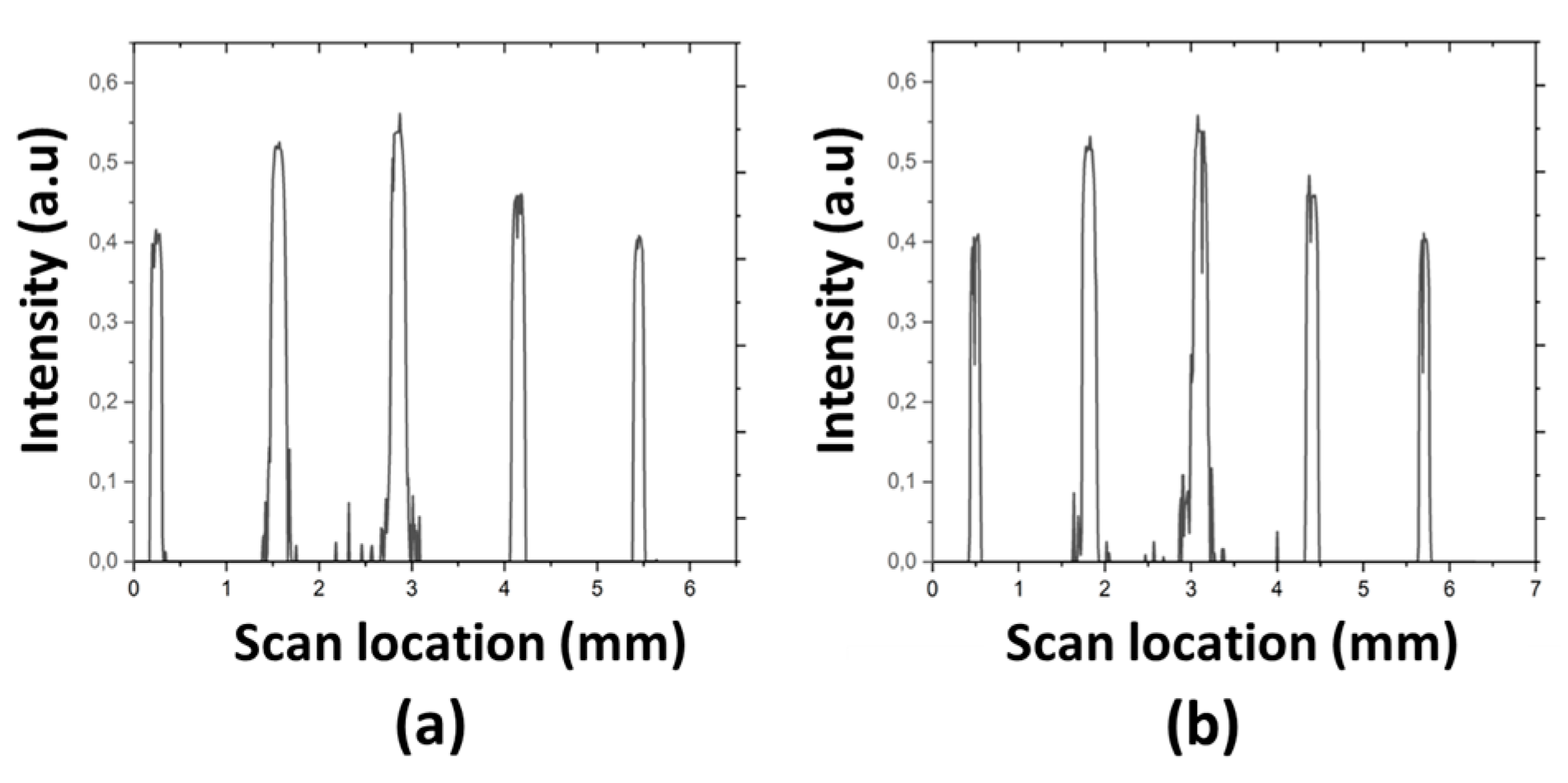
The obtained data files can be handled by using the software of Origin to visualize the diffraction as shown in Figure 8 and Figure 9. The similarity of the obtained results between the two times of doing experiments for each type of grating is high. It indicates the good precision of the results obtained from the designed system.
4. Conclusions
In conclusion, we have proposed and demonstrated a system for studying the phenomenon of light diffraction which can be remotely controlled. Through a website interface, the user can control the laser turn on/off, select the type of diffraction grating, and observe the diffraction pattern. The working of the designed system is demonstrated by using two types of grating 80 lines/mm, and 100 lines/mm. The results of the plotted diffraction pattern show high precision and data can be exported to serve the related purpose. The obtained result is not only meaningful in building up an online laboratory but also in the development of the field of education science and technology.
References
- J. W Goodman "Introduction to Fourier optics", 3rd edition, Englewood, CO: Roberts & Co. Publishers, 2005.
- Nousheen, A.; Kalsoom, Q. Education for sustainable development amidst COVID-19 pandemic: Role of sustainability pedagogies in developing students’ sustainability consciousness. Int. J. Sustain. High. Educ., vol. 23, pp. 1386–1403, 2022. [CrossRef]
- Barr, M.; Nabir, S.W.; Somerville, D. Online Delivery of Intensive Software Engineering Education During the COVID-19 Pandemic. In Proceedings of the 2020 IEEE 32nd Conference on Software Engineering Education and Training (CSEE&T), Munich, Germany, 9–12 November 2020. [Google Scholar]
- Al Mulhim, E.N.; Zaky, Y.A.M. Sustainability in e-learning: E-books and academic procrastination among secondary students. Sustainability, vol. 15, pp. 14668, 2023. [CrossRef]
- Gomes, L.; Bogosyan, S. Current trends in remote laboratories. IEEE Trans. Ind. Electron. vol. 56, pp. 4744–4756, 2009. [CrossRef]
- González, C.M. Education from a Distance. Mech. Eng. vol. 143, pp. 42–48, 2021.
- Pop, D.; Zutin, D.G.; Auer, M.E.; Henke, K.; Wuttke, H. An online lab to support a master program in remote engineering. In Proceedings of the 2011 Frontiers in Education Conference, Rapid City, SD, USA, 12–15 October 2011; p. GOLC2-1. [Google Scholar]
- Heradio, R.; De la Torre, L.; Galan, D.; Cabrerizo, F.J.; Viedma, E.H.; Dormido, S. Virtual and remote labs in education: A bibli-ometric analysis. Comput. Educ., vol. 98, pp. 14–38, 2016.
- Frerich, S.; Kruse, D.; Petermann, M.; Kilzer, A. Virtual Labs and Remote Labs: Practical Experience for Everyone. In Engineering Education 4.0: Excellent Teaching and Learning in Engineering Sciences; Springer International Publishing: Cham, Switzerland, pp. 229–234, 2016. [Google Scholar]
- Esquembre, F. Facilitating the creation of virtual and remote laboratories for science and engineering education. IFAC-PapersOnLine, vol. 48, pp. 49–58, 2015. [CrossRef]
- Jones, N. Simulated labs are booming. Nature vol. 562, pp. S5–S7, 2018. [CrossRef]
- Scanlon, E.; Colwell, C.; Cooper, M.; Di Paolo, T. Remote experiments, re-versioning and re-thinking science learning. Comput. Educ., vol. 43, vol. 153–163, 2004. [CrossRef]
- Maria Guinaldo, Luis de la Torre, Ruben Heradio, Sebastian Dormido. “ A Virtual and Remote Control Laboratory in Moodle: The Ball and Beam System”, IFAC Proceedings, Volumes August 2013. [CrossRef]
- Luis de la Torre, Ruben Heradio, Sebastian Dormido, Carlos Jara. “Real-time Collaboration for Web-Based Labs”, CSCL 2013 Proceedings.
- Jacobo Saenz, Jesus Chacon, Luis de la Torre, Antonio Visioli and Sebastian Dormido. “A Virtual and Remote Lab of the Two Electric Coupled Drives System in the University Network of Interactive Laboratories”, Proceedings of the American Control Conference July 2015.
- Jacobo S´aenz, Jes´us Chac´on, Luis de la Torre, Antonio Visioli and Sebasti´an Dormido, “Open and Low-Cost Virtual and Remote Labs on Control Engineering”, IEEE Access, June 2015. [CrossRef]
- Juan Pedro Sanchez, Jacobo Saenz, Luis de la Torre, Carmen Carreras, Manuel Yuste, Ruben Heradio and Sebastian Dormido. “The photoelectric effect and study of the diffraction of light: Two new experiments in UNILabs virtual and remote laboratories network”, Nuovo Cimento- Societa Italiana di Fisica Sezione C, February 2016.
- Javier Gamo. “ Diffraction Testbed for Use in Remote Teaching”, Optics, vol. 2, pp. 251–258, 2021. [CrossRef]
- Mark Ching-Pong Poo, Yui-yip Lau and Qiong Chen. “Are Virtual Laboratories and Remote Laboratories Enhancing the Quality of Sustainability Education?”, Educ. Sci., vol. 13, pp.1110, 2023. [CrossRef]
Figure 1.
Experiment set up for offline/onsite oservation of light diffraction.
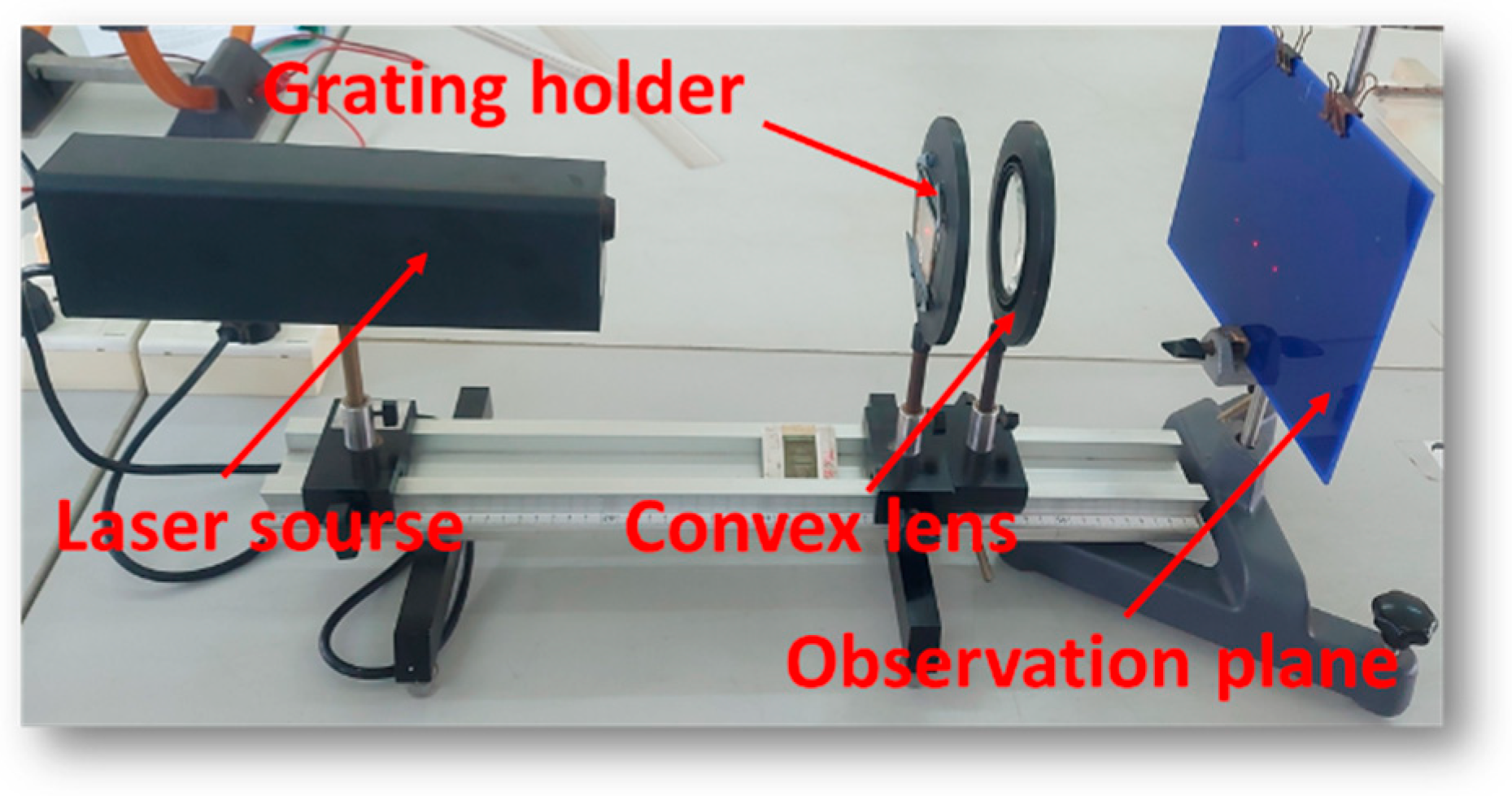
Figure 2.
Illustration of the diagram of designed system for online studying the diffraction of light.
Figure 2.
Illustration of the diagram of designed system for online studying the diffraction of light.
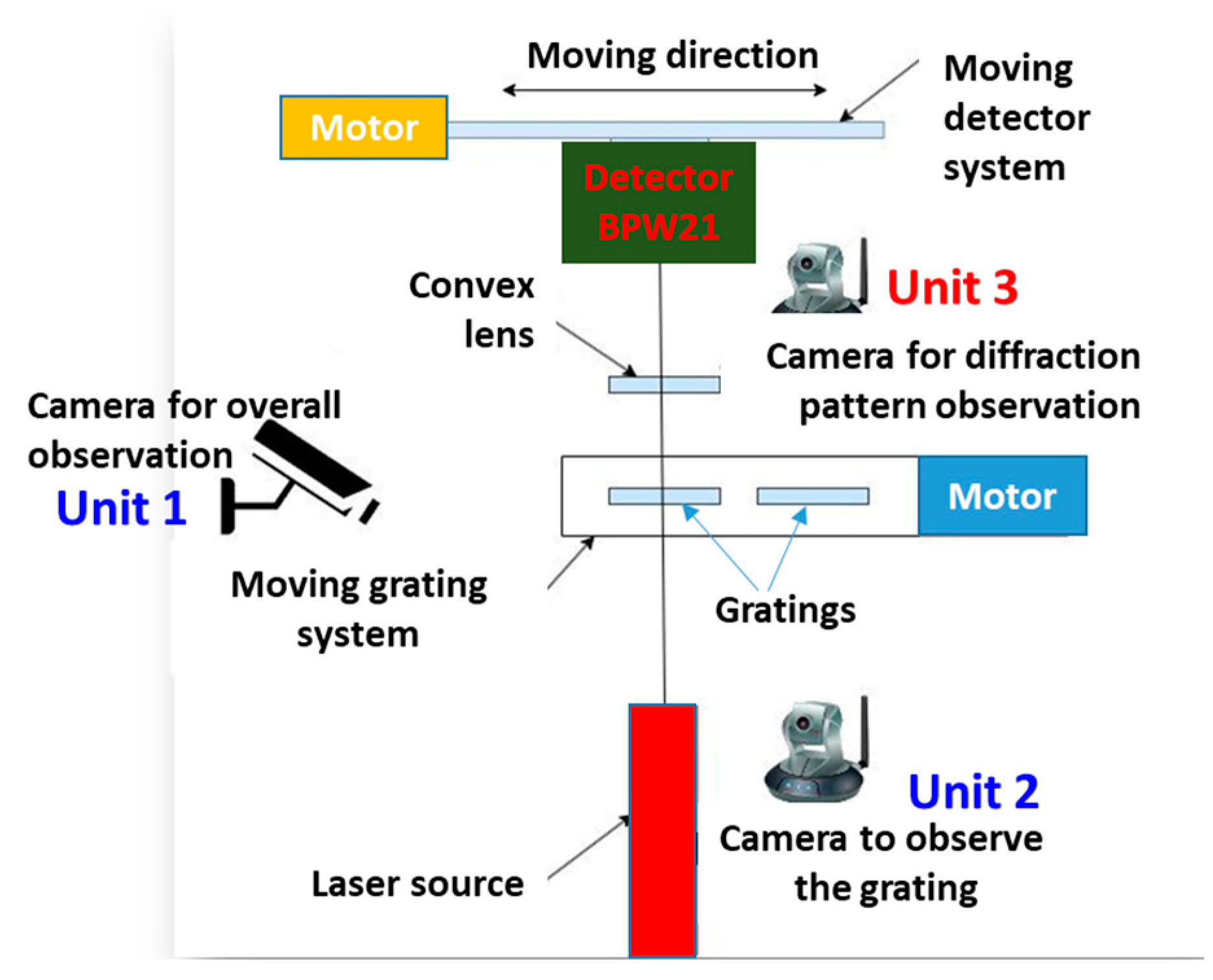
Figure 3.
Practical set up of designed system according to the diagram shown in Figure 2.
Figure 3.
Practical set up of designed system according to the diagram shown in Figure 2.
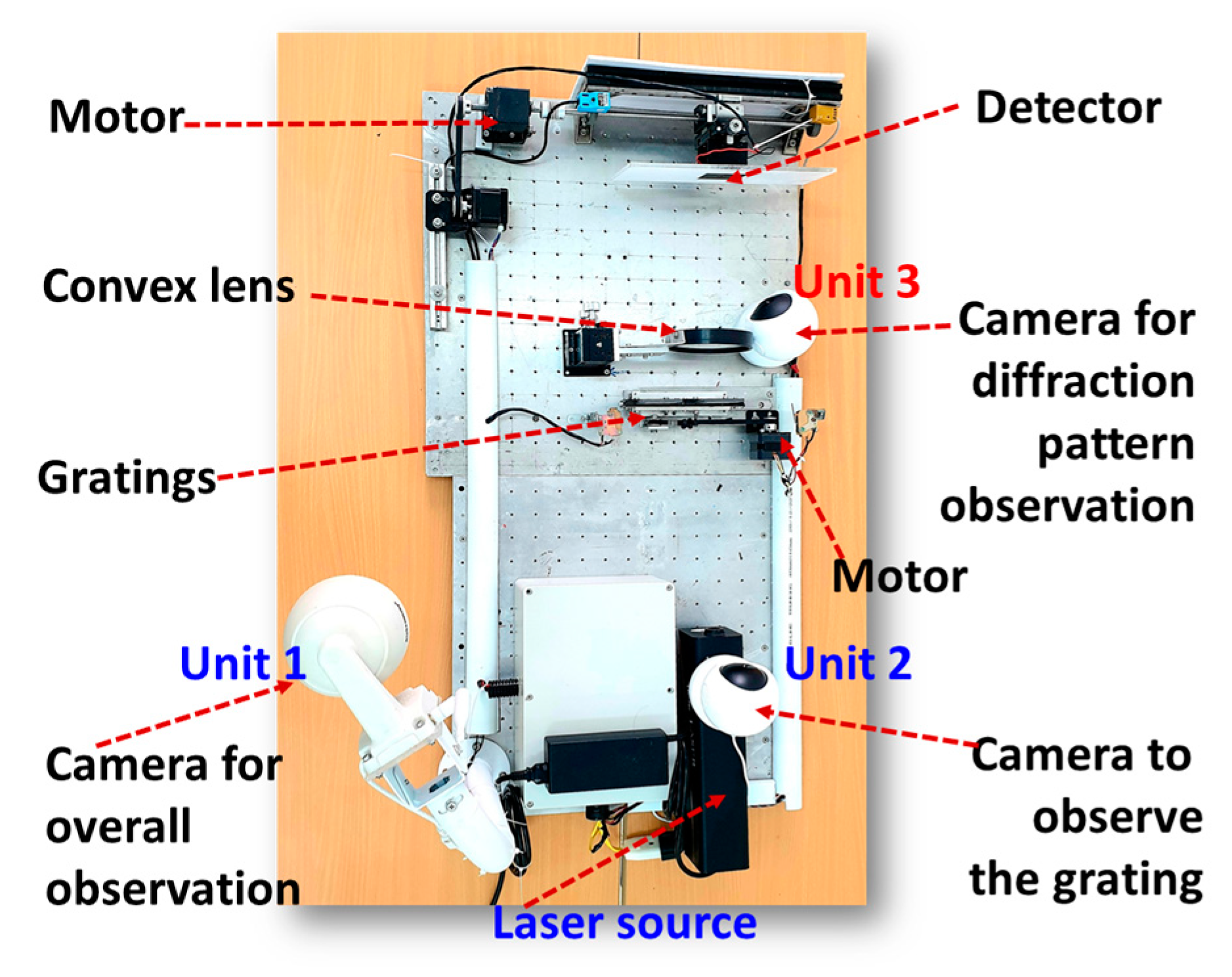
Figure 4.
Website interface of online experiment on light diffraction experiment.
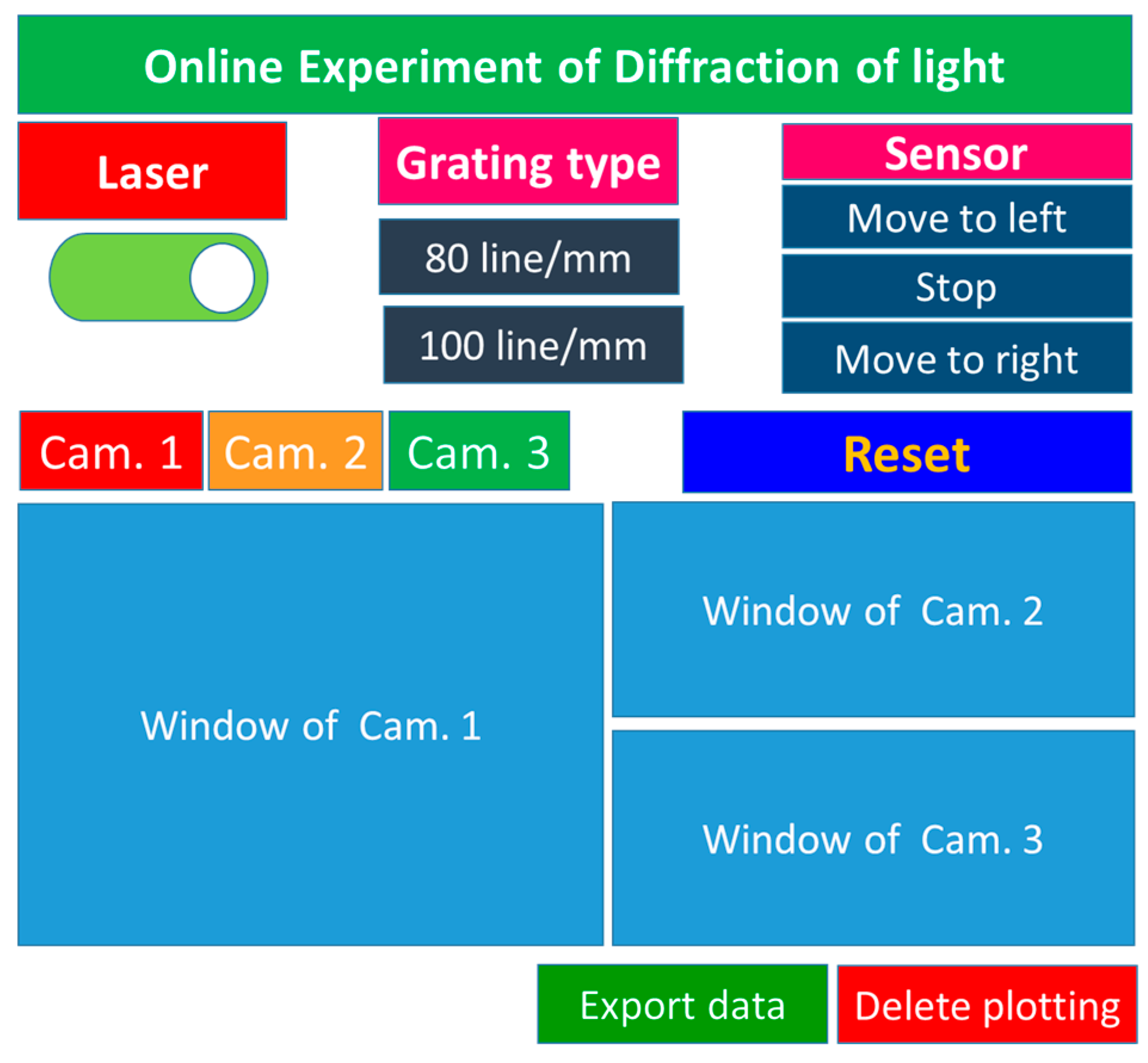
Figure 5.
The displayed window on the website interface of different camera. (a) Camera 1. (b) Camera 2. (c) Cam. 3.
Figure 5.
The displayed window on the website interface of different camera. (a) Camera 1. (b) Camera 2. (c) Cam. 3.
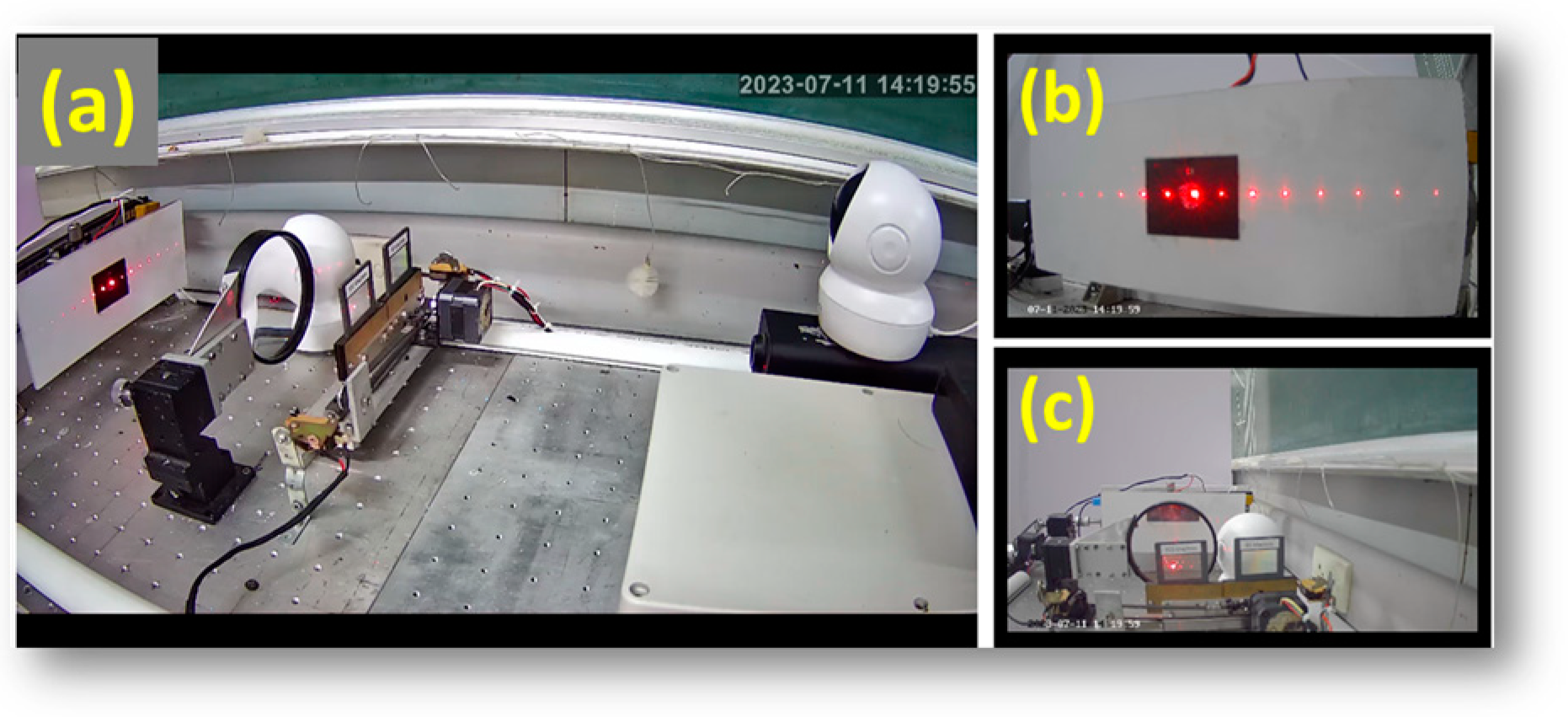
Figure 6.
The result of the observation of diffraction through the camera 2. (a) case of grating 100 lines/mm. (b) case of grating 80 lines/mm.
Figure 6.
The result of the observation of diffraction through the camera 2. (a) case of grating 100 lines/mm. (b) case of grating 80 lines/mm.
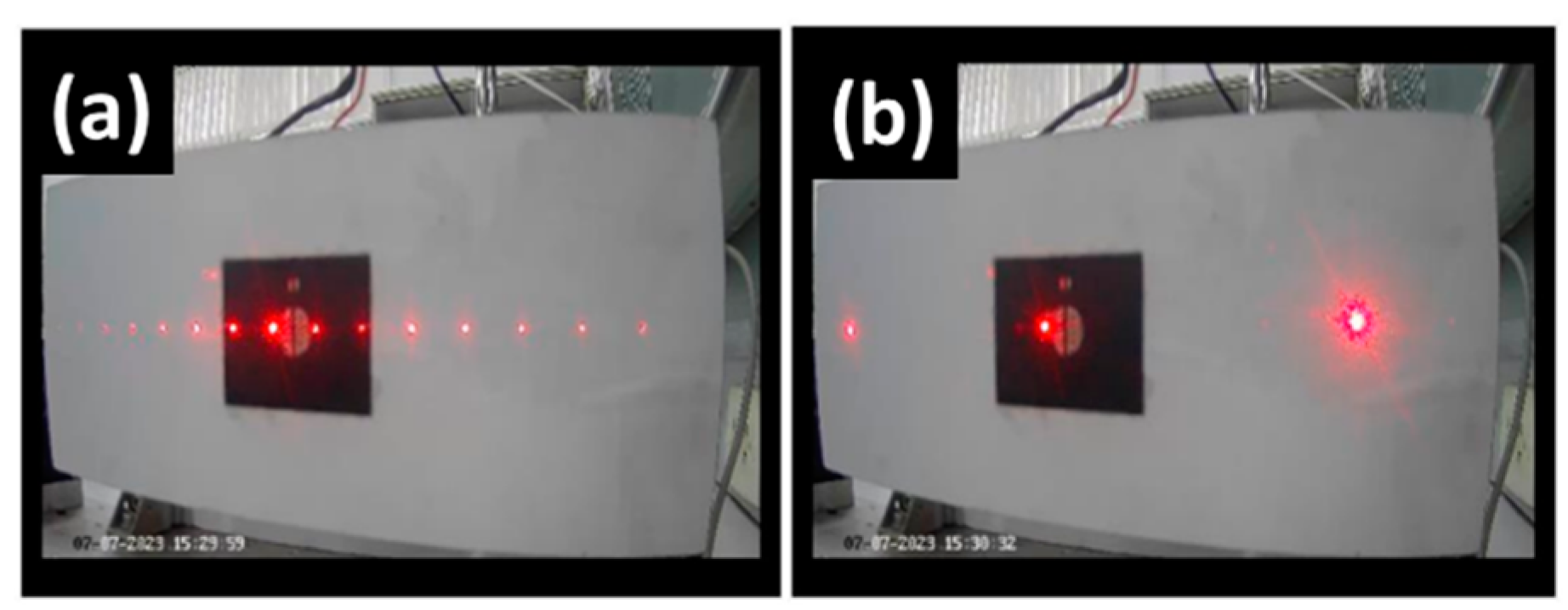
Figure 7.
Moving direction of Detector to detect the intennsity of diffracted pattern.
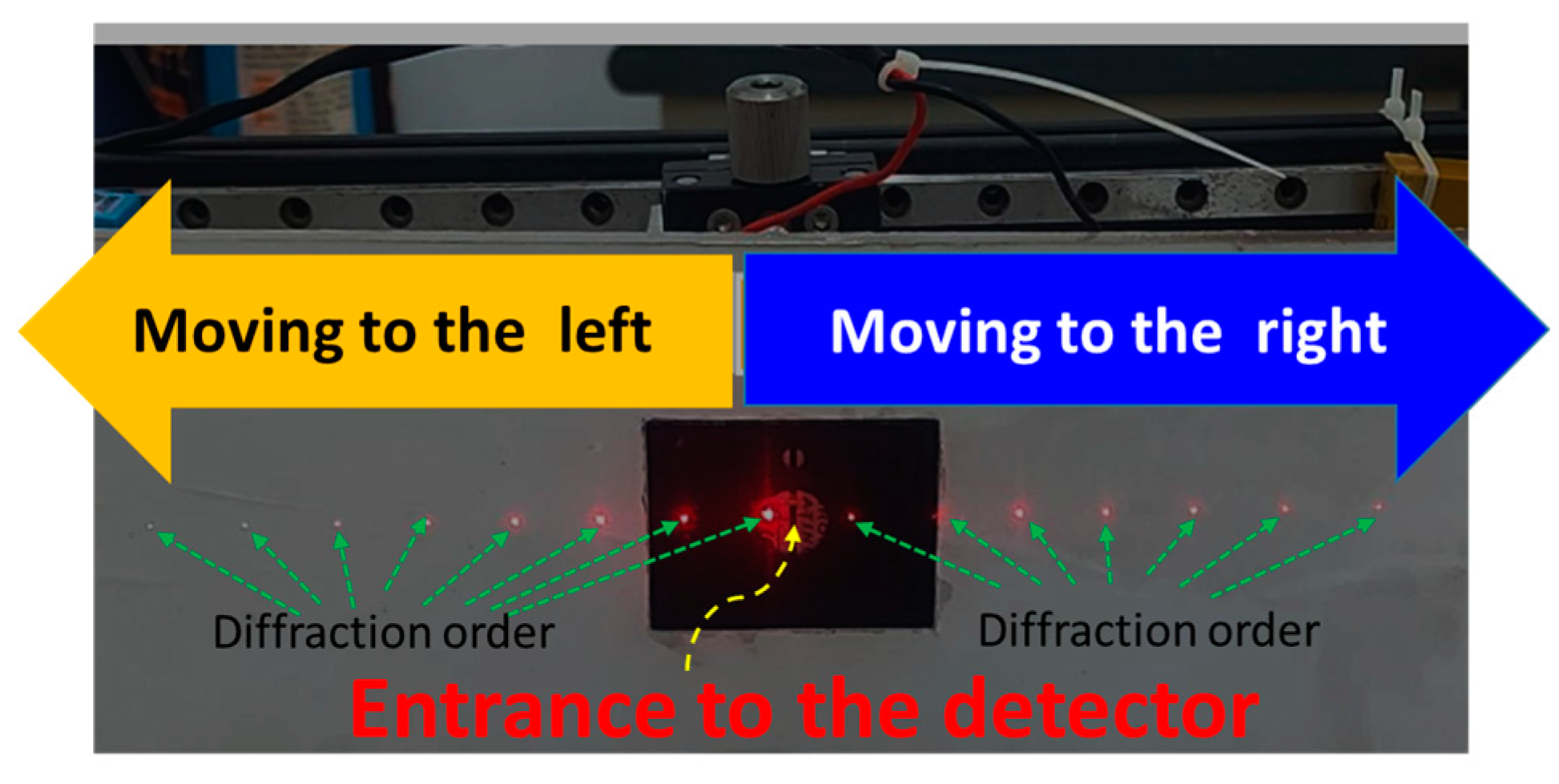
Figure 8.
Ploting of diffraction pattern for obtained data form the case of diffraction grating of 80 lines/mm. (a) First time of conducting the experiment. (b) Second time of conducting the experiment.
Figure 8.
Ploting of diffraction pattern for obtained data form the case of diffraction grating of 80 lines/mm. (a) First time of conducting the experiment. (b) Second time of conducting the experiment.
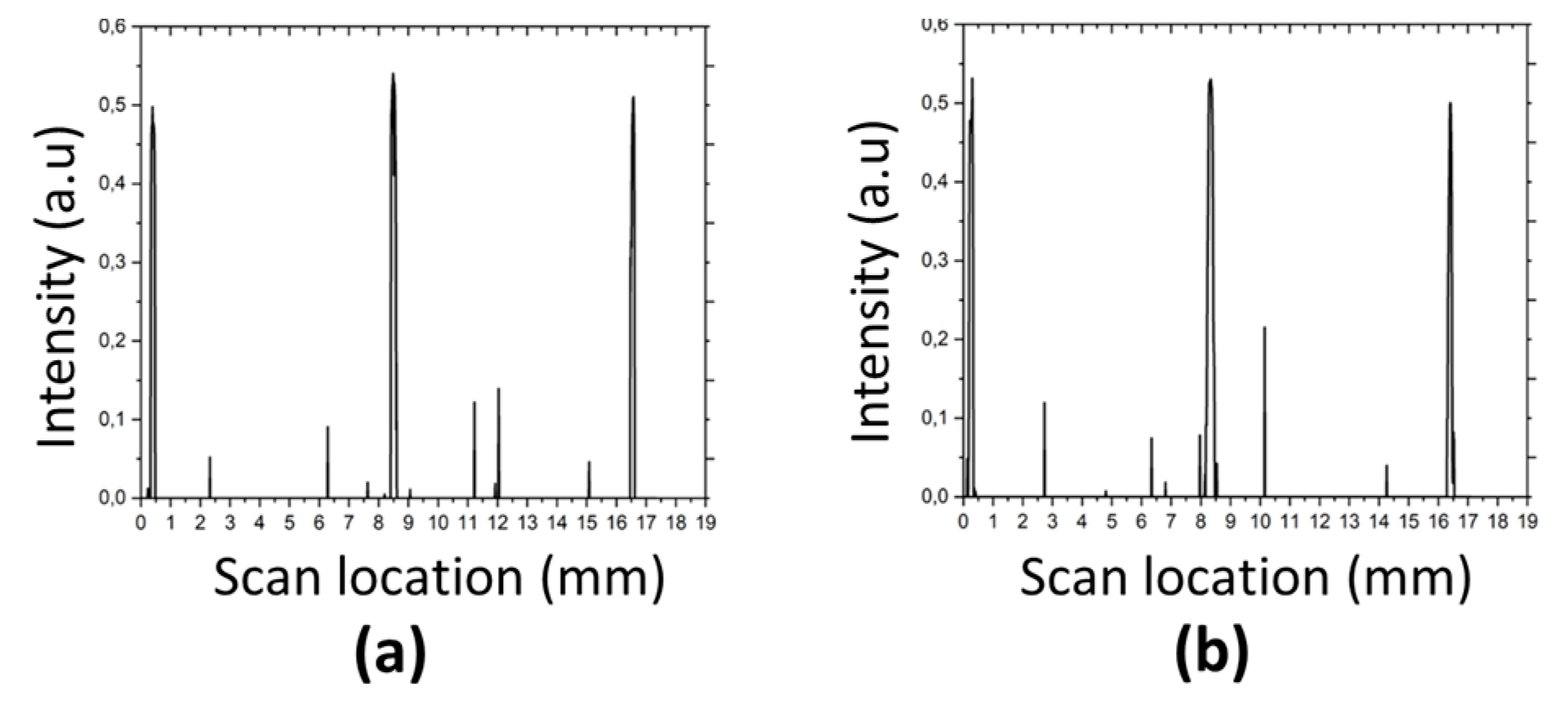
Figure 9.
Ploting of diffraction pattern for obtained data form the case of diffraction grating of 100 lines/mm. (a) First time of conducting the experiment. (b) Second time of conducting the experiment.
Figure 9.
Ploting of diffraction pattern for obtained data form the case of diffraction grating of 100 lines/mm. (a) First time of conducting the experiment. (b) Second time of conducting the experiment.
Disclaimer/Publisher’s Note: The statements, opinions and data contained in all publications are solely those of the individual author(s) and contributor(s) and not of MDPI and/or the editor(s). MDPI and/or the editor(s) disclaim responsibility for any injury to people or property resulting from any ideas, methods, instructions or products referred to in the content. |
© 2025 by the authors. Licensee MDPI, Basel, Switzerland. This article is an open access article distributed under the terms and conditions of the Creative Commons Attribution (CC BY) license (http://creativecommons.org/licenses/by/4.0/).
Copyright: This open access article is published under a Creative Commons CC BY 4.0 license, which permit the free download, distribution, and reuse, provided that the author and preprint are cited in any reuse.


