Preprint
Article

This version is not peer-reviewed.

Involvement of Nuclear Receptors PPAR-α, PPAR-γ, and the Transcription Factor Nrf2 in Cellular Protection Against Oxidative Stress Induced by Hypoxia-Reoxygenationand High Glucose, Regulated by H2S in Primary Cardiomyocyte Cultures

A peer-reviewed article of this preprint also exists.

Submitted:

17 January 2025

Posted:

20 January 2025

You are already at the latest version

Abstract

Under conditions of hyperglycemia and ischemia/reperfusion (I/R) injury, myocardial oxidative stress increases, leading to cellular damage. Inhibition of oxidative stress has been reported to be involved in the cardioprotective effects of hydrogen sulfide (H2S) during I/R and diabetes. Recent studies have shown that H2S has the potential to protect the heart. However, the mechanism by which H2S regulates the level of cardiac reactive oxygen species (ROS) during I/R and hyperglycemic conditions remains unclear. Therefore, the objective of this study was to evaluate the cytoprotective effect of H2S in primary cardiomyocyte cultures subjected to hyperglycemia, hypoxia/reoxygenation (HR), or both conditions, by assessing the PPAR-α/Keap1/Nrf2/p47phox/NOX4/p-eNOS/CAT/SOD signaling pathway and the PPAR-γ/PGC1α/AMPK/GLUT4 signaling pathway. Treatment with NaHS (100 μM) as an H2S donor in cardiomyocytes subjected to hyperglycemia, HR, or a combination of both experimental conditions increased cell viability, total antioxidant capacity, and tetrahydrobiopterin (BH4) concentrations, while reducing ROS production, malondialdehyde concentrations, 8-hydroxy-2´-deoxyguanosine, and dihydrobiopterin (BH2) concentrations. Additionally, H2S donor treatment increased the expression and activity of PPAR-α, reversed the reduction in the expression of PPAR-γ, PGC1α, AMPK, GLUT4, Nrf2, p-eNOS, SOD and CAT, and decreased the expression of Keap1, p47phox y NOX4. Treatment with the H2S donor protects cardiomyocytes from damage caused by hyperglycemia, HR, or both conditions by reducing oxidative stress markers and improving antioxidant mechanisms, thereby increasing cell viability and cardiomyocyte ultrastructure.

Keywords: 
;  ;  ;  ;  ;  

Introduction

Diabetes is a chronic disease characterized by elevated blood glucose levels, which causes damage to various organs such as the heart, vasculature, eyes, kidneys, and nerves. More than 90% of diabetes cases in humans are of the type 2 diabetes (T2D) variety, a condition characterized by deficient insulin secretion by pancreatic β-cells, tissue insulin resistance (IR), and an inadequate compensatory insulin secretory response [1]. T2D leads to a two- to fourfold increase in mortality rates from heart disease and is associated with both microvascular and macrovascular complications. The latter include accelerated atherosclerosis, which leads to severe peripheral vascular disease and premature coronary artery disease (myocardial infarction, angina, etc.) [2,3].
Under hyperglycemic conditions, the imbalance between the cellular antioxidant system and the production of reactive oxygen species (ROS) generates oxidative stress, which subsequently leads to the development of T2D. The high production of ROS can cause structural and functional modifications in proteins, lipids, and nucleic acids [4]. Processes such as myocardial ischemia/reperfusion (I/R), which cause high morbidity and mortality in humans, are also associated with T2D. Oxidative stress is one of the most important pathological mechanisms in I/R injury, causing apoptosis, autophagy, inflammation, and other cellular damage through multiple pathways, leading to irreversible myocardial damage and ultimately cardiac dysfunction [5].
It has been suggested that increased oxidative stress during cardiac injury may be due to uncoupling of the mitochondrial respiratory chain, caused by inactivation of complex I [6]. However, the increase in ROS during cardiac injury may also be due to altered antioxidant capacity, resulting from reduced activity of superoxide dismutase (SOD) and catalase (CAT) [7], as well as uncoupling of endothelial nitric oxide synthase (eNOS) due to decreased tetrahydrobiopterin concentration [8], or the stimulation of enzymes related to oxidation, including xanthine oxidase, cyclooxygenase, inducible nitric oxide synthase (iNOS), and NAD(P) oxidases (Nox). In fact, it has been reported that Nox4 in cardiomyocytes is a critical mediator of oxidative stress and cardiac dysfunction, as it is a major source of O2- and H2O2 production in the heart [9]. Under normal physiological conditions, the cellular antioxidant defense mechanism that regulates ROS production involves enzymes such as glutathione peroxidase (GPx), SOD, CAT, glutathione reductase, and molecules such as vitamins A, E, and C, as well as minerals like Cu, Se, and Mn [4].
It has been reported that activation of peroxisome proliferator-activated receptor alpha (PPAR-α) reduces oxidative stress and improves ventricular ultrastructure and hemodynamics in myocardial ischemia without flow [10]. PPAR-α, after heterodimerization with the retinoid X receptor (RXR), binds to the promoter region of specific target genes described as PPAR response elements (PPREs) and acts as a transcription factor; the coactivator-1 alpha of PPAR-γ (PGC1-α) plays an important role in gene transcription through its interaction with PPAR-α and has been reported that activation of PPAR-α and its coactivator PGC-1α are key factors in mitochondrial biogenesis through the activation of several transcription factors, including the nuclear factor erythroid 2-related factor 2 (Nrf2) [11]. Under normal conditions, Nrf2 is constantly ubiquitinated by the Kelch-like ECH-associated protein 1 (Keap1) and degraded in the proteasome. After ROS exposure, Keap1 is inactivated, and Nrf2 is phosphorylated. Phosphorylated Nrf2 (p-Nrf2) accumulates in the nucleus and binds to antioxidant response element (ARE) sites, subsequently activating many genes, including antioxidants, detoxifying enzymes, and transport molecules [12].
Sodium hydrosulfide (NaHS) is a hydrogen sulfide (H2S) donor, and H2S has traditionally been considered a toxic gas. However, less recognized is the fact that H2S is also an endogenously generated biological mediator. It has been reported that perfusion with NaHS in an ex vivo isolated rat heart model protects the heart against I/R-induced arrhythmias. Additionally, in the same study, it was reported that incubation with NaHS of rat cardiomyocytes exposed to an ischemic solution improved cell viability and morphology [13]. In another study using isolated perfused rat hearts, NaHS treatment during reperfusion resulted in a significant improvement in cardiac function compared to the I/R group. This effect was attributed to the opening of ATP-sensitive potassium (KATP) channels expressed in cardiomyocytes [14]. In another investigation using aged cardiomyocytes, it was observed that post-conditioning (PC) lost its cardioprotective effects against hypoxia/reperfusion (HR) damage, and exogenous NaHS promoted the recovery of PC-induced cardioprotection by inhibiting the opening of the mitochondrial permeability transition pore (mPTP) through the activation of the ERK1/2-GSK-3β, PI3K-Akt-GSK-3β, and PKC-ε-mKATP pathways [15].
To date, no study has linked the activation of the PPAR-α/PPARγ/Keap1/Nrf2/p47phox/NOX4/p-eNOS/CAT/SOD signaling pathway in primary cardiomyocyte cultures incubated with high glucose concentrations and exposed to HR, and then incubated with the H2S donor (NaHS). Therefore, the aim of this research was to study the protective effect of NaHS in cardiomyocytes incubated under hyperglycemic conditions, H/R, or both, evaluating the aforementioned signaling pathway, cell viability, total antioxidant capacity, ROS production, quantification of malondialdehyde, 8-hydroxy-2’-deoxyguanosine, and tetrahydrobiopterin’s.

Material and Methods

2.Animals

For this study, Wistar rats, both female and male, aged 1 to 3 days post-birth, were used. The animals were provided by the animal facility of the National Institute of Cardiology Ignacio Chavez, the protocol was carried out following the guidelines of the institutional ethics committee, protocol number INC/CICUAL/010/2024, as well as those of the Official Mexican Standard for the use and care of laboratory animals, NOM-062-ZOO 1999.

2.Neonatal Rat Cardiomyocytes (NRCMs) Isolation and Culture
As previously describe [16], NRCM were isolated from 2-3 days-old- Wistar rats. The excised hearts were minced, and ventricles were digested four times for fifteen minutes in trypsin (0.25% Invitrogen, Carlsbad, CA USA) in a sterile environment. NRCMs were cultured in the medium (F-10 (1X) nutrient mixture (HAM) (+) L-glutamine (Gibco Waltham, MA, USA)) containing 5.5mmol/L of D-glucose, supplemented with 10% heat-inactivated bovine serum (FBS, Invitrogen, Carlsbad, CA USA), 100U/mL of penicillin and 100mg/L of streptomycin (Gibco Waltham, MA, USA). NRCMS (1x10⁶) were placed in six-well culture plate and incubated at 37°C in a humidified atmosphere (5%CO2 / 95% O2). Experiments were performed on beating and confluent monolayers on the 3rd to 5th day of culture. Initially, cardiomyocytes were exposed to vehicle (PBS) prior to treatments (NaHS 100μM).
To produce hypoxia in cultured cardiomyocytes, anaerobic bags (GasPackTM EZ system, BD Biosciences. Becton Dickinson Pty Ltd. 4 Research Park Drive, Macquarie University Research Park North Ryde, NSW 2113Australia) were used [17,18]. Six well plates containing cultured cardiomyocytes were exposed, for 2 hours to an atmosphere composed of 95% N2 and 5% CO2 in a sealed bag containing an oxygen-consuming palladium catalyst, creating a hypoxic environment (25–35 mmHg PO2). Immediately after the hypoxia period, cell cultured plates were placed in a standard incubator for reoxygenation for 1 h before further assays [19,20]. The success of hypoxia induction was evaluated through the increased expression of HIF-1α by Western blot.
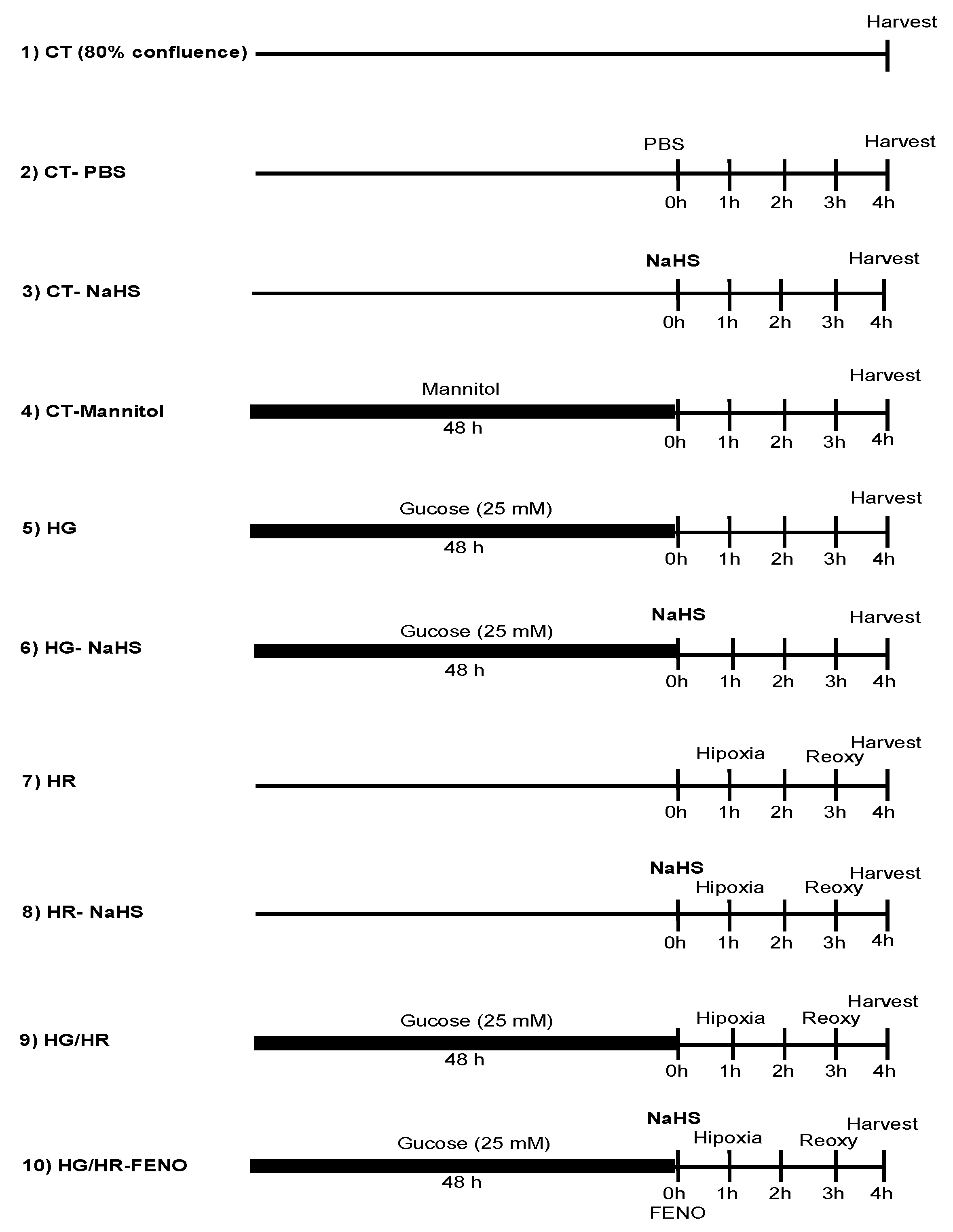
To explore the role of hyperosmolarity, cells were exposed to mannitol (19.5mM), (D-mannitol, Sigma-Aldrich, St. Louis, MO, USA). For the high glucose treatments, cell were cultured in F-10 medium containing 25mmol/L of glucose for 48hours (high glucose) [21]. The vehicle treatment (PBS) and NaHS (100 μM) were administered 1 hour before the culture was subjected to HR. This treatment was administered after subjecting the cells to HG. Cell cultures were divided into the following experimental groups: control (CT), high glucose (HG); and hypoxia/reoxygenation (HR); group 1: CT, group 2: CT /PBS, group 3: CT/NaHS (100 µM), group 4: CT/Mannitol, group 5: HG (25mM), group 6: HG/NaHS(100 μM), group 7: HR, group 8: HR/NaHS (100 μM) group group 9: HG/HR, group 10: HG / HR NaHS (100 μM) (Figure 1).
Figure Experimental groups are represented in this figure. Mannitol (19.5 mM) and high glucose (25 mM) were administered 48 h before NaHS (100 μM). The treatment with NaHS lasted for 4 h; CT = control, HR = hypoxia/reoxygenation, HG = high glucose.
Preprints 146468 g001

2.HIF1-α Expression

To determine if the method used to produce hypoxia via the GasPackTM EZ system was effective, we assessed the expression of the hypoxia-inducible factor (HIF-α). This determination was made by Western Blot, as HIF-α activates genes that encode proteins responsible for increasing oxygen availability and enabling metabolic adaptation in the absence of oxygen, thus controlling the expression of numerous gene products and proteins [22].

2.Cell Viability

Cell viability was determined according to Strober W and Crowley LC [23,24]. A volume of 100μL 0.4% Trypan blue was added to 1mL of cells (1x10⁶). An aliquot of 50 μL of the cells suspension was loaded onto a Neubauer chamber (Neubauer, Marienfeld, 0.0025mm2 Wollerspfad Lauda-Konigshofen, Germany) and immediately examined under a microscope at 10x magnification. The number of live (unstained) and dead (blue) cells was counted. The cell viability must be at least 95% to consider the culture in the healthy logarithmic phase.

2.Antioxidant Capacity Assay

Total antioxidant capacity was determinate using the method described by Apak. et al. [25]. For this assay, a suspension of 6x10⁶ cells from different experimental groups was evaluated. The cells were centrifuged 1500 rpm for 10 minutes, then diluted with 145 μL of 0.1M phosphate buffer at pH 7.5 and shaken at 500 rpm for 200 seconds. 100μL of the diluted sample was treated with 50 μL of 0.01M CuCl2 and shaken at 500 rpm for 200 seconds. Then, of 0.01 M bathocuproine was added and vortexed again at 500rpm for 200 seconds. The concentration of Cu2+ reduced to Cu+ was measured using a spectrometer at 490 nm (DW2000, SLM-Aminco, Urbana, IL, USA). Total antioxidant capacity is expressed as μmol/L of Cu2+ reduced to Cu+.

2.ROS Production

In the previously treated cells (1x10⁶, from different experimental groups), the medium was removed, washed with PBS and incubated with CellRoxTM Green Reagent (ThermoFisher Scientific, Waltham, Massachusetts) at a final concentration of 5 µM/mL, the incubation time was 30 minutes, and the process performed in the dark as much as possible. After incubation, the medium was removed, and cells were washed twice with PBS. Finally, the cells were scraped off with 1 mL of PBS and placed in dark Eppendorf tubes to avoid exposure to light. The fluorescence emitted by the interaction of free radicals and the CellRox indicator was determined by flow cytometry, using a BD FACSAria Fusion Flow Cytometer (Becton Dickinson, Mountain View, CA, USA) and the FlowJo10.8.1 software. The results were calculated as the geometric mean fluorescence (MF) of 5000 events, obtained by region and its fluorescence signal where observed as displacement of the fluorescence depending on the treatment in each cell group loaded with the CellRox indicator, all compared with the intrinsic fluorescence of a group of cells that were not incubated with the indicator [26].

2.Quantification of Malondialdehyde (MDA).

Malondialdehyde was determined by capillary zone electrophoresis in cardiomyocyte suspension (6x10 6 cells) from different experimental groups, as described Sánchez A [27]. The sample was deproteinized with cold methanol in a 1:1 ratio; centrifuged at 16,000xg for 15 minutes, and filtered with 0.22 µm nitrocellulose membrane filters (Millipore, Billerica, MA, USA); it was then diluted 1:10 with 0.1 M cold sodium hydroxide and analyzed. The P/ACETM MDQ Capillary Electrophoresis System (Beckman Coulter, CA, USA) was used for this purpose. The samples were injected under hydrodynamic pressure at 0.5 psi for 10 seconds. Separation was performed at -25 kV for 4 minutes at 267 nm. The capillary was washed between runs with 0.1 M NaOH for 2 minutes, distilled water for 2 minutes and buffer for 4 minutes. The concentration of MDA was expressed in μM and determined using a standard curve.

2.Quantification of 8-Hydroxy-2’-Deoxyguanosine (8-OH-2dG)

8-OH-2-dG, was determined by capillary zone electrophoresis and UV detection with diode array detection, as described Sánchez A. et al [27]. The myocyte suspension sample (6x10⁶ cells) from different experimental groups was deproteinized with 20% trichloroacetic acid, in a 10: 1 ratio. It was centrifuged at 16,000xg for 15 minutes and filtered with 0.22 µm nitrocellulose membrane filters. The samples were analyzed using the P/ACETM MDQ Capillary Electrophoresis System (Beckman Coulter, CA, USA). The capillary was preconditioned by passing 2M solution of sodium hydroxide for 30 minutes, followed by deionized water for 30 minutes, and then the run buffer (10 mM borates at pH 9.0) for 30 minutes. The sample was injected under hydrodynamic pressure at 0.5 psi for 10 seconds. The separation was carried out at 20 kV for 8 min at 200 nm. The capillary was washed between runs with 2M sodium hydroxide for 2 minutes and distilled water for 2 minutes. The results were expressed in pmoles/mL. The concentration of 8-OH-2dG was determined using a standard curve. Injection conditions were adapted from Kvasnicova. et al [28].

2.Capillary Zone Electrophoresis for Determination of BH4 and BH2

The myocyte suspension sample (6x10⁶ cells) from different experimental groups was evaluated as described Ibarra-Lara. et al [10]. Briefly, 50μL of sample containing 6x10⁶ cells were deproteinized with cold methanol (1:1 v/v), centrifuged at 16000x g for 15 minutes al 10°C, and filtered with 0.22 μm nitrocellulose membrane (Millipore, Billerica, MA, USA). Measurement was performed using a P/ACETM MDQ Capillary Electrophoresis System (Beckman Coulter, Mexico City, Mexico), with laser-induced fluorescence detection. Data are expressed as pmol/mg of protein for BH4 and BH2.

2.Palmitoyl CoA Oxidase Activity

This study [29] report the development of a simple, specific, and highly sensitive fluorometric assay for peroxisomal fatty acyl-CoA oxidase activity. In this procedure, fatty acid acyl-CoA-dependent H2O2 production was coupled in a peroxidase-catalyzed reaction to the oxidation of scopoletin (6-methoxy-7-hidroxycoumarin), a highly fluorescent compound, to non-fluorescent product.
Peroxisomal palmitoyl CoA oxidase activity was determined as previously described [29]. Cardiomyocytes cultures (6x10⁶) were diluted with 0.25 M sucrose, 1 mM EDTA, and 0.1%. ethanol. Samples containing 500 µg of protein were incubated at 37°C for 30 minutes with constant shaking in the reaction mix containing 60 mM Tris–HCl (pH 8.3), 35 µM palmitoyl CoA, 50 µM FAD, 1 µM scopoletin, peroxidase (3 units), 0.6 mg bovine serum albumin, and triton X-100 (0.01%) to a final volume of 1 mL. The reaction was stopped by the addition of 4 mL of 0.1 M borate buffer (pH 10). Fluorescence was measured at 470 nm emission and 395 nm excitation with a Varian Cary Eclipse Fluorescence Spectrophotometer. Data are expressed as nmol scopoletin per mg of protein in 30 minutes.

2.Protein Expression by Western Blot

The total protein content in the cell cultures was quantified as described in a previous study [27]. Protein extracts (80 µg) from cell lysates were separated using a 12% SDS–PAGE gel at 100V for 2 hours. Following electrophoresis, the proteins were transferred to a 0.45 µm polyvinylidene fluoride (PVDF) membrane (Millipore, Billerica MA, USA) at 1 Å for 1 hour. The membrane was then blocked with 5% Blotto, not-fat dry milk (Santa Cruz Biotechnology, Inc., Dallas, Tx, USA) in PBS containing 0.1% Tween 20, as previously reported. The blots were incubated with primary antibodies: β-actin (1:5000), HIF1α (1:100), SOD Cu2+/Zn2+ (1:100), SOD Mn2+ (1:100), Catalase (1:100), p-NOS3 (Ser1177) (1:100), NOX4 (1:100), p47phox (1:100), NRF2 (1:100 ), KEAP (1:100), PPAR-α (1:50), PPAR-γ (1:100), PGC1α (1:100), AMPK (1:100), GLUT4 (1:100) (Santa Cruz Biotechnology, Santa Cruz, CA, USA). After washing, the blots were probed with chemiluminescent HRP substrate (Immobilon Western, Millipore, Billerica MA, USA), and the signals were detected by chemiluminescence. Densitometric analysis was performed using Quantity One software (Bio-Rad). Blots were stripped and re-incubated with β-Actin antibody as a loading control. Bands densities were expressed as arbitrary units.

2.Mitochondria Ultrastructure

Mitochondrial ultrastructure in cardiomyocytes from different experimental groups was examinated using the method described by González- Morán [30]. Cardiomyocytes were fixed with 2.5% glutaraldehyde for 1 hour, then stored overnight in a 0.1 M cacodylate buffer. After post-fixation with 0.1 M osmium tetroxide in cacodylate buffer, the samples were dehydrated in a ethanol gradient and embedded in EPON Ultrathin sections (approximately 60 nm thick) were cut using a Leica Ultracut microtome and mounted onto copper grids. The sections were contrasted with uranyl acetate and examined under a JEM-1011 transmission electron microscope (JEOL Ltd., Tokyo, Japan) at 60kV. Images of cardiomyocytes from each experimental group were taken randomly and evaluated at a magnification of 12,000x.

2.Statistical Analysis

Results are expressed as the mean ± standard error of the mean (SEM) from 3-6 independent experiments. Comparisons between two groups were performed using an unpaired Student´s t-test. For multiple comparations, a two-way analysis of variance (ANOVA) followed by a Tukey post-hoc test was used (Sigma Plot 13 software). Statistical significance was set al p<0.05.

Results

3.Evaluation of the Hypoxia/Reoxygenation (HR) Model in Primary Cardiomyocyte Cultures
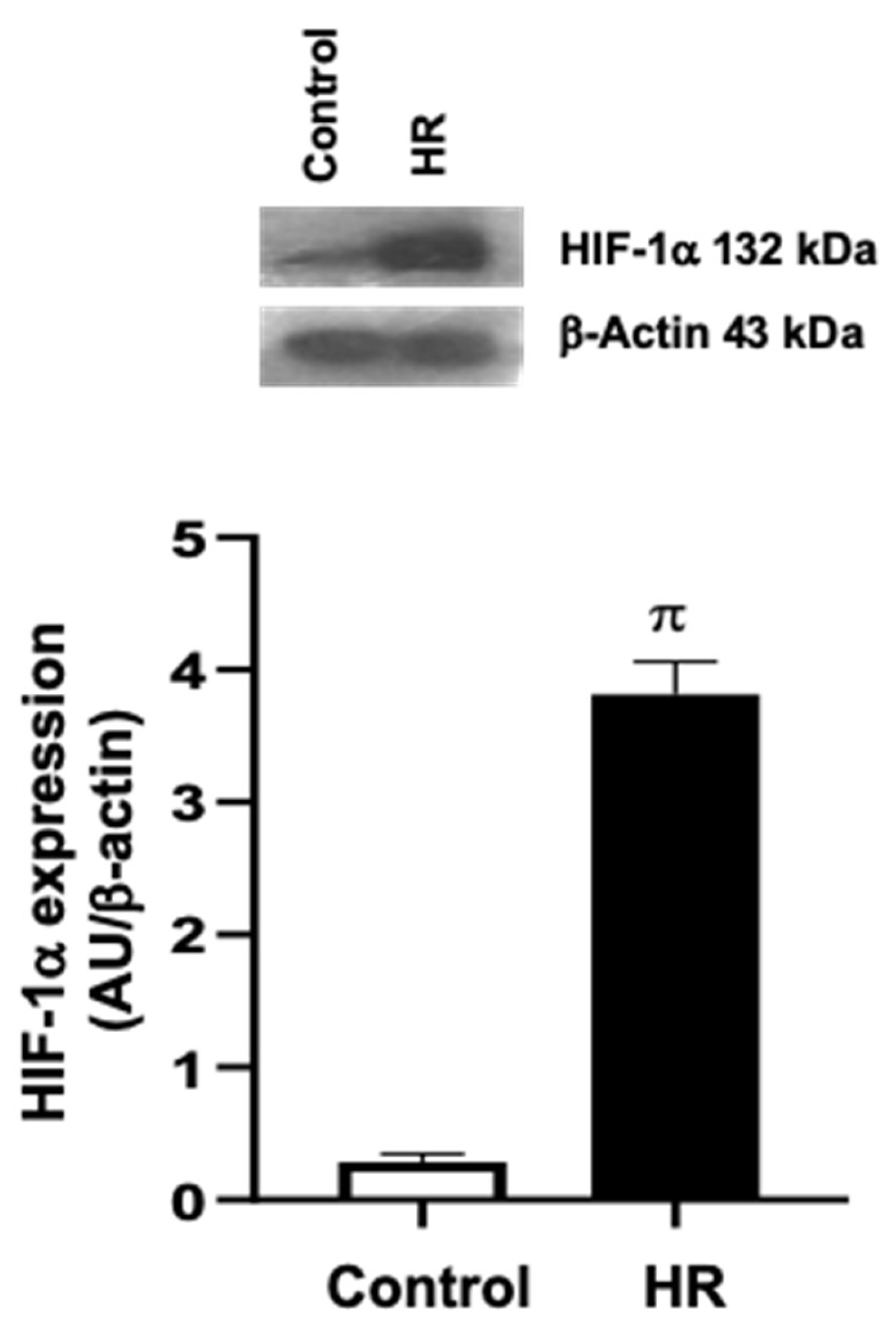
Hypoxia in primary cardiomyocyte cultures was induced using anaerobic bags, followed by reoxygenation of the cells. To assess the effectiveness of our experimental protocol, the expression of HIF-1α was evaluated by Western Blot. Cardiomyocytes exposed to HR conditions showed an increased expression of HIF-1α compared to the control group (Figure 2).
Expression of Hypoxia-Inducible Factor 1α (HIF-1α) in Primary Cardiomyocyte Cultures Exposed to Hypoxia/Reoxygenation (HR). HR leads to an increased in the expression of HIF-1α in cardiomyocytes. π = p<0.05 vs Control; t-test; n= 3.
Preprints 146468 g002

3.Evaluation of Cell Viability

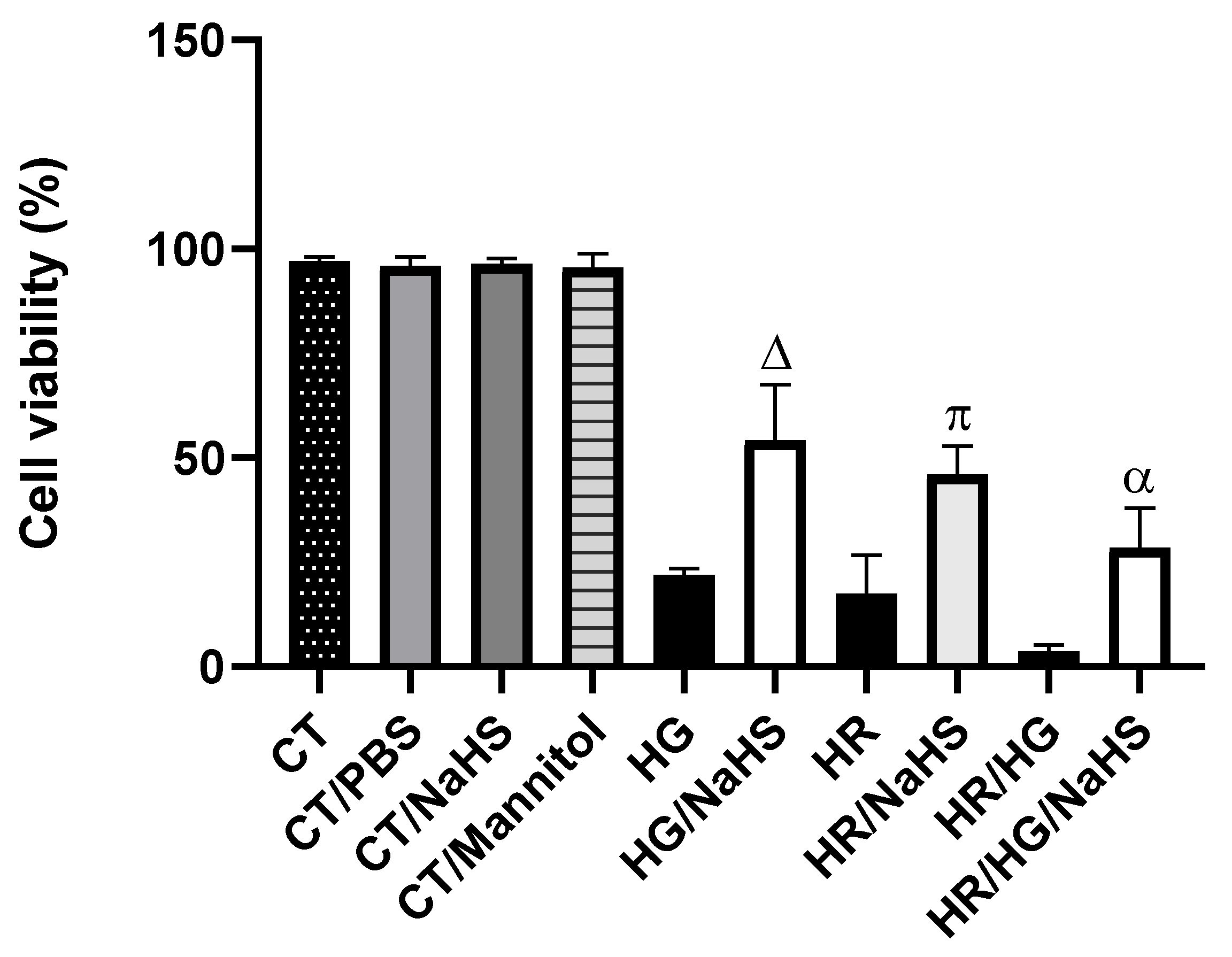
Cell viability in primary cardiomyocytes cultures from different experimental groups was evaluated using Trypan Blue technic. Control cardiomyocytes incubated with PBS, NaHS, and mannitol showed an average cell viability of 95 %. Cardiomyocytes exposed to hyperglycemic (HG), hypoxia/reoxygenation (HR), or HG/HR conditions exhibit a significant reduction in cell viability to 14%. However, incubation of the experimental groups (HG, HR, and HG/HR) with NaHS (100 μM) reversed the observed cell damage, resulting in a 42% increase in viability (Figure 3).
Evaluation of Cell Viability using the Trypan Blue Technic in Primary Cardiomyocyte Cultures Incubated with NAHS (100 μM), Subjected to High Glucose (HG), Hypoxia/Reoxygenation (HR), or Both Conditions (HG/HR). The graph represents the cell viability of the different experimental groups: Control (CT), Control+PBS (CT/PBS), Control+NaHS (CT/NaHS), Control+Mannitol (CT/Mannitol), High Glucose (HG), High Glucose+NaHS (HG+NaHS), Hypoxia/Reoxygenation (HR), Hypoxia/Reoxygenation+NaHS (HR+NaHS), High Glucose+Hypoxia/Reoxygenation (HR/HG), and High Glucose+Hypoxia/Reoxygenation +NaHS (HR/HG+NaHS). Δ= p<0.05 vs HG; π= p<0.05 vs HR; α= p<0.05 vs HR/HG. Two-way ANOVA followed by a Tukey post hoc test; n=6.
Preprints 146468 g003

3.Total Antioxidant Capacity (TAC)

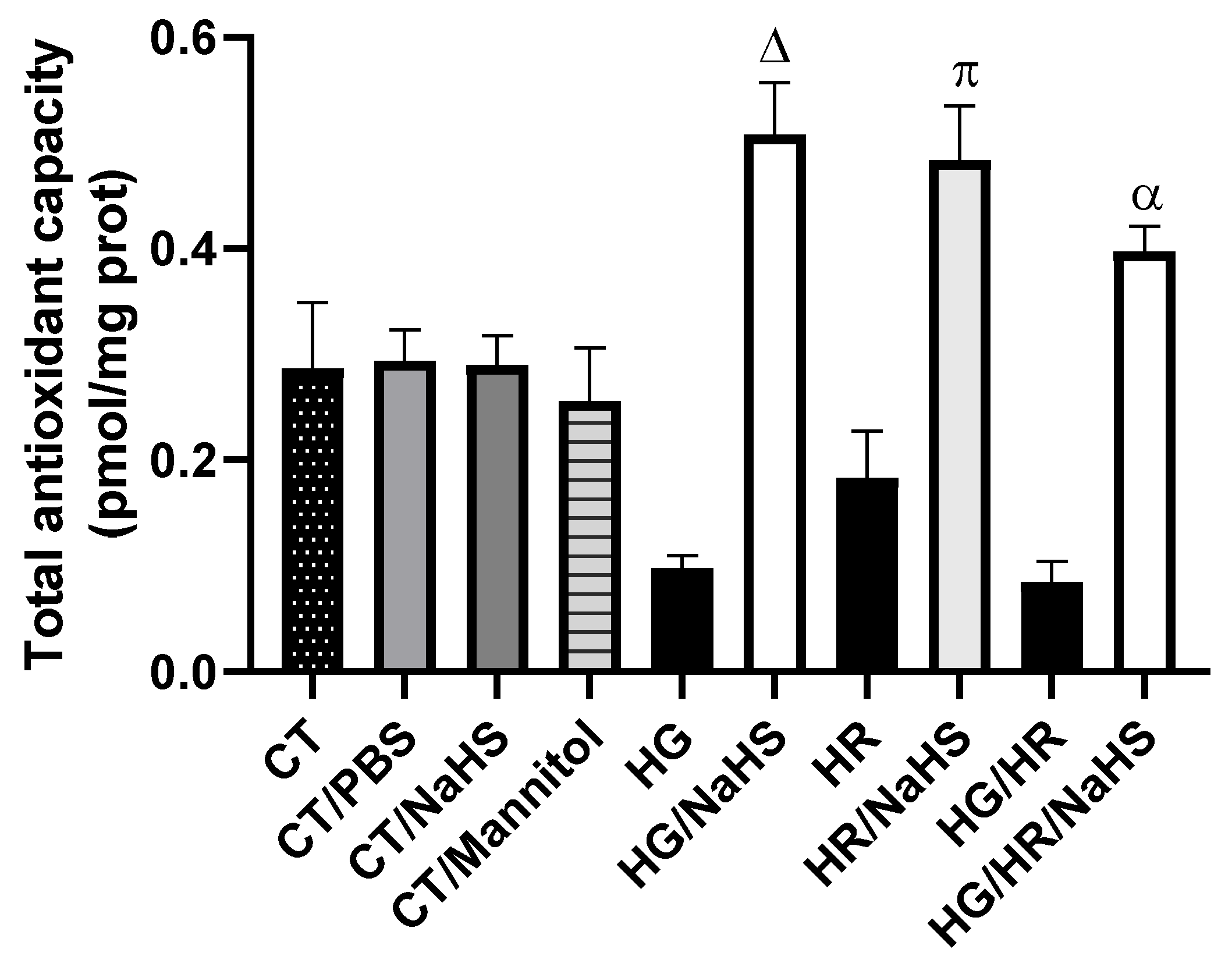
By evaluating TAC in primary cultures of cardiomyocytes from the different experimental groups, we were4 able to obtain information about the enzymatic and non-enzymatic antioxidant response. Control cardiomyocytes incubated with PBS, NaHS, and mannitol showed similar TAC levels. Cardiomyocytes exposed to HG, HR, or HG/HR, exhibit a decrease in TAC, and the incubation of these cardiomyocytes with NaHS reversed the decrease in TAC compared to their respective controls. These results suggest that NaHS promotes an antioxidant environment (Figure 4).
Total Antioxidant Capacity in Primary Cultures of Cardiomyocytes Incubated with NaHS (100 μM), exposed to HG, HR, or both conditions HG/HR. Incubation with NaHS of cardiomyocytes exposed to HG, HR, or HG/HR increases total antioxidant capacity compared to their respective controls HG, HR, or HG/HR without NaHS. Δ= p<0.05 vs HG; π= p<0.05 vs HR; α= p<0.05 vs HR/HG. Two-wat ANOVA followed by a Tukey post hoc test; n=6.
Preprints 146468 g004

3.ROS Production

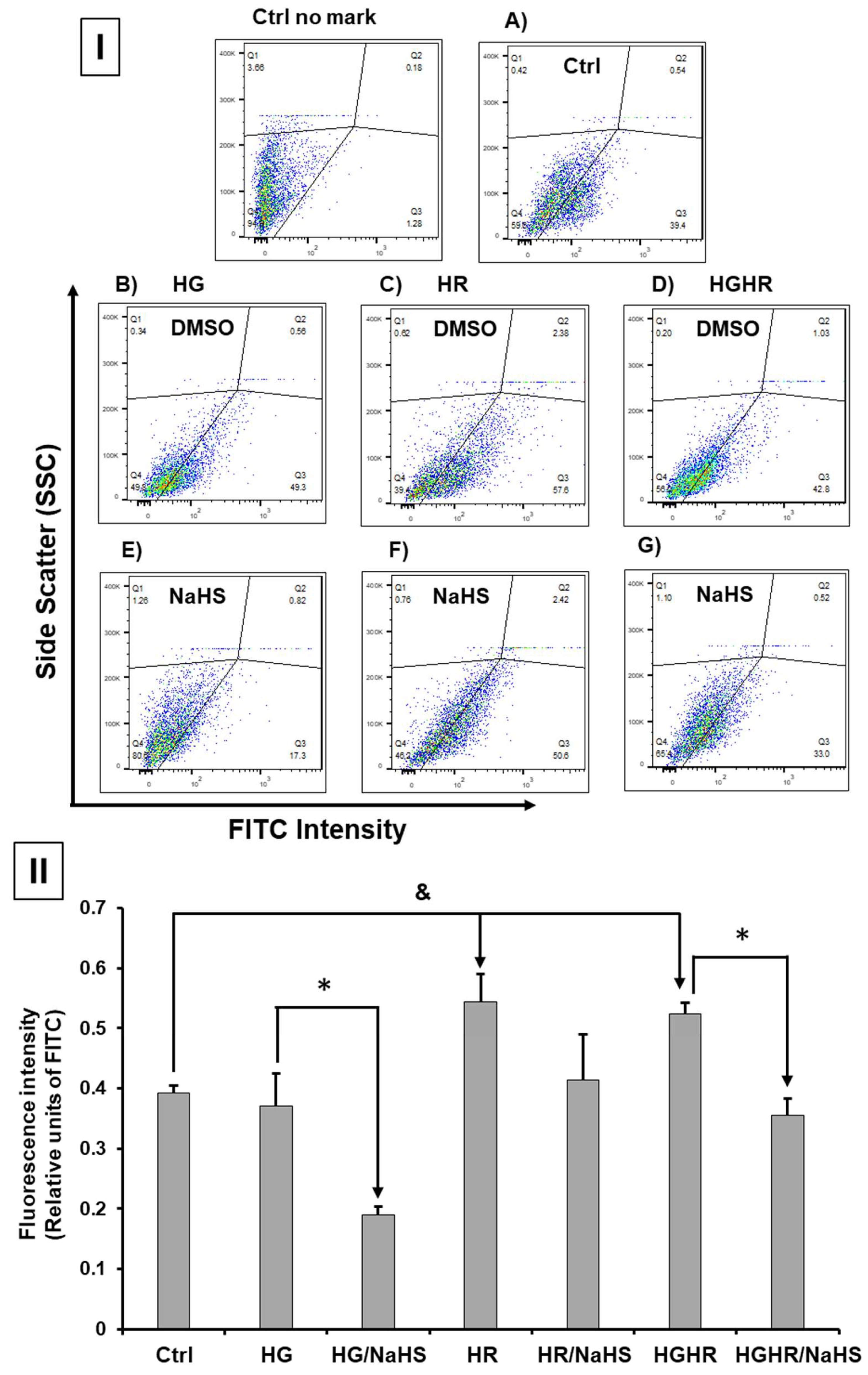
CellROX™ Green reagent is a fluorogenic probe for measuring oxidative stress in live cells. In our study, we assessed ROS production using the CellROX™ reagent and flow cytometry in primary cultures of cardiomyocytes cultures exposed to HG, HR, or HG/HR in presence or absence of NaHS (100 μM). Primary cardiomyocytes cultures exposed to HR and HG/HR conditions showed an increase in ROS production (represented by fluorescence intensity) (Figure 5, IC and ID), compared to the control group [(Figure5: IA) and Figure II]. Treatment with NaHS (100 μM) in primary cardiomyocytes cultures exposed to HG and HG/HR conditions decreased ROS production [(Figure5: IE and IG) and Figure II].
Evaluation of Reactive Oxygen Species (ROS) Production Using the CellROXTM Indicator and Flow Cytometry in Primary Cultures of Cardiomyocytes. I. A) Cardiomyocytes with CellROX only (Control) and cardiomyocytes with CellROX exposed to: B) HG, C) HR, and y D) HG/HR. In E), F) y G) ROS production decreases in cardiomyocytes exposed to HG and HG/HR incubated with NaHS (100 μM). &= p<0.05 vs Ctrl; *= p<0.05 vs HG y HG/HR. Two-wat ANOVA followed by a Tukey post hoc test; n=6.
Preprints 146468 g005

3.Evaluation of Oxidative Stress

To evaluate lipid peroxidation and oxidative DNA damage, we assessed malondialdehyde (MDA) and 8-hidroxy-2'-desoxyguanosine (8-OH-2dG) in primary cultures of cardiomyocytes exposed to HG, HR, or HG/HR. Control cardiomyocytes incubated with PBS, NaHS, and mannitol-maintained baseline values and did not show increased concentrations of MDA or 8-OH-2dG compared to control cardiomyocytes (CT). HG, HR, or HG/HR conditions in cardiomyocytes promoted an increase in MDA and 8-OH-2dG concentrations, and incubation with NaHS (100 μM) reversed the increase in these oxidative stress biomarkers (Figure 6 A and B).

3.Evaluation of Cofactor for eNOS, Tetrahydrobiopterin (BH4), and Its Oxidation Product (BH2)
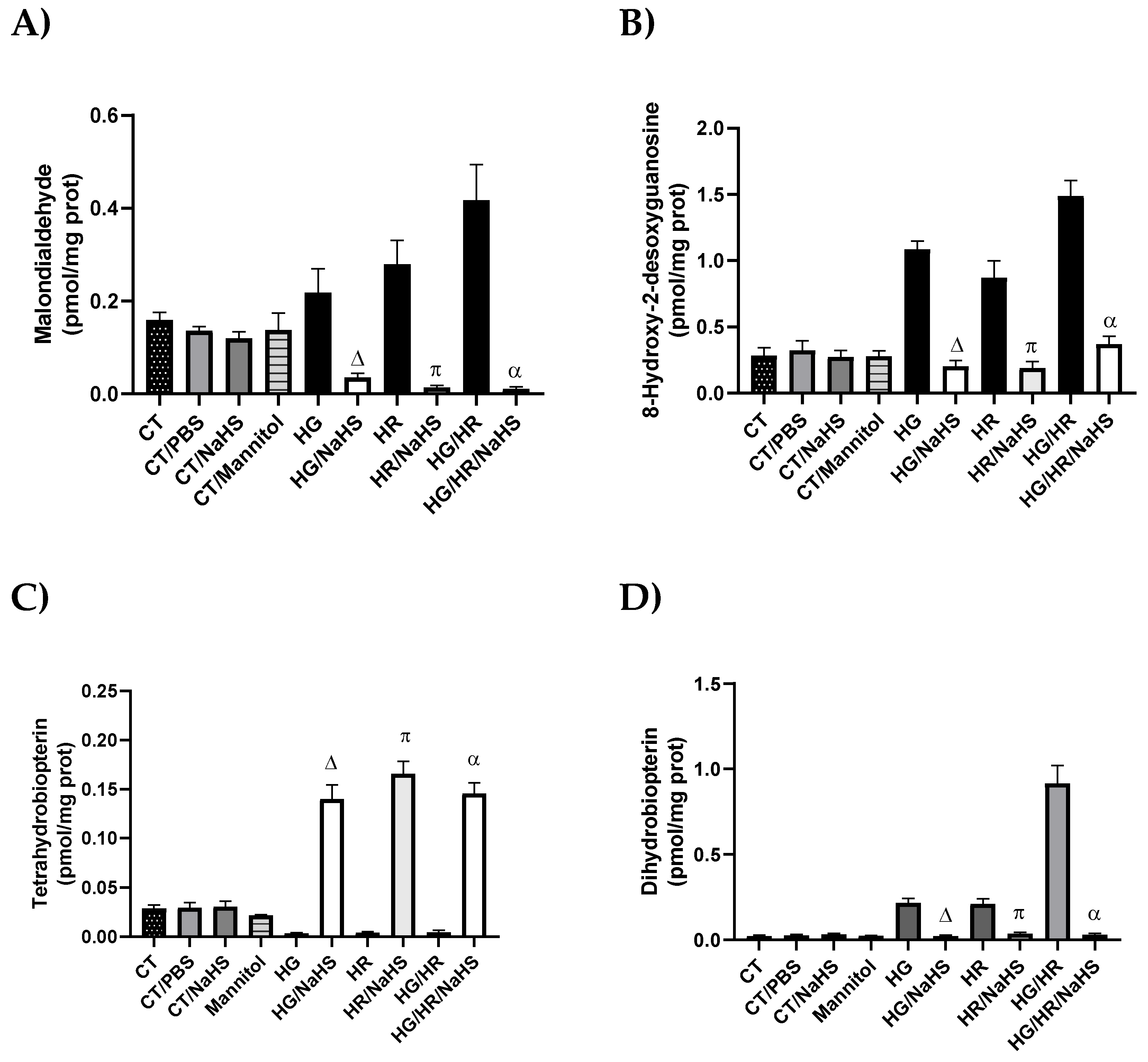
The coupling of eNOS requires the cofactor BH4 to produce nitric oxide (NO). The oxidation of BH4 generates BH2, promoting eNOS uncoupling and the generation of superoxide anion (O2 •-) instead of NO. Control cardiomyocytes (CT) incubated with PBS, NaHS, and mannitol-maintained baseline concentrations of BH4 y BHThe incubation of NaHS (100 μM) in cardiomyocytes exposed to HG, HR, or HG/HR promoted an increase in BH4 concentrations and a decrease in the concentrations of its oxidation product BH2 (Figure 6 C and D). These results suggest that NaHS promotes eNOS coupling.
Evaluation of Oxidative Stress Markers, The Cofactor for Endothelial Nitric Oxide Synthase (eNOS), Tetrahydrobiopterin (BH4), and its Oxidation Product, Dihydrobiopterin (BH2) in Primary Cultures of Cardiomyocytes Incubated with NaHS (100 μM), Exposed to HG, HR, or both Conditions HG/HR NaHS reverses the increase in oxidative stress marker concentrations: A) Malondialdehyde, B) 8-hydroxy-2'-desoxguanosina; it also prevents the oxidation of C) BH4 and therefore decrease the concentrations of its oxidation product D) BH2. Δ= p<0.05 vs HG; π= p<0.05 vs HR; α= p<0.05 vs HR/HG. Two-wat ANOVA followed by a Tukey post hoc test; n=6.
Preprints 146468 g006

3.Evaluation of Palmitoyl-CoA Oxidase Activity and PPAR-α Expression
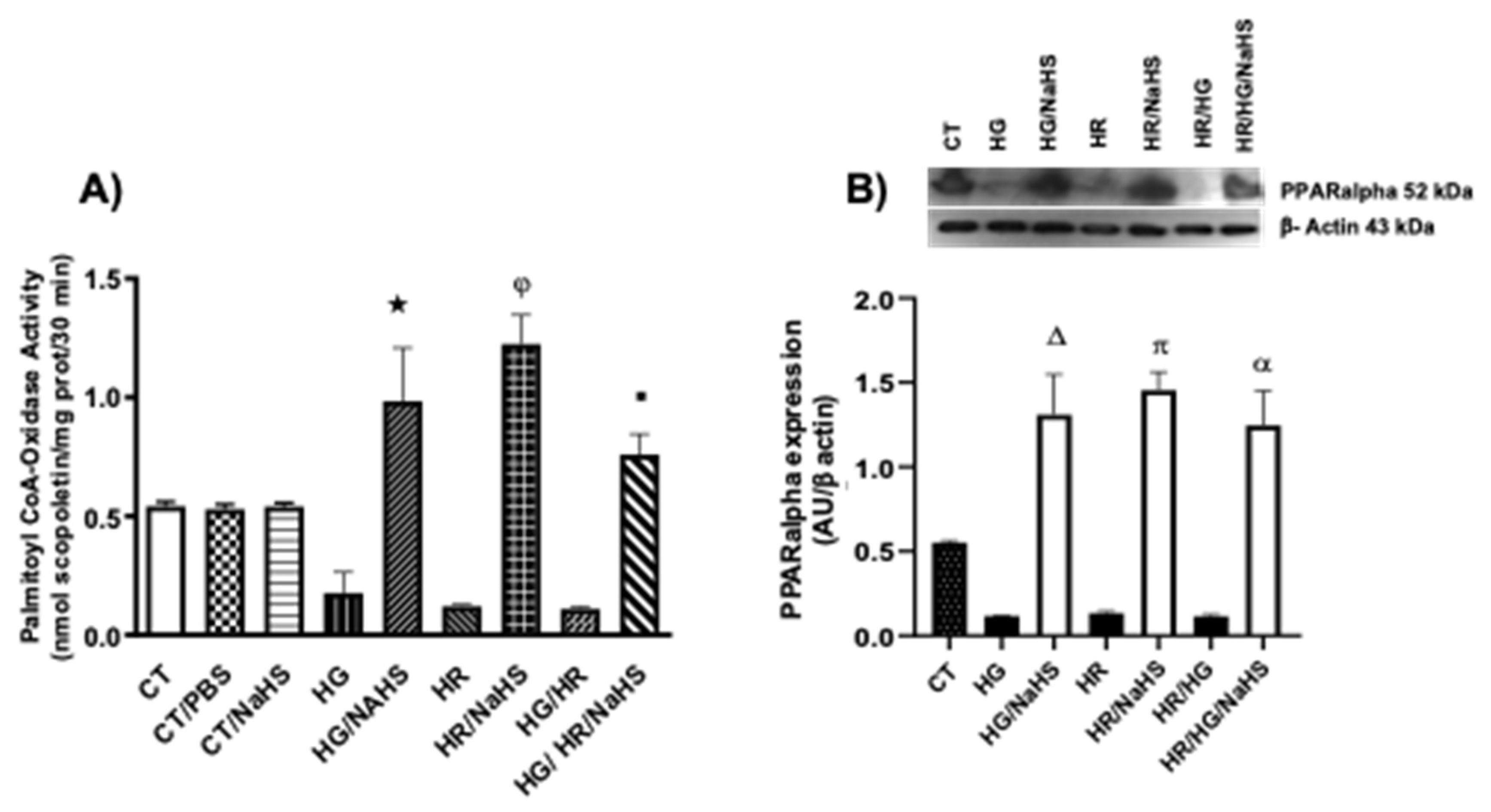
To evaluate PPAR-α activity in the different experimental groups, we performed a fluorometric study in which we measured palmitoyl-CoA oxidase activity. The experimental groups of cardiomyocytes exposed to HG, HR, and HG/HR conditions, and treated with NaHS, showed a reversal of the decrease in PPAR-α activity (Figure 7A). Furthermore, treatment with NaHS in cardiomyocytes exposed to HG, HR, and HG/HR conditions promoted an increase in PPAR-α expression (Figure 7B).
Evaluation of PPAR-α Activity and Expression in Primary Cultures of Cardiomyocytes Incubated with NaHS (100 μM), Exposed to HG, HR, or both Conditions HG/HR. A) Incubation with NaHS promotes an increase in PPAR-α activity under HG, HR, and HG/HR conditions. B) Treatment with NaHS in cardiomyocytes exposed to HG, HR, and HG/HR conditions promoted an increase in PPAR-α expression. ★= p<0.05 vs HG; φ= p<0.05 vs HR; ▪= p<0.05 vs HR/HG. Two-wat ANOVA followed by a Tukey post hoc test; n=6.
Preprints 146468 g007

3.Evaluation of PPAR-γ, PGC 1α, AMPK, GLUT4, Keap1, Nrf2 y p-eNOS Ser1177 Expression
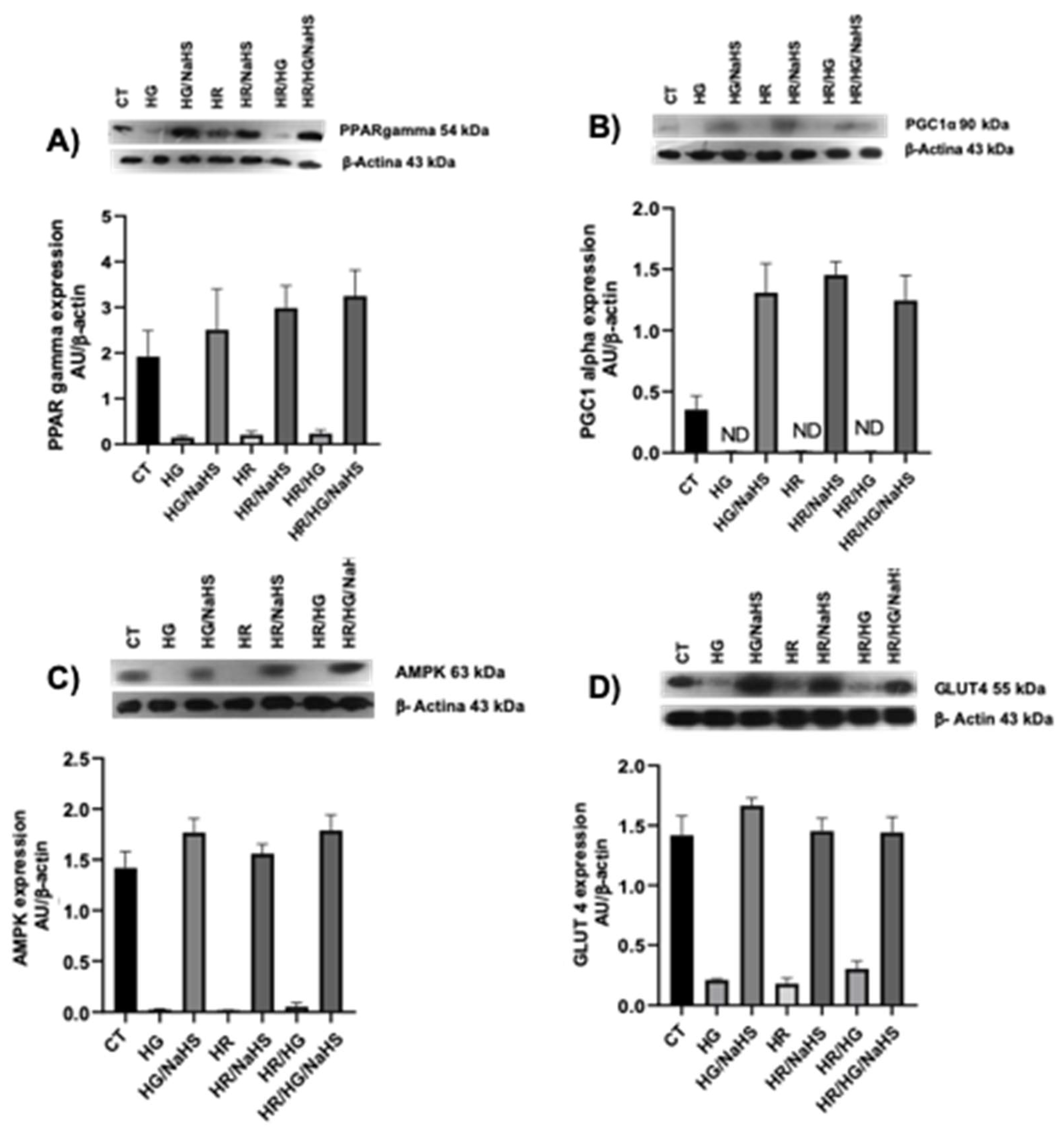
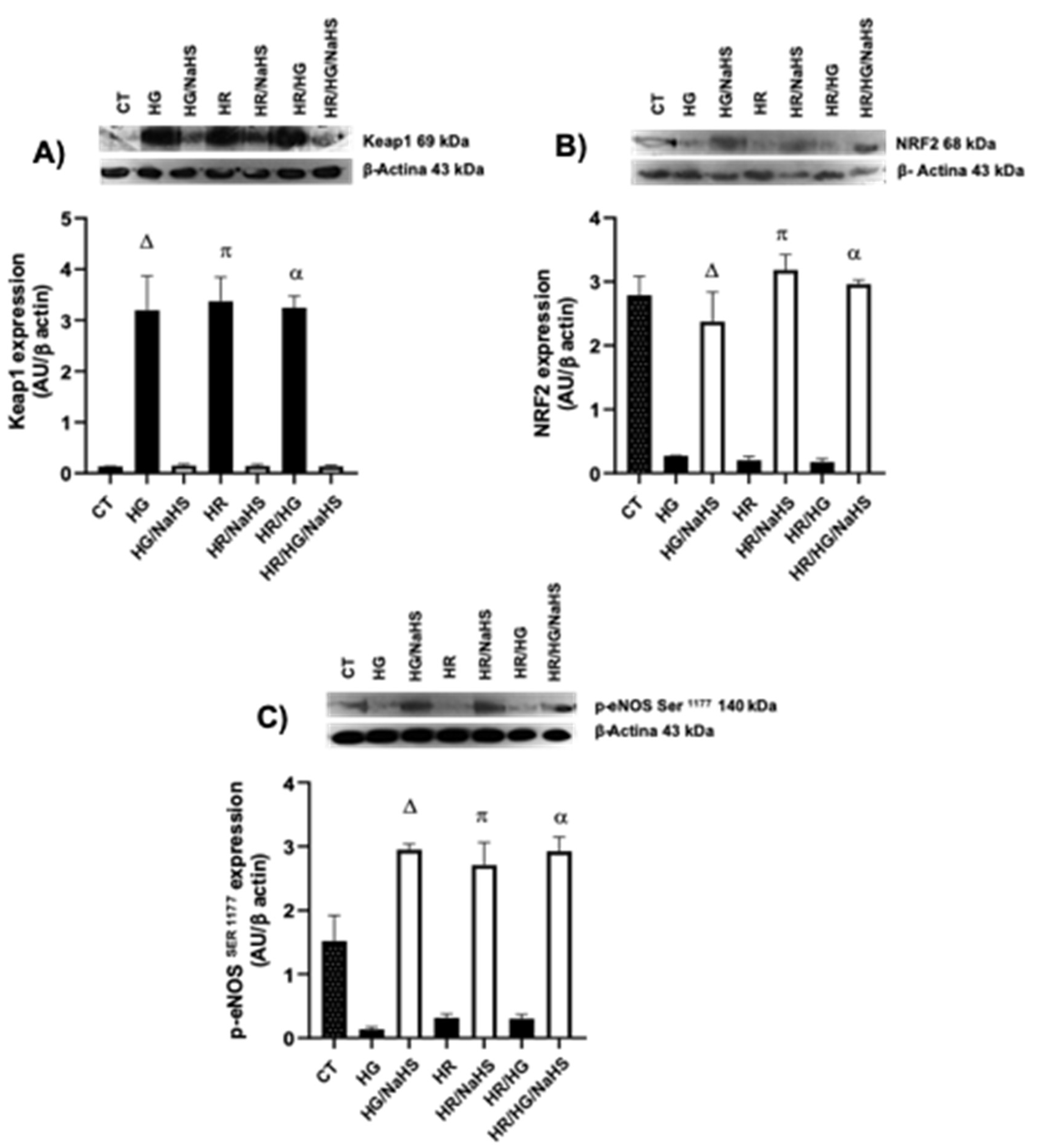
To evaluate whether the antioxidant environment generated by NaHS (100 μM) incubation in primary cultures of cardiomyocytes from different experimental groups involves the nuclear receptor PPAR-γ and its coactivator PGC1α, we assessed the expression of these proteins using Western blot. We observed NaHS promotes an increase in PPAR-γ and PGC1α expression under HG, HR, and HG/HR conditions compared to their respective controls (Figure 8 A and B). Besides, since PPAR-γ is related to carbohydrate metabolism, we assessed the expression of AMPK and GLUT4 and observed that treatment with NaHS in cardiomyocytes exposed to HG, HR, and HG/HR conditions reversed the decrease in these two proteins (Figure 8 C and D). The transcription factor Nrf2 regulates the inducible expression of numerous antioxidant enzyme genes, and Nrf2activity is constitutively repressed due to its binding to the cytoplasmic protein KeapTherefore, in our study, we assessed the expression of Keap1in cardiomyocytes exposed to HG, HR, and HG/HR showed increased expression of Keap1 compared to the experimental groups incubated with NaHS (Figure 9 A). We also observed the incubation with this gasotransmitter in cardiomyocytes exposed to HG, HR, and HG/HR conditions reversed the decrease in the expression of transcription factor NRF2 (Figure 9 B) and the enzyme p-eNOS Ser1177 (Figure 9 C) compared to their respective controls.
Expression of PPAR-γ, PGC 1α, AMPK y GLUT4 in Primary Cultures of Cardiomyocytes Incubated with NaHS (100 μM), Exposed to HG, HR, or both Conditions HG/HR. A) Incubation with NaHS promotes an increase in PPAR-γ expression under HG, HR, and HG/HR conditions. B) HG, HR, and HG/HR conditions promote a decrease in PGC 1α expression. NaHS reverse the decrease in the expression of C) AMPK and D) GLUT4 under HG, HR, and HG/HR conditions. Δ= p<0.05 vs HG; π= p<0.05 vs HR; α= p<0.05 vs HR/HG. Two-wat ANOVA followed by a Tukey post hoc test; n=6.
Preprints 146468 g008
Expression of Keap1, Nrf2 y p-eNOS Ser1177 in Primary Cultures of Cardiomyocytes Incubated with NaHS (100 μM), Exposed to HG, HR, or both Conditions HG/HR. A) Incubation with NaHS promotes an increase in Keap 1 expression under HG, HR, and HG/HR conditions. B) HG, HR, and HG/HR conditions promote a decrease in Nrf2 expression. NaHS reverses the decrease in Nrf2 expression and C) p-eNOS Ser1177 under HG, HR, and HG/HR conditions. Δ= p<0.05 vs HG; π= p<0.05 vs HR; α= p<0.05 vs HR/HG. Two-wat ANOVA followed by a Tukey post hoc test; n=3.
Preprints 146468 g009

3.Evaluation of the Expression of SOD-Cu2+/Zn2+, SOD-Mn2+, catalase, NOX 4 y p47phox
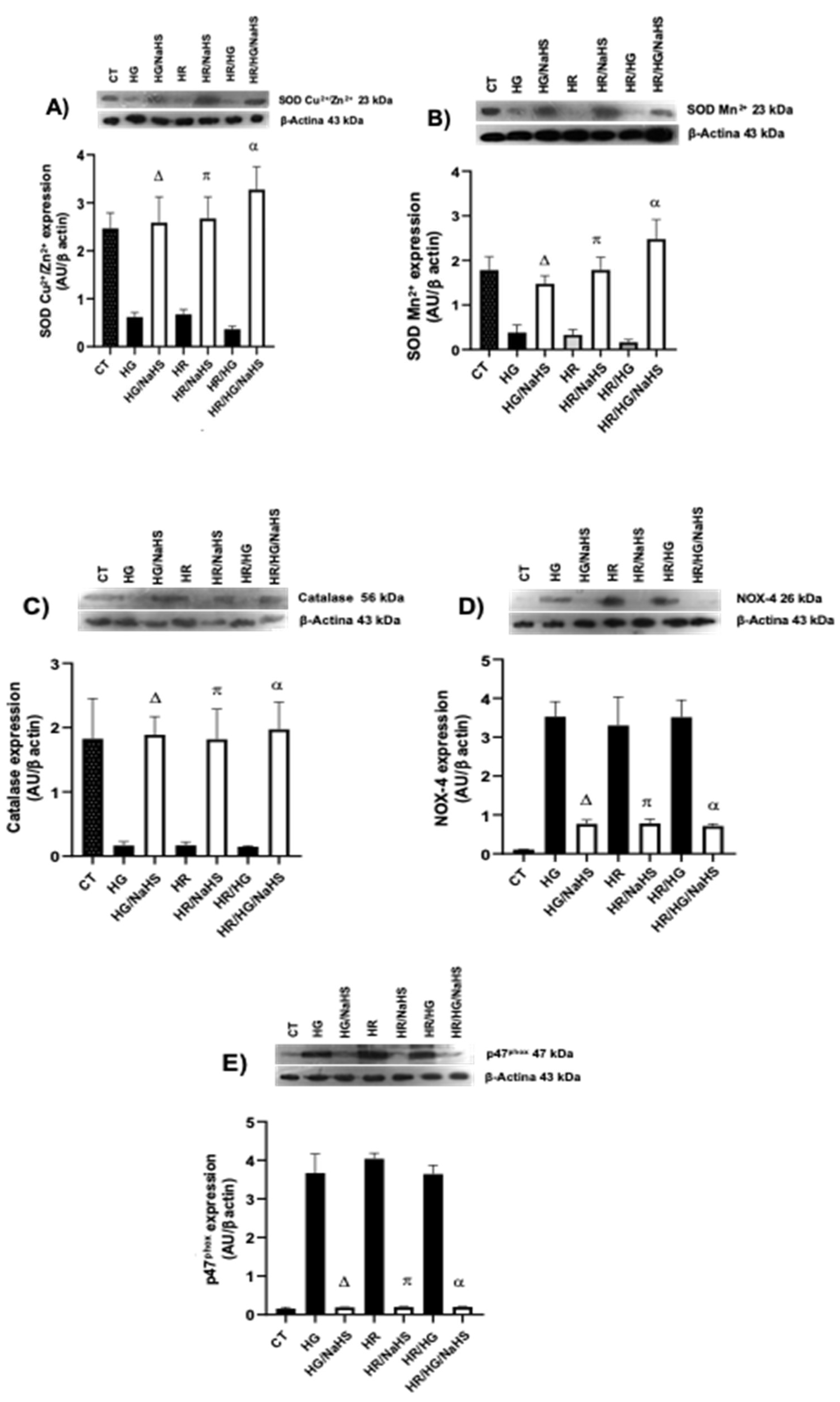
To evaluate whether NaHS incubation in cardiomyocytes promotes an increase in the expression of certain antioxidant enzymes, we assessed the expression of SOD-Cu2+/Zn2+, SOD-Mn2+, and catalase, using Western blot. In our study, we observed that NaHS promotes an increase in the expression of these antioxidant enzymes under HG, HR, and HG/HR conditions (Figure 10 A, B, and C) compared to their respective controls. Since NOX 4 is a protein involved in ROS production and is regulated by its cytoplasmic subunit p47phox, we evaluated the expression of both proteins. Cardiomyocytes exposed to HG, HR, and HG/HR conditions and incubated with NaHS showed a decrease in the expression of NOX 4 y de p47phox compared to their respective controls (Figure 10 D and E).
Expression Superoxide Dismutase-Cu2+/Zn2+ (SOD-Cu2+/Zn2+), SOD-Mn2+, catalase, NADPH oxidase 4 (NOX 4) y p47phox in Primary Cultures of Cardiomyocytes Incubated with NaHS (100 μM), Exposed to HG, HR, or both Conditions HG/HR. Incubation with NaHS under HG, HR, or HG/HR conditions promotes an increase in the expression of A) SOD-Cu2+/Zn2+, B) SOD-Mn2+, and C) Catalase, and leads to a decrease in the expression of D) NOX 4 and E) p47phox. Δ= p<0.05 vs HG; π= p<0.05 vs HR; α= p<0.05 vs HR/HG. Two-wat ANOVA followed by a Tukey post hoc test; n=3.
Preprints 146468 g010

3.Evaluation of Mitochondrial Ultrastructure in Cardiomyocytes
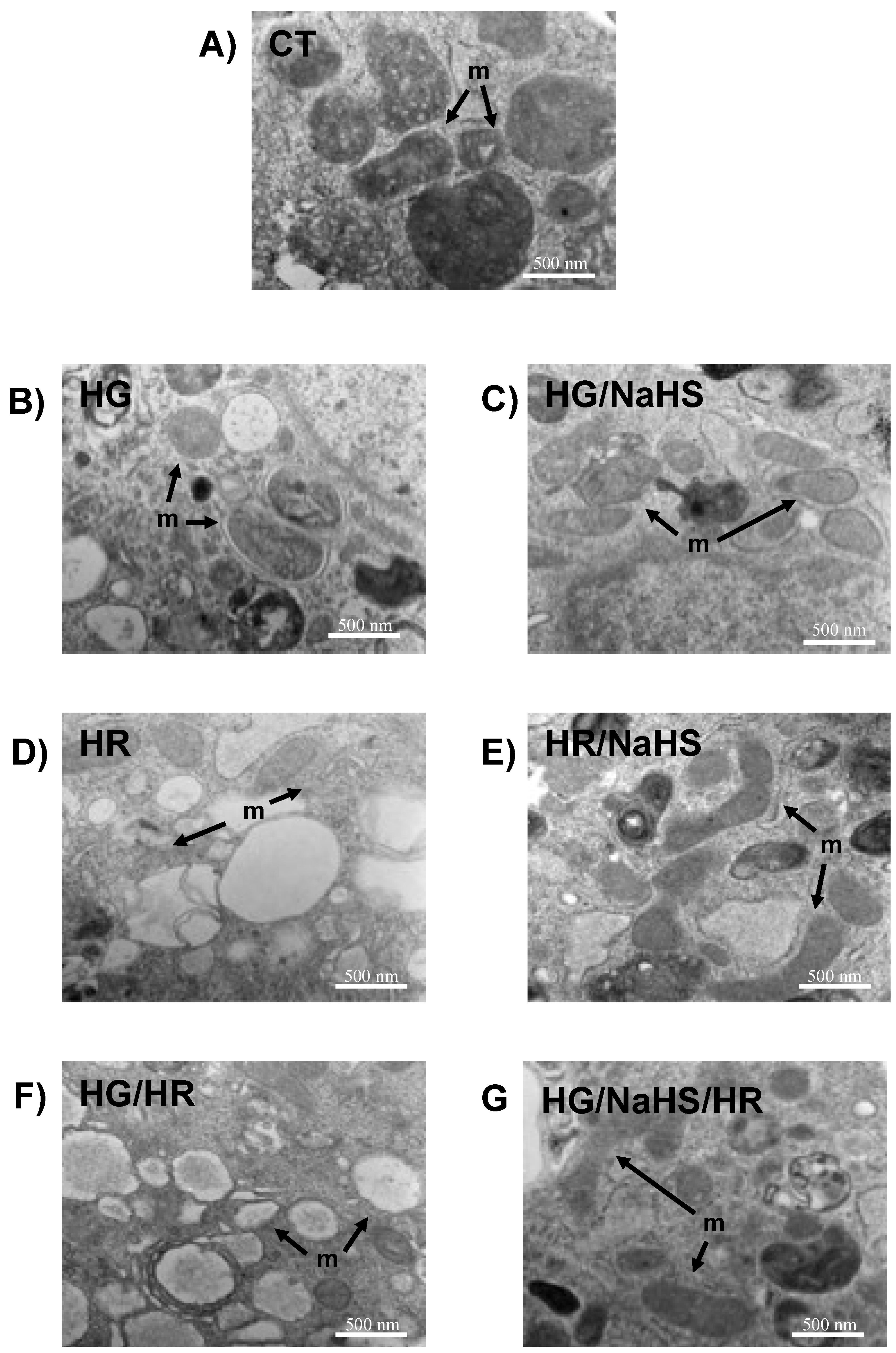
The effect of NaHS on the mitochondrial ultrastructure of cardiomyocytes subjected to hypoxia-reoxygenation, high glucose, and the combination of both (high glucose + hypoxia-reoxygenation) was evaluated. It is crucial that the mitochondrial structure is maintained, as this organelle is responsible for the synthesis of ATP necessary for cell survival. In Figure 11A, the micrograph of control cells is shown, where mitochondria with oval and elongated shapes are observed, as well as well-defined cristae, typical of a healthy and functioning mitochondrion.
When cardiomyocytes are exposed to high glucose (HG), the mitochondrial structure is compromised. In Figure 11B, circular mitochondria with internal vesicles, tubular and flat membranes, and swollen mitochondria, which appear completely round and broken, are seen. This structural damage to the mitochondria directly affects cell death. However, when NaHS is added to cardiomyocytes subjected to high glucose (HG/NaHS), as seen in Figure 11C, protection against the HG-induced damage is observed. The mitochondria now have well-defined cristae and an oval structure, no longer appear swollen, and a greater number of dense mitochondria with intact cristae are visible, demonstrating the functionality of this organelle and the protective effect of NaHS.
When cardiomyocytes were exposed to hypoxia-reoxygenation (HR) (Figure 11D), significant damage to the mitochondrial structure was observed. As with high glucose, swollen and round mitochondria, tubular and broken inner and outer membranes were seen, indicating the loss of mitochondrial cristae and, consequently, mitochondrial dysfunction. In fact, under these conditions, there was a greater loss of cytochrome c, which would be related to cardiomyocyte death. Additionally, large vesicles were observed in the intracellular space. When the NaHS treatment was applied to these cells, even in the presence of hypoxia-reoxygenation (HR/NaHS), the mitochondrial structure significantly improved. In Figure 11E, dense and elongated mitochondria with well-defined cristae are visible. Also, mitochondria undergoing fission are observed, which may indicate that NaHS treatment protects against HR-induced damage by activating this mitochondrial rescue pathway, ultimately benefiting cardiomyocyte survival.
When cardiomyocytes were subjected to both HG+HR conditions (Figure 11F), a significant increase in cellular damage was observed, particularly in the loss of mitochondrial structure. A higher number of broken mitochondria was seen, and the ones that were visible were less dense, round, and many were empty without internal structure, indicating the loss of mitochondrial membranes and, consequently, the loss of their function. In contrast, when the cells were incubated with NaHS, despite being exposed to HG+HR conditions, an improvement in mitochondrial structure was observed (Figure 11G). A greater number of intact mitochondria with well-defined cristae and their typical oval and elongated shape were visible, indicating that NaHS protects the cardiomyocyte from HG+HR-induced damage.
Evaluation of Cardiomyocytes Ultrastructure Incubated with NaHS (100 μM), Exposed to HG, HR, or both Conditions HG/HR. NaHS treatment protects cardiomyocytes subjected to HG, HR, or both conditions from mitochondrial ultrastructure damage. A) CT, B) HG, C) HG / NaHS (100 μM), D) HR, E) HR / NaHS (100 μM), F) HG / HR and G) HG / HR / NaHS (100 μM).
Preprints 146468 g011

Discussion

Oxidative stress is an imbalance between antioxidant defense systems and ROS production. ROS can cause lipid peroxidation, protein oxidation, and DNA damage, thereby altering normal cellular functions. Myocardial ischemia/reperfusion (I/R) injury occurs when blood supply is interrupted (ischemia) and then restored (reperfusion), leading to an "explosion" of ROS from the mitochondria [31]. Mitochondrial ROS are generated by electron leakage from the electron transport chain, resulting in the incomplete reduction of oxygen to the superoxide anion (O2•-). Additionally, reverse electron transport driven by succinate leads to the production of O2•- in the mitochondrial matrix from complex I during reperfusion. Mitochondrial NOX4 also contributes to H2O2 generation, and the restoration of pH, along with mitochondrial calcium overload and excessive ROS generation, causes the mitochondrial permeability transition pore (mPTP) to form after reperfusion, leading to cardiomyocyte death [32]. Oxidative stress induced by hyperglycemia in type 2 diabetes mellitus (T2DM) plays an important role in complications and dysfunction of many vital organs, such as the heart, kidneys, nerves, and eyes [33]. Specifically, hyperglycemia damages endothelial cells, and the close link between diabetes and early vascular disease is well established [34]. In our study, we used primary cardiomyocyte cultures from neonatal rats, which were subjected to hyperglycemia (HG), HR, or both conditions to mimic the damage caused by high glucose concentrations and I/R. We observed that these conditions decreased cell viability (Figure 3), reduced total antioxidant capacity (Figure 4), increased ROS production (Figure 5), raised oxidative damage biomarkers (Figure 6A and B), increased NOX4 and p47phox expression (Figure 10D and E), and induced mitochondrial ultrastructural damage (Figure 11B, D, and F).
After the discoveries of nitric oxide (NO) and carbon monoxide (CO), hydrogen sulfide (H2S) was identified as the third important gasotransmitter [35]. H2S can be produced in most tissues of the human body through both enzymatic and non-enzymatic pathways. The most important enzymatic pathways use L-cysteine as a substrate and require one of three specific enzymes: cystathionine γ-lyase (CSE), cystathionine β-synthase (CBS), and 3-mercaptopyruvate sulfotransferase [36]. It has been reported that in mice lacking CSE, oxidative stress increased, eNOS activity decreased, and NO levels were reduced, which exacerbated I/R-induced damage in the heart and liver [37]. Interestingly, in our study, we observed that treatment with NaHS in primary cardiomyocytes subjected to hyperglycemia, HR, or both conditions increased BH4 levels (Figure 6C) and decreased BH2 levels (Figure 6D), which would promote eNOS coupling. H2S has a variety of important physiological functions in mammalian tissues and helps protect cells against apoptosis and oxidative stress [35]. Zhong et al. reported that NaHS treatment (a H2S donor) of primary neonatal rat cardiomyocyte cultures with high glucose significantly decreased ROS levels and increased NO levels [42]. NaHS has also been shown to protect against cardiomyocyte apoptosis induced by high glucose concentrations by attenuating oxidative stress and altering the expression of apoptosis-regulating genes [43]. Similar to these studies, in our research, we observed that primary cardiomyocyte cultures subjected to hyperglycemia, HR, or both conditions and treated with NaHS increased total antioxidant capacity (Figure 4) and decreased ROS production (Figure 5), leading to a reduction in lipid peroxidation (Figure 6A) and oxidative DNA damage (Figure 6B).
It has also been reported that pretreatment of neonatal rat cardiomyocytes with NaHS reduced ROS levels during hypoxia/reoxygenation (HR) conditions by inhibiting mitochondrial complex IV activity and increasing superoxide dismutase (SOD) activity, including SOD-Cu2+/Zn2+ and SOD-Mn2+ [38]. In addition, H2S is known to bind to the catalytic Cu-center of Cu2+, Zn2+ SOD and is a genuine substrate of the enzyme. Whether this reaction plays a physiological role in H2S scavenging is still under investigation [39].
The antioxidant defense system provides critical protection for the biological system by limiting the harmful effects of ROS. There are many antioxidant enzymes, including superoxide dismutase (SOD), glutathione peroxidase (GPx), glutathione reductase (GR), catalase, etc. [40]. In addition to enzymatic antioxidants, non-enzymatic antioxidants (uric acid, bilirubin, reduced glutathione [GSH], melatonin, etc.) also play an important role in maintaining normal ROS levels [41]. Under various pathological conditions, including T2DM and I/R injury, redox balance may be altered, leading to negative consequences for the cell [42]. It has been reported that H2S exerts antioxidant effects through various mechanisms, reducing ROS and reactive nitrogen species (RNS), modulating cellular GSH and thioredoxin (Trx-1) levels, or increasing the expression of antioxidant enzymes by activating Nrf2 [43]. In our study, we observed that NaHS treatment in primary cardiomyocyte cultures subjected to hyperglycemia, HR, or both conditions promoted an increase in Nrf2 expression (Figure 9C) and a decrease in the expression of its regulator Keap1 (Figure 9B). Hassan MI et al. demonstrated that a putative antioxidant-responsive element (ARE) with which Nrf2 can interact has been identified in the promoter/upstream sequences of the CSE gene in some species, suggesting that Nrf2 might upregulate CSE expression. Moreover, H2S donors can also upregulate CSE expression via Nrf2 activation. In addition to transcription factor binding regulation, CSE expression can also be regulated by promoter methylation [45]. H2S can exert antioxidant effects by increasing the expression of antioxidant enzymes [43], and similar to what has been reported, in our study we observed an increase in the expression of antioxidant proteins SOD-Cu2+/Zn2+, SOD-Mn2+, and catalase (Figure 9A, B, and C), which was associated with increased cell viability (Figure 3), decreased ROS (Figure 5-I and II), and improved mitochondrial ultrastructure (Figure 11).
H2S has been shown to protect the cardiovascular and cerebrovascular systems by reducing inflammation and dilating blood vessels, generating significant interest in H2S-based therapeutic strategies [46]. Liang et al. reported that exogenous NaHS had a protective effect against myocardial mitochondrial injury in sepsis induced by cecal ligation and puncture in mice. The observed effect involved the PPAR-γ coactivator-1 alpha (PGC-1α)/Nrf2 and mitochondrial biosynthesis pathway [47]. Similar to what has been reported, in our research we observed a reversal of decreased expression of PPAR-γ and PGC-1α in primary cardiomyocyte cultures subjected to hyperglycemia, HR, or both conditions (Figure 8A and B). Moreover, it has been proposed that PPAR-γ activation increases the expression and translocation of glucose transporters GLUT1 and GLUT4, thus increasing glucose uptake in liver and skeletal muscle cells, reducing plasma glucose levels [48]. In our study, we observed a reversal in the decreased expression of GLUT4 (Figure 8D). Therefore, our results suggest that H2S promotes an increase in the expression of PPAR-γ/GLUT4, which could improve glucose uptake, a mechanism of great importance for patients with hyperglycemia.
PGC 1α plays an important role in gene transcription through interaction with PPARs, including PPAR-α [11], and it has been reported that PPAR-α agonists, including fenofibrate and WY14643, activate AMP-activated protein kinase (AMPK), which can phosphorylate and activate eNOS [49]. Lin et al. reported that H2S protects endothelial cells from hyperglycemia-induced damage by activating the PI3K/Akt/eNOS pathway [50]. Similar to these studies, in our research, we observed that treatment with NaHS in primary neonatal rat cardiomyocytes subjected to hyperglycemia, HR, or both conditions increased PPAR-α activity and expression (Figure 7A and B) as well as eNOS expression (Figure 9C). Additionally, we observed a reversal in the decrease of AMPK expression (Figure 8C). The relationship between H2S and PPAR-α has not been reported in cardiomyocytes; however, in a human hepatoma cell line (HepG2), NaHS increased the expression of ATP-binding cassette transporter A1 (ABCA1) by promoting the nuclear translocation of PPAR-α, providing a fundamental mechanism for H2S's anti-atherogenic activity since ABCA1 mediates reverse cholesterol transport [51]. It has also been reported that PPAR-α and its coactivator PGC-1α are critical factors in mitochondrial biogenesis through the activation of mitochondrial transcription factors and various nuclear transcription factors (Nrf1, Nrf2) [11]. It has been reported that NaHS may exert a protective effect against doxorubicin-induced cardiotoxicity by inhibiting ferroptosis through the antioxidant pathway solute carrier family 7-member 11/glutathione/glutathione peroxidase 4 (SLC7A11/GSH/GPx4) dependent on Keap1/Nrf2 [52], and Wang et al. reported that NaHS treatment in db/db mice with type 2 diabetes (T2D) increases Keap1 ubiquitination by preserving its E3 ligase synoviolin (Syvn1), resulting in the nuclear translocation of NrfTherefore, NaHS activates the Nrf2/GPx4/GSH pathway, suppressing ferroptosis and decreasing mitochondrial apoptosis [53]. Interestingly, in our study, we observed an increase in the expression and activity of PPAR-α (Figure 7A and B), a reversal in the decrease of Nrf2 expression (Figure 9B), and a decrease in the expression of the regulator of this transcription factor, Keap1 (Figure 9A), which could be related to the increase in antioxidant capacity and the observed cytoprotective effect.

Conclusions

The treatment with NaHS generated a cytoprotective effect in primary cultures of cardiomyocytes subjected to hyperglycemia, HR, or both conditions, promoting an increase in the expression and activity of PPAR-α. Moreover, treatment with this gasotransmitter led to an increase in the expression of PPAR-γ/PGC-1α/AMPK/GLUT4/Nrf2/p-eNOS/CAT/SOD and a decrease in ROS production and oxidative stress biomarkers.

Data Availability

The authors confirm that the data supporting the findings of this study are available within the article. The datasets of this study are available from corresponding author upon reasonable request.

Author Contributions

Conceptualization: V.H.O.-Ch., V.C.-T., L.I.-L. Methodology: A.S.-L., E.S.-C., L.del V.-M., G.Z.-O., J.C.T.-N., A.R.-R., P.-M., V.C.-T., L.I.-L. Software: P.-M., A.R.-R., E.S.-C. Validation: L.I.-L., V.C.-T. Formal Analysis: V.H.O.-Ch., V.C.-T., L.I.-L. Investigation: V.G.-L., L.I.-L., F.D.de L., V.C.-T. Resources: V.C.-T., L.del V.-M., G.Z.-O., J.C.T.-N., V.G.-L., L.I.-L. Writing—Original Draft Preparation: V.H.O.-Ch., V.C.-T., L.I.-L. Writing—Review and Editing: V.G.-L., F.D.de L., V.C.-T., L.I.-L. Visualization: V.H.O.-Ch., V.C.-T., L.I.-L. Supervision: V.H.O.-Ch., V.C.-T., L.I.-L. All authors have read and agreed to the published version of the manuscript.

Funding

Not funding was received.

Acknowledgments

We acknowledge the technical support of CORE-Lab, National Institute of Cardiology Ignacio Chávez, Juan Badiano No. 1, Col, Sección XVI, Tlalpan, 14080 Mexico City, Mexico. We acknowledge to Tec. Rocío Torrico Lavayen for her support in microscopy imaging. Open Access funding for this article was supported by Instituto Nacional de Cardiología Ignacio Chávez.

Conflicts of Interest

The authors declare no conflict of interest.

Abbreviations

HR, hypoxia/reoxygenation; HG, high glucose; ROS, reactive oxygen species; PPARs, peroxisome proliferator-activated receptors; SOD, superoxide dismutase; Cat, catalase; eNOS, endothelial nitric oxide synthase.

References

  1. Galicia-Garcia U, Benito-Vicente A, Jebari S, Larrea-Sebal A, Siddiqi H, Uribe KB, et al. Pathophysiology of type 2 diabetes mellitus. Int J Mol Sci. 2020, 21, 1–34. [Google Scholar]
  2. Teven S, Affner MH, Eppo S, Ehto L, Apani T, Önnemaa R, et al. Mortality from coronary heart disease in subjects with type 2 diabetes and in nondiabetic subjects with and without prior myocardial infarction. N Engl J Med. 1998, 339, 1–6. [Google Scholar]
  3. Nesto, RW. Correlation between cardiovascular disease and diabetes mellitus: Current concepts. Am J Med. 2004, 116, 11–22. [Google Scholar] [CrossRef] [PubMed]
  4. Bhatti JS, Sehrawat A, Mishra J, Sidhu IS, Navik U, Khullar N, et al. Oxidative stress in the pathophysiology of type 2 diabetes and related complications: Current therapeutics strategies and future perspectives. Free Radic Biol Med. 2022, 184, 114–34. [Google Scholar] [CrossRef]
  5. Xiang M, Lu Y, Xin L, Gao J, Shang C, Jiang Z, et al. Role of Oxidative Stress in Reperfusion following Myocardial Ischemia and Its Treatments. Oxid Med Cell Longev. 2021;2021.
  6. Ide T, Tsutsui H, Kinugawa S, Utsumi H, Kang D, Hattori N, et al. Mitochondrial electron transport complex I is a potential source of oxygen free radicals in the failing myocardium. Circ Res. 1999, 85, 357–63. [Google Scholar] [CrossRef] [PubMed]
  7. Dhalla AK, Singal PK. Antioxidant changes in hypertrophied and failing guinea pig hearts. Am J Physiol - Hear Circ Physiol. 1994;266.
  8. Janaszak-Jasiecka A, Płoska A, Wierońska JM, Dobrucki LW, Kalinowski L. Endothelial dysfunction due to eNOS uncoupling: molecular mechanisms as potential therapeutic targets. Cell Mol Biol Lett [Internet]. BioMed Central; 2023;Available from, 2023. [CrossRef]
  9. Kuroda J, Ago T, Matsushima S, Zhai P, Schneider MD, Sadoshima J. NADPH oxidase 4 (Nox4) is a major source of oxidative stress in the failing heart. Proc Natl Acad Sci U S A. 2010;107:15565–70.
  10. Ibarra-Lara L, Hong E, Soria-Castro E, Torres-Narváez JC, Pérez-Severiano F, Del Valle-Mondragón L, et al. Clofibrate PPARα activation reduces oxidative stress and improves ultrastructure and ventricular hemodynamics in no-flow myocardial ischemia. J Cardiovasc Pharmacol. 2012, 60, 323–34. [Google Scholar] [CrossRef] [PubMed]
  11. Wójtowicz S, Strosznajder AK, Jeżyna M, Strosznajder JB. The Novel Role of PPAR Alpha in the Brain: Promising Target in Therapy of Alzheimer’s Disease and Other Neurodegenerative Disorders. Neurochem Res [Internet]. Springer US; 2020;45:972–Available from, 2020. [CrossRef]
  12. Oh YS, Jun HS. Effects of glucagon-like peptide-1 on oxidative stress and Nrf2 signaling. Int J Mol Sci. 2018;19:1–16.
  13. Bian JS, Qian CY, Pan TT, Feng ZN, Ali MY, Zhou S, et al. Role of hydrogen sulfide in the cardioprotection caused by ischemic preconditioning in the rat heart and cardiac myocytes. J Pharmacol Exp Ther. 2006, 316, 670–8. [Google Scholar] [CrossRef]
  14. Zhang Z, Huang H, Liu P, Tang C, Wang J. Hydrogen sulfide contributes to cardioprotection during ischemia-reperfusion injury by opening KATP channels. Can J Physiol Pharmacol. 2007, 85, 1248–53. [Google Scholar] [CrossRef] [PubMed]
  15. Li H, Zhang C, Sun W, Li L, Wu B, Bai S, et al. Exogenous hydrogen sulfide restores cardioprotection of ischemic post-conditioning via inhibition of mPTP opening in the aging cardiomyocytes. Cell Biosci. 2015, 5, 1–17. [Google Scholar]
  16. Ehler E, Moore-Morris T, Lange S. Isolation and culture of neonatal mouse cardiomyocytes. J Vis Exp. 2013;15:1–10.
  17. Brewer JH, Allgeier DL. Disposable Hydrogen Generator. Science (80- ) [Internet]. 1965;147:1033–Available from: https://www.science.org/doi/abs/10.1126/science.147.3661.1033.
  18. Brewer JH, Allgeier DL. Safe Self-contained Carbon Dioxide-Hydrogen Anaerobic System. Appl Microbiol. 1966;14:985–8.
  19. Karki P, Fliegel L. Overexpression of the NHE1 isoform of the Na+/H+ exchanger causes elevated apoptosis in isolated cardiomyocytes after hypoxia/reoxygenation challenge. Mol Cell Biochem. 2010;338:47–57.
  20. Jin KK, Pedram A, Razandi M, Levin ER. Estrogen prevents cardiomyocyte apoptosis through inhibition of reactive oxygen species and differential regulation of p38 kinase isoforms. J Biol Chem [Internet]. © 2006 ASBMB. Currently published by Elsevier Inc; originally published by American Society for Biochemistry and Molecular Biology. 2006;281:6760–Available from, 2006. [CrossRef]
  21. Zou C, Li W, Pan Y, Khan ZA, Li J, Wu X, et al. 11β-HSD1 inhibition ameliorates diabetes-induced cardiomyocyte hypertrophy and cardiac fibrosis through modulation of EGFR activity. Oncotarget. 2017, 8, 96263–75. [Google Scholar] [CrossRef] [PubMed]
  22. Cortes-Lopez F, Sanchez-Mendoza A, Centurion D, Cervantes-Perez LG, Castrejon-Tellez V, Del Valle-Mondragon L, et al. Fenofibrate Protects Cardiomyocytes from Hypoxia/Reperfusion- And High Glucose-Induced Detrimental Effects. PPAR Res.
  23. Strober, W. Trypan Blue Exclusion Test of Cell Viability. Curr Protoc Immunol. 2015;111:A3.B.1-A3.B.3.
  24. Crowley LC, Marfell BJ, Christensen ME, Waterhouse NJ. Measuring cell death by trypan blue uptake and light microscopy. Cold Spring Harb Protoc. 2016, 2016, 643–6. [Google Scholar]
  25. Apak R, Güçlü K, Özyürek M, Esin Karademir S, Altun M. Total antioxidant capacity assay of human serum using copper(II)-neocuproine as chromogenic oxidant: The CUPRAC method. Free Radic Res. 2005, 39, 949–61. [Google Scholar] [CrossRef]
  26. Sung HK, Song E, Jahng JWS, Pantopoulos K, Sweeney G. Iron induces insulin resistance in cardiomyocytes via regulation of oxidative stress. Sci Rep. 2019;9:1–13.
  27. Sánchez-Aguilar M, Ibarra-Lara L, Del Valle-Mondragón L, Rubio-Ruiz ME, Aguilar-Navarro AG, Zamorano-Carrillo A, et al. Rosiglitazone, a Ligand to PPAR γ, Improves Blood Pressure and Vascular Function through Renin-Angiotensin System Regulation. PPAR Res. 2019;2019.
  28. Kvasnicová V, Samcová E, Jursová A, Jelínek I. Determination of 8-hydroxy-2′-deoxyguanosine in untreated urine by capillary electrophoresis with UV detection. J Chromatogr A. 2003, 985, 513–7. [Google Scholar] [CrossRef] [PubMed]
  29. Walusimbi Kisitu M, Harrison EH. Fluorometric assay for rat liver peroxisomal fatty acyl-coenzyme A oxidase activity. J Lipid Res [Internet]. © 1983 ASBMB. Currently published by Elsevier Inc; originally published by American Society for Biochemistry and Molecular Biology.; 1983;24:1077. [CrossRef]
  30. González-Morán MG, Soria-Castro E. Changes in the tubular compartment of the testis of Gallus domesticus during development. Br Poult Sci. 2010;51:296–307.
  31. Hausenloy DJ, Yellon DM. Myocardial ischemia-reperfusion injury: A neglected therapeutic target. J Clin Invest. 2013;123:92–100.
  32. Cadenas, S. ROS and redox signaling in myocardial ischemia-reperfusion injury and cardioprotection. Free Radic Biol Med [Internet]. Elsevier B.V.; 2018;117:76. [CrossRef]
  33. Daryabor G, Atashzar MR, Kabelitz D, Meri S, Kalantar K. The Effects of Type 2 Diabetes Mellitus on Organ Metabolism and the Immune System. Front Immunol. 2020;11.
  34. De Vriese AS, Verbeuren TJ, Van De Voorde J, Lameire NH, Vanhoutte PM. Endothelial dysfunction in diabetes. Br J Pharmacol. 2000;130:963–74.
  35. Chen Y, Zhang F, Yin J, Wu S, Zhou X. Protective mechanisms of hydrogen sulfide in myocardial ischemia. J Cell Physiol [Internet]. 2020;235:9059–Available from: https://onlinelibrary.wiley.com/doi/10.1002/jcp.29761.
  36. Wang, R. Physiological implications of hydrogen sulfide: A whiff exploration that blossomed. Physiol Rev. 2012;92:791–896.
  37. King AL, Polhemus DJ, Bhushan S, Otsuka H, Kondo K, Nicholson CK, et al. Hydrogen sulfide cytoprotective signaling is endothelial nitric oxide synthase-nitric oxide dependent. Proc Natl Acad Sci U S A. 2014;111:3182–7.
  38. Zhong X, Wang L, Wang Y, Dong S, Leng X, Jia J, et al. Exogenous hydrogen sulfide attenuates diabetic myocardial injury through cardiac mitochondrial protection. Mol Cell Biochem. 2012, 371, 187–98. [Google Scholar] [CrossRef] [PubMed]
  39. Searcy DG, Whitehead JP, Maroney MJ. Interaction of Cu, Zn superoxide dismutase with hydrogen sulfide. Arch. Biochem. Biophys. 1995. p. 251–63.
  40. Comhaire F, Zalata A, Mahmoud A, Depuydt C, Dhooghe W, Christophe A. The role of reactive oxygen species and antioxidants in male infertility. Tijdschr Geneeskd. 2000;56:433–7.
  41. Mirończuk-Chodakowska I, Witkowska AM, Zujko ME. Endogenous non-enzymatic antioxidants in the human body. Adv Med Sci. 2018;63:68–78.
  42. Andreadi A, Bellia A, Di Daniele N, Meloni M, Lauro R, Della-Morte D, et al. The molecular link between oxidative stress, insulin resistance, and type 2 diabetes: A target for new therapies against cardiovascular diseases. Curr Opin Pharmacol [Internet]. Elsevier Ltd; 2022;62:85. [CrossRef]
  43. Corsello T, Komaravelli N, Casola A. Role of hydrogen sulfide in nrf2-and sirtuin-dependent maintenance of cellular redox balance. Antioxidants. 2018;7:1–11.
  44. Hassan MI, Boosen M, Schaefer L, Kozlowska J, Eisel F, Von Knethen A, et al. Platelet-derived growth factor-BB induces cystathionine Iγ-lyase expression in rat mesangial cells via a redox-dependent mechanism. Br J Pharmacol. 2012;166:2231–42.
  45. Hourihan JM, Kenna JG, Hayes JD. The Gasotransmitter Hydrogen Sulfide Induces Nrf2-Target Genes by Inactivating the Keap1 Ubiquitin Ligase Substrate Adaptor Through Formation of a Disulfide Bond Between Cys-226 and Cys-Antioxid Redox Signal [Internet]. Mary Ann Liebert, Inc., publishers; 2012;19:465. [CrossRef]
  46. Chen Y, Zhang F, Yin J, Wu S, Zhou X. Protective mechanisms of hydrogen sulfide in myocardial ischemia. J Cell Physiol. 2020;235:9059–70.
  47. Liang D, Huang A, Jin Y, Lin M, Xia X, Chen X, et al. Protective effects of exogenous nahs against sepsis-induced myocardial mitochondrial injury by enhancing the PGC-1α/NRF2 pathway and mitochondrial biosynthesis in mice. Am J Transl Res. 2018, 10, 1422–30. [Google Scholar]
  48. Staels B, Fruchart JC. Therapeutic roles of peroxisome proliferator-activated receptor agonists. Diabetes. 2005;54:2460–70.
  49. Kim SG, Lee WH. AMPK-dependent metabolic regulation by PPAR agonists. PPAR Res. 2010;2010.
  50. Lin F, Yang Y, Wei S, Huang X, Peng Z, Ke X, et al. Hydrogen sulfide protects against high glucose-induced human umbilical vein endothelial cell injury through activating PI3K/Akt/eNOS pathway. Drug Des Devel Ther. 2020;14:621–33.
  51. Li D, Xiong Q, Peng J, Hu B, Li W, Zhu Y, et al. Hydrogen sulfide up-regulates the expression of ATP-binding cassette transporter A1 via promoting nuclear translocation of PPARα. Int J Mol Sci. 2016;17:6–8.
  52. Zhang H, Pan J, Huang S, Chen X, Chia A, Chang Y, et al. Redox Biology Hydrogen sulfide protects cardiomyocytes from doxorubicin-induced ferroptosis through the SLC7A11 / GSH / GPx4 pathway by Keap1 S-sulfhydration and Nrf2 activation. Redox Biol [Internet]. Elsevier B.V.; 2024;70. [CrossRef]
  53. Wang M, Tang J, Zhang S, Pang K, Zhao Y, Liu N, et al. Exogenous H2S initiating Nrf2/GPx4/GSH pathway through promoting Syvn1-Keap1 interaction in diabetic hearts. Cell Death Discov. Springer US; 2023;9:1–14.
Disclaimer/Publisher’s Note: The statements, opinions and data contained in all publications are solely those of the individual author(s) and contributor(s) and not of MDPI and/or the editor(s). MDPI and/or the editor(s) disclaim responsibility for any injury to people or property resulting from any ideas, methods, instructions or products referred to in the content.
Copyright: This open access article is published under a Creative Commons CC BY 4.0 license, which permit the free download, distribution, and reuse, provided that the author and preprint are cited in any reuse.
Prerpints.org logo

Preprints.org is a free preprint server supported by MDPI in Basel, Switzerland.

Subscribe

Disclaimer

Terms of Use

Privacy Policy

Privacy Settings

© 2025 MDPI (Basel, Switzerland) unless otherwise stated