

Submitted:
14 January 2025
Posted:
14 January 2025
You are already at the latest version
Abstract
At COP16 in Cali, Colombia, significant progress was made in biodiversity conservation efforts, in this regard, financing has been considered a key issue for the achievement of the objectives. The over-view of Mexico’s experience with biodiversity finance in this study pre-sents the experience of an emerging economy, which must finance pressing development priorities and biodiversity and climate action at the same time. Therefore it is very important to find synergies in the available finance and look for new innovative options The large overlap between the climate and biodiversity agendas and the international commitments derived from these also presents an op-portunity to accelerate biodiversity funding. The methodology applied is the Systematic Literature Review (SLR) The study presents the na-tional strategy on biodiversity in Mexico (ENBioMex), the financial needs of the country, and the existing biodiversity financing, stressing of GEF, BIOFIN, and the Adaptation Fund in Mexico. The discussion section centers on analyzing the existing results and outlining some proposals to enhance the existing instruments, looking for innovation and synergies. In authors´ opinion, the financing of Ecosystem based Adaptation (EbA) is the main instrument that can link biodiversity con-servation and the adaptation to climate change impacts, at the same time providing a sustainable way of life and guaranteeing the well-be-ing of the communities but is not adequately used. Finally we present some concluding remarks and some future topics of research.
Keywords:
Biodiversity Conservation
; Financing
; Climate Change Ad-aptation
; GEF
; BIOFIN
; Adaptation Fund
; Mexico
1. Introduction
We are witnessing an unprecedented crisis of biodiversity loss on a global scale. Ecosystems that have thrived for millennia are now teetering on the brink as forests are cleared, wetlands drained, and irretrievable coral reefs bleached. This rapid disappearance of habitats is not just a loss of beauty or nature but has devastating consequences for humanity [1].
There is a growing concern that the deterioration of the natural environment is accelerating, with biodiversity declining at an unprecedented rate. WWF estimates at least 10,000 species are extinct every year, a number that underscores the fragile interdependence of life on Earth [2]. For the billions of people who depend on these ecosystems for food, clean water, medicine and climate regulation, this crisis threatens their very survival [3]. Biodiversity erosion destabilizes economies, exacerbates poverty, and deepens inequality, creating a cascade of challenges that humanity must urgently address.
The global economy is fundamentally reliant on natural ecosystems. According to the World Economic Forum (WEF), over half of the global Gross Domestic Product (GDP) is moderately or highly dependent on nature and its services, making it vulnerable to ecosystem degradation [4]. In its Global Risks Report 2024, the WEF identifies biodiversity loss and ecosystem collapse as the third most severe perceived global risk over the next decade [5].
According to the 6th Assessment Report of the IPCC, threats to species and ecosystems in oceans, coastal regions and on land, particularly in biodiversity hotspots, present a global risk that will increase with every additional tenth of a degree of warming. The transformation of terrestrial and ocean/coastal ecosystems and loss of biodiversity, exacerbated by pollution, habitat fragmentation and land use changes, will threaten livelihoods and food security [6].
At COP16 in Cali, Colombia, significant progress was made in biodiversity conservation efforts. A total of 119 countries, representing 61% of the Parties, submitted national biodiversity targets, supported by 44 countries that provided National Biodiversity Strategies and Action Plans (NBSAPs). A new Program of Work was adopted to enhance the role of Indigenous Peoples and local communities in biodiversity conservation, recognizing their rights and traditional knowledge [7].
Additionally, a process was established to identify and update ecologically significant marine areas (EBSAs) using advanced science. A groundbreaking financial mechanism, the "Cali Fund," was created to share benefits from Digital Sequence Information (DSI), with at least 50% of funds allocated to Indigenous Peoples and local communities. These measures reflect growing global commitment to addressing biodiversity loss [8].
Parties consider a new Strategy for Resource Mobilization to help secure $200 billion annually by 2030 from all sources to support biodiversity initiatives worldwide, in line with Target 19 of the Kunming-Montreal Global Biodiversity Framework (KMGBF), aimed at halting or reversing biodiversity loss. Target 18 of the KMGBF also addresses the reduction of harmful incentives by at least $500 billion per year by 2030.
In this regard, financing has been considered a key issue for the achievement of the objectives, thus an additional $163 million has been committed to the Global Biodiversity Framework Fund (GBFF), raising its total funding to approximately $396 million. Supported by governments, private entities, and philanthropic organizations, the GBFF focuses on financing impactful projects in developing regions, prioritizing nations with vulnerable ecosystems, including small island states and transitioning economies [8].The fund accepts contributions from governments, the private sector, and philanthropies, and finances high-impact projects in developing regions, with emphasis on supporting countries with fragile ecosystems, such as small island states and economies in transition. To date, 11 donor countries as well as the Government of Quebec have pledged nearly US $400 million to the GBF Fund, with US $163 million pledged during COP 16.
On the other hand, the 29th session of the Conference of the Parties (COP29) to the United Nations Framework Convention on Climate Change (UNFCCC) held in Baku, Azerbaijan, from 11 to 22 November 2024 and its main theme is enhancing climate finance ambition, enabling action and results, including finance.
The Adaptation Fund works alongside biodiversity funds to support projects that help vulnerable communities in developing countries respond to climate change. These initiatives are tailored to each country's specific needs, priorities, and perspectives, often leveraging nature-based solutions such as reforestation, mangrove restoration, and the recovery of habitats like coral reefs. An important component is the ecosystem based adaptation, which presents the opportunity to link climate change and biodiversity finance.
Since 2010, the Adaptation Fund has allocated over $1 billion to resilience and adaptation efforts, implementing 150 localized projects in highly vulnerable communities worldwide and benefiting over 38 million people. The fund also introduced Direct Access and Enhanced Direct Access mechanisms, enabling countries to directly access funding and manage projects through accredited national entities [9].
Based on the above, the aim of this paper is to present and analyze the biodiversity protection strategies in Mexico, the financing instruments, and how the synergy could be created between biodiversity protection and climate change adaptation. In the result section, section 3.1 presents the national strategy on biodiversity in Mexico (ENBioMex) is presented, and the financial needs of the country, the section 3.2 is focused on the existing biodiversity financing. The section 3.3 shows the role of GEF, BIOFIN and the Adaptation Fund in Mexico. The discussion section centers on analyzing the existing results and outlining some proposals to enhance the existing instruments, looking for innovation and synergies. Finally we present some concluding remarks and some future topics of research.
2. Materials and Methods
The methodology is the Systematic Literature Review (SLR) adopted from [10] based on the six stages: formulation of research questions, search criteria and identification, screening process, title and abstract screening, quality assessment and data extraction. The main sources assessed were official documents of international entities and Mexican institutions. The aim of SLR in this study was to find clarity of scholarly communication, validity where the literature is defensible against bias, and audibility of the literature to get accurate results, and to develop a strategic recommendations approach.
3. Results
3.1. National Strategy on Biodiversity (ENBioMex)
Since Mexico joined the Convention on Biological Diversity (CBD) in 1992, the National Biodiversity Commission (CONABIO) was in charge to providing scientific and technical oversight for projects and negotiations under the Convention. The Biodiversity Cooperation Directorate (DCB) coordinates efforts to implement Mexico's National Biodiversity Strategy and supports subnational studies and strategies [11].
In 2016, following a four-year review, Mexico published the National Strategy on Biodiversity and Action Plan 2030 (ENBioMex), a comprehensive framework outlining priorities for understanding, conserving, restoring, and sustainably managing biodiversity and its ecosystem services across short-, medium-, and long-term horizons [11].
In 2022, the Kunming-Montreal Global Biodiversity Framework (GBF) was adopted, requiring all Party nations to revise their biodiversity strategies to align with its objectives. This further emphasizes Mexico's ongoing commitment to biodiversity conservation and sustainable use.
The Subnational Strategy on Biodiversity is coordinated by CONABIO, which collaborates with state governments and various sectors of society through the State Biodiversity Strategies (SBSs) initiative. This initiative aims to strengthen local human and institutional capacities for planning and managing biological resources at the state level while supporting Mexico’s commitments under the Convention on Biological Diversity (CBD).
As part of the SBSs initiative, diverse local and regional actions are implemented in partnership with state governments to promote the conservation, protection, and sustainable use of biodiversity. These efforts also contribute to fulfilling additional national and international obligations. Key collaborations include work with the Association of State Environmental Authorities and the Central-Western Mexico Biocultural Corridor, fostering integrated approaches to biodiversity management [11].
The ENBioMex has a mission, a vision for 2030 and 14 guiding principles. The Action Plan is made up of the following strategic axes: Conservation and restoration, Sustainable use and management, and Attention to pressure factors that seek to increase actions that have a positive impact on biodiversity and reduce the direct causes of biodiversity loss. Finally, but most important is the Integration and Governance pillar, which seeks to reinforce the implementation of actions by strengthening coordination between actors and sectors, harmonizing the legal framework, and promoting integration and cooperation (Figure 1) [9].
The ENBioMex strategy integrates nature conservation, restoration, and sustainable use with essential pillars, including knowledge, governance, and education. However, its implementation has been inconsistent, reflecting shifts in administrative priorities. Institutions such as CONABIO, CONANP, and CONAFOR operate with a certain degree of autonomy but are subject to SEMARNAT oversight [11].
At the sub-national level, the principal policy instruments concerning biodiversity are the Strategies for the Conservation and Sustainable Use of Biodiversity (ECUSBE). These strategies are developed in a participatory manner at the state level in accordance with the prevailing national strategy. As of 2023, 18 such strategies has been adopted and published [11].
3.2. Importance of the Financing for Biodiversity Protection in Mexico
Mexico, while comprising only 1% of the Earth's surface, hosts over 10% of the world's known plant and animal species, highlighting its critical role in global biodiversity conservation [12]. Safeguarding this ecological wealth is a key priority both nationally and internationally. Also, Mexico is one of the 17 world's megadiverse nations, hosting 10-12% of all known species globally [13].
Mexico ranks third in mammal diversity with more than 564 species, 30% of which are endemic, and second in reptile diversity, with 864 species, 45% of them unique to the country. Mexico also possesses a remarkable biocultural heritage, serving as the center of origin for globally utilized species and preserving its rich natural legacy through the stewardship of Indigenous peoples and local communities. There are more than 3,000 medicinal plants in the country, and more than 5,000 species of flora (23%) have a traditional use [14].
In Mexico, land use is primarily concentrated on primary activities, including agriculture, extensive livestock farming, forestry, and fisheries. These activities are managed at the community level and by ejidos, which are legal entities that represent collective land ownership. To ensure the conservation of biodiversity in these territories, it is essential to consider the social governance aspects involved [15].
Indigenous Peoples, who often inhabit and protect Mexico's most biodiverse areas, are vital environmental stewards. They have led efforts to defend ecosystems from harmful projects but face ongoing marginalization, threats, and violence. Between 2017 and 2021, 131 environmental defenders were killed in Mexico, 54 in 2021 alone—nearly half of them Indigenous—alongside frequent forced disappearances [16].
Mexico faces significant challenges that drive biodiversity loss, including overfishing, habitat loss from urbanization and agriculture, pollution, and river alteration [17]. Nearly 2,600 species in Mexico are classified as endangered, threatened, or under special protection. This encompasses 97 mammal species, 232 amphibian species, and 306 fish species [18].
To aggravate the problem, Total Environmental Protection Spending in favor of biodiversity has been decreasing since 2013, allocating only 14.1 billion Mexican pesos in 2022, marking the lowest investment in a decade (0.7% of GDP) [15] (see Figure 2).
Figure 3 shows how public spending on environmental protection is distributed by sector. Air, Environment and Water appears to be the sector most benefited (24%), followed by Water (20%), Waste (18%) and Wastewater (10%). Spending on biodiversity is only 3%, and on environmental protection 10.3%. We can appreciate that biodiversity is on the last place in this spending.
Despite the notable expansion of Mexico's national protected areas, the environmental sector's budget, including funding for pivotal agencies like CONABIO and CONANP, has experienced a decline over the past decade (Figure 4).
Mexico has significantly expanded its national protected areas, now 232 sites and covering nearly 95 million hectares—over a third of the country’s land area [13]. However, the 2023 budget for CONANP was 7% lower than the previous year, amounting to less than $1 per hectare of protected land. In general, the total budget assigned to Branch 16 -Environment and natural resources-, for 2025, is just over $44,370 million MXN, while in 2024, the amount assigned was $70,245 million MXN.
3.2.1. Financial Needs Related to ENBioMex Strategic Axes
According to UNDP the estimated annual financial need for biodiversity in Mexico during 2017–2020 was approximately USD 461.9 million annually, reflecting a 46.7% increase compared to biodiversity spending in 2015. This financial assessment encompassed several key areas [21]:
- Protected Natural Areas (PNA): A funding shortfall of USD 60 million per year, as estimated by CONANP.
- Payment for Environmental Services (PES): A funding requirement of USD 202.1 million annually, identified by CONAFOR to meet demand.
- National Biodiversity Strategy and Action Plan (NBSAP–ENBioMex): An estimated annual need of USD 191.4 million for effective implementation.
ENBIOMEX’s Finance Needs:
• Strategic priority 1 Knowledge: USD 55.4 million (12%)
• Strategic priority 2 Conservation and restoration: USD 350.8 million (76% (Includes the financial gap of PNA calculated by CONANP and the estimate of finance needs to cover the demand for CONAFOR’s PES))
• Strategic priority 3 Sustainable use and management: USD 25.8 million (5.6%)
• Strategic priority 4 Attention to negative drivers and threats: USD 19.9 million (4.3%)
• Strategic priority 5 Education, communication and environmental culture: USD 3.6 million (0.8%)
• Strategic priority 6 Integration and governance: USD 6.2 million (1.3%)
The assessment also revealed that 76% of the required resources pertain to recurrent expenditures, while the remaining 24% are allocated for investment spending [22].
3.2.2. Financial Needs Beyond ENBioMex
There are other needs that must be considered, i. e. some actions indirectly affecting biodiversity should be considered, for instance the Environmental Degradation and Resource Depletion Total Costs. As it is shown in Table 1, in 2022 the National Institute of Geography and Statistics (INEGI) reported that environmental degradation and resource depletion-imposed costs equivalent to 4.11% of national GDP, of which degradation represented the equivalent of 3.63%, while depletion was equivalent to 0.48% [15].
3.3. Financial Funds Focused on Biodiversity in Mexico
The main economic instruments and mechanisms for environmental management in Mexico identified as of 2018 can be classified into market-based, fiscal, regulatory, risk-related and environmental funds [21].
Market-Based Instruments include diverse solutions such as carbon markets, eco-labels, sustainability standards for products and services, forest bonds, environmental funds, green banking, permits and licenses, access and hunting fees, sustainable species trade, ecotourism, environmental compensation, carbon taxes, payment for environmental services (water and forests), incentives for conservation and sustainable businesses, and ecological fiscal transfers. These are managed by institutions like CONANP, SEMARNAT, CONAFOR, SHCP, PROFEPA, FMCN, GRAF, Profauna, and Aguas de Saltillo [21].
Risk Instruments involve environmental and climate insurance schemes, such as those for coral reef restoration and livestock protection in agriculture. Grants include Official Development Assistance (ODA), donations, and private funding mobilized through mechanisms like international biodiversity financing and philanthropy [22].
Regulatory Instruments focus on intersectoral approaches, fishing quotas, and addressing harmful subsidies in agriculture. Key players include SEMARNAT, SAGARPA, CONAPESCA, EDF, and COBI [20].
Environmental Funds are overseen by CONABIO, SEMARNAT, CONAFOR, FMCN, subnational governments, and FONCET. These funds support biodiversity conservation, forest management, protected areas, climate change mitigation, and specific species protection, such as efforts for the Monarch Butterfly [22].
3.3.1. Global Environment Facility (GEF) in Mexico
GEF is a multilateral fund focused on the fight against biodiversity loss, climate change and pollution, and supporting land and ocean health. Financing allows developing countries to face challenges and achieve objectives related to environmental goals. The partnership incorporates 186 member governments, civil society, Indigenous Peoples, women and youth.
Operating for over 30 years, GEF has allocated more than $25 billion in funding and mobilized an additional $145 billion for country-driven priority projects. The fund group includes the Global Environment Facility Trust Fund, Global Biodiversity Framework Fund (GBFF), Least Developed Countries Fund (LDCF), Special Climate Change Fund (SCCF), Nagoya Protocol Implementation Fund (NPIF), and the Capacity-building Initiative for Transparency Trust Fund (CBIT) [22].
According to the GEF, $25.5 billion has been allocated to 6,155 projects worldwide. The main agencies involved in funding these initiatives are the United Nations Development Program (UNDP), followed by the World Bank and the United Nations Environment Program (UNEP).
Grant amounts are between USD $7,000 and $306 million and the main funding source is GEF Trust Fund with 91% of grants. Geographically, most of the grants are designated to Global projects, but the most benefited countries are China, Brazil, India, Mexico, Indonesia, Rusia, Colombia, Philippines and South Africa (Map 1).
Map 1.
Countries benefiting most from GEF grants (USD millions).
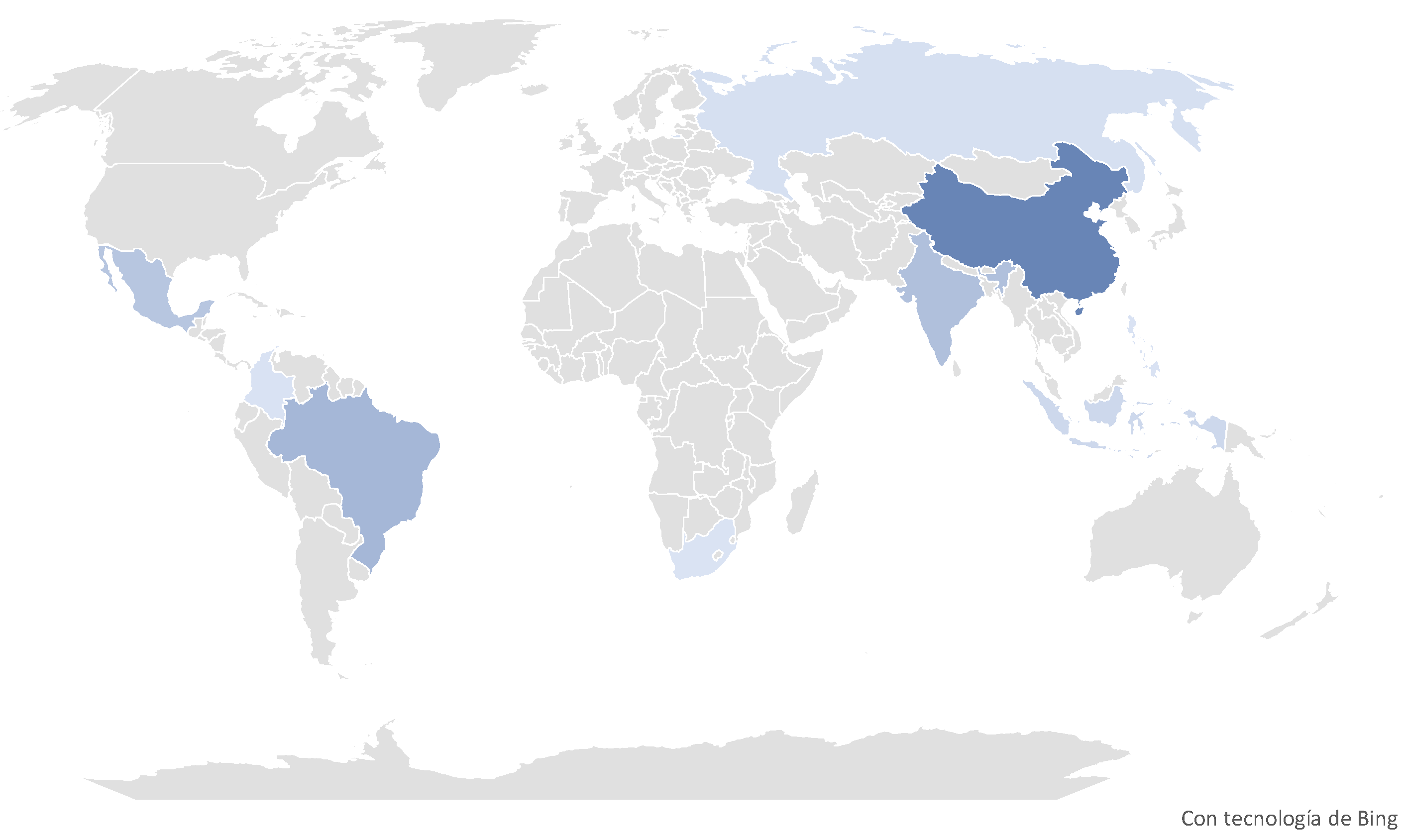
Table 2 presents all the projects related to Biodiversity in Mexico approved by GEF Fund in the last ten years (2014-2024). The biggest project by GEF grant is “Sustainable Productive Landscapes”, followed by “Mex30x30: Conserving Mexican biodiversity through communities and their protected areas” and “ORIGEN: Restoring Watersheds for Ecosystems and Communities”. The agency which manages more projects is the UNDP, and the main funding source is GEF Trust Fund. The amount of the grants has increased in 2023 and 2024.
3.3.2. The Biodiversity Finance Initiative (BIOFIN) in Mexico
BIOFIN was initiated in 2014 at the CBD COP 11, by UNDP and the European Commission, in response to the urgent global need to divert more finance from all possible sources towards global and national biodiversity goals. Now present in 40 countries, BIOFIN is working with governments, civil-society, vulnerable communities, and the private sector to catalyse investments in nature.
The UNDP’s BIOFIN FNA initiative has taken a crucial first step by identifying financial needs and outlining a pathway for ENBioMex implementation until 2025. It has also fostered collaboration with subnational governments, the private sector, and civil society, facilitating dialogue, generating synergies, and aligning potential financing mechanisms to target biodiversity needs effectively.
Currently, BIOFIN MX is developing concrete resource mobilization proposals, focusing on identifying funding sources, mechanisms for resource allocation, instruments, expected financial outcomes, and necessary institutional arrangements.
So far BIOFIN MX has identified four types of financing solutions:
Increasing resources from different sources (public, private and social),
Efficient spending to improve results, aligning programs and budgets across sectors,
Reducing future costs of negative impacts.
Also, there are financial solution proposal like: integration of biodiversity (mainstreaming), Climate and Biodiversity Finance, Financial mechanisms of conservation, Sustainable business and impact investment, Greening the financial system, Support solutions (International finance vision and Economic and finance analysis) (23).
As of November 2024, BIOFIN has calculated the biodiversity expenditure, identified the biodiversity needs to be covered, calculated the financial gap for conservation, and developed a plan for financing solutions.
Currently, BIOFIN Mexico has a portfolio of more than 25 financing mechanisms grouped into five main financial solutions (FS): - 1. Greening financial flows in cross-sectoral policies - 2. Strengthening financial mechanisms for climate change and biodiversity. – 3. Strengthening biodiversity at the subnational level - 4. Bioeconomy - 5. Greening of development and commercial banks [24].
According to UNDP, in terms of climate finance and biodiversity some mechanisms have been proposed and integrated in Mexico, particularly in some states [23].
1.The sustainable fund. The main purpose is to develop and implement a financial mechanism to channel resources toward sustainable development projects in the country, focusing on environmental and biodiversity goals, as a response to the elimination of public trusts.
In Jalisco have been implementing funding strategies to address biodiversity, climate change, and other environmental degradation challenges. The plan integrates the following activities: 1) Assess the state's existing financing mechanisms, 2) Develop a financial solutions plan to meet biodiversity needs and align with state and national commitments, 3) Evaluate and align Jalisco’s four public trusts (environmental, forestry, entrepreneurship, and agricultural), including legal, operational, and regulatory aspects, to optimize resource use and enhance their effectiveness [23].
2. Creation of the Green Investments Office (OIV) and the reinforcement of the Public Environmental Fund (FAP) in Mexico City. In this regard, BIOFIN has supported SEDEMA in strengthening the Public Environmental Fund to promote the allocation of resources through innovative financial mechanisms for projects in sustainable development, biodiversity conservation and sustainable use, and climate change adaptation and mitigation.
This FAP will serve as the focal point and single window for Mexico City to engage with national and international providers of financing and technical assistance in these areas. Additionally, institutional and financial capacities will be enhanced to transform the fund into an effective tool for selecting, evaluating, and financing environmental, climate change, and biodiversity projects [24].
3. Forest Carbon Credits, for which BIOFIN has proposed several initiatives. These include assessing the feasibility of complementary financing mechanisms to ensure the sustainability of forest projects, emphasizing the benefits of such initiatives to influence public policy and private sector strategies, and documenting the development process to provide replicable recommendations for scaling up forest carbon projects in Mexico.
Promising results have been achieved in Mexico City. The Public Environmental Fund (FAP) has been strengthened, leveraging financial resources from international sources such as the Inter-American Development Bank (IDB), the Spain-Mexico Mixed Fund, and the UK Embassy. Additionally, a fiduciary change resulted in savings of USD $3 million, which were redirected to conservation activities, achieving budget efficiency of USD $28 million. The reception and execution processes for international funding have also been systematized to enhance operational efficiency.
In addition, SEDEMA and Mexico City government officials have been trained and the legal and operational structure of the Public Fund for the Environment has been improved. Key areas included financial structuring, risk management, credit and financial instruments, international resource mobilization, audit and internal control, project appraisal methodologies, and development of regulatory and operational frameworks for funding. The process of strengthening the fund was systematized to enable its replication in other Mexican states [24].
Efforts in Jalisco included revising and updating fund operating rules and contracts while creating a linkage strategy to avoid duplication and enhance efficiency. Of 49 identified financial mechanisms, six were prioritized for implementation through a workshop with strategic stakeholders. A state financing solutions plan was developed, aligned with the State Biodiversity Strategy. Capacity-building initiatives were conducted for SEMADET, alongside establishing frameworks for investment selection and impact measurement for state environmental funds, ensuring alignment with the Sustainable Development Goals (SDGs).
3.3.3. The Adaptation Fund in Mexico
The Adaptation Fund provides financial support for projects that assist vulnerable communities in developing countries in adapting to climate change, with a particular focus on local needs and priorities. Since 2010, the Fund has allocated over $1.2 billion to 176 localized projects, which have benefited more than 45 million people. Furthermore, the Fund introduced Direct and Enhanced Direct Access, which enables countries to develop and manage projects through accredited national entities [25].
The Adaptation Fund is financed through government and private donations, as well as a 2% levy on Certified Emission Reductions (CERs) from Clean Development Mechanism projects under the Kyoto Protocol.
According to the Database of Adaptation Fund to November 2024, 233 projects were approved. The project duration is between 0.5 and 6 years. The regional share of the projects is 36% in Africa, 28% in Asia-Pacific, 21% in Latin America and the Caribbean and 4% in Eastern Europe. In terms of the duration of the projects, most of them are between 3 and 5 years (64%), but also a quarter are for less than 1 year [25].
As it is observed in Figure 7, the majority of the projects are focused on Multi-sector (28), followed by Agriculture (24), Food security (23), Disaster risk reduction and early warning system (20), Water management (18), Rural Development (16). It is important to highlight that only 1 project of the Adaptation Fund in 2024 was oriented to ecosystem based adaptation.
Most of the projects are in the implementation phase 114, 73 projects have been completed and 38 have been approved. Grant amounts range from USD 10,000 to 14,000,000. Almost half of the projects are below USD 2.8 million and a important portion are between USD 8.4 and 11.2 million (Figure 8).
According to adaptationfund.org Mexico has received one support for $25,000 USD related to “Technical assistance grant for the environmental and social policy and gender policy (ta-esgp)” requested by Mexican Institute of Water Technology (IMTA) Mexico. The project was developed from 5th January to 31st October 2021 [27].
The support activities were related to the development of procedures/manuals/guidelines for screening projects for: i) environmental, social and gender risks; ii) conducting environmental, social and gender risk assessments of projects and formulating gender-sensitive risk management plans; iii) public disclosure and gender-sensitive consultation; iv) developing transparent, accessible, fair and effective mechanisms for receiving and addressing complaints of environmental or social harm and complaints related to gender inequality and other adverse gender impacts caused by projects/programs during implementation; and v) training selected staff to carry out relevant tasks related to the implementation of the Fund's environmental and social policy and gender policy [27].
Other adaptation fund projects submitted but not accepted are: 1) “Restoration of Lake Texcoco through resilient actions” and 2) “Ha Ta Tukari, “Water for Life”. In both cases, projects did not clarify climate vulnerabilities in the target areas, define the target beneficiary communities, sustainability, and cost-effectiveness of concrete activities, and compliance with the Environmental and Social Policy and Gender Policy of the Fund [27].
4. Discussion
It is well established that biodiversity loss and climate change are correlated and mutually reinforcing. A thriving nature keeps carbon stored where it naturally belongs and not in our planet’s atmosphere. Biodiversity enhances adaptation capacity and resilience, including in disaster-risk reduction. Climate change, on the other hand, is one of the major drivers of biodiversity loss.
Available adaptation options can reduce risks to ecosystems and the services they provide, but they cannot prevent all changes and should not be regarded as a substitute for reductions in greenhouse gas emissions. Ambitious and swift global mitigation offers more adaptation options and pathways to sustain ecosystems and their services [6].
The overview of Mexico’s experience with biodiversity finance in this study presents the experience of an emerging economy, which must finance pressing development priorities and biodiversity and climate action at the same time. Therefore it is very important to find synergies in the available finance and look for new innovative options.
Mexico is an extraordinarily biodiverse country with a long history of sustainably using natural resources. The country’s most important policy instrument on biodiversity protection, the National Biodiversity Strategy of Mexico, explicitly connects nature conservation, restoration and sustainable use with key supporting elements, such as knowledge, good governance and mainstreaming, and education.
As positive achievement should be outlined the National Strategy on Biodiversity and Action Plan 2030 (ENBioMex), and the definition of the financing needs on biodiversity protection. The strategy is developed both on national and subnational (state) level to establish the bases to promote, guide, coordinate and harmonize government and society efforts for conservation, sustainable use and the fair and equitable distribution of the benefits derived from the use of the components of biological diversity and their integration into sectoral priorities of the country [29].
CONABIO, which collaborates with state governments and various sectors of society through the State Biodiversity Strategies (EEB) initiative. This initiative aims to strengthen local human and institutional capacities for planning and managing biological resources at the state level while supporting Mexico’s commitments under the Convention on Biological Diversity. Important achievements are the establishment of Natural Protected Areas and Marine Protected Areas, being to date in total 232. Another positive development is the growing inclusion of Indigenous Communities, women, and youth as stewards of biodiversity conservation.
However, in the last decade, public funding has suffered a significant decrease, not only in terms of biodiversity, but in the environmental field in general. The incorporation of Mexico into global initiatives such as BIOFIN marks important steps to improve funding, but the effective implementation of the suggestions and recommendations of such initiatives is still a challenge. The total budget assigned to Branch 16 -Environment and natural resources-, for 2025, is just over $44,370 million MXN, while in 2024, the amount assigned was $70,245 million MXN [28]. Also, the ratio between the amount invested in environmental protection and the amount to environmental depletion and degradation is 6:1. So it is necessary to raise the financing oriented to environmental depletion and degradation.
A positive development is that the GEF funding for Mexico has increased between 2014 and 2024. Additionally, Mexico is one of the most benefited countries along with China, Brazil, and India.
The large overlap between the climate and biodiversity agendas and the international commitments derived from these also presents an opportunity to accelerate biodiversity funding. Biodiversity-related commitments derived from climate instruments, such as Mexico’s nationally determined contribution (NDC) under the Paris Agreement, can help leverage resources. In the Adaptation Fund projects by region Latin America and the Caribbean are in the third place after Africa and Asia and the Pacific.
However, our results show that only 1 project of 229 financed by the Adaptation Fund in 2024 was oriented to ecosystem based adaptation (EbA). It is reported that in the case of Mexico some projects were not accepted, because they did not clarify climate vulnerabilities in the target areas, define the beneficiary communities, sustainability, and cost-effectiveness of concrete activities, and compliance with the Environmental and Social Policy and Gender Policy of the Fund.
In our opinion, the financing of EbA is the main instrument that can link biodiversity conservation and the adaptation to climate change impacts, at the same time providing a sustainable way of life and guaranteeing the well-being of the communities but is not adequately used.
That´s why it is necessary to implement some actions that would foster the EbA, and in general biodiversity financing, addressing the following issues: Gender imbalance in access to climate and EbA information; Difference in risk perceptions (what is at risk and why); Including Indigenous knowledge and traditional governance systems and participatory processes; Provide funding for project upkeep and management; Define limits and thresholds under which EbA might not deliver expected benefits; Address the mismatch of governance (borders, jurisdictions) vs. problem scales (climate hazards & ecosystems)
Mexico’s biodiversity financing is necessary to strengthen through improvements in its investment targeting, the effective coordination among institutions, the empowerment of local communities, and by increasing the support to innovative production schemes in coordination with other actors such as the Ministry of Agriculture, Livestock, Rural Development, Fisheries and Food. In this context it is important to communicate the financing targets and models to all actors working in their implementation to ensure broad understanding; Creation of incentives for interagency coordination; Capacity building for all actors to help them meet their new functions; Strengthen of the role that state governments play for the harmonization of public policies that affect their regions; Strengthen the role that local communities play to identify and develop intervention strategies that really address local needs and specificities.
In summary, Mexico’s experiences indicate the importance of political will to promote interagency coordination that leads to comprehensive intervention strategies in contexts with different historical, social, environmental and economic values.
5. Conclusions
Maintaining planetary health is essential for human and societal health and a pre-condition for climate resilient development. Effective ecosystem conservation of Earth’s land, freshwater and ocean areas, including all remaining areas with a high degree of naturalness and ecosystem integrity, will help protect biodiversity, build ecosystem resilience and ensure essential ecosystem services.
The host government’s theme for COP 16 on Biodiversity was 'Making Peace with Nature'. Encouraging was the decision on climate change and biodiversity loss, as well as the attention to the need to align related international efforts. These crises are inextricably linked, and we can’t tackle one without the other.
One important outcome was that COP 16 of CBD committed to enhancing policy coherence, including a potential joint work program of the three Rio conventions, namely the Convention on Biological Diversity (CBD), the United Nations Framework Convention on Climate Change (UNFCCC), and the United Nations Convention to Combat Desertification
(UNCCD). The details of this collaboration should be further specified both in international fora and in academic research.
The subjects for future research are to explore how to more effectively bring these agendas together, to create synergies tackling biodiversity loss, planetary health, and climate change adaptation issues.
An obligatory task would be to generate precise methodologies on Monitoring and Evaluating outcomes and benefits of EbA projects and other financing oriented to attend biodiversity and climate adaptation priorities.
Because of the decrease in governmental funding it is imperative to explore financial innovation in market-based instruments, risk instruments, outcome-based and impact projects. Another challenge is to develop new varieties of blended finance, combining governmental, private and international funding. In this context is very useful to share information on cases of success in innovative financing.
It is important to make more transparent and accessible the information on the requisites to apply to Adaptation Fund Financing and provide more orientation on Ecosystem based Adaptation that is directly related to biodiversity conservation.
To conclude it is imperative to stress the importance of communication, capacity building and promotion of coordination between government agencies in order to foster the biodiversity conservation and to converge environmental and development agendas. It is necessary to prioritize these needs in Mexico.
Author Contributions
Conceptualization, M.S. and A.I.; methodology, A.I.; software, M.S.; validation, M.S. and A.I..; formal analysis, A.I. and M.S.; investigation, M.S.; resources, X.X.; data curation, X.X.; writing—original draft preparation, M.S. and A.I.; writing—review and editing, A.I. ; visualization, M.S.; All authors have read and agreed to the published version of the manuscript.”
Funding
This research received no external funding.
Institutional Review Board Statement
Not applicable
Data Availability Statement
We encourage all authors of articles published in MDPI journals to share their research data. In this section, please provide details regarding where data supporting reported results can be found, including links to publicly archived datasets analyzed or generated during the study. Where no new data were created, or where data is unavailable due to privacy or ethical restrictions, a statement is still required. Suggested Data Availability Statements are available in section “MDPI Research Data Policies” at https://www.mdpi.com/ethics.
Conflicts of Interest
The authors declare no conflicts of interest
Abbreviations
BIOFIN The Biodiversity Finance Initiative
CBD Convention on Biological Diversity
CBIT Capacity-building Initiative for Transparency Trust Fund
CERs Certified Emission Reductions (CERs)
CONABIO National Commission on Biodiversity of Mexico
CONAFOR. National Commission on Forestry in Mexico
CONANP. National Commision on Natural Protected Areas in Mexico
COP Conference of the Parties
DSI Digital Sequence Information
EbA. Ecosystem based Adaptation
EBSAs Ecologically Significant Marine Areas
ENBioMex National Strategy on Biodiversity of Mexico
GBFF Global Biodiversity Framework Fund
GBFF Global Biodiversity Framework Fund
GDP Gross Domestic Product
GEF Global Environmental Facility
IMTA Mexican Institute of Water Technology
IPCC. Intergovernmental Panel on Climate Change
KMGBF Kunming-Montreal Global Biodiversity Framework
LDCF Least Developed Countries Fund
NBSAPs National Biodiversity Strategies and Action Plans
NPIF Nagoya Protocol Implementation Fund
ODA Official Development Assistance
SAGARPA. Ministry of Agriculture, Livestock and Fisheries of Mexico
SBSs. State Biodiversity Strategies
SCCF Special Climate Change Fund
SEMARNAT Ministry on Environment and National Resources of Mexico
SLR Systematic Literature Review
UNCCD. United Nations Convention to Combat Desertification
UNDP United Nations Development Program
UNEP United Nations Environment Program
UNFCCC United Nations Framework Convention on Climate Change
WEF. World Economic Forum
References
References
- De León, L.F. , Silva, B., Avilés-Rodríguez, K.J., & Buitrago-Rosas, D. (2023). Harnessing the omics revolution to address the global biodiversity crisis. Current Opinion in Biotechnology, 80, 102901.
- WWF (2024). Well... this is the million dollar question.And one that’s very hard to answer. Available online: https://wwf.panda.org/discover/our_focus/biodiversity/biodiversity/.
- Halder, M. , Jha, S. The Current Status of Population Extinction and Biodiversity Crisis of Medicinal Plants. In: Jha, S., Halder, M. (eds) Medicinal Plants: Biodiversity, Biotechnology and Conservation. Sustainable Development and Biodiversity, vol 33. Springer, Singapore, 2023. [CrossRef]
- WEF. Global Competitiveness Report Special Edition 2020: How Countries are Performing on the Road to Recovery. 2020. Available online: https://www.weforum.org/. 2020.
- WEF. Global Risks Report 2024, 2024. Available online: https://www.weforum.org/publications/global-risks-report-2024/. 2024.
- IPCC. Fact sheet – Biodiversity. Climate Change Impacts and Risks. SIXTH ASSESSMENT REPORT, Working Group II – Impacts, Adaptation and Vulnerability, 2023. Available online: https://www.ipcc.ch/report/ar6/wg2/downloads/outreach/IPCC_AR6_WGII_FactSheet_Biodiversity.pdf.
- COP-16. “COP-16 Calí, Colombia, Paz con la naturaleza”, 2024. Available online: https://www.cop16colombia.com/es/.
- CBD. Biodiversity COP 16: Important Agreements Reached Towards making Peace with Nature, 2024. Available online: https://www.cbd.int/article/agreement-reached-cop-16.
- NDC Partnership. “Adaptation Fund”, 2024. Available online: https://ndcpartnership.org/knowledge-portal/climate-funds-explorer/adaptation-fund#:~:text=The%20Adaptation%20Fund%20finances%20projects,country%20needs%2C%20views%20and%20priorities.
- Xiao, Y. , & Watson, M. (2019). Guidance on Conducting a Systematic Literature Review. Journal of Planning Education and Research, 39, 93-112; 39. [CrossRef]
- CONABIO (Comisión Nacional para el Conocimiento y Uso de la Biodiversidad). Para alcanzar sus objetivos y cumplir sus funciones, la CONABIO financia proyectos de temas sobre el conocimiento y uso de la biodiversidad. 2023. Available online: https://www.gob.mx/conabio/acciones-y-programas/proyectos-56730.
- Guzmán, S. , Velasco, A., Barbosa, O. Biodiversity Finance in Mexico. A fair share of biodiversity finance? Perspectives from developing countries. ODI Country Study. 2024. Available online: https://media.odi.org/documents/Biodiversity_finance_in_Mexico_country_study.pdf.
- GEF. “Global Biodiversity Framework Fund” 2024. Available online: https://www.thegef.org/what-we-do/topics/global-biodiversity-framework-fund.
- SEMARNAT “México, segundo lugar del mundo en bioculturalidad”. 2018. Available online: https://www.gob.mx/semarnat/articulos/mexico-segundo-lugar-del-mundo-en-bioculturalidad?idiom=es.
- PNUD Mexico. Biodiversity Expenditure Review. September, 2024. PNUD. www.biodiversityfinance.org/mexico.
- Acevedo-Ortiz, M.A. , Lugo-Espinosa, G., Ortiz-Hernández, Y.D., Pérez-Pacheco, R., Ortiz-Hernández, F.E., Martínez-Tomás, S.H., Tavera-Cortés, M.E. Nature-Based Solutions for Conservation and Food Sovereignty in Indigenous Communities of Oaxaca. Sustainability, 2024, 16(18), 8151.
- Lozano, R.E. , Sundaram, A. The deadly costs for Mexico’s Indigenous communities fighting climate change. Opinion. 2023. Available online: https://www.latimes.com/opinion/story/2023-02-26/us-mexico-border-indigenous-climate-change-environment. 2023. [Google Scholar]
- SEMARNAT. Conoce las categorías de riesgo de la NOM 059 SEMARNAT-2010 para especies de flora y fauna, 2021. Available online: https://www.gob.mx/semarnat/articulos/conoce-las-categorias-de-riesgo-de-la-nom-059-semarnat-2010-para-especies-de-flora-y-fauna. 2010.
- IUCN. The IUCN Red List od Endangered Species. 2024. Available online: https://www.iucnredlist.org/.
- INEGI CEEM. Cuentas económicas y ecológicas de México 2022. Comunicado de prensa número 755/23 1 de diciembre de 2023 Página 1/7. Available online: https://www.inegi.org.mx/contenidos/saladeprensa/boletines/2023/CEEM/CEEM2022.pdf.
- UNDP. BIOFIN Executive Summary Phase I: Results and Biodiversity Finance Solutions. The Biodiversity Finance Initiative. United Nations Development Programme, 2018.
- GEF. GEF Projects Database. 2024. Available online: https://www.thegef.org/projects-operations/database.
- UNDP. “Plan de Soluciones de Financiamiento BIOFIN 2020” 2020. Available online: https://www.biofin.org/sites/default/files/content/knowledge_products/PSF-BIOFIN.pdf.
- UNDP México. Análisis de gasto público federal a favor de la biodiversidad 2022. Proyecto 00108628 Iniciativa Finanzas de Biodiversidad BIOFIN México fase II. 2024. 42 pp.
- Adaptation Fund. Helping developing countries build resilience and adapt to climate change. 2024. Available online: https://www.adaptation-fund.org/.
- Adaptation Fund Board. Project and Programme Review Committee Thirtieth Meeting Bonn, Germany, 11-12 October 2022. Available online: https://www.adaptation-fund.org/wp-content/uploads/2022/10/AFB.PPRC_.30.21-Proposal-for-Mexico-2.
- Adaptation Fund Board. Technical Assistance Grant for the Environmental and Social Policy and Gender Policy (ta-esgp) – Mexican Institute of Water Technology (IMTA) Mexico. Project and Programme Review Committee, 2020. Available online: https://www.adaptation-fund.org/wp-content/uploads/2020/11/AFB.PPRC_.26-27.3-TAESGP-Grant-proposal-for-Mexico_final.pdf.
- Greenpeace México. El proyecto de presupuesto para 2025 recorta todavía más los recursos para proteger el medio ambiente. 2024. Available online: https://www.greenpeace.org/mexico/noticia/54846/el-proyecto-de-presupuesto-para-2025-recorta-todavia-mas-los-recursos-para-proteger-el-medio-ambiente.
- Biodiversidad Mexicana. La Estrategia Nacional sobre Biodiversidad de México (ENBioMex), 2016, Available online: https://www.biodiversidad.gob.mx/pais/enbiomex.
Figure 1.
Strategic axes of Mexico's National Biodiversity Strategy and Action Plan 2016 – 2030. Source: produced by the authors with CONABIO Information.
Figure 1.
Strategic axes of Mexico's National Biodiversity Strategy and Action Plan 2016 – 2030. Source: produced by the authors with CONABIO Information.
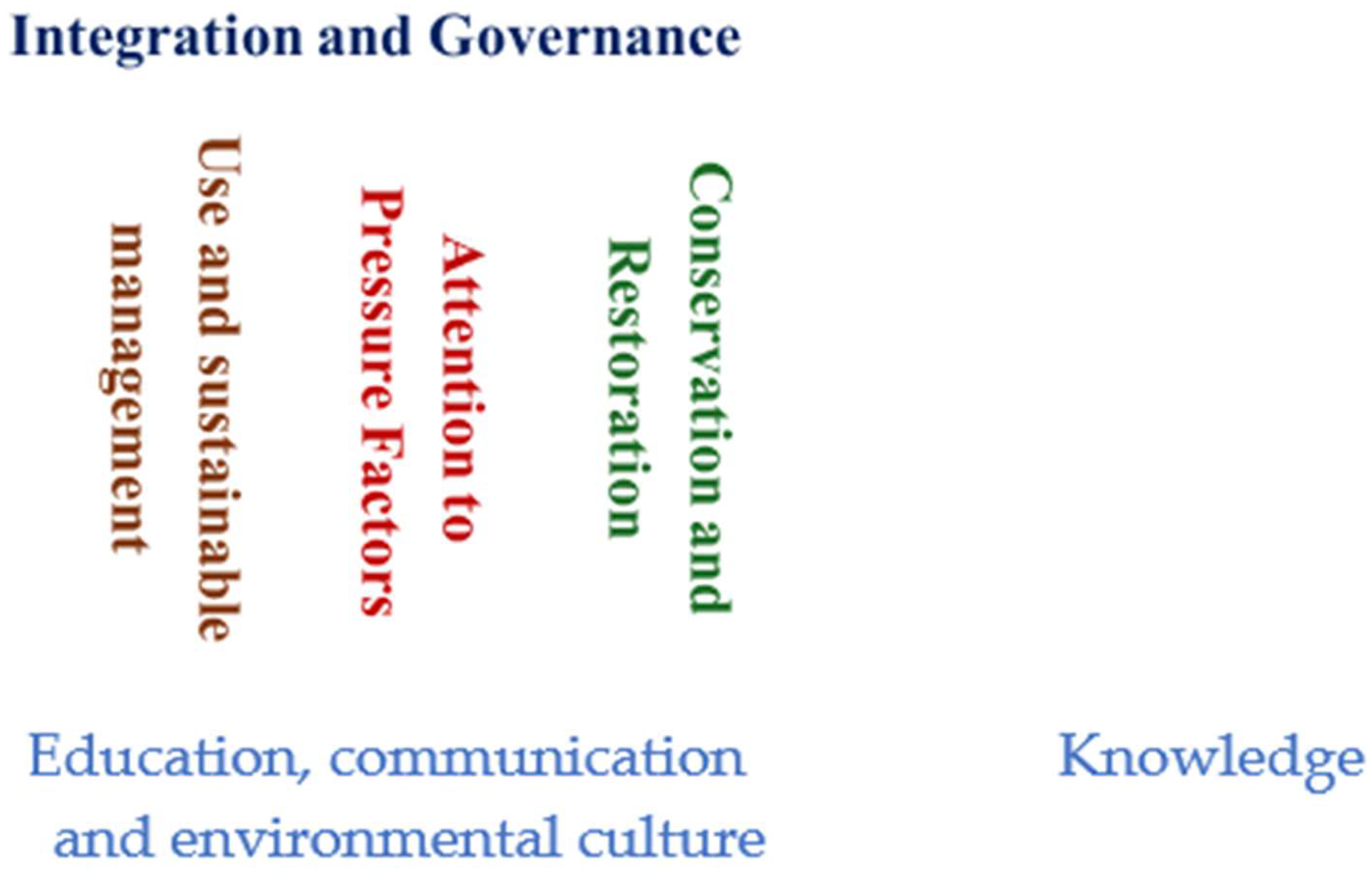
Figure 2.
Public Expenditure on Environmental Protection as % of GDP, 2003-2022.Source: [20].
Figure 2.
Public Expenditure on Environmental Protection as % of GDP, 2003-2022.Source: [20].
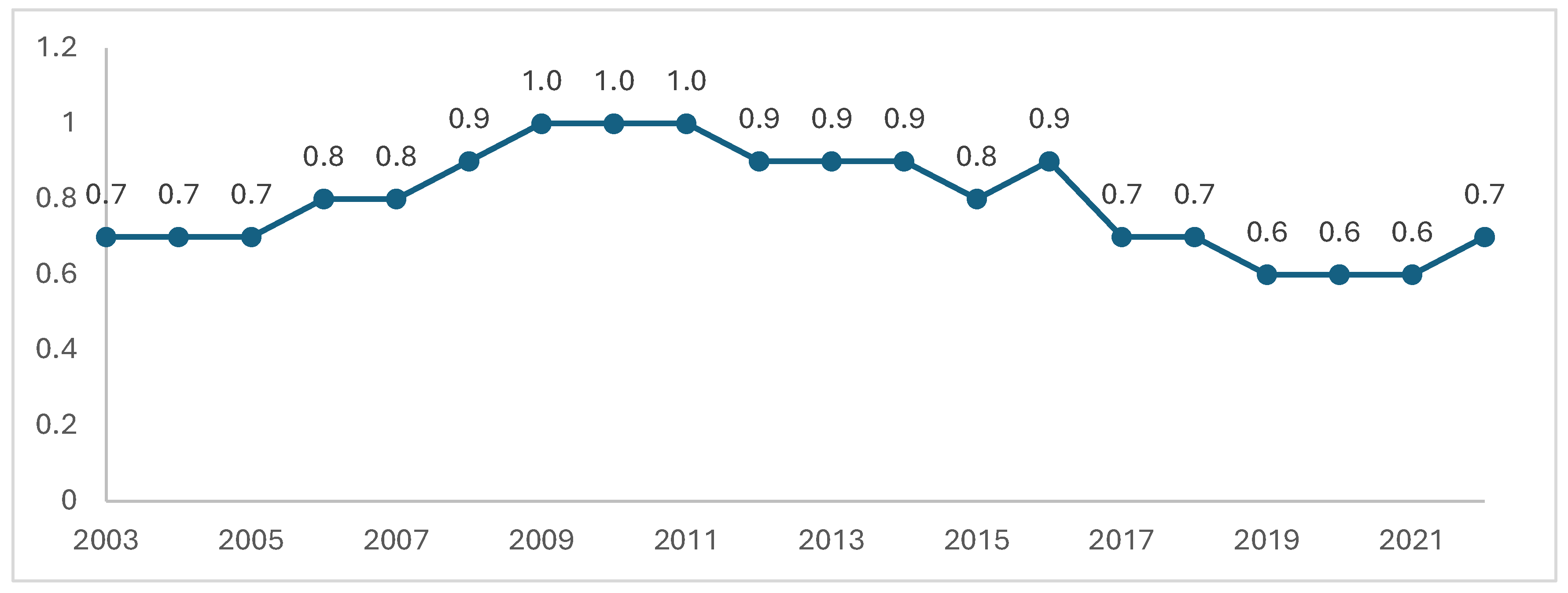
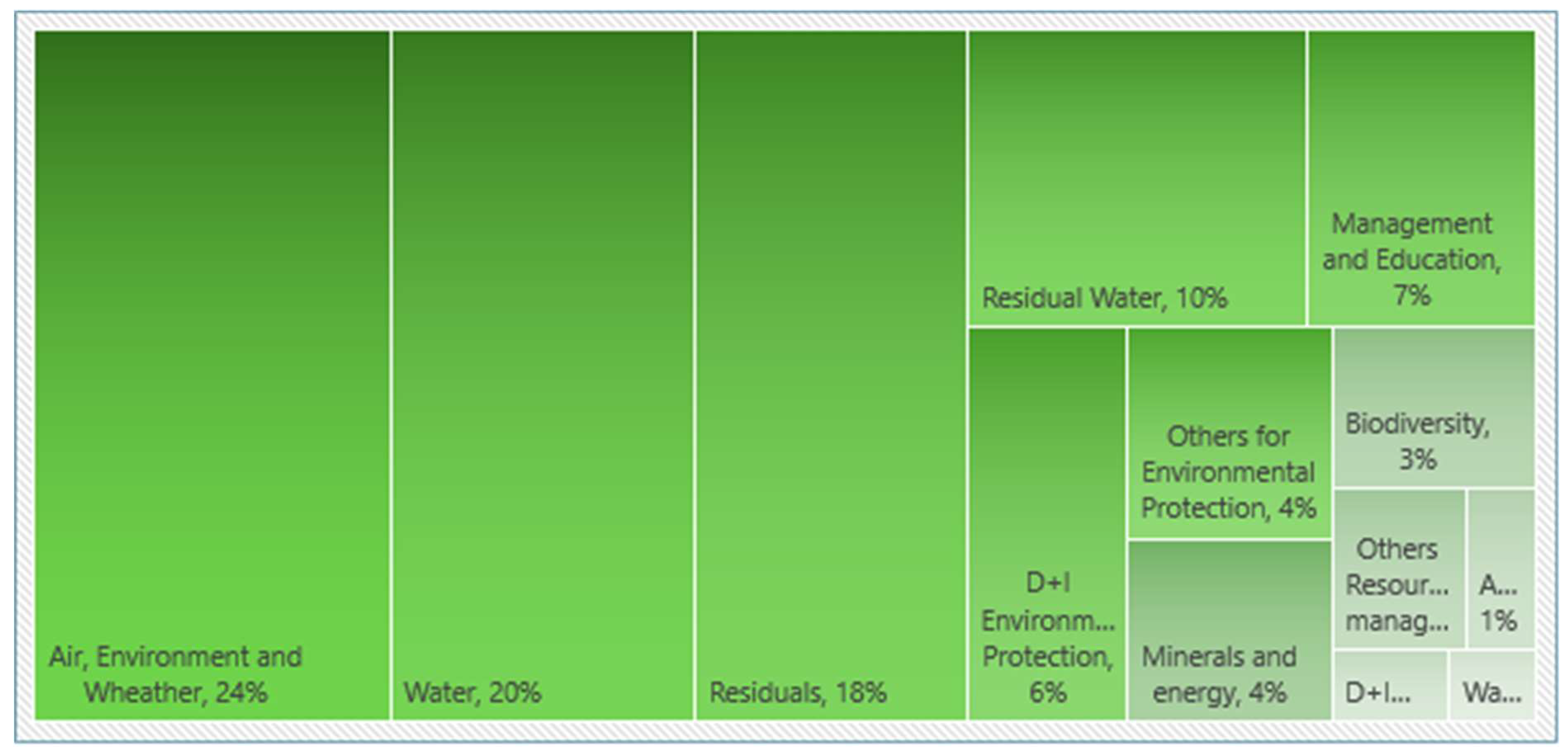
Figure 4.
Approved budget for Branch 16: Environment and Natural Resources for the period 2012-2024, in million MXN. Source: [11].
Figure 4.
Approved budget for Branch 16: Environment and Natural Resources for the period 2012-2024, in million MXN. Source: [11].
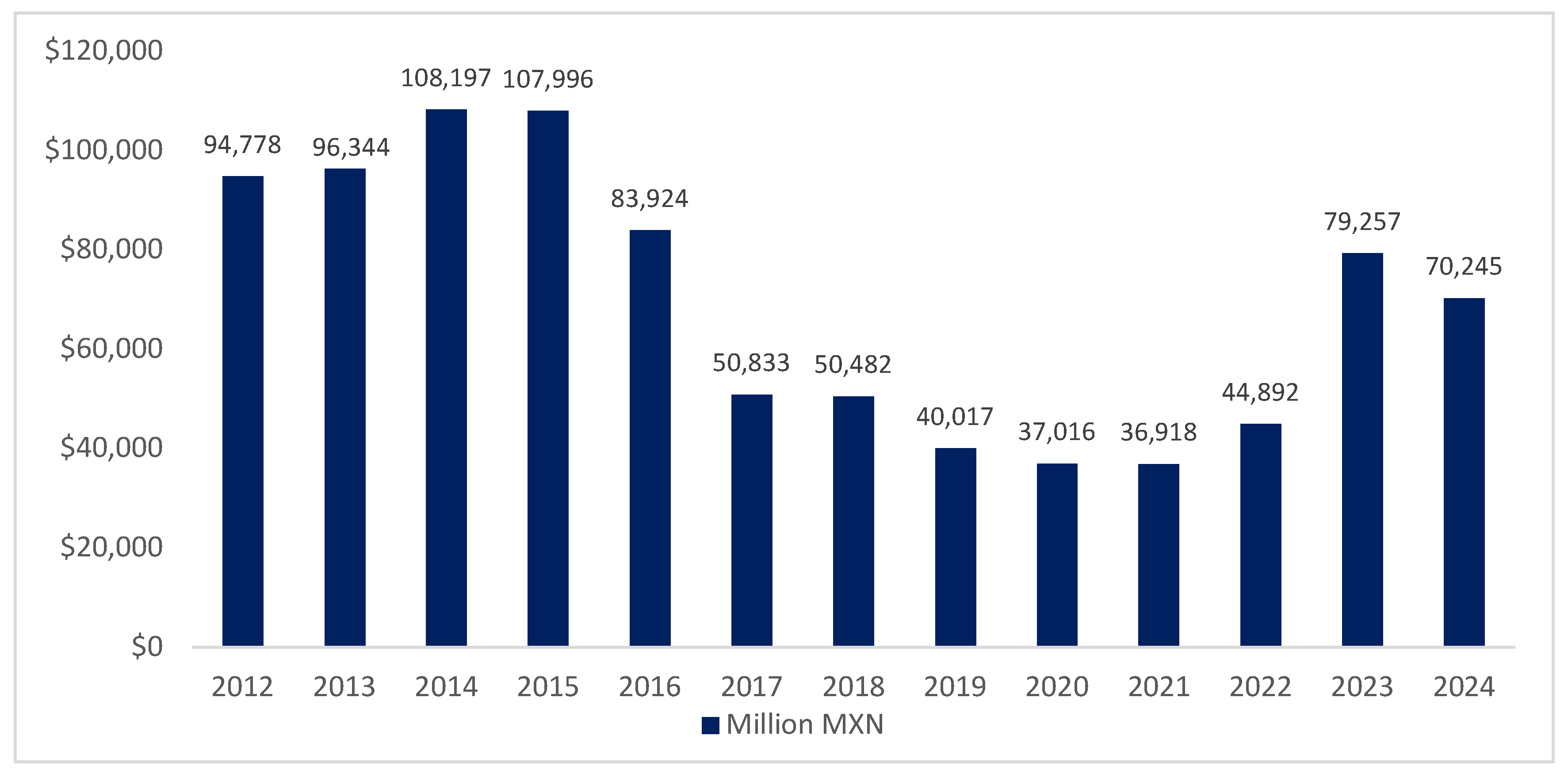
Figure 5.
Main Focal Areas for GEF Project. Source [21].
Figure 5.
Main Focal Areas for GEF Project. Source [21].
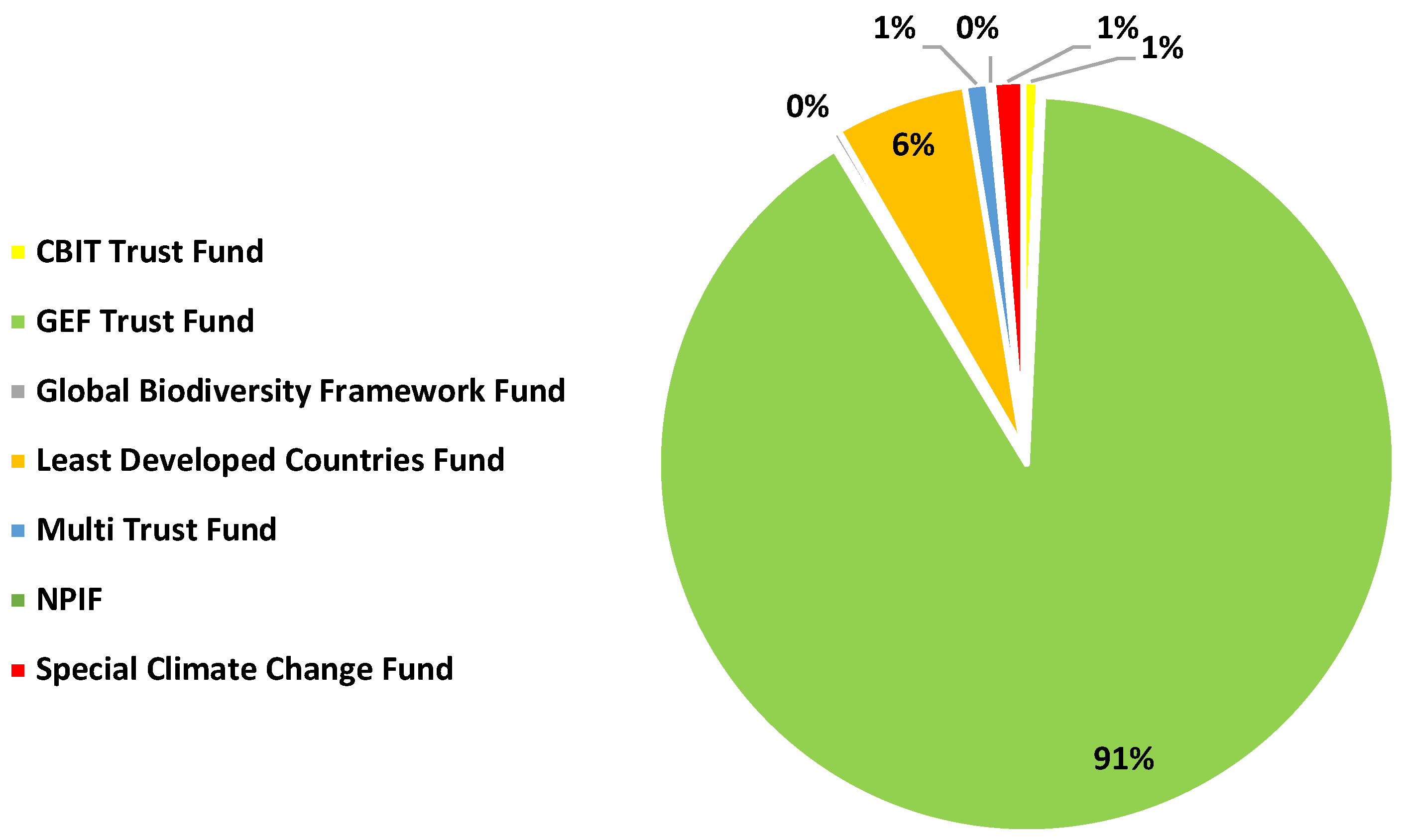
Figure 6.
Adaptation Fund Projects by Region. Source: [25].
Figure 6.
Adaptation Fund Projects by Region. Source: [25].
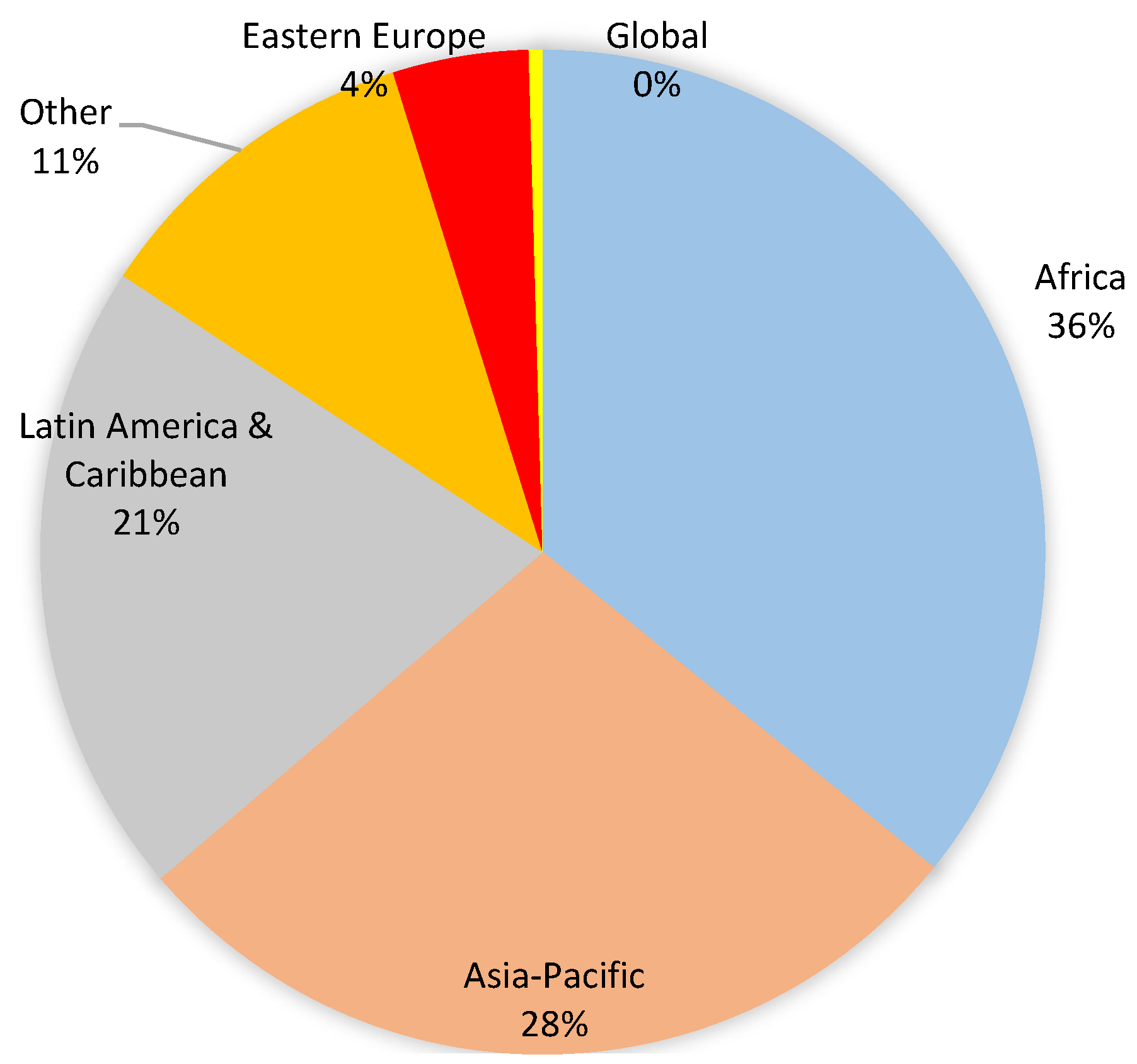
Figure 7.
Adaptation Fund Projects by Sector, 2024. Source: Produced by the authors with data from [26].
Figure 7.
Adaptation Fund Projects by Sector, 2024. Source: Produced by the authors with data from [26].
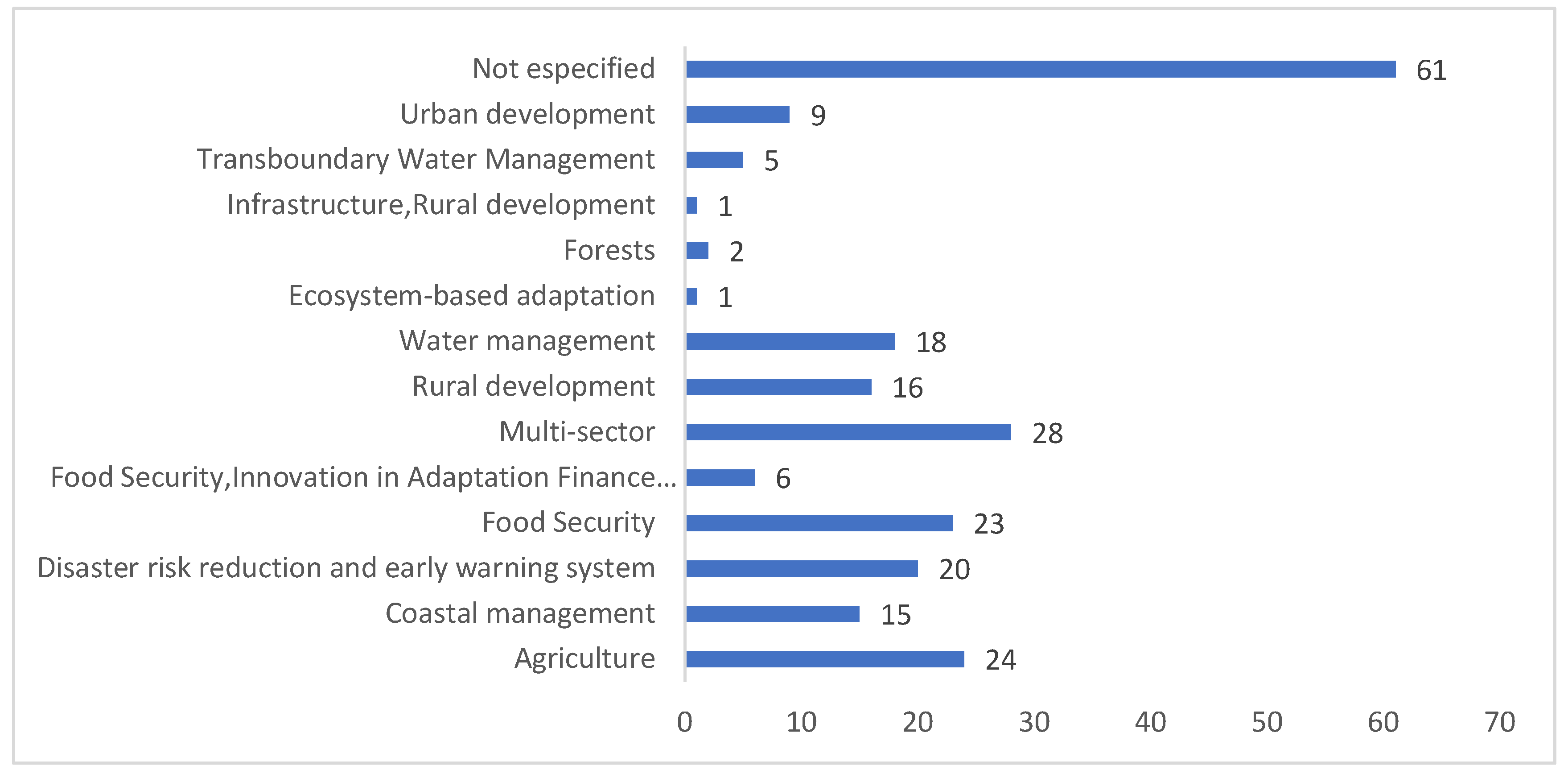
Figure 8.
Adaptation Fund by Grant Amount and Region (thousands USD). Source: Produced by the authors with data from [25].
Figure 8.
Adaptation Fund by Grant Amount and Region (thousands USD). Source: Produced by the authors with data from [25].
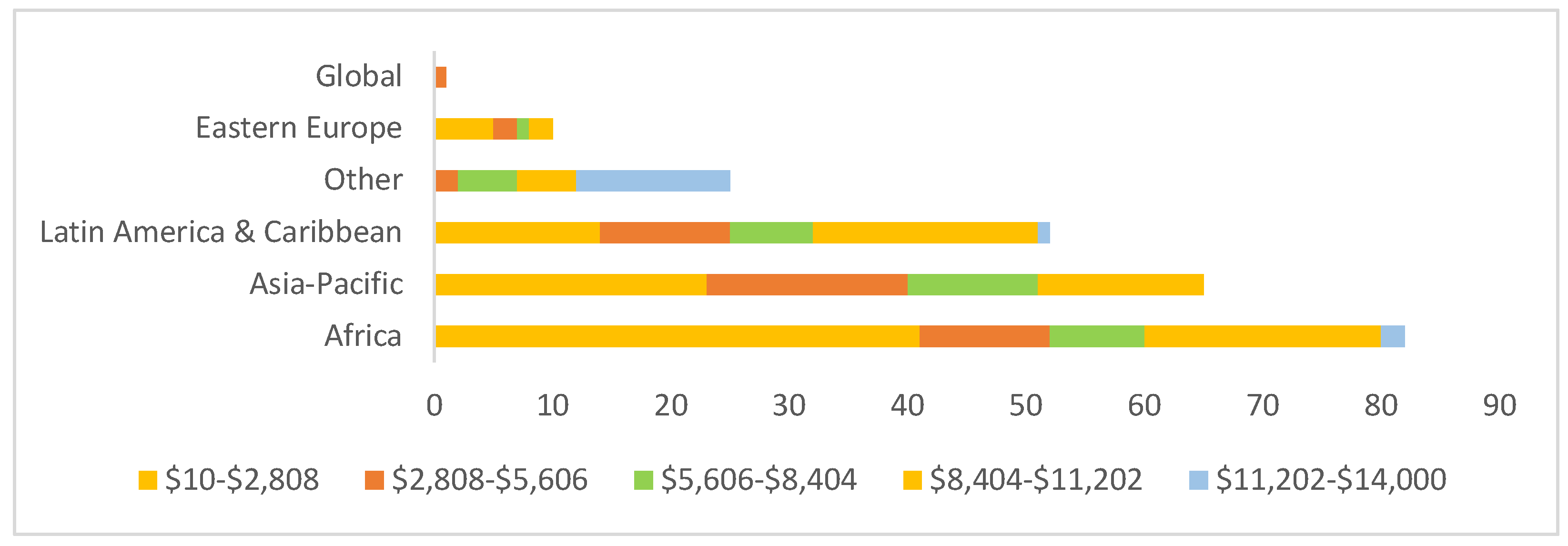

Table 1.
Composition of Depletion and Environmental Degradation Costs in 2022.
| Concept | Depletion and environmental degradation costs (Millions of current MXN) | %GDP |
| Hydrocarbons | 72,674.8 | 0.3 |
| Forest resources | 36,214.9 | 0.1 |
| Groundwater | 32,881.9 | 0.1 |
| Depletion costs | 114,771.6 | 0.5 |
| Soil degradation | 154,194.9 | 0.5 |
| Municipal solid waste | 113,632.4 | 0.4 |
| Untreated wastewater | 62,298.8 | 0.2 |
| GHG emissions | 738,950.1 | 2.5 |
| Degradation costs | 1,069,076.2 | 3.6 |
| Total depletion and environmental degradation costs | 1,210,847.8 | 4.1 |
Source: [18].
Table 2.
GEF Projects in Mexico related to Biodiversity (2014-2024).
| Project | Agencies | GEF Grant | Cofinancing | Approval FY | Funding Source (indexed field) |
| Mex30x30: Conserving Mexican biodiversity through communities and their protected areas | Conservation International | 16,672,477 | 115,549,532 | 2024 | Global Biodiversity Framework Fund |
| Ecosystem restoration and sustainable livelihoods in the Biocultural Corridor of the Central West of Mexico (COBIOCOM) | Food and Agriculture Organization | 8,932,420 | 252,808,974 | 2024 | GEF Trust Fund |
| ORIGEN: Restoring Watersheds for Ecosystems and Communities | Conservation International | 14,378,898 | 145,146,243 | 2024 | GEF Trust Fund |
| Promoting sustainability in the agave-mezcal value chain through restoration and integrated management of biocultural landscapes in Oaxaca | United Nations Environment Programme | 4,507,534 | 31,874,019 | 2023 | GEF Trust Fund |
| Agriculture and Biodiversity in Mexico (AgribioMex): Mainstreaming biodiversity in the productive activities of rural landscapes | International Fund for Agricultural Development | 8,974,312 | 75,763,312 | 2023 | GEF Trust Fund |
| From bait to plate: strengthening sustainable fisheries to safeguard marine biodiversity and food security | Food and Agriculture Organization | 9,005,609 | 41,680,250 | 2023 | GEF Trust Fund |
| Global Biodiversity Framework Early Action Support (LAC-4) | United Nations Development Programme | 1,917,811 | 2022 | GEF Trust Fund | |
| Green and Inclusive Recovery in Mexico (GreenMex): Making high-value ecosystems and rural livelihoods more resilient and sustainable in a post COVID-19 scenario. | Food and Agriculture Organization | 10,103,670 | 50,363,532 | 2022 | GEF Trust Fund |
| Connecting Watershed Health with Sustainable Livestock and Agroforestry Production | The World Bank | 13,761,468 | 99,013,829 | 2021 | GEF Trust Fund |
| Seventh Operational Phase of the GEF Small Grants Programme in Mexico | United Nations Development Programme | 4,481,210 | 12,233,787 | 2021 | GEF Trust Fund |
| Mainstreaming Biodiversity Conservation Criteria in Mexico Tourism Sector with Emphasis on Biodiversity-rich Coastal Ecosystems | United Nations Development Programme | 7,238,613 | 52,712,089 | 2020 | GEF Trust Fund |
| Sustainable Productive Landscapes | The World Bank | 21,862,385 | 54,295,600 | 2018 | GEF Trust Fund |
| Conservation and Sustainable Use of Biological Diversity in Priority Landscapes of Oaxaca and Chiapas | Conservation International | 7,219,450 | 47,456,966 | 2018 | GEF Trust Fund |
| Securing the Future of Global Agriculture in the Face of Climate Change by Conserving the Genetic Diversity of the Traditional Agro-ecosystems of Mexico | Food and Agriculture Organization | 5,329,452 | 36,185,188 | 2018 | GEF Trust Fund |
| Sixth Operational Phase of the GEF Small Grants Programme in Mexico | United Nations Development Programme | 4,429,223 | 6,333,389 | 2017 | GEF Trust Fund |
| Strengthening of National Capacities for the Implementation of the Nagoya Protocolon Access to Genetic Resources and the Fair and Equitable Sharing of Benefits Arising from their Utilization to the Convention on Biological Diversity | United Nations Development Programme | 2,283,105 | 8,938,579 | 2016 | GEF Trust Fund |
| Strengthening Management of the PA System to Better Conserve Endangered Species and their Habitats | United Nations Development Programme | 5,525,114 | 31,850,000 | 2014 | GEF Trust Fund |
| Integrating the Management of Protection and Production Areas for Biodiversity Conservation in the Sierra Tarahumara of Chihuahua | United Nations Environment Programme | 4,900,000 | 40,036,159 | 2014 | GEF Trust Fund |
| Enhancing National Capacities to Manage Invasive Alien Species (IAS) by Implementing the National Strategy on IAS | United Nations Development Programme | 5,354,545 | 26,050,760 | 2014 | GEF Trust Fund |
Source: produced by the authors with data of [21].
Disclaimer/Publisher’s Note: The statements, opinions and data contained in all publications are solely those of the individual author(s) and contributor(s) and not of MDPI and/or the editor(s). MDPI and/or the editor(s) disclaim responsibility for any injury to people or property resulting from any ideas, methods, instructions or products referred to in the content. |
© 2025 by the authors. Licensee MDPI, Basel, Switzerland. This article is an open access article distributed under the terms and conditions of the Creative Commons Attribution (CC BY) license (http://creativecommons.org/licenses/by/4.0/).
Copyright: This open access article is published under a Creative Commons CC BY 4.0 license, which permit the free download, distribution, and reuse, provided that the author and preprint are cited in any reuse.


