

Submitted:
13 January 2025
Posted:
14 January 2025
You are already at the latest version
Abstract
A meta-analysis of 28 sources of information was conducted, considering different variables in Bixa orellana, with the aim of identifying bioprospective variables. Variables were approached, such as the organ of extraction, extraction method, 63 biochemical classes, and 20 for biological activity, and their states were codified. The statistical analysis was developed through a cladistics analysis using the WinClada version1.00.08 84,85 software and the explicative accumulated variance was determined through a descriptive multivariate analysis and multiple correspondence analysis (MCA). The tree obtained showed the genotype Africa 1 as the one closest to the basal state. After Africa 1, 9 clades are derived and the genotypes Colombia3 and Colombia5 were the most evolved. The analyses demonstrated that in B. orellana L., the genotypes from India, Brazil and Yucatán present anticancer activity against the cell lines U251, MCF-7, HeLa, NCI-H460, PC-3, A549 and HT-29, as well as biological activity against Staphylococcus aureus, Escherichia coli and Pseudomonas aeruginosa, related primarily with biochemical compounds such as geranylgeraniol, ellagic acid, and carotenoids (bixin and norbixin), naringenin and alkaloids. The conditions of reproductive isolation of the genotypes mentioned before providing the ideal agroclimatic conditions to produce compounds with biological activity.
Keywords:
achiote
; biological activity
; cancer
1. Introduction
Bixa orellana L. (Bixaceae), known as achiote or annatto, is a native shrub from Central and South America, grown in some tropical countries of the world, such as Peru, Mexico, Brazil, Colombia, Ecuador, Indonesia, India, Kenya and Eastern Africa [1]. Both the seeds and the leaves have been used in traditional medicine to treat constipation, fever, stomach acidity, asthma, scabies, ulcers and diarrhea [2].
The seeds, as coloring, condiment and thanks to compounds like bixin and norbixin, are of interest for the food, textile, chemical, pharmaceutical and cosmetic industries [3]. In addition, tannins, flavonoids, phenolic compounds, saponins, alkaloids, terpenoids, anthraquinones and glucosides have been identified [4,5,6,7]. The content of bixin, norbixin and geranylgeraniol confers biological activity with therapeutic purposes [8,9,10].
The carotenoids, apocarotenoids, terpenes, terpenoids, sterols, and aliphatic compounds are the main compounds that are found in every part of this plant, for which a wide range of pharmacological activities have been researched [11]. Their biological activity has been demonstrated for the control of bacteria and fungi [9,12]. The antioxidant activity has been demonstrated by various studies [7,9,13], and also the anticancer activity in cell lines of medical interest [8,10,14,15]; therefore, it has been included among nutraceutical foods. Because of its broad biological activity, B. orellana L. is a source for the development of new drugs with pharmacological activity, so there is the possibility of identifying morphological and phytochemical variables with a bioprospective approach in use, under the premise that the bioprospective meta-analysis eases the identification of the genotype, its character or outstanding phytochemical variable, and the state of the character, specifying the statistical validity and reducing possible contradictions in the literature.
2. Materials and Methods
An analysis of the studies published in the Scopus, Science Direct, Scifin der, Springer and Google Scholar databases was carried out, using the search terms achiote, B. orellana L.phytochemicals, pharmacology, cancer, biological activity, antibacterial activity, anticancer, cytotoxic and antioxidant activity. From this, n=56 results were identified, and when criteria of plant organ and biological activity identified in each publication were applied, the sample was reduced to n=28. All the studies included were studies that addressed the phytochemical characterization and biological activity of extracts from B. orellana L. (Table 1).
The studies included were conducted in Africa (n=1), United States (n=1), Philippines (n=1), Ecuador (n=1), Bangladesh (n=1), South Korea (n=1), Nigeria (n=2), Yucatán Mexico (n=2), Colombia (n=5), India (n=5), and Brazil (n= 6). The last three led the phytochemical and biological activity research of B. orellana L. A database was elaborated with the information, codifying the variables and their different states (Table 2), made up by the following: organ of the plant used, extraction methods, biochemical classes, groups of compounds, phenols and phenolic acids, flavonoids, tannins, monoterpenes, sesquiterpenes, diterpenes, triterpenes, tetraterpenes, alkaloids, cyanogenic glucosides, antimicrobial and anticancer activity.
Statistical Analysis
The statistical analysis was developed with two approaches. The first through a cladistics analysis that incorporates the approach of Popper’s critical rationalism through the refutation of phylogenetic hypotheses examined under a parsimonious principle [29,30]; and through non-parametric statistics using the WinClada version 1.00.08 84,85 software (free license) [31]; with the Bootstrap/Jackknife resampling methods, approaching the genotypes as populations through a random simulation until generating a parsimonious cladogram [30]. This analysis defines the stability of the clades and identifies the state of the outstanding variables. The analysis was repeated 1000 times creating the values such as support indices, consistency, and reliability in the cladograms [32]. The systematic reviews carried out in the meta-analysis were directed towards the information disseminated, to reanalyze it with approaches adapted to the present research [33]. It must be clarified that the criteria selected were those with complete, traceable data, and reproducible results to avoid biases in the study [34].
The second approach was to determine the explicative accumulated variance, the statistical weight of each variable, and its state through a descriptive multivariate analysis and multiple correspondence analysis (MCA), with the FactoMineR [35] and factoextra [36] libraries with the Rstudio statistical package [37].
3. Results and Discussion
Figure 1 shows the different organs of B. orellana L. that could have an impact on the identification of the various genotypes, while Figure 2 presents the general cladogram that indicates the distribution of the B. orellana L. genotypes analyzed in function of the characters organ of extraction, method, biochemical class, and biological activity (Table 2). In total, 12 trees were obtained to get a consensus tree. This tree showed 149 steps or changes, a consistency index of the cladogram of 50%, and a retention index that reflects the percentage of characters that retain and conserve the change of taxa of 64%.
The parsimonious distribution of the genotypes (Figure 2) is not indicative of a strict genealogical relationship, since there are no morphological and genetic characters; however, it helps to understand the adaptive specialization [38,39] of plants in face of the difference in environmental conditions different from those in their habitat. In general, reproductive isolation, selective pressure, and lack of variability create unique survival characters reflected in the content and diversity of secondary metabolites [40].
The biochemical and biological activity variables showed that the genotype with origin from Africa1 was located as the closest one to the basal state, hypothetically indicating due to the variables analyzed that it could have greater similarity with a genotype from the original habitat (Figure 1).
Nine clades derive from Africa1. The first formed by Nigeria2 and India3, genotypes closer to the root, which share the presence of alkaloids as plesiomorphic characters. Even when the publications do not record the time of introduction to Nigeria and India, it is presumed that they could have had some reproductive isolation, absence of variability, and agroclimatic conditions different from their geographic origin (Central and South America). Various authors mention how reproductive isolation and absence of biological variation in some organisms promotes unique characters that can be used in different sectors of society, such as the case of enzymes responsible to produce secondary metabolites with biological effect of medical, agricultural or industrial interest [41].
The second clade derives starting with India3, formed by genotypes USA1, India4, Brazil2 and Brazil3, which made up an independent evolutionary route characterized by sharing the seed as organ of extraction and which is a derived state.
The USA1 genotype shares with the rest of the genotypes from this group the presence of geranylgeraniol (apomorphic state), highlighting that it has the derived characters cis-norbixin and trans-norbixin, which are related with the biological activity against Staphylococcus aureus, also a derived state. Brazil2 and Brazil3 are sibling genotypes, and presumed to be those of greatest “evolved” specialization from this group, characterized by the presence of flavonoids that is classified as an ancestral state. When it comes to apomorphic states, the presence of terpenes, ocimene, spathulenol, isoledene, bergamotene stands out, as well as bixin and norbixin.
The genotype Brazil3 shows anticancer activity against the cell lines U251, MCF-7, NCI-H460, PC-3 and HT-29 and presents as a plesiomorphic state (ancient or primitive character). The distinction of the proliferative activity in a genotype that is in the origin center of the species proves that the specific conditions of this place favored the presence of the compounds mentioned and contributed to the anticancer activity. However, when agroclimatic conditions change outside its place of origin, it loses chemical variability.
In the case of Ecuador1, it forms an independent clade and shows an evolutionary divergence possibly due to reproductive isolation. A plesiomorphic state stands out in the group, which is the extraction method by vapor sweeping, different from the rest of the genotypes, while the presence of ocimene, pinene, germacrene, farnesol and caryophyllene, as well as the activity against Staphylococcus aureus, are new characters or derived states (apomorphic). In this group, the extraction method marked the difference in the compounds detected.
The six remaining clades derive from Ecuador1. India5, Colomba1 and Philippines1 form a group characterized by the new or derived characters represented by the farnesol compounds, saponins and carotenoids. The genotypes from Colombia and Philippines present three ancestral characters constituted by anthocyanins and polyprenol, as well as stigmaesterol and sitoesterol. Although both genotypes do not have a geographic grouping, they do present it by group of compounds, which indicates a possible displacement of the genotypes from the center of origin towards the Philippines and India, where the original compounds could be conserved, or else, there was an influence of similar agroecological conditions that impacted the production of these secondary metabolites.
Also, Ecuador1 is derived from the group constituted by India1, Brazil1, Colombia2, Brazil4 and Colombia4. It should be mentioned that the genotypes from Brazil are again those that present the highest number of plesiomorphic states (kaempherol, granatin, neostrictinin, procyanidines, ellagic acid, as well as antioxidant activity). When it comes to apomorphic characters, the presence of saponins, tannic acid, and anthraquinones stands out, which are present in the genotypes from Colombia and India. In this group, the geographic grouping is clear regarding the states that highlight the ancestral characteristics of the genotypes from Brazil, zone registered as origin center of B. orellana.
Brazil4 is attributed with antioxidant activity and can be linked to the presence of ellagic acid, situation that agrees with other [42], who determined that this compound acts as chemo-protector against different types of cancer and which shows strong anti-proliferative activity against colon, lung and prostate cancer cells.
From Colombia4, 4 subgroups are derived, an independent one formed by Nigeria3, Philippines2 and Yucatán1 which are characterized by presenting three plesiomorphic states represented by tannins, alkaloids and atropines.
From this group, the genotype located in Yucatán is the most evolved and it is proven by the derived states present, such as the presence of saponins and the hepatoprotective activity. The evolution can be due to the agroclimatic characteristics or the manipulation of the crops in the zone, since in Yucatán there are commercial crops of B. orellana L. that have been genetically improved to reach higher seed production, which can be a factor that impacts the production of secondary metabolites [43].
The other sibling arm of Colombia4 groups, on the one hand, Yucatán2, India6, India2 and Indonesia1, which, despite not having a geographic grouping was characterized by the presence of the highest number of plesiomorphic states, among which germacrene, elemene, caryophyllene and squalene stand out, as well as chemo-preventive activity.
The anticancer activity against the cell lines HeLa, A549 and MCF-7 is a simplesiomorphic state, since it also presents in Brazil3, which is a genotype close to the root.
The derived character has to do with the presence of geranylgeraniol, carotenoids, bixin and norbixin, in addition to the activity against P. aeruginosa, E. coli and S. aureus. The biological and anticancer activity is determined by the variety of phytochemical compounds present in B. orellana L. and by the capacity of geranylgeraniol to induce apoptosis in A549 cells [26,44,45]. In this group, it can be inferred that there was a flow of plants from Yucatán towards India and Indonesia and the antiproliferative activity was conserved.
The last two groups derive from the branch coming from Colombia4. The node formed by Nigeria1 and Bangladesh share the apomorphic states represented by saponins and the biological activity against E. coli. Only an ancestral state is present (tomentosin).
The genotypes SouthKorea1, Colombia3 and Colombia5 are the last group and share four apomorphic states integrated by carotenoids, cis-norbixin, trans-norbixin and bixin. In addition, they present butein, catechins and chlorogenic acid, as well as cytotoxic activity as ancestral characters. The genotypes located in Colombia were considered the most evolved, compared to Africa1, Nigeria2 and India3, whose evolution can be due to pressure processes, such as the manipulation, edaphoclimatic conditions, or the genetic flow between genotypes. It should be highlighted that the activity found in the genotypes present in this bioprospective study is consistent with that found authors [1,46,47], who determine that the tannins, quinones and terpenoids have biological activity; in addition, lipophylic flavonoids can be disruptive for the cell membrane [48].
Table 3 shows the apomorphic characters present in the genotypes studied, observing sinapomorphic characters (shared characters) among the genotypes USA1, India2 and India4, such as geranylgeraniol, while India4 and India5 share farnesol; Brazil2 and India5, steroids; Colombia2 and Colombia4, tannic acid; Colombia4, India6 and Bangladesh1, saponins; India5 and Indonesia1, carotenoids; Brazil2 and Indonesia1, bixin and norbixin; Brazil3 and Ecuador1, ocimene; USA1 and Ecuador1, activity against S. aureus; and India6 and Colombia3 activity against P. aeruginosa. On the other hand, cis-norbixin, trans-norbixin, spathulenol, isoledene, bergamotene, germacrene, farnesol and caryophyllene are autopomorphic states (unique characters) because they are present in a single taxon or genotype.
Table 4 also shows that apomorphic characters (new or derived) are related with the antimicrobial activity against P. aeruginosa, E. coli, S. aureus and biochemical class, primarily the carotenoids bixin, norbixin, 9’-cis-norbixin, transnorbixin, saponins and monoterpenes. The plesiomorphic characters are related more with the hepatoprotective, chemo preventive and anticancer activity against the cell lines MCF-7, NCI-H460, PC-3, HT-29, HeLa and A549; as well as the presence of flavonoids (naringenin, kaempherol, anthocyanins, procyanidines, ellagic acid), triterpenes (stigamesterol and sitoesterol), tannins (granatin, neostrictinin), sesquiterpenes (elemene, caryophyllene) and coumarins. It stands out that some compounds from B. orellana in this bioprospective analysis act on microorganisms that can cause public health problems, highlighting characters for a possible program for genetic improvement.
It is important to highlight that the non-detection of a compound does not mean it is absent, since it could have been undetected because of the plant organ used, extraction method, or seasonal time of sample harvesting. For future studies, the proposal is to elucidate the “absent” compounds to secure the grouping; something to remember is that since it is a meta-analysis, comparative biases between taxa can be originated due to the various methods of sampling, extraction and analysis. Over-studied and under-studied taxa can bring biases to the analysis.
Multivariate Analysis
The multivariate analysis allowed identifying the variables that explain the highest explicative variance, in addition to exploring the correlations and reducing the dimension of the analysis with new indices (Córdoba et al.2012). It was determined that in four principal components (PC), the accumulated value is 86.31% (Table 5).
Table 6 indicates the variance by dimension that suggests that the antiproliferative activity is statistically significant for the cell lines U251, MCF-7, HeLa, PC-3, NCI-H460 and HT-29 in CP1 and CP4, where the presence of atropine, bixin, norbixin, naringenine, anthraquinones, alkaloids, coumarins, phenylpropanoids, tannins and some triterpenes is also significant, which suggests a relationship between the presence of some of these compounds or their synergy for B. orellana to present biological activity against the cell lines mentioned and some bacteria. In the rest of the dimensions, no statistical significance is present for the anticancer activity.
4. Conclusions
There is scientific evidence for the use of B. orellana L. as agent with anticancer activity, primarily against the cell lines U251, MCF-7, HeLa, NCI-H460, PC-3, A549 and HT-29, as well as biological activity against S. aureus, E. coli and P. aeruginosa. The antimicrobial and anticancer activity is related primarily with biochemical compounds such as geranylgeraniol, ellagic acid, carotenoids (bixin and norbixin), naringenin, and alkaloids. The conditions of reproductive isolation of the genotypes from Brazil, Yucatán, India and Indonesia provided the ideal agroclimatic conditions to produce compounds with biological activity because they produce those metabolites. This analysis can be used as reference for additional studies, genetic improvement programs, and revaluation of the species.
Author Contributions
Conceptualization, JCI, and LMRP; methodology, JCI, LAGL; software, JFAM; validation, RMSH. and IAS; formal analysis, ESO; investigation, CHAA, CSM; writing—original draft preparation, JCI, LAGL.; writing—review and editing, JCI, LMRP, LALG. All authors have read and agreed to the published version of the manuscript.
Funding
This research received no external funding.
Institutional Review Board Statement
Not applicable for studies not involving humans or animals.
Acknowledgments
The authors would like to than the Mexican Consejo Nacional de Humanidades, Ciencias y Tecnologías (CONAHCyT) for the for the support provided.
Conflicts of Interest
The authors declare no conflicts of interest.
References
- Karmakar, A.U.; Sultana, S.; Nishi, S.; Nath Biswas, N.; Hossain, L.; Sheikh, S. Antioxidant, analgesic, antimicrobial, and anthelmintic activity of the dried seeds of Bixa orellana (L). Int J Pharm 2018, 8, 150–163. [Google Scholar]
- Vidusha, A.; Gayatri Devi, R.; Selvaraj, J. Cytotoxic effects of Bixa Orellana bark extracts on human cell line (cell line HEPG2). Journal of Pharmaceutical Negative Results 2022, 1811–1816. [Google Scholar] [CrossRef]
- Perecin, M.B.; Bovi, O.A.; Maia, N.B. Pesquisa com plantas aromáticas, medicinais corantes: o papel do Instituto Agronómico”. O Agronómico, 2002, 54, 21. [Google Scholar]
- Cuong, T.V.; Chin Koo, B. Effects of annatto (Bixa orellana L.) seeds powder on physicochemical properties, antioxidant and antimicrobial activities of pork patties during refrigerated storage. Korean, J. Food Sci. An. 2016, 36, 476–486. [Google Scholar] [CrossRef] [PubMed]
- Dike, I.P.; Ibojo, O.O.; Omonhinmin, D.F. Phytochemical and proximate analysis of foliage and seed of Bixa orellana Linn. Int. J. Pharm. Sci. Rev. Res. 2016, 36, 247–251. [Google Scholar]
- López, C.P.; Sumalapao, D.E.P.; Villarante, N.R. Hepatoprotective activity of aqueous and ethanolic Bixa orellana L. leaf extracts against carbon tetrachloride-induced hepatotoxicity. National Journal of Physiology, Pharmacology, 2017, 7, 972–976. [Google Scholar] [CrossRef]
- Zarza-García, A.L.; Sauri-Duch, E.; Raddatz-Mota, D.; Cuevas-Glory, L.F.; Pinzón-López, L.L.; Rivera-Cabrera, F.; Mendoza-Espinoza, J.A. Pharmacological, phytochemical and morphological study of three Mayan accessions of Bixa orellana L. leaves. Emirates Journal of Food and Agriculture, 2017, 29, 163–169. [Google Scholar] [CrossRef]
- De Oliveira, J.R.; Bonnet, A.; Braconnier, E.; Groult, H.; Prunier, G.; Beaugeard, L.; Grougnet, R.; Guedes, J.R.S.; Alves, C.A.F.; Picot, L. Bixin, an apocarotenoid isolated from Bixa orellana L.sensitizes human melanoma cells to dacarbazine-induced apoptosis through ROS-mediated cytotoxicity. Food and Chemical Toxicology, 2019, 125, 549–561. [Google Scholar] [CrossRef]
- Quintero, Q.J.; Naranjo, D.A.M.; Silva, G.M.; Ciro, G.G.L.; Rojas, C.J.J. Ultrasound-Assisted extraction of bioactive compounds from annatto seeds, evaluation of their antimicrobial and antioxidant activity, and identification of main compounds by LC/ESI-MS analysis. International Journal of Food Science, 2019, 2019, 3721828. [Google Scholar] [CrossRef]
- Kusmita, L.; Franyoto, Y.D.; Mutmainah, M.; Puspitaningrum, I.; Nurcahyanti, A.D. Bixa orellana L. carotenoids: antiproliferative activity on human lung cancer, breast cancer, and cervical cancer cells in vitro. Nat Prod Res. 2022, 36, 6421–6427. [Google Scholar] [CrossRef]
- Fleisher, T.C.; Ameade, E.P.K.; Mensah, M.L.K.; Sawe, I.K. Antimicrobial activity of the leaves and seeds of Bixa Orellana. Fitoterapia, 2003, 74, 136–138. [Google Scholar] [CrossRef] [PubMed]
- Galindo, C.V.; Rankin, S.A. Bioautography and Chemical Characterization of Antimicrobial Compound(s) in Commercial Water-Soluble Annatto Extracts. J. Agric. Food Chem. 2005, 53, 2524–2529. [Google Scholar] [CrossRef] [PubMed]
- Rojas, J.J.; Ochoa, V.J.; Ocampo, S.A.; Muñoz, J.F. Screening for antimicrobial activity of ten medicinal plants used in Colombian folkloric medicine: A possible alternative in the treatment of non-nosocomial infections. BMC Complementary and Alternative Medicine, 2006, 6, 2–6. [Google Scholar] [CrossRef] [PubMed]
- Raga, D.D.; Espiritu, R.A. A bioactive sesquiterpene from Bixa orellana. J Nat Med, 2011, 65, 206–211. [Google Scholar] [CrossRef] [PubMed]
- Tamil, S.A.; Dinesh, M.G.; Satyan, R.S.; Chandrasekaran, B.; Rose, C. Leaf and seed extracts of Bixa Orellana, L. expert anti-microbial activity against bacterial pathogens. Journal of Applied Pharmaceutical Science, 2011, 1, 116–120. [Google Scholar]
- Gómez, C.G.; Quintana, C.J.; Alarcón, P.J.; Zapata, M.J. Ethanolic extrac from leaves of Bixa orellana L. : a potential natural food preservative. Interciencia, 2012, 37, 547–551. [Google Scholar]
- Kumar, Y.; Periyasam, L. GC-MS analysis and in-vitro cytotoxic studies of Bixa orellana seed extract against cancer cell line. International Journal of Pharmacy and Pharmaceutical Sciences, 2016, 8, 408–413. [Google Scholar]
- Viuda-Martos, M.; Ciro-Gómez, G.L.; Ruiz-Navajas, Y.; Zapata-Montoya, J.E.; Sendra, E.; Pérez-Alvarez, J.A.; Fernandez-López, J. In vitro antioxidant and antibacterial activities of extracts from annatto (Bixa Orellana L.) leaves and seeds. Journal of Food Safety, 2012, 32, 399–406. [Google Scholar] [CrossRef]
- Omonhinmin, A.C.; Dike, I.P.; Rotimi, S.O. Phytochemical, Cytotoxicity and Antioxidant Activities of Five Anti-malaria Plants. Research Journal of Medicinal Plant, 2015, 9, 81–89. [Google Scholar] [CrossRef]
- Prathima, D.; Sujitha, A.; Usha, R. Phytochemical screening and antimicrobial activity of Bixa orellana Linn. International Journal of Pharmacognosy and Phytochemical Research, 2016, 8, 1078–1082. [Google Scholar]
- Sepúlveda, R.C.; Gómez, G.L.; Zapata, M.J. Extracción de compuestos fenólicos y actividad antioxidante de hojas de Bixa orellana L. (achiote). Revista Cubana de Plantas Medicinales, 2016, 21, 133–144. [Google Scholar]
- Lima, L.V.; Zagmignan, A.; Lima, L.L.; Gomes, A.A.; Nascimento da Silva, L.C.; Cortez de Sá, J.; Andrade, M.C.; Ghilardi Lago, J.H.; Machado, G.L.; Cardoso, C.R.; Lima, N.L.; Martin de Sousa, E. Hydroalcoholic extract and ethyl acetate fraction of Bixa orellana leaves decrease the inflammatory response to Mycobacterium abscessus subsp. massiliense. Hindawi Evidence-Based. Complementary and Alternative Medicine 2018, 60911934. [Google Scholar] [CrossRef]
- Tarkany, B.R.; Barreto, A.P.M.; de Oliveira, S.I.M.; de Carvalho, J.E.; Nogueira, C.P.R.; Ann, F.M. Bixa orellana L. by-products’ fractions from an industrial process: antiproliferative activity on tumor cells and chemical profile. Natural Product Research Formerly Natural Product Letters, 2020, 85, 431–40. [Google Scholar] [CrossRef]
- Moraes, N.R.N.; Guedes, C.G.; Santos, A.A.C.; Oliveira, R.A.; Carnid, N.C.E.; Pontes, A.R.; Quintini, R.C.; Sousa, R.A.; Sousa, C.M.S.; Abreu, S.A.L.; Ferreira, S.I.V.; Rodrigues, S.C.B.; Meireles, G.R.N.; Melo, R.R.; Monteiro, N.V.; Martins, S.E.; Cardoso, C.R. Ethyl Acetate fraction of Bixa orellana and its component ellagic acid exert antibacterial and anti-inflammatory properties against Mycobacterium abscessus subsp. massiliens. Antibiotics, 2022, 11, 817. [Google Scholar] [CrossRef]
- Muddapur, U.M.; Turakani, B.; Jalal, N.A.; Ashgar, S.S.; Momenah, A.M.; Alshehri, O.M.; Mahnashi, M.H.; Shaikh, I.A.; Abddullatif, K.A.; Dafalla, S.E.; Malpani, J.; Manjunath, S.; Begum, T.; Khuwaja, G.; Iqubal, S. Phytochemical screening of Bixa orellana and preliminary antidiabetic, antibacterial, antifibrinolytic, anthelmintic, antioxidant, and cytotoxic activity against lung cancer (A549) cell lines. Journal of King Saud University-Science. 2023, 35, 102683. [Google Scholar] [CrossRef]
- Valencia, D.; Aguilar, G.D.I.; Ortega, G.J.; Godoy, H.G.; Leyva, P.M.A.; Moo, H.V.M.; Clarenc, A.R.; Quintero, V.J.; Mendoza, E.J.A.; Zarza, G.A.L. Phytochemical profile, antioxidant and antiproliferative activity from leaves and seeds of Bixa orellana L. from the Yucatán Peninsula, Mexico. Pharmacognosy Magazine, 2023, 19, 482–490. [Google Scholar] [CrossRef]
- Valarezo, E.; Torres, T.S.; Pineda, G.N.; Jaramillo, F.X.; Cartuche, L.; Morocho, V.; Meneses, M.A. Study of essential oil Isolated from achiote (Bixa orellana) leaves: chemical composition, enantiomeric distribution and antimicrobial, antioxidant and anticholinesterase activities. Antibiotics, 2023, 12, 710. [Google Scholar] [CrossRef]
- Kar, B.; Chandar, B.; Smruti, R.S.; Bhattacharya, H.; Bhattacharya, D. Antibacterial and genotoxic activity of Bixa orellana, a folk medicine and food supplement against multidrug resistant clinical isolates. Journal of Herbal Medicine, 2011, 32, 100502. [Google Scholar] [CrossRef]
- De Luna, E.; Guerrero, J.; Chew-Taracena, T. Sistemática biológica avances y direcciones en la teoría y los métodos de la reconstrucción filogenética. Hidrobiológica, 2005, 15, 351–370. [Google Scholar]
- Iñiguez-Luna, M.I.; Cadena-Iñiguez, J.; Soto-Hernández, R.M. Bioprospecting of Sechium spp. varieties for the selection of characters with pharmacological activity. Sci Rep. 2021, 11, 6185. [Google Scholar] [CrossRef]
- WinCladav.1.00.08. WinClada_FREE Download WinClada 1.00.08 Components & Libraries Development, 2020. https://www. winsite.com/Development/Components-Libraries/WinClada.
- Lanyon, S.M. Detección de inconsistencias internas en datos de distancias. Syst. Zool. 1985, 34, 397–403. [Google Scholar] [CrossRef]
- Frewer, L.J.; Vander, L.I.; Fisher, R.H.; Reinders, J.M.; Menozzi, D.; Zhang, X.; Vandenberg, I.; Zimmermann, L.K. Public perceptions of agri-food applications of genetic modification-a systematic review and meta-analysis. Trends Food Sci. Technol. 2013, 30, 142–152. [Google Scholar] [CrossRef]
- Franco, T.L.; Hidalgo, R. Análisis estadístico de datos de caracterización morfológica de recursos fitogenéticos, Boletín técnico, Instituto internacional de Recursos Fitogenéticos (IPGRI), 2003, Cali, Colombia, vol. 8, 89 págs. https://books.google.com.mx/books/about/An%C3%A1lisis_Estad%C3%ADstico_de_Datos_de_Carac.html?id=B55X-G3WiugC.
- Lê, S.; Josse, J.; Husson, F. FactoMineR: An R Package for Multivariate Analysis. Journal of Statistical Software, 2008, 25, 1–18. [Google Scholar] [CrossRef]
- Kassambara, A.; Mundt, F. 2020. Package ‘factoextra’ [WWW Document]. URL 〈https://cran.r-project.org/web/packages/factoextra/factoextra.
- R Core Team. R: A Language and Environment for Statistical Computing. R Foundation for Statistical Computing, 2023, Vienna. https://www.R-project.org/.
- Cadena-Iñiguez, J.; Avendaño, C.; Soto, M.; Ruiz, L.; Aguirre, J.; Arévalo, L. Infraspecific variation of Sechium edule (Jacq.) Sw. in the state of Veracruz, Mexico. Genetic Resources and Crop Evolution, 2008, 55, 835–847. [Google Scholar] [CrossRef]
- Cadena-Iñiguez, J.; Soto, M.; Arévalo, M.; Avendaño, A.H.; Aguirre, J.; Ruiz, L. Caracterización bioquímica de variedades domesticadas de chayote Sechium edule (Jacq.) Sw. comparadas con parientes silvestres. Revista Chapingo. Serie horticultura, 2011, 17, 45–55. [Google Scholar]
- Pais, A.L.; Li, X.; Xiang, Q.Y. Discovering variation of secondary metabolite diversity and its relationship with disease resistance in Cornus florida L. Ecol Evol. 2018, 4, 5619–5636. [Google Scholar] [CrossRef] [PubMed] [PubMed Central]
- Lara, R.J.; Martínez, H.A. La Biodiversidad en Campeche: Estudio de Estado. Comisión Nacional para el Conocimiento y Uso de la Biodiversidad (CONABIO), Gobierno del Estado de Campeche, Universidad Autónoma de Campeche, El Colegio de la Frontera Sur, 2010, México. 730 p.
- Márquez, L.A.; Chávez, P.M.; Hernández, G.J. Aspectos generales sobre los elagitaninos y su conversión a ácido elágico. Ciencia Nicolaita, 2019, 77, 36–58. [Google Scholar]
- Avendaño-Arrazate, C. Rescate y conservación del achiote (Bixa Orellana L.) en México. Agro Productividad, 2018, 5. https://revistaagroproductividad.org/index.php/agroproductividad/article/view/407.
- Miguel, K.; Pradines, A.; Favre, G. Farnesol and Geranylgeraniol induce actin cytoskeleton disorganization and apoptosis in a lung adenocarcinoma cells. Biochemical and Biophysical Research Communications, 1996, 225, 869–876. [Google Scholar] [CrossRef]
- Kumar, N.V.; Rani, E.M.; Rathinasamy, G.; Dhiraviam, K.N. Antioxidant and antimicrobial potential of natural colouring pigment derived from Bixa orellana L. seed aril. Proc. Natl. Acad. Sci.India, Sect. B Biol. Sci. 2017, 89, 137–143. [Google Scholar] [CrossRef]
- Samael, A.; Nachiketa, B.; Sayeed, S.; Masnoon, K.; Mohammad, H. (2016). In vitro antibacterial potential of Bixa orellana L. against some pathogenic bacteria and comparative investigation on some standard antibiotics. J Pharmacogn Phytochem, 2016, 5, 178–181. [Google Scholar]
- Dos Santos, D.; Silva Barboza, A.D.; Ribeiro, J.S.; Rodrigues, J.S.; Campos, Â.D.; Lund, R.G. Bixa orellana L. (Achiote, Annatto) as an antimicrobial agent: A scoping review of its efficiency and technological prospecting. J Ethnopharmacol, 2022, 287, 114961. [Google Scholar] [CrossRef] [PubMed]
- Clements, J.M.; Coignard, F.; Johnson, I.; Chandler, S.; Palan, S.; Waller, A.; Wijkmans, J.; Hunter, M.G. Antibacterial activities and characterization of novel inhibitors of Lpx C. J Antimicrobial Agents and Chemotherapy, 2002, 46, 1793–1799. [Google Scholar] [CrossRef] [PubMed]
Figure 1.
Leaf: (a), flower (b), capsule (c), and seed (d) of Bixa Orellana L.
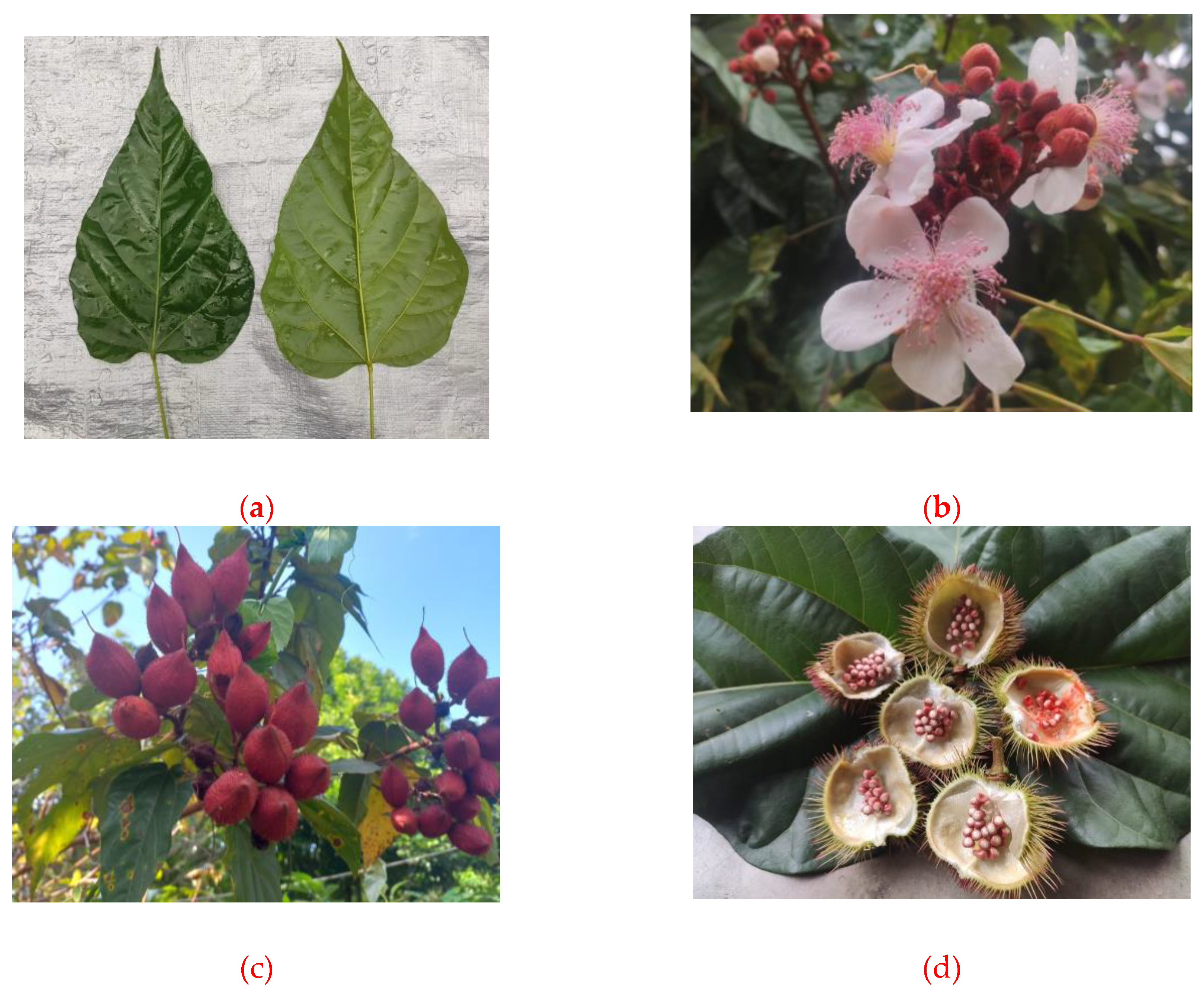
Figure 2.
Cladogram of genotypes of Bixa orellana L. with different geographic origins, based on the plant organ used, extraction method, biochemical characters, and biological activity. White spots represent apomorphic variations and black spots plesiomorphic variations. The values separated by the diagonal line represent the Bootstrap/Jackknife indices, with L= 149, Ci= 50 and Ri=64.
Figure 2.
Cladogram of genotypes of Bixa orellana L. with different geographic origins, based on the plant organ used, extraction method, biochemical characters, and biological activity. White spots represent apomorphic variations and black spots plesiomorphic variations. The values separated by the diagonal line represent the Bootstrap/Jackknife indices, with L= 149, Ci= 50 and Ri=64.
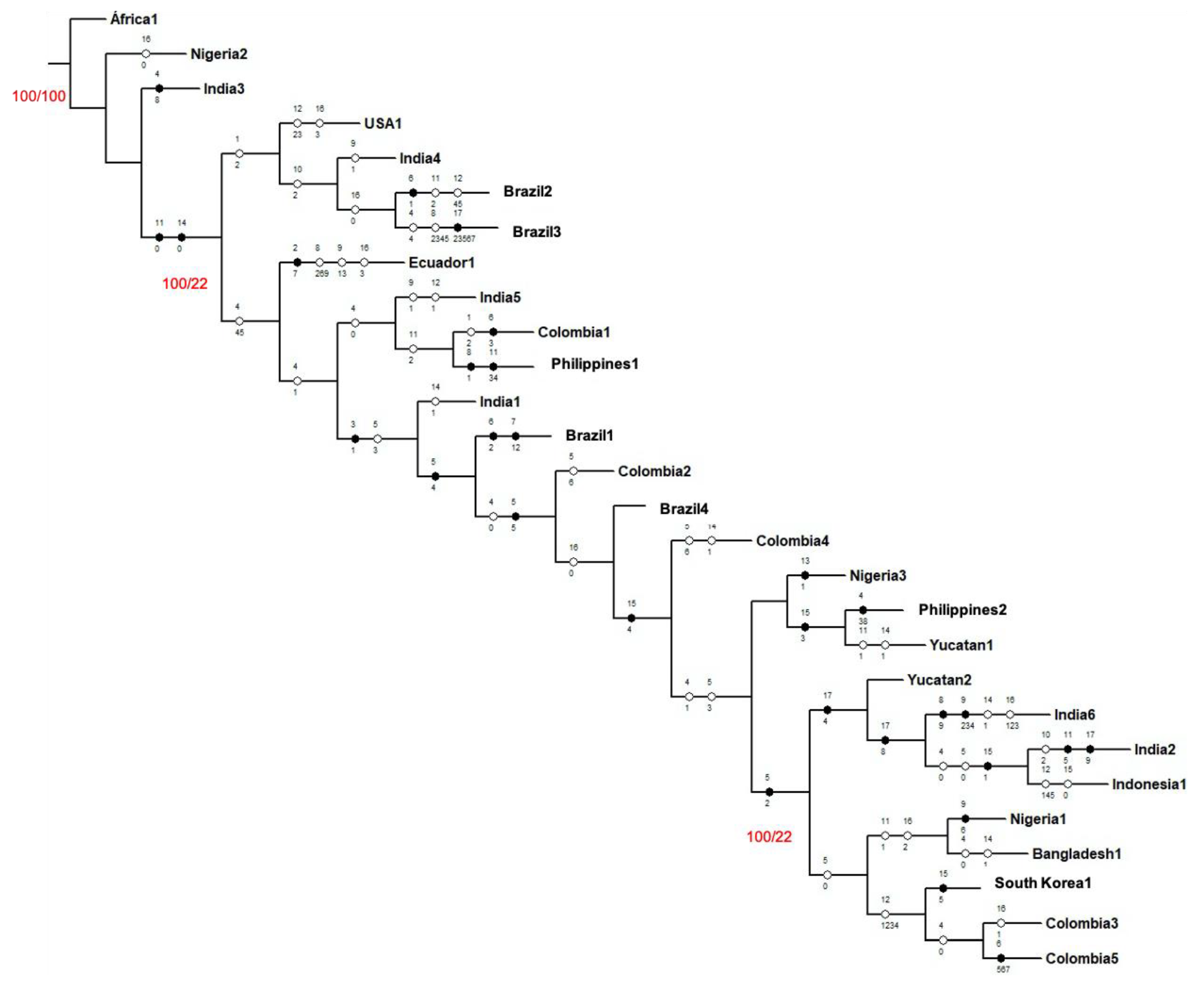

Table 1.
Publications included in the bioprospecting meta-analysis in Bixa orellana L.
| Variable | Genotype | Research focus | References |
|---|---|---|---|
| Biological activity | África1; USA1; Colombia1; Philippines1; India1; Colombia 2; Colombia3; India2; Nigeria1; South Korea1; India3; Colombia4; Philippines2; Yucatán1; Brazil1; Bangladesh1; Brazil2; Colombia5; Brazil3; India4; Indonesia1; Brazil5; India5; Yucatán2; Ecuador1 | Antimicrobial, anticancer, antioxidant and hepatoprotective activity of leaves and/or seeds of Bixa orellana |
[1,4,6,7,8,9,11,12,13,14,15,16,17,18,19,20,21,22,23,24,25,26,27] |
| Biochemistry | África1; USA1; Colombia1; Philippines1; India1; Colombia2; Colombia3; India2; Nigeria1; South Korea1; Nigeria2; India3; Colombia4; Philippines2; Yucatán1; India4; Colombia5; Brazil3; India5; Yucatán2; Ecuador1 | Phytochemical characterization of extracts and essential oil of leaves and seeds of Bixa orellana |
[1,4,5,6,7,8,9,10,11,12,13,14,15,16,17,18,19,20,21,22,23,24,25,26,27,28] |
Table 2.
Characters and character states of Bixa orellana L.for the bioprospecting analysis.
| Number | Variable | Variable status |
|---|---|---|
| 1 | Extraction organ | Leaves=1, Seeds=2 |
| 2 | Extraction method | Absent=0, Aqueous and ethanolic extracts=1, Solvent system=2, Methanol=3, Ethanol=4, Petroleum ether=5, Maceration=6, Steam Distillation=7 |
| 3 | Biochemistry class | Absent=0, Phenolic compounds=1, Terpenoids=2, Compounds with nitrogen=3 |
| 4 | Compound group | Phenols and phenolic acids=1, Flavonoids=2, Tannins=3, Monoterpenoids and sesquiterpenoids=4, Diterpenes=5, Triterpenoids=6, Tetraterpenoids=7, Alkaloids=8, Cyanogenic glycosides=9 |
| 5 | Phenols and phenolic acids | Absent=0, Phenylpropanoids=1, Coumarins=2, Anthraquinones=3, Procyanidins=4, Ellagic acid=5, Tannic acid=6, Gallic acid=7 |
| 6 | Flavonoids | Absent=0, Naringenin=1, Kaemferol=2, Anthocyanins=3, Isoflavonoids=4, Butein=5, Catechins=6, Chlorogenic acid=7, Hypolaetin=8 |
| 7 | Tannins | Absent=0, Granatin=1, Neostrictinin=2, Ellagitanin=3 |
| 8 | Monoterpenes | Absent=0, Poliprenol=1, Ocimene=2, Spathulenol=3, Isoledene=4, Bergamotene=5, Pinene=6, Aristolochene=7, Cadinene=8, Germacrene=9 |
| 9 | Sesquiterpenes | Absent=0, Farnesol=1, Elemene=2, Caryophyllene=3, Guaiol=4, Tomentosin=5, Ishwarane=6 |
| 10 | Diterpenes | Absent=0, Phytol=1, Geranylgeraniol=2, Geranyl terpinene=3, Geranyl linalool=4, Farnesyl=5 |
| 11 | Triterpenes | Absent=0, Saponins=1, Steroids=2, Stigmasterol=3, Sitosterol=4, Squalene=5 |
| 12 | Tetraterpenes | Absent=0, Carotenoids=1, 9'-cis-norbixin=2, Trans-norbixin=3, Bixin=4, Norbixin=5, Diapocarotenoids=6 |
| 13 | Alkaloids | Absent=0, Atrophin=1 |
| 14 | Cyanogenic glycosides | Absent=0, Saponins=1 |
| 15 | Biological activity | Absent=0, Chemo preventive=1, Anti-inflammatory=2, Hepatoprotective=3, Antioxidants=4, Cytotoxic=5 |
| 16 | Antimicrobial activity | Absent=0, Pseudomonas aeruginosa=1, Escherichia coli=2, Staphylococcus aureus=3, Salmonella sp=4, Candida albicans=6 |
| 17 | Anticancer activity | Absent=0, HepG2=1, U251=2, MCF-7=3, HeLa=4, NCI-H460=5, PC-3=6, HT-29=7, A549=8, MCF-7=9 |
Table 3.
Apomorphic characters (new or derived) from the heuristic clade with biochemical and biological activity variables in 28 genotypes of Bixa orellana L. The diagonal indicates the character and its state of relevant character.
Table 3.
Apomorphic characters (new or derived) from the heuristic clade with biochemical and biological activity variables in 28 genotypes of Bixa orellana L. The diagonal indicates the character and its state of relevant character.
| Genotype | Character/character state | Biochemistry | Biological activity/antimicrobial activity/anticancer activity |
|---|---|---|---|
| Nigeria2 | |||
| India3 | |||
| USA1 | 10/2, 12/2, 12/3, 16/3, | Geranylgeraniol, cis-norbixin, trans-norbixin | Staphylococcus aureus |
| India4 | 9/1, 10/2, | Farnesol, geranylgeraniol | |
| Brazil2 | 11/2, 12/4, 12/5 | Steroids, bixin, norbixin | |
| Brazil3 | 4/4, 8/2, 8/3, 8/4, 8/5 | Mono and sesquiterpenoids, ocimene, spathulenol, isoledene, bergamotene | |
| Ecuador1 | 8/2, 8/6, 8/9, 9/1, 9/3, 16/3 | Ocimene, pinene, germacrene, farnesol, caryophyllene | Staphylococus aureus |
| India5 | 9/1, 11/2, 12/1 | Farnesol, saponins, carotenoids | |
| Colombia1 | 11/2 | Saponins | |
| Philippines1 | |||
| India1 | 14/1 | Saponins | |
| Brazil1 | |||
| Colombia2 | 5/6 | Tannic acid | |
| Brazil4 | |||
| Colombia4 | 5/6, 14/1 | Tannic acid, saponins | |
| Nigeria3 | |||
| Philippines2 | |||
| Yucatán1 | 11/1 | Saponins | |
| Yucatán2 | |||
| India6 | 14/1, 16/1, 16/2, 16/3 | Saponins | Pseudomonas aeruginosa, Escherichia coli, Staphylococus aureus |
| India2 | 10/2 | Geranylgeraniol | |
| Indonesia1 | 12/1, 12/4, 12/5 | Carotenoids, bixin, norbixin | |
| Nigeria1 | |||
| Bangladesh1 | 14/1 | Saponins | |
| South Korea1 | |||
| Colombia3 | 16/1 | Pseudomonas aeruginosa | |
| Colombia5 |
Table 4.
Apomorphic and plesiomorphic characters identified in the branches of the heuristic clade based on biochemical variables of biological activity of Bixa orellana L. The diagonal indicates the character and its state of relevant character.
Table 4.
Apomorphic and plesiomorphic characters identified in the branches of the heuristic clade based on biochemical variables of biological activity of Bixa orellana L. The diagonal indicates the character and its state of relevant character.
| Branch | Apomorphic character | Branch | Plesiomorphic character |
|---|---|---|---|
| 1 | 1 | Alkaloids | |
| 2 | Seeds, mono and sesquiterpenoids, ocimene, spathulenol, isoledene, bergamotene, farnesol, saponins, geranylgeraniol, cis-norbixin, trans-norbixin, bixin, norbixin, Staphylococcus aureus | 2 | Naringenin, U251, MCF-7, NCI-H460 PC-3 and HT-29 cell lines |
| 3 | Phenols and phenolic acids, mono and sesquiterpenoids, diterpenes, ocimene, pinene, germacrene, farnesol, caryophyllene, Staphylococcus aureus | 3 | Steam distillation |
| 4 | Seed, phenols and phenolic acids, farnesol, steroids, carotenoids | 4 | Anthocyanins, phenylpropanoids, stigmasterol, sitosterol |
| 5 | Phenols and phenolic acids, anthraquinones, tannic acid, saponins | 5 | Phenolic compounds, procyanidins, ellagic acid, kaempherol, granatin, neostrictinin, antioxidant |
| 6 | Saponins | 6 | Tannins, alkaloids, atrophin, hepatoprotective |
| 7 | Geranylgeraniol, carotenoids, bixin, norbixin, Pseudomonas aeruginosa, Escherichia coli, Staphylococcus aureus | 7 | Coumarins, germacrene, elemene, caryophyllene, squalene, chemo preventive, HeLa cell lines, A549, MCF-7 |
| 8 | Saponins, Staphylococcus aureus | 8 | Coumarins, caryophyllene |
| 9 | Carotenoides, cis-norbixina, trans-norbixina, bixina, Pseudomonas aeruginosa | 9 | Coumarins, butein, catechins, chlorogenic acid, cytotoxic |
Table 5.
Characteristic values and proportion accumulated for four principal components of the analysis of 28 genotypes of Bixa orellana L. with different geographic origins, based on the organ of the plant used, extraction method, biochemical characters, and biological activity.
Table 5.
Characteristic values and proportion accumulated for four principal components of the analysis of 28 genotypes of Bixa orellana L. with different geographic origins, based on the organ of the plant used, extraction method, biochemical characters, and biological activity.
| PC | Eigenvalues | Variance | Cumulative variance | % |
|---|---|---|---|---|
| 1 | 0.1046 | 0.0963 | 0.0963 | 9.63 |
| 2 | 0.0963 | 0.0887 | 0.1851 | 28.14 |
| 3 | 0.0717 | 0.0727 | 0.2578 | 53.92 |
| 4 | 0.0717 | 0.0660 | 0.3239 | 86.31 |
Table 6.
Characteristic vectors of the analysis of 28 genotypes of Bixa orellana L. with different geographic origins, based on the organ of the plant used, the extraction method, bio-chemical characters and biological activity.
Table 6.
Characteristic vectors of the analysis of 28 genotypes of Bixa orellana L. with different geographic origins, based on the organ of the plant used, the extraction method, bio-chemical characters and biological activity.
| Variable | Variable states | CP1 | CP2 | CP3 | CP4 |
| Extraction organ | Leaves Seeds |
0.40600 0.16010 |
0.02947 0.09092 |
0.00653 0.00378 |
0.00442 0.02480 |
| Extraction method | Aqueous and ethanolic extracts Solvent system Methanol Ethanol Petroleum ether Maceration Steam distillation |
0.08108 0.00741 0.00011 0.07360 0.01204 0.00519 0.00519 |
0.00111 0.00181 0.01826 0.03881 0.00217 0.29127 0.52403 |
0.04358 0.14477 0.00144 0.00227 0.00390 0.06014 0.09163 |
0.00607 0.01652 0.00843 0.04915 0.01648 0.00480 0.00072 |
| Biochemistry class | Phenolic compounds Terpenoids Compounds with nitrogen |
0.00470 0.18442 0.01603 |
0.01508 0.20710 0.00538 |
0.00001 0.05018 0.00219 |
0.00259 0.17695 0.16758 |
| Compound group | Phenols and phenolic acids Flavonoids Tannins Monoterpenoids and sesquiterpenoids Diterpenes Triterpenoids Tetraterpenoids Alkaloids Cyanogenic glycosides |
0.11318 0.29988 0.26420 0.00000 0.00000 0.18557 0.04881 0.26420 0.00000 |
0.00859 0.12431 0.12683 0.00000 0.00000 0.06410 0.00190 0.12683 0.00000 |
0.00795 0.16761 0.20160 0.00000 0.00000 0.08623 0.00214 0.20160 0.00000 |
0.01836 0.13349 0.15101 0.00000 0.00000 0.09697 0.01425 0.15101 0.00000 |
| Phenols and phenolic acids | Phenylpropanoids Coumarins Anthraquinones Procyanidins Ellagic acid Tannic acid Gallic acid |
0.15877 0.21741 0.26599 0.00656 0.00002 0.00108 0.00000 |
0.06654 0.02699 0.07780 0.00017 0.00002 0.00116 0.00000 |
0.12130 0.00046 0.04298 0.00004 0.00005 0.00310 0.00000 |
0.13140 0.35100 0.14762 0.06603 0.02223 0.04040 0.00000 |
| Flavonoids | Naringenin Kaemferol Anthocyanins Isoflavonoids Butein Catechins Chlorogenic acid Hypolaetin |
0.40034 0.00272 0.00059 0.00000 0.00013 0.00000 0.01195 0.00000 |
0.02715 0.00312 0.00027 0.00000 0.00063 0.00943 0.00235 0.00000 |
0.02587 0.00331 0.01002 0.00000 0.00117 0.00020 0.03611 0.00000 |
0.09716 0.10585 0.00397 0.00000 0.08565 0.03638 0.05006 0.00000 |
| Tannins | Granatin Neostrictinin Ellagitanin |
0.04169 0.00000 0.00000 |
0.03330 0.00000 0.00000 |
0.06398 0.00000 0.00000 |
0.01294 0.00000 0.00000 |
| Monoterpenes |
Poliprenol Ocimene Spathulenol Isoledene Bergamote Pinene Aristolochene Cadinene Germacrene |
0.04622 0.00098 0.00098 0.00000 0.00000 0.00098 0.00000 0.00000 0.00098 |
0.01371 0.77755 0.77755 0.00000 0.00000 0.77755 0.00000 0.00000 0.77755 |
0.20700 0.17288 0.17288 0.00000 0.00000 0.17288 0.00000 0.00000 0.17288 |
0.28666 0.00777 0.00777 0.00000 0.00000 0.00777 0.00000 0.00000 0.00777 |
| Sesquiterpenes |
Farnesol Elemene Caryophyllene Guaiol Tomentosin Ishwarane |
0.02186 0.00098 0.00098 0.00000 0.00000 0.00031 |
0.38639 0.77755 0.77755 0.00000 0.00000 0.02955 |
0.25792 0.17288 0.17288 0.00000 0.00000 0.35986 |
0.23356 0.00777 0.00777 0.00000 0.00000 0.01434 |
| Diterpenes |
Phytol Geranyl geraniol Geranyl terpinene Geranyl linalool Farnesyl |
0.00247 0.00183 0.01807 0.00011 0.00011 |
0.01756 0.00469 0.02596 0.01908 0.01908 |
0.09808 0.34644 0.47671 0.33076 0.33076 |
0.08027 0.04852 0.14103 0.00082 0.00082 |
| Triterpenes |
Saponins Steroids Stigmasterol Sitosterol Squalene |
0.10829 0.00186 0.10291 0.19469 0.12040 |
0.00292 0.01413 0.07116 0.00139 0.00217 |
0.00052 0.00282 0.16746 0.00820 0.00390 |
0.02278 0.00832 0.11540 0.14306 0.01648 |
| Tetraterpenes |
Carotenoids 9'-cis-norbixin Trans-norbixin Bixin Norbixin Diapocarotenoids |
0.40393 0.01080 0.01080 0.48865 0.48865 0.00000 |
0.02718 0.00040 0.00040 0.04809 0.04809 0.00000 |
0.03930 0.00393 0.00393 0.03452 0.03452 0.00000 |
0.09930 0.01509 0.01509 0.02605 0.02605 0.00000 |
| Alkaloids |
Atrophin | 0.21741 | 0.02699 | 0.00046 | 0.35100 |
| Cyanogenic glycosides | Saponins | 0.00000 |
0.00000 |
0.00000 |
0.00000 |
| Biological activity |
Chemo-preventive Anti-inflammatory Hepatoprotective Antioxidants Cytotoxic |
0.00568 0.00000 0.00544 0.02597 0.00000 |
0.00568 0.00000 0.00644 0.05981 0.00000 |
0.02083 0.00000 0.00785 0.07794 0.00000 |
0.06208 0.00000 0.02204 0.05050 0.00000 |
| Antimicrobial activity |
Pseudomonas aeruginosa Escherichia coli Staphylococcus aureus Salmonella sp Candida albicans |
0.16510 0.08361 0.05017 0.13572 0.17932 |
0.00000 0.01917 0.21822 0.04070 0.01001 |
0.14469 0.35559 0.00890 0.02404 0.03820 |
0.08732 0.02388 0.03508 0.00446 0.13449 |
| Anticancer activity | HepG2 U251 MCF-7 HeLa NCI-H460 PC-3 HT-29 A549 B16F10 |
0.00000 0.45618 0.47323 0.43024 0.04561 0.45618 0.45618 0.00048 0.00000 |
0.00000 0.02193 0.02313 0.00843 0.02193 0.02193 0.02193 0.00056 0.00000 |
0.00000 0.05048 0.03783 0.00906 0.05048 0.05048 0.05048 0.03869 0.00000 |
0.00000 0.22606 0.16672 0.00554 0.22606 0.22606 0.22606 0.15758 0.00000 |
The values highlighted in bold letters are statistically significant by principal component.
Disclaimer/Publisher’s Note: The statements, opinions and data contained in all publications are solely those of the individual author(s) and contributor(s) and not of MDPI and/or the editor(s). MDPI and/or the editor(s) disclaim responsibility for any injury to people or property resulting from any ideas, methods, instructions or products referred to in the content. |
© 2025 by the authors. Licensee MDPI, Basel, Switzerland. This article is an open access article distributed under the terms and conditions of the Creative Commons Attribution (CC BY) license (http://creativecommons.org/licenses/by/4.0/).
Copyright: This open access article is published under a Creative Commons CC BY 4.0 license, which permit the free download, distribution, and reuse, provided that the author and preprint are cited in any reuse.


