

Submitted:
14 January 2025
Posted:
14 January 2025
You are already at the latest version
Abstract
Anthropic activities as agriculture and livestock and wastewater discharges affect water quality in the Tlapaneco river in the Montaña region of the state of Guerrero, México, which is a tributary of the great Balsas River that flows from the Montaña and discharges into the Pacific Ocean; the water resource in the localities mentioned is used for agricultural work, recreation, and domestic tasks. The objective of the work was to evaluate quality of the water in the stretch of influence of two localities, Patlicha and Copanatoyac. The instrument used was the BMWP biotic index and some physicochemical parameters. Nine sampling sites were selected according to the perception of the local community with respect to disturbance; the study area was divided into three: high, medium and low. Twenty-seven collections of macroinvertebrates and water were analyzed, in dry and rainy seasons, through the presence-absence of these organisms and physicochemical analysis to evaluate water quality. The results showed that the conditions of the riverbed associated with daily activities and domestic discharges are important factors in the composition of the families. Water quality was very poor to fair according to the macroinvertebrate assemblages collected. The BMWP index with fair quality was when the families Leptohyphidae, Chironomidae, Hydropsychidae, Leptophlebiidae, Baetidae, Simuliidae, Veliidae, Corixidae, Hydrophylidae, Lestidae and Ephemerellidae were present; in sites with poor quality, the families Chironomidae, Leptophlebiidae, Veliidae, Corixidae, Hydropsychidae, Leptohyphidae, Hydrophilidae, Baetidae and Simuliidae were found, while in very poor quality the family present was Corixidae.
Keywords:
biomonitoring
; quality water
; biodiversity
; anthropogenic activity
; social innovation
1. Introduction
Lotic ecosystems and other water resources provide living beings and the human population with different ecosystem services [1,2] . These services are classified into four categories: provisioning, regulating, cultural and supporting [3] . Moreover, in relation to their biological value, they are distinguished by harboring a rich and diverse biota [4] . However, these water bodies are subjected to multiple anthropogenic pressures, which impact these aquatic ecosystems [2,5] . Agricultural intensification and other anthropogenic activities drive transformations in rural landscapes, such as changes in land use for their own activities and the establishment of human settlements [6,7] , which affect freshwater ecosystems through the discharge of wastewater, due to the lack of drainage and sewage systems and the lack of treatment of these discharges [8] ; In developing countries, this is limited; thus, 80% of discharges are discharged into aquatic ecosystems without treatment [9], so that freshwater pollution is recorded at more than 70% worldwide [10] . It is estimated that by 2050 water demand will increase by 80%, affecting 86% of the population [11,12], so that the annual water availability will be reduced in the last 55 years [13]; likewise, a water deficit is estimated in 2030, with a projected demand of 25% [12] . As part of the socio-environmental characterization of a section of the Tlapaneco River, a tributary of the Balsas River (Water Region 18), an approach was made to the biological condition, seasonality (rainfall, dryness) and cumulative impacts of anthropogenic activity using aquatic macroinvertebrates. The studied stretch is influenced by two rural communities (Patlicha-Copanatoyac) in the mountains of the state of Guerrero, Mexico, a region considered as highly marginalized [14], where water quality is affected by anthropogenic activities, which is why it is necessary to assess water quality by means of instruments accessible to the inhabitants. The objective of this work was to determine water quality using the BMWP biotic index, to lay the foundations for future community monitoring for self-management of the water resource before local authorities, which will allow its conservation and the sustainability of ecosystem services.
2. Materials and Methods
2.1. Area of Study and selection of sampling sites
The study was carried out in the Montaña of Guerrero region, geospatially co-named as middle mountain, in the municipality of Copanatoyac, specifically in a section (length of 5,722.64 m) of the Tlapaneco river, which crosses the localities of Copanatoyac and Patlicha [15] . It belongs to hydrological region 18 of the Balsas, located in the Sierra Madre del Sur, with a surface area of 4,981.53 km2 [16] . It has a warm sub-humid climate with rainfall in summer, with precipitation between 700 and 1500 mm and low deciduous forest vegetation [17] .
The months with the lowest rainfall are from November to April, and the highest from May to October [18]. Nine collection stations were established, covering a section of the Tlapaneco river, from the exit of the locality of Patlicha, which corresponds to the upper upstream (SS1, SS2, SS3) until reaching the locality of Copanatoyac, which was considered the middle (SS4, SS5, SS6) and lower (SS7, SS8, SS9) downstream. The location of the stations followed the current flow, considering the multihabitat representativeness (Figure 1), in consideration of the inhabitants of the Copanatoyac locality, considering their perception of the different disturbance conditions of the river section (Table 1).
Crops areas located in permanent anthropic activity are located on the riverbanks, these correspond to irrigated and rainfed corn crops; irrigated crops are sown in January and harvested in May, rainfed crops are sown in June and harvested in October, however, in the remaining months other crops such as cilantro, radishes, papaloquelite, lucerne, garlic and purple onion are sown and harvested. In both seasons, watercress grows in the riparian zone and invades the water body. Garbage is also burned along the riverbanks.
2.2. Data Collection
2.2.1. Macroinvertebrate Sampling
The collections were carried out in April 2022 and 2023 (dry season) and in December 2022 (after the rainy season), the total number of macroinvertebrate collections was 27; the collection in the rainy season 2023 was not carried out because of hurricane Otis (category 5) on the accessibility of the sampling sites. The collections were in replicates of 3 per site (high, medium and low) and season, to cover the multihabitat condition within each sampling station, the duration of the sampling was 20 to 30 minutes per station. A 300 µm D-type collection net and a 500 µm Surber net were used for collection [19], these were carried out by the same operator, to ensure comparability between collection stations and samples. Macroinvertebrates were separated in situ and fixed in 70% ethanol, in the laboratory with a ZEISS ® stereo microscope, with a scope (20/60 X) were regrouped according to their external morphology, for subsequent taxonomic identification using specialized keys and pictographic guides [20,21].
2.2.2. Assessment of Water Quality with the BMWP-CR Index
The BMWP-CR biotic index was chosen, which presents scores (1 to 10) of tolerances assigned to the macroinvertebrate families according to the degree of sensitivity to organic pollution, as this proposal was considered adequate for the conditions of the study area. The total BMWP-CR score for each sampling station was obtained by adding the scores of the families present. Water quality was determined according to the values of this index: >120 (excellent quality waters), 101-120 (good quality waters, not polluted or not sensitively altered), 61-100 (fair quality waters, eutrophic, moderate pollution), 36-60 (poor quality waters, contaminated), 16-35 (poor quality waters, very polluted) and <15 (very poor quality waters, extremely polluted) [19].
2.2.3. Physicochemical Analysis
The following parameters were determined in situ: temperature (ᵒC), hydrogen potential (pH), electrical conductivity (EC) and total dissolved solids (TDS), using a HANNA ® portable potentiometer, model HI98129, dissolved oxygen (DO) was determined by volumetric oxidation-reduction titration (metric iodine method - NMX-AA-012-SCFI-2001).
2.3. Data Analysis
A two-factor analysis of variance was performed with the BMWP index and the variables temporality and zone to see if there is a relationship between the levels of these variables and the observed value of the BMWP.
For the study variables, the assumption of normality and homogeneity of variances was verified; however, the variables pH, EC, SDT and OD did not comply with the assumption of homogeneity of variances [22] ; even when the [23] transformation (1964) was used. Therefore, the non-parametric Kruskal-Walli’s test was used [24].
Principal component analysis (PCA) [25] was applied with the variables of temperature (°C), pH, EC, SDT and OD, to generate new linear combinations, principal components (PC) and thus identify the behavior of the macroinvertebrate families by seasonality, channel conditions and permanent anthropic activity in the 27 collections.
3. Results
3.1. Macroinvertebrate Biodiversity
From the 27 collections in the study area, 5810 organisms were identified, grouped in 9 orders, 33 families (only the 11 most abundant are presented in Table 2). The Hemiptera-Veliidae groups were the most abundant in the dry season 2022 SS2 (439 specimens) and SS4 (383) and, in 2023 SS2 (335) and SS4 (147); as well as, in the rainy season the abundance was higher in SS4 (231 specimens) and in SS3 (181), while Trichoptera-Hydropsychidae was the most abundant only in the rainy season in SS7 (170 specimens) and SS4 (105).
Figure 3 shows the water quality in the nine stations, which correspond to three zones (high, medium and low) of the evaluated section of the river during two seasons (dry and rainy). In relation to the BMWP-CR index, in the dry season 2022, in stations two, four and seven, the water quality was determined to be poor and in the remaining stations regular quality. On the other hand, in the 2022 rainy season, in stations two and seven, the water quality was regular and in the remaining stations poor. However, in the dry season 2023, in station seven, the water quality was determined to be very poor; in stations one, two and seven, while in the remaining stations the water quality was determined to be poor and regular.
Figure 4 shows the sampling sites in the river, in the upper, middle and lower part, in relation to the BMWP-CR index; in the dry season 2022, the water quality was determined to be fair, in the rainy season 2022, it was poor and in the dry season 2023, in the upper and lower part, it was determined to be poor and in the middle part, fair.
A two-factor analysis of variance was performed with the BMWP index and the variables seasonality and zone to identify the correlation between the levels of these variables and the observed value of the BMWP; the assumption of normality (A = 0.45813, p-value = 0.2439) and homogeneity of variances (B= 4.1232, df = 2, p-value = 0.1272) were fulfilled (Table 3). According to the results, there is no relationship of the observed values of the BMWP index with seasonality and study sites. That is, the BMWP values do not depend on the seasonality (dry and rainy), nor on the location of the collection sites (high, medium and low); this depends on the physical conditions of the channel and anthropic activity (Table 1).
3.2. Physicochemical Analysis
The comparison of means of the physicochemical variances in three collections during two periods is presented in Table 4. The temperature, in the three zones and in the two seasons fluctuated between 13 - 28.9 °C. In the dry season 2022, it was 20 - 28.9°C; on the other hand, in 2023, it was 18.7 - 26.5°C. However, in the rainy season, the lowest temperatures were recorded, 13 - 20.8°C. In temperature, there are mean differences in the three seasons.
In the three zones and in the two seasons, the pH fluctuated (7.7- 9.47). In dry 2022, it was 7.7- 8.6 and in 2023, 7.56- 9.47. However, in rainfall, it was 8.1- 8.7. In pH, there are no differences.
On the other hand, the electrical conductivity in the three zones and in the two seasons oscillated (144 - 747 µs/cm). In dry season 2022, (238 - 747 µs/cm). In dry season 2023, it was 207 - 614 µs/cm. However, in the rainy season, the lowest values were recorded between 144 - 320 µs/cm. Total dissolved solids ranged (73 - 374 mg/L) in the three zones and in the two seasons. In the dry 2022 season, it was 119 - 374 mg/L. On the other hand, in dry season 2023, it was 111 - 304 mg/L. However, in the rainy season, the lowest values were recorded (73 - 161 mg/L). While the averages of EC and SDT in rainy seasons are statistically different from those in dry seasons.
On the other hand, dissolved oxygen, in the three zones and in the two seasons ranged between 3.46 - 12.10 mg/L. In dry 2022, it was 3.75 - 9.52 mg/L. On the other hand, in dry 2023, it was 3.46 - 12.10. However, in rainy 2022, it was 7.12 - 8.44 mg/L (Table 5). For DO, there are differences in averages in the two dry seasons.
3.2.1. Principal Component Analysis of Physicochemical Variables
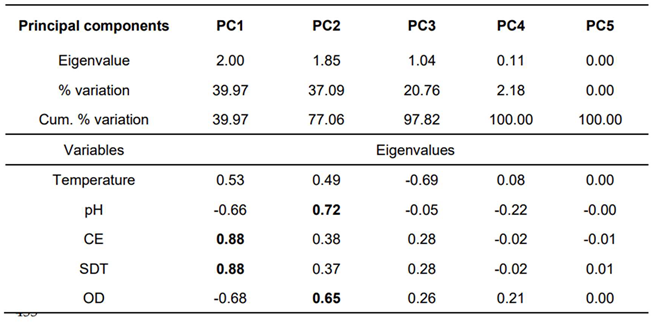
The principal component analysis explains 77.06 % of the total variability of the 27 water samples, therefore, according to [26] it can be concluded that the analysis is relevant. Consequently, electrical conductivity and total dissolved solids contribute more to the first component, PC1; resulting in CP1 being an indicator of EC and SDT. In the second component, PC2, pH and DO contribute more, indicating that CP2 is an indicator of pH and DO (Table 4).
Figure 6 and Figure 7 shows the relationship of the macroinvertebrate families found in the 27 collections and water samples from the nine sampling sites under the first two linear combinations taking temporality, channel conditions and permanent anthropic activity.
In quadrant QII are located the families with the highest presence of high pH and DO levels, with eutrophication, rock bridges and scattered rocks in the channel (Figure 6), on the other hand, in Figure 7 are located the conditions of permanent anthropic activity with wastewater discharges, domestic use and recreation. The assemblages of the CHyLp, LsLCh, VHyE and CVL families were observed in this quadrant during the dry season 2023 with pH 9.5, 9.4, 9.1, 8.8 and OD 11.29, 12.10 ,10.88, 10.78 mg/L, respectively (Table 5).
Furthermore, in quadrants QII and QIII, families were concentrated in the rainy season, with low levels of temperature, pH, OD, EC and SDT; because the temperature ranged 13-20.8 °C; pH 8.1-8.7; OD 7.12-8. 44 mg/L; EC 144-320 µs/cm and SDT 73-161 mg/L (Table 5); these assemblages occurred in eutrophication channel conditions, rock bridge, scattered rocks, without crosswalk (Figure 6), as well as in conditions of permanent anthropic activity with wastewater discharges, domestic use, farms and recreation sites (Figure 7). Among these family assemblages, HyBS, BLpCh, HyBLp, HyBCh, VHyB, BVHy and VHyL were found. However, in quadrant QIV, the families present at low pH (8.4, 8.0) and DO (7.50, 6.51 mg/L) and high EC (747, 614 µs/cm) and SDT (374, 304 mg/L), with eutrophication conditions (Figure 6), as well as permanent anthropogenic activity with wastewater discharges, sand and gravel extraction (Figure 7), were found in quadrant QIV. The family assemblages that stood out are SVL and SBLp in the dry period 2022 and 2023, respectively.
Continuing in quadrant QIV, the families with the highest presence at the lowest pH (7.7, 7.6) and DO (3.75, 3.46 mg/L) levels were found in eutrophication channel conditions, crop and pedestrian influence with rocks (Figure 6), as well as conditions of permanent anthropic activity with wastewater discharges and cattle watering places (Figure 7). Among these assemblages, BCH and VHyLp were highlighted in dry 2022 and 2023, respectively. Likewise, in this same quadrant, the Corixidae family (C) was located at low DO levels (4.27 mg/L) in dry 2023 associated with conditions with eutrophication and the presence of cress crop invasion in the streambed in areas associated with cultivation and wastewater discharges (Table 1, Figure 6 and Figure 7).
4. Discussion
The implementation of affordable monitoring methods for the evaluation of water quality in lotic ecosystems, specifically in neotropical rivers in the mountain region of the State of Guerrero, Mexico is an important issue for the inhabitants of the localities in this and other regions. The Tlapaneco river provides ecosystem services for daily activities, from domestic and recreational use to irrigation of corn crops (the main economic activity). This river, like many others, both in urban and rural areas, is affected by wastewater discharges, waste and agricultural activities [27] .
It is important to mention that for this region, it represents a reference point for future studies in the evaluation of water quality through biomonitoring, with community participation in this activity.
4.1. Anthropic Influence and the Relationship of Macroinvertebrates are Present in the Study Area.
In general, in the dry and rainy seasons, the Hydropsychidae family was present in most of the stations, related to moderate to strong sewage discharges [28], this influence is permanently present in the study area in all the collection stations during the two seasons (Table 1, Table 2, Figure 7).
However, when the BMWP-CR biotic index indicated regular water quality, the macroinvertebrate family assemblages present were Leptohyphidae, Chironomidae, Hydropsychidae, Leptophlebiidae and Baetidae, which are tolerant to contamination [29], this coincides with what has been reported by other authors [28,30] in areas with wastewater discharges, similar to our study, however, the Simuliidae family (SS9) was present under eutrophication conditions in areas of wastewater discharges, associated with the collection sites of sand and gravel extraction and cultivation sites (Table 1, Table 2, Figure 3, Figure 6 and Figure 7), in addition to bedrock. In this regard [29], they point out that simulids are in shallow areas of slow to strong currents and use rocks as substrates to which they adhere, it should be noted that this group is found in degraded environments with sewage [31]. It is noteworthy that in our work, families that were also present were Veliidae, Corixidae, Hydrophilidae, Lestidae and Ephemerellidae of which we did not find records of other authors in this water quality.
With respect to regular water quality, the seasonality and conditions of the water body, are similar to those reported by [28,30,32], who pointed out that this quality was reflected in sites where there were wastewater discharges from urban areas and in small localities; also in our study area there were other conditions (Table 1, Table 2, Figure 3, Figure 6 and Figure 7).
On the other hand, other authors have reported the families Chironomidae and Leptophlebiidae, when the quality is poor, in sites with wastewater discharges [28]; similar in this study, however, the families Veliidae, Corixidae, Hydropsychidae, Leptohyphidae, Hydrophilidae, Baetidae and Simuliidae were present, which are tolerant to contamination [29,31], and indicators of poor quality based on the BMWP-CR [33]. This finding is similar to that reported by [28,32,34,35], who pointed out that this quality was reflected in sites with wastewater discharges from urban areas, anthropogenic activities, deforestation in riparian corridors, erosion, sedimentation, changes in channel morphology, use of agricultural pollutants, as well as in areas where corn is grown; the above reflects the general panorama prevailing in the study area (Table 1, Table 2, Figure 3, Figure 6 and Figure 7).
In our work the Chironomidae family was found in regular and poor quality, [35] points out that it is predominant in urban and agricultural areas. However, when water quality was very poor, for example, in areas different from our neotropical region, authors such as [36] found the families Chironomidae and Baetidae in channeled water bodies with concrete and without vegetation, however, in our study, However, in our study, only the family Corixidae (SS7) was present in dry season 2023, where the channel conditions presented wastewater discharges, eutrophication, watercress cultivation that covered the entire sampling site (Table 1, Table 2, Figure 3, Figure 6 and Figure 7) as well, with areas without riparian vegetation and clayey sediment; on the other hand, this family was located associated with roots; in this respect, the Corixidae family prefers areas of slow flowing, shallow lentic waters, with free surface and little submerged vegetation [37], a similar environment provided by the Corixidae family an environment like that provided by the cress crop. In addition, this family is tolerant to pollution and can live in environments with low oxygen [31], in SS7 it presented 4.27 mg/L of DO, therefore, we attribute that this family is cosmopolitan because it can be found in neotropical and Andean areas, which places it in a wide parameter of environmental conditions.
Our results have shown that in our study area, in the rainy season in the nine sampling sites, the most abundant orders were Ephemeroptera and Trichoptera and the families Hydropsychidae and Baetidae the most representative (Table 2, Figure 6 and Figure 7), in conditions along the channel: No crosswalk, eutrophication, scattered rocks, bridge with rocks and concrete debris (Table 1,Figure 6), in addition to sewage discharges, farms, domestic use, recreation areas, cattle watering troughs, and sand and gravel extraction (Table 1, Figure 7). Therefore, the presence of Hydropsychidae is attributed to their ability to build fine nets that allow them to build shelters fixed in the current and thus filter the water to obtain food; they are usually found in areas of moderate to strong currents, where they filter organic matter in suspension; they can also be crawling, grasping, swimming and burrowing larvae that use fragments of heavy materials to avoid being dragged by the current [38]. On the other hand, the family Baetidae have modified bodies for swimming, crawling and well-developed claws on the legs, which allow them to hold on in very fast currents [39]. These two families are tolerant to pollution [29,38,39].
4.2. Physicochemical Parameters
In the stretch of the Tlapaneco river in the dry season 2022, the average temperature was 25.86°C, with a range of 24.3 to 28.9°C (Table 5), these values are similar to those recorded in two rivers of the Ecuadorian Amazon with an average of 23.9°C (range of 23.5-24.5°C) and 25°C (range of 23-28°C) respectively [28,35]. In relation to the 2023 dry season in the Tlapaneco River, the average was 22.91°C, with oscillations between 18.7 and 26.5°C (Table 5). These values are like those reported in another river in Ecuador (average 21.7°C, range 19-24.2°C) [40], as well as that reported in the Cupatitzio River in Mexico (average 20.77°C). However, rainfall in the Tlapaneco River was 18.4 °C, ranging from 13.0 to 20.8°C (Table 5). These values are like those reported for the Cupatitzio River in Mexico (average 18.39°C) [6].
The average pH values in the Tlapaneco river reach (Table 5) in the 2022 and 2023 dry season were 8.37 and 8.62, respectively. These values are like those obtained in a river in Ecuador (average pH 8.2, range 8-8.5), where there is the presence of wastewater discharges [40], as well as in the Cupatitzio River in Mexico (average 7.36), where there is the presence of urban areas, livestock, rainfed and irrigated agriculture, and wastewater discharge [6]. However, the average pH in rainfall (Table 5) in the Tlapaneco river was 8.42. These values are like those recorded in the Ecuadorian coastal region (average 8.69), where there is a presence of crops and urban areas [41]. As well as in the Cupatitzio river in Mexico, in rainfall (average 7.64) [6]. In general, the pH in the studied section was around 8, like that found in natural areas [35]. According to NOM-001-SEMARNMAT-2021, the appropriate pH in Mexico is in a range of 6 to 9, in our case it was (7.7 to 8.6 and 7.6 to 9.5) in dry season 2022 and 2023, respectively; and in rainy season (8.1 to 8.7).
With respect to dissolved oxygen, when levels are below 4 to 5 mg/L, fish and macroinvertebrate reproduction is disproportionate[42]. The average DO in the dry 2022 reach of the Tlapaneco River was 6.47 mg/L (3.75 to 9.52 mg/L) (Table 5). This average was like that reported in Ecuador in the northern coastal region (determined value 6.00 mg/L), associated with agricultural lands [43]. In dry season 2023 in our study area the average was 8.51 mg/L (3.46 to 12.10 mg/L) (Table 5), values like those obtained in another river in Ecuador in the dry season (average 8.4, range 8.1-9.3 mg/L) [40], and averages (8.65 mg/L) have also been recorded in Mexico [6].
On the other hand, in relation to the minimum dissolved oxygen values reported in our study, 3.75 and 3.46 mg/L (SS8) in both dry seasons (Table 5) are like those recorded in the Ecuadorian Amazon (average 4.38 mg/L) [28] and in Mexico (average 3.54 mg/L) [5], in both of which there is the presence of wastewater discharges.
However, the maximum DO values recorded in our study 9.52 mg/L (SS7) and 12.10 mg/L (SS5) in dry season 2022 and 2023, respectively (Table 5) are similar to those reported in Colombia (average 8.9 mg/L) where there is good penetration of sunlight, riverbed with rapids and backwaters, presence of rocks and discharge of residual water from fish ponds [44], our study area is a recipient of wastewater from urban and agricultural areas. In this sense, these stations have good sunlight penetration (SS7 dry 2022) and presence of rapids, scattered rocks (SS5 dry 2023). As in Ecuador in the north coast region in the same season (determined value 9.08 mg/L) [43], the same condition that the stations in the study area have (Table 1). However, the average rainfall DO in the Tlapaneco River was 7.69 mg/L, (7.12 to 8.44 mg/L) (Table 5). These values are like those reported in Colombia (average 7.9 mg/L, range 7.8-8 mg/L).
The average electrical conductivity (EC) of the water in the Tlapaneco river reach in dry 2022 was 382 µs/cm (Table 5), this is like that reported in a stream in the Ecuadorian coastal region (average 361. 56 µs/cm), with the presence of crops, urban area, as well as the lithological composition of limestone, red sandstone and limonite, in which carbonates predominate [41], which exist in the study area due to the presence of sandstone-conglomerate and limestone [17].
In relation to the dry season 2023 in the Tlapaneco river, the average was 332.89 µs/cm (Table 5). This value is like those obtained in Mexico (determined value of 332 µs/cm), where in addition to the presence of wastewater discharges, there is also clay and silt substrate and an irrigation channel through which most of the water resources are captured for irrigation of agricultural areas (corn, beans, onions, squash) [5]. As well as in the northern coastal region of Ecuador (determined value 284 µs/cm) [43]. However, the average conductivity in rainfall in the Tlapaneco river was 223.78 µs/cm (Table 5); a value like that reported in the Ecuadorian coastal region (average 216.38 µs/cm) [41]. As well as in the Cupatitzio River in Mexico (average 218.10 µs/cm) [6].
The average total dissolved solids (TDS) in the study reach in dry 2022 and 2023 was 191 and 166.44 mg/L, respectively (Table 5). This average is like that reported in Mexico (determined value of 183.75 mg/L) [5]. However, in the Tlapaneco river, the average rainfall was 112.11 mg/L (Table 5), a value like that recorded in southern Brazil in the northern region of Paraná (average of 112 mg/L), where there is a large urban area, agriculture, pasture and little natural cover [45].
5. Conclusions
Water quality in the section of the Tlapaneco river influenced by wastewater discharges, agricultural activity and other anthropogenic activities was fair to very poor, which is attributed to the presence of watercress crops and watering places in the riparian areas of this lotic ecosystem.
Variations in water quality at the sampling points are mainly influenced by stream conditions. According to the macroinvertebrate assemblages, the quality was fair when Leptohyphidae, Chironomidae, Hydropsychidae, Leptophlebiidae, Baetidae, Simuliidae, Veliidae, Corixidae, Hydrophilidae, Lestidae and Ephemerellidae were present; poor, Chironomidae, Leptophlebiidae, Veliidae, Corixidae, Hydropsychidae, Leptohyphidae, Hydrophilidae, Baetidae and Simuliidae and very poor Corixidae.
Through a Biomonitoring Program with aquatic macroinvertebrates, it will allow early identification of changes in the water sources on which their livelihoods depend and the implementation of appropriate conservation measures. By establishing community groups to assess water quality using macroinvertebrates and monitor the pollutants that reach the ecosystem, they can implement restrictive and control measures to avoid continuous impacts to this water resource from urban discharges and agricultural activities, especially recreational and domestic use, as well as manage actions before regional and national environmental authorities, for the conservation of the resource; the importance of the macroinvertebrates in the Tlapaneco river basin is also important in order to increase knowledge of the Tlapaneco river through monitoring throughout the basin, including parameters such as BOD5, fats and oils, and total coliforms, among others.
The importance of aquatic macroinvertebrates in the locality, together with their surprising appearance, behavior and biological significance, make these organisms very attractive for the development of environmental awareness and social innovation initiatives that promote the participation and empowerment of the indigenous and non-indigenous populations that inhabit the area, improving the quality of life of the communities. It is hoped that this research will serve as a diagnostic tool for local communities to evaluate the water resource with the inclusion of aquatic macroinvertebrates as key organisms for their conservation.
A key aspect for the sustainable success of community participation is the continuous engagement of and with local communities. Therefore, it is crucial to implement a robust community engagement plan that includes ongoing support and facilitation of participatory workshops. These spaces will allow for the co-creation of strategies that reflect the needs, expectations and concerns of traditional communities. Feedback from these meetings will be critical to tailoring initiatives to local realities. Such programs will improve their capacity to manage community education initiatives in an autonomous and effective manner that not only benefit communities economically, but also contribute to biodiversity conservation, promote cultural appreciation and encourage long-term community leadership.
Community participation is important for the conservation and maintenance of the ecosystem services provided by the water resource. In the current conditions, it was determined through biomonitoring that water quality is deteriorating, and the population is unaware of this and uses it for recreational purposes, domestic use, as well as agriculture.
Author Contributions
Conceptualization, A.P.-T. and J.L.R.-A.; methodology, A.P.-T. and J.L.R.-A.; software, M.G.-M.; validation, A.P.-T., J.L.R.-A and M.G.-M.; formal analysis, A.P.-T., M.G.-M. and J.L.R.-A. ; investigation, A.P.-T. and J.L.R.-A.; resources, J.L.R.-A.; data curation, A.P.-T., J.L.R.-A and M.G.-M.; writing—original draft preparation, A.P.-T. and J.L.R.-A.; writing—review and editing, A.P.-T., J.L.R.-A and M.G.-M.; visualization, A.P.-T., J.L.R.-A, M.G.-M, J.A.S.-N., R.B.-S. and K.R.A.-S.; supervision, J.L.R.-A and M.G.-M.; project administration, A.P.-T. and J.L.R.-A.;. All authors have read and agreed to the published version of the manuscript
Funding
This research was funded by CONAHCYT, Mexico, through a graduate scholarship received by the first author (Grant 776173)
Data Availability Statement
All data presented in this research are contained in the article.
Acknowledgments
The authors would like to thank the “Common Property Authorities” and the Municipal Council of Copanatoyac for their support during the research. As well to the teacher Pedro Marcelino Pantiga Perez, and the students of the program DELFIN-CONAHCYT, México: Montse Campusano and Armando Rojas for their collaboration during the collections at the sampling sites and identification.
Conflicts of Interest
The authors declare no conflicts of interest.
References
- Garcia, X.; Pargament, D. Rehabilitating rivers and enhancing ecosystem services in a water-scarcity context: the Yarqon River. International Journal of Water Resources Development 2015, 31, 73–87. [Google Scholar] [CrossRef]
- Rincón-Bello, M.T.; Soler-Romero, F.Y.; Calderón-Rivera, D.S.; Sierra-Parada, R.J.; Jaramillo-Londoño, A.M. Macroinvertebrados acuáticos como bioindicadores de calidad de agua en el río Chicú, Cundinamarca, Colombia. Hidrobiológica 2021, 31, 17–29. [Google Scholar] [CrossRef]
- Orozco-González, C.E.; Ocasio-Torres, M.E. Aquatic Macroinvertebrates as Bioindicators of Water Quality: A Study of an Ecosystem Regulation Service in a Tropical River. Ecologies 2023, 4, 209–228. [Google Scholar] [CrossRef]
- Odum, E.P. Ecología; Nueva Editorial Interamericana. México, D.F.: 1972.
- Gudiño-Sosa, L.F.; Moncayo-Estrada, R.; Velázquez-Machuca, M.A.; Cruz-Cárdenas, G.; Ávila-Meléndez, L.A.; Pimentel-Equihua, J.L. Biotic Integrity, Water Quality, and Landscape Characteristics of a Subtropical River. Water 2023, 15, 1–15. [Google Scholar] [CrossRef]
- Gudiño-Sosa, L.F.; Escalera-Gallardo, C.; Cruz-Cárdenas, G.; Moncayo-Estrada, R.; Silvia-García, J.T.; Flores-Magallón, R.; Damián-Arroyo, M.; Chávez-Tinoco, M.A. Evaluación de la calidad del agua en un río subtropical y tributarios utilizando índices fisicoquímicos y macroinvertebrados acuáticos. Hidrobiológica 2022, 32, 33–50. [Google Scholar] [CrossRef]
- Ruiz-Picos, R.A.; Kohlmann, B.; Sedeño-Díaz, J.E.; López-López, E. Assessing ecological impairments in Neotropical rivers of Mexico: calibration and validation of the Biomonitoring Working Party Index. International Journal of Environmental Science and Technology 2017, 14, 1835–1852. [Google Scholar] [CrossRef]
- UNESCO. Informe Mundial de las Naciones Unidas sobre el Desarrollo de los Recursos Hídricos 2023. Alianzas y cooperación por el agua. Datos, cifras y ejemplos de acción. Available online: https://www.pseau.org/outils/ouvrages/un_water_unesco_informe_mundial_de_las_naciones_unidas_sobre_el_desarrollo_de_los_recursos_hidricos_2023_alianzas_y_cooperacion_por_el_agua_datos_cifras_y_ejemplos_de_accion_2023.pdf (accessed on 3 February 2024).
- UNESCO. Informe Mundial de las Naciones Unidas sobre el Desarrollo de los Recursos Hídricos 2023. Alianzas y cooperación por el agua. Available online: https://aneas.com.mx/wp-content/pdf/documentos-internacionales/05-un-wwdr-2023-spanish_web-version.pdf (accessed on 3 February 2024).
- CDP. Treading water. Corporate Responses to Rising Water Challenges. Available online: https://cdn.cdp.net/cdp-production/cms/reports/documents/000/004/232/original/CDP_Global_Water_Report_2018.pdf?1554392583 (accessed on 5 February 2024).
- Flörke, M.; Schneider, C.; McDonald, R.I. Water competition between cities and agriculture driven by climate change and urban growth. Nature Sustainability 2018, 1, 51–58. [Google Scholar] [CrossRef]
- Martínez-Austria, P.F. Los retos de la seguridad hídrica. Tecnología y Ciencias del Agua 2013, 4, 165–180. [Google Scholar]
- CESOP. En contexto: Los ríos revueltos, radiografía de la contaminación. Available online: http://www5.diputados.gob.mx/index.php/camara/Centros-de-Estudio/CESOP/Novedades/En-contexto.-Los-rios-revueltos-radiografia-de-la-contaminacion (accessed on 8 February 2024).
- CONAPO. Informe anual sobre la situación de pobreza y rezago social 2023. Guerrero. Available online: https://www.gob.mx/cms/uploads/attachment/file/793094/12020-Copanatoyac23.pdf (accessed on 10 February 2024).
- Rodríguez, A.L.; López, R.; Bautista, S. Culturas adaptativas en la cuenca del río Tlapaneco, Guerrero, México. Tlamati 2015, 6, 51–54. [Google Scholar]
- Jaramillo-Villanueva, J.L.; Galindo-de-Jesús, G.; Bustamante-González, Á.; Cervantes-Vargas, J. Valoración económica del agua del río Tlapaneco en la "Montaña de Guerrero", México. Tropical and subtropical agroecosystems 2013, 16, 363–376. [Google Scholar] [CrossRef]
- INEGI. Compendio de información geográfica municipal 2010. Available online: https://www.inegi.org.mx/contenidos/app/mexicocifras/datos_geograficos/12/12020.pdf (accessed on 7 February 2024).
- CONAGUA. Normales Climatológicas por Estado. Base de datos climatológica nacional. Available online: https://smn.conagua.gob.mx/tools/RESOURCES/Normales_Climatologicas/Mensuales/gro/mes12178.txt (accessed on 15 February 2024).
- Mafla, M. Guía para Evaluaciones Ecológicas Rápidas con Indicadores Biológicos en Ríos de Tamaño Mediano Talamanca-Costa Rica. Centro Agronómico Tropical de Investigación y Enseñanza, CATIE, 2005. [Google Scholar]
- Merritt, R.W.; Cummins, K.W.; Berg, M.B. An introduction to the aquatic insects of North America. Kendall/Hunt, 2008. [Google Scholar]
- Gutiérrez Fonseca, P.E.; Alonso-Rodríguez, A.M. Guía fotográfica de familias de macroinvertebrados acuáticos de Puerto Rico. Available online: https://www.researchgate.net/publication/295854904_Guia_fotografica_de_familias_de_macroinvertebrados_acuaticos_de_Puerto_Rico (accessed on 23 August 2024).
- Bartlett, M.S. Properties of Sufficiency and Statistical Tests. Proceedings of the Royal Society of London. Series A, Mathematical and Physical Sciences 1937, 160, 268–282. [Google Scholar]
- Box, G.E.P.; Cox, D.R. An Analysis of Transformations. Journal of the Royal Statistical Society: Series B (Metholodogical) 1964, 26, 211–243. [Google Scholar] [CrossRef]
- Conover, W.J. Practical Nonparametric Statistics. John Wiley y Sons, Inc., 1999. [Google Scholar]
- Johnson, R.A.; Wichern, D.W. Applied Multivariate Statistical Analysis. Pearson Education, Inc., 2007. [Google Scholar]
- Mavrou, I. Análisis factorial exploratorio: Cuestiones conceptuales y metodológicas. Nebrija de Lingüística Aplicada a la Enseñanza de las Lenguas 2015, 1–10. [Google Scholar]
- Bustamante-González, A.; Galindo-De Jesús, G.; Jaramillo-Villanueva, J.L.; Vargas-López, S. Percepción de la contaminación del río Tlapaneco por la población ribereña. Agricultura, Sociedad y Desarrollo 2016, 13, 47–62. [Google Scholar] [CrossRef]
- Vargas-Tierras, T.; Suárez-Cedillo, S.; Morales-León, V.; Vargas-Tierras, Y.; Tinoco-Jaramillo, L.; Viera-Arroyo, W.; Vásquez-Castillo, W. Ecological River Water Quality Based on Macroinvertebrates Present in the Ecuadorian Amazon. Sustainability 2023, 15, 1–15. [Google Scholar] [CrossRef]
- Oscoz, J.; Galicia, D.; Miranda, R. Identification Guide of Freshwater Macroinvertebrates of Spain. Springer, 2011. [Google Scholar]
- Rodríguez, L.; Ríos, P.; Espinosa, M.; Cedeño, P.; Jiménez, G. Caracterización de la calidad de agua mediante macroinvertebrados bentónicos en el río Puyo, en la Amazonía Ecuatoriana. Hidrobiológica 2016, 26, 497–507. [Google Scholar] [CrossRef]
- Thakur, Y.; Grover, A.; Sinha, R. Differential distribution of macroinvertebrate associated with water quality. World Water Policy 2023, 9, 84–112. [Google Scholar] [CrossRef]
- Cabrera, S.; Forio, M.A.E.; Lock, K.; Vandenbroucke, M.; Oña, T.; Gualoto, M.; Goethals, P.L.M.; Van der heyden, C. Variations in Benthic Macroinvertebrate Communities and Biological Quality in the Aguarico and Coca River Basins in the Ecuadorian Amazon. Water 2021, 13, 1–25. [Google Scholar] [CrossRef]
- Enger, E.; Smith, B.F. Ciencia Ambiental. Un estudio de interrelaciones. The McGraw-Hill Companies, Inc., 2006. [Google Scholar]
- Echeverría-Sáenz, S.; Ugalde-Salazar, R.; Guevara-Mora, M.; Quesada-Alvarado, F.; Ruepert, C. Ecological Integrity Impairment and Habitat Fragmentation for Neotropical Macroinvertebrate Communities in an Agricultural Stream. Toxics 2022, 10, 1–16. [Google Scholar] [CrossRef] [PubMed]
- Cabrera, M.; Capparelli, M.V.; Nacato-Ch, C.; Moulatlet, G.M.; Lopez-Heras, I.; Diaz, M.; Alvear-S, D.; Rico, A. Effects of intensive agriculture and urbanization on water quality and pesticide risks in freshwater ecosystems of the Ecuadorian Amazon. Chemosphere 2023, 337, 1–11. [Google Scholar] [CrossRef] [PubMed]
- Cabrera-Garcia, S.; Goethals, P.L.M.; Lock, K.; Domínguez-Granda, L.; Villacís, M.; Galárraga-Sánchez, R.; Van der Heyden, C.; Forio, M.A.E. Taxonomic and Feeding Trait-Based Analysis of Macroinvertebrates in the Antisana River Basin (Ecuadorian Andean Region). Biology 2023, 12, 1–30. [Google Scholar] [CrossRef]
- Coayla-Peñaloza, P.; Cheneaux-Díaz, A.A.; Moreno-Salazar, C.V.; Cruz-Remache, C.E.; Colque-Rondón, E.W.; Damborenea, C. Benthic macroinvertebrate communities and water quality assessment in high Andean wetlands Callali-Oscollo, Arequipa-Cusco, Peru. Revista Mexicana de Biodiversidad 2023, 94, 1–13. [Google Scholar] [CrossRef]
- Quesada-Alvarado, F.; Umaña, G.; Springer, M.; Picado, J. Variación estacional y características fisicoquímicas e hidrológicas que influyen en los macroinvertebrados acuáticos, en un río tropical. Biología Tropical 2020, 68, 54–67. [Google Scholar] [CrossRef]
- Flowers, R.W.; De la Rosa, C. Capítulo 4. Ephemeroptera. Revista de Biología Tropical 2010, 58, 63–93. [Google Scholar]
- Damanik-Ambarita, M.N.; Lock, K.; Boets, P.; Everaert, G.; Nguyen, T.H.T.; Forio, M.A.E.; Musonge, P.L.S.; Suhareva, N.; Bennetsen, E.; Landuyt, D. , et al. Ecological water quality analysis of the Guayas river basin (Ecuador) based on macroinvertebrates indices. Limnologica 2016, 57, 27–59. [Google Scholar] [CrossRef]
- Lafuente, W.; Carpio, A.J.; Alcácer, C.; Moreno, J.L. Spatio-temporal variability of physicochemical conditions in the headwaters of neotropical streams. Journal of South American Earth Sciences 2023, 126, 1–8. [Google Scholar] [CrossRef]
- Mihelcic, J.R.; Zimmerman, J.B. Ingeniería ambiental: fundamentos, sustentabilidad, diseño. Editorial Alfaomega, 2012. [Google Scholar]
- Molinero, J.; Barrado, M.; Guijarro, M.; Ortiz, M.; Carnicer, O.; Zuazagoitia, D. The Teaone River: a snapshot of a tropical river from the coastal region of Ecuador. Limnetica 2019, 38, 587–605. [Google Scholar] [CrossRef]
- Contreras, J.; Roldán, G.; Arango, A.; Álvarez, L.F. Evaluación de la calidad del agua de las microcuencas La Laucha, La Lejía y La Rastrojera utilizando los macroinvertebrados como bioindicadores, Municipio de Durania, Departamento Norte de Santander, Colombia. Revista de la Academia Colombiana de Ciencias Exactas, Físicas y Naturales 2008, 32, 171–194. [Google Scholar] [CrossRef]
- Contieri, B.B.; Rosa, J.; Scoarize, M.M.R.; Urbano, V.A.; Benedito, E. Anthropogenic land uses lead to changes in limnological variables in Neotropical streams. Environ Monit Assess 2024, 196, 702. [Google Scholar] [CrossRef]
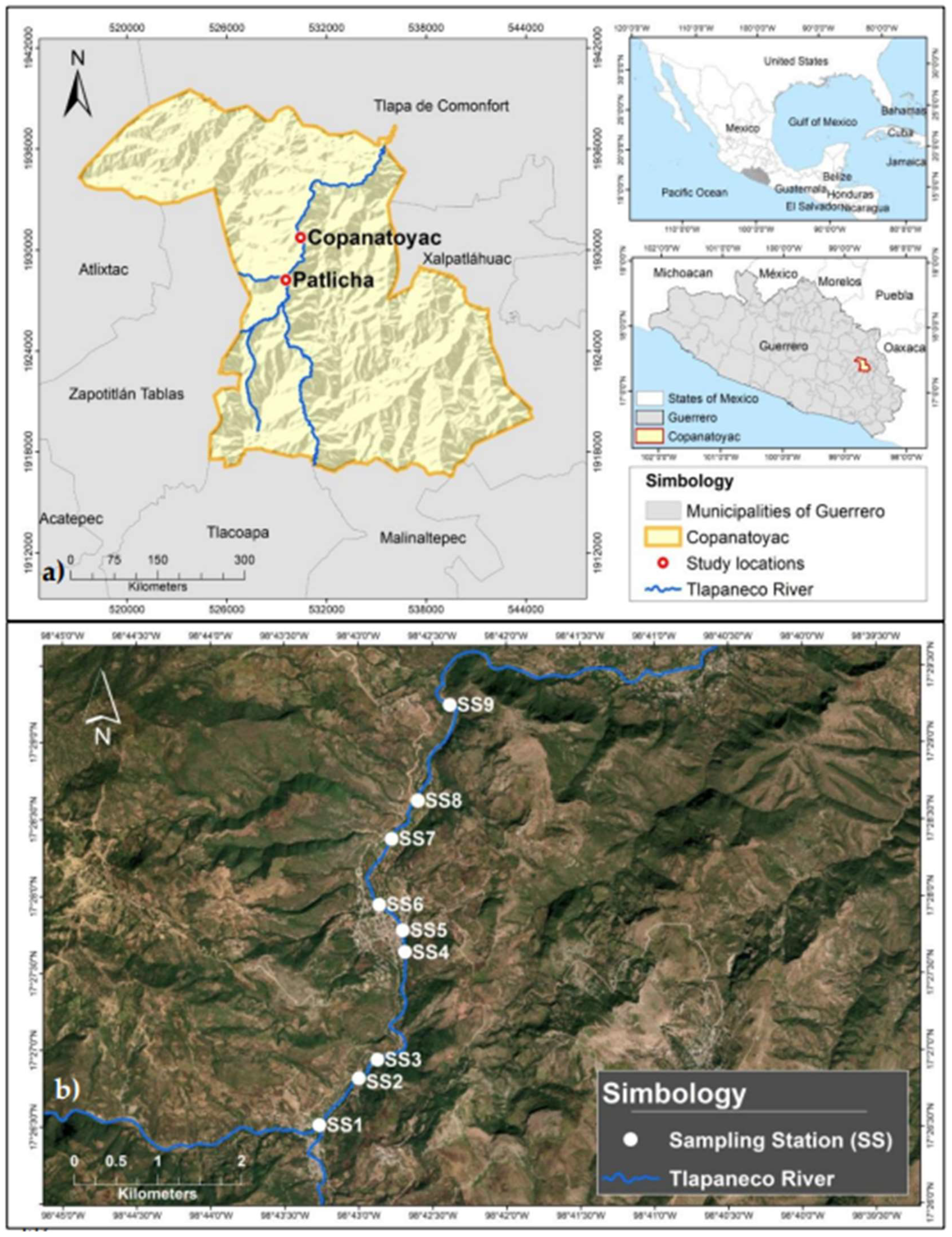
Figure 3.
BMWP-CR biotic index scores in the nine stations: high, medium and low zones in dry season 2022, rainy season 2022 and dry season 2023.
Figure 3.
BMWP-CR biotic index scores in the nine stations: high, medium and low zones in dry season 2022, rainy season 2022 and dry season 2023.
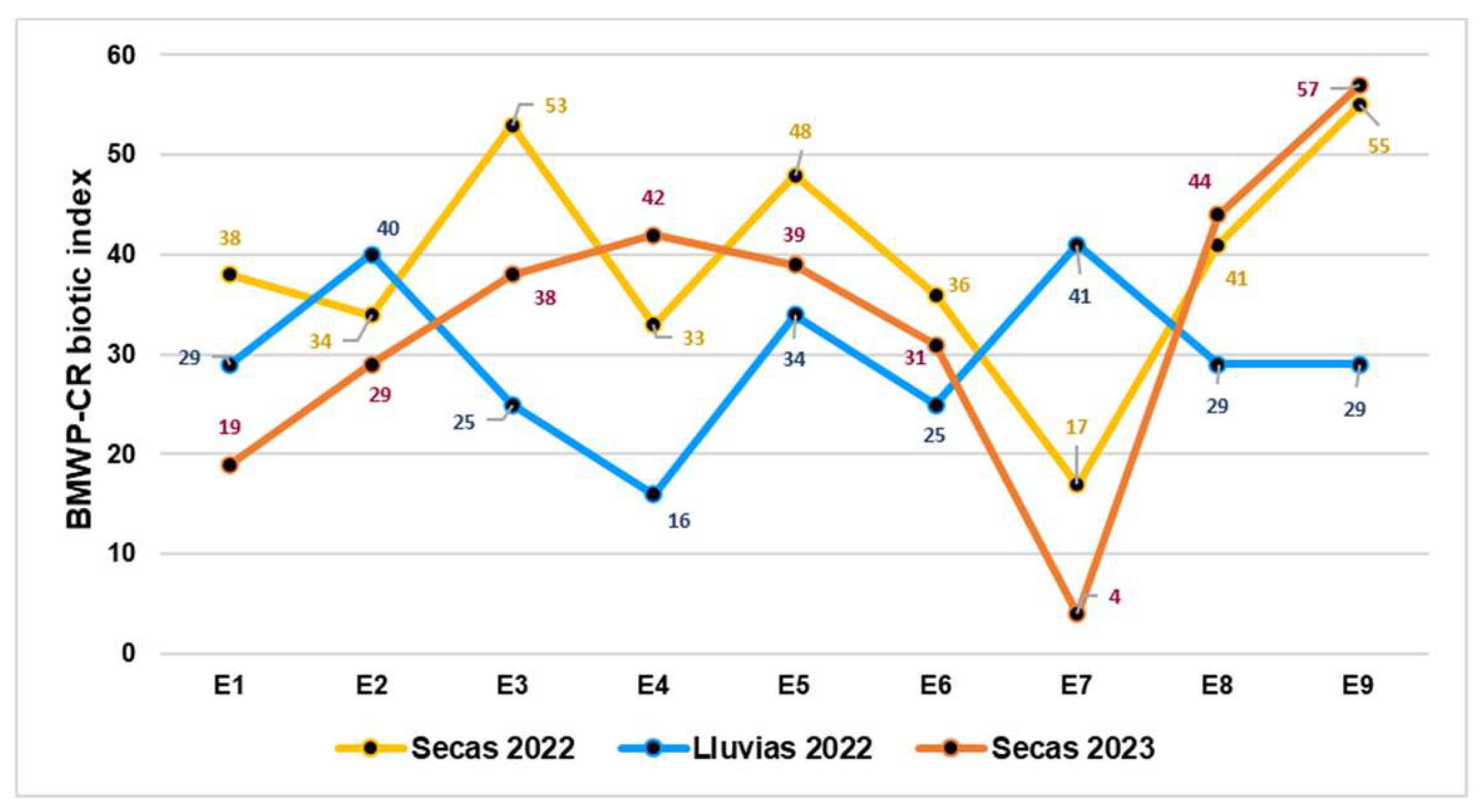
Figure 4.
Average biotic index scores of the BMWP-CR in the high, medium and low season in the dry season 2022, rainy season 2022 and dry season 2023.
Figure 4.
Average biotic index scores of the BMWP-CR in the high, medium and low season in the dry season 2022, rainy season 2022 and dry season 2023.
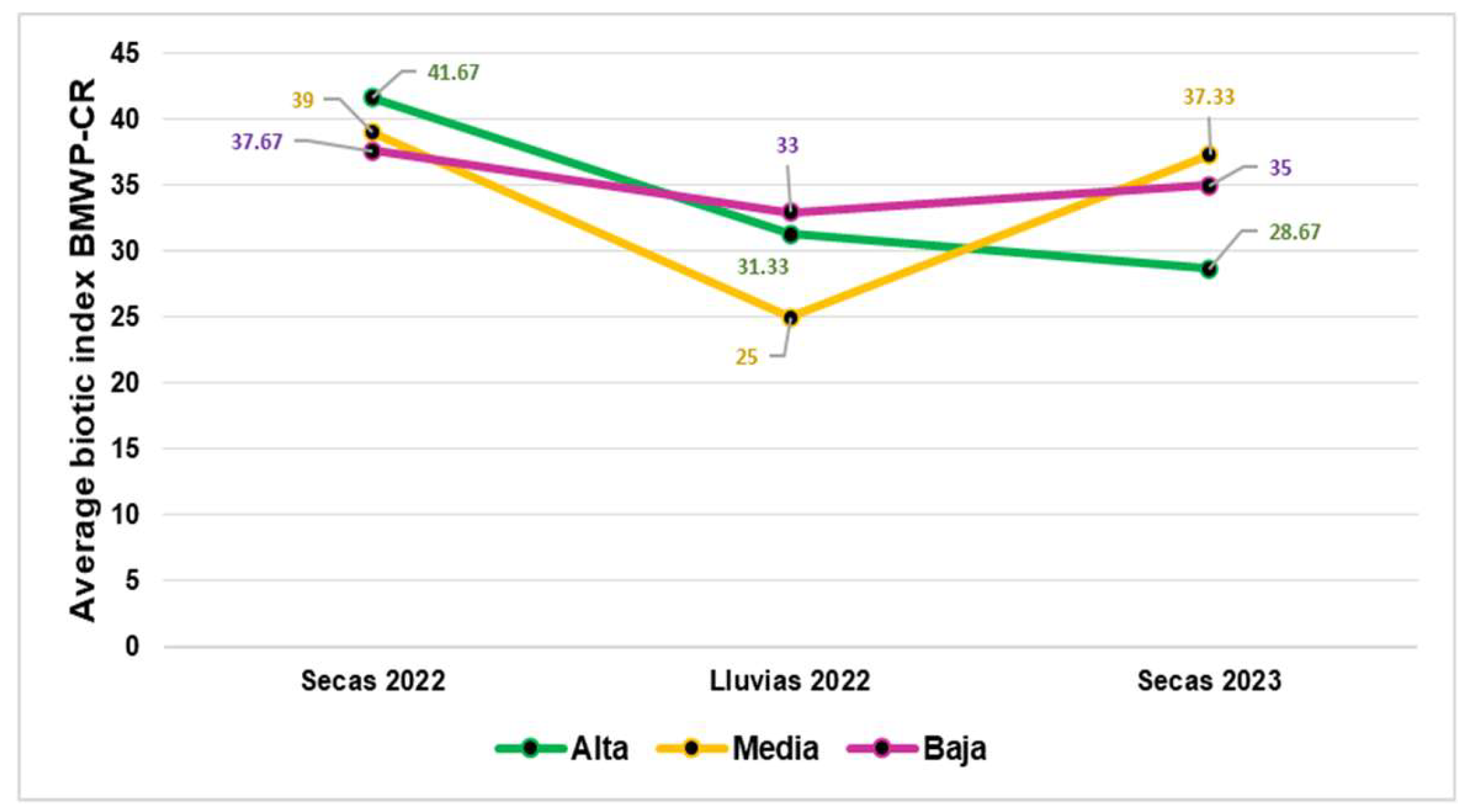
Figure 5.
The map shows the water quality at the sampling stations and in the dry season 2022, rainy season 2022 and dry season 2023. Fair (poor water quality, polluted), poor (poor water quality, very polluted) and very poor (very poor water quality, extremely polluted).
Figure 5.
The map shows the water quality at the sampling stations and in the dry season 2022, rainy season 2022 and dry season 2023. Fair (poor water quality, polluted), poor (poor water quality, very polluted) and very poor (very poor water quality, extremely polluted).
Figure 6.
Principal component analysis, explaining 77.06 % of the total variability of the sample, with the first two linear combinations. Relationship of families with channel conditions and season. The assemblages of the families present are presented: VChHy=Veliidae, Chironomidae, Hydropsychidae; VCCh= Veliidae, Corixidae, Chironomidae; VHyL= Veliidae, Hydropsychidae; Leptohyphidae; CBCh=Corixidae, Baetidae, Chironomidae; ChVH=Chironomidae, Veliidae, Hidrophilidae; BCH= Baetidae, Corixidae, Hydrophilidae; SVL=Simuliidae, Veliidae, Leptohyphidae; HyBS= Hydropsychidae, Baetidae, Simuliidae; HyBLp= Hydropsychidae, Baetidae, Leptophlebiidae; VHyB= Veliidae, Hydropsychidae, Baetidae; HyBCh= Hydropsychidae, Baetidae, Chironomidae; BLpCh=Baetidae, Leptophlebiidae, , Chironomidae; BVHy= Baetidae, Veliidae, Hydropsychidae; LChHy= Leptohyphidae, Chironomidae, Hydropsychidae; CVL= Corixidae, Veliidae, Leptohyphidae; VHyE= Veliidae, Hydropsychidae, Ephemerellidae; LsLCh= Lestidae, Leptohyphidae, Chironomidae; CHyLp= Corixidae, Hydropsychidae, Leptophlebiidae; C= Corixidae; VHyLp= Veliidae, Hydropsychidae, Leptophlebiidae; SBLp= Simuliidae, Baetidae, Leptophlebiidae.
Figure 6.
Principal component analysis, explaining 77.06 % of the total variability of the sample, with the first two linear combinations. Relationship of families with channel conditions and season. The assemblages of the families present are presented: VChHy=Veliidae, Chironomidae, Hydropsychidae; VCCh= Veliidae, Corixidae, Chironomidae; VHyL= Veliidae, Hydropsychidae; Leptohyphidae; CBCh=Corixidae, Baetidae, Chironomidae; ChVH=Chironomidae, Veliidae, Hidrophilidae; BCH= Baetidae, Corixidae, Hydrophilidae; SVL=Simuliidae, Veliidae, Leptohyphidae; HyBS= Hydropsychidae, Baetidae, Simuliidae; HyBLp= Hydropsychidae, Baetidae, Leptophlebiidae; VHyB= Veliidae, Hydropsychidae, Baetidae; HyBCh= Hydropsychidae, Baetidae, Chironomidae; BLpCh=Baetidae, Leptophlebiidae, , Chironomidae; BVHy= Baetidae, Veliidae, Hydropsychidae; LChHy= Leptohyphidae, Chironomidae, Hydropsychidae; CVL= Corixidae, Veliidae, Leptohyphidae; VHyE= Veliidae, Hydropsychidae, Ephemerellidae; LsLCh= Lestidae, Leptohyphidae, Chironomidae; CHyLp= Corixidae, Hydropsychidae, Leptophlebiidae; C= Corixidae; VHyLp= Veliidae, Hydropsychidae, Leptophlebiidae; SBLp= Simuliidae, Baetidae, Leptophlebiidae.
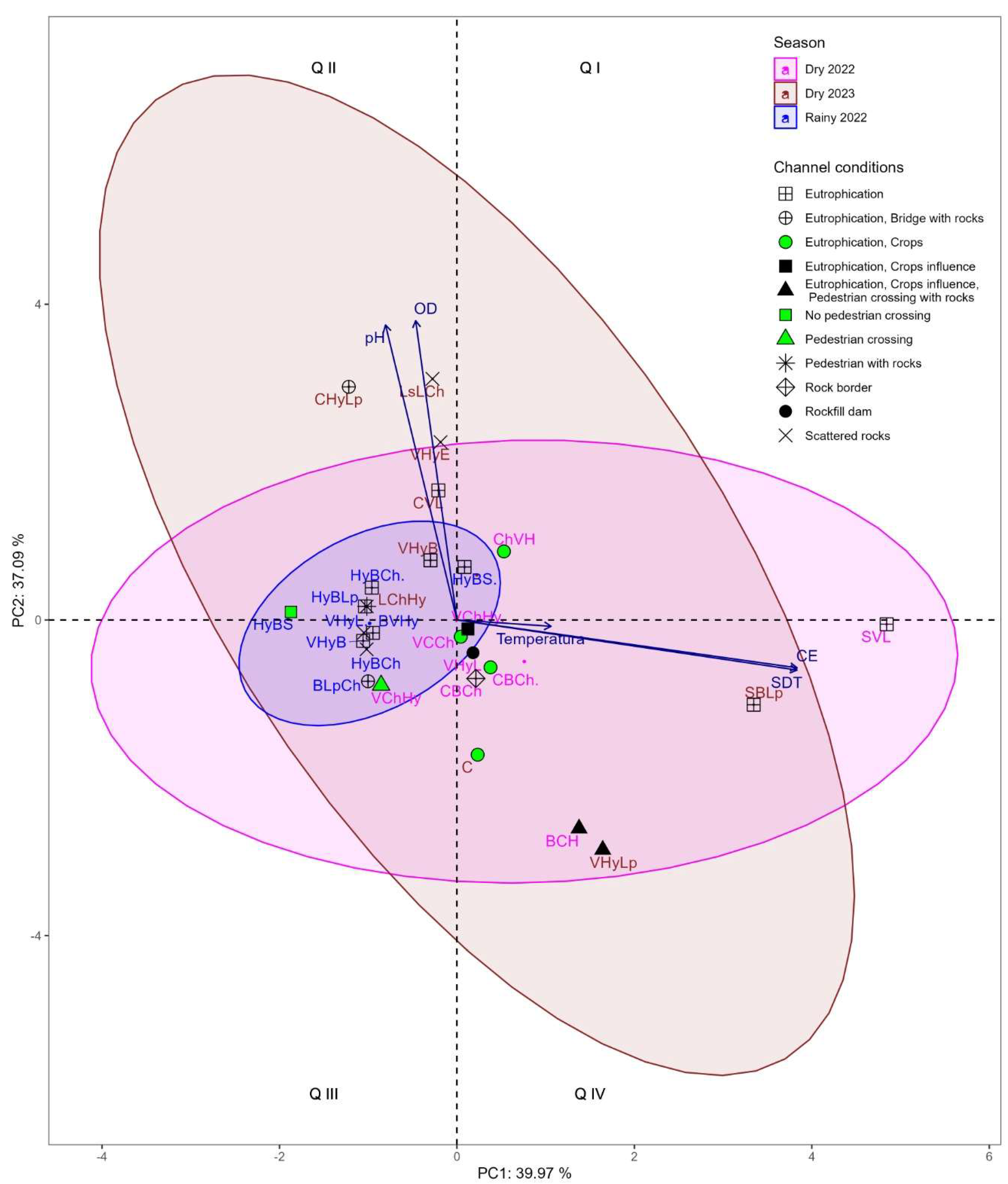
Figure 7.
Principal component analysis, explaining 77.06 % of the total variability of the sample, with the first two linear combinations. Relationship of families with permanent and seasonal anthropogenic activities. The assemblages of the families present are presented: VChHy=Veliidae, Chironomidae, Hydropsychidae; VCCh= Veliidae, Corixidae, Chironomidae; VHyL= Veliidae, Hydropsychidae; Leptohyphidae; CBCh=Corixidae, Baetidae, Chironomidae; ChVH=Chironomidae, Veliidae, Hidrophilidae; BCH= Baetidae, Corixidae, Hydrophilidae; SVL=Simuliidae, Veliidae, Leptohyphidae; HyBS= Hydropsychidae, Baetidae, Simuliidae; HyBLp=Hydropsychidae, Baetidae, Leptophlebiidae; VHyB= Veliidae, Hydropsychidae, Baetidae; HyBCh= Hydropsychidae, Baetidae, Chironomidae; BLpCh=Baetidae, Leptophlebiidae, , Chironomidae; BVHy= Baetidae, Veliidae, Hydropsychidae; LChHy= Leptohyphidae, Chironomidae, Hydropsychidae; CVL= Corixidae, Veliidae, Leptohyphidae; VHyE= Veliidae, Hydropsychidae, Ephemerellidae; LsLCh= Lestidae, Leptohyphidae, Chironomidae; CHyLp= Corixidae, Hydropsychidae, Leptophlebiidae; C= Corixidae; VHyLp= Veliidae, Hydropsychidae, Leptophlebiidae; SBLp= Simuliidae, Baetidae, Leptophlebiidae.
Figure 7.
Principal component analysis, explaining 77.06 % of the total variability of the sample, with the first two linear combinations. Relationship of families with permanent and seasonal anthropogenic activities. The assemblages of the families present are presented: VChHy=Veliidae, Chironomidae, Hydropsychidae; VCCh= Veliidae, Corixidae, Chironomidae; VHyL= Veliidae, Hydropsychidae; Leptohyphidae; CBCh=Corixidae, Baetidae, Chironomidae; ChVH=Chironomidae, Veliidae, Hidrophilidae; BCH= Baetidae, Corixidae, Hydrophilidae; SVL=Simuliidae, Veliidae, Leptohyphidae; HyBS= Hydropsychidae, Baetidae, Simuliidae; HyBLp=Hydropsychidae, Baetidae, Leptophlebiidae; VHyB= Veliidae, Hydropsychidae, Baetidae; HyBCh= Hydropsychidae, Baetidae, Chironomidae; BLpCh=Baetidae, Leptophlebiidae, , Chironomidae; BVHy= Baetidae, Veliidae, Hydropsychidae; LChHy= Leptohyphidae, Chironomidae, Hydropsychidae; CVL= Corixidae, Veliidae, Leptohyphidae; VHyE= Veliidae, Hydropsychidae, Ephemerellidae; LsLCh= Lestidae, Leptohyphidae, Chironomidae; CHyLp= Corixidae, Hydropsychidae, Leptophlebiidae; C= Corixidae; VHyLp= Veliidae, Hydropsychidae, Leptophlebiidae; SBLp= Simuliidae, Baetidae, Leptophlebiidae.
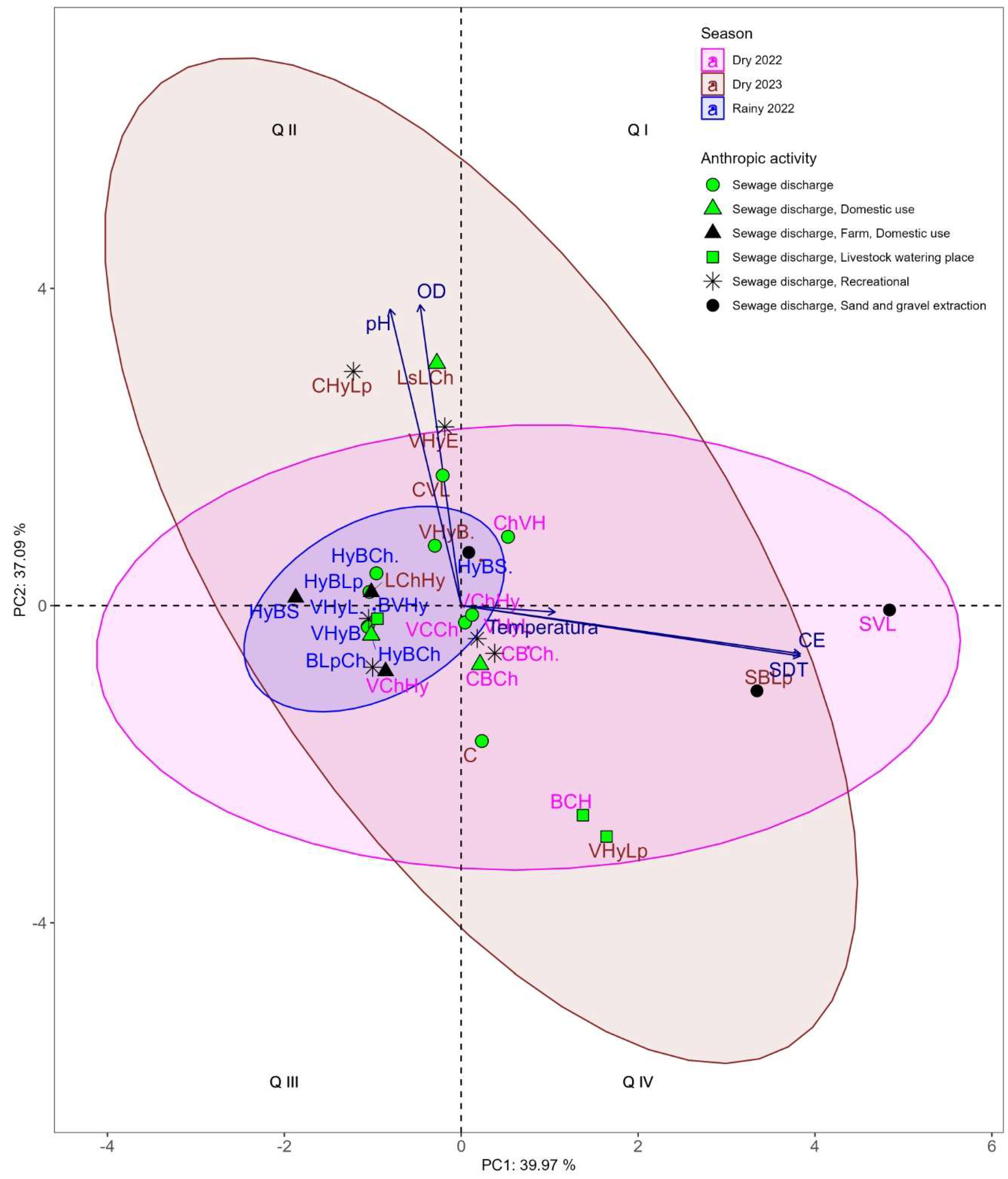

Table 1.
Characterization of the study area in the section of the Tlapaneco river, Guerreo, Mexico.
| Sampling sites | Permanent anthropic activity | The Dry season 2022 |
The Rainy season 2022 | The Dry season 2023 |
|---|---|---|---|---|
| SS1 |
Sewage discharge, Farm, Domestic use, Leaving the urban Patlicha area, Crops area | Pedestrian crossing | No pedestrian crossing | Pedestrian with rocks |
| SS2 | Sewage discharge, Crops area | Eutrophication, Partial crops in the riverbed | Eutrophication | Eutrophication |
| SS3 | Sewage discharge, Crops area | Eutrophication, Crops influence | Eutrophication | Eutrophication |
| SS4 | Sewage discharge, Recreational, Entrance to the Copanatoyac urban area, Crops area | Rockfill dam | Scattered rocks | Scattered rocks |
| SS5 | Sewage discharge, Domestic use, Center of the Copanatoyac urban area, Crops area | Rock border | Scattered rocks, anthropogenic silting | Scattered rocks, concrete remains |
| SS6 | Sewage discharge, Recreational, Leaving the urban Copanatoyac area, Crops area | Eutrophication Riparian zone cultivation | Eutrophication, Bridge with rocks and concrete remains | Eutrophication, Bridge with rocks and concrete remains |
| SS7 | Sewage discharge, Crops area | Eutrophication, Partial crops in the riverbed | Eutrophication | Eutrophication, Total cultivation in the riverbed |
| SS8 | Sewage discharge, Livestock watering place, Crops area | Eutrophication, Crops influence, Pedestrian crossing with rocks | Eutrophication | Eutrophication, Crops influence, Pedestrian crossing with rocks |
| SS9 | Sewage discharge, Sand and gravel extraction, Crops area | Eutrophication | Eutrophication | Eutrophication |
Table 2.
Total abundant families in the sampling sites (dry and rainy season) in the studied section of the Tlapaneco River, Guerreo, Mexico.
Table 2.
Total abundant families in the sampling sites (dry and rainy season) in the studied section of the Tlapaneco River, Guerreo, Mexico.
| Sampling sites | The dry season 2022 | The rainy season 2022 | The dry season 2023 | |||
|---|---|---|---|---|---|---|
| Families | Abundance | Families | Abundance | Families | Abundance | |
| SS1 | Veliidae | 61 | Hydropsychidae | 78 | Leptohyphidae | 78 |
| Chironomidae | 50 | Baetidae | 55 | Chironomidae | 64 | |
| Hidropsychidae | 35 | Simuliidae | 8 | Hidropsychidae | 6 | |
| SS2 | Veliidae | 439 | Hydropsychidae | 81 | Veliidae | 335 |
| Corixidae | 31 | Baetidae | 21 | Hydropsychidae | 46 | |
| Chironomidae | 23 | Leptophlebiidae | 7 | Baetidae | 31 | |
| SS3 | Veliidae | 89 | Veliidae | 181 | Corixidae | 62 |
| Chironomidae, | 50 | Hydropsychidae | 56 | Veliidae | 42 | |
| Hydropsychidae | 32 | Baetidae | 14 | Leptohyphidae | 18 | |
| SS4 | Veliidae | 383 | Veliidae | 231 | Veliidae | 147 |
| Hydropsychidae | 56 | Hydropsychidae | 105 | Hydropsychidae | 50 | |
| Leptohyphidae | 8 | Leptohyphidae | 21 | Ephemerellidae | 37 | |
| SS5 | Corixidae | 69 | Hydropsychidae | 42 | Lestidae | 26 |
| Baetidae | 60 | Baetidae | 39 | Leptohyphidae | 21 | |
| Chironomidae | 43 | Chironomidae | 11 | Chironomidae | 14 | |
| SS6 | Corixidae | 69 | Baetidae | 51 | Corixidae | 45 |
| Baetidae | 30 | Leptophlebiidae | 8 | Hydropsychidae | 43 | |
| Chironomidae | 11 | Chironomidae | 7 | Leptophlebiidae | 29 | |
| SS7 | Chironomidae | 63 | Hydropsychidae | 170 | Corixidae | 125 |
| Veliidae | 28 | Baetidae | 44 | |||
| Hydrophilidae | 6 | Chironomidae | 13 | |||
| SS8 | Baetidae, | 18 | Baetidae | 81 | Veliidae | 138 |
| Corixidae | 10 | Veliidae | 56 | Hydropsychidae | 22 | |
| Hydrophilidae | 6 | Hydropsychidae | 37 | Leptophlebiidae | 17 | |
| SS9 | Simuliidae | 136 | Hydropsychidae | 100 | Simuliidae | 225 |
| Veliidae | 70 | Baetidae | 77 | Baetidae | 70 | |
| Leptohyphidae | 31 | Simuliidae | 9 | Leptophlebiidae | 19 | |
Table 3.
Analysis of variance of the BMWP index with seasonality and zone.
| Fuente | Df | Sum Sq | Mean Sq | F value | P-value |
|---|---|---|---|---|---|
| Season | 2 | 425.852 | 212.926 | 1.192 | 0.326 |
| Zone | 2 | 11.630 | 5.815 | 0.033 | 0.968 |
| Season: Zone | 4 | 240.815 | 60.204 | 0.337 | 0.849 |
| Residuals | 18 | 3,215.333 | 178.630 |
Table 4.
Comparison of means of physicochemical variances in three collections during two seasons. Groups with different letters are statistically significant differences at 0.05 confidence level. .
Table 4.
Comparison of means of physicochemical variances in three collections during two seasons. Groups with different letters are statistically significant differences at 0.05 confidence level. .
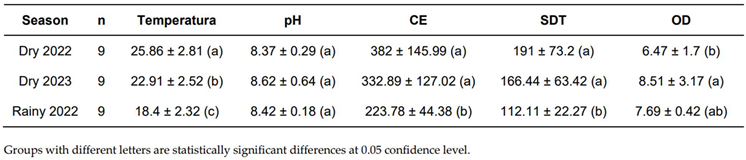 |
Table 5.
Physicochemical values, their mean data and standard deviation in the nine stations (SS1...SS9) of the Tlapaneco river section in the dry season 2022, rainy season 2022 and dry season 2023.
Table 5.
Physicochemical values, their mean data and standard deviation in the nine stations (SS1...SS9) of the Tlapaneco river section in the dry season 2022, rainy season 2022 and dry season 2023.
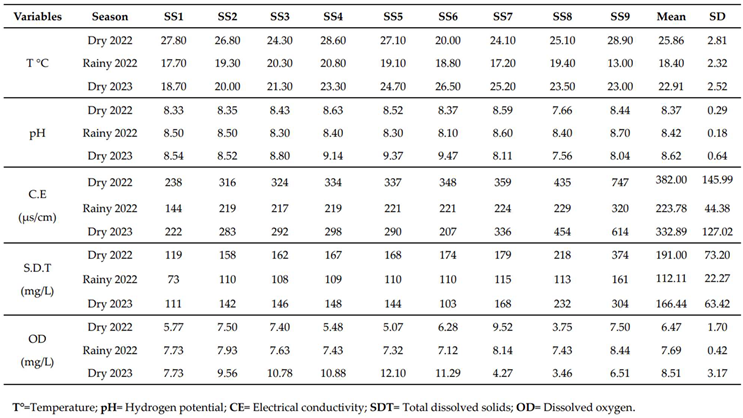 |
Table 6.
Explained variance of the principal components (eigenvalue), percentage of explained variance of the components (% variation), percentage of accumulated variance of the PCs (Cum. % variation) and loading of the variables in the PCs (eigenvalues).
Table 6.
Explained variance of the principal components (eigenvalue), percentage of explained variance of the components (% variation), percentage of accumulated variance of the PCs (Cum. % variation) and loading of the variables in the PCs (eigenvalues).
 |
Disclaimer/Publisher’s Note: The statements, opinions and data contained in all publications are solely those of the individual author(s) and contributor(s) and not of MDPI and/or the editor(s). MDPI and/or the editor(s) disclaim responsibility for any injury to people or property resulting from any ideas, methods, instructions or products referred to in the content. |
© 2025 by the authors. Licensee MDPI, Basel, Switzerland. This article is an open access article distributed under the terms and conditions of the Creative Commons Attribution (CC BY) license (http://creativecommons.org/licenses/by/4.0/).
Copyright: This open access article is published under a Creative Commons CC BY 4.0 license, which permit the free download, distribution, and reuse, provided that the author and preprint are cited in any reuse.


