Preprint
Article

This version is not peer-reviewed.

The Biotechnological Potential of Bacteria Isolated From Environmental Samples of Mines and Reserve Areas in Honduras

Submitted:

10 January 2025

Posted:

13 January 2025

You are already at the latest version

Abstract

Biotechnology provides sustainable solutions for soil and ecological deterioration resulting from human activities. This study investigated the biotechnological potential of strains isolated from environmental samples collected in protected areas and mines of Honduras, focusing on their application for producing biofertilizers and bioremediation. 63 samples were collected from: soil, soil covers, mine waters, and hot springs. From these, 118 bacterial strains were isolated and characterized using microbiological and molecular techniques. The genera Pseudomonas, Bacillus, Azospirillum, and Azotobacter were associated with some of the isolated strains and stood out for their ability to solubilize potassium, fix nitrogen and produce bioactive compounds. Isolates related to bacteria of the genera Bacillus and Pseudomonas demonstrated potential use in biotechnology. Furthermore, some strains exhibited significant genetic diversity and biological similarity to bacterial genera and species utilized in pollution remediation and soil fertility improvement. A small group shows atypical morphologies, including pleomorphic, filamentous structures, features with vacuole-like traits, pigment production, iridescence, and metallic sheen. These results highlight the microbial biodiversity present in soil covers of protected Honduran ecosystems and their importance as reservoirs of microorganisms with biotechnological applications. This study emphasizes the importance of preserving these natural regions, not only for biodiversity preservation but also for utilizing their potential in formulating sustainable solutions to environmental and agricultural challenges.

Keywords: 
;  ;  ;  ;  

1. Introduction

According to the FAO, the degradation of soil and associated ecosystems is one of the main challenges facing humanity due to the growing demand for food and therefore for related industries [1]. Human activities have introduced numerous contaminants into the ecosystem, a significant portion of which has contaminated the soil. These contaminants, beyond degrading the ecosystem, may negatively impact the health of plants, animals, and humans [2,3]. Contaminated soil can also contaminate other elements such as water sources and therefore, the health of the communities that benefit from these. It has been demonstrated that primary soil pollutants include industrial activities, mining, solid waste management, agricultural, combustion of fossil fuels, and transportation emissions [4]. Except for agrochemicals, the other pollutants are challenging to quantify, due to technological limitations or their environmental release cycles, which complicate measurement [1]. Ironically, agriculture is essential for the advancement and sustainability of the global population. One proposed strategy to mitigate agriculture’s impact on ecosystems is the utilization of biological products which may either completely or partially fulfill the nutritional needs of crops and to control or mitigate the impact of pests and disease that affect crops [5]. Microorganisms represent significant biotechnological tools, attributable to their diverse uses across several sectors including agriculture and industry. Bacteria from genera such as Pseudomonas, Bacillus, and Azotobacter have shown utility in sustainable agriculture by promoting plant growth, augmenting soil fertility and by biologically controlling diseases [6]. Moreover, utilizing these microbes as bioremediation agents is an option for reducing soil contamination, utilizing their ability to degrade, transform, or absorb pollutants. Furthermore, the previously described taxa, and the genus Serratia, Proteus, and Methylobacterium, have been evaluated for their bioremediation potential and are usually found in different ecosystems [7,8]. Consequently, the investigation of this and other microorganisms is an important objective for contamination management and the mitigation of ecological deterioration [9]. This study aimed to evaluate several environmental samples to identify optimal matrices for isolating bacteria with biotechnology potential. The project’s design primarily employed conventional microbiological techniques, supplemented with molecular tests to enhance bacterial identification from the collected samples.

2. Materials and Methods

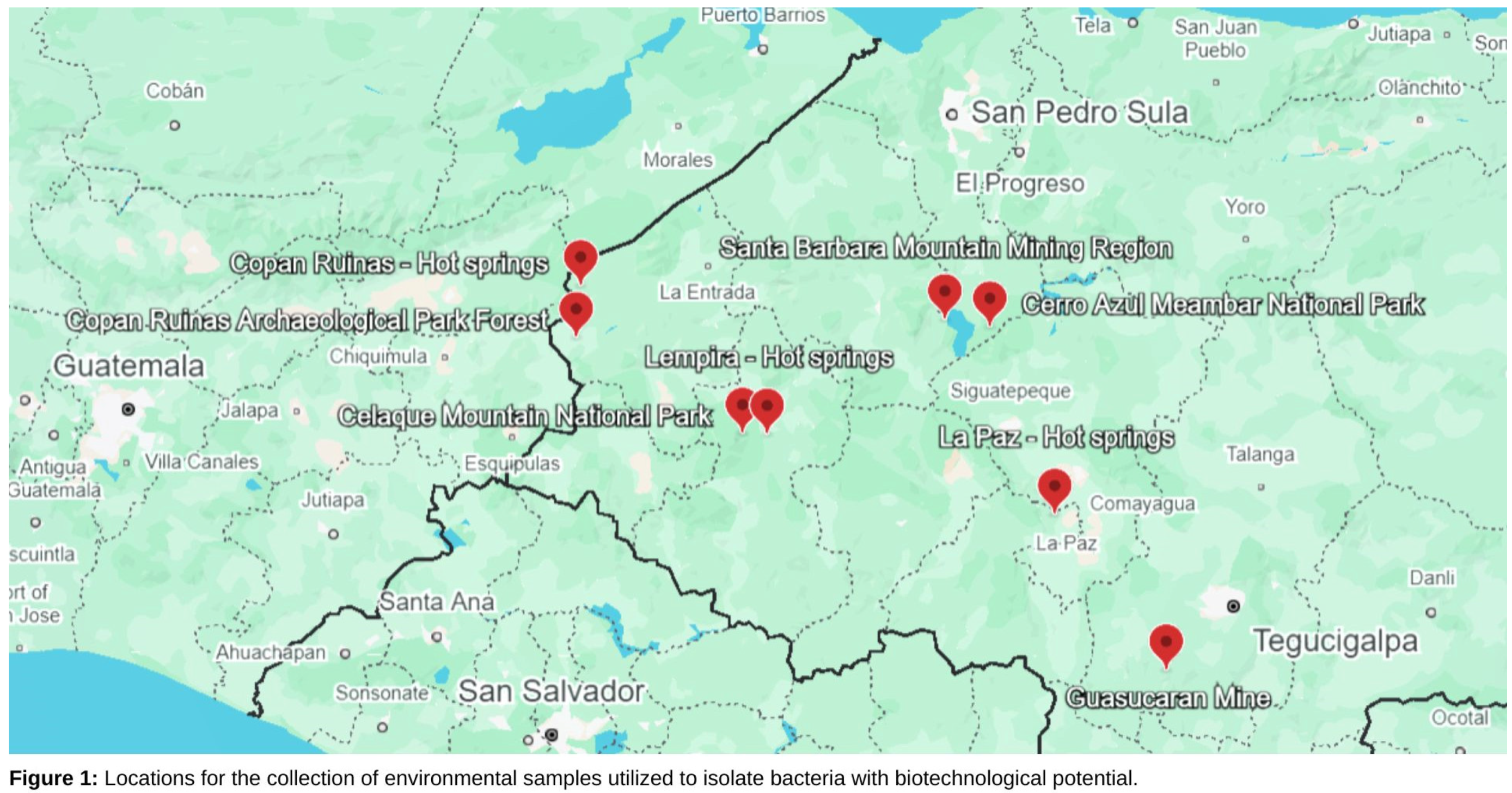
Soil, ground cover (leaf litter), hot springs, and mine water samples have been collected from mines, reserved areas and national parks in Honduras (Figure 1). All samples were obtained under aseptic conditions and in accordance with the guidelines described below. Soil samples were obtained about 10 cm deep to evaluate facultative anaerobic bacteria. Soil cover samples were taken 10 cm from the trunks of various plant types. In the end, hot spring and mine water samples were obtained using plastic containers previously sterilized guiding with the Standard Methods for Examination of Water and Wastewater 23rd Edition [10]. The samples were transported through cold chain to the laboratory of the Center for Research on Infectious and Zoonotic Agents (CIAIZ-UNAH), where they were then diluted in 0.1% buffered peptone water at a 1/10 ratio until obtaining a dilution of 10-8. The samples were pre-enriched by inoculating conical tubes with sterile LB Broth, using 1 ml of the 10-6 and 10-8 dilutions. The samples were afterwards incubated for 24 to 72 hours at room temperature with constant agitation. LB Agar and Ashby Agar plates (10 grams of mannitol, 0.2 grams of K₂HPO₄, 0.2 grams of MgSO₄, 0.2 grams of NaCl, 0.1 grams of CaSO₄, 5.0 grams of CaCO3, 2% of agar; pH 7.5 ±0.2 for 1 liter) [11] were inoculated with 0.1 ml of pre-enriched cultures by spreading on the surface and incubated at 25°C for 24 hours or until bacterial colonies emerged. Subsequently, bacteria isolated from the previous phase were selectively cultured using the Frobisher technique on LB agar at periodic times until pure strains were obtained. The isolates have been studied morphologically, biochemically, and genetically to identify the main genus and species that were isolated. Morphological characterization was performed by staining methods and the descriptions of the identified colonies. Biochemical characterization was done with biochemical assays depending on the presumptive bacterial species. The tests conducted included biological nitrogen fixation in Ashby agar, potassium solubilization in Aleksandrow agar (0.1 grams of bromothymol blue, 5.0 grams of dextrose, 0.005 grams of FeCl3, 0.1 grams de CaCO3, 0.5 grams of MgSO4 * 7H2O, 2.0 grams of CaSO4, 2.0 grams of K-bearing minerals, 2.0 grams of K2HPO4 and 2% of agar; for 1 liter) [12], carbohydrate fermentation (which includes xylose, mannitol, saccharose, maltose, glucose, lactose, and arabinose), indole test, ornithine decarboxylation, motility, growth in different NaCl concentrations, utilization of citrate as a carbon source, nitrite reduction, and assay of catalase activity. Lastly, to identify some species and genera of relevance like Bacillus, Pseudomonas, genetic markers associated with speciation were amplified, DNA samples were extracted and purified using the CTAB method [13]. Different regions of gene 16S rRNA were subsequently amplified by PCR as detailed below. To confirm the Pseudomonas genus, specific primers F311Ps (5′CTGGTCTGAGAGGATGATCAGT3′) and R1459Ps (5′AATCACTCCGTGGTAACCGT3′) were employed [14]. Amplification was conducted in an Applied Biosystems thermal cycler with the subsequent protocol: One cycle at 94°C for 5 minutes. 35 cycles at 94°C for one minute, 62°C for one minute, and 72°C for one minute, followed by a final extension at 72°C for ten minutes. For confirmation of the Bacillus genus, primers BK1F (5′TCACCAAGGCAACGATGCG’3) and BK2F (5′CGTATTCACCGCGGCATG’3) were employed [15]. PCR was conducted using an Applied Biosystems thermocycler with the subsequent protocol: One cycle at 94°C for 5 minutes, followed by 30 cycles of 94°C for 1 minute, 56°C for One minute, and 72°C for one minute, followed by a final extension at 72°C for ten minutes. A final volume of 20 µl was established for all PCR reaction mixes, which included 1 µl of genomic DNA, 10 µl of Apex Master Mix (Cat: 42-134B. Tris-HCl pH 8.5, (NH4)2SO4, 0.2% Tween 20, 0.4 mM of each dNTP, Apex Taq DNA Polymerase), 0.2 of each primer 10µM, and MilliQ water. Finaly, PCR products were evaluated on 2% agarose gels.

3. Result

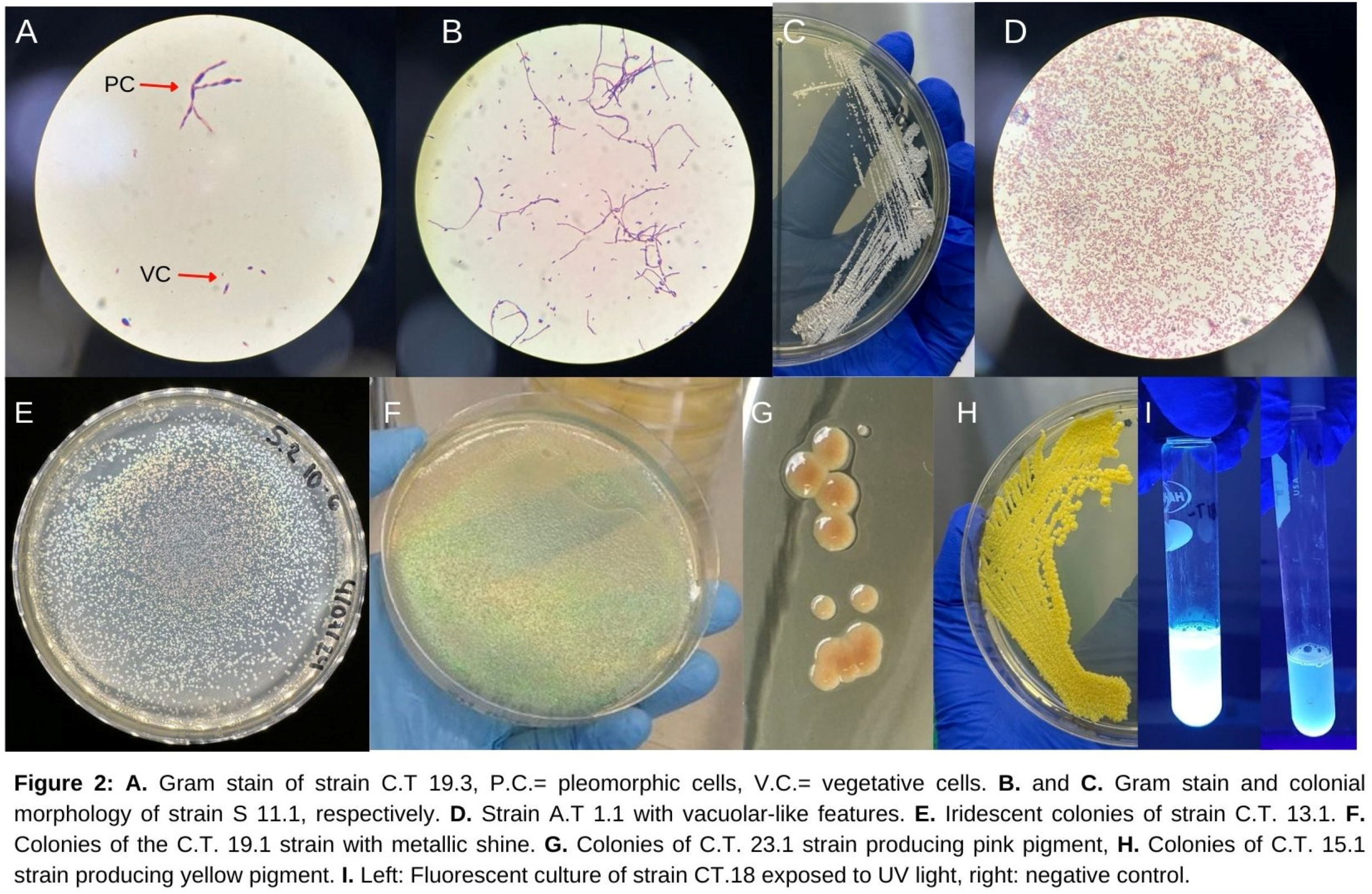
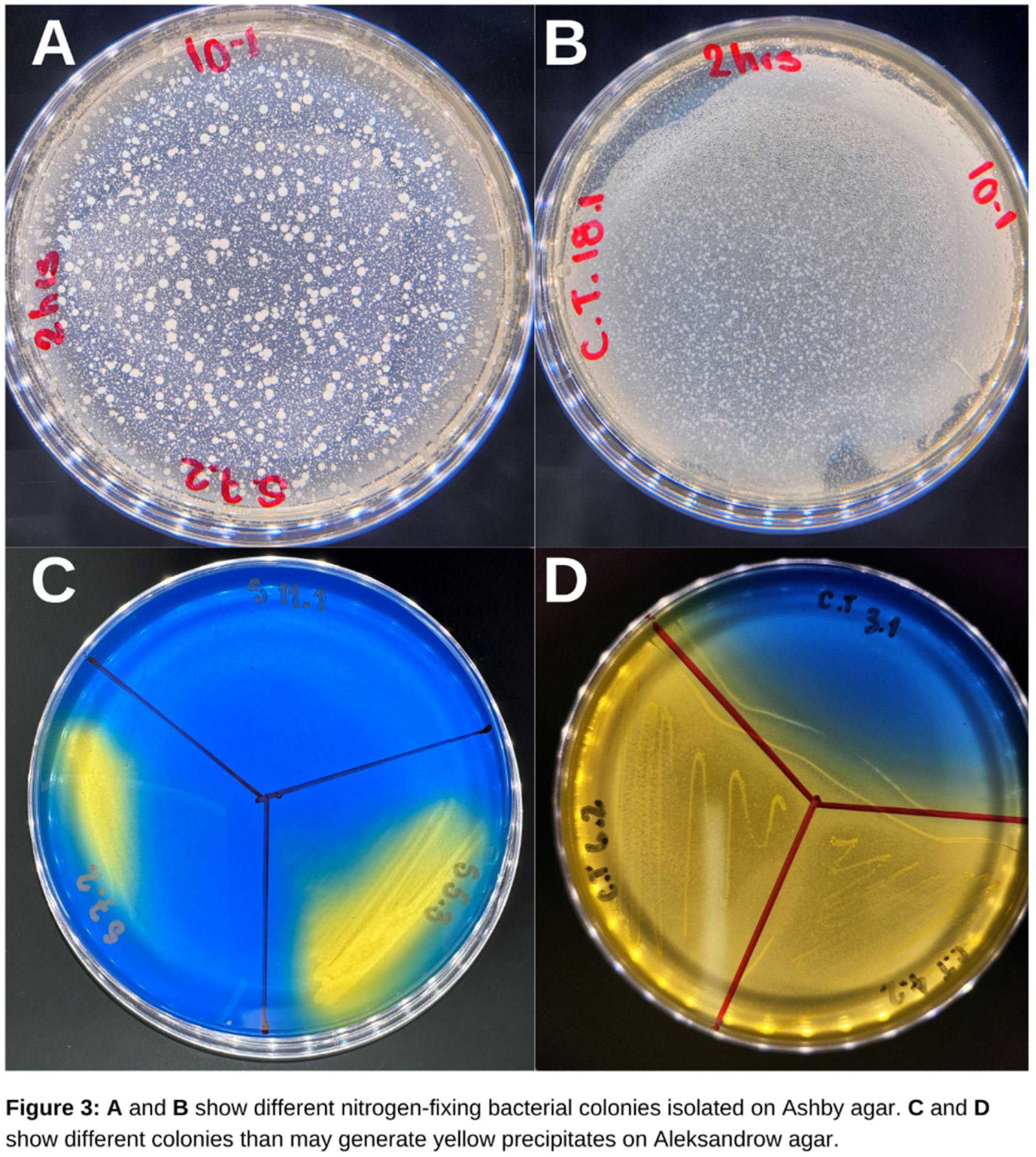
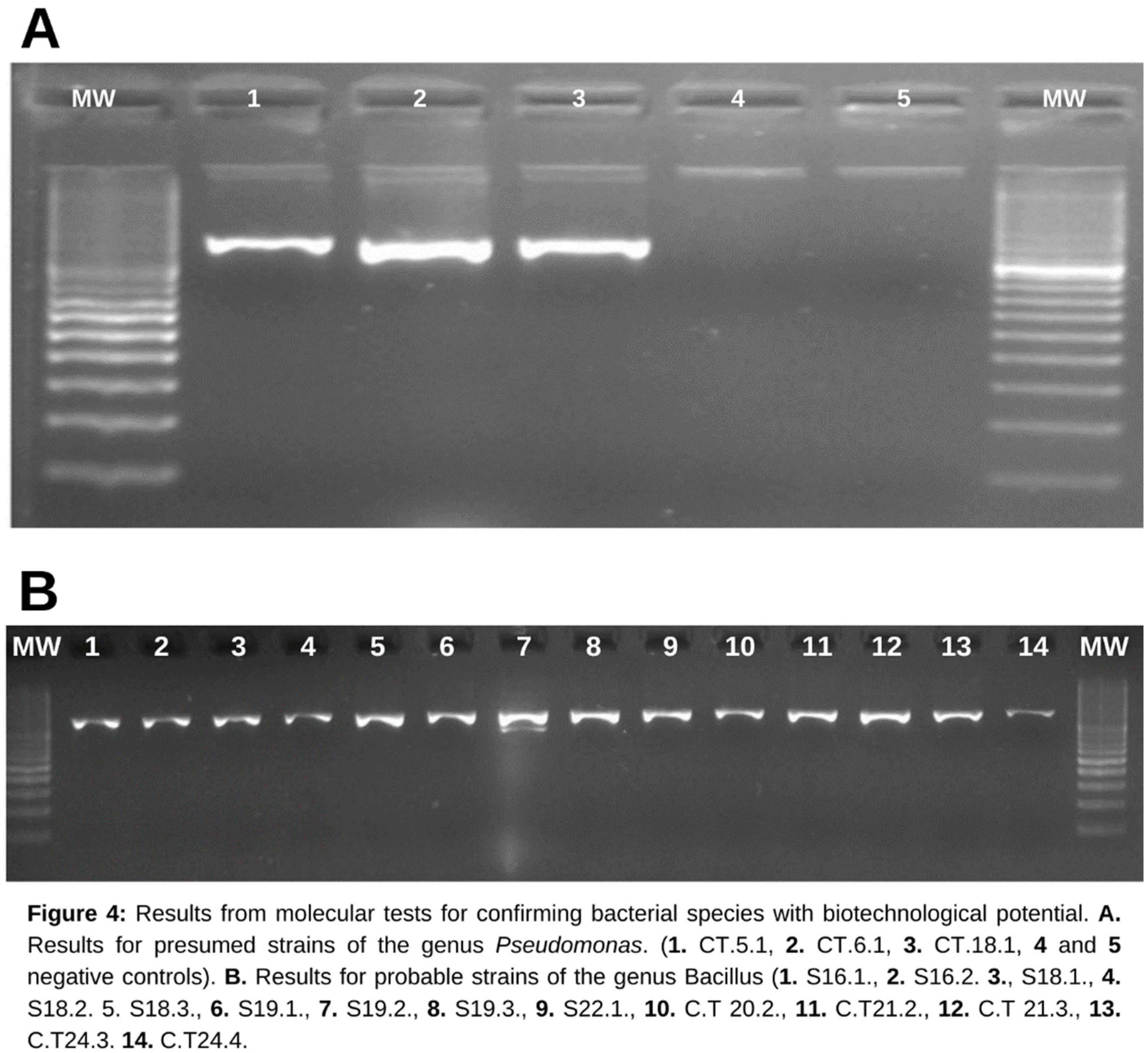
63 samples were obtained, including 22 soil samples, 24 ground cover samples, 15 hot springs and 2 mine water samples. 118 different bacterial strains were isolated, with 75 from LB agar and 43 from Ashby agar. The matrix from which the greatest number of bacterial isolates were obtained was ground cover samples (54 isolates), followed by soil samples (32 isolates), hot spring water (28 isolates) and mine water samples (4 isolates). Regarding cell morphology, most bacteria showed type Gram-negative bacillus cells, with 60 isolates, followed by Gram-positive bacillus, Gram-negative coccus, and Gram-positive coccus which 28, 20, and 10 isolates, respectively. Regarding colonial morphology, the predominant bacterial colonies were color white, rounded edges, circular shapes, clear shiny and pasty surface with 77 isolates, followed by thirteen isolated with similar characteristics to those previously isolates, but with flat surface. Thirteen translucency strains corresponded to those previously observed, while others differed only in the production of pink pigments and the generation of a green metallic sheen. Eleven isolates showed yellow color some strains show a greenish yellow, punctate shape, clear shiny and slightly convex elevation; and one colony exhibited a dry, friable kind. While another showed pasty, opaque colonies of a yellowish-white color. Finaly, three isolations exhibited atypical cellular morphologies, including the strain C.T 19.3 that exhibiting pleomorphic morphology, strain S 11.1 which showed a filamentous morphology and A.T 1.1 which exhibited vacuolar-like features (Figure 2). The biochemical test results (Table 1) indicated findings related to Bacillus, Pseudomonas, Azsopirillum, Azotobacter, including other organisms capable of solubilize potassium and fix nitrogen, that is proliferated on highly selective media such Ashby and Aleksandrow agar (Figure 3). Furthermore, organisms presumptive to be related to the Bacillus genus conducted catalase testing and were grown in media supplemented with 7% NaCl; all results were positive. Moreover, molecular analysis suggested that fourteen strains are classified within the genus Bacillus and four within the genus Pseudomonas (Figure 4). Finally, other characteristics including pigment production, iridescence, and metallic sheens were noted in nine different strains (Figure 2).

4. Discussion

Our findings indicate that soil cover samples exhibit significant bacterial diversity with biotechnological potential, and they suggest selectivity based on the associated plant species [16]. Different metabolites found in decomposing organic matter may help to explain this [16,17]. Both flora, fauna and associated microbiota may influence the viability of bacterial genera, while simultaneously promoting the proliferation of other bacterial species [18]. Iridescent, metallic shine, and pigment-producing bacteria were obtained from soil cover samples (C.T 13.1, C.T 15.1, C.T 19.1, C.T 23.1) indicating a notable characteristic that may suggest a greater biotechnological potential of the identified bacterial strains. Other bacteria with comparable properties have been isolated from hot spring samples (A.T 2.2, A.T 11.1, A.T 11.2, A.T 14.4, A.M 1). Iridescence and metallic sheens have been described in several research; nevertheless, these characteristics have not been explicitly related to biotechnological applications. Certain genera of bacteria that can provide these features include the genus Flavobacterium and Bacillus [19,20]. In contrast, the pigment-producing strains may be classified into the genera Micrococcus and Methylobacterium; multiple species of Micrococcus have exhibited the ability to produce compounds with antibacterial, antioxidant, cytogenetic, and cytotoxic properties [21,22]. Methylobacterium has been reported in several agricultural applications due to its capacity for biological nitrogen fixation; however, species of this genus have been associated with the degradation of petroleum-derived pollutants in bioremediation tasks [8,23,24,25]. Conversely, the strain showing vacuole-like structures may be associated with the species Alkalimicrobium pacificum [26] and Polaromonas vacuolata [27], which have been previously documented for their capacity to produce vesicles or vacuole-like gas structures. In addition, the strain exhibiting cellular pleomorphism may be related to other bacteria that possess similar cellular morphology, including those found in the genera Hyphobacterium and Hyphomicrobium [28,29,30,31]. These genera have been previously described for their bioremediation capabilities, especially in denitrification processes [30,32,33,34]. These findings emphasize the importance of investigating these isolates to elucidate their biotechnological potential. Sixteen strains (CT.4.2, CT.6.2, CT.15.3, S.7.2, S.5.3, AT.5.1, AT.1.2, AT.6.2, AT.8.2, AT.5.1, AT.5.3, S.20.2, S.25.2, S.26.2, S.7.2 y S.5.3) demonstrated the capacity to grow in Aleksandrow agar, producing yellow precipitates that suggest potential for potassium solubilization in agricultural biotechnology. Among these, at least six exhibited significant solubilizing capacity, producing precipitates within the initial 12 to 24 hours following inoculation. Potassium is an important macronutrient for some crops, including citrus and Musaceae, where the requirements for potassium and nitrogen are comparable [35,36]. The application of bacteria to supply potassium to plants has demonstrated efficacy in several places worldwide. On the other hand, three strains (CT.5.1, CT.6.1 and CT.18.1) showed the capacity to generate fluorescence in simple medium. This particularity, in addition to its phenotypic and molecular characteristics, suggested potential strains of P. fluorescens. This finding is relevant as P. fluorescens is associated with the synthesis of phytohormones that can promote plant growth or induce dormancy break among other effects [37,38,39]. The utilization of P. fluorescens as an active component in biofertilizers that promote the growth of plants has been proposed in numerous studies [40,41,42]. At least fourteen isolates on Ashby agar may show promise in the application of agriculture. The conducted tests suggest bacteria from the genera Azotobacter and Azospirillum. Bacteria from these genera produce symbiotic interactions with agriculturally significant plants, enhancing nitrogen absorption thus increasing vegetative growth [43,44,45]. The fourteen identified strains associated with the Bacillus genus could have bioremediation potential. The reason for this is that strains of this kind of organism have been used as bioremediation agents in many different environments before. Furthermore, strains of the Bacillus genus have demonstrated utility as biocatalysts in several industrial applications [46,47,48]. Finaly, at least 36% of the identified isolates found had biotechnological potential, indicating that this kind of sample possesses significant microbial diversity for biotechnological exploration. These findings coincide with previous similar research [49,50].

5. Conclusions

The investigation of environmental samples to isolate microorganisms with biotechnological potential is a highly effective method. The sample type and associated flora are essential factors for directing the isolation of the target microorganisms. It is important to expand the investigation of these samples to identify bacteria with potential for biofertilizer and bioremediation agent production, thus contributing to the sustainable development goals concerning food security and environmental sustainability.

Author Contributions

Conceptualization, A.S.O.M. and P.V.O..; methodology, A.S.O.M. and P.V.O. validation, P.V.O., A.M.V. and M.R.O.; formal analysis, A.M.V., M.R.O.; D.B. writing—original draft preparation, A.S.O.M.; writing—review and editing, P.V.O., A.M.V., M.R.O, D.B. and T.O.; funding acquisition, A.S.O.M., T.O. and P.V.O. All authors have read and agreed to the published version of the manuscript.

Funding

This research was funded by Secretariat of Science, Technology, and Innovation (Secretaría de Ciencia Tecnología e Innovación - SENACIT), grant number CPN-003-2023 and CIAIZ-IIM.

Acknowledgments

We express our thanks to SENACIT for its support in financing this research; to CIAIZ-IIM for offering its facilities and equipment for the advancement of this initiative; to the Department of Microbiology for its assistance and provision of reagents.

Conflicts of Interest

The authors declare no conflicts of interest.

References

  1. FAO; UNEP. Summary for policy makers GLOBAL ASSESSMENT OF SOIL POLLUTION [Internet]. Rome, Italy; 2021 [cited 2024 Dec 8]. Available from: https://openknowledge.fao.org/handle/20.500.14283/cb4827en.
  2. Steffan, J.J.; Brevik, E.C.; Burgess, L.C.; Cerdà, A. The effect of soil on human health: an overview. Eur. J. Soil Sci. 2018, 69, 159–171. [Google Scholar] [CrossRef] [PubMed]
  3. Shetty, S.S.; D, D.; S, H.; Sonkusare, S.; Naik, P.B.; N, S.K.; Madhyastha, H. Environmental pollutants and their effects on human health. Heliyon 2023, 9, e19496. [Google Scholar] [CrossRef]
  4. Zhang, X.; He, L.; Yang, X.; Gustave, W. Editorial: Soil pollution, risk assessment and remediation. Front. Environ. Sci. 2023, 11, 1252139. [Google Scholar] [CrossRef]
  5. Pirttilä, A.M.; Tabas, H.M.P.; Baruah, N.; Koskimäki, J.J. Biofertilizers and Biocontrol Agents for Agriculture: How to Identify and Develop New Potent Microbial Strains and Traits. Microorganisms 2021, 9, 817. [Google Scholar] [CrossRef]
  6. Minuț, M.; Diaconu, M.; Roșca, M.; Cozma, P.; Bulgariu, L.; Gavrilescu, M. Screening of Azotobacter, Bacillus and Pseudomonas Species as Plant Growth-Promoting Bacteria. Processes 2022, 11, 80. [Google Scholar] [CrossRef]
  7. Olajide, P.O.; Adeloye, A.O. Hydrocarbon biodegradation by Proteus and Serratia strains isolated from oil-polluted water in Bonny Community, Niger Delta, Nigeria. Results Chem. 2022, 5. [Google Scholar] [CrossRef]
  8. Dourado, M.N.; Aparecida Camargo Neves, A.; Santos, D.S.; Araújo, W.L. Biotechnological and Agronomic Potential of Endophytic Pink-Pigmented Methylotrophic Methylobacterium spp. Biomed Res Int. 2015, 2015, 1–19. [Google Scholar] [CrossRef] [PubMed]
  9. Kebede, G.; Tafese, T.; Abda, E.M.; Kamaraj, M.; Assefa, F. Factors Influencing the Bacterial Bioremediation of Hydrocarbon Contaminants in the Soil: Mechanisms and Impacts. J. Chem. 2021, 2021, 1–17. [Google Scholar] [CrossRef]
  10. Gilcreas, F.W. Standard Methods for the Examination of Water and Waste Water. Am. J. Public Health Nations Health 1966, 56, 387–388. [Google Scholar] [CrossRef]
  11. Romero-Perdomo, F.; Abril, J.; Camelo, M.; Moreno-Galván, A.; Pastrana, I.; Rojas-Tapias, D.; Bonilla, R. Azotobacter chroococcum as a potentially useful bacterial biofertilizer for cotton (Gossypium hirsutum): Effect in reducing N fertilization. Rev. Argent. de Microbiol. 2017, 49, 377–383. [Google Scholar] [CrossRef] [PubMed]
  12. Rajawat, M.V.S.; Singh, S.; Tyagi, S.P.; Saxena, A.K. A Modified Plate Assay for Rapid Screening of Potassium-Solubilizing Bacteria. Pedosphere 2016, 26, 768–773. [Google Scholar] [CrossRef]
  13. Atashpaz, S.; Khani, S.; Barzegari, A.; Barar, J.; Vahed, S.Z.; Azarbaijani, R.; Omidi, Y. A robust universal method for extraction of genomic DNA from bacterial species. Microbiology 2010, 79, 538–542. [Google Scholar] [CrossRef]
  14. İnceoǧlu, O.; Hoogwout, E.F.; Hill, P.; van Elsas, J.D. Effect of DNA Extraction Method on the Apparent Microbial Diversity of Soil. Appl Environ Microbiol. 2010, 76, 3378–3382. [Google Scholar] [CrossRef]
  15. Anyi, U.; New, C.; Chai, L.; Loo, Y.; Nor Khaizura, M.A.R.; Kayali, A.; Radu, S. Prevalence of Bacillus cereus s.l. in ultra-high temperature chocolate milk from selected milk manufacturers in Malaysia. Food Res. 2020, 4, 982–990. [Google Scholar] [CrossRef] [PubMed]
  16. Chauhan, P.; Sharma, N.; Tapwal, A.; Kumar, A.; Verma, G.S.; Meena, M.; Seth, C.S.; Swapnil, P. Soil Microbiome: Diversity, Benefits and Interactions with Plants. Sustainability 2023, 15, 14643. [Google Scholar] [CrossRef]
  17. Song, Y.; Yao, S.; Li, X.; Wang, T.; Jiang, X.; Bolan, N.; Warren, C.R.; Northen, T.R.; Chang, S.X. Soil metabolomics: Deciphering underground metabolic webs in terrestrial ecosystems. Eco-Environment Heal. 2024, 3, 227–237. [Google Scholar] [CrossRef]
  18. Murúa, J.M.; Gaxiola, A. Variability in terrestrial litter decomposition can be explained by nutrient allocation strategies among soil decomposer communities. Funct. Ecol. 2023, 37, 1642–1652. [Google Scholar] [CrossRef]
  19. Kientz, B.; Luke, S.; Vukusic, P.; Péteri, R.; Beaudry, C.; Renault, T.; Simon, D.; Mignot, T.; Rosenfeld, E. A unique self-organization of bacterial sub-communities creates iridescence in Cellulophaga lytica colony biofilms. Sci. Rep. 2016, 6, 19906–19906. [Google Scholar] [CrossRef]
  20. Kientz, B.; Vukusic, P.; Luke, S.; Rosenfeld, E. Iridescence of a Marine Bacterium and Classification of Prokaryotic Structural Colors. Appl. Environ. Microbiol. 2012, 78, 2092–2099. [Google Scholar] [CrossRef]
  21. Hegazy, A.A.; Abu-Hussien, S.H.; Elsenosy, N.K.; El-Sayed, S.M.; El-Naga, M.Y.A. Optimization, characterization and biosafety of carotenoids produced from whey using Micrococcus luteus. BMC Biotechnol. 2024, 24, 1–17. [Google Scholar] [CrossRef] [PubMed]
  22. Tizabi, D.; Hill, R.T. Micrococcus spp. as a promising source for drug discovery: A review. J. Ind. Microbiol. Biotechnol. 2023, 50. [Google Scholar] [CrossRef] [PubMed]
  23. Harumain, Z.A.S.; Mohamad, M.A.N.; Nordin, N.F.H.; Shukor, M.Y.A. Biodegradation of Petroleum Sludge by Methylobacterium sp. Strain ZASH. Trop. Life Sci. Res. 2023, 34, 197–222. [Google Scholar] [CrossRef] [PubMed]
  24. Torres Vera, R.; Bernabé García, A.J.; Carmona Álvarez, F.J.; Martínez Ruiz, J.; Fernández Martín, F. Application and effectiveness of Methylobacterium symbioticum as a biological inoculant in maize and strawberry crops. Folia Microbiol (Praha) 2024, 69, 121–131. [Google Scholar] [CrossRef] [PubMed]
  25. Arrobas, M.; Correia, C.M.; Rodrigues, M.Â. Methylobacterium symbioticum Applied as a Foliar Inoculant Was Little Effective in Enhancing Nitrogen Fixation and Lettuce Dry Matter Yield. Sustainability 2024, 16, 4512. [Google Scholar] [CrossRef]
  26. Zhang, G.; Yang, Y.; Wang, S.; Sun, Z.; Jiao, K. Alkalimicrobium pacificum gen. nov., sp. nov., a marine bacterium in the family Rhodobacteraceae. Int. J. Syst. Evol. Microbiol. 2015, 65, 2453–2458. [Google Scholar] [CrossRef]
  27. Irgens, R.L.; Gosink, J.J.; Staley, J.T. Polaromonas vacuolata gen. nov., sp. nov., a Psychrophilic, Marine, Gas Vacuolate Bacterium from Antarctica. Int. J. Syst. Evol. Microbiol. 1996, 46, 822–826. [Google Scholar] [CrossRef]
  28. Ruan, C.-J.; Zheng, X.-W.; Wang, J.; Song, L.; Zhu, Y.-X.; Du, W.-B.; Lu, Z.-J.; Huang, Y.; Huang, L.; Dai, X. Hyphobacterium indicum sp. nov., isolated from deep seawater, and emended description of the genus Hyphobacterium. Int. J. Syst. Evol. Microbiol. 2018, 68, 3760–3765. [Google Scholar] [CrossRef]
  29. Zhao, S.b.; Liu, L.; Lian, F.B.; Du, Z.J. Hyphobacterium marinum sp. nov. and Hyphobacterium lacteum sp. nov., isolated from marine sediment. Int J Syst Evol Microbiol. 2024, 74. [Google Scholar] [CrossRef] [PubMed]
  30. Martineau, C.; Villeneuve, C.; Mauffrey, F.; Villemur, R. Hyphomicrobium nitrativorans sp. nov., isolated from the biofilm of a methanol-fed denitrification system treating seawater at the Montreal Biodome. Int. J. Syst. Evol. Microbiol. 2013, 63, 3777–3781. [Google Scholar] [CrossRef] [PubMed]
  31. Martineau, C.; Mauffrey, F.; Villemur, R. Comparative Analysis of Denitrifying Activities of Hyphomicrobium nitrativorans, Hyphomicrobium denitrificans, and Hyphomicrobium zavarzinii. Appl. Environ. Microbiol. 2015, 81, 5003–5014. [Google Scholar] [CrossRef] [PubMed]
  32. Pol, A.; Op den Camp, H.J.M.; Mees, S.G.M.; Kersten, M.A.S.H.; van der Drift, C. Isolation of a dimethylsulfide-utilizing Hyphomicrobium species and its application in biofiltration of polluted air. Biodegradation 1994, 5, 105–112. [Google Scholar] [CrossRef]
  33. Martineau, C.; Mauffrey, F.; Villemur, R. Comparative Analysis of Denitrifying Activities of Hyphomicrobium nitrativorans, Hyphomicrobium denitrificans, and Hyphomicrobium zavarzinii. Appl. Environ. Microbiol. 2015, 81, 5003–5014. [Google Scholar] [CrossRef] [PubMed]
  34. Li, J.; Törkel, K.; Koch, J.; Tanabe, T.S.; Hsu, H.Y.; Dahl, C. In the Alphaproteobacterium Hyphomicrobium denitrificans SoxR Serves a Sulfane Sulfur-Responsive Repressor of Sulfur Oxidation. Antioxidants 2023, 12, 1620. [Google Scholar] [CrossRef]
  35. Thu, A.M.; Alam, S.M.; Khan, M.A.; Han, H.; Liu, D.-H.; Tahir, R.; Ateeq, M.; Liu, Y.-Z. Foliar spraying of potassium sulfate during fruit development comprehensively improves the quality of citrus fruits. Sci. Hortic. 2024, 338. [Google Scholar] [CrossRef]
  36. Simon, C.A.; Kayode, P.B. Nitrogen and potassium fertilizer influenced nutrient use efficiency and biomass yield of two plantain (Musa spp. AAB) genotypes. Afr. J. Agric. Res. 2015, 10, 458–471. [Google Scholar] [CrossRef]
  37. Al-Karablieh, N.; Al-Shomali, I.; Al-Elaumi, L.; Hasan, K. Pseudomonas fluorescens NK4 siderophore promotes plant growth and biocontrol in cucumber. J. Appl. Microbiol. 2022, 133, 1414–1421. [Google Scholar] [CrossRef] [PubMed]
  38. Wu, X.; Wang, X.; Meng, H.; Zhang, J.; Lead, J.R.; Hong, J. Pseudomonas fluorescens with Nitrogen-Fixing Function Facilitates Nitrogen Recovery in Reclaimed Coal Mining Soils. Microorganisms 2023, 12, 9. [Google Scholar] [CrossRef]
  39. Wang, Z.; Chen, X.; Zhong, T.; Li, B.; Yang, Q.; Du, M.; Zalán, Z.; Kan, J. Bioeffector Pseudomonas fluorescens ZX Elicits Biosynthesis and Accumulation of Functional Ingredients in Citrus Fruit Peel: A Promising Strategy for a More Sustainable Crop. J. Agric. Food Chem. 2021, 69, 13810–13820. [Google Scholar] [CrossRef]
  40. Sah, S.; Krishnani, S.; Singh, R. Pseudomonas mediated nutritional and growth promotional activities for sustainable food security. Curr. Res. Microb. Sci. 2021, 2, 100084. [Google Scholar] [CrossRef] [PubMed]
  41. Mudi, L.; Muhidin; Rakian, T.C.; Sutariati, G.A.K.; Leomo, S.; Yusuf, D.N. Effectivity of Pseudomonas fluorescens TBT214 in increasing soybean seed quality in different seed vigor. IOP Conf Ser Earth Environ Sci. 2021, 807, 042069. [Google Scholar] [CrossRef]
  42. Chitra, P.; Jijeesh, C.M. Biopriming of seeds with plant growth promoting bacteria Pseudomonas fluorescens for better germination and seedling vigour of the East Indian sandalwood. New For. 2021, 52, 829–841. [Google Scholar] [CrossRef]
  43. Prusty, S.; Sahoo, R.K.; Sharaya, R.; Tuteja, N.; Gill, S.S. Unraveling the potential of native Azotobacter and Azospirillum spp. formulations for sustainable crop production of rice (Oryza sativa L. var. Khandagiri). South Afr. J. Bot. 2023, 162, 10–19. [Google Scholar] [CrossRef]
  44. Naqqash, T.; Malik, K.A.; Imran, A.; Hameed, S.; Shahid, M.; Hanif, M.K.; Majeed, A.; Iqbal, M.J.; Qaisrani, M.M.; van Elsas, J.D. Inoculation with Azospirillum spp. Acts as the Liming Source for Improving Growth and Nitrogen Use Efficiency of Potato. Front. Plant Sci. 2022, 13, 929114. [Google Scholar] [CrossRef] [PubMed]
  45. Sumbul, A.; Ansari, R.A.; Rizvi, R.; Mahmood, I. Azotobacter: A potential bio-fertilizer for soil and plant health management. Saudi J. Biol. Sci. 2020, 27, 3634–3640. [Google Scholar] [CrossRef] [PubMed]
  46. Rocco, D.H.E.; Freire, B.M.; Oliveira, T.J.; Alves, P.L.M.; Júnior, J.M.d.O.; Batista, B.L.; Grotto, D.; Jozala, A.F. Bacillus subtilis as an effective tool for bioremediation of lead, copper and cadmium in water. Discov. Appl. Sci. 2024, 6, 1–10. [Google Scholar] [CrossRef]
  47. Arce-Inga M, González-Pérez AR, Hernandez-Diaz E, Chuquibala-Checan B, Chavez-Jalk A, Llanos-Gomez KJ, et al. Bioremediation Potential of Native bacillus sp. Strains as a Sustainable Strategy for Cadmium Accumulation of Theobroma cacao in Amazonas Region. Microorganisms 2022, 10, 2108. [Google Scholar] [CrossRef] [PubMed]
  48. Das, A.; Das, N.; Rajkumari, J.; Pandey, P.; Pandey, P. Exploring the bioremediation potential of Bacillus spp. for sustainable mitigation of hydrocarbon contaminants. Environ. Sustain. 2024, 7, 135–156. [Google Scholar] [CrossRef]
  49. Golnari, M.; Bahrami, N.; Milanian, Z.; Khorasgani, M.R.; Asadollahi, M.A.; Shafiei, R.; Fatemi, S.S.-A. Isolation and characterization of novel Bacillus strains with superior probiotic potential: comparative analysis and safety evaluation. Sci. Rep. 2024, 14, 1–11. [Google Scholar] [CrossRef]
  50. Hussein, M.H.; Saeed, I.O. Isolation, Identification Bacteria and Bioremediation of Soil Contaminate Crude Oil from Specific Area (Baiji_Iraq). J. Res. Appl. Sci. Biotechnol. 2022, 1, 187–193. [Google Scholar] [CrossRef]
Preprints 145763 g001
Preprints 145763 g002
Preprints 145763 g003
Preprints 145763 g004
Table 1. Results of presumptive biochemical tests for the identification of potential bacterial genera associated with isolates from environmental samples.
Sample ID Carbohydrate Fermentation
Motility
Indole test Ornithine decarboxylation Growth in
NaCl 6.5%
Citrate Usage NO3 Reduction
Xylose Mannitol Saccharose Maltose Glucose Lactose Arabinose
CT.11.1 - + - + + - - + + + + + +
S.5.3 + + + + + - + + + - + - +
S.26.2 + - - + + - + + + - - + -
AT.5.3 - + + + + - + + + - + + +
CT.4.2 - + + + + - - + + - + + +
CT.15.3 + - + + - - + - - - - + -
CT.5.1 + + + + + - - + + - - + +
CT.12.1 + - + - + - - - - - - + -
CT.18.1 + + - - + - - + - - + + +
CT.6.1 + + + - + - - + - - + + +
S.7.2 + - - - - - + - - - - + -
CT.6.2 - + + + + - - + + - + + +
Note: (+) = Positive test, (-) = Negative test.
Disclaimer/Publisher’s Note: The statements, opinions and data contained in all publications are solely those of the individual author(s) and contributor(s) and not of MDPI and/or the editor(s). MDPI and/or the editor(s) disclaim responsibility for any injury to people or property resulting from any ideas, methods, instructions or products referred to in the content.
Copyright: This open access article is published under a Creative Commons CC BY 4.0 license, which permit the free download, distribution, and reuse, provided that the author and preprint are cited in any reuse.
Prerpints.org logo

Preprints.org is a free preprint server supported by MDPI in Basel, Switzerland.

Subscribe

Disclaimer

Terms of Use

Privacy Policy

Privacy Settings

© 2025 MDPI (Basel, Switzerland) unless otherwise stated