
Submitted:
09 January 2025
Posted:
09 January 2025
You are already at the latest version
Abstract
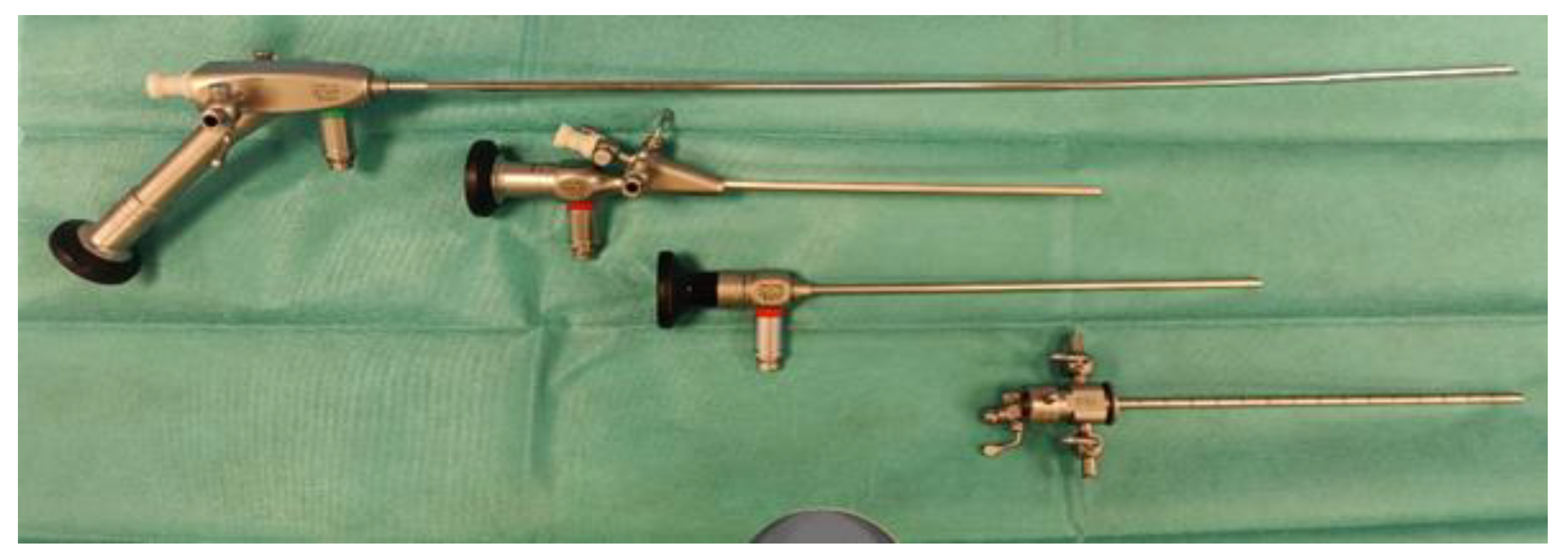
Vaginoscopy plays a crucial role in the diagnosis of reproductive anomalies, assessment of the extent of vaginal injuries, identification of the origin of vulvar discharge, and detection of repro-ductive-related factors contributing to urinary incontinence and recurrent urinary tract infec-tions. Endoscopy of the vaginal canal is used both for diagnosis and also for intrauterine proce-dures such as artificial insemination. In addition, endoscopy has several advantages over surgical procedures because it is a non-invasive procedure. Flexible or rigid endoscopes may be used to perform endoscopic vaginoscopy. Endoscopes with a camera at the tip of the scope provide better image quality than scopes with fiber optic viewing. As a result, we recommend having accessible scopes of different sizes. Vaginal endoscopy is a diagnostic tool and technique that allows for both the diagnosis and performance of intrauterine procedures, such as artificial insemination, and provide additional diagnostic regarding estrus cycle phase, or to assess the source or origin of vulvar discharge, identify the type and size of vaginal tumors, polyps, and abnormalities. This method is noninvasive and presents several advantages over surgical procedures. Two major limitations are the cost of the equipment and the need for special training.
Keywords:
1. Introduction
2. Materials and Methods
3. Results
Transcervical Catheterisation
4. Conclusions
Author Contributions
Funding
Acknowledgements
Conflicts of Interest
References
- Arlt, S.P., Rohne, J., Ebert, A.D., and Heuwieser, W. (2012). Endoscopic resection of a vaginal septum in a bitch and observation of septa in two related bitches. N Z Vet J 60: 258–260. [CrossRef]
- Brearley MJ, Cooper JE: The diagnosis of bladder disease in dogs by cystoscopy. J Small Anim Pract 28:75-85,.
- Christensen, B., Schlafer, D., Agnew, D. et al. (2012). Diagnostic value of transcervical endometrial biopsies in domestic dogs compared with full-thickness uterine sections. Reprod Domest Anim 47: 342–346. [CrossRef]
- Colaço, B., Dos Anjos Pires, M., and Payan-Carreira, R. (2012). Congenital aplasia of the uterine-vaginal segment in dogs. In: A Bird’s Eye View of Veterinary Medicine (ed. C.C. Perez-Marin), 165–178. Croatia: InTech.
- Davidson, A. and Eilts, B. (2006). Advanced small animal reproductive techniques. J. Am. Anim. Hosp. Assoc. 42: 10–17.
- Fontbonne, A. (2010). Approaching the endoscopic vaginal insemination. Why use this kind of diagnostic investigation? Proceedings of International SCIVAC Congress, Rimini, Italy (28–30 May 2010).
- Gregory, S.P., Holt, P.E., Parkinson, T.J., and Wathes, C.M. (1999). Vaginal position and length in the bitch: relationship to spaying and urinary incontinence. J. Small Anim. Pract. 40: 180–184. [CrossRef]
- Günzel-Apel, A.R., Wilke, M., Aupperle, H., and Schoon, H.A. (2001). Development of a technique for transcervical collection of uterine tissue in bitches. J. Reprod. Fertil. Suppl. (suppl. 57): 61–65.
- Hotston-Moore, A. and England, G.C.W. (2008). Rigid endoscopy: urethrocystoscopy and vaginoscopy. In: Manual of Canine and Feline Endoscopy and Endosurgery (eds. P. Lhermette and D. Sobel), 142–115. Cheltenham: British Small Animal Veterinary Association.
- Jody P. Lulich (2006). Endoscopic vaginoscopy in the dog, 66(3), 0–591. [CrossRef]
- 11. Kao S, Barger A, Garrett LD. Vaginal swab cytology as a diagnostic tool for neoplasia of the lower urinary tract in 5 dogs. Can Vet J. 2022 Dec;63(12):1221-1225. PMID: 36467378; PMCID: PMC9648476.
- 1, 12. Kassem Houshaimy, Dorin Țogoe, Tiberiu Constantin, Micșa Cătălin, Alexandru Șonea, „Preliminary Study Regarding the Additional Effect of Adding Antioxidants on Bull Frozen Semen” Agriculture for Life, Life for Agriculture” Conference Proceedings Vol 1, Issue 1, pages 440-444.
- Kustritz, M. R. (2011). Vaginoscopy. Nephrology and Urology of Small Animals, 188-191.
- Kustritz, M.V.R. (2006). Collection of tissue and culture samples from the canine reproductive tract. Theriogenology 66 (3): 567–574.
- Kyles, A. E., Vaden, S., Hardie, E. M., & Stone, E. A. (1996). Vestibulovaginal stenosis in dogs: 18 cases (1987–1995). Journal of the American Veterinary Medical Association, 209(11), 1889-1893.
- Lévy, X. (2016). Videovaginoscopy of the canine vagina. Reprod. Domest. Anim. 51: 31–36. [CrossRef]
- Lindsay, F.E.F. (1983). The normal endoscopic appearance of the caudal reproductive tract of the cyclic and non-cyclic bitch: post-uterine endoscopy. J. Small Anim. Pract. 24: 1–15.
- Lopate, C. (2012). Transcervical endoscopic procedures in the bitch. Clin. Theriogenol. 4: 213–224.
- Lulich, J.P. (2006). Endoscopic vaginoscopy in the dog. Theriogenology 66: 588–591.
- Maenhoudt C, N. R. dos Santos (2021). Veterinary Endoscopy for the Small Animal Practitioner 363–381. [CrossRef]
- 21. Mancuso G, Midiri A, Gerace E, Marra M, Zummo S, Biondo C. Urinary Tract Infections: The Current Scenario and Future Prospects. Pathogens. 2023 Apr 20;12(4):623. PMID: 37111509; PMCID: PMC10145414. [CrossRef]
- Mason, S. (2017). A retrospective clinical study of endoscopic-assisted transcervical insemination in the bitch with frozen–thawed dog semen. Reprod. Domest. Anim. 52: 275–280. [CrossRef]
- Micșa Cătălin, Dorin Țogoe, Gina Gîrdan, Maria Roxanaturcu, Cristina Preda, Andrei Tanase., Intravesical Administration Of Cytostatic In A Dog With Urinary Bladder Carcinoma - Case Study”. Scientific Works. Series C. Veterinary Medicine, Vol. LXVI, Issue 2 (2020), Issn 2067-3663 Pages 46-52.
- Moore, A. H., & England, G. (2008). Rigid endoscopy: urethrocystoscopy and vaginoscopy. In BSAVA Manual of Canine and Feline Endoscopy and Endosurgery (pp. 142-157). BSAVA Library.
- Silva, M. A. M., Teixeira, P. P. M., Coutinho, L. N., Gutierrez, R. R., Macente, B. I., Vicente, W. R. R., ... & Brun, M. V. (2014). Resection of vaginal neoplasms by video-vaginoscopy in bitches.
- Soderberg, S.F. (1986). Vaginal disorders. Vet. Clin. North Am. Small Anim. Pract. 16 (3): 543–559.
- Verin R, Cian F, Stewart J, et al. Canine Clitoral Carcinoma: A Clinical, Cytologic, Histopathologic, Immunohistochemical, and Ultrastructural Study. Veterinary Pathology. 2018;55(4):501-509. [CrossRef]
- Wang, K. Y., Samii, V. F., Chew, D. J., McLoughlin, M. A., DiBartola, S. P., Masty, J., & Lehman, A. M. (2006). Vestibular, vaginal, and urethral relations in spayed dogs with and without lower urinary tract signs. Journal of veterinary internal medicine, 20(5), 1065-1073.
- Whitler, W. (2023). Canine transcervical insemination: history and technique. Clinical Theriogenology 15. [CrossRef]
- Wilson, M.S. (2001). Transcervical Insemination Techniques in the Bitch. Veterinary Clinics of North America Small Animal Practice 31(2):291-304. [CrossRef]
- Wilson, M.S. (2003). Endoscopic transcervical insemination in the bitch. In: Recent Advances in Small Animal Reproduction (eds. P.W. Concannon, G. England, J. Verstegen III and C. Linde-Forsberg). Ithaca, New York: International Veterinary Information Service [A1232.1203] www.ivis.org.
- Yamamoto, K., Kitai, M., Yamamoto, K., Sakuma, T., Nagao, S., & Yamaguchi, S. (2021). Successful endoscopic treatment for high-grade cervical intraepithelial neoplasia with gross lesions of the vagina. Gynaecology and Minimally Invasive Therapy, 10(2), 124-126.
Disclaimer/Publisher’s Note: The statements, opinions and data contained in all publications are solely those of the individual author(s) and contributor(s) and not of MDPI and/or the editor(s). MDPI and/or the editor(s) disclaim responsibility for any injury to people or property resulting from any ideas, methods, instructions or products referred to in the content. |
© 2025 by the authors. Licensee MDPI, Basel, Switzerland. This article is an open access article distributed under the terms and conditions of the Creative Commons Attribution (CC BY) license (http://creativecommons.org/licenses/by/4.0/).