

Submitted:
08 January 2025
Posted:
08 January 2025
You are already at the latest version
Abstract
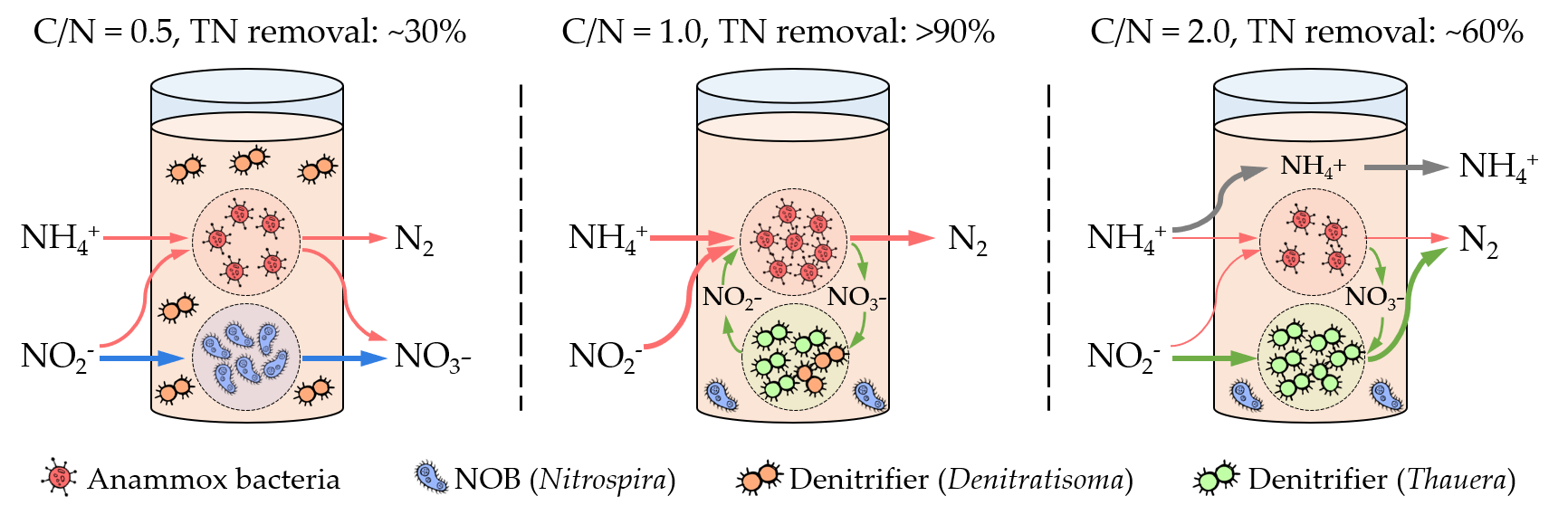
Achieving simultaneous anammox and denitrification is a promising strategy to enhance nitrogen removal in mainstream anammox processes. However, the optimal influent C/N ratio and the microbial dynamics driving this process are still not fully understood. In this study, three mainstream anammox reactors were operated with varying influent C/N ratios. The results demonstrated a remarkable nitrogen removal efficiency of 92.6% achieved by combining partial denitrification and anammox, with the C/N ratio set at 1.0. Whereas, the nitrogen removal efficiency decreased when the C/N ratio was either 0.5 or 2.0, causing the accumulation of nitrate and ammonium in the effluent, respectively. These results suggest a narrow optimal range of the influent C/N ratio for mainstream anammox processes. Additionally, a transition in the predominant denitrifier population from Denitratisoma to Thauera was noted with the rise of the C/N ratio. The denitrifying phenotype of Thauera greatly depended on the C/N ratio. Only at a suitable C/N ratio, Thauera can effectively collaborate with anammox bacteria, partially reducing the nitrate generated in the anammox reaction. When the C/N ratio was high, Thauera primarily performed nitrite reduction, notably inhibiting anammox activity. The results of this study are valuable for the optimal design of the mainstream anammox process. In this study, the effects of carbon/nitrogen (C/N) ratio on mainstream anammox reactor were investigated.
Keywords:
simultaneous anammox and denitrification
; nitrogen removal
; mainstream wastewater
; C/N ratio
; Thauera
1. Introduction
The anammox process shows great promise as a sustainable method for removing nitrogen from mainstream municipal wastewater. [1,2]. This process can efficiently convert ammonium to N2 in an anaerobic environment with nitrite as the electron acceptor. Mainstream wastewaters generally contain only trace amounts of nitrite. Therefore, various types of partial nitritation reactors have been developed as a pretreatment method to supply nitrite substrate for anammox processes [3,4,5,6]. This has led to the formation of the two-stage partial nitritation/anammox process [7,8].
While a favorable nitrite/ammonium ratio for anammox can be achieved, it is important to note that the effluent of a partial nitritation reactor may still contain some undesirable substances, such as excessive nitrate and residual dissolved oxygen (DO). Specifically, the entrance of oxygen into the anammox reactor can stimulate the proliferation of nitrite-oxidizing bacteria (NOB) and hinder the anammox activity [9,10,11,12,13]. As a result, nitrate levels increased in the final effluent, resulting in low nitrogen removal efficiencies of 30%–60% in the mainstream anammox reactor [9,10,11,12].
Recently, the simultaneous process of anammox and denitrification has emerged as an effective method to decrease nitrate production and improve nitrogen removal in mainstream anammox reactors [9,14,15,16]. This can be achieved by introducing the appropriate amount of biodegradable organic matter into the mainstream anammox reactor. In some cases, nitrogen removal efficiencies have been enhanced to levels exceeding 90%, resulting in effluent with an extremely total nitrogen (TN) concentration [14]. Additionally, it has been documented denitrification can work in conjunction with anammox process [9,14]. The partially reduction of nitrate to nitrite can supply extra substrate to anammox bacteria, thus enhancing their activity. This symbiotic relationship ultimately contributes to the overall long-term efficiency and stability of mainstream anammox processes. Despite these advantages, there are still some issues that need to be addressed. Firstly, it remains to be determined the appropriate range of influent C/N ratio for mainstream anammox processes [16]. A low influent C/N is not effective for controlling nitrate production. On the other hand, a high influent C/N ratio can trigger the overgrowth of heterotrophic bacteria and a decline in anammox activity and population [17]. Secondly, further research is needed to explore the microbial dynamics involved in the effect of the influent C/N level. This investigation has the potential to offer new insights into how to optimize the mainstream anammox process.
In the present study, three sequencing batch reactors (SBRs) were employed to perform mainstream anammox process with various influent C/N ratios. This research focused on examining how these varying ratios affected both the nitrogen removal pathway and the microbial population. The results led to a discussion about the optimal influent C/N range and operating strategies for mainstream anammox process.
2. Materials and Methods
2.1. Reactor Setup
Three 3L SBRs were operated to investigated the impact of different influent C/N ratios on the mainstream anammox process. Except for influent organic concentration, all operational patterns and parameters were consistent across the three SBRs, referred to as R1, R2, and R3. Each cycle of the SBRs included 20 min feeding, 270 min anoxic stirring, 40 min settling, 4 min effluent withdrawn, and 26 min idling. The volume exchange ratio of the SBRs was 75%. The temperature in the reactors was carefully regulated to 25 ± 3 °C by a heater. During the operation of the reactors, there was no discharge of sludge. The estimated sludge retention time (SRT) exceeded 30 d.
2.2. Wastewater and Inoculum
Synthetic wastewater that mimics mainstream wastewater after partial nitritation treatment was used as the feed for the mainstream anammox reactors [14]. The synthetic wastewater consisted of acetate (at various dosages for the three SBRs), NH4Cl (20 mg N/L), NaNO2 (25 mg N/L), NaHCO3 (1200 mg/L), KH2PO4 (30 mg/L), CaCl2·2H2O (150 mg/L), FeSO4 (6.25 mg/L), as well as trace elements solutions I and II (1mL/L). The influent chemical oxygen demand (COD) for R1, R2 and R3 were 25, 50, and 100 mg/L, respectively. This led to different levels of influent C/N of 0.5, 1.0, and 2.0 for each reactor. The composition of trace elements I and II was consistent with that described in the literature [18].
The inoculum was collected from a 10 L laboratory granular anammox reactor treating ammonium-rich wastewater. The initial biomass concentrations of the three SBRs were approximately 2000 mg SS/L each.
2.3. Analytical Methods
The concentrations of COD, ammonium, nitrite, nitrate, total nitrogen (TN), mixed liquor suspended solids, and mixed liquor volatile suspended solids were detected in accordance with standard methods [19]. The temperature, pH, and DO levels in the reactors were monitored online by a pH/Oxi 340i analyzer (WTW Company, Germany). Sludge samples were collected for analysis of the microbial communities using high-throughput sequencing, following established methods [20].
3. Results and Discussion
3.1. Nitrogen Removal Performance of the Mainstream Anammox Reactors at Various C/N Ratios
Nitrogen removal performance of R1, with an influent C/N of 0.5, exhibited high instability. Although efficient nitrogen removal was realized in the first 20 days with TN removal efficiencies averaging 85.8% (Figure 1a), there was a gradual accumulation of nitrate concentration in the effluent during subsequent operations (Figure 1b). The ratio of ΔNO3--N/ΔNH4+-N steadily increased to a high level of 1.34 (Figure 1c), suggesting a significant increase in nitrite oxidation activity [21]. In addition, the concentrations of effluent ammonium and nitrite significantly rose between day 30 and day 70 (Figure 1b), indicating a decrease in the in situ anammox activity during this period. Due to the build-up of effluent ammonium, nitrite and nitrate in the effluent, the TN removal efficiency of R1 finally decreased to just 30.3% (Figure 1).
A robust and efficient nitrogen removal was achieved in R2 when the influent C/N was 1.0, as shown in Figure 2a. While effluent levels of ammonium and nitrite initially accumulated during the start-up period (day 1–12), their concentrations gradually decreased and maintained consistently low in subsequent operations (Figure 2b). During the stable operational period (day 31–70), effluent TN concentrations reached a minimum of 3.5±1.0 mg/L, with TN removal efficiencies reaching as high as 92.6±2.3%. In addition, a remarkably low ΔNO3--N/ΔNH4+-N ratio of 0.04±0.07 was achieved (Figure 2c), suggesting that nitrate reduction is occurring, possibly through the denitrification pathway [21].
A gradual decline in nitrogen removal efficiency was observed in R3, where the influent C/N was 2.0, dropping from over 90% to approximately 60% (Figure 3a). There are differences in the removal performance of ammonia and nitrite. Throughout the experiment, nitrite was effectively removed, leaving a low residual concentration of 0.43±0.33 mg/L. On the other hand, the performance of ammonium removal showed a consistent decline. The residual ammonium concentration reached at 19.0 mg/L by the end of operation (Figure 3b), which is very closed to the concentration in the influent (20.5±1.6 mg/L). The minimal removal of ammonium suggests a near-total decline in the in situ anammox activity. It can be inferred that nitrogen removal in R3 was mainly achieved through the denitrification pathway rather than the anammox pathway.
This study demonstrated that nitrogen removal of the mainstream anammox process was significantly improved when the influent C/N was 1.0. Whereas, nitrogen removal efficiency decreased when the influent C/N was either 0.5 or 2.0, causing the accumulation of residual nitrate and ammonium, respectively. These findings emphasize the significance of maintaining an optimal influent C/N level for maximizing nitrogen removal in anammox reactors. According to the literature, anammox process can achieve enhanced nitrogen removal with influent C/N of 0.9 [9], 1.1 [14], and 1.8 [18]. After reviewing these findings, it is recommended that the ideal influent C/N ratio for the mainstream anammox process falls within the range of 0.9–1.8.
3.2. Nitrogen Transformation in the Typical Cycles
In the typical R1 cycle, ammonium and nitrite were steadily removed as reaction advanced, with a notable accumulation of nitrate observed (Figure 4a). The ratios of ΔNO2--N/ΔNH4+-N and ΔNO3--N/ΔNH4+-N were found to be 2.07 and 0.85, respectively. Both values were notably higher than the theoretical values (1.32 and 0.26, respectively) [21], suggesting that nitratation (NO2-→NO3-) was occurring in the reactor.
In the typical R2 cycle, limited nitrate was produced during the removal of ammonium and nitrite (Figure 4b). The low ratio of ΔNO3--N/ΔNH4+-N at 0.05 suggests nitrate reduction is occurring, likely through the pathway of denitrification. In addition, the ΔNO2--N/ΔNH4+-N ratio (1.17) was found to be lower than the expected theoretical value (1.32) [21]. The gap in nitrite substrate needed for anammox reaction could potentially be filled by the partial denitrification of nitrate (NO3-→NO2-). Overall, with a proper influent C/N of 1.0, the integration of partial denitrification and anammox significantly enhanced the nitrogen removal efficiency of the mainstream anammox reactor, achieving an impressive level of 92.6%.
In R3, despite the influent containing 25 mg/L of nitrite, the initial nitrite concentration was only 1.42 mg/L (Figure 4c). This suggests that nitrite was rapidly consumed through denitrification with acetate as the electron acceptor during the feeding period. During the following anoxic period, the in situ anammox activity was significantly impaired due to the shortage of nitrite substrate, resulting in minimal removal of ammonium (1.0 mg/L).
Overall, the cycle analysis uncovered different nitrogen transformation pathways depending on the influent C/N ratios. When the influent C/N was low at 0.5, there was a noticeable increase in nitrite oxidation activity, resulting in effluent nitrate accumulation. With a moderate influent C/N of 1.0, a successful integration of partial denitrification with anammox led to an efficient nitrogen removal (92.6%). However, at a high influent C/N of 2.0, intense denitrification activity exhausted the nitrite substrate, ultimately suppressing anammox activity entirely.
3.3. Microbial Dynamics at Various Influent C/N Ratios
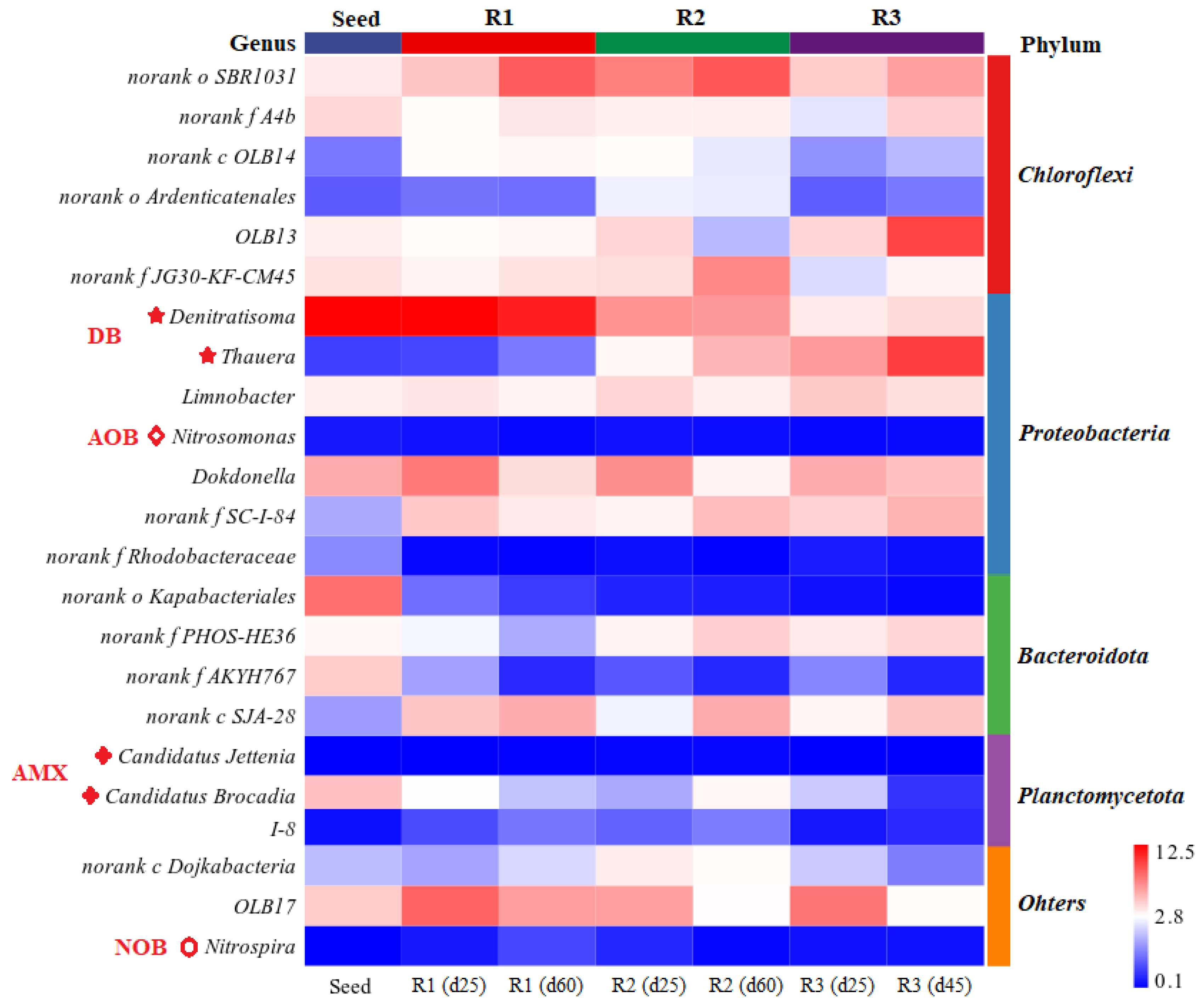
A consistent decline in the anammox population and an enrichment of NOB were observed in R1, which had the lowest influent C/N ratio (Figure 5). Candidatus Brocadia, the predominant anammox bacteria, experienced a decrease in abundance from 5.17% to 2.20%. This decline is in accordance with the reduction in the in situ anammox activity (Figure 1). In contrast, the population of NOB, primarily consisting of the genus Nitrospira, grew in the reactor, with their relative abundances rising significantly from 0.09% to 0.84%. The increased presence of NOB resulted in elevated nitrate production and decreased anammox activity, primarily as a result of competition for nitrite substrate. These factors were the main contributors to the deterioration of nitrogen removal. Nitrosomonas (AOB) were also detected but in low and decreasing abundances (0.34%–0.18%). Furthermore, Denitratisoma, identified as a potential denitrifier, emerged as the predominant genus in the initial seeding sludge and continued to maintain its leading presence in R1, with relative abundances ranging from 11.4% to 12.47%. Despite being highly abundant, the denitrification activity of Denitratisoma was limited by organic constraints, as evidenced by the high nitrate production in the reactor (Figure 1).
In R2, the abundance of anammox bacteria decreased from 5.17% to 1.89% in the initial 25 days, but then recovered to 3.16% during the subsequent operation (Figure 5). This trend was in line with the changes in the ammonium and nitrite removal performance (Figure 2). It is worth noting that there was an observed transition in the denitrifier population. The abundance of Denitratisoma steadily decreased from 12.47% to 6.72%. Whereas, Thauera, another type of denitrifier, was enriched in the reactor with its abundance increasing from 0.08% to 5.56%. It is hypothesized that a symbiotic relationship exists between Thauera and Candidatus Brocadia, given their enrichment in the reactor and the successful achievement of highly efficient nitrogen removal. The abundances of AOB (Nitrosomonas) and NOB (Nitrospira) were relatively low, at 0.22% and 0.18%, respectively, on day 60.
In R3, there was a notable decrease in the population of anammox bacteria (Candidatus Brocadia) from 5.17% to 0.63% (Figure 5), which correlated with the minimal in situ anammox activity. Whereas, Thauera showed a significant enrichment with a relative abundance of 10.10% on day 45, exceeding that of Denitratisoma (4.21%). Although Thauera is known for its role in partial denitrification [22,23], it also possesses the capacity of complete denitrification [24,25,26]. Due to the high abundance of Thauera and sufficient organic, nitrite was rapidly depleted during the feeding phase (Figure 3). This led to a notable suppression of the anammox activity and growth.
In this study, it was found that Candidatus Brocadia was the predominant genus of anammox bacteria across all influent C/N levels. The abundance of Candidatus Brocadia was influenced by the interactions with other bacteria, including nitrifying and denitrifying bacteria, which may compete or cooperate with Candidatus Brocadia. With the introduction of oxygen through influent or mechanical stirring, nitrifying bacteria thrived in the reactor. It is noted that Nitrospira (NOB) was more abundant than Nitrosomonas (AOB), suggesting that Nitrospira (NOB) has a competitive edge in efficiently utilizing the limited DO in the reactor [9,27]. The high activity of NOB led to an increase in nitrate levels in the effluent (Figure 1) and a decrease in the population of anammox bacteria (Figure 5), likely due to competition for nitrite substrate. With the rise of the influent C/N, abundances of Nitrospira and Nitrosomonas decreased (Figure 5), potentially as a result of competition for oxygen from aerobic heterotrophic bacteria [9].
Unlike the stable composition of anammox bacteria and nitrifiers, an evolution in the population of denitrifiers occurred as the influent C/N ratio increased. Two primary genera of denitrifying bacteria were identified, namely Denitratisoma and Thauera. When the influent C/N rose from 0.5 to 2.0, the abundance of Denitratisoma decreased from 11.40% to 4.21%, while the abundance of Thauera increased from 1.38% to 10.10% (Figure 5). The results demonstrated the competitive advantages of Thauera over Denitratisoma at relatively high influent C/N levels when acetate was the sole organic carbon. Moreover, this study has uncovered that the denitrifying behavior of Thauera is significantly affected by the influent C/N ratio in the mainstream anammox reactor, where nitrite is primary source of nitrogen oxides in the influent. It was found that only with a suitable C/N ratio (1.0), Thauera is able to collaborate effectively with anammox bacteria. In doing so, it is capable of partially reducing the nitrate generated in the anammox reaction and recycling nitrite substrate back to the anammox bacteria. Consequently, there was a simultaneous increase in the populations of Thauera and Candidatus Brocadia (Figure 5). At a high influent C/N ratio, Thauera primarily performed nitrite reduction, which notably inhibited anammox activity and resulted in a decline in the abundance of anammox bacteria (Figure 5).
3.4. Implication of This Work
This study has successfully demonstrated the effectiveness of enhancing nitrogen removal by combining the process of anammox and denitrification at a suitable influent C/N ratio. A remarkable nitrogen removal (92.6%) was realized with a low residual TN (3.5 mg/L), meeting stringent discharge standards (Figure 2). Furthermore, the enrichment of anammox bacteria highlights the operational resilience of the process (Figure 5). Overall, simultaneous anammox and denitrification proves to be a practical and efficient approach for removing nitrogen from municipal wastewater.
In this study, it was found that a narrow range of optimal influent C/N ratio between 0.9 and 1.8 is crucial for the efficiency of mainstream anammox reactors. This underscores the importance of carefully managing the inflow of biodegradable organic carbon. In practical applications, one effective strategy for introducing biodegradable organic carbon is to divert a portion of raw municipal wastewater to the mainstream anammox reactor [9,14]. However, a significant amount of ammonium would also be introduced into the mainstream anammox reactor. It may be challenging to simultaneously maintain appropriate levels of both the C/N ratio and the NO2-/NH4+ ratio. An alternative approach involves utilizing the fermentation liquid from primary sludge as a sustainable source of biodegradable organic carbon [28,29]. Previous studies have shown that operating a fermenter with a short SRT of 2 d can lead to an maximum production of soluble COD without causing excessive release of ammonia into the system [28]. Therefore, this approach may be more suitable for regulating the biodegradable organic carbon input to the mainstream anammox reactor while minimally impacting the NO2-/NH4+ ratio.
4. Conclusions
This study explored the nitrogen removal and microbial dynamics of mainstream anammox reactors with varying C/N ratios. Key findings are:
(1) The optimal influent C/N for the mainstream anammox process falls within a narrow range of 0.9–1.8. Operating the mainstream anammox reactors with influent C/N ratios lower or higher than this range led to a decrease in nitrogen removal efficiency, as nitrate and ammonium accumulated in the effluent, respectively.
(2) A remarkable nitrogen removal efficiency of 92.6% can be achieved when influent C/N was 1.0. The enhancement of nitrogen removal is due to the effective combination of partial denitrification and anammox, catalyzed by the bacteria Thauera and Candidatus Brocadia, respectively.
(3) Variations in the influent C/N can potentially impact the composition of denitrifier in mainstream anammox reactors. Specifically, a transition in the dominant denitrifier from Denitratisoma to Thauera was observed as the influent C/N increased. Additionally, the denitrifying phenotype of Thauera was greatly impacted by the influent C/N.
Author Contributions
Conceptualization, Y.Y. and S.L.; methodology, S.L., L.L. and C.W.; validation, S.L.; formal analysis, L.L.; investigation, S.L., Y.L. and L.L.; data curation, Y.Y., S.L. and Y.L.; writing—original draft preparation, Y.Y.; writing—review and editing, S.L. and C.L.; project administration, C.L.; funding acquisition, Y.Y. All authors have read and agreed to the published version of the manuscript.
Funding
This research was funded by the Natural Science Foundation of Shandong Province, China (Grant No. ZR2023ME202).
Data Availability Statement
Data are contained within the article.
Conflicts of Interest
The authors declare no conflict of interest.
References
- Kartal, B.; Kuenen, J.G.; van Loosdrecht, M.C.M. Sewage treatment with anammox. Science 2010, 328, 702–703. [Google Scholar] [CrossRef] [PubMed]
- Ma, B.; Wang, S.Y.; Cao, S.B.; Miao, Y.Y.; Jia, F.X.; Du, R.; Peng, Y.Z. Biological nitrogen removal from sewage via anammox: Recent advances. Bioresour. Technol. 2016, 200, 981–990. [Google Scholar] [CrossRef] [PubMed]
- Wang, Z.; Zhang, L.; Zeng, W.; Li, J.; Zhang, Q.; Li, X.; Peng, Y. A loading rate switch strategy for stable nitritation in mainstream municipal wastewater. Nat. Sustainability 2024, 7, 305–314. [Google Scholar] [CrossRef]
- Regmi, P.; Miller, M.W.; Holgate, B.; Bunce, R.; Park, H.; Chandran, K.; Wett, B.; Murthy, S.; Bott, C.B. Control of aeration, aerobic SRT and COD input for mainstream nitritation/denitritation. Water Res. 2014, 57, 162–171. [Google Scholar] [CrossRef]
- Isanta, E.; Reino, C.; Carrera, J.; Perez, J. Stable partial nitritation for low-strength wastewater at low temperature in an aerobic granular reactor. Water Res. 2015, 80, 149–158. [Google Scholar] [CrossRef]
- Zhang, L.; Zhang, S.J.; Gan, Y.P.; Peng, Y.Z. Bio-augmentation to rapid realize partial nitrification of real sewage. Chemosphere 2012, 88, 1097–1102. [Google Scholar] [CrossRef]
- Cao, Y.; van Loosdrecht, M.C.M.; Daigger, G.T. Mainstream partial nitritation–anammox in municipal wastewater treatment: status, bottlenecks, and further studies. Appl. Microbiol. Biotechnol. 2017, 101, 1365–1383. [Google Scholar] [CrossRef]
- Ma, B.; Zhang, S.J.; Zhang, L.; Yi, P.; Wang, J.M.; Wang, S.Y.; Peng, Y.Z. The feasibility of using a two-stage autotrophic nitrogen removal process to treat sewage. Bioresour. Technol. 2011, 102, 8331–8334. [Google Scholar] [CrossRef]
- Yang, Y.; Long, Y.; Xu, J.; Liu, S.; Liu, L.; Liu, C.; Tian, Y. Achieving robust and highly efficient nitrogen removal in a mainstream anammox reactor by introducing low concentrations of readily biodegradable organics. Front. Microbiol. 2023, 14, 1186819. [Google Scholar] [CrossRef]
- Díaz, C.; Belmonte, M.; Campos, J.L.; Franchi, O.; Faúndez, M.; Vidal, G.; Argiz, L.; Pedrouso, A.; Val del Rio, A.; Mosquera-Corral, A. Limits of the anammox process in granular systems to remove nitrogen at low temperature and nitrogen concentration. Process Saf. Environ. Prot. 2020, 138, 349–355. [Google Scholar] [CrossRef]
- Li, W.; Zhuang, J.L.; Zhou, Y.Y.; Meng, F.G.; Kang, D.; Zheng, P.; Shapleigh, J.P.; Liu, Y.D. Metagenomics reveals microbial community differences lead to differential nitrate production in anammox reactors with differing nitrogen loading rates. Water Res. 2020, 169, 115279. [Google Scholar] [CrossRef] [PubMed]
- Guillén, J.S.; Vazquez, C.L.; de Oliveira Cruz, L.; Brdjanovic, D.; van Lier, J. Long-term performance of the Anammox process under low nitrogen sludge loading rate and moderate to low temperature. Biochem. Eng. J. 2016, 110, 95–106. [Google Scholar] [CrossRef]
- Strous, M.; Kuenen, J.G.; Jetten, M.S.M. Key physiology of anaerobic ammonium oxidation. Appl. Environ. Microbiol. 1999, 65, 3248–3250. [Google Scholar] [CrossRef] [PubMed]
- Zhuang, J.-L.; Sun, X.; Zhao, W.-Q.; Zhang, X.; Zhou, J.-J.; Ni, B.-J.; Liu, Y.-D.; Shapleigh, J.P.; Li, W. The anammox coupled partial-denitrification process in an integrated granular sludge and fixed-biofilm reactor developed for mainstream wastewater treatment: Performance and community structure. Water Res. 2022, 210, 117964. [Google Scholar] [CrossRef]
- Ji, J.; Peng, Y.; Li, X.; Zhang, Q.; Liu, X. A novel partial nitrification-synchronous anammox and endogenous partial denitrification (PN-SAEPD) process for advanced nitrogen removal from municipal wastewater at ambient temperatures. Water Res. 2020, 175, 115690. [Google Scholar] [CrossRef]
- Bi, Z.; Takekawa, M.; Park, G.; Soda, S.; Qiao, S.; Ike, M. Effects of the C/N ratio and bacterial populations on nitrogen removal in the simultaneous anammox and heterotrophic denitrification process: Mathematic modeling and batch experiments. Chem. Eng. J. 2015, 280, 606–613. [Google Scholar] [CrossRef]
- Xu, G.J.; Zhou, Y.; Yang, Q.; Lee, Z.M.P.; Gu, J.; Lay, W.S.; Cao, Y.S.; Liu, Y. The challenges of mainstream deammonification process for municipal used water treatment. Appl. Microbiol. Biotechnol. 2015, 99, 2485–2490. [Google Scholar] [CrossRef]
- Cui, H.; Zhang, L.; Zhang, Q.; Li, X.; Peng, Y. Enrichment of comammox bacteria in anammox-dominated low-strength wastewater treatment system within microaerobic conditions: Cooperative effect driving enhanced nitrogen removal. Chem. Eng. J. 2023, 453, 139851. [Google Scholar] [CrossRef]
- APHA. Standard methods for examination of water and wastewater, 21st Edition ed; American Public Health Association: Washington, 2005. [Google Scholar]
- Yang, Y.; Jiang, Y.; Long, Y.; Xu, J.; Liu, C.; Zhang, L.; Peng, Y. Insights into the mechanism of the deterioration of mainstream partial nitritation/anammox under low residual ammonium. J. Environ. Sci. 2023, 126, 29–39. [Google Scholar] [CrossRef]
- Sliekers, A.O.; Derwort, N.; Gomez, J.L.C.; Strous, M.; Kuenen, J.G.; Jetten, M.S.M. Completely autotrophic nitrogen removal over nitrite in one single reactor. Water Res. 2002, 36, 2475–2482. [Google Scholar] [CrossRef]
- Du, R.; Cao, S.; Li, B.; Niu, M.; Wang, S.; Peng, Y. Performance and microbial community analysis of a novel DEAMOX based on partial-denitrification and anammox treating ammonia and nitrate wastewaters. Water Res. 2017, 108, 46–56. [Google Scholar] [CrossRef] [PubMed]
- Ahmad, H.A.; Ahmad, S.; Gao, L.; Ismail, S.; Wang, Z.; El-Baz, A.; Ni, S.-Q. Multi-omics analysis revealed the selective enrichment of partial denitrifying bacteria for the stable coupling of partial-denitrification and anammox process under the influence of low strength magnetic field. Water Res. 2023, 245, 120619. [Google Scholar] [CrossRef] [PubMed]
- Liu, B.; Mao, Y.; Bergaust, L.; Bakken, L.R.; Frostegård, Å. Strains in the genus Thauera exhibit remarkably different denitrification regulatory phenotypes. Environ. Microbiol. 2013, 15, 2816–2828. [Google Scholar] [CrossRef] [PubMed]
- Suri, N.; Zhang, Y.; Gieg, L.M.; Ryan, M.C. Denitrification biokinetics: Towards optimization for industrial applications. Front. Microbiol. 2021, 12. [Google Scholar] [CrossRef]
- Ren, T.; Chi, Y.; Wang, Y.; Shi, X.; Jin, X.; Jin, P. Diversified metabolism makes novel Thauera strain highly competitive in low carbon wastewater treatment. Water Res. 2021, 206, 117742. [Google Scholar] [CrossRef]
- Liu, G.; Wang, J. Long-term low DO enriches and shifts nitrifier community in activated sludge. Environ. Sci. Technol. 2013, 47, 5109–5117. [Google Scholar] [CrossRef]
- Ali, P.; Zalivina, N.; Le, T.; Riffat, R.; Ergas, S.; Wett, B.; Murthy, S.; Al-Omari, A.; deBarbadillo, C.; Bott, C.; et al. Primary sludge fermentate as carbon source for mainstream partial denitrification–anammox (PdNA). Water Environ. Res. 2021, 93, 1044–1059. [Google Scholar] [CrossRef]
- Cao, S.; Wang, S.; Peng, Y.; Wu, C.; Du, R.; Gong, L.; Ma, B. Achieving partial denitrification with sludge fermentation liquid as carbon source: the effect of seeding sludge. Bioresour. Technol. 2013, 149, 570–574. [Google Scholar] [CrossRef]
Figure 1.
The TN removal performance (a), Effluent nitrogen concentrations (b) and ΔNO2-/ΔNH4+ and ΔNO3-/ΔNH4+ ratio (c) of the mainstream anammox reactor at an influent C/N of 0.5.
Figure 1.
The TN removal performance (a), Effluent nitrogen concentrations (b) and ΔNO2-/ΔNH4+ and ΔNO3-/ΔNH4+ ratio (c) of the mainstream anammox reactor at an influent C/N of 0.5.
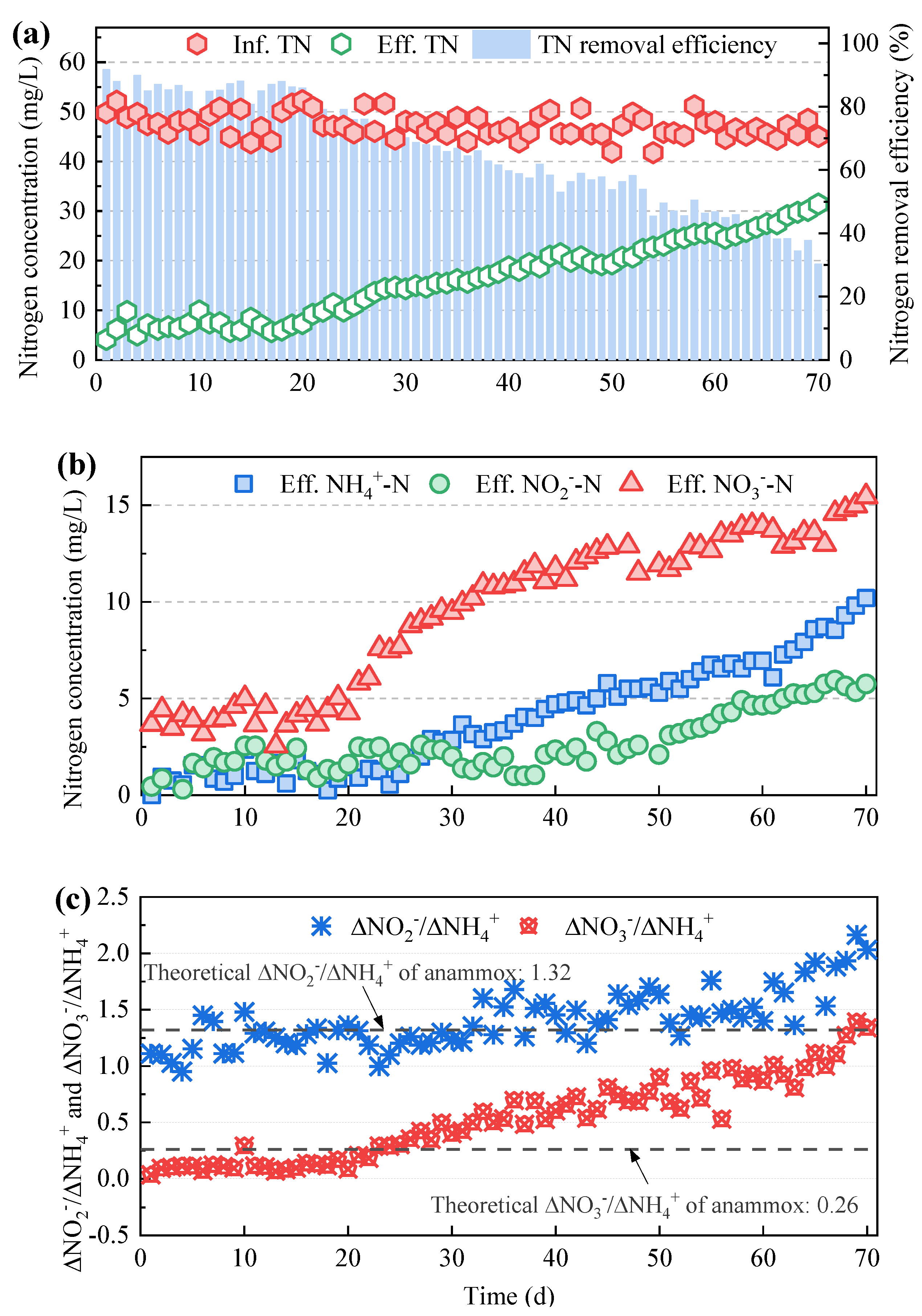
Figure 2.
The TN removal performance (a), Effluent nitrogen concentrations (b) and ΔNO2-/ΔNH4+ and ΔNO3-/ΔNH4+ ratio (c) of the mainstream anammox reactor at an influent C/N of 1.0.
Figure 2.
The TN removal performance (a), Effluent nitrogen concentrations (b) and ΔNO2-/ΔNH4+ and ΔNO3-/ΔNH4+ ratio (c) of the mainstream anammox reactor at an influent C/N of 1.0.
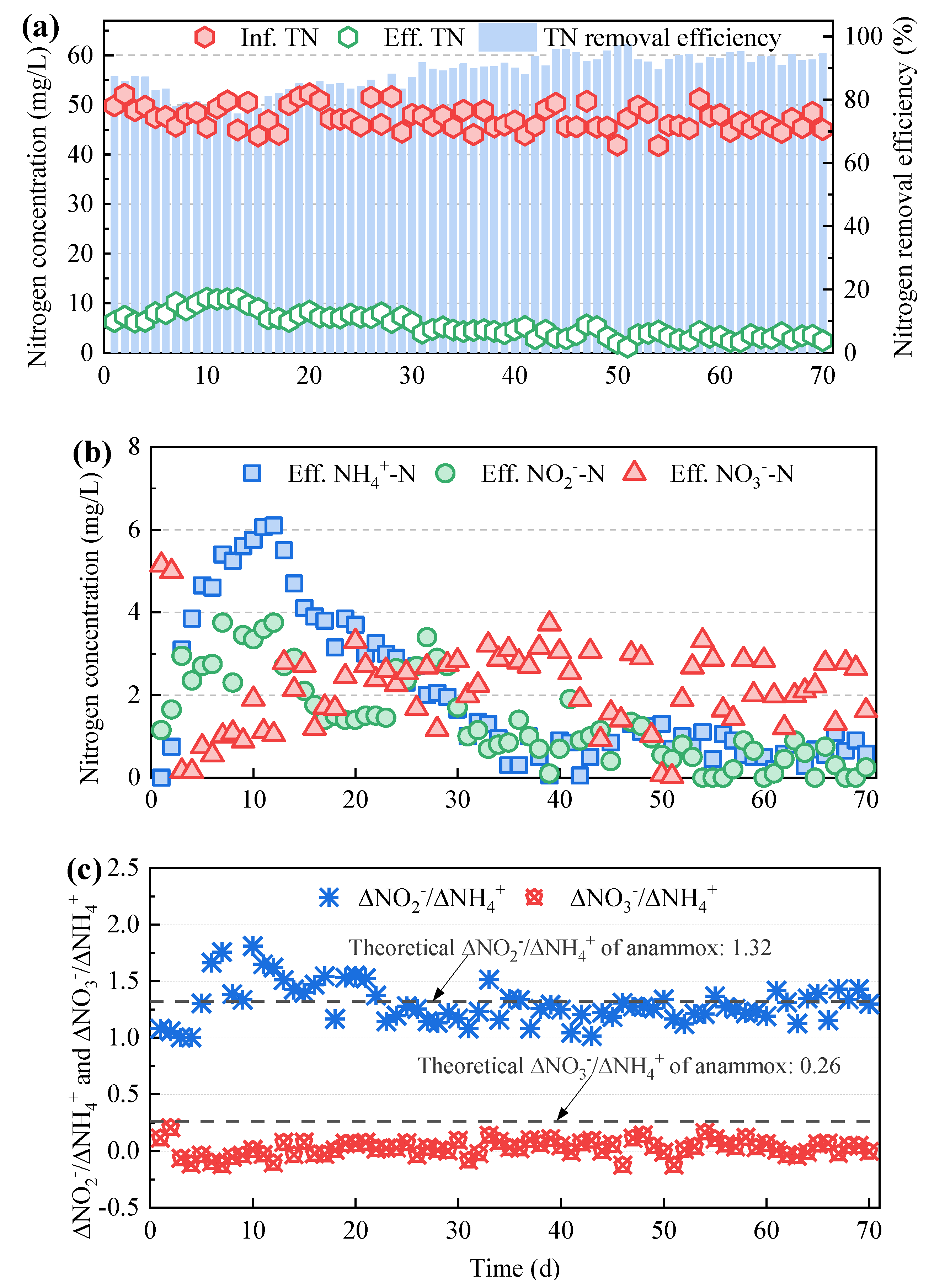
Figure 3.
The TN removal performance (a), Effluent nitrogen concentrations (b) and ΔNO2-/ΔNH4+ and ΔNO3-/ΔNH4+ ratio (c) of the mainstream anammox reactor at an influent C/N of 2.0.
Figure 3.
The TN removal performance (a), Effluent nitrogen concentrations (b) and ΔNO2-/ΔNH4+ and ΔNO3-/ΔNH4+ ratio (c) of the mainstream anammox reactor at an influent C/N of 2.0.
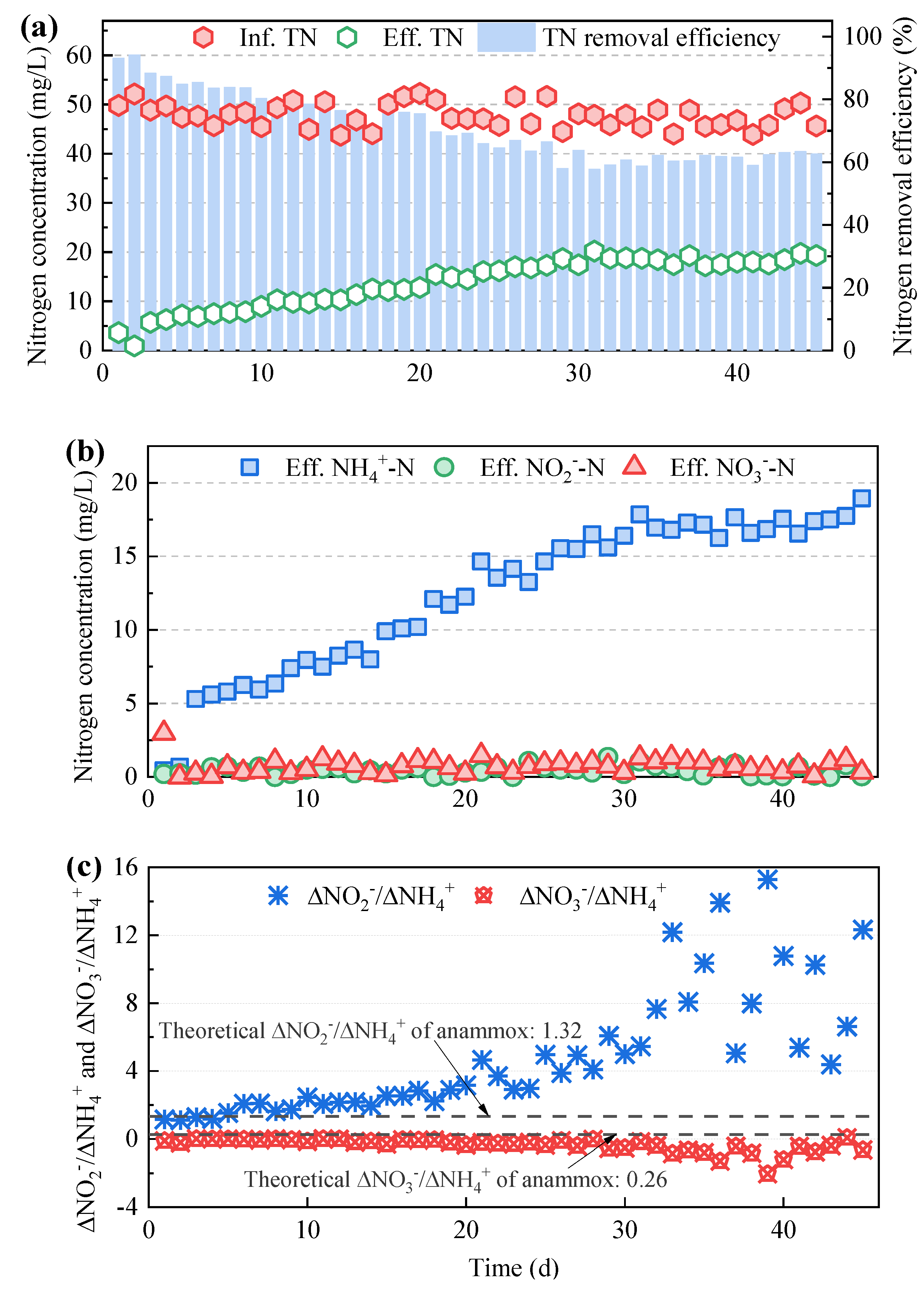
Figure 4.
Variations in organic and nitrogen concentrations in the typical cycles of mainstream anammox reactors with influent C/N ratios of 0.5 (a), 1.0 (b) and 2.0 (c).
Figure 4.
Variations in organic and nitrogen concentrations in the typical cycles of mainstream anammox reactors with influent C/N ratios of 0.5 (a), 1.0 (b) and 2.0 (c).
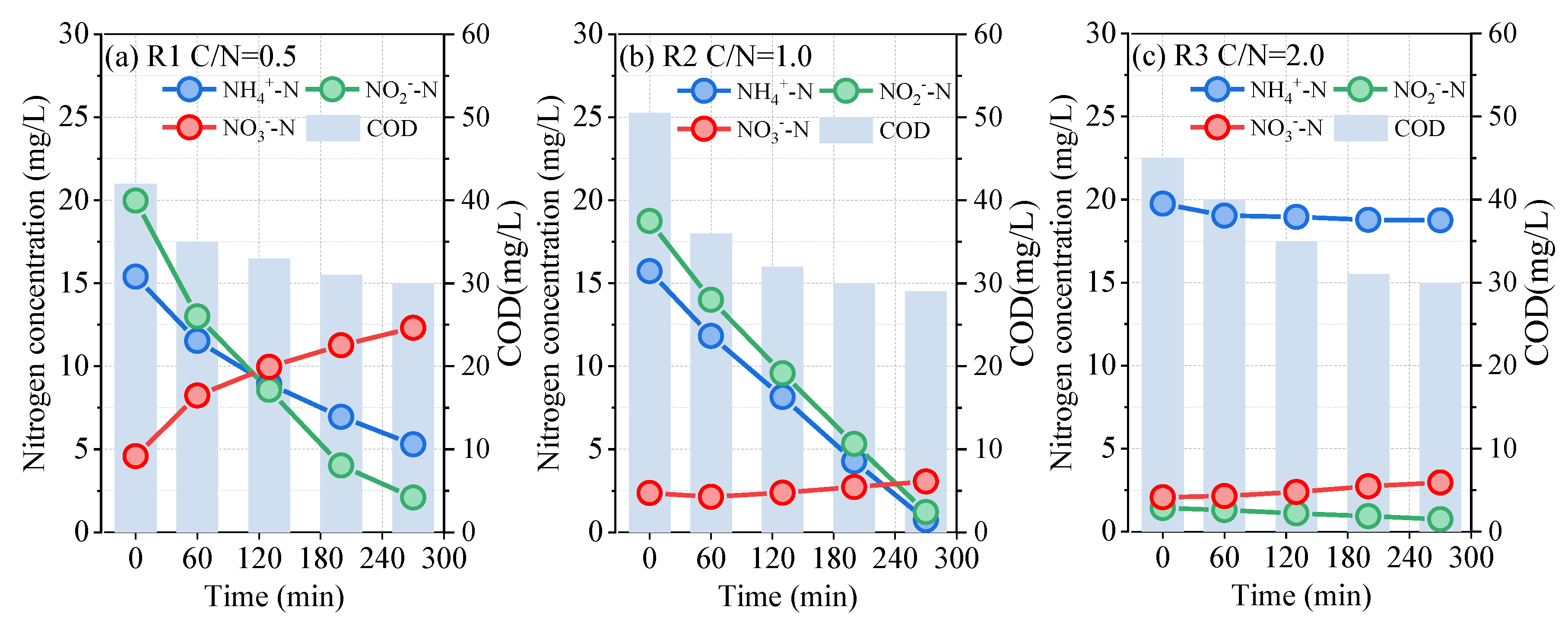
Figure 5.
Core genera of the mainstream anammox reactors with various influent C/N ratios.
Disclaimer/Publisher’s Note: The statements, opinions and data contained in all publications are solely those of the individual author(s) and contributor(s) and not of MDPI and/or the editor(s). MDPI and/or the editor(s) disclaim responsibility for any injury to people or property resulting from any ideas, methods, instructions or products referred to in the content. |
© 2025 by the authors. Licensee MDPI, Basel, Switzerland. This article is an open access article distributed under the terms and conditions of the Creative Commons Attribution (CC BY) license (http://creativecommons.org/licenses/by/4.0/).
Copyright: This open access article is published under a Creative Commons CC BY 4.0 license, which permit the free download, distribution, and reuse, provided that the author and preprint are cited in any reuse.


