

Submitted:
07 January 2025
Posted:
07 January 2025
You are already at the latest version
Abstract
Chemical conversion of plastic waste has been considered as important subject in terms of circular economy, and chemical recycling and upcycling of poly(ethylene terephthalate) (PET) has been considered as one of the important subjects. In this study, depolymerization of PET with n-hexylamine, n-octylamine, and with 3-amino-1-propanol have been explored in the presence of Cp*TiCl3 (Cp* = C5Me5). The reactions of PET with n-hexylamine, n-octylamine at 130 ºC afforded the corresponding di(n-alkyl) terephthalamides in high yields (>90 %), and Cp*TiCl3 plays a role as the catalyst to facilitate the conversion in the exclusive selectivity. The reaction of PET with 3-amino-1-propanol proceeded at 100 ºC even in the absence of Ti catalyst, affording bis(3-hydroxy) terephthalamide in high yields. Unique contrast in the depolymerization of PET between by transesterification with alcohol and by aminolysis has been demonstrated.
Keywords:
PET
; depolymerization
; aminolysis
; terephthalamide
; chemical recycling
; upcycling
; poly(ethylene terephthalate)
; titanium catalyst
; homogeneous catalysis
1. Introduction
The importance of chemical conversion of plastic waste such as chemical recycling (conversion to monomers), upcycling (conversion to value-added chemicals) has been pronounced in terms of circular economy [1,2,3,4]. Poly(ethylene terephthalate) (PET) has been a commodity plastic used as drink bottles, clothes, carpets etc. in our daily life, and mechanical recycling of PET bottle (collection, sorting, and re-processing after purification steps) has been known. Recently, in terms of carbon neutral concept as well as circular economy, chemical recycling of polyesters [5,6,7,8,9,10] including PET [10,11,12,13,14,15] has been recognized as the important technology for the purpose [1,2,3,4,5,6,7,8,9,10,11,12,13,14,15]. Since recycled PET resin through the above mechanical recycling has certation limitation due to their inferior quality, there are many studies concerning the chemical recycling, depolymerization of PET to monomers that are eventually converted to fresh resin which should be equivalent to the petroleum-derived one [12,13,14,15,16,17,18,19,20,21,22,23,24,25,26,27,28,29,30,31,32,33,34,35,36,37,38,39,40,41,42,43].
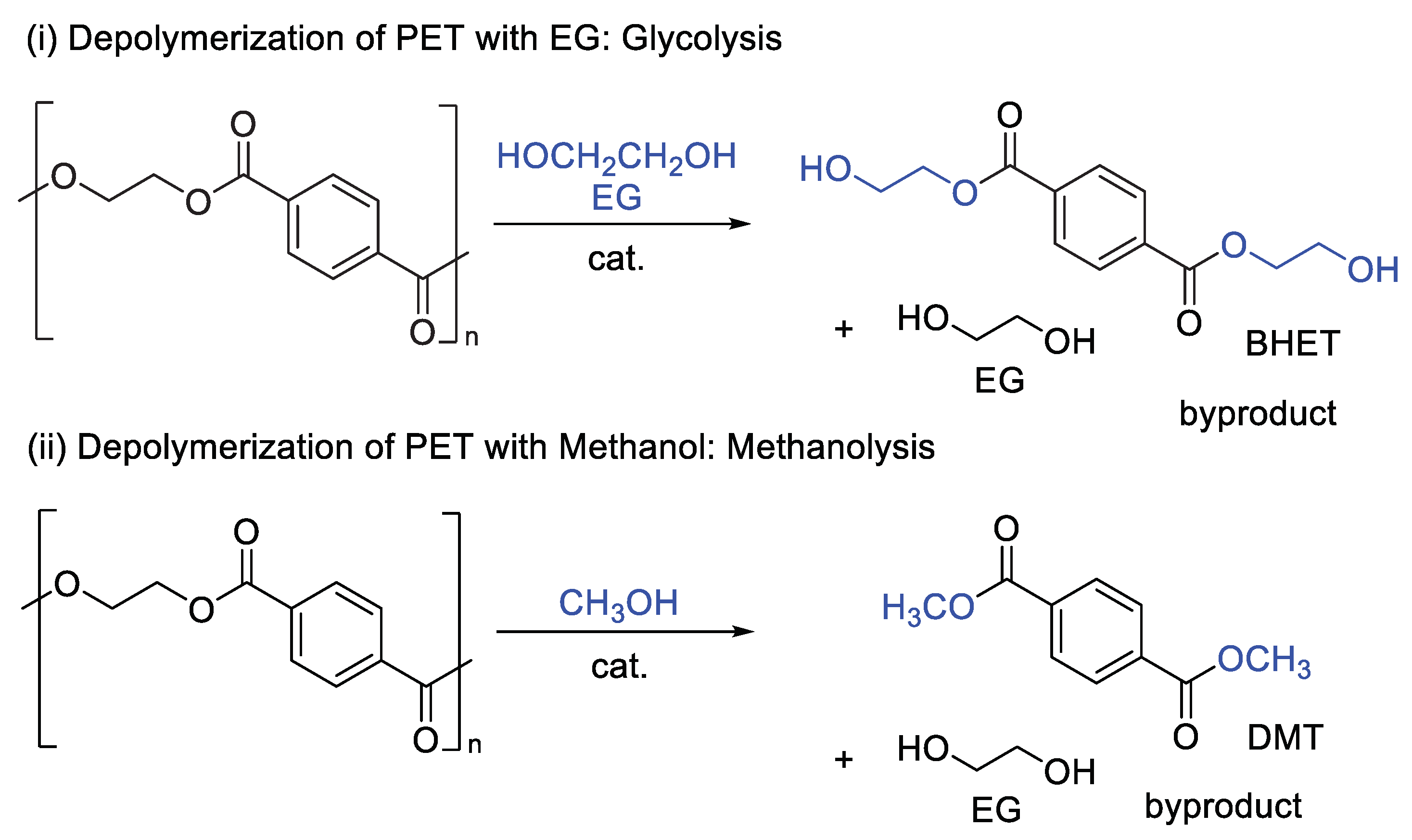
As shown in Scheme 1, there are two major methods for depolymerization of PET with ethylene glycol (EG) to afford bis(2-hydroxyethyl)terephthalate (BHET, so-called glycolysis process) or methanol to afford dimethyl terephthalate (DMT, called methanolysis). For example, (i) glycolysis by using a catalyst system consisting of Zn(OAc)2—Na2CO3 (at 196 °C) [22] or Zn(OAc)2—1,3-dimethylurea (at 190 °C) [27], or a certain combination of acids and base (5 mol%, 180 °C) [31], (ii) methanolysis under high temperature (e.g., 280–310 °C) and high-pressure conditions (ca. 4 MPa, the addition of K2CO3 reduced the harsh conditions) [10-12] have been known. Another method for the depolymerization of PET with n-butanol in the presence of [HO3S-(CH2)3-NEt3]Cl–ZnCl2 at 205 °C [26] have also been known. As described above, most of methods reported [16,17,18,19,20,21,22,23,24,25,26,27,28,29,30,31,32,33,34,35,36,37,38,39,43], however, require harsh conditions (high temperature, pressure) and/or excess base, acids, and/or inorganic salts. The process consists of depolymerization, decolorization, deionization (removal of salt), crystallization (initial purification), solid-liquid separation, concentration and vacuum distillation [10,11,12,13,14,15]. The methods, however, often face difficulty such as separation of byproduct (diethylene glycol etc.) and/or careful removal of inorganic salts (severe impurities in the final purification step by vacuum distillation upon heating) [10,11,12,13,14,15]. Therefore, development of the acid-, base-free depolymerization methods have been considered as the important technology especially in terms of simple purification process as well as of the sustainable process (total atom efficiency, no inorganic effluents, waste waters etc.).
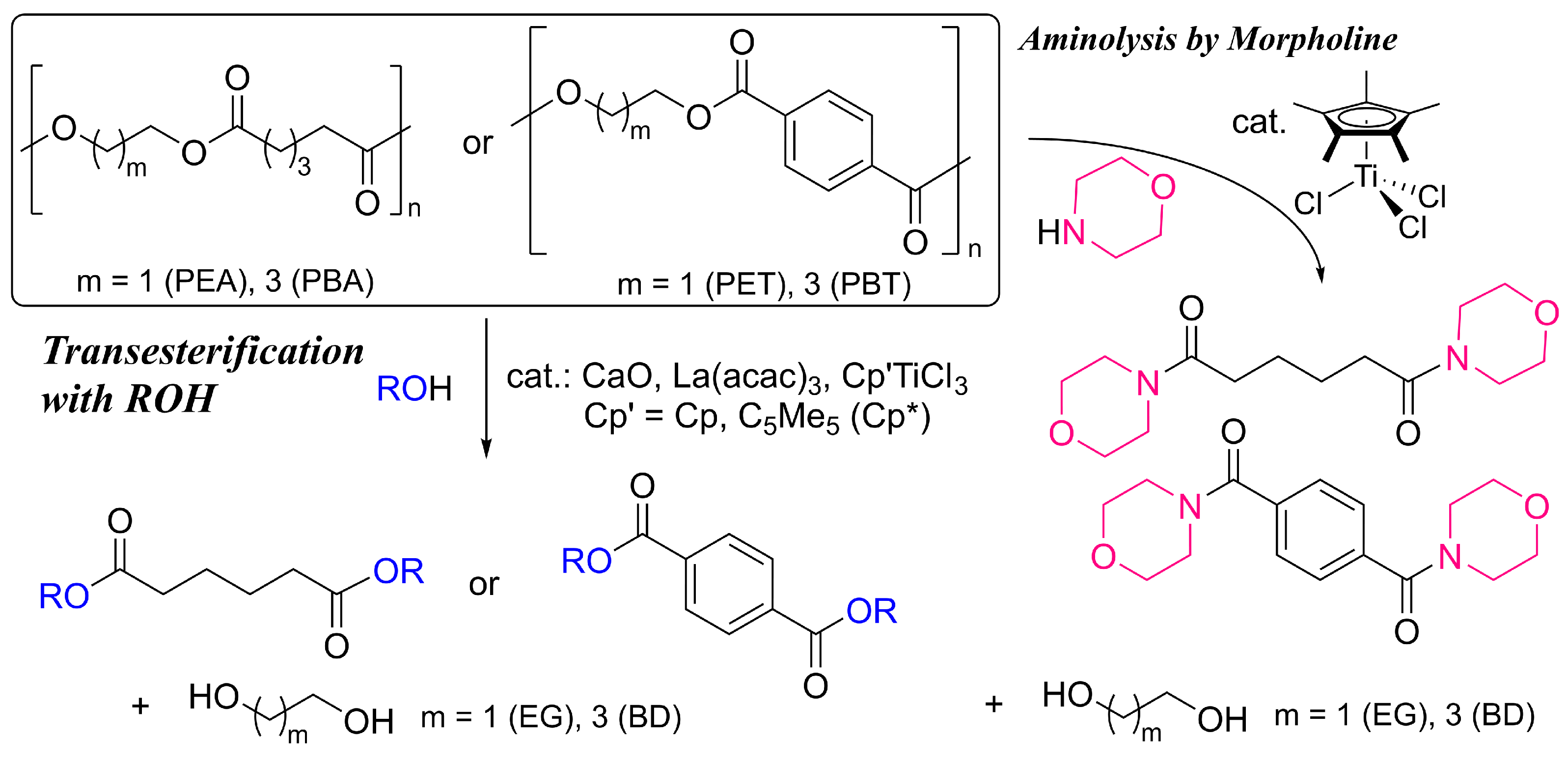
More recently, acid-, base-free depolymerization of PET [40,41,42] as well as conventional polyesters [44,45,46,47] with alcohols have been demonstrated in the presence of La(acac)3 (acac = acetylacetonato) [40,46], CaO [42,45], or Cp’TiCl3 (Cp’ = Cp, Cp*) [41,44]. Moreover, FeCl3 catalyzed depolymerization not only PET bottles, but also textile wastes consisting of PET with ethanol has been demonstrated [47]. These depolymerization, transesterification with alcohols (ethanol, methanol, cyclohexane methanol etc.), afforded the corresponding monomers exclusively (Scheme 2, >99% conversion, >99% selectivity). We also reported that PET was treated with morpholine in the presence of Cp*TiCl3 to give the corresponding amide in high yields [48].
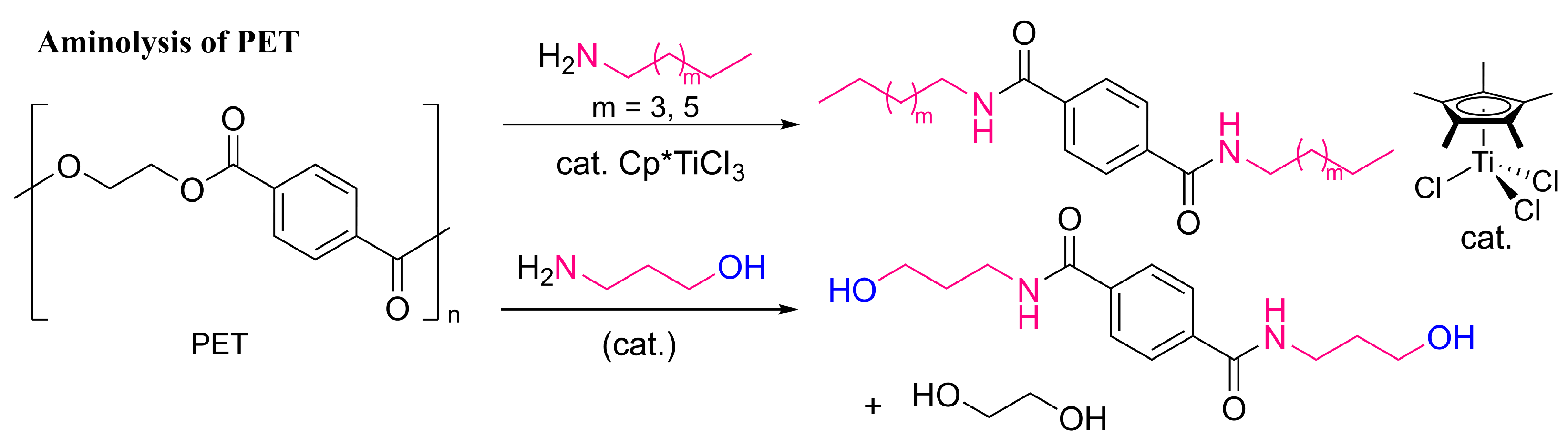
In this paper, we thus present reactions of PET with linear n-alkylamines such as n-hexylamine, n-octylamine, and 3-amino-1-propanol to expand the utility of this developed methods for the efficient upcycling of the PET waste. Through this research, we wish to provide a difference in depolymerization of polyesters between by the transesterification and by the aminolysis; the reaction of PET with 3-amino-1-propanol occurred exclusively with the amino group to afford the corresponding bis(3-hydroxypropyl) terephthalamide, 1,4-[HOCH2CH2CH2N-C(O)]2C6H4, even in the absence of catalyst (Scheme 3).
2. Results and Discussion
2.1. Reactions of PET with n-Hexylamine, n-Octylamine
Reactions of PET with n-hexylamine were conducted using a sealed tube in the presence of Cp*TiCl3 catalyst (2.0 mol% to the monomer unit of PET) at 130 ºC (set into the alumina heating blocks of the parallel reactor) on the basis of the conditions for depolymerization with morpholine [48] (Scheme 4, details are described in the Experimental section). After the reaction, the reaction mixture was placed in vacuo to remove volatiles, and the resultant mixture was further purified with chloroform to isolate the product, di(n-hexyl) terephthalamide, by recrystallization. Samples of PET sheet, prepared by cutting the PET drink bottle, or PET powder, prepared from the commercially available fresh resin by using a grinding machine, were used in this study. The results conducted under various conditions are summarized in Table 1.
As shown in Figure 1, 1H- and 13C-NMR spectra, the reaction product, isolated as white solids, was di(n-hexyl) terephthalamide as a pure form especially when the reaction was conducted for 48 h (runs 1,2). As shown in Figure S1a in Supplementary Materials (SM), the 1H NMR spectrum (in tetrachloroethane-d2) of the reaction mixture after removal of volatiles shows that the observed resonances were assigned as the desired products, suggesting that the reaction proceeded exclusively in this catalysis. It seems that the reactions completed after 16 h (runs 3,4), since the products yields isolated were already high (runs 3,4), very close to those conducted after 48 h (runs 1,2). As observed in the transesterification of PET with ethanol [41,47], the catalyst performances were not strongly affected by the nature of PET samples (sheet or powder, runs 1-4).
In contrast, resonances at δ= 4.73 and 8.13 ppm were observed in addition to the terephthalamide in the 1H NMR spectrum of the reaction mixture after 6 h (run 6, Figure 2b). Interestingly, the reaction also proceeded in the absence of Cp*TiCl3 (run 7, Figure 2c), but the intensities of the additional peaks were apparently high. These resonances became decreasing upon increasing the catalyst (Ti 3.0 and 5.0, respectively, Figure S1, SM). These resonances disappeared when the reaction mixture was passing through a Celite Pad before recrystallization; this caused a difficulty for identification of the byproduct by GC, GC-MS. In order to isolate the intermediate, the reactions were conducted at 100 ºC in the presence of Cp*TiCl3 (runs 8,9), and the byproduct was precipitated from the reaction mixture by addition of methanol. On the basis of NMR spectra (Figure 2d,e) and DSC thermogram of the resultant solid, the melting temperature (237 ºC) was relatively close to that in PET (244.8 C, Figure S2 in SM). It thus seems likely that these resonances are due to PET oligomers (although we were not able to measure the molecular weight due to their insolubility in THF nor chloroform even for the GPC measurement). The results clearly explain that the PET was depolymerized to PET oligomers and gradually converted to the corresponding to terephthalamide, as observed in the depolymerization with alcohols by transesterification [41,42]. These results also clearly indicate that Cp*TiCl3 play a role as the catalyst that facilitates the aminolysis under these conditions.
Similarly, reactions of PET with n-octylamine were conducted at 130 ºC in the presence of Cp*TiCl3 (2.0 mol%), and the results are summarized in Table 2. The reactions afforded the corresponding amide, di(n-octyl) terephalamide, exclusively without contamination of the other byproduct, as shown in Figure S3 (NMR spectra) in SM. Compared to the reaction with n-hexylamine, isolation of the n-octylamide seemed rather difficult due to difficulty of removing n-octylamine in vacuo and the product by repetitive washing with chloroform was thus necessary to remove the amine completely. As observed in the transesterification of PET with ethanol [41,47] as well as in the reactions with n-hexylamine (Table 1), the catalyst performances were not strongly affected by the nature of PET samples (sheet or powder, runs 10,11). As shown in Figure S4 (SM), the isolated product contained impurity (PET oligomer) in trance amount in the 1H NMR spectrum (reaction 16 h); it thus seems that longer reaction time was necessary for obtainment of the terephthalamide in the exclusive yield.
2.2. Reaction of PET with 3-Amino-1-Propanol
Reactions of PET with 3-amino-1-propanol were conducted at 100 or 130 ºC in the presence/absence of Cp*TiCl3 catalyst, and the results are summarized in Table 3. It was revealed that the reaction product was bis(3-hydroxy) terephthalamide, 1,4-[HOCH2CH2CH2NC(O)]C6H4, exclusively as shown in Figure 3 (13C NMR spectrum) as well as Figure S5, SM. The pure isolation of the amide seemed rather difficult because of separation of the product with 3-amino-1-propanol remained even after removal of volatiles in vacuo. Therefore, repetitive precipitation with chloroform was required (reason for rather low yields compared to those in the reaction with n-hexylamine). Reason for exclusive obtainment of amide instead of ester would be due to a stability of the product (amide is more stable thermodynamically compared to esters).
It should be noted that the reactions completed without catalyst and the yields in the absence of Ti catalyst were highly close to those in the presence of Ti catalyst. Moreover, no significant differences were seen when the reactions were conducted at 100 ºC after 3 h (run 17 vs run 21). The reactions were rather affected by the temperature employed, since the reaction mixture conducted at 80 ºC remained PET slurry after 6 h (runs 18,22).
3. Materials and Methods
All experiments were conducted under a nitrogen atmosphere using a glove box. CpTiCl3, Cp*TiCl3 (Tokyo Chemical Industry, Co., Ltd., Tokyo, Japan), n-hexylamine, n-octylamine, and 3-amino-1-propanol (Tokyo Chemical Industry, Co., Ltd., Tokyo, Japan) were used as received. Poly(ethylene terephthalate (PET) resin (IV = 0.80 ± 0.02 dL/g) were received from companies (by donation for research purpose only), and were used as PET powers after griding using 0.25 mm mesh using grinding machine. PET sheets were prepared by cutting the PET drink bottle. All 1H and 13C{1H} NMR spectra (in tetrachloroethane-d2 at 100 °C or methanol-d4 at 25 ºC) were measured on a JEOL JNM ECS400 spectrometer (399.8 MHz for 1H and 100.5 MHz for 13C, JEOL Ltd., Tokyo, Japan) using SiMe4 as the reference at 0.00 ppm (chemical shifts were reported in parts per million).
General procedure for reaction of poly(ethylene terephthalate (PET) with amines. An oven-dried reaction apparatus (100 mL scale screw-cap glass tube) was charged with the prescribed amount of CpTiCl3, 500 mg of PET (powder or sheet, shown in Scheme 4), and 5.0 mL of amine (n-hexylamine, n-octylamine, or 3-aminopropanol) under a nitrogen atmosphere. The reaction mixture was stirred at prescribed temperature using an alumina heating blocks in parallel reaction apparatus (ChemiStationTM, Tokyo Rikakikai Co., Ltd., PPS-2511). After the reaction, the mixture was cooled to room temperature and transferred to a round-bottom flask for removal of volatiles, and the products, terephthalamide, were isolated by precipitation or recrystallization by ethanol or toluene. The reaction mixture containing impurities (PET oligomer) was separated by filtration using Celite pad after dissolving the products by chloroform-methanol mixed solution.
Di(n-hexyl) terephthalamide: 1H NMR (tetrachloroethane-d2): δ 7.82 (s, 4H, Ar-H), 6.09 (s, 2H, -NH-), 3.48 (q, J = 6.8 Hz, 4H, -NHCH₂-), 1.71-1.64 (m, 4H, -NHCH₂CH₂-), 1.47-1.37 (m, 12H, -CH₂-), 0.97 (t, J = 7.1 Hz, 6H, -CH₃). 13C{1H} NMR (tetrachloroethane-d2): δ 166.2(-CO-), 137.4 (Ar), 126.9 (Ar), 40.2, 31.2, 29.5, 26.4, 22.2, 13.6.
Di(n-octyl) terephthalamide: 1H NMR (tetrachloroethane-d2): δ 7.82 (s, 4H, Ar-H), 6.06 (s, 2H, -NH-), 3.49 (q, J = 6.7 Hz, 4H, -NHCH₂-), 1.71-1.64 (m, 4H, -NHCH₂CH₂-), 1.47-1.35 (m, 20H, -CH₂-), 0.95 (t, J = 6.9 Hz, 6H, -CH₃). 13C{1H} NMR (tetrachloroethane-d2): δ 166.2 (-CO-), 137.4 (Ar), 126.9 (Ar), 40.2, 31.5, 29.5, 29.0, 28.9, 26.8, 22.3, 13.7.
Di(3-hydroxypropyl) terephthalamide: 1H NMR (DMSO-d6): δ 8.56 (t, J = 5.5 Hz, 2H, -NH-), 7.89 (s, 4H, Ar-H), 4.50 (t, J = 5.0 Hz, 2H, -OH), 3.46 (q, J = 6.0 Hz, 4H, -CH₂OH-), 3.32 (q, J = 6.5 Hz, 4H, -NHCH₂- ), 1.71-1.65 (m, 4H, -CH₂-). 13C{1H} NMR (methanol-d4): δ 169.4 (-CO-), 138.4 (Ar), 128.4 (Ar), 60.6 (-CH₂OH), 38.2(-NHCH₂-), 33.2(-CH₂-).
4. Conclusions
As described in the introduction, conversions of PET into fine chemicals called upcycling have been one of the important key technologies in terms of establishment of circular economy. We have demonstrated preparations of three amides in the depolymerization of PET with n-hexylamine, n-octylamine and with 3-amino-1-propanol, affording the corresponding terephthalamides in high yields (without by-production of side products). Cp*TiCl3, the effective catalyst for aminolysis of PET with morphoiline [48] plays a role to facilitate the reaction but these reactions proceeded even in the absence of Ti catalyst. Indeed, no significant differences in the product yields were observed in the depolymerization of PET with 3-amino-1-propanol affording the corresponding bis(3-hydroxy) terephthalamide in high yields even at 100 ºC. The results are significant contrast to those in the depolymerization with alcohols by transesterification, because presence of Cp’TiCl3 (Cp’ = Cp, Cp*) was prerequisite to proceed the reaction as catalyst. The difference would be probably explained as due to the stability of the product, amide, thermodynamically compared to esters, as well as amine would probably play a role as catalyst in the aminolysis of PET, on the basis of results in the depolymerization with 3-amino-1-propanol. Since the method could be effective for chemical conversion of the other PET wastes (textile waste), as demonstrated previously [47]. The observed fact should be potentially important for catalytic chemical conversion of polyester to fine chemicals. We shall explore more possibilities with various polyesters and will introduce in the near future.
Supplementary Materials
The following supporting information can be downloaded at the website of this paper posted on Preprints.org. Figures S1-S5, Additional NMR spectra for reaction mixture in the depolymerization of PET with n-hexylamine, n-otylamine, and di(n-octyl) terephthalamide and bis(3-hydroxy) terephthalamide, and DSC thermograms of isolated byproduct (PET oligomer) in the reaction of PET with n-hexylamine.
Author Contributions
Conceptualization, K.N.; methodology, K.N.; validation, formal analysis, S.H.; investigation, data curation, K.N. and S.H.; resources, K.N. and Y.O.; writing—original draft preparation, S.H. and K.N.; writing—review and editing, visualization, supervision, project administration, funding acquisition, K.N. All authors have read and agreed to the published version of the manuscript.
Funding
This project was partly supported by JST-CREST (Grant Number JPMJCR21L5).
Data Availability Statement
The data are contained within the article and the Supplementary Material (NMR spectra, DSC thermograms).
Acknowledgments
KN expresses his thanks to Prof. Masafumi Hirano (Tokyo Univ. A&T) and the laboratory members for fruitful discussion. K.N. and S.H. also express their thanks to Dr. Hiroshi Hirano (Osaka Institute of Industrial Science) for preparation of PET powders from the resin employed in this study.
Conflicts of Interest
The authors declare no conflicts of interest.
References
- Coates, G.W.; Getzler, Y.D.Y.L. Chemical recycling to monomer for an ideal, circular polymer economy. Nat. Rev. Mat. 2020, 5, 501–516. [Google Scholar] [CrossRef]
- Collias, D.I.; James, M.I.; Layman, J.M. (Eds.) Circular Economy of Polymers: Topics in Recycling Technologies; ACS Symposium Series; American Chemical Society: Washington, DC, USA, 2021. [Google Scholar]
- Worch, J.C.; Dove, A.P. 100th Anniversary of macromolecular science viewpoint: Toward catalytic chemical recycling of waste (and future) plastics. ACS Macro Lett. 2020, 9, 1494–1506. [Google Scholar] [CrossRef]
- Chu, M.; Liu, Y.; Lou, X.; Zhang, Q.; Chen, J. Rational design of chemical catalysis for plastic recycling. ACS Catal. 2022, 12, 4659–4679. [Google Scholar] [CrossRef]
- Zhang, X.; Fevre, M.; Jones, G.O.; Waymouth, R.M. Catalysis as an enabling science for sustainable polymers. Chem. Rev. 2018, 118, 839–885. [Google Scholar] [CrossRef] [PubMed]
- Westhues, S.; Idel, J.; Klankermayer, J. Molecular catalyst systems as key enablers for tailored polyesters and polycarbonate recycling concepts. Sci. Adv. 2018, 4, eaat966. [Google Scholar] [CrossRef] [PubMed]
- Basterretxea, A.; Jehanno, C.; Mecerreyes, D.; Sardon, H. Dual organocatalysts based on ionic mixtures of acids and bases: A step toward high temperature polymerizations. ACS Macro Lett. 2019, 8, 1055–1062. [Google Scholar] [CrossRef]
- Payne, J.; Jones, M.D. The chemical recycling of polyesters for a circular plastics economy: Challenges and emerging opportunities. ChemSusChem. 2021, 14, 4041–4070. [Google Scholar] [CrossRef] [PubMed]
- Häußler, M.; Eck, M.; Rothauer, D.; Mecking, S. Closed-loop recycling of polyethylene-like materials. Nature 2021, 590, 423–427. [Google Scholar] [CrossRef]
- Allen, R.D.; James, M.I. Chemical Recycling of PET. In Circular Economy of Polymers: Topics in Recycling Technologies; Collias, D.I., James, M.I., Layman, J.M., Eds.; ACS Symposium Series; American Chemical Society: Washington, DC, USA, 2021; pp. 61–80. [Google Scholar]
- Paszun, D.; Spychaj, T. Chemical recycling of poly(ethylene terephthalate). Ind. Eng. Chem. Res. 1997, 36, 1373–1383. [Google Scholar] [CrossRef]
- Damayanti; Wu, H.S. Strategic possibility routes of recycled PET. Polymers 2021, 13, 1475. [CrossRef] [PubMed]
- McNeeley, A.; Liu, Y. A. Assessment of PET depolymerization processes for circular economy. 1. Thermodynamics, chemistry, purification, and process design. Ind. Eng. Chem. Res. 2024, 63, 3355–3399. [Google Scholar] [CrossRef]
- Jehanno, C.; Pérez-Madrigal, M. M.; Demarteau, J.; Sardon, H.; Dove, A. P. Organocatalysis for depolymerization. Polym. Chem. 2019, 10, 172–186. [Google Scholar] [CrossRef]
- de Dios Caputto, M. D.; Navarro, R.; Valentín, J. L.; Marcos-Fernández, Á. Chemical upcycling of poly(ethylene terephthalate) waste: Moving to a circular model. J. Polym. Sci. 2022, 60, 3269–3283. [Google Scholar] [CrossRef]
- Dupont, L.A.; Gupta, V.P. Degradative transesterification of terephthalate polyesters to obtain DOTP plasticizer for flexible PVC. J. Vinyl. Technol. 1993, 15, 100–104. [Google Scholar] [CrossRef]
- Chen, J.-W.; Chen, L.-W. The glycolysis of poly(ethylene terephthalate). J. Appl. Polym. Sci. 1999, 73, 35–40. [Google Scholar] [CrossRef]
- Chen, C.-H.; Chen, C.-Y.; Lo, Y.-W.; Mao, C.-F.; Liao, W.-T. Studies of glycolysis of poly(ethylene terephthalate) recycled from postconsumer soft-drink bottles. I. Influences of glycolysis conditions. J. Appl. Polym. Sci. 2001, 80, 943–948. [Google Scholar] [CrossRef]
- Mansour, S.H.; Ikladious, N.E. Depolymerization of poly(ethylene terephthalate) wastes using 1,4-butanediol and triethylene glycol. Polym. Test. 2002, 21, 497–505. [Google Scholar] [CrossRef]
- Kurokawa, H.; Ohshima, M.; Sugiyama, K.; Miura, H. Methanolysis of polyethylene terephthalate (PET) in the presence of aluminium tiisopropoxide catalyst to form dimethyl terephthalate and ethylene glycol. Polym. Degrad. Satbil. 2003, 79, 529–533. [Google Scholar] [CrossRef]
- Troev, K.; Grancharov, G.; Tsevi, R.; Gitsov, I. A novel catalyst for the glycolysis of poly (ethylene terephthalate). J. Appl. Polym. Sci. 2003, 90, 1148–1152. [Google Scholar] [CrossRef]
- López-Fonseca, R.; Duque-Ingunza, I.; de Rivas, B.; Arnaiz, S.; Gutiérrez-Ortiz, J.I. Chemical recycling of post-consumer PET wastes by glycolysis in the presence of metal salts. Polym. Degrad. Stab. 2010, 95, 1022–1028. [Google Scholar] [CrossRef]
- Fukushima, K.; Coulembier, O.; Lecuyer, J.M.; Almegren, H.A.; Alabdulrahman, A.M.; Alsewailem, F.D.; Mcneil, M.A.; Dubois, P.; Waymouth, R.M.; Horn, H.W.; et al. Organocatalytic depolymerization of poly(ethylene terephthalate). J. Polym. Sci., Part A Polym. Chem. 2011, 49, 1273–1281. [Google Scholar] [CrossRef]
- Fukushima, K.; Coady, D.J.; Jones, G.O.; Almegren, H.A.; Alabdulrahman, A.M.; Alsewailem, F.D.; Horn, H.W.; Rice, J.E.; Hedrick, J.L. Unexpected efficiency of cyclic amidine catalysts in depolymerizing poly(ethylene terephthalate). J. Polym. Sci. Part A Polym.Chem. 2013, 51, 1606–1611. [Google Scholar] [CrossRef]
- Imran, M.; Kim, D.H.; Al-Masry, W.A.; Mahmood, A.; Hassan, A.; Haider, S.; Ramay, S.M. Manganese-, cobalt-, and zinc-based mixed-oxide spinels as novel catalysts for the chemical recycling of poly(ethylene terephthalate) via glycolysis. Polym. Degrad. Satbil. 2013, 98, 904–915. [Google Scholar] [CrossRef]
- Liu, S.W.; Wang, Z.P.; Li, L.; Yu, S.T.; Xie, C.X.; Liu, F.S. Butanol alcoholysis reaction of polyethylene terephthalate using acidic ionic liquid as catalyst. J. Appl. Polym. Sci. 2013, 130, 1840–1844. [Google Scholar] [CrossRef]
- Liu, B.; Fu, W.; Lu, X.; Zhou, Q.; Zhang, S. Lewis acid–base synergistic catalysis for polyethylene terephthalate degradation by 1,3-Dimethylurea/Zn(OAc)2 deep eutectic solvent. ACS Sustain. Chem. Eng. 2018, 7, 3292–3300. [Google Scholar] [CrossRef]
- Wang, Q.; Geng, Y.; Lu, X.; Zhang, S. First-row transition metal-containing ionic liquids as highly active catalysts for the glycolysis of poly(ethylene terephthalate) (PET). ACS Sustai. Chem. Eng. 2015, 3, 340–348. [Google Scholar] [CrossRef]
- Liu, B.; Fu, W.; Lu, X.; Zhou, Q.; Zhang, S. Lewis acid–base synergistic catalysis for polyethylene terephthalate degradation by 1,3-dimethylurea/Zn(OAc)2 deep eutectic solvent. ACS Sustain. Chem. Eng. 2019, 7, 3292–3300. [Google Scholar] [CrossRef]
- Jehanno, C.; Demarteau, J.; Mantione, D.; Arno, M. C.; Ruipérez, F.; Hedrick, J. L.; Dove, A. P.; Sardon, H. Selective chemical upcycling of mixed plastics guided by a thermally stable organocatalyst. Angew. Chem. Int. Ed. 2021, 60, 6710–6717. [Google Scholar] [CrossRef] [PubMed]
- Kaiho, S.; Hmayed, A. A. R.; Chiaie, K. R. D.; Worch, J. C.; Dove, A.P. Designing thermally stable organocatalysts for poly(ethylene terephthalate) synthesis: Toward a one-pot, closed-loop chemical recycling system for PET. Macromolecules 2022, 55, 10628–10639. [Google Scholar] [CrossRef]
- Chiaie, K. R. D.; McMahon, F. R.; Williams, E. J.; Price, M. J.; Dove, A. P. Dual-catalytic depolymerization of polyethylene terephthalate (PET). Polym. Chem. 2020, 11, 1450–1453. [Google Scholar] [CrossRef]
- Rollo, M.; Raffi, F.; Rossi, E.; Tiecco, M.; Martinell, E.; Ciancaleoni, G. Depolymerization of polyethylene terephthalate (PET) under mild conditions by Lewis/Brønsted acidic deep eutectic solvents. Chem. Eng. J. 2023, 456, 141092. [Google Scholar] [CrossRef]
- de Dios Caputto, M. D.; Navarro, R.; Valentín, J. L.; Marcos-Fernandez, A. Tuning of molecular weight and chemical composition of polyols obtained from poly(ethylene terephthalate) waste recycling through the application of organocatalysts in an upcycling route. J. Clean. Prod. 2024, 454, 142253. [Google Scholar] [CrossRef]
- Du, J.-T.; Sun, Q.; Zeng, X.-F.; Wang, D.; Wang, J.-X.; Chen, J.-F. ZnO Nanodispersion as pseudohomogeneous catalyst for alcoholysis of polyethylene terephthalate. Chem. Eng. Sci. 2020, 220, 115642–115651. [Google Scholar] [CrossRef]
- Pham, D.D.; Cho, J. Low-energy catalytic methanolysis of poly(ethylene terephthalate). Green Chem. 2021, 23, 511–525. [Google Scholar] [CrossRef]
- Shirazimoghaddam, S.; Amin, I.; Faria Albanese, J. A.; Shiju, N. R. Chemical recycling of used PET by glycolysis using niobia-based catalysts. ACS Eng. Au, 2023, 3, 37–44. [Google Scholar] [CrossRef] [PubMed]
- Tanaka, S.; Sato, J.; Nakajima, Y. Capturing ethylene glycol with dimethyl carbonate towards depolymerisation of polyethylene terephthalate at ambient temperature. Green Chem. 2021, 23, 9412–9416. [Google Scholar] [CrossRef]
- Tanaka, S.; Koga, M.; Kuragano, T.; Ogawa, A.; Ogiwara, H.; Sato, K.; Nakajima, Y. Depolymerization of polyester fibers with dimethyl carbonate-aided methanolysis. ACS Mater. Au 2024, 4, 335–345. [Google Scholar] [CrossRef] [PubMed]
- Abe, R.; Komine, N.; Nomura, K.; Hirano, M. La(iii)-Catalysed degradation of polyesters to monomers via transesterifications. Chem. Commun. 2022, 58, 8141–8144. [Google Scholar] [CrossRef] [PubMed]
- Ohki, Y.; Ogiwara, Y.; Nomura, K. Depolymerization of polyesters by transesterification with ethanol using (cyclopentadienyl)titanium trichlorides. Catalysts 2023, 13, 421. [Google Scholar] [CrossRef]
- Unruean, P.; Padungros, P.; Nomura, K. , Kitiyanan, B. Efficient chemical depolymerization of polyethylene terephthalate via transesterification with ethanol using CaO catalyst. J. Mater. Cycles Waste Manag. 2024, 26, 731–740. [Google Scholar] [CrossRef]
- Peng, Y.; Yang, J.; Deng, C.; Deng, J.; Shen, L.; Fu, Y. Acetolysis of waste polyethylene terephthalate for upcycling and life-cycle assessment study, Nat. Commun. 2023, 14, 3249. [Google Scholar]
- Nomura, K.; Aoki, T.; Ohki, Y.; Kikkawa, S.; Yamazoe, S. Transesterification of methyl-10-undecenoate and poly(ethylene adipate) catalyzed by (cyclopentadienyl)titanium trichlorides as model chemical conversions of plant oils and acid-, base-free chemical recycling of aliphatic polyesters. ACS Sustain. Chem. Eng. 2022, 10, 12504–12509. [Google Scholar] [CrossRef]
- Sudhakaran, S.; Siddiki, S.M.A.H.; Kitiyanan, B.; Nomura, K. CaO catalyzed transesterification of ethyl 10-undecenoate as a model reaction for efficient conversion of plant oils and their application to depolymerization of aliphatic polyesters. ACS Sustain. Chem. Eng. 2022, 10, 12864–12872. [Google Scholar] [CrossRef]
- Kobayashi, N.; Komine, N.; Nomura, K.; Hirano, H.; Hirano, M. La(III)-catalyzed depolymerization of poly(l-lactic acid) yielding chiral lactates. Bull. Chem. Soc. Jpn., 2023, 96, 1324–1330. [Google Scholar] [CrossRef]
- Awang, N. W. B.; Hadiyono, M. A. B. R.; Abdellatif, M. M.; Nomura, K. Depolymerization of PET with ethanol by homogeneous iron catalysts applied for exclusive chemical recycling of cloth waste. Ind. Chem Mat. 2024, web released on August 6. [CrossRef]
- Ogiwara, Y.; Nomura, K. Chemical upcycling of PET into a morpholine amide as a versatile synthetic building block. ACS Org. Inorg. Au 2023, 6, 377–383. [Google Scholar] [CrossRef] [PubMed]
- Bepari, M. R.; Sullivan, L. R.; O’Harra, K. E.; Barbosa, G. D.; Turner, C. H.; Bara, J. E. Depolymerizing polyethylene terephthalate (PET) via “imidazolysis” for obtaining a diverse array of intermediates from plastic waste. ACS Applied Polymer Materials 2024, 6, 7886–7896. [Google Scholar] [CrossRef]
Scheme 1.
Conventional Methods for Depolymerization of PET.
Scheme 2.
Catalytic depolymerization of polyesters with alcohols and morpholine.
Scheme 3.
Catalytic depolymerization of PET with n-hexylamine, n-octylamine, and with 3-amino-1-propanol (this study).
Scheme 3.
Catalytic depolymerization of PET with n-hexylamine, n-octylamine, and with 3-amino-1-propanol (this study).
Scheme 4.
Depolymerization of PET with n-hexylamine.
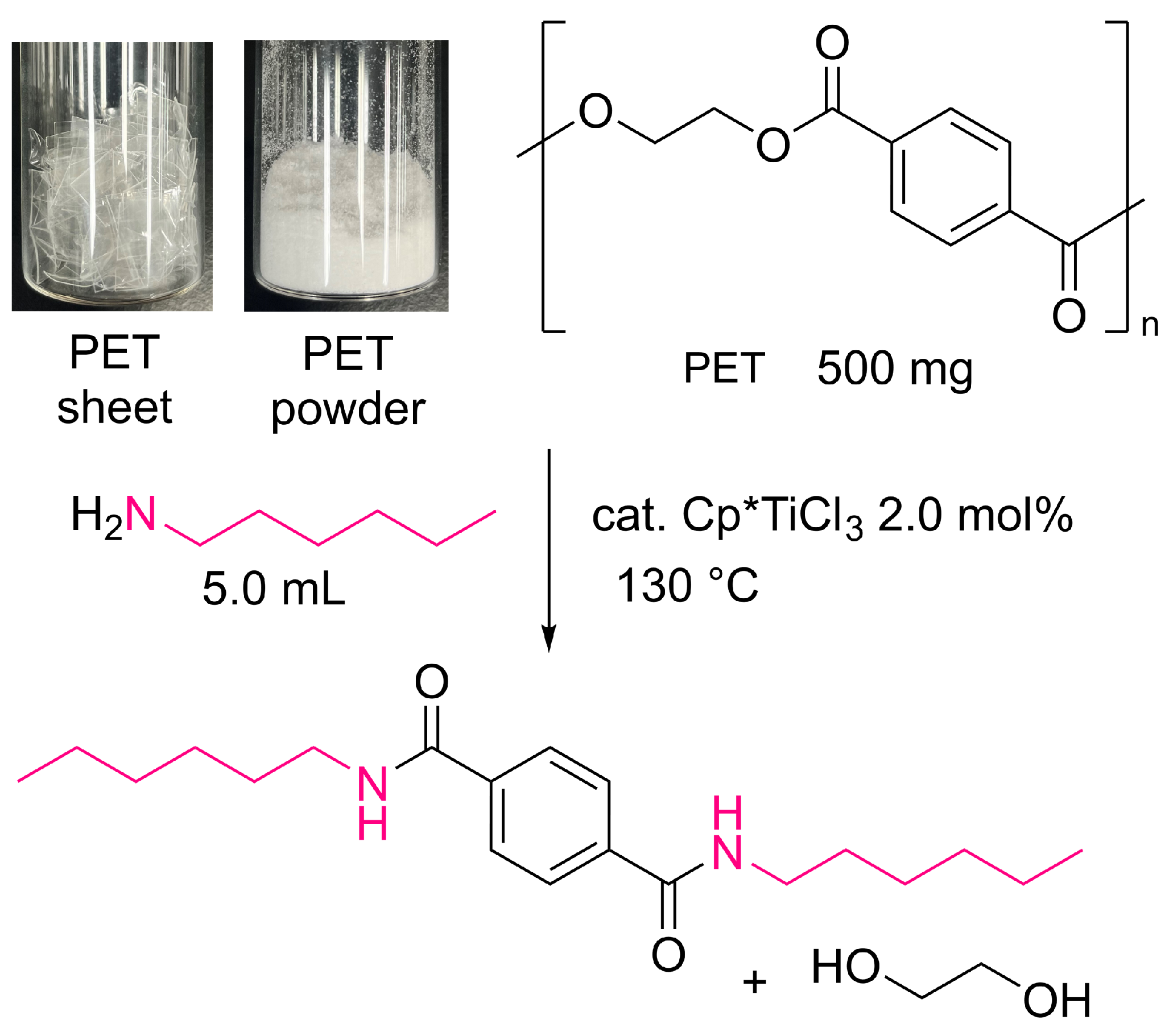
Figure 1.
(a) 1H-NMR spectrum and (b) 13C-NMR spectrum for di(n-hexyl) terephthalamide (in tetrachloroethane-d2 at 100 ºC).
Figure 1.
(a) 1H-NMR spectrum and (b) 13C-NMR spectrum for di(n-hexyl) terephthalamide (in tetrachloroethane-d2 at 100 ºC).
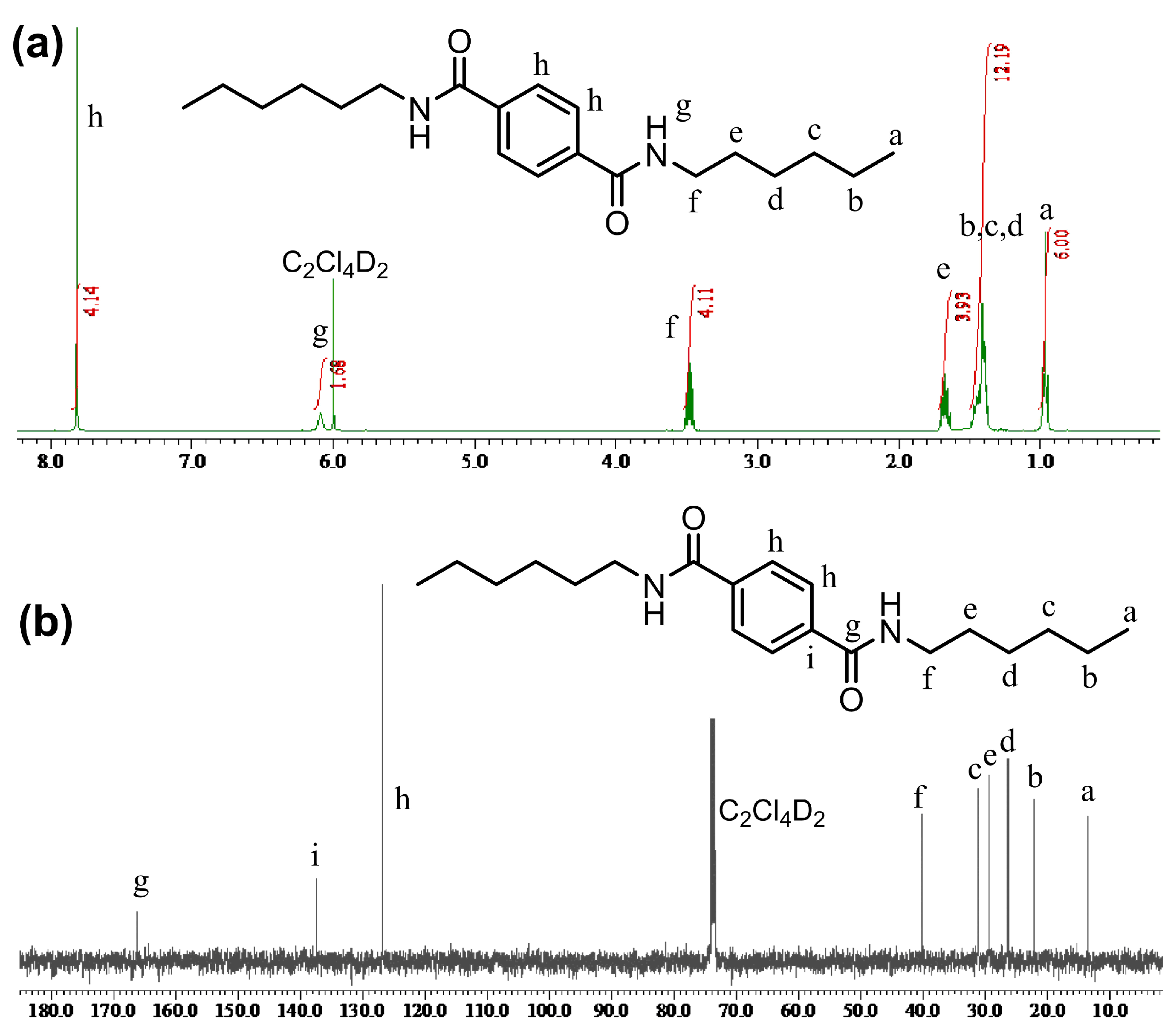
Figure 2.
(a)-(c) 1H NMR spectra of the reaction mixture (after removal of volatiles) in the reaction of PET with n-hexylamine (130 ºC, 6 h) in the presence of 2.0 mol% Cp*TiCl3 (a) after 48h (run 2). (b) 6 h (run 6), and (c) after 6 h in the absence of catalyst (run 7). (d) 1H-NMR spectrum and (e) 13C NMR spectra (in tetreachloroethane-d2 at 100 ºC) for isolated byproduct (PET oligomer) separated from the reaction mixture conducted at 100 ºC (runs 8,9). Resonances marked with * were corresponded to byproduct (PET oligomers) and peaks marked with ◆ are impurities.
Figure 2.
(a)-(c) 1H NMR spectra of the reaction mixture (after removal of volatiles) in the reaction of PET with n-hexylamine (130 ºC, 6 h) in the presence of 2.0 mol% Cp*TiCl3 (a) after 48h (run 2). (b) 6 h (run 6), and (c) after 6 h in the absence of catalyst (run 7). (d) 1H-NMR spectrum and (e) 13C NMR spectra (in tetreachloroethane-d2 at 100 ºC) for isolated byproduct (PET oligomer) separated from the reaction mixture conducted at 100 ºC (runs 8,9). Resonances marked with * were corresponded to byproduct (PET oligomers) and peaks marked with ◆ are impurities.
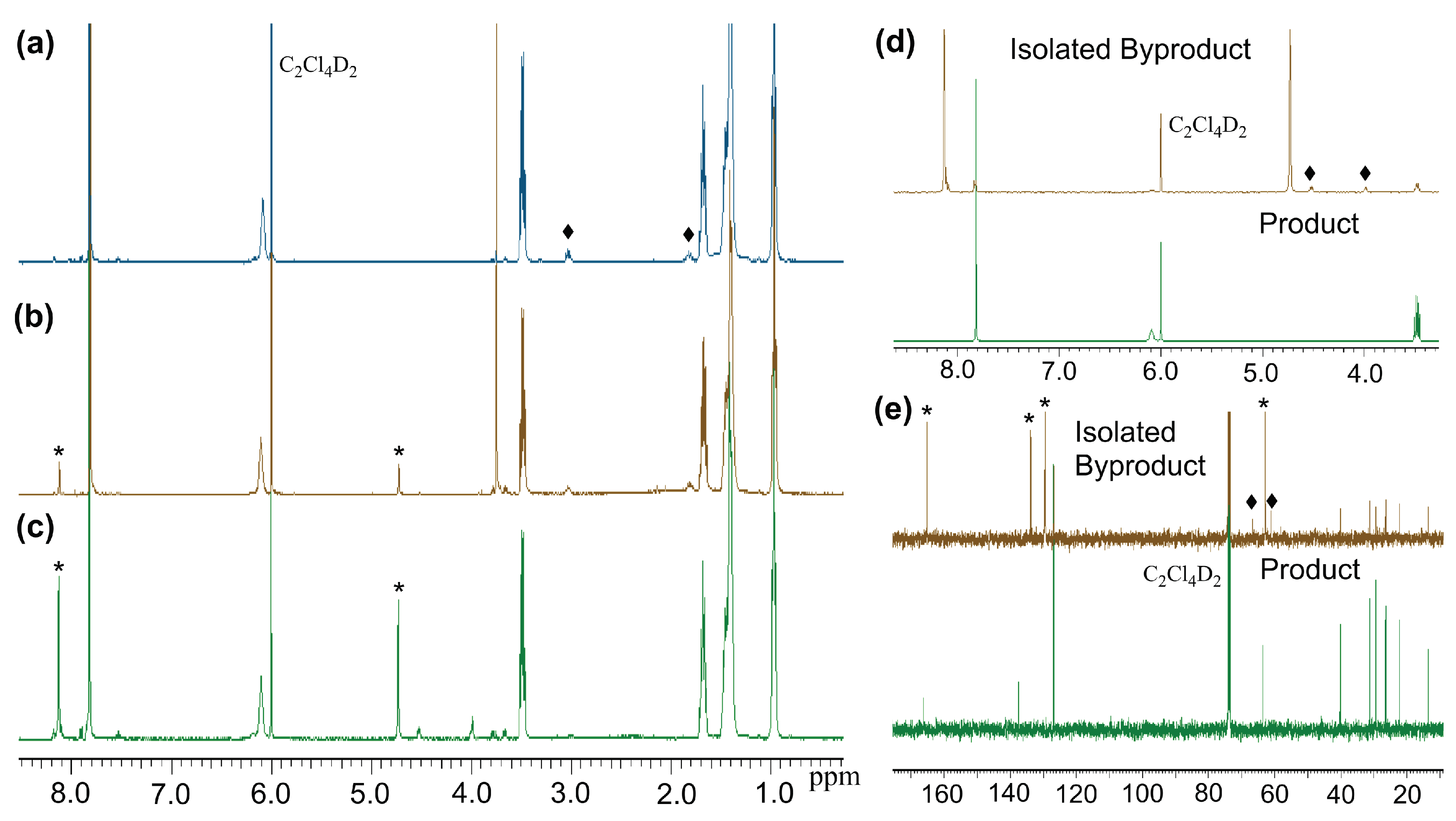
Figure 3.
13C NMR spectrum for bis(3-hydroxypropyl) terephthalamide (in methanol-d4 at 25 ºC).
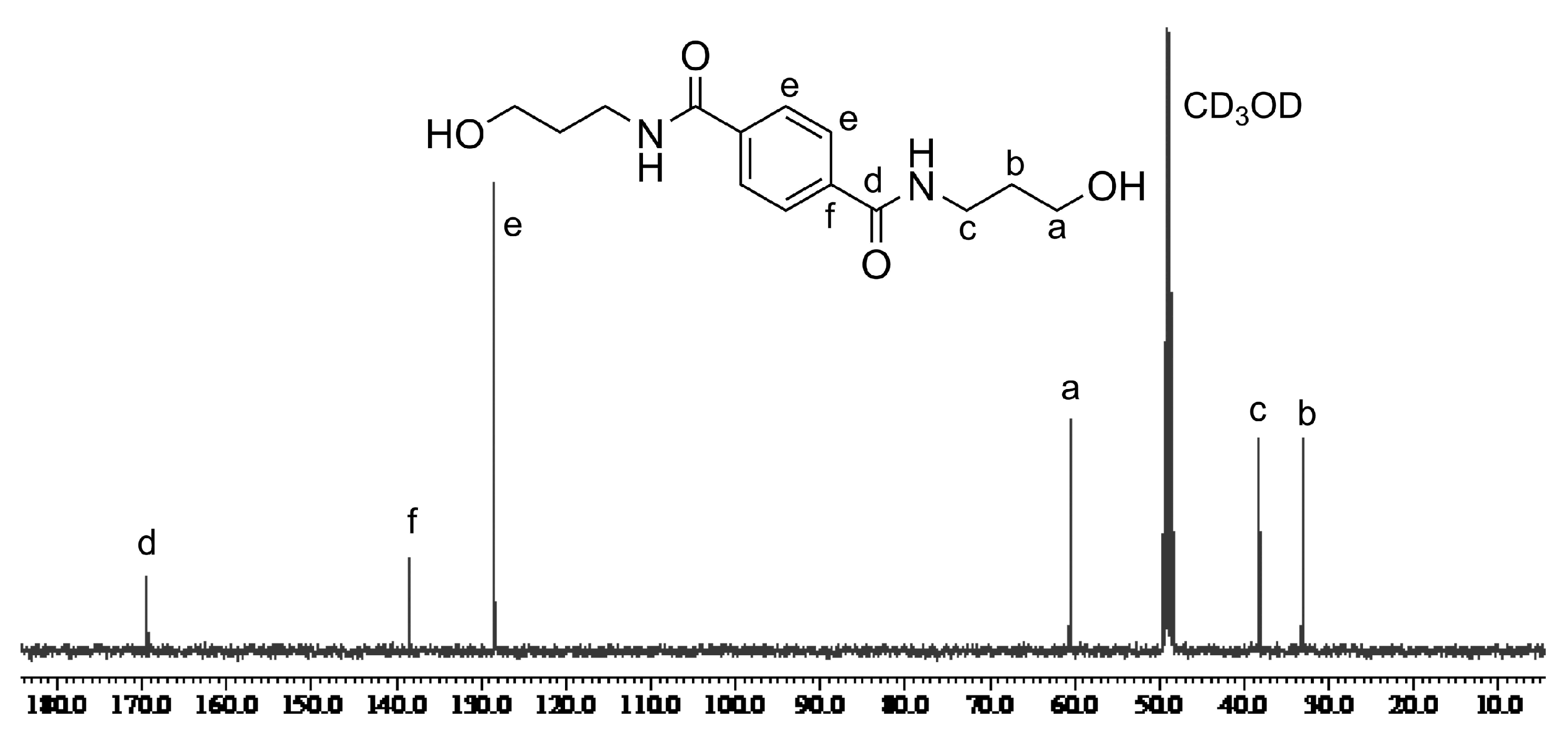

Table 1.
Depolymerization of PET with n-hexylamine catalyzed by Cp*TiCl3.1.
| run | PET2 | cat. | temp. | time | yield3 | |
| / mol% | / ºC | / h | / mg | / % | ||
| 1 | sheet | 2.0 | 130 | 48 | 786 | 91 |
| 2 | powder | 2.0 | 130 | 48 | 820 | 95 |
| 3 | sheet | 2.0 | 130 | 16 | 789 | 91 |
| 4 | powder | 2.0 | 130 | 16 | 794 | 92 |
| 5 | sheet | 2.0 | 130 | 6 | 766 | 89 |
| 6 | powder | 2.0 | 130 | 6 | 732 | 85 |
| 7 | powder | 0 | 130 | 6 | 714 | 83 |
| 8 | powder | 2.0 | 100 | 6 | 408 | 47 |
| 9 | powder | 5.0 | 100 | 6 | 498 | 58 |
1 Conditions: PET (500 mg, 2.60 mmol, repeating unit), Ti 0 - 5.0 mol%, n-hexylamine 5.0 mL. 2PET sheet cut by drink bottle or grounded powder (Scheme 4). 3Isolated yield by recrystallization from ethanol.
Table 2.
Depolymerization of PET with n-octylamine catalyzed by Cp*TiCl3.1.
| run | PET2 | cat. | temp. | time | yield3 | |
| / mol% | / ºC | / h | / mg | / % | ||
| 10 | sheet | 2.0 | 130 | 48 | 935 | 93 |
| 11 | powder | 2.0 | 130 | 48 | 929 | 92 |
| 12 | powder | 2.0 | 130 | 16 | 904 | 90* |
| 13 | powder | 2.0 | 130 | 6 | 694 | 69 |
1 Conditions: PET (500 mg, 2.60 mmol, repeating unit), Ti 2.0 mol%, n-octylamine 5.0 mL. 2PET sheet cut by drink bottle or grounded powder (Scheme 4). 3Isolated yield by recrystallization from toluene. *Trace amount of PET oligomer contaminated (by 1H NMR spectrum, Figure S4, SM).
Table 3.
Depolymerization of PET with 3-amino-1propanol catalyzed by Cp*TiCl3.1.
| run | cat. | temp. | time | yield2 | |
| / mol% | / ºC | / h | / mg | / % | |
| 14 | 2.0 | 130 | 24 | 616 | 84 |
| 15 | 2.0 | 100 | 24 | 646 | 89 |
| 16 | 2.0 | 100 | 6 | 662 | 91 |
| 17 | 2.0 | 100 | 3 | 645 | 88 |
| 18 | 2.0 | 80 | 6 | 528 | 72* |
| 19 | 0 | 100 | 24 | 660 | 91 |
| 20 | 0 | 100 | 6 | 660 | 91 |
| 21 | 0 | 100 | 3 | 644 | 88 |
| 22 | 0 | 80 | 6 | 516 | 71* |
1 Conditions: PET powder grounded (500 mg, 2.60 mmol, repeating unit), Ti 0 or 2.0 mol%, 3-amino-1-propanol amine 5.0 mL. 2Isolated yield by precipitation with chloroform. *The reaction mixtures were heterogeneous containing PET slurry.
Disclaimer/Publisher’s Note: The statements, opinions and data contained in all publications are solely those of the individual author(s) and contributor(s) and not of MDPI and/or the editor(s). MDPI and/or the editor(s) disclaim responsibility for any injury to people or property resulting from any ideas, methods, instructions or products referred to in the content. |
© 2025 by the authors. Licensee MDPI, Basel, Switzerland. This article is an open access article distributed under the terms and conditions of the Creative Commons Attribution (CC BY) license (http://creativecommons.org/licenses/by/4.0/).
Copyright: This open access article is published under a Creative Commons CC BY 4.0 license, which permit the free download, distribution, and reuse, provided that the author and preprint are cited in any reuse.


