

Submitted:
04 January 2025
Posted:
07 January 2025
You are already at the latest version
Abstract
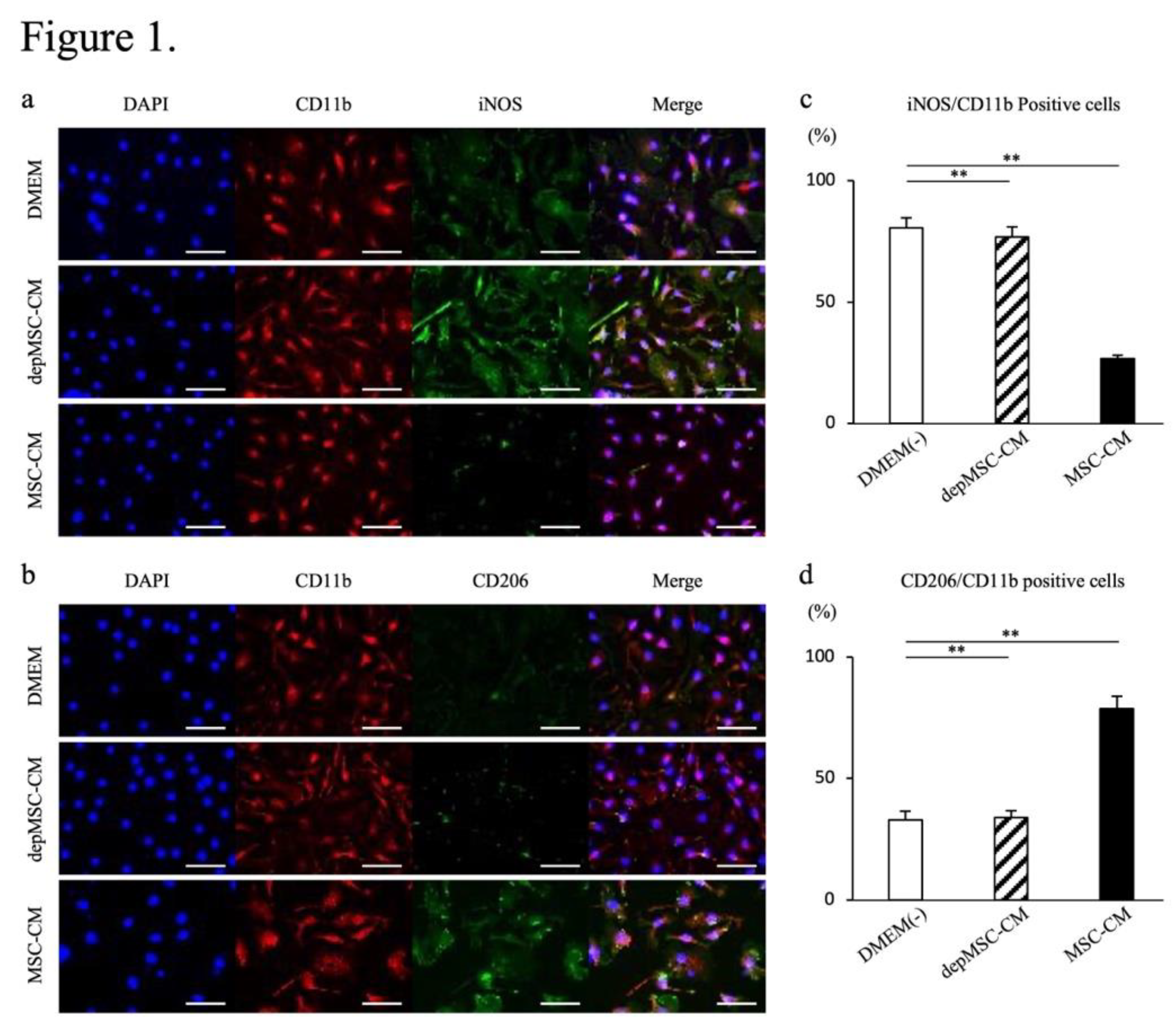
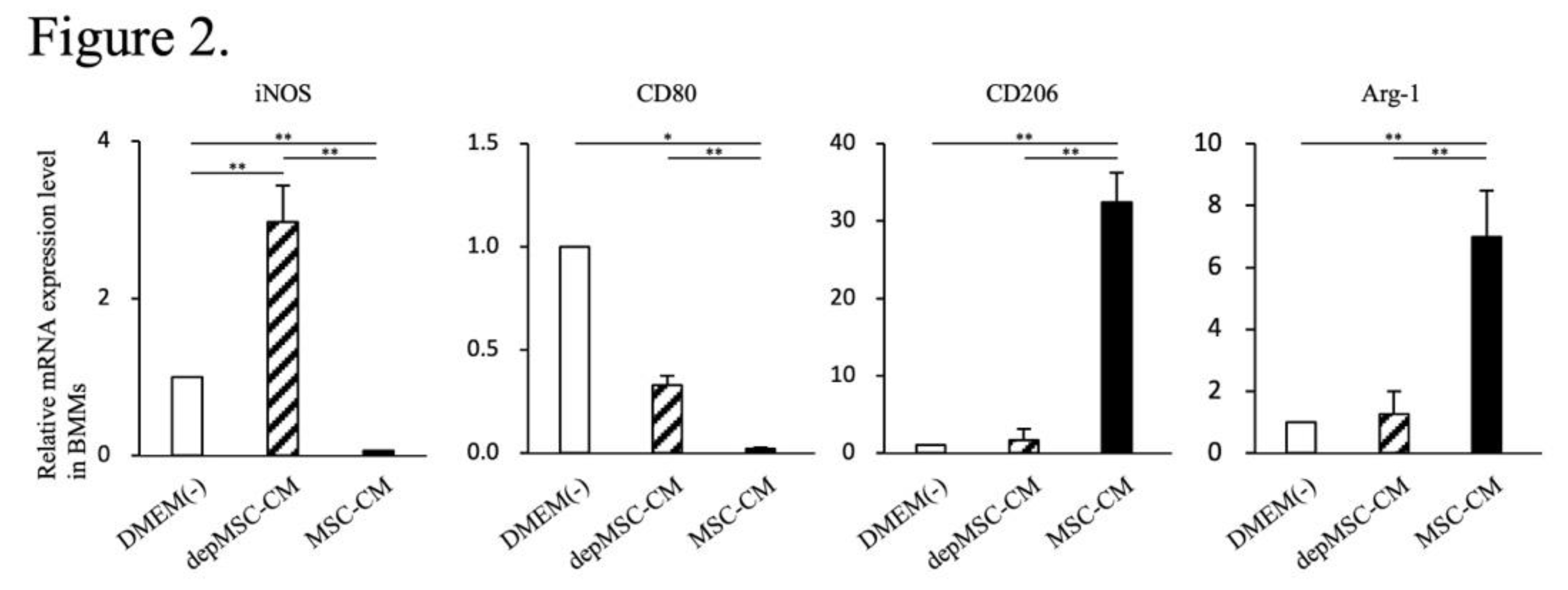
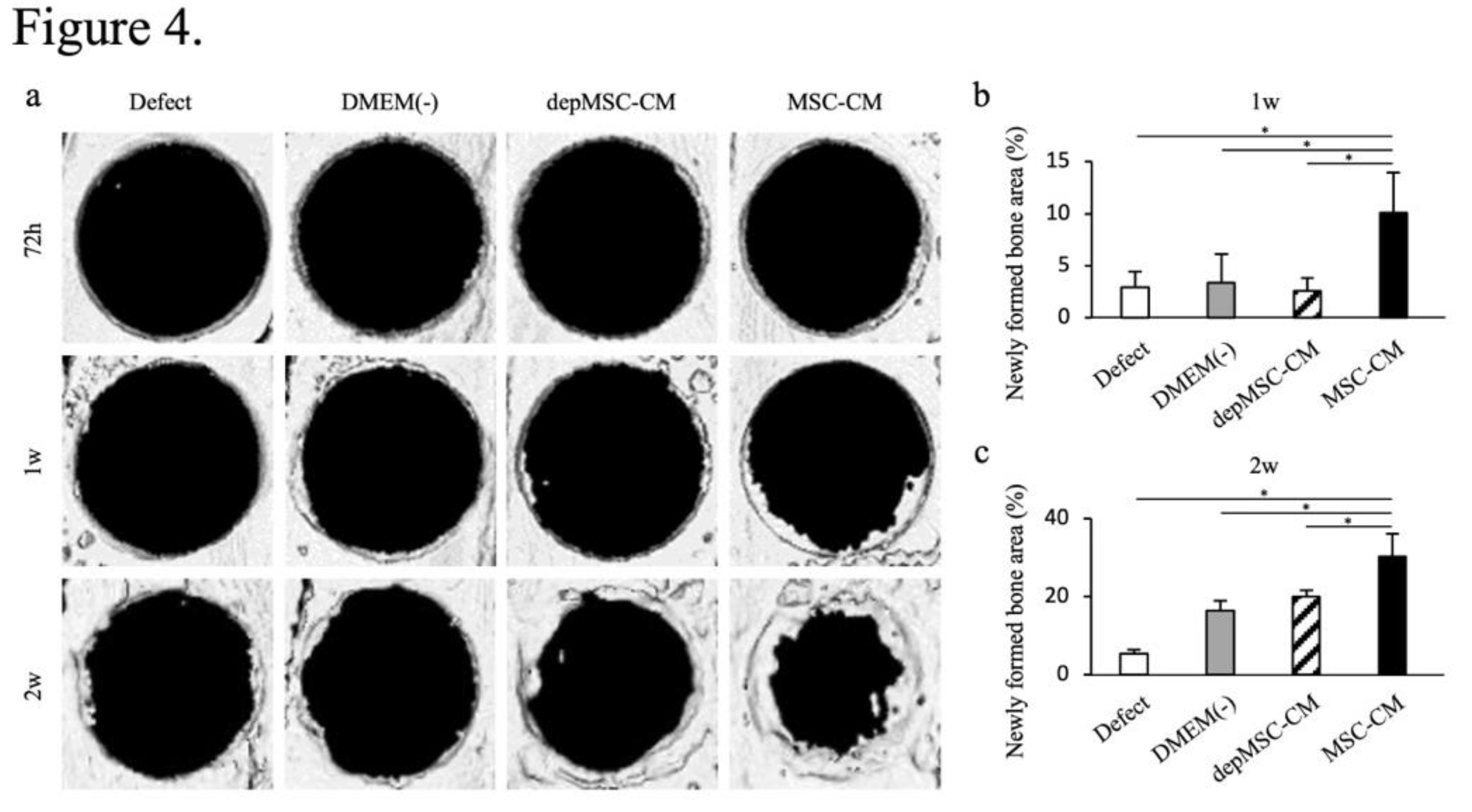
Objectives: Cytokines and chemokines contained in conditioned media from human bone marrow-derived mesenchymal stem cells (MSC-CM) promote bone regeneration. We recently reported macrophage phenotype switching towards the anti-inflammatory M2 phenotype induced by MSC-CM and its potential to promote bone regeneration. However, the specific factors in the MSC-CM responsible for this process remain unclear. Monocyte chemoattractant protein (MCP) -1, present in MSC-CM, promotes cell migration and activation of the monocyte-macrophage lineage; therefore, we hypothesized that MCP-1 is a key factor in MSC-CM-induced macrophage phenotype switching. In this study, we aimed to elucidate the effect of MCP-1 on MSC-CM-induced macrophage phenotype switching and subsequent bone regeneration. Methods: MCP-1 was depleted from MSC-CM (depMSC-CM) and used in subsequent experiments. Rat bone marrow macrophages were incubated in MSC-CM or depMSC-CM and expression of macrophage markers was examined in vitro. In addition, the effect of MSC-CM and depMSC-CM on bone regeneration and macrophage phenotype switching were evaluated using rat calvaria defect model in vivo. Results: MSC-CM enhanced M2 macrophage marker expression in rat bone marrow macrophages compared to those treated with depMSC-CM in vitro. In addition, MSC-CM increased the number of M2 macrophage marker-positive cells in bone defects and enhanced subsequent bone regeneration in a rat calvarial defect model. Conclusions: MCP-1 plays an essential role in MSC-CM-induced macrophage phenotypic switching and subsequent bone regeneration.
Keywords:
1. Introduction
2. Materials and Methods
2.1. Preparation of Conditioned Medium
2.2. MCP-1 Depletion from MSC-CM
2.3. Bone Marrow Macrophage Isolation and Activation
2.4. Immunocytochemical Analysis
2.5. Real-Time Quantitative Reverse Transcriptase-Polymerase Chain Reaction (qRT-PCR)
2.6. Rat Calvarial Bone Defect Model
2.7. Microcomputed Tomography (Micro-CT) Analysis
2.8. Histological Analysis
2.9. Immunohistochemical Analysis
2.10. Statistical Analysis
3. Results
3.1. MCP-1 Concentration in MSC-CM and depMSC-CM
3.2. MSC-CM Regulated Macrophage Phenotype-Related Gene Expression in BMMs
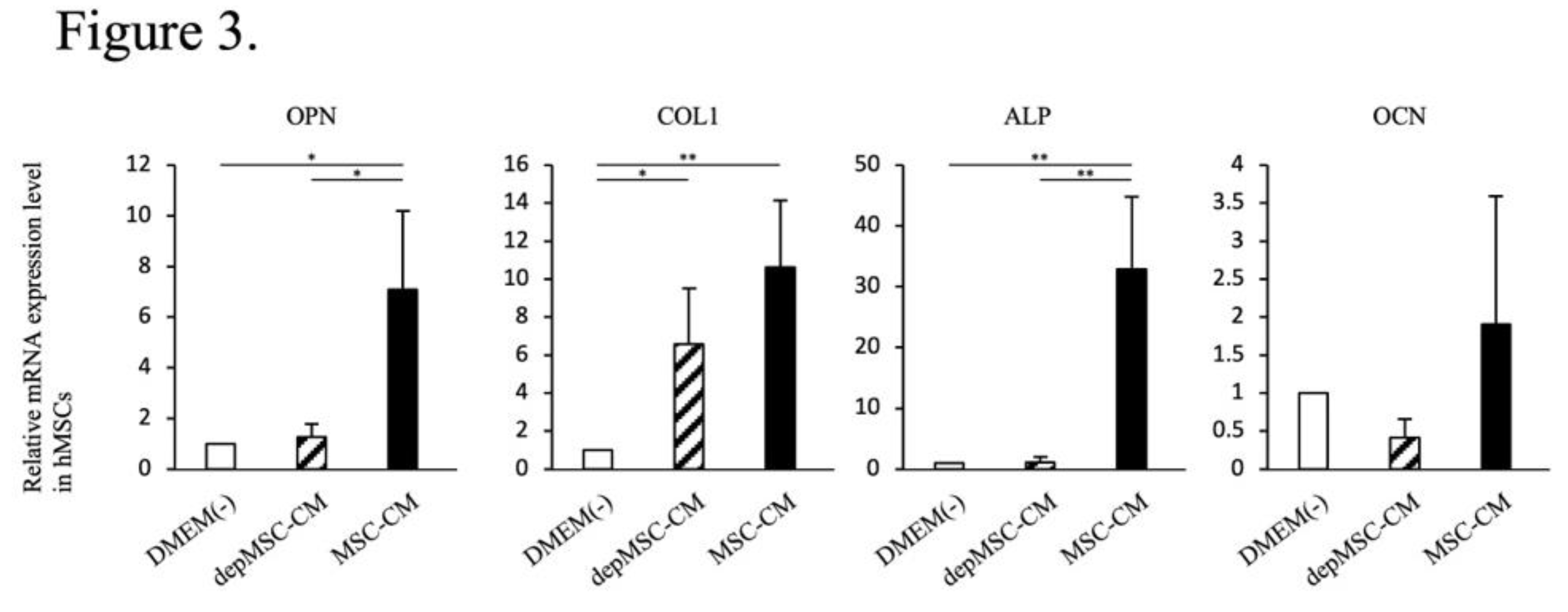
3.3. MSC-CMs Enhanced Osteogenesis-Related Gene Expression in hMSC
3.4. MSC-CM Enhanced Bone Regeneration Compared to depMSC-CM In Vivo
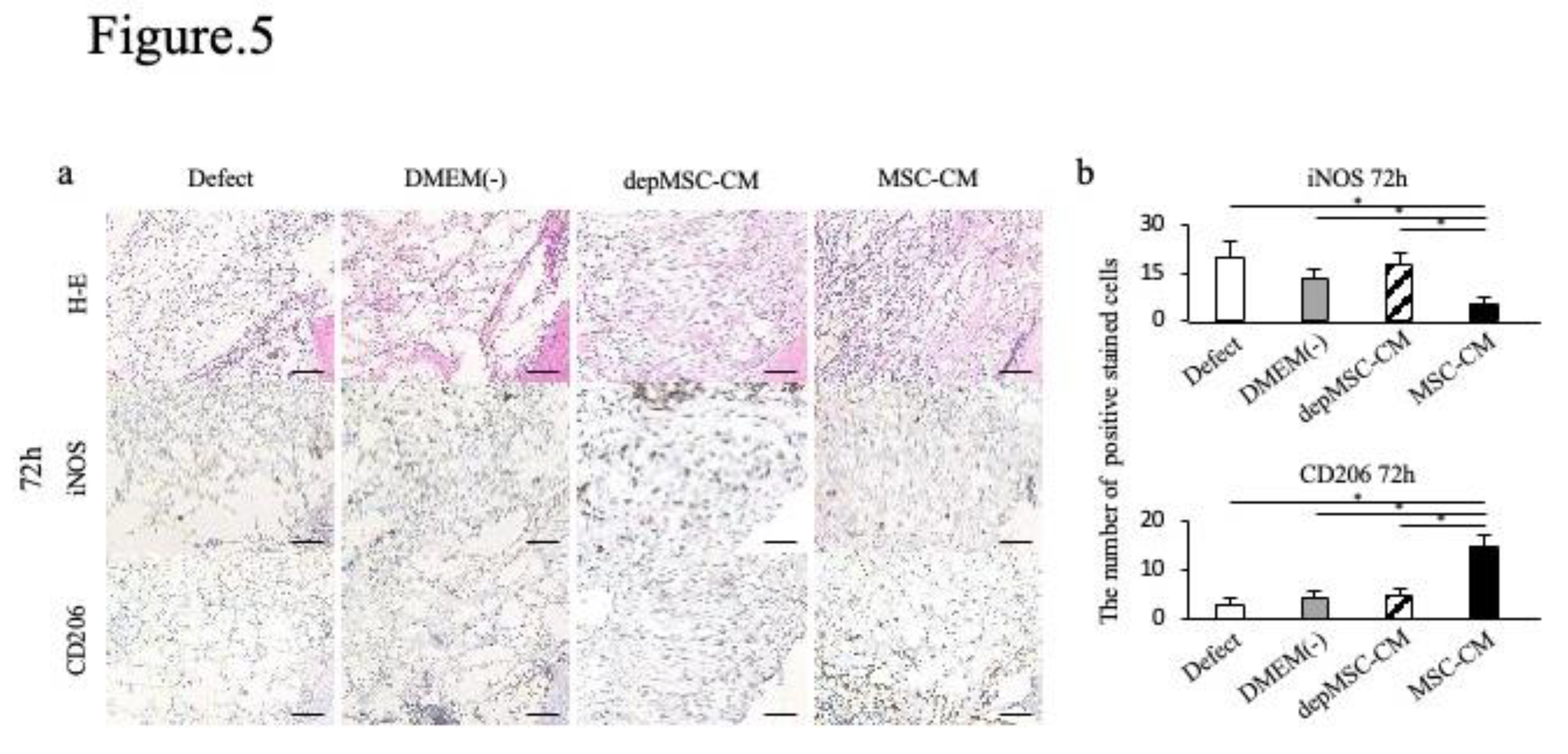
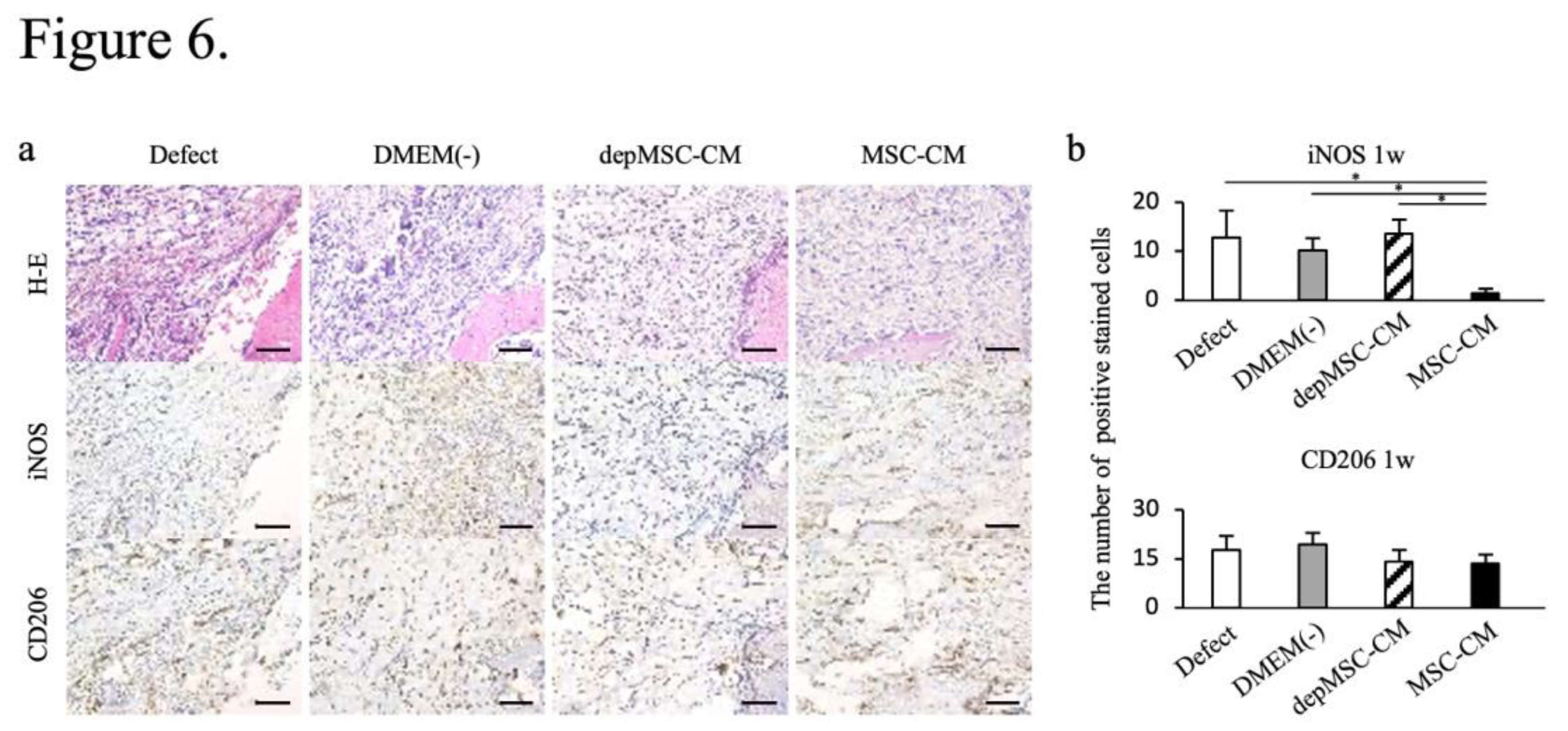
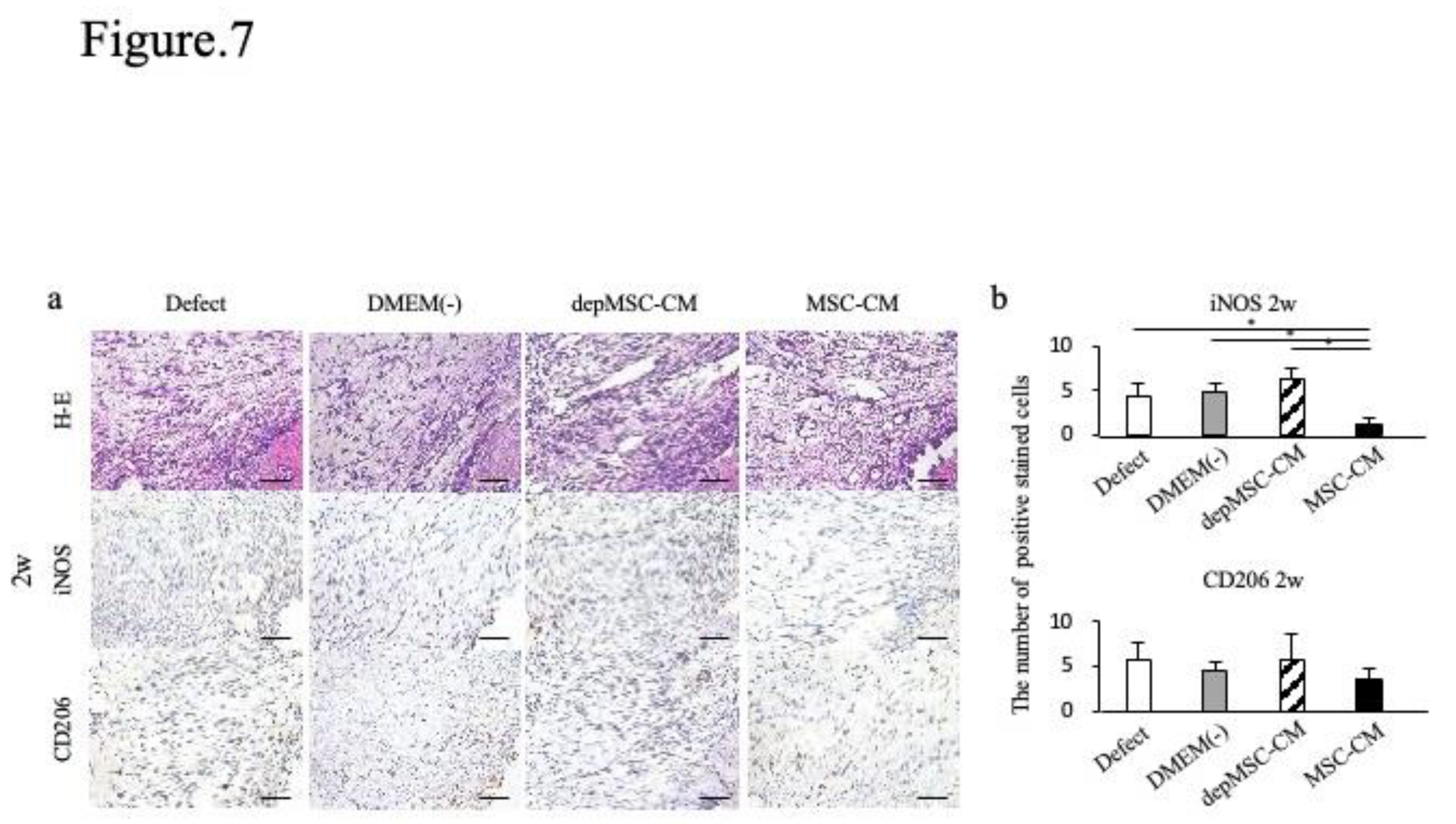
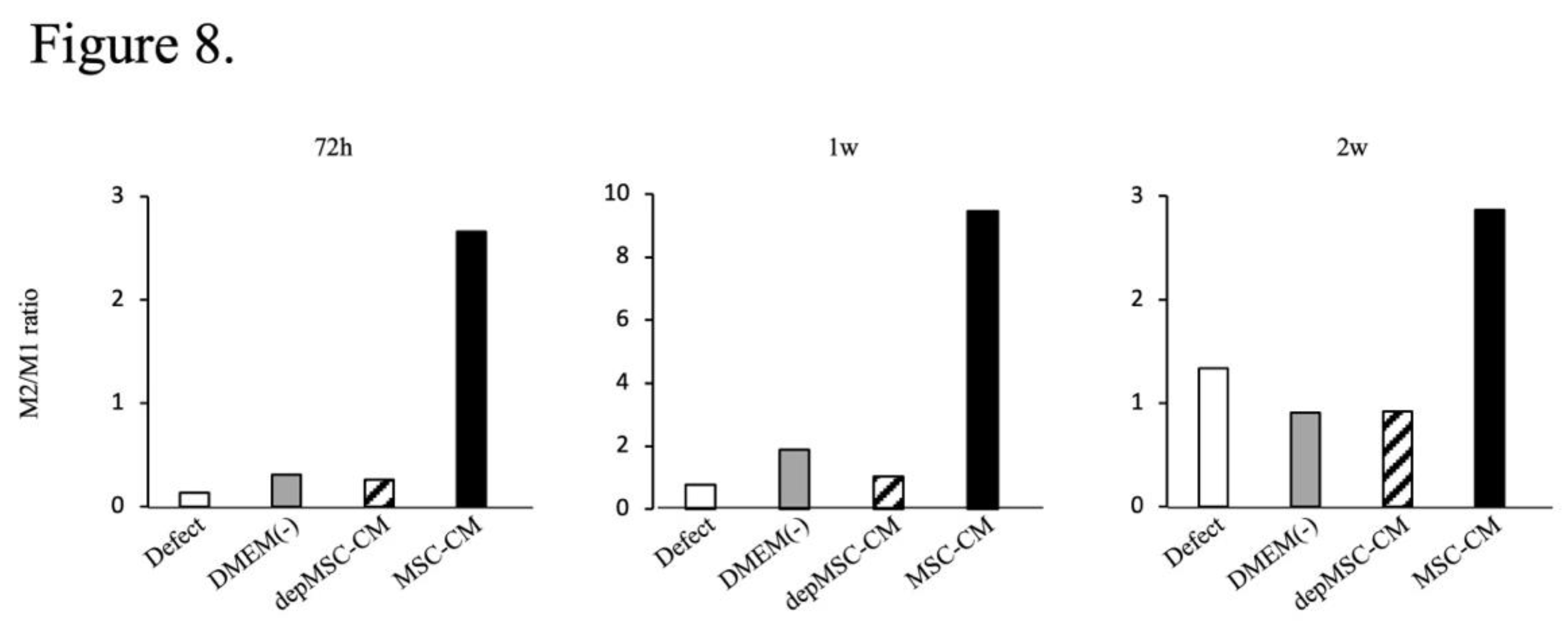
3.5. MSC-CM Induced M1 to M2 Macrophage Phenotype Switching at an Early Phase of Bone Regeneration
4. Discussion
Author Contributions
Funding
Institutional Review Board Statement
Informed Consent Statement
Data Availability Statement
Acknowledgements
Conflict of Interest
References
- Pelegrine, A.A.; da Costa, C.E.S.; Correa, M.E.P.; Marques, J.F. Clinical and histomorphometric evaluation of extraction sockets treated with an autologous bone marrow graft. Clin. Oral Implants Res. 2010, 21, 535–542. [Google Scholar] [CrossRef] [PubMed]
- Rickert, D.; Sauerbier, S.; Nagursky, H.; Menne, D.; Vissink, A.; Raghorbar, G.M. Maxillary sinus floor elevation with bovine bone mineral combined with either autogenous bone or autogenous stem cells: a prospective randomized clinical trial. Clin. Oral Implants Res. 2011, 22, 251–258. [Google Scholar] [CrossRef]
- Kaigler, D.; Pagni, G.; Park, C.H.; Braun, T.M.; Holman, L.A.; Yi, E.; Tarle, S.A.; Bartel, R.L.; Giannobile, W.V. Stem cell therapy for craniofacial bone regeneration: a randomized, controlled feasibility trial. Cell Transplant. 2013, 22, 767–777. [Google Scholar] [CrossRef] [PubMed]
- Wislet-Gendebien, S.; Poulet, C.; Neirinckx, V.; Hennuy, B.; Swingland, J.T.; Laudet, E.; Sommer, L.; Shakova, O.; Bours, V.; Rogister, B. In vivo tumorigenesis was observed after injection of in vitro expanded neural crest stem cells isolated from adult bone marrow. PLOS ONE. 2012, 7, e46425. [Google Scholar] [CrossRef] [PubMed]
- Ide, C.; Nakai, Y.; Nakano, N.; Seo, T.-B.; Yamada, Y.; Endo, K.; Noda, T.; Saito, F.; Suzuki, Y.; Fukushima, M.; Nakatani, T. Bone marrow stromal cell transplantation for treatment of sub-acute spinal cord injury in the rat. Brain Res. 2010, 1332, 32–47. [Google Scholar] [CrossRef]
- Toma, C.; Wagner, W.R.; Bowry, S.; Schwartz, A.; Villanueva, F. Fate of culture-expanded mesenchymal stem cells in the microvasculature: in vivo observations of cell kinetics. Circ. Res. 2009, 104, 398–402. [Google Scholar] [CrossRef]
- Osugi, M.; Katagiri, W.; Yoshimi, R.; Inukai, T.; Hibi, H.; Ueda, M. Conditioned media from mesenchymal stem cells enhanced bone regeneration in rat calvarial bone defects. Tissue Eng. Part A. 2012, 18, 1479–1489. [Google Scholar] [CrossRef]
- Katagiri, W.; Osugi, M.; Kawai, T.; Ueda, M. Novel cell-free regeneration of bone using stem cell-derived growth factors. Int. J. Oral Maxillofac. Implants. 2013, 28, 1009–1016. [Google Scholar] [CrossRef]
- Katagiri, W.; Sakaguchi, K.; Kawai, T.; Wakayama, Y.; Osugi, M.; Hibi, H. A defined mix of cytokines mimics conditioned medium from cultures of bone marrow-derived mesenchymal stem cells and elicits bone regeneration. Cell Prolif. 2017, 50, e12333. [Google Scholar] [CrossRef]
- Katagiri, W.; Takeuchi, R.; Saito, N.; Suda, D.; Kobayashi, T. Migration and phenotype switching of macrophages at early-phase of bone-formation by secretomes from bone marrow derived mesenchymal stem cells using rat calvaria bone defect model. J. Dent. Sci. 2020, 17, 421–429. [Google Scholar] [CrossRef]
- Mantovani, A.; Biswas, S.K.; Galdiero, M.R.; Sica, A.; Locati, M. Macrophage plasticity and polarization in tissue repair and remodelling. J. Pathol. 2013, 229, 176–185. [Google Scholar] [CrossRef] [PubMed]
- Chang, M.K.; Raggatt, L.J.; Alexander, K.A.; Kuliwaba, J.S.; Fazzalari, N.L.; Schroder, K.; Maylin, E.R.; Ripoll, V.M.; Hume, D.A.; Pettit, A.R. Osteal tissue macrophages are intercalated throughout human and mouse bone lining tissues and regulate osteoblast function in vitro and in vivo. J. Immunol. 2008, 181, 1232–1244. [Google Scholar] [CrossRef] [PubMed]
- Zhang, Q.Z.; Su, W.R.; Shi, S.H.; Wilder-Smith, P.; Xiang, A.P.; Wong, A.; Nguyen, A.L.; Kwon, C.W.; Le, A.D. Human gingiva-derived mesenchymal stem cells elicit polarization of m2 macrophages and enhance cutaneous wound healing. Stem Cells. 2010, 28, 1856–1868. [Google Scholar] [CrossRef] [PubMed]
- Ogata, K.; Osugi, M.; Kawai, T.; Wakayama, Y.; Sakaguchi, K.; Nakamura, S.; Katagiri, W. Secretomes of mesenchymal stem cells induce early bone regeneration by accelerating migration of stem cells. J. Oral Maxillofac. Surg. Med. Pathol. 2018, 30, 445–451. [Google Scholar] [CrossRef]
- Katagiri, W.; Kawai, T.; Osugi, M.; Sugimura-Wakayama, Y.; Sakaguchi, K.; Kojima, T.; Kobayashi, T. Angiogenesis in newly regenerated bone by secretomes of human mesenchymal stem cells. Maxillofac. Plast. Reconstr. Surg. 2017, 39, 8. [Google Scholar] [CrossRef]
- Takeuchi, R.; Katagiri, W.; Endo, S.; Kobayashi, T. Exosomes from conditioned media of bone marrow-derived mesenchymal stem cells promote bone regeneration by enhancing angiogenesis. PLOS ONE. 2019, 14, e0225472. [Google Scholar] [CrossRef]
- Murray, P.J.; Wynn, T.A. Protective and pathogenic functions of macrophage subsets. Nat. Rev. Immunol. 2011, 11, 723–737. [Google Scholar] [CrossRef]
- Murray, P.J.; Allen, J.E.; Biswas, S.K.; Fisher, E.A.; Gilroy, D.W.; Goerdt, S.; Gordon, S.; Hamilton, J.A.; Ivashkiv, L.B.; Lawrence, T.; Locati, M.; Mantovani, A.; Martinez, F.O.; Mege, J.; Mosser, D.M.; Natoli, G.; Saeji, J.P.; Schultze, J.L.; Shirey, K.N.; Sica, A.; Wynn, T.A. Macrophage activation and polarization: nomenclature and experimental guidelines. Immunity. 2014, 41, 14–20. [Google Scholar] [CrossRef]
- Narasaraju, T.; Ng, H.H.; Phoon, M.C.; Chow, V.T.K. MCP-1 antibody treatment enhances damage and impedes repair of the alveolar epithelium in influenza pneumonitis. Am. J. Respir. Cell Mol. Biol. 2010, 42, 732–743. [Google Scholar] [CrossRef]
- Roca, H.; Varsos, Z.S.; Sud, S.; Craig, M.J.; Ying, C.; Pienta, K.J. CCL2 and interleukin-6 promote survival of human CD11b+ peripheral blood mononuclear cells and induce M2-type macrophage polarization. J. Biol. Chem. 2009, 284, 34342–34354. [Google Scholar] [CrossRef]
- Gao, S.; Mao, F.; Zhang, B.; Zhang, L.; Zhang, X.; Wang, M.; Yan, Y.; Yang, T.; Zhang, J.; Zhu, W.; Qian, H.; Xu, W. Mouse bone marrow-derived mesenchymal stem cells induce macrophage M2 polarization through the nuclear factor-κB and signal transducer and activator of transcription 3 pathways. Exp. Biol. Med. 2014, 239, 366–375. [Google Scholar] [CrossRef]
- Gong, L.; Zhao, Y.; Zhang, Y.; Ruan, Z. The macrophage polarization regulates MSC osteoblast differentiation in vitro. Ann. Clin. Lab. Sci. 2016, 46, 65–71. [Google Scholar]

| Gene | Sequence | Accession no. | |
|---|---|---|---|
| OPN | F | 5’-ACACATATGATGGCCGAGGTGA-3’ | NM_000582.2 |
| R | 5’-GTGTGAGGTGATGTCCTCGTCTGTA-3' | ||
| COLⅠ | F | 5’-CCCGGGTTTCAGAGACAACTTC-3’ | NM_000088.3 |
| R | 5’-TCCACATGCTTTATTCCAGCAATC-3’ | ||
| ALP | F | 5’-GCCATTGGCACCTGCCTTAC-3’ | NM_000478.5 |
| R | 5’-AGCTCCAGGGCATATTTCAGTGTC-3’ | ||
| OCN | F | 5’-CATGAGAGCCCTCACACTCCT-3’ | NM_199173.5 |
| R | 5’-CACCTTTGCTGGACTCTGCAC-3’ | ||
| iNOS | F | 5'-GCTGCCAAGCTGAAATTGAATG-3' | NM_000625.4 |
| R | 5'-TCTGTGCCGGCAGCTTTAAC-3' | ||
| CD80 | F | 5'-CACCTCCATTTGCAATTGACC-3' | NM_005191.4 |
| R | 5'-TCCTGCAAAGCAACTGAAGTGA-3' | ||
| CD206 | F | 5'-ATGCCCGGAGTCAGATCACAC-3' | NM_002438.4 |
| R | 5'-TTCTGCAGCACTTTCAATGGAAAC-3' | ||
| Arg-1 | F | 5'-CTGGCAAGGTGGCAGAAGTC-3' | NM_000045.3 |
| R | 5'-ATGGCCAGAGATGCTTCCAA-3' | ||
| GAPDH | F | 5’-AGGCTAGCTGGCCCGATTTC-3’ | NM_001256799.2 |
| R | 5’-TGGCAACAATATCCACTTTACCAGA-3’ |
Disclaimer/Publisher’s Note: The statements, opinions and data contained in all publications are solely those of the individual author(s) and contributor(s) and not of MDPI and/or the editor(s). MDPI and/or the editor(s) disclaim responsibility for any injury to people or property resulting from any ideas, methods, instructions or products referred to in the content. |
© 2025 by the authors. Licensee MDPI, Basel, Switzerland. This article is an open access article distributed under the terms and conditions of the Creative Commons Attribution (CC BY) license (http://creativecommons.org/licenses/by/4.0/).