

Submitted:
02 January 2025
Posted:
07 January 2025
You are already at the latest version
Abstract
In chronic kidney disease (CKD), protein degradation outweighs protein synthesis, leading to imbalanced cellular protein turnover and a loss of protein and cell mass im-pairing tissue function. Sarcopenia, characterized by the progressive loss of skeletal muscle mass and strength, is a significant complication in CKD. In light of limited articles comprehensively synthesizing the clinical knowledge on sarcopenia, this narrative review explores the pathophysiological mechanisms linking CKD and sarcopenia, including metabolic, hormonal, inflammatory, and nutritional factors. Current diagnostic criteria and highlights of the role of gut microbiota dysbiosis and miRNA alterations in muscle wasting are also discussed. This review predominantly incorporates viewpoints from research from the past and a few classic papers to support the stance of this research. Therapeutic strategies are multifaceted, encompassing nutritional interventions, exercise, anabolic agents, vitamin D supplementation, and correction of metabolic acidosis. Emerging therapies targeting the gut-muscle axis and epigenetic modifications are also considered. Despite advancements, sarcopenia remains un-der-recognized and undertreated in CKD patients. Future research should focus on understanding the molecular pathways of sarcopenia, identifying novel biomarkers for early detection, and developing personalized treatment strategies. Addressing barriers to exercise and nutritional interventions is critical for successful implementation. Overall, sarcopenia in CKD is a multifaceted condition, involved in an interplay between metabolic, hormonal, inflammatory, and nutritional factors. Such mechanisms require comprehensive management strategies in practice, especially through nutritional interventions, pharmaco-logical approaches, and emerging therapies targeting the gut-muscle axis and epigenetic modifications. This review highlights the complex interplay of these mechanisms and underscores the importance of comprehensive management strategies. Nutritional interventions, including adequate protein and vitamin D supplementation and regular physical activity, are essential for mitigating muscle wasting. Pharmacological approaches, such as anabolic agents and anti-inflammatory treatments, show promise but require further research to establish optimal regimens. Emerging therapies targeting the gut-muscle axis and epigenetic modifications offer new avenues for treatment.
Keywords:
sarcopenia
; chronic kidney disease
; diagnostic criteria
; pathophysiology
; muscle wasting
; muscle synthesis
1. Introduction
Chronic kidney disease (CKD) is a progressive condition characterized by a gradual loss of kidney function over time, affecting millions of individuals worldwide [1]. As CKD advances, patients often experience a myriad of complications, including cardiovascular diseases, anemia, and bone disorders. In CKD, the cellular protein turnover is imbalanced, with protein degradation outweighing protein synthesis, leading to a loss of protein and cell mass and impairing tissue function [2]. Besides, CKD is associated with significant reductions in lean body mass and the mass of various tissues, including skeletal muscle [2].
Sarcopenia, a syndrome characterized by progressive and generalized loss of skeletal muscle mass and strength, has emerged as a significant and often under-recognized consequence of CKD [3,4,5]. A recent systematic review and meta-analysis by Duarte MP et al. [6], including 42,041 patients in 140 observational studies from 25 countries, found that the global prevalence of sarcopenia was about 24.5% without significant differences among CKD stages. The prevalence of severe sarcopenia was 21.0%, which was significantly higher in dialysis patients (26.2%) than in non-dialysis CKD patients (3.0%). The sarcopenia traits in overall CKD patients were primarily low muscle strength (43.4%), followed by low physical performance (38.6%) and low muscle mass (29.1%) [6].
The loss of muscle mass, especially of skeletal muscle mass, is directly associated with diminished strength and indirectly associated with worse quality of life (QoL), increased vulnerability to undesirable outcomes such as falls, fractures, loss of independence, and, ultimately, higher hospitalization rates and mortality [3,7,8]. Consistently, sarcopenia in CKD patients is clinically significant due to its association with decreased QoL and increased risks of morbidity and mortality. It exacerbates the already high risk of cardiovascular complications, hospitalizations, and overall mortality in CKD patients [34383112]. The pathophysiology of sarcopenia in CKD is multifactorial, involving a complex interplay of metabolic, hormonal, inflammatory, and nutritional factors. Recent research has also highlighted the role of gut microbiota dysbiosis in the pathogenesis of sarcopenia in CKD.
Given the multifaceted nature of sarcopenia in CKD, therapeutic strategies must be comprehensive and multifactorial. Current approaches include nutritional interventions to optimize protein and energy intake, exercise interventions to improve muscle synthesis, anabolic agents such as GH and insulin-like growth factor-1 (IGF-1), and anti-inflammatory treatments to mitigate the chronic inflammatory state. This review will explore the pathophysiological mechanisms linking CKD and sarcopenia, discuss current and emerging therapeutic strategies, and highlight areas for future research. By enhancing our understanding of sarcopenia in CKD, we aim to improve the management and outcomes of this vulnerable patient population.
2. Diagnostic Criteria of Sarcopenia
Classification of sarcopenia varies; however, the European Working Group on Sarcopenia in Older People 2 (EWGSOP2) and The Asian Working Group for Sarcopenia (AWGS) are widely used (Table 1).
EWGSOP2 is an updated version of the original EWGSOP definition, incorporating scientific and clinical evidence accumulated over the past decade since their initial meeting in early 2018 [10]. EWGSOP2 provides the most widely applied diagnostic criteria for sarcopenia, emphasizing the following points: (1) Low muscle strength as a key characteristic of sarcopenia; (2) Detection of low muscle quantity and quality to confirm the diagnosis; and (3) Poor physical performance as an indicator of severe sarcopenia. Similarly, AWGS offers criteria for diagnosing and treating sarcopenia in the Asian population [11].
There are several methods for evaluating muscle mass, though not all are widely used. Computed tomography scans (CT) and Magnetic resonance imaging (MRI) are considered the "Gold Standard" for diagnosing sarcopenia because they distinguish between tissues and fat. However, their use is limited by cost, accessibility, radiation exposure, and technical complexity. Dual Energy X-ray absorptiometry (DXA) offers an alternative with less radiation but still faces accessibility issues. Bioelectrical Impedance Analysis (BIA) is more accessible and measures fat and lean body mass, but it is often used on children or teenagers due to non-standardized conditions in older adults [12]. Anthropometric measurements, such as mid-arm muscle circumference (MAMC) and Subjective Global Assessment (SGA), also show potential for diagnosing sarcopenia and correlate with mortality in CKD patients [13].
A meta-analysis of 35 studies found that non-Asian males have a higher prevalence of sarcopenia compared to Asian males when using BIA (19% vs 10%). However, the opposite result was observed with the DXA method (10% vs 6%) [14]. For females, the prevalence of sarcopenia is higher than for males in both BIA and DXA methods, with non-Asian females showing a more pronounced difference (BIA: 20% vs DXA: 11%, 10% vs 6%) [14]. Overall, the DXA method shows a lower prevalence of sarcopenia [14].
3. Molecular Mechanisms and Pathophysiology for Sarcopenia in CKD
Figure 1 illustrates the molecular mechanisms of skeletal muscle atrophy in CKD. CKD is characterized by systemic inflammation [15] and is closely associated with sarcopenia [16,17]. Elevated levels of inflammatory cytokines are linked to muscle wasting [18,19].
The Molecular mechanisms of skeletal muscle atrophy in CKD may involve:
- TNF-α (tumor necrosis factor-alpha) stimulates the ubiquitin-proteasome system (UPS) [20], which is crucial for regulating the signaling pathways activated by TNF-α binding to TNF type 1 receptor (TNFR1). When TNF-α binds to TNFR1 on myofibers, it activates nuclear factor κB (NFκB) and reactive oxygen species (ROS) production. This activation promotes pro-inflammatory gene programs, including the secretion of interleukin-6 (IL-6) and Interleukin-1 beta (IL-1β) [21,22,23,24,25,26];
- IL-6 levels are also elevated in CKD [27,28], and its increase or overexpression reduces muscle mass and protein metabolism [29,30,31]. IL-6 binds to glycoprotein 130 (gp130) and IL-6 receptor (IL-6R) on myofibers, activating signal transducer and activator of transcription 3 (STAT3) signaling and inducing suppressor of cytokine signaling 3 (SOCS3), which inhibits IGF-1 effects, leading to protein degradation and muscle atrophy [32,33];
- IGF-1 is a key growth mediator that promotes muscle health by binding to its receptor, insulin-like growth factor-1 receptor (IGF-1R), stimulating protein synthesis, and inhibiting protein degradation [34]. In CKD, IGF-1 levels decrease, leading to impaired muscle protein synthesis and increased protein degradation. This process contributes to muscle atrophy through several pathways, including ROS activation, myogenesis, apoptosis, increased protein degradation via the PI3K/Akt/FOXO (Phosphoinositide 3-kinase/ Protein Kinase B/ Forkhead box protein O) pathway, and decreased protein synthesis due to disrupted PI3K/Akt/mTOR (mammalian target of ramamycin) pathway [35,36,37];
- Myostatin and Activin A are transforming growth factor-beta (TGF-β) family members that play significant roles in muscle atrophy in CKD. Myostatin production is induced by inflammatory cytokines linking inflammation to muscle atrophy [32]. Myostatin and Activin A bind to Activin receptor type IIB (ActRIIB) and contribute to muscle atrophy by activating the mothers against decapentaplegic homolog 2/3 (SMAD2/3) and FOXO pathways, leading to increased protein degradation and inhibited muscle growth [35,38,39,40].
Overall, the interplay between inflammatory cytokines, ROS activation, impaired myogenesis, and increased apoptosis contributes to skeletal muscle atrophy in CKD. Inflammatory cytokines promote protein degradation, inhibit protein synthesis, and activate ROS, damaging muscle cells. ROS activation causes oxidative stress, leading to muscle cell damage and apoptosis, impairing myogenesis. Myogenesis reduces muscle regeneration and increases muscle wasting. Meanwhile, apoptosis leads to overall muscle mass loss. (Figure 1)
Figure 2 illustrates the pathophysiology of sarcopenia in CKD. It highlights the multifaceted impact of CKD on muscle health, showing how reduced renal function and uremic toxins contribute to muscle wasting and sarcopenia. Key risk factors include comorbidities such as diabetes, insulin resistance (IR), cardiovascular disease (CVD), and depression, as well as low physical activity. Inflammation, metabolic and hormonal dysregulation, including hyperparathyroidism (HPT), metabolic acidosis (MA), and hypogonadism, further exacerbate muscle degradation. Reduced renal function, uremic toxins, reduced nutrient intake, dialysis-associated catabolism, and gut microbiota dysbiosis also play significant roles. These risk factors contribute to increased protein degradation, along with decreased protein synthesis and muscle regeneration, resulting in muscle wasting and sarcopenia, which subsequently cause many consequences, such as increased cardiovascular disease, infection risk, frailty, and mortality, along with decreased health-related quality of life (HRQoL) [2,41] (Figure 2).
4. Factors Associated with Sarcopenia in CKD
4.1. Inflammation
Inflammation significantly impacts CKD-associated sarcopenia. CKD patients exhibit elevated levels of inflammatory markers like C-reactive protein (CRP), IL-6, and TNF-α [42,43,44,45]. These pro-inflammatory cytokines enhance muscle protein degradation, increase the protein-bound uremic toxins, parathyroid hormone (PTH), angiotensin II, glucocorticoid, inflammation, and oxidative stress [31474705], further inhibiting muscle growth [46,47,48].
Specifically, elevated CRP levels correlate with reduced muscle strength and mass [49]. CRP exposure decreases muscle cell size and protein synthesis by affecting Akt and AMPK (AMP-activated protein kinase) pathways [50]; IL-6, through the JAK/STAT (Janus kinase/ Signal transducer and activator of transcription) pathway, also contributes to muscle atrophy [51,52,53]; TNF-α activates NF-κB, leading to increased muscle protein breakdown and reduced myogenesis [54]. Besides, leptin, a hormone acting as a pro-inflammatory adipokine, can also cause sarcopenia by lowering protein intake. As an anorexigenic molecule in adipose tissue, leptin can manipulate CKD patients' appetite, body mass, and other regulatory functions, including bone mass, immune and endocrine response, blood pressure, or sexual maturation [55]. Leptin is also associated with cardiovascular disease and hypertension development, resulting from megalin-mediated metabolic degradation and a drop in normal physiologic clearance, which further leads to a pro-inflammatory uremic condition [55].
This phenomenon of inflammation often increases along with the development of CKD [55]. Cytokines can also regulate acute-phase protein synthesis; meanwhile, increased production of inflammatory cytokines during the illness stage could lead to the breakdown of skeletal muscle accelerated is foreseeable [56]. Additionally, a low-grade systemic inflammatory state is a familiar and constant presence for CKD patients; of all the micro-inflammation, uremia was found to affect skeletal muscle significantly [55,56].
4.2. Metabolic and Hormonal Dysregulation
CKD leads to several metabolic and hormonal disturbances that contribute to muscle wasting and sarcopenia: MA increases protein breakdown through acidification-dependent ubiquitination [3,57,58]. IR disrupts the normal insulin/IGF-1 signaling, reducing muscle protein synthesis through the PI3K/Akt/mTOR pathway. Additionally, it enhances protein degradation via the FOXO pathway, contributing to muscle wasting [48].
Accumulation of uremic toxins impairs muscle mitochondrial function and protein synthesis [3,57]. Elevated uremic toxins, such as indoxyl sulfate (IS) and p-cresyl sulfate (PCS), impair mitochondrial function and IGF-1 signaling, contributing to muscle atrophy [59,60,61,62,63]. Proteinuria is associated with the development of CKD [64]. CKD patients often suffer muscle protein mass losses induced by the inequality between synthesis and protein degradation and a drop in muscle endurance resulting from impaired mitochondrial function [48]. Similarly, current literature also supports the stance of uremic toxin-induced muscle loss [48].
Besides, high levels of uric acid and advanced glycation end products (AGE) [65,66], thyroid hormone imbalances, and vitamin D deficiency [67] contribute to muscle dysfunction and are associated with sarcopenia in CKD patients. Furthermore, recent research found an interplay between hormones, sex, age, and sarcopenia. Inflammation derangements and hormonal factors such as growth hormone (GH) or testosterone are signs of sarcopenia-related aging [12]. Sex-specific differences are prominent in sarcopenia progression. Post-menopausal women experience a plummet in sex steroids, accelerating muscle loss, while testosterone declines more gradually in men but drops significantly after age 80, leading to sarcopenia [14].
Overall, these metabolic and hormonal disturbances create a catabolic environment, exacerbating muscle wasting and sarcopenia in CKD patients.
4.3. Inadequate Nutritional Status
Nutritional intake, particularly protein, is crucial in formulating and managing sarcopenia. In patients with CKD, muscle protein loss is a common consequence, leading to increased mortality risks, reduced mobility, and a lower QoL due to diminished muscle strength [68]. Skeletal muscle is the primary physiological reserve, comprising 50% of the body's protein and 40% of its weight [69]. Research has identified that increased interleukin-8 levels, poor nutritional status, and aging contribute to muscle loss in ESRD (End-stage renal disease) patients [70]. These factors potentially lead to a decline in muscle quality and quantity [70]. ESRD patients are advised to consume more than 0.8-1.2g of protein per kilogram of body weight. However, dialysis can reduce appetite, resulting in insufficient protein intake. Ensuring adequate protein ingestion is beneficial for counteracting hemodialysis-induced skeletal muscle catabolism. Additionally, muscle biopsies from CKD patients have shown reduced levels of essential amino acids, indicating decreased intracellular availability of branched-chain amino acids, which leads to protein wasting [71,72].
4.4. Physical Inactivity
Physical inactivity is a significant factor contributing to muscle wasting and sarcopenia by reducing protein synthesis and increasing muscle protein breakdown in CKD patients. In CKD patients, physical inactivity often results from fatigue, anemia, and decreased exercise capacity, which are common in this population [73]. Additionally, uremic toxins and MA accumulation can impair muscle function and contribute to physical inactivity. Recently, a cross-sectional study by Yang et al. [74] involving 220 advanced CKD patients undergoing hemodialysis found that 64.1% had probable or confirmed sarcopenia. At the same time, physical activity is an independent predictor of sarcopenia by using multivariable logistic regression analysis. Specifically, lower physical activity scores were significantly associated with higher sarcopenia prevalence and severity. These findings underscore the importance of promoting physical activity to mitigate sarcopenia in CKD patients [74]. The interplay between sarcopenia and physical inactivity creates a vicious cycle where muscle loss leads to decreased physical activity, which in turn exacerbates muscle wasting.
4.5. Gut Microbiota Dysbiosis and the Metabolites
Gut microbiota dysbiosis significantly impacts CKD-associated sarcopenia. In CKD, there is a reduction in beneficial bacteria like Bifidobacterium and Lactobacillus and an increase in harmful bacteria such as Enterobacter, Klebsiella, and Escherichia [75]. This altered gut microbiota composition leads to increased production of uremic toxins like IS and PCS [75,76]. These toxins damage the intestinal barrier, increasing gut permeability and allowing the translocation of bacteria and endotoxins into the bloodstream [77,78]. This process exacerbates systemic inflammation, contributing to muscle wasting [78,79]. Dysbiosis also reduces beneficial short-chain fatty acid (SCFA)-producing bacteria, impairing muscle health [80]. SCFAs, such as butyrate, are crucial for maintaining muscle function and reducing inflammation [80].
Additionally, gut-derived metabolites like IS induce oxidative stress and inflammatory responses in muscle cells, further promoting sarcopenia [60]. Addressing gut microbiota dysbiosis through dietary interventions or probiotics may help mitigate muscle wasting in CKD patients [81,82]. Diets low in fiber and high in processed foods reduce beneficial SCFA-producing bacteria, impairing muscle health [80]. While protein-restricted diets can delay CKD progression, they may also contribute to sarcopenia if protein intake is too low [83]. Conversely, a balanced diet of vegetables and whole grains supports gut health and muscle function [83]. Commonly used drugs, such as antibiotics and proton pump inhibitors (PPIs), can disrupt gut microbiota, reducing beneficial bacteria like Bifidobacterium and Lactobacillus [84]. Addressing dietary patterns and minimizing the negative impact of drugs on gut microbiota can help mitigate sarcopenia in CKD patients [81,82]. Thus, diet and drugs play a critical role in the progression of sarcopenia in CKD.
4.6. MicroRNA
MicroRNAs (miRNAs) significantly influence CKD-associated sarcopenia by regulating gene expression in muscle maintenance and atrophy. In CKD, altered miRNA expression affects muscle cell physiology and contributes to muscle wasting. For instance, decreased miR-29 levels suppress myogenesis and promote muscle atrophy by increasing the expression of atrophy-related genes like MuRF1 and atrogin-1 [85]. Similarly, reduced miR-26a expression is associated with enhanced phosphatase and tensin homolog (PTEN) levels, a negative regulator of the Akt signaling pathway, leading to muscle atrophy [86]. Besides, miRNAs such as miR-23a, miR-27a, and miR-486 improve muscle mass and function by activating Akt and FOXO while blocking SMAD signaling [87,88,89]. However, these miRNAs are downregulated in CKD, increasing PTEN and Forkhead box protein O1 (FOXO1) expression, promoting catabolic responses and muscle wasting [87]. These miRNAs also interact with inflammatory pathways, exacerbating muscle degradation. Thus, miRNAs play a critical role in the progression of sarcopenia in CKD by modulating key molecular pathways involved in muscle health. Addressing miRNA dysregulation through targeted therapies could help mitigate sarcopenia in CKD patients. Additionally, CKD enhances nucleolar demethylase expression, reducing ribosomal synthesis and protein translation, linking epigenetic changes to sarcopenia [90].
5. Specific Therapeutic Approaches for Sarcopenia in CKD
Current literature has found that sarcopenia could be mitigated by implementing nutritional interventions, exercise interventions, anabolic agents, Vitamin D supplementation, correction of metabolic acidosis, gut microbiota modulation, and pharmacological interventions (Figure 3).
5.1. Nutritional Interventions
Proper nutrition is vital for preventing and treating sarcopenia in CKD. Nutritional interventions focus on optimizing protein and energy intake to support muscle maintenance and growth. Studies suggest that protein supplementation, particularly with high-quality proteins like whey, can significantly improve muscle mass and function in CKD patients [91]. Essential amino acids, especially leucine, are vital for stimulating muscle protein synthesis [92]. Omega-3 fatty acids have anti-inflammatory properties that may help reduce muscle degradation. Furthermore, a balanced diet rich in fruits, vegetables, and whole grains, akin to the Mediterranean diet, has been associated with better muscle health and reduced inflammation. Combining these nutritional strategies with regular physical activity can enhance their effectiveness, improving muscle mass, strength, and overall physical function in CKD patients. Therefore, individualized nutritional plans should be integrated into the comprehensive care of CKD patients to prevent and treat sarcopenia effectively.
Vitamin D plays a crucial role in muscle health by regulating calcium and phosphorus metabolism, promoting muscle protein synthesis, and modulating muscle cell proliferation and differentiation [93]. CKD patients often have vitamin D deficiency due to impaired renal synthesis of active vitamin D, leading to muscle weakness and increased risk of sarcopenia [94]. Several studies have demonstrated the benefits of vitamin D supplementation in improving muscle mass and function in CKD patients. For instance, vitamin D supplementation has enhanced muscle strength and physical performance, reduced inflammation, and improved overall HRQoL [95]. A meta-analysis of randomized controlled trials found that vitamin D supplementation significantly increased muscle strength and reduced the risk of falls in older adults, including those with CKD [96]. Additionally, vitamin D's anti-inflammatory properties may help mitigate the chronic inflammation commonly seen in CKD, contributing to muscle wasting [97]. The optimal dosage and duration of vitamin D supplementation for managing sarcopenia in CKD patients are still under investigation. However, current knowledge suggests that maintaining serum 25-hydroxyvitamin D levels above 30 ng/mL benefits muscle health. For adults, a daily intake of 800 - 1000 IU of vitamin D is generally recommended, especially for those with severe deficiency or sarcopenia [98]. Despite its potential benefits, vitamin D supplementation is underutilized in clinical practice due to concerns about hypercalcemia and vascular calcification in CKD patients. Therefore, monitoring serum calcium and phosphorus levels regularly and adjusting the dosage accordingly is essential. Overall, when used appropriately, vitamin D supplementation can be a valuable component of a comprehensive strategy to manage sarcopenia in CKD patients.
Combining these nutritional strategies with regular physical activity can enhance their effectiveness, improving muscle mass, strength, and overall physical function in CKD patients. Therefore, individualized nutritional plans should be integrated into the comprehensive care of CKD patients to prevent and treat sarcopenia effectively.
5.2. Exercise Interventions
Exercise interventions are also pivotal in managing sarcopenia in CKD patients. Recent research has depicted that the protein synthesis rates of skeletal muscle can be stimulated by physical activity, with post-absorptive muscle protein synthesis rates being elevated for up to 24 - 48 hrs; such an effect is more prominent before food intake, and vice versa [99]. Hence, the relationship between sarcopenia and physical activity was found significant, implying a potential treatment for sarcopenia [99].
Specifically, aerobic and resistance exercises are fundamental in managing sarcopenia in CKD patients. Resistance exercise is particularly effective, enhancing muscle mass, strength, and physical performance [100]. High-intensity resistance training (80 % of one-repetition maximum) is recommended to achieve maximal strength gains [100]. Additionally, aerobic exercises like walking and cycling improve cardiovascular health and overall physical function [100]. Combining resistance and aerobic exercises in a multimodal approach can provide comprehensive benefits, addressing both muscle and cardiovascular health [101].
The recently published Italian Society of Nephrology's consensus statement [102] highlights that regular physical activity and exercise training improve physical function, cardiometabolic and neuromuscular health, cognitive function, and overall HRQoL in CKD patients. These benefits are evident across all CKD stages, including those on dialysis and kidney transplant recipients. Exercise also offers nephroprotection and reduces mortality. Despite its advantages, exercise is underutilized in clinical practice due to barriers patients and healthcare staff face, such as patient fatigue, lack of motivation, and limited access to exercise facilities. Integrating exercise into routine care plans and using a multidisciplinary team approach can significantly improve outcomes for CKD patients with sarcopenia [102].
5.3. Correction of MA
MA, a common complication in CKD, contributes to muscle protein breakdown. Correcting this condition through bicarbonate supplementation can improve protein metabolism, increase serum albumin levels, and enhance muscle mass. This intervention also helps improve overall nutritional status and physical performance.
A randomized controlled trial (RCT) with 188 CKD patients assessed the impact of correcting MA on body composition and kidney function. The intervention group received standard care plus sodium bicarbonate, while the control group received standard care alone. Results showed that the intervention group had higher lean body mass (LBM), MAMC, and estimated glomerular filtration rate (eGFR). The study concluded that alkali supplementation to increase venous bicarbonate levels to 24 - 26 mEq/L is associated with the preservation of LBM and kidney function in patients with CKD stages 3 and 4 [103].
The finds are supported by a recently published meta-analysis by Yang TY et al. [104], which enrolled 14 RCTs comprising 2037 CKD patients with MA. The study demonstrated that sodium bicarbonate supplementation is associated with significantly increased mid-arm muscle circumference compared with those without (standardized mean difference [SMD], 0.23; 95 % CI, 0.08 to 0.38; P = 0.003, I2 < 0.001), and concluded the potential benefits of sodium bicarbonate supplementation in increasing muscle mass.
5.4. Gut Microbiota Modulation
Emerging evidence suggests that gut microbiota dysbiosis plays a role in CKD-associated sarcopenia [105]. Modulating the gut microbiota through probiotics, prebiotics, and synbiotics can help reduce uremic toxins and inflammation, improving muscle health.
AST-120, an oral adsorbent, has shown promise in reducing IS and PCS levels, ameliorating muscle atrophy, and enhancing exercise capacity [106].
Additionally, emerging therapies targeting the gut-muscle axis, such as probiotics and prebiotics, hold promise in modulating gut microbiota and reducing uremic toxin levels. These interventions could further support muscle health in CKD patients.
5.5. Pharmacological Interventions
Pharmacological interventions are emerging as promising therapeutic approaches for managing sarcopenia in CKD patients. Experiments with animals have observed protein synthesis through the inactivation of FOXO and mTOR in insulin or insulin-like growth factor (IGF)-1-phosphatidylinositol 3-kinase-Akt pathway [33,107,108,109,110]. Drugs relative to the mechanisms of protein synthesis include anabolic hormones, myostatin inhibitors, selective androgen receptor modulators (SARM), and mTOR inhibitors, which help stimulate muscle protein synthesis and reduce muscle degradation. Anabolic hormones, such as testosterone, GH, and IGF-1, have shown beneficial effects in increasing muscle mass and strength [111]. Myostatin inhibitors, which block the myostatin pathway that negatively regulates muscle growth, are also being explored for their potential to enhance muscle hypertrophy and function [112]. Additionally, SARMs are under investigation for their ability to stimulate muscle growth with fewer side effects compared to traditional anabolic steroids [113].
Another promising area is the use of anti-inflammatory agents to reduce chronic inflammation, a key contributor to muscle wasting in CKD. For instance, omega-3 fatty acids have been shown to possess anti-inflammatory properties that may help mitigate muscle degradation [114]. Furthermore, AST-120 has demonstrated potential in reducing uremic toxins, which are implicated in muscle atrophy and decreased exercise capacity [106]. Meanwhile, anorexia is common in CKD patients, which consists of complex interplays between metabolic signals and anomalies in the organ systems, as well as an iterative dominance process of physical and psychological [115]. Gastric mediators, cytokines, and adipokines mediate anorexia [116]. Hence, megestrol acetate, an appetite stimulant, has also increased weight, protein catabolic rate, and muscle mass.
6. Future Perspectives
Future perspectives on sarcopenia in CKD involve a multifaceted approach to understand better and manage this condition. Key areas include elucidating molecular pathways leading to muscle wasting, focusing on inflammation, hormonal imbalances, and metabolic disturbances [3]. Advanced omics technologies, such as genomics and proteomics, are expected to provide deeper insights and identify novel therapeutic targets. Exploring the gut-muscle axis is promising, as gut microbiota dysbiosis contributes to muscle wasting. Modulating the gut microbiota through probiotics and prebiotics could offer new therapeutic avenues.
Additionally, understanding epigenetic modifications influencing muscle health could lead to innovative treatments. Personalized medicine approaches are crucial, tailoring interventions based on genetic, metabolic, and lifestyle factors. This includes personalized dietary plans, exercise regimens, and pharmacological therapies. Digital health technologies like wearable devices and telemedicine can facilitate continuous monitoring and personalized adjustments. Ongoing clinical trials are essential to validate new interventions. Collaborative efforts between researchers, clinicians, and patients are necessary to translate findings into practice. Addressing barriers to exercise and nutritional interventions is critical for successful implementation. In summary, future research should focus on understanding sarcopenia mechanisms in CKD, exploring novel therapeutic targets, and developing personalized, multidisciplinary approaches to improve patient outcomes [42,43,44,45,85,87].
6. Conclusion
Sarcopenia in CKD is a multifaceted condition influenced by metabolic, hormonal, inflammatory, and nutritional factors. This review highlights the complex interplay of these mechanisms and underscores the importance of comprehensive management strategies. Nutritional interventions, including adequate protein and vitamin D supplementation and regular physical activity, are essential for mitigating muscle wasting. Pharmacological approaches, such as anabolic agents and anti-inflammatory treatments, show promise but require further research to establish optimal regimens. Emerging therapies targeting the gut-muscle axis and epigenetic modifications offer new avenues for treatment. Future research should focus on elucidating the precise molecular pathways involved in sarcopenia, identifying novel biomarkers for early detection, and developing personalized, multidisciplinary treatment strategies. Enhancing our understanding and managing sarcopenia in CKD can improve patient outcomes and quality of life.
Author Contributions
Conceptualization, Chung-Ching Tsai, Ping-Chen Wang, Wei-Chih Kan and Chih-Chung Shiao; Methodology, Chung-Ching Tsai, Ping-Chen Wang, Wei-Chih Kan and Chih-Chung Shiao; Resources, Chung-Ching Tsai, Ping-Chen Wang, Wei-Chih Kan and Chih-Chung Shiao; Writing- original draft preparation, Chung-Ching Tsai, Ping-Chen Wang, Ted Hsiung, Yang-Hsin Fan, Jui-Teng Wu, Wei-Chih Kan, and Chih-Chung Shiao; Writing - review, and editing, Chung-Ching Tsai, Ping-Chen Wang, Wei-Chih Kan and Chih-Chung Shiao; Visualization, Ping-Chen Wang, and Chih-Chung Shiao; Supervision, Chih-Chung Shiao. All authors have read and agreed to the published version of the manuscript.
Funding
This research received no external funding.
Institutional Review Board Statement
Not applicable.
Informed Consent Statement
Not applicable.
Data Availability Statement
Not applicable.
Acknowledgments
Non-declared.
Conflicts of Interest
The authors declare no conflicts of interest.
Abbreviations
The following abbreviations are used in this manuscript:
| 6MWT | 6-minute walking test |
| ActRIIB | Activin receptor type IIB |
| AGE | Advanced glycation end products |
| Akt | Protein Kinase B |
| AMPK | AMP-activated protein kinase |
| ASM | Appendicular skeletal muscle mass |
| ASMI | Appendicular skeletal muscle mass index |
| AST-120 | An oral adsorbent |
| AWGS | Asian Working Group for Sarcopenia |
| BIA | Bioelectrical impedance analysis |
| CKD | Chronic kidney disease |
| COPD | Chronic obstructive pulmonary disease |
| CRP | C-reactive protein |
| CT | Computed tomography |
| CVD | Cardiovascular disease |
| DM | Diabetes mellitus |
| DXA | Dual-energy X-ray absorptiometry |
| eGFR | Estimated glomerular filtration rate |
| ESRD | End-stage renal disease |
| EWGSOP2 | European Working Group on Sarcopenia in Older People 2 |
| FOXO1 | Forkhead box protein O1 |
| FOXO | Forkhead box protein O |
| GH | Growth hormone |
| HPT | Hyperparathyroidism |
| HRQoL | Health-related quality of life |
| IGF-1 | Insulin-like growth factor-1 |
| IGF1-R | Insulin-like growth factor-1 receptor |
| IL-1β | Interleukin-1 beta |
| IL-6 | Interleukin-6 |
| IL-6R | Interleukin-6 receptor |
| IR | Insulin resistance |
| IS | Indoxyl sulfate |
| JAK | Janus kinase |
| LBM | Lean body mass |
| MA | Metabolic acidosis |
| MAMC | Mid-arm muscle circumference |
| miRNA | MicroRNA |
| MRI | Magnetic resonance imaging |
| mTOR | Mammalian target of rapamycin |
| NFκB | Nuclear factor kappa B |
| PCS | p-Cresyl sulfate |
| PI3K | Phosphoinositide 3-kinase |
| PPI | Proton pump inhibitor |
| PTEN | Phosphatase and tensin homolog |
| QoL | Quality of life |
| RCT | Randomized controlled trial |
| ROS | Reactive oxygen species |
| SARC-F | Sarcopenia Assessment Tool Questionnaire |
| SARC-F/Calf | SARC-F Questionnaire with Calf Circumference |
| SARM | Selective androgen receptor modulator |
| SCFA | Short-chain fatty acid |
| SGA | Subjective global assessment |
| SOCS3 | Suppressor of cytokine signaling 3 |
| SMAD 2/3 | Mothers against decapentaplegic homolog 2/3 |
| SPPB | Short physical performance battery |
| STAT3 | Signal transducer and activator of transcription 3 |
| STAT | Signal transducer and activator of transcription |
| TGFβ | Transforming growth factor-beta |
| TNF-α | Tumor necrosis factor-alpha |
| TUG | Timed up and go test |
| UPS | Ubiquitin-proteasome system |
References
- Hill, N.R.; Fatoba, S.T.; Oke, J.L.; Hirst, J.A.; O'Callaghan, C.A.; Lasserson, D.S.; Hobbs, F.D. Global Prevalence of Chronic Kidney Disease - A Systematic Review and Meta-Analysis. PLoS One 2016, 11, e0158765. [Google Scholar] [CrossRef] [PubMed]
- Heitman, K.; Alexander, M.S.; Faul, C. Skeletal Muscle Injury in Chronic Kidney Disease-From Histologic Changes to Molecular Mechanisms and to Novel Therapies. Int J Mol Sci 2024, 25. [Google Scholar] [CrossRef] [PubMed]
- Sabatino, A.; Cuppari, L.; Stenvinkel, P.; Lindholm, B.; Avesani, C.M. Sarcopenia in chronic kidney disease: what have we learned so far? J Nephrol 2021, 34, 1347–1372. [Google Scholar] [CrossRef] [PubMed]
- Chatzipetrou, V.; Begin, M.J.; Hars, M.; Trombetti, A. Sarcopenia in Chronic Kidney Disease: A Scoping Review of Prevalence, Risk Factors, Association with Outcomes, and Treatment. Calcif Tissue Int 2022, 110, 1–31. [Google Scholar] [CrossRef]
- Cruz-Jentoft, A.J.; Sayer, A.A. Sarcopenia. Lancet 2019, 393, 2636–2646. [Google Scholar] [CrossRef]
- Duarte, M.P.; Almeida, L.S.; Neri, S.G.R.; Oliveira, J.S.; Wilkinson, T.J.; Ribeiro, H.S.; Lima, R.M. Prevalence of sarcopenia in patients with chronic kidney disease: a global systematic review and meta-analysis. J Cachexia Sarcopenia Muscle 2024, 15, 501–512. [Google Scholar] [CrossRef]
- Goodpaster, B.H.; Park, S.W.; Harris, T.B.; Kritchevsky, S.B.; Nevitt, M.; Schwartz, A.V.; Simonsick, E.M.; Tylavsky, F.A.; Visser, M.; Newman, A.B. The loss of skeletal muscle strength, mass, and quality in older adults: the health, aging and body composition study. J Gerontol A Biol Sci Med Sci 2006, 61, 1059–1064. [Google Scholar] [CrossRef] [PubMed]
- Trombetti, A.; Reid, K.F.; Hars, M.; Herrmann, F.R.; Pasha, E.; Phillips, E.M.; Fielding, R.A. Age-associated declines in muscle mass, strength, power, and physical performance: impact on fear of falling and quality of life. Osteoporos Int 2016, 27, 463–471. [Google Scholar] [CrossRef] [PubMed]
- Malmstrom, T.K.; Miller, D.K.; Simonsick, E.M.; Ferrucci, L.; Morley, J.E. SARC-F: a symptom score to predict persons with sarcopenia at risk for poor functional outcomes. J Cachexia Sarcopenia Muscle 2016, 7, 28–36. [Google Scholar] [CrossRef] [PubMed]
- Cruz-Jentoft, A.J.; Bahat, G.; Bauer, J.; Boirie, Y.; Bruyere, O.; Cederholm, T.; Cooper, C.; Landi, F.; Rolland, Y.; Sayer, A.A.; et al. Sarcopenia: revised European consensus on definition and diagnosis. Age Ageing 2019, 48, 16–31. [Google Scholar] [CrossRef]
- Chen, L.K.; Woo, J.; Assantachai, P.; Auyeung, T.W.; Chou, M.Y.; Iijima, K.; Jang, H.C.; Kang, L.; Kim, M.; Kim, S.; et al. Asian Working Group for Sarcopenia: 2019 Consensus Update on Sarcopenia Diagnosis and Treatment. J Am Med Dir Assoc 2020, 21, 300–307 e302. [Google Scholar] [CrossRef] [PubMed]
- Marzetti, E.; Calvani, R.; Tosato, M.; Cesari, M.; Di Bari, M.; Cherubini, A.; Collamati, A.; D'Angelo, E.; Pahor, M.; Bernabei, R.; et al. Sarcopenia: an overview. Aging Clin Exp Res 2017, 29, 11–17. [Google Scholar] [CrossRef] [PubMed]
- Pereira, R.A.; Cordeiro, A.C.; Avesani, C.M.; Carrero, J.J.; Lindholm, B.; Amparo, F.C.; Amodeo, C.; Cuppari, L.; Kamimura, M.A. Sarcopenia in chronic kidney disease on conservative therapy: prevalence and association with mortality. Nephrol Dial Transplant 2015, 30, 1718–1725. [Google Scholar] [CrossRef] [PubMed]
- Shafiee, G.; Keshtkar, A.; Soltani, A.; Ahadi, Z.; Larijani, B.; Heshmat, R. Prevalence of sarcopenia in the world: a systematic review and meta- analysis of general population studies. J Diabetes Metab Disord 2017, 16, 21. [Google Scholar] [CrossRef]
- Cobo, G.; Lindholm, B.; Stenvinkel, P. Chronic inflammation in end-stage renal disease and dialysis. Nephrol Dial Transplant 2018, 33, iii35–iii40. [Google Scholar] [CrossRef]
- Meuwese, C.L.; Carrero, J.J.; Stenvinkel, P. Recent insights in inflammation-associated wasting in patients with chronic kidney disease. Contrib Nephrol 2011, 171, 120–126. [Google Scholar] [CrossRef] [PubMed]
- Ikizler, T.A. Nutrition, inflammation and chronic kidney disease. Curr Opin Nephrol Hypertens 2008, 17, 162–167. [Google Scholar] [CrossRef]
- Kaizu, Y.; Ohkawa, S.; Odamaki, M.; Ikegaya, N.; Hibi, I.; Miyaji, K.; Kumagai, H. Association between inflammatory mediators and muscle mass in long-term hemodialysis patients. Am J Kidney Dis 2003, 42, 295–302. [Google Scholar] [CrossRef] [PubMed]
- Johansen, K.L.; Kaysen, G.A.; Young, B.S.; Hung, A.M.; da Silva, M.; Chertow, G.M. Longitudinal study of nutritional status, body composition, and physical function in hemodialysis patients. Am J Clin Nutr 2003, 77, 842–846. [Google Scholar] [CrossRef] [PubMed]
- Mitch, W.E.; Du, J.; Bailey, J.L.; Price, S.R. Mechanisms causing muscle proteolysis in uremia: the influence of insulin and cytokines. Miner Electrolyte Metab 1999, 25, 216–219. [Google Scholar] [CrossRef] [PubMed]
- Langen, R.C.; Schols, A.M.; Kelders, M.C.; Wouters, E.F.; Janssen-Heininger, Y.M. Inflammatory cytokines inhibit myogenic differentiation through activation of nuclear factor-kappaB. FASEB J 2001, 15, 1169–1180. [Google Scholar] [CrossRef] [PubMed]
- Li, Y.P.; Schwartz, R.J. TNF-alpha regulates early differentiation of C2C12 myoblasts in an autocrine fashion. FASEB J 2001, 15, 1413–1415. [Google Scholar] [CrossRef] [PubMed]
- Llovera, M.; Garcia-Martinez, C.; Lopez-Soriano, J.; Carbo, N.; Agell, N.; Lopez-Soriano, F.J.; Argiles, J.M. Role of TNF receptor 1 in protein turnover during cancer cachexia using gene knockout mice. Mol Cell Endocrinol 1998, 142, 183–189. [Google Scholar] [CrossRef] [PubMed]
- Li, Y.P.; Reid, M.B. NF-kappaB mediates the protein loss induced by TNF-alpha in differentiated skeletal muscle myotubes. Am J Physiol Regul Integr Comp Physiol 2000, 279, R1165–1170. [Google Scholar] [CrossRef] [PubMed]
- Reid, M.B.; Li, Y.P. Tumor necrosis factor-alpha and muscle wasting: a cellular perspective. Respir Res 2001, 2, 269–272. [Google Scholar] [CrossRef]
- Bhatnagar, S.; Panguluri, S.K.; Gupta, S.K.; Dahiya, S.; Lundy, R.F.; Kumar, A. Tumor necrosis factor-alpha regulates distinct molecular pathways and gene networks in cultured skeletal muscle cells. PLoS One 2010, 5, e13262. [Google Scholar] [CrossRef]
- Pecoits-Filho, R.; Heimburger, O.; Barany, P.; Suliman, M.; Fehrman-Ekholm, I.; Lindholm, B.; Stenvinkel, P. Associations between circulating inflammatory markers and residual renal function in CRF patients. Am J Kidney Dis 2003, 41, 1212–1218. [Google Scholar] [CrossRef] [PubMed]
- Mak, R.H.; Ikizler, A.T.; Kovesdy, C.P.; Raj, D.S.; Stenvinkel, P.; Kalantar-Zadeh, K. Wasting in chronic kidney disease. J Cachexia Sarcopenia Muscle 2011, 2, 9–25. [Google Scholar] [CrossRef]
- Pelosi, M.; De Rossi, M.; Barberi, L.; Musaro, A. IL-6 impairs myogenic differentiation by downmodulation of p90RSK/eEF2 and mTOR/p70S6K axes, without affecting AKT activity. Biomed Res Int 2014, 2014, 206026. [Google Scholar] [CrossRef]
- Pelosi, L.; Berardinelli, M.G.; Forcina, L.; Ascenzi, F.; Rizzuto, E.; Sandri, M.; De Benedetti, F.; Scicchitano, B.M.; Musaro, A. Sustained Systemic Levels of IL-6 Impinge Early Muscle Growth and Induce Muscle Atrophy and Wasting in Adulthood. Cells 2021, 10. [Google Scholar] [CrossRef] [PubMed]
- Carson, J.A.; Baltgalvis, K.A. Interleukin 6 as a key regulator of muscle mass during cachexia. Exerc Sport Sci Rev 2010, 38, 168–176. [Google Scholar] [CrossRef]
- Zhang, L.; Pan, J.; Dong, Y.; Tweardy, D.J.; Dong, Y.; Garibotto, G.; Mitch, W.E. Stat3 activation links a C/EBPdelta to myostatin pathway to stimulate loss of muscle mass. Cell Metab 2013, 18, 368–379. [Google Scholar] [CrossRef]
- Wang, X.H.; Mitch, W.E. Mechanisms of muscle wasting in chronic kidney disease. Nat Rev Nephrol 2014, 10, 504–516. [Google Scholar] [CrossRef] [PubMed]
- Yildirim, S.; Colak, T.; Bayraktar, N.; Sezer, S. Evaluation of Dynapenia and Sarcopenia and Their Associations With Serum Insulin-Like Growth Factor-1 Levels in Renal Transplant Recipients. J Ren Nutr 2022, 32, 354–362. [Google Scholar] [CrossRef]
- Kir, S.; Komaba, H.; Garcia, A.P.; Economopoulos, K.P.; Liu, W.; Lanske, B.; Hodin, R.A.; Spiegelman, B.M. PTH/PTHrP Receptor Mediates Cachexia in Models of Kidney Failure and Cancer. Cell Metab 2016, 23, 315–323. [Google Scholar] [CrossRef] [PubMed]
- Bailey, J.L.; Zheng, B.; Hu, Z.; Price, S.R.; Mitch, W.E. Chronic kidney disease causes defects in signaling through the insulin receptor substrate/phosphatidylinositol 3-kinase/Akt pathway: implications for muscle atrophy. J Am Soc Nephrol 2006, 17, 1388–1394. [Google Scholar] [CrossRef]
- Ding, H.; Gao, X.L.; Hirschberg, R.; Vadgama, J.V.; Kopple, J.D. Impaired actions of insulin-like growth factor 1 on protein Synthesis and degradation in skeletal muscle of rats with chronic renal failure. Evidence for a postreceptor defect. J Clin Invest 1996, 97, 1064–1075. [Google Scholar] [CrossRef]
- Verzola, D.; Barisione, C.; Picciotto, D.; Garibotto, G.; Koppe, L. Emerging role of myostatin and its inhibition in the setting of chronic kidney disease. Kidney Int 2019, 95, 506–517. [Google Scholar] [CrossRef]
- Bataille, S.; Dou, L.; Bartoli, M.; Sallee, M.; Aniort, J.; Ferkak, B.; Chermiti, R.; McKay, N.; Da Silva, N.; Burtey, S.; et al. Mechanisms of myostatin and activin A accumulation in chronic kidney disease. Nephrol Dial Transplant 2022, 37, 1249–1260. [Google Scholar] [CrossRef] [PubMed]
- Solagna, F.; Tezze, C.; Lindenmeyer, M.T.; Lu, S.; Wu, G.; Liu, S.; Zhao, Y.; Mitchell, R.; Meyer, C.; Omairi, S.; et al. Pro-cachectic factors link experimental and human chronic kidney disease to skeletal muscle wasting programs. J Clin Invest 2021, 131. [Google Scholar] [CrossRef]
- Bakinowska, E.; Olejnik-Wojciechowska, J.; Kielbowski, K.; Skoryk, A.; Pawlik, A. Pathogenesis of Sarcopenia in Chronic Kidney Disease-The Role of Inflammation, Metabolic Dysregulation, Gut Dysbiosis, and microRNA. Int J Mol Sci 2024, 25. [Google Scholar] [CrossRef]
- Fox, E.R.; Benjamin, E.J.; Sarpong, D.F.; Nagarajarao, H.; Taylor, J.K.; Steffes, M.W.; Salahudeen, A.K.; Flessner, M.F.; Akylbekova, E.L.; Fox, C.S.; et al. The relation of C--reactive protein to chronic kidney disease in African Americans: the Jackson Heart Study. BMC Nephrol 2010, 11, 1. [Google Scholar] [CrossRef]
- Adejumo, O.A.; Okaka, E.I.; Okwuonu, C.G.; Iyawe, I.O.; Odujoko, O.O. Serum C-reactive protein levels in pre-dialysis chronic kidney disease patientsin southern Nigeria. Ghana Med J 2016, 50, 31–38. [Google Scholar] [CrossRef]
- Spoto, B.; Leonardis, D.; Parlongo, R.M.; Pizzini, P.; Pisano, A.; Cutrupi, S.; Testa, A.; Tripepi, G.; Zoccali, C.; Mallamaci, F. Plasma cytokines, glomerular filtration rate and adipose tissue cytokines gene expression in chronic kidney disease (CKD) patients. Nutr Metab Cardiovasc Dis 2012, 22, 981–988. [Google Scholar] [CrossRef]
- Herbelin, A.; Urena, P.; Nguyen, A.T.; Zingraff, J.; Descamps-Latscha, B. Elevated circulating levels of interleukin-6 in patients with chronic renal failure. Kidney Int 1991, 39, 954–960. [Google Scholar] [CrossRef] [PubMed]
- Verzola, D.; Bonanni, A.; Sofia, A.; Montecucco, F.; D'Amato, E.; Cademartori, V.; Parodi, E.L.; Viazzi, F.; Venturelli, C.; Brunori, G.; et al. Toll-like receptor 4 signalling mediates inflammation in skeletal muscle of patients with chronic kidney disease. J Cachexia Sarcopenia Muscle 2017, 8, 131–144. [Google Scholar] [CrossRef]
- Tuttle, C.S.L.; Thang, L.A.N.; Maier, A.B. Markers of inflammation and their association with muscle strength and mass: A systematic review and meta-analysis. Ageing Res Rev 2020, 64, 101185. [Google Scholar] [CrossRef]
- Watanabe, H.; Enoki, Y.; Maruyama, T. Sarcopenia in Chronic Kidney Disease: Factors, Mechanisms, and Therapeutic Interventions. Biol Pharm Bull 2019, 42, 1437–1445. [Google Scholar] [CrossRef] [PubMed]
- Souza, V.A.; Oliveira, D.; Barbosa, S.R.; Correa, J.; Colugnati, F.A.B.; Mansur, H.N.; Fernandes, N.; Bastos, M.G. Sarcopenia in patients with chronic kidney disease not yet on dialysis: Analysis of the prevalence and associated factors. PLoS One 2017, 12, e0176230. [Google Scholar] [CrossRef]
- Wahlin-Larsson, B.; Wilkinson, D.J.; Strandberg, E.; Hosford-Donovan, A.; Atherton, P.J.; Kadi, F. Mechanistic Links Underlying the Impact of C-Reactive Protein on Muscle Mass in Elderly. Cell Physiol Biochem 2017, 44, 267–278. [Google Scholar] [CrossRef]
- Rose-John, S. Therapeutic targeting of IL-6 trans-signaling. Cytokine 2021, 144, 155577. [Google Scholar] [CrossRef]
- Rose-John, S. Interleukin-6 signalling in health and disease. F1000Res 2020, 9. [Google Scholar] [CrossRef] [PubMed]
- Zanders, L.; Kny, M.; Hahn, A.; Schmidt, S.; Wundersitz, S.; Todiras, M.; Lahmann, I.; Bandyopadhyay, A.; Wollersheim, T.; Kaderali, L.; et al. Sepsis induces interleukin 6, gp130/JAK2/STAT3, and muscle wasting. J Cachexia Sarcopenia Muscle 2022, 13, 713–727. [Google Scholar] [CrossRef]
- Lin, Y.L.; Wang, C.H.; Chang, I.C.; Hsu, B.G. A Novel Application of Serum Creatinine and Cystatin C to Predict Sarcopenia in Advanced CKD. Front Nutr 2022, 9, 828880. [Google Scholar] [CrossRef]
- Kadatane, S.P.; Satariano, M.; Massey, M.; Mongan, K.; Raina, R. The Role of Inflammation in CKD. Cells 2023, 12. [Google Scholar] [CrossRef]
- Raj, D.S.; Dominic, E.A.; Wolfe, R.; Shah, V.O.; Bankhurst, A.; Zager, P.G.; Ferrando, A. Coordinated increase in albumin, fibrinogen, and muscle protein synthesis during hemodialysis: role of cytokines. Am J Physiol Endocrinol Metab 2004, 286, E658–664. [Google Scholar] [CrossRef]
- Chalupsky, M.; Goodson, D.A.; Gamboa, J.L.; Roshanravan, B. New insights into muscle function in chronic kidney disease and metabolic acidosis. Curr Opin Nephrol Hypertens 2021, 30, 369–376. [Google Scholar] [CrossRef] [PubMed]
- Raphael, K.L. Metabolic Acidosis and Subclinical Metabolic Acidosis in CKD. J Am Soc Nephrol 2018, 29, 376–382. [Google Scholar] [CrossRef]
- Enoki, Y.; Watanabe, H.; Arake, R.; Sugimoto, R.; Imafuku, T.; Tominaga, Y.; Ishima, Y.; Kotani, S.; Nakajima, M.; Tanaka, M.; et al. Indoxyl sulfate potentiates skeletal muscle atrophy by inducing the oxidative stress-mediated expression of myostatin and atrogin-1. Sci Rep 2016, 6, 32084. [Google Scholar] [CrossRef]
- Sato, E.; Mori, T.; Mishima, E.; Suzuki, A.; Sugawara, S.; Kurasawa, N.; Saigusa, D.; Miura, D.; Morikawa-Ichinose, T.; Saito, R.; et al. Metabolic alterations by indoxyl sulfate in skeletal muscle induce uremic sarcopenia in chronic kidney disease. Sci Rep 2016, 6, 36618. [Google Scholar] [CrossRef]
- Thome, T.; Salyers, Z.R.; Kumar, R.A.; Hahn, D.; Berru, F.N.; Ferreira, L.F.; Scali, S.T.; Ryan, T.E. Uremic metabolites impair skeletal muscle mitochondrial energetics through disruption of the electron transport system and matrix dehydrogenase activity. Am J Physiol Cell Physiol 2019, 317, C701–C713. [Google Scholar] [CrossRef] [PubMed]
- Enoki, Y.; Watanabe, H.; Arake, R.; Fujimura, R.; Ishiodori, K.; Imafuku, T.; Nishida, K.; Sugimoto, R.; Nagao, S.; Miyamura, S.; et al. Potential therapeutic interventions for chronic kidney disease-associated sarcopenia via indoxyl sulfate-induced mitochondrial dysfunction. J Cachexia Sarcopenia Muscle 2017, 8, 735–747. [Google Scholar] [CrossRef] [PubMed]
- Koppe, L.; Pillon, N.J.; Vella, R.E.; Croze, M.L.; Pelletier, C.C.; Chambert, S.; Massy, Z.; Glorieux, G.; Vanholder, R.; Dugenet, Y.; et al. p-Cresyl sulfate promotes insulin resistance associated with CKD. J Am Soc Nephrol 2013, 24, 88–99. [Google Scholar] [CrossRef]
- Webster, A.C.; Nagler, E.V.; Morton, R.L.; Masson, P. Chronic Kidney Disease. Lancet 2017, 389, 1238–1252. [Google Scholar] [CrossRef]
- Eguchi, Y.; Toyoguchi, T.; Inage, K.; Fujimoto, K.; Orita, S.; Suzuki, M.; Kanamoto, H.; Abe, K.; Norimoto, M.; Umimura, T.; et al. Advanced glycation end products are associated with sarcopenia in older women: aging marker dynamics. J Women Aging 2021, 33, 328–340. [Google Scholar] [CrossRef]
- Mori, H.; Kuroda, A.; Ishizu, M.; Ohishi, M.; Takashi, Y.; Otsuka, Y.; Taniguchi, S.; Tamaki, M.; Kurahashi, K.; Yoshida, S.; et al. Association of accumulated advanced glycation end-products with a high prevalence of sarcopenia and dynapenia in patients with type 2 diabetes. J Diabetes Investig 2019, 10, 1332–1340. [Google Scholar] [CrossRef]
- Gungor, O.; Ulu, S.; Hasbal, N.B.; Anker, S.D.; Kalantar-Zadeh, K. Effects of hormonal changes on sarcopenia in chronic kidney disease: where are we now and what can we do? J Cachexia Sarcopenia Muscle 2021, 12, 1380–1392. [Google Scholar] [CrossRef] [PubMed]
- Wang, X.H.; Mitch, W.E.; Price, S.R. Pathophysiological mechanisms leading to muscle loss in chronic kidney disease. Nat Rev Nephrol 2022, 18, 138–152. [Google Scholar] [CrossRef] [PubMed]
- Stenvinkel, P.; Carrero, J.J.; von Walden, F.; Ikizler, T.A.; Nader, G.A. Muscle wasting in end-stage renal disease promulgates premature death: established, emerging and potential novel treatment strategies. Nephrol Dial Transplant 2016, 31, 1070–1077. [Google Scholar] [CrossRef]
- Cheema, B.; Abas, H.; Smith, B.; O'Sullivan, A.J.; Chan, M.; Patwardhan, A.; Kelly, J.; Gillin, A.; Pang, G.; Lloyd, B.; et al. Investigation of skeletal muscle quantity and quality in end-stage renal disease. Nephrology (Carlton) 2010, 15, 454–463. [Google Scholar] [CrossRef] [PubMed]
- Alvestrand, A.; Bergstrom, J.; Furst, P.; Germanis, G.; Widstam, U. Effect of essential amino acid supplementation on muscle and plasma free amino acids in chronic uremia. Kidney Int 1978, 14, 323–329. [Google Scholar] [CrossRef]
- Bergstrom, J.; Furst, P.; Noree, L.O. Treatment of chronic uremic patients with protein-poor diet and oral supply of essential amino acids. I. Nitrogen balance studies. Clin Nephrol 1975, 3, 187–194. [Google Scholar]
- Zhang, F.; Yin, X.; Huang, L.; Zhang, H. The "adult inactivity triad" in patients with chronic kidney disease: A review. Front Med (Lausanne) 2023, 10, 1160450. [Google Scholar] [CrossRef]
- Yang, Y.; Zeng, Y.; Lv, W.; Fu, P.; Yuan, H. Prevalence and severity of sarcopenia in patients on maintenance hemodialysis: a cross-sectional study. BMC Nephrol 2024, 25, 385. [Google Scholar] [CrossRef] [PubMed]
- Huang, Y.; Wang, B.; Hassounah, F.; Price, S.R.; Klein, J.; Mohamed, T.M.A.; Wang, Y.; Park, J.; Cai, H.; Zhang, X.; et al. The impact of senescence on muscle wasting in chronic kidney disease. J Cachexia Sarcopenia Muscle 2023, 14, 126–141. [Google Scholar] [CrossRef] [PubMed]
- Wu, G.; Hu, Q.; Huang, Z.; Lai, Z.; Wang, X.; Cai, M.; Lin, H. Sarcopenia and mild kidney dysfunction and risk of all-cause and cause-specific mortality in older adults. Nephrol Dial Transplant 2024, 39, 989–999. [Google Scholar] [CrossRef]
- Vaziri, N.D.; Wong, J.; Pahl, M.; Piceno, Y.M.; Yuan, J.; DeSantis, T.Z.; Ni, Z.; Nguyen, T.H.; Andersen, G.L. Chronic kidney disease alters intestinal microbial flora. Kidney Int 2013, 83, 308–315. [Google Scholar] [CrossRef]
- Vaziri, N.D.; Zhao, Y.Y.; Pahl, M.V. Altered intestinal microbial flora and impaired epithelial barrier structure and function in CKD: the nature, mechanisms, consequences and potential treatment. Nephrol Dial Transplant 2016, 31, 737–746. [Google Scholar] [CrossRef]
- Wong, J.; Piceno, Y.M.; DeSantis, T.Z.; Pahl, M.; Andersen, G.L.; Vaziri, N.D. Expansion of urease- and uricase-containing, indole- and p-cresol-forming and contraction of short-chain fatty acid-producing intestinal microbiota in ESRD. Am J Nephrol 2014, 39, 230–237. [Google Scholar] [CrossRef]
- Lau, W.L.; Savoj, J.; Nakata, M.B.; Vaziri, N.D. Altered microbiome in chronic kidney disease: systemic effects of gut-derived uremic toxins. Clin Sci (Lond) 2018, 132, 509–522. [Google Scholar] [CrossRef]
- van Krimpen, S.J.; Jansen, F.A.C.; Ottenheim, V.L.; Belzer, C.; van der Ende, M.; van Norren, K. The Effects of Pro-, Pre-, and Synbiotics on Muscle Wasting, a Systematic Review-Gut Permeability as Potential Treatment Target. Nutrients 2021, 13. [Google Scholar] [CrossRef] [PubMed]
- Rossi, M.; Johnson, D.W.; Morrison, M.; Pascoe, E.M.; Coombes, J.S.; Forbes, J.M.; Szeto, C.C.; McWhinney, B.C.; Ungerer, J.P.; Campbell, K.L. Synbiotics Easing Renal Failure by Improving Gut Microbiology (SYNERGY): A Randomized Trial. Clin J Am Soc Nephrol 2016, 11, 223–231. [Google Scholar] [CrossRef] [PubMed]
- Kidney Disease: Improving Global Outcomes, C.K.D.M.B.D.U.W.G. KDIGO 2017 Clinical Practice Guideline Update for the Diagnosis, Evaluation, Prevention, and Treatment of Chronic Kidney Disease-Mineral and Bone Disorder (CKD-MBD). Kidney Int Suppl (2011) 2017, 7, 1–59. [Google Scholar] [CrossRef]
- Ammirati, A.L. Chronic Kidney Disease. Rev Assoc Med Bras (1992) 2020, 66Suppl 1, s03–s09. [Google Scholar] [CrossRef]
- Wang, X.H.; Hu, Z.; Klein, J.D.; Zhang, L.; Fang, F.; Mitch, W.E. Decreased miR-29 suppresses myogenesis in CKD. J Am Soc Nephrol 2011, 22, 2068–2076. [Google Scholar] [CrossRef]
- Wang, B.; Zhang, A.; Wang, H.; Klein, J.D.; Tan, L.; Wang, Z.M.; Du, J.; Naqvi, N.; Liu, B.C.; Wang, X.H. miR-26a Limits Muscle Wasting and Cardiac Fibrosis through Exosome-Mediated microRNA Transfer in Chronic Kidney Disease. Theranostics 2019, 9, 1864–1877. [Google Scholar] [CrossRef]
- Xu, J.; Li, R.; Workeneh, B.; Dong, Y.; Wang, X.; Hu, Z. Transcription factor FoxO1, the dominant mediator of muscle wasting in chronic kidney disease, is inhibited by microRNA-486. Kidney Int 2012, 82, 401–411. [Google Scholar] [CrossRef]
- Wang, B.; Zhang, C.; Zhang, A.; Cai, H.; Price, S.R.; Wang, X.H. MicroRNA-23a and MicroRNA-27a Mimic Exercise by Ameliorating CKD-Induced Muscle Atrophy. J Am Soc Nephrol 2017, 28, 2631–2640. [Google Scholar] [CrossRef]
- Zhang, A.; Li, M.; Wang, B.; Klein, J.D.; Price, S.R.; Wang, X.H. miRNA-23a/27a attenuates muscle atrophy and renal fibrosis through muscle-kidney crosstalk. J Cachexia Sarcopenia Muscle 2018, 9, 755–770. [Google Scholar] [CrossRef]
- Zhang, L.; Chen, Q.; Chen, Z.; Wang, Y.; Gamboa, J.L.; Ikizler, T.A.; Garibotto, G.; Mitch, W.E. Mechanisms Regulating Muscle Protein Synthesis in CKD. J Am Soc Nephrol 2020, 31, 2573–2587. [Google Scholar] [CrossRef] [PubMed]
- Granic, A.; Sayer, A.A.; Cooper, R.; Robinson, S.M. Nutrition in the prevention and treatment of skeletal muscle ageing and sarcopenia: a single nutrient, a whole food and a whole diet approach. Proc Nutr Soc 2024, 1–16. [Google Scholar] [CrossRef] [PubMed]
- Giacosa, A.; Barrile, G.C.; Mansueto, F.; Rondanelli, M. The nutritional support to prevent sarcopenia in the elderly. Front Nutr 2024, 11, 1379814. [Google Scholar] [CrossRef]
- Kuwabara, A.; Matsumoto, M.; Hatamoto, Y.; Fujita, S. Vitamin D and muscle health: insights from recent studies. Curr Opin Clin Nutr Metab Care 2024, 27, 499–506. [Google Scholar] [CrossRef] [PubMed]
- Remelli, F.; Vitali, A.; Zurlo, A.; Volpato, S. Vitamin D Deficiency and Sarcopenia in Older Persons. Nutrients 2019, 11. [Google Scholar] [CrossRef] [PubMed]
- Kressel, H.; Matsakas, A. Current Research on Vitamin D Supplementation against Sarcopenia: A Review of Clinical Trials. Int J Sports Med 2023, 44, 843–856. [Google Scholar] [CrossRef]
- Beaudart, C.; Buckinx, F.; Rabenda, V.; Gillain, S.; Cavalier, E.; Slomian, J.; Petermans, J.; Reginster, J.Y.; Bruyere, O. The effects of vitamin D on skeletal muscle strength, muscle mass, and muscle power: a systematic review and meta-analysis of randomized controlled trials. J Clin Endocrinol Metab 2014, 99, 4336–4345. [Google Scholar] [CrossRef] [PubMed]
- Fenercioglu, A.K. The Anti-Inflammatory Roles of Vitamin D for Improving Human Health. Curr Issues Mol Biol 2024, 46, 13514–13525. [Google Scholar] [CrossRef] [PubMed]
- Zhang, F.; Li, W. Vitamin D and Sarcopenia in the Senior People: A Review of Mechanisms and Comprehensive Prevention and Treatment Strategies. Ther Clin Risk Manag 2024, 20, 577–595. [Google Scholar] [CrossRef]
- Hendriks, F.K.; Smeets, J.S.J.; van der Sande, F.M.; Kooman, J.P.; van Loon, L.J.C. Dietary Protein and Physical Activity Interventions to Support Muscle Maintenance in End-Stage Renal Disease Patients on Hemodialysis. Nutrients 2019, 11. [Google Scholar] [CrossRef]
- Beckwee, D.; Delaere, A.; Aelbrecht, S.; Baert, V.; Beaudart, C.; Bruyere, O.; de Saint-Hubert, M.; Bautmans, I. Exercise Interventions for the Prevention and Treatment of Sarcopenia. A Systematic Umbrella Review. J Nutr Health Aging 2019, 23, 494–502. [Google Scholar] [CrossRef]
- Hurst, C.; Robinson, S.M.; Witham, M.D.; Dodds, R.M.; Granic, A.; Buckland, C.; De Biase, S.; Finnegan, S.; Rochester, L.; Skelton, D.A.; et al. Resistance exercise as a treatment for sarcopenia: prescription and delivery. Age Ageing 2022, 51. [Google Scholar] [CrossRef]
- Battaglia, Y.; Baciga, F.; Bulighin, F.; Amicone, M.; Mosconi, G.; Storari, A.; Brugnano, R.; Pozzato, M.; Motta, D.; D'Alessandro, C.; et al. Physical activity and exercise in chronic kidney disease: consensus statements from the Physical Exercise Working Group of the Italian Society of Nephrology. J Nephrol 2024, 37, 1735–1765. [Google Scholar] [CrossRef]
- Dubey, A.K.; Sahoo, J.; Vairappan, B.; Haridasan, S.; Parameswaran, S.; Priyamvada, P.S. Correction of metabolic acidosis improves muscle mass and renal function in chronic kidney disease stages 3 and 4: a randomized controlled trial. Nephrol Dial Transplant 2020, 35, 121–129. [Google Scholar] [CrossRef] [PubMed]
- Yang, T.Y.; Lin, H.M.; Wang, H.Y.; Chuang, M.H.; Hsieh, C.C.; Tsai, K.T.; Chen, J.Y. Sodium Bicarbonate Treatment and Clinical Outcomes in Chronic Kidney Disease with Metabolic Acidosis: A Meta-Analysis. Clin J Am Soc Nephrol 2024, 19, 959–969. [Google Scholar] [CrossRef]
- Zheng, G.; Cao, J.; Wang, X.H.; He, W.; Wang, B. The gut microbiome, chronic kidney disease, and sarcopenia. Cell Commun Signal 2024, 22, 558. [Google Scholar] [CrossRef]
- Nishikawa, M.; Ishimori, N.; Takada, S.; Saito, A.; Kadoguchi, T.; Furihata, T.; Fukushima, A.; Matsushima, S.; Yokota, T.; Kinugawa, S.; et al. AST-120 ameliorates lowered exercise capacity and mitochondrial biogenesis in the skeletal muscle from mice with chronic kidney disease via reducing oxidative stress. Nephrol Dial Transplant 2015, 30, 934–942. [Google Scholar] [CrossRef]
- Bodine, S.C.; Latres, E.; Baumhueter, S.; Lai, V.K.; Nunez, L.; Clarke, B.A.; Poueymirou, W.T.; Panaro, F.J.; Na, E.; Dharmarajan, K.; et al. Identification of ubiquitin ligases required for skeletal muscle atrophy. Science 2001, 294, 1704–1708. [Google Scholar] [CrossRef]
- Stitt, T.N.; Drujan, D.; Clarke, B.A.; Panaro, F.; Timofeyva, Y.; Kline, W.O.; Gonzalez, M.; Yancopoulos, G.D.; Glass, D.J. The IGF-1/PI3K/Akt pathway prevents expression of muscle atrophy-induced ubiquitin ligases by inhibiting FOXO transcription factors. Mol Cell 2004, 14, 395–403. [Google Scholar] [CrossRef] [PubMed]
- Lai, K.M.; Gonzalez, M.; Poueymirou, W.T.; Kline, W.O.; Na, E.; Zlotchenko, E.; Stitt, T.N.; Economides, A.N.; Yancopoulos, G.D.; Glass, D.J. Conditional activation of akt in adult skeletal muscle induces rapid hypertrophy. Mol Cell Biol 2004, 24, 9295–9304. [Google Scholar] [CrossRef]
- Bonaldo, P.; Sandri, M. Cellular and molecular mechanisms of muscle atrophy. Dis Model Mech 2013, 6, 25–39. [Google Scholar] [CrossRef]
- Cha, R.H. Pharmacologic therapeutics in sarcopenia with chronic kidney disease. Kidney Res Clin Pract 2024, 43, 143–155. [Google Scholar] [CrossRef] [PubMed]
- Kwak, J.Y.; Kwon, K.S. Pharmacological Interventions for Treatment of Sarcopenia: Current Status of Drug Development for Sarcopenia. Ann Geriatr Med Res 2019, 23, 98–104. [Google Scholar] [CrossRef] [PubMed]
- Basualto-Alarcon, C.; Varela, D.; Duran, J.; Maass, R.; Estrada, M. Sarcopenia and Androgens: A Link between Pathology and Treatment. Front Endocrinol (Lausanne) 2014, 5, 217. [Google Scholar] [CrossRef]
- Therdyothin, A.; Phiphopthatsanee, N.; Isanejad, M. The Effect of Omega-3 Fatty Acids on Sarcopenia: Mechanism of Action and Potential Efficacy. Mar Drugs 2023, 21. [Google Scholar] [CrossRef] [PubMed]
- Ikizler, T.A. Optimal nutrition in hemodialysis patients. Adv Chronic Kidney Dis 2013, 20, 181–189. [Google Scholar] [CrossRef] [PubMed]
- Chung, S.H.; Carrero, J.J.; Lindholm, B. Causes of poor appetite in patients on peritoneal dialysis. J Ren Nutr 2011, 21, 12–15. [Google Scholar] [CrossRef]
Figure 1.
Molecular mechanisms of skeletal muscle atrophy in CKD. Abbreviations: ActRIIB, Activin receptor type IIB; FOXO, Forkhead box protein O; gp130, Glycoprotein 130; IGF-1, Insulin-like growth factor-1; IGF-1R, Insulin-like growth factor-1 receptor; IL-6, Interleukin-6; IL-6R, Interleukin-6 receptor; NFκB, Nuclear factor κB; SMAD 2/3, Mothers Against Decapentaplegic Homolog 2/3; STAT3, Signal transducer and activator of transcription 3; TNFR1, TNF type 1 receptor; TNF-α, Tumor necrosis factor-alpha.
Figure 1.
Molecular mechanisms of skeletal muscle atrophy in CKD. Abbreviations: ActRIIB, Activin receptor type IIB; FOXO, Forkhead box protein O; gp130, Glycoprotein 130; IGF-1, Insulin-like growth factor-1; IGF-1R, Insulin-like growth factor-1 receptor; IL-6, Interleukin-6; IL-6R, Interleukin-6 receptor; NFκB, Nuclear factor κB; SMAD 2/3, Mothers Against Decapentaplegic Homolog 2/3; STAT3, Signal transducer and activator of transcription 3; TNFR1, TNF type 1 receptor; TNF-α, Tumor necrosis factor-alpha.
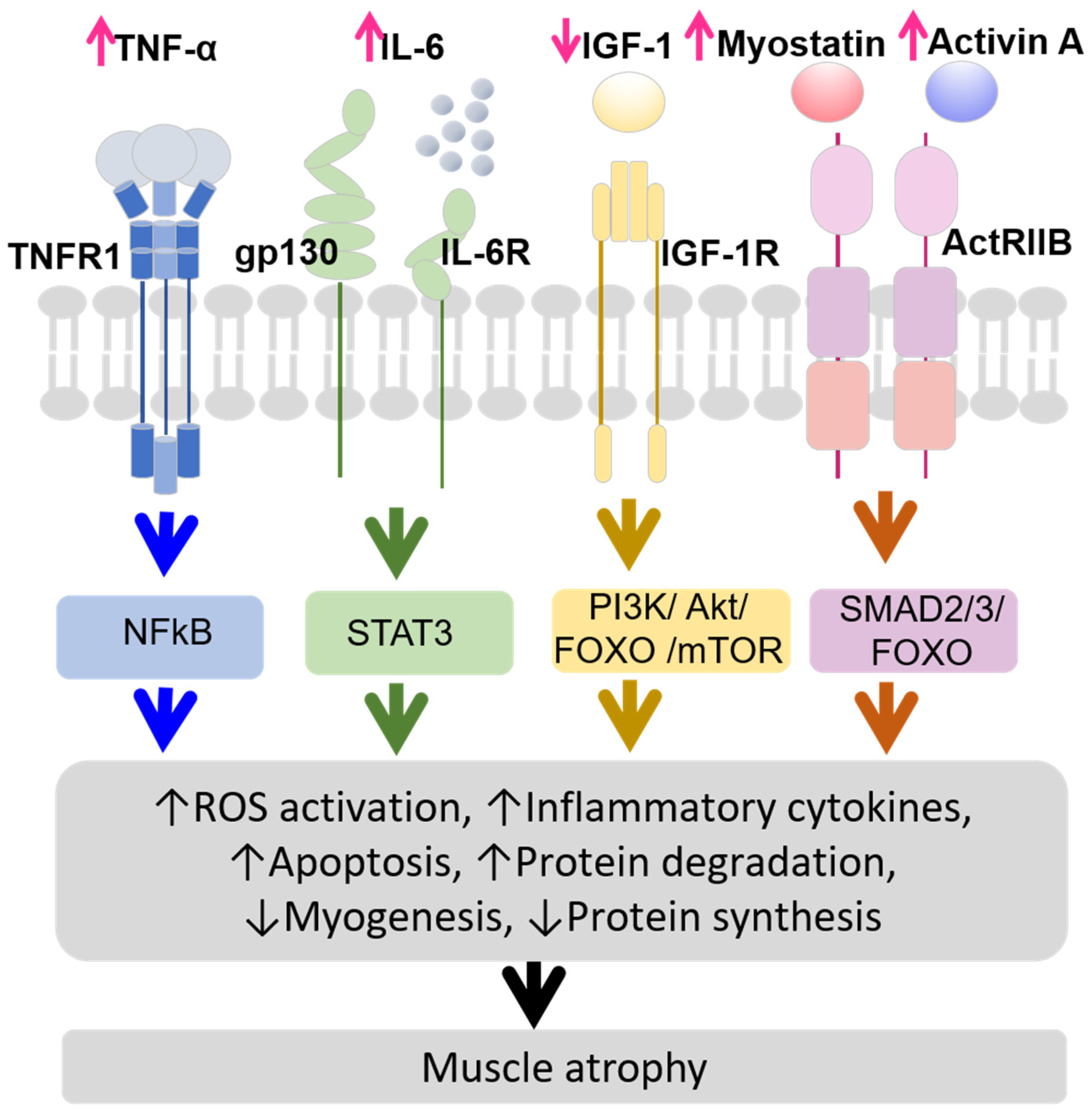
Figure 2.
Pathophysiology of sarcopenia in CKD. Abbreviations: CVD, Cardiovascular disease; IR, Insulin resistance
Figure 2.
Pathophysiology of sarcopenia in CKD. Abbreviations: CVD, Cardiovascular disease; IR, Insulin resistance
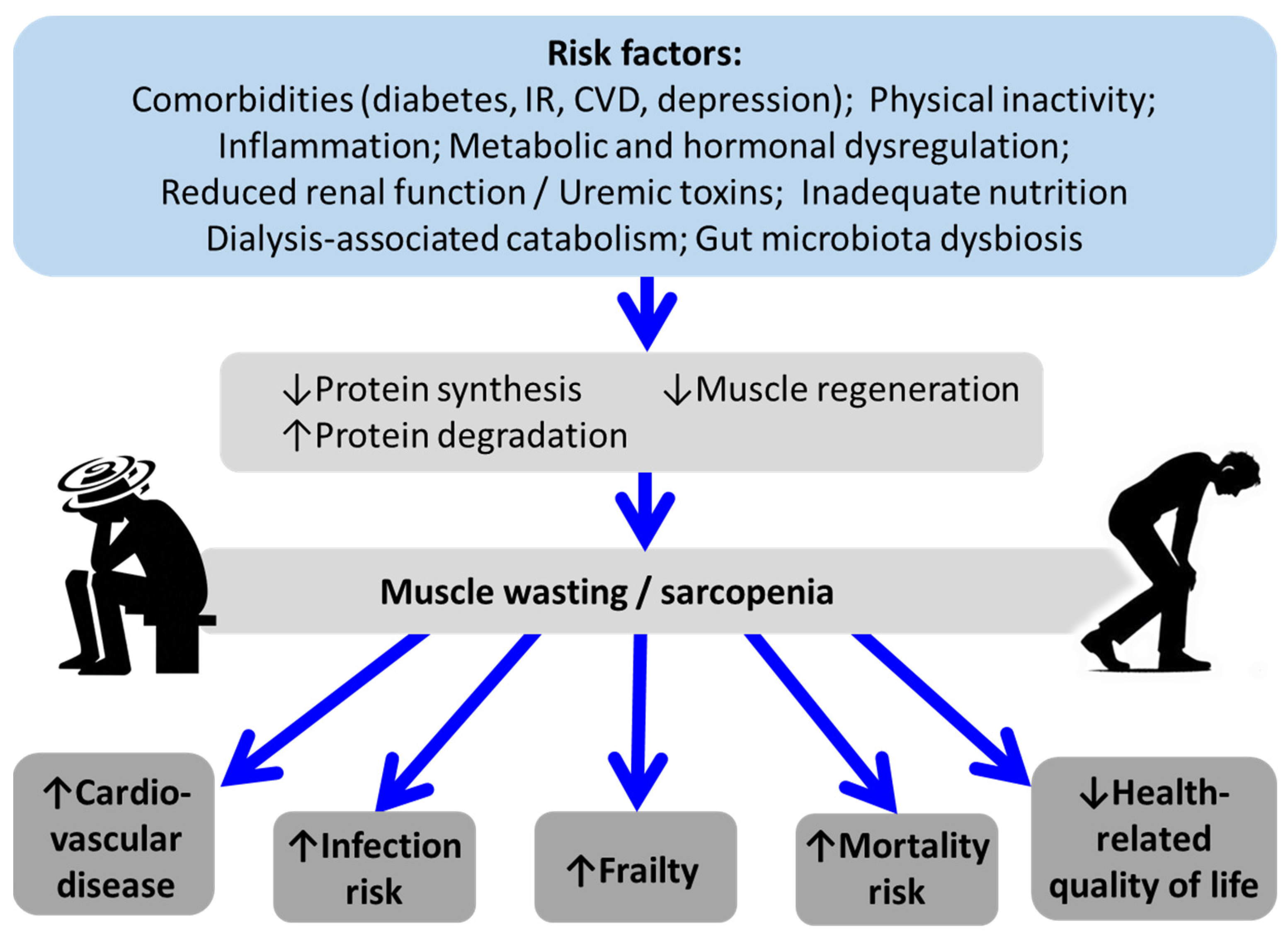
Figure 3.
Therapeutic Approaches for Sarcopenia in CKD.
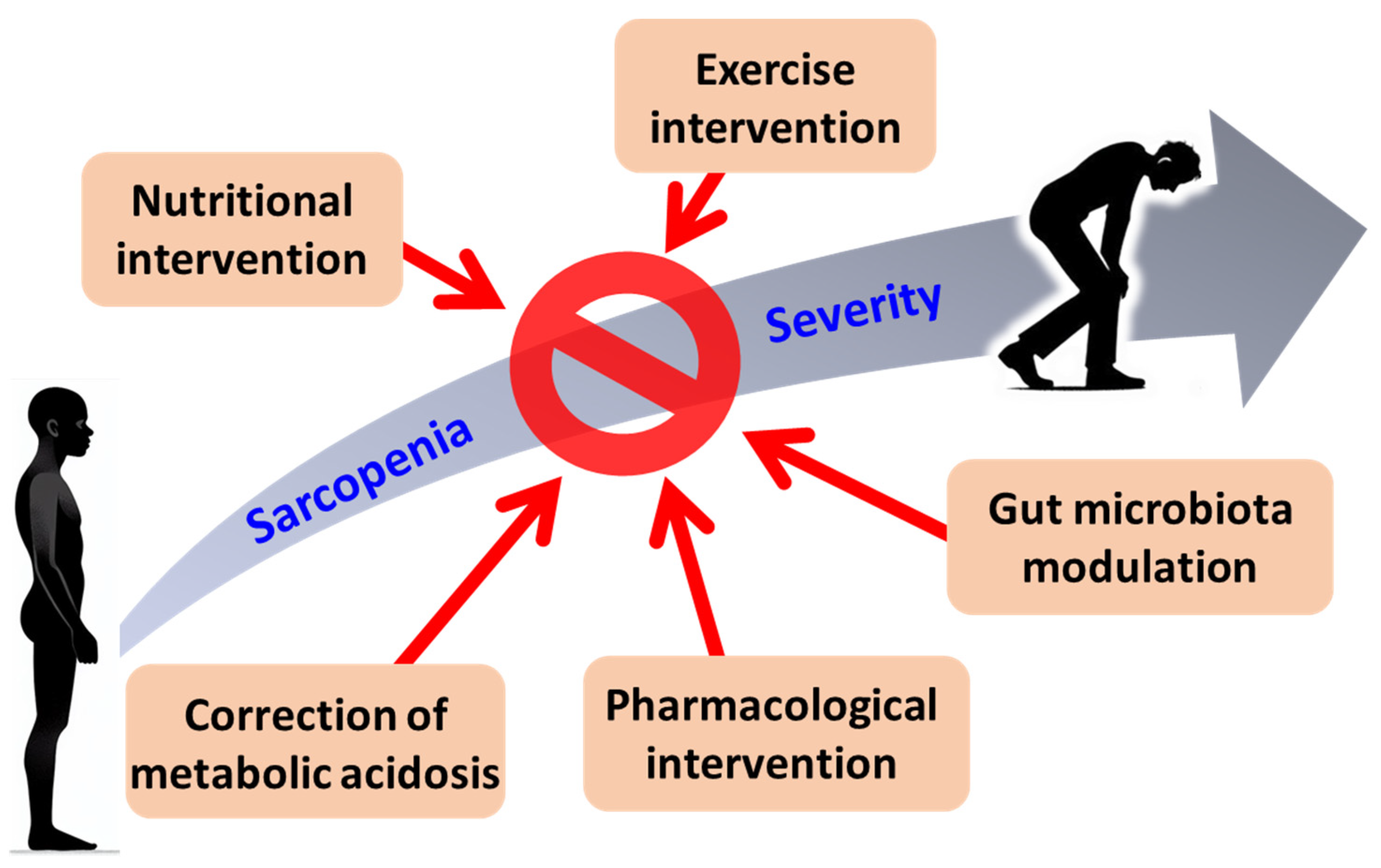

Table 1.
Summary of the contents of EWGSOP2 and AWGS.
| EWGSOP2 | AWGS | |
| Measurement | ||
| Case findings for further sarcopenia evaluation | - Clinical suspicion or SARC-F ≥ 4 [9] | - With any of the following: clinical conditions (e.g., functional decline, unintentional weight loss, depressive mood, etc.) or comorbidities (e.g., heart failure, COPD, DM, CKD, etc.) - Calf circumference (< 34 cm for men, < 33 cm for women) or SARC-F ≥ 4, or SARC-F/Calf ≥ 11 - DXA < 7.0 kg/m2 (M), <5.4 kg/m2 (F) - Bioimpedance < 7.0 kg/m2 (M), <5.7 kg/m2 (F) |
| Cutt-off points | ||
| Muscle strength | - HGS:< 27 kg (M), < 16 kg (F) or 5 times chair stand test: > 15s | - HGS:< 28 kg (M), < 18 kg (F) |
| Muscle quantity or quality | - ASM: < 20 kg (M), < 15 kg (F) or - ASMI: < 7.0 kg/m2 (M), < 5.5 kg/m2 (F)- |
- ASM: < 7.0 kg/m2 (M), or < 5.4 kg/m2 (F, by DXA), or < 5.7 kg/m2 (F, by BIA) |
| Physical performance | - Gait speed ≤ 0.8 m/s - SPPB: ≤ 8 points - TUG: ≥ 20 s |
- 6MWT < 1.0 m/s or - SPPB ≤ 9 points or - 5-time Chair stand test ≥ 12s |
| Classification | ||
| Probable sarcopenia | Low muscle strength | N/A |
| Confirmed sarcopenia | Low muscle strength + Low muscle quantity or quality | Low ASM + low muscle strength or low physical performance |
| Severe sarcopenia | Low muscle strength + low muscle quantity or quality + low Physical performance | Low ASM + low muscle strength or low physical performance |
Abbreviations: ASM, Appendicular Skeletal Muscle Mass; ASMI, ASM/height squared; AWGS, Asian Working Group for Sarcopenia; CKD, Chronic kidney disease; COPD, Chronic obstructive pulmonary disease; DM, Diabetes mellitus; DXA, Dual Energy X-Ray Absorptiometry; EWGSOP2, European Working Group on Sarcopenia in Older People; HGS, handgrip strength; SARC-f, Sarcopenia Assessment Tool Questionnaire; SARC-F/Calf , SARC-F Questionnaire with Calf Circumference; SPPB, Short Physical Performance Batter; TUG, Timed up and Go test; 6MWT, 6 minutes walking test Note: F denotes female, M denotes male.
Disclaimer/Publisher’s Note: The statements, opinions and data contained in all publications are solely those of the individual author(s) and contributor(s) and not of MDPI and/or the editor(s). MDPI and/or the editor(s) disclaim responsibility for any injury to people or property resulting from any ideas, methods, instructions or products referred to in the content. |
© 2025 by the authors. Licensee MDPI, Basel, Switzerland. This article is an open access article distributed under the terms and conditions of the Creative Commons Attribution (CC BY) license (http://creativecommons.org/licenses/by/4.0/).
Copyright: This open access article is published under a Creative Commons CC BY 4.0 license, which permit the free download, distribution, and reuse, provided that the author and preprint are cited in any reuse.


