
Submitted:
02 January 2025
Posted:
03 January 2025
You are already at the latest version
Abstract
Human Papillomavirus (HPV) is a leading cause of mucosal cancers, including the increasing incidence of HPV-related head and neck cancers. The oral microbiota-a diverse community of bacteria, fungi, and viruses-play a critical role in oral and systemic health. Oral microbiota dysbiosis is increasingly linked to inflammation, immune suppression, and cancer progression. Recent studies highlight a complex interaction between HPV and oral microbiota, suggesting this interplay influences viral persistence, immune response and the tumor microenvironment. These interactions hold significant implications for disease progression, clinical outcomes and therapeutic approaches. Furthermore, the oral microbiota has emerged as a promising biomarker for HPV detection and disease progress assessment. In addition, probiotic-based treatments are gaining attention as innovative approach to prevent or treat HPV-related cancers by modulating the microbial environment. This review provides current research on the interaction between HPV and oral microbiota, explores their clinical implications, and discusses the future potential to utilize microbiota for diagnostic and therapeutic innovations in HPV-associated cancers.
Keywords:
HPV infection
; oral microbiota
; oral cancers
; interaction
; oral cancer biomarkers
; probiotic treatment
1. Introduction
Human Papillomavirus (HPV) is one of the most prevalent viruses associated with the development of various mucosal cancers, particularly cervical and oropharyngeal cancers. While much attention has been given on its role in genital cancers, the increasing incidence of HPV-related head and neck cancer highlights the importance of HPV in the oral cavity [1,2]. The oral microbial flora, which includes bacteria, fungi, and virus, plays a crucial role in maintaining both oral and systemic health [3]. Dysbiosis, or imbalance in this microbial community, has been associated with excessive inflammatory reaction, immunosuppression of the host, promotion of malignant transformation, antiapoptotic activity, and secretion of carcinogens [4,5,6].
Emerging research suggests that the interaction between HPV and the oral microbiota may play a critical role in the pathogenesis of HPV related oral cancers, which could influence viral persistence, immune response, and the local tumor microenvironment, potentially altering disease outcomes and responses to treatment [5,7,8]. Recent studies have highlighted the complex relationship between HPV and dynamic oral microbiota, emphasizing that its balance is essential not only for oral health but also for disease progression and cancer development [9,10]. However, the role of microbial-viral interactions in the initiation, development, and progression of HPV-related cancers remains unclear.
The oral microbiota has been increasingly recognized as a biomarker for HPV-related cancers [11,12]. Understanding the interaction between HPV and oral microbiota is essential for identifying novel biomarkers for early detection, risk assessment, and therapeutic interventions. The composition of the oral microbiota has been shown to influence HPV infection persistence, and disease progression, suggesting that microbiota-based approaches could offer novel therapeutic strategies for HPV related cancers [13]. Furthermore, manipulating the microbiota to prevent or treat HPV-related cancers is an area of growing interest [14,15,16].
This review aims to provide a comprehensive overview of HPV infection and its interaction with the oral microbiota. We will explore the intricate relationship between HPV and oral microbiota, highlighting current research findings, clinical implications, and future directions in this emerging field. By advancing our understanding of these connections, we can better assess the role of oral health in HPV-related disease processes and develop targeted strategies for prevention, diagnosis and treatment.
2. Overview of HPV and Oral Infections
Human papillomaviruses (HPVs) are non-enveloped, circular double-stranded DNA viruses (~8 kb) that primarily infect epithelial cells [17]. Over 200 HPV genotypes have been identified, broadly classified into low-risk and high-risk categories based on their association with benign or malignant lesions [18]. Low-risk types, such as HPV-6 and HPV-11, cause benign conditions like warts, while high-risk types, including HPV-16 and HPV-18, are linked to cancers of the cervix, anus, and head and neck. Other high-risk types, such as HPV-31, 33, 35, and 52, show variable frequency and geographical distribution [18,19,20,21].
HPV can be transmitted through both sexual and non-sexual routes, as illustrated in Figure 1. Oral HPV is primarily transmitted through oral-genital contact, deep kissing, and exposure to infected saliva. HPV infects squamous cells that line the inner surface of organs, gaining access to the basal layer through micro abrasions or wounds. This infection can lead to malignancies, such as head-and-neck cancers in both sexes [22,23,24]. While approximately 90% of HPV infections are cleared by the innate and adaptive immune systems within 1–2 years, some infections persist due to the virus's immune evasion strategies. These include inhibiting antigen presentation, modulating host cell apoptosis, disrupting DNA methylation, and silencing tumor suppressor genes [25,26,27]. Persistent HPV infections can integrate viral DNA into the host genome, hijacking cellular machinery for replication and altering gene expression [28,29].
The prevalence of oral HPV infections is lower than that of genital HPV infections but remains a significant concern due to its association with oropharyngeal cancers. Despite declining rates of head-and-neck cancers overall, the incidence of HPV-positive oropharyngeal cancers has risen, particularly among younger patients with minimal tobacco and alcohol use [30,31,32]. HPV-16 is detected in 60–80% of head-and-neck cancers, while HPV-18 has been identified in 34% of oral cavity squamous cell cancers and 17% of laryngeal squamous cell cancers [33]. Men have a higher prevalence of oral HPV infections (11.5% vs. 3.2%) and HPV-16 infections (1.8% vs. 0.3%) compared to women [34]. A systematic review highlighted geographic variability in HPV-positive oropharyngeal cancers, with higher rates in North America, Northern Europe, and Oceania [35]. In Europe, HPV has emerged as a growing risk factor for oropharyngeal cancer, especially among younger populations [35].
HPV status is a strong prognostic factor for oropharyngeal cancer. HPV-positive oropharyngeal squamous cell carcinomas (OPSCC) are biologically distinct, showing increased treatment responsiveness and improved survival compared to HPV-negative tumors [36,37,38]. Some studies have shown that the presence of HPV in oropharyngeal SCC is associated with a significantly lower mortality risk and better prognosis compared to HPV-negative cases [39,40]. However, a 2022 systematic review indicated that HPV-positive oral squamous cell carcinoma (OSCC) was associated with worse overall survival (OS) and distant control (DC) compared to HPV-negative OSCC, warranting further investigation [41].
Vaccination against HPV has shown substantial promise in reducing oral HPV infections. A cross-sectional study in the UK reported significantly lower oropharyngeal HPV-16 prevalence in vaccinated versus unvaccinated females (0.5% vs. 5.6%) [42]. Similarly, a U.S. study found a reduction in oral HPV-16/18/6/11 prevalence among vaccinated individuals compared to unvaccinated ones (0.11% vs. 1.61%) [43]. Vaccine efficacy appears higher among younger individuals (≤18 years: 59% effectiveness) compared to those vaccinated at older ages (≥18 years: 18% effectiveness) [44]. These findings highlight the critical role of vaccination in preventing HPV-related oral diseases and cancers.
3. The Oral Microbiota
The human oral microbial ecosystem includes over 700 bacterial species, of which 58% are officially named, 16% are unnamed but cultivated, and 26% are uncultivated phylotypes [45]. Beyond bacteria, the oral cavity hosts archaea, fungi, and viruses [46]. As the body’s second most diverse microbiota [47], the oral microbiome inhabits various surfaces, including the tongue, teeth, gums, and cheeks, playing a crucial role in filtering, processing, and defending against foreign elements before they reach internal systems [46,48].
Different oral niches are dominated by specific microbial species. For example, Streptococcus species are abundant across habitats, while Haemophilus dominates the buccal mucosa, Actinomyces the supragingival plaque, and Prevotella the subgingival plaque and mucosal surfaces [49,50].
The oral microbiota is vital for maintaining oral and systemic health through several key functions: 1) Pathogen Protection: commensal bacteria prevent pathogenic overgrowth by competing for nutrients and attachment sites on mucosal surfaces; 2) Immune Modulation: microbes engage with the host’s immune system to prime defenses and maintain immune tolerance; 3) Metabolic Support: oral bacteria help break down dietary components, aiding carbohydrate digestion and producing metabolic byproducts [51].
The composition of the oral microbiome is influenced by intrinsic factors (e.g., age, genetics) and extrinsic factors (e.g., diet, hygiene, tobacco, and alcohol use). Unlike other microbiota, such as gut or skin microbiomes, the oral microbiota is distinct due to its diverse niches, constant exposure to external factors, interaction with saliva, and role in biofilm formation [51,52]. This dynamic interaction among bacteria, fungi and viruses highlights the importance of maintaining microbial balance to prevent disease.
An imbalance in the oral microbiota, or dysbiosis, contributes to both oral and systemic diseases. In the oral cavity, bacterial dysbiosis is linked to conditions such as dental caries, periodontal disease, aphthous stomatitis, and endodontic abscesses. Furthermore, oral bacteria have been implicated in systemic diseases, including bacterial endocarditis, aspiration pneumonia, osteomyelitis, rheumatoid arthritis, cardiovascular disease, and Alzheimer’s disease [53,54,55,56]. Notably, periodontitis and HPV infection have been associated with an increased risk of OSCC [57]. Shin et al. Highlighted that several publications suggested the oral microbiome contribute to the etiology of different types of cancers due to their ability to alter the community composition and induce inflammatory reactions, DNA damage, apoptosis, and altered metabolism [58]. The study showed that HPV infection and cervical cancer impact not only the vaginal but also the oral microenvironments, oral microbial diversity exhibited an inverse pattern to that of the vaginal microbiome, indicating a unique relationship [59].
Microorganisms can colonize biotic and abiotic surfaces, including teeth, soft tissues, dental implants and restorative materials. As microorganisms accumulate, they form structures known as biofilms, complex microbial communities enmeshed in a matrix containing extracellular polymeric substances [60], which protect the microbial community from environmental stressors, antimicrobial agents, and host immune responses [61,62]. These biofilms are primarily composed of bacteria, but can also include fungi, viruses, and archaea. In a healthy oral microbiome, biofilms play a protective role, helping to maintain microbial balance and defend against pathogenic species. However, when dysbiosis occurs, pathogenic bacteria dominate, leading to chronic inflammation and a disruption in the biofilm’s protective functions. Pathogenic biofilms are implicated in several oral diseases, including periodontal disease, dental caries, and infections [63].
4. HPV and Oral Microbiota Interaction
The interaction between oral microbiota and HPV infection is an emerging area of research, given the significant role oral microorganisms play in both maintaining oral and systemic health. HPV infection, particularly with high-risk types like HPV16, is a well-established risk factor for OPSCC, with 40–80% of OPSCC cases linked to this virus [64,65,66,67]. However, the presence of HPV alone is insufficient for cancer development. Additional factors, such as epithelial surface integrity, mucosal secretions, immune regulation, and the surrounding microbial environment, influence how HPV infection progresses and how the immune system responds [68,69].
Recent studies suggest that oral microbiota may play a crucial role in HPV persistence and its associated cancer risks. Chronic oral infections, such as periodontal disease caused by pathogens such as Porphyromonas gingivalis, Fusobacterium nucleatum, and Treponema denticola, create a pro-inflammatory environment in the oral cavity [70]. This chronic inflammation can impair local immune responses, allowing HPV to evade detection and persist longer than in a healthy environment. Additionally, pathogens like P. gingivalis and F. nucleatum further exacerbate the issue by interfering with host immune cells, such as macrophages and dendritic cells, further facilitating HPV persistence, replication, and malignant transformation [71,72].
Furthermore, certain microbial profiles have been linked to HPV infection across different sites of the body. For instance, an increased abundance of Fusobacterium species has been associated with HPV-related cancers in the oral cavity, vagina, and anus [30; 73; 74]. These microbial species may not only influence HPV infection but also patient survival. As an example, Pseudomonas viridiflava has been associated with improved survival, while Yersinia pseudotuberculosis has been linked to worsened survival in head and neck cancer patients [8]. Moreover, study has shown that the response of tumors to radiation can be regulated by the microbiome and that both the bacterial and fungal constituents of the gut microbiota impact antitumor immunity. Certain bacterial species can affect treatment response [75], which may help inform therapeutic strategies aimed at modifying the microbiome to enhance cancer treatment efficiency.
Another critical factor in the HPV-microbiota interaction is the formation of biofilms. Pathogenic biofilms, particularly those associated with periodontal disease, create a protective niche that shields HPV from immune surveillance, potentially allowing the virus to evade detection and integrate into the host genome—a key step in HPV-driven carcinogenesis [76]. Although direct evidence of HPV integration within biofilm structures is limited, biofilms likely play a role in HPV persistence by fostering immune evasion.
HPV infections can also exist in a latent state, where the virus is present but not actively replicating. Under conditions of immunosuppression or microbiota dysbiosis, HPV may reactivate, leading to viral replication, shedding, and increased risk of cancer [77,78]. Chronic inflammation, driven by the presence of pro-inflammatory bacteria, leads to the release of proinflammatory cytokines, such as Interleukin (IL)-1, IL-6, tumor necrosis factor alpha (TNF-α), and interferon gamma (IFN-γ), which activate protein kinase-mediated signaling pathways, resulting in the formation of reactive oxygen species (ROS) [79,80]. In addition, persistent inflammation depletes antioxidants, increasing oxidative damage and genetic mutations, thereby disrupting cell cycle regulation and promoting malignancy. Studies have confirmed elevated cytokine levels and reduced antioxidant defenses in patients with persistent HPV infection [79,81].
The role of fungi and other viruses in HPV infections in the oral cavity also warrants attention. Candida albicans, the predominant fungal species in the oral cavity, are often elevated in individuals with compromised immunity, such as HIV patients, diabetes patients, infants and elder populations [82]. It produces cytolytic toxin candidalysin, leading to epithelial barrier lesions and making it easier for HPV to both infect and persist in basal epithelial cells [83]. While direct evidence of fungal involvement in HPV-driven malignancies is limited, Candida infections are known to produce carcinogens such as nitrosamine and promote the development of carcinoma [84]. Co-infection with other viruses, such as Epstein-Barr virus (EBV) and herpes simplex virus (HSV), may further exacerbate HPV-related diseases. EBV, is a similar virus that causes cellular transformation and chronic inflammation and may support HPV persistence [85].
The synergistic effects of chronic inflammation and co-infections with bacteria, fungi, and viruses in the oral cavity create a persistent inflammatory environment that supports HPV persistence, reactivation, and oncogenesis. Evidence suggests that individuals with periodontal disease or other chronic oral infections may be at a higher risk for developing HPV-related cancers, emphasizing the need to maintain a balanced oral microbiota to reduce cancer risk [86,87].
5. Oral Microbiota as a Biomarker for HPV-Related Cancers
Oral squamous cell carcinoma (OSCC) is the most common type of oral cancer, accounting for approximately 90% of cases [88]. The five-year survival rate for OSCC is around 30-41% in advanced stages, but it exceeds 85% when detected early [89,90]. Unfortunately, nearly half of OSCC cases are diagnosed at later stages, making early detection critical for improving patient outcomes [91]. Reliable biomarkers for detecting and predicting the progression of HPV-related oral cancers, including OSCC, are urgently needed.
Traditionally, biomarkers such as HPV DNA, p16 expression, and antibodies against HPV oncogenes (e.g., E6 and E7) have been used to assess the risk of HPV-driven malignancies [92,93]. However, recent evidence suggests that changes in the oral microbial composition—particularly patterns of dysbiosis—may provide valuable insights into the risk and progression of HPV-related oral cancers, offering a non-invasive alternative to traditional biomarkers. Saliva has emerged as a promising medium for detecting both HPV DNA and microbial signatures. Salivary samples can provide a comprehensive overview of the oral microbial ecosystem and its interactions with HPV, offering a snapshot of the dynamic changes occurring within the oral cavity [10,11]. Advances in sequencing technologies and metagenomic analyses have made it possible to identify even subtle shifts in microbial composition, allowing for the detection of early dysbiosis associated with HPV-related malignancies [93,94].
Although many studies have examined the microbiome in oral cavity and oropharyngeal cancers, most do not specify HPV positivity. In a study of oral cavity cancers with unknown HPV status, the bacterial composition of tumor sites was significantly different from that of contralateral normal mucosa samples [95]. Furthermore, patients with detectable oral HPV or HPV-positive OPSCC exhibit significant shifts in their oral microbiomes compared to patients with HPV-negative counterparts [96].
Healthy individuals typically maintain a diverse and balanced oral microbiota dominated by commensal species that promote oral health. In contrast, individuals with HPV-related oropharyngeal cancers often experience oral dysbiosis, characterized by an overrepresentation of pathogenic species and a reduction in beneficial commensals. Patients with oral HPV exhibit similar alpha diversity in their oral microbiomes to healthy individuals but show distinct differences in beta-diversity [9,97]. Specifically, HPV-positive patients demonstrate an increased abundance of Actinomycetaceae, Prevotellaceae, Veillonellaceae, Campylobacteraceae, and Bacteroidetes, while species such as Gemellaceae, Neisseria, and Lactobacillus are less abundant [9,97].
In HPV-positive cancer patients, members of the genera Actinomyces, Granulicatella, Oribacterium, and Campylobacter, as well as the species Veillonella dispar, Rothia mucilaginosa, and Haemophilus parainfluenzae, are significantly increased, while Streptococcus anginosus, Peptoniphilus, and Mycoplasma are significantly decreased [98]. Furthermore, Mougeot et al. identified higher relative abundances of Alloprevotella tannerae, Fusobacterium periodonticum, Haemophilus pittaniae, and Leptotrichia spp. in HPV-positive head and neck cancer patients compared to HPV-negative patients [99]. Additionally, studies have found that patients with HPV-positive oropharyngeal cancers often show increased abundance of bacterial taxa such as Fusobacterium nucleatum, Porphyromonas, and Treponema denticola, which are also associated with periodontal disease [100]. Recent research has demonstrated that significant shifts in the composition of the oral microbiota occur by disease stage and after chemoradiotherapy in HPV positive oropharyngeal squamous cell carcinoma patients [73], indicating oral microbiota could play a role in disease progression, response to treatment, or recovery, highlighting its potential as a therapeutic target or biomarker.
The shift in oral microbial communities in HPV-related cancers may contribute to carcinogenesis through several mechanisms. Pathogenic bacteria associated with oral dysbiosis can promote chronic inflammation, a well-established factor in cancer development. Certain bacterial species, such as Fusobacterium nucleatum, have been shown to modulate the immune response, potentially facilitating HPV persistence and promoting epithelial cell transformation. In a mouse model of oral tumorigenesis, co-infection with Porphyromonas gingivalis and Fusobacterium nucleatum significantly enhanced the severity of tongue tumors and increased IL-6 levels in the tongue epithelium [101]. Furthermore, bacterial metabolites may influence the host’s immune surveillance or directly interact with HPV to enhance viral replication. These microbial-induced changes in the local immune environment could create a favorable niche for HPV infection and persistence, critical steps in the development of oral cancers.
The identification of specific microbial signatures linked to cancer progression could aid in risk stratification, allowing clinicians to monitor individuals with high-risk HPV infection more closely. Longitudinal studies that track microbiota changes in HPV-positive individuals could help define microbiota profiles associated with either viral clearance or progression to malignancy. These microbial signatures could be incorporated into predictive models to improve early detection and intervention.
Despite the potential of the oral microbiota as a biomarker for HPV-related cancer, several challenges remain. One major hurdle is the variability of the oral microbiota among individuals, which can be influenced by factors such as diet, smoking, hygiene, and genetics [102]. These confounding variables make it difficult to establish universal microbial signatures that can be applied across diverse populations.
In the future, oral microbiota-based diagnostic tests could be integrated into clinical practice to enhance early detection strategies for HPV-related cancers. By combining traditional HPV biomarkers with microbial profiling, clinicians may be able to develop more comprehensive screening protocols that improve patient outcomes. Such testing could also be used to monitor treatment responses, as changes in the oral microbiota may reflect shifts in the immune response or cancer progression following therapy.
Additionally, more research is needed to establish causality between microbial shifts and HPV-related cancer progression. While associations between specific bacterial species and cancer have been observed, it is not yet clear whether these microbial changes are a cause or consequence of disease progression. Longitudinal studies that track microbial changes from the onset of HPV infection to cancer development are essential to clarify these relationships.
Finally, standardization of sampling techniques and analytical methods is necessary to ensure consistent and reproducible results across studies. As the field advances, the development of standardized protocols for microbiota sampling, sequencing, and analysis will be crucial for translating research findings into clinical applications.
6. Therapeutic Implications and Future Directions
The relationship between the oral microbiota and HPV infection offers promising therapeutic opportunities. A study analyzing vaginal flora in 26 HPV patients found significantly lower bacterial diversity in those who cleared HPV within a year compared to those with persistent infection [103], suggesting that a healthy microbiota aids HPV clearance. Although oral and vaginal microbiota differ, it is reasonable to hypothesize that a healthy oral microbiota could similarly support oral HPV clearance. Beyond influencing infection dynamics, the oral microbiota plays a critical role in immunity, making microbial balance restoration a potential approach to reducing HPV-related cancer risk. Thus, restoring an imbalanced oral microbiota may be the fundamental key to prevent HPV persistence and progression to malignancy.
Current studies on considering probiotics as an HPV treatment primarily focus on cervical rather than oral cancer. While data on oral HPV is limited, some studies show promising probiotic effects on cervical cancer cell lines (Table 1). Clinical trials have also explored probiotics for HPV-related infections. A prospective study of 54 HPV-positive patients with low-grade squamous intraepithelial lesions showed that daily consumption of Lactobacillus casei Shirota (Yakult) doubled the chance of clearing cytological abnormalities (P=0.05). HPV clearance occurred in 19% of controls versus 29% of probiotic users (P=0.41), indicating potential benefits [104]. Another study with 100 women found that vaginal L. crispatus chen-01 transplantation significantly reduced HPV viral load, improved clearance rates, and ameliorated vaginal inflammation without notable side effects [105]. Conversely, a randomized, double-blinded trial found no significant difference in high-risk HPV clearance between a probiotic group (Lactobacillus rhamnosus GR-1 and Lactobacillus reuteri RC-14) and a placebo group [106]. However, the bacterial concentration used in this study is lower than other studies, the strains that were used in this study are different from the other study as well, indicating dosing, strain and duration may all play important roles in viral clearance. A summary of probiotics used for HPV-related infections is presented in Table 2.
While most current studies focus on cervical HPV infections, research on the role of probiotics in oral HPV remains limited. Preliminary studies in other areas of the body, such as the vaginal microbiota, have shown that probiotics can be effective in reducing viral infections and improve immune function. These findings suggested that a similar approach could be applied to the oral cavity. Given the differences between oral and vaginal microbiota, understanding how probiotics influence oral HPV clearance is crucial for developing future targeted therapies. Future research should prioritize clinical trials investigating the effects of probiotics on oral HPV infections, focusing on identifying specific strains and treatment durations that optimize clearance rates. Additionally, studies should aim to determine the ideal composition of a “healthy” oral microbiota in the context of HPV. Despite promising results, current findings are limited by variability in probiotic strains, dosages, and study designs, underscoring the need for standardized approaches and larger sample sizes.
Since microbial dysbiosis may serve as a bridge between periodontal disease and oral cancer, another potential therapeutic avenue to restore oral dysbiosis is the direct targeting of pathogenic bacteria associated with HPV persistence. Antimicrobial therapies, such as antibiotics or antimicrobial peptides, could be used to eliminate or reduce the abundance of specific bacterial species that promote chronic inflammation and create a conducive environment for HPV. However, this approach requires careful consideration, as broad-spectrum antibiotics could disrupt the overall balance of the oral microbiota, leading to unintended consequences. A more targeted approach could involve the use of narrow-spectrum antimicrobial peptides or bacteriophages. Notably, the functional peptides derived from bacteriophages offer the benefits of targeting cancer cells with high specificity while causing minimal immune response in humans. A study revealed that oral vaccination with bacteriophage MS2-L2 virus-like particles (VLPs) could provide protection against oral infections caused by multiple HPV types linked to head and neck cancers [107], highlighting the potential of phage-based vaccines in combating oral cancers. By selectively targeting pathogenic bacteria while preserving beneficial commensals, these therapies could reduce inflammation and improve immune responses without causing widespread disruption of the microbiota. Integrating HPV vaccination and phage vaccination into preventive strategies for oral dysbiosis and HPV infections could significantly enhance control measures. HPV vaccination would reduce the incidence of HPV-related oral cancers, while phage vaccination could specifically target oral pathogens associated with HPV persistence.
As research on HPV and the oral microbiota continues to evolve, the future of therapeutic interventions is likely to focused on personalized medicine. Personalized medicine approaches could involve using the oral microbiota as both a diagnostic tool and a therapeutic target. By identifying specific microbial profiles associated with increased cancer risk, clinicians could tailor treatment strategies to reduce pathogenic bacterial populations, restore microbial balance, and modulate immune responses. Advances in microbiome research, combined with genetic and immune profiling, may allow for the development of individualized treatment plans that take into account each patient’s unique microbial and immune landscape. Together with personalized microbiota interventions, these tools could provide a multi-layered, individualized approach to prevent and treat oral dysbiosis and HPV infections, improving overall oral health outcomes. This combined strategy holds great promise for the future of preventive healthcare in oral diseases.
7. Conclusions
By synthesizing current findings, this review has underscored the importance of understanding how oral microbiota interaction develops in cancer pathogenesis and has highlighted the need for further studies to establish new strategies for prevention, diagnosis, and treatment of HPV-associated oral diseases. While much progress has been made, longitudinal studies, large-scale clinical trials, and in-depth microbiome analysis will be essential to identify potential biomarkers, therapeutic targets, and strategies for intervention. In conclusion, the interaction between HPV and oral microbiota represents a promising area of research that could revolutionize the prevention, diagnosis and treatment of HPV-related oral cancers.
Author Contributions
Conceptualization, Q.X. writing—original draft preparation, Q.X. writing—review and editing, Q.X., and S.L.P. All authors have read and agreed to the published version of the manuscript.
Funding
The APC was funded by the Department of Clinical Investigation at Brooke Army Medical Center, Fort Sam Houston, Texas.
Conflicts of Interest
The views expressed herein are those of the author(s) and do not necessarily reflect the official policy or position of the Defense Health Agency, Brooke Army Medical Center, Department of Defense, nor any agencies under the U.S. Government.
References
- Barsouk A, Aluru JS, Rawla P, Saginala K, Barsouk, A. Epidemiology, Risk Factors, and Prevention of Head and Neck Squamous Cell Carcinoma. Med Sci (Basel). 2023 Jun 13;11(2):42. [CrossRef] [PubMed] [PubMed Central]
- Riva G, Albano C, Gugliesi F, Pasquero S, Pacheco SFC, Pecorari G, Landolfo S, Biolatti M, Dell'Oste V. HPV Meets APOBEC: New Players in Head and Neck Cancer. Int J Mol Sci. 2021 Jan 30;22(3):1402. [CrossRef] [PubMed] [PubMed Central]
- Gao L, Xu T, Huang G, Jiang S, Gu Y, Chen F. Oral microbiomes: more and more importance in oral cavity and whole body. Protein Cell. 2018 May;9(5):488-500. Epub 2018 May 7. [CrossRef] [PubMed] [PubMed Central]
- Peng X, Cheng L, You Y, Tang C, Ren B, Li Y, Xu X, Zhou X. Oral microbiota in human systematic diseases. Int J Oral Sci. 2022 Mar 2;14(1):14. [CrossRef] [PubMed] [PubMed Central]
- Sun J, Tang Q, Yu S, Xie M, Xie Y, Chen G, Chen L. Role of the oral microbiota in cancer evolution and progression. Cancer Med. 2020 Sep;9(17):6306-6321. Epub 2020 Jul 7. [CrossRef] [PubMed] [PubMed Central]
- Tuominen H, Rautava J. Oral Microbiota and Cancer Development. Pathobiology. 2021;88(2):116-126. Epub 2020 Nov 11. [CrossRef] [PubMed]
- Wakabayashi R, Nakahama Y, Nguyen V, Espinoza JL. The Host-Microbe Interplay in Human Papillomavirus-Induced Carcinogenesis. Microorganisms. 2019 Jul 13;7(7):199. [CrossRef] [PubMed] [PubMed Central]
- Upadhyay R, Dhakal A, Wheeler C, Hoyd R, Jagjit Singh M, Karivedu V, Bhateja P, Bonomi M, Valentin S, Gamez ME, Konieczkowski DJ, Baliga S, Grecula JC, Blakaj DM, Gogineni E, Mitchell DL, Denko NC, Spakowicz D, Jhawar SR. Comparative analysis of the tumor microbiome, molecular profiles, and immune cell abundances by HPV status in mucosal head and neck cancers and their impact on survival. Cancer Biol Ther. 2024 Dec 31;25(1):2350249. Epub 2024 May 9. [CrossRef] [PubMed] [PubMed Central]
- Zhang Y, D'Souza G, Fakhry C, Bigelow EO, Usyk M, Burk RD, Zhao N. Oral Human Papillomavirus Associated With Differences in Oral Microbiota Beta Diversity and Microbiota Abundance. J Infect Dis. 2022 Sep 21;226(6):1098-1108. [CrossRef] [PubMed] [PubMed Central]
- Di Spirito F, Di Palo MP, Folliero V, Cannatà D, Franci G, Martina S, Amato M. Oral Bacteria, Virus and Fungi in Saliva and Tissue Samples from Adult Subjects with Oral Squamous Cell Carcinoma: An Umbrella Review. Cancers (Basel). 2023 Nov 22;15(23):5540. [CrossRef] [PubMed] [PubMed Central]
- Kumar P, Gupta S, Das BC. Saliva as a potential non-invasive liquid biopsy for early and easy diagnosis/prognosis of head and neck cancer. Transl Oncol. 2024 Feb;40:101827. Epub 2023 Dec 2. [CrossRef] [PubMed] [PubMed Central]
- Lim Y, Fukuma N, Totsika M, Kenny L, Morrison M, Punyadeera C. The Performance of an Oral Microbiome Biomarker Panel in Predicting Oral Cavity and Oropharyngeal Cancers. Front Cell Infect Microbiol. 2018 Aug 3;8:267. [CrossRef] [PubMed] [PubMed Central]
- Zhang Y, D'Souza G, Fakhry C, Bigelow EO, Usyk M, Burk RD, Zhao N. Oral Human Papillomavirus Associated With Differences in Oral Microbiota Beta Diversity and Microbiota Abundance. J Infect Dis. 2022 Sep 21;226(6):1098-1108. [CrossRef] [PubMed] [PubMed Central]
- Kroon SJ, Ravel J, Huston WM. Cervicovaginal microbiota, women's health, and reproductive outcomes. Fertil Steril. 2018 Aug;110(3):327-336. [CrossRef] [PubMed]
- Harper A, Vijayakumar V, Ouwehand AC, Ter Haar J, Obis D, Espadaler J, Binda S, Desiraju S, Day R. Viral Infections, the Microbiome, and Probiotics. Front Cell Infect Microbiol. 2021 Feb 12;10:596166. [CrossRef] [PubMed] [PubMed Central]
- Zhang Z, Ma Q, Zhang L, Ma L, Wang D, Yang Y, Jia P, Wu Y, Wang F. Human papillomavirus and cervical cancer in the microbial world: exploring the vaginal microecology. Front Cell Infect Microbiol. 2024 Jan 25;14:1325500. [CrossRef] [PubMed] [PubMed Central]
- Bravo IG, Félez-Sánchez M. Papillomaviruses: Viral evolution, cancer and evolutionary medicine. Evol Med Public Health. 2015 Jan 28;2015(1):32-51. [CrossRef] [PubMed] [PubMed Central]
- Gravitt PE, Winer RL. Natural History of HPV Infection across the Lifespan: Role of Viral Latency. Viruses. 2017 Sep 21;9(10):267. [CrossRef] [PubMed] [PubMed Central]
- Michaud DS, Langevin SM, Eliot M, Nelson HH, Pawlita M, McClean MD, Kelsey KT. High-risk HPV types and head and neck cancer. Int J Cancer. 2014 Oct 1;135(7):1653-61. Epub 2014 Mar 7. [CrossRef] [PubMed] [PubMed Central]
- Del Río-Ospina L, Soto-DE León SC, Camargo M, Sánchez R, Moreno-Pérez DA, Pérez-Prados A, Patarroyo ME, Patarroyo MA. Multiple high-risk HPV genotypes are grouped by type and are associated with viral load and risk factors. Epidemiol Infect. 2017 May;145(7):1479-1490. Epub 2017 Feb 10. [CrossRef] [PubMed] [PubMed Central]
- Cogliano V., Baan R., Straif K., Grosse Y., Secretan B., El Ghissassi F. Carcinogenicity of human papillomaviruses. Lancet Oncol. 2005;6:204. [CrossRef]
- Oyouni AAA. Human papillomavirus in cancer: Infection, disease transmission, and progress in vaccines. J Infect Public Health. 2023 Apr;16(4):626-631. Epub 2023 Feb 21. [CrossRef] [PubMed]
- Ong KJ, Checchi M, Burns L, Pavitt C, Postma MJ, Jit M. Systematic review and evidence synthesis of non-cervical human papillomavirus-related disease health system costs and quality of life estimates. Sex Transm Infect. 2019 Feb;95(1):28-35. Epub 2018 Sep 21. [CrossRef] [PubMed]
- Roman BR, Aragones A. Epidemiology and incidence of HPV-related cancers of the head and neck. J Surg Oncol. 2021 Nov;124(6):920-922. Epub 2021 Sep 23. [CrossRef] [PubMed] [PubMed Central]
- Jain M, Yadav D, Jarouliya U, Chavda V, Yadav AK, Chaurasia B, Song M. Epidemiology, Molecular Pathogenesis, Immuno-Pathogenesis, Immune Escape Mechanisms and Vaccine Evaluation for HPV-Associated Carcinogenesis. Pathogens. 2023 Nov 23;12(12):1380. [CrossRef] [PubMed] [PubMed Central]
- Steinbach A, Riemer AB. Immune evasion mechanisms of human papillomavirus: An update. Int J Cancer. 2018 Jan 15;142(2):224-229. Epub 2017 Sep 13. [CrossRef] [PubMed]
- Shen-Gunther J, Xia Q, Stacey W, Asusta HB. Molecular Pap Smear: Validation of HPV Genotype and Host Methylation Profiles of ADCY8, CDH8, and ZNF582 as a Predictor of Cervical Cytopathology. Front Microbiol. 2020 Oct 15;11:595902. [CrossRef] [PubMed] [PubMed Central]
- Litwin TR, Clarke MA, Dean M, Wentzensen N. Somatic Host Cell Alterations in HPV Carcinogenesis. Viruses. 2017 Aug 3;9(8):206. [CrossRef] [PubMed] [PubMed Central]
- Xu S, Shi C, Zhou R, Han Y, Li N, Qu C, Xia R, Zhang C, Hu Y, Tian Z, Liu S, Wang L, Li J, Zhang Z. Mapping the landscape of HPV integration and characterising virus and host genome interactions in HPV-positive oropharyngeal squamous cell carcinoma. Clin Transl Med. 2024 Jan;14(1):e1556. [CrossRef] [PubMed] [PubMed Central]
- Guo C, Dai W, Zhou Q, Gui L, Cai H, Wu D, Hou J, Li C, Li S, Du H, Wu R. Cervicovaginal microbiota significantly changed for HPV-positive women with high-grade squamous intraepithelial lesion. Front Cell Infect Microbiol. 2022 Aug 4;12:973875. [CrossRef] [PubMed] [PubMed Central]
- Osazuwa-Peters N, Simpson MC, Massa ST, Adjei Boakye E, Antisdel JL, Varvares MA. 40-year incidence trends for oropharyngeal squamous cell carcinoma in the United States. Oral Oncol. 2017 Nov;74:90-97. Epub 2017 Oct 2. Epub 2017 Oct 2. [CrossRef] [PubMed]
- Chaturvedi AK, Engels EA, Anderson WF, Gillison ML. Incidence trends for human papillomavirus-related and -unrelated oral squamous cell carcinomas in the United States. J Clin Oncol. 2008 Feb 1;26(4):612-9. [CrossRef] [PubMed]
- Kreimer AR, Clifford GM, Boyle P, Franceschi S. Human papillomavirus types in head and neck squamous cell carcinomas worldwide: a systematic review. Cancer Epidemiol Biomarkers Prev. 2005 Feb;14(2):467-75. [CrossRef] [PubMed]
- Sonawane K, Suk R, Chiao EY, Chhatwal J, Qiu P, Wilkin T, Nyitray AG, Sikora AG, Deshmukh AA. Oral Human Papillomavirus Infection: Differences in Prevalence Between Sexes and Concordance With Genital Human Papillomavirus Infection, NHANES 2011 to 2014. Ann Intern Med. 2017 Nov 21;167(10):714-724. Epub 2017 Oct 17. [CrossRef] [PubMed] [PubMed Central]
- Ghanem AS, Memon HA, Nagy AC. Evolving trends in oral cancer burden in Europe: a systematic review. Front Oncol. 2024 Oct 18;14:1444326. [CrossRef] [PubMed] [PubMed Central]
- Ang KK, Harris J, Wheeler R, Weber R, Rosenthal DI, Nguyen-Tân PF, Westra WH, Chung CH, Jordan RC, Lu C, Kim H, Axelrod R, Silverman CC, Redmond KP, Gillison ML. Human papillomavirus and survival of patients with oropharyngeal cancer. N Engl J Med. 2010 Jul 1;363(1):24-35. Epub 2010 Jun 7. [CrossRef] [PubMed] [PubMed Central]
- Taberna M, Mena M, Pavón MA, Alemany L, Gillison ML, Mesía R. Human papillomavirus-related oropharyngeal cancer. Ann Oncol. 2017 Oct 1;28(10):2386-2398. [CrossRef] [PubMed]
- Hu M, Coleman S, Fadlullah MZH, Spakowicz D, Chung CH, Tan AC. Deciphering the Tumor-Immune-Microbe Interactions in HPV-Negative Head and Neck Cancer. Genes (Basel). 2023 Aug 8;14(8):1599. [CrossRef] [PubMed] [PubMed Central]
- Mahal BA, Catalano PJ, Haddad RI, Hanna GJ, Kass JI, Schoenfeld JD, Tishler RB, Margalit DN. Incidence and Demographic Burden of HPV-Associated Oropharyngeal Head and Neck Cancers in the United States. Cancer Epidemiol Biomarkers Prev. 2019 Oct;28(10):1660-1667. Epub 2019 Jul 29. [CrossRef] [PubMed]
- Fullerton ZH, Butler SS, Mahal BA, Muralidhar V, Schoenfeld JD, Tishler RB, Margalit DN. Short-term mortality risks among patients with oropharynx cancer by human papillomavirus status. Cancer. 2020 Apr 1;126(7):1424-1433. Epub 2020 Jan 13. [CrossRef] [PubMed]
- Christianto S, Li KY, Huang TH, Su YX. The Prognostic Value of Human Papilloma Virus Infection in Oral Cavity Squamous Cell Carcinoma: A Meta-Analysis. Laryngoscope. 2022 Sep;132(9):1760-1770. Epub 2021 Dec 25. [CrossRef] [PubMed]
- Mehanna H, Bryant TS, Babrah J, Louie K, Bryant JL, Spruce RJ, Batis N, Olaleye O, Jones J, Struijk L, Molijn A, Vorsters A, Rosillon D, Taylor S, D'Souza G. Human Papillomavirus (HPV) Vaccine Effectiveness and Potential Herd Immunity for Reducing Oncogenic Oropharyngeal HPV-16 Prevalence in the United Kingdom: A Cross-sectional Study. Clin Infect Dis. 2019 Sep 27;69(8):1296-1302. [CrossRef] [PubMed] [PubMed Central]
- Chaturvedi AK, Graubard BI, Broutian T, Pickard RKL, Tong ZY, Xiao W, Kahle L, Gillison ML. Effect of Prophylactic Human Papillomavirus (HPV) Vaccination on Oral HPV Infections Among Young Adults in the United States. J Clin Oncol. 2018 Jan 20;36(3):262-267. Epub 2017 Nov 28. [CrossRef] [PubMed] [PubMed Central]
- Meites E, Winer RL, Newcomb ME, Gorbach PM, Querec TD, Rudd J, Collins T, Lin J, Moore J, Remble T, Swanson F, Franz J, Bolan RK, Golden MR, Mustanski B, Crosby RA, Unger ER, Markowitz LE. Vaccine Effectiveness Against Prevalent Anal and Oral Human Papillomavirus Infection Among Men Who Have Sex With Men-United States, 2016-2018. J Infect Dis. 2020 Nov 13;222(12):2052-2060. [CrossRef] [PubMed] [PubMed Central]
- National Institute of Health. (2024). Human oral Microbiome database. https://www.homd.
- Baker JL, Mark Welch JL, Kauffman KM, McLean JS, He X. The oral microbiome: diversity, biogeography and human health. Nat Rev Microbiol. 2024 Feb;22(2):89-104. Epub 2023 Sep 12. [CrossRef] [PubMed] [PubMed Central]
- Caselli E, Fabbri C, D'Accolti M, Soffritti I, Bassi C, Mazzacane S, Franchi M. Defining the oral microbiome by whole-genome sequencing and resistome analysis: the complexity of the healthy picture. BMC Microbiol. 2020 May 18;20(1):120. [CrossRef] [PubMed] [PubMed Central]
- Yamashita Y, Takeshita T. The oral microbiome and human health. J Oral Sci. 2017;59(2):201-206. [CrossRef] [PubMed]
- Butler RR 3rd, Soomer-James JTA, Frenette M, Pombert JF. Complete Genome Sequences of Two Human Oral Microbiome Commensals, Streptococcus salivarius ATCC 25975 and S. salivarius ATCC 27945. Genome Announc. 2017 Jun 15;5(24):e00536-17. [CrossRef] [PubMed] [PubMed Central]
- Ahn J, Yang L, Paster BJ, Ganly I, Morris L, Pei Z, Hayes RB. Oral microbiome profiles: 16S rRNA pyrosequencing and microarray assay comparison. PLoS One. 2011;6(7):e22788. Epub 2011 Jul 29. [CrossRef] [PubMed] [PubMed Central]
- Wang B, Yao M, Lv L, Ling Z, Li L. The human microbiota in health and disease. Engineering. 2017 Feb; 3(1): 71–82.
- Lamont RJ, Koo H, Hajishengallis G. The oral microbiota: dynamic communities and host interactions. Nat Rev Microbiol. 2018 Dec;16(12):745-759. [CrossRef] [PubMed] [PubMed Central]
- Damgaard C, Reinholdt J, Enevold C, Fiehn NE, Nielsen CH, Holmstrup P. Immunoglobulin G antibodies against Porphyromonas gingivalis or Aggregatibacter actinomycetemcomitans in cardiovascular disease and periodontitis. J Oral Microbiol. 2017 Sep 10;9(1):1374154. Erratum in: J Oral Microbiol. 2018 Jan 31;10(1):1433122. [CrossRef] [PubMed] [PubMed Central]
- Koziel J, Mydel P, Potempa J. The link between periodontal disease and rheumatoid arthritis: an updated review. Curr Rheumatol Rep. 2014 Mar;16(3):408. [CrossRef] [PubMed] [PubMed Central]
- Dibello V, Lozupone M, Manfredini D, Dibello A, Zupo R, Sardone R, Daniele A, Lobbezoo F, Panza F. Oral frailty and neurodegeneration in Alzheimer's disease. Neural Regen Res. 2021 Nov;16(11):2149-2153. [CrossRef] [PubMed] [PubMed Central]
- Leng Y, Hu Q, Ling Q, Yao X, Liu M, Chen J, Yan Z, Dai Q. Periodontal disease is associated with the risk of cardiovascular disease independent of sex: A meta-analysis. Front Cardiovasc Med. 2023 Feb 27;10:1114927. [CrossRef] [PubMed] [PubMed Central]
- Petersen, PE. Oral cancer prevention and control--the approach of the World Health Organization. Oral Oncol. 2009 Apr-May;45(4-5):454-60. Epub 2008 Sep 18. [CrossRef] [PubMed]
- Shin JM, Kamarajan P, Fenno JC, Rickard AH, Kapila YL. Metabolomics of Head and Neck Cancer: A Mini-Review. Front Physiol. 2016 Nov 8;7:526. [CrossRef] [PubMed] [PubMed Central]
- Zhang W, Yin Y, Jiang Y, Yang Y, Wang W, Wang X, Ge Y, Liu B, Yao L. Relationship between vaginal and oral microbiome in patients of human papillomavirus (HPV) infection and cervical cancer. J Transl Med. 2024 Apr 29;22(1):396. [CrossRef] [PubMed] [PubMed Central]
- Bertolini M, Costa RC, Barão VAR, Cunha Villar C, Retamal-Valdes B, Feres M, Silva Souza JG. Oral Microorganisms and Biofilms: New Insights to Defeat the Main Etiologic Factor of Oral Diseases. Microorganisms. 2022 Dec 6;10(12):2413. [CrossRef] [PubMed] [PubMed Central]
- Flemming HC, Wingender J. The biofilm matrix. Nat Rev Microbiol. 2010 Sep;8(9):623-33. Epub 2010 Aug 2. [CrossRef] [PubMed]
- Bowen WH, Burne RA, Wu H, Koo H. Oral Biofilms: Pathogens, Matrix, and Polymicrobial Interactions in Microenvironments. Trends Microbiol. 2018 Mar;26(3):229-242. Epub 2017 Oct 30. [CrossRef] [PubMed] [PubMed Central]
- Lebeaux D, Ghigo JM, Beloin C. Biofilm-related infections: bridging the gap between clinical management and fundamental aspects of recalcitrance toward antibiotics. Microbiol Mol Biol Rev. 2014 Sep;78(3):510-43. [CrossRef] [PubMed] [PubMed Central]
- Gillison, ML. Human papillomavirus-related diseases: oropharynx cancers and potential implications for adolescent HPV vaccination. J Adolesc Health. 2008 Oct;43(4 Suppl):S52-60. [CrossRef] [PubMed] [PubMed Central]
- Marur S, D'Souza G, Westra WH, Forastiere AA. HPV-associated head and neck cancer: a virus-related cancer epidemic. Lancet Oncol. 2010 Aug;11(8):781-9. Epub 2010 May 5. [CrossRef] [PubMed] [PubMed Central]
- Jayaprakash V, Reid M, Hatton E, Merzianu M, Rigual N, Marshall J, Gill S, Frustino J, Wilding G, Loree T, Popat S, Sullivan M. Human papillomavirus types 16 and 18 in epithelial dysplasia of oral cavity and oropharynx: a meta-analysis, 1985-2010. Oral Oncol. 2011 Nov;47(11):1048-54. Epub 2011 Aug 3. [CrossRef] [PubMed] [PubMed Central]
- Hübbers CU, Akgül B. HPV and cancer of the oral cavity. Virulence. 2015;6(3):244-8. [CrossRef] [PubMed] [PubMed Central]
- Pyeon D, Pearce SM, Lank SM, Ahlquist P, Lambert PF. Establishment of human papillomavirus infection requires cell cycle progression. PLoS Pathog. 2009 Feb;5(2):e1000318. Epub 2009 Feb 27. [CrossRef] [PubMed] [PubMed Central]
- Schiffman M, Doorbar J, Wentzensen N, de Sanjosé S, Fakhry C, Monk BJ, Stanley MA, Franceschi S. Carcinogenic human papillomavirus infection. Nat Rev Dis Primers. 2016 Dec 1;2:16086. [CrossRef] [PubMed]
- Constantin M, Chifiriuc MC, Mihaescu G, Vrancianu CO, Dobre EG, Cristian RE, Bleotu C, Bertesteanu SV, Grigore R, Serban B, Cirstoiu C. Implications of oral dysbiosis and HPV infection in head and neck cancer: from molecular and cellular mechanisms to early diagnosis and therapy. Front Oncol. 2023 Dec 18;13:1273516. [CrossRef] [PubMed] [PubMed Central]
- Hajishengallis, G. Immune evasion strategies of Porphyromonas gingivalis. J Oral Biosci. 2011;53(3):233-240. [CrossRef] [PubMed] [PubMed Central]
- Kim HS, Kim CG, Kim WK, Kim KA, Yoo J, Min BS, Paik S, Shin SJ, Lee H, Lee K, Kim H, Shin EC, Kim TM, Ahn JB. Fusobacterium nucleatum induces a tumor microenvironment with diminished adaptive immunity against colorectal cancers. Front Cell Infect Microbiol. 2023 Mar 7;13:1101291. [CrossRef] [PubMed] [PubMed Central]
- Oliva M, Schneeberger PHH, Rey V, Cho M, Taylor R, Hansen AR, Taylor K, Hosni A, Bayley A, Hope AJ, Bratman SV, Ringash J, Singh S, Weinreb I, Perez-Ordoñez B, Chepeha D, Waldron J, Xu W, Guttman D, Siu LL, Coburn B, Spreafico A. Transitions in oral and gut microbiome of HPV+ oropharyngeal squamous cell carcinoma following definitive chemoradiotherapy (ROMA LA-OPSCC study). Br J Cancer. 2021 Apr;124(9):1543-1551. Epub 2021 Mar 10. [CrossRef] [PubMed] [PubMed Central]
- Elnaggar JH, Huynh VO, Lin D, Hillman RT, Abana CO, El Alam MB, Tomasic KC, Karpinets TV, Kouzy R, Phan JL, Wargo J, Holliday EB, Das P, Mezzari MP, Ajami NJ, Lynn EJ, Minsky BD, Morris VK, Milbourne A, Messick CA, Klopp AH, Futreal PA, Taniguchi CM, Schmeler KM, Colbert LE. HPV-related anal cancer is associated with changes in the anorectal microbiome during cancer development. Front Immunol. 2023 Mar 29;14:1051431. [CrossRef] [PubMed] [PubMed Central]
- Shiao SL, Kershaw KM, Limon JJ, You S, Yoon J, Ko EY, Guarnerio J, Potdar AA, McGovern DPB, Bose S, Dar TB, Noe P, Lee J, Kubota Y, Maymi VI, Davis MJ, Henson RM, Choi RY, Yang W, Tang J, Gargus M, Prince AD, Zumsteg ZS, Underhill DM. Commensal bacteria and fungi differentially regulate tumor responses to radiation therapy. Cancer Cell. 2021 Sep 13;39(9):1202-1213.e6. Epub 2021 Jul 29. [CrossRef] [PubMed] [PubMed Central]
- Rieth KKS, Gill SR, Lott-Limbach AA, Merkley MA, Botero N, Allen PD, Miller MC. Prevalence of High-Risk Human Papillomavirus in Tonsil Tissue in Healthy Adults and Colocalization in Biofilm of Tonsillar Crypts. JAMA Otolaryngol Head Neck Surg. 2018 Mar 1;144(3):231-237. [CrossRef] [PubMed] [PubMed Central]
- Hinten F, Hilbrands LB, Meeuwis KAP, IntHout J, Quint WGV, Hoitsma AJ, Massuger LFAG, Melchers WJG, de Hullu JA. Reactivation of Latent HPV Infections After Renal Transplantation. Am J Transplant. 2017 Jun;17(6):1563-1573. Epub 2017 Feb 2. [CrossRef] [PubMed]
- Liu X, Ma X, Lei Z, Feng H, Wang S, Cen X, Gao S, Jiang Y, Jiang J, Chen Q, Tang Y, Tang Y, Liang X. Chronic Inflammation-Related HPV: A Driving Force Speeds Oropharyngeal Carcinogenesis. PLoS One. 2015 Jul 20;10(7):e0133681. [CrossRef] [PubMed] [PubMed Central]
- Williams VM, Filippova M, Soto U, Duerksen-Hughes PJ. HPV-DNA integration and carcinogenesis: putative roles for inflammation and oxidative stress. Future Virol. 2011 Jan 1;6(1):45-57. [CrossRef] [PubMed] [PubMed Central]
- Georgescu SR, Mitran CI, Mitran MI, Caruntu C, Sarbu MI, Matei C, Nicolae I, Tocut SM, Popa MI, Tampa M. New Insights in the Pathogenesis of HPV Infection and the Associated Carcinogenic Processes: The Role of Chronic Inflammation and Oxidative Stress. J Immunol Res. 2018 Aug 27;2018:5315816. [CrossRef] [PubMed] [PubMed Central]
- Lee GJ, Chung HW, Lee KH, Ahn HS. Antioxidant vitamins and lipid peroxidation in patients with cervical intraepithelial neoplasia. J Korean Med Sci. 2005 Apr;20(2):267-72. [CrossRef] [PubMed] [PubMed Central]
- Du Q, Ren B, He J, Peng X, Guo Q, Zheng L, Li J, Dai H, Chen V, Zhang L, Zhou X, Xu X. Candida albicans promotes tooth decay by inducing oral microbial dysbiosis. ISME J. 2021 Mar;15(3):894-908. Epub 2020 Nov 4. [CrossRef] [PubMed] [PubMed Central]
- Gainza-Cirauqui ML, Nieminen MT, Novak Frazer L, Aguirre-Urizar JM, Moragues MD, Rautemaa R. Production of carcinogenic acetaldehyde by Candida albicans from patients with potentially malignant oral mucosal disorders. J Oral Pathol Med. 2013 Mar;42(3):243-9. Epub 2012 Aug 22. [CrossRef] [PubMed]
- Muzio LL, Ballini A, Cantore S, Bottalico L, Charitos IA, Ambrosino M, Nocini R, Malcangi A, Dioguardi M, Cazzolla AP, Brauner E, Santacroce L, Cosola MD. Overview of Candida albicans and Human Papillomavirus (HPV) Infection Agents and their Biomolecular Mechanisms in Promoting Oral Cancer in Pediatric Patients. Biomed Res Int. 2021 Nov 2;2021:7312611. [CrossRef] [PubMed] [PubMed Central]
- McKeon MG, Gallant JN, Kim YJ, Das SR. It Takes Two to Tango: A Review of Oncogenic Virus and Host Microbiome Associated Inflammation in Head and Neck Cancer. Cancers (Basel). 2022 Jun 25;14(13):3120. [CrossRef] [PubMed] [PubMed Central]
- Ortiz AP, González D, Vivaldi-Oliver J, Castañeda M, Rivera V, Díaz E, Centeno H, Muñoz C, Palefsky J, Joshipura K, Pérez CM. Periodontitis and oral human papillomavirus infection among Hispanic adults. Papillomavirus Res. 2018 Jun;5:128-133. Epub 2018 Mar 16. [CrossRef] [PubMed] [PubMed Central]
- Mazul AL, Taylor JM, Divaris K, Weissler MC, Brennan P, Anantharaman D, Abedi-Ardekani B, Olshan AF, Zevallos JP. Oral health and human papillomavirus-associated head and neck squamous cell carcinoma. Cancer. 2017 Jan 1;123(1):71-80. Epub 2016 Aug 29. [CrossRef] [PubMed] [PubMed Central]
- NHS inform Mouth cancer Mouth cancer | NHS inform.
- Yang J, Guo K, Zhang A, Zhu Y, Li W, Yu J, Wang P. Survival analysis of age-related oral squamous cell carcinoma: a population study based on SEER. Eur J Med Res. 2023 Oct 10;28(1):413. [CrossRef] [PubMed] [PubMed Central]
- Tajmirriahi N, Razavi SM, Shirani S, Homayooni S, Gasemzadeh G. Evaluation of metastasis and 5-year survival in oral squamous cell carcinoma patients in Isfahan (2001-2015). Dent Res J (Isfahan). 2019 Mar-Apr;16(2):117-121. [PubMed] [PubMed Central]
- Bramati C, Abati S, Bondi S, Lissoni A, Arrigoni G, Filipello F, Trimarchi M. Early diagnosis of oral squamous cell carcinoma may ensure better prognosis: A case series. Clin Case Rep. 2021 Oct 25;9(10):e05004. [CrossRef] [PubMed] [PubMed Central]
- Colevas, AD. HPV DNA as a Biomarker in Oropharyngeal Cancer: A Step in the Right Direction. Clin Cancer Res. 2022 Oct 3;28(19):4171-4172. [CrossRef] [PubMed]
- Ekanayake Weeramange C, Liu Z, Hartel G, Li Y, Vasani S, Langton-Lockton J, Kenny L, Morris L, Frazer I, Tang KD, Punyadeera C. Salivary High-Risk Human Papillomavirus (HPV) DNA as a Biomarker for HPV-Driven Head and Neck Cancers. J Mol Diagn. 2021 Oct;23(10):1334-1342. Epub 2021 Jul 27. [CrossRef] [PubMed] [PubMed Central]
- Wolf A, Moissl-Eichinger C, Perras A, Koskinen K, Tomazic PV, Thurnher D. The salivary microbiome as an indicator of carcinogenesis in patients with oropharyngeal squamous cell carcinoma: A pilot study. Sci Rep. 2017 Jul 19;7(1):5867. [CrossRef] [PubMed] [PubMed Central]
- Guerrero-Preston R, Godoy-Vitorino F, Jedlicka A, Rodríguez-Hilario A, González H, Bondy J, Lawson F, Folawiyo O, Michailidi C, Dziedzic A, Thangavel R, Hadar T, Noordhuis MG, Westra W, Koch W, Sidransky D. 16S rRNA amplicon sequencing identifies microbiota associated with oral cancer, human papilloma virus infection and surgical treatment. Oncotarget. 2016 Aug 9;7(32):51320-51334. [CrossRef] [PubMed] [PubMed Central]
- Tuominen H, Rautava S, Syrjänen S, Collado MC, Rautava J. HPV infection and bacterial microbiota in the placenta, uterine cervix and oral mucosa. Sci Rep. 2018 Jun 28;8(1):9787. [CrossRef] [PubMed] [PubMed Central]
- Dahlstrom KR, Sikora AG, Liu Y, Chang CC, Wei P, Sturgis EM, Li G. Characterization of the oral microbiota among middle-aged men with and without human papillomavirus infection. Oral Oncol. 2023 Jul;142:106401. Epub 2023 May 11. [CrossRef] [PubMed] [PubMed Central]
- Börnigen D, Ren B, Pickard R, Li J, Ozer E, Hartmann EM, Xiao W, Tickle T, Rider J, Gevers D, Franzosa EA, Davey ME, Gillison ML, Huttenhower C. Alterations in oral bacterial communities are associated with risk factors for oral and oropharyngeal cancer. Sci Rep. 2017 Dec 15;7(1):17686. [CrossRef] [PubMed] [PubMed Central]
- Mougeot JC, Beckman MF, Langdon HC, Lalla RV, Brennan MT, Bahrani Mougeot FK. Haemophilus pittmaniae and Leptotrichia spp. Constitute a Multi-Marker Signature in a Cohort of Human Papillomavirus-Positive Head and Neck Cancer Patients. Front Microbiol. 2022 Jan 18;12:794546. [CrossRef] [PubMed] [PubMed Central]
- Shigeishi H, Sugiyama M, Ohta K. Relationship between the prevalence of oral human papillomavirus DNA and periodontal disease (Review). Biomed Rep. 2021 May;14(5):40. Epub 2021 Feb 26. [CrossRef] [PubMed] [PubMed Central]
- Binder Gallimidi A, Fischman S, Revach B, Bulvik R, Maliutina A, Rubinstein AM, Nussbaum G, Elkin M. Periodontal pathogens Porphyromonas gingivalis and Fusobacterium nucleatum promote tumor progression in an oral-specific chemical carcinogenesis model. Oncotarget. 2015 Sep 8;6(26):22613-23. [CrossRef] [PubMed] [PubMed Central]
- Ferraguti G, Terracina S, Petrella C, Greco A, Minni A, Lucarelli M, Agostinelli E, Ralli M, de Vincentiis M, Raponi G, Polimeni A, Ceccanti M, Caronti B, Di Certo MG, Barbato C, Mattia A, Tarani L, Fiore M. Alcohol and Head and Neck Cancer: Updates on the Role of Oxidative Stress, Genetic, Epigenetics, Oral Microbiota, Antioxidants, and Alkylating Agents. Antioxidants (Basel). 2022 Jan 11;11(1):145. [CrossRef] [PubMed] [PubMed Central]
- Zeng M, Li X, Jiao X, Cai X, Yao F, Xu S, Huang X, Zhang Q, Chen J. Roles of vaginal flora in human papillomavirus infection, virus persistence and clearance. Front Cell Infect Microbiol. 2023 Jan 4;12:1036869. [CrossRef] [PubMed] [PubMed Central]
- Verhoeven V, Renard N, Makar A, Van Royen P, Bogers JP, Lardon F, Peeters M, Baay M. Probiotics enhance the clearance of human papillomavirus-related cervical lesions: a prospective controlled pilot study. Eur J Cancer Prev. 2013 Jan;22(1):46-51. [CrossRef] [PubMed]
- Liu Y, Zhao X, Wu F, Chen J, Luo J, Wu C, Chen T. Effectiveness of vaginal probiotics Lactobacillus crispatus chen-01 in women with high-risk HPV infection: a prospective controlled pilot study. Aging (Albany NY). 2024 Jul 25;16(14):11446-11459. Epub 2024 Jul 25. [CrossRef] [PubMed] [PubMed Central]
- Ou YC, Fu HC, Tseng CW, Wu CH, Tsai CC, Lin H. The influence of probiotics on genital high-risk human papilloma virus clearance and quality of cervical smear: a randomized placebo-controlled trial. BMC Womens Health. 2019 Jul 24;19(1):103. [CrossRef] [PubMed] [PubMed Central]
- Zhai L, Yadav R, Kunda NK, Anderson D, Bruckner E, Miller EK, Basu R, Muttil P, Tumban E. Oral immunization with bacteriophage MS2-L2 VLPs protects against oral and genital infection with multiple HPV types associated with head & neck cancers and cervical cancer. Antiviral Res. 2019 Jun;166:56-65. Epub 2019 Mar 26. [CrossRef] [PubMed] [PubMed Central]
- Riaz Rajoka MS, Zhao H, Lu Y, Lian Z, Li N, Hussain N, Shao D, Jin M, Li Q, Shi J. Anticancer potential against cervix cancer (HeLa) cell line of probiotic Lactobacillus casei and Lactobacillus paracasei strains isolated from human breast milk. Food Funct. 2018 May 23;9(5):2705-2715. [CrossRef] [PubMed]
- Sungur T, Aslim B, Karaaslan C, Aktas B. Impact of Exopolysaccharides (EPSs) of Lactobacillus gasseri strains isolated from human vagina on cervical tumor cells (HeLa). Anaerobe. 2017 Oct;47:137-144. Epub 2017 May 26. [CrossRef] [PubMed]
- Nami Y, Abdullah N, Haghshenas B, Radiah D, Rosli R, Khosroushahi AY. Assessment of probiotic potential and anticancer activity of newly isolated vaginal bacterium Lactobacillus plantarum 5BL. Microbiol Immunol. 2014 Sep;58(9):492-502. [CrossRef] [PubMed]
- Nouri Z, Karami F, Neyazi N, Modarressi MH, Karimi R, Khorramizadeh MR, Motevaseli E (2016) Dual anti-metastatic and anti-proliferative activity assessment of two probiotics on HeLa and HT-29 cell lines.
- Motevaseli E, Azam R, Akrami SM, Mazlomy M, Saffari M, Modarressi MH, Daneshvar M, Ghafouri-Fard S. The Effect of Lactobacillus crispatus and Lactobacillus rhamnosusCulture Supernatants on Expression of Autophagy Genes and HPV E6 and E7 Oncogenes in The HeLa Cell Line. Cell J. 2016 Winter;17(4):601-7. Epub 2016 Jan 17. [CrossRef] [PubMed] [PubMed Central]
- Hu S, Hao Y, Zhang X, Yang Y, Liu M, Wang N, Zhang TC, He H. Lacticaseibacillus casei LH23 Suppressed HPV Gene Expression and Inhibited Cervical Cancer Cells. Probiotics Antimicrob Proteins. 2023 Jun;15(3):443-450. Epub 2021 Oct 2. [CrossRef] [PubMed]
- Cha MK, Lee DK, An HM, Lee SW, Shin SH, Kwon JH, Ha NJ (2012) Antiviral activity of Bifdobacterium adolescentis SPM1005-A on human papillomavirus type 16. BMC Med 10(1):1–6.
- Wang KD, Xu DJ, Wang BY, Yan DH, Lv Z, Su JR. Inhibitory Effect of Vaginal Lactobacillus Supernatants on Cervical Cancer Cells. Probiotics Antimicrob Proteins. 2018 Jun;10(2):236-242. [CrossRef] [PubMed]
- Pawar K, Aranha C. Lactobacilli metabolites restore E-cadherin and suppress MMP9 in cervical cancer cells. Curr Res Toxicol. 2022 Sep 21;3:100088. [CrossRef] [PubMed] [PubMed Central]
- Palma E, Recine N, Domenici L, Giorgini M, Pierangeli A, Panici PB. Long-term Lactobacillus rhamnosus BMX 54 application to restore a balanced vaginal ecosystem: a promising solution against HPV-infection. BMC Infect Dis. 2018 Jan 5;18(1):13. [CrossRef] [PubMed] [PubMed Central]
- Dellino M, Cascardi E, Laganà AS, Di Vagno G, Malvasi A, Zaccaro R, Maggipinto K, Cazzato G, Scacco S, Tinelli R, De Luca A, Vinciguerra M, Loizzi V, Daniele A, Cicinelli E, Carriero C, Genco CA, Cormio G, Pinto V. Lactobacillus crispatus M247 oral administration: Is it really an effective strategy in the management of papillomavirus-infected women? Infect Agent Cancer. 2022 Oct 21;17(1):53. [CrossRef] [PubMed] [PubMed Central]
- DI Pierro F, Criscuolo AA, Dei Giudici A, Senatori R, Sesti F, Ciotti M, Piccione E. Oral administration of Lactobacillus crispatus M247 to papillomavirus-infected women: results of a preliminary, uncontrolled, open trial. Minerva Obstet Gynecol. 2021 Oct;73(5):621-631. Epub 2021 Apr 20. [CrossRef] [PubMed]
Figure 1.
Transmission route of HPV* *Figure created use Biorender.com.
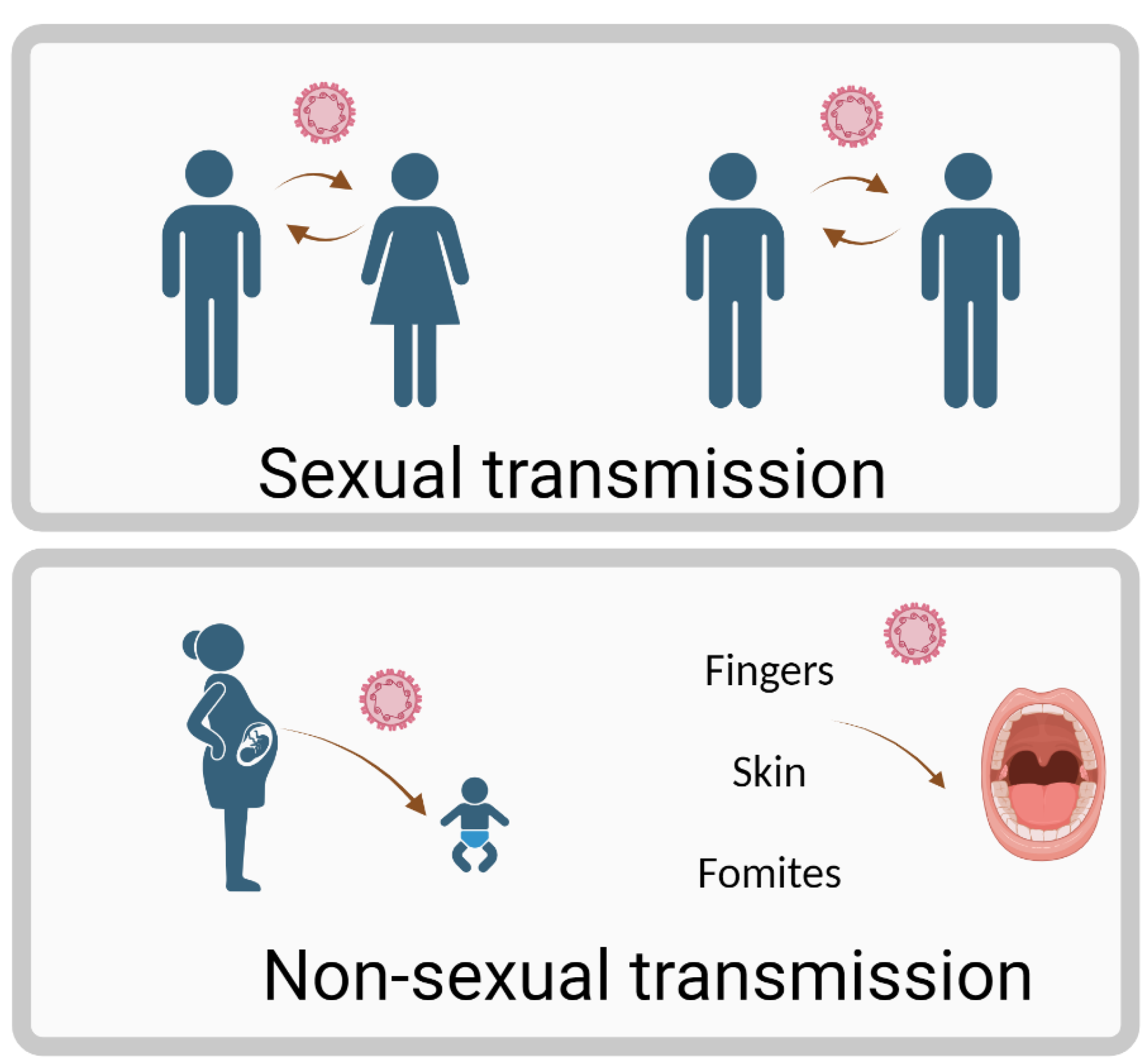

Table 1.
Summary of probiotics effects on HPV-related cancer cells.
| Bacteria/probiotics | Cell line | Outcome | References |
| Milk-isolated L. casei and L. paracasei | Hela | upregulating the expression of apoptotic genes | [108] |
| Vagina-isolated L. gasseri | Hela | Inflammation and proliferation were reduced, and apoptosis was increased | [109] |
| Vagina-isolated L. plantarum | Hela | Suppression of proliferation and induction of apoptosis | [110] |
| Supernatants of L. rhamnosus and L. crispatus | Hela | Inhibited cell proliferation and metastasis | [111] |
| Supernatants of L. rhamnosus and L. crispatus | Hela | Decrease expression of HPV oncogenes | [112] |
| Lacticaseibacillus casei LH23 | Hela | suppress the proliferation and induced the apoptosis of cervical cancer cells | [113] |
| Bifdobacterium adolescentis SPM1005-A | SiHa | Inhibited E6 and E7 oncogenes | [114] |
| supernatants of L. crispatus, L. jensenii, and L. gasseri | CasKi | inhibitory effects on the viability of cervical cancer cells via regulation of HPV oncogenes and cell cycle-related genes | [115] |
| Twelve standard Lactobacillus | Hela and SiHa | reduce tumor invasion and metastasis | [116] |
Table 2.
A summarize of studies exploring the use of probiotics for HPV-related infections.
| Sample size | Bacterial Strain | Condition | Intervention | Outcome | References |
| N=160 | L. crispatus M247 | ASCUS* or LSIL* HPV+ |
Oral administration (no fewer than 20 billion) for 12 months |
higher percentage of clearance of PAP-smear abnormalities in patients who took oral Lactobacillus crispatus M247 than in the control group |
[118] |
| N=35 | L. crispatus M247 | ASCUS or LSIL or NILM* HPV+ | Oral administration (no fewer than 20 billion) for 3 months |
reduction of approxi mately 70% in HPV positivity and a significant change in CST status with 94% of women | [119] |
| N-54 | L. casei Shirota | LSIL HPV+ | Oral administration (no fewer than 20 billion) for 6 months |
Probiotic users had a twice as high chance of clearance of cytological abnormalities | [104] |
| N-121 | L. rhamnosus and L. reuteri | High-risk HPV | Oral administration (no fewer than 5.4 billion) discontinued until negative HPV testing | No significant influence on HR-HPV clearance, but may have decreased the rates of mildly abnormal and unsatisfactory cervical smears | [106] |
| N=91 | L. crispatus chen01 | High-risk HPV | Intravaginal 1 × 10⁹ CFU per capsule for 5 months | Significantly reduced viral load of HPV, ameliorated HPV clearance rate, and improved vaginal inflammation state | [105] |
| N=117 | L. rhamnosus BMX 54 | C1N1*, HPV+ | Intravaginal 1 × 10⁴ CFU per tablet for 3 or 6 months | Long term user doubled the chance of resolving HPV-related cytological anomalies compared to short term user | [117] |
* ASCUS: Atypical squamous cells of undetermined significance; LSIL: Low-grade squamous intraepithelial lesion; NILM: Negative for intraepithelial lesion or malignancy; C1N1: Cervical intraepithelial neoplasia grade 1.
Disclaimer/Publisher’s Note: The statements, opinions and data contained in all publications are solely those of the individual author(s) and contributor(s) and not of MDPI and/or the editor(s). MDPI and/or the editor(s) disclaim responsibility for any injury to people or property resulting from any ideas, methods, instructions or products referred to in the content. |
© 2025 by the authors. Licensee MDPI, Basel, Switzerland. This article is an open access article distributed under the terms and conditions of the Creative Commons Attribution (CC BY) license (http://creativecommons.org/licenses/by/4.0/).
Copyright: This open access article is published under a Creative Commons CC BY 4.0 license, which permit the free download, distribution, and reuse, provided that the author and preprint are cited in any reuse.


