Preprint
Article

This version is not peer-reviewed.

Radiological and Immunohistochemical Characteristics of PitNETs in 79 Patients Undergoing Neurosurgery

A peer-reviewed article of this preprint also exists.

Submitted:

01 January 2025

Posted:

06 January 2025

You are already at the latest version

Abstract

Objective: The objective of the study was to provide radiological and immunohistochemical evaluation of pituitary neuroendocrine tumors (PitNETs) concentrating on their invasiveness, endocrine function and expression of transcription factors. Methods: 79 cases of PitNETs were analyzed. The analysis included their MRI features, invasiveness and immunophenotype (immunoexpression of transcription factors Pit-1, SF1, TPit and the hormones). Results: Tumors from the SF1 line were statistically significantly more likely to show a tendency to invade the sella turcica (p<0.0001), while tumors from the Pit-1 and TPit factor lines were demonstrated to be both invasive and non-invasive, and the difference was not statistically significant. No statistically significant difference was found in the invasion of the cavernous sinuses by the pituitary tumors regardless of the transcription factor from which they originated. No statistically significant differences were observed between hormonally active and inactive tumors in terms of gender, age, invasiveness, size, or volume. Conclusions: PitNETs, also known as pituitary adenomas, continue to represent a significant challenge for clinicians. Tumors from the SF1 factor line are characterized by a statistically significantly more frequent invasion directed towards the sella turcica, while tumors from the Pit-1 and TPit lines do not show such a relationship. Patients with corticotroph PitNETs need to be controlled due to the proclivity of the tumors for aggressive behavior. Other types of PitNETs are less common. Tumors that express multiple transcription factors necessitate the patient to be subjected to further diagnostic and investigative procedures.

Keywords: 
;  ;  ;  

1. Introduction

PitNETs (pituitary neuroendocrine tumors, according to the WHO classification of 2022) are the tumors of the anterior lobe of the pituitary gland which account for approximately 16% of all primary brain tumors and for almost 25% of benign primary brain tumors [1]. Tumor diagnosis may be delayed in males, resulting in the tumor achieving a large size before clinical symptoms are apparent [2]. Different classifications of pituitary adenomas are used because the management of these tumors requires a multidisciplinary approach (with the team including a pathologist, endocrinologist, neuroradiologist and neurosurgeon). Pituitary adenomas are therefore classified according to their endocrine function, size and invasiveness, and the current WHO-recommended classification is based on the transcription factors involved in the development of each tumor type. Hormonally active adenomas are mainly those that produce growth hormone (GH), adrenocorticotropic hormone (ACTH), prolactin (PRL) and rarely thyrotrophic hormone (TSH) [3]. In contrast, tumors producing gonadotropins (FSH, folliculotropic hormone; LH, luteinizing hormone) are usually hormonally inactive from a clinical point of view, i.e. they do not present a clinical picture of excessive levels of these hormones, and the main symptoms of these tumors are due to their mass effect and invasive behavior. On the other hand, from a neurosurgical point of view, pituitary tumors are divided into invasive and non-invasive using two scales, i.e. the Knosp scale assessing the penetration of the tumor towards the cavernous sinuses, and the Hardy scale assessing the degree of erosion of the sellar floor and invasion of the sphenoid sinus [4,5,6].
Recently, however, in 2017, due to the important role of transcription factors in the development of these tumors [7], the World Health Organization (WHO) proposed the division of PitNET tumors into Pit-1 lineage tumors (Pit-1; Pituitary-specific POU-class homeodomain transcription factor), TPit (T-box family member TBX19) lineage tumors, SF1 (SF-1, steroidogenic factor) lineage tumors and tumors without a distinct cell lineage. Thus, PitNETs are classified histopathologically by WHO according to the hormone content of the tumor cells, which is assessed using immunohistochemical staining [8,9]. In 2022, WHO introduced a modification to the above classification: the category of Pit-1 positive plurihormonal tumor was replaced by two clinically distinct PitNETs: the immature Pit-1 lineage tumor and mature Pit-1 lineage tumor [10]. The most up-to-date version of the WHO classification (5th edition) is accessible as a website beta version dated 2023.
Histopathologically, somatotroph, lactotroph, and corticotroph PitNETS are also divided into sparsely granulated adenomas (SGA) and densely granulated adenomas (DGA). This distinction reflects different features of immunopositive hormonal content in adenoma cells and is clinically relevant because sparse granularity adenomas have a more aggressive biological behavior as compared to dense granularity adenomas. [11]. What is of the highest significance is the clinical behavior of the tumor and so the prediction of its clinical course is the ultimate goal of any system of classification, both pathological and radiological. In fact, one of the reasons to include the “NET” (neuroendocrine tumors) attribution into the WHO classification of pituitary adenomas was their unpredictable clinical course resulting from their histopathologic features, which is common for all neuroendocrine tumors in any organs (especially the lack of possibility to predict the appearance of metastases, which may happen even in G1 – i.e. theoretically “benign” neuroendocrine tumors). As a result, any attempt of “validation” or rather reassessment of the particular features of PitNETs with regard to their behavior is still the one of most important fields of research on pituitary adenomas (PitNETs). The aggressiveness of a tumor is assessed by its clinical and radiological features and by its behavior during follow-up (the growth rate and response to treatment) [12]. According to the definition, an aggressive pituitary tumor is characterized by its invasiveness (grade 3 or 4 on the Knosp scale), invasion of the sinus of the wedge, extremely rapid tumor growth (growth >20% and at least 2 mm in 6 months), clinically significant tumor growth despite optimal conventional treatment (growth >20% despite appropriate surgery, drug treatment and radiotherapy). Aggressive adenomas are often large tumors, many of which are giant (with the largest diameter ≥ 4 cm) [13]. WHO has distinguished five subtypes of adenoma, which can take an aggressive course, present with an early recurrence and be refractory to treatment. These are: sparsely granulated somatotropic adenoma, silent corticotropic adenoma, male lactotroph adenoma, PIT-1 positive plurihormonal adenoma and Crooke’s cell adenoma [14].
The objective of our study was to evaluate radiologically and immunohistochemically (IHC) pituitary tumors in patients undergoing neurosurgery and to assess whether the immunohistochemical type showed any correlation with tumor invasiveness. The size, volume, invasiveness, endocrine function and expression of transcription factors in pituitary tumors were assessed.

2. Material and Methods

2.1. Patients

The study included a group of 79 patients who underwent surgery at the St Raphael’s Hospital in Krakow, Poland, between 2022 and 2024, and who were referred for surgery for a tumor within the sella turcica and in whom a pituitary adenoma was subsequently confirmed by histopathology (HP). Each patient gave informed consent for the collection of tumor tissue for the study. The patient data were anonymized.

2.2. Materials and Methods

Each patient was subjected to a magnetic resonance imaging (MRI) scan of the head or to a pituitary-targeted MRI scan before surgery; in individual cases, a computer tomography (CT) scan of the head was performed due to the fact that MRI was contraindicated. Based on the MRI image, the tumor was measured in 3 dimensions, i.e. AP, ML and CC (cor x sag x cc), and the tumor volume was calculated. In addition, tumor invasion into the cavernous sinuses was assessed using the Knosp scale, while the invasion towards the sella turcica was assessed according to the Hardy scale. Tumors of the Knosp grade 1 and 2 were classified as non-invasive, while grade 3 and 4 tumors were classified as invasive. Analogically, the Hardy scale grade 1 and 2 tumors were considered non-invasive and grades 3 and above were assigned to the invasive group. The patients were referred to a neurosurgeon due to their suffering from such symptoms as headache, dizziness, tinnitus, sudden visual disturbances and sudden eyelid drooping. A total of 79 consecutive patients underwent transsphenoidal excision of the pituitary tumor via the transnasal approach. All the operations were performed by the same neurosurgeon (R.C.) in the St Raphael’s Hospital in Krakow. The postoperative materials from the resected tumors were examined histopathologically. Immunohistochemical evaluation included the level of pituitary hormones (ACTH, GH, PRL, TSH, LH, FSH) and transcription factors (Pit-1, SF1 and TPit). Based on the hormones secreted by the adenoma and the clinical picture, the tumors were classified as either hormonally active or inactive. The final histopathological diagnosis followed the guidelines and terminology of the WHO classification (5th edition, Website beta version 2022) incorporating the immunoexpression of tropic hormones and the above mentioned transcription factors.

3. Statistics

Continuous variables were presented as mean ± standard deviation (SD), median and interquartile range (IQR) and minimal and maximal values. The Mann–Whitney U-test was performed to compare two groups due to the small number of patients in one group (less than 20). The categorical variables were presented as the number and a respective percentage. To compare the categorical variables between the two groups, the chi-square test of independence was used. The level of significance for the two-sided tests was set below 0.05. The R (R Core Team (2021) - R: A language and environment for statistical computing. R Foundation for Statistical Computing, Vienna, Austria. URL https://www.R-project.org/) and the Statistica 13 software (StatSoft Inc., Tulsa, Oklahoma, United States) were used to conduct the analyses.

4. Results

There were respectively 32 (40.5%) and 47 (59.5%) female and male patients in the group of 79 patients. The mean age±SD was 57.2±13.9. Two patients were below 30 years of age (2.5%), 10 were 30-40 years old (12.7%), 13 were 41-50 years old (16.5%), 15 were 51-60 years old (19.0%), 23 were 61-70 years old (29.1%), 15 were 71-80 years old (19.0%), and one was over 80 years of age (1.3%). The characteristics of the group is shown in Table 1.
The invasiveness of the tumors was assessed using the Knosp and Hardy scales. Tumors assessed as grades 1 and 2 on the Knosp scale were considered non-invasive, while those graded 3 and 4 on the same scale were considered invasive. Similarly, grade 3 or above 3 tumors classified by the Hardy scale were considered invasive, while those graded 1 and 2 were regarded non-invasive. Among the invasive tumors, the predominant tumor type was gonadotroph as seen both when using the Knosp scale (n – 22) and the Hardy scale (n – 24). A comparison of invasive and non-invasive tumors according to the Knosp scale is presented in Table 2, while Table 3 shows the same comparison according to the Hardy scale.
Tumors in which positive expression of individual transcription factors was found were compared in terms of their invasiveness; it was noted that tumors from the SF1 lineage were statistically significantly more frequently invasive than non-invasive, while there were no such differences among tumors from the Pit-1 and TPit lineages (Figure 1).
The patients with tumors were compared by sex and age. Among the women, the following observations were made: gonadotroph – n=14 (43.8%); gonadotroph/lactotroph – n=2 (6.3%); corticotroph – n=7 (21.9%); lactotroph – n=2 (6.3%); null cell adenoma -n=1 (3.1%); multiple synchronous – n=1 (3.1%); immature PIT-1 – n=3 (9.4%); mature PIT-1 – n=2 (6.3%). Among the men, the following results were noted: gonadotroph – n=30 (63.8%); corticotroph – n=3 (6.4%); lactotroph – n=2 (4.3%); null cell adenoma - n=2 (4.3%); multiple synchronous – n=3 (6.4%); immature PIT-1 positive – n=4 (8.5%); mature PIT-1 positive – n=1 (2.1%); somatotroph – n= 1 (2.1%); thyrotroph – n=1 (2.1%).
There was one case (1.26%) of a microadenoma (<1 cm), 77 cases (97.4%) of macroadenomas, and the data were missing in 1 case. Giant adenomas (tumors >4 cm) were present in 11 cases (13.92%). The characteristics of giant tumors are shown in Table 4.
Based on the hormones secreted by the tumor, the endocrine function of the tumors was assessed. The differences between hormonally active and inactive tumors were evaluated in terms of demographic parameters, invasiveness, tumor size and volume and tumor type (Table 5).
On the basis of the histopathological examination, the analysis of the expression of transcription factors was carried out. It was found that some tumors showed a simultaneous expression of several transcription factors (Table 6).
It was assessed which tumors originated from the Pit -1 cell line and the following results were achieved: lactotroph – 4 (5.0%); thyrotroph – 1 (1.2%); mature Pit -1 lineage tumor – 2 (2.5%), , immature Pit -1-lineage tumor – 7 (8.9%), somatotroph – 1 (1.2%). A simultaneous expression geared towards Pit-1 and SF1 was shown by gonadotroph/lactotroph – 2 (2.5%). Two patients with a gonadotroph tumor showed a positive expression of the SF1 factor and slight – i.e. at ± expression – in the case of Pit-1.
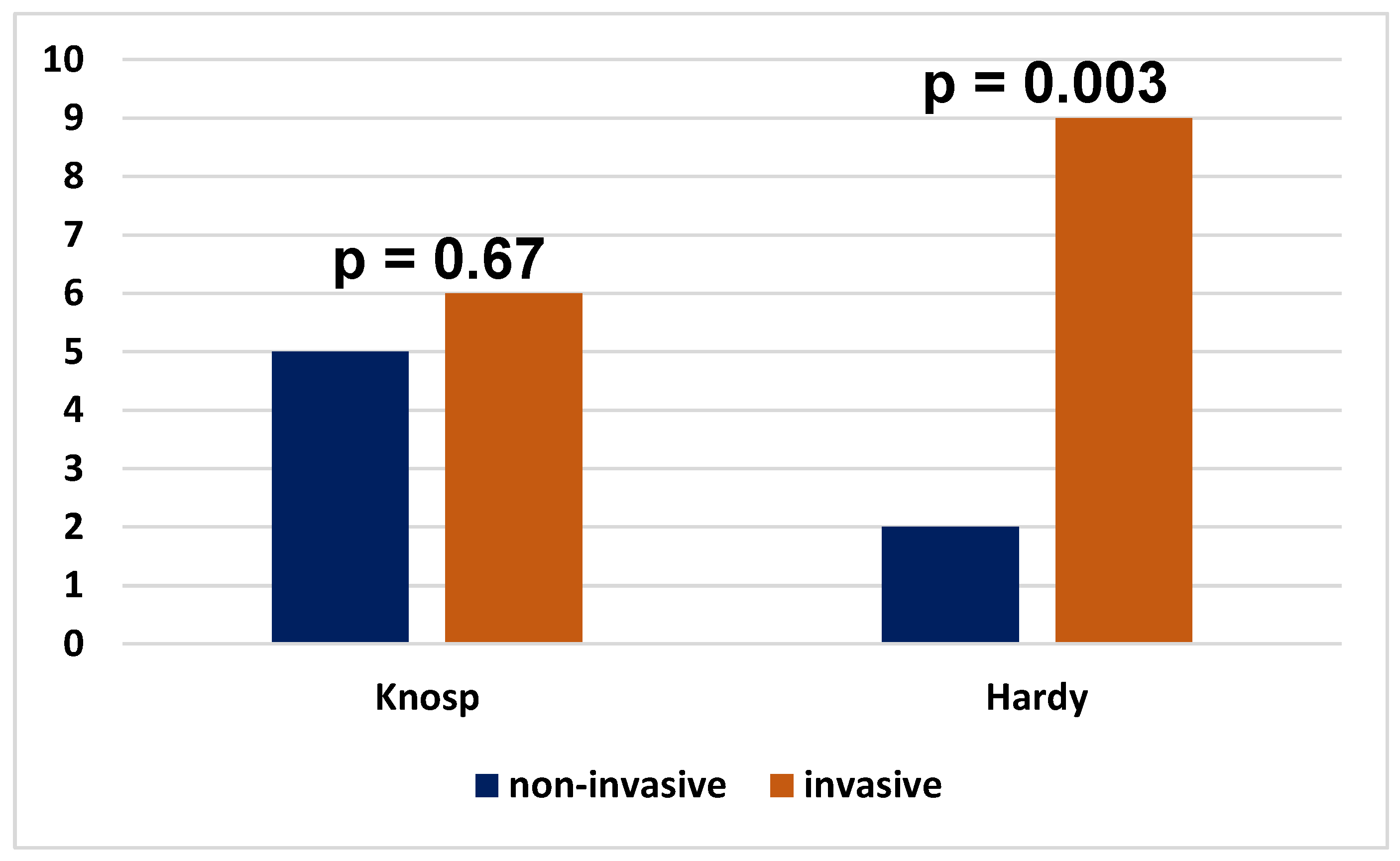
Tumors expressing two and more factors were more often invasive than non-invasive on the Hardy scale, while there was no statistically significant difference between such tumors on the Knosp scale (Figure 2).
Corticotroph PitNET tumors were then evaluated with respect to the great importance of the secreted by them excess hormones. Among the corticotroph tumors (n = 10) derived from the TPit transcription factor lineage, the following were found: SGCT (sparsely granulated corticotroph tumor) – 4 (40.0%); Crooke’s cell tumor -3 (30.0%), silent corticotroph adenomas – 2 (20.0%) – TPit positive expression but no ACTH expression, missing data – 1 (10.0%) – Table 7.
The following types of adenoma were found, which according to WHO can have an aggressive course: silent corticotroph adenoma – 2; lactotroph adenoma in males -2; PIT-1 positive plurihormonal adenoma – 2; and Crooke’s cell adenoma – 3 (Table 8).

5. Discussion

Based on our study, the most common type of PitNET was the gonadotroph tumor (55.69%). Gonadotroph adenomas accounted for 40-60% of clinically nonfunctioning adenomas [15] and for about for 20% to 30% of all adenomas. The statement that gonadotroph adenomas are the most frequently detected in patients in the sixth decade of life or older was also confirmed in our study. Similarly, as described in the literature, these tumors were hormonally inactive and the main symptoms were related to the mass effect. In our study, these tumors were more common in males than females, and the mean age at the time of tumor presentation was 60.1 ± 12.8 years. It should be noted that these tumors accounted for one-half of the giant tumors, i.e. reaching more than 40mm, which probably reflected the fact that the delay in the moment of symptoms appearance forced the patient to look for medical advice in cases of non-functioning adenomas.
Corticotroph PitNETs are clinically divided into two groups, i.e. endocrinologically active tumors presenting with Cushing’s disease or - very rarely – the Nelson’s syndrome, and tumors that are clinically non-functioning, the so-called silent corticotroph PitNETs. Corticotropic adenomas showing extensive hyaline changes, the so-called Crooke’s cell adenomas, more often appear to be locally invasive and recurrent [16]. In our study, 10 corticotroph PitNETs were found, including three Crook’s tumors and two the so-called silent tumors.
Silent corticotropic PitNETs are characterized by their immunoreactivity for ACTH, although the patients have neither clinical signs of Cushing’s disease nor high levels of ACTH. The majority of such tumors are macroadenomas and the patients have symptoms of a mass lesion [17,18]. In our study, corticotroph PitNETs accounted for 12.65% of all the tumors, the mean age of the patients was 56.7±16.1, and the above lesions were more common in women (70.0%) than in men (30.0%). There was a statistically significant difference in age between patients with corticotroph and gonadotroph tumors. Among the tumors, three Crooke’s tumors were shown to be aggressive.
Lactotroph PitNETs account for approximately 80% of hormonally active tumors and about 40% of all pituitary tumors [3]. In our study, there were four tumors of this type and two tumors secreting PRL and gonadotropins simultaneously. In each case, they were macroadenomas.
Thyrotroph PitNETs are the least frequent pituitary adenomas. The majority of tumors are invasive macroadenomas [19]. There was one case of a thyrotroph PitNET in our study. This was a macroadenoma in a man, graded as 3 on both the Knosp and Hardy scales.
Hormonally inactive tumors were more numerous (78.48%) than hormonally active ones (21.52%). There were no statistically significant differences with regard to the Knosp invasiveness grade (p – 0.65), the Hardy invasiveness index (p – 0.084), age (p – 0.089) and sex (p – 0.24) between the active and hormonally inactive tumors.
Among the Pit-1 cell line tumors, immature Pit-lineage tumors were the most common. It is noteworthy that some tumors presented more than two transcription factors, and among these were mainly the immature Pit-lineage tumors and gonadotroph tumors.
A plurihormonal Pit-1-positive adenoma is an adenoma that shows immunohistochemical staining for such hormones as GH, PRL, β-TSH and/or α-SU. These adenomas are usually clinically silent but can sometimes be associated with acromegaly, hyperprolactinemia or hyperthyroidism. The majority of these adenomas are invasive, aggressive tumors with a high recurrence rate [20]. In our study, plurihormonal Pit-1- positive adenoma tumors secreted mainly PRL and GH, TSH, ACTH, FSH and LH.
Null cell adenomas are hormonally inactive but give signs of a mass effect. In keeping with the current WHO definition, these adenomas do not show immunoreactivity for any pituitary hormone; nor do they express any of the following transcription factors: Pit-1, SF1 and TPit [21]. Three tumors were found in our study, all of which were macroadenomas; their invasiveness of the Knosp scale was 1, 2, 4 for each tumor, respectively, and on the Hardy scale it was grade 2, 3, 4.
Much research has been devoted to aggressive PitNET behavior (22,23,24). A number of studies have described the potentially aggressive behavior of Crooke’s cell tumor (25,26). The search for the tumors with the potential for aggressive behavior in our study showed the following results: 3 Crooke’s cell tumors, 2 silent corticotroph PitNETs, 2 lactotroph PitNETs in males, and 2 plurihormonal Pit-1 positive tumor were found.
In our group of patients, it was shown that tumors derived from the SF1 factor line were statistically significantly more likely to show a higher severity of invasiveness on the Hardy scale, i.e. a greater tendency towards erosion of the sella turcica, while no such differences were found in the case of tumors from the PIT1 and TPit lineages. On the other hand, no statistically significant differences were found in terms of invasiveness towards the cavernous sinuses, regardless of which transcription factor the tumor originated from. However, it should be emphasized that the group of patients with a tumor from the TPit lineage was not large, which could have affected the results.
It is important to note that one of the most serious limitations of our study is the lack of hormonal testing prior to surgery. Additionally, the MRI studies before hospital admission were conducted by various diagnostic imaging facilities and hence they could not precisely follow the same imaging protocol and the description was not always optimal and fully comprehensive. Another limitation of our study is the absence of evaluation of Ki-67 and the p53 protein in some patients, which precluded their inclusion in the comparative analysis. Despite these limitations, our study provides valuable insights into the prevalence of Pit-NET tumors, their hormonal function and the risk of invasiveness.

6. Conclusion

PitNETs continue to represent a significant challenge for clinicians. The most prevalent tumor type in our study was the gonadotroph Pit-NET. The gonadotroph PitNET was more prevalent in males, while the corticotroph PitNET was more common in females, with a statistically significant difference (p = 0.035). No statistically significant differences were observed between hormonally active and inactive tumors in terms of gender, age, invasiveness, size, or volume. However, corticotroph PitNET tumors were more prevalent among tumors with a potential tendency towards aggressive behavior, including silent tumors and Crook’s tumors. Tumors from the SF1 factor line statistically significantly more frequently showed invasion towards the sella turcica (p<0.001), while tumors from the Pit-1 and TPit lines did not show such a relationship. No statistically significant difference was found in the invasion of the cavernous sinuses by pituitary tumors regardless of the transcription factor from which they originated.

Funding

This research did not require external funding. Open access funding was provided by Andrzej Frycz Modrzewski Krakow University.

Data availability

The datasets used and/or analyzed during the current study are available from the corresponding author upon a reasonable request.

Institutional Review Board Statement

The study was approved by the Bioethics Committee of the Andrzej Frycz Modrzewski Krakow University, permission No. KBKA/11/O/2024 on 21.03.2024.

Informed Consent Statement

All patients provided written informed consent to participate in the study after receiving a full explanation of the purpose and nature of all the procedures used.

Acknowledgments

The authors are grateful and would like to thank the neurosurgeons of the Neurosurgery Department of St. Raphael’s Hospital in Kraków for their help in interpreting the MRI images of the pituitary tumors.

Conflicts of Interest

The authors declare that they have no conflicts of interest.

References

  1. Ostrom QT, Cioffi G, Gittleman H, Patil N, Waite K, Kruchko C, Barnholtz-Sloan JS. CBTRUS Statistical Report: Primary Brain and Other Central Nervous System Tumors Diagnosed in the United States in 2012-2016. Neuro Oncol. 2019 Nov 1;21(Suppl 5):v1-v100. [CrossRef]
  2. McDowell BD, Wallace RB, Carnahan RM, Chrischilles EA, Lynch CF, Schlechte JA. Demographic differences in incidence for Pituitary adenoma. Pituitary. (2011) 14:23–30. [CrossRef]
  3. Ezzat S, Asa SL, Couldwell WT, et al. The prevalence of Pituitary adenomas: a systematic review. Cancer. 2004;101:613–619.
  4. Knosp E, Steiner E, Kitz K, Matula C. Pituitary adenomas with invasion of the cavernous sinus space: a magnetic resonance imaging classification compared with surgical findings. Neurosurgery. 1993;33(4):610-617; discussion 617-618. [CrossRef]
  5. Fang Y, Pei Z, Chen H, Wang R, Feng M, Wei L, Li J, Zhang H, Wang S. Diagnostic value of Knosp grade and modified Knosp grade for cavernous sinus invasion in Pituitary adenomas: a systematic review and meta-analysis. Pituitary. 2021 Jun;24(3):457-464. [CrossRef]
  6. Hardy J, Vezina JL. Transsphenoidal neurosurgery of intracranial neoplasm. Adv Neurol. 1976;15:261-73.
  7. Zhu X, Rosenfeld MG. Transcriptional control of precursor proliferation in the early phases of Pituitary development. Curr Opin Genet Dev. 2004 Oct;14(5):567-74. [CrossRef]
  8. Osamura RY, Grossman A, Korbonits M, et al. Pituitary adenoma. In: Tumors of the Pituitary Gland. WHO Classification of Endocrine Tumors. 4th ed. Lyon, France: IARC; 2017:14–18.
  9. Trouillas J, Jaffrain-Rea ML, Vasiljevic A, Raverot G, Roncaroli F, Villa C. How to classify the Pituitary neuroendocrine tumors (Pitnet)S in 2020. Cancers (Basel) (2020) 12(2):514. [CrossRef]
  10. Wan XY, Chen J, Wang JW, Liu YC, Shu K, Lei T. Overview of the 2022 WHO Classification of Pituitary Adenomas/Pituitary Neuroendocrine Tumors: Clinical Practices, Controversies, and Perspectives. Curr Med Sci. 2022 Dec;42(6):1111-1118. [CrossRef]
  11. Obari A, Sano T, Ohyama K, Kudo E, Qian ZR, Yoneda A, Rayhan N, Mustafizur Rahman M, Yamada S. Clinicopathological features of growth hormone-producing Pituitary adenomas: difference among various types defined by cytokeratin distribution pattern including a transitional form. Endocr Pathol. 2008 Summer;19(2):82-91. [CrossRef]
  12. Raverot G, Burman P, McCormack A, Heaney A, Petersenn S, Popovic V, Trouillas J, Dekkers OM; European Society of Endocrinology. European Society of Endocrinology Clinical Practice Guidelines for the management of aggressive Pituitary tumors and carcinomas. Eur J Endocrinol. 2018 Jan;178(1):G1-G24. [CrossRef]
  13. De Sousa SMC, McCormack AI. Aggressive Pituitary tumors and Pituitary carcinomas. In: Feingold KR, Anawalt B, Boyce A, Chrousos G, Dungan K, Grossman A et al., editors. Endotext. South Dartmouth (MA) 2000.
  14. Lopes MBS. The 2017 World Health Organization classification of tumors of the Pituitary gland: a summary. Acta Neuropathol. 2017 Oct;134(4):521-535. [CrossRef]
  15. Yamada S, Osamura RY, Righi A, et al. Gonadotroph adenoma. In: Tumors of the Pituitary Gland. WHO Classification of Endocrine Tumors. Lyon, France: IARC; 2017:34–36.
  16. Mete O, Grossman A, Trouillas J, et al. Corticotroph adenoma. In: Tumors of the Pituitary Gland. WHO Classification of Endocrine Tumors. 4th ed. Lyon, France: IARC; 2017:30–33.
  17. Ben-Shlomo A, Cooper O. Silent corticotroph adenomas. Pituitary (2018) 21(2):183–93. [CrossRef]
  18. Cooper O. Silent corticotroph adenomas. Pituitary. 2015 Apr;18(2):225-31. [CrossRef]
  19. Wang EL, Qian ZR, Yamada S, et al. Clinicopathological characterization of TSH-producing adenomas: special reference to TSH-immunoreactive but clinically non-functioning adenomas. Endocr Pathol. 2009;20:209–220.
  20. Kontogeorgos G, Kovacs K, Lloyd RV, et al. Plurihormonal and double adenomas. In: Tumors of the Pituitary Gland. WHO Classification of Endocrine Tumors. 4th ed. Lyon, France: IARC; 2017:39–40.
  21. Nishioka H, Kontogeorgos G, Lloyd RV, et al. Null cell adenoma. In: Tumors of the Pituitary Gland. WHO Classification of Endocrine Tumors. 4th ed. Lyon, France: IARC; 2017:37–38.
  22. Picó A. Agressive Pituitary tumors: a diagnostic and therapeutic challenge for multidisciplinary Pituitary units. Endocrinol Diabetes Nutr (Engl Ed). 2020 Feb;67(2):75-77. English, Spanish. [CrossRef]
  23. Dekkers OM, Karavitaki N, Pereira AM. The epidemiology of aggressive Pituitary tumors (and its challenges). Rev Endocr Metab Disord 2020;21:209e12. [CrossRef]
  24. Raverot G, Ilie MD, Lasolle H, Amodru V, Trouillas J, Castinetti F, et al. Aggressive Pituitary tumors and Pituitary carcinomas. Nat Rev Endocrinol 2021;17(11):671e84. [CrossRef]
  25. Zhu D, Wang Z, Tian T, Wu X, He D, Zhu Y, Liu D, Wang H. Prevalence and clinical characteristics of Crooke’s cell adenomas in 101 patients with T-PIT-positive Pituitary adenomas: Case series and literature review. Front Endocrinol (Lausanne). 2022 Aug 19;13:947085. [CrossRef]
  26. Giraldi EA, Neill SG, Mendoza P, Saindane A, Oyesiku NM, Ioachimescu AG. Functioning Crooke Cell Adenomas: Case Series and Literature Review. World Neurosurg. 2022 Feb;158:e754-e765. [CrossRef]
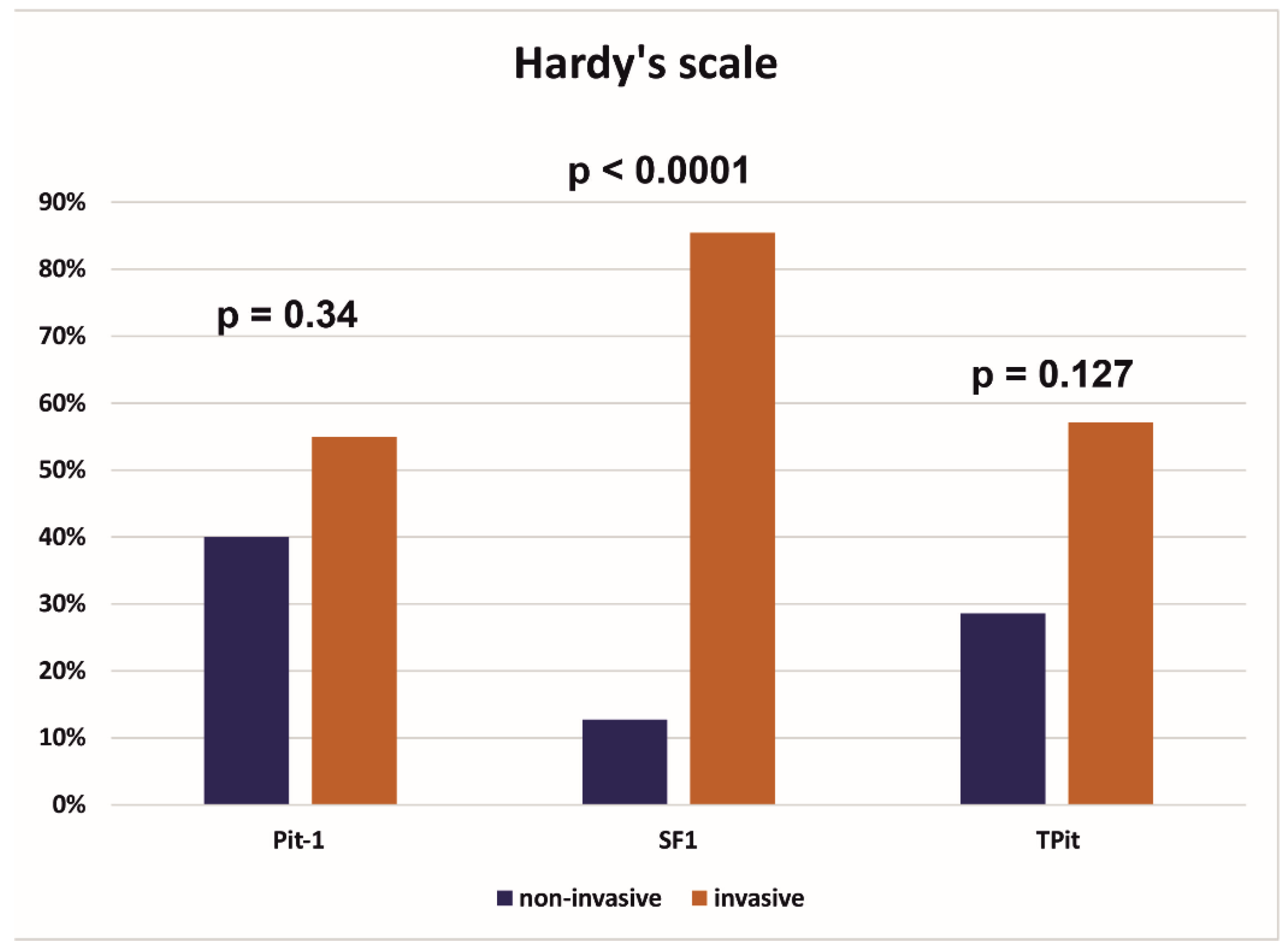
Figure 1. Comparison of invasive and non-invasive tumors on the Hardy scale depending on the transcription factor from which the tumor originated.
Preprints 144860 g001
Figure 2. Knosp and Hardy invasiveness of tumors expressing 2 or 3 transcription factors.
Preprints 144860 g002
Table 1. General characteristics of the study group (n – 79).
Overall
(N=79)
Age
Mean (SD) 57.2 (13.9)
Median [Q1-Q3] 60.0 [47.5-68.5]
Min-Max 23.0-82.0
Gender
F 32 (40.5%)
M 47 (59.5%)
Tumor size AP (mm)
Mean (SD) 21.2 (8.40)
Median [Q1-Q3] 20.0 [16.0-25.8]
Min-Max 4.50-50.0
Missing 1 (1.3%)
Tumor size ML (mm)
Mean (SD) 25.5 (8.06)
Median [Q1-Q3] 25.0 [20.0-30.0]
Min-Max 5.50-45.0
Missing 1 (1.3%)
Tumor size CC (mm)
Mean (SD) 24.3 (10.7)
Median [Q1-Q3] 22.0 [17.0-30.8]
Min-Max 4.50-56.0
Missing 1 (1.3%)
Volume of tumor V (cm3)
Mean (SD) 8.51 (8.66)
Median [Q1-Q3] 5.20 [3.15-10.1]
Min-Max 0.200-50.0
Missing 4 (5.1%)
Transcriptions factors:
Pit -1 21 (26.6%)
SF 1 55 (69.6%)
TPit 14 (17.7%)
Type of PitNET
Gonadotroph 44 (55.69 %)
Corticotroph 10 (12.65%)
Lactotroph 4 (5.06%)
Null cell adenoma 3 (3.79%)
Multiple synchronous 4 (5.06%)
Somatotroph 1 (1.26%)
Gonadotroph/lactotroph 2 (2.53%)
Thyrotroph 1 (1.26%)
Mature Pit - 1 lineage tumor 3 (3.8%)
Immature Pit -1 lineage tumor 7 (8.86%)
Hormonal activity of PitNET
Non-active 62 (78.48%)
Active 17 (21.52%)
Hardy scale
Non-invasive (grade 1, 2) 15 (19.0%)
Invasive (grade 3 and above) 62 (78.5%)
Missing 2 (2.5%)
Knosp scale
Non - invasive (grade 1, 2) 37 (46.8%)
Invasive (grade 3, 4) 40 (50.6%)
Missing 2 (2.5%)
Table 2. Comparison of invasive and non-invasive tumors classified using the Knosp scale (non-invasive – 37, invasive – 40, no data – 2).
Overall
(N=79)
Non-invasive
(N=37)
Invasive
(N=40)
p-value
Invasivenessthe Hardy scale < 0.0001*
Non-invasive 15 (19.0%) 14 (37.8%) 1 (2.5%)
Invasive 62 (78.5%) 23 (62.2%) 39 (97.5%)
Missing 2 (2.5%) 0 (0%) 0 (0%)
Age 0.87
Mean (SD) 57.2 (13.9) 57.4 (14.1) 56.9 (13.9)
Median [Q1-Q3] 60.0 [47.5-68.5] 59.0 [48.0-69.0] 61.0 [46.5-67.3]
Min-Max 23.0-82.0 31.0-82.0 23.0-78.0
Gender 0.52
F 32 (40.5%) 14 (37.8%) 18 (45.0%)
M 47 (59.5%) 23 (62.2%) 22 (55.0%)
Hormonal PitNET activity 0.65
Non-active 62 (78.5%) 28 (75.7%) 32 (80.0%)
Active 17 (21.5%) 9 (24.3%) 8 (20.0%)
Type of PitNET 0.37
Gonadotroph 44 (55.7%) 20 (54.1%) 24 (60.0%)
Gonadotroph/lactotroph 2 (2.5%) 0 (0%) 2 (5.0%)
Corticotroph 10 (12.7%) 4 (10.8%) 5 (12.5%)
Lactotroph 4 (5.1%) 3 (8.1%) 1 (2.5%)
Null cell adenoma 3 (3.8%) 2 (5.4%) 1 (2.5%)
Multiple synchronous 4 (5.1%) 1 (2.7%) 3 (7.5%)
Thyrotroph 1 (1.3%) 0 (0%) 1 (2.5%)
Somatotroph 1 (1.3%) 1 (2.7%) 0 (0%)
Mature Pit - 1 lineage tumor 3 (3.8%) 3 (8.1%) 0 (0%)
Immature Pit -1 lineage tumor 7 (8.9%) 3 (8.1%) 3 (7.5%)
Tumor volume V (cm3) < 0.0001*
Mean (SD) 8.51 (8.66) 4.90 (4.57) 11.8 (10.1)
Median [Q1-Q3] 5.20 [3.15-10.1] 3.30 [1.83-6.88] 9.00 [4.60-14.2]
Min-Max 0.200-50.0 0.200-20.0 1.70-50.0
Missing 4 (5.1%) 1 (2.7%) 1 (2.5%)
Max size < 0.0001*
Mean (SD) 27.8 (9.75) 22.9 (7.32) 32.1 (9.79)
Median [Q1-Q3] 25.5 [21.6-33.0] 22.5 [19.0-27.0] 30.5 [23.8-38.5]
Min-Max 5.50-56.0 5.50-41.0 18.0-56.0
Missing 1 (1.3%) 0 (0%) 0 (0%)
Pit - 1 0.65
negative 59 (74.7%) 27 (73.0%) 31 (77.5%)
positive 20 (25.3%) 10 (27.0%) 9 (22.5%)
       SF1 0.64
negative 24 (30.4%) 12 (32.4%) 11 (27.5%)
positive 55 (69.6%) 25 (67.6%) 29 (72.5%)
       TPit 0.44
negative 65 (82.3%) 30 (81.1%) 35 (87.5%)
positive 14 (17.7%) 7 (18.9%) 5 (12.5%)
*statistical significance.
Table 3. Comparison of invasive and non-invasive tumors according to the Hardy scale (non - invasive – 15, invasive – 62, no data – 2).
Overall
(N=79)
Non-invasive
(N=15)
Invasive
(N=62)
p-value
Invasiveness on the Knosp scale < 0.0001*
Non - invasive 37 (46.8%) 14 (93.3%) 23 (37.1%)
Invasive 40 (50.6%) 1 (6.7%) 39 (62.9%)
Missing 2 (2.5%) 0 (0%) 0 (0%)
Age 0.64
Mean (SD) 57.2 (13.9) 55.4 (14.7) 57.6 (13.8)
Median [Q1-Q3] 60.0 [47.5-68.5] 61.0 [42.0-65.5] 59.5 [49.0-68.8]
Min-Max 23.0-82.0 31.0-75.0 23.0-82.0
Gender 0.89
F 32 (40.5%) 6 (40.0%) 26 (41.9%)
M 47 (59.5%) 9 (60.0%) 36 (58.1%)
Hormonal activity of PitNETs 0.084
Non - active 62 (78.5%) 9 (60.0%) 51 (82.3%)
Active 17 (21.5%) 6 (40.0%) 11 (17.7%)
Type of PitNET 0.011*
Gonadotroph 44 (55.7%) 5 (33.3%) 39 (62.9%)
Gonadotroph/lactotroph 2 (2.5%) 0 (0%) 2 (3.2%)
Corticotroph 10 (12.7%) 2 (13.3%) 7 (11.3%)
Lactotroph 4 (5.1%) 3 (20.0%) 1 (1.6%)
Null cell adenoma 3 (3.8%) 0 (0%) 3 (4.8%)
Multiple synchronous 4 (5.1%) 0 (0%) 4 (6.5%)
Thyrotroph 1 (1.3%) 0 (0%) 1 (1.6%)
Somatotroph 1 (1.3%) 1 (6.7%) 0 (0%)
Mature Pit -1 lineage tumor 3 (3.8%) 2 (13.3%) 1 (1.6%)
Immature Pit -1 lineage tumor 7 (8.9%) 2 (13.3%) 4 (6.5%)
Volume of tumor V (cm3) < 0.0001*
Mean (SD) 8.51 (8.66) 2.22 (1.98) 9.96 (8.96)
Median [Q1-Q3] 5.20 [3.15-10.1] 1.65 [1.18-2.93] 8.20 [4.00-12.0]
Min-Max 0.200-50.0 0.200-8.00 1.30-50.0
Missing 4 (5.1%) 1 (6.7%) 1 (1.6%)
Max size < 0.0001*
Mean (SD) 27.8 (9.75) 18.7 (6.18) 29.9 (9.28)
Median [Q1-Q3] 25.5 [21.6-33.0] 20.0 [16.5-23.0] 28.3 [23.0-34.0]
Min-Max 5.50-56.0 5.50-29.0 16.0-56.0
Missing 1 (1.3%) 0 (0%) 0 (0%)
Pit - 1 0.008*
negative 59 (74.7%) 7 (46.7%) 51 (82.3%)
positive 20 (25.3%) 8 (53.3%) 11 (17.7%)
SF1 0.055
negative 24 (30.4%) 8 (53.3%) 15 (24.2%)
positive 55 (69.6%) 7 (46.7%) 47 (75.8%)
TPit 0.23
negative 65 (82.3%) 11 (73.3%) 54 (87.1%)
positive 14 (17.7%) 4 (26.7%) 8 (12.9%)
*statistical significance.
Table 4. Characteristics of giant tumors ( >4 cm).
age sex AP
(mm)
ML
(mm)
CC
(mm)
KS HS V
cm3
Type
PitNET
PRL ACTH GH TSH LH FSH Pit-1 SF1 TPit
62 F 33 27 41 1 4D 18 gonadotroph 0 0 0 0 0 0 0 ++ 0
64 M 40 37 45 4 4E 33 multiplesynchronous 0 0 0 0 + 0 0 + 0
65 M 29 36 46 4 4D 21 gonadotroph 0 0 0 0 0 0 0 +++ 0
73 F 41 41 43 4 4E 25 gonadotroph 0 0 0 0 0 0 0 +++ 0
62 M 33 44 35 4 4A immature Pit-1 0 0 0 0 0 0 + -/+ 0
43 M 31 29 51 4 4E 21 immature Pit-1 0 0 0 0 0 0 + 0 0
57 F 30 45 31 3B 4E 21 corticotroph 0 + 0 0 0 0 0 0 +
63 F 26 34 43 4 4E 19 corticotroph 0 0 0 0 0 0 0 0 +
44 M 37 44 56 4 4E 50 gonadotroph 0 0 0 0 0 + 0 + 0
70 F 50 38 43 4 4E 33 gonadotroph 0 0 0 0 0 + 0 + 0
57 M 32 40 40 4 4D 13 gonadotroph 0 0 0 0 0 + 0 + 0
Legends: KS - Knosp scale, HS - Hardy scale.
Table 5. Comparison of hormonally active and inactive tumors.
Overall
(N=79)
Hormonally inactive
(N=62)
Hormonally active
(N=17)

p-value
Age 0.089
Mean (SD) 57.2 (13.9) 58.7 (13.0) 51.8 (15.9)
Median [Q1-Q3] 60.0 [47.5-68.5] 62.0 [50.0-69.0] 52.0 [39.0-64.0]
Min-Max 23.0-82.0 27.0-82.0 23.0-77.0
Gender 0.24
F 32 (40.5%) 23 (37.1%) 9 (52.9%)
M 47 (59.5%) 39 (62.9%) 8 (47.1%)
Max size 0.37
Mean (SD) 27.8 (9.75) 28.3 (9.75) 25.8 (9.80)
Median [Q1-Q3] 25.5 [21.6-33.0] 26.0 [22.0-33.0] 23.0 [20.0-29.0]
Min-Max 5.50-56.0 5.50-56.0 8.00-45.0
Missing 1 (1.3%) 1 (1.6%) 0 (0%)
Invasiveness on the Knosp scale
0.65
Non-invasive 37 (46.8%) 28 (45.2%) 9 (52.9%)
Invasive 40 (50.6%) 32 (51.6%) 8 (47.1%)
Missing 2 (2.5%) 2 (3.2%) 0 (0%)
Invasiveness on the Hardy scale
0.084
Non-invasive 15 (19.0%) 9 (14.5%) 6 (35.3%)
Invasive 62 (78.5%) 51 (82.3%) 11 (64.7%)
Missing 2 (2.5%) 2 (3.2%) 0 (0%)
V (cm3) 0.13
Mean (SD) 8.51 (8.66) 8.94 (8.72) 7.05 (8.53)
Median [Q1-Q3] 5.20 [3.15-10.1] 5.60 [3.23-10.8] 4.00 [1.40-8.60]
Min-Max 0.200-50.0 0.800-50.0 0.200-33.0
Missing 4 (5.1%) 4 (6.5%) 0 (0%)
Type of PitNETs < 0.0001*
Gonadotroph 44 (55.7%) 44 (71.0%) 0 (0%)
Gonadotroph/lactotroph 2 (2.5%) 0 (0%) 2 (11.8%)
Corticotroph 10 (12.7%) 5 (8.1%) 5 (29.4%)
Lactotroph 4 (5.1%) 1 (1.6%) 3 (17.6%)
Null cell adenoma 3 (3.8%) 3 (4.8%) 0 (0%)
Multiple synchronous 4 (5.1%) 3 (4.8%) 1 (5.9%)
Thyrotroph 1 (1.3%) 0 (0%) 1 (5.9%)
Somatotroph 1 (1.3%) 0 (0%) 1 (5.9%)
Mature Pit-1-lineage tumor 3 (3.8%) 0 (0%) 3 (17.6%)
Immature Pit-1 lineage tumor 7 (8.9%) 6 (9.7%) 1 (5.9%)
*statistical significance.
Table 6. Tumors showing simultaneous expression of 2 or 3 transcription factors (n=11).
Type of PitNET PRL ACTH GH TSH LH FSH Pit - 1 SF1 TPit
gonadotroph 0 0 0 0 0 0 -/+ ++ 0
immature Pit-1 lineage tumor 0 0 0 0 0 0 + -/+ 0
gonadotroph 0 0 0 0 0 1 -/+ + 0
immature Pit-1 lineage tumor 0 0 0 0 0 0 + + 0
immature Pit-1 lineage tumor 0 0 0 0 0 0 + -/+ -/+
gonadotroph 0 0 0 0 0 0 -/+ + 0
gonadotroph/lactotroph 1 0 0 0 0 1 + + 0
gonadotroph/lactotroph 1 0 0 0 1 1 + + 0
immature Pit-1 lineage tumor 0 0 0 0 0 0 + -/+ +
mature Pit-1 lineage tumor 1 1 1 0 1 1 + + +
immature Pit-1 lineage tumor 0 0 0 0 0 0 -/+ + 0
Table 7. Characteristics of corticotroph PitNETs (positive expression of TPit factor).
age
sex AP
(mm)
ML
(mm)
CC
(mm)
Knosp
scale
Hardy
scale
V
cm3
subtype ACTH
41 F 14 17 11 2 2A 1,9 SGCT 0
31 M 20 25 20 4 3B 3,7 Crooke 1
72 F 23 22 20 4 3E 4,6 SGCT 0
71 M no data no data no data no data no data no data silent 0
38 F 4,5 5,5 4,5 1 1A 0,8 SGCT 1
77 M 34 21 18 1 3C 6,2 Crooke 1
57 F 30 45 31 3B 4E 21 no data 1
63 F 26 34 43 4 4E 19 silent 0
49 F 27 26 27 2 3C 8,6 Crooke 1
68 F 20 27 21 3A 3 6 SGCT 1
Table 8. Characteristics of tumors with a potential for aggressive behavior.
age sex AP
(mm)
ML
(mm)
CC
(mm)
Knosp
scale
Hardy
scale
V
cm3
Typeof
PitNET
Sub
type
PRL ACTH GH TSH LH FSH Pit-1 SF1 TPit
35 M 20 22 29 1 2C 8 L 1 0 0 0 0 0 + 0
23 M 28 35 29 4 4D 12 L 1 0 1 0 0 0 + 0 0
31 M 20 25 20 4 3B 3,7 C CA 1 1 1 0 0 0 0 0 +++
77 M 34 21 18 1 2C 6,2 C CA 0 1 0 0 0 0 0 0 +
49 F 27 26 27 2 3C 8,6 C CA 0 1 0 0 0 0 0 +
63 F 26 34 43 4 4E 19 C silent 0 0 0 0 0 0 0 0 +
71 M C silent 0 0 0 0 0 0 0 0 +++
75 M 6 17 6 1 2A 0,5 Ph 1 1 1 0 1 1 + + +
66 F 8 8 6 0 0,2 Ph 1 0 1 1 0 0 + 0 0
Legend: L – lactotroph PitNET; C- corticotroph PitNET; Ph -plurihormonal PitNET; CA – Crooke’s cell adenoma.
Disclaimer/Publisher’s Note: The statements, opinions and data contained in all publications are solely those of the individual author(s) and contributor(s) and not of MDPI and/or the editor(s). MDPI and/or the editor(s) disclaim responsibility for any injury to people or property resulting from any ideas, methods, instructions or products referred to in the content.
Copyright: This open access article is published under a Creative Commons CC BY 4.0 license, which permit the free download, distribution, and reuse, provided that the author and preprint are cited in any reuse.
Prerpints.org logo

Preprints.org is a free preprint server supported by MDPI in Basel, Switzerland.

Subscribe

Disclaimer

Terms of Use

Privacy Policy

Privacy Settings

© 2026 MDPI (Basel, Switzerland) unless otherwise stated