

Submitted:
28 December 2024
Posted:
30 December 2024
You are already at the latest version
Abstract
Neurodegenerative diseases are currently raising their prevalences and new preclinical low-cost investigations of drug design are urging. This systematic review extensively overviews strategies that use zebrafish assays to investigate modulations of mitochondrial function as new therapies against these diseases. The review was performed following an electronic search of different databases (PubMed, Embase, Scopus and Web of Science) after the PRISMA procedure. Articles published in the English language were identified and screened based on the keywords used: mitochondrial metabolism, therapy, neurodegenerative diseases and zebrafish. Following 176 entries, exclusion criteria reduced the record to 34 final studies. These studies investigate 24 natural, 6 semisynthetic, 5 synthetic and 2 compounds of not-determined origin to ameliorate 9 prevalent diseases: ARSACS, Alzheimer’s, Parkinson’s, Huntington’s diseases, Leigh and Wolfram syndromes, Amyotrophic lateral sclerosis, Limb – girdle muscular dystrophy 2G and hyperglycemia-associated amnesia. Most studies, 22, are focused on potential therapies against Parkinson´s disease that modulate mitochondrial activity in response to endoplasmic reticulum stress/unfolded protein response (4 cases), ubiquitin-dependent mitophagy and receptor-mediated mitophagy (5 cases), or iNOS/NO pathway (1 cases) among others. To conclude, zebrafish have become an effective model for screening potential drugs for neurodegenerative diseases with symptomatology difficult to replicate in rodent models.
Keywords:
Mitochondrial metabolism
; Therapy
; Neurodegenerative diseases
; Zebrafish
1. Introduction
Due to the abrupt aging of the population in the last decades, neurodegenerative diseases (NDDs) are raising their prevalence. This upcoming situation challenges our society to redouble our research efforts in the search for effective treatments to face these escalating health and societal problem. Not surprisingly, finding new treatments for NDDs stands out as the central focus of many research endeavors in recent times.
The term NDDs copes with a long list of diseases that includes progressive loss of nerve structure or function; containing a broad spectrum of disorders such as amyotrophic lateral sclerosis, multiple sclerosis, Parkinson’s disease, Alzheimer’s disease, Huntington’s disease, multiple system atrophy, tauopathies, and hereditary ataxias, among others.
Linking the pathological mechanisms of these varied diseases, mitochondrial dysfunction has been described in many of them. In the last years, many studies on NDD have focused on this aspect, such as in Parkinson’s disease and in other conditions like and in other conditions like Leber’s hereditary optic neuropathy1, or autosomal dominant optic atrophy 1. Thus, the regulation of mitochondrial metabolism and activity have been identified as potentially relevant therapeutic targets for the treatment of NDDs.
The intrinsic characteristics of the nervous system, and the integrative and behavioral outcomes of its dysfunction make almost imperative the use of animal models in the quest for valuable treatments in the study of NDDs. However, the wide use of rodents as animal models for NDDs implies a high time- and economic-cost. As an alternative, zebrafish (Danio rerio) has become an established and increasingly popular animal model for the characterization of NDDs and the search for fruitful treatments to defeat them.
The relevance of the use of this freshwater fish lays down in the fact that 70% of its genome is shared with humans. Additionally, the zebrafish has a central nervous system organization similar to that of mammals, including humans2. Moreover, the ease for gene manipulation allows this species to be used to create quickly and efficiently genetic animal models for specific disease variants. Available gene-editing tools, such as CRISPR-Cas9 variants, enable the modification and breeding of animal models to replicate the specific characteristics of the pathology under investigation, such as Alzheimer’s disease3, Parkinson’s disease4, among others. In neuroscience, their transparency during the larvae phase allows the visualization of the central nervous system during developmental studies and their social and cognitive abilities identify zebrafish as a good model for behavioral studies.
These useful features together with their small size, making easy to breed them in high numbers, and their quick development, which reduces experimental costs and increases research production, spot out zebrafish as an excellent animal model that could be used to generate good platforms for quick and effective testing of drugs.
Highlighting the importance of finding novel strategies to ameliorate or reverse the clinical course of the broad spectrum of NDDs, this systematic review aims to provide a complete overview of the most recent literature about compounds with high potential to modulate the mitochondrial metabolism and activity that could be tested for therapeutic purposes in the field of NDDs and that have used zebrafish as animal model.
2. Materials and Methods
The reporting of this review was based on the Preferred Reporting Items for Systematic reviews and Meta-analyses statement (PRISMA)5.
2.1. Search Strategy
We conducted a comprehensive literature review, utilizing the following databases: Embase, Web of Science, PubMed, and Scopus in December 2024. Articles published in the English language were evaluated using a specific key term. The search query included keywords combined with Boolean search operators, as follows: mitochondrial metabolism AND therapy AND neurodegenerative diseases AND zebrafish (Table 1). Relevant publications from research and reviews articles published before December 20, 2024, were extracted. Two distinct observers, PVG and BGD, performed the literature search independently to identify articles that potentially met the inclusion. Initially studies were screened based on records identified through database searching; duplicate articles were excluded using Mendeley software tool. Subsequently, articles were screened based on the analysis of the title and abstract according to the predefined inclusion and exclusion criteria (Table 2).
If abstracts fit the criteria, a comprehensive full-text analysis was conducted using the same inclusion criteria. The extracted information has been supplemented using the software tools listed in Table 3. The results extracted from the comprehensive analysis of all the articles are shown in Table 4.
2.2. Search and selection of elegible studies
A total of 176 entries were collected from the primary search, using only the databases mentioned above. All references and citations were managed using Mendeley software (Version 2.125.2) to avoid duplication and ensure proper organization 12. After removing the duplicate entries, a total of 129 articles remained for the screening of title and abstracts. Among these, 23 entries were eliminated based on the inclusion and exclusion criteria. Subsequently, 106 articles were eligible for full-text assessment, of which 26 studies were excluded due unavailability of full text.
Finally, a total of 34 articles were finally included for data extraction and analysis in this review based on the adopted inclusion criteria. The workflow chart for the selection of eligible articles is shown in Figure 1.
3. Results and Discussion
3.1. Molecules as potential regulators of mitochondial metabolism for treating neurodegenerative diseases
In recent times, new treatments proposed to alleviate various NDDs have focused on seeking modulators of mitochondrial metabolism, which is dysfunctional in many of these pathologies13. A summary of the compounds characterized with this activity is shown in Table 4.
3.2. Methological Quality Assessment
Animal experimentation remains crucial for evaluating drugs in the context of neurodegenerative diseases. To assess the methodological quality of the studies included in this systematic review, the SYRCLE tool has been employed. The SYRCLE's Risk of Bias (RoB) tool is specifically designed for animal studies. The criteria included are: random allocation sequence; similar baseline characteristics; allocation concealment; random housing; blinded intervention; random selection for outcome assessment; blinded assessment of outcome; incomplete outcome data; selective outcome reporting; other sources of bias. Each included study was assigned a quality score, with a maximum possible score of 10 points.
According to the article by Hooijmans et al. (48), "Yes" indicates a low risk of bias in the discussed aspect, "No" signifies a high risk of bias, and "Unclear (NC)" means the aspect is not sufficiently addressed in the data provided by the study (Table 5).
The quality items score of each study is ranged from one to seven points, with a mean of 3.29 out of a total 10 points. No study declares a proper concealed allocation, and only one (2,94%) states random housing. The risk of bias in these studies due to the lack of randomization might be medium-low acknowledging in 31 (91.17%) very similar baseline characteristics, and proper reporting bias (34, 100%) free of selective outcome reports.
However, there is a main type of high risk of bias among these publications that is the lack of blinding both in caregivers and investigators (only in 5 studies, 14,70%) and in the outcome assessors (only in 9 articles, 26,47%). In addition, few of the publications mention a sample size calculation. The sample size in animal studies should be large enough to detect biologically significant differences, while also being small enough to minimize unnecessary animal sacrifice. Therefore, this lack of information could harm the internal validity of the evidence from these animal studies.
3.3. Analysis of Potential Mitochondrial Regulator Characteristics
In line with the search for drugs that allow regulating mitochondrial metabolism to improve, prevent, or even cure the mentioned pathologies, numerous studies focus on testing compounds of diverse origins. Some compounds could be considered of endogenous origin, as they are naturally produced by the body, such as neuroglobin49 and coenzyme Q10 50 (Metabolite (19%) in Figure 2). Others have an exogenous origin, coming, for example, from plant extracts (35%), like naringenin35. As we can see in the Table 1, most of the studies that presented a mitochondrial regulator compound of exogenous origin, i.e. Berberine derivative17, naringenin35, theacrine46, paeonolum39, BmE-PtNPs19, acteoside15, hesperidin29, schisantherin A43, quercetin42, 24-epibrassinolide25, and 11-dehydrossinulariolide24 have a naturally occurring chemical origin, as they are extracted from various plant species (Figure 2).
The rest of the compounds are grouped into compounds of natural origin from fungi (3%), bacteria (3%), animal (5%), synthetic (14%) or semisynthetic (16%) (Figure 2) used in other pathologies, acetyl-DL-leucine 14, terazosin 45, and trifluoperazine 47, and those with no precise mention of their origin in the study (Figure 2) Compounds of fungi36, animal24 and bacterial40 origin are the least represented.
3.4. Mitochondrial Regulation Mechanisms Analysis
Regarding the mode of action of the studied compounds, most of them affect molecular mechanisms related to mitochondrial metabolism and activity per se, such as mitochondrial respiratory chain19,23,46, mitochondrial stress26,27, mitochondrial cell death39, intrinsic mitochondrial apoptotic pathway18, ubiquitin-dependent mitophagy or receptor-mediated mitophagy17,30,35,47, whereas the others also involve the activities of other organelles or cell functions, such as endoplasmic reticulum37,41, i.e. Ca2+ transfer from the endoplasmic reticulum to the cytosol or mitochondria44, endoplasmic reticulum stress-induced apoptosis26,27, endoplasmic reticulum mediated phagocytosis 14, or cell signalling pathways, such as AMPK and NF-κB15, p-CREB and Nrf224, P5351, iNOS/NO42, MAPK, PI3K/AKT and GSK3β43, or HIF-1 signalling pathways45 (Table 1; Figure 3).
3.5. Analysis of the Neurodegenerative Disease Models.
Other interesting aspect is the high number of articles that search for therapies against Parkinson’s disease in zebrafish, testing different compounds (22 out 37) (Figure 4). Parkinson’s disease is the second most prevalent neurodegenerative disorder, with progressive depletion of dopaminergic neurons in substantia nigra pars compacta 52. The cause of the disease is unknown, but there are some potential risk factors, such as genetic factors53, age54 or environmental agents55 that must be take into account.
The notable prevalence of Parkinson’s disease, as identified through the systematic search, is an aspect that warrants further analysis. One potential explanation for this could be that genetic models in rodents have not fully replicated the clinical and neurological characteristics of the pathology53, as age-dependence and progressive symptoms. In efforts to generate new disease models, chemicals have often been used as an alternative, which have been described to reproduce the symptoms of the disease55.
One of these chemicals compounds is 6-OHDA. This synthetic compound, analogous to norepinephrine and dopamine56, is used to induce Parkinsonian symptoms in animal models, such as zebrafish 35. Neurotoxins with the same effect, including MPP+18, are also found. However, 6-OHDA does not cross the blood-brain barrier, whereas MPP+ does, resulting in different mechanism of action57. Zebrafish assays to test drugs against human diseases are becoming popular during recent years58–61. Among these assays, only a few succeeded in their purpose, being intensively used in drug screenings against osteoporosis58–61. In these cases, zebrafish assays were found even more useful than rodent assays for specific metabolic reasons, such as osteoporosis inducibility by anti-inflammatory treatments, a peculiar response in humans not found in mice. 6-OHDA or MPP+ could well be narrowing the distances found between Parkinsonian symptoms in humans and rodent models.
5. Conclusions
Overall, this review clearly reveals the prominent position of zebrafish as a perfect animal model to develop novel assays in the search of potential high-throughput drug-screening pipelines against neurodegenerative diseases in humans.
Neurodegenerative diseases are currently difficult to study, and in many cases, truly effective drugs have yet to be found. This has led to the search for the new compounds that can act on the molecular targets affected in the pathology under study. Given the difficulty in clarifying the causes of the disease and the need to generate animal models that replicate human symptomatology, the use of zebrafish as the preferred model for screening potential drugs is well justified. Drugs with anti-inflammatory, antioxidant, and other activities related to the molecular mechanisms affected in the pathology.
Rodent models, which have also been used historically, sometimes fail to faithfully reproduce disease symptomatology in cases such as Parkinson’s disease. For these reasons, zebrafish is emerging as an alternative, valuable model for screening new potential drugs.
Author Contributions
Conceptualization, M.B and B.G.D; methodology. P.V.G; data curation, P.V.G; writing-review and editing, P.V.G, M.M.B, B.G.D and M.B. All authors have real and agreed to the published version of the manuscript.
Funding
This research received no external funding. M. Bernal is supported by A.4. Fellowship (“Ayudas para la Incorporación de Doctores”), II Plan Propio (University of Malaga).
Institutional Review Board Statement
Not applicable.
Informed Consent Statement
Not applicable.
Data Availability Statement
The meta-analysis is based on already published material to which we have access. The protocol of the review has not been registered yet.
Conflicts of Interest
The authors declare no conflict of interest.
References
- Yu-Wai-Man, P.; Griffiths, P.G.; Chinnery, P.F. Mitochondrial optic neuropathies—Disease mechanisms and therapeutic strategies. Prog. Retin. Eye Res. 2011, 30, 81–114. [Google Scholar] [CrossRef] [PubMed]
- Quelle-Regaldie, A.; Sobrido-Cameán, D.; Barreiro-Iglesias, A.; Sobrido, M.J.; Sánchez, L. Zebrafish Models of Autosomal Recessive Ataxias. Cells 2021, 10, 836. [Google Scholar] [CrossRef] [PubMed]
- Tayran, H.; Yilmaz, E.; Bhattarai, P.; Min, Y.; Wang, X.; Ma, Y.; Wang, N.; Jeong, I.; Nelson, N.; Kassara, N.; et al. ABCA7-dependent induction of neuropeptide Y is required for synaptic resilience in Alzheimer’s disease through BDNF/NGFR signaling. Cell Genom. 2024, 4, 100642. [Google Scholar] [CrossRef]
- Tuschl, K.; Meyer, E.; Valdivia, L.E.; Zhao, N.; Dadswell, C.; Abdul-Sada, A.; Hung, C.Y.; Simpson, M.A.; Chong, W.K.; Jacques, T.S.; et al. Mutations in SLC39A14 disrupt manganese homeostasis and cause childhood-onset parkinsonism–dystonia. Nat. Commun. 2016, 7, 11601. [Google Scholar] [CrossRef] [PubMed]
- Preferred reporting items for systematic review and meta-analysis protocols (PRISMA-P) 2015: Elaboration and explanation. BMJ 2016, 354. [CrossRef]
- Kim, S.; Chen, J.; Cheng, T.; Gindulyte, A.; He, J.; He, S.; Li, Q.; A Shoemaker, B.; A Thiessen, P.; Yu, B.; et al. PubChem 2023 update. Nucleic Acids Res. 2022, 51, D1373–D1380. [Google Scholar] [CrossRef]
- Pang, Z.; Lu, Y.; Zhou, G.; Hui, F.; Xu, L.; Viau, C.; Spigelman, A.F.; E MacDonald, P.; Wishart, D.S.; Li, S.; et al. MetaboAnalyst 6.0: Towards a unified platform for metabolomics data processing, analysis and interpretation. Nucleic Acids Res. 2024, 52, W398–W406. [Google Scholar] [CrossRef] [PubMed]
- Kanehisa, M.; Furumichi, M.; Sato, Y.; Kawashima, M.; Ishiguro-Watanabe, M. KEGG for taxonomy-based analysis of pathways and genomes. Nucleic Acids Res. 2022, 51, D587–D592. [Google Scholar] [CrossRef] [PubMed]
- Kanehisa, M. Toward understanding the origin and evolution of cellular organisms. Protein Sci. 2019, 28, 1947–1951. [Google Scholar] [CrossRef]
- Kanehisa, M.; Goto, S. KEGG: Kyoto Encyclopedia of Genes and Genomes. Nucleic Acids Res. 2000, 28, 27–30. [Google Scholar] [CrossRef]
- Sorokina, M.; Merseburger, P.; Rajan, K.; Yirik, M.A.; Steinbeck, C. COCONUT online: Collection of Open Natural Products database. J. Cheminform. 2021, 13, 2. [Google Scholar] [CrossRef] [PubMed]
- Mendeley | Free reference manager | Elsevier. Available online: https://www.elsevier.com/products/mendeley (accessed on 26 November 2024).
- Koh, H.; Chung, J. PINK1 as a Molecular Checkpoint in the Maintenance of Mitochondrial Function and Integrity. Mol. Cells 2012, 34, 7–14. [Google Scholar] [CrossRef]
- Naef, V.; Marchese, M.; Ogi, A.; Fichi, G.; Galatolo, D.; Licitra, R.; Doccini, S.; Verri, T.; Argenton, F.; Morani, F.; et al. Efficient Neuroprotective Rescue of Sacsin-Related Disease Phenotypes in Zebrafish. Int. J. Mol. Sci. 2021, 22, 8401. [Google Scholar] [CrossRef]
- Li, Y.-Q.; Chen, Y.; Jiang, S.-Q.; Shi, Y.-Y.; Jiang, X.-L.; Wu, S.-S.; Zhou, P.; Wang, H.-Y.; Li, P.; Li, F. An Inhibitor of NF-κB and an Agonist of AMPK: Network Prediction and Multi-Omics Integration to Derive Signaling Pathways for Acteoside Against Alzheimer’s Disease. Front. Cell Dev. Biol. 2021, 9, 652310. [Google Scholar] [CrossRef] [PubMed]
- Haridevamuthu, B.; Nayak, S.R.R.; Murugan, R.; Pachaiappan, R.; Ayub, R.; Aljawdah, H.M.; Arokiyaraj, S.; Guru, A.; Arockiaraj, J. Prophylactic effects of apigenin against hyperglycemia-associated amnesia via activation of the Nrf2/ARE pathway in zebrafish. Eur. J. Pharmacol. 2024, 976, 176680. [Google Scholar] [CrossRef] [PubMed]
- Wang, L.; Sheng, W.; Tan, Z.; Ren, Q.; Wang, R.; Stoika, R.; Liu, X.; Liu, K.; Shang, X.; Jin, M. Treatment of Parkinson's disease in Zebrafish model with a berberine derivative capable of crossing blood brain barrier, targeting mitochondria, and convenient for bioimaging experiments. Comp. Biochem. Physiol. Part C Toxicol. Pharmacol. 2021, 249, 109151. [Google Scholar] [CrossRef] [PubMed]
- Chong, C.-M.; Ma, D.; Zhao, C.; Franklin, R.J.; Zhou, Z.-Y.; Ai, N.; Li, C.; Yu, H.; Hou, T.; Sa, F.; et al. Discovery of a novel neuroprotectant, BHDPC, that protects against MPP+/MPTP-induced neuronal death in multiple experimental models. Free Radic. Biol. Med. 2015, 89, 1057–1066. [Google Scholar] [CrossRef] [PubMed]
- Nellore, J.; Pauline, C.; Amarnath, K. Bacopa monnieriPhytochemicals Mediated Synthesis of Platinum Nanoparticles and Its Neurorescue Effect on 1-Methyl 4-Phenyl 1,2,3,6 Tetrahydropyridine-Induced Experimental Parkinsonism in Zebrafish. J. Neurodegener. Dis. 2013, 2013, 1–8. [Google Scholar] [CrossRef] [PubMed]
- Kim, M.J.; Cho, S.H.; Seo, Y.; Kim, S.-D.; Park, H.-C.; Kim, B.-J. Neuro-Restorative Effect of Nimodipine and Calcitriol in 1-Methyl 4-Phenyl 1,2,3,6 Tetrahydropyridine-Induced Zebrafish Parkinson’s Disease Model. J. Korean Neurosurg. Soc. 2024, 67, 510–520. [Google Scholar] [CrossRef] [PubMed]
- Li, X.; Hernandez, I.; Koyuncu, S.; Kis, B.; Häggblad, M.; Lidemalm, L.; Abbas, A.A.; Bendegúz, S.; Göblös, A.; Brautigam, L.; et al. The anti-leprosy drug clofazimine reduces polyQ toxicity through activation of PPARγ. EBioMedicine 2024, 103, 105124. [Google Scholar] [CrossRef]
- Wiprich MT, Vasques R da R, Zaluski AB, et al. 3-Nitropropionic acid induces histological and behavioral alterations in adult zebrafish: role of antioxidants on behavioral dysfunction. Published online May 2, 2024. [CrossRef]
- Haroon, S.; Yoon, H.; Seiler, C.; Osei-Frimpong, B.; He, J.; Nair, R.M.; Mathew, N.D.; Burg, L.; Kose, M.; Venkata, C.R.M.; et al. N-acetylcysteine and cysteamine bitartrate prevent azide-induced neuromuscular decompensation by restoring glutathione balance in two novel surf1 −/− zebrafish deletion models of Leigh syndrome. Hum. Mol. Genet. 2023, 32, 1988–2004. [Google Scholar] [CrossRef] [PubMed]
- Feng, C.-W.; Hung, H.-C.; Huang, S.-Y.; Chen, C.-H.; Chen, Y.-R.; Chen, C.-Y.; Yang, S.-N.; Wang, H.-M.D.; Sung, P.-J.; Sheu, J.-H.; et al. Neuroprotective Effect of the Marine-Derived Compound 11-Dehydrosinulariolide through DJ-1-Related Pathway in In Vitro and In Vivo Models of Parkinson’s Disease. Mar. Drugs 2016, 14, 187. [Google Scholar] [CrossRef] [PubMed]
- Gomes, A.; Monteiro, S.M.; Venâncio, C.; Félix, L. Protective effects of 24-epibrassinolide against the 6-OHDA zebrafish model of Parkinson's disease. Comp. Biochem. Physiol. Part C Toxicol. Pharmacol. 2023, 269, 109630. [Google Scholar] [CrossRef] [PubMed]
- Ren, M.; Jiang, H.-Z.; Wang, J.; Zhang, J.; Yin, X.; Wang, S.-Y.; Qi, Y.; Wang, X.-D.; Feng, H.-L. Guanabenz delays the onset of disease symptoms, extends lifespan, improves motor performance and attenuates motor neuron loss in the SOD1 G93A mouse model of amyotrophic lateral sclerosis. Neuroscience 2014, 277, 132–138. [Google Scholar] [CrossRef]
- Vaccaro, A.; Patten, S.A.; Aggad, D.; Julien, C.; Maios, C.; Kabashi, E.; Drapeau, P.; Parker, J.A. Pharmacological reduction of ER stress protects against TDP-43 neuronal toxicity in vivo. Neurobiol. Dis. 2013, 55, 64–75. [Google Scholar] [CrossRef] [PubMed]
- Wang, H.-L.; Cheng, Y.-C.; Yeh, T.-H.; Liu, H.-F.; Weng, Y.-H.; Chen, R.-S.; Lu, J.-C.; Hwang, T.-L.; Wei, K.-C.; Liu, Y.-C.; et al. HCH6-1, an antagonist of formyl peptide receptor-1, exerts anti-neuroinflammatory and neuroprotective effects in cellular and animal models of Parkinson’s disease. Biochem. Pharmacol. 2023, 212, 115524. [Google Scholar] [CrossRef] [PubMed]
- Kesh, S.; Kannan, R.R.; Sivaji, K.; Balakrishnan, A. Hesperidin downregulates kinases lrrk2 and gsk3β in a 6-OHDA induced Parkinson’s disease model. Neurosci Lett. 2020, 740, 135426. [Google Scholar] [CrossRef]
- Lv, X.; Zhang, R.; Xu, L.; Wang, G.; Yan, C.; Lin, P. Tcap Deficiency in Zebrafish Leads to ROS Production and Mitophagy, and Idebenone Improves its Phenotypes. Front. Cell Dev. Biol. 2022, 10, 836464. [Google Scholar] [CrossRef] [PubMed]
- Vijayanand, M.; Issac, P.K.; Velayutham, M.; Shaik, M.R.; Hussain, S.A.; Guru, A. Exploring the neuroprotective potential of KC14 peptide from Cyprinus carpio against oxidative stress-induced neurodegeneration by regulating antioxidant mechanism. Mol. Biol. Rep. 2024, 51, 1–22. [Google Scholar] [CrossRef] [PubMed]
- Qin, F.; Zhang, M.; Wang, P.; Dai, Z.; Li, X.; Li, D.; Jing, L.; Qi, C.; Fan, H.; Qin, M.; et al. Transcriptome analysis reveals the anti-Parkinson's activity of Mangiferin in zebrafish. Biomed. Pharmacother. 2024, 179, 117387. [Google Scholar] [CrossRef] [PubMed]
- Pang, M.-Z.; Li, H.-X.; Dai, X.-Q.; Wang, X.-B.; Liu, J.-Y.; Shen, Y.; Xu, X.; Zhong, Z.-M.; Wang, H.; Liu, C.-F.; et al. Melatonin Ameliorates Abnormal Sleep-Wake Behavior via Facilitating Lipid Metabolism in a Zebrafish Model of Parkinson’s Disease. Neurosci. Bull. 2024, 40, 1901–1914. [Google Scholar] [CrossRef] [PubMed]
- Pinho, B.R.; Reis, S.D.; Guedes-Dias, P.; Leitão-Rocha, A.; Quintas, C.; Valentão, P.; Andrade, P.B.; Santos, M.M.; Oliveira, J.M. Pharmacological modulation of HDAC1 and HDAC6 in vivo in a zebrafish model: Therapeutic implications for Parkinson’s disease. Pharmacol. Res. 2015, 103, 328–339. [Google Scholar] [CrossRef]
- Kesh, S.; Kannan, R.R.; Balakrishnan, A. Naringenin alleviates 6-hydroxydopamine induced Parkinsonism in SHSY5Y cells and zebrafish model. Comp. Biochem. Physiol. Part C Toxicol. Pharmacol. 2021, 239, 108893. [Google Scholar] [CrossRef] [PubMed]
- Lo, C.-H.; Liu, Z.; Chen, S.; Lin, F.; Berneshawi, A.R.; Yu, C.Q.; Koo, E.B.; Kowal, T.J.; Ning, K.; Hu, Y.; et al. Primary cilia formation requires the Leigh syndrome–associated mitochondrial protein NDUFAF2. J. Clin. Investig. 2024, 134. [Google Scholar] [CrossRef] [PubMed]
- Milanese, C.; Tapias, V.; Gabriels, S.; Cerri, S.; Levandis, G.; Blandini, F.; Tresini, M.; Shiva, S.; Greenamyre, J.T.; Gladwin, M.T.; et al. Mitochondrial Complex I Reversible S-Nitrosation Improves Bioenergetics and Is Protective in Parkinson's Disease. Antioxidants Redox Signal. 2018, 28, 44–61. [Google Scholar] [CrossRef] [PubMed]
- Kim, G.-H.J.; Mo, H.; Liu, H.; Wu, Z.; Chen, S.; Zheng, J.; Zhao, X.; Nucum, D.; Shortland, J.; Peng, L.; et al. A zebrafish screen reveals Renin-angiotensin system inhibitors as neuroprotective via mitochondrial restoration in dopamine neurons. eLife 2021, 10. [Google Scholar] [CrossRef]
- Lu, X.-L.; Lin, Y.-H.; Wu, Q.; Su, F.-J.; Ye, C.-H.; Shi, L.; He, B.-X.; Huang, F.-W.; Pei, Z.; Yao, X.-L. Paeonolum protects against MPP+-induced neurotoxicity in zebrafish and PC12 cells. BMC Complement. Altern. Med. 2015, 15, 1–10. [Google Scholar] [CrossRef] [PubMed]
- Moskal, N.; Visanji, N.P.; Gorbenko, O.; Narasimhan, V.; Tyrrell, H.; Nash, J.; Lewis, P.N.; McQuibban, G.A. An AI-guided screen identifies probucol as an enhancer of mitophagy through modulation of lipid droplets. PLOS Biol. 2023, 21, e3001977. [Google Scholar] [CrossRef]
- Drummond, N.J.; Davies, N.O.; Lovett, J.E.; Miller, M.R.; Cook, G.; Becker, T.; Becker, C.G.; McPhail, D.B.; Kunath, T. A synthetic cell permeable antioxidant protects neurons against acute oxidative stress. Sci. Rep. 2017, 7, 11857. [Google Scholar] [CrossRef] [PubMed]
- Lee; Zhang, Z.J.; Cheang, L.C.V.; Wang, M.W.; Lee, S.M.-Y. Quercetin exerts a neuroprotective effect through inhibition of the iNOS/NO system and pro-inflammation gene expression in PC12 cells and in zebrafish. Int. J. Mol. Med. 2011, 27, 195–203. [Google Scholar] [CrossRef] [PubMed]
- Zhang, L.Q.; Sa, F.; Chong, C.M.; Wang, Y.; Zhou, Z.Y.; Chang, R.C.C.; Chan, S.W.; Hoi, P.M.; Lee, S.M.Y. Schisantherin A protects against 6-OHDA-induced dopaminergic neuron damage in zebrafish and cytotoxicity in SH-SY5Y cells through the ROS/NO and AKT/GSK3β pathways. J. Ethnopharmacol. 2015, 170, 8–15. [Google Scholar] [CrossRef]
- Crouzier, L.; Danese, A.; Yasui, Y.; Richard, E.M.; Liévens, J.-C.; Patergnani, S.; Couly, S.; Diez, C.; Denus, M.; Cubedo, N.; et al. Activation of the sigma-1 receptor chaperone alleviates symptoms of Wolfram syndrome in preclinical models. Sci. Transl. Med. 2022, 14, eabh3763. [Google Scholar] [CrossRef]
- Chaytow, H.; Carroll, E.; Gordon, D.; Huang, Y.-T.; van der Hoorn, D.; Smith, H.L.; Becker, T.; Becker, C.G.; Faller, K.M.E.; Talbot, K.; et al. Targeting phosphoglycerate kinase 1 with terazosin improves motor neuron phenotypes in multiple models of amyotrophic lateral sclerosis. EBioMedicine 2022, 83, 104202. [Google Scholar] [CrossRef] [PubMed]
- Duan, W.-J.; Liang, L.; Pan, M.-H.; Lu, D.-H.; Wang, T.-M.; Li, S.-B.; Zhong, H.-B.; Yang, X.-J.; Cheng, Y.; Liu, B.; et al. Theacrine, a purine alkaloid from kucha, protects against Parkinson's disease through SIRT3 activation. Phytomedicine 2020, 77, 153281. [Google Scholar] [CrossRef]
- Zhang, Y.; Nguyen, D.T.; Olzomer, E.M.; Poon, G.P.; Cole, N.J.; Puvanendran, A.; Phillips, B.R.; Hesselson, D. Rescue of Pink1 Deficiency by Stress-Dependent Activation of Autophagy. Cell Chem. Biol. 2017, 24, 471–480.e4. [Google Scholar] [CrossRef]
- Hooijmans, C.R.; Rovers, M.M.; de Vries, R.B.M.; Leenaars, M.; Ritskes-Hoitinga, M.; Langendam, M.W. SYRCLE’s Risk of Bias Tool for Animal Studies. BMC Med. Res. Methodol. 2014, 14, 43. [Google Scholar] [CrossRef] [PubMed]
- Ascenzi, P.; di Masi, A.; Leboffe, L.; Fiocchetti, M.; Nuzzo, M.T.; Brunori, M.; Marino, M. Neuroglobin: From structure to function in health and disease. Mol. Asp. Med. 2016, 52, 1–48. [Google Scholar] [CrossRef]
- Pasha, R.; Moon, T.W. Coenzyme Q10 protects against statin-induced myotoxicity in zebrafish larvae (Danio rerio). Environ. Toxicol. Pharmacol. 2017, 52, 150–160. [Google Scholar] [CrossRef] [PubMed]
- Pinho, B.R.; Reis, S.D.; Hartley, R.C.; Murphy, M.P.; Oliveira, J.M. Mitochondrial superoxide generation induces a parkinsonian phenotype in zebrafish and huntingtin aggregation in human cells. Free. Radic. Biol. Med. 2018, 130, 318–327. [Google Scholar] [CrossRef]
- Goyal, V.; Radhakrishnan, D.M. Parkinson's disease: A review. Neurol. India 2018, 66, 26–S35. [Google Scholar] [CrossRef]
- Dawson, T.M.; Ko, H.S.; Dawson, V.L. Genetic Animal Models of Parkinson's Disease. Neuron 2010, 66, 646–661. [Google Scholar] [CrossRef] [PubMed]
- Parkinson, J. An Essay on the Shaking Palsy. J. Neuropsychiatry 2002, 14, 223–236. [Google Scholar] [CrossRef]
- Goldman, S.M. Environmental Toxins and Parkinson's Disease. Annu. Rev. Pharmacol. Toxicol. 2014, 54, 141–164. [Google Scholar] [CrossRef] [PubMed]
- Glinka, Y.Y.; Youdim, M.B. Inhibition of mitochondrial complexes I and IV by 6-hydroxydopamine. Eur. J. Pharmacol. Environ. Toxicol. Pharmacol. 1995, 292, 329–332. [Google Scholar] [CrossRef] [PubMed]
- Langston, J.W. The MPTP Story. J. Park. Dis. 2017, 7, S11–S19. [Google Scholar] [CrossRef] [PubMed]
- Vega-Granados, K.; Cruz-Reyes, J.; Horta-Marrón, J.F.; Marí-Beffa, M.; Díaz-Rubio, L.; Córdova-Guerrero, I.; Chávez-Velasco, D.; Ocaña, M.C.; Medina, M.A.; Romero-Sánchez, L.B. Synthesis, characterization and biological evaluation of octyltrimethylammonium tetrathiotungstate. BioMetals 2020, 34, 107–117. [Google Scholar] [CrossRef]
- García-Márquez, J.; Moreira, B.R.; Valverde-Guillén, P.; Latorre-Redoli, S.; Caneda-Santiago, C.T.; Acién, G.; Martínez-Manzanares, E.; Marí-Beffa, M.; Abdala-Díaz, R.T. In Vitro and In Vivo Effects of Ulvan Polysaccharides from Ulva rigida. Pharmaceuticals 2023, 16, 660. [Google Scholar] [CrossRef] [PubMed]
- Vega-Granados, K.; Escobar-Ibarra, P.; Palomino-Vizcaino, K.; Cruz-Reyes, J.; Valverde-Guillén, P.; Latorre-Redoli, S.; Caneda-Santiago, C.; Marí-Beffa, M.; Romero-Sánchez, L. Hexyltrimethylammonium ion enhances potential copper-chelating properties of ammonium thiomolybdate in an in vivo zebrafish model. Arch. Biochem. Biophys. 2024, 758, 110077. [Google Scholar] [CrossRef]
- Marí-Beffa, M.; Mesa-Román, A.B.; Duran, I. Zebrafish Models for Human Skeletal Disorders. Front. Genet. 2021, 12, 675331. [Google Scholar] [CrossRef] [PubMed]
Figure 1.
Flow diagram chart of systematic analysis for literature inclusion. Various databases (Embase, Web of Science, PubMed, and Scopus) were utilized to identify all studies published in the English language. We screened 176 articles; 106 were eligible for critical appraisal resulting in a total of 34 articles to be included in this review.
Figure 1.
Flow diagram chart of systematic analysis for literature inclusion. Various databases (Embase, Web of Science, PubMed, and Scopus) were utilized to identify all studies published in the English language. We screened 176 articles; 106 were eligible for critical appraisal resulting in a total of 34 articles to be included in this review.
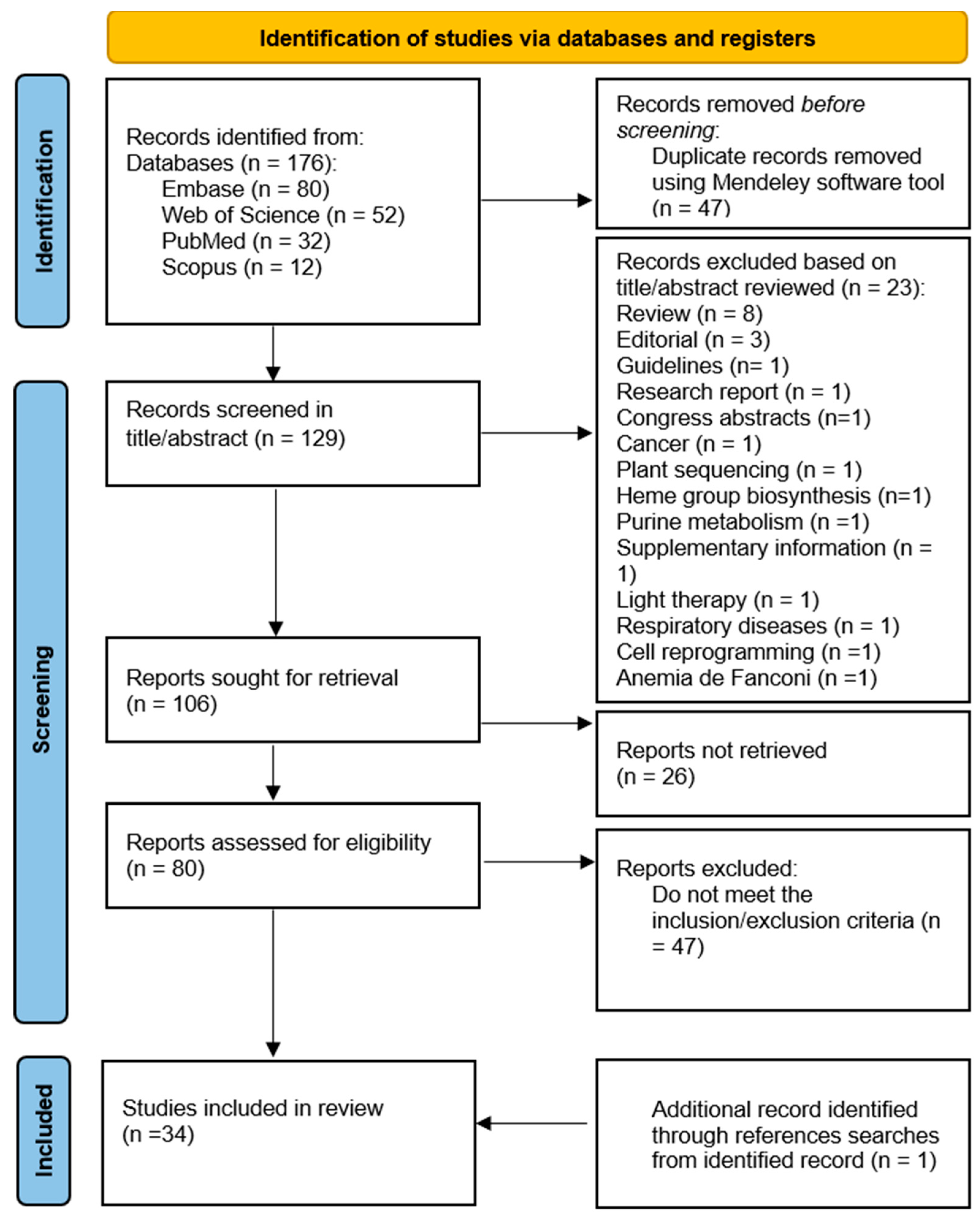
Figure 2.
Pie chart representing the number of compounds discussed in this review by their chemical source.
Figure 2.
Pie chart representing the number of compounds discussed in this review by their chemical source.
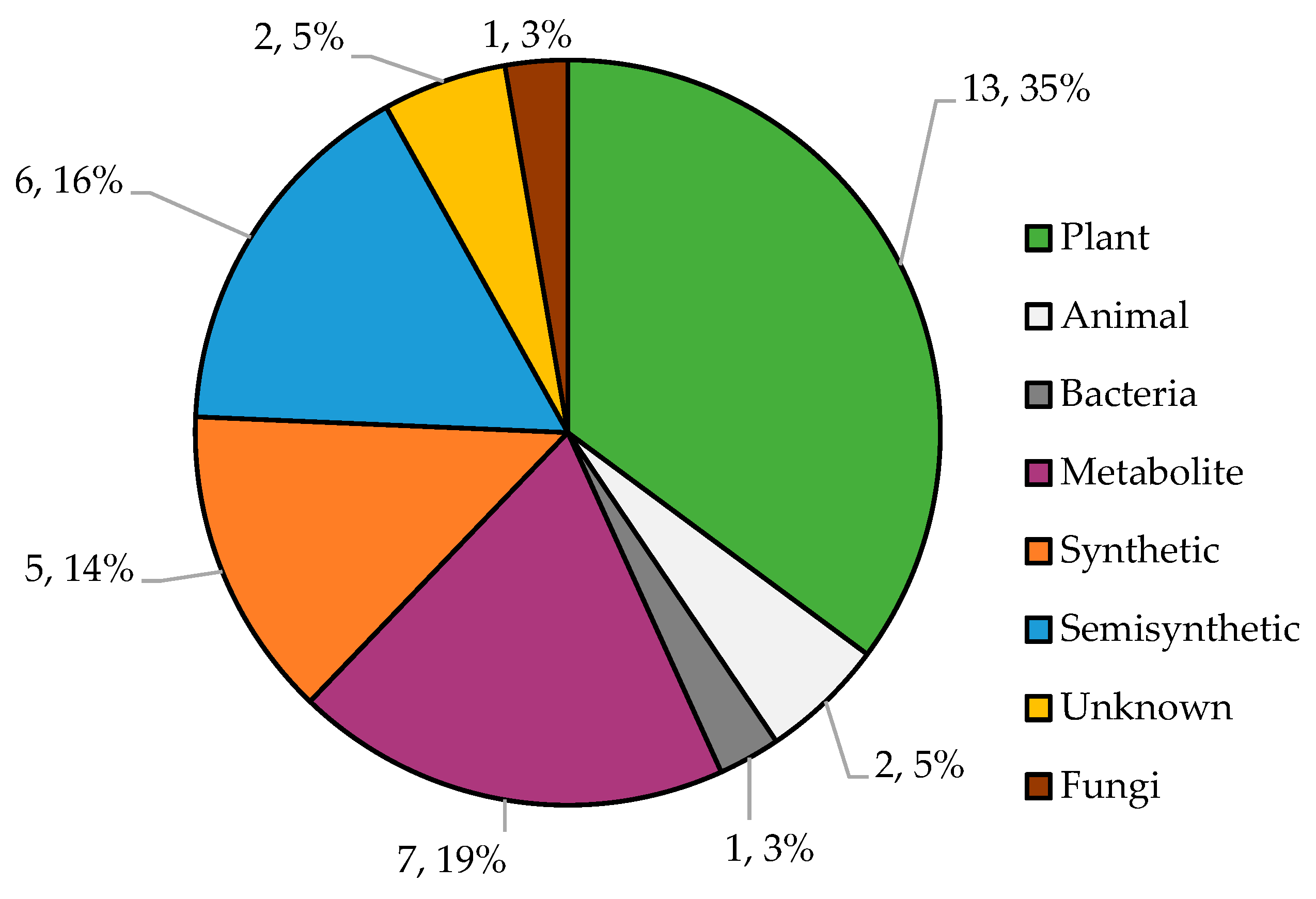
Figure 3.
Bar chart representing the total number of molecular mechanisms affected by compounds reviewed.
Figure 3.
Bar chart representing the total number of molecular mechanisms affected by compounds reviewed.
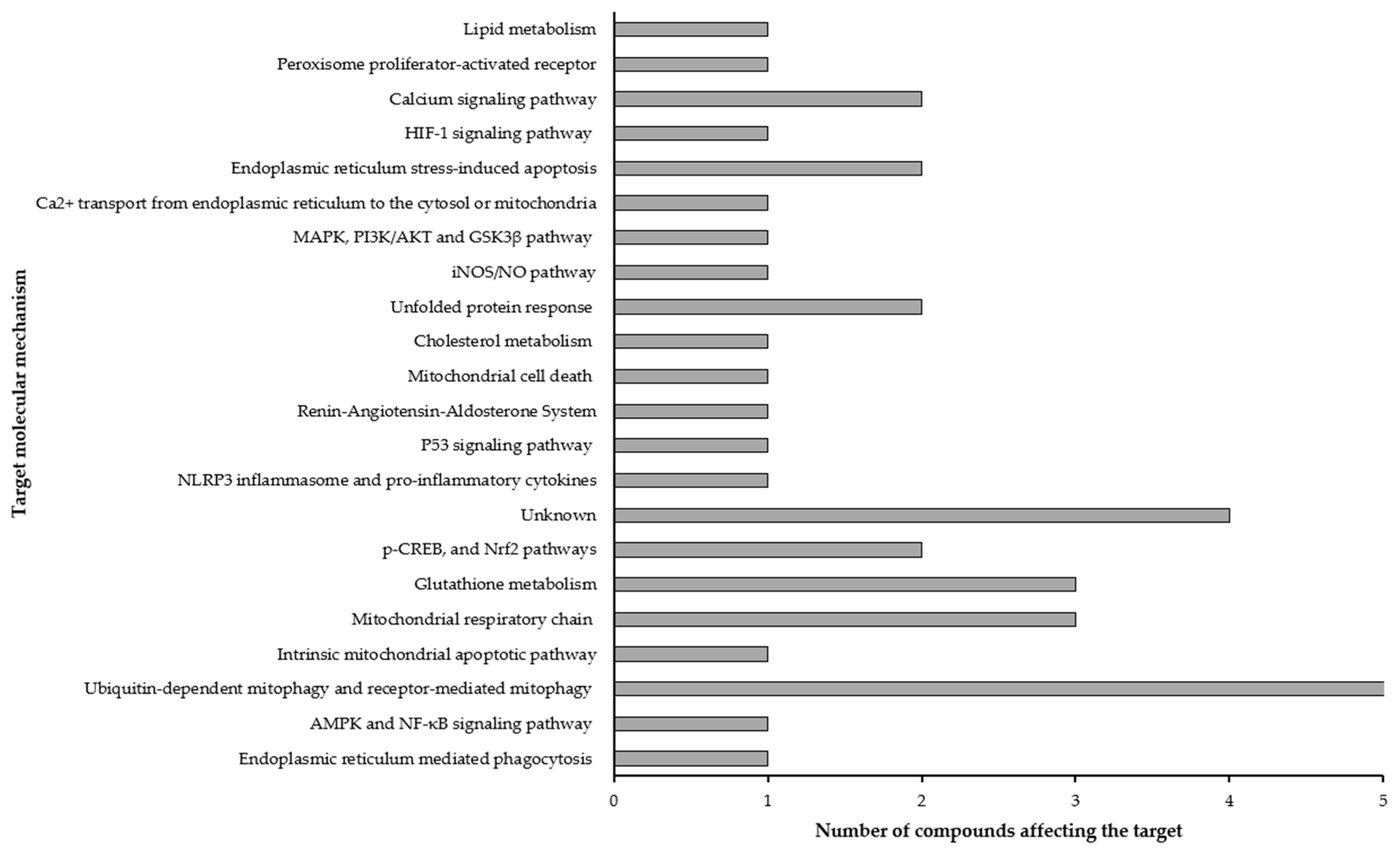
Figure 4.
Representation of the number of neurodegenerative diseases targeted by the compounds discussed in this review.
Figure 4.
Representation of the number of neurodegenerative diseases targeted by the compounds discussed in this review.
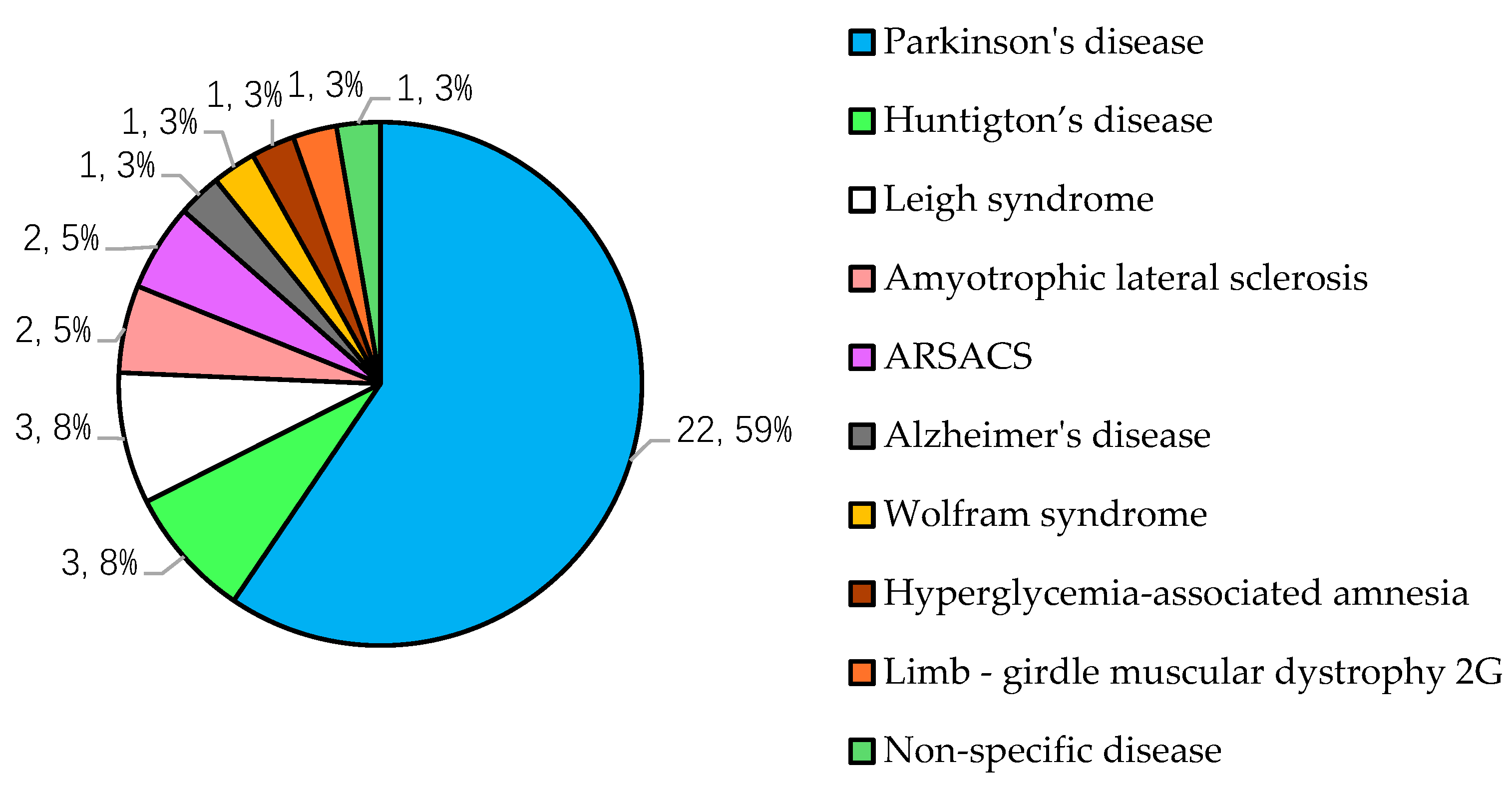

Table 1.
Search terms strategy used during the study.
| Database | Keywords used during the search |
|---|---|
| Embase | (Broad search): mitochondrial metabolism AND therapy AND neurodegenerative diseases AND zebrafish |
| Web of Science | Documents Topic: mitochondrial metabolism AND therapy AND neurodegenerative diseases AND zebrafish |
| PubMed | PubMed Advanced Search Builder (All fields): mitochondrial metabolism AND therapy AND neurodegenerative diseases AND zebrafish |
| Scopus | Search within (Article title, Abstract, Keywords) mitochondrial metabolism AND therapy AND neurodegenerative diseases AND zebrafish |
Table 2.
Inclusion and exclusion criteria. At the various stages of analysis for inclusion in the systematic review, papers were included and excluded based on the above criteria.
Table 2.
Inclusion and exclusion criteria. At the various stages of analysis for inclusion in the systematic review, papers were included and excluded based on the above criteria.
| Stage | Stage description | Inclusion criteria | Exclusion criteria |
|---|---|---|---|
| 1 | Article keywords analysis | Keywords: Mitochondrial metabolism; therapy; neurodegenerative diseases; zebrafish |
|
| 2 | Title and abstract analysis | Treatments with compounds of synthetic, semisynthetic, bacterial, plant, animal or synthetic origin | Keywords on other pathologies: Aging, Cancer, respiratory diseases. |
| 3 | Full text analysis |
Table 3.
Software tools and databases used to supplement the information extracted from the comprehensive analysis of the articles.
Table 3.
Software tools and databases used to supplement the information extracted from the comprehensive analysis of the articles.
| Software tools | Reference |
|---|---|
| PubChem | 6 |
| MetaboAnalyst 6.0 | 7 |
| KEGG Database | 8–10 |
| Coconut (COlleCtion of Open Natural ProdUcTs) | 11 |
Table 4.
Compounds of endogenous or exogenous origin and their known molecular characteristics in the treatment of neurodegenerative diseases. Green color denotes that the compound is of endogenous origin, while blue color denotes that the compound is of exogenous origin.
Table 4.
Compounds of endogenous or exogenous origin and their known molecular characteristics in the treatment of neurodegenerative diseases. Green color denotes that the compound is of endogenous origin, while blue color denotes that the compound is of exogenous origin.
| Name of the compound | Chemical nature of the compound | Chemical source | Molecular mechanism | Physiological Pathway | Experimental model | Related diseases | Ref. |
|---|---|---|---|---|---|---|---|
| Acetyl-DL-leucine | Organic acid, carboxylic acid, amino acid | - | Partial restoration of vim and calr mRNA expression levels, improved SRC and basal ATP level | Endoplasmic reticulum mediated phagocytosis | Z | ARSACS | 14 |
| Acteoside | Lipid, saccharolipid | Plant (Cistanche tubulosa) | Acteoside restores mitochondria function through the upregulation of PGC-1α and UCP-2 and suppresses LPS-stimulated M1 polarization | AMPK and NF-κB signaling pathway | Z and CC | Alzheimer’s disease | 15 |
| Apigenin | Phenylpropanoid, flavonoid, hidroxyflavonoid | Plant (Camellia sinensis) | Apigenin mitigates oxidative stress by the Nrf2/ARE mechanism | Nrf2 pathway | Z | Hyperglycemia-associated amnesia | 16 |
| Berberine derivate (BBRP) | Alkaloid, protoberberine alkaloid | Plant (Coptis chinensis) | Berberine inhibits the accumulation of Pink1 protein and the overexpression of LC3 protein, regulators related to mitochondrial autophagy during Parkinson’s disease | Ubiquitin-dependent mitophagy and receptor-mediated mitophagy | Z and CC | Parkinson’s disease | 17 |
| BHDPC | A pyrimidine derivative | Synthetic | BHDPC decreases MPP+-induced mitochondrial membrane potential loss and caspase 3 activation, via activating PKA/CREB survival signaling and up-regulating Bcl2 expression | Intrinsic mitochondrial apoptotic pathway | Z and CC | Parkinson’s disease | 18 |
| BmE-PtNPs | Platinum nanoparticles with aqueous extract of Bacopa monnieri leaves | Plant (Bacopa monnieri) | BmE-PtNPs alleviates the ROS generation, scavenges free radicals, and demonstrates the same activity of mitochondrial complex I, oxidizing NADH to NAD+ | Mitochondrial respiratory chain | Z | Parkinson’s disease | 19 |
| Calcitriol | Lipid, steroid, vitamin D | - | Calcitriol rescues locomotor deficit and loss dopaminergic neurons induced by MPP+ | Calcium signaling pathway | Z | Parkinson’s disease | 20 |
| Clofazimine | Phenazine, monochlorobenzene | Synthetic | Clofazimine stimulates mitochondrial biogenesis by peroxisome proliferator-activated receptor gamma (PPARγ) | Peroxisome proliferator-activated receptor | Z, CC and CE | Huntigton’s disease | 21 |
| Creatine | Organic acid, carboxylic acid, aminoacid | - | Creatine restores hypolocomotion induced by 3-NPA | Unknown | Z | Huntigton’s disease | 22 |
| Cysteamine birtartrate | An aminothiol salt | - | Cysteamine birtartrate prevents glutathione antioxidant unbalance and increased ROS levels | Glutathione metabolism | Z | Leigh syndrome | 23 |
| 11- Dehydrosinulariolide | Organic chemical, hydrocarbon, terpene, diterpene | Animal (Sinularia flexibilis) | 11-Dehydrosinulariolide upregulates cytosolic DJ-1 expression and promotes its translocation into mitochondria and the nucleus. 11-Dehydrosinulariolide also activates Akt and induces upregulation of p-CREB, and Nrf2/HO-1 pathways | p-CREB, and Nrf2 pathways | Z, R, and CC | Parkinson’s disease | 24 |
| 24- Epibrassinolide | Lipid, steroid, steroid lactone. | Plant (Fabaceae) | 24-epibrassinolide reverses the locomotor deficits caused by 6-OHDA | Unknown | Z | Parkinson’s disease | 25 |
| Guanabenz | Aromatic compound, benzenoid, dichlorobenzene | Synthetic | Guanabenz increases the levels of phosphorylated-eIF2α protein | Endoplasmic reticulum stress and mitochondrial stress | M and Z* | Amyotrophic lateral sclerosis | 26,27 |
| HCH6-1 | A dipeptide, a competitive antagonist of formyl peptide receptor 1 | Synthetic | HCH6-1 prevents the activation of the inflammasome and upregulation of active caspase-1, TNF-α, IL-1β and active caspase-3 levels in microglia; and inhibits mitochondrial oxidative stress and apoptosis of dopaminergic neurons. | NLRP3 inflammasome and pro-inflammatory cytokines | Z, M, and CC | Parkinson’s disease | 28 |
| Hesperidin | Phenylpropanoid, flavonoid, flavonoid glycoside | Plant (Citrus sp) | Hesperidin rescues mitochondrial membrane potential, reduces oxidative stress and downregulates kinases lrrk2, gsk3 β, casp9, and polg | Ubiquitin-dependent mitophagy and receptor-mediated mitophagy | Z and CC | Parkinson’s disease | 29 |
| Idebenone | Organic chemical, quinone, benzoquinone | Semisynthetic analogue of ubiquinone | Idebenone restores the BNIP3L and citrate synthase expression to reduce ROS production and restore mtDNA copy number | Ubiquitin-dependent mitophagy and receptor-mediated mitophagy | Z | Limb – girdle muscular dystrophy 2G | 30 |
| KC14 | Organic acid, carboxylic acid, peptide | Animal (Cyprinus carpio) | KC14 enhances acetylcholinesterase activity and significantly reduces intracellular ROS levels. | Glutathione metabolism | Z | Non-specific disease | 31 |
| Mangiferin | Organic heterocyclic compound, benzopyran, 1-benzopyran | Plant (Mangifera indica) | Mangiferin regulates PD-related genes such as lrrk2, vps35, atp13a, dnajc6, and uchl1 | Ubiquitin-dependent mitophagy and receptor-mediated mitophagy | Z | Parkinson’s disease | 32 |
| Melatonin | Organoheterocyclic compound, indole | - | Melatonin improves the memory dysfunction caused by 3-NPA | Unknown | Z | Huntigton’s disease | 22 |
| Melatonin | Organoheterocyclic compound, indole | - | Not determined | Lipid metabolism | Z | Parkinson’s disease | 33 |
| MS-275 | Organic chemical, carboxylic acid, benzoate, benzamide | Semisynthetic | MS-275 inhibits HDAC1 and rescues the metabolic impairment induced by MPP+ | P53 signaling pathway | Z | Parkinson’s disease | 34 |
| N - Acetylcysteine | Organic acid, carboxylic acid, amino acid | - | N-acetylcysteine prevents glutathione antioxidant unbalance and increased ROS levels. | Glutathione metabolism | Z | Leigh syndrome | 23 |
| Naringenin | Phenylpropanoid, flavonoid, flavan, flavanone | Plant (Camellia sinensis, Humulus lupulus) | Narigenin downregulates the expression of some Parkinsonian genes such as casp9, lrrk2 and polg, and upregulate pink1 | Ubiquitin-dependent mitophagy and receptor-mediated mitophagy | Z and CC | Parkinson’s disease | 35 |
| Nicotinamide | Organoheterocyclic compound, pyridine, pyridinecarboxylic acid | Fungi (Lactarius subplinthogalus) | Nicotinamide elevates levels of OCR, increases mitochondrial complex I activity and reduces NAD+/NADH ratio | Mitochondrial respiratory chain | Z and CC | Leigh syndrome | 36 |
| Nimodipine | Benzenoid, benzene, nitrobenzene, dihydropyridine derivative | Semisynthetic Calcium channel antagonist | Nimodipine antagonizes calcium channels reducing the need for calcium | Calcium signaling pathway | Z | Parkinson’s disease | 20 |
| Nitrite | Organic chemical, nitrite | - | Nitrite promotes complex I S-nitrosation and activation of the antioxidant Nrf2 pathway | Unfolded protein response | Z, R, and CC | Parkinson’s disease | 37 |
| Olmesartan | Organic heterocyclic compound, azole, tetrazole | Semisynthetic | Olmesartan inhibits 1 AGTR1 and restores the expression of mitochondrial pathway genes. | Renin-Angiotensin-Aldosterone System | Z and D | Parkinson’s disease | 38 |
| Paeonolum | Organic oxygen compound, organooxygen compound, carbonyl compund | Plant (Paeonia suffruticosa) | Paeonolum restores the damage caused by MPP+ via reducing the accumulation of ROS, attenuating the reduction in mitochondrial membrane potential, restoring the levels of GSH and reducing the cytochrome c release and caspase-3 activity | Mitochondrial cell death | Z and CC | Parkinson’s disease | 39 |
| Probucol | Organic chemical, hydrocarbon, benzene derivative, phenol | Bacteria (Penicillium citrinum) | Probucol enhances mitophagy via the ATP-binding cassette transporter ABCA1 and its effects on lipid droplets. | Cholesterol metabolism | Z, D and CC | Parkinson’s disease | 40 |
| Proxison | Phenylpropanoid, flavonoid | Semisynthetic | Proxison significantly dampens induction of the NRF2 antioxidant response pathway. | Unfolded protein response | Z and CC | Parkinson’s disease | 41 |
| Quercetin | Phenylpropanoid, flavonoid, flavonoid glycoside | Plant (Salvia miltiorrhiza and Hydrangea serrata) | Quercetin inhibits the iNOS/NO system and downregulates the overexpression of pro-inflammatory genes | iNOS/NO pathway | Z and CC | Parkinson’s disease | 42 |
| Schisantherin A | Phenylpropanoid, tannin, hydrolysable tannin | Plant (Schisandra chinensis (Turcz.) Baill | Schisantherin A regulates intracellular ROS accumulation and inhibit NO overproduction by downregulating the over-expression of iNOS | MAPK, PI3K/AKT and GSK3β pathway | Z and CC | Parkinson’s disease | 43 |
| SR1 agonist PRE-084 | Heterocyclic compound, oxazine, morpholine | Synthetic | SR1 agonist PRE-084 modulates IP3R by stabilizing its conformation at the MAMs. | Ca2+ transfer from the endoplasmic reticulum to the cytosol or mitochondria | Z and M | Wolfram syndrome | 44 |
| Tauroursodeoxycholic acid | Lipid, steroid, bile acid | - | Partially restores vim and calr mRNA expression levels and improves SRC and basal ATP level. | Endoplasmic reticulum stress-induced apoptosis | Z | ARSACS | 14 |
| Terazosin | Heterocyclic compound, quinazoline | - | Terazosin increases the activity of PGK1. | HIF-1 signaling pathway | Z, M and CC | Amyotrophic lateral sclerosis | 45 |
| Theacrine | Organoheterocyclic compound, imidazopyrimidine, purine | Plant (Camellia assamica var. Kucha.) | Theacrine activates SIRT3, which promotes deacetylation of SOD2, thereby reducing ROS accumulation and restoring mitochondrial function. | Mitochondrial respiratory chain | Z, R, M, and CC | Parkinson’s disease | 46 |
| Trifluoperazine | Organic chemical, sulfur compound, phenothiazine | Plant (Crotalaria pallida) | Trifluoperazine acts downstream of PINK1/PARKIN to restore TFEB nuclear translocation | Ubiquitin-dependent mitophagy and receptor-mediated mitophagy | Z | Parkinson’s disease | 47 |
| Vitamin C | Organoheterocyclic compound, dihydrofuran, furanone, butenolide | - | Vitamin C improves the memory dysfunction and restores hypolocomotion caused by 3-NPA | Unknown | Z | Huntington’s disease | 22 |
Abbreviations 1: ABCA1, ATP-binding cassette, subfamily A (ABC1), member 1; Acteoside, 6’-O-(1-Hydroxy-4-Oxo-Cyclohexanacetyl); AGTR1, angiotensin receptor 1; AKT, RAC serine/threonine-protein kinase; AMPK, AMP-activated protein kinase; ARSACS, Autosomal recessive spastic ataxia of Charlevoix – Saguenay; ATP, adenosine triphosphate; BBRP, Fluorescently labeled berberine derivative; Bcl2, apoptosis regulator Bcl-2; BHDPC, 7-(4-hydroxy-3-methoxyphenyl)-5-methyl-4,7-dihydrotetrazolo [1,5-a]pyrimidine-6-carboxylate; BmE-PtNPs, Platinum nanoparticles with aqueous extract of Bacopa monnieri leaves; BNIP3L, NIP3-like protein X; calr mRNA, calreticulin mRNA; casp9, Caspase 9 protein coding gene; CC, cell cultures; CE, Caenorhabditis elegans; CREB, cyclic AMP-responsive element-binding protein 1; D, Drosophila melanogaster; DJ-1, Protein deglycase DJ-1 gene or PARK7 gene; eIF2α, eukaryotic initiation factor 2α; GSH, reduced form of glutathione; gsk3β, glycogen synthase kinase 3 beta gene; GSK3β, glycogen synthase kinase 3 beta protein; HCH6-1, N-(N-benzoyl-L-tryptophanyl)-D-phenylanlanine methyl ester; HDAC1, histone deacetylase 1 ; HDAC6, histone deacetylase 6; HIF-1, Hypoxia-inducible factor 1; HO-1, Heme oxygenase 1; idebenone, 2-(10-hydroxydecyl)-5,6-dimethoxy-3-methylcyclohexa-2,5-diene-1,4-dione; IL-1β, interleukin-1 beta; iNOS, inducible nitric oxide synthase; IP3R, inositol 1,4,5-triphosphate receptor type 1; LC3, Microtubule-associated protein 1 light chain 3; LPS, lipopolysaccharide; lrrk2, leucine rich repeat kinase 2 gene; M, Mice models; M1, mitochondrial fusion promoter M1; MAM, mitochondria associated membranes; MAPK, mitogen-activated protein kinase; MPP+, 1-methyl-4-phenylpyridinium; MS-275, entinostat; mtDNA, mitochondrial deoxyribonucleic acid; NADH/NAD+, nicotinamide adenine dinucleotide; naringenin, 5,7-dihydroxy-2-(4-hydroxyphenyl)-3,4-dihydro-2H-1-benzopyran-4-one; NF-κB, nuclear factor kappa B; 3-NPA, 3-Nitropropionic acid; NLRP3, nucleotide-binding domain, leucine-rich-containing family, pyrin domain-containing-3; NO, nitric oxide; NRF2, erythroid 2–related factor 2; OCR, oxygen consumption rate; 6-OHDA, 6-hydroxydopamine; p53, tumor protein p53; PD, Parkinson’s disease;PGC-1α, peroxisome proliferator-activated receptor gamma co-activator 1 alpha; PGK1, glycolysis enzyme phosphoglycerate kinase 1; PI3K, phosphatidylinositol-4,5-bisphosphate 3-kinase catalytic subunit alpha/beta/delta; Pink1, Phosphatase and tensin homologue (PTEN)-induced kinase 1; Pink1, Phosphatase and tensin homologue (PTEN)-induced kinase 1 gene; PKA, protein kinase A; polg, DNA polymerase gamma gene; PPARγ, peroxisome proliferator-activated receptor gamma; Probucol, propane-2,2-dithiol; Proxison, 7-decyl-3-hidroxy-2-(2,4,5-trihydroxy-phe-nyl)-4-chromenone; R, Rats Models; Ref, References; ROS, mitochondrial Reactive Oxygen Species; SIRT3, sirtuin-3 mitochondrial NAD-dependent deacetylase; SOD2, superoxide dismutase 2; SR1 agonist PRE-084, 2-(4-Morpholino) ethyl-1-phenylcyclohexane-1-carboxylate; SRC, spare respiratory capacity; TFEB, transcription factor EB; TNF-α, tumor necrosis factor alpha; UCP2, mitochondrial uncoupling protein 2; vim mRNA, vimentin mRNA; Z, zebrafish;. *Manually curated
Table 5.
Methological quality using SYRCLE tool.
| 1 | 2 | 3 | 4 | 5 | 6 | 7 | 8 | 9 | 10 | Score | ||
|---|---|---|---|---|---|---|---|---|---|---|---|---|
| Zhang ZJ et al (2011)42 | Y | Y | NC | NC | NC | NC | NC | NC | Y | Y | 4 | |
| Nellore J et al. (2013)19 | NC | NC | NC | NC | NC | NC | NC | NC | Y | Y | 2 | |
| Vaccaro A et al. (2013)27 | NC | NC | NC | NC | NC | NC | NC | NC | Y | NC | 1 | |
| Jiang HQ et al. (2014)26 | Y | Y | NC | NC | NC | NC | Y | NC | Y | NC | 4 | |
| Chong C et al. (2015)18 | NC | Y | NC | NC | NC | NC | NC | NC | Y | Y | 3 | |
| Lu XL et al (2015)39 | NC | Y | NC | NC | NC | NC | Y | NC | Y | Y | 4 | |
| Pinho BR et al. (2015) 34 | Y | Y | NC | NC | NC | NC | NC | NC | Y | Y | 4 | |
| Zhang LQ et al (2015)43 | NC | Y | NC | NC | Y | NC | Y | NC | Y | NC | 4 | |
| Feng CW et al. (2016)24 | Y | Y | NC | NC | Y | NC | Y | NC | Y | NC | 5 | |
| Drummonf NJ et al. (2017)41 | NC | Y | NC | NC | NC | NC | NC | NC | Y | NC | 2 | |
| Zhang Y et al (2017)47 | NC | Y | NC | NC | NC | NC | NC | NC | Y | Y | 3 | |
| Milanese C et al. (2018)37 | NC | Y | NC | NC | NC | NC | Y | NC | Y | NC | 3 | |
| Duan WJ et al. (2020)46 | Y | Y | NC | NC | NC | NC | NC | NC | Y | NC | 3 | |
| Kesh S et al. (2021)29 | NC | Y | NC | Y | NC | NC | NC | NC | Y | Y | 4 | |
| Kesh S et al (2021)35 | NC | Y | NC | NC | NC | NC | NC | NC | Y | Y | 3 | |
| Kim GHJ et al (2021)38 | NC | Y | NC | NC | Y | NC | Y | NC | Y | Y | 5 | |
| Li Y et al. (2021)15 | NC | Y | NC | NC | NC | NC | NC | NC | Y | NC | 2 | |
| Naef V et al. (2021)14 | Y | Y | NC | NC | NC | NC | NC | NC | Y | Y | 4 | |
| Wang L et al. (2021)17 | NC | Y | NC | NC | NC | NC | NC | NC | Y | NC | 2 | |
| Chaytow H et al (2022)45 | Y | Y | NC | NC | Y | NC | Y | NC | Y | Y | 6 | |
| Crouzier L et al. (2022)44 | NC | Y | NC | Y | Y | NC | Y | Y | Y | Y | 7 | |
| Lv X et al. (2022)30 | NC | Y | NC | NC | NC | Y | NC | NC | Y | NC | 3 | |
| Gomes A et al. (2023)25 | Y | Y | NC | NC | NC | NC | NC | Y | Y | Y | 5 | |
| Haroon S et al. (2023)23 | NC | Y | NC | NC | NC | NC | NC | NC | Y | NC | 2 | |
| Moskal N et al (2023)40 | NC | Y | NC | NC | NC | NC | NC | NC | Y | NC | 2 | |
| Wang HL et al. (2023)28 | NC | NC | NC | NC | NC | NC | NC | NC | Y | NC | 1 | |
| Haridevamuthu B et al. (2024)16 | Y | Y | NC | NC | NC | Y | Y | NC | Y | Y | 6 | |
| Kim M et al. (2024)20 | NC | Y | NC | NC | NC | NC | NC | NC | Y | Y | 3 | |
| Li X et al. (2024)21 | Y | Y | NC | NC | NC | NC | NC | NC | Y | NC | 3 | |
| Lo CH et al. (2024)36 | NC | Y | NC | NC | NC | NC | NC | NC | Y | NC | 2 | |
| Pang MZ et al. (2024)33 | NC | Y | NC | NC | NC | NC | NC | NC | Y | NC | 2 | |
| Qin F et al. (2024)32 | Y | Y | NC | NC | NC | NC | NC | NC | Y | NC | 3 | |
| Vijayanand M et al. (2024)31 | NC | Y | NC | NC | NC | NC | NC | NC | Y | NC | 2 | |
| Wiprich M et al. (2024)22 | Y | Y | NC | NC | NC | NC | NC | NC | Y | NC | 3 | |
Legend: 1—random allocation sequence; 2—similar baseline characteristics; 3—allocation concealment; 4—random housing; 5—blinded intervention; 6—random selection for outcome assessment; 7—blinded assessment of outcome; 8—incomplete outcome data; 9—selective outcome reporting; 10—other sources of bias. Y: yes; N: no; NC: unclear.3. 3. Discussion.
Disclaimer/Publisher’s Note: The statements, opinions and data contained in all publications are solely those of the individual author(s) and contributor(s) and not of MDPI and/or the editor(s). MDPI and/or the editor(s) disclaim responsibility for any injury to people or property resulting from any ideas, methods, instructions or products referred to in the content. |
© 2024 by the authors. Licensee MDPI, Basel, Switzerland. This article is an open access article distributed under the terms and conditions of the Creative Commons Attribution (CC BY) license (http://creativecommons.org/licenses/by/4.0/).
Copyright: This open access article is published under a Creative Commons CC BY 4.0 license, which permit the free download, distribution, and reuse, provided that the author and preprint are cited in any reuse.


