
Submitted:
26 December 2024
Posted:
27 December 2024
Read the latest preprint version here
Abstract
In the packaging industry, corrugated boards are widely used due to many factors like bio-biodegradability, high strength-to-weight ratio, and also ease of manufacturing. In this study, the finite element analysis of corrugated cardboards under the flat compression test was performed using the open-source FEA Software Salome-meca. The corrugated board consists of a flute sandwiched between the top and the bottom liner. The study was performed with the help of Python scripting in order to iteratively perform many studies by varying the geometric shape of the flute. The pressure distribution along the top and the bottom liner was analyzed. The load-deflection curve for the corrugated cardboard was also analyzed as a part of this study. The boundary condition and the loading condition were chosen in such a way as to correctly represent the situation in real-life flat crush test in the lab. The contact zone was identified a priori and defined during the preparation of the study. Finally, the Code-Aster (The solver utilized by the Salome-Meca) was used to solve the finite element solution to the problem.
Keywords:
1. Introduction
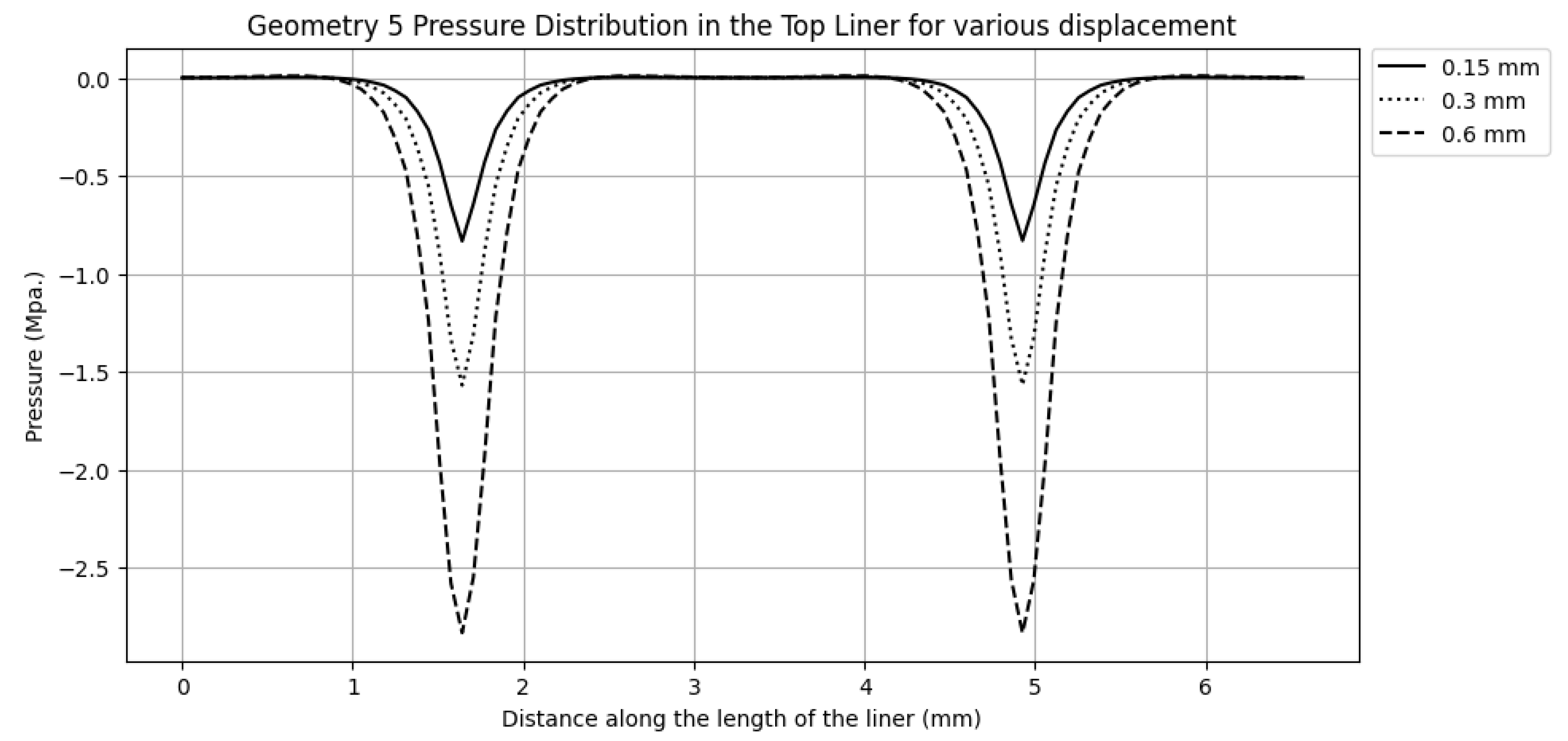
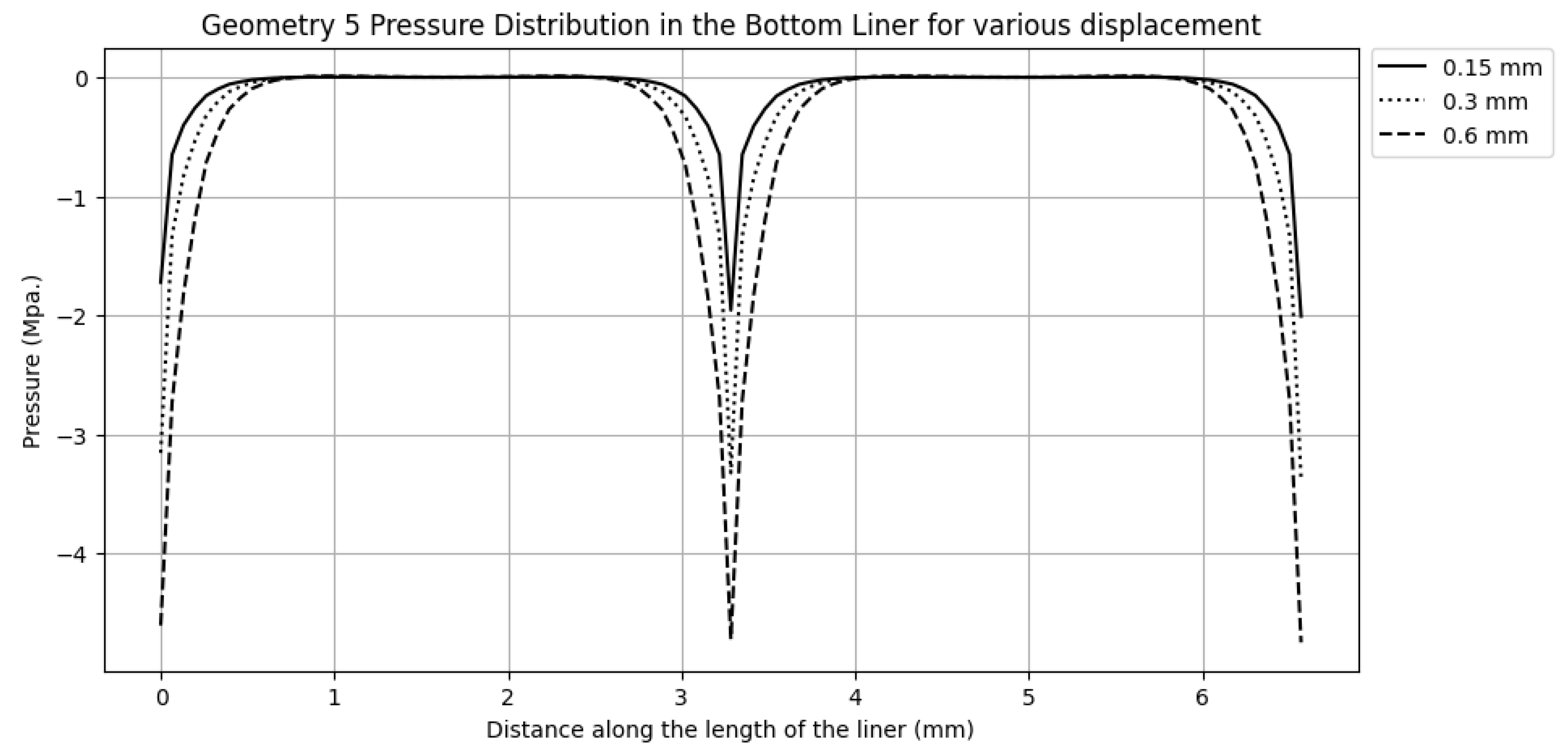
- How can an open-source Python-based approach accurately predict the compressive behavior of corrugated boards compared to commercial FEM software?
- To what extent does this framework improve adaptability and reduce dependency on fixed geometries?
- How can this methodology promote sustainable and accessible design in packaging applications?
2. Materials and Methods
2.1. Strong Formulation
- is the stress tensor,
- is the elasticity tensor of the material,
- is the strain tensor,
- is the body force acting on the domain.
2.2. Weak Formulation
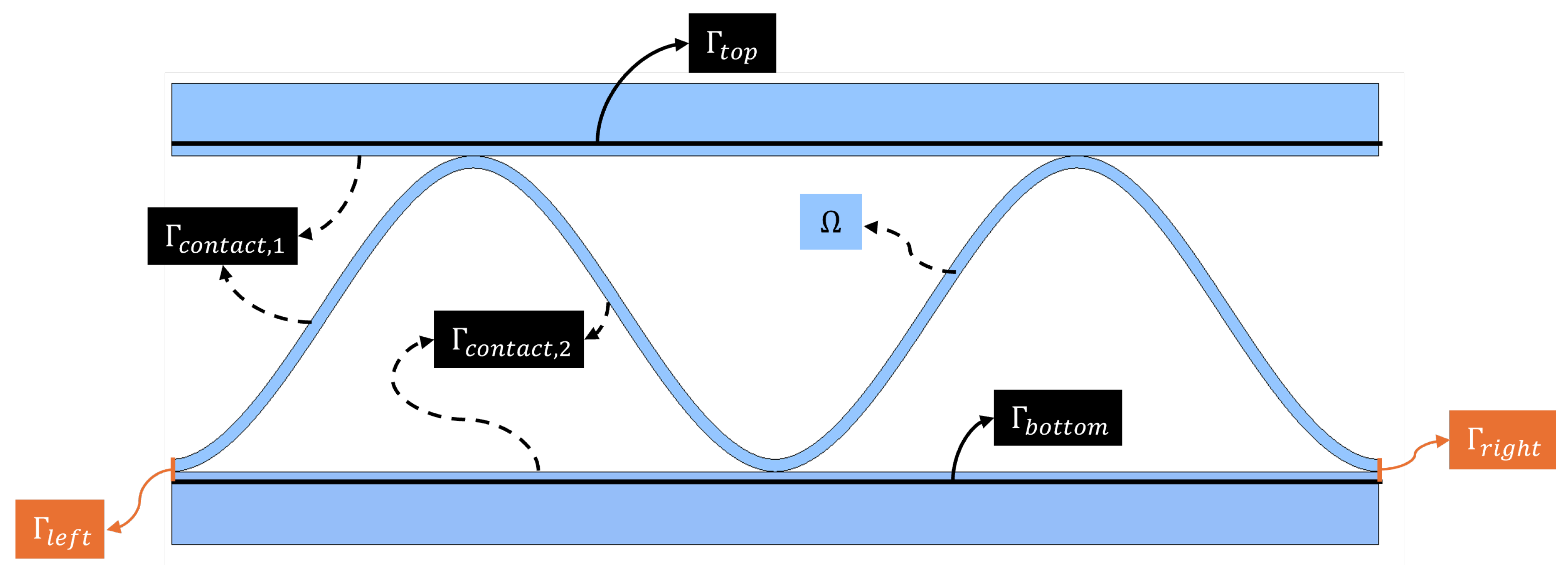
- Fixed bottom liner:
- Constrained flute extremes (side edges):
- Compression load applied on the top liner:
2.3. Contact Mechanics and Penalty Method
- is the normal gap between the surfaces,
- is the contact force in the normal direction.
2.4. Corrugated Board with Sine Wave Flute
- A is the amplitude of the sine wave,
- is the wavelength of the sine wave.
- is the matrix of shape functions,
- is the vector of nodal displacements for element e.
- are the quadrature points,
- are the quadrature weights,
- J is the Jacobian determinant of the element transformation.
- Strain is obtained as:
- Stress is obtained as:
2.5. Code Aster
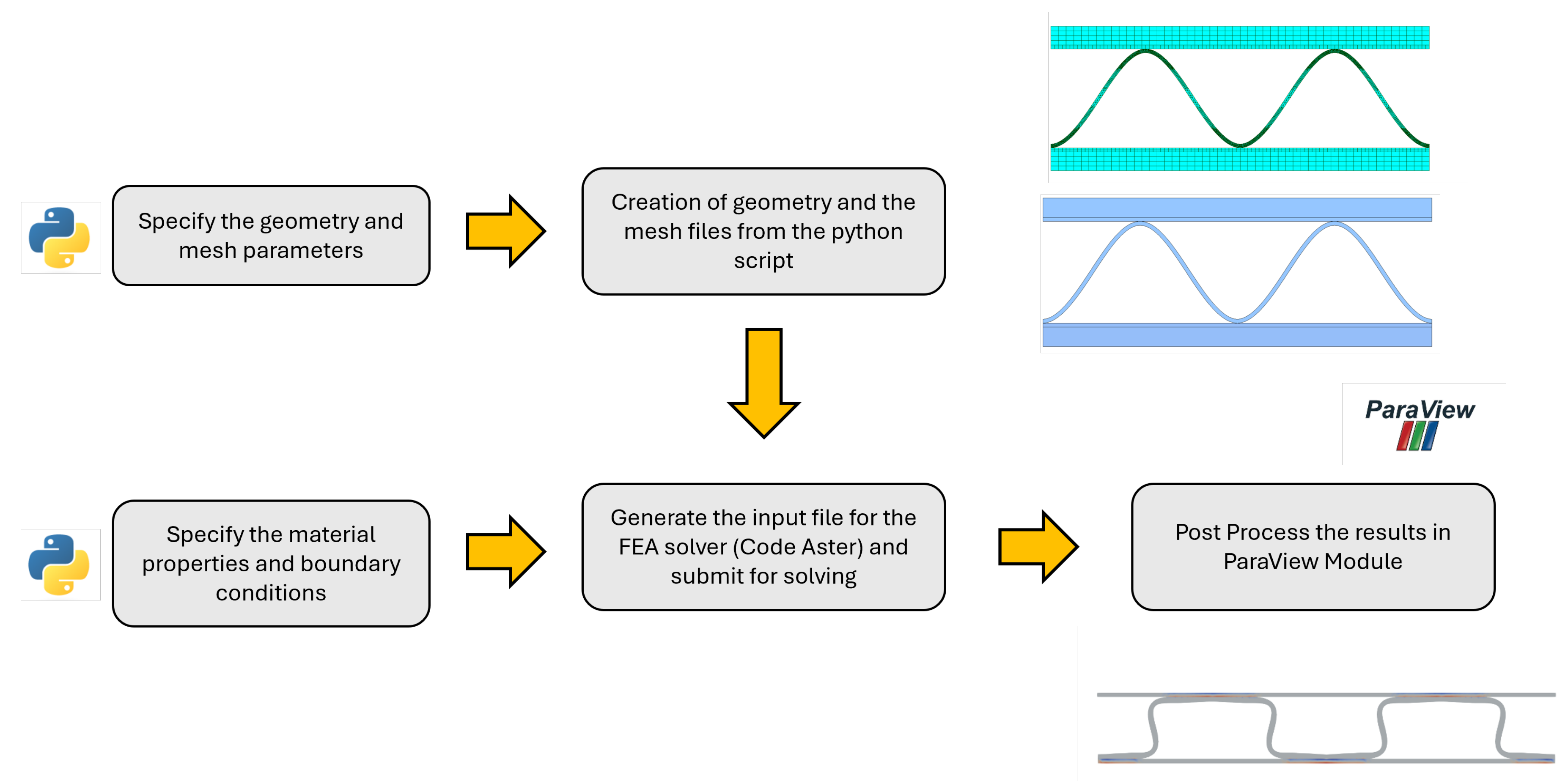
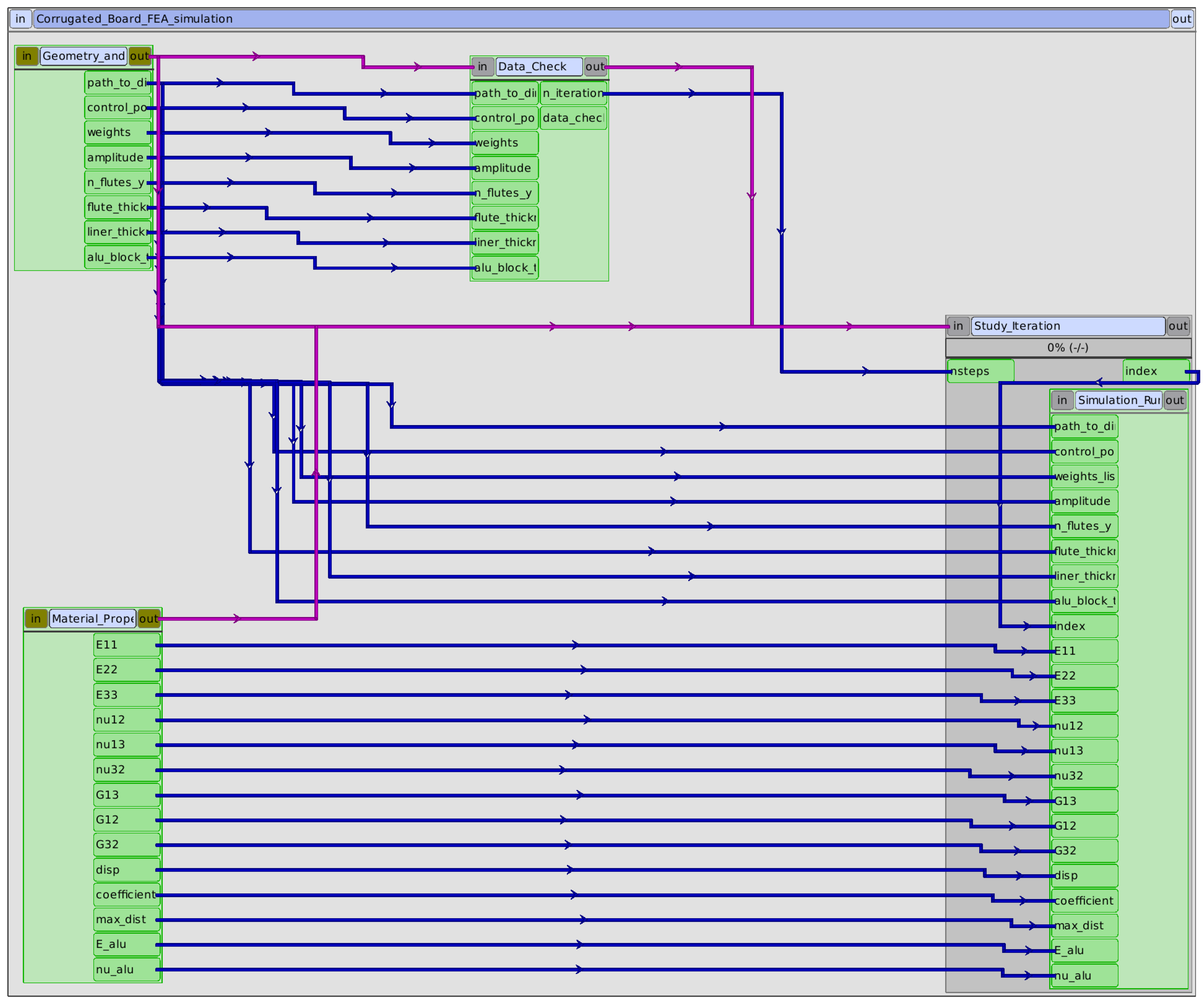
2.6. Methodology
- Geometry and Mesh Definition: The geometry and mesh parameters are specified using Python scripts. This step ensures flexibility for parametric studies and rapid modifications.
- Material and Boundary Condition Specification: The material properties and boundary conditions are defined in Python scripts, which are then fed into Code Aster.
- FEA: Code Aster processes the input files to solve the FEA problem. The solver’s ability to handle large-scale computations and nonlinear mechanics is leveraged in this work.
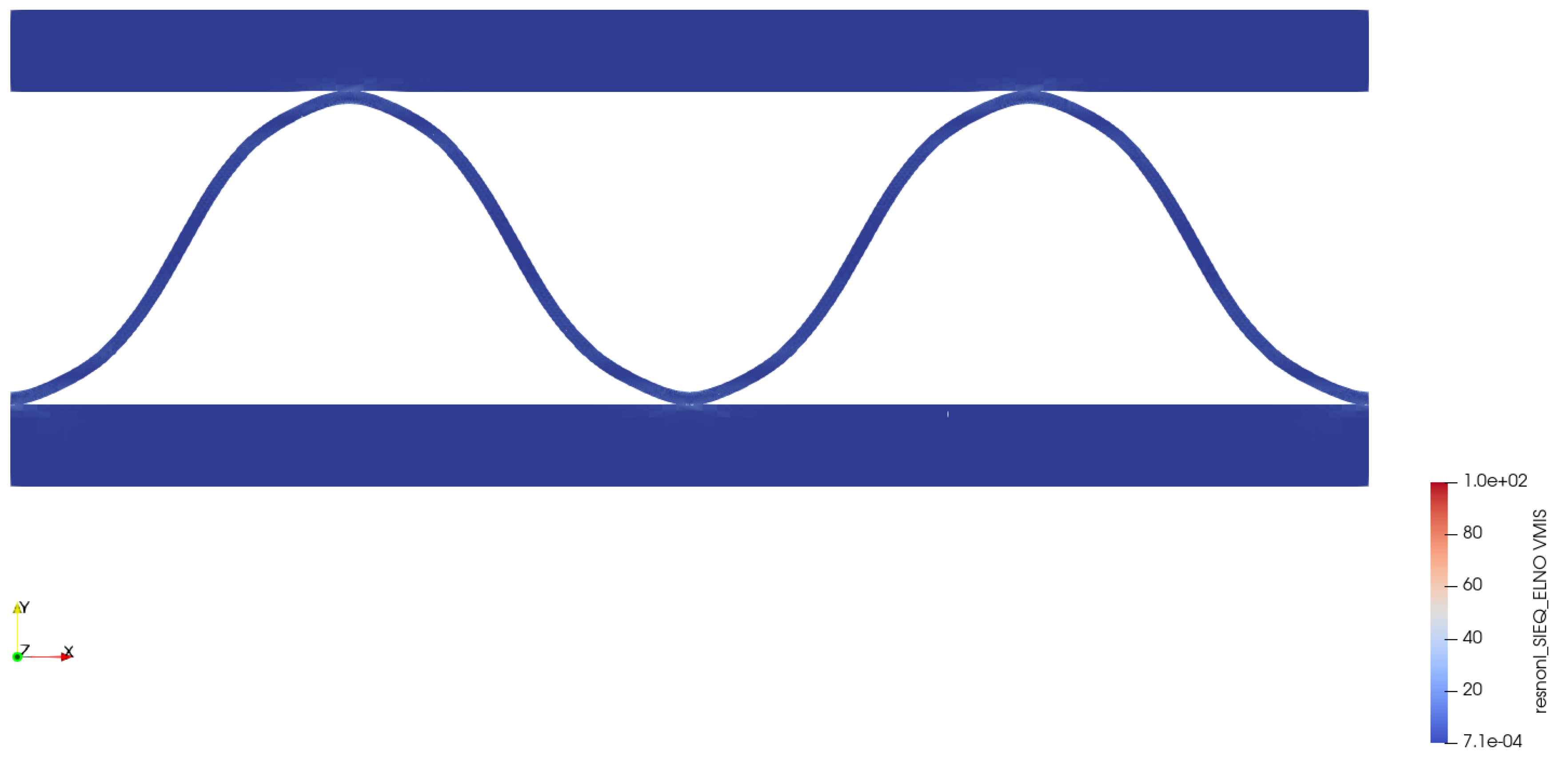
- Post-Processing: The results are post-processed using ParaView, which provides advanced visualization capabilities for analyzing stress, strain, and deformation patterns.
3. Results
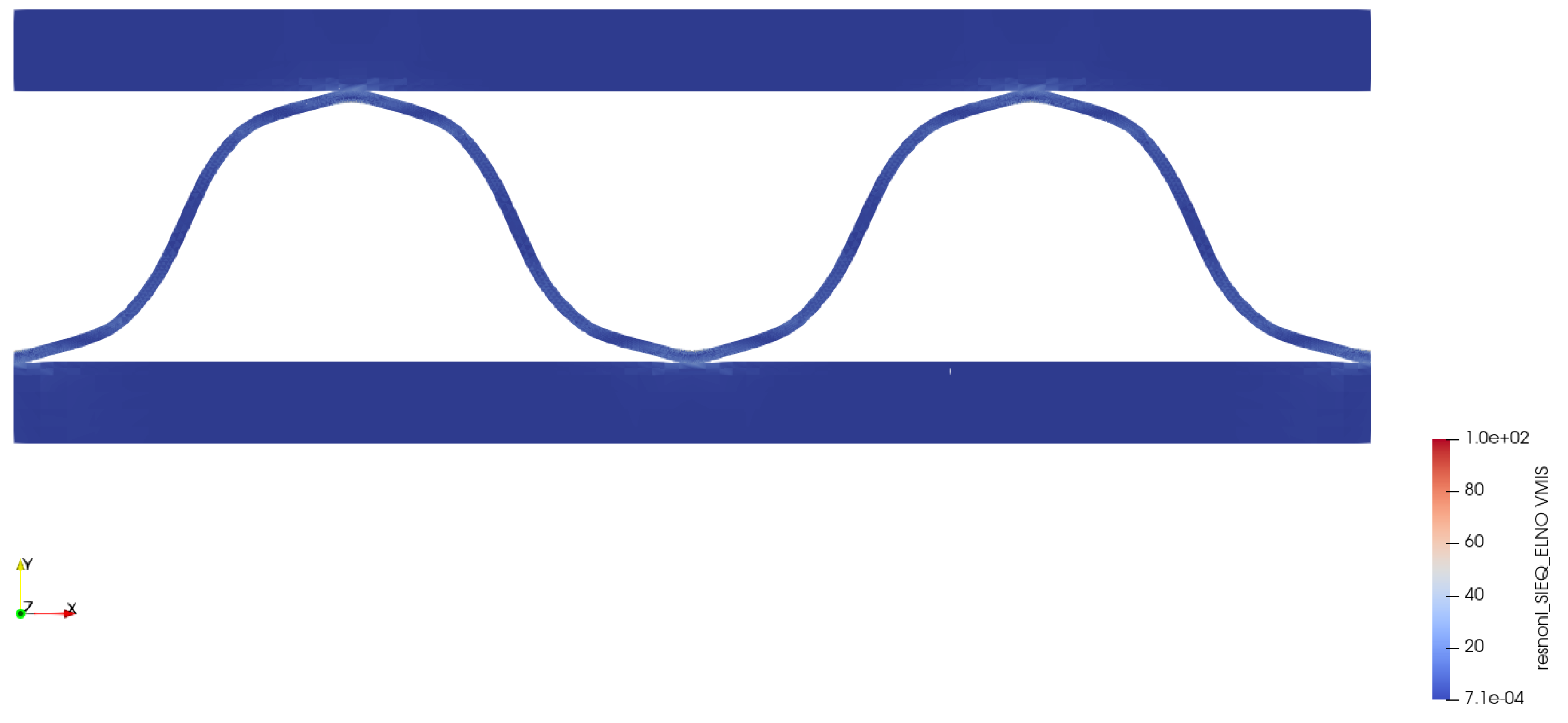
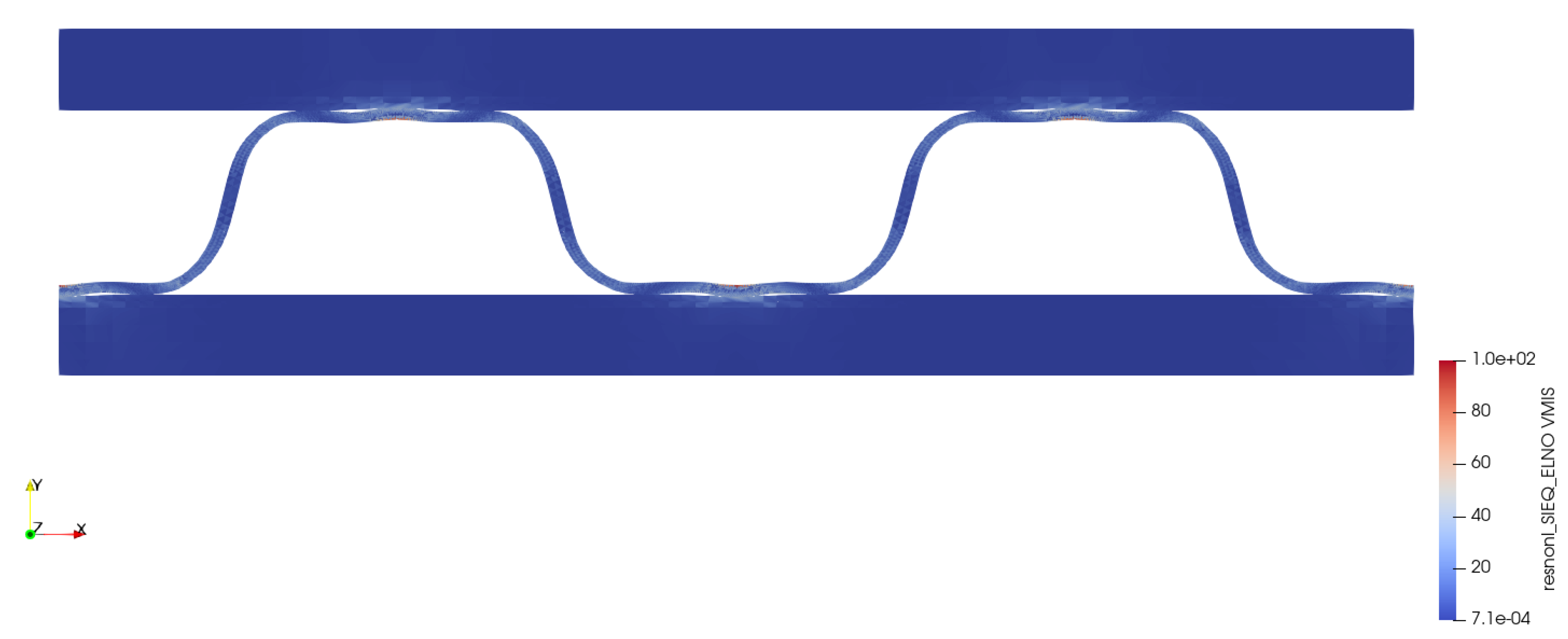
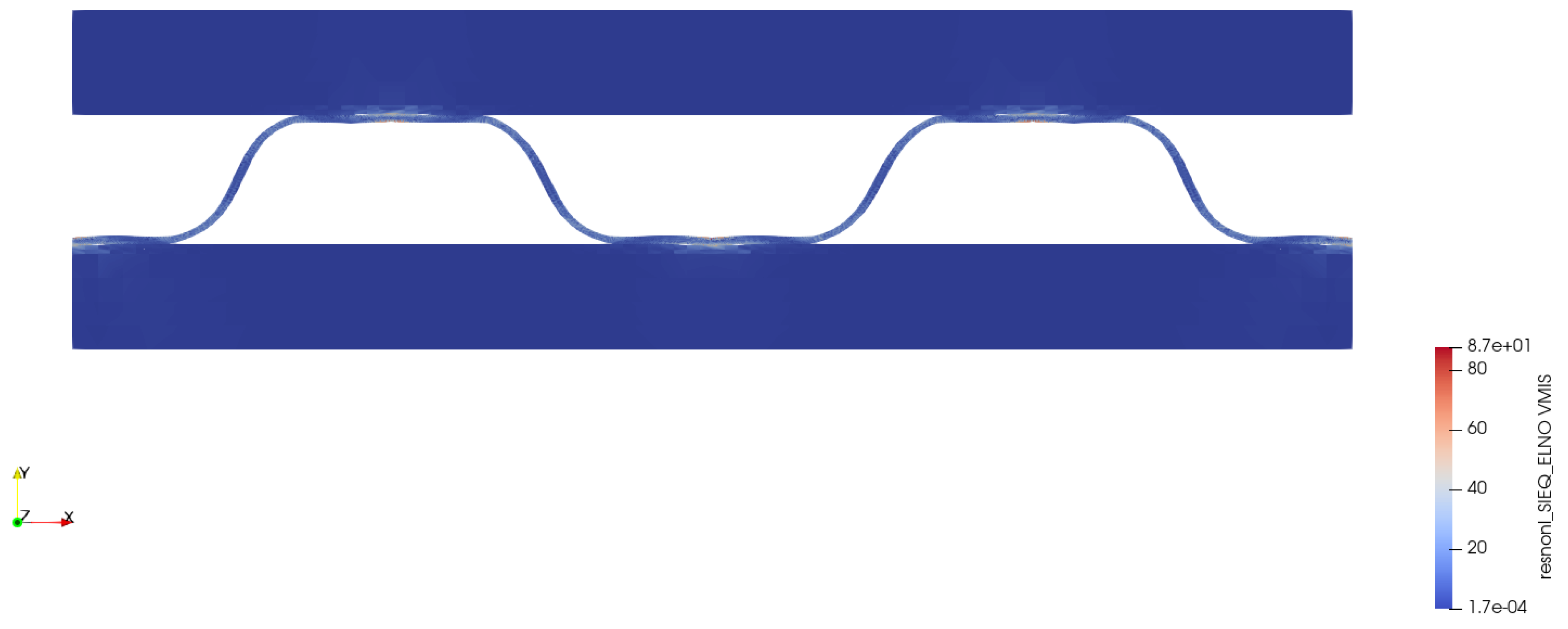
3.1. Flute Profiles
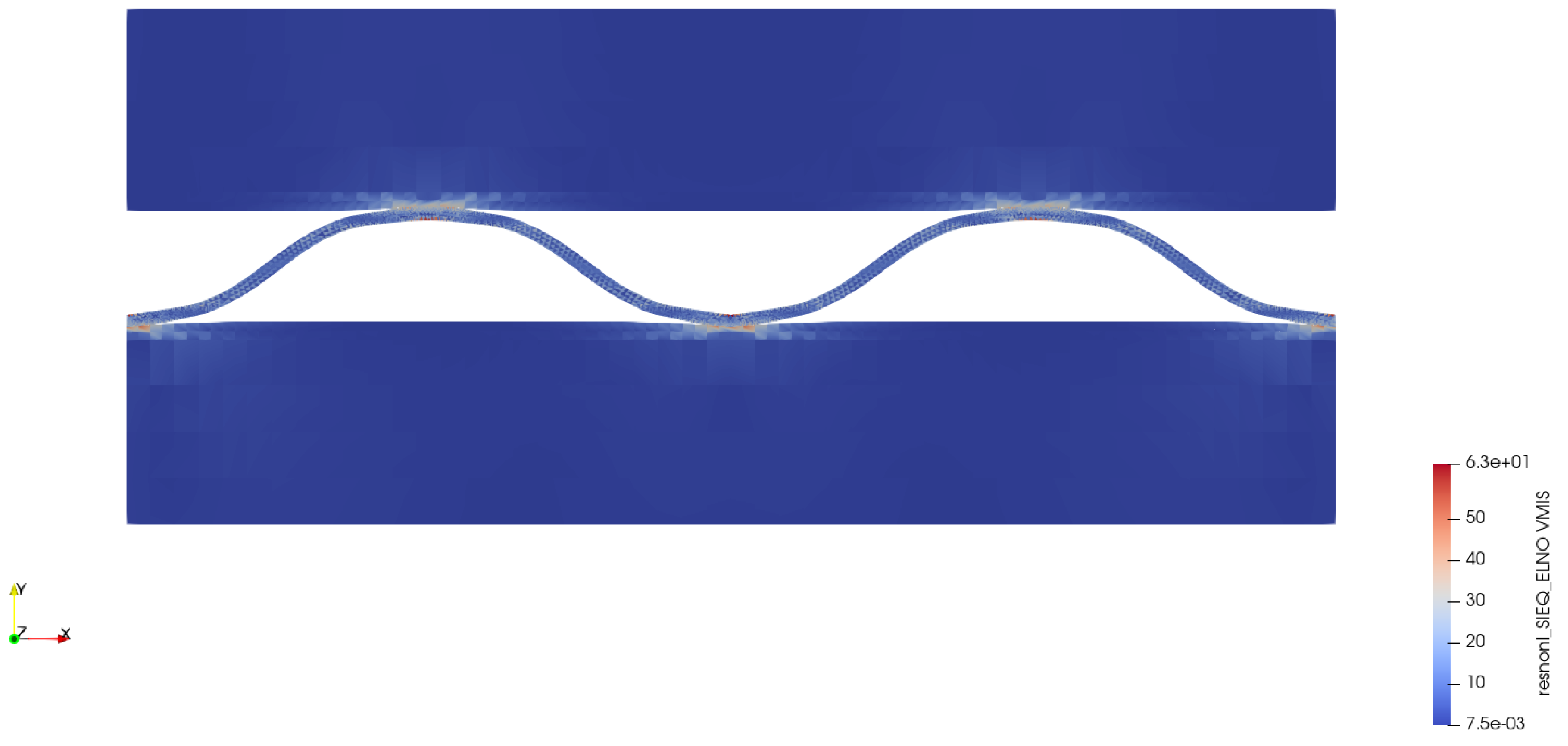
3.2. Simulation results
3.3. Limitations
3.4. Answering to the Research Questions
How can an open-source Python-based approach accurately predict the compressive behavior of corrugated boards compared to commercial FEM software?
To what extent does this framework improve adaptability and reduce dependency on fixed geometries?
How can this methodology promote sustainable and accessible design in packaging applications?
4. Conclusions
Author Contributions
Funding
Data Availability Statement
Conflicts of Interest
References
- Jestratijevic, I.; Vrabič-Brodnjak, U. Sustainable and Innovative Packaging Solutions in the Fashion Industry: Global Report. Sustainability 2022, 14, 13476. [Google Scholar] [CrossRef]
- Enlund, E.; Nilsson, J. Sustainable Decision-Making in the Fashion Industry: How to Influence the Fashion Industry to Adopt More Sustainable Packaging Solutions. Master’s thesis, KTH, Industrial Economics and Management (Dept.), Stockholm, Sweden, 2021.
- Fitas, R.; Schaffrath, H.J.; Schabel, S. A Review of Optimization for Corrugated Boards. Sustainability 2023, 15, 15588. [Google Scholar] [CrossRef]
- Global Packaging Market—Growth, Trends, COVID-19 Impact, and Forecasts (2022–2027), 2022. Available online: https://go.gale.com/ps/i.do?p=HRCA&u=anon~47c0114e&id=GALE|A716172748&v=2.1&it=r&sid=sitemap&asid=6f2e9970 (accessed on 4 October 2023).
- Paper & Paperboard Packaging Market Global Forecast to 2026, 2021. Available online: https://www.marketsandmarkets.com/Market-Reports/paper-paperboard-packaging-market-23392290.html (accessed on 4 October 2023).
- Mrówczyński, D.; Knitter-Piat̨kowska, A.; Garbowski, T. Optimal Design of Double-Walled Corrugated Board Packaging. Materials 2022, 15, 2149. [Google Scholar] [CrossRef] [PubMed]
- Belfekih, T.; Fitas, R.; Schaffrath, H.J.; Schabel, S. Graph-Based Analysis for the Characterization of Corrugated Board Compression. Materials 2024, 17. [Google Scholar] [CrossRef]
- Park, J.; Park, M.; Choi, D.S.; Jung, H.M.; Hwang, S.W. Finite element-based simulation for edgewise compression behavior of corrugated paperboard for packaging of agricultural products. Applied Sciences 2020, 10, 6716. [Google Scholar] [CrossRef]
- Nordstrand, T. Basic testing and strength design of corrugated board and containers. PhD thesis, Lund University, 2003.
- Ma, Y.; Gong, Z.; Zhao, L.; Han, Y.; Wang, Y. Finite element analysis of buckling of corrugated fiberboard. The Open Mechanical Engineering Journal 2014, 8. [Google Scholar] [CrossRef]
- Zaheer, M. Finite element analysis of paperboard packages under compressional force 2016.
- Di Russo, F.M.; Desole, M.M.; Gisario, A.; Barletta, M. Evaluation of wave configurations in corrugated boards by experimental analysis (EA) and finite element modeling (FEM): the role of the micro-wave in packaging design. The International Journal of Advanced Manufacturing Technology 2023, 126, 4963–4982. [Google Scholar] [CrossRef] [PubMed]
- EDF RD. Code_Aster Documentation. Available at: https://www.code-aster.org/.
- GmbH, S. Code_Aster x SimScale: Online Structural Analysis (FEA). Available at: https://www.simscale.com/blog/fea-online-structural-analysis-code_aster-simscale/.
- Antonutti, R.; Peyrard, C.; Incecik, A.; Ingram, D.; Johanning, L. Dynamic Mooring Simulation with Code_Aster with Application to a Floating Wind Turbine. Ocean Engineering 2018, 151, 366–377. [Google Scholar] [CrossRef]
- Mark, R.E.; Borch, J. Handbook of physical testing of paper; Vol. 1, Crc Press, 2002.

| Property | Value (Pa) |
|---|---|
| Modulus of Elasticity (MD) | |
| Modulus of Elasticity (CD) | |
| Modulus of Elasticity (ZD) | |
| Shear Modulus | |
| Shear Modulus | |
| Shear Modulus | |
| Poisson’s ratio | 0.3998 |
| Poisson’s ratio | 0.001 |
| Poisson’s ratio | 0.001 |
| Property | Value |
|---|---|
| Modulus of Elasticity E | Pa |
| Poisson’s ratio | 0.25 |
| Profile | Wavelength (, mm) | Amplitude (A, mm) | Thickness (mm) |
|---|---|---|---|
| A (Geometry 1) | 10 | 3.0 | 0.2 |
| C (Geometry 2) | 8 | 2.5 | 0.1 |
| E (Geometry 3) | 4 | 1.5 | 0.1 |
Disclaimer/Publisher’s Note: The statements, opinions and data contained in all publications are solely those of the individual author(s) and contributor(s) and not of MDPI and/or the editor(s). MDPI and/or the editor(s) disclaim responsibility for any injury to people or property resulting from any ideas, methods, instructions or products referred to in the content. |
© 2024 by the authors. Licensee MDPI, Basel, Switzerland. This article is an open access article distributed under the terms and conditions of the Creative Commons Attribution (CC BY) license (http://creativecommons.org/licenses/by/4.0/).


