

Submitted:
26 December 2024
Posted:
26 December 2024
You are already at the latest version
Abstract
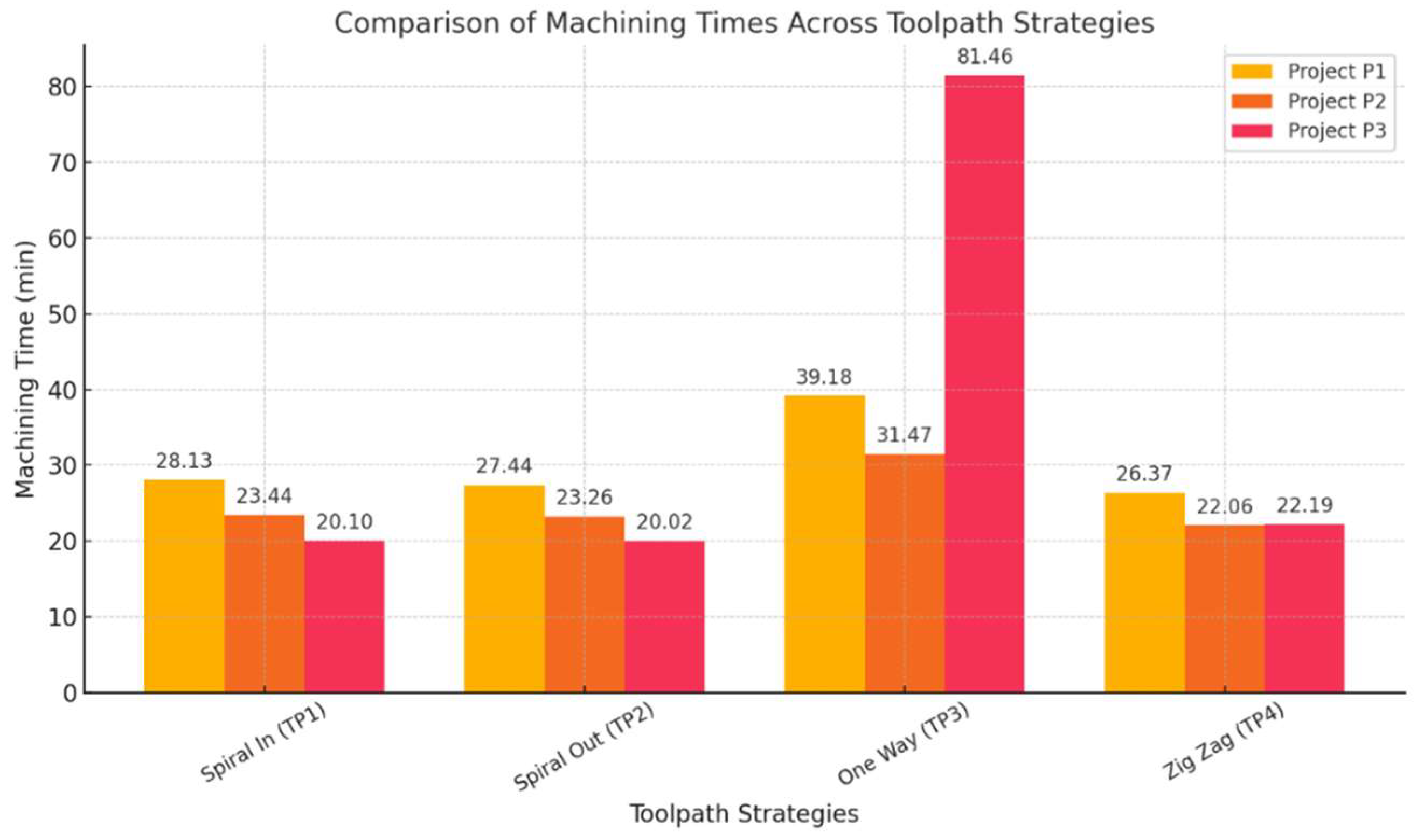
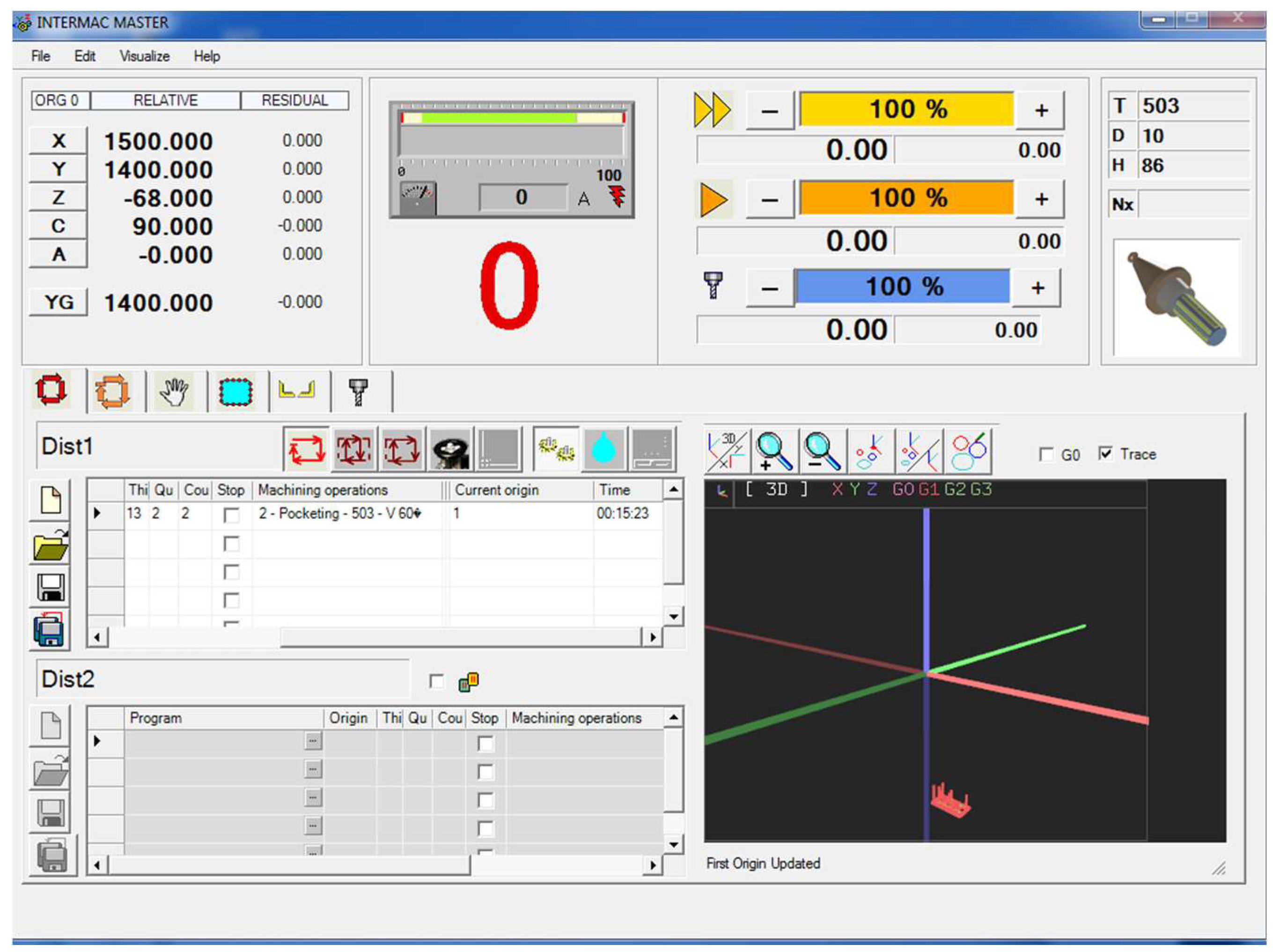
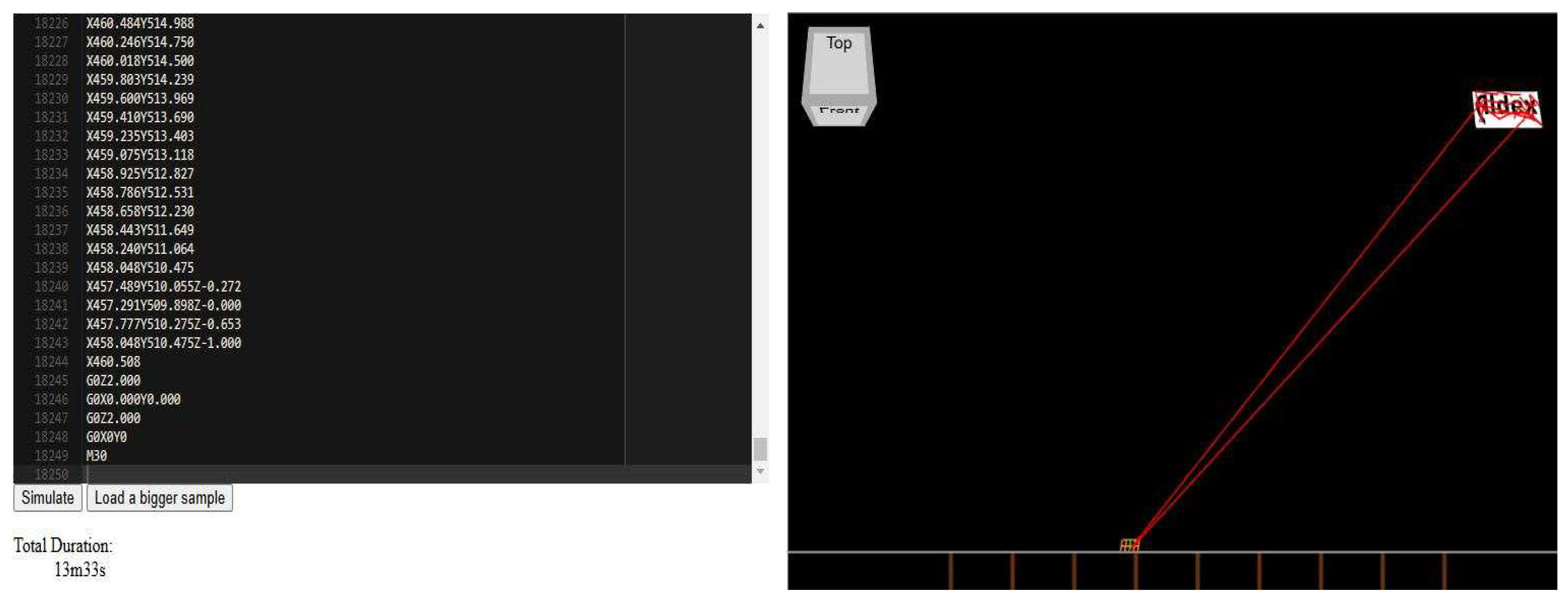
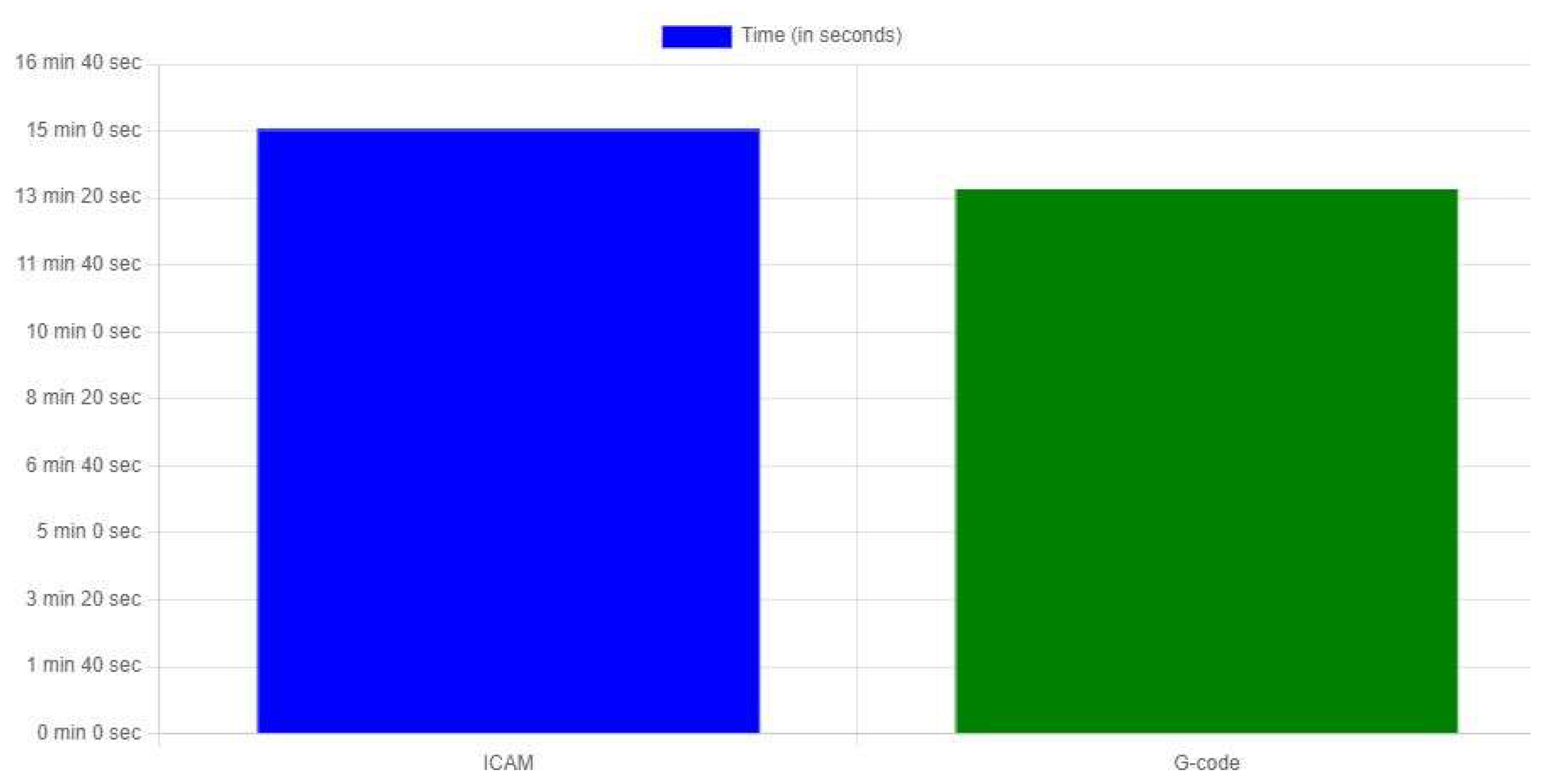
This study explores the optimization of machining time in CNC milling machine by varying machine parameters and toolpath strategies. Using simulation ICAM3D software, the approach focuses on minimizing machining time while adhering to operational constraints. In addition, a novel approach for the optimization of G-code in time machining, focusing on reducing machining time while maintaining the required precision and quality of the finished product has been presented. We propose a method that integrates advanced algorithms to identify and eliminate redundant movements, optimize tool paths, and improve machining strategies. The experimental results demonstrate a significant reduction in machining time without compromising the machining accuracy, offering substantial cost savings and efficiency improvements for industrial applications. The importance of this work lies in the correct choice of toolpath strategy. This is best demonstrated by the third P3 project, where it is evident that the minimum time for project completion is 20 minutes and 2 seconds. After analysing data from ICAM and real-time CNC outputs for the P3 project, the completion time has been successfully reduced to 15 minutes and 23 seconds. To further enhance efficiency, additional software tools such as ARTCAM and ASPIRE have been utilized to implement a new toolpath strategy.
Keywords:
1. Introduction
2. Related Work
2.1. Improved Precision and Accuracy
2.2. Reduced Cycle Times and Increased Productivity
2.3. Extended Tool Life and Reduced Wear
2.4. Improved Surface Finish and Quality
2.5. Material and Cost Efficiency
2.6. Risk Reduction and Safety
2.7. Flexibility Across Materials and Applications
2.8. Freeform Features Recognition
2.9. 3. D Model-Based Toolpath Generation
2.10. Adaptive Algorithms for Efficiency
3. Materials and Methods
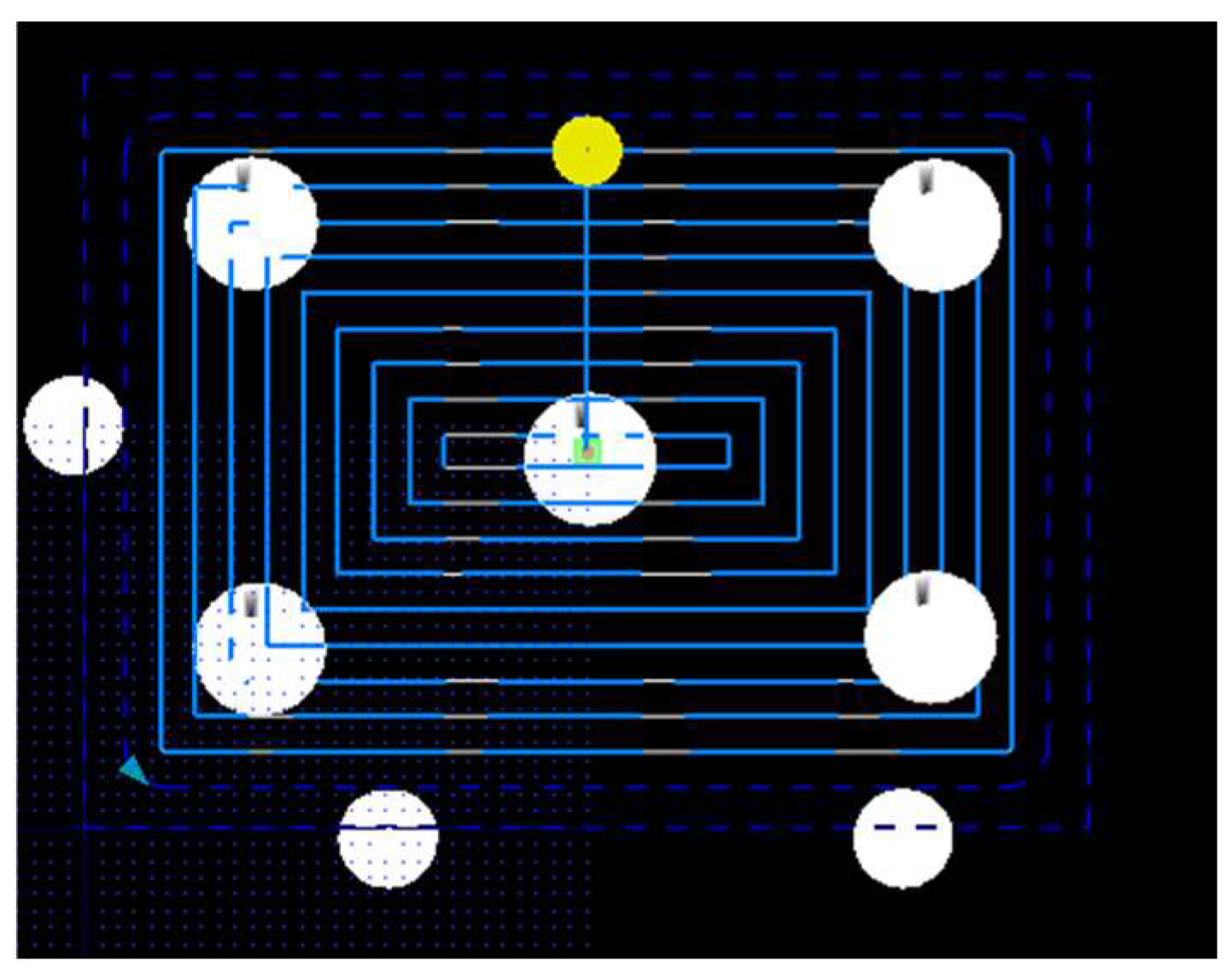
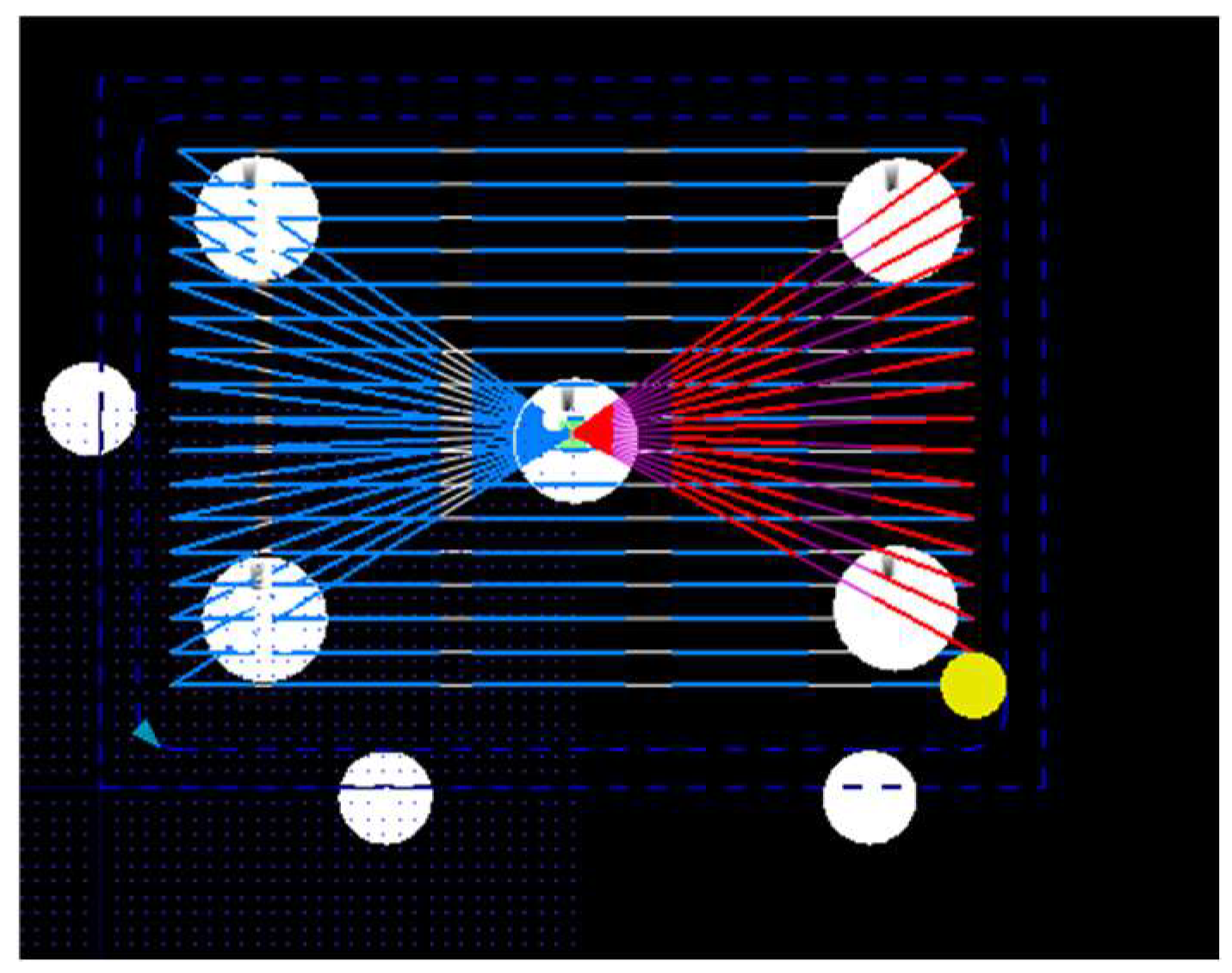
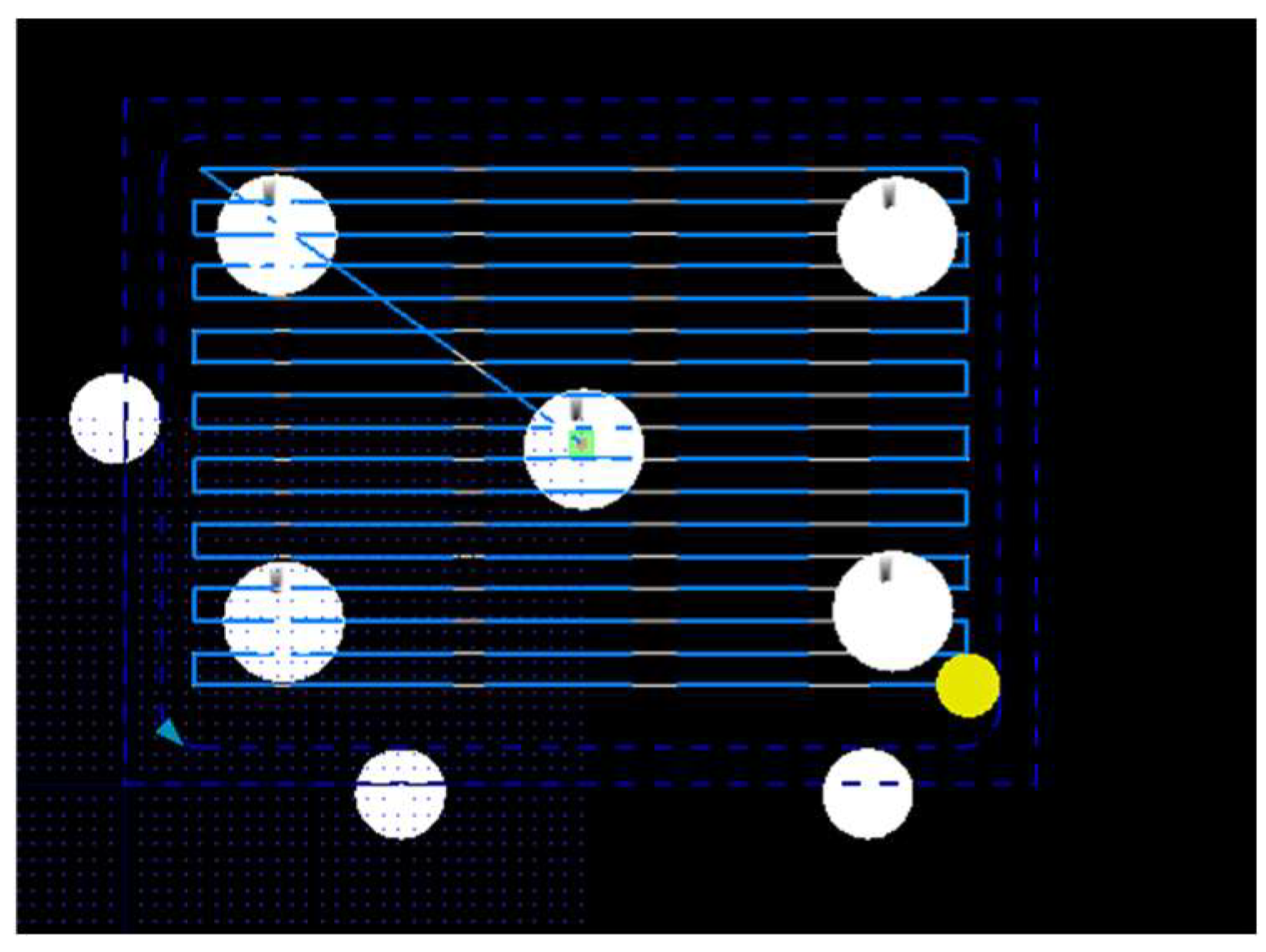
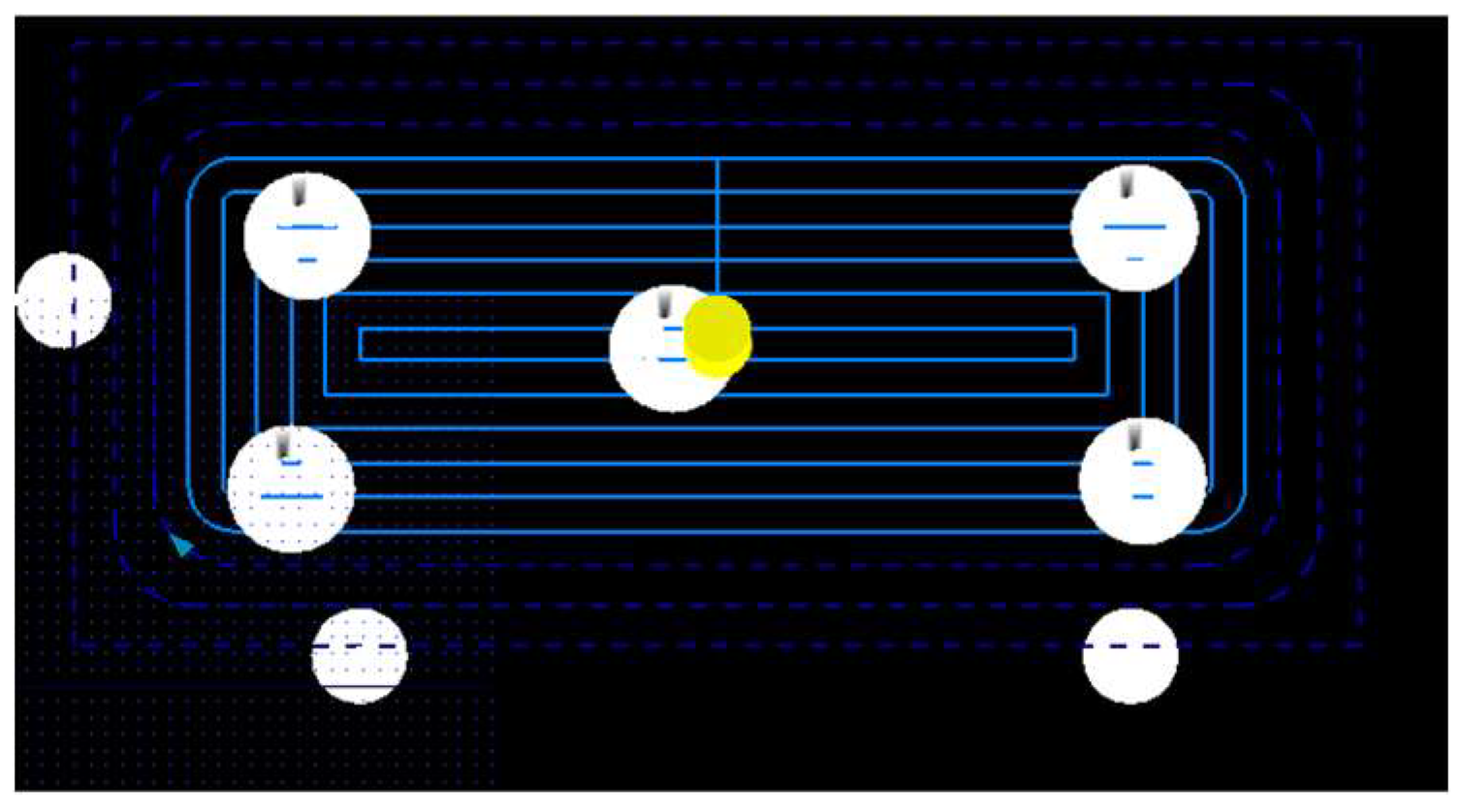
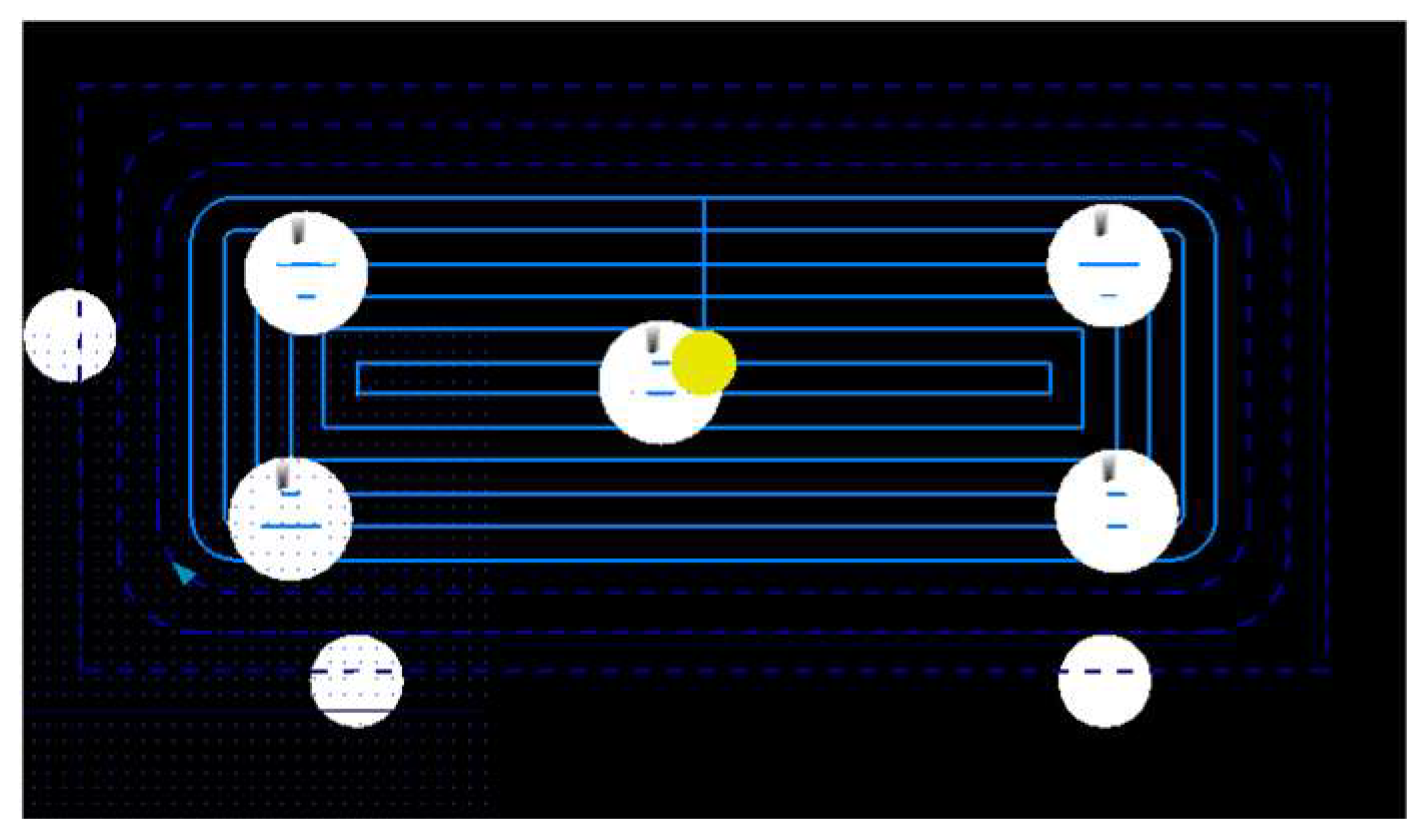
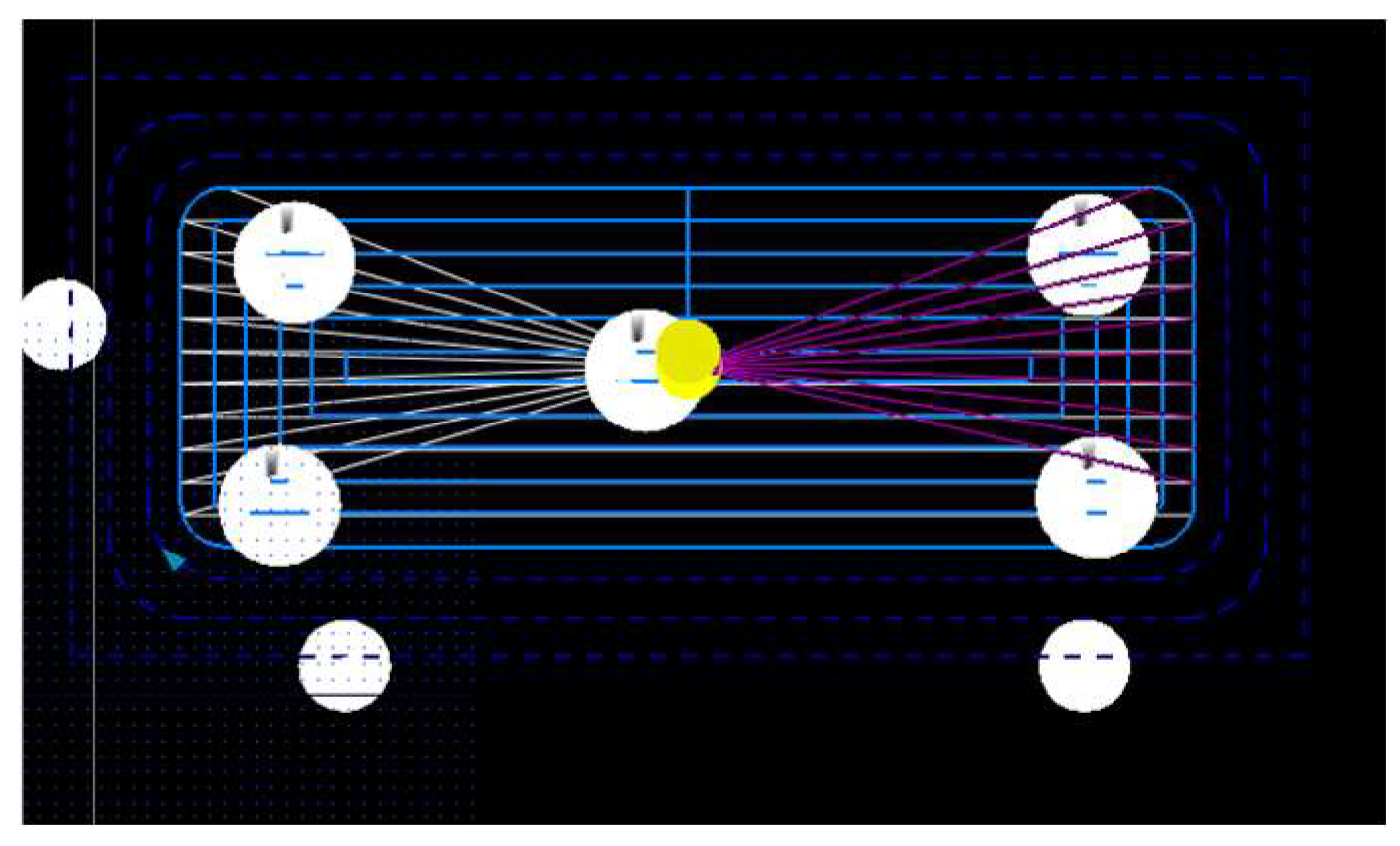
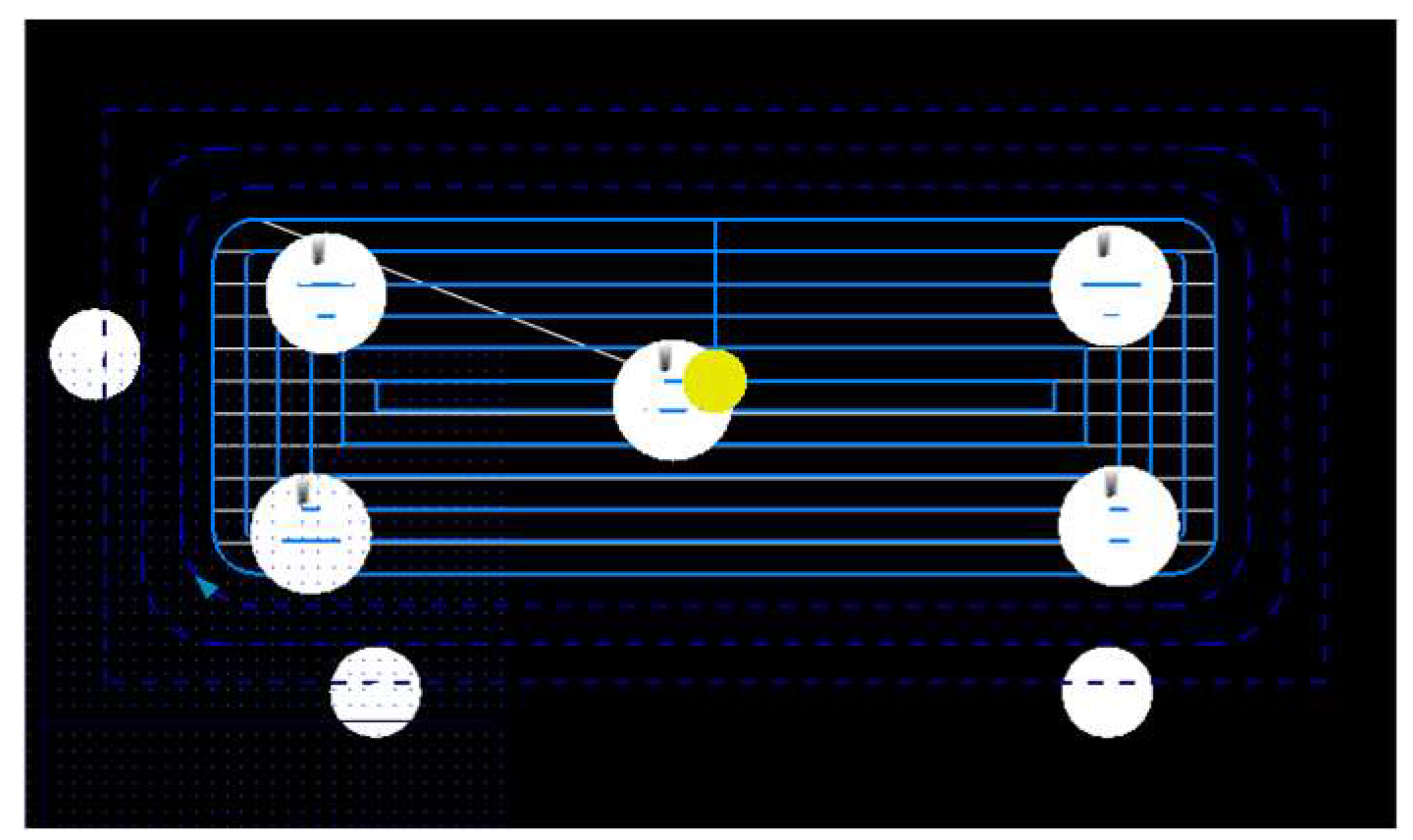
3.1. Description of Toolpath Strategies
y=(D−k⋅a)⋅sin(a)
- D: Outer diameter
- a: Angle parameter
- k: Step reduction per revolution.
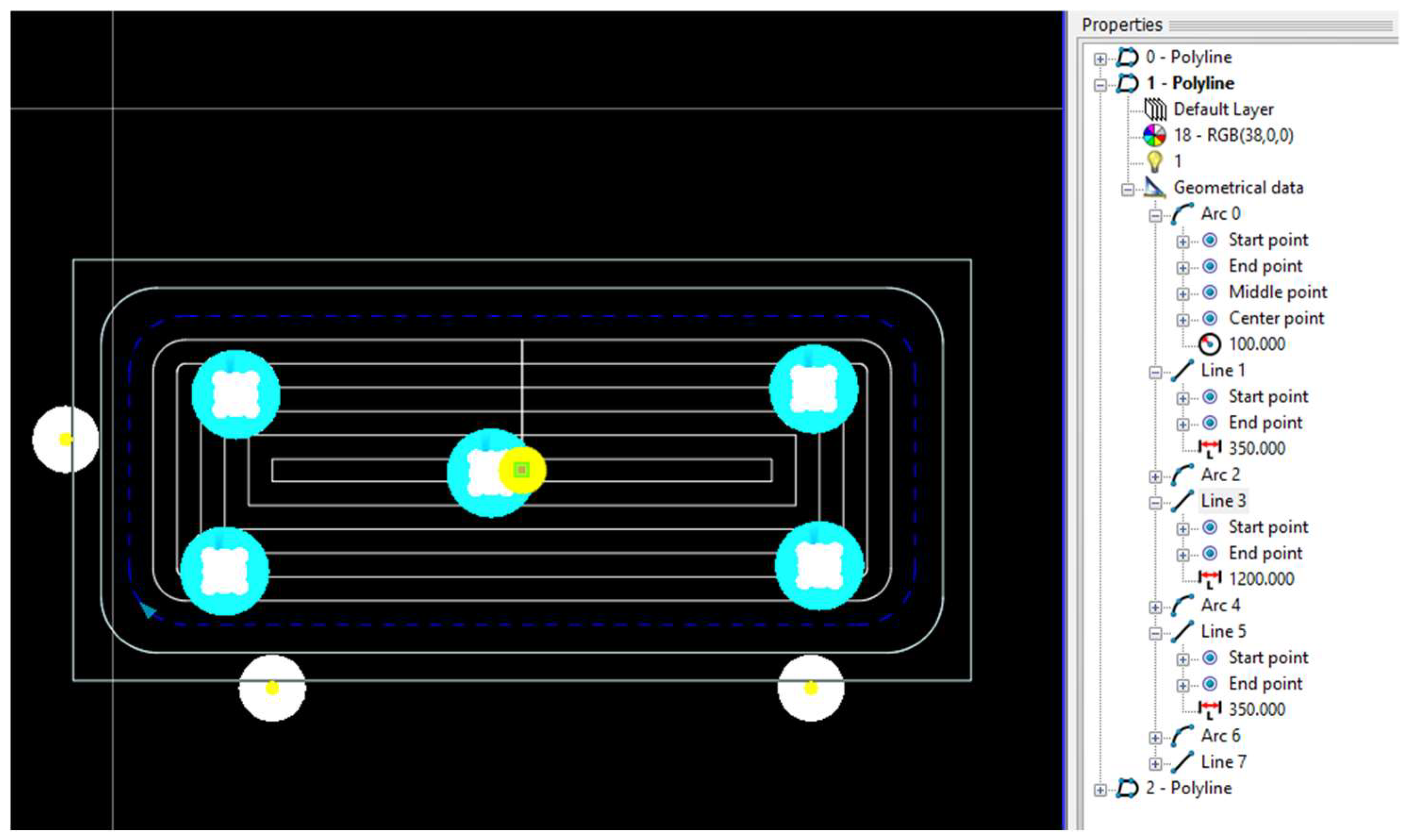
y=(k⋅a)⋅sin(a)
- a: Angle parameter
- k: Step reduction per revolution.
y=y0+i⋅s
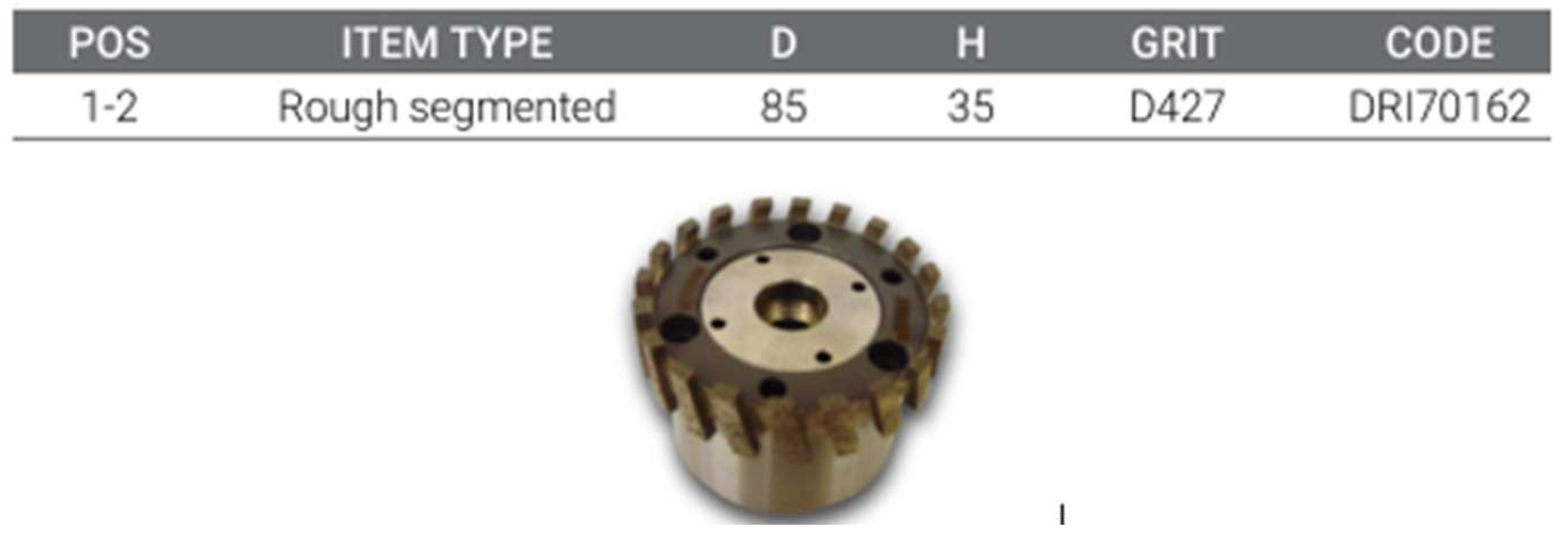
- Seffective = s/20 - Reduced step-overdue to 20 flutes
- x0, y0 – Start position
- n – Number of passes in X
- i – Number of steps in Y.
y=y0 + i ⋅ Seffective
- Seffective=s/20 – Reduced step-over distance for the 20 flutes
- x0, y0 - Starting position
- w – Pocket width (adjusted for tool diameter)
- n – Zig Zag pass number
- i – Row index (alternating directions with (-1)^i.
- f – Total feed rate (mm/min)
- ft – Feed per tooth (mm/tooth)
- N – Number of teeth (flutes) on the tool
- D – Diameter of the tool (mm)
- W – Width of cut or step-over (mm)
- DOC – Depth of cut (mm).
3.2. Description of Projects
4. Results
4.1. Machining time of Workpiece P1
4.2. Machining time of Workpiece P2
4.3. Machining time of Workpiece P3
5. Discussion
5.1. Additional optimization of the P3 project time
6. Conclusions
Author Contributions
Funding
Data Availability Statement
Conflicts of Interest
References
- Gavril, M.; Andrei, M.; Lucian, T. 2016. Increase Productivity and Cost Optimization in CNC Manufacturing. IManEE pp.1-6.
- Daneshmand, S.; Abdol Hosseini, M.M.; Aghanajafi, C. Investigating the Optimal Tool Path Strategies Based on Machine time in CAD-CAM. Aust. J. Basic Appl. Sci. 2011, 5, 2320–2326. [Google Scholar]
- Gologlu, C.; Sakarya, N. 2008. The effects of cutter path strategies on surface roughness of pocket milling of 1.2738 steel based on Taguchi method.
- Li, W.; Zein, A.; Kara, S.; Herrmann, C. An Investigation into Fixed Energy Consumption of Machine Tools. In Glocalized Solution for Sustainability in Manufacturing: Proceedings of the 18th CIRP International Conference on Life Cycle Engineering. 268-275. (2011).
- Johnson, H. Toolpath Generation and Optimization in CNC Machining. International Journal of Precision Engineering 2022, 29, 113–121. [Google Scholar]
- Smith, L.; Anderson, P. The Role of Toolpath Strategies in Modern CNC Machining. Manufacturing Technology Review 2021, 17, 58–65. [Google Scholar]
- Greenwood, R. Optimizing CNC Toolpaths for Precision and Efficiency. Journal of Advanced Manufacturing 2023, 41, 85–92. [Google Scholar]
- Taylor, M.; Lewis, A. Adaptive Toolpath Strategies for CNC Systems: A New Era in Manufacturing. Journal of Automation and Robotics 2021, 37, 101–108. [Google Scholar]
- M. Mattson, CNC programming: principles and applications. Cengage Learning, 2009.
- De Lacalle, L.N.L.; Lamikiz, A.; Sanchez, J.A.; Salgado, M.A. Toolpath selection based on the minimum deflection cutting forces in the programming of complex surfaces milling. Int. J. Mach. Tools Manuf. 2005, 47, 388–400. [Google Scholar] [CrossRef]
- Al-Kindi, G.; Zughaer, H. An Approach to Improved CNC Machining Using Vision-Based System. Mater. Manuf. Process. 2012, 27, 765–774. [Google Scholar] [CrossRef]
- Smith, L. Precision Machining with Advanced Toolpath Strategies. International Journal of Precision Engineering 2023, 29, 31–38. [Google Scholar]
- Jones, D.; Taylor, R. Optimizing CNC Machining: Cycle Time Reduction Strategies. Journal of Industrial Engineering 2021, 48, 78–85. [Google Scholar]
- Johnson, H. Maximizing Tool Life Through Optimized CNC Toolpaths. Advanced Manufacturing 2022, 33, 112–118. [Google Scholar]
- Williams, K.; et al. Achieving Superior Surface Finishes in CNC Machining with Optimized Toolpaths. Surface Quality Journal 2020, 17, 46–53. [Google Scholar]
- Anderson, P. Material Efficiency in CNC Machining: Optimizing Cost and Sustainability. Journal of Manufacturing Processes 2022, 45, 124–130. [Google Scholar]
- Greenwood, R.; Ford, T. Toolpath Simulation and Its Role in CNC Machining Safety. CNC Technology Review 2023, 12, 59–64. [Google Scholar]
- Miller, J.; Lewis, A. Material-Specific Toolpath Adjustments in CNC Machining. Materials Engineering 2021, 58, 87–94. [Google Scholar]
- Amjad Barzan Abdulghafour, Ahmed Thamer Hassan. (2020). Automatic Tool Path Generation Based Freeform Features Recognition. 13th International Conference on Developments in eSystems Engineering (DeSE).
- Liao, J.; Huang, Z. Data model-based toolpath generation techniques for CNC milling machines. Front. Mech. Eng. 2024, 10, 1358061. [Google Scholar] [CrossRef]
- Venturini, G.; Grossi, N.; Morelli, L.; Scippa, A. A Non-Uniform Offset Algorithm for Milling Toolpath Generation Based on Boolean Operations. Appl. Sci. 2022, 13, 208. [Google Scholar] [CrossRef]



| Project Code | Size | Tool |
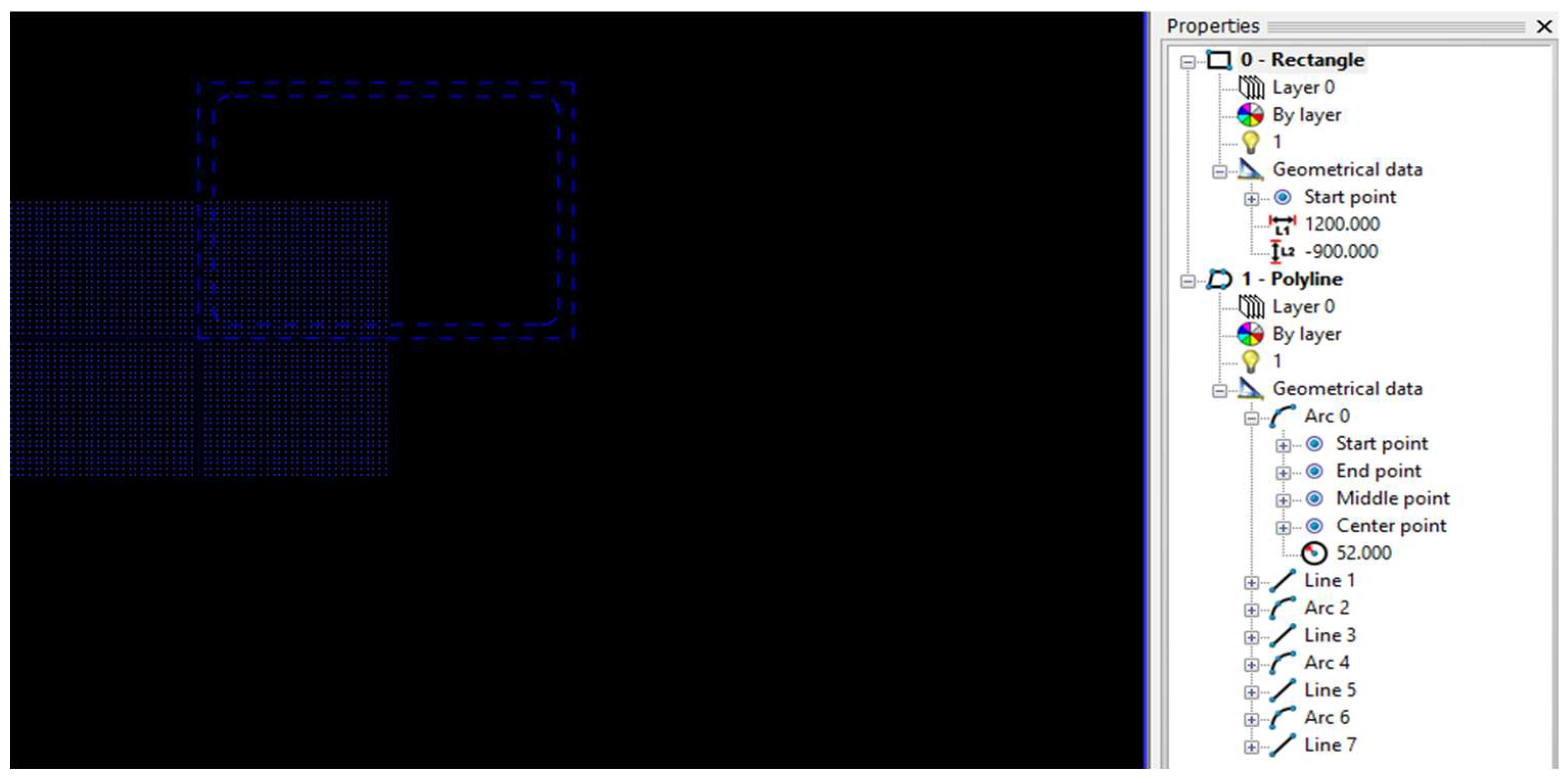
| P1 | 1200x900 | 0050 |
| P2 | 1600x750 | 0050 |
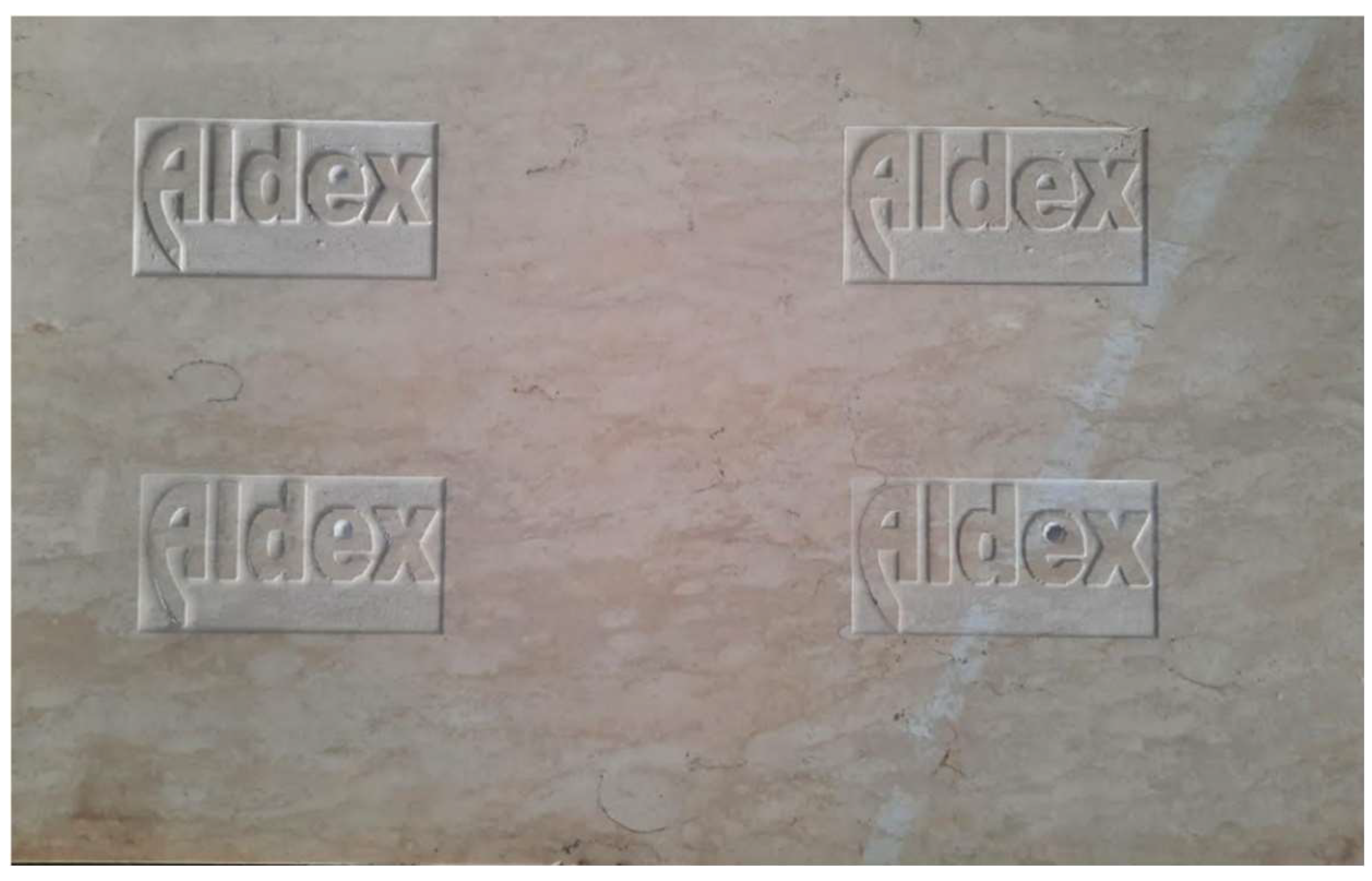
| P3 | 100x50 | 503 |
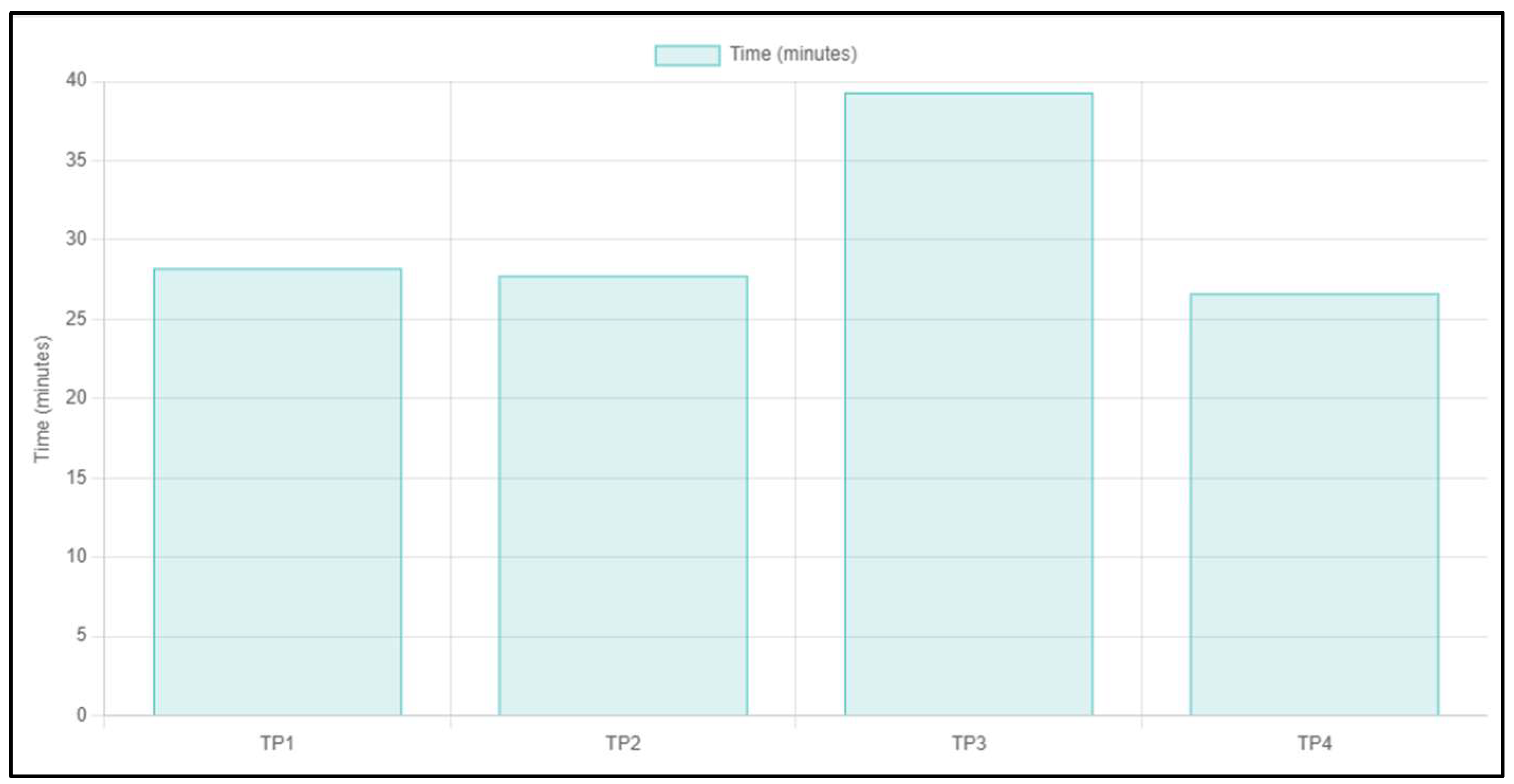
| Code of pocking | Type of pocking | Time |
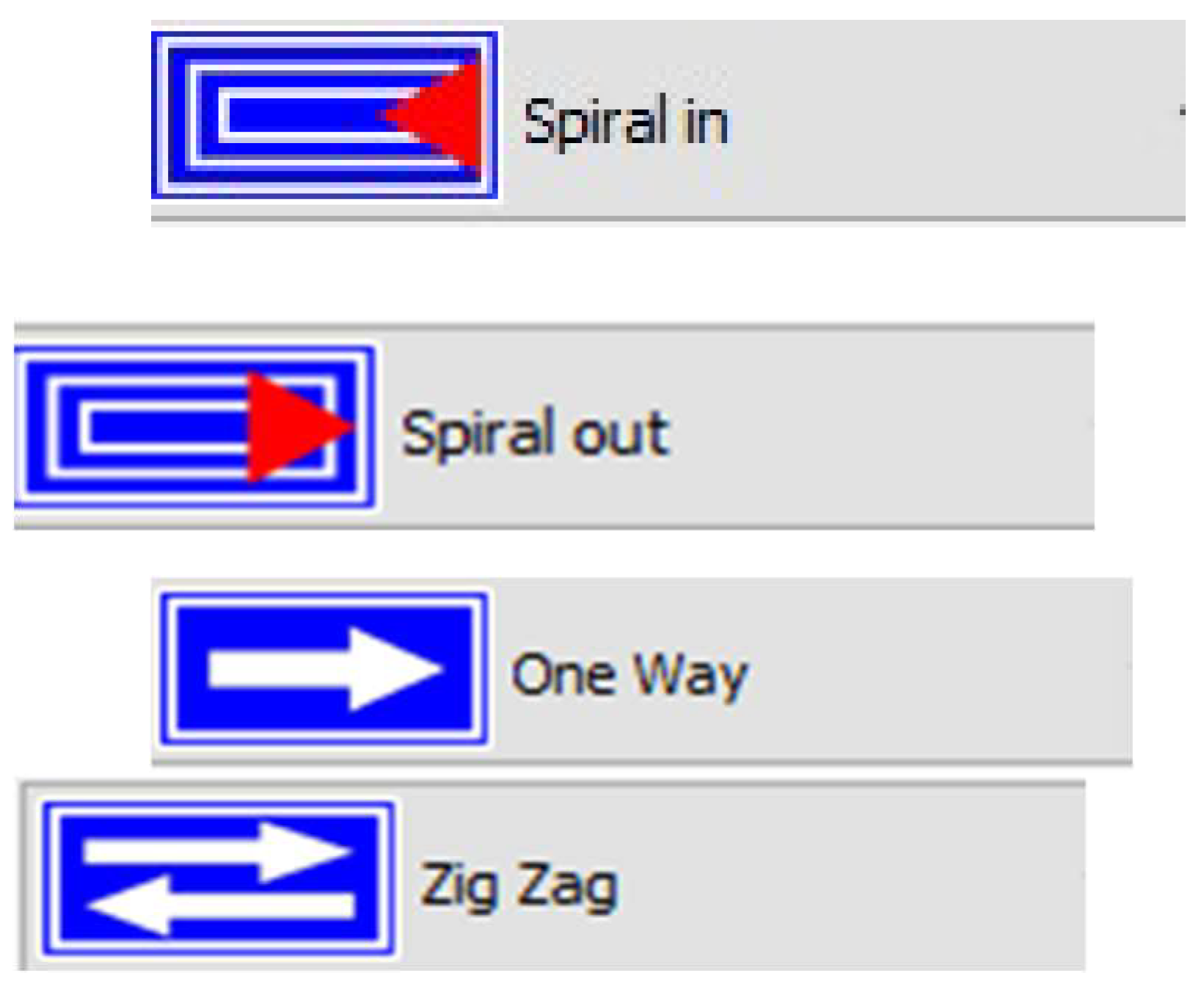
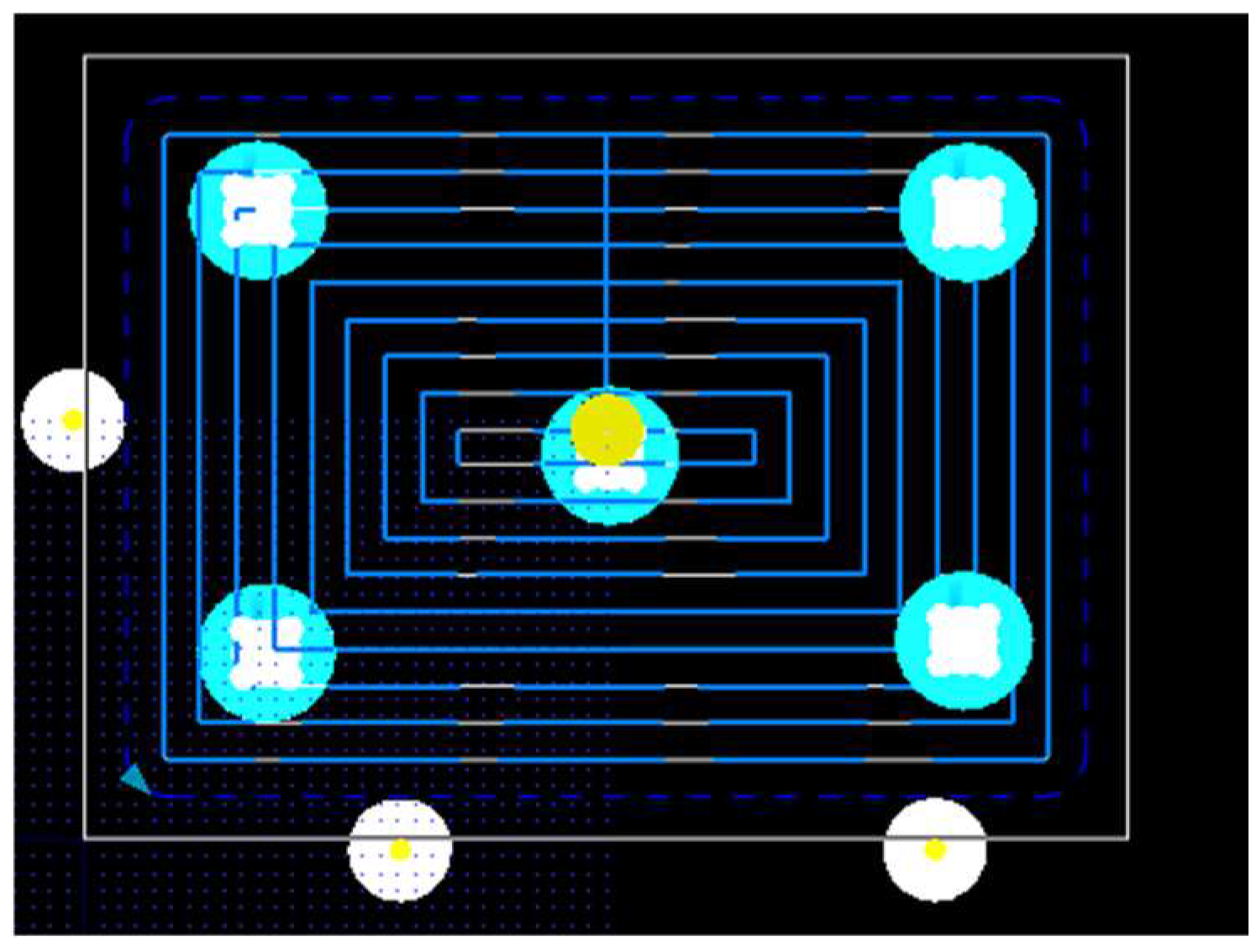
| TP1 | Spiral in | 00:28:13 |
| TP2 | Spiral out | 00:27:44 |
| TP3 | One way | 00:39:18 |
| TP4 | Zig Zag | 00:26:37 |
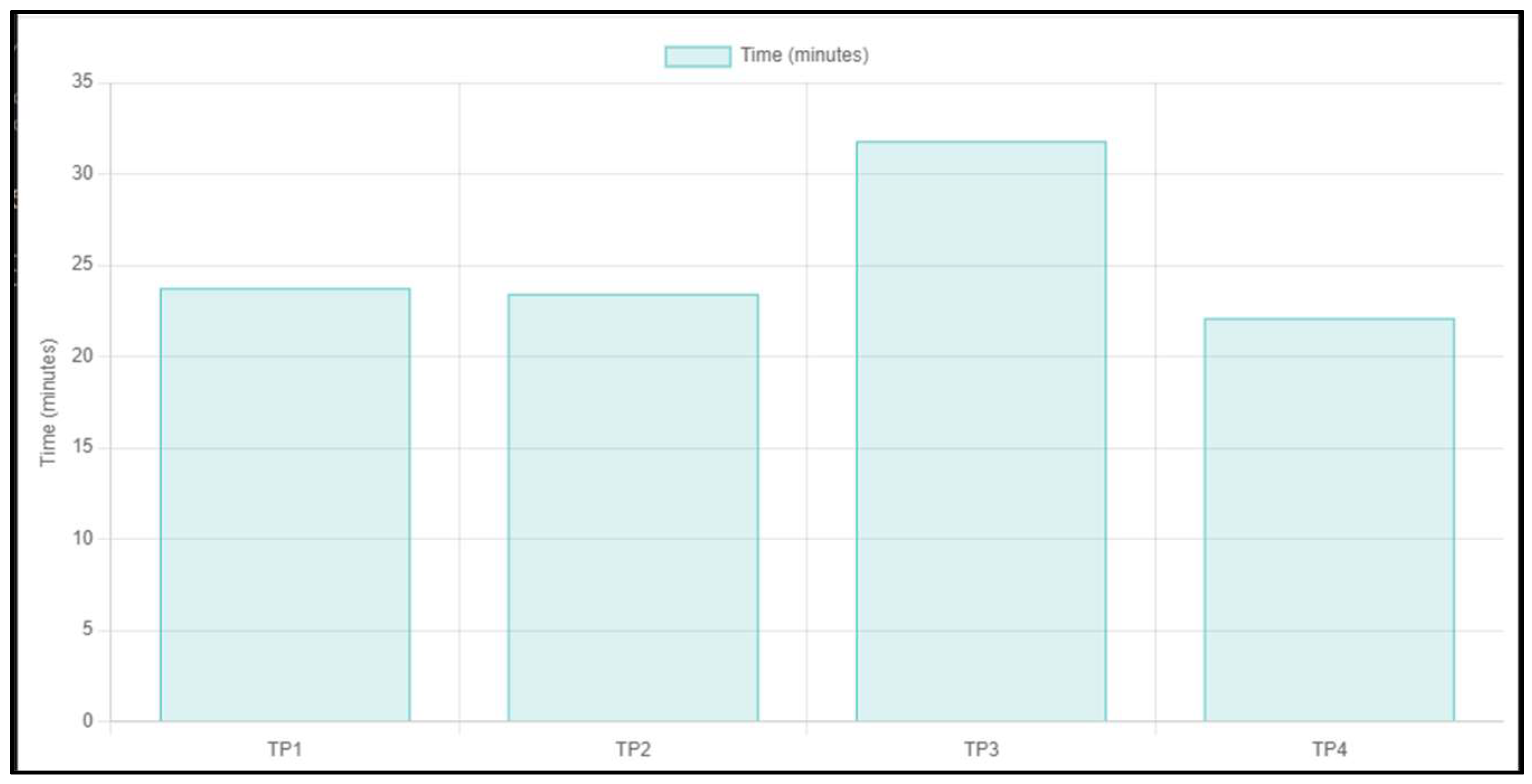
| Code of pocking | Type of pocking | Time |
| TP1 | Spiral in | 00:23:44 |
| TP2 | Spiral out | 00:23:26 |
| TP3 | One way | 00:31:47 |
| TP4 | Zig Zag | 00:22:06 |
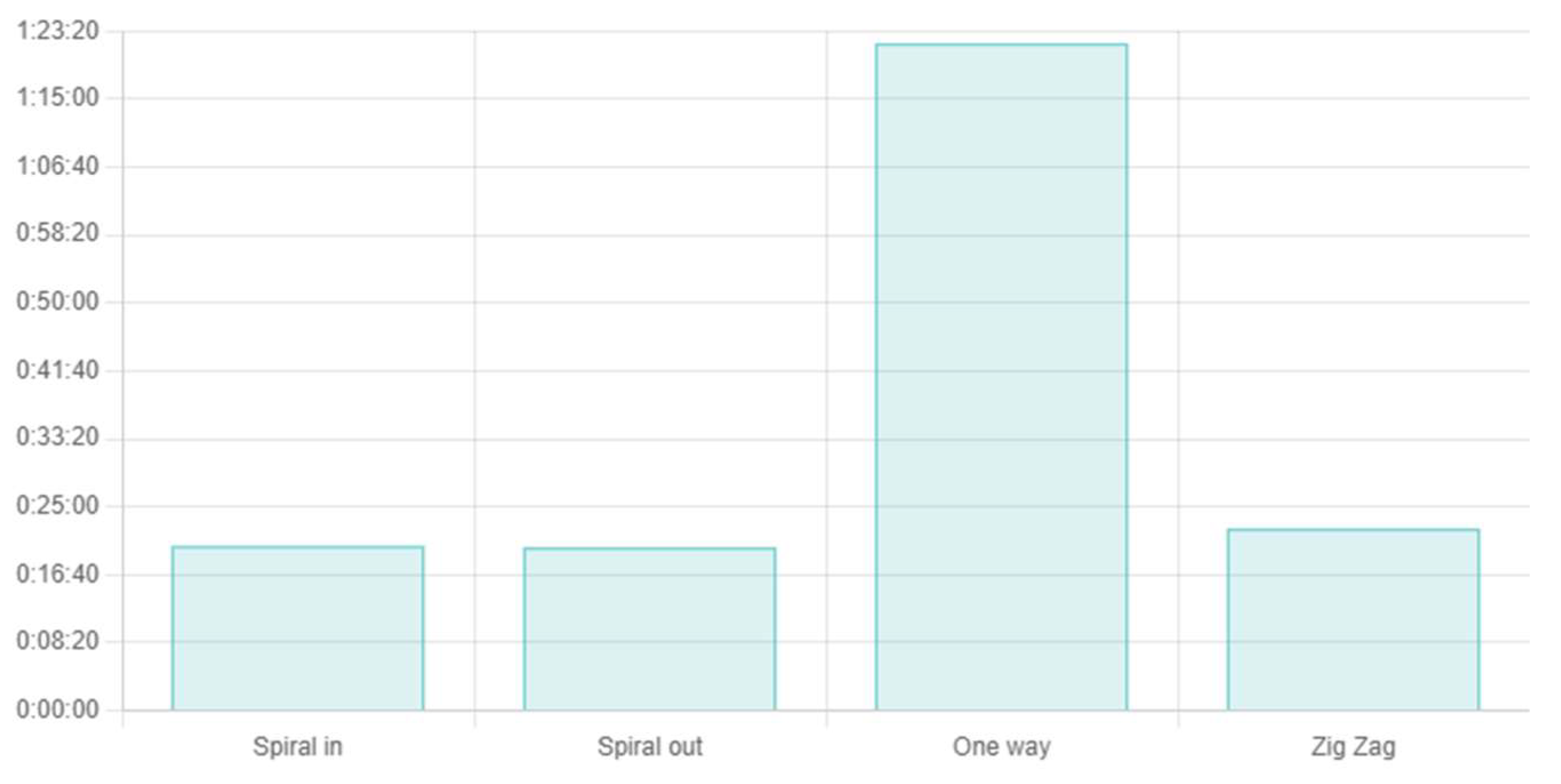
| Code of pocking | Type of pocking | Time |
| TP1 | Spiral in | 00:20:10 |
| TP2 | Spiral out | 00:20:02 |
| TP3 | One way | 01:21:46 |
| TP4 | Zig Zag | 00:22:19 |
| Code of project | Code of pocking | Time |
| P1 | TP4- Zig Zag | 00:26:37 |
| P2 | TP4- Zig Zag | 00:22:06 |
| P3 | TP2- Spiral out | 00:20:02 |
Disclaimer/Publisher’s Note: The statements, opinions and data contained in all publications are solely those of the individual author(s) and contributor(s) and not of MDPI and/or the editor(s). MDPI and/or the editor(s) disclaim responsibility for any injury to people or property resulting from any ideas, methods, instructions or products referred to in the content. |
© 2024 by the authors. Licensee MDPI, Basel, Switzerland. This article is an open access article distributed under the terms and conditions of the Creative Commons Attribution (CC BY) license (http://creativecommons.org/licenses/by/4.0/).