Introduction
Bhutan is a relatively young economy with little more than half a century of developmental journey. As it moves toward economic development at global economic standards, large-scale waste generation is inevitable. Municipal solid waste management (MSWM) is one of the major concerns in rapidly developing Dzongkhags notably Thimphu that exhibits the highest population growth and waste generation (Chakraborty et al., 2018). Thimphu Dzongkhag has a total population of 11,4551 (PHCB, 2017) which amounts to more than 15% of the country’s population whereas, its population was 79,185 in 2005 (PHCB, 2005) amounting to 12% of the country’s population. Apart from the huge population density, other factors such as commercial activities, increasing industries, and the availability of diverse consumptive products further accelerates waste generation. Thimphu city has inclined more toward a consumeristic society as observed by Chakraborty et al. (2018) leading to man-made disaster of waste pollution fueled by greed and ignorance. There are diverse impacts of improper waste management on health and environment. Among the countless negative effects, the prominent effects may include; contamination of air, water, and soil with toxics released through burning and breakdown of solid municipal waste, greenhouse gas emission from landfills, death of wildlife due to ingestion of waste, and the potential risk of accumulation of microplastics through the food chain (Downs et al., 2019). Waste management has become a major challenge in Thimphu city despite having numerous decentralized rules and regulations due to the obstacle of ‘informational barrier’ as reported in the 2023 Environmental Accounts Statistics. This study aims at comprehensive assessment of municipal solid waste (MSW) in Thimphu city along with discussions of legal framework on waste management. Furthermore, it will present alternatives and solutions for the waste management issues identified.
Methodology
The method of data collection employed for this case study is mainly through secondary data sources. Data were collected through scientific publications including reviewed articles, case studies, and a dissertation. Additionally, Government reports and national policies were referred. The study area chosen for this study is Thimphu city where comparatively faster urbanization occurs. A qualitative approach of data analysis is employed for this case study. Diagrams and figures were obtained through secondary sources and proper references are given. Additionally, primary information obtained through direct observation and involvement are incorporated for the study.
Background
Thimphu is the capital of Bhutan where numerous politically important buildings including the Druk Gyalpo’s official residence is located. Thimphu is a diversified city where people from all social and economic background gathers to realize their dreams and aspirations. However, as idealized by numerous people as a ‘dream city’ (Khamrang, 2020), Thimphu faces numerous environmental challenges and one of them being the waste management challenge. Thimphu city has experienced phenomenal growth and urban transformation over the last few decades. This has led to rural-urban migration and increased population density in the city. This phenomenon has a cascading effect. When population increases there is increased demand of goods and services. Ultimately, the byproduct of consumption of goods and services leads to increased waste generation. Currently, Thimphu city is facing municipal solid waste (MSW) management issues despite the best effort of government authorities and organizations including Thimphu Thromde Office and Greener Way (Poudel, 2024). This study will try to assess the nature of MSW in Thimphu city and provide feasible and novel solutions to MSW management.
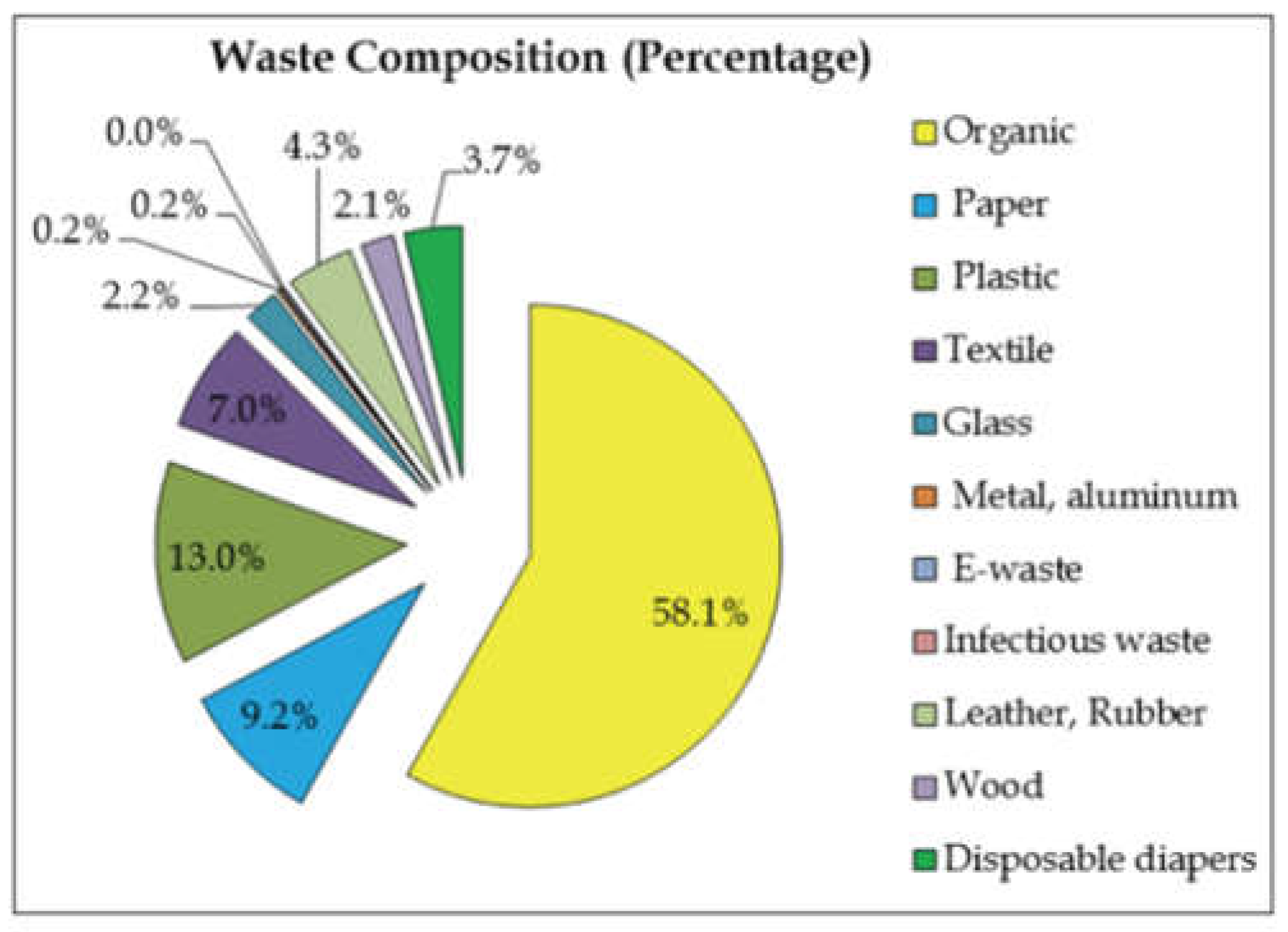
Figure 1.
Average composition of MSW for Thimphu (2018). Source: National Waste Management Strategy 2020.
Figure 1.
Average composition of MSW for Thimphu (2018). Source: National Waste Management Strategy 2020.
Literature Review
Municipal solid waste (MSW) is a major concern in a rapidly growing city such as Thimphu. In this literature review, it will attempt to gain a broader understanding of MSW through: a) studying waste composition, b) examining the effect of MSW to human health and the environment, and c) economic impact of MSW. The data used for this literature review consists of scientific articles and daily news articles from platforms such as Kuensel and The Bhutanese.
Phuntsho et al. (2009) reported in their study that the municipal solid waste in urban areas were composed of 63% organic waste, 18% percent paper and paperboard, 17% plastics, and the remaining 2% were composed of textiles, leathers, metals, and electrical and electronics. Household waste generation contributed the largest share followed by commercial activities to MSW. Phuntsho et al. (2009) provides quantitative accounts of solid waste in urban areas however, the article lacks on providing information on waste management practices both in micro and macro levels. A review by Sikder et al. (2024) highlights the hazardous effect of waste to human health. Improper MSW disposal can create breeding ground for pathogens and vectors. Moreover, waste can attract insects and rodents which are responsible for the spread of diseases such as cholera and dengue (Sikder et al., 2024). The most vulnerable population is the ones residing near landfill areas which the authors does not include in their article. Nonetheless, it thoroughly explains the negative effect of waste. Dehghani et al. (2021) discusses the environmental risks such as contamination of soil, air, and water. Activities such as open incineration of solid waste releases carbon dioxide, sulfur dioxide, and polycyclic organic matter that pollutes the ambient air as well as causes respiratory complications. Landfills are often designated in forested areas that poses hazard to the environment mostly causing land and water pollution. Kumari and her team (2017) studied how leaching from landfills contaminated the groundwater and stream networks nearby. Leachate such as heavy metals, dissolved organic matter, and xenobiotic organic compounds among others were found in the water samples. The environmental and human health risks of waste are mostly due to unmanaged and unmonitored disposal of waste. All the reviewed articles have failed to address this aspect. A stricter monitoring and penalty policies would help in reducing improper waste disposal. However, the consistency of the solution should be maintained.
Thimphu city’s landfill, Memelakha, has become a hazard to environment and human health. All kinds of recyclable and non-recyclable wastes are dumped without any second thought about the aftermath (Dema, 2023). Numerous efforts by the government are made to reduce waste such as allocating numerous waste drop-off centers, waste collection vehicles, and investing in incinerators (Lhaden, 2022). Large sum of government revenue is directed toward waste management nonetheless, it is rarely effective in reducing the waste issue in Thimphu city. Regarding Thimphu’s waste issue, there are limited scientific research and information. Reports and other official documents relating to Thimphu’s waste are not disclosed to the public. Thus, limiting individuals to do research or know the current status of the subject matter.
Pollution Issues
Thimphu city is a rapidly developing and urbanizing city and as a consequence, faces challenges in municipal waste management. Firstly, there is the problem of quantity of waste generated. Yonten (2018) reports that Thimphu alone currently generates 99 metric tonnes (MT) of waste per day. It is projected that by 2027, Thimphu’s solid waste generation will increase to 124 MT. And secondly, irresponsible waste dumping in rivers, forests, and open areas causes severe pollution issues. The below listed are some of the major pollution issues caused by MSW.
Soil Pollution
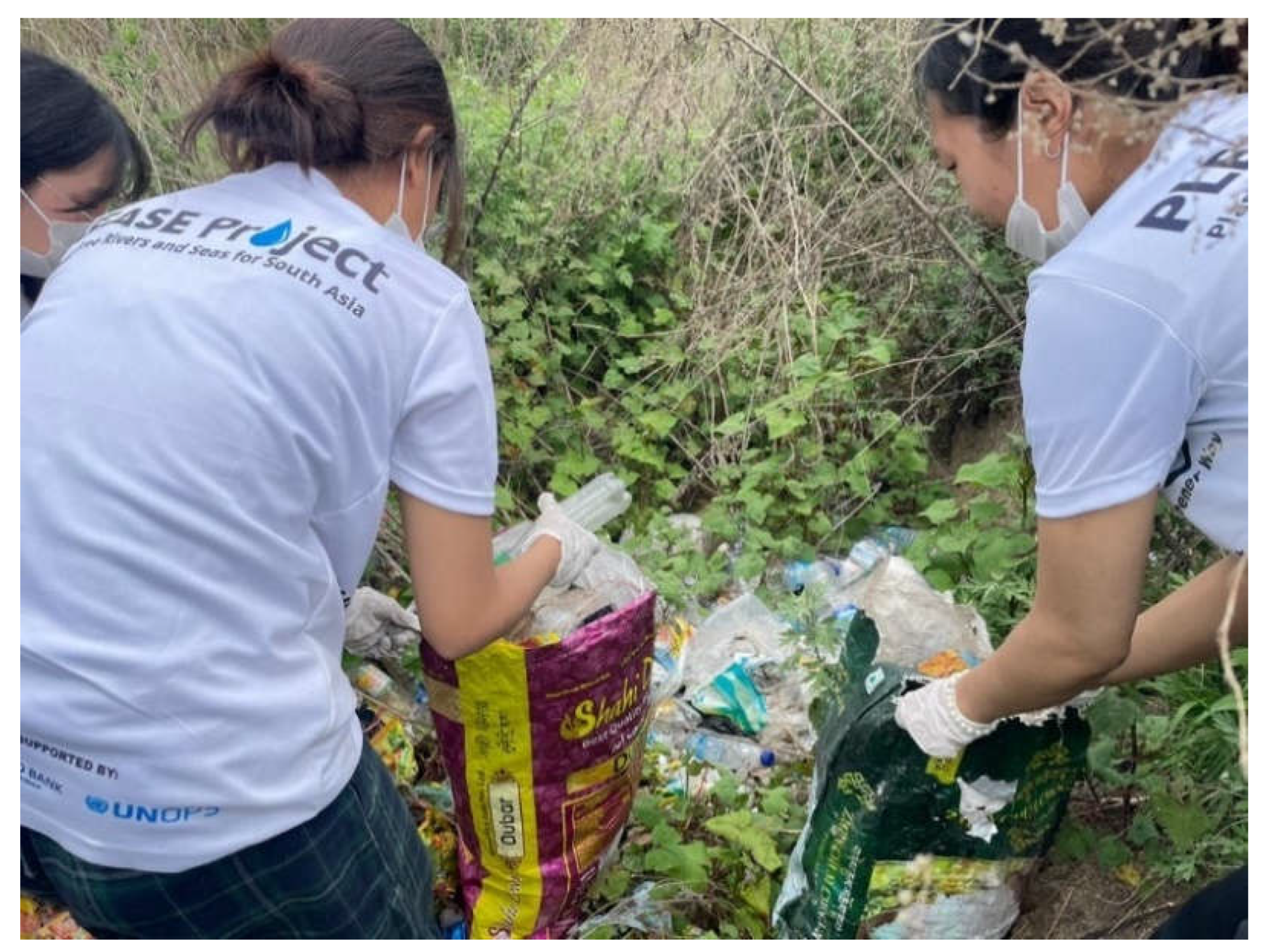
Waste significantly contributes to soil contamination and pollution. Due to improper waste disposal, lack of waste segregation, and landfill leachate, soil becomes contaminated with various pollutants. Chakraborty et al. (2018) studied the soil of Memelakha landfill and found the soil to be very polluted with most of the soil nutrients deprived. Similarly, in numerous pockets of the city, wastes are dumped in open areas which will lead to harmful chemicals leaking into the soil. One such observation was made by volunteers who were conducting a cleaning campaign in the Ngabiphu region.
Figure 2.
Open area/illegal dumping site in Ngabiphu. Photo Credit: Sherub Choden.
Figure 2.
Open area/illegal dumping site in Ngabiphu. Photo Credit: Sherub Choden.
As per one of the volunteers, from one open area dumping alone, a total of 7 sacks of various household wastes were collected. Continuous open area dumping can lead to degradation of land and the surrounding vegetation. Moreover, with increasing population and ineffective regulation, the occurrence of illegal dumping will increase in the near future.
Air Pollution
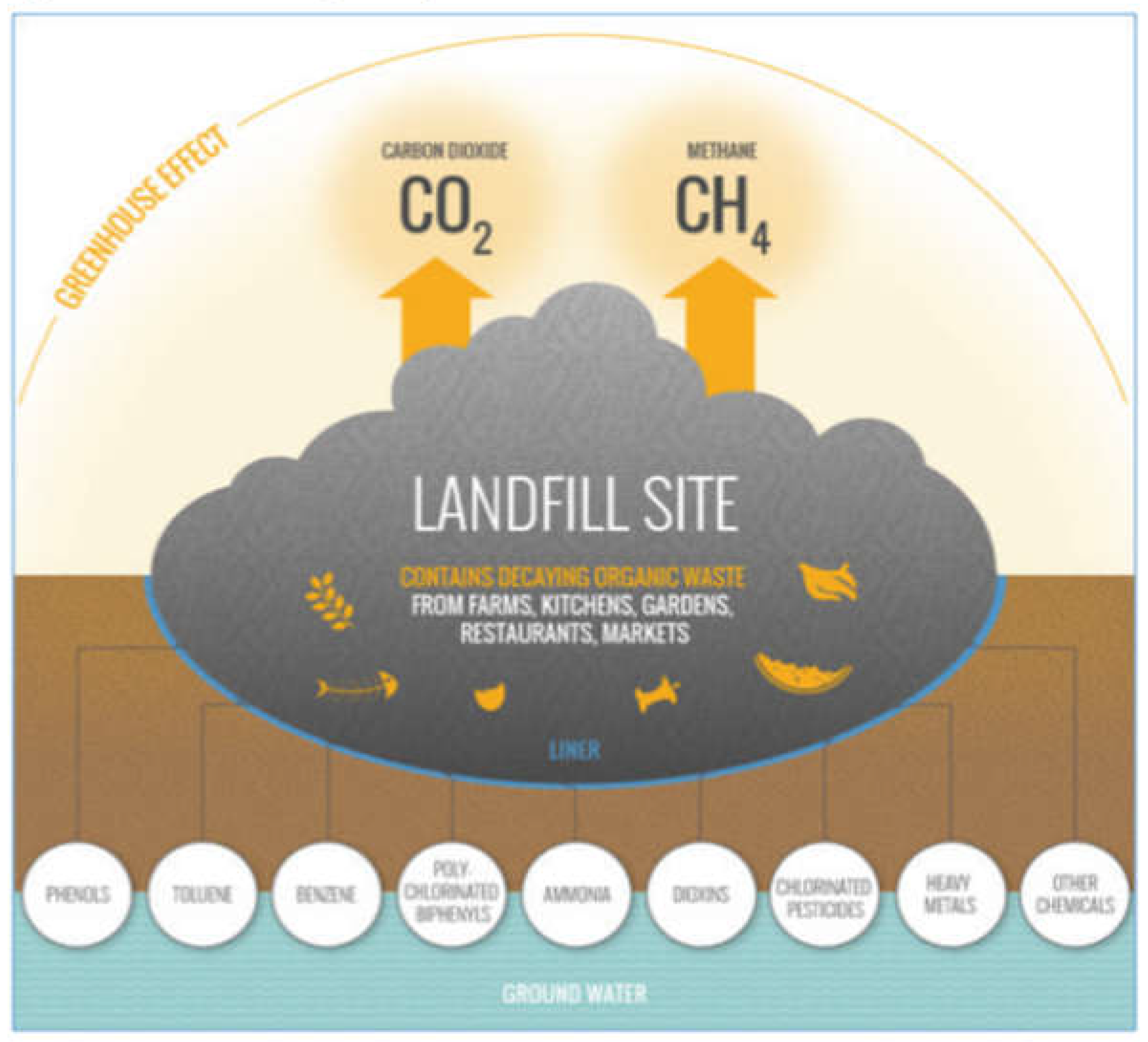
Open burning of solid household waste and incineration releases pollutants such as particulate matter (PM), carbon monoxide (CO), and volatile organic compounds (VOC) into the air. Furthermore, landfills such as Memelakha releases sulfur dioxide (SO2), carbon dioxide (CO2), methane (CH4), and nitrogen dioxide (NO2) along with the above-mentioned pollutants into the air through evaporation (Chakraborty et al., 2018). In respect to Thimphu city, open burning of household wastes is not often observed as there are regular waste collection vehicles circulating around the city. However, due to lack of research and government reports, one cannot make a conclusion on this matter but only speculate or make assumptions. Nonetheless, the Memelakha landfill does produce pungent smell mixed with evaporated harmful chemicals which is also a form of air contamination.
Figure 3.
Methane emissions from landfills. Source: National Waste Management Strategy 2020.
Figure 3.
Methane emissions from landfills. Source: National Waste Management Strategy 2020.
Water Pollution
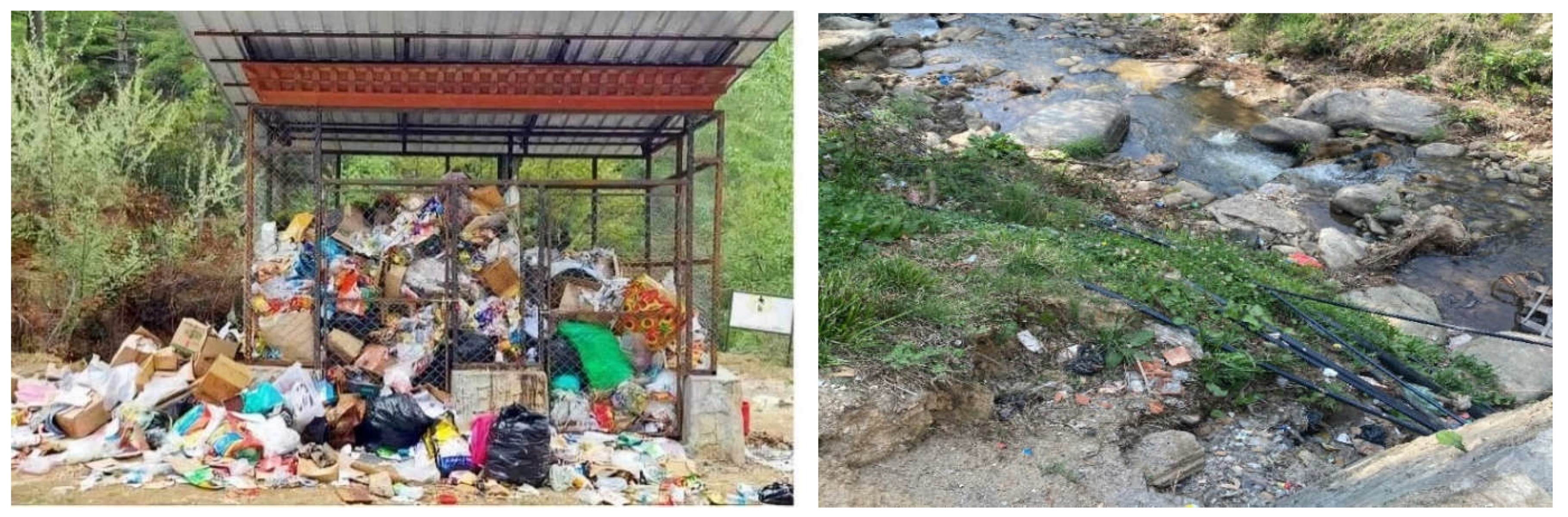
Water contamination is another pollution caused by municipal solid waste. Leachate generation from landfills and dumpsites seeps into groundwater and surface water networks (Chaudhry & Malik, 2022). Furthermore, numerous observations can be made on illegal waste disposal in water bodies by the residents of Thimphu. One prominent example is the waste dumping site in Ngabiphu area. Despite having a shed for waste disposal, people often throw waste outside the shed. Moreover, within a day, the shed overflows with household waste and are often scattered to the nearby environment. Furthermore, due to the unplanned location of the waste dumping site, the overflowed waste goes into the stream just below the shed.
Figure 4.
Ngabiphu waste drop-off center and nearby stream. Photo Credit: Karma Wangmo.
Figure 4.
Ngabiphu waste drop-off center and nearby stream. Photo Credit: Karma Wangmo.
Visual Pollution
Though not as severe as the above-mentioned issues, visual pollution is also another aspect of waste pollution. The aesthetic beauty of the environment and human-made landscapes are reduced by scattered wastes such as plastics, pet bottles, and other types of wastes thrown by passersby (Wakil et al., 2019). Thimphu is a city with diverse culture where modernization and conservation are practiced side by side (Khamrang, 2020). Due to this fact, numerous tourists and important political figures often visit the capital. However, waste creates visually unpleasant surroundings which will hamper the city’s status.
Microplastic Pollution
Another major concern pertaining waste is the microplastic pollution. When plastic wastes are degraded, small plastic particles are formed which cannot be seen with the naked eyes (Xu et al., 2020). Microplastics can be found in drinking water, marine and terrestrial species, and animals. It can harm the human body by stimulating the release of endocrine disruptors as well as depositing toxic chemicals such as heavy metals into the bloodstream (Zhang, 2022). However, there is a research gap in finding evidences of microplastic pollution in Thimphu city as this subject is rarely taken into serious consideration by the concerned authorities. Moreover, due to lack of occurrences and evidences of microplastic pollution in Thimphu, it has not been a major concern.
Analysis of Legal Framework
The National Environment Commission (NEC) is the apex monitoring body that plays an important role for waste management in Bhutan. In Thimphu city, most of the waste management agendas are looked after by the Thimphu Thromde Office. Additionally private sectors such as Greener Way also collects and recycles waste. For proper guidance, there are national legal frameworks present.
National Waste Management Strategy 2019
The National Waste Management Strategy 2019 outlines a comprehensive approach in addressing the country’s growing waste management challenges. The key themes of this strategy are; 1. Improvement of waste management infrastructures, 2. Sustainable financing, 3. Capacity building and awareness, and 4. Data and information management. Additionally, it emphasizes the promotion of circular economy in waste management. As directed by this strategy, Thimphu city has improved in terms of waste management infrastructures. Numerous waste drop-off centers were established in accessible locations. Furthermore, waste collection vehicles were increased in numbers and waste segregations were prioritized. However, there were still occurrences of illegal dumping and increased waste generation. Moreover, one of the strategy’s agenda, waste bank, was not achieved. Only in 2024, Greener Way initiated and launched ‘Bhutan Waste Bank’ where people can exchange waste for currency (Poudel, 2024). The implementation of the integrated concept of maximizing material recovery and minimizing disposal and consuming less material and choosing more natural, less wasteful options are not feasible in today’s consumeristic Thimphu city.
Waste Prevention and Management Regulation 2020
The Waste Prevention and Management Regulation 2020 is a comprehensive framework with enforcement and compliances such as fees, charges, fines, and prevention of illegal dumping. Moreover, it mandates annual compliance and monitoring reports from various entities. However, to adhere by this strict regulation, there is infrastructure and capacity limitations. There are limited and underdeveloped waste treatment facilities and sanitary landfills. Furthermore, economic feasibility provisions are not sufficient.
Proposed Alternatives and Solutions
In order to reduce the burden of waste pollution and management challenges in Thimphu city, some of the measures and alternatives are discussed below:
Oftentimes, people are discouraged to dispose waste properly because they don’t find immediate gain. If the concerned authorities could provide incentives for proper waste disposal, then it is very likely that people will dispose and segregate their waste in a proper manner. For instance, similar to Greener Way’s initiative of ‘Waste Bank’, other privates or government authorities could borrow the idea and establish such banks to reach a greater number of people. This will create a deposit-return scheme for recyclable materials such as plastics and papers. Additionally, providing incentives for reporting illegal dumping can reduce the occurrences of illegal dumping activities. However, while providing incentives, the funds can be easily exhausted. Thimphu has a huge population and incentivizing all the people who disposes waste properly can exhaust the funds if there are no source of income for the provider. There is also a chance of people making false report on illegal dumping to get the incentive. Therefore, a proper and cautious approach to this solution should be taken.
- 2.
Advertisement
Advertising waste segregation and recycling by renowned persons will have a greater impact on the general public. Social media stars can reach a larger network of people and are more influential. This strategy is not reliable as it depends on the audiences’ choice to make the decision.
- 3.
Entrepreneurship
Waste can give economic opportunities through recycling. Rather than dumping waste in landfills, one can look for innovative recycling ideas and business opportunities. One such example can be creating art from bottle caps. Such ideas will be valued and recognized since today’s generation recognizes such novel ideas and creativity. Startups can also be established using wastes as raw materials such as the existing eco-pole manufacturing and the egg tray manufacturing small industries. There is also the opportunity of producing ecofriendly packaging products which can replace plastic products. However, the younger generation are hesitant to take up such initiatives because of lack of grace and standard in such pursuits. Even if few might pursue such ideas, there is no proper market and costumers because people often seek products which can be obtained cheaply in large quantity.
- 4.
Waste Incineration to Generate Electricity
The huge quantity of waste produced by the Thimphu residents can be used to convert it into electricity. It can be done by utilizing the heat generated during waste incineration to produce steam that will turn turbines similar to hydropower plant. This will produce great result since the waste will be managed and additionally, electricity will be produced without using fossil fuels. There are numerous limitations to implement project of such large scale. Firstly, there Bhutan is lacking in technological advancement. Secondly, the government revenue is limited and other developmental priorities are there such as health, nutrition, and education. Lastly, to achieve this goal, experts are needed to design and carry out the project. Nevertheless, this solution might be feasible in the near future if proper research and investments are made.
- 5.
Educational Programs
One of the major solutions could be educating the younger generations on the subject of waste management. By incorporating waste management as one of the subjects in the education system, a population of trained and educated youths can be produced who will reduce, reuse, recycle, and manage waste. This will inculcate eco-friendly habits from a young age. Not only the younger generation but also the general public can be made aware through workshops and seminars. The greatest hurdle in achieving this solution would be the traditional education system of Bhutan. The existing education system is more or less fixed and proposing such initiative requires much investment of time and resources.
- 6.
Embracing Circular Economy
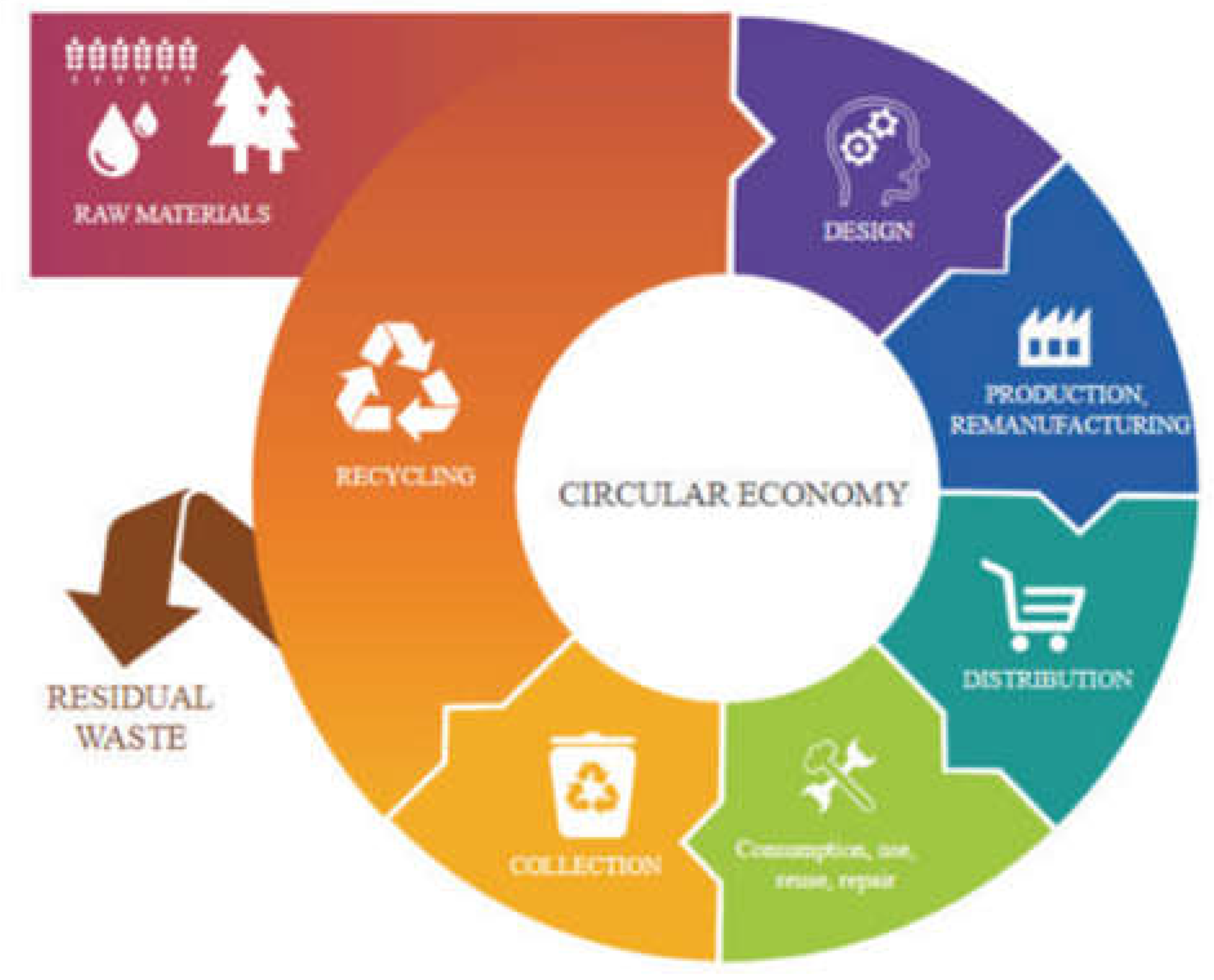
Lastly, incorporating the principles and practices of circular economy can directly reduce the issue of waste pollution in Thimphu. Circular economy as a framework has numerous advantages. Firstly, it can endure product designs that are durable, repairable, and upgradable. Secondly, waste-to-energy principles will incorporate organic waste composting and anaerobic digestion. This can produce organic composts in large facilities and convert organic waste to biogas. By adopting circular supply chains, it will encourage businesses to create a closed-loop supply chains that will ensure continuous recycling and reusing of materials within the production process (Shrestha, 2018). Similar to Gross National Happiness framework being the developmental framework for any development in Bhutan, adapting circular economy as the guiding framework for waste management strategies can be an alternative solution.
Figure 5.
Outline of the circular economy. Source: National Waste Management Strategy 2020.
Figure 5.
Outline of the circular economy. Source: National Waste Management Strategy 2020.
However, resource constraints and lack of expertise are major drawbacks of implementing such alternatives. It is also not achievable within a short period of time which can consume huge resources and precious time. Nonetheless, if we can incorporate this solution, we can gradually reduce the waste management challenges that Thimphu is currently facing.
Conclusion
The waste management challenges in Thimphu are multifaceted, involving rapid urbanization, inadequate waste segregation, and improper disposal practices. Thimphu generates a substantial amount of waste daily, with projections indicating an increase in the coming years. Key issues include soil, air, and water pollution due to improper waste handling and lack of adequate facilities. Despite governmental efforts, such as waste collection services and investment in infrastructure, these measures have not effectively mitigated the waste problem. The lack of public access to relevant data and research further complicates efforts to address the issue comprehensively.
Innovative solutions are essential to tackle Thimphu’s waste management problems effectively. Embracing a circular economy framework could significantly mitigate waste issues by promoting sustainable practices such as product durability, repairability, and recycling. Implementing waste-to-energy projects, despite technological and financial challenges, offers a potential avenue for both waste reduction and energy production. Educational programs targeting younger generations and the general public are crucial for fostering a culture of sustainability and responsible waste management. Additionally, initiatives like waste banks and incentivizing proper disposal practices could enhance public participation and reduce illegal dumping.
However, these solutions face significant challenges, including limited technological advancements, financial constraints, and the need for expertise. Resource constraints and the need for substantial investments in education and infrastructure are major hurdles. Nonetheless, with proper planning, research, and investment, these innovative approaches can gradually alleviate the waste management challenges in Thimphu, leading to a cleaner and more sustainable urban environment.
References
- Chakraborty, B.; Murshed, W.E.; Chakraborty, S. Analysis of solid waste management strategies in Thimphu with reference to its detrimental effect and remission approach. AIP Conference Proceedings 2018. [Google Scholar] [CrossRef]
- Chaudhry, F.N.; Malik, M.F. Factors affecting water pollution: a review. J. Ecosyst. Ecography 2017, 7, 225–231. [Google Scholar] [CrossRef]
- Dehghani, M.H.; Omrani, G.A.; Karri, R.R. Solid waste—sources, toxicity, and their consequences to human health. In Soft computing techniques in solid waste and wastewater management; Elsevier, 2021; pp. 205–213. [Google Scholar] [CrossRef]
- Dema, C. No change at Memelakha waste dump site. https://kuenselonline.com/no-change-at-memelakha-waste-dump-site/.
- Downs, A.; Acevedo, R.; Humble, K. How our trash impacts the environment, Earth Day. 28 February 2019. https://www.earthday.org/how-our-trash-impacts-the-environment/#:~:text=If%20emissions%20from%20waste%20disposal,%2C%20cardiovascular%20disease%2C%20and%20more.
- Khamrang, L. Bhutan’s Dream City of Thimphu. South Asia Research 2020, 40, 397–415. [Google Scholar] [CrossRef]
- Kumari, P.; Gupta, N.C.; Kaur, A. A review of groundwater pollution potential threats from municipal solid waste landfill sites: assessing the impact on human health. Avicenna Journal of Environmental Health Engineering 2017, 4, 11525. [Google Scholar] [CrossRef]
- Lhaden, Y. More resources to tackle the mounting waste problem. 2022. https://kuenselonline.com/more-resources-to-tackle-the-mounting-waste-problem/.
- Municipal Solid Waste | Wastes | US EPA. https://archive.epa.gov/epawaste/nonhaz/municipal/web/html/.
- NEC. National waste management strategy 2019; National Environment Commission, Royal Government of Bhutan: Bhutan, 2019. [Google Scholar]
- NEC. The waste prevention and management regulation 2020; National Environment Commission, Royal Government of Bhutan: Bhutan, 2020. [Google Scholar]
- NSB. National waste inventory survey Bhutan; National Statistics Bureau, Royal Government of Bhutan: Bhutan, 2019. [Google Scholar]
- NSB. Environmental accounts statistics 2023; National Statistics Bureau, Royal Government of Bhutan: Bhutan, 2023. [Google Scholar]
- Phuntsho, S.; Dulal, I.; Yangden, D.; Tenzin, U.M.; Herat, S.; Shon, H.; Vigneswaran, S. Studying municipal solid waste generation and composition in the urban areas of Bhutan. Waste Management & Research 2009, 28, 545–551. [Google Scholar] [CrossRef]
- Poudel, Y. Cash for trash? 2024. https://kuenselonline.com/cash-for-trash/.
- Poudel, Y. Waste generation calls for more focused approach. 2024. https://kuenselonline.com/waste-generation-calls-for-more-focused-approach/.
- RGoB. Population & housing census of Bhutan 2005; Royal Government of Bhutan, 2005. [Google Scholar]
- RGoB. Population & housing census of Bhutan 2017; Royal Government of Bhutan, 2017. [Google Scholar]
- Shrestha, Z. The Integration of Circular Economy into the Municipal Solid Waste Management of Kathmandu Metropolitan City in Nepal: Present Sector Challenges & Opportunities for Waste Material (Re)Utilization; 2018; https://essay.utwente.nl/77393/.
- Sikder, S.; Toha, M.; Mostafizur Rahman, M. An overview on municipal solid waste characteristics and its impacts on environment and human health. In Technical Landfills and Waste Management: Volume 1: Landfill Impacts, Characterization and Valorisation; 2024; pp. 135–155. [Google Scholar] [CrossRef]
- Wakil, K.; Naeem, M.A.; Anjum, G.A.; Waheed, A.; Thaheem, M.J.; Hussnain, M.Q.U.; Nawaz, R. A hybrid tool for visual pollution Assessment in urban environments. Sustainability 2019, 11, 2211. [Google Scholar] [CrossRef]
- Xu, C.; Zhang, B.; Gu, C.; Shen, C.; Yin, S.; Aamir, M.; Li, F. Are we underestimating the sources of microplastic pollution in terrestrial environment? Journal of Hazardous Materials 2020, 400, 123228. [Google Scholar] [CrossRef] [PubMed]
- Yonten, K. Thimphu Solid waste generation would increase to 124 metric tonnes a day by 2027. The Bhutanese, 6 February 2018. https://thebhutanese.bt/thimphu-solid-waste-generation-would-increase-to-124-metric-tonnes-a-day-by-2027/.
- Zhang, Y.; Wang, S.; Olga, V.; Xue, Y.; Lv, S.; Diao, X.; Zhang, Y.; Han, Q.; Zhou, H. The potential effects of microplastic pollution on human digestive tract cells. Chemosphere 2022, 291, 132714. [Google Scholar] [CrossRef] [PubMed]
|
Disclaimer/Publisher’s Note: The statements, opinions and data contained in all publications are solely those of the individual author(s) and contributor(s) and not of MDPI and/or the editor(s). MDPI and/or the editor(s) disclaim responsibility for any injury to people or property resulting from any ideas, methods, instructions or products referred to in the content. |
© 2024 by the authors. Licensee MDPI, Basel, Switzerland. This article is an open access article distributed under the terms and conditions of the Creative Commons Attribution (CC BY) license (http://creativecommons.org/licenses/by/4.0/).