

Submitted:
25 December 2024
Posted:
26 December 2024
You are already at the latest version
Abstract
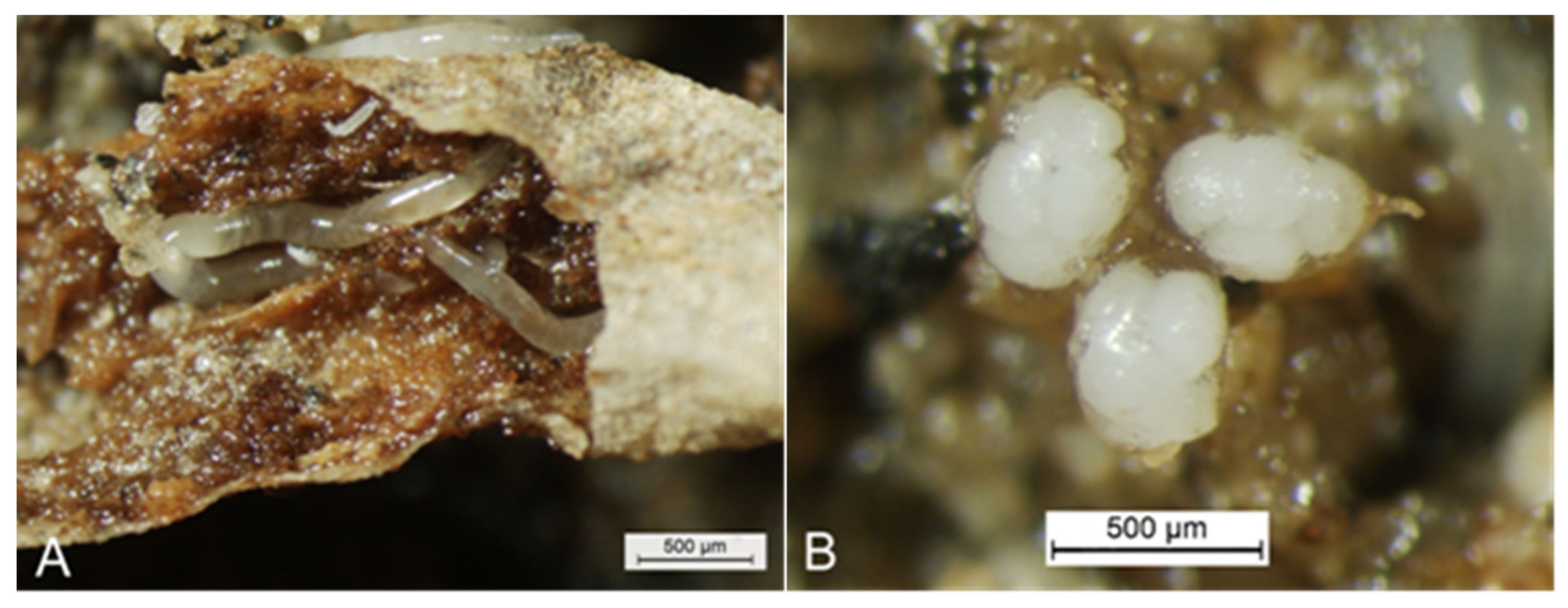
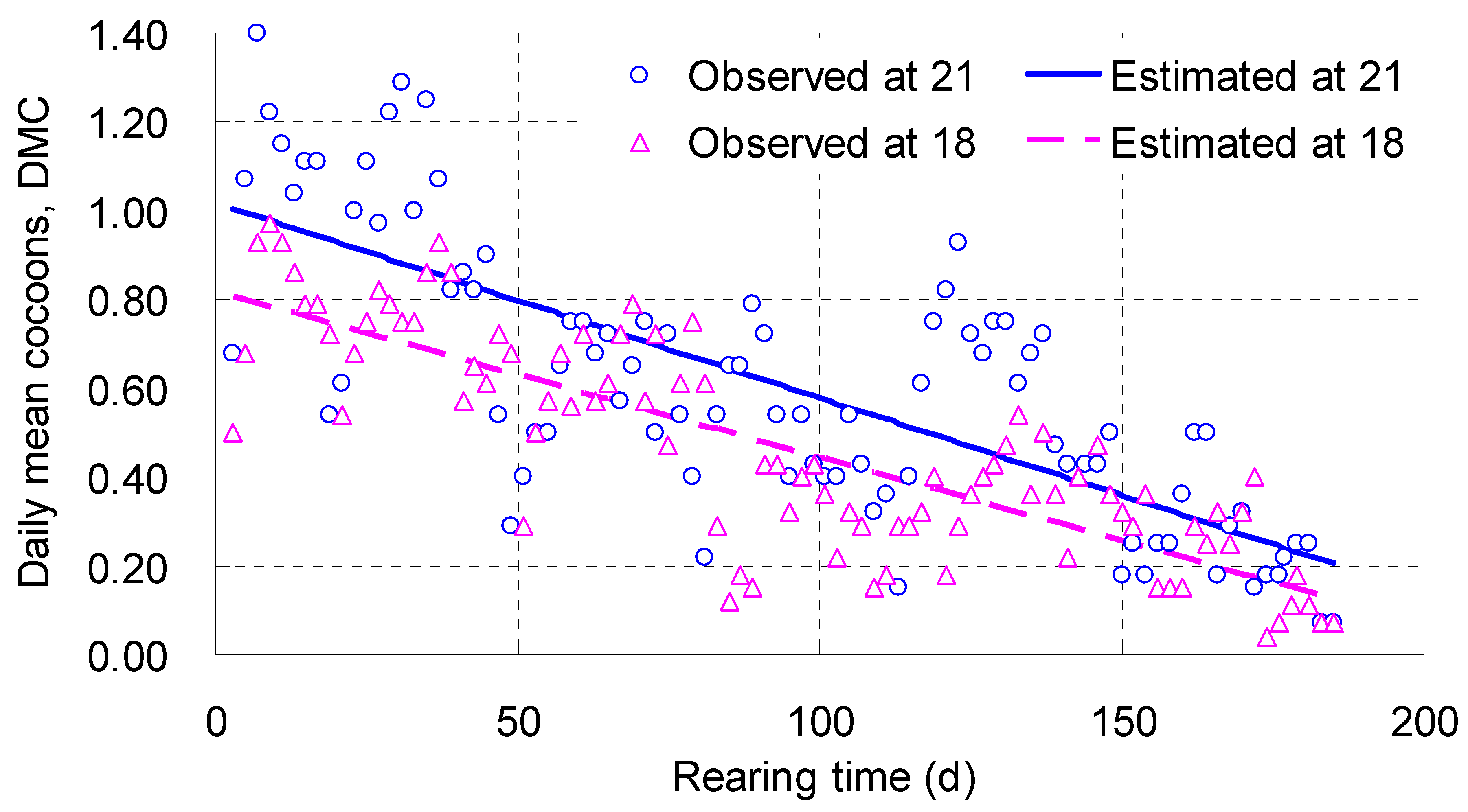
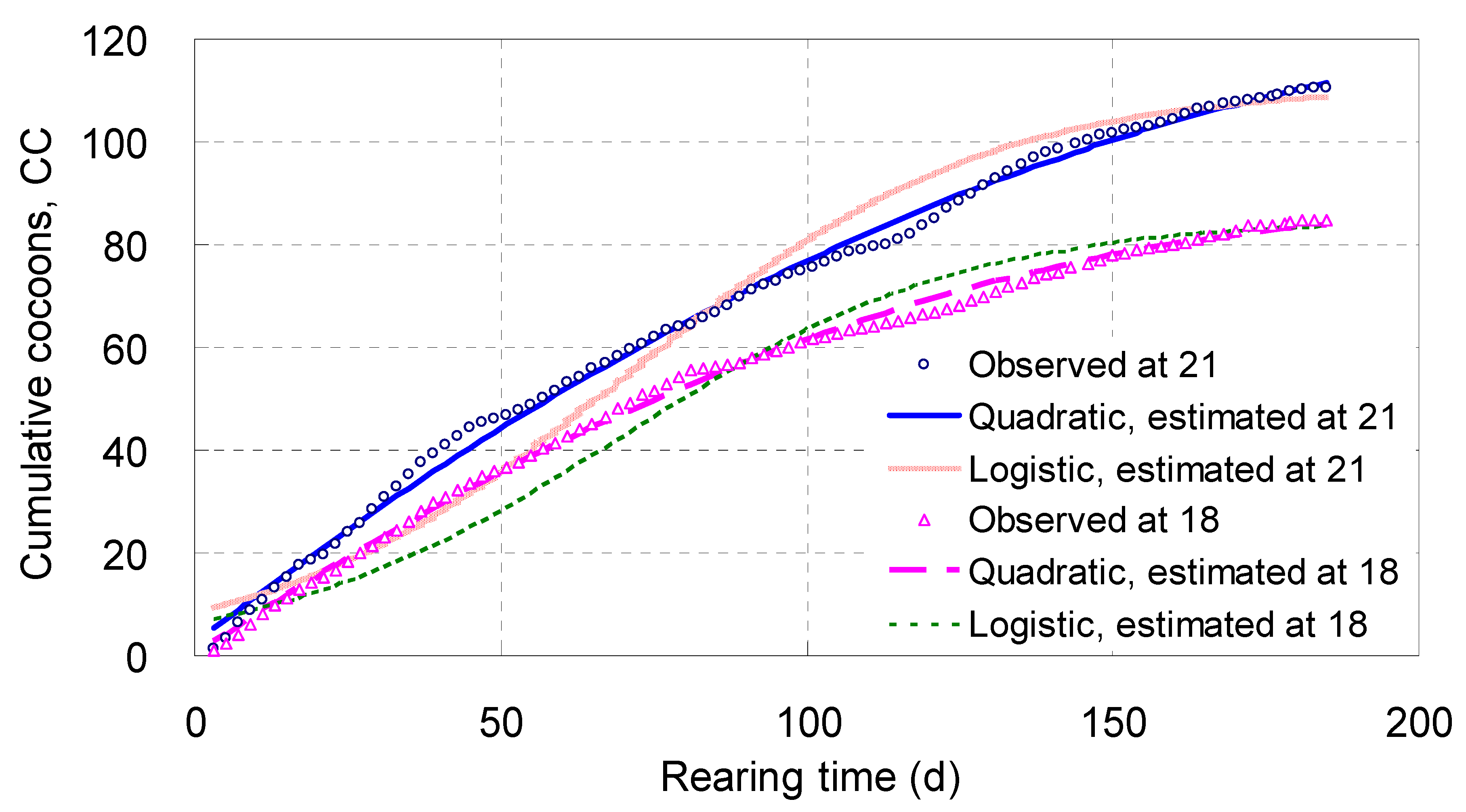
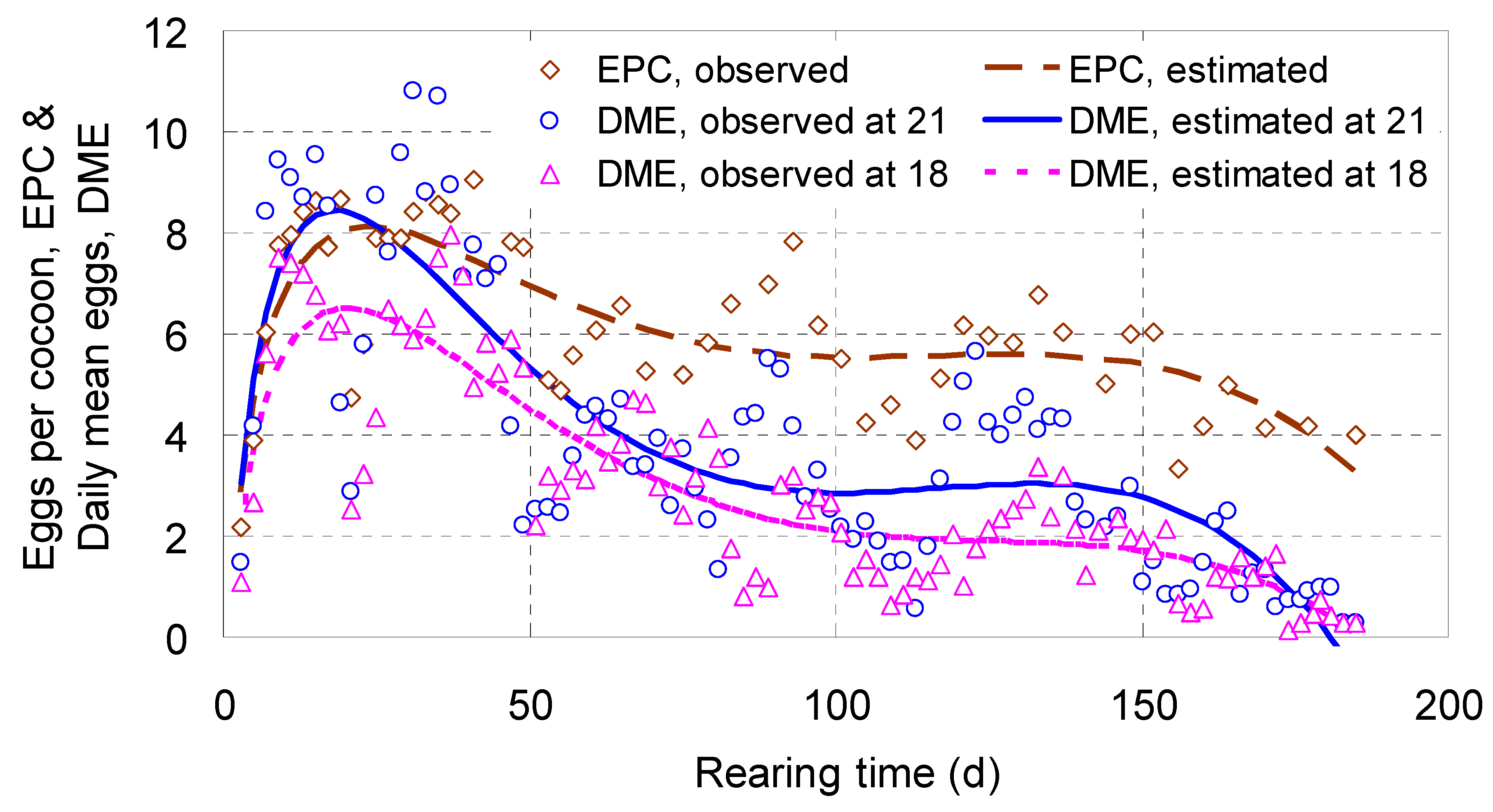
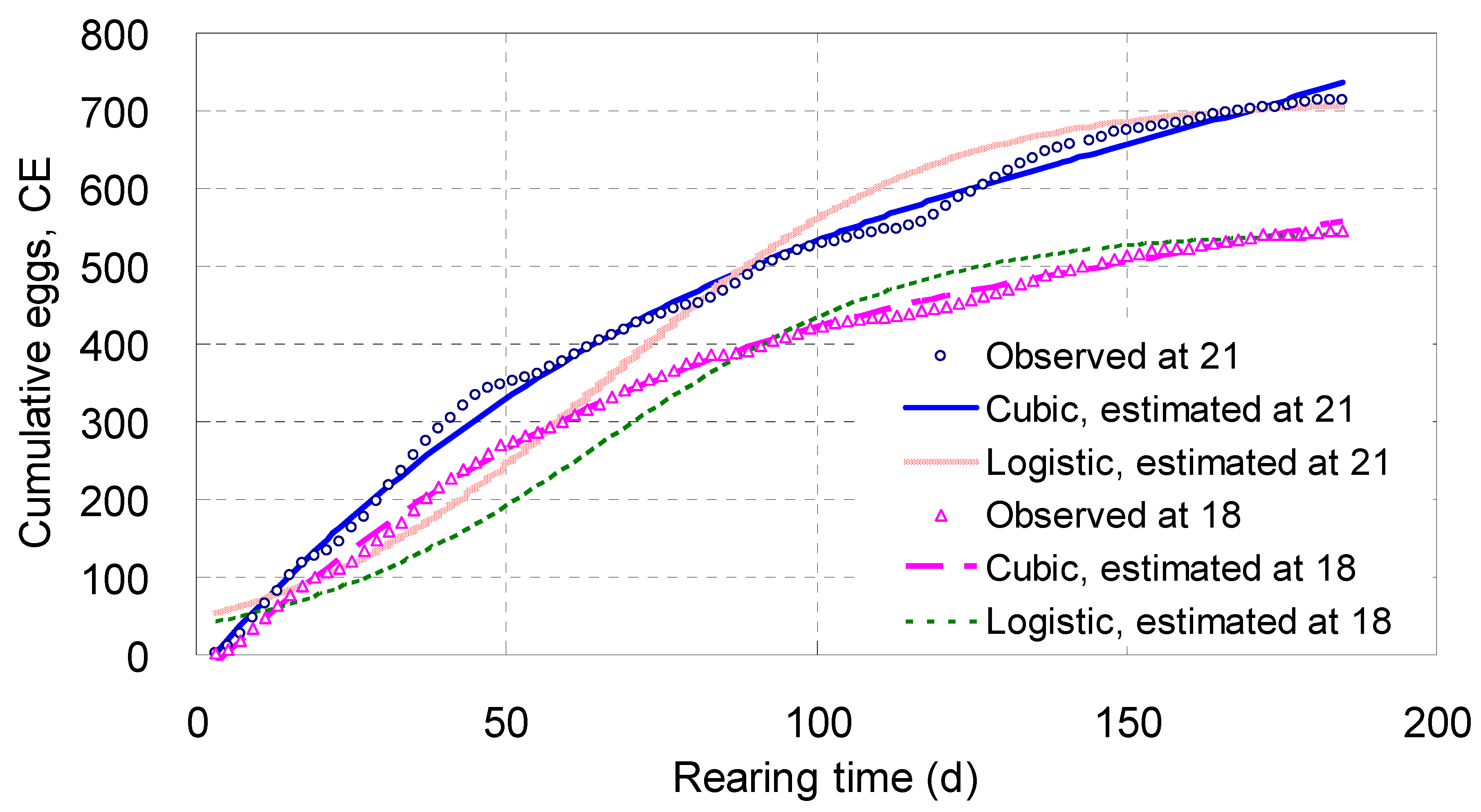
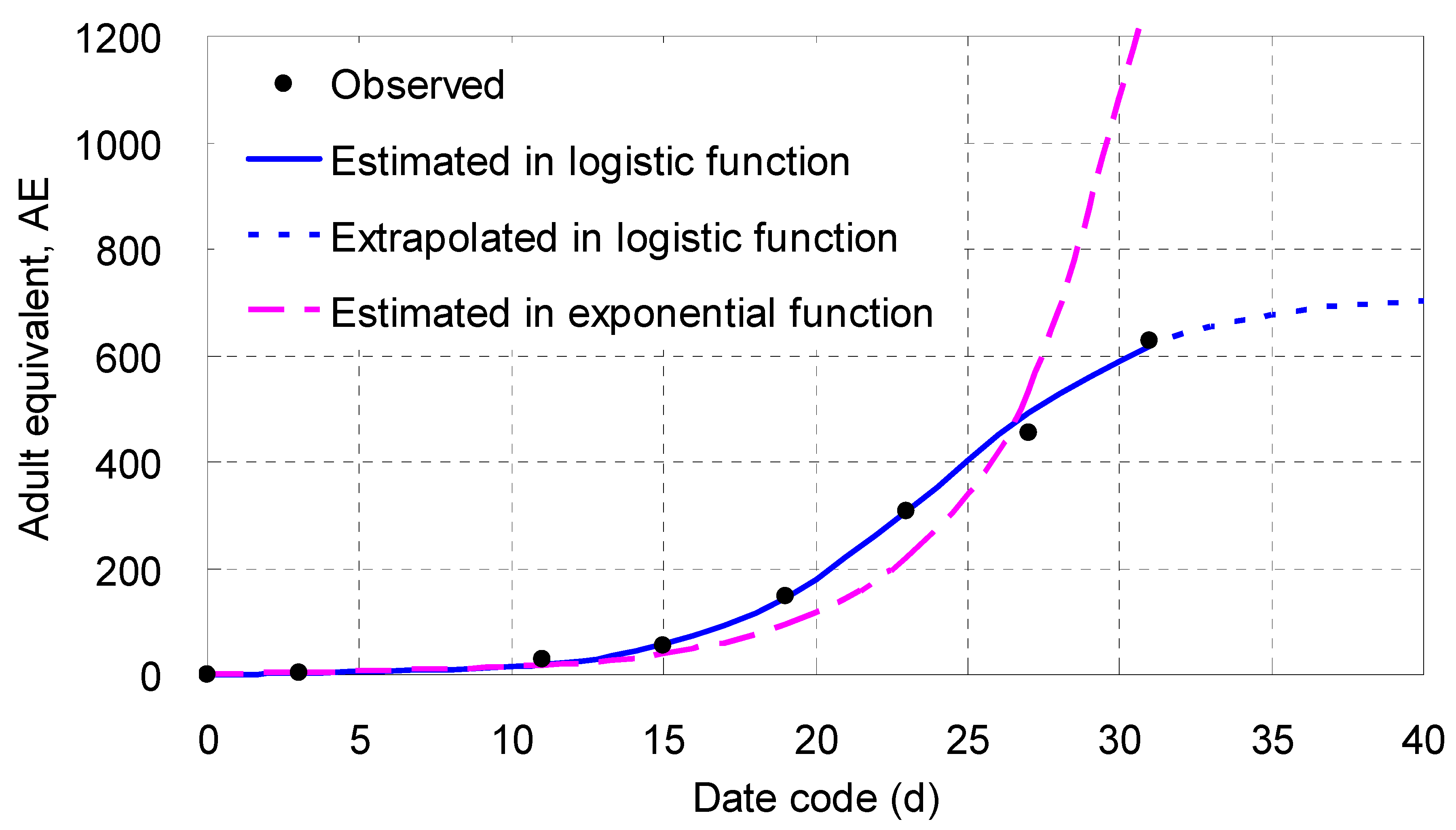
The worm Enchytraeus buchholzi is a new pest on American ginseng Panax quinquefolium. To explore its reproductive potential and then estimate its population dynamics, the authors conducted two related experiments: 1) to measure individual fecundity in lifetime by rearing each of parent adults alone in a wet-sandy dish at 18 and 21 °C indoors; and 2) to test population growth by rearing each of parent adults together with its offspring for a time longer than two generations at 21 °C. In Experiment I, five dependent varia-bles, such as daily mean cocoons (DMC), cumulative cocoons (CC), eggs per cocoon (EPC), daily mean eggs (DME) and cumulative eggs (CE), were extracted, with each of them subject to a stepwise regression analysis on rearing time (T) and its power series as independent variables. Equaling to the net reproductive rate (R0), the generational adult equivalent (GAE) was calculated via a conversion of F1 generational eggs into adult equivalents (AE). In Experiment II, both an exponential and a logistic function were applied to construct regression equations. The results indicated: 1) a parent adult of E. buchholzi was able to live for a period as long as 10 and 13 full generations at the two temperatures tested, and lay 84.8 and 110.6 cocoons containing 545 and 714 eggs respectively; 2) DMC reached its maximum between 7 and 9 days of rearing and then declined slowly along a straight regression line; 3) CC rose steadily along a quadratic curve; 4) both EPC and DME varied following a cubic curve; 5) CE increased steadily along a cubic curve; 6) the new polynomial models suitably reflected numerical growth trends of cocoons and eggs in the F1 generation in broad sense, and corresponding derivative equations quantified both daily reproductive potential and resistance of the worm, and thus revealed its daily reproductive capacity; 7) R0 was 41.2 AE at 21 °C and 42.5 AE at 18°C when a population of E. buchholzi lived in a niche with ambient resources unlimited; 8) This kind of temporal population generated by individual reproduction had fully demonstrated its significant, generational reproductive potential; and 9) living in such a limited area as the wet-sandy dish, bypassing an exponential growth process, the laboratory population grew up along a logistic curve from F1 to F3 generations. The statistical relationships help to comprehend individual reproduction of E. buchholzi, understand better the logical sequence and the difference between individual and population reproductions, predict population dynamics of the worm, and provide its integrated pest management with a solid basis. The experimental study has expanded theories on bionomics and population ecology, and opened a new area for research work in related fields.
Keywords:
Introduction
Materials and Methods
Preparation for the Worm
Experimental Design and Execution
Experiment I: Individual Reproduction – Measurement of Cocoons and Eggs Laid by a Parent Adult in Its Lifetime
Experiment II: Population Reproduction – Measurement of Laboratory Population Growth during a Time Longer than Two Generations.
Statistical Analyses
Experiment I: Individual Reproduction
Designation of Independent and Dependent Variables
Simulation of Relations Between CC or CE and T by Applying Exponential and Logistic Functions
Stepwise Regression Analysis and Residual Analysis for Aptness of the Polynomial Regression Models Newly-Built
Division of the Filial Egg Stage into Many Substages, and Conversion of the Worms in Each Substage into Generational Adult Equivalents (GAE)
Experiment II: Population Reproduction
Transform of the Number of Mixed Worms in Each Wet-Sandy Dish to Adult Equivalents (AE)
Designation of Variables and Their Correlation and Regression Analysis
Results
Experiment I: Individual Reproduction
Survivorship of the Parent Adults
Exponential and Logistic Equations for CC and CE with Their Aptness
Polynomial Regression Models of Each Y on Ts
Cumulative Cocoons, CC
Eggs per Cocoon, EPC
Daily Mean Eggs, DME
Cumulative Eggs, CE
Values of GCE, GAE and ADR as Well as Recognition of R0
Experiment II: Population Reproduction
Discussion
Polynomial Growth Trends in Individual Reproduction
Basis and Application of R0
Logistic Growth Trends in Population Reproduction
More Considerations
Conclusions
Author Contributions
Funding
Availability of Data and Materials
Acknowledgments
Competing Interests
Ethics Approval and Consent to Participate
Authors' Details
References
- Zhang, T.Y.; Qian, X.C. Key points of integrated control techniques of pests on American ginseng grown in Qin-Ba mountainous areas. Shaanxi Journal of Agricultural Science 1989, 45. [Google Scholar]
- Qian, X.C.; Zhang, T.Y.; Chen, J.F. Occurrence and control of diseases on American ginseng in Qin-Ba mountainous areas. Journal of Chinese Medicinal Materials 1993, 16, 3–5. [Google Scholar]
- Vejdovský, F. Zur Anatomie und Systematik der Enchytraeiden. Sitzungsberichte der Königlich Böhmischen Gesellschaft der Wissenschaften 1878, 1877, 294–304. [Google Scholar]
- Zhao, L.M.; Xie, X.C.; Chen, D.J.; Ma, G.L.; Sun, Y. Microscopic observations on form and structure of the worm Enchytraeus buchholzi (Clitellata: Enchytraeidae). BMC Zoology 2022, 7, 1–15. [Google Scholar] [CrossRef]
- Martin, P.; Reynolds, J.; van Haaren, T. World List of Marine Oligochaeta. Enchytraeus buchholzi Vejdovský, 1878. 2024. Accessed through: World Register of Marine Species at. https://www.marinespecies.org/aphia.php?p=taxdetails&id=137403 (accessed on 25 May 2024).
- Zhao, L.M.; Chen, R.X.; Zhang, B.; Wang, Q.M. Economic benefits of growing American ginseng (Panax quinquefolium) and corresponding protective measures. Gensing Research 2017, 29, 27–32. [Google Scholar] [CrossRef]
- Nielsen, C.O.; Christensen, B. The Enchytraeidae, critical revision and taxonomy of European species. Natura Jutlandica 1963, 10, 1–19. [Google Scholar]
- Zhao, L.M.; Ma, G.L. Evaluation of toxicity of seven pesticides on Enchytraeus bulbosus (Plesiopora: Enchytraeidae). Agrochemicals 2014, 53, 927–928, 936. [Google Scholar] [CrossRef]
- Zhao, L.M.; Wang, Q.M.; Zhang, D.D.; Ma, G.L. Cooperative protection of American ginseng seedlings by applying imidacloprid, fludioxonil and phoxim. Journal of Chinese Medicinal Materials 2015, 38, 1349–1354. [Google Scholar] [CrossRef] [PubMed]
- Ma, G.L.; Zhao, L.M. Threshold temperature and thermal constant for development of Enchytraeus bulbosus (Clitellata: Plesiopora: Enchytraeidae). Acta Agriculturae Boreali-Occidentalis Sinica 2015, 24, 151–155. [Google Scholar] [CrossRef]
- Zhao, L.M.; Zhang, B. Temperature properties within plastic greenhouses for American ginseng growth in Liuba County, Shaanxi, China. Chinese Journal of Agrometeorology 2015, 36, 544–552. [Google Scholar] [CrossRef]
- Ma, G.L. Studies on bionomics of Enchytraeus bulbosus (Clitellata, Enchytraeidae). M.Sc. Thesis, Shaanxi University of Technology, China, 2016. [Google Scholar]
- Zhao, L.M.; Ma, G.L.; Guo, S.F. Feeding amount of the pot-worm (Enchytraeus bulbosus) on American ginseng root and its generational fertility. Journal of Northwest A&F University (Natural Science Edition) 2019, 47, 47–53. [Google Scholar] [CrossRef]
- Elkinton, J.S. Insect population ecology - an African perspective; The International Center of Insect Physiology and Ecology Science Press: Nairobi, Kenya, 1993; pp. 33–40, 77–84. [Google Scholar]
- Rota, E. Italian Enchytraeidae (Oligochaeta). I. Bolletino di Zoologia 1995, 62, 183–231. [Google Scholar] [CrossRef]
- Rota, E.; Healy, B.A. Taxonomic study of some Swedish Enchytraeidae (Oligochaeta), with descriptions of four new species and notes on the genus Fridericia. Journal of Natural History 1999, 33, 29–64. [Google Scholar] [CrossRef]
- Xu, R.M.; Cheng, X.Y. Insect population ecology - basis and frontier; Science Press: Beijing, China, 2005; pp. 188–231. [Google Scholar]
- Li, C.X.; Shao, Y.; Jiang, L.N. Biostatistics, 4th ed.; Science Press: Beijing, China, 2008. [Google Scholar]
- Little, T.M.; Hills, F.J. Agricultural experimentation design and analysis; John Wiley & Sons, Inc.: Hoboken, NJ, USA, 1978. [Google Scholar]
- Kutner, M.H.; Nachtsheim, C.J.; Neter, J.; Li, W. Applied linear statistical models, 5th ed.; McGraw Hill/Irwin: New York, USA, 2005; pp. 100–115, 361–368, 586–590. [Google Scholar]
- Dent, D. Insect pest management, 2nd ed.; CABI Publishing: Oxon, UK, 2000; pp. 49–50. [Google Scholar] [CrossRef]
- Zhao, L.M. Economic-injury level and economic threshold of Schwiebea similis (Acari: Acaridae) on American ginseng. Acta Agriculturae Boreali-Occidentalis Sinica 2018, 27, 108–113. [Google Scholar] [CrossRef]

| T. (°C) |
Func- tion |
n | Linearized phase | Chi-sq.-test | Back-transformed equation, or Real equation | Chi-square-test | |||
| r | equation | χ2 | P ≈ | χ2 | P ≈ | ||||
| 18 | Expo- nential |
92 | 0.8192*** | CC’ = 2.60 + 0.0125t | 6.80 | 1.000 | CC = 13.4 × 1.0126t | 426*** | 9E-45 |
| 0.7477*** | CE’ = 4.45 + 0.0129t | 7.17 | 1.000 | CE = 86.0 × 1.0130t | 4,002*** | 0.000 | |||
| Logistic | 92 | -0.9603*** | CC’ = 2.48 – 0.0355t | 20.7 | 1.000 | CC = 85.0/(1 + 11.9e-0.0355t) | 71.0 | 0.940 | |
| -0.9449*** | CE’ = 2.57 – 0.0392t | 37.1 | 1.000 | CE = 546/(1 + 13.0e-0.0392t) | 745*** | 2E-103 | |||
| 21 | Expo- nential |
92 | 0.8342*** | CC’ = 2.86 + 0.0123t | 5.48 | 1.000 | CC = 17.5 × 1.0124t | 441*** | 2E-47 |
| 0.7578*** | CE’ = 4.73 + 0.0127t | 6.27 | 1.000 | CE = 113 × 1.0128t | 4,469*** | 0.000 | |||
| Logistic | 92 | -0.9657*** | CC’ = 2.47 – 0.0346t | 14.8 | 1.000 | CC = 111/(1 + 11.8e-0.0346t) | 98.5 | 0.279 | |
| -0.9483*** | CE’ = 2.59 – 0.0389t | 32.6 | 1.000 | CE = 714/(1 + 13.4e-0.0389t) | 1,100*** | 8E-173 | |||
| Temp. (°C) |
Dependent variable and derivative as shown |
n | r or R | Regression equation with F-test ratio of each partial regression coefficient |
sy/x | Chi-square-test | |
| χ2 | P ≈ | ||||||
| 18 | Daily mean cocoons, DMC | 92 | -0.8195*** |
DMC = 0.816 – (3.74E-3)t Fb1 = 184.0*** |
0.14 | 4.23 | 1.0000 |
| 21 | Daily mean cocoons, DMC | 92 | -0.7546*** |
DMC = 1.02 – (4.39E-3)t Fb1 = 119.1*** |
0.21 | 6.28 | 1.0000 |
| 18 | Cumulative cocoons, CC | 92 | 0.9986*** |
CC = 0.166 + 0.801t – (1.88E-3)t2 Fb1= 5982.1***; Fb2= 1255.5*** |
1.30 | 4.82 | 1.0000 |
| Derivative of the equation listed above | dy/dt = 0.801 – (3.77E-3)t | ||||||
| 21 | Cumulative cocoons, CC | 92 | 0.9984*** |
CC = 2.55 + 0.923t – (1.81E-3)t2 Fb1= 4111.9***; Fb2= 596.9*** |
1.80 | 10.7 | 1.0000 |
| Derivative of the equation listed above | dy/dt = 0.923 – (3.61E-3)t | ||||||
| 18 - 21 | Eggs per cocoon, EPC | 52 | 0.7676*** |
EPC = -6.24 + 6.77t1/2 – 0.878t + (4.20E-3)t2 – (1.01E-5)t3 Fb1 = 30.6***; Fb2= 26.6***; Fb3 = 18.6***; Fb4 = 14.5*** |
1.12 | 9.19 | 1.0000 |
| 18 | Daily mean eggs, DME | 92 | 0.8628*** |
DME = -6.78 + 6.59t1/2 – 0.889t + (4.12E-3)t2 – (9.39E-6)t3 Fb1 = 39.9***; Fb2 = 40.4***; Fb3 = 30.1***; Fb4 = 23.1*** |
1.07 | 29.8 | 1.0000 |
| 21 | Daily mean eggs, DME | 92 | 0.8194*** |
DME = -8.78 + 9.01t1/2 – 1.28t + (6.58E-03)t2 – (1.62E-5)t3 Fb1 = 33.9***; Fb2 = 38.2***; Fb3 = 34.8***; Fb4 = 31.4*** |
1.59 | 52.8 | 0.9994 |
| 18 | Cumulative eggs, CE | 92 | 0.9991*** |
CE = -34.4 + 7.83t - 0.042t2 + (9.15E-5)t3 Fb1= 2996.1***; Fb2 = 570.8***; Fb3 = 222.3*** |
6.94 | 34.9 | 1.0000 |
| Derivative of the equation listed above | dy/dt = 7.83 – 0.084t + (2.74E-4)t2 | ||||||
| 21 | Cumulative eggs, CE | 92 | 0.9978*** |
CE = -23.7 + 9.08t – 0.045t2 + (9.75E-5)t3 Fb1 = 1031.7***; Fb2 = 167.2***; Fb3 = 64.5*** |
13.7 | 48.8 | 0.9999 |
| Derivative of the equation listed above | dy/dt = 9.08 – 0.090t + (2.93E-4)t2 | ||||||
| Substage (= a life cycle) |
18 °C | 21 °C | ||||
| GCE | GAE | ADR | GCE | GAE | ADR | |
| 1st | 101.0 | 42.5 | 0.42 | 101.8 | 41.2 | 0.40 |
| 2nd | 100.9 | 41.3 | 0.41 | 95.6 | 43.5 | 0.46 |
| 3rd | 85.5 | 48.5 | 0.57 | 122.5 | 66.0 | 0.54 |
| 4th | 68.0 | 32.6 | 0.48 | 49.8 | 29.0 | 0.58 |
| 5th | 42.1 | 23.5 | 0.56 | 57.3 | 29.9 | 0.52 |
| 6th | 35.5 | 21.4 | 0.60 | 41.6 | 19.9 | 0.48 |
| 7th | 27.8 | 11.5 | 0.41 | 56.0 | 31.6 | 0.56 |
| 8th | 44.1 | 23.3 | 0.53 | 23.6 | 13.7 | 0.58 |
| 9th | 23.6 | 13.6 | 0.58 | 56.3 | 25.2 | 0.45 |
| 10th | 15.7 | 9.8 | 0.62 | 53.7 | 29.7 | 0.55 |
| 11th | - | - | - | 23.6 | 14.2 | 0.60 |
| 12th | - | - | - | 21.3 | 10.8 | 0.51 |
| 13th | - | - | - | 10.6 | 5.4 | 0.51 |
| Mean ± SE | 54.4 ± 10.1 | 26.8 ± 4.4 | 0.52 ± 0.03 | 54.9 ± 9.4 | 27.7 ± 4.5 | 0.52 ± 0.02 |
| Function | n | Linearized phase | Chi-square test | Back-transformed equation or Real equation |
Chi-square test | |||
| r | Regression equation | χ2 | P ≈ | χ2 | P ≈ | |||
| Exponential | 8 | 0.9812*** | y' = 0.1682 + 0.0947t | 0.3614 | 0.9998 | y = 1.473 × 1.244t | 417.3 | 0.0000 |
| Logistic | 8 | -0.9982*** | y' = 6.5606 - 0.2738t | 0.1281 | 1.0000 | y = 709.3/(1 + 706.7e-0.2738t) | 6.519 | 0.4806 |
Disclaimer/Publisher’s Note: The statements, opinions and data contained in all publications are solely those of the individual author(s) and contributor(s) and not of MDPI and/or the editor(s). MDPI and/or the editor(s) disclaim responsibility for any injury to people or property resulting from any ideas, methods, instructions or products referred to in the content. |
© 2024 by the authors. Licensee MDPI, Basel, Switzerland. This article is an open access article distributed under the terms and conditions of the Creative Commons Attribution (CC BY) license (http://creativecommons.org/licenses/by/4.0/).