

Submitted:
24 December 2024
Posted:
25 December 2024
You are already at the latest version
Abstract
Invasive fungal infections (IFIs) pose a serious threat to human health and are associated with high morbidity and mortality. In addition, the emergence of drug-resistant fungi has created an unmet medical need for the development of new classes of antifungal agents. The s-triazines are six-membered, nitrogen-containing heterocyclic scaffolds with a broad range of biological properties and have received considerable attention in medical chemistry. This review highlights recent literature reports of s-triazines derivatives as potential antifungal agents with a focus on their structure-activity relationships (SAR) which paves the way for the design and synthesis of more active s-triazine antifungal candidates.
Keywords:
Heterocyclic compound
; s-Triazine
; Antifungal
; Minimum inhibitory concentration
1. Introduction
It is estimated that invasive fungal infections (IFIs) cause approximately 1.5-2 million deaths every year, especially among immunocompromised patients and those undergoing invasive surgery [1,2]. Furthermore, the incidence of IFIs continues to be exacerbated by acquired immunodeficiency syndrome (AIDS), influenza, more recently by the COVID-19 outbreaks and the emergence of multidrug-resistant fungi [3,4]. In 2022, the World Health Organization developed a fungal priority pathogens list (WHO FPPL) to help galvanize global action, which classified four fungal pathogens (Cryptococcus neoformans, Candida auris, Aspergillus fumigatus and Candida albicans) as “critical” group and a further fifteen fungal pathogens (including Candida glabrata, Candida parapsilosis, Candida krusei, Fusarium spp. and the Mucorales) as medium or high priority group [5]. Currently, there are four main classes of antifungal drugs used in the clinic; these are the azoles (ketoconazole, fluconazole and itraconazole), echinocandins (caspofungin and micafungin), polyene antibiotics (amphotericin B and nystatin) and antimetabolites (5-fluorocytosine). However, limitations to the existing antifungal drugs include relatively narrow-spectrums of activity, multiple and diverse drug-drug interactions, limitations to access worldwide, and frequent acquired and innate drug resistance [6,7]. Overall, there is an urgent need to develop new antifungal agents with novel chemical scaffolds.
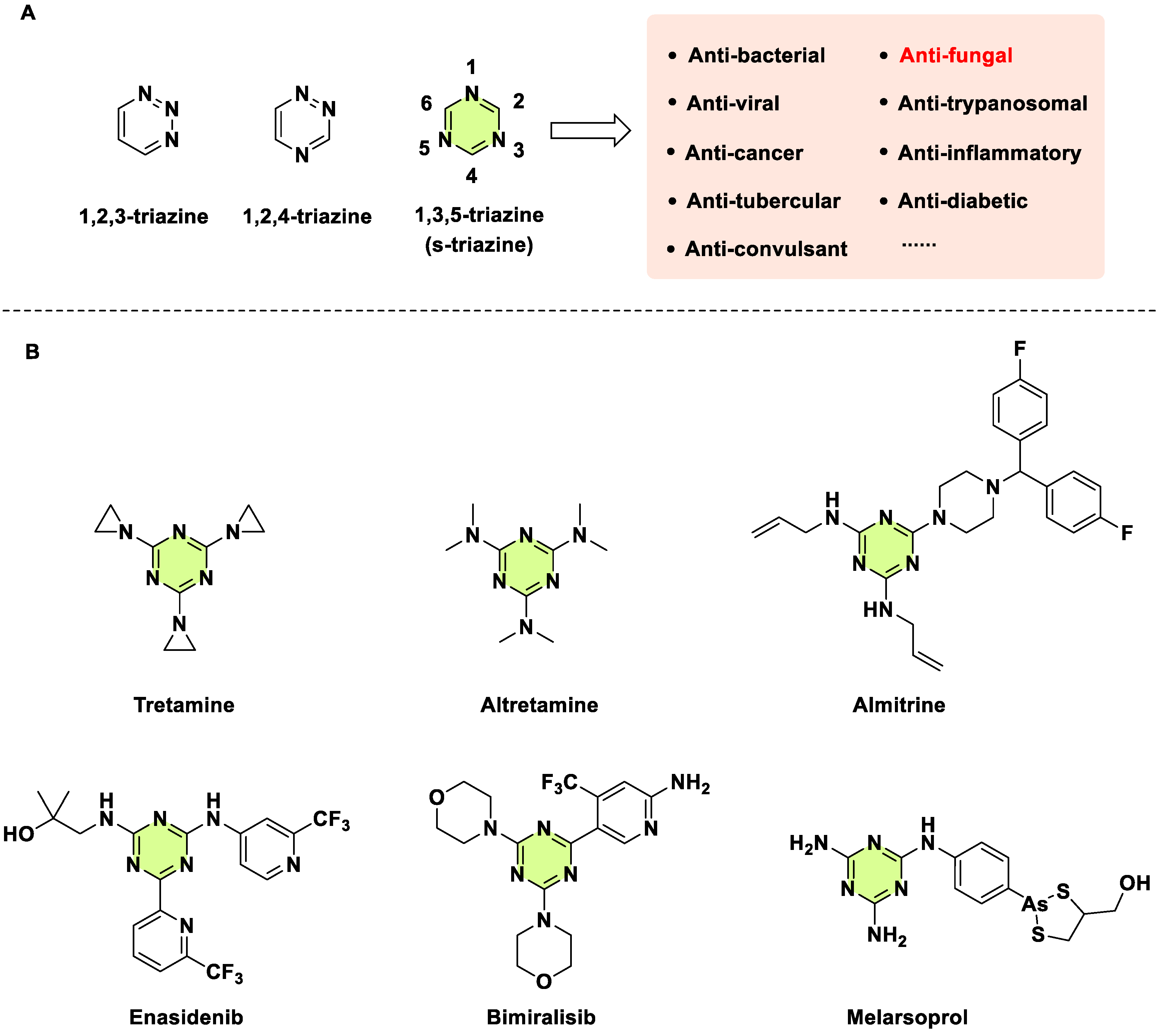
The triazine ring is one of the most important heterocyclic, pharmacologically active moieties in drug molecules. Triazine exists in three isomeric forms depending on the position of the nitrogen atom, namely 1,2,3-triazine, 1,2,4-triazine and 1,3,5-triazine known as s-triazine. Out of these three isomers, the rigid symmetrical structure of s-triazine has received much attention in medicinal chemistry and possess diverse biological profiles such as anti-bacterial [8], anti-viral [9], anti-cancer [10], anti-tubercular [11], anti-convulsant [12], etc. (Figure 1A). Moreover, many approved drugs (tretamine, altretamine, almitrine, enasidenib, bimiralisib and melarsoprol) bear a s-triazine moiety (Figure 1B), indicating the favorable safety and pharmacokinetic properties of s-triazine.
In addition, s-triazine is an ideal framework to construct novel drug candidates due to the ease in synthesizing the s-triazine core from simple starting materials or from the availability of cyanuric chloride (TCT, 1), alongside the ability to explore the chemical space within the core. Scheme 1 presents a temperature-dependent selective replacement of chlorine atoms in 1 with sequential nucleophilic substitutions (typically N-, O-, S-, or P-nucleophiles) that allow the extensive preparation of mono-, di- and tri-substituted s-triazine derivatives. Apart from their application in medicinal chemistry, s-triazine derivatives are also useful as herbicides, insecticides, corrosion inhibitor, energetics and new materials [13,14,15,16].
Although many reviews have summarized the synthesis, structure-activity relationships (SAR) and biological application of triazine derivatives, the antifungal profiles of s-triazine compounds have rarely been introduced [17,18,19,20,21]. Given the grave need to develop novel lines of treatments against IFIs, we focus this review on highlighting examples of s-triazine derivatives as potential antifungal agents and their SAR from publications between 2014-2024. In this context, this review will provide an insight for the development of novel s-triazine derivatives in future antifungal research.
2. Antifungal Activities of S-Triazine Based Derivatives
Patil et al. reported synthesizing a series of s-triazine derivatives through a one-step reaction by mixing 2-cyanoguanidine with various substituted benzonitriles to yield fifteen 1,3,5-triazine-2,4-diamines derivatives (Scheme 2) [22]. The antifungal activity of each compound was examined against two fungal strains: C. albicans and C. neoformans. Compound 2a, bearing 4-Br substituted phenyl, displayed moderate fungal growth inhibition (~25% at 32 µg/mL) against both fungi. Compound 2b, bearing a 4-ethyl substituted phenyl, showed the highest growth inhibition (~30% at 32 µg/mL) against C. neoformans. The SAR suggested that either electron-withdrawing or electron-donating group substitution on the aryl did not play any role in the antifungal profiles.
Mekheimer et al. synthesized and reported various N2-(tetrazol-5-yl)-6-substituted-5,6-dihydro-1,3,5-triazine-2,4-diamines through the microwave reaction of 5-amino-1,2,3,4-tetrazole, cyanamide, and aromatic or heteroaromatic aldehydes (Scheme 3) [23]. These s-triazine/tetrazole analogs were subsequently screened for in vitro antimicrobial activity. Notably, compounds 3a-c demonstrated excellent antifungal efficacy against C. albicans with minimum inhibitory concentration (MIC) values of 1.475 × 10⁻⁸, 1.288 × 10⁻³ and 2.1851 × 10⁻⁴ µg/mL, respectively, which was significantly more efficacious than the reference fluconazole (MIC: 0.857 µg/mL). The substitution of the phenyl group with other aryl groups or a substitution on the benzene ring resulted in a loss of antifungal activity. Furthermore, compounds 3a-c exhibited good inhibition of Candida 14α-demethylase enzyme, with IC50 values of 7.451 ± 0.404, 25.066 ± 1.358, and 3.369 ± 0.183 µg/mL, respectively, as determined by a rapid fluorescence-based screening method. Molecular docking studies indicated that compounds 3a-c demonstrated good binding affinity to the human CYP51 protein (PDB code: 3LD6) and possessed acceptable ADME properties.
Hybridization of different bioactive moieties into a single molecule have the potential to improve the efficacy, reduce toxicity, enhance the pharmacokinetic properties and overcome drug resistance [24]. Dinari et al. reported a series of s-triazine-quinazolinone hybrids (Figure 2) [25]. The synthesized compounds were screened for their in vitro antimicrobial activities. The trisubstituted s-triazine hydrazine intermediates 4a-f displayed moderate to weak inhibitory activity against C. albicans with MICs ranging from 128 to 512 μg/mL. When a benzoxazinone moiety was added into the intermediates to afford target hybrids 5a-f, their anti-C. albicans activity improved 1-2 fold. In general, the antifungal activity of s-triazine-quinazolinone hybrids was poor, and substantially inferior to their antibacterial activity.
Zala et al. synthesized twelve molecular hybrids of s-triazine with coumarin and s-triazine with benzothiazole (Figure 3) [26]. These compounds were evaluated for their in vitro antifungal activities against Trichoderma rubrum and C. albicans. The hybrid 6a (MIC: 100 μg/mL) was most effective against the T. rubrum strain comparable to reference griseofulvin, whilst the remaining compounds had moderate activity with MICs ranging from 500-1000 μg/mL. Compounds 6b-d gave MIC values of 250 μg/mL against the C. albicans strain, exhibiting a potency 2-fold greater than griseofulvin.
Sweta et al. synthesized clubbed coumarin and N-substituted piperazine s-triazine hybrids and tested their in vitro antifungal activity against C. albicans and Saccharomyces cerevisiae using the Kirby-Bauer disc diffusion method (Figure 4) [27]. The biological screening results indicated that compounds 7a (inhibition zone: 20 mm), 7b (inhibition zone: 19 mm) and 7d (inhibition zone: 24 mm) displayed considerable anti-C. albicans activities, which were comparable to fluconazole and nystatin. Compound 7c bearing dibenzo [b, f]-thiazapine piperazine showed a high inhibition effect against S. cerevisiae.
By fusion of triazine with other pharmacophoric fragments, Bhat et al. prepared a series of 4-aminoquinoline-s-triazine derivatives (Figure 5) [28]. Compounds 8a-e were the most potent in this series against C. albicans with MIC 8 μg/mL. For Aspergillus niger and A. fumigatus strains, all the tested compounds showed moderate activity with MICs ranging from 8 to 32 μg/mL.
Masih et al. synthesized a series of s-triazine-dihydropyrimidine hybrids (Figure 6) [29]. All synthesized compounds were evaluated for their in vitro antifungal activities against C. albicans, C. glabrata, C. neoformans and Aspergillus niger. These compounds exhibited mild to moderate antifungal activity against the four tested strains. Notably, most compounds demonstrated better inhibition of Candida spp. than C. neoformans and A. niger. Compared with the unsubstituted analogs, introduction of substituents at R/R1 position could enhance the antifungal activity. For instance, compound 9a exhibited no antifungal effect, whereas compound 9b displayed the best and broad-spectrum activity against the tested strains with MIC of 1.25-5 µg/mL. Compounds 9c-f showed promising antifungal activity against C. albicans (MIC: 2.5-5 μg/mL). However, no clear SAR between the R and R1 substituents were observed.
Desai et al. reported multiple s-triazine based thiazole hybrids. The antifungal activities of synthesized compounds were investigated in C. albicans, A. niger and A. clavatus (Figure 7) [30]. The -NO2 substituted aniline was determined as essential to increase pharmacological activity. For example, compounds 10a and 10b showed broad and excellent inhibition against three tested fungi. Besides, compounds 10c-d possessed potent inhibition against C. albicans and A. niger, whose activities were lower or equal than that of griseofulvin.
A series of s-triazine-benzenesulfonamide hybrids were evaluated for their antifungal activities against C. albicans, A. niger and Aspergillus clavatus also by Desai et al. (Figure 8) [31]. All hybrids displayed better inhibitory activity against C. albicans than A. niger and A. clavatus. Among them, compounds 11a-d demonstrated mild antifungal activity (MIC: 250 μg/mL) against C. albicans, while the remaining compounds showed weak (MIC: 500-1000 μg/mL) or no activity against C. albicans. Additionally, 11b was identified as the most effective agent (MIC: 250 μg/mL) against A. niger whereas it had no activity against A. clavatus. The SAR studies revealed that the antifungal activity of these s-triazine hybrids was significantly influenced by different R-substituents on the phenyl ring.
Similarly, s-triazine-bis-benzenesulfonamide hybrids 4-((4-chloro-6-((4-sulfamoylphenyl)amino)-1,3,5-triazin-2-yl)amino)-N-(pyrimidin-2-yl)benzenesulfonamide and 4,4'-((6-chloro-1,3,5-triazine-2,4-diyl)bis(azanediyl))bis(N-(pyrimidin-2-yl)benzenesulfonamide) were evaluated for in vitro antimicrobial activities against four bacterial strains and two fungal strains A.niger and Schizophyllum commune by Noureen and co-workers (Figure 9) [32]. Compound 12a (inhibition zone: 20 ± 0.51 mm against A.niger) is more potent than 12b and fluconazole. In studies against S.commune, 12a (inhibition zone: 22 ± 0.65 mm) and 12b (inhibition zone: 25 ± 0.72 mm) displayed higher potency than sulfanilamide, sulfadiazine, sulfamethazine and fluconazole. Moreover, the MIC values of the two compounds confirmed their antifungal activity. Cytotoxic studies indicated that compounds 12a and 12b had low hemolysis, suggesting a good safety profile.
Mohamed-Ezzat et al. evaluated the potential of s-triazine sulfonamides conjugate as anti-microbial, antitumor, and anti-SARS-CoV-2 agents (Figure 10) [33]. Compounds 13a-c were the most active compounds against C. albicans, showing a zone of fungal inhibition with the values 12.3 ± 0.6, 13.3 ± 0.6 and 9.6 ± 0.6 mm, respectively. It is worth noting that replacement of pyrrolidine with piperidine or morpholine led to loss of anti-C. albicans potency. Additionally, 13a also demonstrated remarkable anti-proliferative and antiviral potency.
Kumawat et al. integrated multiple bioactive moieties such as adamantylamine, sulfamerazine, sulfadiazine, morpholine, thiazole and piperazine into the s-triazine core (Figure 11) [34]. In vitro antifungal activity of these s-triazine hybrids was evaluated against Malassezia furfur. 6 of 11 tested compounds revealed higher potency than ketoconazole. Notably, compound 14a exhibited the highest activity against M. furfur (MIC: 8.13 ± 0.27 µg/mL), followed by 14b (MIC: 9.34 ± 0.24 µg/mL) and 14c (MIC: 12.21 ± 0.25 µg/mL). Furthermore, 14a exhibited the highest antibacterial activity against Pseudomonas chlororaphis. In-silico pharmacokinetic and ADME-T analysis of compounds 14a and 14b revealed favorable druggability properties.
In another study, Shinde et al. synthesized a series of 4,6-dimethoxy-1,3,5-triazine and chalcone hybrids. Antifungal activity testing was performed using four fungal strains (C. albicans, A. niger, Candida tropicalis and C. glabrata) (Figure 12) [35]. Compound 15a demonstrated the highest activity against C. albicans (inhibition zone: 85 mm) and C. glabrata (inhibition zone: 82 mm), while 15b (inhibition zone: 85 mm) and 15c (inhibition zone: 81 mm) showed excellent antifungal activity especially against A. niger and C. tropicalis, respectively. Generally, fluorine on the benzene ring of chalcones was found to be more effective in antifungal activity.
Patel et al. synthesized new thiazolidin-4-one fused s-triazine hybrids as potential antimicrobial and anticancer agents (Figure 13) [36]. The most active compounds 16a and 16b exhibited considerable activities (MIC: 3.12-25 μg/mL) against A. niger and C. albican, but they were less active than ketoconazole (MIC: 1.56 μg/mL). The SAR suggested that both benzonitrile and nicotinonitrile was beneficial to increase the corresponding pharmacological activities.
Mewada et al. have developed four classes of s-triazine based derivatives that incorporated the methoxy, 4-aminobenzonitrile moieties with phenol, thiophenol, aniline and piperazine/piperidine/morpholine to triazine nucleus (Figure 14) [37]. Compounds 17a (MIC: 3.12 μg/mL against C. albicans), 17b (MIC: 3.12 μg/mL against A. clavatus), 17c (MIC: 3.12 μg/mL against A. niger), 17e (MIC: 3.12 μg/mL against A. clavatus), 17f (MIC: 3.12 μg/mL against C. albicans), 17g (MIC: 3.12 μg/mL against A. niger) had the most growth inhibition of respective fungal strain. 3-Cl substituted phenol 17d enhanced antifungal activity against A. niger and A. clavatus compared with the 3-Cl substituted thiophenol 17a. The SAR indicated halogen substituted thiophenol compounds generated good inhibition of fungal strains among all the compounds.
In a study by Singh et al., a series of 2,4,6-trisubstituted-s-triazine derivatives were synthesized and assessed for their antimicrobial activity (Figure 15) [38]. Compounds 18a-c demonstrated antifungal potency comparable to fluconazole. For example, 18b demonstrated the most significant antifungal activity against C. albicans (MIC = 3.125 μg/mL) and 18c was most active against C. tropicalis (MIC = 6.25 μg/mL), which was equipotent to fluconazole. Replacement of N-aryl piperazine group (18b) with N-methyl (18a) made the compounds more active against C. tropicalis. Nevertheless, there was no clear SAR conclusion between the structures and antifungal activity.
A panel of s-triazine-based chalcone- and pyrimido[4,5-b][1,4]diazepines hybrids were developed by Moreno et al (Figure 16) [39]. The antifungal activity of these conjugates was evaluated against two yeasts C. albicans, Cryptococcus neoformans, three dermatophytes Microsporum gypseum, Trichophyton rubrum, Trichophyton mentagrophytes, and three filamentous fungi A. fumigatus, A. niger, and A. flavus. Among them, s-triazine-triazinyloxy-diazepine conjugate 19a showed moderate antifungal activity against T. rubrum (MIC: 62.5 μg/mL), while s-triazine fused triazinylamino-diazepine 19b was more active against T. mentagrophytes and A. fumigatus (MIC: 62.5 μg/mL, respectively). Hybrid 19c showed marginal activity against T. rubrum and A. niger, 19d showed similar activity T. mentagrophytes (MIC: 125 µg/mL, in all three cases). Hemolytic assay and in silico toxicity prediction demonstrated that most of the synthesized compounds are safe. Thus, these s-triazine-based chalcone/diazepine hybrids offer an excellent framework for further optimization.
Recently, Maliszewski et al. conducted an in vitro study to investigate the antifungal potential of novel 2,4,6-trisubstituted s-triazine derivatives, which contained amino acids or short peptide chains, 2-chloroethylpiperazine, and a methoxy group (Figure 17) [40]. The study evaluated the activity against yeasts (C. albicans), and filamentous fungi (A. fumigatus, A. flavus, Fusarium solani, and Penicillium citrinum) using the microbroth dilution method. Antifungal agent ketoconazole and nystatin served as positive controls. All compounds were more effective against C. albicans than other filamentous fungi. In particular, the MIC values of compounds 20a-c, which incorporated the –NH-PheOMe, –NH-Trp(Boc)-AlaOMe and –NH-Asp(OtBu)-AlaOMe functional groups, were found to be more efficacies against C. albicans at a lower dose (MIC: 7.81-62.50 µg/mL) than ketoconazole and nystatin (MIC: 250 µg/mL). The studied compounds also showed broad-spectrum antibacterial effects.
Conrad et al. screened several classes of prohibitin inhibitors for antifungal activity studies (Figure 18) [41]. They identified that three melanogenin analogs 21a-c containing a s-triazine ring inhibited C. albicans growth at a concentration of 16.08 µg/mL, and compound 21c completely blocked C. albicans growth. 21c was further selected to determine the MIC by microbroth dilution method. Various pathogenic fungal strains were tested, including C. albicans SC5314, SN250, DAY185, and DAY286, C. albicans clinical isolates MC99 and MC102, fluconazole-resistant C. albicans clinical isolate 3147, C. glabrata, C. tropicalis, C. parapsilosis, Candida dubliniensis and S. cerevisiae. 21c had broad spectrum antifungal activity with MICs ranging from 4 to 16 µg/mL. Viability analysis of C. albicans by flow cytometry demonstrated that 21c had fungicidal profiles with MIC of 8-16 µg/mL. Moreover, 21c inhibited C. albicans hyphal formation at sublethal concentrations (≥ 1 µg/mL). Although 21c targeted the inner mitochondrial integral membrane prohibitin proteins in human cancer cells, it did not impact C. albicans mitochondrial activity. The MIC of 21c in prohibitin mutant strains (phb1 or phb2 ∆/∆, phb1 ∆/∆-phb2 ∆/∆ and phb1 ∆/∆-phb2 ∆/∆-phb12 ∆/∆) corresponded to the wild-type parental strain, indicating a new fungal-specific mode of action.
Mena et al. screened 90 potential biological compounds from the JUNIA chemical library to assess their antifungal effects against C. albicans (Figure 19) [42]. One of s-triazine based compounds, namely (Z)-N-(2-(4,6-dimethoxy-1,3,5-triazin-2-yl)vinyl)-4-methoxyaniline (22), displayed rapid fungicidal activity against C. albicans and were also effective against fluconazole-resistant or caspofungin-resistant clinical isolated C. albicans strains. Confocal microscopy revealed that compound 22 could modulate the C. albicans cell wall by reducing the thickness of the mannan, thereby affecting C. albicans virulence. In the Caenorhabditis elegans infection model, 22 prolonged nematodes survival rate and increased the expression of immune related-genes, such as lys-1, lys-7, cnc-4, and pmk-1 that promote nematodes against C. albicans infection. Overall, this study indicates that 22 represented a promising lead compound for the treatment of C. albicans infections. Possible target identification and synthetic study are under investigation.
Dong et al. carried out a virtual screening of 287,000 compounds in the Specs 3D database for identifying secreted aspartic proteases 2 (SAP2, an important virulence factor) inhibitors of C. albicans (Figure 19) [43]. Seven compounds had an IC50 value lower than 100 μM. Among them, s-triazine based compound 23 showed certain SAP2 inhibitory activity (IC50 = 77.18 μM). Molecular docking revealed that the triazine core located in the active site of C. albicans SAP2 (PDB ID: 1EAG), three side chains form π–π interactions and hydrophobic with the active site amino acid residue. Interestingly, compound 23 was inactive in the antifungal assay (MIC > 64 μg/mL), which was consistent with the action mode of virulence inhibitors.
Alhameed et al. presented the synthesis and biological assessment of 4,6-disubstituted s-triazin-2-yl amino acid derivatives (Figure 19) [44]. Among them, s-triazine with piperidine, glycine, and aniline derivatives (24a-c) showed the best inhibitory capacity at 50 µg per disc of 15 ± 0.2, 13 ± 0.1, and 14 ± 0.2 mm, respectively. The MIC and minimum fungicidal concentration (MFC) values of 24a-c against C. albicans ranged between 34.36-37.95 µM, and 68.72-75.90 µM, respectively. The SAR showed that piperidine is the key substitution for the antifungal activity. Additionally, non-substituted on the aniline appeared to be more active than chlorine and methoxy. Docking studies revealed that these synthesized compounds were well accommodated in the binding site of C. albicans N-myristoltransferase (NMT, PDB code: 1IYL), which could be used as potential NMT inhibitors to exert antifungal activity. Interestingly, all compounds were inactive against Gram-positive and Gram-negative bacteria.
Dongre et al. synthesized a series of 4,6-diethoxy-N-(4-(4,5-dihydro-5-phenylisoxazol-3yl)phenyl)-1,3,5-triazin-2-amine and screened for their in vitro antifungal activities against A.niger, A.flavus, Penicillium chrysogenum and Fusurium moneliforme by poison plate method (Figure 19) [45]. Most of the compounds inhibited fungal growth with compounds 25a-c identified as the most active.
Li et al. investigated and reported the antifungal properties of a 2,4,6-triamine-substituted s-triazine derivative 26 (ENOblock) by drug repurposing strategy (Figure 20) [46]. Compound 26 is the first reported non-substrate small-molecule inhibitor of human enolase [47]. As a homolog of human enolase, enolase 1 (Eno1) is also expressed in C. albicans and is essential for the growth and virulence of C. albicans [48]. Thus, the author first examined the antifungal activity of 26 against various fungal pathogens, including C. albicans, C. neoformans, C. krusei, C. tropicalis, C. glabrata and C. parapsilosis. As expected, the MICs of 26 against these tested strains ranged from 8.0 to 64.0 µg/mL. The combination of 26 and fluconazole significantly reduced the MICs and exhibited a significant synergistic effect. 26 alone or in combination with fluconazole showed remarkable inhibitory effects on hyphal and biofilm formation of C. albicans SC5314. Importantly, the combination of 26 and fluconazole showed in vivo activity against C. albicans SC5314 in a murine model of systemic candidiasis. The author determined 26 could directly interact with CaEno1 and inhibited the transglutaminase activity of this enzyme (IC50 = 12.6 µM). Taken together, 26 was identified as a novel antifungal lead for further modification.
Xie et al. then conducted a series of structural modifications of 26 (Figure 20) [49]. They designed and synthesized forty-two novel s-triazine derivatives by replacement of ENOblock PEG-containing side chains. Among them, the series compounds containing thiosemicarbazides moiety exhibited excellent synergistic activity with fluconazole against fluconazole-resistance C. albicans (combination MIC: 0.125-2.0 μg/mL, FICI: 0.127-0.25). Of particular note, compound 27 displayed activity against resistant C. albicans with MIC values 4.0 μg/mL and exhibited fungal-selective inhibitory effects on C. neoformans (MIC ≤ 0.125-0.5 μg/mL) and C. glabrata (MIC ≤ 0.125 μg/mL). It was concluded that the thiosemicarbazides moiety is an important pharmacophore for generating antifungal activity.
Furthermore, Xie and colleagues unified two amino-substituted moieties by 4-fluorophenylmethanamine, and replaced the PEG-amide containing side chains with hydrazone moiety (Figure 20) [50]. Therefore, several triazine hydrazone derivatives have been synthesized. Out of all derivatives, compound 28 not only showed excellent in vitro synergy in combination with fluconazole (combination MIC: 0.25-2.0 μg/mL, FICI range: 0.094-0.38) but also had direct antifungal potency against fluconazole-resistant C. albicans and Candida auris (MIC: 1.0-16.0 μg/mL). The SAR studies revealed that ortho-hydroxyl-substituted triazine hydrazones are the key pharmacophore. Moreover, 28 (10 mg/kg) effectively reduced the kidney burden in C. albicans SC5314, therefore highlighting this compound as a promising antifungal candidate.
Haiba et al. designed and synthesized thirty-five new s-triazine derivatives based on the structure of gyrase inhibitor Astrazeneca arylaminotriazine III, and the derivatives were evaluated for their antibacterial and antifungal activities (Figure 21) [51]. Among them, 21 of 35 target compounds showed inhibitory against C. albicans with MICs ranging from 25 to 100 μg/mL. The most active compound 29 displayed a lower MIC of 25 μg/mL compared to the reference clotrimazole (MIC: 12.5 μg/mL). Interestingly, it had no antibacterial activity against Staphylococcus aureus and Escherichia coli.
Salaković et al. investigated eight symmetrical s-triazine derivatives characterized with the same N-alkane or N-cycloalkane substituent on the N2 and N4 position and evaluated them for their in vitro antifungal activity towards A. flavus (Figure 22) [52]. All analyzed compounds expressed significant antifungal activity, with compounds 30a-c containing acyclic substituent and 30d containing cyclic substituents possessed the highest inhibitory activities (inhibition zone: 20.3 ± 0.6 mm). The author also carried out a comparative molecular docking to analyze compounds' binding affinity on the enzymes of A. flavus.
Sharma et al. reported the modification of amine-substituted s-triazine by incorporating different combinations of mono- or di-pyrazole, piperidine, benzylamine, aniline and diethylamine moiety (Figure 23) [53]. The activity of the derivatives against C. albicans was tested by the agar-well diffusion method. s-triazine bearing bis-pyrazole rings derivatives had no antifungal activity compared to mono-pyrazole. Among the mono-pyrazole compounds, the presence of the morpholine ring along with piperidine or diethylamine, like compounds 31a (inhibition zone: 9 mm) and 31b (inhibition zone: 8 mm), was good for anti-C. albicans activity.
Triazine derivatives with additional N or S donor atoms exhibit strong chelating abilities and provide potential binding sites for complexation with various metal ions, thereby causing considerable biological activity [54]. Soliman et al. presented two novel zinc (II) pincer complexes [Zn(BPT)(NO3)2] and [Zn(BPT)(H2O)Cl]ClO4 using bis-pyrazolyl-s-triazine (32a, BPT) ligand (Figure 24) [55]. The ligand and its metal complexes were screened for in vitro antimicrobial activity against a panel of pathogenic strains. It was found that Zn(II) complexes exhibited broad-spectrum antimicrobial activity against the Gram positive (Bacillus subtilis, Bacillus cereus) and Gram-negative bacteria (E.coli, Pseudomonas aeruginosa, S. aureus) as well as the fungus C. albicans. Particularly, one complex [Zn(BPT)(NO3)2] had the minimum inhibitory effect against C. albicans (MIC: 2.8 μmol/mL), which was superior to amoxicillin (MIC: 3.0 μmol/mL). In comparison with the related work, Refaat et al reported two Zn(II) complexes, [Zn(BPT)(NCS)2] and [Zn(BPT)(Br)2], showed either weak or no antifungal activity against C. albicans and A. fumigatus [56].
Using the same ligand (32a), Soliman et al. continuously developed a novel Fe(III) pincer complex [Fe(BPT)(CH3OH)Cl2] and a Co(II) complex [Co(BPT)(NO3)2] with respective MIC values of 6.2 μmol/mL, 3.2 μmol/mL against C. albicans [57,58]. In contrast, the Ni(II) complexes were inactive against C. albicans and A. niger [59]. In another work reported by Soliman et al., similar Fe(III) complexes with mono- and bis-pyrazolyl s-triazine ligands (32b-d) showed good activity against C. albicans with MICs in the range of 18.8-37.5 µg/mL (Figure 24) [60]. Yousri et al. synthesized Co(II), Mn(II), and Ni(II) complexes with 32c ligand [61]. The three studied complexes have certain inhibitory against A. fumigatus and C. albicans. It was noted that the antimicrobial activities of these metal complexes depend not only on the metal ion but also on the structure of s-triazine ligand.
Soliman et al. also reported Mn(II) complexes with a new s-triazine bis-Schiff base chelating ligand (33, L) (Figure 25) [62]. Antimicrobial studies showed that the complex [MnL(H2O)2](NO3)2 are the best as antifungal and antibacterial agents. Al-Khodir et al. assessed the antimicrobial and anticancer activities of Ru(III) and Se(IV) complexes containing s-triazine chelating ligand [63]. The results showed that all Se(IV) complexes have a higher activity against A. flavus and moderate activity against C. albicans compared to Ru(III) complexes and amphotericin B. The 6-chloro-N2-(4-chlorophenyl)-N4-(pyrimidin-2-yl)-1,3,5-triazine-2,4-diamine) ligand (34, Figure 25) with Se(IV) complex introduced the most promising efficiency.
Martins et al. synthesized 2,4,6-tris(thiomorpholine)-1,3,5-triazine (35a, TMT), 2,4,6-tris(piperazine)-1,3,5-triazine (35b, PIPT) and their Sb(III) and Bi(III) complexes (Figure 25) [64]. The results from antimicrobial assays showed that Sb(III) complexes ([SbCl3(TMT)], [Sb3Cl9(TMT)2], [Sb2Cl6(PIPT)].4H2O) had antifungal activity against S. aureus, C. albicans, C. tropicalis and C. krusei with MIC in the range of 512-1024 µg/mL. Additionally, two free ligands (TMT, PIPT) and SbCl3 did not inhibit the growth of the evaluated microorganisms, suggesting that coordination of metal ions through s-triazine based ligands is a good strategy for the development of new antimicrobial agents.
Due to the branching capabilities of the s-triazine nucleus, many mono-, bi-, and tri-substituted compounds can be prepared by controlling the reaction conditions. In this regard, Bashiri et al. synthesized a collection of tris-β-lactams 1,3,5-triazine hybrids (36) and investigated their potential biological activities (Figure 26) [65]. Although some hybrid molecules showed antiproliferative, antibacterial and antioxidant properties, they were inactive against two tested fungi (C. albicans and A. fumigates).
It is well known that Schiff bases (−NH−N=CH−) have numerous biological activities. Ramadan et al. synthesized and reported a novel class of dimeric s-triazine hydrazide derivatives (37) using 1,2-diaminoethane, 1,4-diaminocycloalkane, 1,4-diaminobenzene and 1,1’-biphenyl-4,4’-diamine as linkers (Figure 27) [66]. The synthesized compounds were investigated for their in vitro antimicrobial activity. Unfortunately, none of the dimeric s-triazine hydrazide showed anti-C. albicans activity. Also, Al-Rasheed et al. synthesized series of s-triazine based Schiff bases derivatives (38-40) (Figure 27) [67,68]. Some target compounds exhibited good antibacterial activity, however, none of them showed specific effect against tested fungi.
3. Conclusion and Future Prospects
There is an increasingly urgent need to develop new antifungal therapeutics, with over a billion people annually adversely affected by IFIs and 1.65 million individuals dying worldwide. Indeed, fungal infections have posed a heavy burden on the world health system. Current treatment of fungal disease is complicated by the efficacy, toxic side effects, bioavailability, and emergence of drug-resistant fungi.
s-Triazine displays a broad spectrum of pharmacological activities, playing a versatile scaffold for drug design and development. In recent years, various s-triazine compounds have been reported for their antifungal activities, and some of them exhibited promising in vitro and in vivo potency against both drug-sensitive and drug-resistant fungal pathogens. This review covers the recent advances of s-triazine compounds as potential antifungal agents and summarizes the structure-activity relationship. Moreover, the effect of different substituents installed on the s-triazine core has also been discussed. The efforts in synthesizing and SAR studies would bring new perspectives for further lead compound optimization.
Nevertheless, there remains ample room for the exploration of s-triazine compounds underlying antifungal activity. Due to the diverse reactivity of cyanuric chloride, various mono, di-substituted and tri-substituted s-triazine derivatives could be obtained providing convenience for conducting rational drug design. This lies in introducing active antifungal pharmacophores (imidazole, triazole, tetrazole, pyridine, pyrimidine, coumarin, chalcone, quinazolinone) of the s-triazine core via molecular hybridization. On the other hand, by carrying out structure-based drug design (SBDD), computer-aided drug design (CADD) and even proteolysis-targeting chimeras (PROTAC) technique, chemists can further construct multifunctional s-triazine derivatives, which possess like multi-targeting, membrane-targeting, protein-protein interactions inhibition, anti-virulence or anti-drug efflux characteristic. Promising compounds need further investigated, including susceptibility evaluation against other species, unraveling their mechanisms of action, and a deeper understanding of pharmacokinetic/pharmacodynamic (PK/PD) as well as in vivo studies. Through this integrative approach, novel s-triazine antifungal candidates with broad-spectrum, higher activities, and lower toxicity are worth expecting in future drug discovery.
Author Contributions
Y.H., M.W. and H.L. contributed to the literature review and manuscript drafting. Y.H. wrote the manuscript and prepared the illustrative figures. M.L. conceived the figures and revised the contents. D.Z and F.X. conceived the manuscript topic and structure, supervised its writing, and reviewed all contents thoroughly. All authors have read and agreed to the published version of the manuscript.
Funding
This work was supported by National Natural Science Foundation of China (No. 82304302) and Naval Key Discipline Professional Project (No. 2024-HJZDXK-JS-08).
Institutional Review Board Statement
Not applicable.
Informed Consent Statement
Not applicable.
Data Availability Statement
Not applicable.
Conflicts of Interest
These authors declare no conflict of interest.
References
- D.W. Denning, M.J. Bromley, Infectious Disease. How to bolster the antifungal pipeline, Science. 347 (2015) 1414-1416. [CrossRef]
- M.C. Fisher, D.W. Denning, The WHO fungal priority pathogens list as a game-changer, Nat. Rev. Microbiol. 21 (2023) 211-212. [CrossRef]
- M.C. Fisher, A. Alastruey-Izquierdo, J. Berman, T. Bicanic, E.M. Bignell, P. Bowyer, M. Bromley, R. Brüggemann, G. Garber, O.A. Cornely, S.J. Gurr, T.S. Harrison, E. Kuijper, J. Rhodes, D.C. Sheppard, A. Warris, P.L. White, J. Xu, B. Zwaan, P.E. Verweij, Tackling the emerging threat of antifungal resistance to human health, Nat. Rev. Microbiol. 20 (2022) 557-571. [CrossRef]
- M. Hoenigl, D. Seidel, R. Sprute, C. Cunha, M. Oliverio, G.H. Goldman, A.S. Ibrahim, A. Carvalho, COVID-19-associated fungal infections, Nat. Microbiol. 7 (2022) 1127-1140. [CrossRef]
- 5Alastruey-Izquierdo, WHO Fungal Priority Pathogens List to Guide Research, Development and Public Health Action, World Health Organization, 2022.
- J. Berman, D.J. Krysan, Drug resistance and tolerance in fungi, Nat. Rev. Microbiol. 18 (2020) 319-331.
- S. Moghimi, M. Shafiei, A. Foroumadi, Drug design strategies for the treatment azole-resistant candidiasis, Expert Opin. Drug Discov. 17 (2022) 879-895. [CrossRef]
- Ullah, F. Iftikhar, M. Arfan, S.T. Batool Kazmi, M.N. Anjum, I.U. Haq, M. Ayaz, S. Farooq, U. Rashid, Amino acid conjugated antimicrobial drugs: Synthesis, lipophilicity-activity relationship, antibacterial and urease inhibition activity, Eur. J. Med. Chem. 145 (2018) 140-153. [CrossRef]
- S. Cesarini, I. Vicenti, F. Poggialini, M. Secchi, F. Giammarino, I. Varasi, C. Lodola, M. Zazzi, E. Dreassi, G. Maga, L. Botta, R. Saladino, Privileged scaffold decoration for the identification of the first trisubstituted triazine with anti-SARS-CoV-2 activity, Molecules. 27 (2022) 8829.
- Q. Sun, Y. Chu, N. Zhang, R. Chen, L. Wang, J. Wu, Y. Dong, H. Li, L. Wang, L. Tang, C. Zhan, J.Q. Zhang, Design, synthesis, formulation, and bioevaluation of trisubstituted triazines as highly selective mTOR inhibitors for the treatment of human breast cancer, J. Med. Chem. 67 (2024) 7330-7358. [CrossRef]
- X. Wang, D. Inoyama, R. Russo, S.G. Li, R. Jadhav, T.P. Stratton, N. Mittal, J.A. Bilotta, E. Singleton, T. Kim, S.D. Paget, R.S. Pottorf, Y.M. Ahn, A. Davila-Pagan, S. Kandasamy, C. Grady, S. Hussain, P. Soteropoulos, M.D. Zimmerman, H.P. Ho, S. Park, V. Dartois, S. Ekins, N. Connell, P. Kumar, J.S. Freundlich, Antitubercular triazines: Optimization and intrabacterial metabolism, Cell Chem. Biol. 27 (2020) 172-185.e111.
- A.G. Alhamzani, T.A. Yousef, M.M. Abou-Krisha, M.S. Raghu, K. Yogesh Kumar, M.K. Prashanth, B.H. Jeon, Design, synthesis, molecular docking and pharmacological evaluation of novel triazine-based triazole derivatives as potential anticonvulsant agents, Bioorg. Med. Chem. Lett. 77 (2022) 129042. [CrossRef]
- W. Wei, S. Zhou, D. Cheng, Y. Li, J. Liu, Y. Xie, Y. Li, Z. Li, Design, synthesis and herbicidal activity study of aryl 2,6-disubstituted sulfonylureas as potent acetohydroxyacid synthase inhibitors, Bioorg. Med. Chem. Lett. 27 (2017) 3365-3369. [CrossRef]
- H. He, Y. Liu, S. You, J. Liu, H. Xiao, Z. Tu, A review on recent treatment technology for herbicide atrazine in contaminated environment, Int. J. Environ. Res. Public Health. 16 (2019) 5129.
- T. Kubo, C.A. Figg, J.L. Swartz, W.L.A. Brooks, B.S. Sumerlin, Multifunctional homopolymers: Postpolymerization modification via sequential nucleophilic aromatic substitution, macromolecules. 49 (2016) 2077-2084. [CrossRef]
- D.S. Chauhan, M.A. Quraishi, W.B.W. Nik, V. Srivastava, Triazines as a potential class of corrosion inhibitors: Present scenario, challenges and future perspectives, J. Mol. Liq. 321 (2021) 114747.
- M.S.B. Shahari, A.V. Dolzhenko, A closer look at N2,6-substituted 1,3,5-triazine-2,4-diamines: Advances in synthesis and biological activities, Eur. J. Med. Chem. 241 (2022) 114645.
- M.I. Ali, M.M. Naseer, Recent biological applications of heterocyclic hybrids containing s-triazine scaffold, RSC Adv. 13 (2023) 30462-30490.
- Sharma, R. Sheyi, B.G. de la Torre, A. El-Faham, F. Albericio, s-Triazine: A privileged structure for drug discovery and bioconjugation, Molecules. 26 (2021) 864.
- D. Bareth, S. Jain, J. Kumawat, D. Kishore, J. Dwivedi, S.Z. Hashmi, Synthetic and pharmacological developments in the hybrid s-triazine moiety: A review, Bioorg. Chem. 143 (2024) 106971. [CrossRef]
- H. Liu, S. Long, K.P. Rakesh, G.F. Zha, Structure-activity relationships (SAR) of triazine derivatives: Promising antimicrobial agents, Eur. J. Med. Chem. 185 (2020) 111804. [CrossRef]
- V. Patil, A. Noonikara-Poyil, S.D. Joshi, S.A. Patil, S.A. Patil, A.M. Lewis, A. Bugarin, Synthesis, molecular docking studies, and in vitro evaluation of 1,3,5-triazine derivatives as promising antimicrobial agents, J. Mol. Struct. 1220 (2020) 128687. [CrossRef]
- R.A. Mekheimer, G.E.-D.A. Abuo-Rahma, M. Abd-Elmonem, R. Yahia, M. Hisham, A.M. Hayallah, S.M. Mostafa, F.A. Abo-Elsoud, K.U. Sadek, New s-Triazine/Tetrazole conjugates as potent antifungal and antibacterial agents: Design, molecular docking and mechanistic study, J. Mol. Struct. 1267 (2022) 133615.
- S.Q. Wang, Y.F. Wang, Z. Xu, Tetrazole hybrids and their antifungal activities, Eur. J. Med. Chem. 170 (2019) 225-234. [CrossRef]
- M. Dinari, F. Gharahi, P. Asadi, Synthesis, spectroscopic characterization, antimicrobial evaluation and molecular docking study of novel triazine-quinazolinone based hybrids, J. Mol. Struct. 1156 (2018) 43-50.
- A. R. Zala, D. Kumar, U. Razakhan, D.P. Rajani, I. Ahmad, H. Patel, P. Kumari, Molecular modeling and biological investigation of novel s-triazine linked benzothiazole and coumarin hybrids as antimicrobial and antimycobacterial agents, J. Biomol. Struct. Dyn. 42 (2023) 3814-3825. [CrossRef]
- D. D. Sweta, G. M. Arvind, Design, synthesis, characterization and biological evaluation of various N-substituted piperazine annulated s-triazine derivatives, Res. J. Chem. Sci. 4 (2014) 14-19.
- H. R. Bhat, A. Masih, A. Shakya, S.K. Ghosh, U.P. Singh, Design, synthesis, anticancer, antibacterial, and antifungal evaluation of 4-aminoquinoline-1,3,5-triazine derivatives, J. Heterocycl. Chem. 57 (2019) 390-399.
- A. Masih, J.K. Shrivastava, H. R. Bhat, U. P. Singh, Potent antibacterial activity of dihydydropyrimidine-1,3,5-triazines via inhibition of DNA gyrase and antifungal activity with favourable metabolic profile, Chem. Biol. Drug Des. 96 (2020) 861-869.
- N. C. Desai, A. H. Makwana, K. M. Rajpara, Synthesis and study of 1,3,5-triazine based thiazole derivatives as antimicrobial agents, J. Saudi Chem. Soc. 20 (2016) S334-S341. [CrossRef]
- N. C. Desai, A. H. Makwana, R. D. Senta, Synthesis, characterization and antimicrobial activity of some novel 4-(4-(arylamino)-6-(piperidin-1-yl)-1,3,5-triazine-2-ylamino)-N-(pyrimidin-2-yl)benzenesulfonamides, J. Saudi Chem. Soc. 20 (2016) 686-694.
- S. Noureen, S. Ali, J. Iqbal, M. A. Zia, T. Hussain, Synthesis, comparative theoretical and experimental characterization of some new 1,3,5 triazine based heterocyclic compounds and in vitro evaluation as promising biologically active agents, J. Mol. Struct. 1268 (2022) 133622.
- R.A. Mohamed-Ezzat, G.H. Elgemeie, Novel synthesis of new triazine sulfonamides with antitumor, anti-microbial and anti-SARS-CoV-2 activities, BMC Chem. 18 (2024) 58. [CrossRef]
- J. Kumawat, S. Jain, S. Patel, N. Misra, P. Jain, S.Z. Hashmi, J. Dwivedi, D. Kishore, Synthesis, biological evaluation, and DFT analysis of s-triazine analogues with medicinal potential integrated with bioactive heterocyclic scaffolds, J. Mol. Struct. 1313 (2024) 138668.
- R.S. Shinde, S.A. Dake, R.P. Pawar, Design, synthesis and antimicrobial activity of some triazine chalcone derivatives, Anti-Infect. Agents. 18 (2021) 332-338.
- A.B. Patel, K.H. Chikhalia, P. Kumari, An efficient synthesis of new thiazolidin-4-one fused s-triazines as potential antimicrobial and anticancer agents, J. Saudi Chem. Soc. 18 (2014) 646-656.
- N.S. Mewada, D.R. Shah, H.P. Lakum, K.H. Chikhalia, Synthesis and biological evaluation of novel s-triazine based aryl/heteroaryl entities: Design, rationale and comparative study, J. Assoc. Arab Univ. Basic Appl. Sci. 20 (2018) 8-18.
- R.B. Singh, N. Das, M.K. Zaman, Facile synthesis, characterization, and in vitro antimicrobial screening of a new series of 2,4,6-trisubstituted-s-triazine based compounds, Int. J. Med. Chem. 2015 (2015) 1-10.
- L.M. Moreno, J. Quiroga, R. Abonia, M.d.P. Crespo, C. Aranaga, L. Martínez-Martínez, M. Sortino, M. Barreto, M.E. Burbano, B. Insuasty, Synthesis of novel triazine-based chalcones and 8,9-dihydro-7H-pyrimido[4,5-b][1,4]diazepines as potential leads in the search of anticancer, antibacterial and antifungal agents, Int. J. Mol. Sci. 25 (2024) 3623.
- D. Maliszewski, R. Demirel, A. Wróbel, M. Baradyn, A. Ratkiewicz, D. Drozdowska, s-Triazine derivatives functionalized with alkylating 2-chloroethylamine fragments as promising antimicrobial agents: inhibition of bacterial DNA gyrases, molecular docking studies, and antibacterial and antifungal activity, Pharmaceuticals. 16 (2023) 1248.
- K.A. Conrad, H. Kim, M. Qasim, A. Djehal, A.D. Hernday, L. Désaubry, J.M. Rauceo, Triazine-based small molecules: A potential new class of compounds in the antifungal toolbox, Pathogens. 12 (2023) 126. [CrossRef]
- L. Mena, M. Billamboz, R. Charlet, B. Desprès, B. Sendid, A. Ghinet, S. Jawhara, Two new compounds containing pyridinone or triazine heterocycles have antifungal properties against Candida albicans, Antibiotics (Basel). 11 (2022) 72. [CrossRef]
- G. Dong, Y. Liu, Y. Wu, J. Tu, S. Chen, N. Liu, C. Sheng, Novel non-peptidic small molecule inhibitors of secreted aspartic protease 2 (SAP2) for the treatment of resistant fungal infections, Chem. Commun. 54 (2018) 13535-13538. [CrossRef]
- R. Abd Alhameed, Z. Almarhoon, E. N. Sholkamy, S. Ali Khan, Z. Ul-Haq, A. Sharma, B. G. de la Torre, F. Albericio, A. El-Faham, Novel 4,6-disubstituted s-triazin-2-yl amino acid derivatives as promising antifungal agents, J. Fungi. 6 (2020) 237.
- R. P. Dongre, S. D. Rathod. Synthesis of novel isoxazoline derivatives containing s-triazine via chalcones and their anti-microbial studies, Der Pharma Chemica. 9 (2017) 68-71.
- L. Li, T. Zhang, J. Xu, J. Wu, Y. Wang, X. Qiu, Y. Zhang, W. Hou, L. Yan, M. An, Y. Jiang, The synergism of the small molecule ENOblock and fluconazole against fluconazole-resistant Candida albicans, Front Microbiol. 10 (2019) 2071.
- D.W. Jung, W.H. Kim, S.H. Park, J. Lee, J. Kim, D. Su, H.H. Ha, Y.T. Chang, D.R. Williams, A unique small molecule inhibitor of enolase clarifies its role in fundamental biological processes, ACS Chem. Biol. 8 (2013) 1271-1282.
- Y.L. Yang, H.F. Chen, T.J. Kuo, C.Y. Lin, Mutations on CaENO1 in Candida albicans inhibit cell growth in the presence of glucose, J Biomed Sci. 13 (2006) 313-321. [CrossRef]
- F. Xie, Y. Hao, J. Liu, J. Bao, T. Ni, Y. Liu, X. Chi, T. Wang, S. Yu, Y. Jin, L. Li, D. Zhang, L. Yan, Discovery of novel thiosemicarbazides containing 1,3,5-triazines derivatives as potential synergists against fluconazole-resistant Candida albicans, Pharmaceutics. 14 (2022) 2334.
- F. Xie, Y. Hao, Y. Liu, J. Bao, R. Wang, X. Chi, T. Wang, S. Yu, Y. Jin, L. Li, Y. Jiang, D. Zhang, L. Yan, T. Ni, From synergy to monotherapy: Discovery of novel 2,4,6-trisubstituted triazine hydrazone derivatives with potent antifungal potency in vitro and in vivo, J. Med. Chem. 67 (2024) 4007-4025.
- N.S. Haiba, H.H. Khalil, M.A. Moniem, M.H. El-Wakil, A.A. Bekhit, S.N. Khattab, Design, synthesis and molecular modeling studies of new series of s-triazine derivatives as antimicrobial agents against multi-drug resistant clinical isolates, Bioorg. Chem. 89 (2019) 103013. [CrossRef]
- B. Salaković, S. Kovačević, M. Karadžić Banjac, S. Podunavac-Kuzmanović, L. Jevrić, I. Pajčin, J. Grahovac, New perspective on comparative chemometric and molecular modeling of antifungal activity and herbicidal potential of alkyl and cycloalkyl s-triazine derivatives, Processes. 11 (2023) 358. [CrossRef]
- Sharma, H. Ghabbour, S.T. Khan, B.G. de la Torre, F. Albericio, A. El-Faham, Novel pyrazolyl-s-triazine derivatives, molecular structure and antimicrobial activity, J. Mol. Struct. 1145 (2017) 244-253.
- J. Mondal, A. Sivaramakrishna, Functionalized triazines and tetrazines: Synthesis and applications, Top. Curr. Chem. 380 (2022) 34.
- S.M. Soliman, S.E. Elsilk, A. El-Faham, Synthesis, structure and biological activity of zinc(II) pincer complexes with 2,4-bis(3,5-dimethyl-1H-pyrazol-1-yl)-6-methoxy-1,3,5-triazine, Inorg. Chim. Acta. 508 (2020) 119627. [CrossRef]
- H.M. Refaat, A.A.M. Alotaibi, N. Dege, A. El-Faham, S.M. Soliman, Synthesis, structure and biological evaluations of Zn(II) pincer complexes based on s-triazine type chelator, Molecules. 27 (2022) 3625. [CrossRef]
- S.M. Soliman, H.H. Al-Rasheed, S.E. Elsilk, A. El-Faham, A novel centrosymmetric Fe(III) complex with anionic bis-pyrazolyl-s-triazine ligand; Synthesis, structural investigations and antimicrobial evaluations, Symmetry. 13 (2021) 1247.
- S.M. Soliman, S.E. Elsilk, A. El-Faham, Syntheses, structure, Hirshfeld analysis and antimicrobial activity of four new Co(II) complexes with s-triazine-based pincer ligand, Inorg. Chim. Acta. 510 (2020) 119753.
- S.M. Soliman, Z. Almarhoon, E.N. Sholkamy, A. El-Faham, Bis-pyrazolyl-s-triazine Ni(II) pincer complexes as selective gram positive antibacterial agents; synthesis, structural and antimicrobial studies, J. Mol. Struct. 1195 (2019) 315-322.
- S.M. Soliman, H.H. Al-Rasheed, J.H. Albering, A. El-Faham, Fe(III) complexes based on mono- and bis-pyrazolyl-s-triazine ligands: Synthesis, molecular structure, Hirshfeld, and antimicrobial evaluations, Molecules. 25 (2020) 5750.
- A. Yousri, S.I. Gad, M.A.M. Abu-Youssef, A. El-Faham, A. Barakat, R. Tatikonda, M. Haukka, S.M. Soliman, Synthesis of Co(II), Mn(II), and Ni(II) complexes with 4-(4,6-bis(3,5-dimethyl-1H-pyrazol-1-yl)-1,3,5-triazin-2-yl)morpholine; X-ray structure, Hirshfeld, AIM, and biological studies, Inorg. Chim. Acta. 573 (2024) 122320.
- S.M. Soliman, A. El-Faham, S.E. Elsilk, M. Farooq, Two heptacoordinated manganese(II) complexes of giant pentadentate s-triazine bis-Schiff base ligand: Synthesis, crystal structure, biological and DFT studies, Inorg. Chim. Acta. 479 (2018) 275-285.
- F.A.I. Al-Khodir, T. Al-Warhi, H.M.A. Abumelha, S.A. Al-Issa, Synthesis, chemical and biological investigations of new Ru(III) and Se(IV) complexes containing 1,3,5-triazine chelating derivatives, J. Mol. Struct. 1179 (2019) 795-808.
- E.P.S. Martins, E.d.O. Lima, F.T. Martins, M.L.A. de Almeida Vasconcellos, G.B. Rocha, Synthesis, spectroscopic characterization, DFT studies, and preliminary antimicrobial evaluation of new antimony(III) and bismuth(III) complexes derived from 1,3,5-triazine, J. Mol. Struct. 1183 (2019) 373-383.
- M. Bashiri, A. Jarrahpour, B. Rastegari, A. Iraji, C. Irajie, Z. Amirghofran, S. Malek-Hosseini, M. Motamedifar, M. Haddadi, K. Zomorodian, Z. Zareshahrabadi, E. Turos, Synthesis and evaluation of biological activities of tripodal imines and β-lactams attached to the 1,3,5-triazine nucleus, Monatsh. Chem. 151 (2020) 821-835.
- D.R. Ramadan, A.A. Elbardan, A.A. Bekhit, A. El-Faham, S.N. Khattab, Synthesis and characterization of novel dimerics-triazine derivatives as potential anti-bacterial agents against MDR clinical isolates, New J. Chem. 42 (2018) 10676-10688.
- H.H. Al-Rasheed, E.N. Sholkamy, M. Al Alshaikh, M.R.H. Siddiqui, A.S. Al-Obaidi, A. El-Faham, Synthesis, characterization, and antimicrobial studies of novel series of 2,4-bis(hydrazino)-6-substituted-1,3,5-triazine and their Schiff base derivatives, J. Chem. 2018 (2018) 1-13.
- H.H. Al-Rasheed, M. Al Alshaikh, J.M. Khaled, N.S. Alharbi, A. El-Faham, Ultrasonic irradiation: Synthesis, characterization, and preliminary antimicrobial activity of novel series of 4,6-disubstituted-1,3,5-triazine containing hydrazone derivatives, J. Chem. 2016 (2016) 1-9. [CrossRef]
- K.M. Al-Zaydi, H.H. Khalil, A. El-Faham, S.N. Khattab, Synthesis, characterization and evaluation of 1,3,5-triazine aminobenzoic acid derivatives for their antimicrobial activity, Chem. Cent. J. 11 (2017) 39.
Figure 1.
(A) Three isomers of triazine and the wide range pharmacological activities of s-triazine. (B) Some commercial drugs containing the s-triazine ring.
Figure 1.
(A) Three isomers of triazine and the wide range pharmacological activities of s-triazine. (B) Some commercial drugs containing the s-triazine ring.
Scheme 1.
General synthesis routine of substituted s-triazine from cyanuric chloride.

Scheme 2.
Synthesis of s-triazine derivative 2a-b.

Scheme 3.
Synthesis of s-triazine derivative 3a-c.
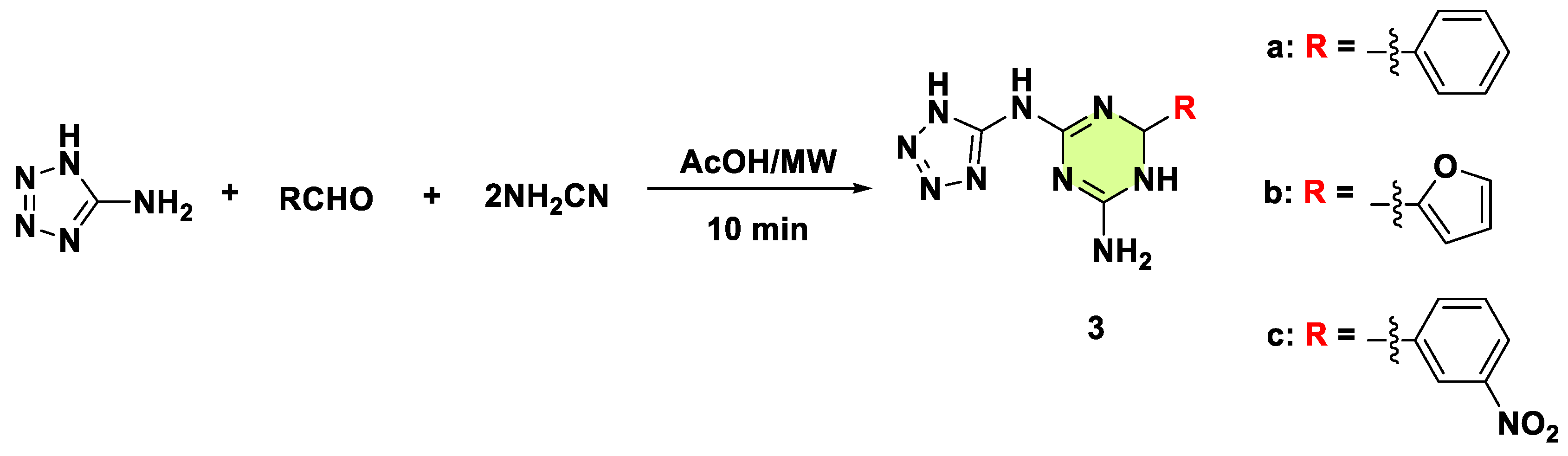
Figure 2.
Chemical structures of s-triazine 4a-f and 5a-f.
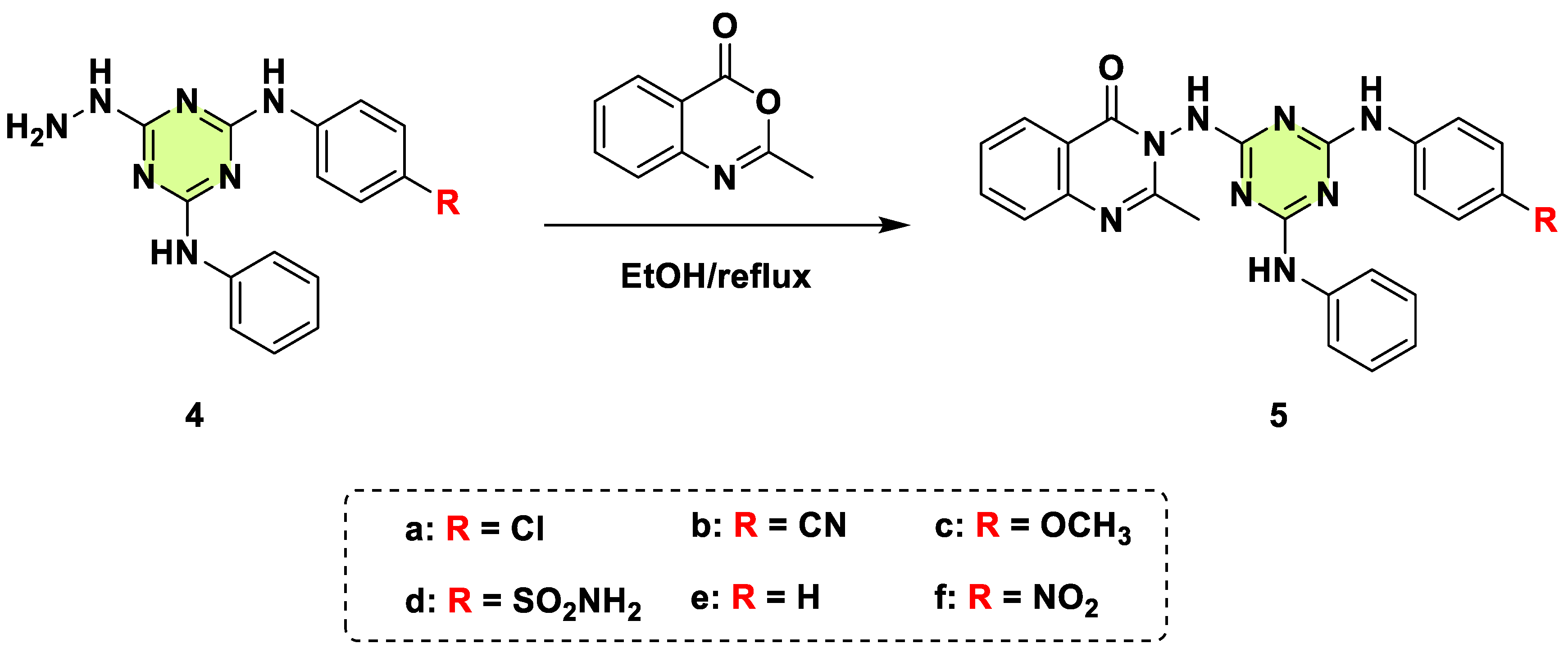
Figure 3.
Chemical structures of s-triazine derivatives 6a-d.
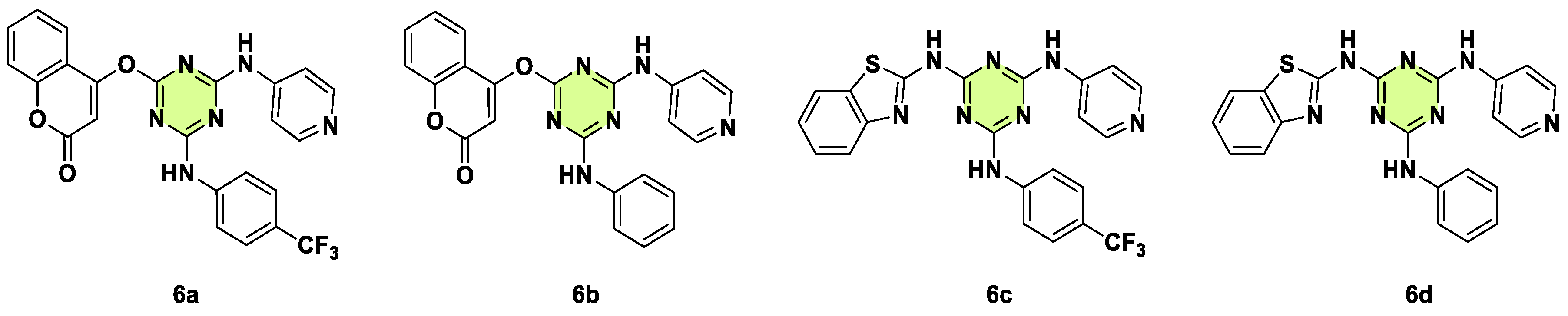
Figure 4.
Chemical structures and antifungal activities of s-triazine derivatives 7a-d.
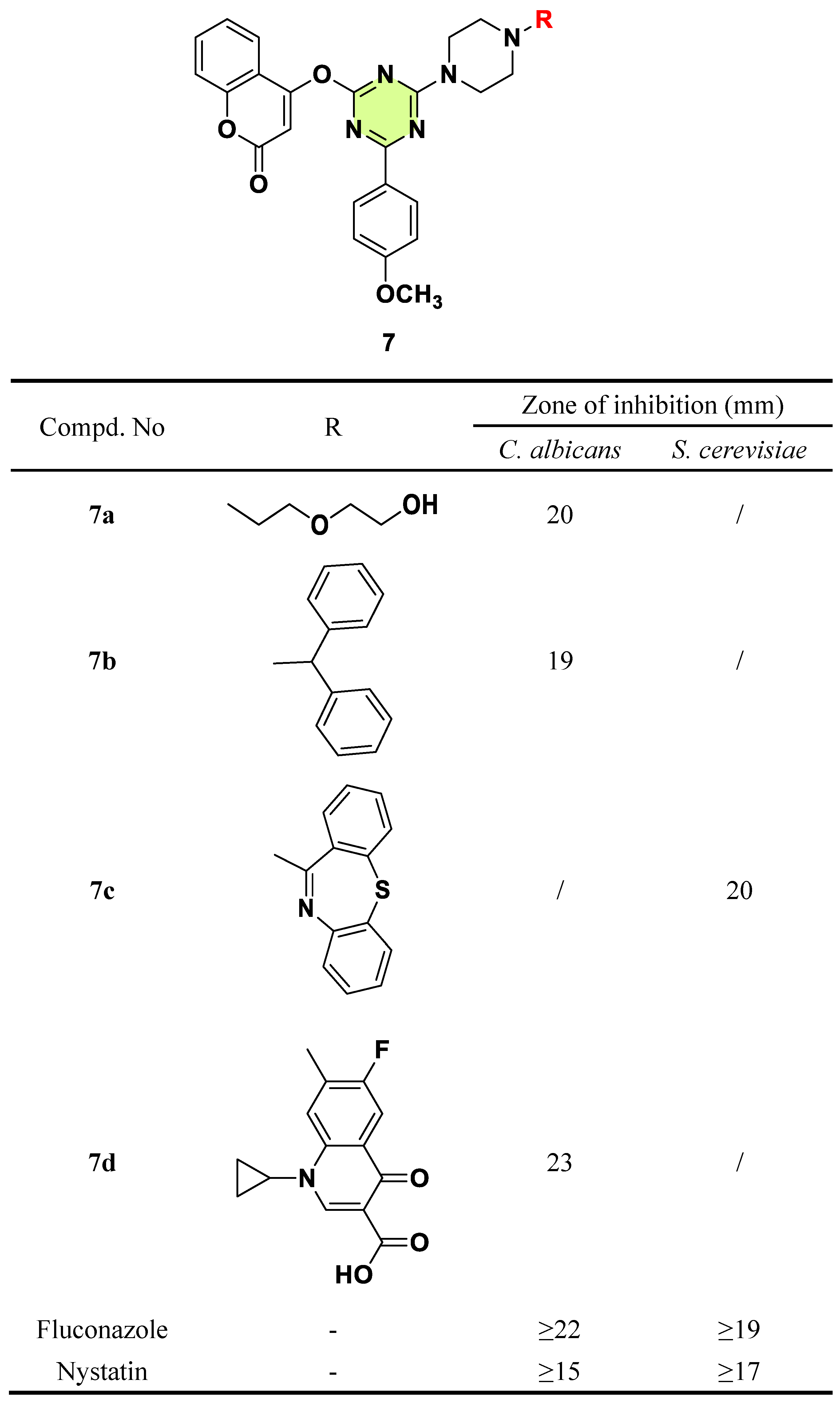
Figure 5.
Chemical structures and antifungal activities of s-triazine derivatives 8a-e.
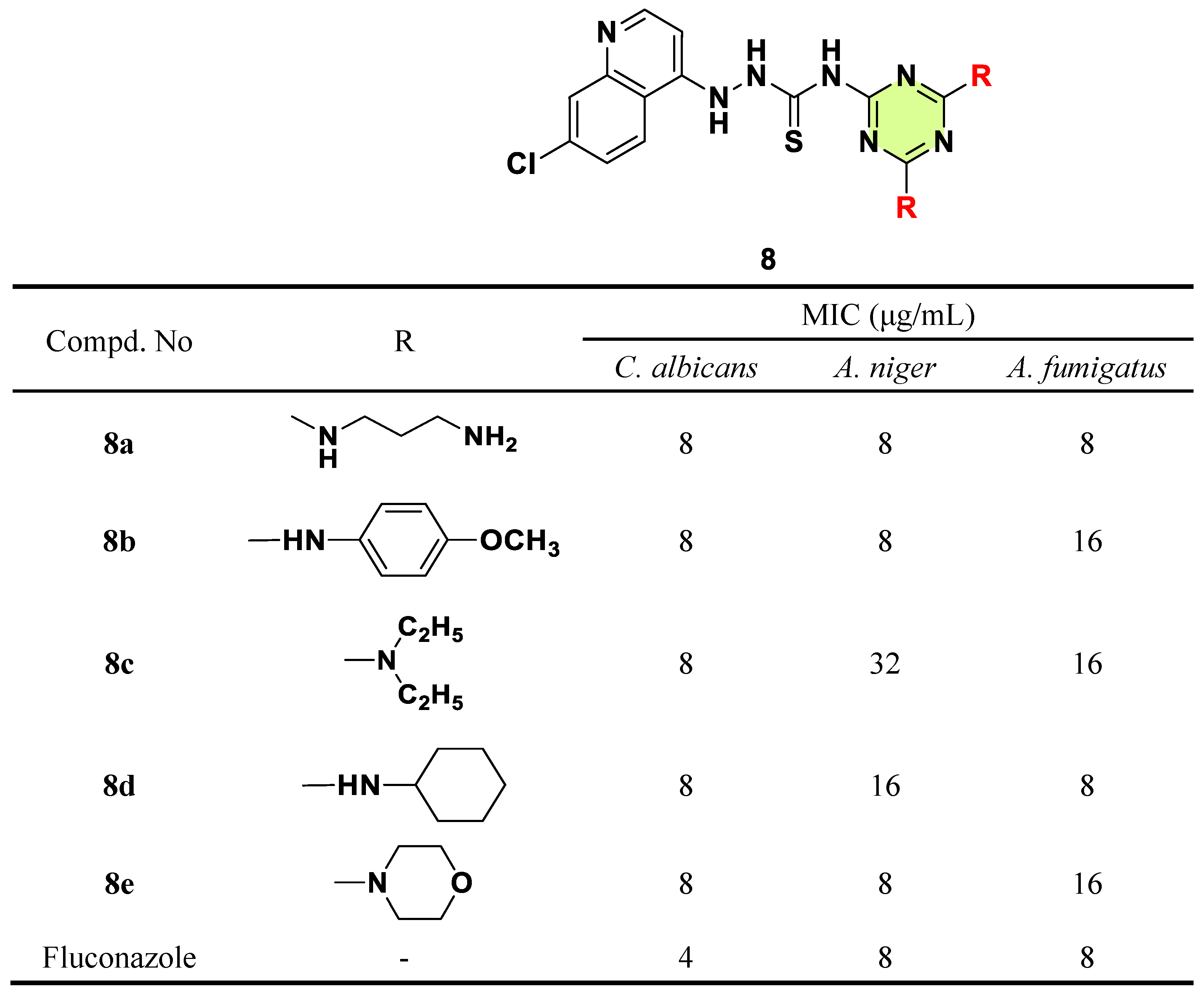
Figure 6.
Chemical structures and antifungal activities of s-triazine derivatives 9a-f.
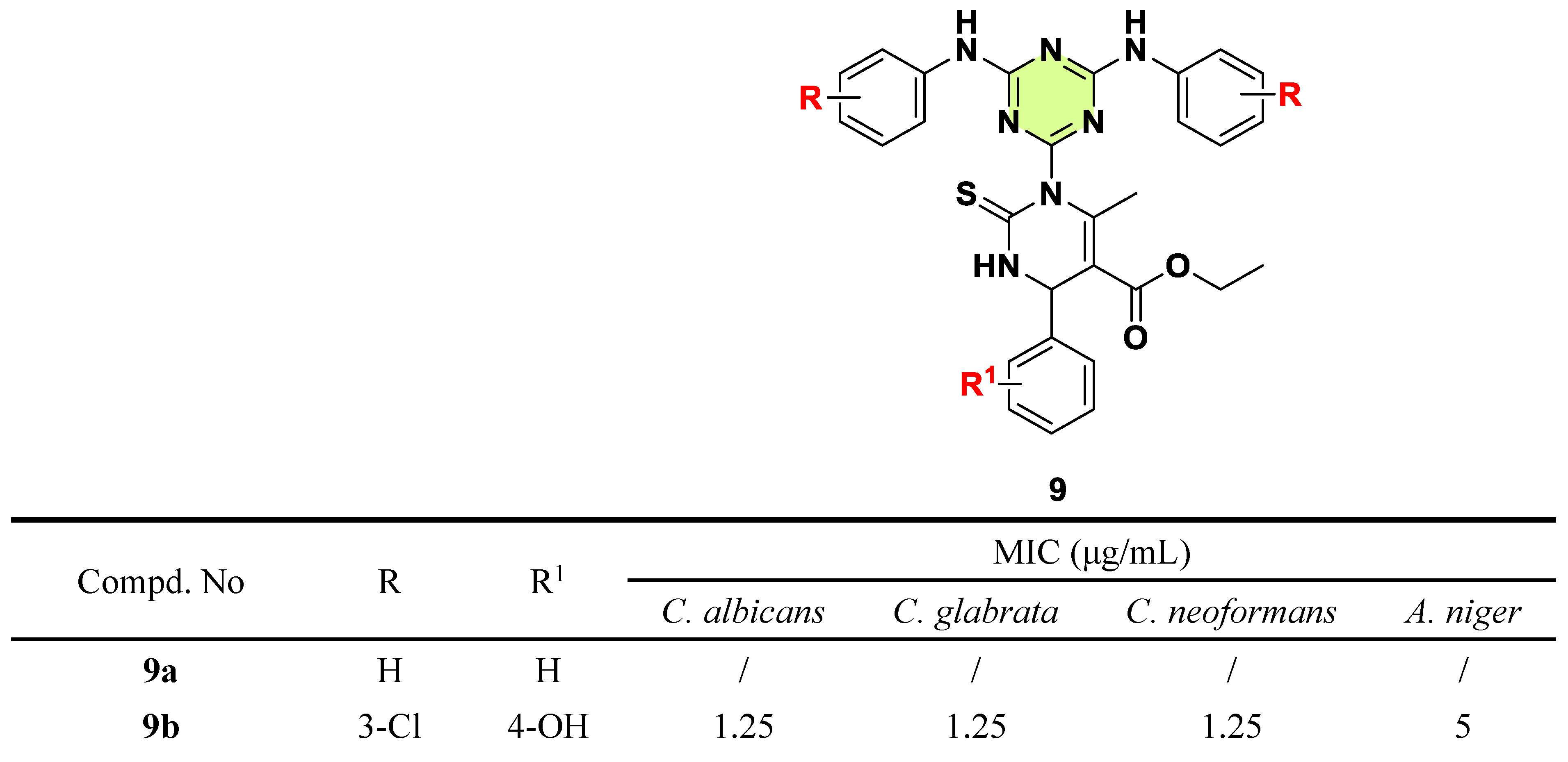

Figure 7.
Chemical structures and antifungal activities of s-triazine derivatives 10a-e.
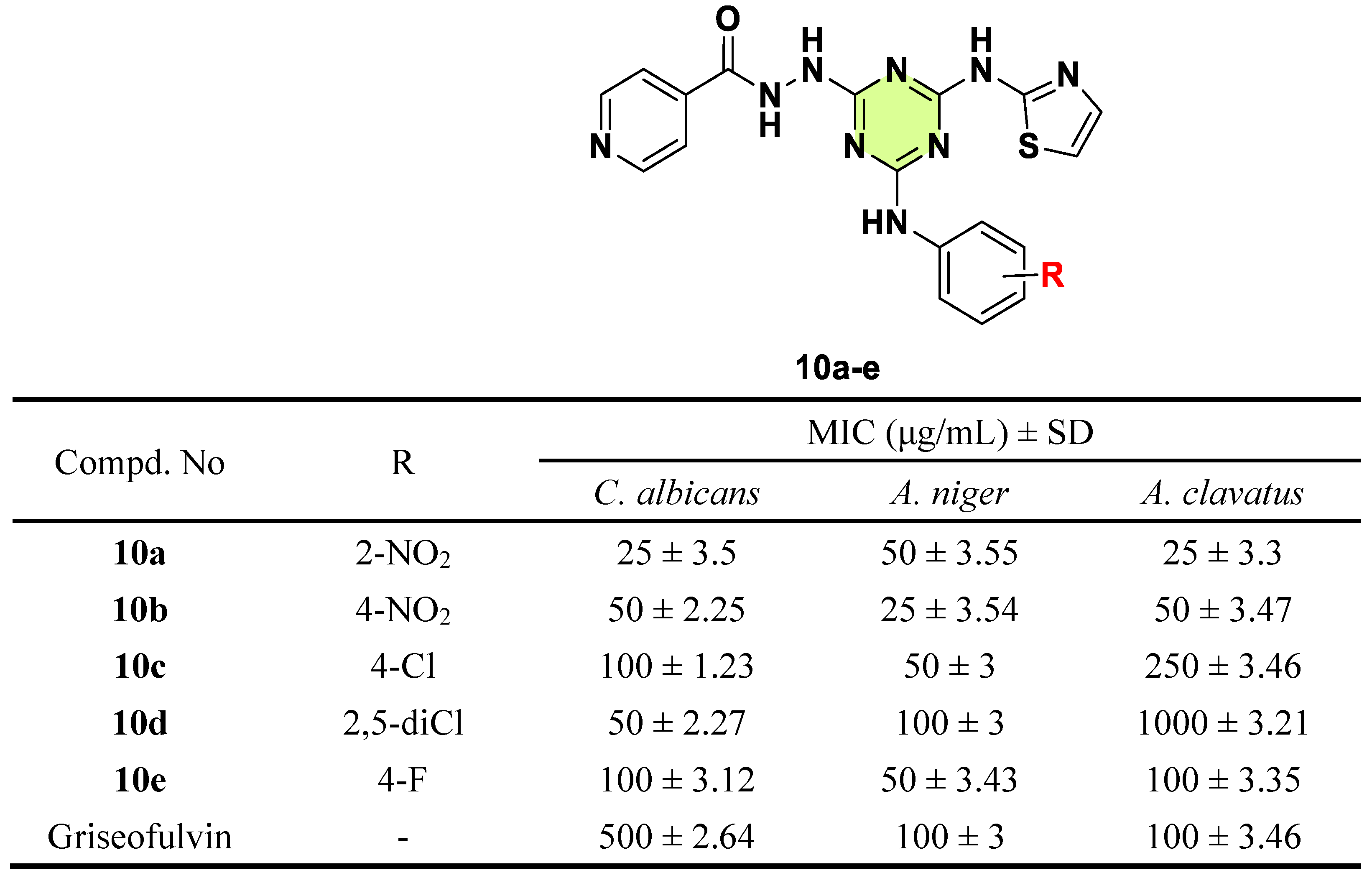
Figure 8.
Chemical structures of s-triazine derivatives 11a-d.
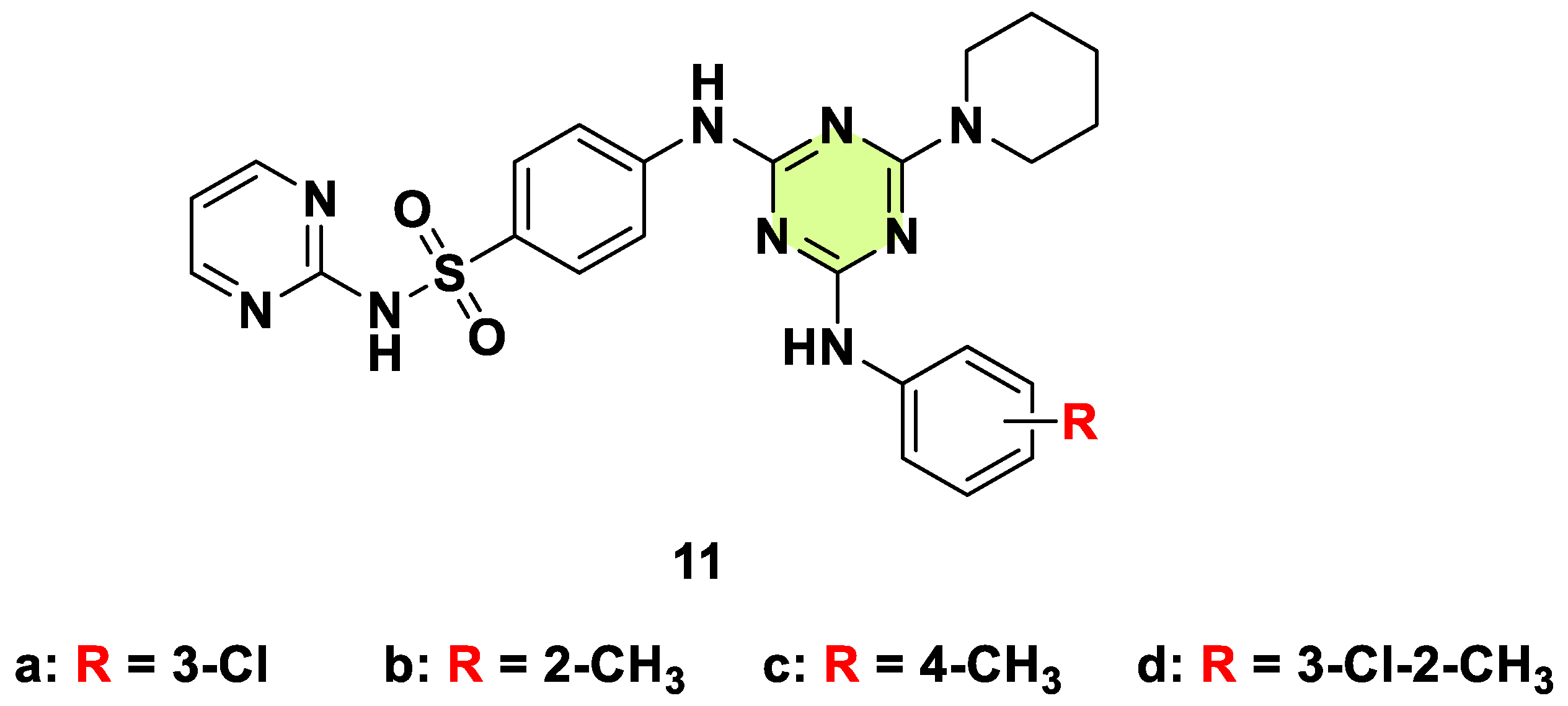
Figure 9.
Chemical structures and antifungal activities of s-triazine derivatives 12a-b.
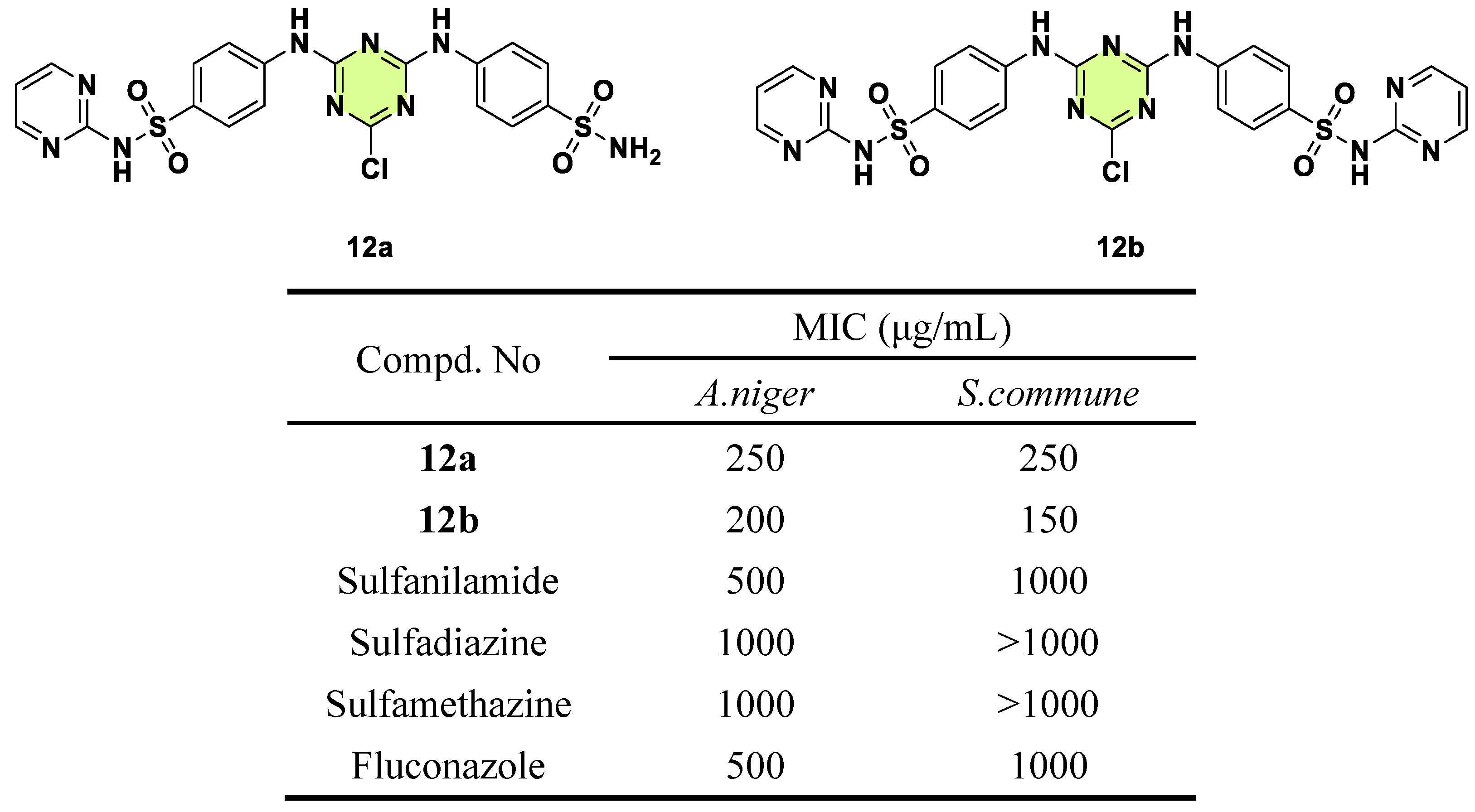
Figure 10.
Chemical structures of s-triazine derivatives 13a-c.
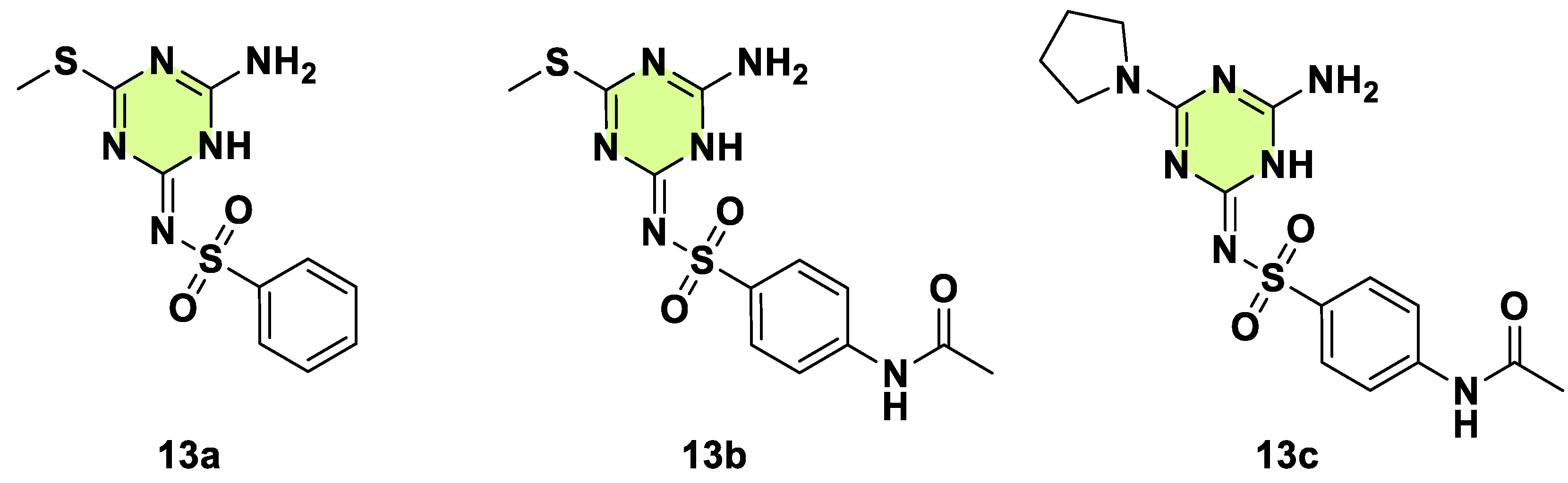
Figure 11.
Chemical structures of s-triazine derivatives 14a-c.
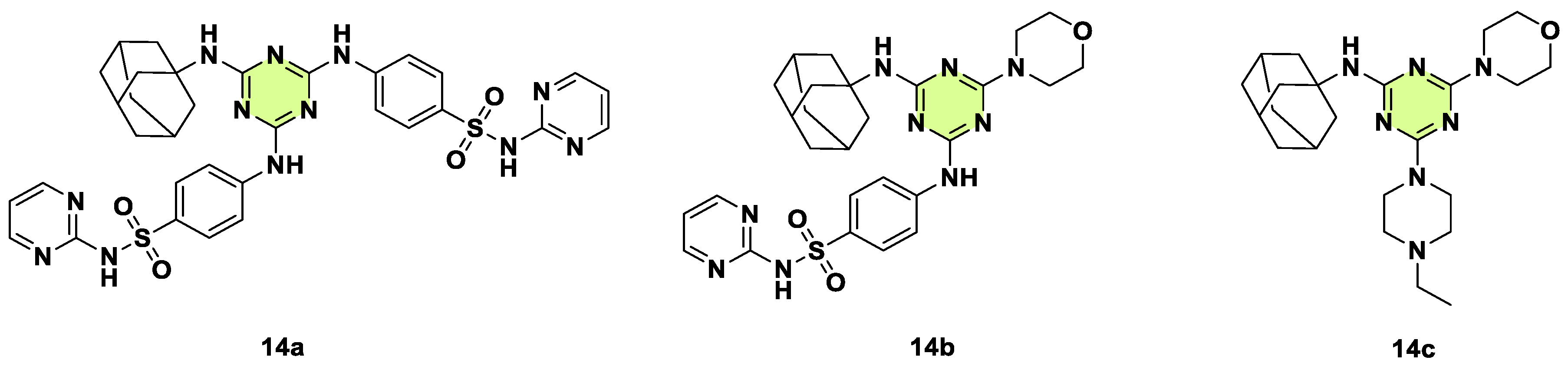
Figure 12.
Chemical structures and antifungal activities of s-triazine derivatives 15a-c.
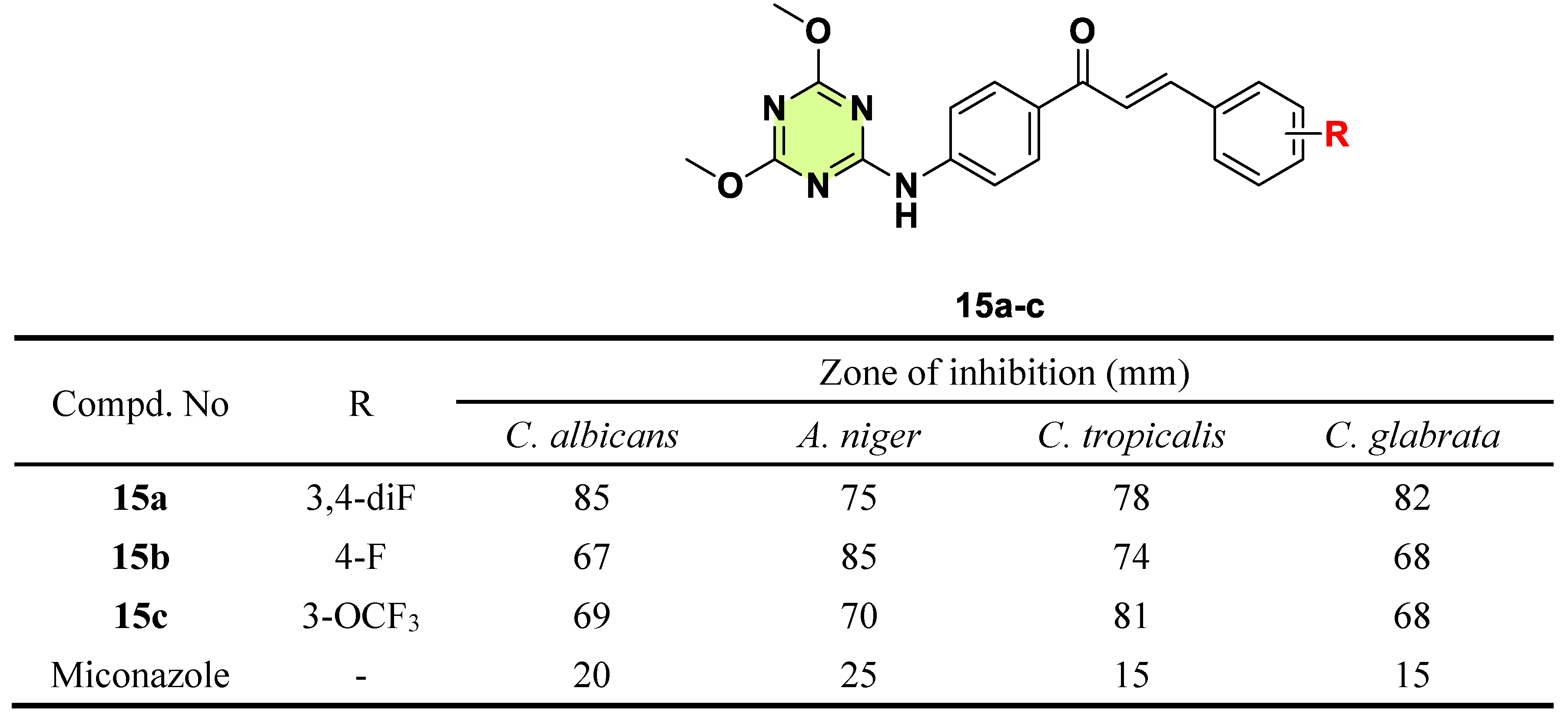
Figure 13.
Chemical structures of s-triazine derivatives 16a-b.
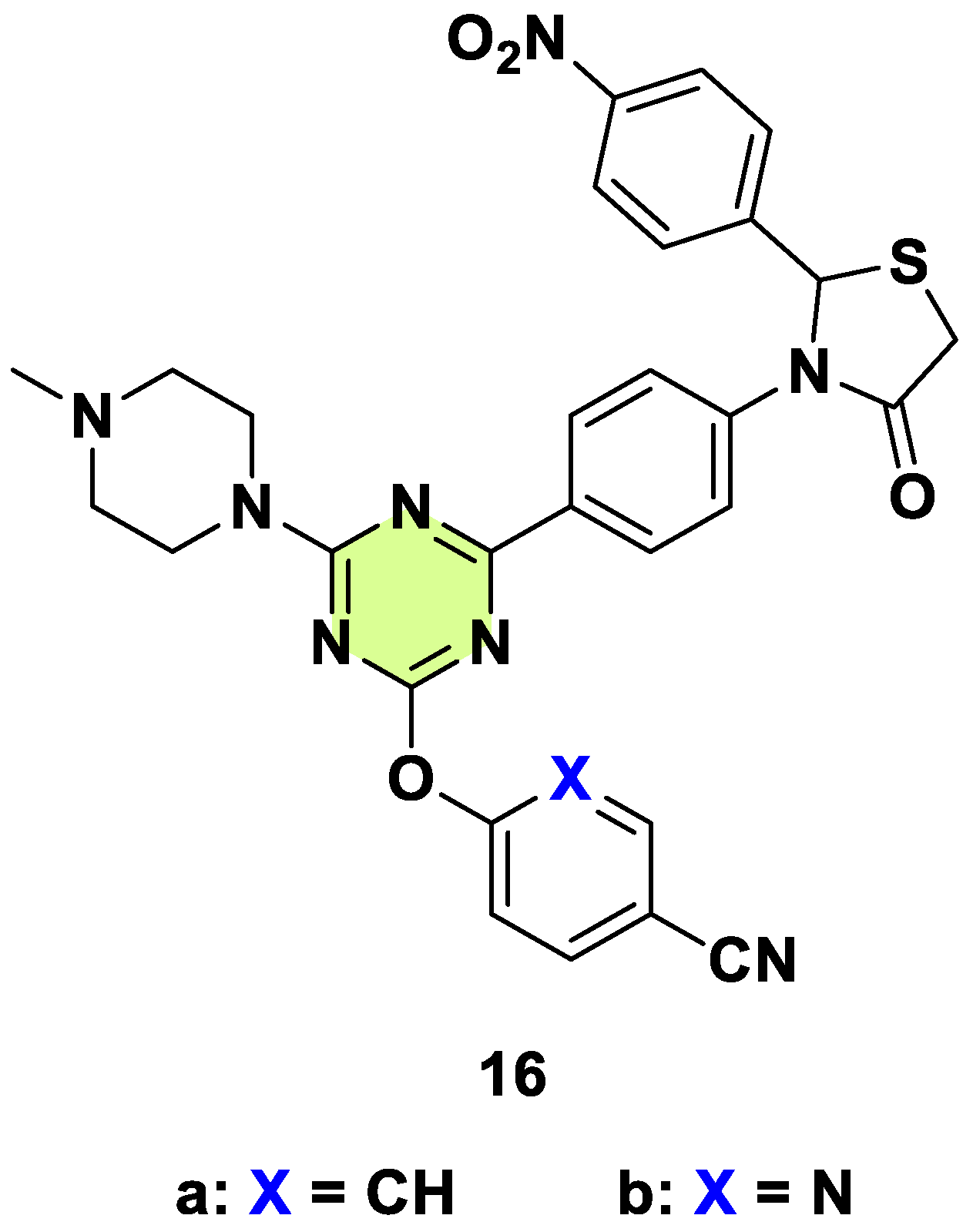
Figure 14.
Chemical structures and antifungal activities of s-triazine derivatives 17a-g.
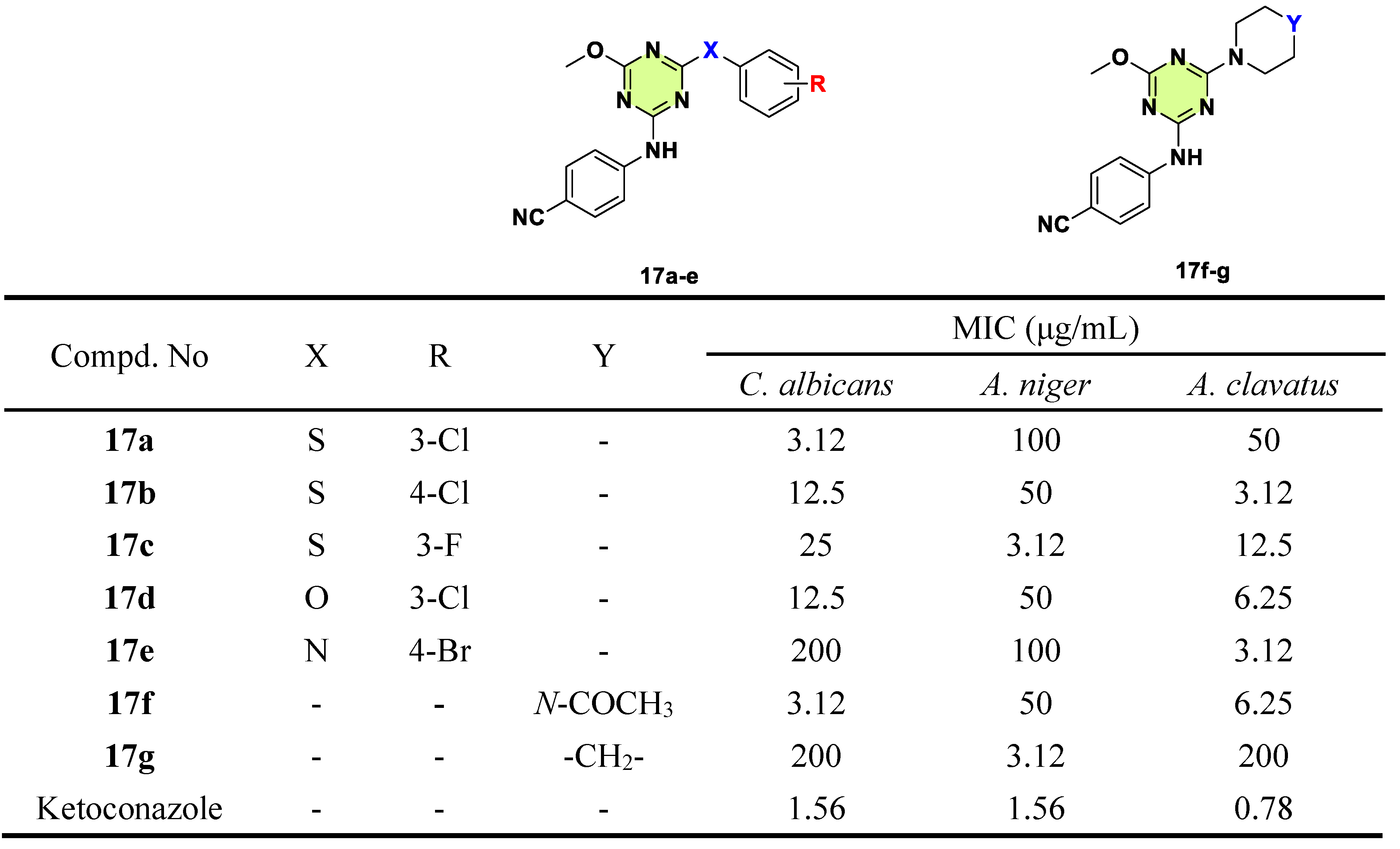
Figure 15.
Chemical structures and antifungal activities of s-triazine derivatives 18a-c.
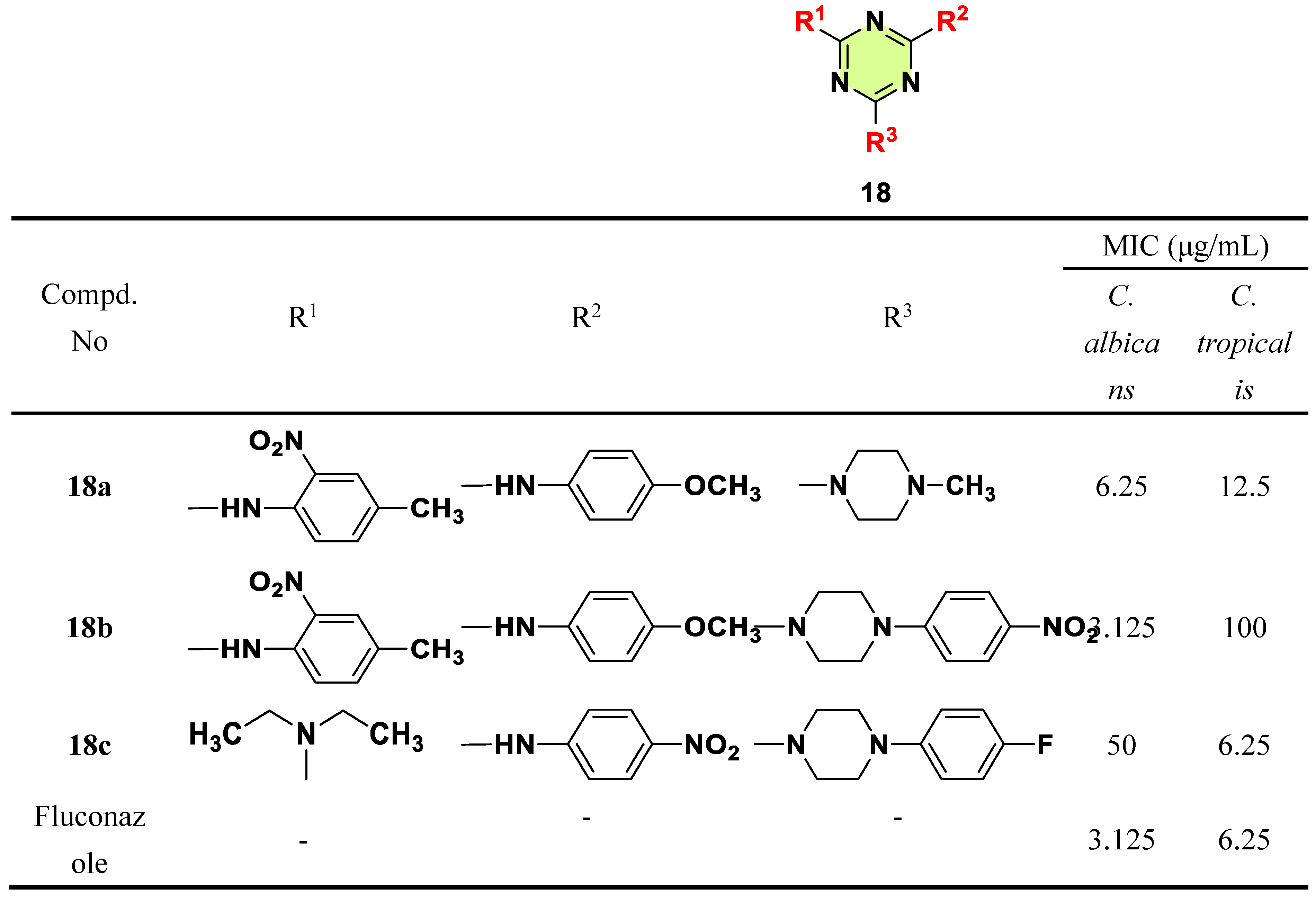
Figure 16.
Chemical structures of s-triazine derivatives 19a-d.
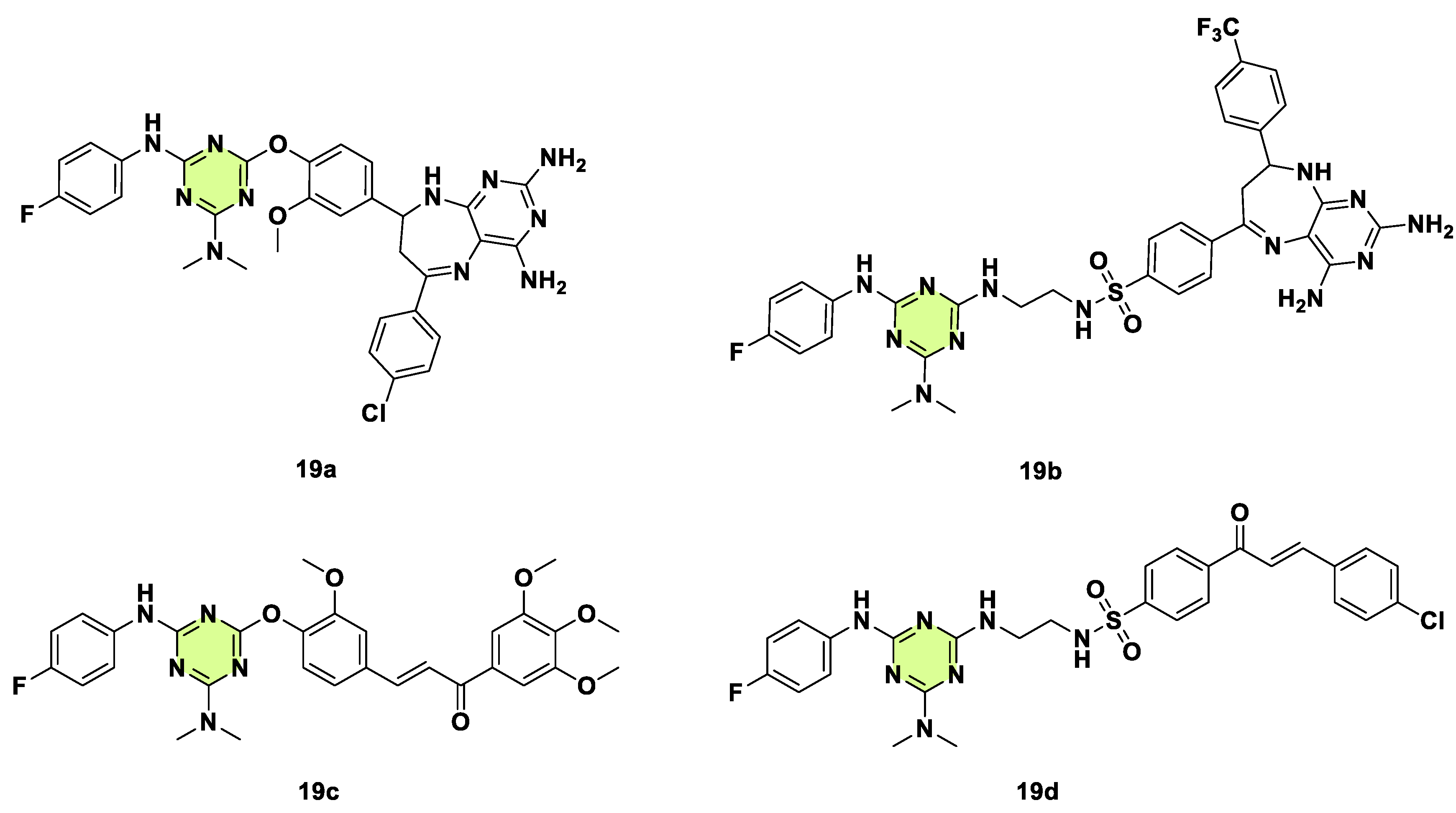
Figure 17.
Chemical structures of s-triazine derivatives 20a-c.
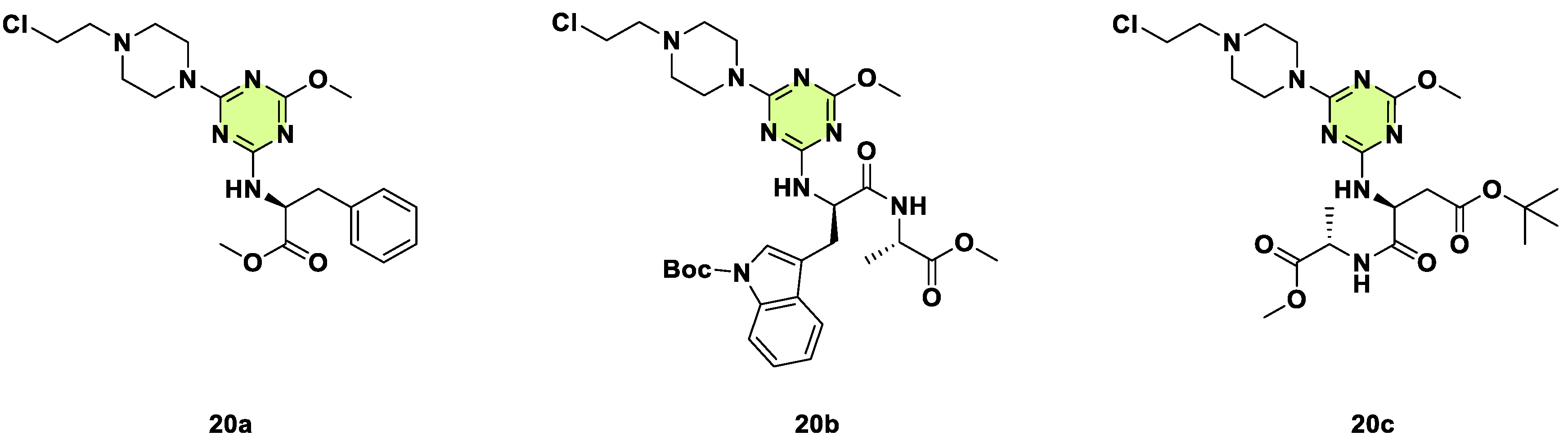
Figure 18.
Chemical structures of s-triazine derivatives 21a-c.
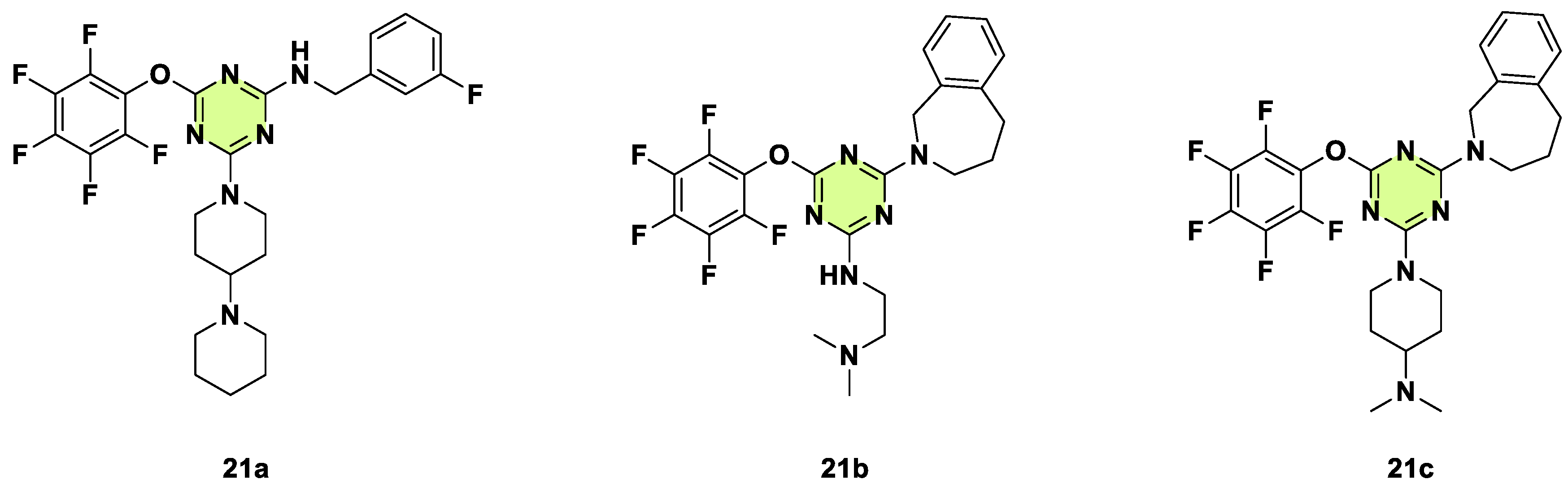
Figure 19.
Chemical structures of s-triazine derivatives 22-25.
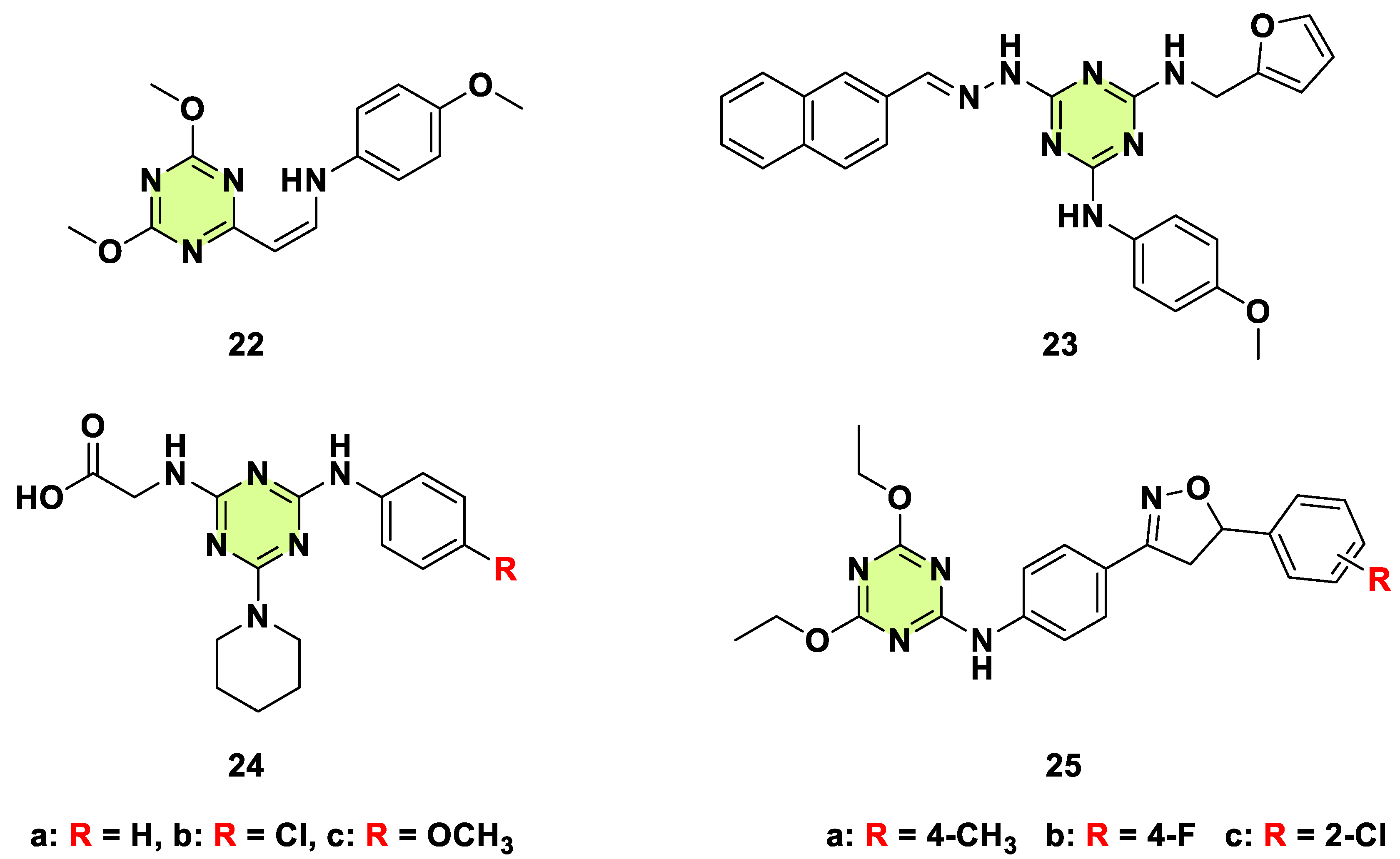
Figure 20.
Design strategies and chemical structures of s-triazine derivatives 26-28.
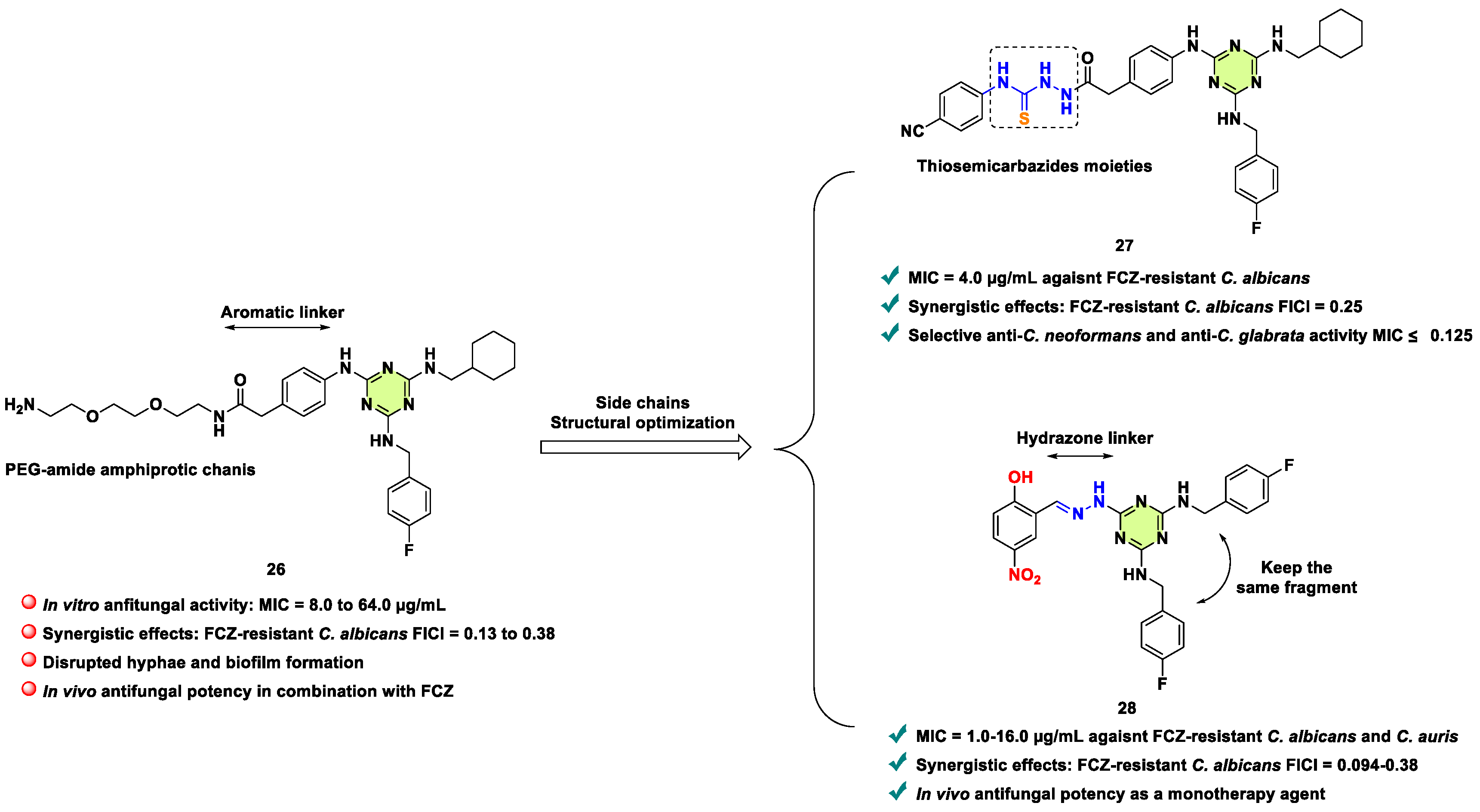
Figure 21.
Design strategies and chemical structures of s-triazine derivative 29.
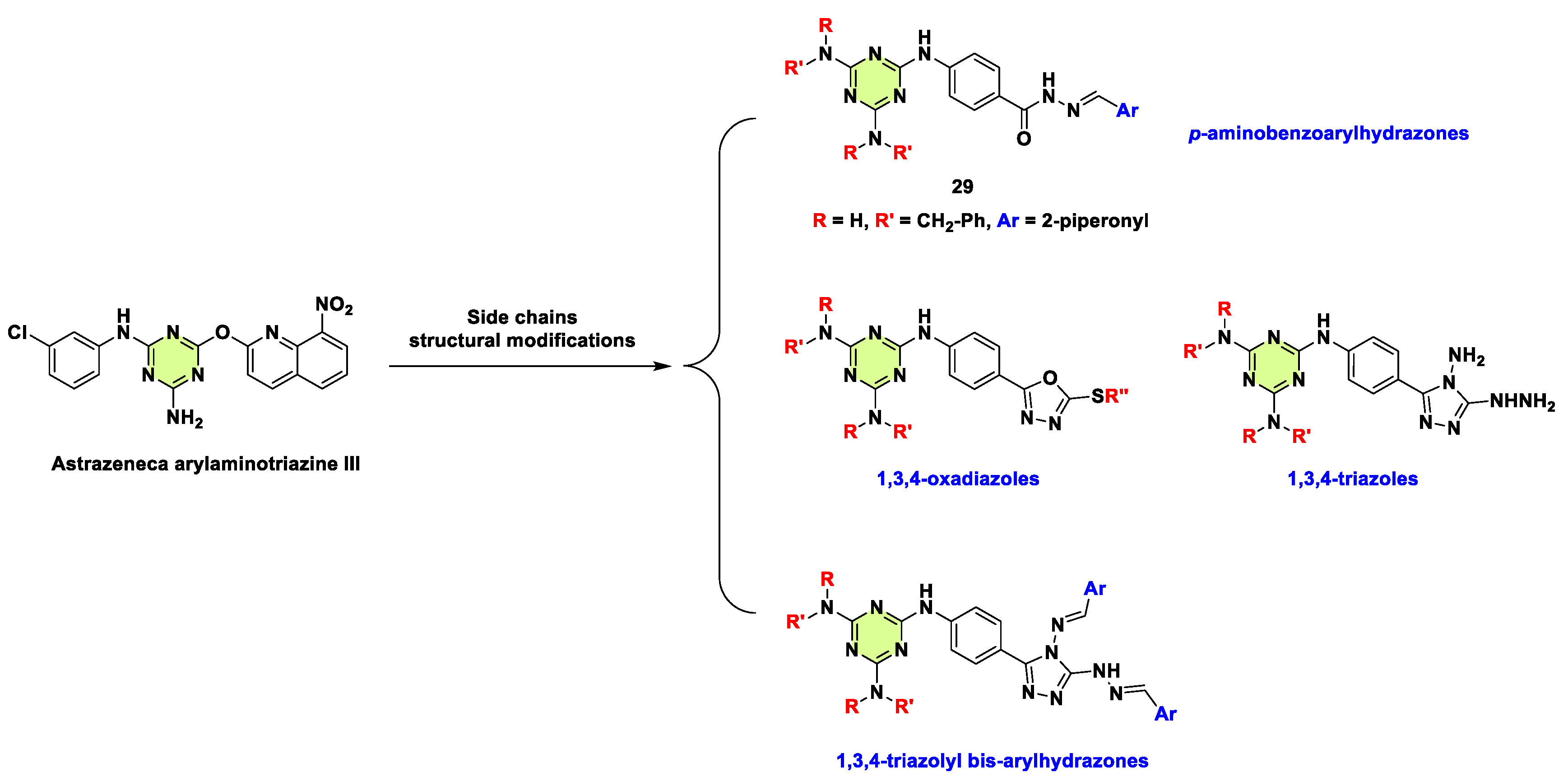
Figure 22.
Chemical structures of s-triazine derivatives 30a-d.

Figure 22.
Chemical structures of s-triazine derivatives 31a-b.
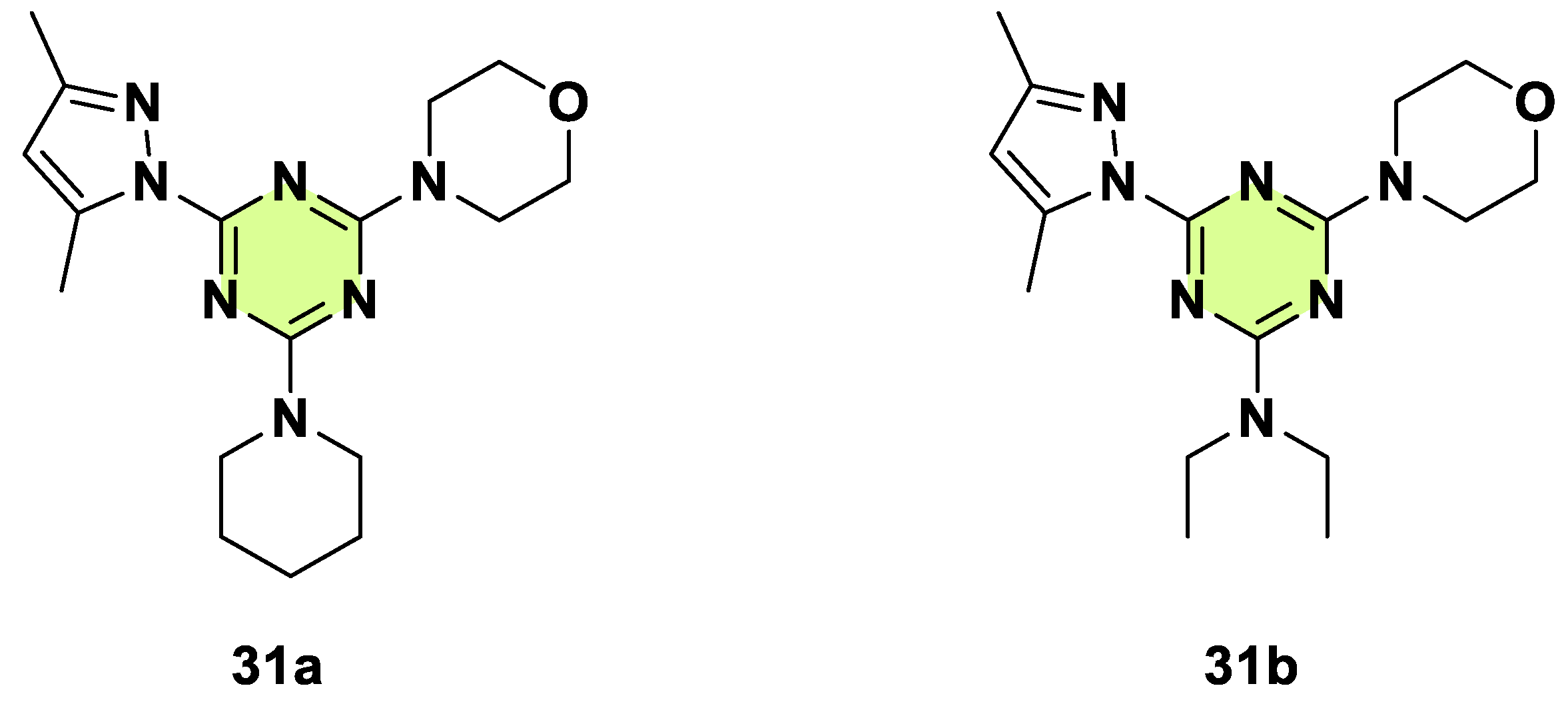
Figure 24.
Chemical structures of s-triazine derivatives 32a-d.
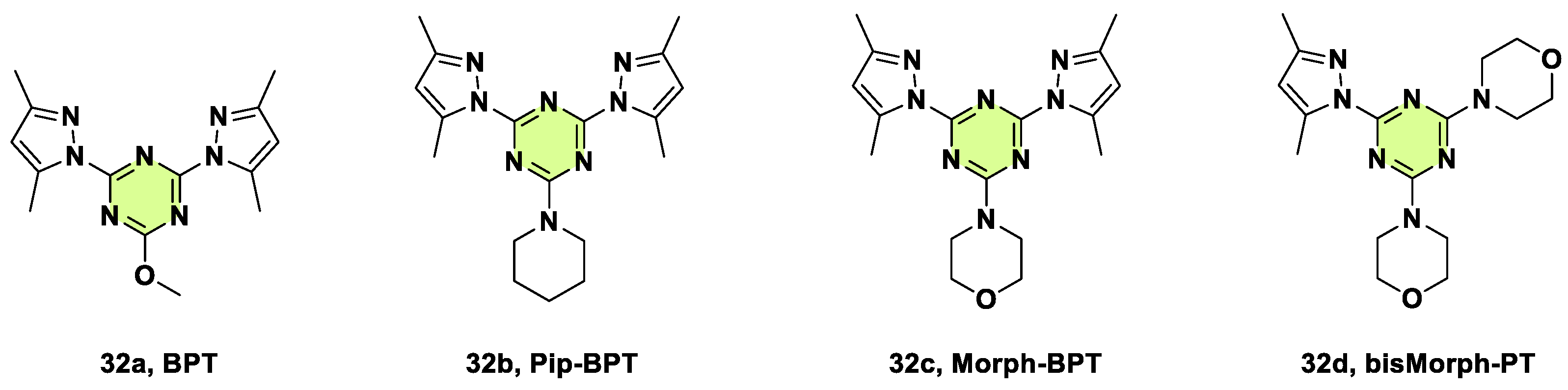
Figure 25.
Chemical structures of s-triazine derivatives 33-35.
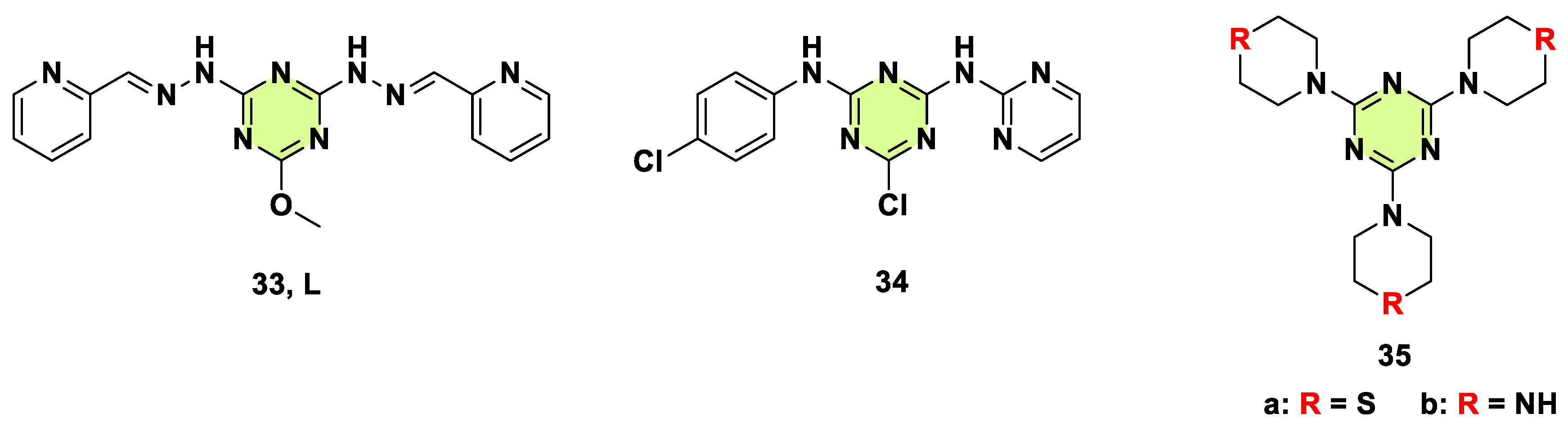
Figure 26.
Chemical structures of s-triazine derivatives 36.
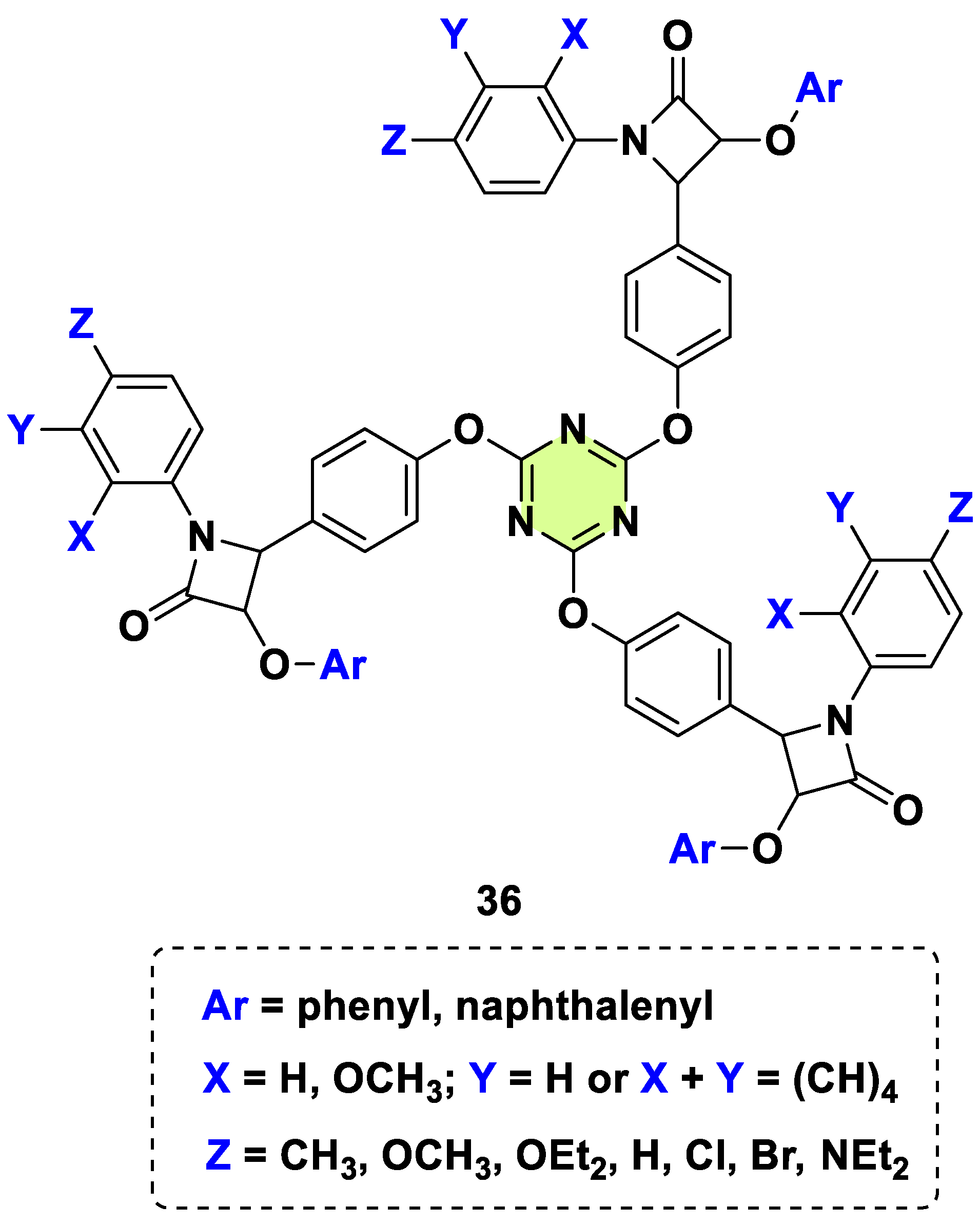
Figure 27.
Chemical structures of s-triazine derivatives 37-40.
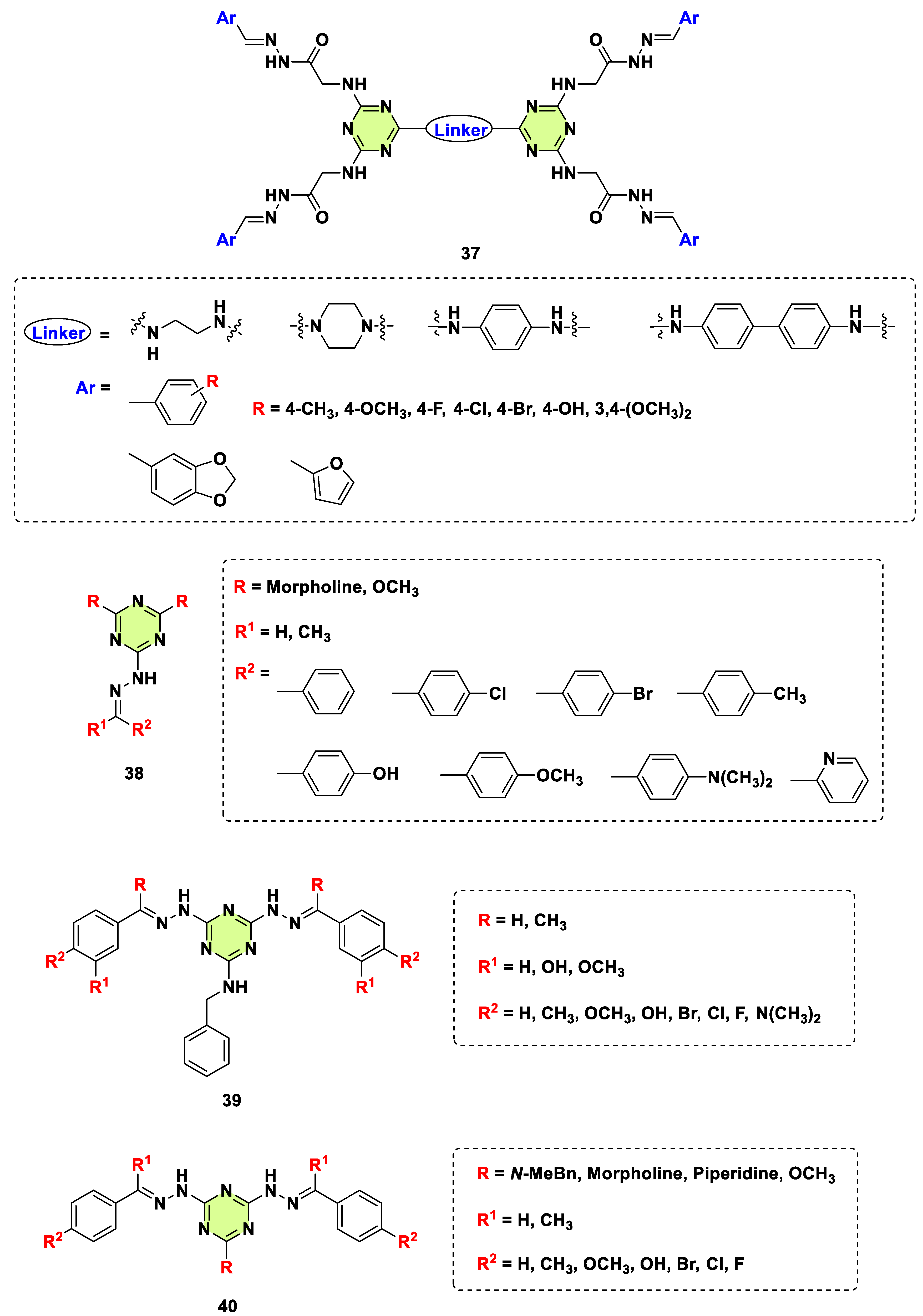
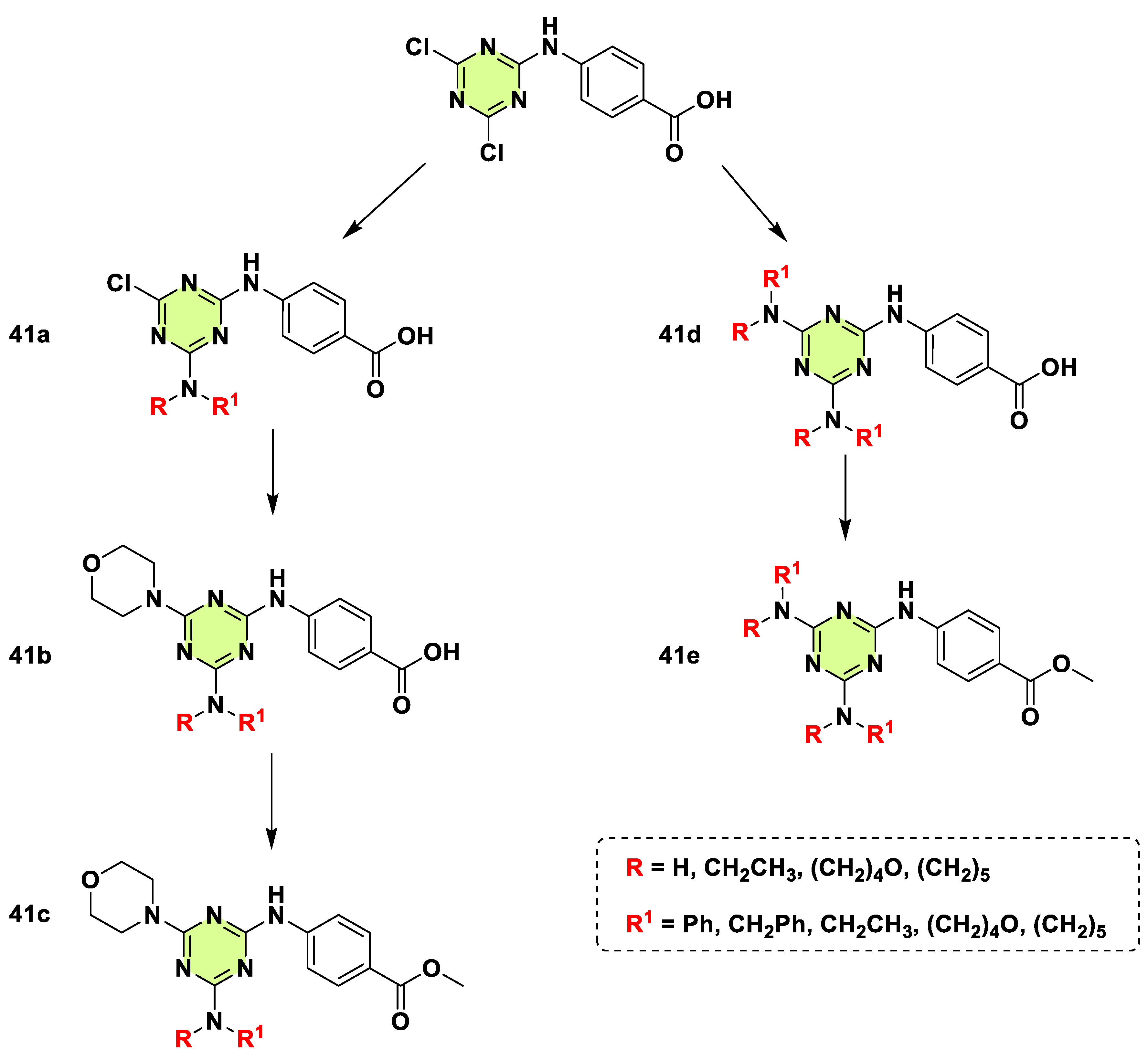
Figure 28.
Chemical structures of s-triazine derivatives 41a-e.
Disclaimer/Publisher’s Note: The statements, opinions and data contained in all publications are solely those of the individual author(s) and contributor(s) and not of MDPI and/or the editor(s). MDPI and/or the editor(s) disclaim responsibility for any injury to people or property resulting from any ideas, methods, instructions or products referred to in the content. |
© 2024 by the authors. Licensee MDPI, Basel, Switzerland. This article is an open access article distributed under the terms and conditions of the Creative Commons Attribution (CC BY) license (http://creativecommons.org/licenses/by/4.0/).
Copyright: This open access article is published under a Creative Commons CC BY 4.0 license, which permit the free download, distribution, and reuse, provided that the author and preprint are cited in any reuse.


