Preprint
Review

This version is not peer-reviewed.

Leadership Philosophy Approach Towards Nurses' Performance In Providing Nursing Care: A Literature Review

Submitted:

16 December 2024

Posted:

25 December 2024

You are already at the latest version

Abstract

Background: Leadership constitutes an endeavor to sway collective actions. Leadership entails the capacity to achieve consensus on shared objectives. Leadership is an attempt to steer others toward attaining specific aims. Leadership represents the most impactful connection between a leader and their followers. While it may be challenging to encapsulate, fundamentally, leadership pertains to the act of one person influencing the actions of others for a specific reason. However, this does not imply that everyone who sways others for a reason qualifies as a leader. Objective: To outline the philosophical viewpoint of leadership in enhancing nurse performance: a literature review methodology.Method: A literature review study utilizing databases from Google Scholar, PubMed, and ProQuest with the search terms "leadership" and "nurse performance." Results: From a philosophical standpoint, leadership is a notion that necessitates profound contemplation regarding the essence, purposes, and fundamental principles that inform an individual's leadership. Philosophical viewpoints emphasize the moral, ethical, and ontological dimensions of leadership, as well as the way individuals perceive their duties and interactions with others.Conclusion: In philosophical terms, leadership revolves around establishing significance, providing guidance, and leading with integrity. Leaders bear the responsibility not only for attaining tangible objectives but also for fostering a more equitable, harmonious, and humane world. This philosophical insight reminds us that leadership transcends mere action; it also involves serving as a model for subordinates in elevating performance.

Keywords: 
;  ;  

Introduction

Nurse is one of the healthcare service teams that are most in demand for improving the quality of home care for the sick. In the nursing service room, there is always leadership provided by a head supervisor. The head supervisor operates in a manner that directly influences the nursing unit to produce quality service (Suyanto, 2018). Effective leadership in nursing service will foster the emergence of motivation in nurses' work quality, allowing patients to receive excellent service. Work motivation significantly impacts the awakening, directing, and sustaining of behaviors related to the work environment (Mangkunegara, 2000 in (Nursalam, 2017)).
Leadership is the art of influencing and utilizing others through obedience, trust, and respect to achieve shared objectives. Leadership is also understood as the ability to empower society toward specific goals. It emerges from a culture that initiates change processes and fosters adaptability. Key elements in leadership consist of the roles of leaders, followers, people, influence, change, and the goals that must be realized. Therefore, leadership can be understood broadly, not only as an individual's capability but also in the interaction processes that take place within themselves. The essence of leadership is abstract, created by humans through interactions with their environment. Leadership is an essential component in achieving organizational objectives.
Leadership, as a management concept within an organization, holds a strategic role, as it is central to all organizational activities. Leadership is absolutely vital where cooperative relationships are needed to attain organizational goals. According to (Hasibuan, 2015), leadership is the process of influencing others to comprehend and agree on what will be done and how tasks can be executed effectively, as well as facilitating individual and group efforts to accomplish shared objectives. According to (Gibson, JL, JMIvancecich, JHDonnelly, 2003), leadership is the capacity to influence others through direct or indirect communication with the purpose of motivating individuals to be understanding, aware, and willing to follow the leader’s intentions. Siagian stated that the effectiveness of a person's leadership is ultimately evaluated based on their decision-making abilities as a primary criterion.
Leadership involves a focus on shared objectives. Leaders direct their energy toward individuals working together to achieve something. Generally, leaders and followers share the same goals. The focus on shared objectives underscores the necessity for leaders to collaborate with followers in achieving their designated goals. This mutual emphasis on interdependence reduces the likelihood of leaders acting on followers in an authoritarian or unethical manner. It also enhances the chances that leaders and followers will work together to achieve shared goodness. Those who lead are referred to as leaders, while those who are led are called followers. A good leader and followers are actively involved together in the leadership process. Leaders need followers, and followers need leaders.

Method

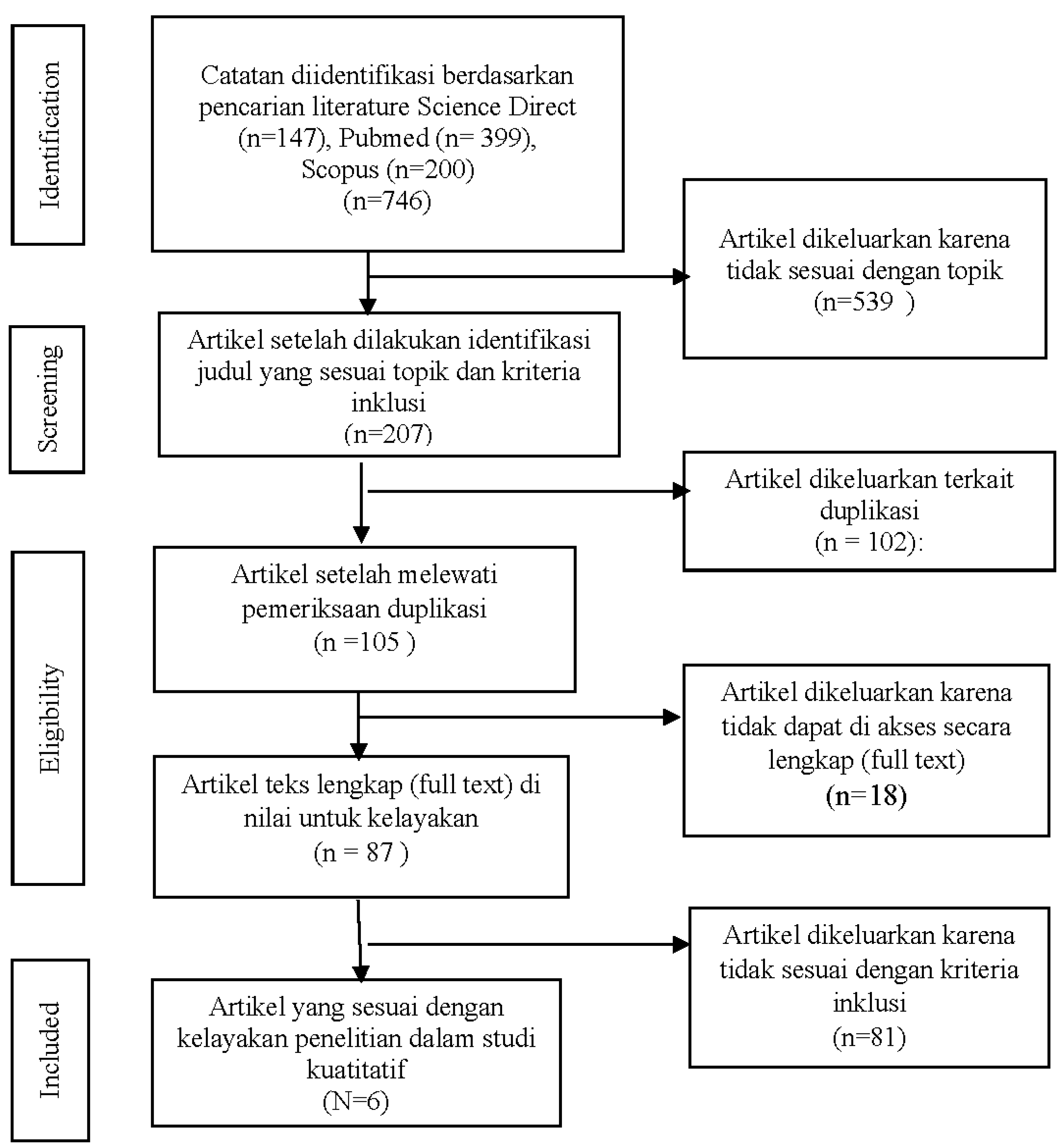
Study This method utilizes a literature review. The database utilized as a source for literature includes Google Scholar, Pubmed, and ProQuest. The keywords employed in the search for Indonesian journals are “style,” “leadership spirituality,” and “performance nurse implementer,” while the keywords for English journals are “Leadership” and “Nurse performance. ” The inclusion criteria for articles are those published between 2019 and 2024, spanning 5 years. Lastly, the full text must be in either Indonesian or English, and the study is quantitative. Table 1. Prisma Diagram
Table 1. Flow Diagram Literacy Based on PRISMA.
Preprints 143024 g001

Results

Based on the results of searching journals from online databases, there are 10 articles that meet the criteria for inclusion and can be used for further analysis. All articles involved in the study are quantitative in nature, employing quasi-experimental and cross-sectional designs, and the research has been carried out in different countries.
Table 2. Search Results Literature Review.
No Researcher Name Year Journal Name Title Journal Summary of Research Results
1 Zaqhini et al 2020 International Journal of Nursing Studies 1 The relationship between nurse managers' leadership style and patients' perception of the quality of the care provided by nurses: Cross sectional survey
Research findings indicate that when nurses are content with their leadership, they experience less fatigue and tension in their interpersonal relationships, are less engaged in negative behaviors, and consequently, patients are more satisfied with the quality of care provided by the nurses.
2 Heryanoor , Nursalam 2021 Journal of International Dental and Medical Research Culture Based Situational Leadership Model in Improving the Organization Nurse Performance
Model can enhance nurse performance by 53. 4%. This improvement is attributed to internal leadership factors, individual nurse factors, job characteristics, and organizational culture. Recent discoveries regarding the organizational culture-based situational leadership model and its impact on nurse performance are influenced by internal leadership factors and individual nurse factors that positively affect organizational culture, situational leadership, and performance. Internal leadership aspects (motivation and self-concept) and individual nurse aspects (knowledge and expectations) can boost performance through the application of organizational culture-based situational leadership founded on innovation and risk-taking, attention to detail, results orientation, people orientation, team orientation, aggressiveness, and stability. The use of organizational culture-based situational leadership will enhance performance through caring, collaboration, empathy, responsiveness, courtesy, and sincerity.
3 (Ansar Abbas, Muhammad Saud, Dian Ekowati and Indrianawati Usman, 2021) 2021 Int. J. Productivity and Quality Management Servant leadership: a strategic choice fororganizational performance. An empirical discussion from Pakistan
More correlation strong between performance, compared with commitment, and gender is visible clear. This own significant relationship with variable demographic like level education and income Respondents. Performance and commitment own connection negative with service and the positive with gender. Performance shows significant correlation with age and marital status, reported as coefficient correlation. This result confirm characteristic all variables in the sector education. Can concluded that with improvement experience, desire For increase performance and commitment on the spot Work decreased in employees; the same thing has reported with performance, age, and marital status. Age, marital status, and education own correlation significant positive with income, while gender, commitment, leadership servants, and nature connection performance share positive and significant relationship.
4 (Praptini Yulianti, 2019) 2019 International Journal of Innovation, Creativity and Change Building Employee Creative Performance: through Person-Job Fit, Empowering
Empowering leadership has a greater importance in affecting creative self-efficacy than Person-job fit from the perspectives of DA-fit and SV-fit. Similarly, creative self-efficacy has a notable effect on the performance of creative employees. The ability to foster creativity can be enhanced more effectively within a company, depending on the role of the leader. Empowering leadership can enhance employees' self-efficacy to innovate and ultimately boost the performance of creative employees.
5 (Dodot Adikoeswanto, Siti Nurjanah, Saparuddin Mukhtar, Anis Eliyana, *, 2024) 2024 International Journal of Advanced and Applied Sciences Supportive leadership and voice behavior : The mediating role of work engagement
There is a significant positive influence from supportive leadership on officer socialization and work engagement, a significant positive influence from work engagement to officer socialization of voice behavior, and a positive influence of supportive leadership on officer correctional voice behavior through work engagement within correctional offices in Aceh.
6 Yetty Dwi Lestari et al 2021 International Journal of Leadership in EducationTheory and Practice Dynamic managerial capability, trust in leadership and performance: the role of cynicism toward change
Findings study This demonstrate that trust in leadership is one of the fundamental aspects that affect organizational performance. Therefore, this trust in leadership needs to be taken into serious consideration (Lines et al. ,2005) as it plays an important role in creating a supportive environment (Gravenhorst et al. , 2003), which is essential for making change efforts successful. Interestingly, the results also indicate that there is no significant difference.

Discussion

Leadership is the capability to motivate others to collaborate as a cohesive unit to accomplish shared objectives. Leadership competencies are gained through everyday life situations. A further explanation of leadership encompasses all aspects related to leaders who motivate, guide, and direct others to complete tasks and reach predetermined goals. According to (Kadarisman, 2017), leadership is categorized into three types: (1) Self Leadership; (2) Team Leadership; and (3) Organizational Leadership. Self Leadership refers to the ability to lead oneself to avoid failure in life. Team Leadership is characterized as leading others. This leadership is recognized as that of a team leader (group leader) who comprehends their leadership obligations, immerses in the circumstances of their subordinates, is willing to integrate with the demands and outcomes of their responsibilities, and is committed to helping each subordinate realize their potential to attain the highest success. On the other hand, Organizational Leadership is observed within the framework of an organization led by a leader who is capable of grasping the essential nature of the business they oversee, creates a vision and mission for the advancement of that business, is willing to merge with the demands and implications of social accountability, and shows a strong commitment to making the organization a benefit to the community on local, national, and international scales.
When examined philosophically, leadership is a concept that entails profound contemplation of the essence, purpose, and fundamental values that govern an individual in their leadership role. The philosophical viewpoint emphasizes the moral, ethical, and ontological dimensions of leadership, as well as how individuals perceive their duties and interactions with others. The philosophical approach to leadership is assessed from an ontological standpoint. Ontologically, leadership pertains to the state of “being” a leader, rather than merely “doing” the tasks of a leader. This encompasses a comprehensive understanding of a leader’s identity, personal principles, and life vision. An authentic leader is one who is genuine and can harmonize their actions with universal principles like honesty, integrity, and bravery. Philosophy regards leadership not solely as power, but as a moral obligation to serve others and pursue the common good. The epistemological perspective of leadership involves exploring how we know and comprehend leadership. In philosophical terms, epistemology investigates the origins, nature, and legitimacy of knowledge. When applied to leadership, epistemology interrogates how one comes to understand what leadership entails, how knowledge regarding leadership is acquired, and how that knowledge is utilized in practice. Confidence in leadership is one of the essential elements that affects organizational effectiveness.
The axiological perspective on leadership involves examining the values that underlie and direct leadership. In the realm of philosophy, axiology engages with values, including ethical (moral) and aesthetic (beauty) considerations. Within the domain of leadership, axiology investigates the values that constitute the foundation of a leader’s decisions, actions, and interactions with those they oversee. Creativity may flourish more effectively in an organization, influenced by the leader’s role. Empowering leadership can enhance employee self-efficacy, fostering creativity and ultimately boosting employee creative performance. There exists a negative correlation between performance and commitment with respect to service, alongside a positive correlation with gender. Performance demonstrates a notable correlation with age and marital status, identified as a correlation coefficient. When nurses are pleased with leadership, they experience reduced fatigue and strain in their interpersonal relationships, engage in less misconduct, which in turn leads to higher patient satisfaction regarding the quality of care provided by nurses.

Conclusion

In general philosophy, leadership involves creating meaning, providing direction, and leading with heartfelt conscience. A leader is not only responsible for answering to achieve pragmatic objectives, but also for fostering a fair, harmonious, and humane world. Understanding this philosophical perspective reminds us that leadership is not solely about action, but also about being an example for subordinates. Ontology of leadership teaches that leadership pertains to existence, not merely action. Leaders who comprehend the essence of their existence and their relationships with others can produce a deeper and more meaningful impact, beneficial both for themselves and for the community they lead. Epistemology of leadership challenges us to understand how we know and practice leadership. By realizing the sources, limitations, and applications of knowledge regarding leadership, a leader can act more thoughtfully, flexibly, and relevantly in a complex and ever-changing world.

References

  1. Ansar Abbas, Muhammad Saud, Dian Ekowati and Indrianawati Usman, FS (2021) 'Servant leadership: a strategic choice for organizational performance. An empirical discussion from Pakistan', Int. J. Productivity and Quality Management , 34(4), pp. 469–485.
  2. Dodot Adikoeswanto, Siti Nurjanah, Saparuddin Mukhtar, Anis Eliyana, *, NLMK (2024) 'Supportive leadership and voice behavior: The mediating role of work engagement', International Journal of Advanced and Applied Sciences , 11(7), pp. 39–48.
  3. Gibson, JL, JMIvancecich, JHDonnelly, J. (2003) Organization, Behavior, Structure, Process. Jakarta: Bina Rupa Aksara .
  4. Gravenhorst et al, (2003). The change capacity of organisations: general assessment and five configurations. Applied Psychology, 52(1), 83-105.
  5. Hasibuan, MS. (2015) Basic Management, Definition, and Problems, . Jakarta: Bumi Aksara.
  6. Heryanoor, Nursalam, Abdul Aziz Alimul Hidayat, Taufik Hidayat, Raziansyah, Zubaidah, P. (2021) 'Culture-Based Situational Leadership Model in Improving the Organization Nurse Performance', Journal of International Dental and Medical Research , 14(3), pp. 1251–1259. Available at: https://www.jidmr.com/journal/wp-content/uploads/2021/10/62-7.-2265_Culture-Based-Situational-Leadership-Model-in-Improving-the-Organization-Nurse-Performance_HERRYNOOR_28-Juli_rev.pdf.
  7. Kadarisman (2017) Human Resource Development Management . Jakarta: Raja Grafindo Rosada.
  8. Lines et al. (2005). The structure and function of attitudes toward organizational change. Human resource development review, 4(1), 8-32.
  9. Nursalam (2017) Nursing Management Application in Professional Nursing Practice. 4th edn. Jakarta: Salemba Medika.
  10. Praptini Yulianti, IU (2019) 'Building Employee Creative Performance: through Person-Job Fit, Em', International Journal of Innovation, Creativity and Change , 9(8), pp. 167–180.
  11. Yetty Dwi Lestari, Fiona Niska Dinda Nadia, Badri Munir Sukoco, David, Ahlstrom, Sunu Widianto, Ely Susanto, RAN& AMF (2021) 'Dynamic managerial capability, trust in leadership and performance: the role of cynicism toward change', International Journal of Educational Leadership , 11(4), pp. 49–62.
Disclaimer/Publisher’s Note: The statements, opinions and data contained in all publications are solely those of the individual author(s) and contributor(s) and not of MDPI and/or the editor(s). MDPI and/or the editor(s) disclaim responsibility for any injury to people or property resulting from any ideas, methods, instructions or products referred to in the content.
Copyright: This open access article is published under a Creative Commons CC BY 4.0 license, which permit the free download, distribution, and reuse, provided that the author and preprint are cited in any reuse.
Prerpints.org logo

Preprints.org is a free preprint server supported by MDPI in Basel, Switzerland.

Subscribe

Disclaimer

Terms of Use

Privacy Policy

Privacy Settings

© 2025 MDPI (Basel, Switzerland) unless otherwise stated