

Submitted:
21 December 2024
Posted:
24 December 2024
You are already at the latest version
Abstract
The study aims to explore the potential of ultrasonication techniques in seed potato production as a sustainable agricultural innovation. By improving seed potato efficiency and promoting resource optimization, this research seeks to align with the goals of sustainable agricultural and rural development, addressing challenges such as food security, environmental preservation, and economic viability in rural farming communities. The research was based on a three-year field experiment, utilizing the randomized block design in a split-split-plot arrangement, in the central-eastern region of Poland. The primary factor were technologies: a) technology with employing ultrasonic pre-planting treatment, b) traditional cultivation without this treatment. The secondary factors were potato varieties. Sonication of tubers was conducted using a bath-type ultrasonic device equipped with piezoelectric transducers. Results revealed a significant influence of cultivation technology, cultivar, and weather conditions on seed tubers yield, quantity, and multiplication coefficient of potato tubers. However, genetic traits of the examined varieties and random factors significantly affected the individual seed tuber mass and the number of shoots emerging from a single tuber. Ultrasonic techniques have the potential to significantly enhance the quality of seed potatoes and the efficiency of their cultivation while simultaneously reducing the environmental impact, making them an ideal tool for sustainable agriculture systems.
Keywords:
ultrasonic techniques
; seed potato production
; sustainable agriculture
; potato cultivation efficiency
; environmental impact reduction
; ultrasonication
; sustainable seed treatment
; advanced cultivation practices
1. Introduction
Ultrasonic waves have the ability to induce physical and chemical changes in liquid media through the phenomenon of acoustic cavitation. They are utilized in various fields, including the synthesis of functional materials, emulsification, cleaning, and processing. Additionally, recent research demonstrates the potential of ultrasonics in areas such as nanotechnology, biomedicine, the food industry, and pharmaceuticals. Ultrasonic techniques are also employed to improve the extraction processes of bioactive compounds from plants, accelerate chemical reactions, and enhance the efficiency of various technological processes. Therefore, there is a growing interest in research on the application of ultrasonics in a wide range of applications, contributing to the dynamics development of this field of science and technology [1,2].
All living organisms utilize sound waves for various purposes. However, sounds within a specific frequency range and intensity can have harmful effects on human hearing and general well-being. These issues are particularly relevant when sound waves fall within the human audible range, from 20 Hz to 20 kHz. Human ears cannot detect "infrasound" below 20 Hz or "ultrasound" above 20 kHz. Despite being inaudible, humans can harness these waves for selected applications. Ultrasound (US) finds wide-ranging applications across various fields, particularly in medical diagnostics (e.g., ultrasonography). Other uses of US include underwater communication, detecting cracks and defects in concrete or steel structures, monitoring food quality, etc. Most of these applications rely on the mechanical properties of US. For instance, in ultrasonic imaging, high-frequency pulses above 1 MHz pass through the human body and are scattered or reflected by tissues. The intensity of scattered sound waves can vary depending on tissue nature (healthy or diseased), shape, and distance. Scanning devices collect these scattered or reflected sound waves to create images [1,2,3]. Additionally, ultrasound has applications in the chemical and processing industries, primarily due to acoustic cavitation. Acoustic cavitation is a process where sound waves interact with air bubbles in a liquid, leading to their formation, growth, and collapse. This process finds wide applications in material synthesis, food processing, and many other fields [1].
Ultrasonic technologies find applications in various fields of medicine, physiotherapy, processing industry, agriculture, horticulture, and many others, [1,3,4,5,6]. Ultrasonic waves have the ability to induce physical and chemical changes in liquid media through the phenomenon of acoustic cavitation. Utilizing these effects has brought benefits in various areas, including the synthesis of functional materials, emulsification, extraction, and stimulation of seed, bulbs, tubers, and cutting growth [1]. For example, in the United Arab Emirates, ultrasonic technique is used for the extraction of lycopene from waste such as tomato skins. The combination of ultrasonic-assisted extraction (UAE) with the use of volatile, natural deep eutectic solvents (VNADES) enabled the development of an eco-friendly extraction process [5].
Krawiec et al. [4], investigating the influence of various physical factors such as ultrasound, laser light, magnetic field, and electric field on plant seeds, found that they can significantly improve seed quality and increase yield. The positive effects of seed and reproductive organ stimulation mainly concern the initial stages of their life, such as germination, seedling emergence, and growth. In many cases, even a several dozen percent increases in yield has been observed. The results of these studies encourage the implementation of these methods for improving the quality of propagating material into agricultural and horticultural practice, especially in the context of reducing the use of chemicals, which aligns with the principles of integrated farming.
Application of Ultrasonic Techniques in Seed Potato Cultivation for Sustainable Agriculture can contribute to achieving such effects as:
- −
- Improvement of Seed Potato Quality: Ultrasound technology enhances physiological traits of seed potatoes, such as size uniformity and health, making them more resistant to diseases and environmental stresses. This supports higher yields in sustainable systems.
- −
- Enhanced Germination Capacity: Ultrasonics stimulate metabolic processes in potato tubers, increasing germination rates. This is critical for sustainable farming, where high-quality seed material reduces the need for chemical interventions:
- −
- Reduction in Chemical Usage: Ultrasound serves as an alternative to traditional chemical treatments, improving seed health and quality while minimizing environmental impact, aligning with eco-friendly farming practices.
- −
- Improved Nutrient Uptake Efficiency: By modifying tuber surface properties, ultrasound enhances water and nutrient absorption. This leads to faster plant development and better resource utilization from the soil.
- −
- Minimized Production Losses: Ultrasonic treatments reduce losses caused by improper storage or seed diseases, ensuring stable production levels in farms adhering to sustainable agriculture principles.
- −
- Energy Efficiency: Ultrasound techniques are energy-saving and require minimal labor, making them environmentally friendly and suitable for sustainable farming systems.
- −
- Versatility and Scalability: Ultrasonic technology can be integrated into various cultivation systems, making it adaptable for both small and large farms, supporting rural development and sustainable agricultural practices.
The integration of ultrasonic techniques in seed potato cultivation offers significant benefits for quality improvement, resource efficiency, and sustainability. These methods support environmentally friendly farming by reducing chemical use and production losses, while increasing germination rates and nutrient absorption. Their scalability and adaptability further contribute to the development of sustainable agriculture systems.
The main limitation in potato yields is the lack of high-quality seed potatoes, especially for small and marginal farmers in Southern and Eastern Europe. Factors such as varietal purity, seed tuber health, physiological age, pests and diseases, changes in virus vector relationships, and insufficient knowledge of seed potato planting techniques significantly impact seed potato quality. Both pre- and post-harvest factors, including variety selection, seed potato production conditions, cultivation technology, tuber calibration, plant selection, plant protection measures, harvesting, and storage, are crucial for seed potato quality. This publication focuses on innovative factors like tuber sonication before planting to improve seed potato quality and increase seed yield, providing farmers with the highest-quality the seed materials of potato [7,8]. In potato cultivation, the preparation of propagating material, including its enhancement, plays a crucial role before planting. Traditional methods of preparing seed material include sorting and fractionation of tubers [7], stimulating [8], and treating tubers against pathogens [9,10]. Nowadays, chemical and physical treatments can be combined [5,6,11]. The aim of enhancing the material is to improve its germination energy and strength and reduce variability in the physical, physiological, and morphological traits of cultivated plants [12]. Thanks to these rather complex technologies, better growth and development of plants can be achieved, which can be observed even in subsequent generations [5,6,13]. The alternative research hypothesis posits that potato cultivation technology utilizing ultrasonic treatment of tubers before planting will lead to an increase in the number of stems per plant, overall yield, seed potato yield, number of their tubers, individual seed tuber mass, and multiplication coefficient compared to the null hypothesis with traditional cultivation technology.
2. Materials and Methods
The research was conducted from 2015 to 2017 at the Variety Assessment Experimental Station in Uhnin, Lublin Voivodeship, Poland (51°34'N, 23°02'E, elevation 155 m a.s.l.), on loamy soil formed from sandy clay NRCS-USDA [14].
2.1. Field Research
A field experiment was conducted using a randomized split-plot design, with three replications. The first-order factor were the technologies utilizing ultrasound as a pre-planting treatment. The second-order factor was consisted eight edible potato varieties from four earliness groups ('Denar' and 'Lord' varieties - very early, 'Owacja' and 'Vineta' - early, 'Satina' and 'Tajfun' - intermediate early, and 'Syrena' and 'Zagłoba' - intermediate late). Ultrasound sonication of seed potato tubers was performed using a tank ultrasound device equipped with piezoelectric ultrasonic transducers.
The field experiment was conducted according to the methodology of cultivar economic value assessment (WGO) [15], applicable in Stations and Experimental Varieties Assessment Centers belonging to the Research Centre for Cultivar Testing. Mineral fertilizers (potassium-phosphorus) were applied to the soil before planting, with the amount of mineral fertilization determined based on the soil's nutrient content. The planting material used in the experiment was of EU Class A. Potato fertilization was used at a constant level (80 kg N, 35 kg P, 100 kg K, and 25 t ⸱ ha–1 manure). Mineral fertilizers were mixed with the soil using an aggregate (cultivator + string roller). The tubers were planted by hand in the field thus prepared.
Potato tubers were manually planted annually in the third decade of April, with a spacing of 67.5 x 37 cm. Plot size for harvesting was 15 m². Plant protection against diseases, pests, and weeds was carried out in accordance with the recommendations and principles of Good Agricultural Practice [16]. During the potato vegetation period, protection against early and late blight was applied, and Colorado potato beetle was controlled when detected, using available preparations. Harvesting of tubers was done at the stage of full physiological maturity according to the 99-degree BBCH scale [17]. During the growing season, care of plants was carried out in accordance with the principles of good agricultural practice, and protection against Colorado potato beetle and potato blight was used with the help of available pesticides according to instruction of IOR-PIB. The harvest was carried out at the stage of technical maturity of tubers, groups of earliness of cultivars, from August 23 to September 25.
The agricultural practices varied seasonally and year-to-year, and included: soil tillage, herbicide application, seed potato planting, mechanical weed control, and the use of fungicides and insecticides to manage crop health.
Autumn 2014–2016: During the autumn seasons of 2014 to 2016, winter plowing was performed to a depth of approximately 27 cm to prepare the soil. Herbicides were applied to the forecrops to control weeds. The specific herbicides used were as follows: In Autumn 2014: Lentipur Flo 500 SC (1 dm³ha-1), Snajper 600 SC (1 dm³ha-1), and Glean 75 WG (0.01 kg ha-1). In Autumn 2015: Bizon (1 dm³ ha-1). In Autumn 2016: Lentipur Flo 500 SC (1 dm³/ha), Snajper 600 SC (1 dm³ ha-1), and Glean 75 WG (0.01 kg ha-1).
Spring 2015–2017. Spring activities focused on seed potato planting, weed control, fertilization, and pest management. The specific steps included: Soil preparation and planting: Harrowing, fertilization with NPK, cultivation using an aggregate, manual planting of potato seeds, and earthing. Weed control: Mechanical weed control techniques were employed. Harvesting: Potatoes were harvested using a potato elevator digger.
Fungicides: To manage fungal diseases, a combination of fungicides was applied at different dosages:
- −
- Infinito 867.5 SC (1.6 dm³ ha-1) was used across all three years. Ridomil Gold MZ 67.8 (2 kg ha-1) was applied in Spring 2015.
- −
- Acrobat MZ 69 WG (2 kg ha-1) was added to the fungicide regimen in Spring 2016 and 2017.
Insecticides. To control insect pests, a variety of insecticides were utilized across the years, such as:
- −
- Spring 2015: Apacz 50 WG (0.04 kg ha-1) and Proteus OD 110 (0.4 dm³ ha-1).
- −
- Spring 2016: Actara 25 WG (0.08 kgha-1), Nuprid 200 SC (0.15 dm³ ha-1), and Apacz 50 WG (0.04 kgha-1).
- −
- Spring 2017: Apacz 50 WG (0.04 kg/ha), Proteus OD 110 (0.4 dm³/ha), and Actara 25 WG (0.08 kg ha-1).
This comprehensive approach ensured optimal conditions for the growth and health of the crops throughout the experiment.
During the potato growth period, the number of stems per plant was counted for all potato plants growing in the plots.
At the harvest, the total yield was determined, and samples were taken from beneath 10 potato plants to determine the yield structure according to fractions in accordance with PN-75/R-74450; Root Crops. Edible potatoes [18]. Based on this, the proportion of seed potato mass in the yield, their number, and the average seed potato mass were calculated. For the yield of seed potatoes, the yield of tubers with a diameter of 35-60 mm was considered, excluding tubers damaged by pests or mechanically damaged to a severe degree. The multiplication coefficient was calculated based on the number of tubers in the size fractions of 36-50 mm and 51-60 mm, divided by the number of seed potatoes intended for 1 hectare, which is 40,000 pieces [18]. This coefficient essentially represents the ratio of the number of tubers produced within these size ranges to the number of seed potatoes planted per hectare. It indicates the potential multiplication or increase in the number of tubers during the growth cycle, providing insight into the efficiency of potato production and the yield obtained from the initial seed stock. Mathematically, it is expressed as:
2.2. Cultivation Technologies
In the field experiment, two cultivation technologies were employed:
- −
- Ultrasonic technology, where potato tubers were subjected to a sonication treatment before planting, involving the application of ultrasonic waves in a water environment at a temperature of 18°C. Based on preliminary pilot studies, a sonication time of 10 minutes was adopted.
- −
- Traditional technology, serving as the control group, involved soaking the tubers in distilled water to eliminate the influence of water on the physiology of potato tubers. The tubers were soaked in distilled water at a temperature of 18°C for 10 minutes.
2.2.1. Construction and Operation of an Ultrasonic Device
The tuber seed material underwent immersion sonication using a bath-type ultrasonic device. The equipment for ultrasonic treatment of biological materials consisted of an electronic UZM type ultrasonic generator 25 combined with a head installed at the bottom of the tank (Polsonic, Warsaw). Its acoustic power was 200 W at a frequency of 50 kHz. To minimize noise emissions into the environment, the tank lid was closed during sonication. Sonication was conducted in an aqueous medium at a temperature of 18°C for 10 minutes. Prior to ultrasound treatment, the sample, after being purified, was placed directly on the bottom of a container filled with an appropriate amount of water. The operation of the sonication device followed the instructions and the CE declaration of conformity. Ultrasonic waves were generated by a piezoceramic transducer and propagated through the water contained in the ultrasonic bath device. Under the influence of ultrasonic waves, variable low-pressure waves with a frequency of 40,000 times per second were produced. During low pressure, millions of vacuum bubbles formed, a phenomenon known as cavitation. Upon reaching high pressure, the bubbles collapsed inward (imploded), releasing significant energy, which then dispersed in all directions and acted on all surfaces [19].
2.3. Characteristic of Potato Varieties
The characteristics of the examined varieties are presented in Table 1.
Varietal differences were observed in their length of vegetation period, skin color, flesh color, culinary type, taste, and starch content. The tested varieties belonged to four maturity groups, with culinary types ranging from AB to BC. They were characterized by good taste, with most varieties receiving a taste score of 7° on a 9° scale, along with moderate starch content. Only the 'Tajfun' variety stood out for its higher starch content (Table 1).
2.4. Meteorological Conditions
Weather conditions during the study years are illustrated in Table 2.
The Table 2. presents data on rainfall, air temperature, and the hydrothermal coefficient of Sielianinov during the growing season of potatoes from 2015 to 2017. Meteorological conditions during the study years were diverse. During the potato growing period (April-September), the Sielianinov hydrothermal coefficient was calculated, which measures the efficiency of precipitation and the formation of air temperatures in a given month. Here's a summary of the findings:
2015: In April, the rainfall was 61.8 mm, which is 171.7% of the long-term average, with a mean air temperature of 8.8°C and a deviation of 0.9°C below the long-term norm. May experienced high rainfall (120.3 mm) at 200.5% of the long-term average, with a cooler temperature. June had lower rainfall (46.7 mm), only 66.7% of the long-term average, and a slightly cooler temperature. July and August had significantly reduced rainfall but warmer temperatures. September had high rainfall (130.2 mm), 260.4% of the long-term average, with a moderate temperature.
2016: The rainfall varied throughout the months, with June being particularly dry (87.3 mm) at 124.7% of the long-term average, while July had significantly higher rainfall (114.1 mm) at 152.1%. August and September saw decreased rainfall compared to the previous months.
2017: April and May had moderate rainfall and temperatures. June had minimal rainfall (23.1 mm), with a warmer temperature and a low hydrothermal coefficient. July had the highest rainfall (132.0 mm) and a slightly warmer temperature. August had lower rainfall but a warmer temperature compared to July. September had moderate rainfall and temperatures (Tables 2).
The highest rainfall sum during the three-year study was recorded in 2015, but their distribution did not favor tuber yield accumulation. Conversely, 2016 had the lowest rainfall sum, but rainfall distribution favored tuber yield accumulation. 2017 showed variable meteorological conditions, with optimal water supply followed by very low water availability. Overall, the data demonstrate variations in rainfall and temperature across the growing seasons, highlighting the importance of understanding meteorological conditions for agricultural planning and management.
2.5. Soil Conditions
The research was conducted on Luvisols WRB [22], which are classified as one of the major soil groups according to the World Reference Base for Soil Resources [22] classification system. Luvisols are characterized by a clay-enriched horizon that undergoes significant seasonal shrinking and swelling due to changes in moisture content. These soils typically have a well-developed structure and are found in regions with temperate to subarctic climates. In the context of the experiment, the use of Luvisols as the soil type provides a suitable substrate for potato cultivation, offering adequate support for plant growth and development throughout the growing season. Additionally, the characteristics of Luvisols, such as their clay-rich nature and moderate pH, contribute to maintaining nutrient availability and promoting favorable conditions for plant establishment and yield. The characteristics of selected physicochemical soil features are presented in Table 3.
The soil on which the three-year study was conducted was characterized by high or very high levels of phosphorus and magnesium, while potassium ranged from low to medium levels. According to NRCS-USDA [14] standards, this soil was classified as sandy clay loam, with low organic matter content and slightly acidic pH (Table 3). Overall, the levels of macronutrients and soil humus content were relatively constant over the three years, with minor differences in soil pH. It was a soil with a balanced level of macroelements, suitable for the growth of potato plants.
2.6. Statistical Calculations
The obtained research results were subjected to statistical analysis based on a three-factor analysis of variance (ANOVA) model SAS 9.2, 2008 [23]. After conducting the analysis of variance (ANOVA) to compare means across different groups, the significance of differences between these means was assessed using the Newman-Keuls test as a post hoc test. This test allows for comparing all possible pairs of means and is known for its greater tendency to identify significant differences between groups, even when these differences are small, compared to the Tukey test. Additionally, a statistical analysis was conducted using descriptive statistics to better understand the characteristics of the data. Pearson's correlation coefficients were calculated to examine linear relationships between variables. Pearson's correlation coefficient measures the strength and direction of a linear relationship between two quantitative variables. It is a commonly used method for investigating relationships between variables in data [24].
3. Results
3.1. Number of Stems per Plant
The number of stems per potato plant can influence several aspects of its growth and productivity (Table 4), including:
- −
- Number of seed potatoes: Increasing the number of stems can lead to a higher production of seed potatoes because each stem has the potential to generate more seed potatoes.
- −
- Seed potato weight: When a plant produces more stems, it can lead to an increase in the total weight of seed potatoes because a greater number of stems may result in a higher total mass of produced tubers.
- −
- Potato multiplication rate, which is considered as the ratio of the total mass of harvested potato tubers to the mass of seed potatoes used for cultivation. Increasing the number of stems can potentially affect this rate because a higher number of stems may indicate a higher total mass of harvested tubers, which may lead to a decrease in the multiplication rate if the mass of the harvested potato crop does not increase proportionally to the mass of seed potatoes.
The influence of stem count on this parameter varied depending on cultivation conditions, potato varieties, and other environmental and agronomic factors (Table 4).
The results show that stem count per plant depends on cultivation technology, potato variety, and years. The use of ultrasound before planting as a technology significantly increased the stem count per plant compared to the traditional technology (Table 4). In most varieties, the stem count per plant was slightly higher when ultrasound was used, although this was not statistically confirmed. This suggests a certain positive effect of this technology on plant growth. Significant differences were also observed in the stem count per plant among the tested potato varieties. Varieties such as 'Satina' and 'Denar' produced the highest number of stems per plant. In the next homogeneous group of varieties were: 'Vineta', 'Syrena', followed by 'Owacja' and 'Tajfun', with the lowest number of stems being observed in the 'Zagłoba' variety, which showed a tendency to have a higher stem count per plant compared to other varieties in the study sample (Table 4).
Changes in stem count per plant were observed in subsequent years. In 2016, a year favorable in terms of thermal and precipitation conditions, the highest number of stems per plant was obtained, while in other years it was lower, and in the dry year 2015, it was the lowest. This could be the result of different weather conditions and other environmental factors affecting plant growth in the study years (Table 4).
The response of the tested varieties to climatic and soil conditions was also varied. In the dry year of 2015, the highest number of stems was produced by the 'Vineta' variety, but homogeneous in terms of this feature were also the varieties: 'Satina', 'Vineta', 'Owacja', 'Lord', 'Denar'. 'Lord' and 'Syrena', the lowest number of stems in the same year was produced by the 'Zagłoba' and 'Tajfun' varieties. In 2016, the highest number of stems per plant was distinguished by the varieties: 'Denar', 'Satina', and Vineta. The next homogeneous group consisted of varieties: 'Lord', 'Syrena', and 'Tajfun', and the last group consisted of varieties: 'Zagłoba' and 'Owacja'. In 2017, the group of varieties with the lowest stem count per plant included the 'Lord' and 'Zagłoba' varieties, while the remaining varieties were in one homogeneous group with a greater potential for stem formation (Table 4).
The research also indicates that a significant response of potato plants to cultivation technology using ultrasound was noted in 2015 and 2017, under unfavorable thermal and precipitation conditions (Figure 1). The research also indicates that a significant response of potato plants to cultivation technology using ultrasound was noted in 2015 and 2017, under unfavorable thermal and precipitation conditions (Figure 1).
These conclusions can help potato producers better understand the impact of various factors on plant growth and development, which can be useful in planning crops and selecting appropriate varieties and technologies. Generally speaking, a greater number of stems can contribute to increased productivity, provided proper cultivation management and availability of adequate resources for the plants.
3.2. Yield of Seed Potatoes
The average yield of potato seedlings in the experiment was high, reaching 37.95 t ha-1 (Table 5). The use of ultrasound as a pre-planting treatment contributed to a significant increase in the yield of potato seedlings per unit area by approximately 7%, compared to cultivation without this treatment. Genetic factors significantly differentiated the tested varieties. The most productive variety was 'Syrena', but within the same homogeneous group, varieties such as 'Denar', 'Satina', and 'Zagłoba' also stood out. In the second homogeneous group, varieties like 'Lord' and 'Tajfun' were found, and in the least productive group, there were varieties like 'Vineta' and 'Owacja' (Table 5).
Variable meteorological conditions during the study years had the greatest impact on the yield of potato seedlings. The average yields in 2015 were significantly lower than in other years, suggesting that atmospheric and soil conditions in that year were unfavorable for potato yield. The highest yield of this fraction of tubers was obtained in 2016, with the most favorable weather conditions for potatoes, while the yield of potato seedlings in 2017 was significantly higher than in the dry 2015, but significantly lower than in 2016, with optimal water supply during the potato growing period. The tested potato varieties showed a varied response to soil and climatic conditions during the study years. It was in 2017, with unusual weather patterns, that the tested varieties showed significantly different yields. In the group of varieties with the highest yields of potato seedlings were 'Denar', 'Lord', 'Satina', and 'Syrena'. In the next group, with homogeneous yields, were varieties like 'Vineta', 'Tajfun', and 'Zagłoba', while the variety with the lowest yield of potato seedlings was 'Owacja'. The tested potato varieties responded similarly to cultivation technologies. There was also no interaction observed between cultivation technologies and the study years (Table 5).
3.3. The Share of Seed Potato in the Total Yield
The average proportion of seedlings in the total yield of tubers was 90.9% (Table 6). The applied technologies did not have a significant impact on the value of this characteristic. The greatest influence on the percentage share of seedlings in the main yield was exerted by the effects of the years of study and the characteristics of the tested varieties. The 'Tajfun' variety exhibited the highest proportion of seedlings in the main yield, while the lowest was observed in the 'Zagłoba' variety. The remaining varieties were grouped into two homogeneous groups: 'Denar', 'Satina', 'Syrena'; 'Lord', 'Owacja', and 'Vineta'.
The highest proportion of seedlings in the main yield was recorded in 2015, while the lowest was in 2016 (Table 6). In that year, the interaction of meteorological conditions with the characteristics of the tested varieties was observed.
These varieties were divided into two homogeneous groups. The varieties with a higher proportion of seedlings included: 'Denar', 'Lord', 'Owacja', 'Satina', 'Tajfun', and 'Syrena', while those with a lower proportion of tubers in this fraction included the varieties: 'Vineta' and 'Zagłoba'. The interaction of the characteristics of the tested varieties with the meteorological conditions during the potato growing period was observed. In the second year of the study (2016), the variety 'Tajfun' had the highest yield, but homogeneous in terms of this characteristic were the varieties: 'Denar', 'Lord', 'Owacja', 'Satina', and 'Syrena'. The variety with the smallest proportion of seedlings was 'Zagłoba', but 'Vineta' turned out to be homogeneous in terms of this characteristic. In 2017, the varieties 'Lord' and 'Syrena' had the lowest proportion of tubers in the seedling fraction, and they were grouped into one homogeneous group. The variety with the highest participation of seedlings in the yield was 'Tajfun', while the remaining varieties belonged to the same homogeneous group (Table 6).
3.4. Number of Seed Potatoes
The number of seed potato determines mainly the quantity of plants that will be planted on a given cultivation area. The greater the number of seed potato, the more plants will be grown, which can affect the final yield. In agricultural practice, the decision regarding the number of seed potato is crucial for optimal utilization of the available area and achieving the desired yield (Table 7). The analysis of the results in Table 8 shows that both technology and potato varieties, as well as the years of cultivation, have an influence on the number of potato tubers (in thousand pcs per hectare).
The use of ultrasound technology before planting had a significant impact on the number of seed potato compared to the traditional technology without this procedure, resulting in an increase in the number of seed potato by 8.9%, or approximately 27 thousand pcs, allowing for the additional planting of nearly 1 hectare of plantation area (Table 7). Significant differences in the number of seed potato were also observed between different potato varieties. The 'Satina' and 'Denar' varieties showed the greatest tendency to produce seed potato of calibrated tubers compared to other varieties in the tested sample.
Changes in the number of seedlings per hectare were also observed in the years of study. The highest number of seed potato was obtained in 2017, characterized by variable thermal-humidity conditions, while the lowest was in the dry year of 2015. This could be the result of atmospheric conditions as well as other environmental factors affecting seedling production (Table 7).
The interaction of varieties with cultivation technologies was also demonstrated. In most cases, the use of ultrasound led to an increase in the number of seed potato per hectare, suggesting a positive impact of this technology on seed potato production. The varieties 'Satina', 'Tajfun', and 'Denar' showed the strongest reaction to the pre-planting ultrasound treatment on potato tubers, while the 'Lord', 'Owacja', 'Syrena', and 'Zagłoba' varieties were in the next homogeneous group, and the 'Vineta' variety showed the weakest reaction (Table 7).
The response of potato plants to cultivation technologies was also related to the vegetative conditions (Figure 2).
A significant increase in the number of seed potatoes under the influence of sonication of tubers before planting was observed in 2017 during an atypical weather pattern. In the remaining years of the study, only a trend of increasing the number of seed potatoes under the influence of this technique compared to the control technology was observed (Figure 2). The choice of appropriate cultivation technology and potato variety can have a significant impact on the quantity of seed potatoes, which in turn can affect the potential potato yield. Potato producers are advised to consider these factors when making decisions about cultivation to optimize production and achieve desired yield outcomes.
3.5. The Average Mass of a Seed Potato
The average mass of seed potatoes can have a significant impact on their yield and the potato multiplication rate. A higher average mass of seed potatoes typically leads to a greater number of tubers produced from a single seed potato. This means that plants will have the potential to produce a greater quantity of tubers, which in turn can contribute to an increase in the overall potato yield per hectare (Table 8).
The analysis of the results in Table 9 reveals significant differences in the mass of individual seed potato depending on the factors examined. The use of ultrasound before planting did not have a significant effect on this characteristic, but some varieties such as 'Lord' and 'Vineta' showed a tendency to increase the mass of individual seed potato under the influence of this technology. However, the genetic traits of the tested potato varieties significantly differentiated the value of this characteristic. The 'Syrena' variety exhibited a significantly higher average mass of seedlings compared to other varieties. The remaining varieties can be classified into two homogeneous groups: a) 'Denar', 'Lord', 'Zagłoba'; b) 'Owacja', 'Vineta', 'Satina', and 'Tajfun' (Table 8).
Soil and climatic conditions also had a significant impact on the value of this characteristic. In 2016, the average mass of seedlings was significantly higher than in 2015 and 2017. This may be due to different environmental and weather conditions in each year.
The average mass of individual seed potato also depended on the interaction of cultivation technologies with the years of research. A significantly favorable effect of this technology was observed in 2017, which, in its atypical course of weather during the vegetation period, allowed for the potato's defensive reaction and the production of larger individual tubers to withstand drought and ensure the possibility of potato reproduction in the next cycle (Figure 3).
Therefore, the use of ultrasound technology may potentially increase the mass of seed potatoes, which can be beneficial for achieving higher potato yields. The choice of suitable potato varieties also significantly influences the mass of seed potatoes. Potato producers are advised to consider these factors when making decisions regarding cultivation in order to achieve optimal results in potato seed production.
Potato producers are advised to consider these factors when making decisions regarding cultivation in order to achieve optimal results in potato seed production. Incorporating ultrasound technology, selecting appropriate varieties, and staying informed about the latest research can lead to more efficient and productive potato farming practices.
3.6. Multiplication Coefficient
The potato multiplication coefficient is expressed as the ratio of the total mass of the potato yield to the mass of the seed potatoes used, and it serves as a key metric for assessing the efficiency of potato tuber production. This coefficient provides valuable insights into the productivity and effectiveness of different cultivation techniques and seed potato quality. The research results, which detail these findings, are presented in Table 9.
The average value of the multiplication coefficient in the experiment was 7.8. The application of tuber sonification before planting contributed to a significant increase in this coefficient compared to traditional technology without ultrasonic treatment, from 7.5 to 8.2. The genetic properties of the examined varieties significantly influenced the magnitude of this parameter. The variety 'Satina' stood out with the highest value of this coefficient. The other varieties could be grouped into two homogeneous groups, with 'Denar' and 'Tajfun' belonging to the first group, and 'Syrena', 'Owacja', 'Zagłoba', 'Lord', and 'Vineta' to the second group (Table 9).
Climatic and environmental conditions also significantly shaped this parameter of potato seed value. The highest value of this parameter was obtained in 2017, characterized by unusual weather conditions during the growing season, with excess rainfall in April and May and a shortage of rainfall during the most intensive period of tuber growth. The lowest value of the multiplication coefficient was obtained in 2015 during a dry and very dry period from June to September (Table 9).
The response of the examined varieties to technologies using ultrasonic treatment on tubers before planting varied. The variety 'Satina' showed the greatest response to this technology, while the variety 'Vineta' showed no reaction to the applied ultrasonic treatment on tubers before planting. The remaining varieties were grouped into two homogeneous groups (Table 9).
Variable meteorological and soil conditions in the years of study differently influenced the reproductive capabilities of the examined varieties. Only in 2017 was a significant increase in the multiplication coefficient observed under the influence of technology using ultrasonic treatment. In the remaining years, a positive trend towards increasing the value of this coefficient in technology using ultrasonic treatment was observed (Figure 4).
Recent advancements in plant physiology research suggest that ultrasound technology can enhance nutrient uptake, improve root development, and increase the stress resistance of plants. These benefits are particularly pronounced under suboptimal growing conditions, which may explain the significant increase observed in 2017, a year characterized by unfavorable weather conditions. Additionally, the ultrasonic treatment has been found to stimulate cellular activities that contribute to better growth and yield outcomes (Figure 4).
Moreover, recent studies have indicated that ultrasound can promote the expression of genes associated with growth and stress tolerance in plants, potentially leading to more robust and productive crops. This effect is dependent on the specific conditions of the growing environment, which could account for the variability in the results across different years.
The consistent positive trend observed in the other years aligns with the growing body of evidence supporting the benefits of ultrasonic treatment in agriculture. As technology advances, optimizing the parameters for ultrasound application—such as frequency, duration, and timing—could further enhance its effectiveness.
In conclusion, integrating ultrasonic treatment into potato cultivation practices, combined with careful consideration of meteorological and soil conditions, can lead to improved reproductive capabilities and higher yields. Continuous research and field trials are essential to fully harness the potential of this innovative technology.
The potato multiplication coefficient is the ratio of the total mass of potato tuber yield to the mass of seed potatoes used for their cultivation. If the average mass of the seed potato is higher, it means that each seed potato can produce a greater number of tubers during harvesting. As a result, the potato multiplication coefficient may be lower because despite a greater number of tubers, the total yield mass may not be significantly higher compared to the mass of seed potatoes used for cultivation. Therefore, although a higher average mass of the seed potato may lead to a greater number of tubers and potentially increase the total potato yield, it may also affect reducing the multiplication coefficient. Hence, it is important to find a balance between yield and the multiplication coefficient to achieve optimal results in potato cultivation.
3.7. Descriptive Statistics of Potato Traits
The analysis of descriptive statistics provides important information regarding the parameters of potato yield and quality, including the mean, standard deviation, median, kurtosis, skewness, minimum, maximum, ranges and coefficient of variation for each examined potato characteristic (Table 10).
The average yield of seed potatoes (y) was 37.95 t ha-1. Yield shows moderate variability, with a slightly left-skewed distribution, suggesting high yields are slightly more common. The median yield (central tendency) is slightly higher than the mean, suggesting a slightly left-skewed distribution. Standard Deviation (8.46): A moderate variation in yield is observed, with yields generally falling within a range of 8.46 t.ha−1 around the mean. Skewness (-0.34): A small negative skew indicates a slight tendency for yields to be concentrated towards the higher end of the range Kurtosis was negative, indicating a flatter distribution. Coefficient of variations (V) was 22.30% and means indicating moderate variability (Table 10).
The average number of stems (x1) per potato plant was 4.25. The median value was close to the mean, suggesting a symmetric distribution of data around the mean. The range of results for this parameter was 5.64, indicating that data ranged from 1.03 to 6.67 stems per plant. Kurtosis and skewness are measures characterizing the shape of data distributions. Kurtosis measures how thick the tails of the distribution are and how far data points are from the expected value. For the number of stems (x1), the kurtosis was 0.54, indicating a leptokurtic distribution with thicker tails than a normal distribution. Skewness measures the asymmetry of data distribution. For the number of stems (x1), the skewness was -0.16, suggesting slightly longer tails on the left side of the distribution. The coefficient of variation (CV), calculated as the standard deviation divided by the mean and expressed as a percentage, is a measure of relative variability of data. The CV was 20.40%, indicating moderate variability (Table 10).
Share of Seed Potatoes (x2): The average share of seed potatoes is 90.92%. A strong negative skew suggests most values are closer to the upper limit, with fewer smaller values. Higher kurtosis suggested greater concentration of data around the mean with more extreme values, while negative skewness indicated asymmetry towards higher values. Kurtosis and skewness were close to zero, suggesting a nearly normal distribution with limited variability. A leptokurtic distribution, meaning the data have heavier tails and a sharper peak around the mean. Very low relative variability, is indicating a stable share of seed potatoes (Table 10).
The average number of seed potatoes per hectare (x3) was 313.39 thousand pieces. Standard Deviation (52.86): Moderate variability in planting density. Skewness (0.44): was slight positive skew, meaning more values lie below the mean than above. Coefficient of Variation (16.87%): Indicates a moderate level of variability (Table 10).
The average whight of a seed potato (x4) was 121.03 g. Kurtosis and skewness were close to zero, indicating a nearly normal distribution with limited variability. The average reproduction coefficient (x6) was 7.83. Kurtosis and skewness were close to zero, suggesting a nearly normal distribution with moderate variability (Table 10).
Reproduction Coefficient (x5): On average, the reproduction coefficient is 7.83. Standard Deviation (1.32): Low variability in the reproduction coefficient. Skewness (0.44): Slight positive skew, indicating most values are below the mean with a few larger values. Range (7.40): Variation spans from 4.87 to 12.27, suggesting different levels of reproductive success. Coefficient of Variation (16.87%): Indicates a moderate level of variability (Table 10).
Independent Variables: Most variables (except x2) exhibit moderate variability (Coefficient of Variation around 16%-20%). Skewness varies, with x2 strongly negatively skewed (high values dominate), while x4 and x5 are slightly positively skewed. These statistics suggest that seed potato yield (y) is influenced by various, moderately variable independent factors. The strong skewness of x2 and the relatively consistent nature of x1 and x5 could imply that planting density (x3) and seed potato weight (x4) play crucial roles in explaining yield variability. In summary, the descriptive statistics analysis indicates variability in several parameters, possibly due to differences in cultivation conditions, phenotypic variability of potato varieties, or agronomic practices. Additionally, the symmetry of the data distribution around the mean suggests a uniform distribution of values in some cases, while shifts in the median value may indicate skewness in data distribution in some instances.
3.8. Relationships Between the Number of Stems, Tuber Yield, and Potato Seed Parameters
The correlation relationships between total yield, seed potatoes, and other quality parameters of seed potatoes are illustrated in Figure 5. The analysis of Pearson's correlation coefficients indicates that the closer the correlation coefficient is to 1 or -1, the stronger the linear relationship between two variables. Positive correlation coefficients (close to 1) indicate a positive linear relationship between variables – as one variable increases, the other also increases. Conversely, negative correlation coefficients (close to -1) indicate a negative linear relationship between variables, where one variable increase while the other decreases. Values close to 0 indicate a lack of linear relationship between variables.
Based on the data in Figure 6, it can be concluded that: The matrix shows Pearson's correlation coefficients between seed potato yield (y) and various cultivation factors (x1) to (x5):
- −
- Seed Potato Yield (y) and number of stems (x): (r=0.63) points to moderate positive correlation.
- −
- y and x2 (share of seed potatoes): (r=-0.20) – showed weak negative correlation.
- −
- y and x3 (number of seed potatoes): (r=0.72) – points to strong positive correlation.
- −
- y and x4 (mass of medium seed potato): r=0.70 – showed to strong positive correlation.
- −
Key Relationships Among Factors: x3 (number of seed potatoes) and x5 (multiplication coefficient): r=1.00 – showed to perfect positive correlation. Weight of medium seed potato (x4) and share of seed potatoes (x2): r=-0.42 – points to moderate negative correlation.
Key Insights: Number (x3) and weight of an average seed potato (x4) of seed potatoes strongly influence yield (y). Multiplication coefficient (x5) depends directly on the number of seed potatoes (x3).
The number of stems (x1) has a moderate, positive correlation with the yield of seed potatoes (y), the number of seed potatoes (x3), and weight of an average seed potato (x4). Share of seed potatoes (x2) shows weaker associations with other parameters.
The number of stems (x1) has been found to be associated with other characteristics of seed potato yield, such as:
- −
- Number of seed potatoes: Increasing the number of stems can lead to a higher production of seed potatoes since each of stem has the potential to generate more seed potatoes.
- −
- Weight of an average seed potato: When a plant produces more stems, it may result in an in-creased total mass of seed potatoes, as a greater number of stems can mean a higher combined mass of produced tubers.
- −
- Potato multiplication ratio: This ratio represents the total mass of harvested potato tubers to the mass of seed potatoes used for cultivation. An increase in the number of stems can potentially affect this ratio, as a higher number of stems may indicate a greater combined mass of harvested tubers, which could lead to a reduction in the multiplication ratio if the mass of the harvested potato yield does not increase proportionally to the mass of the seed potatoes.
The correlation coefficient value between the percentage share of seed potatoes (x2) and the number of seed potatoes (x3) was only r=0.12. This means that there is a small positive correlation between the percentage share of seed potatoes and the number of seed potatoes. However, this relationship is not strong.
The correlation coefficient value between the percentage share of seed potatoes (x2) and the weight of an average seed potato (x4) was r=-0.42. This indicates a moderate negative correlation between the percentage share of seed potatoes and the average mass of a single tuber. However, it's worth noting that this relationship is also not very strong.
The correlation coefficient value between the share of seed potatoes (x2) and the average mass of a single seed potato (x4) was only r=0.02. This indicates a very weak positive correlation between these characteristics; however, this relationship is extremely weak.
Based on the obtained correlation coefficients, it can be concluded that the percentage share of seed potatoes (x2), the number of seed potatoes (x3), and the average mass of a single seed potato (x4) do not show a strong correlation with each other. However, it's important to note that there are some relationships, although they are weak or moderate. Therefore, there are certain areas where further research or analysis may be needed to better understand the relationships between these variables. For example, the relationship between the percentage share of seed potatoes and the number or mass of seed potatoes seems to be unclear and may require additional investigation to identify other factors affecting these variables.
4. Discussion
4.1. The Influence of Ultrasound Technology on Plant Growth and Seed Potato Yield
The discussion regarding the application of ultrasonics in potato cultivation is a fascinating subject, as this technology appears to have the potential to influence various aspects of plant growth and yield, including stem count per plant, seed tuber yield, and other tuber characteristics. Analysis of the results presented in Table 5 indicates that the use of ultrasonics prior to planting significantly increased the number of stems per plant compared to the control technology. Similar results were obtained by [6]. The first significant conclusion is that the application of ultrasonic seems to have a positive impact on plant growth. Although these differences were not statistically confirmed for most varieties, the trend towards a higher stem count suggests a beneficial effect of this technology.
The number of stems per plant varied depending on the potato variety. Varieties such as 'Satina' and 'Denar' exhibited the highest number of stems per plant, suggesting their higher responsiveness to ultrasonic stimulation. On the other hand, the variety 'Zagłoba', although showing a lower number of stems compared to some other varieties, could still benefit from the effects of ultrasonics, as this trend was evident in the research sample. It is also important to note that the impact of the number of stems per plant can have significant consequences for potato yield. A greater number of stems can lead to higher production of seed potato tubers and increased tuber mass, influencing both the quantity of tubers for planting and overall yield.
To better explain this relationship using the latest knowledge, we can delve into recent research on plant physiology and ultrasonic technology. Recent studies have shown that ultrasonic stimulation can enhance various physiological processes in plants, including cell division, nutrient uptake, and hormone synthesis [1,5]. These effects can contribute to increased branching and stem formation in plants, thereby leading to a higher number of stems per plant. Additionally, ultrasonic waves can stimulate root development, leading to better nutrient absorption and overall plant growth. Understanding these mechanisms can provide insights into how ultrasonics influence the number of stems per plant and, consequently, potato yield. Furthermore, advancements in molecular biology and genetics have shed light on the genetic basis of plant responses to ultrasonic stimulation, offering valuable insights into the specific mechanisms underlying the variability in stem number among different potato varieties. By integrating this multidisciplinary approach, we can gain a comprehensive understanding of the relationship between ultrasonics, stem number, and potato yield, leveraging the latest knowledge to optimize agricultural practices and enhance crop productivity.
The average yield of potato seedlings was nearly 38 t/ha, indicating generally high productivity. The use of ultrasonic technology before planting significantly increased the yield of potato seedlings per unit area by approximately 7% compared to the control combination. There is a lack of data on this topic in the available literature; however, it can be assumed that this effect may be attributed to ultrasonic technology, which could influence improved water and nutrient uptake by plant roots, thus contributing to better plant growth and productivity. To determine whether the increased yield of potato seedlings is caused by higher cavitation, scientific research and experiments would be necessary to understand the exact mechanism of ultrasonic technology on potato plants and their impact on potato seedling yield. Cavitation is a physical phenomenon involving the formation and collapse of gas bubbles in a liquid due to pressure changes. In agriculture, especially in the context of technologies used in plant cultivation, cavitation can be utilized in various processes such as irrigation, fertilizer mixing, or in microbiology for pathogen destruction in water [19,25,26,27].
The number of seedlings per unit area. The use of ultrasonic technology before planting significantly increased the number of seedlings compared to traditional technology without this treatment. This means that the use of ultrasonics before planting can increase the number of seedlings by almost 9%, which corresponds to approximately 27 thousand seedlings per hectare. Such a difference could allow for the additional planting of nearly 1 hectare of cultivation area.
The interaction between varieties and cultivation technologies is also significant. In most cases, the use of ultrasonics led to an increase in the number of seedlings per hectare, suggesting a positive impact of this technology on seedling production. Some varieties, such as 'Satina,' 'Tajfun,' and 'Denar,' showed the greatest response to the ultrasonic treatment before planting, while other varieties reacted to a lesser extent. The conclusion drawn from these observations is that the choice of cultivation technology, including the use of ultrasonics before planting, can have a significant impact on the number of seedlings per hectare. This is important in terms of optimizing the use of available cultivation area and achieving the desired yield.
Discussing the weight of individual potato seedlings in the context of the data from Table 9 requires considering various factors influencing this trait and their significance for yield and cultivation efficiency. The first significant conclusion is that the weight of individual potato seedlings has a significant impact on yield and the seed multiplication rate. A higher average weight of individual potato seedlings usually leads to a greater number of tubers produced from one seedling. This means that plants have the potential to produce a greater quantity of tubers, which in turn can contribute to an increase in the overall potato yield per hectare. Analysis of the data from Table 9 shows significant differences in the weight of individual potato seedlings depending on the factors studied, such as cultivation technology, potato varieties, and cultivation years. The use of ultrasonic technology before planting did not have a significant impact on this trait, but some varieties, such as 'Lord' and 'Vineta,' showed a tendency to increase the weight of individual seedlings under the influence of this technology.
The interaction of cultivation technologies with the years of study also had a significant impact on the weight of individual potato seedlings. A clear beneficial effect of this technology was observed in 2017, allowing for the protection of potatoes during vegetative growth in unusual weather conditions, as well as the production of larger individual tubers to withstand drought and ensure potato reproduction in the following cycle. In summary, the weight of individual potato seedlings is a significant factor affecting yield and cultivation efficiency, and its analysis and discussion should take into account various environmental, technological, and genetic factors of potato varieties.
The multiplication coefficient of potatoes in the context of the data from Table 10 requires considering its significance for assessing the efficiency of potato seedling production and various factors influencing this trait. The potato multiplication coefficient is an important indicator of bulb production efficiency because it reflects the number of bulbs that can be obtained from one seed bulb. Analysis of the data from Table 10 shows that the average value of this coefficient in the study was 7.8. The use of sonication of bulbs before planting contributed to a significant increase in this coefficient compared to traditional technology, from 7.5 to 8.2. The response of the studied varieties to cultivation technologies using ultrasonics before planting was varied. The 'Satina' variety showed the greatest response to this technology, while the 'Vineta' variety showed no response to the applied sonication of bulbs before planting. In summary, the discussion on the potato multiplication coefficient should consider both its significance for the efficiency of potato bulb production and the impact of various factors such as cultivation technologies, potato varieties, and environmental and climatic conditions on this trait.
Potential benefits associated with the use of ultrasonics in potato cultivation may include increased potato yield, better plant resistance to environmental stresses, reduced pesticide usage, and improved crop quality. In terms of crop quality improvement, Mierzwa et al. [28] have reported on the benefits of ultrasonically assisted vacuum impregnation for drying potato cubes, originally considered as valueless production waste. According to these authors, this approach allows for the transformation of valueless production waste into a valuable product with a high content of impregnating compounds (in this case, ascorbic acid). Furthermore, the changes induced by ultrasonics contributed to improving the energy efficiency of further processing steps, providing added value. Additionally, the authors note that ultrasonics had a positive impact on the kinetics and energy consumption of convective drying. The obtained results suggest that the use of ultrasonics may be a promising technology supporting the growth and yield of potato plants, but further research is needed to better understand the mechanisms of ultrasonic influence on plants and optimize their application in agricultural practice.
In conclusion, the discussion on the use of ultrasonics in potato cultivation technologies should consider both the benefits and concerns associated with this technology and requires rigorous scientific analysis, stakeholder dialogue, and monitoring of its effects.
4.2. Variability of Varieties and Their Drought Tolerance
The genetic properties of the tested varieties significantly influenced the overall yield, seed potato yield, number of seed potato, average mass of one seed potato, and multiplication coefficient of potatoes. Some varieties, such as 'Satina' and 'Denar', showed a tendency for higher seed potato production from calibrated tubers compared to other varieties. Genetic differences among the tested varieties significantly modified the yield. The most productive variety was 'Syrena', but within the same homogeneous group, other varieties such as 'Denar', 'Satina', and 'Zagłoba' also stood out. In the second homogeneous group, varieties like 'Lord' and 'Tajfun' were found, while in the least productive group were varieties like 'Vineta' and 'Owacja'. The variety 'Satina' exhibited the highest multiplication coefficient, while the remaining varieties could be divided into two homogeneous groups, suggesting differences in their reproductive abilities. Similar relationships related to the genetic characteristics of varieties were demonstrated by Sawicka [11], Boguszewska-Mańkowska et al. [29,30,31] and Zarzyńska et al. [32].
Benefits and limitations of cultivating the tested potato varieties may result from various factors, such as genetic characteristics of the varieties, their adaptation to environmental conditions, yield potential, crop quality, and cultivation requirements [29,30,31]. Particularly important is the response of potato varieties to drought stress, which is a complex process resulting from the interaction between plant genetics and environmental conditions. According to Grudzińska et al. [33], drought negatively affects plants by limiting access to water, leading to various physiological, biochemical, and morphological changes in the plant, such as: restricted water availability, which inhibits physiological processes in plants such as photosynthesis, transpiration, water conduction, and mineral nutrient uptake, resulting in reduced plant growth and development; disturbances in water-electrolyte balance in plant cells, which can lead to increased oxidative stress; alterations in water and mineral nutrient transport, leading to reduced plant ability to uptake water and mineral nutrients from the soil. This, in turn, can lead to disruptions in the transport of these substances within the plant, resulting in nutrient deficiencies and disturbances in plant functioning [29,33]. As a result, the response of potato varieties to drought stress can lead to reduced yields, deterioration in tuber quality, and increased susceptibility to disease infections. However, plants may exhibit varying degrees of drought tolerance, depending mainly on their genetic resistance and degree of adaptation to environmental conditions. Therefore, breeding and selecting potato varieties with greater drought resistance are crucial for ensuring stable production in changing climate conditions.
The overall benefits and limitations associated with cultivating specific varieties are as follows: high yield potential; some varieties may exhibit higher yields compared to others, resulting in increased harvests per unit area; resistance to diseases and pests; good crop quality; cultivation flexibility [29,30,31]. Limitations of the studied varieties include, among others: low environmental resistance, such as low resistance to drought, excessive humidity, or extreme air temperatures, which can lead to reduced tuber yields; susceptibility to diseases or pests, increasing the risk of infection-related losses; some varieties may require specific soil, climatic, or fertilization conditions, which can increase production costs or limit their application to certain regions; low stress tolerance and less flexibility in adapting to changing environmental conditions may result in decreased yield performance in case of stress occurrence [31,32,33,34,35].
The benefits and limitations of cultivating individual potato varieties are diverse and depend on various factors. Therefore, selecting the appropriate variety for cultivation should take into account local environmental conditions, production goals, and the availability of agricultural technologies and plant protection. It is also important to consider the preferences of producers to understand their preferences regarding selected varieties in combination with ultrasound technology [28].
The future prospects for the studied potato varieties depend on various factors, including climate change resilience, sustainable production, breeding innovations, enhanced disease resistance, and consumer preferences. Developing varieties resilient to changing weather conditions is crucial, along with sustainable production practices and innovations in breeding techniques. Increasing disease and pest resistance can mitigate losses, while meeting consumer preferences for taste, texture, and nutrition can boost market demand. Overall, continuous adaptation to new challenges and innovations in potato cultivation are essential for future success. Scientists are encouraged to continue researching the impact of different potato varieties combined with ultrasound technology and to monitor progress in their agricultural application.
4.3. Impact of Environmental Conditions on Potato Yield and Its Parameters
This problem is significant for the overall efficiency of potato cultivation. Factors such as soil moisture, temperature, sunlight availability, and nutrient availability can significantly influence plant growth and tuber formation. Optimal environmental conditions conducive to plant growth can lead to increased yield, a greater number of tubers, their mass, and quality. On the other hand, adverse conditions such as drought, excessive moisture, or nutrient deficiency can limit plant growth and result in reduced yield and tuber quality. Therefore, monitoring environmental conditions and proper management of them are crucial for achieving optimal potato yield and quality. The discussion on the impact of environmental conditions on potato yield and its parameters can be crucial for understanding the factors influencing cultivation efficiency. Various environmental factors, such as weather conditions (e.g., rainfall, temperature, sunlight, wind) and soil factors (e.g.: soil structure, pH, nutrient content, moisture), can significantly affect potato yield.
The average yield of potato tubers in the conducted experiment was high, but the variability in weather conditions during the study years had a significant impact on this yield. Yields in 2015 were significantly lower than in other years, suggesting unfavorable weather and soil conditions for potato yield. The highest yield was obtained in 2016, when weather conditions were optimal for potatoes. The yield of potato tubers in 2017 was higher than in 2015 but lower than in 2016, with optimal water supply during potato growth. Similar observations were made by Barbaś and Sawicka [36] regarding the impact of meteorological conditions on tuber yield structure. They demonstrated that weather conditions during the potato growing season had the most significant influence on tuber yield. In years characterized by optimal rainfall and uniform moisture distribution during the growing season, the highest yields were observed for both commercial and seed potatoes. Conversely, years with dry vegetative periods were less favorable for achieving high yields in these aspects.
The potato varieties under study also showed a varied response to soil and climatic conditions during the research period. It was precisely the unusual weather patterns that led to significantly different yields among the tested varieties. In the group of varieties with the highest yields of potato tubers, 'Denar', 'Lord', 'Satina', and 'Syrena' were included. In the next group, with homogeneous yields, the varieties 'Vineta', 'Tajfun', and 'Zagłoba' were found, while the variety with the lowest yield of potato tubers was 'Owacja'.
Changes in the number of tubers per hectare were also observed in subsequent years of the study. The highest number of tubers was obtained in 2017, characterized by variable thermal-humidity conditions, while the lowest was in the dry year of 2015. These results suggest that atmospheric conditions and other environmental factors can have a significant impact on tuber production. Grudzińska et al. [33] also noted a similar response to weather conditions. Boguszewska-Mańkowska et al. [31] demonstrated that drought activates defense mechanisms, such as the accumulation of osmotic substances, antioxidant production, closure of stomata, and leaf structure changes to reduce transpiration. Physiological drought can lead to changes in plant metabolism, such as the accumulation of osmotically active compounds (e.g., proline, sugars), reduced photosynthesis activity, and changes in the activity of enzymes involved in carbohydrate, amino acid, and lipid metabolism.
Climatic and environmental conditions also significantly influenced the weight of individual average tubers. The highest value of this parameter was obtained in 2017, characterized by unusual weather conditions that could have influenced the intensity of tuber growth. Conversely, the lowest multiplication coefficient was obtained in 2015 during the drought period.
The diverse response of different potato varieties to weather conditions may result from genetic differences among these varieties and their adaptive capabilities to changing environmental conditions [31,32,33,37,38]. There are several factors that may influence this diverse reaction, including: a) different genetic traits affecting their resistance to weather conditions, such as drought, excessive moisture, high or low temperatures, or the presence of diseases or pests. Some varieties may be more resistant to specific weather conditions than others; b) adaptation to local conditions: some varieties may be better adapted to specific climatic and soil conditions prevailing in a particular region. Varieties well suited to certain conditions may show better tuber yields compared to varieties less adapted to these conditions; c) genetic flexibility: some varieties may be more genetically flexible, meaning they can better respond to variable weather conditions by quickly adapting to changes in the environment; d) genotype-environment interactions: the variety's response to weather conditions may also result from interactions between genetic traits and environmental conditions, meaning that the influence of weather conditions on plants can be modified by their genotype [34,35,36,37,39].
As a result, different potato varieties may exhibit varied reactions to weather conditions due to differences in their genetics, environmental adaptation, and genetic flexibility. Therefore, it is important to use different varieties depending on local growing conditions to maximize yield and crop resilience to variable weather conditions.
4.4. Correlations Between Potato Tuber Characteristics
The yield of seed potatoes showed a high positive correlation with the number of seed potatoes as well as with the average mass of a single seed potato and the potato multiplication ratio. This coefficient exhibited a strong positive correlation with the yield of seed potatoes, their number, and with the average mass of a single tuber.
Based on the obtained correlation coefficients, it can be concluded that the percentage share of seed potatoes, the number of seed potatoes, and the average mass of a single seed potato do not show a strong correlation with each other. However, it's important to note that there are some relationships, although they are weak or moderate. Therefore, there are certain areas where further research or analysis may be needed to better understand the relationships between these variables. For example, the relationship between the percentage share of seed potatoes and the number or mass of seed potatoes seems to be unclear and may require additional investigation to identify other factors affecting these variables.
Overall, the correlation matrix provides useful information about the mutual rela-tionships between different variables, which can be helpful in analysis and planning future actions, such as field studies, experiments, or agricultural practices. The number of stems has a moderately positive correlation with the total tuber yield, seed potato yield, the number of seed potatoes per unit area, and the average mass of a single the seed potato tuber. According to Priegnitz et al. [40], increasing the number of stems from one potato plant can lead to higher seed potato yield because each stem has the potential to generate a greater number of tubers. Similar relationships are confirmed by the studies of Zarzyńska et al. [39] and Barbaś and Sawicka [36].
According to Sadaqat et al. [41], an increase in the number of stems could potentially affect coefficient of multiplication, as a higher number of stems may indicate a greater total mass of harvested tubers, which could lead to a decrease in the multiplication coefficient if the mass of the harvested potato yield does not increase proportionally to the mass of seed potatoes.
The seed potato yield showed a high positive correlation both with their number and with the average mass of a single seed potatoes. Meanwhile, the potato multiplication coefficient also exhibited a strong positive correlation with both the seed potato yield, their number, and the average mass of a single tuber. The correlation coefficient value between the percentage of seed potatoes and the average mass of a single seed potato was r = -0.42. This indicates a moderately negative correlation between the percentage of seed potatoes and the average mass of a single tuber. However, it is worth noting that this relationship is not very strong. The correlation coefficient value between the number of seed potato tubers and the average mass of a single seed potatoes turned out to be exceptionally weak. These findings are confirmed by research conducted by Barbaś and Sawicka [36] and Muhie et al. [38].
Recent studies by Gu et al. [42] have shown a significant positive correlation between the number of stems per potato plant and the total yield of tubers. They suggest that increasing stem density through optimal planting densities could enhance tuber yield without compromising tuber quality.
Additionally, research by Islam and Li [43] found that the percentage of seed potato tubers in a crop has a strong negative correlation with tuber size distribution. This highlights the importance of seed potato quality and planting practices in achieving desired tuber characteristics.
Furthermore, Standardization of Seed Potato (GE.6) [44] revealed that the average mass of one seed potato tuber is positively correlated with tuber yield but negatively correlated with tuber dry matter content. This suggests a trade-off between yield and quality that breeders and growers should consider in cultivar selection and the management practices.
Silva Filho et al. [45] identified the following as the best parameters characterizing potato seedlings: main stem diameter, leaf count, length of the fourth leaf on the stem, leaf surface area, number of tubers per plant, root dry weight, and total dry weight. Days after transplanting (DAT) significantly influenced morphophysiological parameters, with 45 DAT being the optimal time for estimating seed potato yield, and data collected biweekly being as reliable as weekly harvests.
Therefore, further research is needed to investigate the impact of stem number, potato yield, proportion of seed potato tubers, and average mass of individual seed potato on the overall productivity of potatoes. These studies could lead to a better understanding of the relationships between these traits and the development of more effective breeding and agronomic strategies to enhance the yield and quality of potato cultivation. However, it is worth noting that there are other potential explanations for these relationships that should be explored in future research.
5. Toward the Future
Seed material is one of the most crucial inputs in potato cultivation, as it constitutes approximately 30-40% of the total cost of cultivation [4,46]. Therefore, improving seed production management is highly important for both potato producers and consumers. The use of ultrasonic technology in potato cultivation before planting has the potential to contribute to improving "green farming" under certain conditions. Here are a few ways this could be possible:
- −
- Increased efficiency: Improving potato yield can enhance production efficiency per unit area, potentially reducing the need for new cultivation areas and minimizing pressure on the natural environment by limiting deforestation or marsh drainage.
- −
- Resource optimization: Higher potato yields may mean better utilization of resources such as soil, water, and fertilizers. If ultrasonic technology helps plants utilize available nutrients more efficiently, it could lead to more effective use of natural resources.
- −
- Pesticide reduction: If ultrasonic technology aids plants in coping better with pathogens or pests, it could reduce the need for pesticide applications, contributing to environmental pollution reduction and biodiversity preservation.
- −
- Water consumption reduction: More efficient water use by plants through ultrasonic technology could help reduce water consumption in potato crops, which is significant in water-scarce regions.
- −
- Soil erosion minimization: Increased potato yields may lead to greater soil coverage by plants, potentially reducing soil erosion by maintaining soil structure and decreasing water and wind erosion.
- −
- Modern Breeding Strategies: Recent advancements stress optimizing planting density and tuber quality while balancing traits like tuber size and yield through integrated agronomic and breeding approaches.
Further research into the impact of cultivation technology, weather conditions, and different potato varieties can help develop more precise cultivation strategies. Continuously monitoring yields in various weather conditions will lead to a better understanding of yield variability and the adjustment of cultivation practices.
Research into new cultivation technologies, such as ultrasonics, and the refinement of existing methods can further increase potato production efficiency. Implementing cultivation monitoring and management systems that consider the interactions between technology, varieties, and weather conditions can assist farmers in optimizing potato production and minimizing the risk of yield loss.
6. Conclusions
The cultivation technology using ultrasound on the potato tubers before planting resulted in increased overall yield, seed potato productivity, and their number, and may contribute to improving "green farming" by increasing crop efficiency, resource optimization, pesticide reduction, water consumption reduction, and minimizing of soil erosion.
Significant differences in yields between different potato varieties suggest the importance of variety selection in crop planning.
Interactions between cultivation technologies and potato varieties influenced overall tuber yield, seed potato yield, their number, and multiplication coefficient, emphasizing the need to match technology to specific varieties to create optimal growing conditions and achieve results consistent with good agricultural practices.
Weather conditions had a significant impact on overall yield, the proportion of seed potato fraction, their number, average seed tuber mass, and multiplication coefficient. In a year with optimal thermal-humidity conditions, the highest overall yield and seed potatoes were obtained, while in an extremely dry year, in response to drought, most varieties showed a decrease in seed potato yield.
The correlation analysis highlights the complexity of factors affecting potato yield. Yield is strongly influenced by the number and mass of tubers, with moderate effects from stem density. Our studies advocate balancing yield and quality through precise planting and breeding strategies, emphasizing interdisciplinary approaches for sustainable potato cultivation.
Increasing the number of shoots may have a positive impact on seed potato yield and the mass of individual seed potato tubers. However, further research is needed to better understand the relationships between these characteristics and other factors, which may lead to the selection of more efficient potato varieties.
Author Contributions
“Conceptualization”: P.P., B.S.; “Methodology”: P.P., P.B., B.S.; “Software”: P.P., “Validation”: B.S., P.B.; “Formal analysis”: B.S, P.B, “Investigation”: P.P, P.B.; “Data curation”: P.P., P.B.; “Writing”: P.P., B.S.; “Original draft preparation”: P.P., B.S.; Writing—review and editing”: B.S.; “Visualization”: P.P., “Supervision”: B.S., P.B.; “Project administration”: P.P.; “Funding acquisition”: P.P. All authors have read and agreed to the published version of the manuscript.”
Funding
This research received no external funding – own financing.
Data Availability Statement
The original contributions presented in the study are included in the article, further inquiries can be directed to the corresponding author.
Acknowledgments
We would like to thank the University of Life Sciences in Lublin and the COBORU Management in Słupia Wielka for administrative and technical support.
Conflicts of Interest
The authors declare no conflict of interest.
References
- Manickam, S.; Buffet, D.C.; Flores, E.M.M.; Leveque, J. M, Pflieger R, Pollet, B.G, Ashokkumar, M. Ultrasonics and sonochemistry: Editors’ perspective. Ultrasonics Sonochemistry 2023, 99, 106540. [Google Scholar] [CrossRef] [PubMed]
- Śliwiński, A. Ultrasound and Their Applications; WNT: Warsaw, Poland, 2001; p. 426. [Google Scholar]
- Andersen, C.A.; Vela, J.; Rathleff, M.S.; Jensen, M.B. Point-of-Care Ultrasound in General Practice: A Systematic Review. Ann Fam Med 2019, 17, 61–69. [Google Scholar] [CrossRef] [PubMed]
- Krawiec, M.; Dziwulska-Hunek, A.; Kornarzyński, K. The use of physical factors for seed quality improvement of horticultural plants. Journal of Horticultural Research 2018, vol. 26, 81–94. [Google Scholar] [CrossRef]
- Marinaccio, L.; Zengin, G.; Bender, O.; Cichelli, A.; Novellino, E.; Stefanucci, A.; Mollica, A. Ultrasound assisted lycopene extraction from tomato skin waste by volatile natural deep eutectic solvent. Food Chemistry Advances, 2024, 4, 100656. [Google Scholar] [CrossRef]
- Sawicka, B.; Pszczółkowski, P.; Danilcenko, H.; Jariene, E. Impact of ultrasounds on physicochemical characteristics of potato tubers. Agronomy Sciences – formely Annales UMCS, sec. E, 2020, 75, 85–104. [CrossRef]
- Sadik, E.; Hussien, M.; Tewodros, A. Effects of seed tuber size on growth and yield performance of potato (Solanum tuberosum L.) varieties under field conditions. African Journal of Agricultural Research, 2018, 13, 2077–2086. [Google Scholar] [CrossRef]
- Diop, P.; Sylla, E.S.; Diatte, M.; Labou, B.; Diarra, K. Effect of cut seed tubers and pre-germination on potato tuber yield. International Journal of Biological and Chemical Sciences, 2019, 13, 3144–3156. [Google Scholar] [CrossRef]
- Porter, L.D.; Cummings, T.F.; Johnson, D.A. Effects of soil-applied late blight foliar fungicides on infection of potato tubers by Phytophthora infestans. Plant Disease, 2006, 90, 964–968. [Google Scholar] [CrossRef]
- Gleń-Karolczyk, K.; Boligłowa, E.; Luty, L. Health Parameters of Potato Tubers under the Influence of Soil Applied Bio-Preparations and Bio-Stimulants Appl. Sci., 2022, 12, 11593. [Google Scholar] [CrossRef]
- Sawicka, B. Physical methods of stimulation of seed a new technology in the production of potatoes. Polish Potato, 2013, 1, 13–18. (in Polish). [Google Scholar]
- Pietruszewski, S. Improvement of the quality of seed material of crops cultivated by physical methods. [In:] New Trends in Agrophysics. Eds. Dobrzański, J.; Grundas, S.; Nawrocki, S.; Rybczyński, R. Scientific Publishing House FRNA, Lublin: 2008, pp. 71–72.
- Jakubowski, T. The influence of microwave stimulation on potato seedlings on the growth and development of offspring plants. Agricultural Engineering, 2007. 6(94): 49-56. (in Polish).
- Natural Resources Conservation Service Soils. Soil Texture Calculator. United States Department of Agriculture. Soil Classification. 2021. Available online: https://www.nrcs.usda.gov/wps/portal/nrcs/detail/soils/survey/?cid=nrcs142p2_054167 (accessed on 29 January 2024).
- Lenartowicz, T. Lenartowicz, T. Potato. Methodology of Economic Value Analysis of Cultivars (WGO). Publishing House: COBORU, Słupia Wielka, Poland, 2013; pp. 34.
- The Ministry of Agriculture and Rural Development. Usual good agricultural practice. Publisher: Foundation for Assistance Programs for Agriculture, Warsaw, Poland, 2003; pp. 56, ISBN: 83-88010-63-8 (in Polish).
- Bleinholder, H.L.; Weber, E.; Buhr, L.; Feller, C.; Hess, M.; Wicke, H.; Meier, U.; Van Den Boom, T.; Lancashire, P.; Buhr, D.L.; Hack, H.; Klose, R.; Stauss, R. Compendium of growth stage identification keys for mono- and dicotyledonous plants. BBCH Monograph 2. Edition, 2001 Edited by the Federal Center for Agricultural and Forest Biological Research Uwe Meier. DOI: 10,5073/bbch0461.
- Regulation of the Minister of Agriculture and Rural Development of November 5, 2014. Journal of Laws of the Republic of Poland, Warsaw, November 26, 2014, Item 165. (Journal of Laws, item 1512, and of 2013, item 865). (in Polish).
- Terefe, N.S.; Sikes, A. L, Juliano, P. Chapter 8. Ultrasound for the structural modification of food products. Ed. Kai Knoerzer Pablo Juliano Geoffrey Smithers Innovative food processing technologies. Publisher's address: Woodhead Publishing Publication date, 2016, ISBN: 9780081002940, eBook ISBN: 9780081002988 209–230. [CrossRef]
- Lenartowicz, T. Descriptive List of Agricultural Cultivars; COBORU Publishing House: Słupia Wielka, Poland, 2017; p. 38, (In Polish). ISSN 1641-7003. [Google Scholar]
- Skowera, B. Changes of hydrothermal conditions in the Polish area (1971−2010). Fragm. Agron. 2014, 31, 74–87. [Google Scholar]
- WRB, 2014. World reference base for soil resources. International soil classification system for naming soils and creating legends for soil maps. World Soil Resources Reports, 106, 2014.
- SAS Institute Inc. SAS/STAT®9.2 User’s Guide; SAS Institute Inc.: Cary, NC, USA, 2008.
- Bordens, K.S.; Abbott, B.B. Research Design and Methods. A Process Approach, Seventh Edition, McGraw-Hill, New York 2008, s. 432.
- Nowacka, M.; Wedzik, M. The effect of ultrasound treatment on the microstructure, color and content of carotenoids in fresh and dried carrot tissue. Applied Acoustics, 2016, 103, 163–171. [Google Scholar] [CrossRef]
- Ozunan, C.; Cárcel, J.A.; García-Pérez, J.V.; Mulet, A. Improvement of water transport mechanisms during potato drying by applying ultrasound. J. Sci. Food Agric. 2011, 91(14), 2511–2517. [Google Scholar] [CrossRef] [PubMed]
- Pan, Y.; Chen, L.; Pang, L.; Chen, X.; Jia, X.; Li, X. Ultrasound treatment inhibits browning and improves the antioxidant capacity of freshly cut sweet potatoes during refrigerated storage. RSC Adv. 2020, 10, 9193–9202. [Google Scholar] [CrossRef] [PubMed]
- Mierzwa, D.; Szadzińska, J.; Radziejewska-Kubzdela, E.; Biegańska-Marecik, R. Ultrasound-Assisted Vacuum Impregnation as a Strategy for the Management of Potato By-Products. Sustainability 2021, 13, 3437. [Google Scholar] [CrossRef]
- Boguszewska-Mańkowska, D.; Pieczyński, M.; Wyrzykowska, A.; Kalaji, H.M.; Sieczko, L.; Szweykowska-Kulińska, Z.; Zagdańska, B. Divergent strategies displayed by potato (Solanum tuberosum L.) cultivars to cope with soil drought. Journal of Agronomy and Crop Science, 2018, 204(1) 13 30. [CrossRef]
- Boguszewska-Mańkowska, D.; Zarzyńska, K.; Nosalewicz, A. Drought Differentially Affects Root System Size and Architecture of Potato Cultivars with Differing Drought Tolerance. American Journal of Potato Research, 2020a, 97, 54-62. [CrossRef]
- Boguszewska-Mańkowska, D.; Ruszczak, B.; Zarzyńska, K. Classification of Potato Varieties Drought Stress Tolerance Using Supervised Learning. Applied Sciences, 2022a, 12(4), 1939. [CrossRef]
- Zarzyńska, K.; Boguszewska-Mańkowska, D.; Feledyn-Szewczyk, B.; Jończyk, K. The Vigor of Seed Potatoes from Organic and Conventional Systems. Agriculture 2022, 12, 1764. [Google Scholar] [CrossRef]
- Grudzińska, M.; Boguszewska-Mańkowska, D.; Zarzyńska, K. Drought stress during the growing season: Changes in reducing sugars, starch content and respiration rate during storage of two potato cultivars differing in drought sensitivity. Journal of Agronomy and Crop Science 2022, 208, 609–620. [Google Scholar] [CrossRef]
- Sawicka, B.; Noaema AH.; Hameed ST.; Skiba, D. Genotype and environmental variability of chemical elements in potato tubers, Acta Scientiarum Polonorum, Technologia Alimentaria, 2016, 15, 79–91.
- Boguszewska-Mańkowska, D.; Gietler, M.; Nykiel, M. Comparative proteomic analysis of drought and high temperature response in roots of two potato cultivars. Plant Growth Regulation 2020b, 92, 345–363. [Google Scholar] [CrossRef]
- Barbaś, P.; Sawicka, B. The influence of methods of potato weed control and meteorological conditions on shaping the tuber yield structure. Agronomy Science – formerly Annales UMCS sectio E Agricultura, 2019, 74, 33–45. [Google Scholar] [CrossRef]
- Boguszewska-Mańkowska, D.; Zarzyńska, K.; Wasilewska-Nascimento, B. Potato (Solanum tuberosum L.) Plant Shoot and Root Changes under Abiotic Stresses. Yield Response Plants 2022b, 11(24), 3568. [CrossRef]
- Muhie, S.H. Physiological, growth and yield response of potato (Solanum tuberosum L.) to heat stress. Potato Res, 2022, 49, 104–115. [Google Scholar]
- Zarzyńska, K.; Trawczyński, C.; Pietraszko, M. Environmental and Agronomical Factors Limiting Differences in Potato Yielding between Organic and Conventional Production System. Agriculture. 2023; 13, 901. [CrossRef]
- Priegnitz, U.; Lommen, W.J.M.; van der Vlugt, R.A.A.; et al. Potato Yield and Yield Components as Affected by Positive Selection During Several Generations of Seed Multiplication in Southwestern Uganda. Potato Res. 2020, 63, 507–543. [Google Scholar] [CrossRef]
- Sadawarti, M.J.; Singh SP.; Buckseth, T.; Devi, S.; Singh, R.K.; Kumar, V.; Katare, S.; Singh, B.; Khambalkar, P.A.; Samadhiya, R.K.; Singh, Y.P. Elements Affecting Seed Potato Quality In India - A Review. International Journal of Bio-resource and Stress Management 2023, 14(Dec, 12):1592-1607. [CrossRef]
- Gu, J.; Struik PC.; Evers JB.; Lertngim N, Lin, R.; Driever, S.M. Quantifying differences in plant architectural development between hybrid potato (Solanum tuberosum) plants grown from two types of propagules. Annals of Botany 2023, 20, 1–13. available online at www.academic.oup.com/aob accessed 27.03.2024). [CrossRef]
- Islam, M.; Li, S. Identifying Key Crop Growth Models for Rain-Fed Potato (Solanum tuberosum L.) Production Systems in Atlantic Canada: A Review with a Working Example. Am. J. Potato Res. 2023, 100, 341–361. [Google Scholar] [CrossRef]
- Specialized Section on Standardization of Seed Potato (GE.6) Chairperson’s report to the Working Party on Agricultural Quality Standards 13-15 November 2023. Fiftieth session of the Specialized Section on Standardization of Seed Potatoes, Geneva, Switzerland. chrome-extension://efaidnbmnnnibpcajpcglclefindmkaj/https://unece.org/sites/default/files/2023-12/Item7-HannaKortemaa-SeedPotatoes.pdf (accessed 27.03.2024).
- Silva Filho JB, Fontes PCR, Ferreira JFdS, Cecon PR, Santos MFSd. Best Morpho-Physiological Parameters to Characterize Seed-Potato Plant Growth under Aeroponics: A Pilot Study. Agronomy, 2024; 14, 517. [CrossRef]
- Bolakhe, K.; Dhakal, KH.; Nepal, S.; Dahal, R. (2022). Economic Analysis of Potato Basic Seed Production Under Contract Farming in Kavrepalanchok, Nepal. International Journal of Agricultural Economics, 2022, 7, 4–10. [Google Scholar] [CrossRef]
Figure 1.
The impact of cultivation technology and cultivation years on the number of stems (pieces per plant).
Figure 1.
The impact of cultivation technology and cultivation years on the number of stems (pieces per plant).
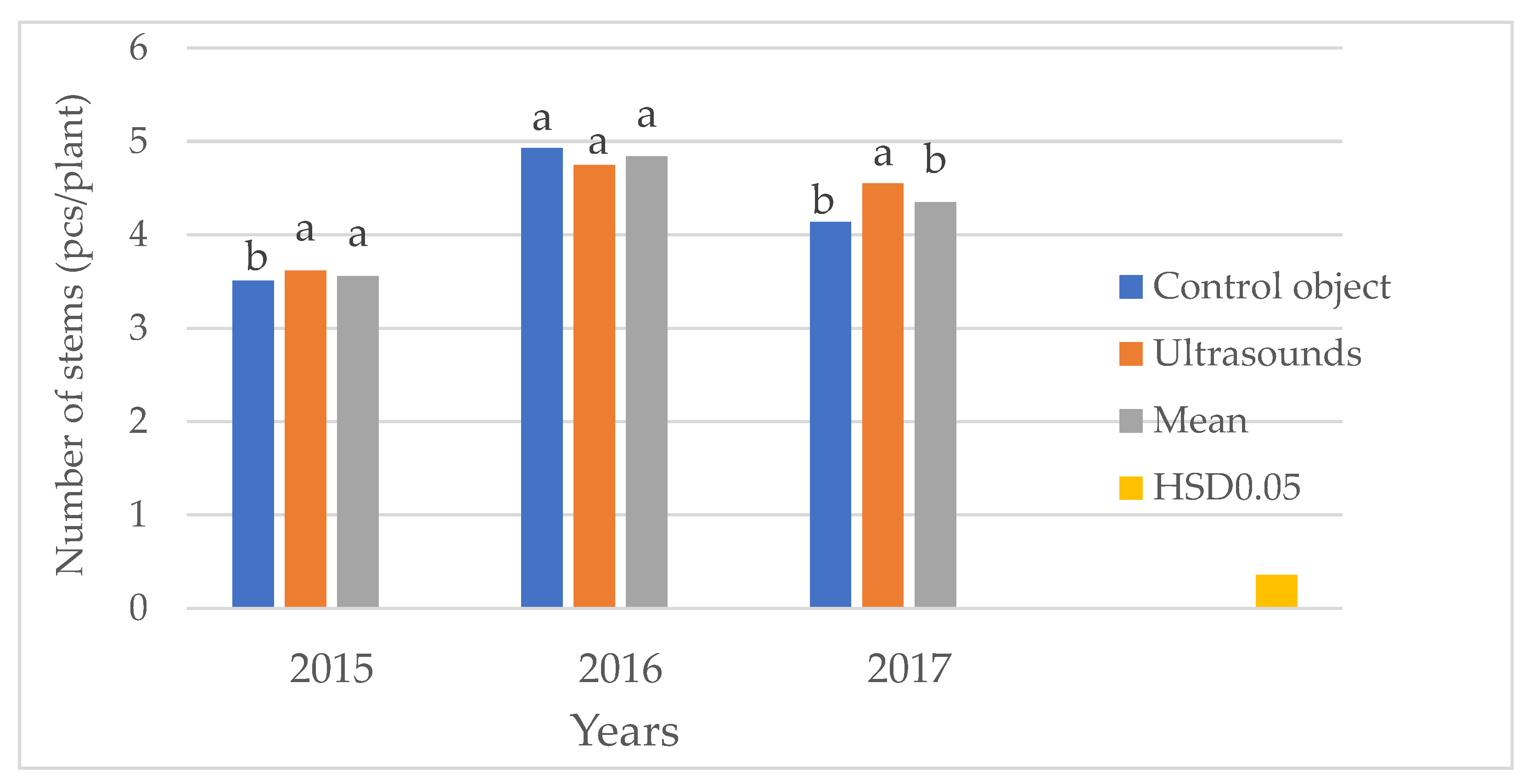
Figure 2.
The influence of technologies and years on the number of seed potatoes.
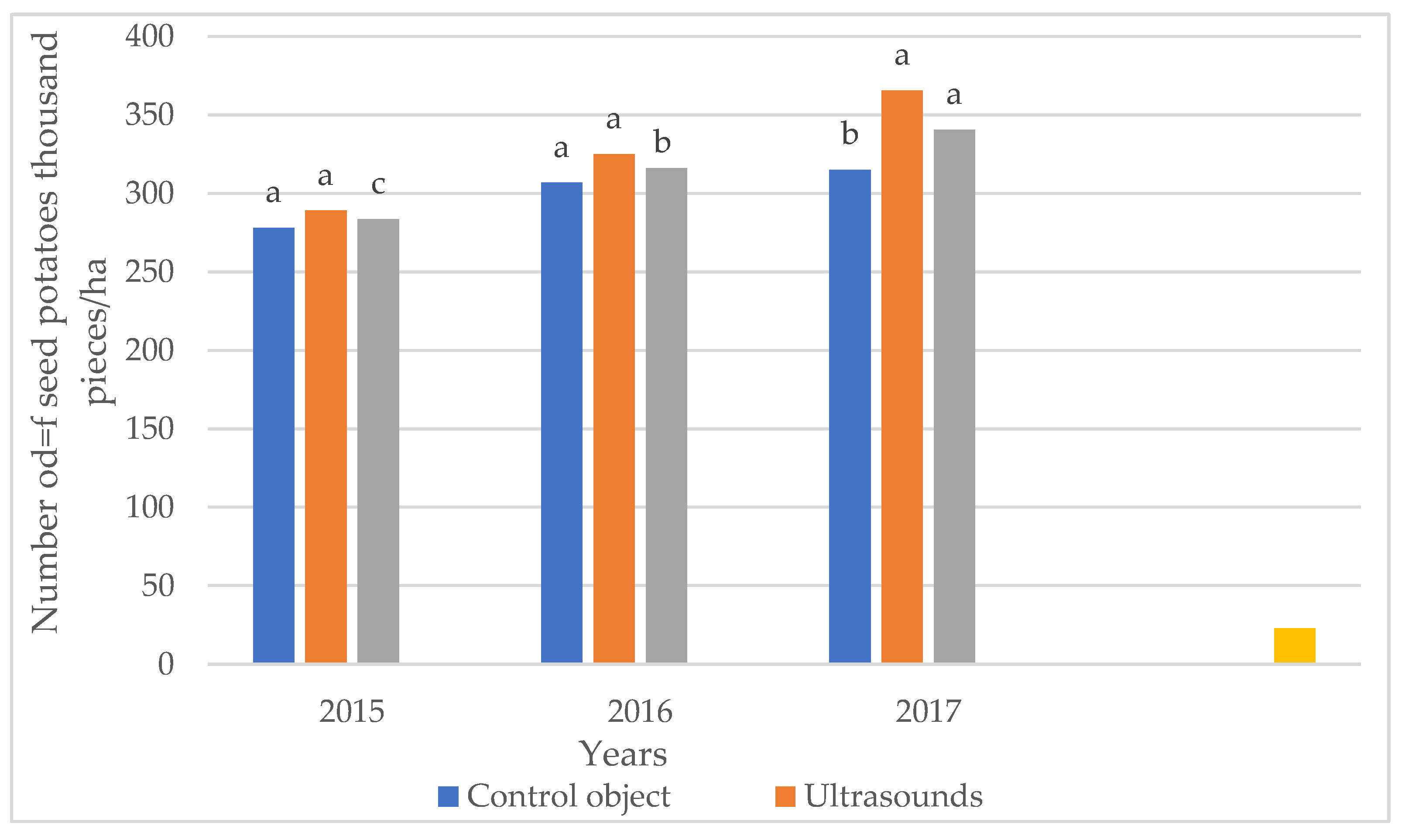
Figure 3.
The influence of cultivation technology and years on the weight of a single seed potato.
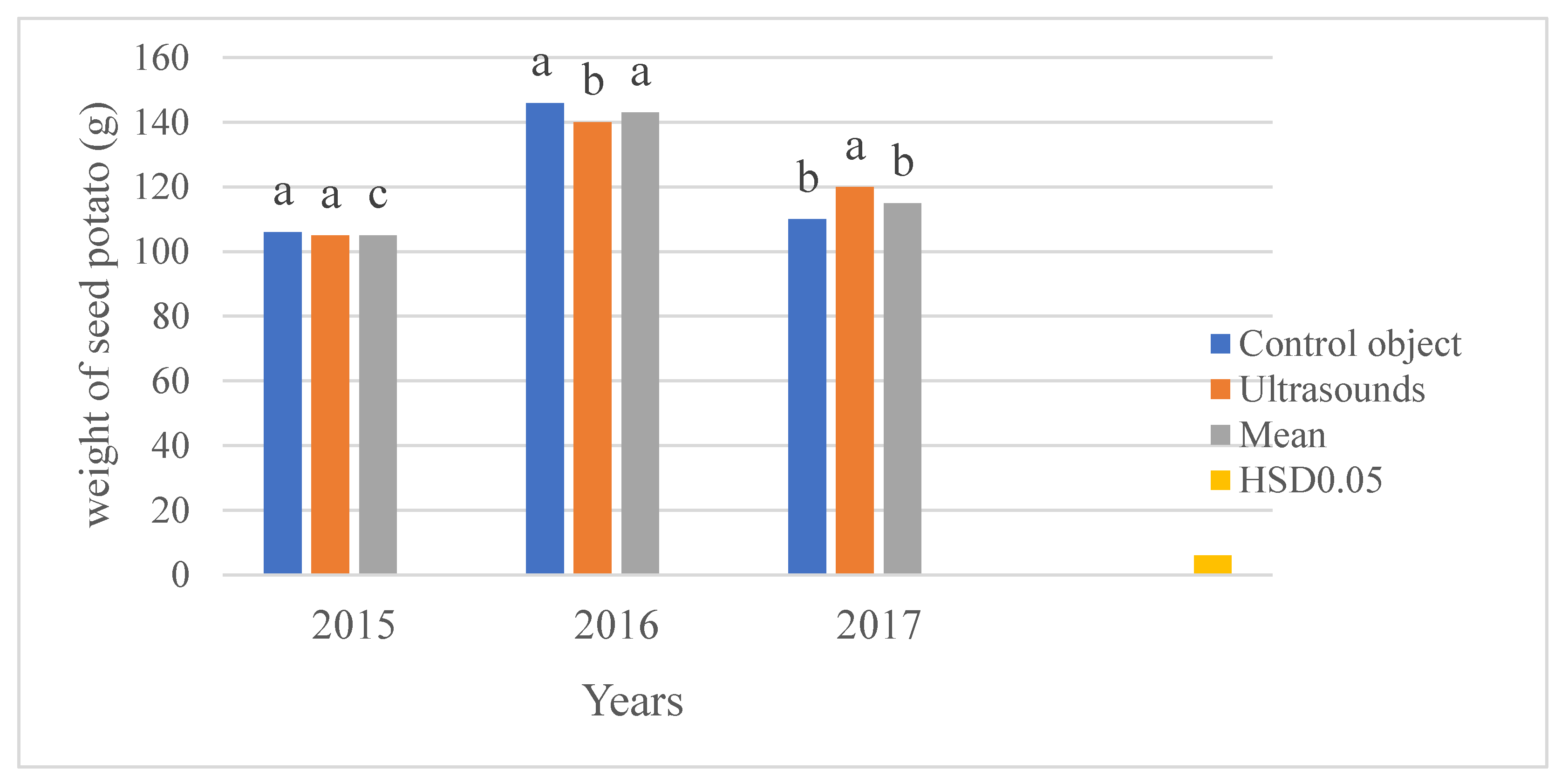
Figure 4.
The influence of cultivation technology and years on the potato reproduction coefficient.
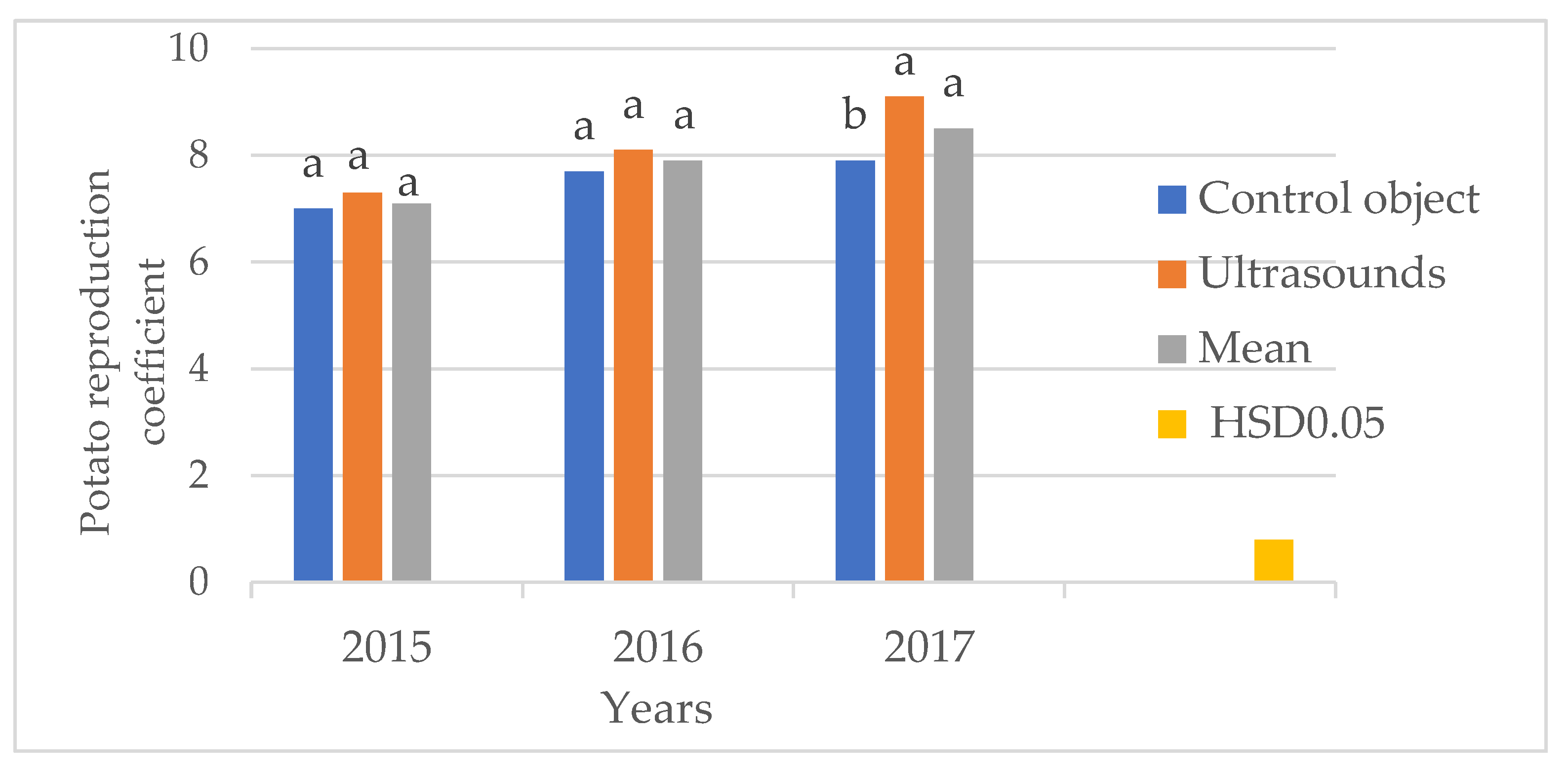
Figure 5.
The values of Pearson's correlation coefficients for the yield of seed potatoes, and parameters of their evaluation. Y - seed potato yield (t ha-1); x1 - number of stems (pcs/plant); x2 - share of seed potatoes (%); x3 - number of seed potatoes (thousends pcs/ha); x4 - weight of an average seed potato (g); x5 – reproduction coefficient.
Figure 5.
The values of Pearson's correlation coefficients for the yield of seed potatoes, and parameters of their evaluation. Y - seed potato yield (t ha-1); x1 - number of stems (pcs/plant); x2 - share of seed potatoes (%); x3 - number of seed potatoes (thousends pcs/ha); x4 - weight of an average seed potato (g); x5 – reproduction coefficient.
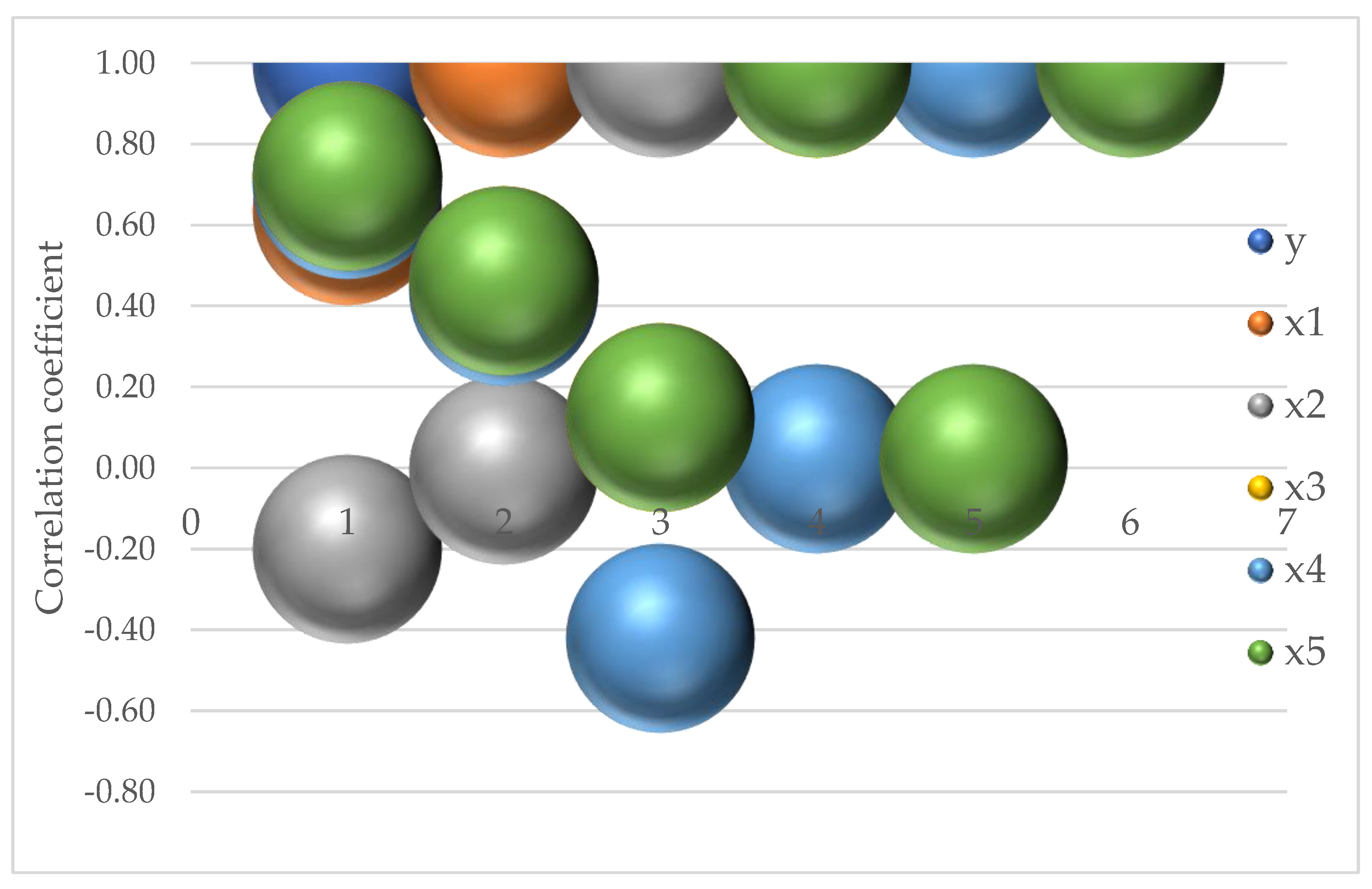

Table 1.
Characteristics of the tested potato varieties.
| Variety | Peel color | Flesh color | Culinary type | Taste on a scale of 9° | Starch content (%) |
| Very early varieties | |||||
| ‘Denar’ | yellow | light yellow | AB | 7 | 12.3 |
| ‘Lord’ | yellow | light yellow | AB | 7 | 12.4 |
| Early varieties | |||||
| ‘Owacja’ | yellow | light yellow | B-BC | 7 | 13.5 |
| ‘Vineta’ | yellow | yellow | AB | 7 | 13.7 |
| Moderately variety | |||||
| ‘Satina’ | yellow | yellow | B | 7.5 | 12.8 |
| ‘Tajfun’ | yellow | yellow | B-BC | 7 | 16.5 |
| Moderately late | |||||
| ‘Syrena’ | yellow | yellow | B | 7 | 15.4 |
| ‘Zagłoba’ | yellow | yellow | B | 7 | 12.6 |
Source: [20]. Depth of the tuber meshes (9° scale): 1°- very deep, 9° - very shallow.
Table 2.
Rainfalls, air temperature and the hydrothermal coefficient of Sielianinov, during the growing season of potato (2015-2017).
Table 2.
Rainfalls, air temperature and the hydrothermal coefficient of Sielianinov, during the growing season of potato (2015-2017).
| Year | Month | Month Rainfall [mm] |
% of the long-term average* | Mean Air temperature [°C] |
Deviation from the long-term norm [C°]** | Hydrothermal coefficient of Sielianinov*** |
| 2015 | April | 61.8 | 171.7 | 8.8 | 0.9 | 2.3 |
| May | 120.3 | 200.5 | 12.8 | - 0.9 | 3.0 | |
| Juni | 46.7 | 66.7 | 16.7 | - 0.1 | 0.9 | |
| July | 45.2 | 60.3 | 19.4 | 0.6 | 0.8 | |
| August | 6.1 | 8.7 | 21.4 | 3.7 | 0.1 | |
| September | 130.2 | 260.4 | 15.5 | 2.8 | 2.8 | |
| Total | 410.3 | |||||
| 2016 | April | 47.1 | 127.3 | 10.0 | 2.0 | 1.6 |
| May | 46.3 | 78.5 | 15.3 | 1.5 | 1.0 | |
| Juni | 87.3 | 124.7 | 19.1 | 2.3 | 1.5 | |
| July | 114.1 | 152.1 | 20.5 | 1.6 | 1.8 | |
| August | 41.0 | 60.3 | 19.5 | 1.7 | 0.7 | |
| September | 11.8 | 23.1 | 15.5 | 2.6 | 0.3 | |
| Total | 347.6 | |||||
| 2017 | April | 51.8 | 140.0 | 8.1 | 0.1 | 2.1 |
| May | 65.5 | 107.4 | 13.7 | - 0.1 | 1.5 | |
| Juni | 23.1 | 33.0 | 18.3 | 1.5 | 0.4 | |
| July | 132.0 | 176.0 | 19.4 | 0.5 | 2.2 | |
| August | 27.0 | 39.7 | 20.3 | 2.5 | 0.4 | |
| September | 83.3 | 163.3 | 14.8 | 1.9 | 1.9 | |
| Total | 382.7 |
Source: The Agrometeorological Station in Uhnin, Poland. * The long-term norm calculated for the period 1971-2016 for the meteorological station in Uhnin; **The hydrothermal coefficient was calculated according to the formula: k = 10P ∑ t [21], where P represents the total monthly precipitation in mm, and Σt is the monthly cumulative air temperature > 0°C. The index values were categorized as follows: extremely dry (k ≤ 0.4), very dry (0.4 < k ≤ 0.7), dry (0.7 < k ≤ 1.0), rather dry (1.0 < k ≤ 1.3), optimal (1.3 < k ≤ 1.6), rather humid (1.6 < k ≤ 2.0), wet (2.0 < k ≤ 2.5), very humid (2.5 ≤ k ≤ 3.0), and extremely humid (k > 3.0).
Table 3.
Soil characteristics before establishing the experiment.
| Year of Research | Content of macronutrients [g. kg-1 of soil] |
Humus content [g.kg−1] |
pH [KCL] |
||
| P | K | Mg | |||
| 2015 | 89 | 109 | 78 | 0.94 | 5.9 |
| 2016 | 83 | 91 | 70 | 1.06 | 5.8 |
| 2017 | 106 | 98 | 63 | 1.03 | 6.6 |
| Mean | 93 | 99 | 70 | 1.02 | - |
Source: Analysis in District Chemical and Agricultural Station in Lublin.
Table 4.
Number of stems per plant depending on technologies, variety and years (2015-2017).
| Cultivars | Technologies | Years | Mean | |||
| Traditional | Ultrasound | 2015 | 2016 | 2017 | ||
| ‘Denar’ ‘Lord’ ‘Owacja’ ‘Vineta’ ‘Satina’ ‘Tajfun’ ‘Syrena’ ‘Zagłoba’ |
4.75 a* 3.76 a 3.95 a 4.30 a 4.70 a 3.98 a 4.62 a 3.50 a |
4.80 a 4.20 a 4.16 a 4.57 a 4.90 a 4.06 a 4.38 a 3.37 a |
3.56 a 3.54 a 3.68 a 3.48 a 4.08 a 3.20 ab 4.06 a 2.89 b |
5.83 a 4.82 ab 4.00 b 5.06 a 5.33 a 4.72 ab 4.77 ab 4.21 b |
4.94 a 3.60 b 4.49 a 4.76 a 4.99 a 4.13 a 4.67 a 3.21 b |
4.78 a 3.98 c 4.06 bc 4.44 ab 4.80 a 4.02 bc 4.50 ab 3.44 d |
| Mean | 4.19 b | 4.31 a | 3.56 c | 4.84 a | 4.35 b | 4.25 |
* The letter indicators accompanying the means (significance groups) determine the so-called homogeneous (statistically uniform) groups. The occurrence of the same letter indicator among the means (of at least one) indicates no statistically significant difference between them. Subsequent letter indicators, such as a, b, c. etc., designate mean groups in decreasing order.
Table 5.
The effect of technologies, potato varieties, and years on seed potato yield (t ha-1).
| Cultivars | Technologies | Years | Mean | |||
| Traditional | Ultrasound | 2015 | 2016 | 2017 | ||
| ‘Denar’ ‘Lord’ ‘Owacja’ ‘Vineta’ ‘Satina’ ‘Tajfun’ ‘Syrena’ ‘Zagłoba’ |
40.25 a* 34.93 a 34.22 a 33.75 a 37.01 a 36.90 a 39.60 a 37.04 a |
40.19 a 39.80 a 36.00 a 35.76 a 42.77 a 37.87 a 42.24 a 38.96 a |
27.06 a 28.06 a 30.09 a 26.01 a 35.33 a 27.20 a 34.80 a 31.78 a |
48.76 a 44.98 a 41.31 a 41.20 a 42.78 a 47.51 a 46.56 a 46.21 a |
44.84 a 39.07 a 33.93 b 37.04 ab 41.56 a 37.44 ab 41.40 a 36.00 ab |
40.22 a 37.37 ab 35.11 b 34.75 b 39.89 a 37.39 ab 40.90 a 38.00 a |
| Mean | 36.71 b | 39.20 a | 30.04 c | 44.91 a | 38.91 b | 37.95 |
* The existence of identical letter indices in the means (at a minimum) indicates a lack of statistically significant differences among them. The subsequent letter indices (a, b, c) delineate the groups in descending order.
Table 6.
The influence of technologies, potato varieties and years on the percentage share of seed potatoes in the total yield.
Table 6.
The influence of technologies, potato varieties and years on the percentage share of seed potatoes in the total yield.
| Cultivars | Technologies | Years | Mean | |||
| Traditional | Ultrasound | 2015 | 2016 | 2017 | ||
| ‘Denar’ ‘Lord’ ‘Owacja’ ‘Vineta’ ‘Satina’ ‘Tajfun’ ‘Syrena’ ‘Zagłoba’ |
93.0 a* 89.4 a 92.4 a 90.5 a 91.2 a 94.5 a 91.9 a 81.3 b |
92.8 a 92.5 a 90.5 a 89.4 b 94.2 a 95.2 a 92.8 a 83.2 b |
94.3 a 94.7 a 95.2 a 94.7 a 96.0 a 94.6 a 95.1 a 93.4 a |
89.9 a 89.7 a 87.8 a 86.0 b 89.0 a 94.5 a 89.8 a 77.0 b |
94.6 a 88.4 b 91.4 a 89.1 a 92.1 a 95.6 a 92.1 a 76.3 b |
92.9 ab 90.9 b 91.5 b 89.9 b 92.7 ab 94.9 a 92.3 ab 82.2 c |
| Mean | 90.5 a | 91.3 a | 94.7 a | 88.0 c | 90.1 b | 90.9 |
* The existence of identical letter indices in the means (at a minimum) indicates a lack of statistically significant differences among them. The subsequent letter indices (a, b, c) delineate the groups in descending order.
Table 7.
The influence of technologies, potato varieties, and years on the number of seed potatoes (thousand pieces ha-1).
Table 7.
The influence of technologies, potato varieties, and years on the number of seed potatoes (thousand pieces ha-1).
| Varieties | Technologies | Years | Mean | |||
| Traditional | Ultrasound | 2015 | 2016 | 2017 | ||
| ‘Denar’ ‘Lord’ ‘Owacja’ ‘Vineta’ ‘Satina’ ‘Tajfun’ ‘Syrena’ ‘Zagłoba’ |
324.1 a* 280.0 a 291.6 a 296.9 a 315.3 a 302.1 a 296.4 a 295.0 a |
336.3 a 318.7 ab 314.1 ab 297.6 b 384.9 a 333.3 a 316.9 ab 311.1 ab |
266.9 a 261.8 a 300.3 a 267.8 a 321.8 a 269.1 a 293.3 a 287.8 a |
332.7 a 314.7 a 302.4 a 295.3 a 323.3 a 331.1 a 290.9 a 337.6 a |
391.1 a 321.6 ab 305.8 b 328.7abc 405.1 a 352.9 a 335.8abc 283.8 b |
330.2 a 299.3 b 302.9 b 297.3 b 350.1 a 317.7 ab 306.7 b 303.0 b |
| Mean | 300.2 b | 326.6 a | 283.6 c | 316.0 b | 340.6 a | 313.4 |
* The existence of identical letter indices in the means (at a minimum) indicates a lack of statistically significant differences among them. The subsequent letter indices (a, b, c) delineate the groups in descending order.
Table 8.
The influence of technologies, potato varieties, and years on seed tuber weight (g).
| Varieties | Technologies | Years | Mean | |||
| Traditional | Ultrasound | 2015 | 2016 | 2017 | ||
| ‘Denar’ ‘Lord’ ‘Owacja’ ‘Vineta’ ‘Satina’ ‘Tajfun’ ‘Syrena’ ‘Zagłoba’ |
122 ab* 123 a 117 ab 113 b 118 ab 121 ab 136 a 126 a |
119 a 125 a 114 b 119 a 112 b 113 b 134 a 124 a |
101 a 107 a 100 a 96 a 109 a 101 a 118 a 110 a |
147 a 144 a 136 ab 139 ab 133 b 144 a 163 a 138 ab |
115 a 122 a 111 a 112 a 103 a 106 a 124 a 128 a |
121 b 124 b 116 bc 116 bc 115 bc 117 bc 135 a 125 b |
| Mean | 122 a | 120 a | 105 c | 143 a | 115 b | 121 |
* The existence of identical letter indices in the means (at a minimum) indicates a lack of statistically significant differences among them. The subsequent letter indices (a, b, c) delineate the groups in descending order.
Table 9.
The influence of technologies, varieties, and years on the multiplication coefficient of potato seed tubers.
Table 9.
The influence of technologies, varieties, and years on the multiplication coefficient of potato seed tubers.
| Varieties | Technologies | Years | Mean | |||
| Traditional | Ultrasound | 2015 | 2016 | 2017 | ||
| ‘Denar’ ‘Lord’ ‘Owacja’ ‘Vineta’ ‘Satina’ ‘Tajfun’ ‘Syrena’ ‘Zagłoba’ |
8.1 a* 7.0 b 7.3 a 7.4 a 7.9 a 7.6 a 7.4 a 7.4 a |
8.4 ab 7.9 b 7.8 b 7.4 c 9.6 a 8.3 ab 7.9 b 7.8 b |
6.7 a 6.5 a 7.5 a 6.7 a 8.0 a 6.7 a 7.3 a 7.2 a |
8.3 a 7.9 a 7.6 a 7.4 a 8.1 a 8.3 a 7.3 a 8.4 a |
9.8 a 8.0 a 7.6 b 8.2 a 10.1 a 8.8 a 8.4 a 7.0 b |
8.3 ab 7.5 b 7.6 b 7.4 b 8.8 a 7.9 ba 7.7 b 7.6 b |
| Mean | 7.5 b | 8.2 a | 7.1 c | 7.9 b | 8.5 a | 7.8 |
* The existence of identical letter indices in the means (at a minimum) indicates a lack of statistically significant differences among them. The subsequent letter indices (a, b, c) delineate the groups in descending order.
Table 10.
Descriptive statistics of the dependent variable (y) and independent variables (x).
| Specifications | y | x1 | x2 | x3 | x4 | x5 |
| Mean | 37.95 | 4.25 | 90.92 | 313.39 | 121.03 | 7.83 |
| Median | 39.60 | 4.26 | 92.45 | 310.00 | 118.00 | 7.75 |
| Standard deviation | 8.46 | 0.87 | 5.97 | 52.86 | 19.99 | 1.32 |
| Kurtosis | -0.74 | 0.54 | 1.91 | 0.46 | 1.43 | 0.46 |
| Skewness | -0.34 | -0.16 | -1.41 | 0.44 | 0.84 | 0.44 |
| Range | 37.13 | 5.64 | 29.32 | 296.00 | 129.00 | 7.40 |
| Minimum | 17.93 | 1.03 | 68.86 | 194.67 | 78.00 | 4.87 |
| Maximum | 55.07 | 6.67 | 98.18 | 490.67 | 207.00 | 12.27 |
| Coefficient of variations (%) | 22.30 | 20.40 | 6.56 | 16.87 | 16.52 | 16.87 |
y – seed potato yield (t.ha-1), x1 - number of stems (pcs/plant), x2 - share of seed potatoes (%), x3 – – number of seed potatoes (thousands of pcs.ha-1), x4 – whight of medium seed potato (g); x5 – reproduction coefficient.
Disclaimer/Publisher’s Note: The statements, opinions and data contained in all publications are solely those of the individual author(s) and contributor(s) and not of MDPI and/or the editor(s). MDPI and/or the editor(s) disclaim responsibility for any injury to people or property resulting from any ideas, methods, instructions or products referred to in the content. |
© 2024 by the authors. Licensee MDPI, Basel, Switzerland. This article is an open access article distributed under the terms and conditions of the Creative Commons Attribution (CC BY) license (http://creativecommons.org/licenses/by/4.0/).
Copyright: This open access article is published under a Creative Commons CC BY 4.0 license, which permit the free download, distribution, and reuse, provided that the author and preprint are cited in any reuse.


