

Submitted:
22 December 2024
Posted:
23 December 2024
You are already at the latest version
Abstract
The purpose of this study is to analyze the publication trends and scholarly contributions related to hotel ser-vice quality from 1987 to 2024. Given the critical role service quality plays in shaping customer satisfaction, loyalty, and operational success in the hotel industry, understanding its research trajectory is essential for both academics and practitioners. This study utilizes a bibliometric analysis approach, extracting data from the Scopus database on publication metrics such as authors, countries, affiliations, sources, keywords, and refer-ences. Further visual mapping of keyword co-occurrence, author collaboration, and citation networks was con-ducted using Vosviewer to identify major trends and influential contributions in the field. Research on hotel service quality has expanded significantly over the past decades, with a steady increase in publications. Nota-bly, technological advancements, customer satisfaction models, and the integration of sustainability in service quality have emerged as key research themes. The period from 2020 onwards shows a particular focus on the effects of artificial intelligence and the impact of global crises, such as COVID-19, on hotel service quality. This study is limited to publications from 1987-2024, and while comprehensive, some seminal works may precede this time frame. Additionally, the study only includes articles indexed in Scopus, potentially excluding other important contributions. This study offers a holistic overview of the evolution of hotel service quality research, mapping its trajectory and highlighting emerging trends. It provides valuable insights into the role of service quality in driving operational excellence, guest satisfaction, and sustainable growth in the hospitality industry.
Keywords:
Hotel Service Quality
; Sustainable Growth
; Bibliometric
; Customer Satisfaction
; Technology
; Sustainability
; Economic Growth
Introduction
Hotel service quality has played a pivotal role within the hospitality and tourism industry. Its influence on shaping customer satisfaction and loyalty has a profound effect on business success. Service quality today has transformed dramatically with the exponential growth of global tourism and has intensified competitive pressures amongst hospitality providers. Given the dynamic nature of the industry, it is of paramount importance to examine the scholarly landscape of hotel service quality research in a crtical manner. This can be done through a bibliometric analysis to map trends, networks, and the impact of studies in the field of hotel service over time. This main aim of this study is to provide a detailed trajectory of the bibliometric landscape analysis of hotel service quality research spanning from 1987 to 2024.Service quality is a multidumensional concept that involves the interactions between customers and service providers (Parasuraman et al.,1988). Service quality is key factor influencing customer satisfaction and loyalty. This influence has a lomg term lasting effect on a hotel’s reputation and long-term sustainability (Ladhari, 2009; Mohsin & Lockyer, 2010). Previous studies in this field have remphasized the importance of high service standards, especially in the context of technological advances and changing consumer expectations (Buhalis & Sinarta, 2019; Tung & Au, 2018; Huang & Rust, 2021).
To meet the demanding needs of current customers, newer studies have gone past traditional service quality measures. Recent studies have included more pressing issues such as sustainability and technology adoption (Mandal, 2023; Dovbischuk, 2023). Studies show that a firm’s human resource management (HRM) practices can create an environment that encourages positive employee behavior, thereby enhancing service quality (Tsaur & Lin, 2004). In tandem, various models and frameworks have been developed to assess and improve service delivery in hotels (Wilkins et al., 2007).The evolution of hotel service quality research over the past three decades can be classified into various phases. From the late 1980s to the 1990s, studies have concentrated on defining and measuring service quality. Prominent models such as the SERVQUAL model or its derivaties have emerged (Akbaba, 2006; Tsaur & Lin, 2004). These pioneeirng studies provided the foundation for understanding the relationship between service quality and customer satisfaction (Hartline & Jones, 1996).The subsequent phase in 2000s saw a expansion of hotel service quality research, which examined the relationship between service quality, customer loyalty, and behavioral intentions. Studies in this time frame recognize that customer satisfaction alone was not enough to guarantee a business sustainability. Research begun to adopt a deeper focus on trying to understand of how service quality influences loyalty and word-of-mouth recommendations (Ladhari, 2009; Wilkins et al., 2007). During this period, the geographical scope of research also expanded with studies involving various cultural contexts and service environments, such as luxury hotels in Turkey (Akbaba, 2006) and service quality in the Chinese hotel industry (Tsang & Qu, 2000).In more recent research studies on hotel service quality, the focus has transistioned towards emerging issues such as the role of technology such as adoption of service robots, online booking systems, and customer feedback platforms which has changed the way service quality is perceived and delivered (Choi & Choi, 2020).In addition, studies have also begun to explore the influence of hotel star rating whereby the two key predictors of satisfaction were the accommodation infrastructure and the employee expertise.e (Nunkoo et al., 2020).
Bibliometric analysis studies have emerged as a key tool in mapping the trajectory of a research field. Its holistic examination of academic literature is carried out via quantitative methods, such as citation analysis, co-citation networks, and keyword co-occurrence analysis (Van Eck & Waltman, 2010). In the context of hotel service quality, bibliometric analysis is particularly valuable to study the evolution of resaerch over a given time frame. By examining the most cited papers, influential authors, and collaborative networks, bibliometric analysis can highlight influential research by prominent authors such as Akbaba (2006) and Ladhari(2009) on service quality frameworks and measurement techniques.This study aims to fill a gap in the current literature by conducting a bibliometric analysis of hotel service quality research from 1987 to 2024, examining trends in publication output, citation networks, and thematic clusters.
Specifically, this study will answer the following research questions:
RQ1: What are the publication trends in the field of hotel service quality?
RQ2: Who are the most productive authors in the field of hotel service quality?
RQ3: What are the most productive institutions in the field of hotel service quality?
RQ4: What are the most active countries in the field of hotel service quality?
RQ5: What are the most highly cited documents in the field of hotel service quality?
By addressing these questions, this study will contribute to a deeper understanding of the hotel service quality research publication thus providing valuable insights for future studies in the field.
Literature Review
Hotel Service Quality
Hotel service quality has been a corner stone in the hospitality industry especially in the demanding and competitive hoteling market place. The importance of service quality is further magnified in the hotel industry as it significantly influences customer satisfaction, profitablity and brand reputation (Mohsin & Lockyer, 2010). This review synthesizes key themes in hotel service quality research covering foundational service quality models, technological advancements, and sustainability.
Foundational Models of Service Quality
Service quality models and frameworks have played a key role in understanding customer perceptions and expectations in the hoteling industry. The SERVQUAL model introduced by Parasuraman et al. (1988) stands out as the dominant model in the service sector. This model identifies five dimensions of service quality—tangibles, reliability, responsiveness, assurance, and empathy for measuring service performance. A number of studies have adapted the SERVQUAL model to the hotel context, emphasizing its relevance in assessing service quality (Ladhari, 2009). Despite its prominence, previous studies using various dominant service quality models have not accounted for cultural and country specific factors. For instance, service quality in China’s hotel industry has been rather general and descriptive (Tsang & Qu, 2000). Building upon SERVQUAL, alternative service quality models have been developed for the hoteling industry. Akbaba (2006) service quality model in the business hotels has seen the inclusion of dimensions specific to the business travel segment. Similarly, Wilkins et al. (2007) hypothsized that service quality in hotels is a higher order construct and is a derivative from the components of the hotel physical, service and food and beverage products.These later variations of service quality model underline the complex and multi-dimensional environment of service quality in the industry. More recent work by Busayo (2023), have added digital technology components like artificial intelligence (AI) into the service experience.
Based on Table 1. below, it shows that the evolution of hotel service quality research from the 1980s to 2024 reflecting significant shifts in focus and methodology. In the 1980s, the foundational work by Parasuraman et al. (1988) led to the introduction of the SERVQUAL model. This model was a groundbreaking framework for assessing service quality. In 1990s, research from Tsang & Qu (2000) explored service quality from a cultural contexts, reflecting the emergence of globalization of the hotel industry. During the 2000-2010 period, specialized models, such as Akbaba (2006) focused on business hotels and Wilkins et al. (2007) exploring total service quality. The emphasis shifted toward understanding the relationship between service quality and customer satisfaction, emotional engagement, and loyalty. From 2011 to 2019, the role of technology was explored from studies like Browning et al. (2013) which underlined how digital feedback shaped customer perceptions. Finally, in the 2020-2024 period, the integration of artificial intelligence, sustainability, and responses to global crises like COVID-19 became central themes, reflecting the evolving research landscape in the hotel service quality.
Method
The data utilized in this study was extracted from the Scopus Database. Scopus was selected due to its extensive coverage of various forms of academic research, and it is recognized as one of the most comprehensive abstract and citation databases. It contains over 40,000 peer-reviewed journals (Elsevier, 2024). It provides citation metrics information such as citation counts, h-index, g-index, and m-index, which are essential for evaluating the impact and scholarly influence of research articles and authors.The search query for this study was TITLE-ABS-KEY (“Hotel Service Quality”) AND (PUBYEAR, 1987-2024). This query was designed to capture relevant publications from 1987 to 2024, to trace the long-term evolution of hotel service quality research. This resulted in 445 documents which met the search criteria.Key bibliometric metrics, such as total publications, document type, source type, country of origin, author contributions, and citation counts, were extracted from Scopus. The data was subsequently exported to Microsoft Excel for descriptive analysis. The study then employed Vosviewer(version 1.6.19), a software widely used to visualize the scientific researchlandscape enabling the study to identify the most influential research articles, active research clusters, and emerging research themes (van Eck & Waltman, 2010). The keyword co-occurrence analysis revealed dominant topics in hotel service quality research, while the co-authorship analysis highlighted major collaborative efforts across different institutions and countries. Citation analysis was employed to provide insights into the most frequently cited works shaping the field of hotel service quality. The use of a pletora of tools and techniques provided a holistic and comprehensive view of the research landscape. This study follows the best practices established in earlier bibliometric research, including the works of Liu et al. (2024), which also used Web of Science for data extraction and VOSviewer for network visualization. These previous studies demonstrate the effectiveness of these methods in providing a holistic view of academic trends and influence.
Analysis and Results
Main Information
The citation metrics in Table 2 revealed that research on hotel service quality covered a 38 year time frame from 1987 to 2024. This time period has witnessed 445 publications suggesting that research in hotel service quality remains a pertinent issue within the academic circles.The average number of authors per paper is 2.69, reflecting a strong trend toward collaborative research. It also boasts a total citation count of 11,856, underlining the significant impact of hotel service quality research. Each paper in this field is cited an average of 26.64 times, indicating the relevance and influence of individual studies. The citation rate of 320.43 citations per year suggest a continued and sustained interest in research on hotel service quality Additionally, the h-index of 58 and the g-index of 95 provide further evidence of the depth and breadth of influence within this field.
Annual Publication Trends
Based on Table 3 and Figure 1, the field of hotel service quality has experienced significant growth in publications and changes in citation trends from 1987 to 2024. Early years saw few publications but high citation counts, such as in 1987 (1 paper, 102 citations) and 1990 (2 papers, 103 citations), indicating the impact of these studies. A surging research output was observed particularly in the 2000s and 2010s, peaking in 2022 with 37 papers. However, it is worth noting that the average citations per paper declined probably due to the growing volume of work. Recent years, from 2019 to 2024, showed a drop in total citations. This is normally expected as recent studies have not yet had the time to accumulate citations. This decline reflects the natural lag in citation accumulation rather than a fading influence. Overall, the data reveals a gradually growing research output with strong foundational works that shaped early research. Despite the recent lag in recent citations, the continued increase in publications suggests that the field has the potential for recent work to gain influence over time.
The cumulative growth of publications in hotel service quality research from 1987 to 2023 shown in Figure 2 below demonstrates an accelerating trajectory, as shown by the quadratic fit y=0.587x2−7.7767x+27.677 with an R² of 0.9961. Despite a slow initial growth until 2005, there was a significant rise in publications occurring from 2010 onwards. This suggests an increased academic interest and relevance in this field. Post-2011 exponential growth suggests the field’s growing importance, driven by a competitive and demanding industry which is dynamically evolving.
Documents Profiles
Based on Table 4 below, the data indicates that research in hotel service quality is primarily disseminated through peer-reviewed journal articles, which account for the vast majority of publications (80.22%). This suggests a strong emphasis on formal, rigorous academic studies in this field. The relatively lower percentages of conference papers (13.71%) and book chapters (2.70%) indicate that alternative formats, such as preliminary findings or broader discussions in edited volumes, are less common. The small presence of reviews (2.25%) suggests that systematic assessments of the field are infrequent. Overall, this focus on articles reflects a mature, research-driven discipline with an emphasis on contributing to scholarly literature.
Table 5 shows that journals are the primary source of hotel service quality research, comprising 83.82% of publications, emphasizing peer-reviewed academic dissemination. Conference proceedings account for 11.24%, suggesting a secondary role in presenting emerging research. Book series (2.92%) and books (2.02%) are rarely used, indicating a preference for shorter, article-based contributions over comprehensive works.
Analysis on Table 6 below highlights the dominance of English in hotel service quality research, with 96.85% of the publications in English. This reflects its status as the primary language for academic communication and global dissemination. In comparison, Spanish accounts for only 2.70%, while languages like Chinese and Polish contribute a mere 0.67% each. The minimal contributions from non-English languages suggest that non-English research plays a relatively small role in shaping the field. This may limit accessibility and engagement from scholars who primarily publish in these languages, emphasizing the global influence of English-centric research.
Data from Table 7 suggests that hotel service quality research is primarily focused on Business, Management, and Accounting (71.69%), indicating that service quality is seen predominantly as a business performance issue. The contributions from Social Sciences (24.72%) highlight the importance of human and societal factors in understanding service quality. The smaller shares from Engineering, Economics, and Computer Science (around 13% each) suggest that technological, economic, and analytical perspectives are relevant but secondary. The interdisciplinary contributions from Environmental Science and Decision Sciences point to emerging considerations, such as sustainability and decision-making frameworks, although they remain less central.
Most Productive Authors
Analysis of author contributions in the Figure 3 below displays the most productive authors in the field of hotel service quality. Belias, D. is the most prolific, with approximately 5 publications. Following closely are Min, H., Qu, H., Sufi, T., and Suki, N.M., each contributing around 3.5 to 4 publications. Other notable authors, such as Dabestani, R., and Hussain, K., have also made significant contributions with around 3 publications each. The data highlights that while there is a small group of leading researchers, there is a relatively balanced distribution of productivity among the top contributors. This indicates a collaborative and distributed research effort across multiple authors in the field.
Most Productive Institutions
Figure 4 highlights significant contributions from various institutions. The graph highlights Hong Kong Polytechnic University as the leading institution in hotel service quality research with around 18 publications, reflecting its global influence and strong focus on hospitality studies. Universiti Teknologi MARA follows with 10 publications, showcasing Malaysia’s growing focus on tourism. Other institutions like Ming Chuan University and Griffith University contribute around 5 publications each, representing global participation from Asia, Oceania, and Europe. The diversity of institutions, including Sejong University and Islamic Azad University, indicates that hotel service quality research is widely pursued across both developed and emerging markets, illustrating its global significance and interdisciplinary nature.
Most Productive Countries
Figure 5 and Figure 6 below highlights that Asia leads with nearly 300 publications, followed by Europe (150) and North America (60). The United States is the top individual contributor with 51 publications, followed by Malaysia (44) and Taiwan (41). While Africa, Oceania, and South America contribute fewer publications, the dominance of Asia and Europe reflects strong academic activity in hotel service quality research in these regions. The dominance of Asia and Europe in hotel service quality research can be attributed to the significant role tourism plays in these regions’ economies. Asia, particularly in countries like China, Malaysia, and Hong Kong, has seen rapid tourism growth, prompting academic interest in service quality improvement. Studies highlight that tourism is a key economic driver in Asia, thus increasing the focus on service quality research. Similarly, Europe’s mature tourism market and focus on service excellence have bolstered research, particularly in Spain and the UK. Additionally, robust academic infrastructure and government support contribute to the growing number of publications in these regions.
Publications by Source Titles
Table 8 below shows that the International Journal of Hospitality Management and International Journal of Contemporary Hospitality Management stand out as the most impactful journals in hotel service quality research, with high citations per paper (93 and 83.19, respectively) and strong h-index values, indicating significant academic influence. These journals likely lead due to their broad scope, cutting-edge focus, and international recognition, attracting high-quality research and wide readership. Tourism Management boasts the highest citation per paper (130.57) due to its focus on comprehensive, globally influential studies. In contrast, the Journal of Quality Assurance in Hospitality and Tourism, while the most prolific (23 publications), likely covers more niche topics, resulting in moderate citation impact
Highly Cited Documents
Table 9 below highlights the most-cited studies in hotel service quality, revealing trends in impact and evolving focus. Older studies, like Hartline and Jones (1996), with 353 citations and a citation per year (C/Y) of 12.17, laid foundational frameworks but are less relevant in addressing today’s challenges. In contrast, recent studies, such as Choi and Choi (2020) on service robots, have rapidly gained 267 citations with a high C/Y of 53.40, reflecting the growing interest in technology-driven service solutions.Thematic shifts are evident, with newer studies like Nunkoo et al. (2020) focusing on the role of hotel star ratings in service quality, garnering 196 citations and a C/Y of 39.20, highlighting evolving consumer expectations. The rise of technology, particularly in studies on automation and AI, indicates a shift from traditional service quality frameworks to innovation-driven research.Region-specific studies, such as Mohsin and Lockyer (2010) on New Delhi hotels, offer valuable insights but may face limited global relevance due to cultural differences.In conclusion, the field has evolved from traditional service metrics to embrace contemporary issues, particularly technology and customer feedback, as critical drivers of service quality research.
Keyword Analysis
The keyword co-occurrence network presents five distinct clusters that highlight the thematic focus areas within hotel service quality research (refer Figure 7). Each cluster represents a different dimension of the research landscape, reflecting both traditional concerns and emerging trends in the field.The first cluster (Green) is centered around customer satisfaction and loyalty, which remain the core concerns in hospitality. This cluster emphasizes the relationship between customer satisfaction and loyalty, with key terms such as behavioral intention, perceived value, and service recovery. The inclusion of job efficiency suggests research linking job efficiency with service delivery, highlighting the interconnected nature of employee and customer experiences in shaping overall service quality.
The second cluster (Red) focuses on service quality models and measurement. Keywords like measurement model, customer loyalty, and empirical studies suggest a focus on the development and testing of frameworks for quantifying service quality. Research in this cluster is likely centered around methodological approaches to understanding how service quality is evaluated and its effect on customer loyalty and organizational commitment.The third cluster (Yellow) addresses the broader context of tourism and hospitality, with an emphasis on COVID-19 and its impact on service quality. The appearance of specific geographic regions, such as Jordan, indicates region-specific research focusing on how the pandemic and other factors have influenced tourism. This cluster reflects how the global pandemic has reshaped customer expectations and service quality within the hospitality sector, and the critical role that tourism plays in shaping service quality research.The fourth cluster (Purple) highlights the growing importance of technology and efficiency in the hospitality industry. With keywords like data envelopment analysis, online reviews, and efficiency, this cluster points to the increasing reliance on data-driven approaches to optimize service quality. The presence of human interaction suggests an ongoing focus on balancing technology integration with the need for personal customer service interactions, which remain vital to service quality perceptions.Finally, the fifth cluster (Blue) focuses on emotional and service attributes, such as assurance, experience, and attitude. This cluster explores the softer, emotional dimensions of service quality, indicating that personal engagement and emotional connections between customers and service providers are key drivers of perceived service quality. Research in this area likely examines how these emotional and psychological factors shape overall customer satisfaction and loyalty.
Co Authorship Analysis
The co-authorship network graph reveals two collaborative clusters centered around key researchers (refer to Figure 8). Blesić Ivana is the focal point of the first cluster, connected to Dragićević Vanja and Čerović Slobodan. This small group suggests focused and in-depth collaboration, potentially focusing on a particluar research area or being affilated to a particular institution.The second cluster is larger but does not observe any focal researcher. Popov-Raljić Jovanka, Armenski Tanja and Deri Lukrecija collaborate with a broader network of researchers, including Urović Lenko, Stankov Uglješa, and Pantelić Milana. The dense interconnections within this group indicate frequent co-authorship. The comparison between the two clusters reveals different collaboration patterns. It may suggest Blesić Ivana’s smaller network points to more concentrated research efforts, while Popov-Raljić Jovanka’s larger network suggests broader and more diverse collaborations or research.
Citation Analysis on Documents
The citation network graph reveals key influential documents in hotel service quality research (refer to Figure 9). Studies by Akbaba (2006) and Ladhari (2009) are have a central position. Akbaba’s study on hotel service quality metrics and Ladhari’s focus on emotional satisfaction and customer behavior are frequently cited, indicating their impact in this field.More recent studies, such as Choi and Choi (2020), reflect a shift in focus towards technological innovations in hotel services, such as the use of service robots. This study is fast gaining influence reflected by its its central position in the network. The network clusters are indicative of a multitude of themes in the literature. The red cluster is reflects traditional service quality studies while the green cluster highlights emerging trends, such as technology adoption. The blue cluster represents specialized methodological studies.
Conclusions
Bibliometric analysis of hotel service quality research from 1987 to 2024 offers a trajectory view of the field’s evolution, highlighting both foundations studies and emerging trends. Over a span of almost four decades has shown a rapid growth of publication in hotel service quality. Pioneering work in the field is centered on defining and measuring service quality through models like SERVQUAL. These seminal studies laid the foundation for future research. However, with the robust growth in the hospitality industry the scope of research has broadened to include more emerging issues. The analysis reveals that the integration of technology, such as artificial intelligence, automation, and online customer feedback systems in more recent studies. This shows that the industry is adapting to meet changing customer expectations. These trends points to a growing focus on the role of technology in maintaining and enhancing service quality.Sustainability has also emerged as a critical theme, reflecting the increasing need for hotels to become eco friendly and integrate socially responsible practices. Research shows that sustainability contributes to a consistent high levels of service quality.Whithin a geographical context, the analysis reveals that Asia and Europe are the dominant contributors to hotel service quality research, with countries like China, Malaysia, Spain, and the United Kingdom being productive contributors. This may suggest that research is driven by geo locations where tourism plays a driving role in the economy.
The findings from this study highlight the collaborative nature of research in the field with an average of 2.69 authors per paper. This indicates that service quality research benefits from interdisciplinary and international colloborations. Additionally, strong citation metrics which include a total of 11,856 citations and an h-index of 58 demonstrate the significant academic influence of research in this area.Despite the comprehensive insights provided by this analysis, the study acknowledges several limitations. The sole use of Scopus-indexed publications means that research from other sources have been excluded, limiting the scope of the findings Future studies should expand the range of databases and timeframes to provide a more complete understanding of the evolution of service quality research in the hospitality field.In conclusion, research in hotel service quality research has seen a rapid growth driven by contemporary themes such as technology and sustainability. While foundational studies and traditional service quality metrics remain as the cornerstone of this field, the field is increasingly focused on how these current challenges can be managed to meet customer expectations. Therefore, it is essential for academics to integrate both traditional and contemporary perspectives to keep pace with the demanding and rapidly changing global hospitality landscape. This study provides offers critical insights into the past, present, and future of hotel service quality research.
Limitations
While this study provides valuable insights into the bibliometric landscape of hotel service quality research from 1987 to 2024, there are several limitations that need to be acknowledged. First, the analysis is restricted to publications indexed in the Scopus database, which may omit relevant studies from other databases, such as Web of Science, Google Scholar, or industry-specific sources. As a result, the findings may not fully represent all contributions to the field. Second, the time frame of the study, from 1987 to 2024, excludes earlier foundational research that may have influenced the development of service quality models, particularly in the hospitality sector. Similarly, focusing on this period may overlook more recent developments that emerged in late 2024 and beyond. Thirdly, bibliometric analysis, while effective in identifying trends, citation patterns, and collaboration networks, does not delve into the qualitative depth of the research content. Thus, the analysis may miss key shifts in theoretical perspectives or methodologies that are critical to understanding the evolution of the field. Finally, the study primarily relies on quantitative measures such as publication volume and citation counts, which may not fully capture the impact or quality of individual contributions, as highly cited papers are not necessarily the most influential in shaping practice or policy.Future research should consider including broader databases, conducting content analysis, and expanding the time frame to offer a more comprehensive understanding of the evolving field of hotel service quality research.
Future Research
The evolving landscape of hotel service quality research presents several avenues for future exploration. First, with the increasing integration of artificial intelligence (AI) and automation in hospitality, further studies should investigate how emerging technologies, such as AI-driven customer service and contactless experiences, affect service quality perceptions and customer satisfaction. These studies could also explore the balance between human interaction and technology in delivering exceptional service. Second, the role of sustainability in hotel service quality remains an emerging theme. Future research could examine how hotels integrate environmentally sustainable practices into their operations without compromising service quality. Additionally, studies focusing on the long-term impact of sustainability initiatives on customer loyalty and brand reputation would provide valuable insights into sustainable hospitality management. Third, the post-pandemic recovery offers an opportunity to explore how global crises, such as COVID-19, have reshaped service quality expectations and operations in the hotel industry. Research could focus on how hotels adapt to new safety standards, customer health concerns, and the long-term effects of such changes on service delivery and business performance. Lastly, as the hospitality industry becomes increasingly globalized, more comparative studies across cultural contexts are needed. Understanding how service quality expectations vary across regions and cultures will help hotels tailor their services to diverse international markets, ultimately improving customer satisfaction and loyalty globally. By addressing these future research areas, scholars can further contribute to the development of innovative service quality models that meet the demands of an ever-changing hotel industry.
References
- Akbaba, A. Measuring service quality in the hotel industry: A study in a business hotel in Turkey. International Journal of Hospitality Management 2006, 25, 170–192. [Google Scholar] [CrossRef]
- Alexandris, K.; Dimitriadis, N.; Markata, D. Can perceptions of service quality predict behavioral intentions? An exploratory study in the hotel sector in Greece. Managing Service Quality: An International Journal 2002, 12, 224–231. [Google Scholar] [CrossRef]
- Aria, M.; Cuccurullo, C. Bibliometrix: An R-tool for comprehensive science mapping analysis. Journal of Informetrics 2017, 11, 959–975. [Google Scholar] [CrossRef]
- Armstrong, R. W.; Mok, C.; Go, F. M.; Chan, A. The importance of cross-cultural expectations in the measurement of service quality perceptions in the hotel industry. International Journal of Hospitality Management 1997, 16, 181–190. [Google Scholar] [CrossRef]
- Benítez, J. M.; Martín, J. C.; Román, C. Using fuzzy numbers for measuring quality of service in the hotel industry. Tourism Management 2007, 28, 544–555. [Google Scholar] [CrossRef]
- Briggs, S.; Sutherland, J.; Drummond, S. Are hotels serving quality? An exploratory study of service quality in the Scottish hotel sector. Tourism Management 2007, 28, 1006–1019. [Google Scholar] [CrossRef]
- Browning, V.; So, K. K. F.; Sparks, B. The influence of online reviews on consumers’ attributions of service quality and control for service standards in hotels. Journal of Travel & Tourism Marketing 2013, 30, 23–40. [Google Scholar] [CrossRef]
- Buhalis, D.; Sinarta, Y. Real-time co-creation and nowness service: Lessons from tourism and hospitality. Journal of Travel & Tourism Marketing 2019, 36, 563–582. [Google Scholar] [CrossRef]
- Busayo, T.; Igbekoyi, O.; Oluwagbade, O.; Adewara, Y.; Dagunduro, M.; Boluwaji, Y. (2023). Artificial Intelligence and Service Quality of Telecommunication Firms in Nigeria. Journal of Economics, Finance and Accounting Studies. [CrossRef]
- Choi, Y.; Choi, M. Service robots in hotels: Understanding the service quality perceptions of human-robot interaction. Journal of Hospitality Marketing & Management 2020, 29, 613–635. [Google Scholar] [CrossRef]
- Clark, R. A.; Hartline, M. D.; Jones, K. C. The effects of leadership style on hotel employees’ commitment to service quality. Cornell Hospitality Quarterly 2009, 50, 209–231. [Google Scholar] [CrossRef]
- Dovbischuk, I. (2023). Sustainability in Logistics Service Quality: Evidence from Agri-Food Supply Chain in Ukraine. Sustainability. [CrossRef]
- Elsevier. (2024). Scopus: Content Coverage Guide. Retrieved from https://www.elsevier.com/solutions/scopus/how-scopus-works/content.
- Han, H.; Hyun, S. S. Impact of hotel-restaurant image and quality of physical environment, service, and food on satisfaction and intention. International Journal of Hospitality Management 2017, 63, 82–92. [Google Scholar] [CrossRef]
- Hartline, M. D.; Jones, K. C. Employee performance cues in a hotel service environment: Influence on perceived service quality, value, and word-of-mouth intentions. Journal of Business Research 1996, 35, 207–215. [Google Scholar] [CrossRef]
- Hsieh, L.-F.; Lin, L. H.; Lin, Y. Y. A service quality measurement architecture for hot spring hotels in Taiwan. Tourism Management 2008, 29, 1099–1109. [Google Scholar] [CrossRef]
- Huang, A.; Rust, R. T. A strategic framework for artificial intelligence in marketing. Journal of the Academy of Marketing Science 2021, 49, 30–50. [Google Scholar] [CrossRef]
- Ladhari, R. Service quality, emotional satisfaction, and behavioural intentions: A study in the hotel industry. Managing Service Quality 2009, 19, 308–331. [Google Scholar] [CrossRef]
- Liu, X.; Wider, W.; Fauzi, M. A.; Jiang, L.; Udang, L. N.; Hossain, S. F. A. The evolution of smart hotels: A bibliometric review of the past, present and future trends. Heliyon 2024, 10, e26472. [Google Scholar] [CrossRef] [PubMed]
- Mandal, P. Management of Service Quality With Involvement of Technological Developments in Organizations. Int. J. Technol. Diffusion 2023, 14, 1–12. [Google Scholar] [CrossRef]
- Mohsin, A.; Lockyer, T. Customer perceptions of service quality in luxury hotels in New Delhi, India: An exploratory study. International Journal of Contemporary Hospitality Management 2010, 22, 160–173. [Google Scholar] [CrossRef]
- Nadiri, H.; Hussain, K. Perceptions of service quality in North Cyprus hotels. International Journal of Contemporary Hospitality Management 2005, 17, 469–480. [Google Scholar] [CrossRef]
- Nunkoo, R.; Teeroovengadum, V.; Ringle, C. M.; Sunnassee, V. Service quality and customer satisfaction: The moderating effects of hotel star rating. International Journal of Hospitality Management 2020, 91, 102414. [Google Scholar] [CrossRef]
- Parasuraman, A.; Zeithaml, V. A.; Berry, L. L. SERVQUAL: A multiple-item scale for measuring consumer perceptions of service quality. Journal of Retailing 1988, 64, 12–40. [Google Scholar]
- Tsang, N.; Qu, H. Service quality in China’s hotel industry: A perspective from tourists and hotel managers. International Journal of Contemporary Hospitality Management 2000, 12, 316–326. [Google Scholar] [CrossRef]
- Tsang, N.; Qu, H. Service quality in China’s hotel industry: A perspective from tourists and hotel managers. International Journal of Contemporary Hospitality Management 2000, 12, 316–326. [Google Scholar] [CrossRef]
- Tsaur, S. H.; Lin, Y. C. Promoting service quality in tourist hotels: The role of HRM practices and service behavior. Tourism Management 2004, 25, 471–481. [Google Scholar] [CrossRef]
- Tung, V. W. S.; Au, N. Exploring customer experiences with robotics in hospitality service encounters. International Journal of Contemporary Hospitality Management 2018, 30, 2680–2697. [Google Scholar] [CrossRef]
- van Eck, N. J.; Waltman, L. Software survey: VOSviewer, a computer program for bibliometric mapping. Scientometrics 2010, 84, 523–538. [Google Scholar] [CrossRef] [PubMed]
- Wilkins, H.; Merrilees, B.; Herington, C. Towards an understanding of total service quality in hotels. International Journal of Hospitality Management 2007, 26, 840–853. [Google Scholar] [CrossRef]
- Wu, H. C.; Ko, Y. J. Assessment of service quality in the hotel industry. Journal of Quality Assurance in Hospitality & Tourism 2013, 14, 218–244. [Google Scholar] [CrossRef]
- Ye, Q.; Li, H.; Wang, Z.; Law, R. The influence of hotel price on perceived service quality and value in e-tourism: An empirical investigation based on online traveler reviews. Journal of Hospitality and Tourism Research 2014, 38, 23–39. [Google Scholar] [CrossRef]
Figure 1.
Total Publications and Citations by Year.
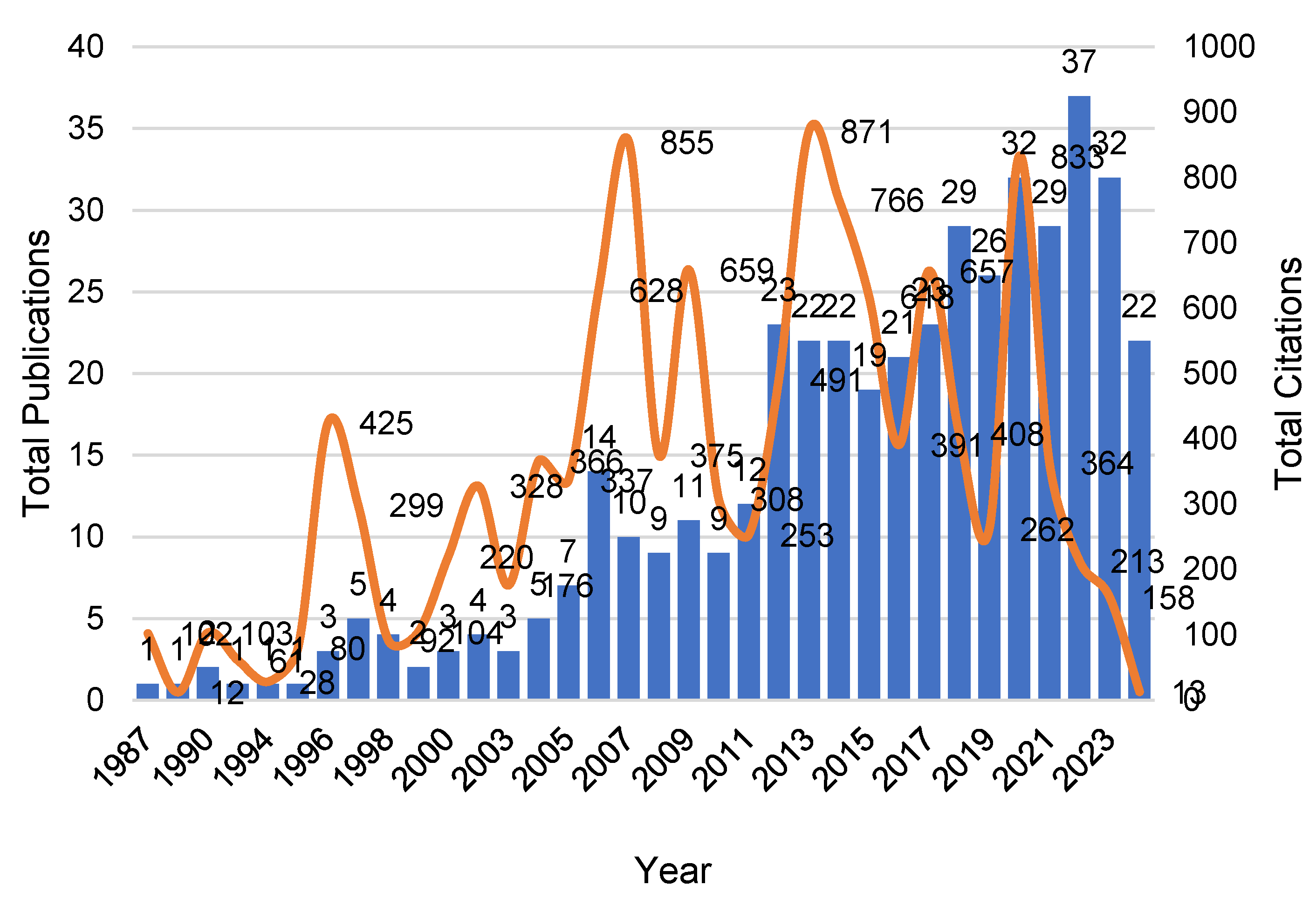
Figure 2.
Cummulative Total Publications by Year. Source: Generated by the authors using biblioMagika® (Ahmi, 2024)
Figure 2.
Cummulative Total Publications by Year. Source: Generated by the authors using biblioMagika® (Ahmi, 2024)
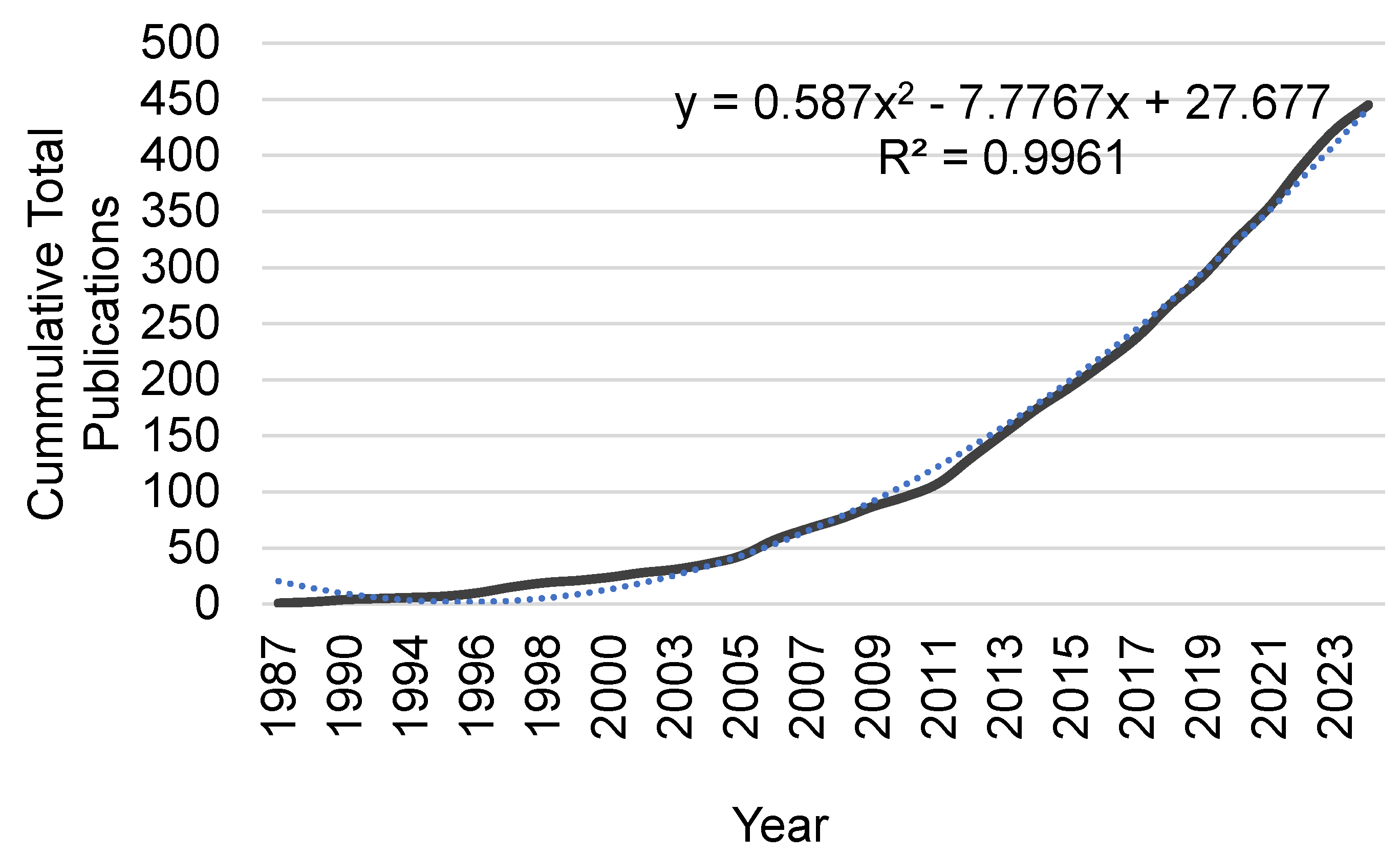
Figure 3.
Most Productive Authors. Source: Generated by the authors.
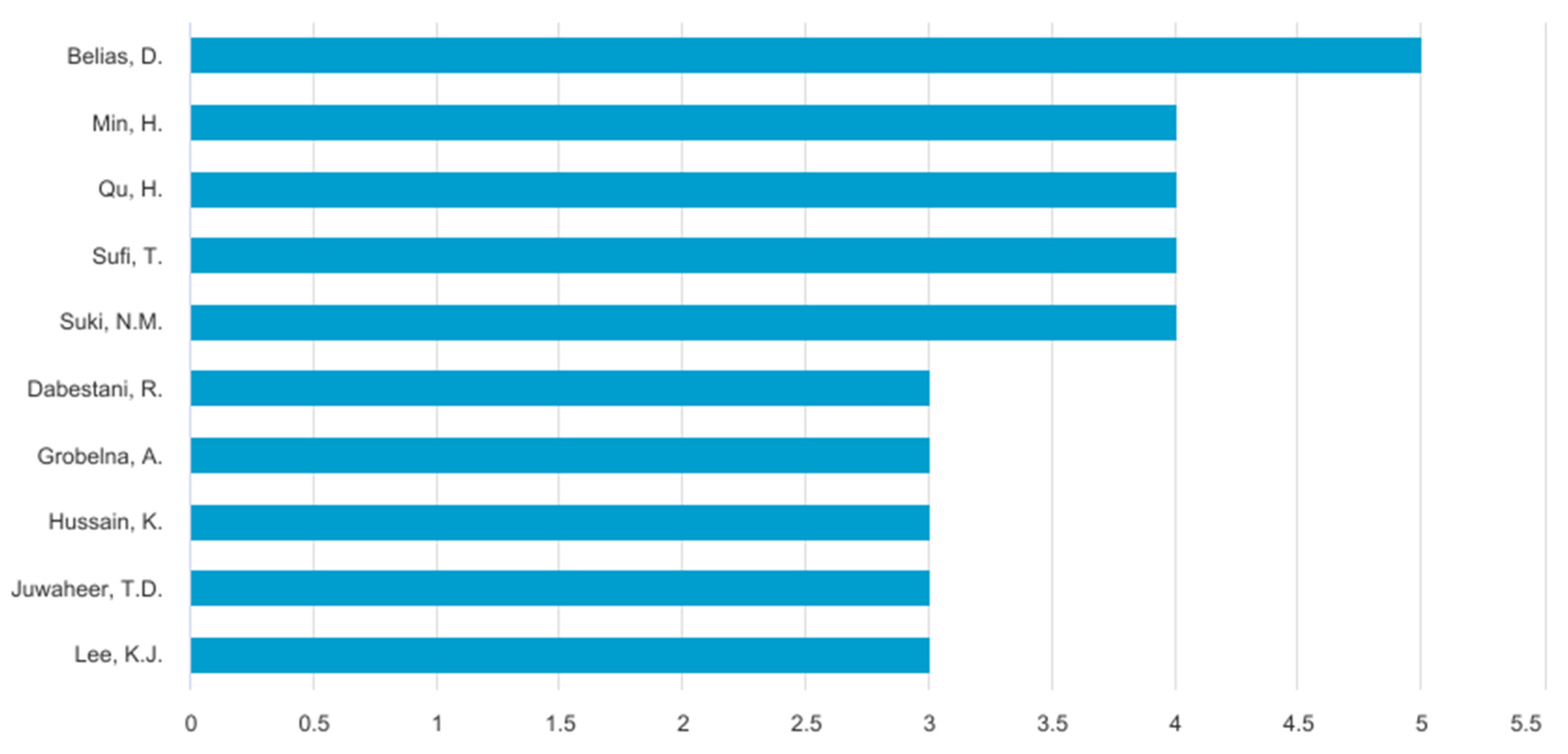
Figure 4.
Most productive institutions with minimum of five publications.
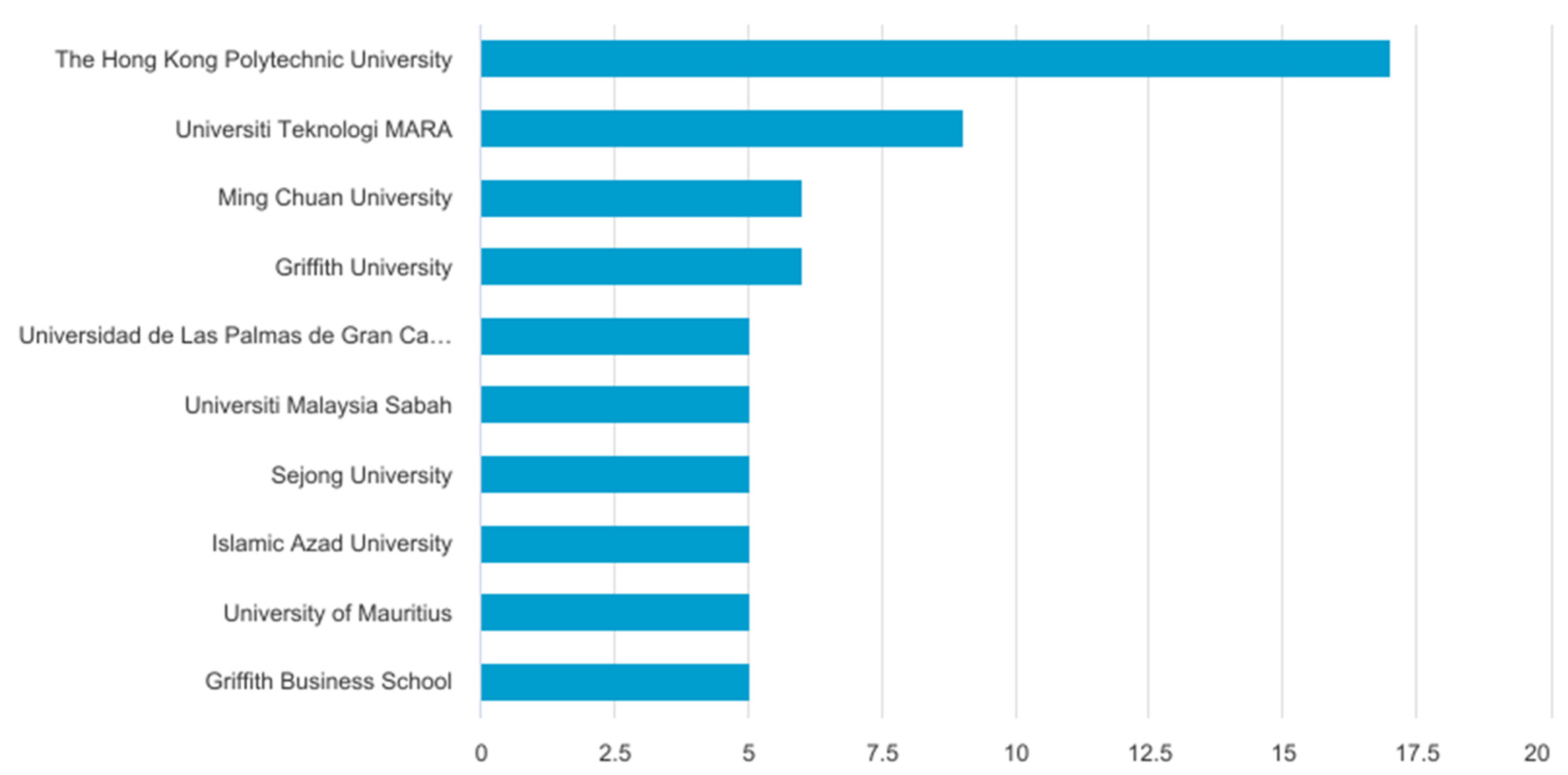
Figure 5.
Top 10 Countries contributed to the publications.
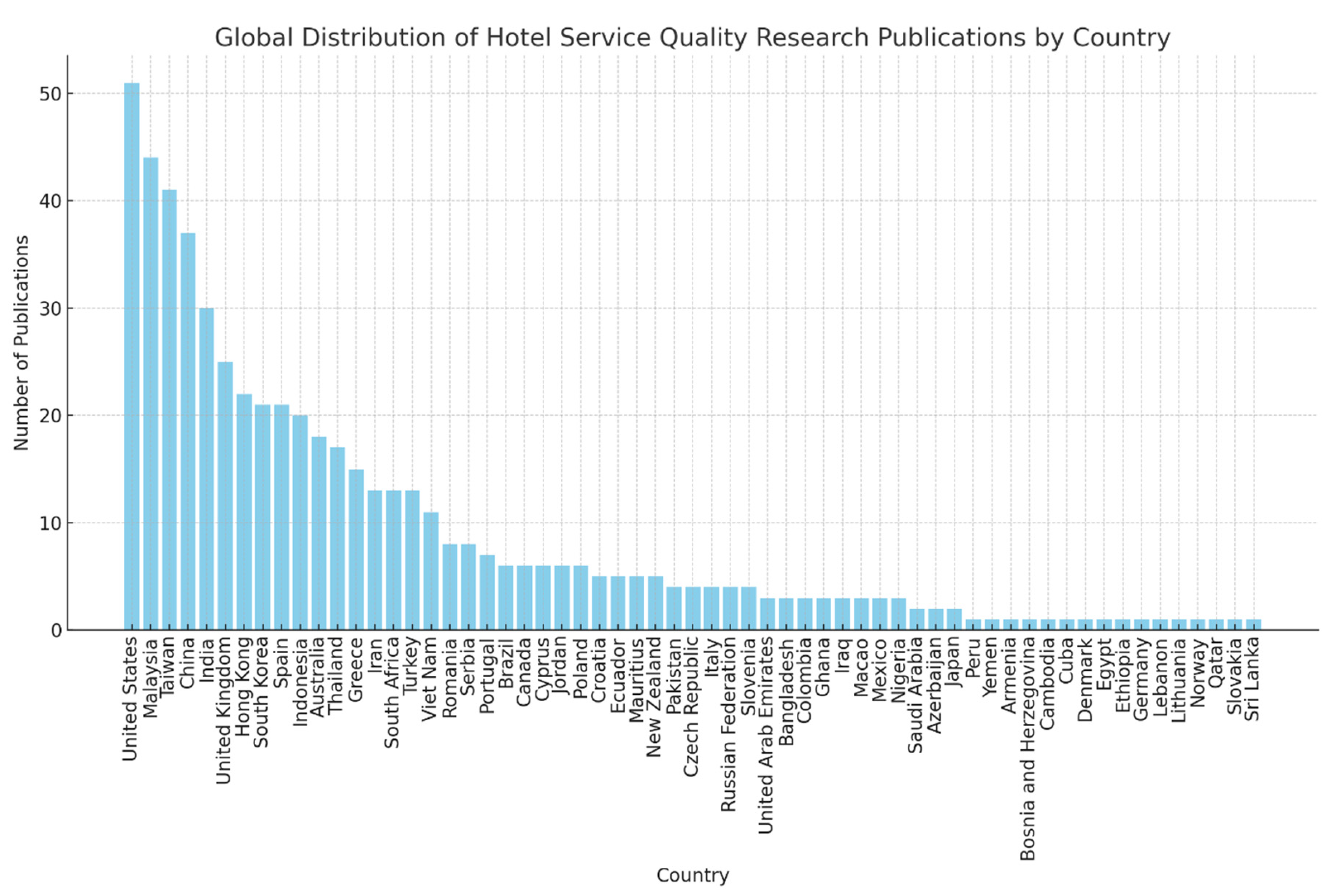
Figure 6.
Top Continents Contribution To Publications.
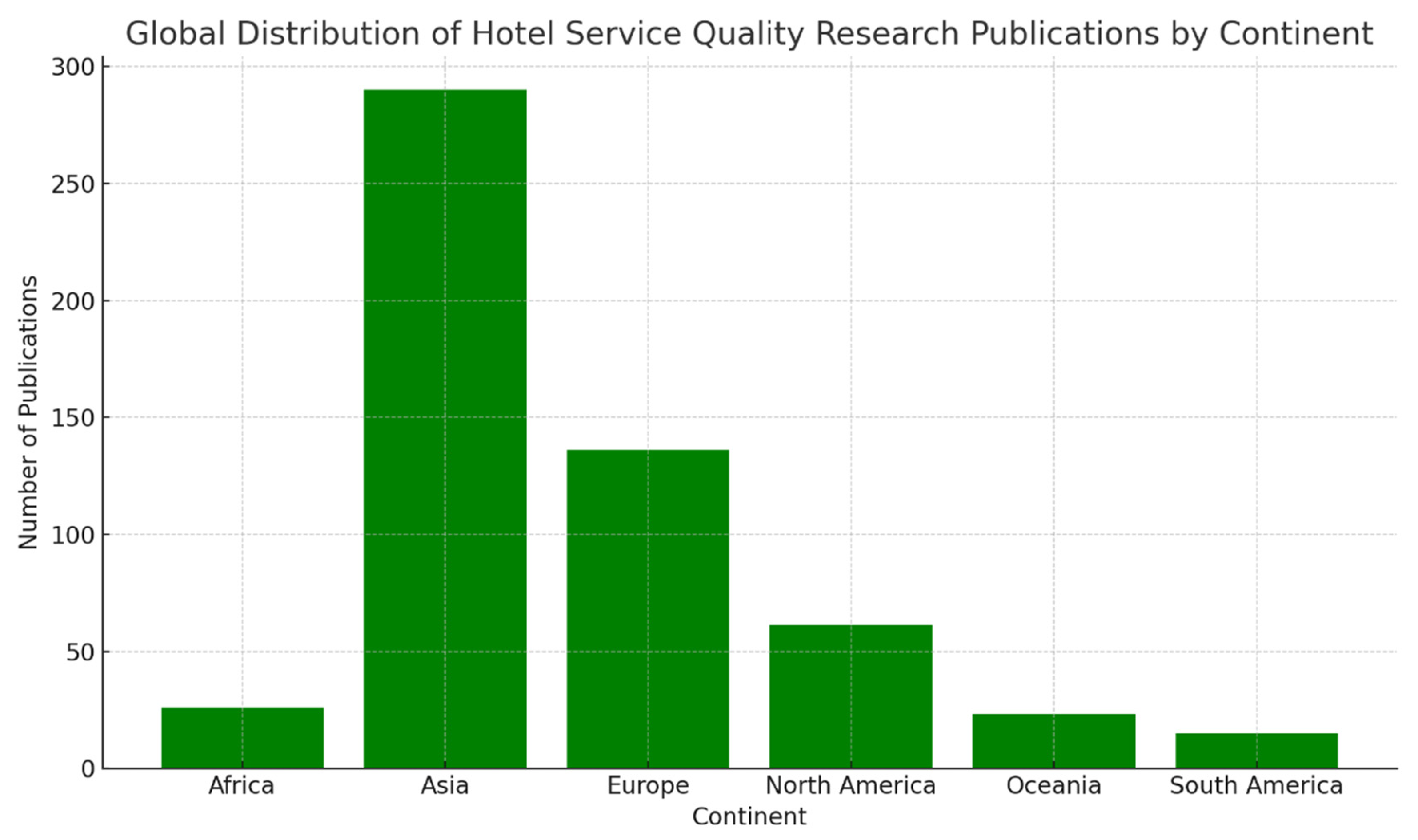
Figure 7.
Keyword Co-Occurrence Network.
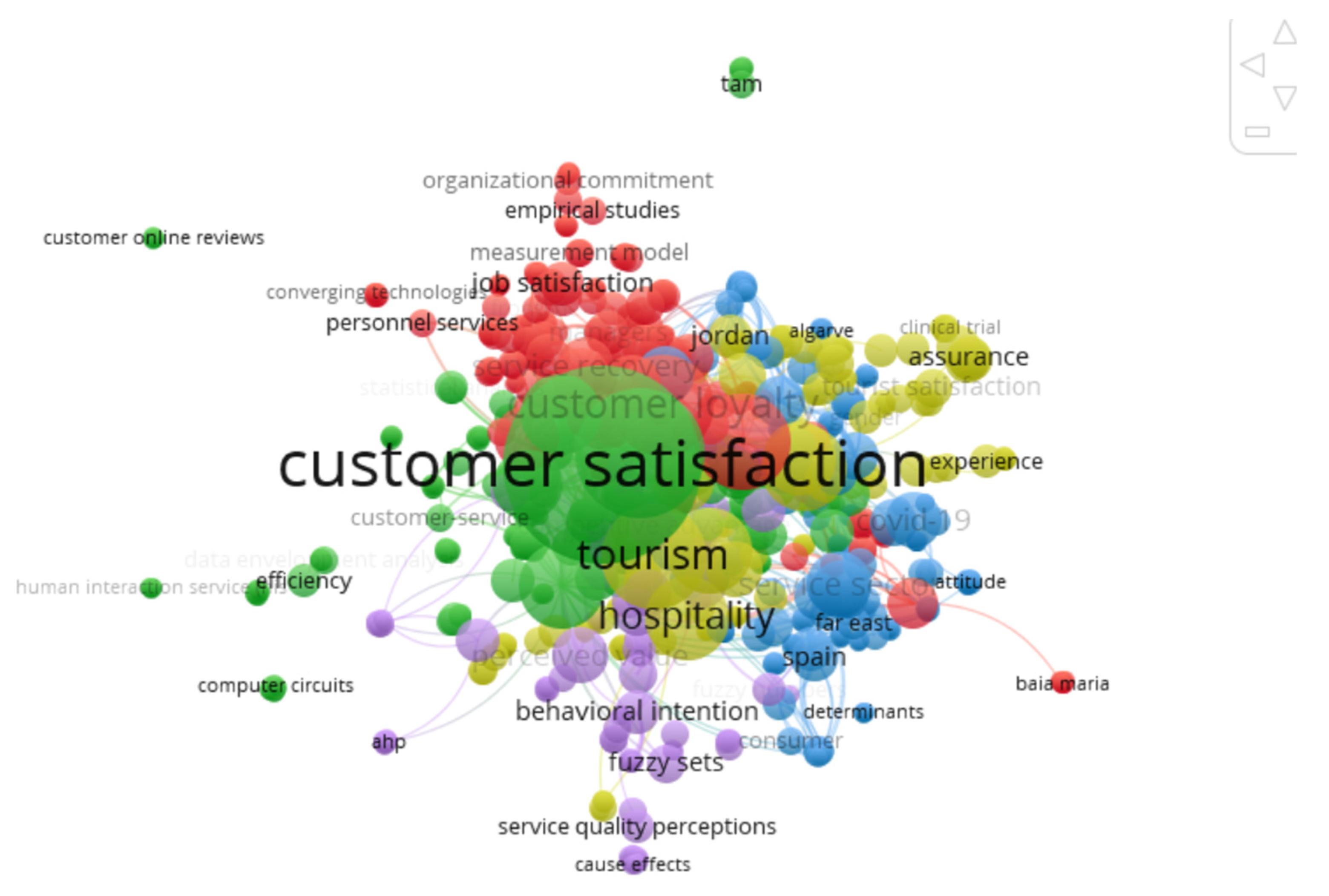
Figure 8.
Co Authorship Analysis.
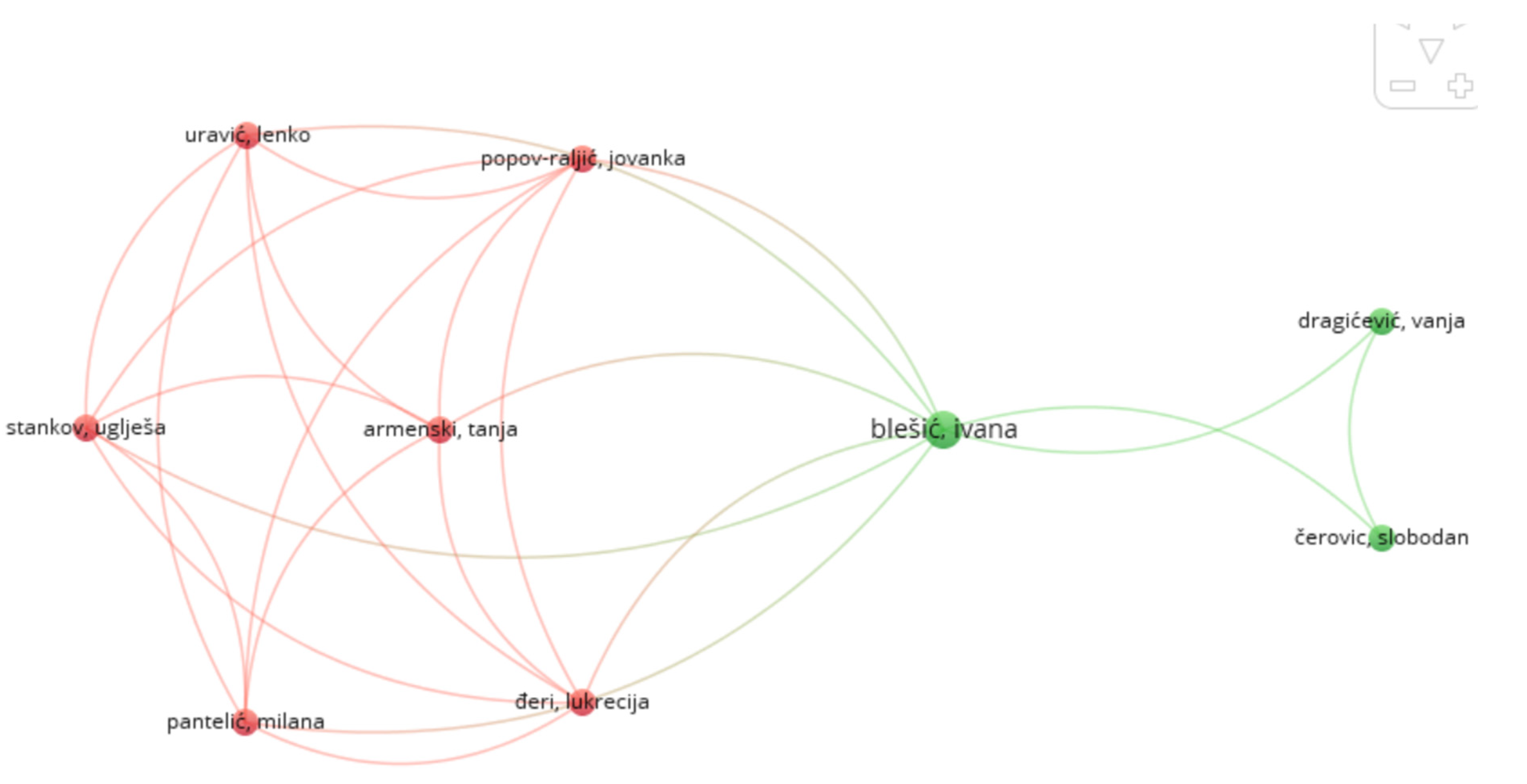
Figure 9.
Citation Analysis on Documents.
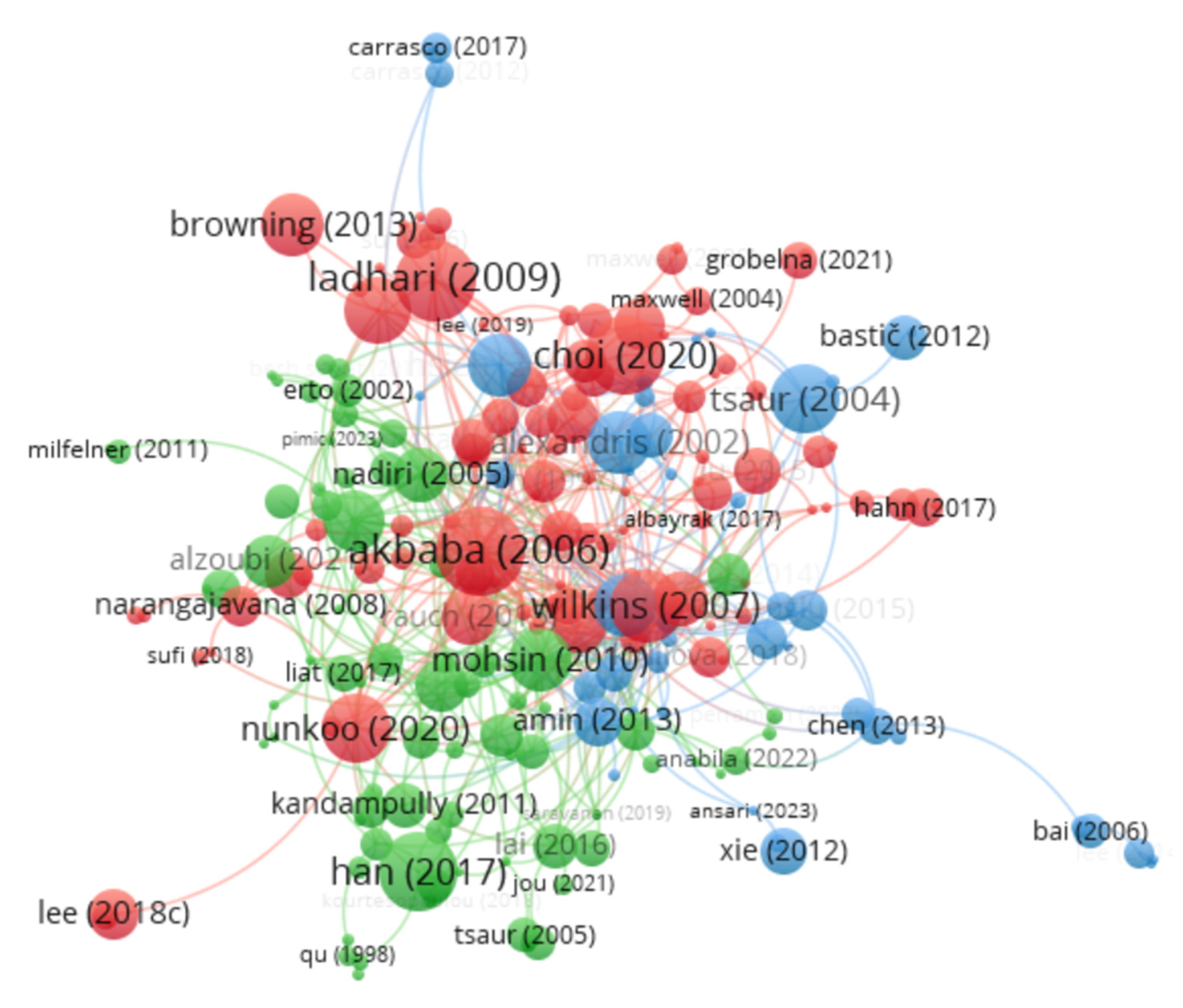

Table 1.
Evolution of Service Quality Research.
| Year Range | Author(s) | Title | Journal | Themes |
| 2020-2024 | Nunkoo et al. (2020) | Service quality and customer satisfaction: The moderating effects of hotel star rating | International Journal of Hospitality Management | Service Quality, Star Rating |
| Choi & Choi (2020) | Service robots in hotels: Understanding the service quality perceptions of human-robot interaction | Journal of Hospitality Marketing & Management | Technology, Service Robots | |
| 2011-2019 | Browning et al. (2013) | The influence of online reviews on consumers’ attributions of service quality and control for service standards in hotels | Journal of Travel & Tourism Marketing | Online Reviews, Customer Perception |
| 2000-2010 | Wilkins et al. (2007) | Towards an understanding of total service quality in hotels | International Journal of Hospitality Management | Service Quality, Total Service |
| Akbaba (2006) | Measuring service quality in the hotel industry: A study in a business hotel in Turkey | International Journal of Hospitality Management | Business Hotel Service Quality | |
| Ladhari (2009) | Service quality, emotional satisfaction, and behavioural intentions: A study in the hotel industry | Managing Service Quality | Emotional Satisfaction, Behavioral Intentions | |
| 1980-1989 | Parasuraman et al. (1988) | SERVQUAL: A multiple-item scale for measuring consumer perceptions of service quality | Journal of Retailing | Service Quality Models, SERVQUAL |
| 1990-1999 | Tsang & Qu (2000) | Service quality in China’s hotel industry: A perspective from tourists and hotel managers | International Journal of Contemporary Hospitality Management | Service Quality, Cultural Perspectives |
Table 2.
Citation Metrics.
| Main Information | Data |
|---|---|
| Publication Years | 1987–2024 |
| Total Publications | 445 |
| Citable Year | 38 |
| Number of Contributing Authors | 1198 |
| Number of Cited Papers | 349 |
| Total Citations | 11,856 |
| Citation per Paper | 26.64 |
| Citation per Cited Paper | 33.97 |
| Citation per Year | 320.43 |
| Citation per Author | 9.90 |
| Author per Paper | 2.69 |
| Citation sum within h-Core | 11,304 |
| h-index | 58 |
| g-index | 95 |
| m-index | 1.526 |
Table 3.
Publication by Year.
| Year | TP | NCA | NCP | TC | C/P | C/CP | h | g | m |
|---|---|---|---|---|---|---|---|---|---|
| 1987 | 1 | 1 | 1 | 102 | 102.00 | 102.00 | 1 | 1 | 0.026 |
| 1989 | 1 | 1 | 1 | 12 | 12.00 | 12.00 | 1 | 1 | 0.028 |
| 1990 | 2 | 3 | 2 | 103 | 51.50 | 51.50 | 2 | 2 | 0.057 |
| 1993 | 1 | 4 | 1 | 61 | 61.00 | 61.00 | 1 | 1 | 0.031 |
| 1994 | 1 | 1 | 1 | 28 | 28.00 | 28.00 | 1 | 1 | 0.032 |
| 1995 | 1 | 1 | 1 | 80 | 80.00 | 80.00 | 1 | 1 | 0.033 |
| 1996 | 3 | 6 | 3 | 425 | 141.67 | 141.67 | 3 | 3 | 0.103 |
| 1997 | 5 | 14 | 5 | 299 | 59.80 | 59.80 | 5 | 5 | 0.179 |
| 1998 | 4 | 8 | 4 | 92 | 23.00 | 23.00 | 3 | 4 | 0.111 |
| 1999 | 2 | 3 | 2 | 104 | 52.00 | 52.00 | 2 | 2 | 0.077 |
| 2000 | 3 | 7 | 3 | 220 | 73.33 | 73.33 | 3 | 3 | 0.120 |
| 2002 | 4 | 10 | 4 | 328 | 82.00 | 82.00 | 4 | 4 | 0.174 |
| 2003 | 3 | 5 | 3 | 176 | 58.67 | 58.67 | 3 | 3 | 0.136 |
| 2004 | 5 | 13 | 5 | 366 | 73.20 | 73.20 | 5 | 5 | 0.238 |
| 2005 | 7 | 15 | 7 | 337 | 48.14 | 48.14 | 5 | 7 | 0.250 |
| 2006 | 14 | 33 | 13 | 628 | 44.86 | 48.31 | 10 | 14 | 0.526 |
| 2007 | 10 | 22 | 10 | 855 | 85.50 | 85.50 | 9 | 10 | 0.500 |
| 2008 | 9 | 21 | 6 | 375 | 41.67 | 62.50 | 6 | 9 | 0.353 |
| 2009 | 11 | 20 | 10 | 659 | 59.91 | 65.90 | 7 | 11 | 0.438 |
| 2010 | 9 | 17 | 7 | 308 | 34.22 | 44.00 | 6 | 9 | 0.400 |
| 2011 | 12 | 29 | 9 | 253 | 21.08 | 28.11 | 7 | 12 | 0.500 |
| 2012 | 23 | 71 | 18 | 491 | 21.35 | 27.28 | 8 | 22 | 0.615 |
| 2013 | 22 | 61 | 19 | 871 | 39.59 | 45.84 | 13 | 22 | 1.083 |
| 2014 | 22 | 58 | 21 | 766 | 34.82 | 36.48 | 12 | 22 | 1.091 |
| 2015 | 19 | 57 | 18 | 618 | 32.53 | 34.33 | 11 | 19 | 1.100 |
| 2016 | 21 | 64 | 17 | 391 | 18.62 | 23.00 | 9 | 19 | 1.000 |
| 2017 | 23 | 59 | 17 | 657 | 28.57 | 38.65 | 11 | 23 | 1.375 |
| 2018 | 29 | 75 | 24 | 408 | 14.07 | 17.00 | 10 | 20 | 1.429 |
| 2019 | 26 | 71 | 20 | 262 | 10.08 | 13.10 | 10 | 16 | 1.667 |
| 2020 | 32 | 87 | 25 | 833 | 26.03 | 33.32 | 11 | 28 | 2.200 |
| 2021 | 29 | 79 | 20 | 364 | 12.55 | 18.20 | 8 | 19 | 2.000 |
| 2022 | 37 | 105 | 26 | 213 | 5.76 | 8.19 | 8 | 13 | 2.667 |
| 2023 | 32 | 110 | 21 | 158 | 4.94 | 7.52 | 6 | 11 | 3.000 |
| 2024 | 22 | 67 | 5 | 13 | 0.59 | 2.60 | 2 | 3 | 2.000 |
| Total | 445 | 1198 | 349 | 11856 | 26.64 | 33.97 | 58 | 95 | 1.526 |
Table 4.
Document Type.
| Document Type | Total Publication | Percentage (%) |
|---|---|---|
| Article | 357 | 80.22% |
| Conference Paper | 61 | 13.71% |
| Book Chapter | 12 | 2.70% |
| Review | 10 | 2.25% |
| Erratum | 2 | 0.45% |
| Letter | 1 | 0.22% |
| Note | 1 | 0.22% |
| Retracted | 1 | 0.22% |
Table 5.
Source Type.
| Source Type | Total Publications | Percentage (%) |
|---|---|---|
| Journal | 373 | 83.82% |
| Conference Proceeding | 50 | 11.24% |
| Book Series | 13 | 2.92% |
| Book | 9 | 2.02% |
Source: Generated by the authors.
Table 6.
Languages.
| Language | Total Publication | Percentage (%) |
|---|---|---|
| English | 431 | 96.85% |
| Spanish | 12 | 2.70% |
| Chinese | 3 | 0.67% |
| Polish | 3 | 0.67% |
| Moldavian | 2 | 0.45% |
| Moldovan | 2 | 0.45% |
| Romanian | 2 | 0.45% |
| Croatian | 1 | 0.22% |
| Portuguese | 1 | 0.22% |
| Russian | 1 | 0.22% |
| Ukrainian | 1 | 0.22% |
Source: Generated by the authors.
Table 7.
Subject Area.
| Subject Area | Total Publication | Percentage (%) |
|---|---|---|
| Business, Management and Accounting | 319 | 71.69% |
| Social Sciences | 110 | 24.72% |
| Engineering | 60 | 13.48% |
| Economics, Econometrics and Finance | 58 | 13.03% |
| Computer Science | 57 | 12.81% |
| Decision Sciences | 36 | 8.09% |
| Environmental Science | 23 | 5.17% |
Source: Generated by the authors.
Table 8.
Most active source titles that published more than 5 documents.
| Source Title | TP | NCA | NCP | TC | C/P | C/CP | h | g | m |
|---|---|---|---|---|---|---|---|---|---|
| Journal of Quality Assurance in Hospitality and Tourism | 23 | 66 | 21 | 543 | 23.61 | 25.86 | 12 | 23 | 0.480 |
| International Journal of Hospitality Management | 21 | 53 | 20 | 1953 | 93.00 | 97.65 | 17 | 21 | 0.447 |
| International Journal of Contemporary Hospitality Management | 16 | 40 | 16 | 1331 | 83.19 | 83.19 | 16 | 16 | 0.516 |
| African Journal of Hospitality, Tourism and Leisure | 13 | 30 | 10 | 51 | 3.92 | 5.10 | 5 | 6 | 0.625 |
| Journal of Hospitality Marketing and Management | 11 | 31 | 11 | 771 | 70.09 | 70.09 | 10 | 11 | 0.833 |
| Springer Proceedings in Business and Economics | 9 | 22 | 7 | 42 | 4.67 | 6.00 | 4 | 6 | 0.400 |
| Tourism Management | 7 | 17 | 7 | 914 | 130.57 | 130.57 | 7 | 7 | 0.333 |
| Sustainability (Switzerland) | 7 | 26 | 6 | 73 | 10.43 | 12.17 | 6 | 7 | 1.000 |
| Journal of Vacation Marketing | 6 | 13 | 6 | 239 | 39.83 | 39.83 | 6 | 6 | 0.214 |
| Journal of Hospitality and Leisure Marketing | 6 | 16 | 6 | 247 | 41.17 | 41.17 | 6 | 6 | 0.188 |
Table 9.
Top 20 highly cited articles.
| No. | Author(s) | Title | Source Title | TC | C/Y |
|---|---|---|---|---|---|
| 1 | Hartline M.D.; Jones K.C. (1996) | Employee performance cues in a hotel service environment: Influence on perceived service quality, value, and word-of-mouth intentions | Journal of Business Research | 353 | 12.17 |
| 2 | Akbaba A. (2006) | Measuring service quality in the hotel industry: A study in a business hotel in Turkey | International Journal of Hospitality Management | 325 | 17.11 |
| 3 | Ladhari R. (2009) | Service quality, emotional satisfaction, and behavioural intentions: A study in the hotel industry | Managing Service Quality | 281 | 17.56 |
| 4 | Choi Y.; Choi M.(2020); | Service robots in hotels: understanding the service quality perceptions of human-robot interaction | Journal of Hospitality Marketing and Management | 267 | 53.40 |
| 5 | Han H.; Hyun S.S. (2017) | Impact of hotel-restaurant image and quality of physical-environment, service, and food on satisfaction and intention | International Journal of Hospitality Management | 261 | 32.63 |
| 6 | Benítez J.M.; Martín J.C.; Román C. (2007) | Using fuzzy number for measuring quality of service in the hotel industry | Tourism Management | 261 | 14.50 |
| 7 | Wilkins H.; Merrilees B.; Herington C. (2007) | Towards an understanding of total service quality in hotels | International Journal of Hospitality Management | 226 | 12.56 |
| 8 | Tsaur S.-H.; Lin Y.-C. (2004) | Promoting service quality in tourist hotels: The role of HRM practices and service behavior | Tourism Management | 199 | 9.48 |
| 9 | Nunkoo R.; Teeroovengadum V.; Ringle C.M.; Sunnassee V. (2020) | Service quality and customer satisfaction: The moderating effects of hotel star rating | International Journal of Hospitality Management | 196 | 39.20 |
| 10 | Ye Q.; Li H.; Wang Z.; Law R. (2014) | The Influence of Hotel Price on Perceived Service Quality and Value in E-Tourism: An Empirical Investigation Based on Online Traveler Reviews | Journal of Hospitality and Tourism Research | 183 | 16.64 |
| 11 | Hsieh L.-F.; Lin L.H.; Lin Y.Y. (2008) | A service quality measurement architecture for hot spring hotels in Taiwan | Tourism Management | 171 | 10.06 |
| 12 | Alexandris K.; Dimitriadis N.; Markata D. (2002) | Can perceptions of service quality predict behavioral intentions? An exploratory study in the hotel sector in Greece | Managing Service Quality: An International Journal | 168 | 7.30 |
| 13 | Tsang N.; Qu H. (2000) | Service quality in China’s hotel industry: A perspective from tourists and hotel managers | International Journal of Contemporary Hospitality Management | 165 | 6.60 |
| 14 | Browning V.; So K.K.F.; Sparks B. (2013) | The Influence of Online Reviews on Consumers’ Attributions of Service Quality and Control for Service Standards in Hotels | Journal of Travel and Tourism Marketing | 162 | 13.50 |
| 15 | Mohsin A.; Lockyer T. (2010) | Customer perceptions of service quality in luxury hotels in New Delhi, India: An exploratory study | International Journal of Contemporary Hospitality Management | 161 | 10.73 |
| 16 | Briggs S.; Sutherland J.; Drummond S. (2007) | Are hotels serving quality? An exploratory study of service quality in the Scottish hotel sector | Tourism Management | 155 | 8.61 |
| 17 | Armstrong R.W.; Mok C.; Go F.M.; Chan A. (1997) | The importance of cross-cultural expectations in the measurement of service quality perceptions in the hotel industry | International Journal of Hospitality Management | 153 | 5.46 |
| 18 | Clark R.A.; Hartline M.D.; Jones K.C. (2009) | The effects of leadership style on hotel employees’ commitment to service quality | Cornell Hospitality Quarterly | 150 | 9.38 |
| 19 | Wu H.C.; Ko Y.J. (2013) | Assessment of Service Quality in the Hotel Industry | Journal of Quality Assurance in Hospitality and Tourism | 127 | 10.58 |
| 20 | Nadiri H.; Hussain K. (2005) | Perceptions of service quality in North Cyprus hotels | International Journal of Contemporary Hospitality Management | 127 | 6.35 |
Disclaimer/Publisher’s Note: The statements, opinions and data contained in all publications are solely those of the individual author(s) and contributor(s) and not of MDPI and/or the editor(s). MDPI and/or the editor(s) disclaim responsibility for any injury to people or property resulting from any ideas, methods, instructions or products referred to in the content. |
© 2024 by the authors. Licensee MDPI, Basel, Switzerland. This article is an open access article distributed under the terms and conditions of the Creative Commons Attribution (CC BY) license (http://creativecommons.org/licenses/by/4.0/).
Copyright: This open access article is published under a Creative Commons CC BY 4.0 license, which permit the free download, distribution, and reuse, provided that the author and preprint are cited in any reuse.


