

Submitted:
18 December 2024
Posted:
20 December 2024
You are already at the latest version
Abstract
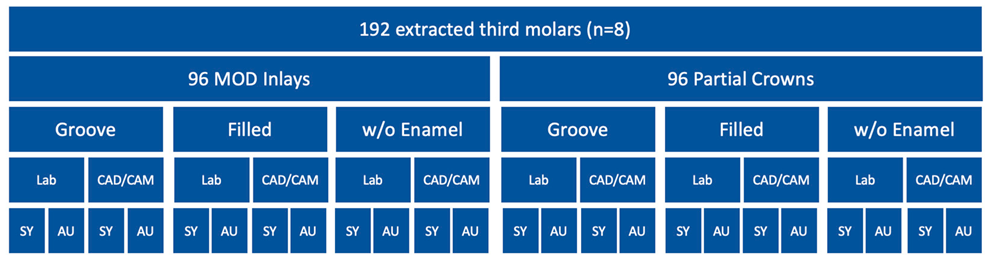
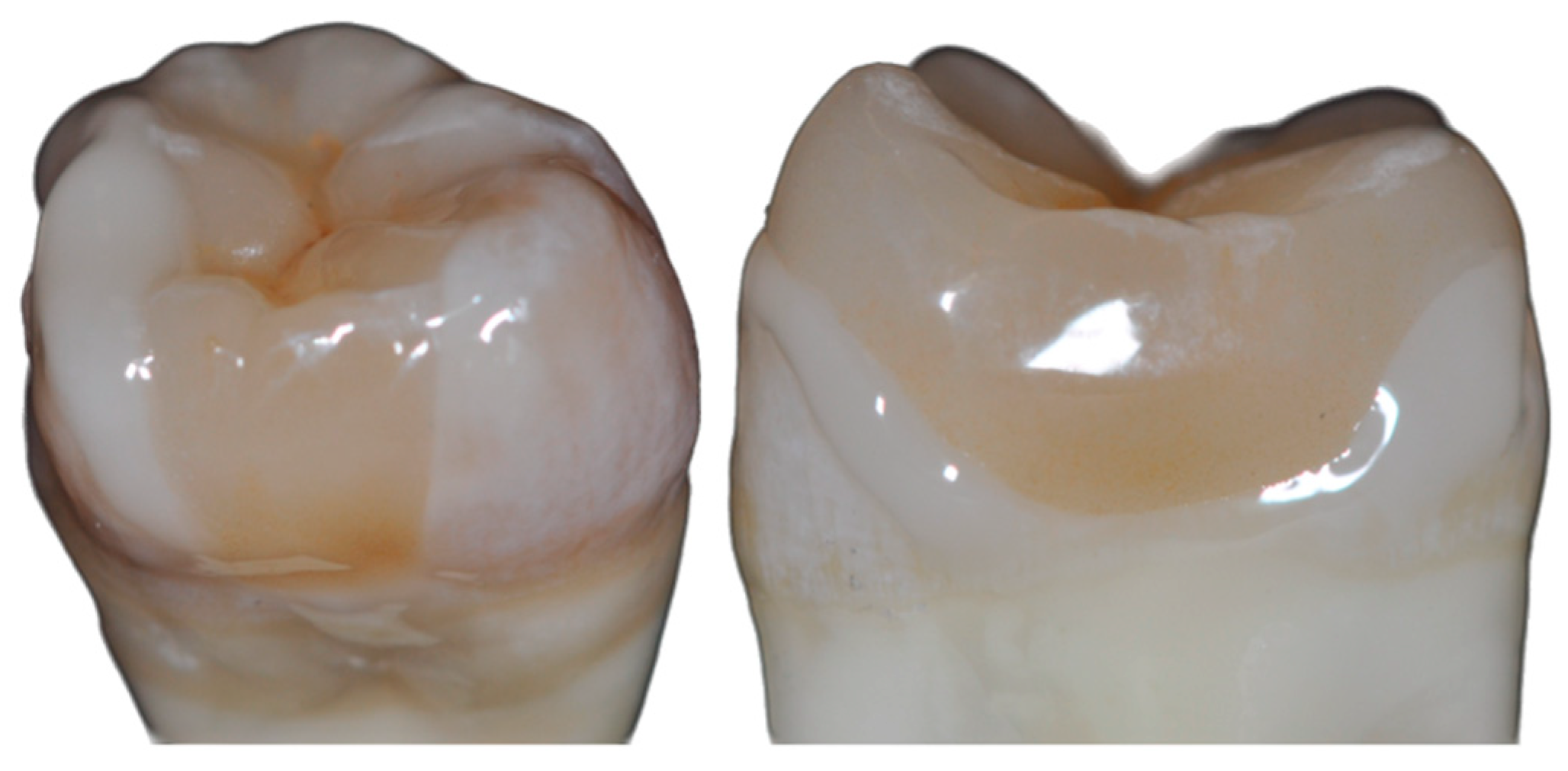
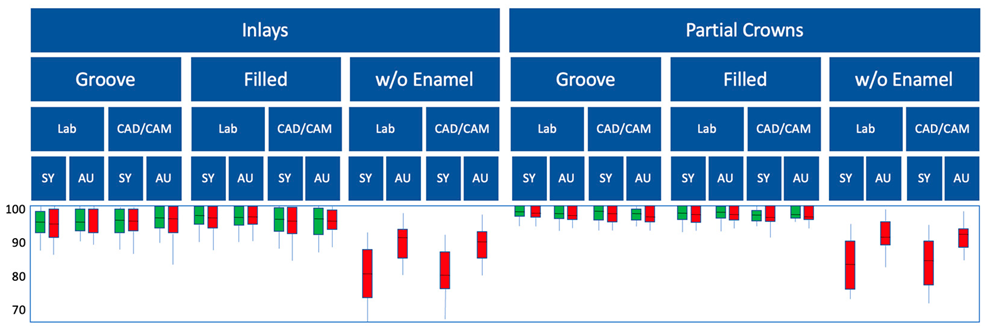
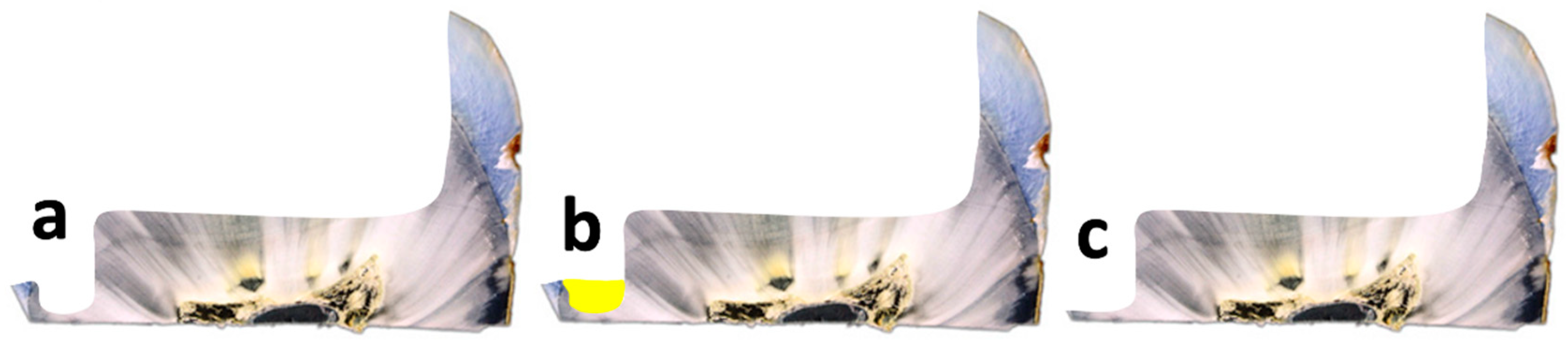
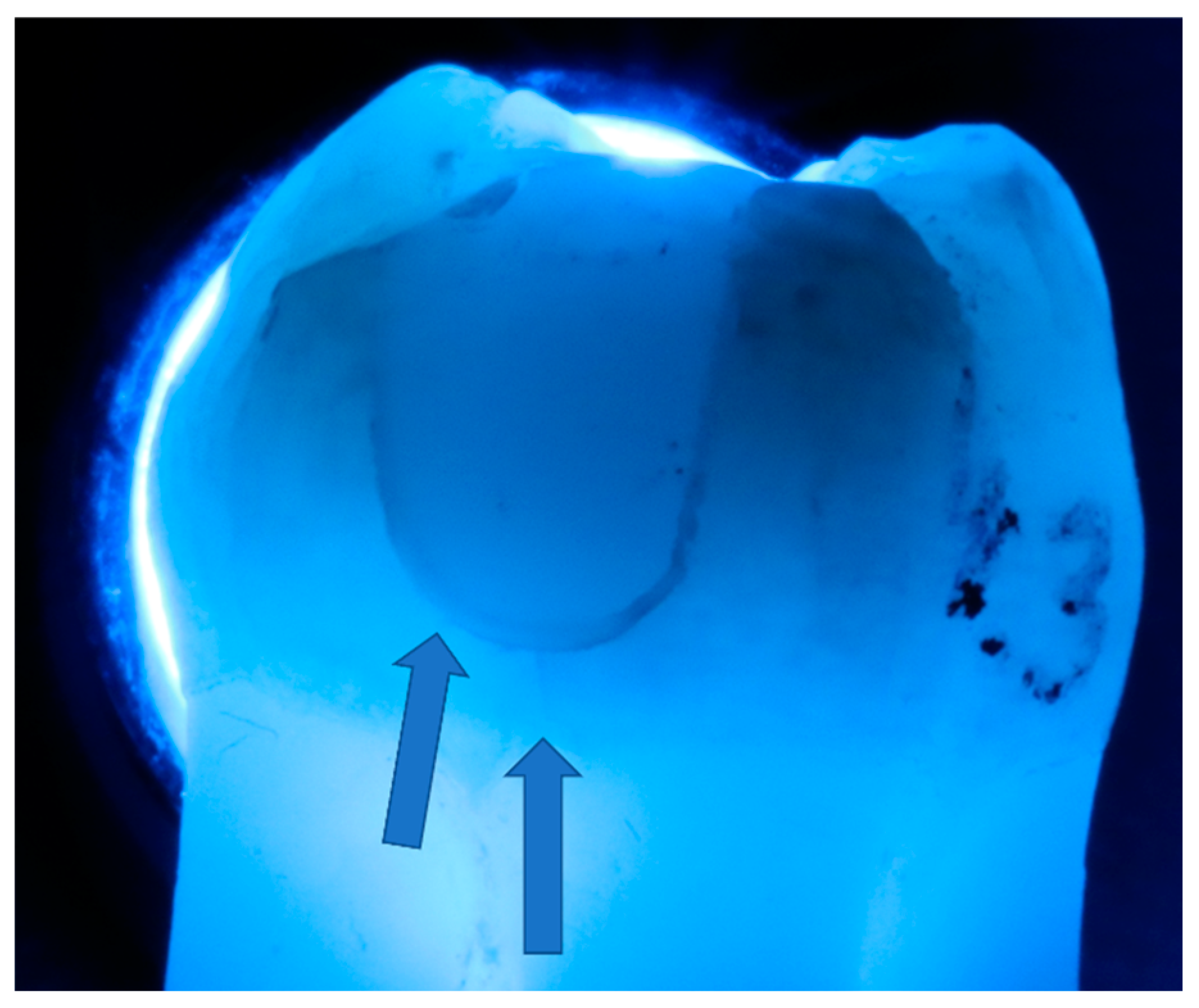
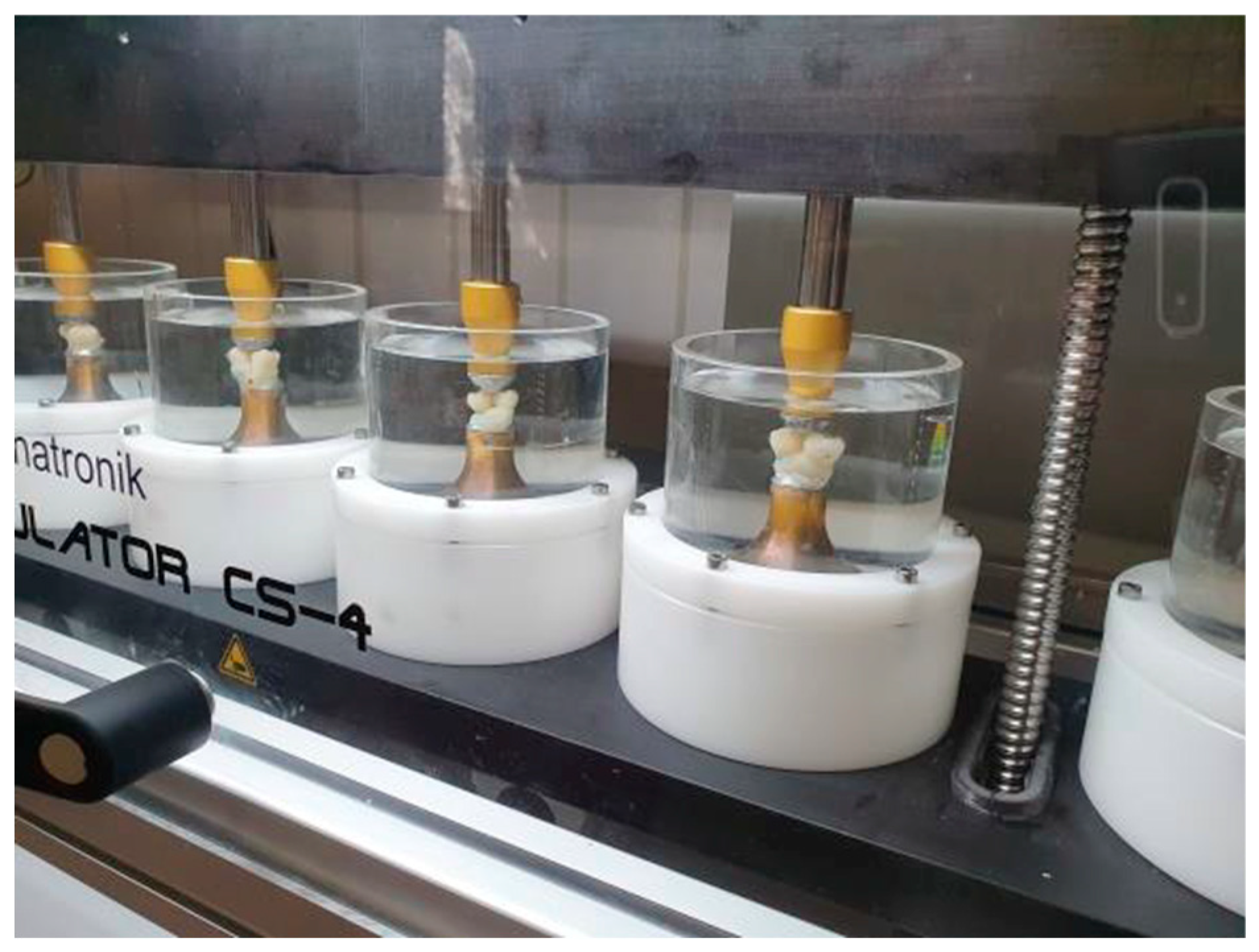
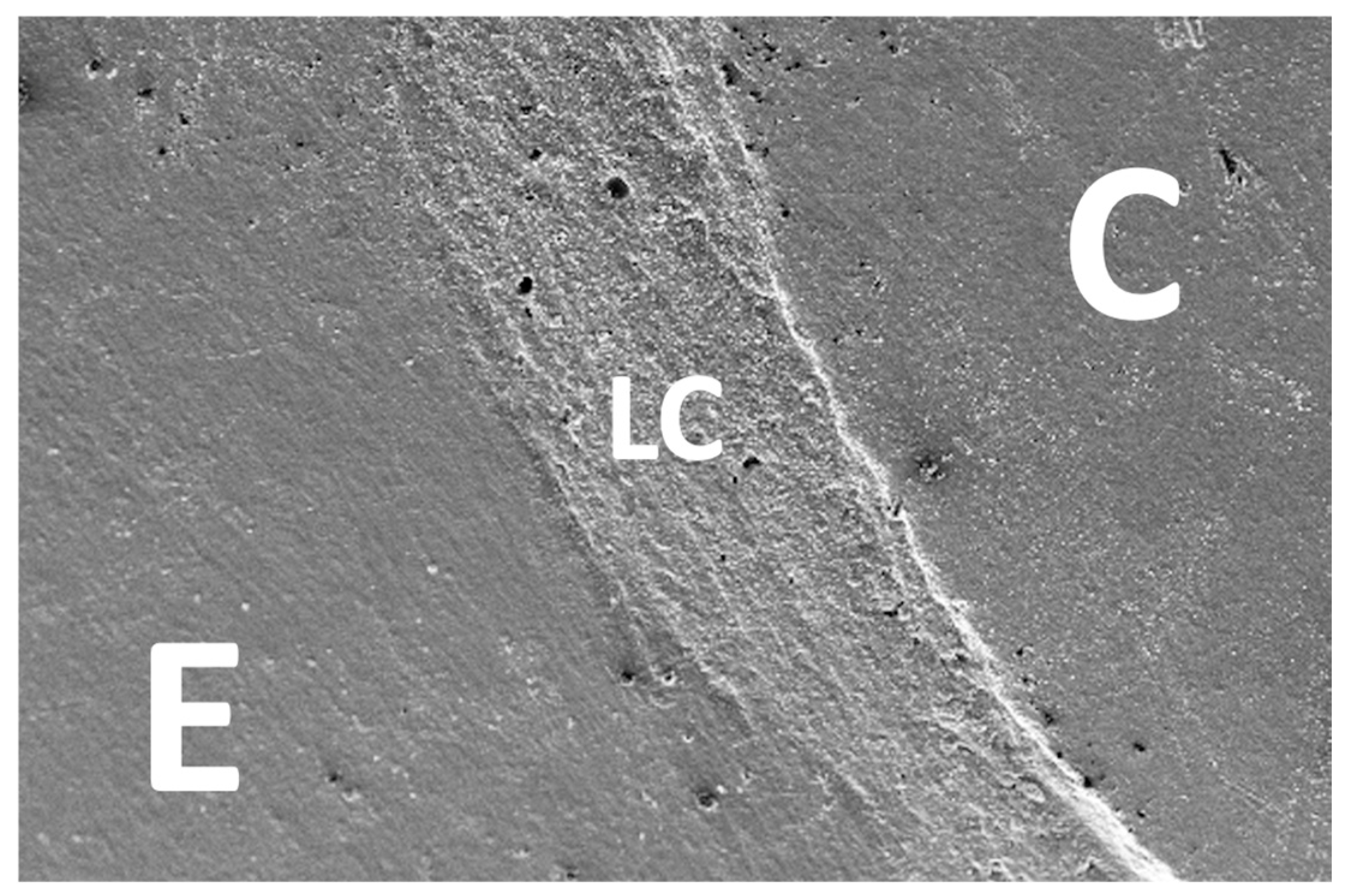
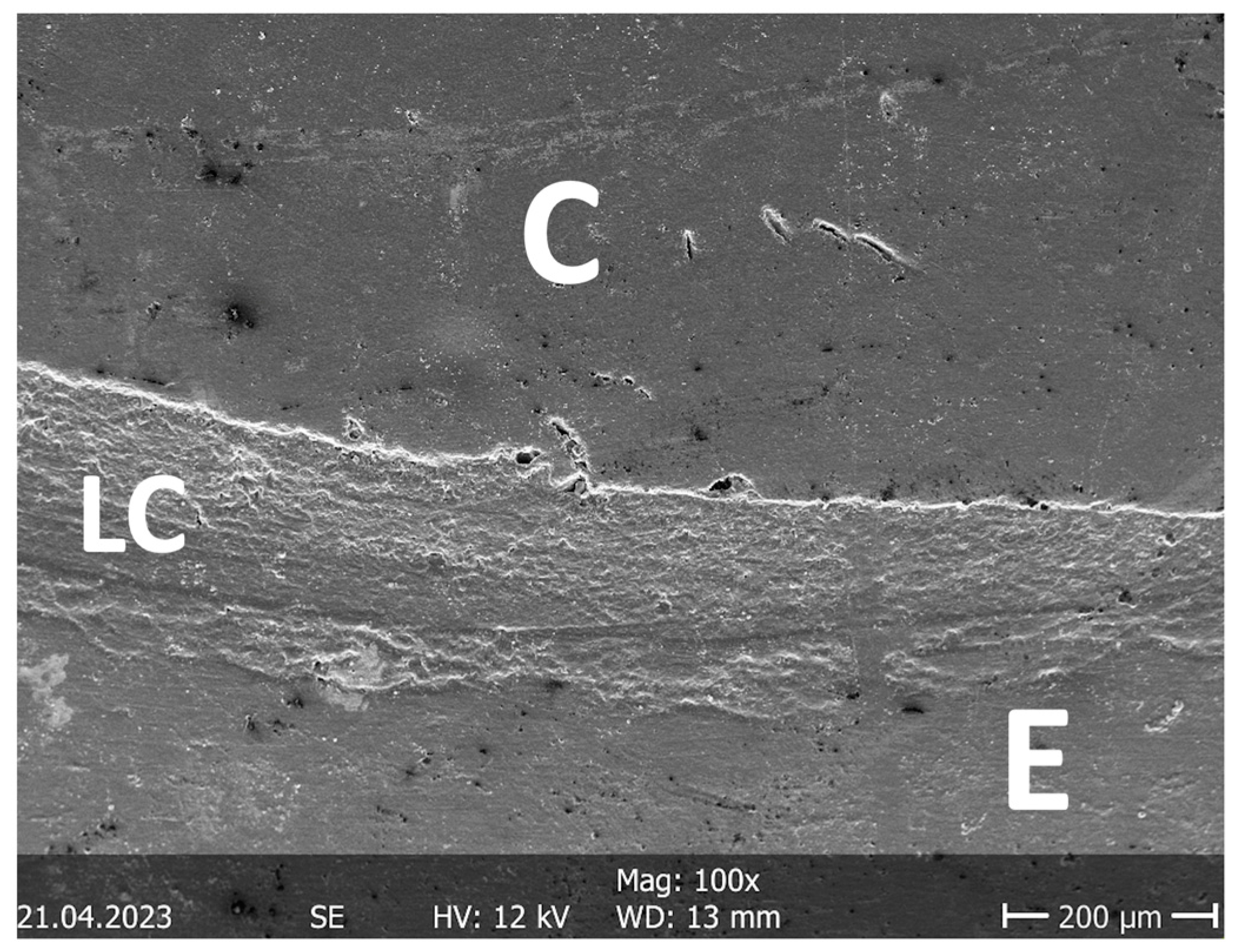
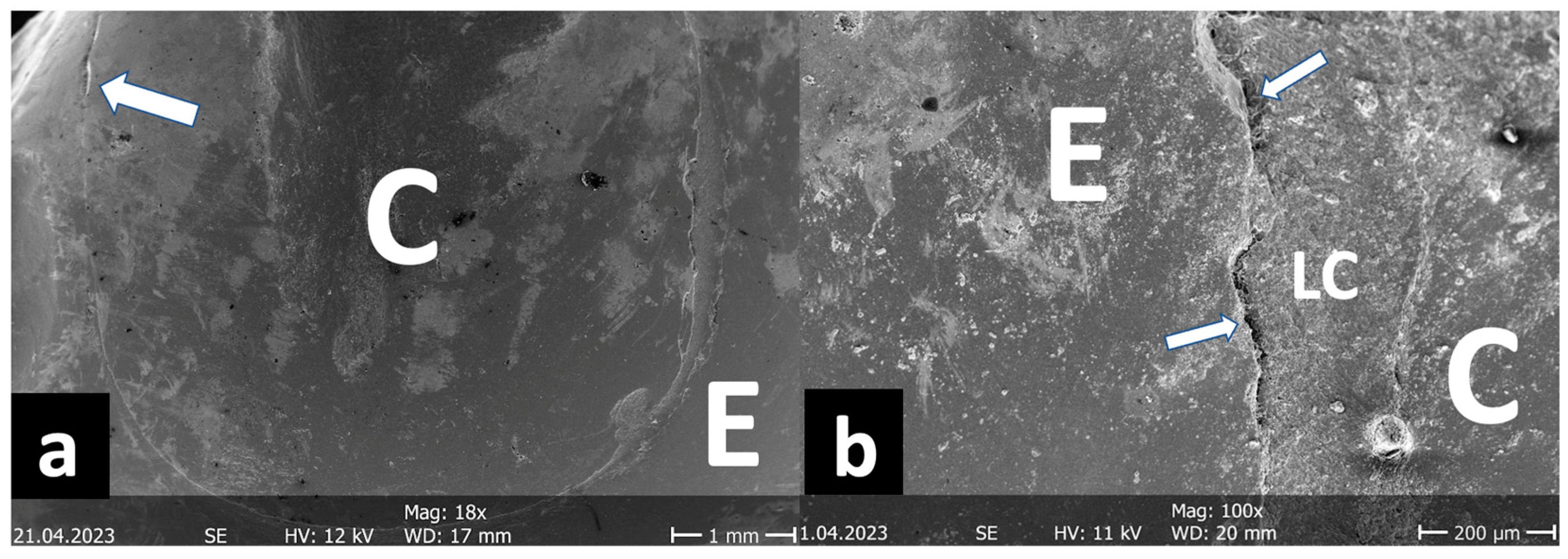
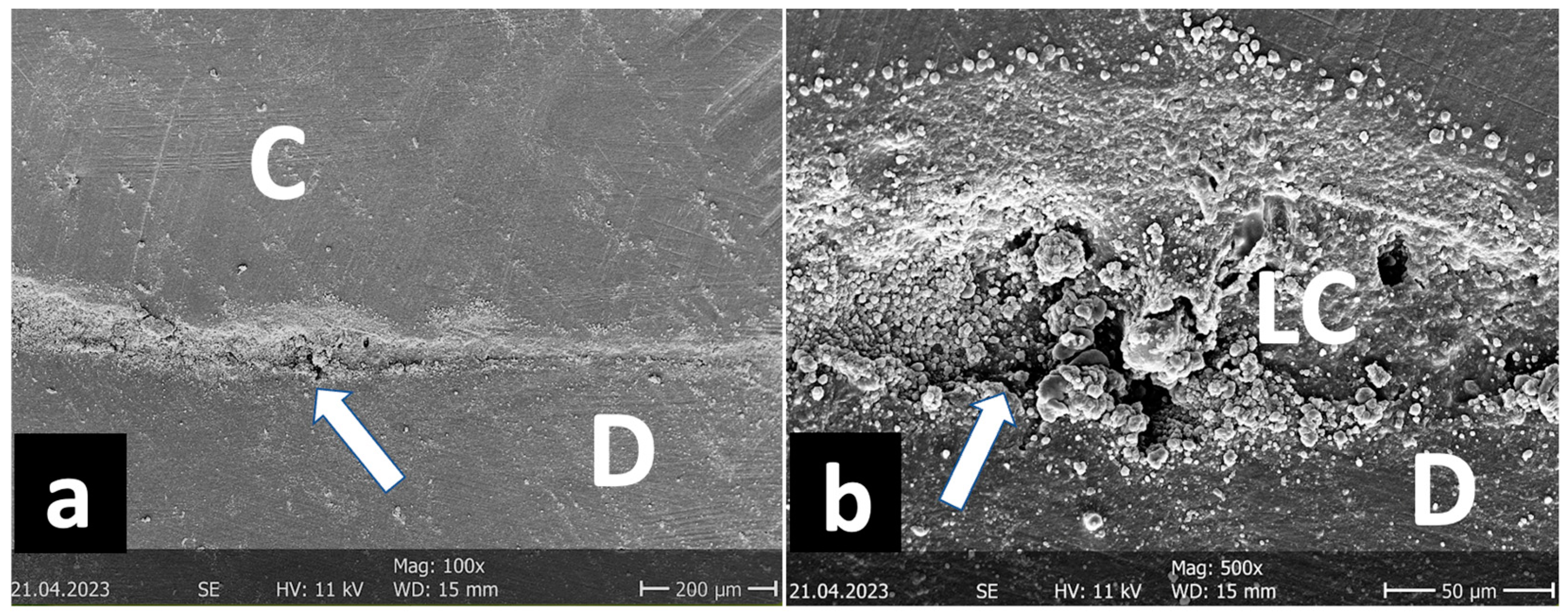
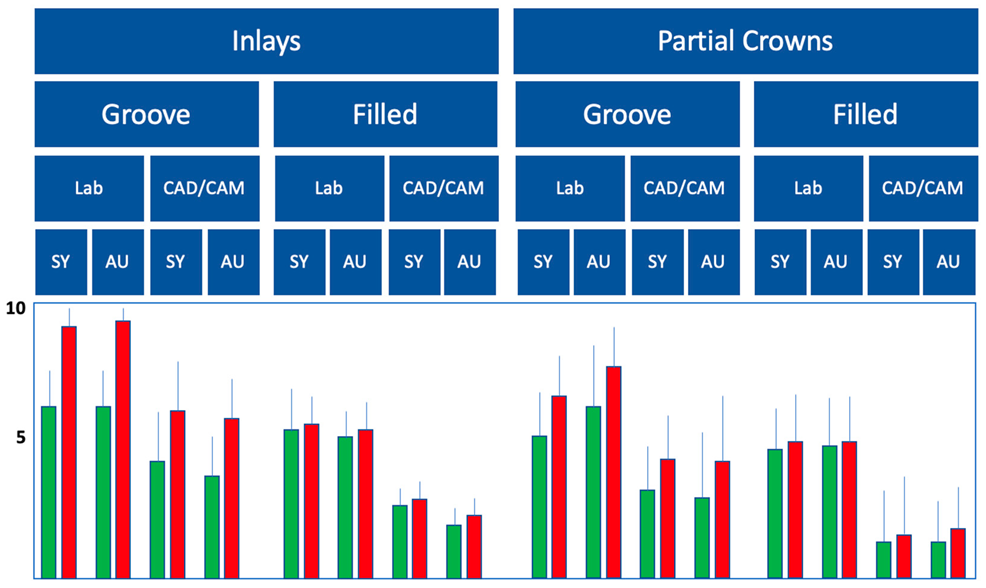
(1) Aim of this in-vitro study was to investigate the handling of proximal-cervical undermined enamel margins on adhesive performance of differently fabricated and differently cemented ceramic inlays and partial crowns (2) Methods: 192 extracted third molars received mod (n=96) and partial crown (n=96) preparations. A mesial 2x2x4 mm cervical groove was created in dentin to simulate a deeper (dentin) caries excavation. This dentin groove was either left (G/groove), filled with composite (F/filling) or completely removed (D/dentin). Labside (e.max Press) and chairside (e.max CAD) inlays and partial crowns were adhesively luted with Syntac/Variolink Esthetic (SV) or Adhese Universal/Variolink Esthetic (AV). Initially, and again after thermomechanical loading (TMB: 1 million cycles at 50 N, 25,000 thermocycles at 5°C/55°C), epoxy replicas were examined for marginal gaps using scanning electron microscopy (200x magnification). Light microscopy (10x magnification) was used to evaluate proximal cervical crack propagation. (3) Results: Regardless of the adhesive system, D groups generally showed significantly lower marginal quality (p<0.05), with the universal adhesive performing better than the multi-step adhesive system (p<0.05). Subgroups G and F were similar in marginal quality (p>0.05) and not worse than the controls (p>0.05) regardless of the adhesive system, but showed less cracking in F than in G (p<0.05). In general, fewer cracks were observed in CAD/CAM restorations than in laboratory-fabricated restorations (p<0.05). Partial crowns showed better marginal quality and less cracking than inlays (p<0.05). (4) Conclusions: If the dentin level is lower than the enamel level in ceramic preparations after caries excavation in the proximal box, the resulting undermined enamel should not be removed.
Keywords:
1. Introduction
2. Materials and Methods

3. Results
3.1. Marginal Quality
3.2. Proximal enamel crack propagation
4. Discussion
5. Conclusions
References
- Strasding M, Sebestyén-Hüvös E, Studer S, Lehner C, Jung RE, Sailer I. Long-term outcomes of all-ceramic inlays and onlays after a mean observation time of 11 years. Quintessence Int 2020;51:566-576. [CrossRef]
- van Dijken JW, Hasselrot L. A prospective 15-year evaluation of extensive dentin-enamel-bonded pressed ceramic coverages. Dent Mater 2010;26:929-939. [CrossRef]
- Borgia Botto E, Baró R, Borgia Botto JL. Clinical performance of bonded ceramic inlays/onlays: A 5- to 18-year retrospective longitudinal study. Am J Dent 2016;29:187-192.
- Reich SM, Wichmann M, Rinne H, Shortall A. Clinical performance of large, all-ceramic CAD/CAM-generated restorations after three years: a pilot study. J Am Dent Assoc 2004;135:605-612.
- Reiss B. Clinical results of Cerec inlays in a dental practice over a period of 18 years. Int J Comput Dent 2006;9:11-22.
- Collares K, Corrêa MB, Laske M, Kramer E, Reiss B, Moraes RR, Huysmans MC, Opdam NJ. A practice-based research network on the survival of ceramic inlay/onlay restorations. Dent Mater 2016;32:687-694. [CrossRef]
- Castro AS, Maran BM, Gutierrez MF, Chemin K, Mendez-Bauer ML, Bermúdez JP, Reis A, Loguercio AD. Effect of dentin moisture in posterior restorations performed with universal adhesive: A randomized clinical trial. Oper Dent 2022;47:E91-E105. [CrossRef]
- Costa T, Rezende M, Sakamoto A, Bittencourt B, Dalzochio P, Loguercio AD, Reis A. influence of adhesive type and placement technique on postoperative sensitivity in posterior composite restorations. Oper Dent 2017;42:143-154. [CrossRef]
- Peschke A, Blunck U, Roulet JF. Influence of incorrect application of a water-based adhesive system on the marginal adaptation of Class V restorations. Am J Dent 2000;13:239-244.
- Taschner M, Stirnweiss A, Frankenberger R, Kramer N, Galler KM, Maier E. Fourteen years clinical evaluation of leucite-reinforced ceramic inlays luted using two different adhesion strategies. J Dent 2022;123:104210. [CrossRef]
- de Kuijper MCFM, Ong Y, Gerritsen T, Cune MS, Gresnigt MMM. Influence of the ceramic translucency on the relative degree of conversion of a direct composite and dual-curing resin cement through lithium disilicate onlays and endocrowns. J Mech Behav Biomed Mater 2021;122:104662.
- Ashy LM, Marghalani H, Silikas N. In vitro evaluation of marginal and internal adaptations of ceramic inlay restorations associated with immediate vs delayed dentin sealing techniques. Int J Prosthodont 2020;33:48-55. [CrossRef]
- Ahlers MO, Mörig G, Blunck U, Hajtó J, Pröbster L, Frankenberger R. Guidelines for the preparation of CAD/CAM ceramic inlays and partial crowns. Int J Comput Dent 2009;12:309-325.
- Schwendicke F, Walsh T, Lamont T, Al-Yaseen W, Bjørndal L, Clarkson JE, Fontana M, Gomez Rossi J, Göstemeyer G, Levey C, Müller A, Ricketts D, Robertson M, Santamaria RM, Innes NP. Interventions for treating cavitated or dentine carious lesions. Cochrane Database Syst Rev 2021;7:CD013039.
- Mehl A, Godescha P, Kunzelmann K-H, Hickel R. Marginal gap behavior of composite and ceramic inlays in extended cavities. Dtsch Zahnärztl Z 1996;51:234-238.
- Frankenberger R, Krämer N, Appelt A, Lohbauer U, Naumann M, Roggendorf MJ. Chairside vs. labside ceramic inlays: effect of temporary restoration and adhesive luting on enamel cracks and marginal integrity. Dent Mater 2011;27:892-898. [CrossRef]
- Ma KS, Wang LT, Blatz MB. Efficacy of adhesive strategies for restorative dentistry: A systematic review and network meta-analysis of double-blind randomized controlled trials over 12 months of follow-up. J Prosthodont Res 2023;67:35-44. [CrossRef]
- Carrilho E, Cardoso M, Marques Ferreira M, Marto CM, Paula A, Coelho AS. 10-MDP Based Dental Adhesives: Adhesive Interface Characterization and Adhesive Stability-A Systematic Review. Materials (Basel). 2019 7;12:790. [CrossRef]
- Elkaffas AA, Hamama HHH, Mahmoud SH. Do universal adhesives promote bonding to dentin? A systematic review and meta-analysis. Restor Dent Endod 2018;43:e29. [CrossRef]
- Fuentes MV, Perdigão J, Baracco B, Giráldez I, Ceballos L. Effect of an additional bonding resin on the 5-year performance of a universal adhesive: a randomized clinical trial. Clin Oral Investig 2023;27:837-848. [CrossRef]
- Ermis RB, Ugurlu M, Ahmed MH, Van Meerbeek B. Universal adhesives benefit from an extra hydrophobic adhesive layer when light cured beforehand. J Adhes Dent 2019;21:179-188. [CrossRef]
- Madrigal EL, Tichy A, Hosaka K, Ikeda M, Nakajima M, Tagami J. The effect of curing mode of dual-cure resin cements on bonding performance of universal adhesives to enamel, dentin and various restorative materials. Dent Mater J 2021;40:446-454. [CrossRef]
- Ahmed MH, Yao C, Van Landuyt K, Peumans M, Van Meerbeek B. Extra bonding layer compensates universal adhesive’s thin film thickness. J Adhes Dent 2020;22:483-501.
- Merle CL, Fortenbacher M, Schneider H, Schmalz G, Challakh N, Park KJ, Häfer M, Ziebolz D, Haak R. Clinical and OCT assessment of application modes of a universal adhesive in a 12-month RCT. J Dent 2022;119:104068. [CrossRef]
- Haak R, Hähnel M, Schneider H, Rosolowski M, Park KJ, Ziebolz D, Häfer M. Clinical and OCT outcomes of a universal adhesive in a randomized clinical trial after 12 months. J Dent 2019;90:103200. [CrossRef]
Disclaimer/Publisher’s Note: The statements, opinions and data contained in all publications are solely those of the individual author(s) and contributor(s) and not of MDPI and/or the editor(s). MDPI and/or the editor(s) disclaim responsibility for any injury to people or property resulting from any ideas, methods, instructions or products referred to in the content. |
© 2024 by the authors. Licensee MDPI, Basel, Switzerland. This article is an open access article distributed under the terms and conditions of the Creative Commons Attribution (CC BY) license (http://creativecommons.org/licenses/by/4.0/).