

Submitted:
20 December 2024
Posted:
23 December 2024
Read the latest preprint version here
Abstract
The article is conducting research on the level of anxiety experienced by university students in Bangladesh when taking mathematics tests, and it is using a mixed-mode approach, which likely includes both quantitative and qualitative methods of data collection. The article is likely analyzing the overall level of mathematics test anxiety among university students in Bangladesh, as well as examining any differences in anxiety levels between male and female students and across different courses of study. The mixed mode approach, which combines both quantitative and qualitative methods, would allow for a more comprehensive understanding of the topic. The article has likely gathered data from a sample of approximately 700 university mathematics students in Bangladesh through a combination of quantitative and qualitative methods. The quantitative data would be analyzed statistically, while the qualitative data would be analyzed through the use of the focus group discussions (FGD) technique. The FGD technique allows for an in-depth exploration of the student's experiences and perceptions of mathematics test anxiety through open-ended discussions among small groups of participants. The study's findings indicate that the university students in Bangladesh who participated in the research were experiencing some level of anxiety when it comes to taking mathematics tests. However, the study found that there was no significant difference in anxiety levels between male and female students or among students in different courses of study. This suggests that the level of mathematics test anxiety among the participants is not affected by gender or course type. The conclusion is that there is a need for increased awareness among students, teachers, and parents about the issue of mathematics test anxiety among university students in Bangladesh. The study has shown that students are experiencing some level of anxiety when it comes to taking mathematics tests, and the conclusion is that this needs to be addressed in order to reduce its negative effects on learning and performance. Therefore, the authors may recommend strategies such as providing counseling, teacher training, or parental involvement.
Keywords:
1. Introduction
2. Methodology
- What is the test anxiety level of Bangladeshi university mathematics students?
- Does gender or course impact their anxiety level?
3. Results and Discussion
3.1. Quantitative Approach
3.2. Qualitative Approach
- What are the factors that cause anxiety during exams?
- How do you feel during your exam?
- In your opinion, when does anxiety level increase during exams? Before the exam, during the exam, or after the exam?
- What suggestions and recommendations do you have for alleviating your test anxiety?

| pseudonym | Gender | Year of Study | Family Income |
|---|---|---|---|
| Anamika | Female | 2nd | High |
| Choiti | Female | 3rd | Medium |
| Rahul | Male | 4th | Medium |
| Sujit | Male | 3rd | Low |
| Susmita | Female | 4th | High |
My anxiety arises from lack of preparation. But sometimes good preparation is not enough and I get anxious thinking about whether I will be able to remember everything or not.
I worry about question patterns and if I will be able to answer the questions in time.
It depends on the question paper; if all the questions are common, I feel confident. However, if things are reversed I often get panicked in the exam hall.
I always try to remain relax as much as possible; however, it depends on the course, preparation, and confidence level.
My anxiety remains high before the exam and reduces gradually during and after the exams.
When my preparation is bad, I am much more anxious before the exam. If my exam does not go well, I am more anxious after the exam.
At the beginning of the exams, I feel very nervous. But gradually I get use to this circumstances.
We should study consistently throughout the year rather than cramming before exams. We should practice regularly to build confidence and fight anxiety. Eating healthy food and keeping away from social media might reduce stress.
It is better to realize that what is gone is gone; we cannot bring it back. We need to learn from the mistakes made in the previous exam and start preparing with a fresh mind for the next exam.
Always remember that a single paper or exam marks really cannot define one’s life. There will be many more opportunities to do better in our life if we try hard. That is how I reduce my anxiety.
Don’t panic. Study properly and do not memorize without understanding.
Conclusion
- Test anxiety is common among Bangladeshi Mathematics students and is not correlated with gender.
- Those who study maths as a major subject at universities experience higher maths test anxiety than others.
Appendix A
- My stomach gets upset and/or I get very nervous before the tests.
- 2.
- I have an uncomfortable feeling during the math tests.
- 3.
- My heartbeat gets faster during math tests.
- 4.
- I could not sleep properly before math tests.
- 5.
- I could not concentrate during math tests.
- 6.
- I have a good understanding in math but do badly on math tests.
- 7.
- During the tests, I think that I will not get good grades.
- 8.
- During the tests, I forget everything that I know.
- 9.
- I don’t want to tell others about my math test scores.
- 10.
- I could not pick right questions to answer that is easy for me.
References
- Putwin, D.W.; Daniels, R.A. Is the relationship between competence beliefs and test anxiety influenced by goal orientation? Learning and Individual Differences 2010, 20, 8–13. [Google Scholar] [CrossRef]
- Phillips, B.N.; Martin, R.P.; Meyers, J. Interventions in relation to anxiety in school. In Anxiety: Current trends in theory & research; Spielberger, C.D., Ed.; Academic Press: New York, 1972; Volume 2, pp. 410–464. [Google Scholar]
- Zeidner, M. Test anxiety: The state of the art; Plenum: New York, 1998. [Google Scholar]
- Vinson, B.M. A comparison of preservice teachers’ mathematics anxiety before and after a methods class emphasizing manipulatives. Early Childhood Education Journal 2001, 29, 89–94. [Google Scholar] [CrossRef]
- Trujillo, K.; Hadfield, O. Tracing the roots of mathematics anxiety through in-depth interviews with preservice elementary teachers. College Student Journal 1999, 33, 219–233. [Google Scholar]
- Hembree, R. Nature, effects, and relief of mathematics anxiety. Journal for Research in Mathematics Education 1990, 21, 33–46. [Google Scholar] [CrossRef]
- Luo, X.; Wang, F.; Luo, Z. Investigation and analysis of mathematics anxiety in middle school students. Journal of Mathematics Education 2009, 2, 12–19. [Google Scholar]
- McGlynn-Stewart, M. Listening to students, listening to myself: Addressing pre-service teachers’ fears of mathematics and teaching mathematics. Studying Teacher Education 2010, 6, 175–186. [Google Scholar] [CrossRef]
- Asif, M.; Khan, S. An analysis of mathematics anxiety and mathematics interest. Elixir Management Arts 2011, 35, 2843–2845. [Google Scholar]
- Sevindir, H.K.; Yazici, C.; Yazici, V. Mathematics Anxiety: A Case Study for Kocaeli University. Procedia - Social and Behavioral Sciences 2014, 152, 637–641. [Google Scholar] [CrossRef]
- Dagaylo-AN, M.B.; Tancinco, N.P. Mathematics anxiety and the academic performance of the freshmen college students of the Naval State University. International Journal of Engineering Sciences & Research Technology 2016, 5, 1125–1136. [Google Scholar]
- Hamza, E.G.A.; Helal, A.M. Maths Anxiety in College Students across Majors: A Cross-Cultural Study. Educational Futures. E-journal of the British Education Studies Association 2013, 5, 58–74. [Google Scholar]
- Brown, J.L.; Ortiz-Padilla, M.; Soto-Varela, R. Does mathematical anxiety differ cross-culturally? Journal of New Approaches in Educational Research 2020, 9, 126–136. [Google Scholar] [CrossRef]
- Karjanto, N.; Yong, S.T. Test anxiety in mathematics among early undergraduate students in a British university in Malaysia. European Journal of Engineering Education 2013, 38, 11–37. [Google Scholar] [CrossRef]
- Seng, E.L.K. The influence of pre-university students’ mathematics test anxiety and numerical anxiety on mathematics Achievement. International Education Studies 2015, 8, 162–168. [Google Scholar] [CrossRef]
- Yousefi, F.; Abutalib, M.; Mansoor, M.B.; Juhari, R.B. Relationship between test anxiety and academic achievement among Iranian adolescents. Asian Social Science 2010, 6, 100. [Google Scholar] [CrossRef]
- Zettle, R.D.; Raines, S.J. The relationship of trait and test anxiety with mathematics anxiety. College Student Journal 2000, 34, 246. [Google Scholar]
- Kazelskis, R.; Reeves, C.; Kersh, M.E.; Bailey, G.; Cole, K.; Larmon, M.; Hall, L.; Holliday, D.C. Mathematics anxiety and test anxiety: Separate constructs? The Journal of Experimental Education 2000, 68, 137–146. [Google Scholar] [CrossRef]
- Faleye, B.A. Cognitive Test Anxiety and Learning Outcomes of Selected Undergraduate Students. The African Symposium 2010, 10, 69–74. [Google Scholar]
- Stowell, J.R.; Bennett, D. Effects of Online Testing on Student Exam Performance and Test Anxiety. Journal of Educational Computing Research 2010, 42, 161–171. [Google Scholar] [CrossRef]
- Syed, S.; Anwar, N. The level of math anxiety among the students who consistently perform poorly in mathematics at secondary level education in Bangladesh. Asian Conference on Education & International Development 2016.
- Saha, J.; Ahmmed, S.; Ali, M.; Tamal, M.; Rezaul, K. ICT-based mathematics skill development program: An initiative to overcome mathematics anxiety. International Journal of Emerging Technologies in Learning (iJET) 2020, 15, 252–261. [Google Scholar] [CrossRef]
- Carey, E.; Hill, F.; Devine, A.; Szucs, D. The modified abbreviated math anxiety scale: A valid and reliable instrument for use with children. Frontiers in Psychology 2017, 8, 11. [Google Scholar] [CrossRef]
- Dube, B. Rural online learning in the context of COVID-19 in South Africa: Evoking an inclusive education approach. Multidisciplinary Journal of Educational Research 2020, 10, 135. [Google Scholar] [CrossRef]
- Saha, M.; Islam, S.; Akhi, A.A.; Saha, G. Factors affecting success and failure in higher education mathematics: Students’ and teachers’ perspectives. Heliyon 2024, 10, e29173. [Google Scholar] [CrossRef]
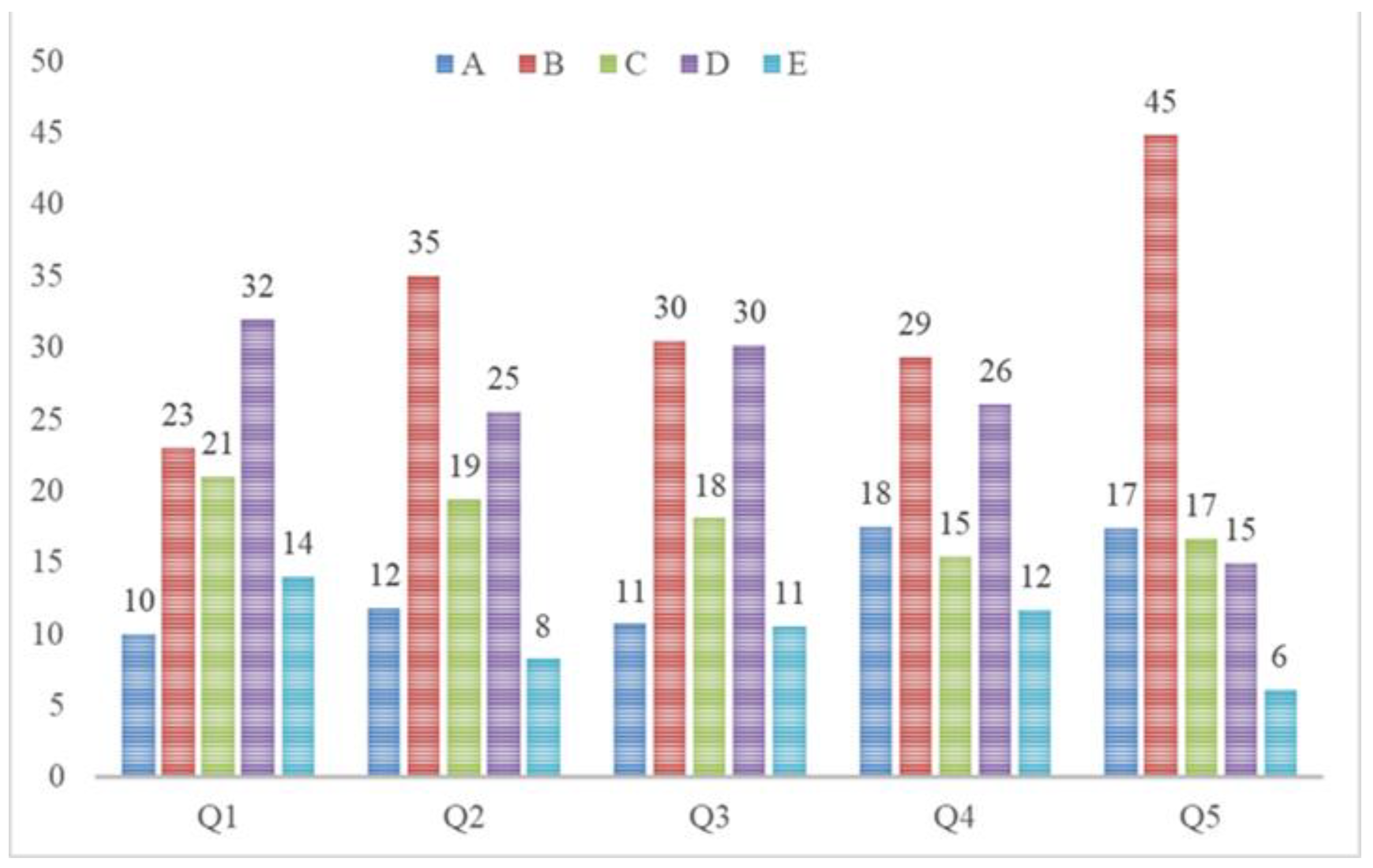
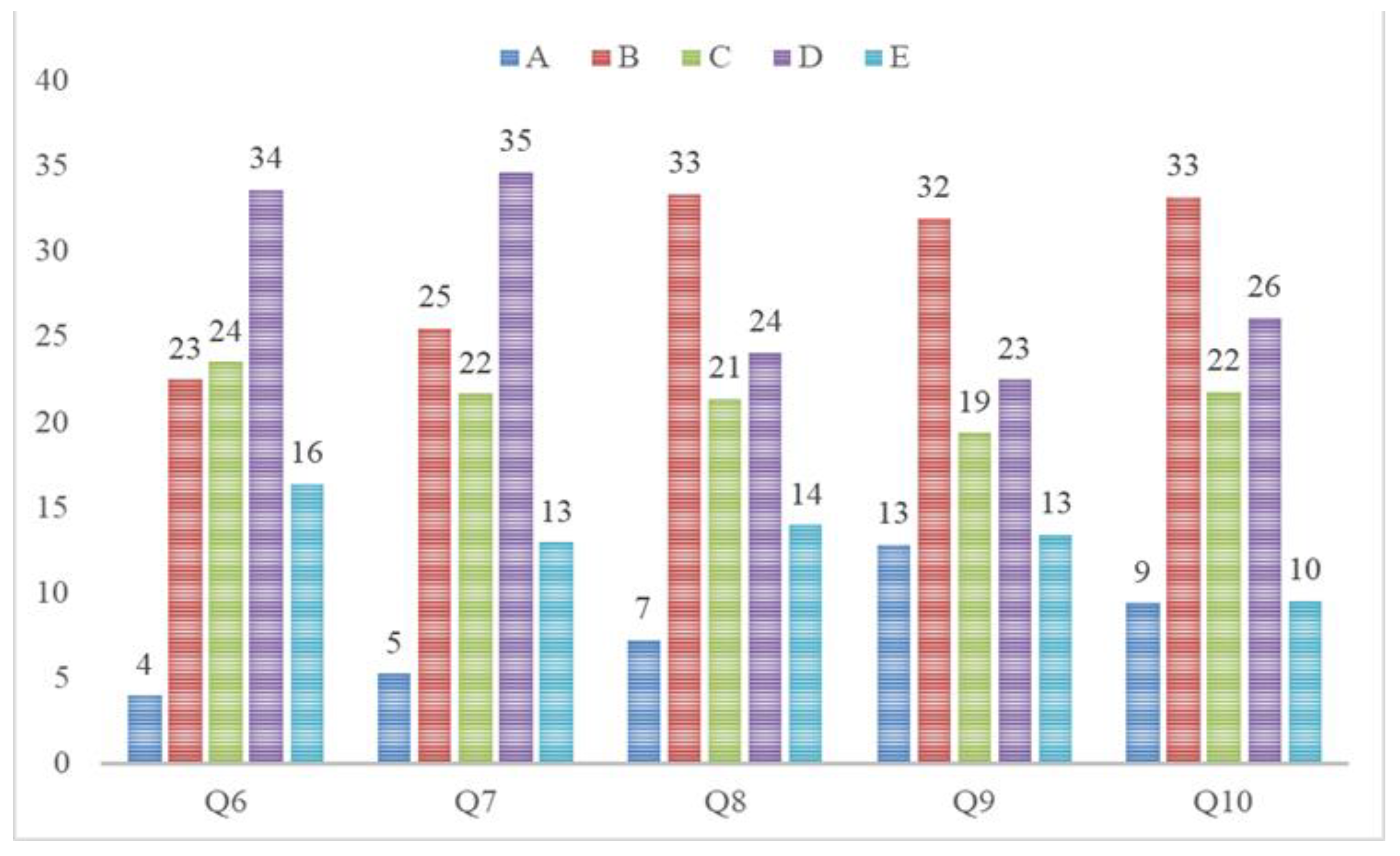
| Male | Female | df = 700 | |||
|---|---|---|---|---|---|
| N = 482 | N = 220 | ||||
| Items | Mean | SD | Mean | SD | p-value |
| 1 | 3.122 | 1.222 | 3.282 | 1.202 | 0.1062 |
| 2 | 2.811 | 1.161 | 2.882 | 1.211 | 0.4587 |
| 3 | 2.929 | 1.197 | 3.136 | 1.220 | 0.0350* |
| 4 | 2.803 | 1.304 | 2.955 | 1.303 | 0.1523 |
| 5 | 2.465 | 1.122 | 2.500 | 1.133 | 0.7024 |
| 6 | 3.384 | 1.132 | 3.305 | 1.087 | 0.3855 |
| 7 | 3.210 | 1.142 | 3.323 | 1.094 | 0.2183 |
| 8 | 3.012 | 1.187 | 3.105 | 1.206 | 0.3383 |
| 9 | 2.954 | 1.276 | 2.836 | 1.224 | 0.2501 |
| 10 | 2.944 | 1.182 | 2.905 | 1.116 | 0.6800 |
| Major | Minor | df = 700 | |||
|---|---|---|---|---|---|
| N = 384 | N = 318 | ||||
| Items | Mean | SD | Mean | SD | p-value |
| 1 | 3.335 | 1.205 | 2.997 | 1.214 | 0.0002*** |
| 2 | 2.963 | 1.176 | 2.695 | 1.167 | 0.0027** |
| 3 | 3.170 | 1.199 | 2.802 | 1.195 | 0.0001*** |
| 4 | 3.068 | 1.327 | 2.607 | 1.241 | <0.0001*** |
| 5 | 2.581 | 1.134 | 2.365 | 1.109 | 0.0111* |
| 6 | 3.419 | 1.099 | 3.308 | 1.143 | 0.1913 |
| 7 | 3.322 | 1.117 | 3.173 | 1.142 | 0.0823 |
| 8 | 3.105 | 1.198 | 2.984 | 1.190 | 0.1819 |
| 9 | 2.963 | 1.303 | 2.881 | 1.212 | 0.3920 |
| 10 | 2.961 | 1.141 | 2.915 | 1.190 | 0.6022 |
Disclaimer/Publisher’s Note: The statements, opinions and data contained in all publications are solely those of the individual author(s) and contributor(s) and not of MDPI and/or the editor(s). MDPI and/or the editor(s) disclaim responsibility for any injury to people or property resulting from any ideas, methods, instructions or products referred to in the content. |
© 2024 by the authors. Licensee MDPI, Basel, Switzerland. This article is an open access article distributed under the terms and conditions of the Creative Commons Attribution (CC BY) license (http://creativecommons.org/licenses/by/4.0/).


