

Submitted:
15 December 2024
Posted:
17 December 2024
You are already at the latest version
Abstract
Indoor air quality (IAQ) at educational institutions has emerged as an important public health issue, affecting the health and cognitive performance of school-aged children, students, and faculty alike. This scoping review study seeks to investigate and synthesize current literature on the factors influencing the current state of research on indoor air quality in educational institutions, as well as its implications for public health. The technique thoroughly investigated peer-reviewed journals, international organizations, and government reports, as well as case studies on IAQ in educational contexts. Using keywords such as "indoor air quality," "educational institutions," "public health," '' Europe, '' and "adverse health outcomes," the study's inclusion and exclusion criteria, as well as the criteria use of quality assessments. The results show that low IAQ is connected with a variety of public health issues, including health difficulties and cognitive impairments, particularly in vulnerable populations such as children and teachers. Inadequate ventilation, the presence of volatile organic compounds, mold growth, and external contaminants are all common causes of poor indoor air quality. Monitoring and management measures are required to improve IAQ in schools, encouraging student's health and academic performance, as well as policy implications of the importance of interdisciplinary approaches in addressing this public health concern.
Keywords:
educational institutions
; public health
; Europe
; indoor air quality
; health outcomes
1. Introduction
Assessing indoor air quality (IAQ) in educational institutions is one of the most effective preventive measures to avoid adverse public health effects. It is crucial to prioritize the well-being of individuals within these educational settings, as indoor air pollution has emerged as one of the top five environmental risks to public health worldwide[1]. In recent years, the concern over poor indoor air quality IAQ has grown significantly in Europe, with alarming consequences for the health of its population[2]. Prosecutable cases of indoor air pollution not only endanger physical health but also have profound implications for emotional well-being and behavioral patterns[3,4]. It is particularly distressing that IAQ issues disproportionately affect vulnerable groups, such as children, pregnant staff, and individuals already grappling with pre-existing health conditions[3,5]. The impact of IAQ extends beyond these immediate health concerns and permeates into other critical aspects of life[6]. Moreover, the influence of IAQ on the learning and achievement levels of individuals, as well as laboratory animals, cannot be overlooked[7]. The educational environment serves as a hotspot for community infections and chronic exposure to environmental hazards[8]. Hence, it becomes imperative to comprehensively comprehend the direct consequences of IAQ on students' health, educational capabilities, and the occupational performance of the dedicated educational staff. Understanding the adverse implications of IAQ on individual learning not only highlights the urgency in addressing this issue but also emphasizes the need for proactive measures to mitigate its effects[9]. The quality of the air that we breathe indoors, especially in educational institutions, does matter tremendously, directly affects the health and well-being of students and staff, making it crucial to prioritize and improve[10]. Poor air quality within schools can have a multitude of negative effects on the health of the upper respiratory system, cognitive functions, and absenteeism rates[11]. The significant impact air quality has on the well-being of individuals is evident in the data, as schools with lower levels of air quality often experience higher sick leave rates compared to those with better air quality[12]. Unhealthy buildings pose a considerable threat to both teachers and students, spend the majority of their time inside these structures, thus becoming highly susceptible to the physical and psychological factors that can intensify stress levels[13,14]. The detrimental consequences of poor indoor air quality can manifest in various ways, affecting the physical health and mental well-being of those within, and strive for optimal indoor air quality in order to create a conducive environment that fosters learning, growth, and overall vitality[15,16]. Focus on IAQ extends physical, chemical, and biological pollutants, although these are undoubtedly crucial factors, on specific IAQ components, including but not limited to allergens, cultures, parasitic diseases, unsafe environmental viruses, toxic fungi, volatile organic compounds, bacteria, formaldehyde, endotoxins, carbon monoxide, and microscopic fungi[17]. It is equally important to consider room factors that contribute to IAQ, such as hydrothermal information and humidity information, among others[18]. Several recent research studies have pointed out that indoor air quality plays a very important role in the environment in which individuals live, are perceived as indicative of good or bad air quality, denoting positive or negative environmental influences on the quality of life and health of the population[19-21]. Indoor air quality IAQ is crucial for health, especially in educational settings like schools. High occupancy rates and varying ventilation standards in European institutions can exacerbate IAQ issues, affecting respiratory issues, allergies, and cognitive impairments [22]. Throughout Europe, in educational buildings, several factors contribute to indoor air pollution, which may result in an imbalance of the quality of the indoor air relative to outdoor air, which negatively impacts the health and quality of life of students and educators[23]. It is appropriate to provide the students with a good classroom environment, where the indoor air quality meets comfort requirements and the performance of students is at an optimal level[24,25].
The scope of this study to implementing effective strategies to enhance indoor air quality, minimize the constraints imposed on schooling and unlock the full potential of every student. It is evident that the detrimental effects of IAQ permeate every aspect of educational institutions, encompasses all staff members within educational institutions, adopting preferential actions is the key to safeguarding the health, well-being, and future success of communities. This comprehensive and thorough scoping review study aims to provide extensive information and compelling evidence in response to the following key questions that have been raised. It is vital to highlight that IAQ encompasses a wide range of effects, and despite extensive research and studies, consequences and associations with numerous health problems have to be fully identified.
This study aims outlines the identification of pollutants affecting IAQ in educational institutions, their health implications, current policies for improvement, and gaps in existing literature for future inovation research.
2. Materials and Methods
2.1. Methodology
The study identified and analyzed using a scoping review process methodology, an examination of literature systematically for mapping the existing literature and finding significant themes, gaps, and opportunities for future research. The study investigated factors related to specific objectives. The search strategy on the Databases such as PubMed, Scopus, and Google Scholar, Web of Science, using keywords related to indoor air quality, educational institutions, and public health in Europe.
The search terms included "indoor air quality," "schools," "health effects," "Europe," "pollutants," " educational" institutions and " health outcomes." Studies upon recently years has published, articles, guidelines, reports, and conference proceedings papers that reflects the most current research. The data flow from record identification to inclusion followed the PRISMA statement principles [26] .
2.2. Materials and the Design of the Study
It's an examination of literature systematically with scoping review methods of this research analysis.
The study investigated factors related to:
1. Identify key pollutants affecting IAQ in educational institutions.
2. Examine the health implications associated with poor IAQ.
3. Discuss current policies and recommendations for improving IAQ in all Educa-
tional Institutions.
4. Highlight gaps in the existing literature and suggest areas for future research.
2.3. Literature Search Selection of the Studies
The inclusion criteria for the study are the ones that follow:
All studies included were published in peer-reviewed journals, conferences proceedings, and
reports guidelines for International and National Organizations.
All studies included were in the English language.
All studies included addressed sample of IAQ.
The studies where included have assesses though self-reported instruments, and conse-
quences.
The studies included assess features as regards the IAQ in all Educational Institutions.
The exclusion criteria at sampling of the study are the follow:
a)The language of the study except for English.
b)Studies with sample except for outdoor air quality and not examined health outcomes re-
lated to IAQ for educational institutions, were not included or analyzed.
c)The study selection that not procedure was attended by all authors.
d)Synthesis of results, and thematic analysis mapping of the findings to identify trends,
gaps, areas for future research not evolve from all of the authors.
Important Implications and Concerns on Health Impacts
The study indicates that exposure to poor IAQ can lead to various Health issues
among students and staff. Also studies have shown a correlation between high lev-
els of Health Risk Factors and decreased cognitive performance and environmental
hazards. Additionally, respiratory problems, have been linked to exposure to indoor
hazards. Figure 1, shows the flow chart diagram of the study using PRISMA guide
lines and regulations for scoping reviews studies [26].
3. Results
Due to the large number of people they accommodate on a daily basis, educational institutions are considered public buildings, and the level of indoor pollutants has important public health implications. Under, this subsection this study adverse health effects arising from exposure to them. In light of modern society’s concern for physical and cognitive development to ensure prosperity, it becomes crucial for the health of school-age children, students, teachers, staffs of all Educational Institutions correlated IDAQ with public health and well-being of specific populations. Poor indoor air quality can cause regular cases of "sick building syndrome" and can increase the incidence of upper respiratory tract infections, allergies, asthma in children, building-related diseases, and even death in cases of long-term exposure to large amounts of pollutants[27]. Children are more vulnerable because they are less able to remove pollutants from their bodies than adults[28,29]. Another mechanism of indoor irritants on health is their potential effect on the brain, which may interfere with cognitive function or even promote the development of neurological diseases, leading to negative consequences in their education[30]. Regarding particulate matter concentrations, all chemical and physical hazards included from environment associated risks[31], provided the categorization of measures and average above from recent literature [32-35]. The Table 1, indicate the measurement ranges for each of the five air quality categories for specific pollutants, the averaging times for each pollutant, and the Air Quality standard average measures from Global Organization Government, and non-Government regulations and guidelines.
The current regulatory approaches to indoor air quality was conducted, which are applied in a multi-faceted manner across Europe. The investigation considered twenty countries, including all of the Member States of the European Union. The conclusion was that legislation in the field of indoor air quality is fragmented and sometimes lacks the proper application and enforcement. Furthermore, it was found that limited financial and human resources, including in educational buildings, are often considered one of the main barriers to the appropriate management of indoor air quality. In educational institutions and for public health services evolving with inspections, IAQ limits have been established not only for tobacco and CO2, but also for a number of other air pollutants, such as NO2, PM10, PM2.5, benzene, heavy metals, radon, and Aspergillus fumigatus, and also consider the difficult circumstances of the period during COVID-19 Pandemic [7,36-44]. Another fundamental aspect that should be taken into account is the economic one: from specific estimates, it has been calculated that poor indoor air quality could cause a health and economic burden of 0.01–22 billion Euros for each allergen[12,45]. By creating a direct correlation between healthcare costs and lost productivity, it has been estimated that there are signs of a growing number of hospitalizations for asthma linked to environmental factors[26], which could lead to an important economic impact[1]. To reduce these costs and to prevent the onset of indoor air quality-related health problems, it is important to raise awareness among the population about the value of monitoring environmental parameters and taking precautions not to exceed the pollution threshold value[27].
IAQ issues in educational institutions
1. Improved Ventilation: Reduce pollutant levels and improve IAQ implement mechanical
ventilation systems and to promote Physical air circulation.
2. Regular Monitoring: Implementing specifics IAQ assessments, identifies and mitigates
potential hazards also apply air quality tests to monitor levels of CO2, PM, VOCs, etc.
3. Education and Training: Providing training for educational institutions staff of indoor
pollutants and best practices for maintaining on IAQ management.
4. Policy Development: Governments should establish clear Policies. guidelines and stand-
ards for IAQ.
5. Community Engagement: Engaging the community in discussions about IAQ a collab-
orative approach to improving educational institutions environments.
4. Discussion
All studies and research findings of varying methodologies, IAQ indicators, monitoring periods, education system stages, classroom occupancy ages, and geographic locations serve to highlight the underlying relationships between IAQ, health, and academic performance[18,10,46]. A few studies looking at the health impacts of IAQ interventions in schools, of which included follow-up data on health effects and highlighted improved academic achievement[9,10,47]. The limitations of findings are not easily scalable across Europe due to the role of numerous confounding local[8], and school-based factors that are not controlled for in observational studies[48,49]. Results can vary from one school to another, and the data from a number of studies were characterized by large variability[50]. Improved IAQ did not lead to improved health or academic outcomes in the intervention studies[51]. It should be noted that case studies of individual schools were valuable in providing a rich[52], in-depth understanding of the approaches and practices used at a local level and provided recommendations for IAQ interventions based on stakeholders' and practitioners' experiences in the field of IAQ management[53]. Over the last two decades, there has been growing research into concrete issues facing the quality of indoor air in schools and associated health concerns, with this subfield even having its own conference series[32]. Much of this research has been conducted in the North America, Australia, Scandinavia, and Central Europe[19,54], but there is good representation of some other Western European countries[20].The specific questions addressed range from the health outcomes associated with exposure to specific pollutants and cumulative exposure indices to the physical environmental conditions that were associated with air quality[54,55], such as outdoor air exchange rates and the variation of indoor CO2 concentrations[56]. The vast of studies in used a mixture of data collection and modeling to assess the quality of the air[57].
Educational facilities can be places where diverse pollutants and other factors will have a major impact on indoor air quality, School-aged children and the staff working within them can be susceptible to some of the harmful effects[27,18,58], such as respiratory health symptoms and performance decrement, both potential health outcome factors of ambient concentration[59]. Focus on indoor air quality within educational institutions, such as schools, colleges, and universities, and review studies that present results only from these environments or, and most have taken place in North America and Europe[60,47]. The relevant investigated air quality assessment components, and closed environments, such as offices, kindergartens, and civil service buildings, have been not be included-removed from the Discussion section of this study. Although most recognized as a problem that predominantly affects students, the poor quality of indoor air can have a broad impact on society beyond the impact of an educational institution [61]. Long-term exposure to indoor pollutants can raise the chance of acquiring health problems, aggravating pre-existing illnesses, and creating productivity losses[62]. Exposure to chemicals detrimental to human health, most acute allergy symptoms are caused by microbiological organisms found inside. Research-portals links provide poor at indoor air quality to the studybdevelopment of chronic illnesses and an increase in the occurrence of respiratory diseases, finally the extreme weather events and climate crisis increase negative public health issues [62,63].
Limitations of the Study and Future Research
The implications of inadequate IAQ in educational institutions go beyond individual health outcomes. Poor indoor air quality can raise healthcare costs, impair productivity, and lower academic achievement, ultimately affecting society as a whole. Addressing IAQ in schools is vital for protecting the health and well-being of both kids and staff. The gaps considering the rising quantity of research on IAQ in educational institutions, numerous gaps exist. More longitudinal studies are required to examine the long-term health impacts of low indoor air quality on children. Furthermore, research on the efficacy of various strategies to promote IAQ in educational institutions, and schools is scarce. Future research should concentrate on producing evidence-based guidelines for schools to implement in order to improve IAQ and preserve student health.
5. Conclusions
The purpose of this study was to offer an overview of ongoing concerns with indoor air quality in European educational institutions. The review indicates that many European children, students, and staff at educational institutions are exposed to extremely poor indoor air quality in buildings, and that there are various health consequences associated with the detrimental influence on academic performance. Even while some restrictions and recommendations are in place, they may not be adequate to protect this population's health, particularly for air contaminants having co-toxicity effects. The present study and recommendations for interior air quality are based on European standards, with outdoor inputs most typically utilized to establish criteria for indoor air policies. To evaluate health parameters and improve teaching quality, a new set of indoor air quality indices, as well as a new European air quality monitoring foundation, are required. Furthermore, policymakers encourage European member countries to take an integrated approach to Nationwide Cross-sectoral Strategies that address health, education, and control pollution. Harmonized research across Europe, in addition to utilizing research infrastructure and open data in information technology to provide a comprehensive solution for indoor air quality in educational institutions, regaining regulation from harmful indoor settings that require the Public Health's citizens protection.
Author Contributions
Conceptualization, N.S. and I.A.; methodology, L.D., N.S. and I.A.; software, M.M., N.S. and I.A.; validation, G.A., P.T. and I.A.; formal analysis, M.M. N.S. and I.A.; investigation, L.D. N.S. and I.A.; resources, P.T., N.S. and I.A.; data curation, G.A.,M.M., N.S. and I.A.; writing—original draft preparation, L.D., M.M., G.A., P.T, N.S. and I.A.; writing—review and editing, L.D. N.S. and I.A.; visualization, N.S.; supervision, L.D. N.S. and I.A.; project administration, I.A.; funding acquisition, I.A. All authors have read and agreed to the published version of the manuscript.
Funding
Please add: This research received no external funding.
Institutional Review Board Statement
The study was conducted in accordance with the Declaration of Helsinki. Not applicable.
Informed Consent Statement
Not applicable.
Data Availability Statement
Not applicable.
Acknowledgments
The authors are appreciated and are grateful for invitation from the Editors.
Conflicts of Interest
The authors declare no conflicts of interest.
References
- Tran VV, Park D, Lee YC. Indoor air pollution, related human diseases, and recent trends in the control and improvement of indoor air quality. International journal of environmental research and public health. 2020 Apr;17(8):2927. mdpi.com.
- González-Martín J, Kraakman NJ, Pérez C, Lebrero R, Muñoz R. A state–of–the-art review on indoor air pollution and strategies for indoor air pollution control. Chemosphere. 2021 Jan 1;262:128376.
- Yue X, Ma NL, Sonne C, Guan R, Lam SS, Van Le Q, Chen X, Yang Y, Gu H, Rinklebe J, Peng W. Mitigation of indoor air pollution: A review of recent advances in adsorption materials and catalytic oxidation. Journal of hazardous materials. 2021 Mar 5;405:124138.
- Manisalidis I, Stavropoulou E, Stavropoulos A, Bezirtzoglou E. Environmental and health impacts of air pollution: a review. Frontiers in public health. 2020 Feb 20;8:14.
- Naclerio R, Ansotegui IJ, Bousquet J, Canonica GW, d'Amato G, Rosario N, Pawankar R, Peden D, Bergmann KC, Bielory L, Caraballo L. International expert consensus on the management of allergic rhinitis (AR) aggravated by air pollutants: impact of air pollution on patients with AR: current knowledge and future strategies. World Allergy Organization Journal. 2020 Mar 1;13(3):100106.
- Anjum MS, Ali SM, Subhani MA, Anwar MN, Nizami AS, Ashraf U, Khokhar MF. An emerged challenge of air pollution and ever-increasing particulate matter in Pakistan; a critical review. Journal of Hazardous Materials. 2021 Jan 15;402:123943.
- Vasiljevic T, Harner T. Bisphenol A and its analogues in outdoor and indoor air: Properties, sources and global levels. Science of the Total Environment. 2021.
- Dimitroulopoulou S, Dudzińska MR, Gunnarsen L, Hägerhed L, Maula H, Singh R, Toyinbo O, Haverinen-Shaughnessy U. Indoor air quality guidelines from across the world: An appraisal considering energy saving, health, productivity, and comfort. Environment International. 2023 Aug 1;178:108127. sciencedirect.com.
- Sridharan S, Kumar M, Singh L, Bolan NS, Saha M. Microplastics as an emerging source of particulate air pollution: A critical review. Journal of Hazardous Materials. 2021 Sep 15;418:126245.
- Sadrizadeh S, Yao R, Yuan F, Awbi H, Bahnfleth W, Bi Y, Cao G, Croitoru C, de Dear R, Haghighat F, Kumar P. Indoor air quality and health in schools: A critical review for developing the roadmap for the future school environment. Journal of Building Engineering. 2022 Oct 1;57:104908.
- Wargocki P, Porras-Salazar JA, Contreras-Espinoza S, Bahnfleth W. The relationships between classroom air quality and children’s performance in school. Building and Environment. 2020 Apr 15;173:106749.
- Awada M, Becerik-Gerber B, Hoque S, O'Neill Z, Pedrielli G, Wen J, Wu T. Ten questions concerning occupant health in buildings during normal operations and extreme events including the COVID-19 pandemic. Building and Environment. 2021 Jan 15;188:107480.
- Aguilar-Gomez S, Dwyer H, Graff Zivin J, Neidell M. This is air: The “nonhealth” effects of air pollution. Annual Review of Resource Economics. 2022 Oct 5;14(1):403-25.
- Maung TZ, Bishop JE, Holt E, Turner AM, Pfrang C. Indoor air pollution and the health of vulnerable groups: a systematic review focused on particulate matter (PM), volatile organic compounds (VOCs) and their effects on children and people with pre-existing lung disease. International journal of environmental research and public health. 2022 Jul 19;19(14):8752.
- Baloch RM, Maesano CN, Christoffersen J, Banerjee S, Gabriel M, Csobod É, de Oliveira Fernandes E, Annesi-Maesano I, Szuppinger P, Prokai R, Farkas P. Indoor air pollution, physical and comfort parameters related to schoolchildren's health: Data from the European SINPHONIE study. Science of the Total Environment. 2020 Oct 15;739:139870.
- Brumberg HL, Karr CJ, Bole A, Ahdoot S, Balk SJ, Bernstein AS, Byron LG, Landrigan PJ, Marcus SM, Nerlinger AL, Pacheco SE. Ambient air pollution: health hazards to children. Pediatrics. 2021 Jun 1;147(6).
- Izah SC, Ogwu MC, Etim NG, Shahsavani A et al. Short-Term Health Effects of Air Pollution. 2024.
- Astuti RDP. Poor indoor air quality impacts in industrial and non-industrial workplace to human health: the recent trends and control strategies. Health Effects of Indoor Air Pollution. 2024.
- Sadrizadeh S, Yao R, Yuan F, Awbi H, Bahnfleth W, Bi Y, Cao G, Croitoru C, de Dear R, Haghighat F, Kumar P. Indoor air quality and health in schools: A critical review for developing the roadmap for the future school environment. Journal of Building Engineering. 2022 Oct 1;57:104908.
- Rosário Filho NA, Urrutia-Pereira M, d'Amato G, Cecchi L, Ansotegui IJ, Galán C, Pomés A, Murrieta-Aguttes M, Caraballo L, Rouadi P, Annesi-Maesano I. Air pollution and indoor settings. World Allergy Organization Journal. 2021 Jan 1;14(1):100499.
- Pulimeno M, Piscitelli P, Colazzo S, Colao A, Miani A. Indoor air quality at school and students’ performance: Recommendations of the UNESCO Chair on Health Education and Sustainable Development & the Italian Society of Environmental Medicine (SIMA). Health promotion perspectives. 2020;10(3):169.
- Kumar P, Singh AB, Arora T, Singh S, Singh R. Critical review on emerging health effects associated with the indoor air quality and its sustainable management. Science of The Total Environment. 2023 May 10;872:162163.
- Szabados M, Csákó Z, Kotlík B, Kazmarová H, Kozajda A, Jutraz A, Kukec A, Otorepec P, Dongiovanni A, Di Maggio A, Fraire S. Indoor air quality and the associated health risk in primary school buildings in Central Europe–The InAirQ study. Indoor air. 2021 Jul;31(4):989-1003.
- Abhijith KV, Kukadia V, Kumar P. Investigation of air pollution mitigation measures, ventilation, and indoor air quality at three schools in London. Atmospheric Environment. 2022.
- Raju S, Siddharthan T, McCormack MC. Indoor air pollution and respiratory health. Clinics in chest medicine. 2020 Dec 1;41(4):825-43.
- Page MJ, McKenzie JE, Bossuyt PM, Boutron I, Hoffmann TC, Mulrow CD, et al. The PRISMA 2020 statement: an updated guideline for reporting systematic reviews. BMJ2021;372:n71. [CrossRef]
- World Health Organization W. Considerations for school-related public health measures in the context of COVID-19: annex to considerations in adjusting public health and social measures inEducational Institutions 2020.
- Loaiza-Ceballos MC, Marin-Palma D, Zapata W, Hernandez JC. Viral respiratory infections and air pollutants. Air Quality, Atmosphere & Health. 2022 Jan;15(1):105-14.
- Domingo JL, Rovira J. Effects of air pollutants on the transmission and severity of respiratory viral infections. Environmental research. 2020.
- Ali MU, Yu Y, Yousaf B, Munir MA, Ullah S, Zheng C, Kuang X, Wong MH. Health impacts of indoor air pollution from household solid fuel on children and women. Journal of hazardous materials. 2021 Aug 15;416:126127.
- Domínguez-Amarillo S, Fernández-Agüera J, Cesteros-García S, González-Lezcano RA. Bad air can also kill: residential indoor air quality and pollutant exposure risk during the COVID-19 crisis. International Journal of Environmental Research and Public Health. 2020 Oct;17(19):7183.
- Cilluffo G, Ferrante G, Fasola S, Malizia V, Montalbano L, Ranzi A, Badaloni C, Viegi G, La Grutta S. Association between asthma control and exposure to greenness and other outdoor and indoor environmental factors: a longitudinal study on a cohort of asthmatic children. International Journal of Environmental Research and Public Health. 2022 Jan 4;19(1):512.
- Ielpo P, Mangia C, de Gennaro G, Di Gilio A, Palmisani J, Dinoi A, Bergomi A, Comite V, Fermo P. Air quality assessment of a school in an industrialized area of southern Italy. Applied Sciences. 2021 Sep 23;11(19):8870.
- Lucialli P, Marinello S, Pollini E, Scaringi M, Sajani SZ, Marchesi S, Cori L. Indoor and outdoor concentrations of benzene, toluene, ethylbenzene and xylene in some Italian schools evaluation of areas with different air pollution. Atmospheric Pollution Research. 2020 Nov 1;11(11):1998-2010.
- Zammit C, Bilocca D, Ruggieri S, Drago G, Perrino C, Canepari S, Balzan M, Montefort S, Viegi G, Cibella F, RESPIRA Collaborative Project Group. Association between the concentration and the elemental composition of outdoor PM2. 5 and respiratory diseases in schoolchildren: a multicenter study in the mediterranean area. Atmosphere. 2020 Nov 29;11(12):1290.
- Langiano E, Ferrara M, Falese L, Lanni L, Diotaiuti P, Di Libero T, De Vito E. Assessment of indoor air quality in school facilities: an educational experience of pathways for transversal skills and orientation (PCTO). Sustainability. 2024 Aug 2;16(15):6612.
- Ortiz M, Itard L, Bluyssen PM. Indoor environmental quality related risk factors with energy-efficient retrofitting of housing: A literature review. Energy and Buildings. 2020.
- Kumar P, Kausar MA, Singh AB, Singh R. Biological contaminants in the indoor air environment and their impacts on human health. Air Quality, Atmosphere & Health. 2021 Nov;14(11):1723-36.
- Elsaid AM, Ahmed MS. Indoor air quality strategies for air-conditioning and ventilation systems with the spread of the global coronavirus (COVID-19) epidemic: Improvements and …. Environmental Research. 2021.
- Torres-Agullo A, Karanasiou A, Moreno T, Lacorte S. Overview on the occurrence of microplastics in air and implications from the use of face masks during the COVID-19 pandemic. Science of the total environment. 2021 Dec 15;800:149555.
- Halios CH, Landeg-Cox C, Lowther SD, Middleton A, Marczylo T, Dimitroulopoulou S. Chemicals in European residences–Part I: A review of emissions, concentrations and health effects of volatile organic compounds (VOCs). Science of the Total Environment. 2022 Sep 15;839:156201.
- Chojer H, Branco PT, Martins FG, Alvim-Ferraz MC, Sousa SI. Development of low-cost indoor air quality monitoring devices: Recent advancements. Science of The Total Environment. 2020 Jul 20;727:138385.
- Adamopoulos I, Syrou N, Lamnisos D, Boustras G.(2023d). Cross-sectional nationwide study in occupational safety & health: Inspection of job risks context, burn out syndrome and job satisfaction of public health Inspectors in the period of the COVID-19 pandemic in Greece. Saf Sci. 2023 Feb;158:105960.
- Adamopoulos I, Lamnisos D, Syrou N, Boustras G. Public health and work safety pilot study: Inspection of job risks, burn out syndrome and job satisfaction of public health inspectors in Greece. Safety Science. 2022.
- Squizzato R, da Silva I, Moreira CA, Beal A, Almeida D, Solci M, Braga A, Ribeiro M, Martins L. Indoor and outdoor airborne particles concentrations and their relations with respiratory symptoms in volunteers from the education sector. Revista Brasileira de Geografia Física. 2022 Apr 21;15(2):670-81.
- Marchetti P, Miotti J, Locatelli F, Antonicelli L, Baldacci S, Battaglia S, Bono R, Corsico A, Gariazzo C, Maio S, Murgia N. Long-term residential exposure to air pollution and risk of chronic respiratory diseases in Italy: The BIGEPI study. Science of the Total Environment. 2023 Aug 1;884:163802.
- Giusti L, Mammarella S, Salza A, Del Vecchio S, Ussorio D, Casacchia M, Roncone R. Predictors of academic performance during the covid-19 outbreak: impact of distance education on mental health, social cognition and memory abilities in an Italian university student sample. BMC psychology. 2021 Dec;9:1-7.
- Settimo G, Manigrasso M, Avino P. Indoor air quality: A focus on the European legislation and state-of-the-art research in Italy. Atmosphere. 2020.
- Young BN, Benka-Coker WO, Weller ZD, Oliver S, Schaeffer JW, Magzamen S. How does absenteeism impact the link between school's indoor environmental quality and student performance?. Building and environment. 2021 Oct 1;203:108053.
- Korsavi SS, Montazami A, Mumovic D. Indoor air quality (IAQ) in naturally-ventilated primary schools in the UK: Occupant-related factors. Building and Environment. 2020.
- Jia LR, Han J, Chen X, Li QY et al. Interaction between thermal comfort, indoor air quality and ventilation energy consumption of educational buildings: A comprehensive review. Buildings. 2021.
- Wu X, Nethery RC, Sabath MB, Braun D et al. Exposure to air pollution and COVID-19 mortality in the United States: A nationwide cross-sectional study. MedRxiv. 2020.
- Ma N, Aviv D, Guo H, Braham WW. Measuring the right factors: A review of variables and models for thermal comfort and indoor air quality. Renewable and Sustainable Energy Reviews. 2021 Jan 1;135:110436.
- Azuma K, Yanagi U, Kagi N, Kim H, Ogata M, Hayashi M. Environmental factors involved in SARS-CoV-2 transmission: effect and role of indoor environmental quality in the strategy for COVID-19 infection control. Environmental health and preventive medicine. 2020 Dec;25:1-6.
- Turner MC, Andersen ZJ, Baccarelli A, Diver WR, Gapstur SM, Pope III CA, Prada D, Samet J, Thurston G, Cohen A. Outdoor air pollution and cancer: An overview of the current evidence and public health recommendations. CA: a cancer journal for clinicians. 2020 Nov;70(6):460-79.
- Morawska L, Allen J, Bahnfleth W, Bluyssen PM, Boerstra A, Buonanno G, Cao J, Dancer SJ, Floto A, Franchimon F, Greenhalgh T. A paradigm shift to combat indoor respiratory infection. Science. 2021 May 14;372(6543):689-91.
- Vardoulakis S, Giagloglou E, Steinle S, Davis A, Sleeuwenhoek A, Galea KS, Dixon K, Crawford JO. Indoor exposure to selected air pollutants in the home environment: a systematic review. International journal of environmental research and public health. 2020 Dec;17(23):8972.
- Becerra JA, Lizana J, Gil M, Barrios-Padura A, Blondeau P, Chacartegui R. Identification of potential indoor air pollutants in schools. Journal of Cleaner Production. 2020 Jan 1;242:118420.
- Charres I, Lucarelli F, Feliciano M, Furst L, Alves C. Seasonal variations of size-classified aerosol-bound elements in school environments and risk factors for the prevalence of atopic diseases among pupils. Building and Environment. 2024 Nov 1;265:111949.
- Strak M, Weinmayr G, Rodopoulou S, Chen J, De Hoogh K, Andersen ZJ, Atkinson R, Bauwelinck M, Bekkevold T, Bellander T, Boutron-Ruault MC. Long term exposure to low level air pollution and mortality in eight European cohorts within the ELAPSE project: pooled analysis. bmj. 2021 Sep 2;374.
- O’Dell K, Hornbrook RS, Permar W, Levin EJ, Garofalo LA, Apel EC, Blake NJ, Jarnot A, Pothier MA, Farmer DK, Hu L. Hazardous air pollutants in fresh and aged western US wildfire smoke and implications for long-term exposure. Environmental Science & Technology. 2020 Aug 28;54(19):11838-47.
- Ali N, Islam F. The effects of air pollution on COVID-19 infection and mortality—a review on recent evidence. Frontiers in public health. 2020.
- Adamopoulos I, Frantzana A, Syrou N., 2024b. Climate Crises Associated with Epidemiological, Environmental, and Ecosystem Effects of a Storm: Flooding, Landslides, and Damage to Urban and Rural Areas (Extreme Weather Events of Storm Daniel in Thessaly Greece). Medical Sciences Forum. 2024; 25(1):7. [CrossRef]
Figure 1.
Flow chart diagram of the study PRISMA.
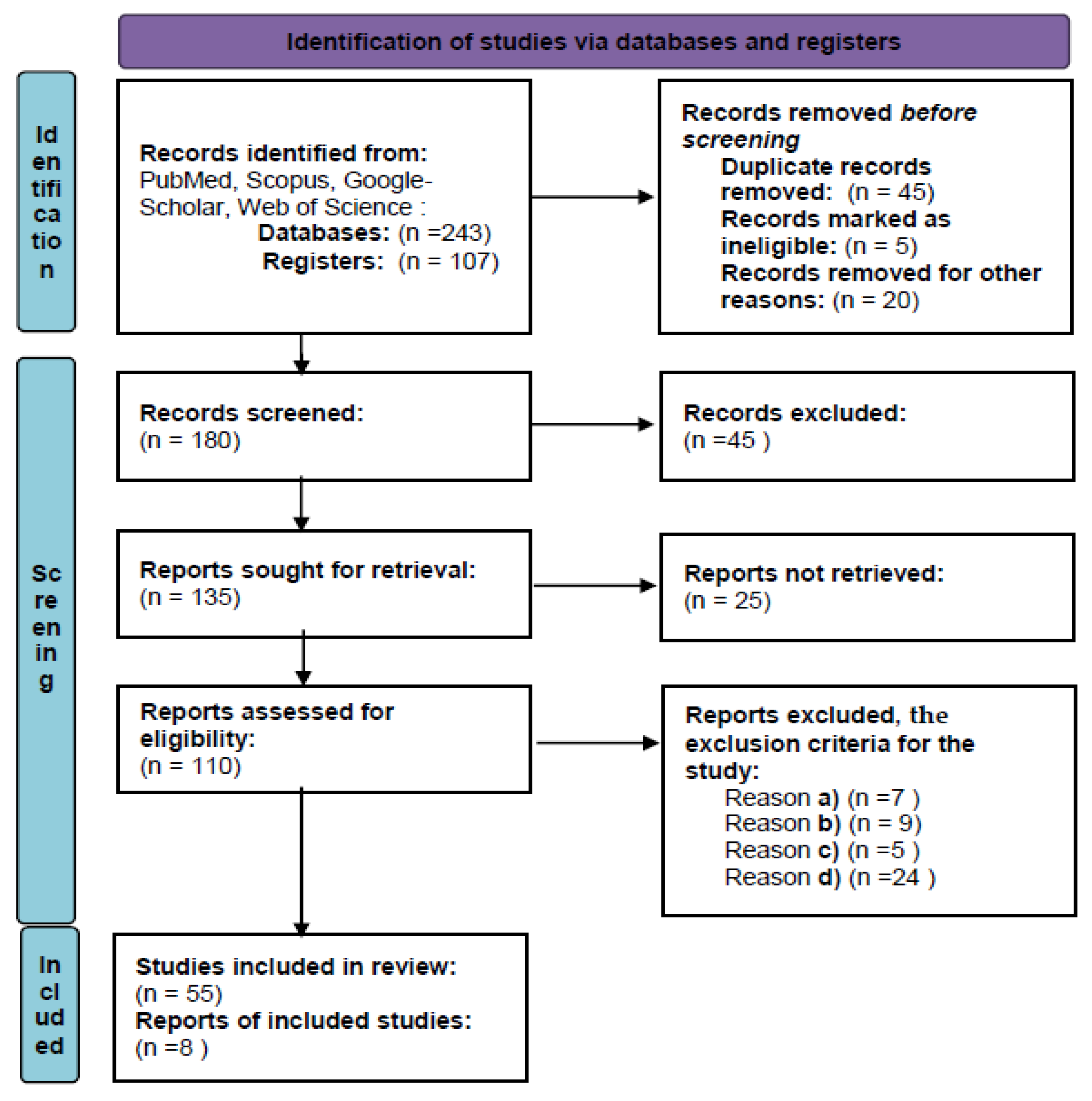

Table 1.
Measurement ranges for Air quality categories, average times, targets, distinguishing Fair and Poor categories.
Table 1.
Measurement ranges for Air quality categories, average times, targets, distinguishing Fair and Poor categories.
| AIR POLLUTANTS | AVERAGE-TIME | UNITS | GUIDELINES | GOOD | FAIR | POOR | VERY POOR | EXTREMELY POOR |
|---|---|---|---|---|---|---|---|---|
|
Ozone O3 |
0-7 hours | ppm | 0.100/0.065 | <0.067/<0.043 | 0.100/0.043 | 0.150/0.097 | 0.200/0.130 | 0.201/ 0.131 |
|
Nitrogen-dioxide NO2 |
0-7 hours | ppm | 0.080/9.0 | <0.053/<6.0 | 0.053 / 9.0 | 0.081 / 13.5 | 0.121/18.0 | 0.161/18.1 |
|
Sulfur-dioxide SO2 |
0-1 hours | ppm | 0.100 | <0.067 | 0.067 /0.100 | 0.101/0.150 | 0.151-0.200 | 0.201 |
| PM.< 10µm | 0 /23 hours | µg/m3 | 100/50 | <50/<25 | 100/25 | 100.1 - 50.1 | 600-300 | 300.1-600.1 |
|
PM.2.5 < 2.5 µm |
0/23 hour | µg/m3 | 50/25 | <25/<12.5 | 12.5 - 50 | 50.1 - 100 | 300-150 | 300.1-150.1 |
| T.S.P. | 0/23 hours | µg/m3 | 250/80 | <125/<40 | 125 - 250/40-80 | 500/80.1 | 1500/160.1 | 1500.1/480.1 |
| Visibility | 1 hour | Mm-1 | 235 | <118 | 118 - 235 | 236 - 470 | 471-1410 | 1411-1610 |
Disclaimer/Publisher’s Note: The statements, opinions and data contained in all publications are solely those of the individual author(s) and contributor(s) and not of MDPI and/or the editor(s). MDPI and/or the editor(s) disclaim responsibility for any injury to people or property resulting from any ideas, methods, instructions or products referred to in the content. |
© 2024 by the authors. Licensee MDPI, Basel, Switzerland. This article is an open access article distributed under the terms and conditions of the Creative Commons Attribution (CC BY) license (http://creativecommons.org/licenses/by/4.0/).
Copyright: This open access article is published under a Creative Commons CC BY 4.0 license, which permit the free download, distribution, and reuse, provided that the author and preprint are cited in any reuse.


