

Submitted:
13 December 2024
Posted:
13 December 2024
You are already at the latest version
Abstract
Polymer-based aqueous redox flow batteries (RFBs) are attracting increasing attention as a promising next-generation energy storage technology due to their potential for low cost and environmental friendliness. The search for new redox-active organic compounds for incorporation into polymer materials is ongoing, with anolyte-type compounds in high demand. In response to this need, we have synthesized and tested a range of new water-soluble redox-active s-tetrazine derivatives, including both low molecular weight compounds and polymers with different architectures. S-tetrazines are some of the smallest organic molecules that can undergo a reversible two-electron reduction in protic media, making them a promising candidate for anolyte applications. We have successfully modified linear polyacrylic acid and poly(N-isopropylacrylamide-co-acrylic acid) microgels with pendent 1,2,4,5-tetrazine groups. Electrochemical testing has shown that the new tetrazine-containing monomers, and importantly, the water-soluble redox polymers, both linear and microgel, demonstrate chemical reversibility of the reduction process in an aqueous solution containing acetate buffer. This expands the range of water-soluble anodic materials suitable for water-based organic RFBs. The reduction potential value can be adjusted by changing the substituents in the tetrazine core. It is also worth noting that the choice of electrode material plays an important role in the kinetics of the tetrazine reaction: the use of carbon electrodes is particularly beneficial.
Keywords:
redox-active materials
; polymers
; microgels
; tetrazines
; flow batteries
Introduction
Attempts to make batteries more environmentally friendly have led to an increased interest in organic redox-active materials, which can be used in both combined and all-organic devices. These organic molecules are cheaper and more sustainable, as their cost is not limited by the production or availability of rare elements [1]. The structural diversity of organic redox-active materials is very wide; it includes organosulfur derivatives [2,3,4], carbonyl compounds [5,6], free radical systems [7,8], viologens [9] and some others. Nevertheless, new tailor-made organic molecules with targeted electrochemical and physical properties (such as solubility, redox potential values, and the possibility of multi-electron transfer) are currently in high demand.
One of the promising and "greener" alternatives to Li-ion batteries, which currently occupy a significant part of the market, are redox-flow batteries (RFBs). RFBs have the unique feature of allowing for independent scaling up of their power (determined by the electrode surface area) and capacity (related to the amount of redox-active compounds in the tanks) [10]. From this point, RFBs, which are suitable for large-scale energy storage technologies, can be seen as a potential complement to Li-ion batteries.
RFBs using water-soluble organic redox-active materials are of particular interest [11]. They are safer and cheaper than their non-aqueous and inorganic counterparts and are in line with sustainable chemistry requirements. Commercial RFBs all use aqueous supporting electrolytes, highlighting the need for water-soluble redox-active materials. Despite some progress in this area, [12,13] the search for new water-soluble organic redox-active materials remains a challenging task.
One of the main trends is the development of polymer-based redox-active materials for aqueous organic RFBs. Polymers with densely populated redox sites feature high charge-transport and charge-storage capacities [14,15]. The incorporation of a redox unit into the polymer chain often improves cycling stability and helps overcome technical issues related to cell design. More importantly, it prevents the movement of redox species across the membrane, which can lead to severe capacity loss and make the cell more demanding on the type of membrane separating the anode and cathode compartments [16,17]. For example, the popular organic redox-active compound TEMPO, in its low molecular weight form, is prone to cross over even through the most expensive ion-selective membranes. Polymers, on the other hand, can be separated using relatively inexpensive size-exclusion (dialysis) membranes and microporous separators. There are several publications where this approach was used for ferrocene tetramer and a linear viologen polymer in organic solvent [18], viologen and ferrocene polymers in organic solvent [19], polymers embedded with TEMPO and viologen groups in water [20]. For reviews, one can also see [13,21]. Also, the addition of a polymer moiety can enhance the solubility of the redox-active group in a targeted solvent and prevent precipitation. However, there are still a very limited number of groups available for inclusion in polymers: mainly TEMPO, viologens, and ferrocenes. Water-soluble anode-type compounds are particularly scarce [13].
Considering this, we focused on developing new types of water-soluble polymers that contain s-tetrazine (1,2,4,5-tetrazines) as a redox-active functional group. The s-tetrazines are one of the smallest organic molecules capable of reversible two-electron reduction in the protic media [22] and can be used as an anolyte. Among other important benefits of the s-tetrazines, high solubility, and exceptional chemical stability in combination with rather rich chemistry allowing targeted structural modification should be mentioned. The examples of the application of tetrazines in energy conversion and storage systems are relatively rare. They have been used in combination with Li anode [23,24]. Recently, the first testing of the low-weight tetrazines in a lab-scale non-aqueous redox flow battery has been performed and gave promising results [25]. Application of the tetrazine-containing water-soluble polymers as the anolyte in aqueous RFBs has not been reported as yet.
From the structural point of view, both linear and branched (crosslinked) polymers can be considered as the carriers for redox-active groups. Most of the studies are focused on polymers with linear architecture [26,27,28,29] due to the variability of the synthetic procedures and ease in control of the properties of the material. Recently, a few works appeared that deal with more complicated polymer structures such as microgels, i.e., the weakly cross-linked submicron-size polymer meshes [30]. The branched systems possess a lower viscosity than the linear polymers of the similar molecular weight [31], while the concentration of the redox-active centers can be as high as that for the linear polymer-based systems, which favorable for use in RFBs. The examples of redox-active water-soluble microgels are rare; the microgels on the base of poly(hydroquinone) [32,33] and TEMPO (4-amino,2,2,6,6-tetramethylpiperydine-N-oxyl) [34,35] have been reported. Aqueous dispersions of such microgels can be treated as the new branch in a promising class of materials based on redox-active colloids (RACs) [36].
In this paper, we report the synthesis of various water-soluble s-tetrazine derivatives, which can be used for further integration into polymer chains. Two approaches were tested for the synthesis of redox-active polymers: polymerization of tetrazine-containing monomers and incorporation of tetrazine fragments into already prepared polymers; the latter one was successful yielding a new water-soluble redox polymer. Besides the polymer, the first example of a tetrazine-based microgel is reported. The results of electrochemical testing of new tetrazine-containing monomers and new water-soluble redox polymers will be discussed.
Experimental
Materials and Methods
Materials
N-isporopylacrylamide (NIPAM—monomer, Sigma-Aldrich), N,N’-methylenebisacrylamide (BIS — crosslinking agent, Sigma-Aldrich), ammonium persulfate (APS — initiator, Sigma-Aldrich,), V-50 (initiator, Wako Chemicals) and sodium dodecylbenzenesulfonate (SDBS — surfactant, Sigma-Aldrich) were used as received. Acrylic acid (AA—monomer, Sigma-Aldrich) was purified by distillation. Water was purified using a Millipore Milli-Q system. N,N-dimethyl formamide (Acros) was purified by vacuum distillation with 30 cm Vigreaux column over P2O5 (45–46 °C/12 Torr). Acetonitrile (Aldrich spectroscopic quality, <0.02 % water content) was distilled over P2O5 and stored under argon. Acetone and hexane were distilled over CaCl2. Chloroform was distilled over P2O5. Other reagents were purchased from Aldrich and used without further purification.
Linear polyacrylic acid (PAA) with the average molecular weight Mn = 12.5 kDa and dispersity D = 1.3, synthesized via reversible addition-fragmentation chain-transfer (RAFT) polymerization using benzyl dithiobenzoate as a RAFT-agent [37] was received by the courtesy of Prof. Chernikova (Moscow State University, Russia) [38,39]. See SI for the synthetic and characterization details (text and Figure S23).
Synthesis
Synthesis of 3-(3,5-dimethyl-1H-pyrazol-1-yl)-6-(2-ethoxyethoxy)-1,2,4,5-tetrazine (2)
A mixture of 3,6-bis(3,5-dimethyl-1H-pyrazol-1-yl)-1,2,4,5-tetrazine (0.3 g, 1.1 mmol), 2-ethoxyethan-1-ol (0.1 g, 1.1 mmol), triethylamine (0.34 g, 3.3 mmol), and acetonitrile (5 mL) was heated at 50 °C for 2 h. Then the reaction mixture was evaporated under reduced pressure. The residue was separated with column chromatography on silica using a DCM:AcOEt 5:1 (v/v) mixture as an eluent. The targeted product (0.21 g, 72 %) was obtained as a pink solid. 1H NMR (400 MHz, CDCl3) δ = 6.14 (1H, s, ArH), 4.83–4.79 (2H, m, CH2), 3.93 – 3.89 (2H, m, CH2), 3.60 (2H, q, J = 7.0 Hz, CH2), 2.63 (3H, s, CH3), 2.36 (3H, s, CH3), 1.22 (3H, t, J = 7.0 Hz, CH3). 13C NMR (101 MHz, CDCl3) δ = 166.27, 159.40, 153.57, 143.05, 111.16, 69.40, 68.01, 67.00, 15.15, 14.30, 13.85. ESI-HRMS: m/z 265.1411 ([M+H]+ , 265.1408 calcd. for C11H17N6O2+). See Figures S1, S2 and S13.
Synthesis of 3,6-bis(2-ethoxyethoxy)-1,2,4,5-tetrazine (3)
A mixture of 3,6-bis(3,5-dimethyl-1H-pyrazol-1-yl)-1,2,4,5-tetrazine (1.0 g, 3.7 mmol), 2-ethoxyethan-1-ol (3.6 mL, 37 mmol), and triethylamine (0.77 mL, 5.5 mmol) was heated at 100 °C for half an hour. Then the reaction mixture was evaporated under reduced pressure and the residue was separated with column chromatography on silica using a DCM:AcOEt 10:1 (v/v) mixture as an eluent. The targeted product (0.556 g, 58 %) was obtained as a pink solid. 1H NMR (400 MHz, CDCl3) δ = 4.71–4.66 (m, 4H, m, CH2), 3.89–3.85 (4H, m, CH2), 3.59 (4H, q, J = 7.0 Hz, CH2), 1.21 (6H, t, J = 7.0 Hz, CH3). 13С NMR (101 MHz, CDCl3) δ = 166.22, 69.10, 68.18, 67.01, 15.20. ESI-HRMS: m/z 259.1399 ([M+H]+ , 259.1401 calcd. for C10H19N4O4+). See Figures S3, S4 and S14.
Synthesis of3-(2-aminoethylamine)-6-morpholino-1,2,4,5-tetrazine (4)
A mixture of 3,6-bis(3,5-dimethyl-1H-pyrazol-1-yl)-1,2,4,5-tetrazine (0.1 g, 0.4 mmol), morholine (42 mkL, 0.5 mmol), and acetonitrile (1.5 mL) was left for a night. Then ethylendiamine (82 mkL, 1.2 mmol) was added. In an hour, the formed precipitate was filtered out and separated with column chromatography on silica using a CHCl3 : MeOH 1:1 mixture as an eluent. The target compound (40 mg, 43 %) was obtained as a reddish pink solid. 1H NMR (400 MHz, CDCl3) δ = 5.76 (t, J = 5.9 Hz, 1H, NH), 3.85–3.80 (m, 4H, CH2), 3.78–3.73 (m, 4H, CH2), 3.55 (q, J = 5.9, 2H, CH2), 2.99 (t, J = 5.9 Hz, 2H, CH2), 1.58 (br s, 2H, NH2). 13C NMR (101 MHz, CDCl3) δ 160.90, 160.52, 66.57, 44.60, 44.34, 41.14. ESI-HRMS: m/z 226.1416 ([M+H]+, 226.1411 calcd. for C8H16N7O+). See Figures S5, S6 and S15.
Synthesis of 2-((6-(2-ethoxyethoxy)-1,2,4,5-tetrazin-3-yl)oxy)ethyl acrylate (5)
A mixture of 3,6-bis(2-ethoxyethoxy)-1,2,4,5-tetrazine (187 mg, 0.71 mmol), 2-hydroxyethyl acrylate (103 mg, 0.91 mmol), DBU (54 mg, 0.35 mmol), and DCM (1.5 mL) was heated for an hour. Then the reaction mixture was separated with column chromatography on silica using DCM as an eluent. The targeted product (40 mg, 20 %) was obtained as a pink solid. 1H NMR (400 MHz, CDCl3) δ = 6.43 (dd, J = 17.3, 1.4 Hz, 1H, C=CH), 6.13 (dd, J=17.3, 10.4, 1H, C=CH), 5.86 (dd, J = 10.4, 1.4 Hz, 1H, C=CH), 4.82–4.79 (m, 2H, OCH2), 4.71–4.69 (m, 2H, OCH2), 4.64–4.57 (m, 2H, OCH2), 3.90–3.87 (m, 2H, OCH2), 3.59 (q, J = 7.0 Hz, 2H, CH2), 1.22 (t, J = 7.00 Hz, 3H, CH3). 13C NMR (101 MHz, CDCl3) δ 166.38, 165.99, 165.93, 131.85, 127.89, 69.22, 68.15, 67.38, 67.04, 61.97, 15.21. ESI-HRMS: m/z 285.1191 ([M+H]+, 285.1193 calcd. for C11H17N4O5+). See Figures S7, S8 and S16.
Synthesis of N-(3-((6-(2-ethoxyethoxy)-1,2,4,5-tetrazin-3-yl)amino)propyl)methacrylamide (6)
A mixture of 3,6-bis(2-ethoxyethoxy)-1,2,4,5-tetrazine (167 mg, 0.65 mmol), N-(3-aminopropyl)methacrylamide hydrochloride (100 mg, 0.56 mmol), triethylamine (72 mg, 0.71 mmol), and acetonitrile (1.5 mL) was leaved for two days. Then the reaction mixture was separated with column chromatography on silica using a DCM:acetone 1:1 (v/v) mixture as an eluent. The targeted product (50 mg, 68 %) was obtained as a red oil. 1H NMR (400 MHz, CDCl3) δ = 6.34 (1H, s, NH), 6.23 (1H, t, J = 6.6 Hz, NH), 5.77–5.74 (1H, m, C=CH), 5.37–5.35 (1H, m, C=CH), 4.65–4.57 (2H, m, OCH2), 3.88–3.81 (2H, m, OCH2), 3.64–3.55 (2H, m, NCH2), 3.44 (2H, q, J = 7.0 Hz, OCH2), 2.01–1.97 (m, 3H, CH3), 1.92–1.83 (2H, m, CH2), 1.22 (3H, t, J = 7.0 Hz, CH3). 13С NMR (101 MHz, CDCl3) δ = 169.13, 164.61, 161.99, 139.77, 120.00, 68.31, 68.13, 66.88, 38.59, 36.56, 29.14, 18.71, 15.16. ESI-HRMS: m/z 311.1827 ([M+H]+, 311.1826 calcd. for C13H23N6O3+). See Figures S9, S10 and S17.
Synthesis of 2-((6-(2-ethoxyethoxy)-1,2,4,5-tetrazin-3-yl)amino)ethan-1-ol (7)
A mixture of 3,6-bis(2-ethoxyethoxy)-1,2,4,5-tetrazine (0.3 g, 1.2 mmol), ethanolamine (100 mg, 1.6 mmol), and chloroform (3 mL) was leaved for four days. Then the reaction mixture was separated with column chromatography on silica using a chloroform:acetone 1:1 (v/v) mixture as an eluent. The targeted product (50 mg, 83 %) was obtained as a red oil. 1H NMR (400 MHz, CDCl3) δ = 6.56 (1H, t, J = 5.8 Hz, NH), 4.61–4.54 (2H, m, CH2), 3.88–3.80 (4H, m, CH2), 3.68–3.61 (2H, m, CH2), 3.57 (2H, q, J = 7.0 Hz, CH2), 3.42 (1H, br. s., OH), 1.19 (3H, t, J = 7.0 Hz, CH3). 13С NMR (101 MHz, CDCl3) δ = 164.52, 161.94, 68.30, 68.17, 66.93, 60.89, 44.04, 15.14. ESI-HRMS: m/z 230.1249 ([M+H]+ , 230.1248 calcd. for C8H16N5O3+). See Figures S11, S12 and S18.
Synthesis of 2-((6-(2-ethoxyethoxy)-1,2,4,5-tetrazin-3-yl)amino)ethyl propionate (9)
A mixture of carbonyldiimidazole (39 mg, 0.24 mmol), propionic acid (20 mg, 0.27 mmol), and DMF (1 mL) was heated at 50 °C for an hour. Then 2-((6-(2-ethoxyethoxy)-1,2,4,5-tetrazin-3-yl)amino)ethan-1-ol (7) (38.5 mg, 0.13 mmol) was added and the resulted mixture was heated at 70 °C for 48 h. The reaction mixture was poured into water (50 mL) and extracted with diethyl ether (3x10 mL). The combined extracts were dried over Na2SO4 and evaporated under reduced pressure. The residue was separated with column chromatography on silica using a chloroform:acetone 10:1 mixture as an eluent. The targeted product (21 mg, 55 %) was obtained as a red oil. 1H NMR (400 MHz, CDCl3) δ = 5.79 (t, J=5.72 Hz, 1H, NH), 4.64–4.60 (m, 2H, CH2), 4.33 (dd, J = 5.75, 4.82 Hz, 2H, CH2), 3.88–3.84 (m, 2H, CH2), 3.82 (td, J=5.97, 5.14 Hz, 2H, CH2), 3.60 (q, J = 7.0 Hz, 2H, CH2), 2.36 (q, J = 7.5 Hz, 2H, CH2), 1.22 (t, J = 7.0 Hz, 3H, CH3), 1.14 (t, J = 7.5 Hz, 3H, CH3). 13C NMR (101 MHz, CDCl3) δ 174.59, 165.09, 161.76, 68.37 (2C), 67.01, 62.52, 41.02, 27.54, 15.25, 9.15. ESI-HRMS: m/z 286.1516 ([M+H]+, 286.1510 calcd. for C11H20N5O4+).
The copolymerization of NIPAM and tetrazines with the attached acrylate group (compound 5 and 6 at Scheme 2) was performed using free-radical precipitation polymerization. 0.5 g of NIPAM, 0.05 g of tetrazine monomer, 0.01 g of BIS, and 0.01 g of initiator (either APS or V-50) were dissolved in 50 ml of deionized water. Polymerization was carried out in a glass reactor in an argon atmosphere at a temperature of 80 °C under continuous stirring at a rate of 800 rpm for 20 h. The resulting solution was purified from reaction by-products by dialysis against deionized water (12 kDa MWCO) for 7 days.
PNIPAM-PAA microgels were synthesized by surfactant-assisted precipitation polymerization in water [40]. Polymerization was carried out under an argon atmosphere in a glass reactor equipped with a thermostatically controlled chamber and a magnetic stirrer. In a typical procedure, 1.6 g of NIPAM, 0.44 g of AA, 0.03 g of BIS, and 0.025 g of SDBS were dissolved in 50 mL of water and placed into the reaction vessel. The solution was stirred (800 rpm) at 80 °C for 60 min under the argon flow to allow complete dilution and oxygen removal. Then, the APS initiator was added to start the reaction. The polymerization was carried out for 20 h; then the solution was purified by dialysis against deionized water (12 kDa MWCO) for 7 days. According to element analysis, the rate of C:N:H was 57.85:9.20:8.92.
Modification of the Polymers with Tetrazines
A mixture of the polymer, either linear PAA or microgels (13.2 mg), carbonyldiimidazole (9.6 mg, 0.06 mmol), 2-((6-(2-ethoxyethoxy)-1,2,4,5-tetrazin-3-yl)amino)ethan-1-ol (7) (31.8 mg, 0.14 mmol), and DMF (2 mL) was heated at 70 °C for 20 h. Then the solvent exchange from DMF to water proceeded by the following procedure. The solution was poured into an appropriate dialysis bag (MWCO 3.5 kDa, Servapor dialysis tubing), and then the bag was placed in a large amount of deionized water. The system was left to equilibrate for one week with regular replacement of the outer solution. After that, the solution was filtered by a PVDF hydrophilic syringe filter, 0.45 m, Labfi, to remove the residual water-insoluble chemicals.
Methods
Dynamic light scattering (DLS) measurements were performed by a static/dynamic compact goniometer (DLS/SLS-5000, ALV, Langen, Germany). A HeNe laser with a power of 22 mW emitting a polarized light at λ = 633 nm was used as the incident beam. DLS measurements were taken at 23 °C at the scattering angle of 90º. The mass concentration of the samples was 0.3 g/L. Distributions over decay time τ were obtained by means of a nonlinear regularized inverse Laplace transformation method (CONTIN) [41]. Apparent self-diffusion coefficients D were determined from the angular dependence of the relaxation time τ in accordance with D = 1/τq2 the relation, where q = (4πn/λ)sin(θ/2) is the wave vector magnitude. The corresponding hydrodynamic radii Rh were calculated from the Stokes-Einstein equation: Rh = kT/6πηD, where k is Boltzmann’s constant, η is the solvent viscosity.
Atomic force microscopy (AFM) imaging was performed using a MultiMode IIIa scanning probe microscope (Bruker, USA) in tapping mode. Silicon cantilevers (Bruker, USA) with a resonant frequency of around 300 kHz and a tip radius of around 10 nm were used. Image processing and presentation were done by means of FemtoScan Online© SPM Image processing software (Advanced Technologies Center, Russia). A drop of the sample aqueous solution was deposited onto the silicon wafer plate and left for drying.
ESI-MS spectra were registered by Sciex TripleTOF 5600+. Acetonitrile was used as a solvent. Measurements were performed in positive ion mode.
Mass spectrometry analysis was performed using gas chromatograph Agilent 8890 with mass selective detector 5977B Inert Plus MSD Turbo EI Bundle. Electron impact ionization with the 70 eV energy of electrons was applied. Liner temperature was 300 °C. Temperature regime of columns: 4 minutes at 70 °C, linear heating up to 300 °C by the 13th minute, and then keeping at 300 °C.
NMR spectra were recorded using Bruker Avance 400. Chemical shifts were referenced to a residual non-deuterated solvent.
UV-vis spectra in the range 200–1100 nm were recorded using AvaSpec Avantes spectrometer.
Electrochemical characterization was performed using a Biologic BP-300 potentiostat in an ALS Co. three-electrode cell (electrolyte volume ∼2 mL) with a platinum wire counter electrode and an Ag/AgCl/KClsat. reference electrode. Pt and glassy carbon disk electrodes with an active surface area of 0.020 and 0.070 cm² were used as working electrodes. A hardware ohmic drop compensation was employed. The resistance between the reference and the working electrodes was measured using the EIS spectra. All solutions were thoroughly deaerated by passing an argon flow through the solution prior to the experiments and above the solution during the measurements. Aqueous acetate buffer solutions (0.2 M AcONa and acetic acid to pH 4.4 and 3.5) were used as electrolytes.
Investigation of long-term electrochemical stability was performed using a Biologic SP-300 potentiostat in a custom-made three-electrode cell (electrolyte volume ∼3 mL) with a platinum wire counter electrode and an Ag/AgCl/KClsat. reference electrode. Carbon paper Toray TGP-H-90 (pristine and annealed for 30 h at 400 °C under air) was used as a working electrode. All solutions were thoroughly deaerated by passing an argon flow through the solution. An aqueous acetate buffer solution (pH 4.4) was used as supporting electrolyte.
Results and Discussion
1. Synthesis of the water-soluble low-weight s-tetrazine derivatives
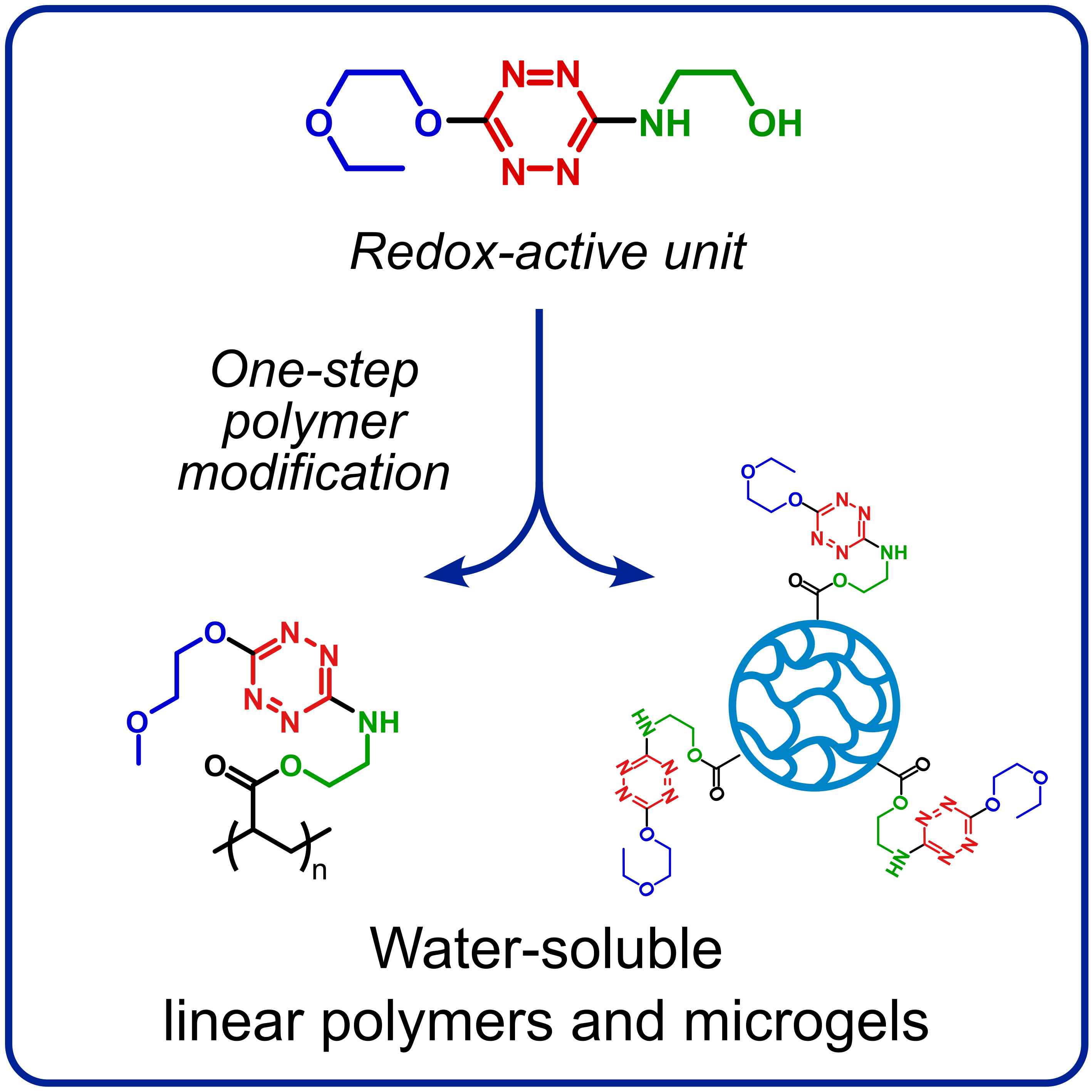
Our first goal was to synthesize the water-soluble form of the s-tetrazine molecule and equip it with the functional group responsible for the incorporation in the polymer chain (Scheme 1).
Tetrazines containing the leaving groups in 3,6 positions are prone to nucleophilic aromatic substitution which provides a convenient route to their structural modification [42]. Easily available 3,6-dipyrazolyltetrazine 1 was used as the starting compound (Scheme 2). The presence of two leaving groups was required for the stepwise functionalization of the tetrazine core with the hydrophilicity enhancing moiety (unsubstituted tetrazines are only very weakly soluble in water) as well as with the other structural motif responsible for the follow-up formation of the redox-active polymer. This synthetic strategy was used for the synthesis of the tetrazine-containing monomers as well as for the grafting of the tetrazine moiety into the already prepared polyme.
The ethylcellosolve and morpholine fragments were chosen as the substituents increasing the hydrophilicity of the tetrazines. The reaction of 1 with ethyl cellosolve was carried out in mild conditions at room temperature in the acetonitrile solution to prevent the substitution of both pyrazole rings. The targeted compound 2 was isolated in 72 % yield. If the reaction is performed using ethyl cellosolve as the solvent, both pyrazole rings were replaced with the ethyl cellosolve fragments (3). The replacement of the pyrazole ring for the morpholine fragment yielded tetrazine 4 in 44 %. Unexpectedly, the morpholine-containing tetrazine 4 turned out to be poorly soluble in water. Consequently, it is not perspective for the microgel formation and further research was performed with the tetrazines modified with the ethyl cellosolve group.
There are two possible ways for the incorporation of the tetrazine fragments into the polymer chain: (1) formation of the tetrazine-containing monomer capable of further (co)polymerization; (2) synthesis of the functionalized low molecular weight tetrazine suitable for grafting on the pre-prepared polymer (preferably, by easy click-chemistry-like reaction).
Scheme 2.
Synthesis of the tetrazine derivatives.
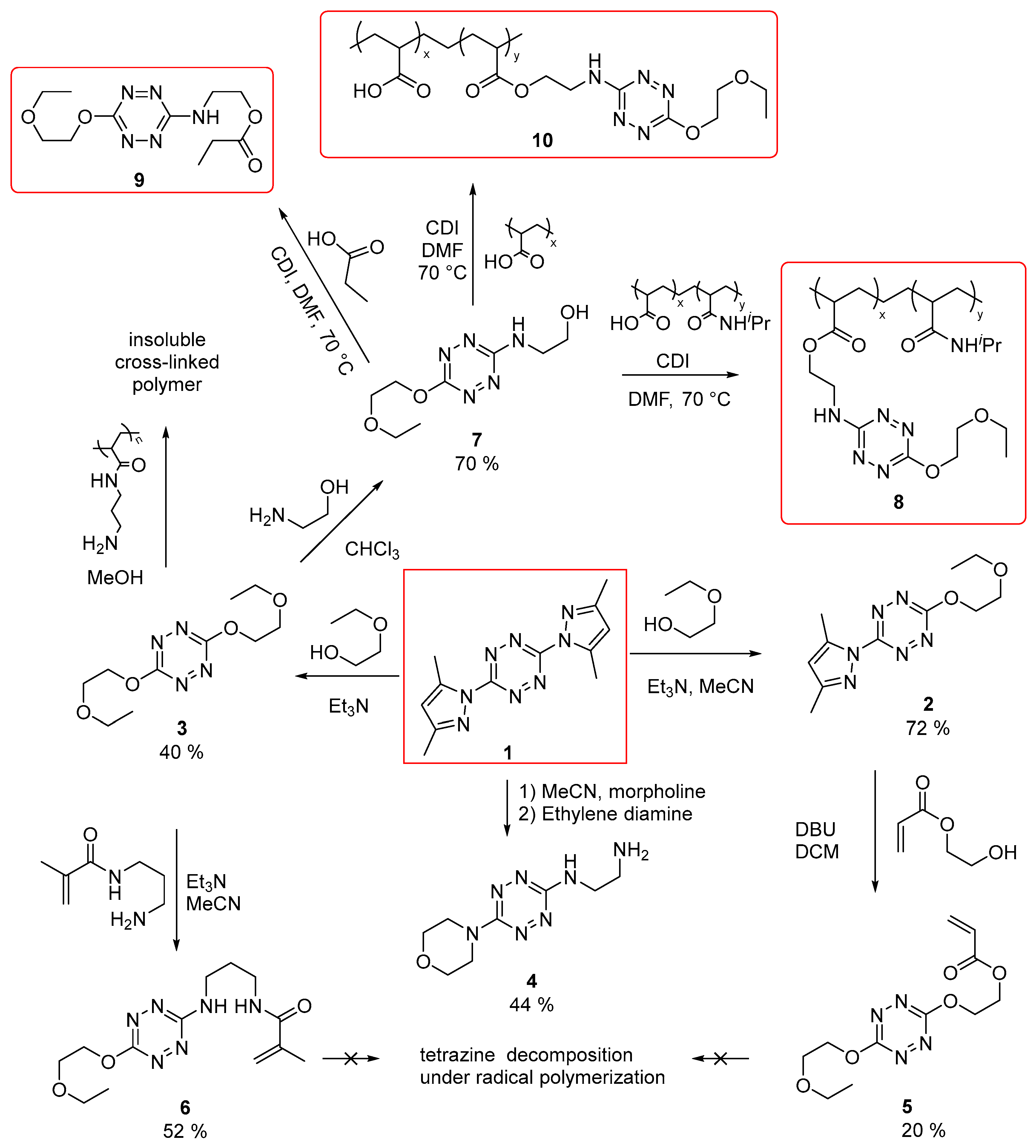
Within the first approach, compounds 2 and 3 were used for the synthesis of the acrylate-containing monomers 5 and 6. The reaction of 2 with 2-hydroxyethyl acrylate gave the targeted mono-acrylate derivative in a low yield (20 %) due to the competing replacement of both leaving groups for the 2-hydroxyethyl acrylate. Additionally, a significant amount of tetrazine 3 containing two ethyl cellosolve groups was also present in the reaction mixture decreasing the yield of the targeted derivative 5. It was shown that the nucleophilic substitution in tetrazines is a dynamic and reversible process: the presence of two different leaving groups and an external nucleophile may yield a complicated mixture of the products [43]. The exchange would be selective only if one of the reagents is a much better leaving group. Meanwhile, that was not the case for the combination of pyrazole and ethyl cellosolve groups. Additionally, the leaving group abilities of the ethyl cellosolve and 2-hydroxyethyl acrylate fragments are also similar, yielding the inseparable mixture with a low content of the targeted monomer 5.
To overcome the problem, an alternative approach to the insertion of the polymerizable acrylate fragment was also tested, taking 3 as the starting compound. The nucleophilicity of N-3-aminopropyl methacrylamide is higher and it forms a poor leaving group as compared to 2-hydroxyethyl acrylate. The reaction with the methacrylamide derivative was successfully performed in mild conditions: the targeted tetrazine 6 with a polymerizable acrylate group was isolated in a practical 52 % yield.
An alternative route to the tetrazine-containing polymers was also tested, based on the insertion of the redox-active moiety in the already prepared polymer chain. The reaction of 3 with the poly(acrylamide) containing 3-aminopropyl pendant groups gave a cross-linked polymer soluble neither in water nor in organic solvents. More likely, the substitution of both ethyl cellosolve groups takes place. To overcome the problem, 3 was converted to derivative 7 (70%) with the N-containing poor leaving group. Thus, modified s-tetrazine 7 was used as a redox-active unit to be further grafted to the carboxylic groups of the chosen polymers. For the comparison, the model low-weight tetrazine derivative 9 was also prepared. All new tetrazine derivatives 2-7 and 9 were completely characterized using HRMS and NMR spectroscopy (Figures S1-S18 in SI). The 13C NMR spectra of all compounds contain the signals in the 160–166 ppm range inherent to the tetrazine carbon atoms [44] (see SI for the details).
2. Preparation and characterization of the water-soluble polymers decorated with tetrazine groups.
Polymerization of the tetrazine monomers
The acrylate-containing monomers 5 and 6 were subjected to the free-radical copolymerization with the N-isopropylacrylamide monomers (see Experimental section for the details) to synthesize small cross-linked polymer particles, the microgels [45]. To our disappointment, the characteristic orange color indicating the presence of the tetrazine fragment has completely disappeared during the synthesis, indicating its destruction. The control experiments with monomer 7 showed that the characteristic absorption band at 417 nm inherent to the tetrazine unit completely disappears after half an hour heating (80 ºC) in the presence of the polymerization initiator (K2S2O8), see Figure S20 in SI. A plausible mechanism of decomposition may involve the addition of the sulphate radicals to the tetrazine units. Thus, the commonly used protocol for the radical polymerization [46] turned out to be inapplicable in our case. Moreover, it seems that any type of radical polymerization (including polymerization in bulk under vacuum or the use of controlled polymerization methods) will lead to the decomposition of the tetrazine fragments due to the presence of active radicals. Thus, we had to abandon this strategy of the tetrazine-containing polymer preparation and concentrated on the grafting approach.
Water soluble linear PAA with the s-tetrazine pending groups (10)
The modification of a polymer with pendant carboxylic groups using the tetrazine-containing alcohol 7 can be performed via the esterification process. First, the experimental procedure was optimized using propionic acid as a model. Activation of the carboxy groups with carbonyldiimidazole (CDI) [47] was performed. However, the follow-up reaction with tetrazine-containing alcohol 7 in the presence of a strong base (1,8-diazabicyclo(5.4.0)undec-7-ene, DBU) resulted in the partial decomposition of the tetrazine moiety. Since the preliminary experiments showed that tetrazine moiety did not withstand the presence of a base, it was excluded, whereas the reaction temperature was increased (from 50 to 70 °C) as well as the reaction time. Thus, the optimized procedure was applied to the modification of the polymers.
In the first experiment, the s-tetrazine pending groups from 7 were used for the decoration of the linear polymer containing carboxylic groups, i.e., the polyacrylic acid (PAA) with Mw = 12500. The resulting solution was thoroughly purified by dialysis and filtering, to remove the residual chemicals. The aqueous solution of the tetrazine-modified PAA (PAA-TZ) 10 turned out to be transparent; its bright orange color was typical for the tetrazine groups (See Figure 1a).
Dynamic light scattering (DLS) investigation was performed to study the behavior of the polymer before and after modification in both acidic and basic conditions. PAA is known to be a pH-sensitive polymer, the degree of its monomer ionization, and, consequently, the size of a polymer coil, is dependent on the solution pH with pKa=4.25 [48]. Table 1 summarizes the results; the size distributions were very narrow in all cases (Figure S21 in SI). It is clearly seen that the modified polymer 10 possesses a much bigger hydrodynamic radius Rh compared to the starting one, both below and above pKa of acrylic acid. That may be due to either the substantial increase of its effective hydrodynamic radius (as a result of the attachment of many bulky TZ pending groups forming the “brush-like” structure) or the partial aggregation of the chains into stable nanosized aggregates. PAA-TZ did not precipitate in an aqueous medium, the solution remained homogeneous for several weeks.
Hydrophilic s-tetrazine-modified poly(N-isopropylacrylamide-co-acrylic acid) microgel (8)
The cross-linked polymer particles, namely poly(N-isopropylacrylamide-co-acrylic acid) microgels (MG), with Mw = 1.7 × 10⁹ Da molecular weight, 27 mol% of AA [40] and hydrodynamic radius Rh equal to 350 nm at pH 6.5 and T = 23 °C (Table 1) were also tested as the possible s-tetrazine carriers. The initial microgel particles can be easily prepared via the one-step synthesis using free-radical precipitation polymerization; these microgels are known to form stable dispersions in aqueous conditions [49].

Table 1.
The hydrodynamic radii (Rh) and the radii of gyration (Rg) of PAA, PAA-TZ 10, the MG-TZ and MG in water at different pH and temperatures.
Table 1.
The hydrodynamic radii (Rh) and the radii of gyration (Rg) of PAA, PAA-TZ 10, the MG-TZ and MG in water at different pH and temperatures.
| Code | pH | T = 23 °C | T = 50 °C | ||||
| Rh, nm | Rg, nm | Rg/Rh | Rh, nm | Rg, nm | Rg/Rh | ||
| PAA | 2.4 | 4 ± 1 | – | – | 3 ± 1 | – | – |
| 6.5 | 7 ± 1 | – | – | 7 ± 1 | – | – | |
| 9.1 | 8 ± 1 | – | – | 7 ± 1 | – | – | |
| PAA-TZ | 2.4 | 13 ± 2 | – | – | 12 ± 2 | – | – |
| 6.5 | 34 ± 3 | – | – | 34 ± 3 | – | – | |
| 9.1 | 35 ± 3 | – | – | 36 ± 3 | – | – | |
| MG | 2.4 | 159 ± 2 | 98 ± 2 | 0.62 ± 0.02 | –* | –* | –* |
| 6.5 | 356 ± 7 | 140 ± 5 | 0.39 ± 0.02 | 286 ± 7 | 163 ± 8 | 0.57 ± 0.03 | |
| 9.1 | 388 ± 5 | 145 ± 7 | 0.37 ± 0.02 | 341 ± 5 | 140 ± 8 | 0.41 ± 0.02 | |
| MG-TZ | 2.4 | 206 ± 8* | –* | –* | –* | –* | –* |
| 6.5 | 120 ± 5 | 105 ± 9 | 0.87 ± 0.02 | 122 ± 6 | 109 ± 11 | 0.89 ± 0.02 | |
| 9.1 | 118 ± 5 | 107 ± 10 | 0.90 ± 0.02 | 119 ± 5 | 107 ± 10 | 0.89 ± 0.02 | |
*Precipitation appears in equilibrium conditions.
The microgels with grafted tetrazine groups (MG-TZ) retained the ability to form dispersions in water without aggregation and precipitation in a wide range of conditions, producing a semi-opaque liquid with a typical tetrazine orange hue. The dispersion image and the AFM image of the dried MG-TZ are presented in Figure 1c. The distinct spherical monodisperse microgel particles are clearly seen in the AFM microphotograph.
In detail, the properties of MG-TZ dispersions were analyzed using dynamic and static light scattering methods (DLS/SLS). We found that MG-TZ typically appears to be spheres with Rh ~120 nm in water, indicating that the grafting process did not lead to the inter-crosslinking of the gel particles (Table 1). The significant reduction of the size of the MG-TZ compared to the initial microgel size can be attributed to the reduction of the number of carboxylic groups during the modification process. The shape factor of the MG-TZ particles (Rg/Rh value where Rg is the radius of gyration) is inherent to the collapsed microgels, corresponding to a homogeneous sphere shape factor. It was found that the MG-TZ aqueous dispersions are stable in a wide pH range (from ~4.5 to 10) at all the temperatures measured (See Figure S22 in SI). At low pH, the microgels form aggregates and gradually precipitate with time; the effect is promoted with the temperature increase. Here it should be noted that the initial microgels are endowed by both thermo- and pH-sensitivity due to the nature of the comprising polymers [50,51].
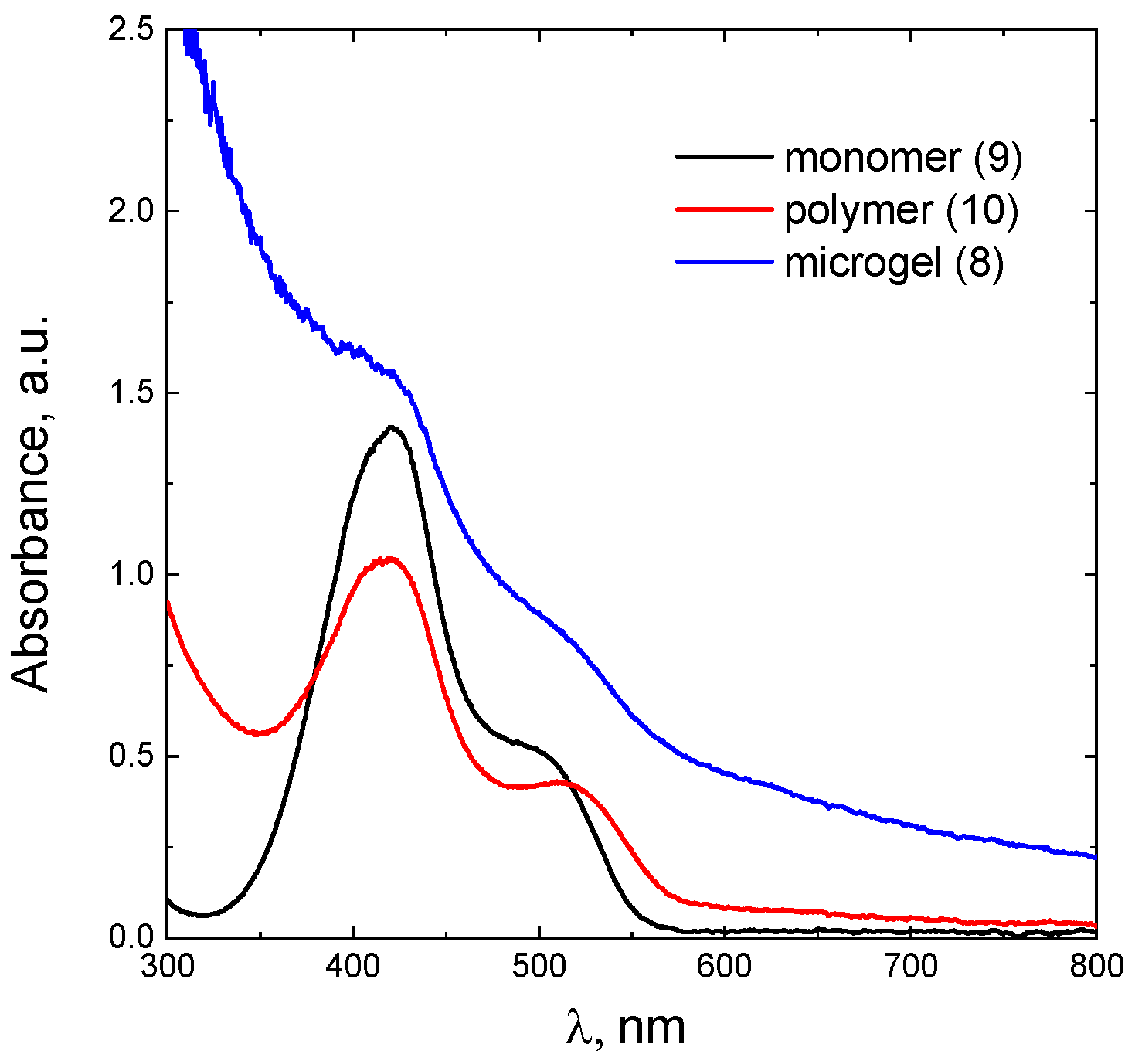
To confirm that the tetrazine units were successfully grafted into the polymer matrix, a comparative study of the electronic spectra of the low-weight derivative 9 as well as polymers 8 and 10 was performed. As follows from Figure 2, the characteristic absorbance at 417 and 503 nm typical for the tetrazine moiety[52] was observed for 8-10 in aqueous solution. That signifies that the process of the Tz-groups attachment to both the linear polymer chain and the cross-linked microgel species proceeded successfully. In the case of microgel 8 and polymer 10, the tetrazine’s absorbance is superimposed to the smooth downward curve corresponding to the light scattering. This was taken into account as background and the absorption at 417 nm was determined. Assuming that the molar absorption of the tetrazine group is not affected by the binding to the polymer, the molar absorption for tetrazine 7 (see Figure S19) was used to determine the concentration of the tetrazine fragments in the modified polymers 8 and 10 and the degree of modification. It was shown that 10 and 3 % of the monomer units were modified with the tetrazine moiety in 10 and 8, respectively. The lower grafting in the microgel is a consequence of higher sterical blocking of the carboxylic groups. It should be additionally emphasized that the samples were extensively purified by dialysis and filtration prior to all experiments assuming the absence non-bonded to polymer tetrazines.
The polymer and microgel compounds under study swell in water at room temperature without precipitation since it is good solvent for them. The viscosity of the polymer (or polymer microgel) solution increases with the concentration increase due to the formation of the entanglements between polymer chains. In case of our species, the apparent viscosity increases sharply at concentrations above 3 wt %, which means that it passes from diluted to semi-diluted mode [53,54]. Tetrazine 7 is hygroscopic, it dissolves in very small quantities of water. Since in redox flow batteries the reagents are pumped through the electrochemical cell, meaning they should not be too viscous, this concentration value can be taken as a solubility threshold.
3. Electrochemical properties of the water-soluble tetrazine derivatives
Redox-activity of the low-weight tetrazines in aqueous solution
To test the suitability of new water-soluble tetrazine derivatives as the redox active pendant groups in polymers, with a further focus on use in energy conversion and storage area, their voltammetric behavior was investigated. Noteworthy, electrochemical properties of s-tetrazines in organic solvents have been widely explored (see, e.g., refs. in the review [52]). Thus, a reversible one-electron reduction at around –1.25 – –1.55 V vs. Fc+/Fc can be observed for the tetrazines substituted with the NR2 and OR groups that are structurally similar to the derivatives described herein[52]. In contrast, the data on the tetrazines behavior in aqueous solutions are scarce, due to a limited solubility of the pristine s-tetrazine in water [22]. It was shown that the tetrazine fragment undergoes a two-electron two-proton one-step redox process at a potential of around –0.2 V vs. Ag/AgCl/KClsat. at pH 7 in an aqueous solution [22] (Scheme 3).
For energy conversion systems, two key points are important, i.e., the reversibility of the process and the electrochemical reaction rate. As follows from Scheme 3, the tetrazine reduction is coupled with the protonation. Thus, the buffering properties of the solution are important to accelerate the electrochemical reaction and to provide reversibility of the redox process. The voltammetric curves measured for tetrazines 3, 6, and 7 are given in Figure 3a,b. One can see that the reduction is quasi reversible (the peak currents ratio is close to unity), but the direct-reverse peak separation exceeds 160 mV even in the acetate buffer. The comparison of 3-7 and 3-6 couples showed that the electron donating and bulky substituents slow down the electrochemical reaction. In contrast, an increase in the acidity of the medium (from pH 4.4 to 3.5) slightly increased the electrochemical reaction rate (Figure 3c).
The potential values measured for tetrazines 3, 6, 7, and 9 at a Pt electrode in an acetate buffer solution are given in Table 2. Varying the substituents in 3 and 6 positions allows tuning of the potential values as well as increasing the rate of the redox process.
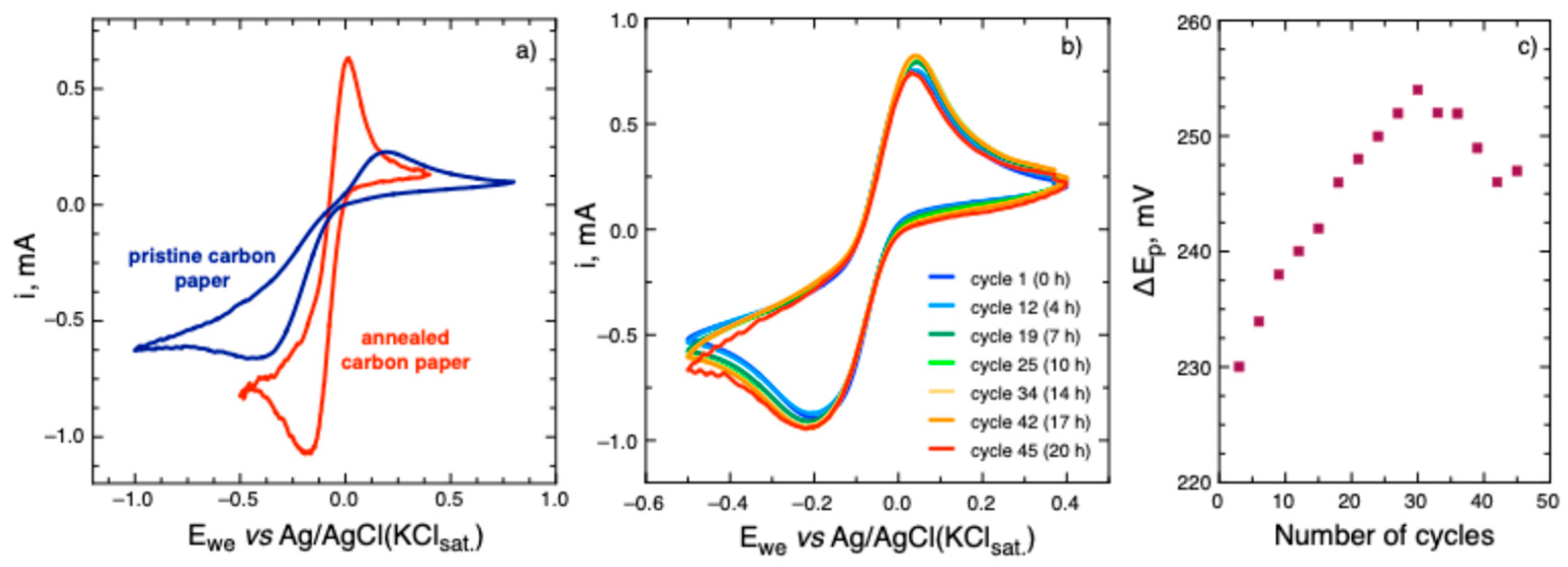
Electron transfer (ET) kinetics is known to be influenced by the working electrode material. In search of a way to improve the ET kinetics of terazines reduction, various electrode materials were tested. Application of glassy carbon electrode taking tetrazine 7 as a model did not improve the situation (Figure S24): relatively slow kinetics (peak-to-peak separation ~400 mV) was observed. Afterwards, carbon paper electrode (Toray TGP-H-90), one of the common electrodes for flow cell studies [55,56] was tested. As it has been previously shown, carbon electrodes preliminary annealed in air demonstrated enhanced performance [57,58] in a flow cell; therefore, cyclic voltammetry responses of tetrazine 7 on pristine and annealed (400 °C, 30 h) carbon paper were compared (Figure 4a). Slow scan rate (5 mV/s) was used to reduce the capacitive currents due to the high surface area of the electrode.
Indeed, reaction kinetics and reversibility of tetrazine 7 reduction was significantly enhanced (Figure 4a) as compared to the results obtained at the pristine electrode. Tetrazine 7 at the pristine electrode demonstrates higher peak-to-peak separation, i.e. slower reaction rate and lower reversibility. The possible reason can be a higher amount of oxygen groups formed on the carbon paper surface upon annealing in air. They may enhance the electrode process by participating in protonation steps involved in the tetrazine reduction reaction.
The long-term cycling of tetrazine 7 on the annealed carbon paper electrode was also performed. Groups of three consecutive cycles, each group followed by an OCP period of 1 hour, were measured for 20 hours. It can be seen that tetrazine 7 demonstrates decent cycling stability (Figure 4b). The peak-to-peak separation increases during first 30 cycles and then there is a stabilization (and even reduction) of ΔEp (Figure 4c). The change in peak-to-peak separation may be attributed to slow changing in the surface conditions of carbon paper upon cycling in acetate buffer solution.
Thus, the proper selection of the working electrode material allows the significant improvement of the new tetrazines reduction kinetics. Though their application in fast-operating systems such as electrochemical capacitors is still under question, these compounds may be considered of the potential interest as possible anolyte reagents for RFBs.
Table 2.
The peak potentials, peak separation, and half-wave potentials of tetrazines 3, 6, 7, and 9 vs. Ag/AgCl/KClsat. in a 0.2 M acetate buffer solution pH 4.4 at a Pt electrode at a scan rate of 25 mV/s.
Table 2.
The peak potentials, peak separation, and half-wave potentials of tetrazines 3, 6, 7, and 9 vs. Ag/AgCl/KClsat. in a 0.2 M acetate buffer solution pH 4.4 at a Pt electrode at a scan rate of 25 mV/s.
| № | Structure | Ep,c, V | Ep,a, V | (Ep,a – Ep,c), V | (Ep,c + Ep,a)/2 , V |
| 3 | 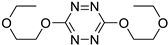 |
–0.131 | 0.034 | 0.165 | –0.049 |
| 7 | 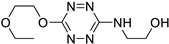 |
–0.270 | 0.103 | 0.373 | –0.084 |
| 6 | 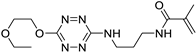 |
–0.261 | 0.066 | 0.327 | –0.098 |
| 9 | 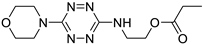 |
–0.222 | 0.062 | 0.284 | –0.080 |
Figure 4.
(a) Cyclic voltammograms of 7 at the pristine and annealed carbon paper electrodes in the 0.2 M acetate buffer solution at pH 4.4 (5 mV/s scan rate); (b) Cyclic voltammograms of 7 in a 0.2 M acetic buffer solution at pH 4.4 at annealed carbon paper electrode at a potential scan rate of 5 mV/s recorded over time period of 20 hours; (c) the evolution of cathodic peak current with time during repetitive cycling of tetrazine 7 on the annealed carbon paper electrode.
Figure 4.
(a) Cyclic voltammograms of 7 at the pristine and annealed carbon paper electrodes in the 0.2 M acetate buffer solution at pH 4.4 (5 mV/s scan rate); (b) Cyclic voltammograms of 7 in a 0.2 M acetic buffer solution at pH 4.4 at annealed carbon paper electrode at a potential scan rate of 5 mV/s recorded over time period of 20 hours; (c) the evolution of cathodic peak current with time during repetitive cycling of tetrazine 7 on the annealed carbon paper electrode.
Electrochemical characterization of the tetrazine-containing polymers and microgels
To estimate the suitability of polymers 8 and 10 for energy storage applications, their redox activity in aqueous solution was studied using cyclic voltammetry. The voltammetry curves measured for the linear polymer 10 and for its low-weight analog 9 on glassy carbon electrode are given in Figure 5. One can see that the direct and reverse peak potential values for 9 and 10 coincide well. The direct-reverse peak separation is rather significant in both cases; this indicates that the electrochemical reaction is relatively slow. However, the voltammograms measured for polymer 10 at the annealed carbon paper electrode demonstrated good reversibility (Figure 6a) and much lower peak separation (∼140 mV), similar to what have been observed in the case of tetrazine 7.
During the long-term cycling (cyclic voltammograms were recorded by groups of three cycles, each group followed by OCP period of 1 hour) a steady increase of peak-to-peak separation (Figure 6b) was observed up to 100 cycles, and after that there is stabilization at ∼200 mV, i.e. polymer 10 demonstrated quite slow but relatively stable reaction kinetics.
Figure 6.
(a) Cyclic voltammograms of polymer 10 in 0.1 M acetic buffer solution at pH 4.4 at annealed carbon paper electrode at scan rate of 25 mV/s, recorded over time period of 60 hours; (b) the evolution of cathodic peak current with time during repetitive cycling of of polymer 10 on the annealed carbon paper electrode. (c) 1st (blue) and 51st (red) cyclic voltammogram recorded on the annealed carbon paper electrode, and cyclic voltammogram (green) of a fresh carbon paper electrode in the same polymer 10 solution after long-term cycling. Grey curve represents background voltammogram.
Figure 6.
(a) Cyclic voltammograms of polymer 10 in 0.1 M acetic buffer solution at pH 4.4 at annealed carbon paper electrode at scan rate of 25 mV/s, recorded over time period of 60 hours; (b) the evolution of cathodic peak current with time during repetitive cycling of of polymer 10 on the annealed carbon paper electrode. (c) 1st (blue) and 51st (red) cyclic voltammogram recorded on the annealed carbon paper electrode, and cyclic voltammogram (green) of a fresh carbon paper electrode in the same polymer 10 solution after long-term cycling. Grey curve represents background voltammogram.
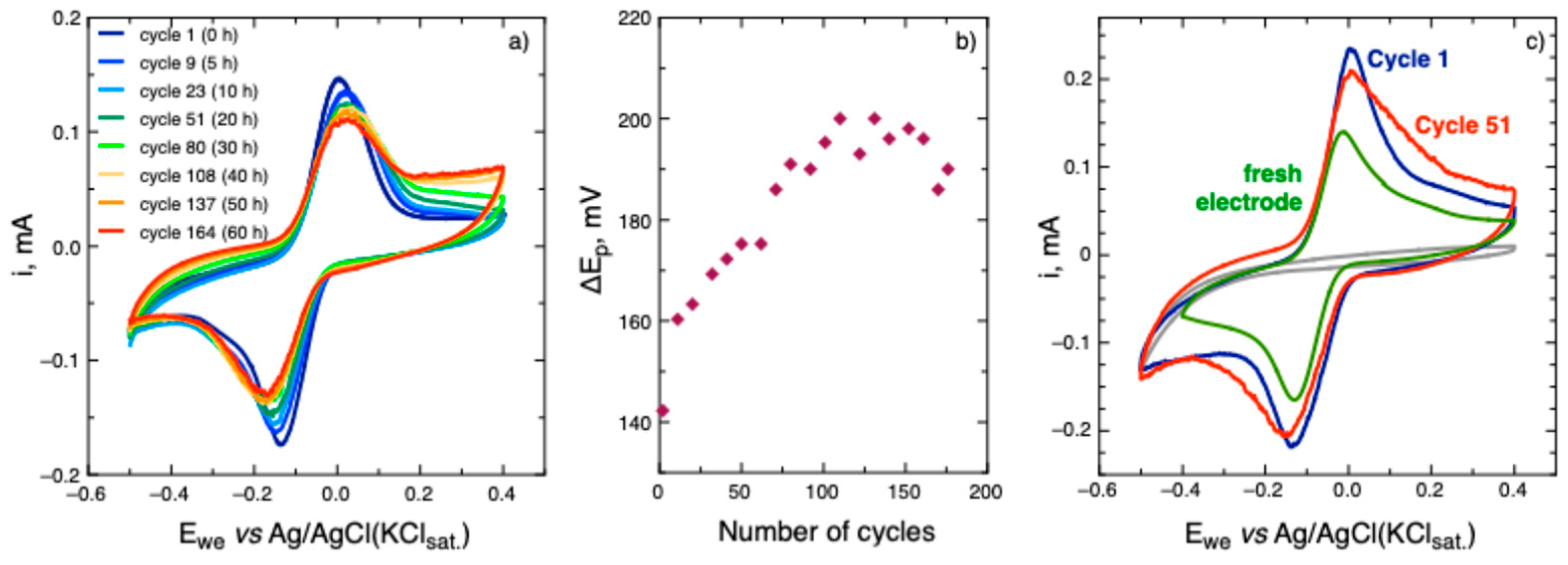
To determine whether the increase of peak-to-peak separation is caused by surface changes of the carbon paper electrode or degradation of the polymer solution, the carbon paper electrode was removed from the cell after long-term cycling and replaced with a fresh electrode. We observed that peak-to-peak separation on the fresh electrode returned to its initial value (Figure 6c). Thus its increase is attributed to the change in carbon paper surface conditions rather than degradation of the polymer solution. The reduction currents observed in the background voltammogram (Figure 6c) at the potentials less than –0.3 V vs Ag/AgCl may correspond to the electrochemical reduction of oxygen-containing functional groups on the carbon electrode surface; that may affect the reaction kinetics.
Apparent self-diffusion coefficients D for the tetrazine-modified polymers and microgels were evaluated using dynamic light method (see Materials and Methods section for the details). They were found to be equal to 6.7∙10-8 cm2/s for PAA-TZ and 1.8∙10-8 cm2/s for MG-TZ in water at pH 6.5, which is typical for such systems [35]. Determination of the ET rate constant is challenging since electrochemical reduction of tetrazines is a ECEC process including consecutive electrochemical (E) and chemical (C) steps [22]. The classical Nicolson method [59] is not applicable in this case. Theoretically, the desired value could be obtained by computational modeling of CV series at different potential sweep rates. However, this is a complicated task since many independent parameters (two electron transfer constants, two reduction potentials, rates and equilibrium constants for two chemical steps, diffusion coefficient) must be fitted.
The slow protonation step might be a possible reason why we were unable to detect the redox activity of the microgel 8 on glassy carbon electrode, despite that it contains tetrazine fragments, as confirmed by UV-Vis data. However, we were able to observe the electrochemical response of microgel 8 on the annealed carbon paper electrode (Figure 7). The voltammograms demonstrate prominent adsorption peak of reduced tetrazine fragments, which gradually decreases upon long-term cycling. Similar to the case of tetrazine-grafted linear polymers, it is probably caused by reduction of oxygen-containing groups on carbon electrode surface.
Slow in itself, the electrochemical reaction in microgels becomes even more impeded. The “network mesh structure” and relatively large size of the cross-linked microgel impedes penetration of the protons required for the reduction. Based on these experimental results, we can speculate that the use of relatively small branched star polymers [60], or hyperbranched polymers[61] could be more effective carriers for these redox-active species, both from the point of the ET kinetics and the choice of separator membrane for the RFB cell. This study is in progress now. At present, the tetrazine-modified polymer 10 with well-pronounced redox activity may be considered as the first step towards fabrication of a novel type of water-soluble anodic materials.
Theoretical capacity of the presented species can be estimated as 234 mAh·g–1 for low molecular weight tetrazine 7 and as 58 mAh·g–1 for the linear polymer compound and 173 mAh·L–1 for its aqueous solution, taking into account the solubility and viscosity increase. However, there is still room for improvement, as only a small number of carboxylic groups have been modified with tetrazine units.
It would be interesting to compare new tetrazine derivatives with the previously reported electrolyte materials. Noteworthy, the number of water-soluble organic molecules suitable for the performance as anodic active materials is still rather limited (see reviews [12,13,62] ). The mostly investigated species are antraquinones. Anthraquinone-2-sulfonic acid demonstrates one-electron redox process at E0 = –0.07 vs. AgCl/Ag [63]); reduction of 3,4-dihydroxy-9,10-anthraquinone-2-sulfonic acid is a two-electron process with E0 = –0.12 V vs. AgCl/Ag [64]. Thus, the reduction potentials for antraquinones and tetrazines are similar whereas, as concerns water solubility, the tetrazines have advantages over antraquinones. Methyl viologen derivatives can be considered as the other popular candidate for redox-active anodic material. They have higher water solubility as compared to tetrazines and show more cathodic reduction potential [65]. Unfortunately, they are toxic to human beings and animals and are banned in many countries. Their redox activity produces superoxide anions which are linked to the development of Parkinson's disease [66]. Also, naphthalene diimides demonstrate promising negolyte qualities, but yet as low molecular weight compounds [67]. Thus, the search for the optimal water-soluble anodic material is still a challenge, and tetrazine derivatives may be considered as perspective ones.
Conclusion
In conclusion, a variety of water-soluble tetrazine derivatives were obtained and fully characterized. These derivatives were equipped with both substituents for solubility and functional groups for anchoring the tetrazine unit to the polymer backbone. A convenient method for grafting the tetrazine moiety onto polymers with pendant carboxylic groups was also developed.
The first examples of water-soluble polymers with various architectures, including linear and cross-linked nanogels, modified with tetrazine units, were obtained and characterized using UV-Vis spectroscopy, voltammetry, and dynamic light scattering techniques.
The redox activity of the new low-molecular-weight tetrazines in water is associated with a one-step, two-electron reduction process coupled with the transfer of two protons. These compounds demonstrated chemical reversibility in an aqueous solution containing acetate buffer, with a reduction potential that can be adjusted by substituents in the tetrazine core, ranging from –0.1 to –0.05 V vs. AgCl/Ag. We have also demonstrated that the choice of electrode material is crucial for the reaction kinetics of tetrazines. Notably, annealing the carbon electrode appeared to be the most beneficial, likely due to the formation of oxygen groups on the surface that enhance the reaction kinetics facilitating the protonation steps in the tetrazine reduction process.
Importantly, the linear polyacrylic acid and microgels with tetrazine pendant groups exhibited well-pronounced redox activity. This is a significant result, given the limited availability of water-soluble polymeric anodic materials. The cathodic process in the polymer is chemically reversible, but the electrochemical reaction is relatively slow. Therefore, the proper selection of the working electrode material is important. Thus, for the tetrazine-grafted microgels, the prominent redox activity was observed on the annealed carbon paper electrode, whereas no observable electrochemical activity for the tetrazine-modified microgel on a glassy carbon electrode was detected. It is more likely attributed to the drastic impediment of the protonation step, which is essential for the electrochemical activity of the tetrazine moiety in an aqueous solution. In contrast, the oxygen groups which are present on the carbon paper surface after annealing in air may enhance the electrode process by participating in protonation steps involved in the tetrazine reduction reaction.
To summarize, the reported new water-soluble tetrazine derivatives, both low-molecular-weight and polymer variants, expand the scope of anodic materials available for aqueous organic redox flow batteries.
Supplementary Materials
The following supporting information can be downloaded at the website of this paper posted on Preprints.org.
Acknowledgments
This research was funded by Russian Science Foundation (grant no. 22-13-00115).
References
- A.E. Lakraychi, A. Vlad, Organic Batteries-the route towards sustainable electrical energy storage technologies Organic Batteries-the route towards sustainable electrical energy storage technologies, in: 2018. https://api.semanticscholar.org/CorpusID:221705038.
- Vaid, T.P.; Easton, M.E.; Rogers, R.D. Polythianthrene ladder oligomers function as an organic battery electrode with a high oxidation potential. Synth. Met. 2017, 231, 44–50. [Google Scholar] [CrossRef]
- Zhao, H.; Wang, J.; Zheng, Y.; Li, J.; Han, X.; He, G.; Du, Y. Organic Thiocarboxylate Electrodes for a Room-Temperature Sodium-Ion Battery Delivering an Ultrahigh Capacity. Angew. Chem. Int. Ed. Engl. 2017, 56, 15334–15338. [Google Scholar] [CrossRef]
- Wild, A.; Strumpf, M.; Häupler, B.; Hager, M.D.; Schubert, U.S. All-Organic Battery Composed of Thianthrene- and TCAQ-Based Polymers. Adv. Energy Mater. 2016, 7, 1601415. [Google Scholar] [CrossRef]
- Mauger, A.; Julien, C.; Paolella, A.; Armand, M.; Zaghib, K. Recent Progress on Organic Electrodes Materials for Rechargeable Batteries and Supercapacitors. Materials 2019, 12, 1770. [Google Scholar] [CrossRef] [PubMed]
- Friebe, C.; Lex-Balducci, A.; Schubert, U.S. Sustainable Energy Storage: Recent Trends and Developments toward Fully Organic Batteries. ChemSusChem 2019, 12, 4093–4115. [Google Scholar] [CrossRef]
- C. Friebe, U.S. Schubert, High-Power-Density Organic Radical Batteries, in: Electrochem. Energy Storage, 2019: pp. 65–99. [CrossRef]
- Hatakeyama-Sato, K.; Oyaizu, K. Redox: Organic Robust Radicals and Their Polymers for Energy Conversion/Storage Devices. Chem. Rev. 2023, 123, 11336–11391. [Google Scholar] [CrossRef] [PubMed]
- He, X.; Chen, L.; Baumgartner, T. Modified Viologen- and Carbonylpyridinium-Based Electrodes for Organic Batteries. ACS Appl. Mater. Interfaces 2023, 16, 48689–48705. [Google Scholar] [CrossRef] [PubMed]
- Wei, X.; Pan, W.; Duan, W.; Hollas, A.; Yang, Z.; Li, B.; Nie, Z.; Liu, J.; Reed, D.; Wang, W.; et al. Materials and Systems for Organic Redox Flow Batteries: Status and Challenges. ACS Energy Lett. 2017, 2, 2187–2204. [Google Scholar] [CrossRef]
- Gentil, S.; Reynard, D.; Girault, H.H. Aqueous organic and redox-mediated redox flow batteries: a review. Curr. Opin. Electrochem. 2020, 21, 7–13. [Google Scholar] [CrossRef]
- Winsberg, J.; Hagemann, T.; Janoschka, T.; Hager, M.D.; Schubert, U.S. Redox-Flow Batteries: From Metals to Organic Redox-Active Materials. Angew. Chem. Int. Ed. Engl. 2016, 56, 686–711. [Google Scholar] [CrossRef]
- Lai, Y.Y.; Li, X.; Zhu, Y. Polymeric Active Materials for Redox Flow Battery Application. ACS Appl. Polym. Mater. 2020, 2, 113–128. [Google Scholar] [CrossRef]
- K. Oyaizu, H. Nishide, Polyradicals in Batteries, in: Encycl. Radicals Chem. Biol. Mater., Wiley, 2012. [CrossRef]
- K. Oyaizu, H. Nishide, Redox-Active Polymers as an Organic Energy Storage Material, in: Conjug. Polym., 4th ed., CRC Press, 2019: pp. 587–594. [CrossRef]
- Yan, W.; Wang, C.; Tian, J.; Zhu, G.; Ma, L.; Wang, Y.; Chen, R.; Hu, Y.; Wang, L.; Chen, T.; et al. All-polymer particulate slurry batteries. Nat. Commun. 2019, 10, 1–11. [Google Scholar] [CrossRef]
- Goujon, N.; Casado, N.; Patil, N.; Marcilla, R.; Mecerreyes, D. Organic batteries based on just redox polymers. Prog. Polym. Sci. 2021, 122, 101449. [Google Scholar] [CrossRef]
- Borchers, P.S.; Elbert, J.; Anufriev, I.; Strumpf, M.; Nischang, I.; Hager, M.D.; Schubert, U.S. A Viologen Polymer and a Compact Ferrocene: Comparison of Solution Viscosities and Their Performance in a Redox Flow Battery with a Size Exclusion Membrane. Macromol. Chem. Phys. 2021, 223, 2100373. [Google Scholar] [CrossRef]
- Montoto, E.C.; Nagarjuna, G.; Moore, J.S.; Rodríguez-López, J. Redox Active Polymers for Non-Aqueous Redox Flow Batteries: Validation of the Size-Exclusion Approach. J. Electrochem. Soc. 2017, 164, A1688–A1694. [Google Scholar] [CrossRef]
- Janoschka, T.; Martin, N.; Martin, U.; Friebe, C.; Morgenstern, S.; Hiller, H.; Hager, M.D.; Schubert, U.S. An aqueous, polymer-based redox-flow battery using non-corrosive, safe, and low-cost materials. Nature 2015, 527, 78–81. [Google Scholar] [CrossRef]
- Machado, C.A.; Brown, G.O.; Yang, R.; Hopkins, T.E.; Pribyl, J.G.; Epps, T.H. Redox Flow Battery Membranes: Improving Battery Performance by Leveraging Structure–Property Relationships. ACS Energy Lett. 2020, 6, 158–176. [Google Scholar] [CrossRef]
- Fritea, L.; Audebert, P.; Galmiche, L.; Gorgy, K.; Le Goff, A.; Villalonga, R.; Săndulescu, R.; Cosnier, S. First Occurrence of Tetrazines in Aqueous Solution: Electrochemistry and Fluorescence. Chemphyschem 2015, 16, 3695–3699. [Google Scholar] [CrossRef]
- Min, D.J.; Lee, K.; Park, H.; Kwon, J.E.; Park, S.Y. Redox Potential Tuning of s-Tetrazine by Substitution of Electron-Withdrawing/Donating Groups for Organic Electrode Materials. Molecules 2021, 26, 894. [Google Scholar] [CrossRef] [PubMed]
- Min, D.J.; Miomandre, F.; Audebert, P.; Kwon, J.E.; Park, S.Y. s-Tetrazines as a New Electrode-Active Material for Secondary Batteries. ChemSusChem 2018, 12, 503–510. [Google Scholar] [CrossRef]
- De La Garza, G.D.; Kaur, A.P.; Shkrob, I.A.; Robertson, L.A.; Odom, S.A.; McNeil, A.J. Soluble and stable symmetric tetrazines as anolytes in redox flow batteries. J. Mater. Chem. A 2022, 10, 18745–18752. [Google Scholar] [CrossRef]
- Kim, J.; Kim, J.H.; Ariga, K. Redox-Active Polymers for Energy Storage Nanoarchitectonics. 2017, 1, 739–768. [CrossRef]
- N. Casado, D. Mecerreyes, Introduction to Redox Polymers: Classification, Characterization Methods and Main Applications, in: Redox Polym. Energy Nanomedicine, The Royal Society of Chemistry, 2020: pp. 1–26. [CrossRef]
- Nishide, H. Organic redox polymers as electrochemical energy materials. Green Chem. 2022, 24, 4650–4679. [Google Scholar] [CrossRef]
- Ma, T.; Easley, A.D.; Thakur, R.M.; Mohanty, K.T.; Wang, C.; Lutkenhaus, J.L. Nonconjugated Redox-Active Polymers: Electron Transfer Mechanisms, Energy Storage, and Chemical Versatility. Annu. Rev. Chem. Biomol. Eng. 2023, 14, 187–216. [Google Scholar] [CrossRef] [PubMed]
- Plamper, F.A.; Richtering, W. Functional Microgels and Microgel Systems. Accounts Chem. Res. 2017, 50, 131–140. [Google Scholar] [CrossRef] [PubMed]
- Polymeropoulos, G.; Zapsas, G.; Ntetsikas, K.; Bilalis, P.; Gnanou, Y.; Hadjichristidis, N. 50th Anniversary Perspective: Polymers with Complex Architectures. Macromolecules 2017, 50, 1253–1290. [Google Scholar] [CrossRef]
- Jung, S.-H.; Schneider, S.; Plamper, F.; Pich, A. Responsive Supramolecular Microgels with Redox-Triggered Cleavable Crosslinks. Macromolecules 2020, 53, 1043–1053. [Google Scholar] [CrossRef]
- Li, H.; Mergel, O.; Jain, P.; Li, X.; Peng, H.; Rahimi, K.; Singh, S.; Plamper, F.A.; Pich, A. Electroactive and degradable supramolecular microgels. Soft Matter 2019, 15, 8589–8602. [Google Scholar] [CrossRef]
- Kozhunova, E.Y.; Gvozdik, N.A.; Motyakin, M.V.; Vyshivannaya, O.V.; Stevenson, K.J.; Itkis, D.M.; Chertovich, A.V. Redox-Active Aqueous Microgels for Energy Storage Applications. J. Phys. Chem. Lett. 2020, 11, 10561–10565. [Google Scholar] [CrossRef]
- Kozhunova, E.Y.; Inozemtseva, A.I.; Nazarov, M.A.; Nikolenko, A.D.; Zhvanskaya, E.S.; Kiselyova, O.I.; Motyakin, M.V.; Kutyakov, S.V.; Pakhomov, A.A.; Itkis, D.M.; et al. Nanoarchitectonics and electrochemical properties of redox-active nanogels for redox flow battery electrolytes. Electrochimica Acta 2023, 475. [Google Scholar] [CrossRef]
- Montoto, E.C.; Nagarjuna, G.; Hui, J.; Burgess, M.; Sekerak, N.M.; Hernández-Burgos, K.; Wei, T.-S.; Kneer, M.; Grolman, J.; Cheng, K.J.; et al. Redox Active Colloids as Discrete Energy Storage Carriers. J. Am. Chem. Soc. 2016, 138, 13230–13237. [Google Scholar] [CrossRef] [PubMed]
- Chernikova, E.V.; Tarasenko, A.V.; Garina, E.S.; Golubev, V.B. Controlled radical polymerization of styrene mediated by dithiobenzoates as reversible addition-fragmentation chain-transfer agents. Polym. Sci. Ser. A 2006, 48, 1046–1057. [Google Scholar] [CrossRef]
- Chernikova, E.V.; Zaitsev, S.D.; Plutalova, A.V.; Mineeva, K.O.; Zotova, O.S.; Vishnevetsky, D.V. Control over the relative reactivities of monomers in RAFT copolymerization of styrene and acrylic acid. RSC Adv. 2018, 8, 14300–14310. [Google Scholar] [CrossRef] [PubMed]
- Serkhacheva, N.S.; I Prokopov, N.; Chernikova, E.V.; Kozhunova, E.Y.; O Lebedeva, I.; Borisov, O.V. Emulsifier-free reversible addition–fragmentation chain transfer emulsion polymerization of alkyl acrylates mediated by symmetrical trithiocarbonates based on poly(acrylic acid). Polym. Int. 2019, 68, 1303–1314. [Google Scholar] [CrossRef]
- Kusaia, V.S.; Kozhunova, E.Y.; Stepanova, D.A.; Pigareva, V.A.; Sybachin, A.V.; Zezin, S.B.; Bolshakova, A.V.; Shchelkunov, N.M.; Vavaev, E.S.; Lyubin, E.V.; et al. Synthesis of Magneto-Controllable Polymer Nanocarrier Based on Poly(N-isopropylacrylamide-co-acrylic Acid) for Doxorubicin Immobilization. Polymers 2022, 14, 5440. [Google Scholar] [CrossRef]
- Provencher, S.W. CONTIN: A general purpose constrained regularization program for inverting noisy linear algebraic and integral equations. Comput. Phys. Commun. 1982, 27, 229–242. [Google Scholar] [CrossRef]
- Santos, T.; Rivero, D.S.; Pérez-Pérez, Y.; Martín-Encinas, E.; Pasán, J.; Daranas, A.H.; Carrillo, R. Dynamic Nucleophilic Aromatic Substitution of Tetrazines. Angew. Chem. Int. Ed. Engl. 2021, 60, 18783–18791. [Google Scholar] [CrossRef] [PubMed]
- Rivero, D.S.; Paiva-Feener, R.E.; Santos, T.; Martín-Encinas, E.; Carrillo, R. Tetrazine Dynamic Covalent Polymer Networks. Macromolecules 2021, 54, 10428–10434. [Google Scholar] [CrossRef]
- Zhou, Q.; Audebert, P.; Clavier, G.; Miomandre, F.; Tang, J. New unsymmetrical alkyl-s-tetrazines: original syntheses, fluorescence and electrochemical behaviour. RSC Adv. 2014, 4, 7193–7195. [Google Scholar] [CrossRef]
- Komarova, G.A.; Kozhunova, E.Y.; Potemkin, I.I. Behavior of PNIPAM Microgels in Different Organic Solvents. Molecules 2022, 27, 8549. [Google Scholar] [CrossRef] [PubMed]
- Kawaguchi, H. Thermoresponsive microhydrogels: preparation, properties and applications. Polym. Int. 2013, 63, 925–932. [Google Scholar] [CrossRef]
- A. Armstrong, W. Li, N,N ′-Carbonyldiimidazole, in: Encycl. Reagents Org. Synth., John Wiley & Sons, Ltd, Chichester, UK, 2007. [CrossRef]
- J.A. Riddick, W.B. Bunger, T.K. Sakano, Techniques of Chemistry 4th ed., Volume II. Organic Solvents, New York, NY: John Wiley and Sons., 1985.
- Microgel Suspensions; Wiley: Hoboken, NJ, United States, 2011.
- Grinberg, V.Y.; Burova, T.V.; Grinberg, N.V.; Buyanovskaya, A.G.; Khokhlov, A.R.; Kozhunova, E.Y.; Vyshivannaya, O.V.; Nasimova, I.R. Functionalized thermoresponsive microgels based on N-isopropylacrylamide: Energetics and mechanism of phase transitions. Eur. Polym. J. 2020, 133, 109722. [Google Scholar] [CrossRef]
- Schmidt, S.; Motschmann, H.; Hellweg, T.; von Klitzing, R. Thermoresponsive surfaces by spin-coating of PNIPAM-co-PAA microgels: A combined AFM and ellipsometry study. Polymer 2008, 49, 749–756. [Google Scholar] [CrossRef]
- Clavier, G.; Audebert, P. s-Tetrazines as Building Blocks for New Functional Molecules and Molecular Materials. Chem. Rev. 2010, 110, 3299–3314. [Google Scholar] [CrossRef] [PubMed]
- Maciel, B.; Oelschlaeger, C.; Willenbacher, N. Chain flexibility and dynamics of alginate solutions in different solvents. Colloid Polym. Sci. 2020, 298, 791–801. [Google Scholar] [CrossRef]
- Rudyak, V.Y.; Sergeev, A.V.; Kozhunova, E.Y.; Molchanov, V.S.; Philippova, O.E.; Chertovich, A.V. Viscosity of macromolecules with complex architecture. Polymer 2022, 244, 124622. [Google Scholar] [CrossRef]
- Zhou, W.; Liu, W.; Qin, M.; Chen, Z.; Xu, J.; Cao, J.; Li, J. Fundamental properties of TEMPO-based catholytes for aqueous redox flow batteries: effects of substituent groups and electrolytes on electrochemical properties, solubilities and battery performance. RSC Adv. 2020, 10, 21839–21844. [Google Scholar] [CrossRef]
- Ke, X.; Prahl, J.M.; Alexander, J.I.D.; Wainright, J.S.; Zawodzinski, T.A.; Savinell, R.F. Rechargeable redox flow batteries: flow fields, stacks and design considerations. Chem. Soc. Rev. 2018, 47, 8721–8743. [Google Scholar] [CrossRef] [PubMed]
- Caianiello, C.; Arenas, L.F.; Turek, T.; Wilhelm, R. A Hydroxylated Tetracationic Viologen based on Dimethylaminoethanol as a Negolyte for Aqueous Flow Batteries. Batter. Supercaps 2022, 6. [Google Scholar] [CrossRef]
- Sun, B.; Skyllas-Kazacos, M. Modification of graphite electrode materials for vanadium redox flow battery application—I. Thermal treatment. Electrochimica Acta 1992, 37, 1253–1260. [Google Scholar] [CrossRef]
- A.J. Bard, L.R. Faulkner, H.S. White, Potential sweep methods, in: Electrochem. Methods Fundam. Appl., John Wiley & Sons, 2022: pp. 226–260.
- Ren, J.M.; McKenzie, T.G.; Fu, Q.; Wong, E.H.H.; Xu, J.T.; An, Z.S.; Shanmugam, S.; Davis, T.P.; Boyer, C.; Qiao, G.G. Star Polymers. Chem. Rev. 2016, 116, 6743–6836. [Google Scholar] [CrossRef] [PubMed]
- Zheng, Y.; Li, S.; Weng, Z.; Gao, C. Hyperbranched polymers: advances from synthesis to applications. Chem. Soc. Rev. 2015, 44, 4091–4130. [Google Scholar] [CrossRef] [PubMed]
- Holland-Cunz, M.V.; Cording, F.; Friedl, J.; Stimming, U. Redox flow batteries—Concepts and chemistries for cost-effective energy storage. Front. Energy 2018, 12, 198–224. [Google Scholar] [CrossRef]
- Yang, B.; Hoober-Burkhardt, L.; Wang, F.; Prakash, G.K.S.; Narayanan, S.R. An Inexpensive Aqueous Flow Battery for Large-Scale Electrical Energy Storage Based on Water-Soluble Organic Redox Couples. J. Electrochem. Soc. 2014, 161, A1371–A1380. [Google Scholar] [CrossRef]
- Zhang, S.; Li, X.; Chu, D. An Organic Electroactive Material for Flow Batteries. Electrochimica Acta 2016, 190, 737–743. [Google Scholar] [CrossRef]
- Liu, T.; Wei, X.; Nie, Z.; Sprenkle, V.; Wang, W. A Total Organic Aqueous Redox Flow Battery Employing a Low Cost and Sustainable Methyl Viologen Anolyte and 4-HO-TEMPO Catholyte. Adv. Energy Mater. 2016, 6, 1501449. [Google Scholar] [CrossRef]
- Kamel, F. Paths from Pesticides to Parkinson's. Science 2013, 341, 722–723. [Google Scholar] [CrossRef] [PubMed]
- Singh, V.; Ahn, S.; Byon, H.R. Ammonium-Functionalized Naphthalene Diimides as Two-Electron-Transfer Negolyte for Aqueous Redox Flow Batteries. Batter. Supercaps 2022, 5. [Google Scholar] [CrossRef]
Scheme 1.
Schematic illustration of tetrazine functional groups and the pathways for its incorporation in polymer moiety.
Scheme 1.
Schematic illustration of tetrazine functional groups and the pathways for its incorporation in polymer moiety.
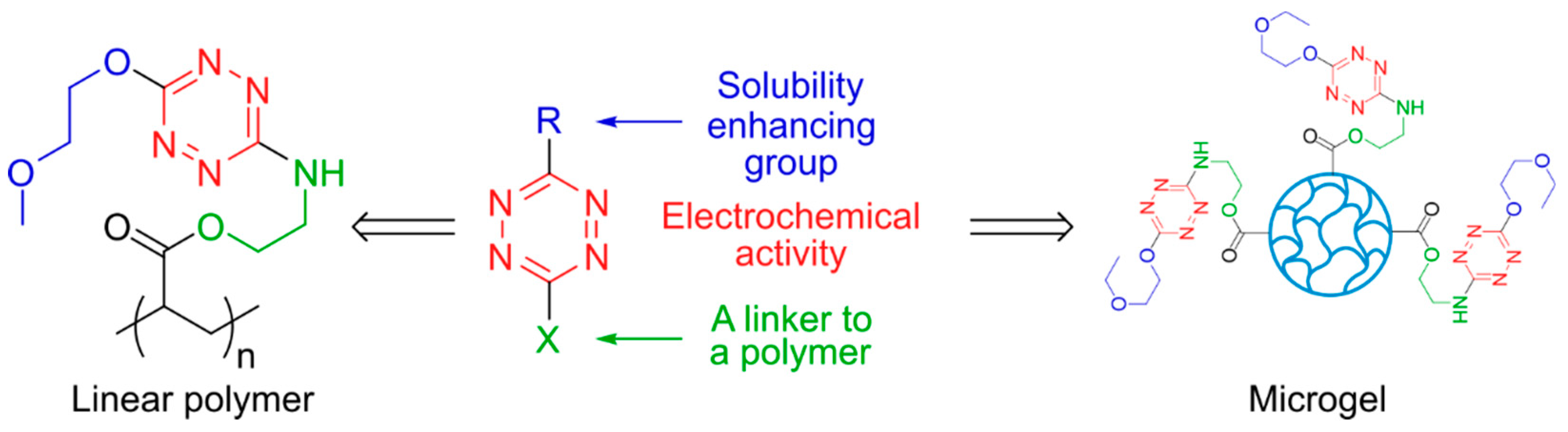
Figure 1.
The photos of a) PAA-TZ and b) MG-TZ dispersions in water; c) AFM-image of the dried drop of MG-TZ dispersion.
Figure 1.
The photos of a) PAA-TZ and b) MG-TZ dispersions in water; c) AFM-image of the dried drop of MG-TZ dispersion.
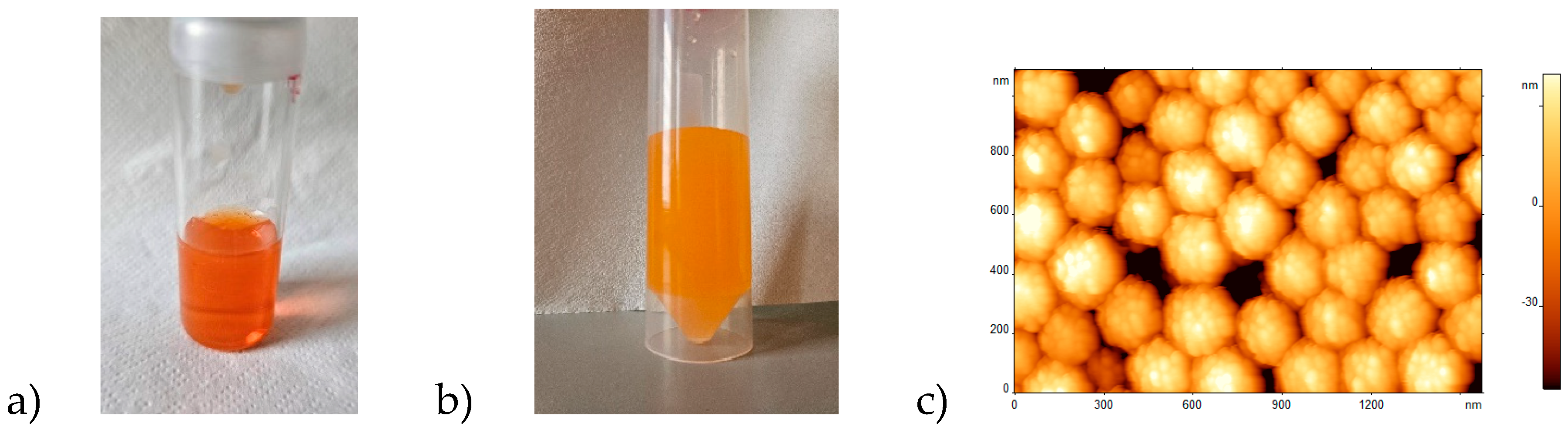
Figure 2.
Electronic absorbance spectra of 8–10 in water solution.
Scheme 3.
Typical redox process of s-tetrazine.
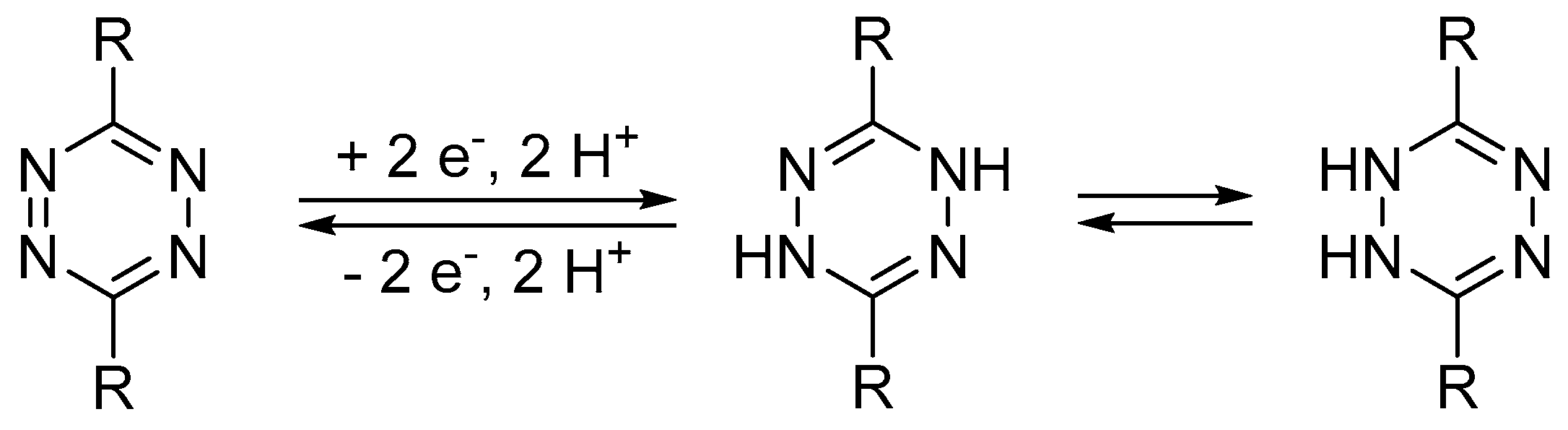
Figure 3.
Cyclic voltammograms of 3 (1 mM) and 7 (1 mM) (a), 3 (1 mM) and 6 (1 mM) (b) (0.2 M AcONa and AcOH to pH 4.4, Pt, 25 mV/s); cyclic voltammograms of 3 (1 mM) (c) (0.2 M AcONa and AcOH to pH 4.4 and 3.5, Pt, 25 mV/s).
Figure 3.
Cyclic voltammograms of 3 (1 mM) and 7 (1 mM) (a), 3 (1 mM) and 6 (1 mM) (b) (0.2 M AcONa and AcOH to pH 4.4, Pt, 25 mV/s); cyclic voltammograms of 3 (1 mM) (c) (0.2 M AcONa and AcOH to pH 4.4 and 3.5, Pt, 25 mV/s).
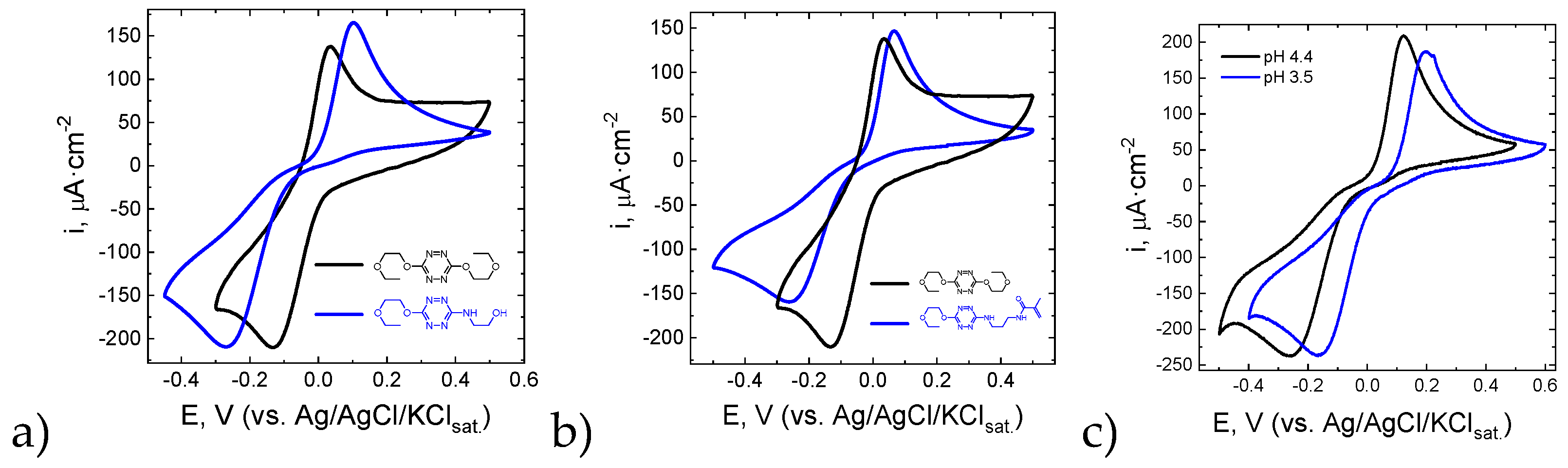
Figure 5.
Cyclic voltammograms of monomer 9 (1 mM) and polymer 10 measured on glassy carbon electrode in 0.2 M acetate buffer solution (AcONa+AcOH, pH 4.4), scan rate 100 .
Figure 5.
Cyclic voltammograms of monomer 9 (1 mM) and polymer 10 measured on glassy carbon electrode in 0.2 M acetate buffer solution (AcONa+AcOH, pH 4.4), scan rate 100 .
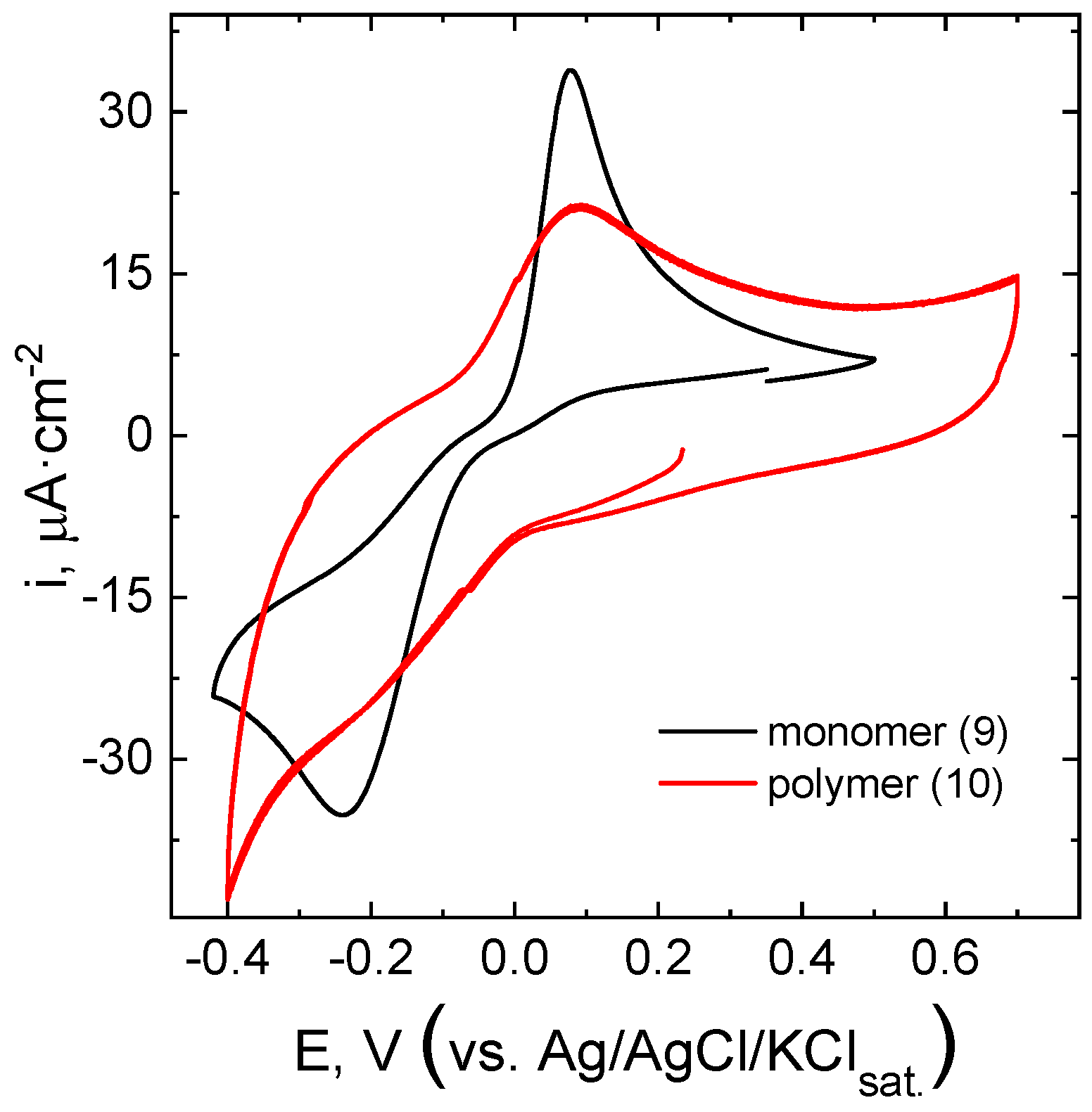
Figure 7.
Cyclic voltammograms of microgel 8 in 0.2 M acetate buffer solution (pH 4.4) at the annealed carbon paper electrode, recorded over time period of 23 hours (the scan rate is 5 mV/s).
Figure 7.
Cyclic voltammograms of microgel 8 in 0.2 M acetate buffer solution (pH 4.4) at the annealed carbon paper electrode, recorded over time period of 23 hours (the scan rate is 5 mV/s).

Disclaimer/Publisher’s Note: The statements, opinions and data contained in all publications are solely those of the individual author(s) and contributor(s) and not of MDPI and/or the editor(s). MDPI and/or the editor(s) disclaim responsibility for any injury to people or property resulting from any ideas, methods, instructions or products referred to in the content. |
© 2025 by the authors. Licensee MDPI, Basel, Switzerland. This article is an open access article distributed under the terms and conditions of the Creative Commons Attribution (CC BY) license (https://creativecommons.org/licenses/by/4.0/).
Copyright: This open access article is published under a Creative Commons CC BY 4.0 license, which permit the free download, distribution, and reuse, provided that the author and preprint are cited in any reuse.


