

Submitted:
11 December 2024
Posted:
13 December 2024
You are already at the latest version
Abstract
The maintenance of betalains and color of extracts from peel of red beetroot (RBAC), golden beetroot (YBAC) and purple prickly pear (PBAC) were evaluated, describing the capacity of their use as natural pigments and formulation of attractive and functional foods.
Betalain extracts were prepared as juices from frozen and dehydrated peel, adding organic acids and concentrating to obtain extracts with reduced water (10-15%). RBAC, YBAC and PBAC were analyzed below betalains content, colorimetric characteristics, color stability and shelf-life. Ex-tracts were applied on cottage cheese, measuring the capacity of betalains retention and pig-mentation, during 10 days of storage of closed and opened products.
Extracts RBAC showed the highest betalains content, predominating betacyanin, followed by YBAC with high betaxanthins content, and PBAC with less betacyanin concentration. The pH stability for the extracts was pH4-7; RBAC and PBAC were stables at 125°C. Extracts were constant < 10 days under oxygen and light exposure; however, YBAC exhibited low resistance at this environment.
On cottage cheese extracts exposed no changes in betalains and color on closed products (10 days of storage at 4°C). In opened products, PBAC maintained the maximum betalains and color, 90%, PBAC 75%, and YBAC 60%.
Keywords:
Betalains
; Red beetroot
; Golden beetroot
; Purple prickly pear
; Shelf-life
; Stability
; Cottage cheese
1. Introduction
Currently the use of natural pigments in food areas is becoming more common, be
cause they have a variety of properties for replacing synthetic colorants.
Between natural pigments are the betalains; they are hydrophilic biomolecules containing betacyanin’s (red violet color) and betaxanthins (yellow color) [1]. Betalins also are antioxidants, enhancing the appearance of food and maintaining the uniformity in the products [2,3].
The majority source of betalains are red beetroots, golden beetroots, and prickly pear. The betalains are extracted from the peel and pulp of these fruits and vegetables. Therefore, agri-food residues also are a source of natural pigments [4].
Currently, betalains are produced and commercialized as food additive pigments (E-162) and they are obtained as powered from the dried sources, extracts and extracts encapsulating as spray-dried powders. However, betalains have restrictions of application, because they are extremely sensitive to pH, temperature, oxygen, light, water activity and enzymatic action, limiting their use as food additive pigments [5].
The identifiable constraints of betalains are their short self-life, changes of coloration during the food storage, flavor modification and the total loss of color. Consequently, betalains stability constitutes an important topic of study in natural food pigments area, generating data from techniques and methods of extraction, stabilization and conservationto overcome the mentioned restrictions. For example, Hazervazifeh et al. [6] studied the microwave extraction of betalains from red beetroot. Otálora et al. [7] extracted betalains from red beetroot by blanching-cutting-drying of beetroot to analyze the thermal stability of betalains (5°C, 25°C, and 45°C). Boravelli et al. [8] extracted betalains from crude extract, using Polyethylene Glycol (PEG) 6000 and ammonium sulphate for the sugar’s removal in liquid-liquid extraction. Tekin et al. [5] encapsulated betalains from beetroot, using alginate/calcium-chloride ionic gelation to obtain betalain capsules. Morales-Huerta et al. [9] encapsulated betalains by fluidized bed drying of a beetroot extract foam by egg albumin and using the suspension of foam-covered balls during drying.
Oktay et al. [10] tested different extraction methods of betalains from prickly pear fruit (Opuntia Ficus-indica L.). The best technique of extraction was ultrasound-assisted extraction (UAE) to achieve high betalains content. Ferreira et al. [11] obtained a betalain extract from Opuntia Ficus-indica peels, by hydrothermal extraction; after, the extract was encapsulated by spray-drying to produce powder.
Involving betalains use in food application, Chaari et al. [12] extracted betalains from Opuntia stricta peels (OSP) in the raw refrigerated beef meat and compared with Allura red E129 at 0.002%. As result, betalains improved the instrumental color, decreased the chemical oxidation, enhanced the sensory traits, inhibited the L. monocytogenes replication and transcription processes by targeting dihydrofolate reductase (DHFR).
Mehta et al. [13] tested UAE for betalains extraction from Opuntia Ficus-indica, using glycerol as solvent and encapsulating material. Betalains exhibited optimal storage life and bio-accessibility. The incorporation of betalains into gummies also was studied by Mehta et al. [14], indicating acceptable uses in foods.
Based on the above reports, the investigation on the betalains stability continue, because more investigations on betalains application are requested to increase the knowledge in this topic and provide tools to evaluate their behavior in foods [2,15,16].
The aim of this research was the obtaining of betalain extracts from agro-industrial wastes of red and golden beetroot and purple prickly pear (Opuntia lagunae), comparing the pigment capacity and stability on cottage cheese to produce attractive and functional foods with effective coloration. The study includes the extracts preparation, shelf-life study of betalains, the colorimetric stability of betalains and the extracts applications in cottage cheese, analyzing the outstanding food with coloration, shelf-life of betalains and shelf-life of cottage cheese. The obtained data is a contribution of natural pigments and their application in food area to obtain commercial products.
2. Materials and Methods
2.1. Materials and Reagents
Whole agro-industrial residues as peel of red beetroot (Beta vulgaris L.) yellow beetroot (Beta vulgaris L.) and purple prickly pear (Opuntia lagunae) were provided by a food company in the State of Mexico for their use as betalains source.
Ascorbic acid and Acetic acid were bought by J.T. Baker (México). All chemical materials used for characterization and analysis were of analytical grade. Deionized water was used in all the experiments.
2.2. Betalain Extracts Preparation and Conservation Treatments
Samples peel of red beetroot, golden beetroot and purple prickly pear were stored in the individual samples (250 g) and frozen at <-20°C in hermetic plastic bags.
Betalains extracts were obtained according to following steps. 1) Betalains extracts obtaining by previous frozen samples, later defrosting, and pressing of sample sources, using a microwave for 20 min. The procedure is repeated until the juice from the source is exhausted, recollecting the extracts from each time. 2) Betalain extracts refining. Obtained extracts from beetroot were centrifuged at 3500 g (10000 rpm) for 5 min. The supernatant liquid was passed through filter paper (Whatman 1. In turn extracts from prickly pear were filtered by open mesh cotton cloth to remove large solid waste, fiber, and seeds; later, filtered by Whatman 1.
The treatment of betalains extracts conservationconsisted of two steps. 1) Addition of one organic acid, which was selected previously for their use as conservationagents. 2) Concentration of extracts by water evaporation.
Ascorbic acid was added to betalain extracts from red beetroot and purple prickly pear, whereas acetic acid was added in betalain extracts from golden beetroot (1% w/v or 1% v/v respectively). To dissolve and homogenize, the extracts with the acid, samples were subjected to an ultrasound bath (Bransonic CPX1800H, Emerson, México) at 25°C for 15 min.
Concentration of extracts was carried out in a rotary vacuum evaporator (IKA RV10 basic, Germany) at 35°C until achieve 70-80% of water removal. The final betalain extracts samples (1 L) from each source were obtained and distributed in amber flasks of 100 mL and stored at 4°C in the absence of light for later analysis. For Afterwards analysis and use, membranes of 0.45 µm pore size and nylon filter were used to obtain betalain upgrade extracts.
The betalain extracts under the conservationmethod were identified as extracts with acid and concentrated from different sources, such as red bet (RBAC), golden bet (YBAC) and purple prickly pear (PBAC).
As control of betalains extracts RBAC, YBAC PBAC, were included samples of extracts without acid identified as RB for red beet, YB for golden beet and PB for purple prickly pear; subsequently, extracts with acid (RBA, YBA and PBA); extracts without acid and concentrated (RBC, YBC PBC).
2.3. Physicochemical Characteristics of the Betalain Extracts and Extraction Yield
According to betalains extracts indicated in the method, they were characterized by extraction yield (mL/g), colorimetric characteristics and physicochemical properties, including betalains concentration, Brix grades (°Bx), pH, Total dissolved solids (TSD).
1) The extraction yield was determined by equation (1). Where: V= volume of extract in (mL); mi= initial sample weight in (g).
2) Betalain quantification was obtained following the method described by Visockis et al. [17], using equation (2).
Where: BC=betacyanin or betaxanthin content in the extracts; A= absorbance λmax 538 nm for betacyanins and 480 nm for betaxanthins; DF= dilution factor (final dilution volume/volume of aliquot to be diluted); MW = molecular weight 550 g/mol for betacyanins and 308 g/mol for betaxanthins; E=molar extinction coefficient 60,000 L/(mol*cm) in H2O for betacyanin’s and 48,000 L/(mol*cm) in H2O for betaxanthins; l= cell length in cm.
The reading at 600 nm was used to correct the absorbance of the impurities. The results were expressed in mg of betacyanin (betanin)/g or betanin/L and mg betaxanthin (vulgaxanthin)/g or mg/L. The total betalain content was calculated as the sum of both betacyanins.
3) Determination of total dissolved solids was carried out using the weight loss on drying technique following equation (3).
Where P1= weight of empty capsule (mg); P2 = weight of capsule with dry sample (mg); V0 = initial sample volume (1mL).
4) The Brix of the samples was estimated using a portable digital Brix refractometer (OPTI model, Bellingham + Stanley, Spain). A volume of 2 mL of sample at room temperature (20°C) was placed in the test reader. The Brix value was read directly from the instrument. The refractometer was calibrated with distilled water before measuring.
5) Colorimetric analysis was carried by a colorimeter (VINCKOLOR Pro, China), using the coordinates L* (luminosity), a* (coordinates red/green) and b*(coordinates yellow/blue) of the CIELAB color system.
By colorimetric coordinates, Hue color (H) was evaluated by equation (4) and Chroma* (Chromatic intensity or purity of color) by equation (5), providing L*, H and Croma* for each betalain extract (Hernández-Acosta et al. 2024).
2.4. Shelf-Life Analysis Of Bofalain Extracts
The shelf-life analysis was carried out to evaluate the effect of the maintenance method on betalains extracts. The shelf-life was found by measuring the concentration of total betalains in extracts at initial time, t=0 days until t=180 days of stored samples as final condition, registering data each 30 days for 6 months. Betalain quantification was obtained following the method described by equation (2).
The change in coloration extracts was measured by colorimetric analysis, using color difference by equation (6), based on colorimetric parameters.
L*0, a*0, b*0 represent initial conditions; L*, a*, b* final conditions (Mehta et al. 2023).
Samples of the test were RBAC, YBAC and PBAC, including samples control, RB, RBA, RBC, YB, YBA, YBC, PB, PBA and PBC.
2.5. Color Stability Analysis of Betalain Extracts
Color stability analysis of betalain extracts integrated thermal stability, pH changes and oxygen attack. The analysis was obtained through the total content of betalains and colorimetric evaluation of betalain extracts, due to changes at different pH, temperatures, and days of exposure to oxygen.
Betalains content in extracts was assessed according to equation (2), whereas color properties and stability of extracts was measured by colorimetric properties L*, a*, b* to obtain L*, Hue and Chroma* by equations (4) and (5) (Hernández-Acosta et al. 2024).
2.6. Application of Extracts in Cottage Cheese
Betalain extracts were applied to commercial cottage cheese, using 0.1-0.5% in W of extract.
At storage times of cottage cheese, the coloration changes were evaluated by colorimetric technique, according to indicated in the 2.3 section of the manuscript, using color parameters Hue, Chroma, and color difference by equation (6).
The measuring was done directly on the cheese surface 10 min after opening the recipient of storage, selecting three random readings at separate locations per sample. As samples control were used closed single cottage cheese, close single extract and close cheese sample with betalains extract.
2.7. Statistical Analysis
Statistical analysis was carried out on betalain extracts and the application of extracts on cottage cheese. The analyses were carried out in triplicate and the results were given as mean value with standard deviation. The statistical difference was evaluated by analysis of variance, (ANOVA) followed by a Tukey test, using Minitab software version 19.2020.1.0 (Minitab, LLC Software, Inc). Differences were considered significant at p<0.05.
3. Results and Discussion
3.1. Physicochemical Characteristics and Yield of Betalain Extracts
Table 1 exposes yield, physicochemical characteristics and betalains content in extracts of betalain from red beet root, golden beet root and red beetroot (RBAC, YBAC and PBAC), including extracts control as single extracts (RB, YB and PB), extracts with acid (RBA, YBA, PBA), and extracts without acid and concentrated (RBC, YBC, YBC, PBC).
Betalain extracts RBAC, YBAC, PBAC, showed different information, indicating significative differences in betalains content and other parameters (P<0.05).
1) The yield of betalains extracts was obtained with the following order: YBAC > PBAC> RBAC. The difference in yield was associated to origin (red beetroot, golden beetroot, and purple prickly pear) and water content in each source, exposing final water content (after of the concentration process) 20% PBAC, 15% YBAC and 12% RBAC.
2) As expected, betalain extracts RBAC, YBAC and PBAC showed acid pH because they contain organic acid.
3) In turn, RBAC, YBAC and PBAC exposed different ranges of °Bx and TDS. The highest values of °Bx and TDS were found in RBAC and YBAC, because beetroot contains more sugar than prickly pear.
4) Concerning to betalains content, the data between extracts RBAC, YBAC and PBAC also showed significative differences (P<0.05).
Betalain extracts control showed that the conservation treatments affected positively the betalains content, exhibiting highest values in RBAC, YBAC and PBAC. However, RBAC showed highest value; subsequently YBAC and PBAC, indicating significative differences between betalain sources (P<0.05).
According to conservation treatments, samples control indicating distinct affectations. All extracts control, RB YB PB (without any treatment) registered the lowest betalains content.
Extracts treated with ascorbic acid (RBA and PBA) showed similar behavior than RB and PB, but with increase of the betalains content, while acetic acid, increase the betalains (betaxanthins) in YBA.
The increase of betalains by acid treatment and concentration was associated with the effect of betalains extraction, stabilization, and conservation by glycosylation process.
The betalains maintenance by the addition of ascorbic acid was also reported by Gandía-Herrero et al. [18] and Wang et al. [19]. Authors showed that ascorbic acid slightly change the pH of betalains extraction medium, causing the formation of quinones by the effect of polyphenol oxidases, which stabilize the betacyanin’s.
Treated extracts by sample concentration, due to water evaporation without acid (RBC, YBC and PBC) registered complete or partial degradation. Betacyanin’s and betaxanthins were not detected in the Uv-vis spectra. The degradation of betalains in extracts control RBC, YBC and PBC was linked to absence of organic acid, as well as evaporation temperature, oxygen, light, and the high sensibility of betalains from beetroot.
The high betalains content in RBAC was registered as betacyanin, because betaxanthins were not detected by this method. But the samples control RB and RBA showed the survival of betaxanthins, whereas RBC (concentrated extracts) did not register betaxanthins.
In turn, extracts YBAC observed single betaxanthins content with betacyanin absence, due to yellow color. The above assumption was confirmed with the control samples YB and YBA, because they showed similar color and single betaxanthins in the Uv-vis spectra.
Subsequently, PBAC extracts showed single betacyanin content. Similarly extracts control showed similar behavior; however, the wide band of betacyanin also could suggest the presence of betaxanthins.
Figure 1 shows Uv-vis spectra of betalain extracts RBAC, YBAC and PBAC and control extracts RB, YB and PB, confirming the above data.
Uv-vis spectra from RBAC, YBAC and PBAC and control extracts RB, YB, and PB displayed betalamic acid with conjugated dienes of the 1,7-diazaheptamethine and the chiral center at C-6, exhibiting bands in both regions (Uv and vis) [20].
Bands in vis range, exhibited betacyanin (420-540 nm), providing violet-red coloration, whereas betaxanthins (320-480 nm) showed brilliant yellow coloration [15].
Extract YBAC proved single band, indicating betaxanthins predominance, whereas extracts RBAC and PBAC exposed similar Uv-vis spectra, exhibiting band ranges of 420-580 nm of betacyanin majority. However, RB revealed the presence of betaxanthins and betacyanin. Therefore, betaxanthins could be hidden in betacyanin due to concentration of extracts and the extensive band of betacyanin could obscure the betaxanthins, occurring at 480 nm. Extracts PB not showed betaxanthins; however, Wang et al. [21] showed that prickly pear contains betaxanthins. Therefore, they could be covered by the betacyanin band.
The apparent betacyanin predominance in RBAC and PBAC Uv-vis spectra is due optical activity because they contain two chiral carbons (C2 and C15). In addition, a hydroxyl group linked to the C6 carbon and a glucosyl group on the C5.
In turn, the glycosylation and acylation of betacyanin provide 5-O- or 6-O-glucosides, resulting in predominant betacyanin structures, including betanin (betanidin 5-O-ß-glucoside).
According to previous studies, betalains bands from beet root, golden beetroot and prickly pear might include betacyanin as betanidin (541 nm), betanin and isobetanin (537 nm), 2-descarboxy-betanin (532 nm), 6-O-Malonyl, 2 descarboxy-betanin (535 nm), prebetanin (538 nm), Neobetanin (267, 306, 470 nm), while betaxanthins could describe the occurrence of indicaxanthin (260, 305, 485), betaxanthin and vulgaxanthin I, II, III, IV (469-470 nm) and valine-betaxanthin [19,22,23].
In comparison with previous studies, there are several reports revealing information on betalains; however, the difference in methods of extraction and extraction sources, causes diverse data [2,4]. For instance, Ferreira et al. [11] obtained maximum yield (47.9 %) of betalains extraction from peel of Rose prickly pear. However, authors used high water ratios as solvent extraction, equivalent to volume of betalain extracts. In addition, the authors do not mention the calculi base to express the data in %.
About betalains content, the data from RBAC agreed with the reported by [19]. Authors detected betanin content up 8222 mg/g of fresh weight [FW] from beetroot, while golden beetroot registered lowest betaxanthin content as 193.7 mg/g vulgaxanthin I. However, the authors obtained betalain extracts by solid-liquid extraction with methanol and ascorbic acid as extraction solvent.
Other studies of red beet reported lowest betalain content; Prieto-Santiago et al. [24] studied three beetroot samples, a juice thermally treated, puree and whole beetroot. As solvent they used ethanol–water solution (50:50 v/v) in a shaken for 15 min. Juices and puree showed the highest betalains content (835 and 868 mg/kg respectively). Silva et al. [25] studied extracts from powered red beet (previously dread at 50°C), using ultrasound extraction (UAE) and 75 mL/g of water as solvent at 30°C and 30 min. The extracts registered 7 mg/g of betalains, including 4.45 mg/g of betacyanin and 2.42 mg/g of betaxanthin.
In turn, Masithoh et al. [26] detected lowest betalain range, indicating 0.17-0.30 mg/g in extracts from dried beetroot samples (70°C). However, authors used methanol as extraction solvent and stirred it at 180 rpm for 30 min at room temperature. Chhikara et al. [27] used dried red beet (55°C) to obtain aqueous extracts of betalains by solid liquid extraction, registering 62 mg/L betacyanin’s and 61 mg/L betaxanthin, whereas Attia et al. [28] used a solid liquid extraction with acidified ethanol 2%, using citric acid and a blender for 15 min at room temperature. The extracts were concentrated under rotary vacuum evaporator at 40°C, registering 3.8 mg/g of betalains per FW.
Similarly, the reports from purple prickly pear indicate distinct information on betalains content. Mehta et al. [13] reported high content (858.28 mg/L) of betalains in extracts from the mixture of pulp and peel of prickly pear (Opuntia ficus-indica), using glycerol as solvent extraction and AUE (30–60°C) (10–30 min).
In turn, Oktay et al. [10] revealed low betalains content (0.472 mg/g) in extracts from dried prickly pear, using UAE (30-min extraction time, 49.99°C, 40% ethanol concentration, and a 1/30 solid/solvent ratio). Chaari et al. [12] studied betalain extracts from dried peel of Rossa prickly pear, using sequential extraction by water at room temperature in light-protected glass flasks during 24 h of stirring at 200 rpm. The extracts were added with betalains to enhance the stability. However, they registered low betalains range (14.8-41.2 mg/g).
On golden beet root, further data were not found in the literature, because this source is scarcely known in pigments area.
3.2. Colorimetric Characteristics of Betalain Extracts
Figure 2 shows coloration characteristics (Hue and Chroma*) of fresh betalain extracts RBAC, YBAC and PBAC (pH4, temperature 4°C), as well as their control samples at equal conditions.
According to origin source and extracts control, betalain extracts showed distinct color characteristics Hue and Chroma*, which were linked to betalains majority and color degradation [24].
Extracts RB and RBA exhibited red Hue, due to betacyanin (betanin) and betaxanthins (vulgaxanthin) predominance, whereas RBAC was violet Hue, indicating high betanin and betaxanthin ensemble. RBC presented brown Hue, showing color degradation betacyanin and betaxanthin degradation. In turn, The Croma* was highest in RB and RBA than RBAC, because red color has superior purity than violet color.
In the case of extracts YBAC, YB and YBA, they have high betaxanthin content, showing yellow color and high Croma*, suggesting high color purity, which was increased by the addition of acetic acid and concentration procedure. However, YBC did not retain the betalains, showing degradation color.
Although, extracts RBAC and PBAC presented betacyanins predominance, both showed different Hue. PBAC exposed red Hue, showing betanin predominance with highest Croma*; extracts PB and PBA showed violet coloration, and thus lowest Chroma*. PBC did not expose color degradation. Therefore, extracts PBC and PBAC present disperse betalains by degradation of betaxanthins, betalamic acid, and 2-hydroxy-2-hydrobetalamic acid from beet root, which is superior in betaxanthins.
3.3. Shelf-Life Analysis of Betalain Extracts. Effect of Organic Acid Addition and Concentration
Table 2 show data from betalains stability through of storage time versus betalain content in extracts RBAC, YBAC and PBAC, including the samples control extracts. Data involve initial betalains content and with 180 days of the extract’s storage (4°C and amber flasks).
In addition, Figure 3 shows the kinetic behavior of betalain extracts, complementing the information of Table 2.
Overall, extracts RBAC, YBAC and PBAC revealed high betalains maintenance % during 180 days of storage, due to treatment with acid and concentration. However, between extracts, they observed different behavior of maintenance (P<0.05).
The highest betalains conservationwas observed in YBAC, because they indicated 95% betalains maintenance. Subsequently, RBAC showed 87% of betalains during 180 days of storage, whereas PBAC exhibited 50%.
According to kinetic of betalains, after 360 days, extracts YBAC exhibited the highest betalains retention (70%), RBAC exposed 30% and PBAC the lowest betalains retention (10%).
The high shelf-life of extracts PBAC and YBAC indicated the positive effect of ascorbic acid or acetic acid addition and extracts concentration. However, the conservationmethod was not sufficient to retain the betalains from PBAC, because the water content in this extract was superior to RBAC.
In turn, samples control showed short shelf-life, registering 100% of betalains degradation after of 1-5 h of extraction and storage, evidencing the positive effect of conservationmethod. The coloration change (discoloration) in betalain extracts from control extracts RB, YB and PB were linked to activity of endogenous enzyme ß-glucosidases on betaxanthins, releasing cyclo-DOPA-5-O-ßglucoside.
Current investigations of Mehta showed comparative data of shelf-life of betalains.
They observed 78.65 % of color retention of betalains during 70 days of the storage under amber and 4°C conditions. However, predictive kinetic indicated 404 days of betalains maintenance. The shelf-life was measured in samples from encapsulated and lyophilized extracts from prickly pear Ficus-indica. Authors observed that the storage temperature was the principal factor affecting the shelf-life of betalains, whereas the high stability was due to use of glycerol as extraction solvent; however, the encapsulation also influenced these results.
3.4. Color Stability Analysis of Betalain Extracts
Table 3 and 4 show data of betalains retention and color parameters, exhibiting the stability of extracts RBAC, YBAC, PBAC under different conditions of exposure of pH range 4-9, temperature range 20-125°C for 30 min, and oxygen and light for 20 days with agitation at 150 rpm. The referent conditions of the study were extracts RBAC, YBAC and PBAC at pH4, Temperature = 4°C and null exposition to light and oxygen.
In general, extracts exhibited changes in the betalains content, betalains retention and color difference ΔΕ by effect of exposure conditions.
According to pH, RBAC showed highest stable betalains at pH ranging 4-7; however, at pH>7, RBAC manifested betalains loss with 50-18% of betalains retention. In consequence the color difference at pH<7 was ranging ΔΕ=7 and pH>7, ΔΕ=29, indicating high betalains degradation and color at pH8-9.
In turn betalains from RBAC were thermically resistant up 90°C, manifesting color difference ΔΕ=33. However, the drastic thermal degradation of betalains was observed at temperature >100°C, manifesting 30% of betalains retention and brown color with ΔΕ=74. The drastic changes in color extracts RBAC by temperature increase was observed > 100°C, modifying red color to brown.
Concerning oxygen and light exposure, betalains from RBAC showed high resistance. In this case betalains manifested betalains permanency > 10 days of light and oxygen exposure with ΔΕ =25; however, at 20 days of exposure the brown color was predominant in the extracts. Nevertheless, it is an important result, because by organic acid and concentration of extracts, RBAC resisted the oxygen and light attack.
Similarly, extracts PBAC exposed betalains stability at pH<7; however, at pH>7, the betalains were reduced, observing brown color, due to degradation of betalains.
In comparison with RBAC, extracts PBAC exposed low betalains resistance to pH. In addition, the betalains were thermically stable up <90°C, showing low stability at >90°C. According to Herbach et al. [29] the betalains from prickly pear are stable to <80°C, at temperatures superior to 80°C occurs the isomerization of indicaxanthins. Herein the yellow color at 100°C was observed. Consequently, the degradation of betaxanthins was suggested >100°C.
By exposure to oxygen and light, betalains from PBAC showed high resistance, indicating low ΔΕ in comparison to extracts RBAC. The color can be observed in table 4 at 20 days of oxygen and light exposure.
In turn, extracts YBAC were not affected by pH; they maintained the betalains in pH ranges 4-9. In addition, extract YBAC was thematically resistant, because in the temperature range 20-125°C, they did not show betalains lost. However, the oxygenation and light affected the betalains, showing 50-38% of betalains retention and changes of yellow coloration to green coloration.
Otalora et al. [30] report a study of betalain extracts by beetroot blanching treatment (immersion in water at 90°C for 7 min). After, they lyophilized to produce powered betalains and analyzed thermically the products. Author found low thermic resistance of betalain extracts because the treatment at 90°C affected the betalains content, whereas that the betalins powered present highest thermal resistance.
Mehta et al. [13] evaluated the thermal stability (80-180°C, 30-60 min) of the encapsulated color pigment of betalains from prickly pear. They reported the highest thermostability of encapsulant material; however, the color difference ΔΕ incremented with the temperature increment, achieving brown color.
Also, there are previous studies reporting the stability of betalains at thermal, pH and oxygen conditions [31,32,33,34]. Authors supported the processes of betalains stability or degradation under different environments of exposure, indicating that betaxanthins are stable at pH range of 4-7 with optimal pH at 5; however, the oxidation of vulgaxanthin I also occurs under these conditions. Additionally, in alkaline pH, indicaxanthin generates protocatechuic acid, blocking the regeneration of betaxanthins.
For betanin, acid conditions cause betalamic acid recondensation or cyclo-DOPA-5-O-ß-glucoside, which it favors the betalains stability. However, other changes also occur, such as, the isomerization of C15 in betanin and betanidine to isobetanin and isobetanidine, respectively, altering to yellow neobetanin. Under alkaline conditions, the hydrolysis of the aldimine bond is predominant, causing betalains instability. In addition, both conditions of pH promote the decomposition of betanidine into 5,6-dihydroxyindole-2-carboxylic acid and methylpyridine-2,6-dicarboxylic acid, affecting the betalains composition and coloration.
Relating thermal stability of betalains, betacyanin are indicated stable at pH 5.5-6; however, the thermal changes occur at other pH with the degradation of betanin to neobetanin; thus, the red color change to orange red. Also, the subsequent polymerization of betalains release betalamic acid, and colorless cyclo-DOPA-5-O-glycoside, achieving yellow to brown color, which it was observed in extracts RBAC and PBAC at >100°C.
In turn, betalains exposure to thermal oxidation (pH range of 3-5 and 30-85°C) causes dehydrogenation and decarboxylation of betacyanins from neobetanin with coloration changes [35].
Betalains also are affected by oxygenation and light. In presence of oxygen, light-induced degradation of betalain; however, the oxidative stability of betacyanins can be improved through increased glycosylation, which it could explain the stability of extracts RBAC, PBAC and YBAC for 10 days of oxygen exposure.
3.5. Shelf-Life Analysis of Betalain Extracts on Cottage Cheese
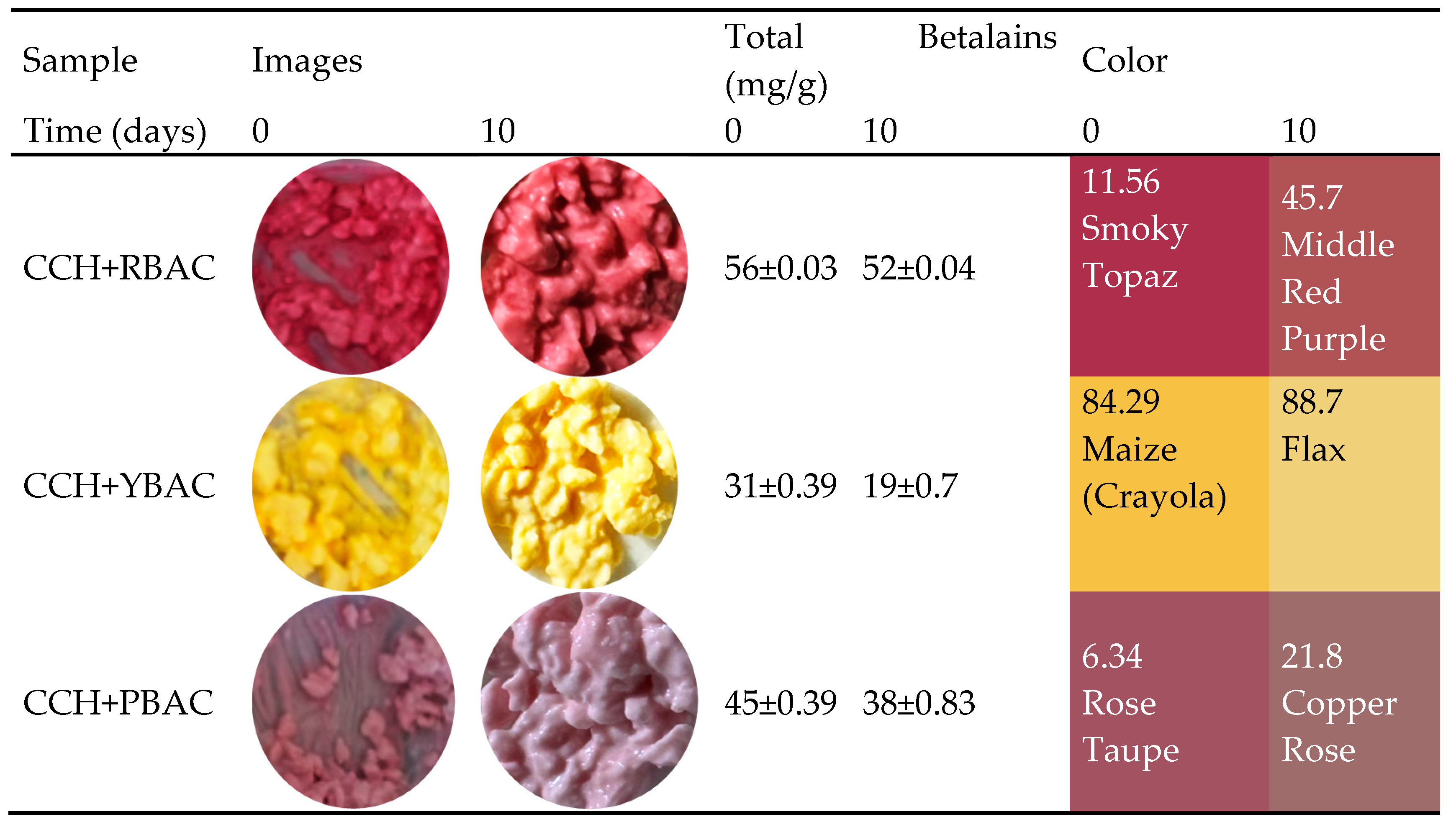
Table 5 shows the shelf-life of betalains from extracts RBAC, YBAC and PBAC on cottage cheese (CCH), showing betalains content and color permanency at storage times t=0 and t =10 days at the refrigerated conditions T= 4°C and once the cheese was opened.
Samples CCH+RBAC, CCH+YBAC and CCH+PBAC represent samples cheese with 5% W of betalain extracts. Controls samples were CCH without extracts, extracts RBAC, YBAC and PBAC for closed product and opened product. Opened products are referred to opened products for often consuming, exposed to oxygen and light.
After 10 days of storage at 4°C, closed products CCH+RBAC, CCH+YBAC and CCH+PBAC changes of betalains and color were not observed on and control samples, did not showed betalains content and color. However, products with frequent opening for consume showed the following changes, indicating significative differences between closed and opened products (P>0.05).
CCH+RBAC registered 92% of betalains maintenance with red color at initial and final period of storage.
CCH+YBAC exhibited yellow coloration; however, after 10 days of storage, samples observed slight changes in the yellow color, exposing 60% of betalains retention.
In turn, CCH+PBAC showed 85% of betalains retention with violet color at initial and final storage time.
The data were coincident with the above study of betalains stability, showing that extracts PBAC resulted with highest capacity of survival under stress conditions of oxygen and light, followed of RBAC, whereas extracts YBAC had limited resistant under oxygen and light conditions. However, the results of application of betalains extracts were excellent to provide coloration on cottage cheese.
Matching the study of betalains extracts application, Figure 4 exhibits kinetics of color characteristics L* and ΔΕ from samples CCH+RBAC, CCH+YBAC and CCH+PBAC, including samples control CCH without extracts and extracts RBAC, YBAC and PBAC for closed product and opened product.
Closed products showed intact L*during 10 days of storage, indicating highest L* for samples control CHH and YBAC, whereas PBAC and RBAC exposed similar L*. In turn, samples CCH+RBAC and CCH+PBAC showed equal L*. Also, extracts RBAC, YBAC and PBAC did not present color difference with values of ΔΕ=0, whereas the sample control CCH observed ΔΕ=5. Therefore, betalain extracts on cottage cheese did not affect L* of the product.
In order, opened products exhibited similar L* to closed products, showing no significative effects (P<0.05); however, the color difference registered changes, observing the highest in control extracts YBAC, RBAC and PBAC with ΔΕ=20, whereas the change was less in samples CCH+PBAC and CCH+RBAC and CCH+YBAC, indicating ΔΕ= 5.
Consequently, betalains extracts RBAC, YBAC and PBAC enhanced their stability to oxygen and light exposure in cottage cheese application, because the presence of proteins favor color stability [36]. The results were associated with glycosylation of extracts with the proteins of cheese.
The application of betalains on cottage cheese has not been studied yet. However, here it showed that betalains extracts RBAC, PBAC and YBAC could be added on cottage cheese with without altering the quality of product. However, further studies could support this claim.
Current reports showing the application of betalains are found in some investigations, exposing the effectivity of their use as food pigments. Mehta et al. [13]; Mehta et al. [14] applied encapsulated betalains from prickly pear in gummies. The data were compared with commercially synthetic color treatment. As result, they obtained pigmented products with similar color. By betalains encapsulation, authors enhanced the storage life up 404.27 days at 4°C in amber conditions.
Also, Calva-Estrada et al. [2] tested encapsulated betalains extracts from Opuntia ficus indica fruit into gummy candies as a model food system. Authors obtained a product with anti-inflammatory properties and no cytotoxicity in vitro, making it suitable for food products like functional gummies. Rodríguez-Sánchez et al. [36] incorporated betaxanthins from yellow pitaya (S. pruinosus) fruit as a coloring for drinks and jelly gummies, observing betaxanthin stability in stored products at low temperatures and under dark conditions. The betalains were more stable in the gummies, due to low water activity.
In turn, Güneşer [37] reported the application of betalains from beetroots as a colorant to cow milk; however, they observed moderate stability in response to thermal treatments (70–140 min, at 70-80°C). Attia et al. [28] evaluated the effect of incorporating red beet extract as a colorant in jelly and ice sherbets for its sensory properties, reporting product acceptance and color stability for 180 days under storage at – 20°C.
4. Conclusions
Self-life of betalain extracts RBAC (red beetroot peel), YBAC (golden beetroot peel) and PBAC (purple prickly pear peel) were evaluated, measuring the capacity of their use as natural pigments of cottage cheese to obtain attractive and functional foods.
Extracts RBAC resulted with the highest betalains content, predominating betacyanin, followed by YBAC with high betaxanthins content, and PBAC with betacyanin.
The pH stability for the extracts was pH4-7; the thermal stability of extracts RBAC and PBAC was <90°C, whereas YBAC exposed >125°C. Under oxygen and light exposure, extracts were stable < 10 days; however, YBAC exhibited low resistance under these conditions.
At 4°C and amber storage, the shelf-life of RBAC showed betalains maintenance and color red-violet of 87% at 180 days. YBAC was 95% with yellow color, and PBAC maintained 60% of betalains with violet color. The first order kinetics of extracts indicated the betalains degradation and color >360 days; however, PBAC showed complete betalains degradation at this time.
The application of betalains extracts on cottage cheese exposed no changes in betalains and color in closed products for 10 days of storage at 4°C. Concerning to opened products, PBAC maintained the maximum betalains (90%), followed by PBAC (75%); however, YBAC showed 60% of betalains retention and color.
The obtained data contributed to different aspects of food areas, such as, use of agro-industrial residues to betalains extraction. In addition, the extraction and conservation method of betalain extracts provide tools of betalains preparation.
The potential of betalains use in food coloration, and as well as, betaxanthins production from golden beetroot and its capacity of application in the obtaining of functional and attractive foods also provide knowing in food area, which will be used for next research.
Author Contributions
Conceptualization, Elizabeth López-Solórzano and Claudia Muro; Formal analysis, Claudia Muro and Elsa Gutierrez-Cortez; Funding acquisition, Claudia Muro; Investigation, Elizabeth López-Solórzano and Juan Urrieta; Methodology, Claudia Muro and Andrea Y. Guadarrama-Lezama; Project administration, Yolanda Alvarado Perez; Validation, Yolanda Alvarado Perez and Elsa Gutierrez-Cortez; Writing – original draft, Elizabeth López-Solórzano and Claudia Muro; Writing – review & editing, Claudia Muro and Andrea Y. Guadarrama-Lezama.
Funding
This research was funded by Consejo Nacional de Humanidades Ciencias y Tecnologías (CONAHCYT). Projects CF-2023-G-859.
Acknowledgments
This research was supported by a food industry company in the State of Mexico, which provided the red beetroot, golden beetroot, and purple prickly pear samples for betalain extracts.
Conflicts of Interest
The authors declare no conflicts of interest.
References
- Polturak, G. , & Aharoni, A. (s. f.). “La Vie en Rose”: Biosynthesis, Sources, and Applications of Betalain Pigments. Molecular Plant, 2018, 11, 7–22. [Google Scholar] [CrossRef] [PubMed]
- Calva-Estrada, S. , Jiménez-Fernández, M., & Lugo-Cervantes, E. Betalains and their applications in food: The current state of processing, stability and future opportunities in the industry. Food chem-mol sc, 2022; 4, 100089. [Google Scholar] [CrossRef]
- Chaari, M. , Elhadef, K., Akermi, S., Hlima, H. B., Fourati, M., Mtibaa, A. C., Ennouri, M., D’Amore, T., Ali, D. S., Mellouli, L., Khaneghah, A. M., & Smaoui, S. Potentials of beetroot (Beta vulgaris L.) peel extract for quality enhancement of refrigerated beef meat. Qual. Assur. Saf. Crops Foods, 2023; 15, 99–115. [Google Scholar] [CrossRef]
- Rodrigues, I., da Silva Martins, L.H., Campos, R., Siquiera, C., & Sarkis, M.R. Betalains from vegetable peels: Extraction methods, stability, and applications as natural food colorants. Food Res Inter. 2024, 195, 114956. [CrossRef]
- Tekin, İ. , Özcan, K., & Ersus, S. Optimization of ionic gelling encapsulation of red beet (Beta vulgaris L.) juice concentrate and stability of betalains. Biocatal Agric Biotechnol, 2023; 51, 102774. [Google Scholar] [CrossRef]
- Hazervazifeh, A. , Rezazadeh, A., Banihashemi, A., Ghasempour, Z., & Kia, E. M. Pulsed microwave radiation for extraction of betalains from red beetroot: Engineering and technological aspects. Process Biochem., 2023, 134, 121–130. [Google Scholar] [CrossRef]
- Otálora, M. C. , Wilches-Torres, A., & Castaño, J. A. G. Microencapsulation of Betaxanthin Pigments from Pitahaya (Hylocereus megalanthus) By-Products: Characterization, Food Application, Stability, and In Vitro Gastrointestinal Digestion. Foods, 2023, 12. [Google Scholar] [CrossRef]
- Boravelli, J. A. R. , & Vir, A. B. Continuous flow aqueous two-phase extraction of betalains in millifluidic channel. Chem Eng J, 2024, 495, 153265. [Google Scholar] [CrossRef]
- Morales-Huerta, A. , Flores-Andrade, E., Jiménez-Fernández, M., Beristain, C., & Pascual-Pineda, L. Microencapsulation of betalains by foam fluidized drying. J. Food Eng., 2023, 359, 111701. [Google Scholar] [CrossRef]
- Oktay, B. A. , Yolaçaner, E. T., & Aytaç, S. A. Ultrasound-assisted extraction of betalain-rich bioactive compounds of prickly pear fruit: an optimization study. Food Biosci. 2024; 61, 104734. [Google Scholar] [CrossRef]
- Ferreira, R. M. , Queffelec, J., Flórez-Fernández, N., Saraiva, J. A., Torres, M. D., Cardoso, S. M., & Domínguez, H. Production of betalain-rich Opuntia ficus-indica peel flour microparticles using spray-dryer: A holist approach. LWT, 2023, 186, 115241. [Google Scholar] [CrossRef]
- Chaari, M. , Elhadef, K., Akermi, S., Tounsi, L., Hlima, H. B., Ennouri, M., Abdelkafi, S., Agriopoulou, S., Ali, D. S., Mellouli, L., & Smaoui, S. Development of a novel colorimetric pH-indicator film based on CMC/flaxseed gum/betacyanin from beetroot peels: A powerful tool to monitor the beef meat freshness. Sustainable Chem Pharm2024, 39, 101543. [CrossRef]
- Mehta, D. , Kuksal, K., Yadav, K., Yadav, S. K., Zhang, Y., & Nile, S. H. Ultrasound-assisted extraction and encapsulation of betalain from prickly pear: Process optimization, in-vitro digestive stability, and development of functional gummies. Ultrason Sonochem, 2024, 108, 106975. [Google Scholar] [CrossRef] [PubMed]
- Mehta, D. , Kuksal, K., Sharma, A., Soni, N., Kumari, S., & Nile, S. H. Postharvest integration of prickly pear betalain-enriched gummies with different sugar substitutes for decoding diabetes type-II and skin resilience - in vitro and in silico study. Food Chem. 2025; 464, 141612. [Google Scholar] [CrossRef]
- Slimen, I. B. , Najar, T., & Abderrabba, M. Chemical and Antioxidant Properties of Betalains. J. Agric. Food Chem. 2017; 65, 675–689. [Google Scholar] [CrossRef]
- Martins, I. R. , Da Silva Martins, L. H., Chisté, R. C., Picone, C. S. F., & Joele, M. R. S. P. Betalains from vegetable peels: Extraction methods, stability, and applications as natural food colorants. Food Res. Int, 2024; 195, 114956. [Google Scholar] [CrossRef]
- Visockis, M. , Bobinaitė, R., Ruzgys, P., Barakauskas, J., Markevičius, V., Viškelis, P., & Šatkauskas, S. Assessment of plant tissue disintegration degree and its related implications in the pulsed electric field (PEF)–assisted aqueous extraction of betalains from the fresh red beetroot. Innov food sci emerg, 2021; 73, 102761. [Google Scholar] [CrossRef]
- Gandía-Herrero, F. , Escribano, J., & García-Carmona, F. Characterization of the Activity of Tyrosinase on Betanidin. J. Agric. 2007. [Google Scholar] [CrossRef]
- Wang, J. , Jayaprakasha, G. K., & Patil, B. S. UPLC-QTOF-MS fingerprinting combined with chemometrics to assess the solvent extraction efficiency, phytochemical variation, and antioxidant activities of Beta vulgaris L. JFDA. [CrossRef]
- Gandía-Herrero, F. , Escribano, J., & García-Carmona, F. Structural implications on color, fluorescence, and antiradical activity in betalains. Planta. [CrossRef]
- Wang, B. , Wang, Y., Deng, Y., Yao, Q., & Xiong, A. Synthesis of betanin by expression of the core betalain biosynthetic pathway in carrot. Hortic. Plant J. [CrossRef]
- Stintzing, F. C. , Schieber, A., & Carle, R. Identification of Betalains from Yellow Beet (Beta vulgarisL.) and Cactus Pear [Opuntia ficus-indica (L.) Mill.] by High-Performance Liquid Chromatography−Electrospray Ionization Mass Spectrometry. J. Agric. Food Chem, 2002. [Google Scholar] [CrossRef]
- González-Ponce, H. A. , Martínez-Saldaña, M. C., Tepper, P. G., Quax, W. J., Buist-Homan, M., Faber, K. N., & Moshage, H. Betacyanins, major components in Opuntia red-purple fruits, protect against acetaminophen-induced acute liver failure. Food Res. Int. 1094. [Google Scholar] [CrossRef]
- Prieto-Santiago, V. , Cavia, M. M., Alonso-Torre, S. R., & Carrillo, C. Relationship between color and betalain content in different thermally treated beetroot products. J. Food Sci. Technol, 2020. [Google Scholar] [CrossRef]
- Silva, J. P. P. , Bolanho, B. C., Stevanato, N., Massa, T. B., & Silva, C. Ultrasound-assisted extraction of red beet pigments (Beta vulgaris L.): Influence of operational parameters and kinetic modeling. J Food Process Preserv. [CrossRef]
- Masithoh, R. E. , Pahlawan, M. F. R., Arifani, E. N., Amanah, H. Z., & Cho, B. K. Determination of the Betacyanin and Betaxanthin Contents of Red Beet (Beta Vulgaris) Powder Using Partial Least Square Regression Based on Visible-Near Infrared Spectra. Trends In Sciences, 2024. [Google Scholar] [CrossRef]
- Chhikara, N. , Kushwaha, K., Sharma, P., Gat, Y., & Panghal, A. Bioactive compounds of beetroot and utilization in food processing industry: A critical review. Food Chem. [CrossRef]
- Attia, G. Y. , Moussa, M. M., & Sheashea, E. E. D. R. CHARACTERIZATION OF RED PIGMENTS EXTRACTED FROM RED BEET (BETA VULGARIS, l.) AND ITS POTENTIAL USES AS ANTIOXIDANT AND NATURAL FOOD COLORANTS. Egypt.J. Agric. Res. 2013. [Google Scholar] [CrossRef]
- Herbach, K. M. , Rohe, M., Stintzing, F. C., & Carle, R. Structural and chromatic stability of purple pitaya (Hylocereus polyrhizus [Weber] Britton & Rose) betacyanins as affected by the juice matrix and selected additives. Food Res. Int, 2006. [Google Scholar] [CrossRef]
- Otalora, C. , Bonifazi, E., Fissore, E., Basanta, F., & Gerschenson, L. Thermal Stability of Betalains in By-Products of the Blanching and Cutting of Beta vulgaris L. var conditiva. Pol. J. Of Food and Nutrition Sci. 2020. [Google Scholar] [CrossRef]
- Azeredo, H. M. Betalains: properties, sources, applications, and stability – a review. IJFST, 2008. [Google Scholar] [CrossRef]
- Rodriguez-Amaya, D. B. Update on natural food pigments - A mini-review on carotenoids, anthocyanins, and betalains. Food Res. Int. 2018. [Google Scholar] [CrossRef]
- Sadowska-Bartosz, I. , & Bartosz, G. Biological Properties and Applications of Betalains. Molecules, 2021; 26, 2520. [Google Scholar] [CrossRef]
- Mancha, M. A. F., Monterrubio, A. L. R., Vega, R. S., & Martínez, A. C. Estructura y Estabilidad de las Betalanas. Interciencia, 2019, 6(44). https://www.redalyc.org/journal/339/33960068002/html/.
- Sutor-Świeży, K. , Proszek, J., Popenda, Ł., & Wybraniec, S. Influence of Citrates and EDTA on Oxidation and Decarboxylation of Betacyanins in Red Beet (Beta vulgaris L.) Betalain-Rich Extract. Molecules, 2022; 27, 9054. [Google Scholar] [CrossRef]
- Rodríguez-Sánchez, J. A. , Victoria, M. T. C. Y., & Barragán-Huerta, B. E. Betaxanthins and antioxidant capacity in Steno cereus pruinosus: Stability and use in food. Food Res. Int., 2026. [Google Scholar] [CrossRef]
- Güneşer, O. Pigment and color stability of beetroot betalains in cow milk during thermal treatment. Food Chem. 2015; 196, 220–227. [Google Scholar] [CrossRef]
Figure 1.
Uv-vis spectra and images of betalain extracts from red beetroot, golden beetroot and purple prickly pear from samples, RBAC, YBAC and PBAC.
Figure 1.
Uv-vis spectra and images of betalain extracts from red beetroot, golden beetroot and purple prickly pear from samples, RBAC, YBAC and PBAC.
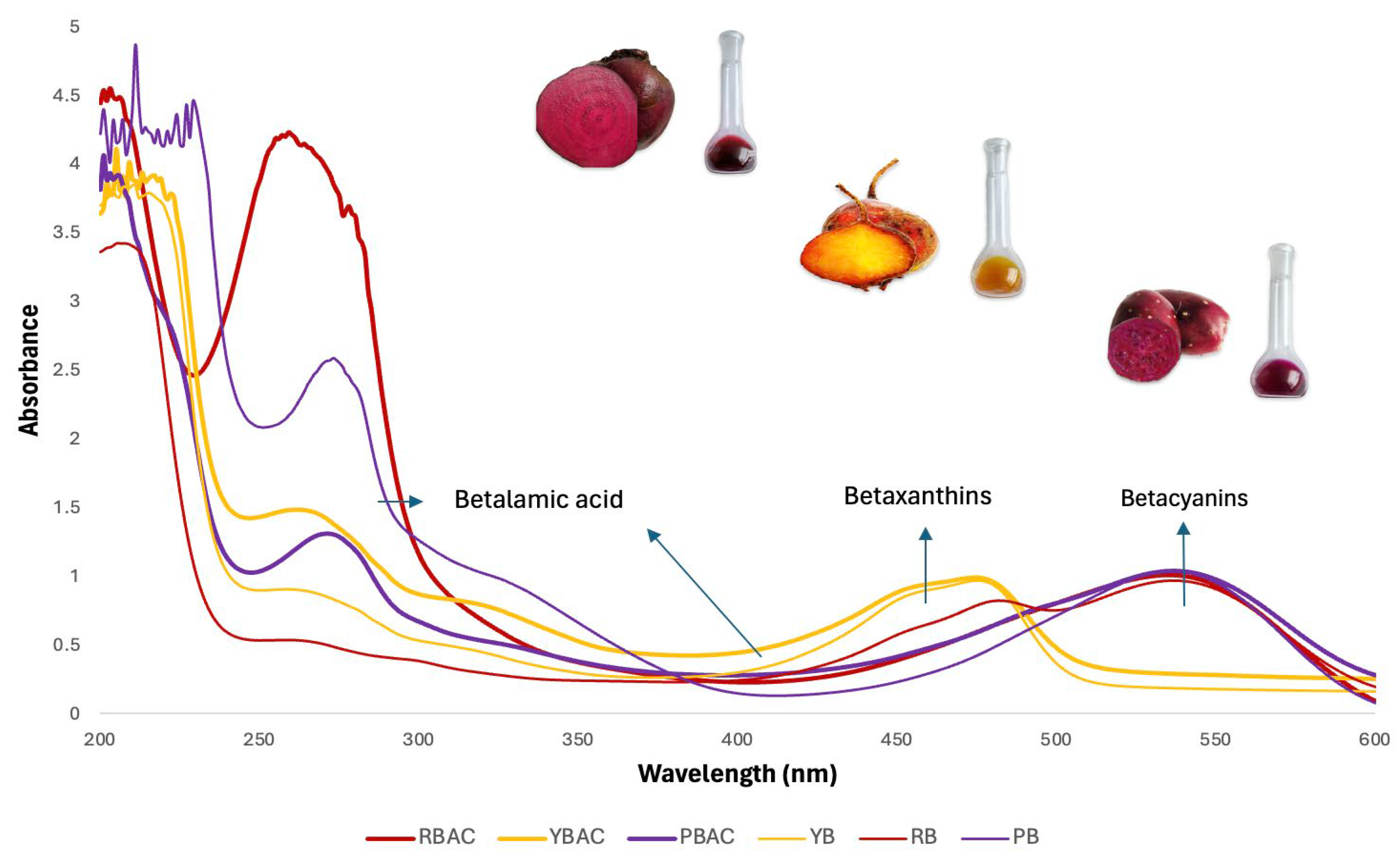
Figure 2.
Color characteristics Chroma* and Hue° of betalain extracts of RB, RBA, RBC RBAC, YB, YBA, YBC, YBAC, PB, PBA, PBC and PBAC.
Figure 2.
Color characteristics Chroma* and Hue° of betalain extracts of RB, RBA, RBC RBAC, YB, YBA, YBC, YBAC, PB, PBA, PBC and PBAC.
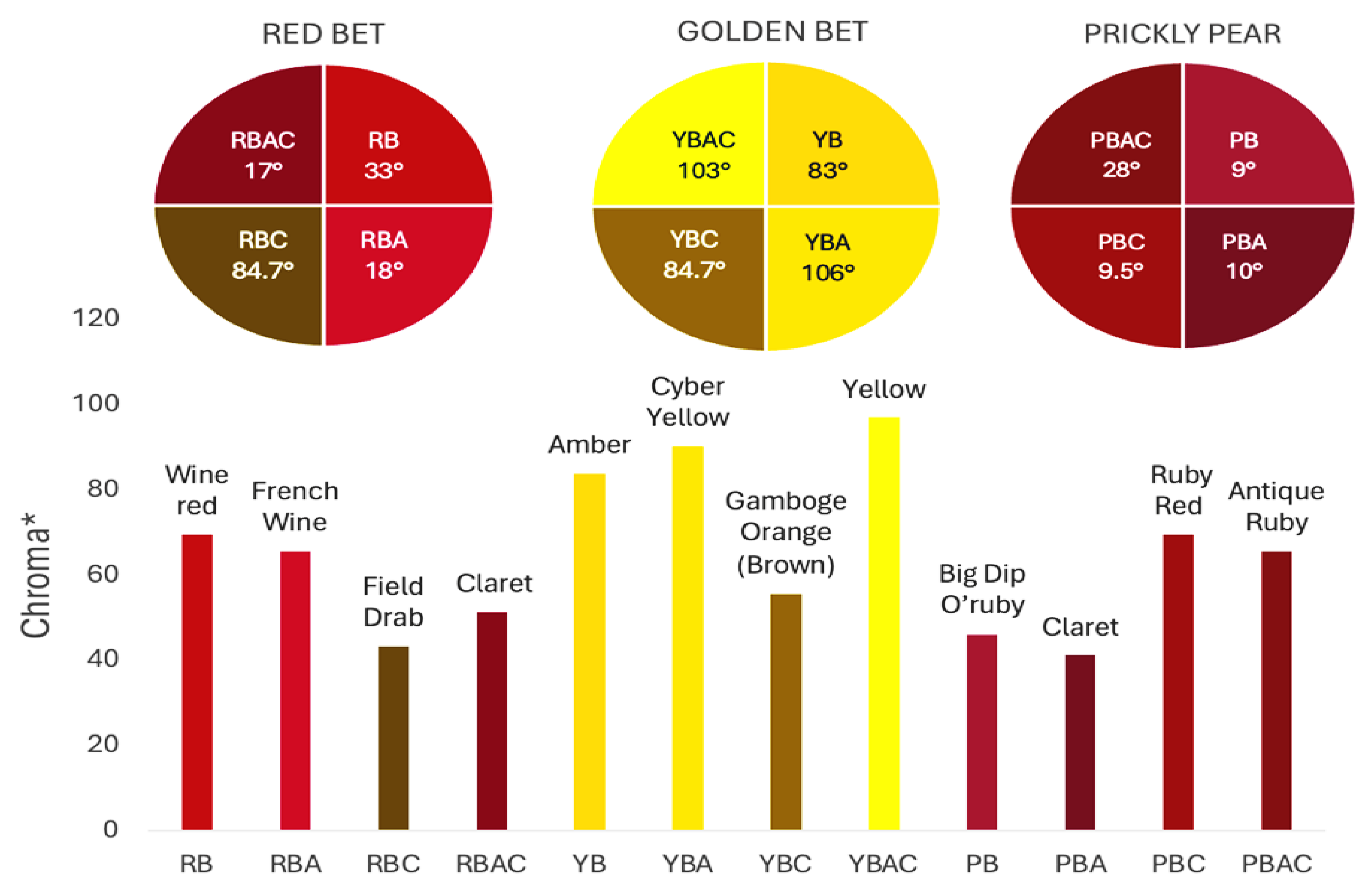
Figure 3.
Kinetics of betalains maintenance in extracts RBAC, YBAC and PBAC.
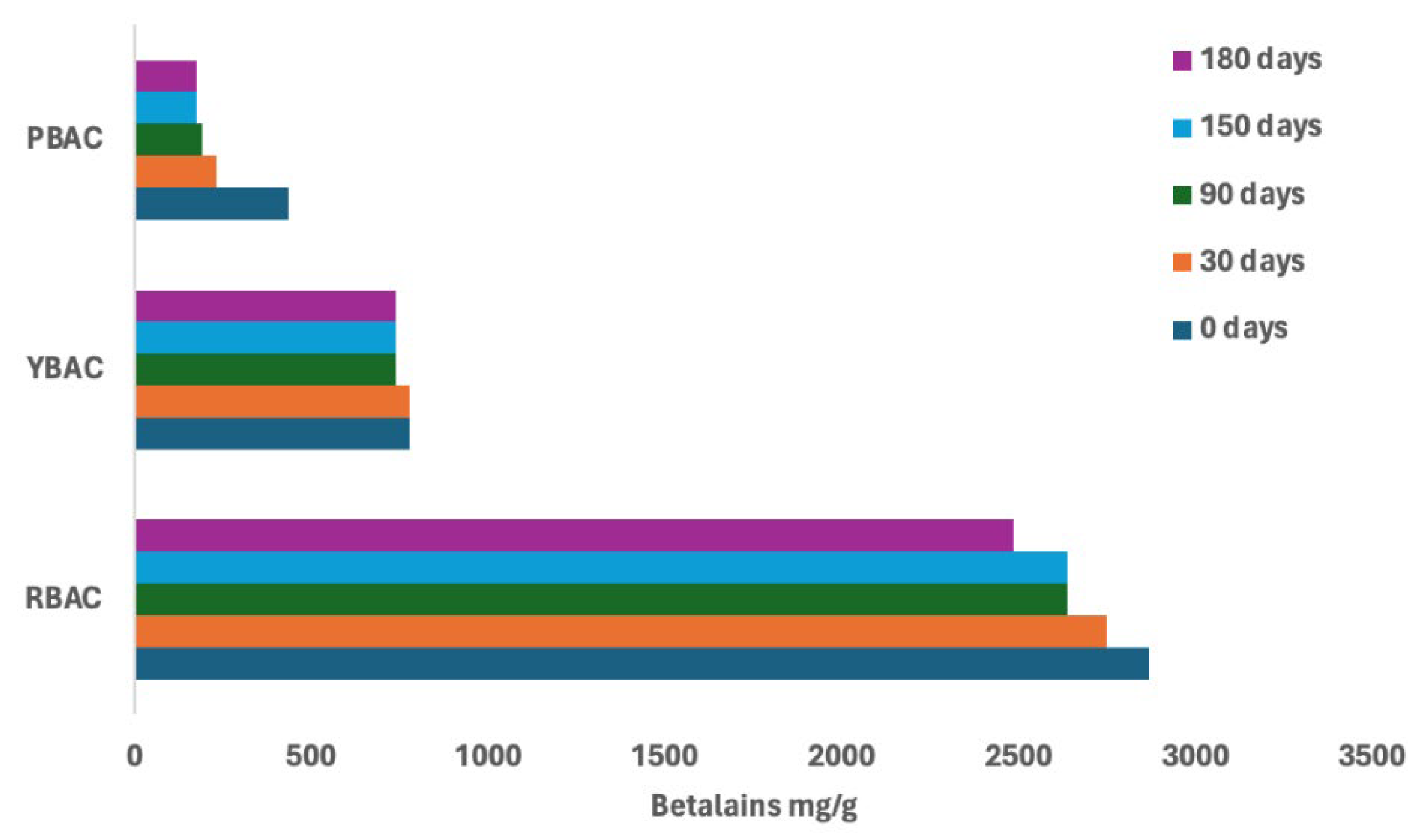
Figure 4.
Luminosity L* and color difference ΔΕ from samples of cottage cheese with betalain extracts, conforming samples CCH+PBAC, CCH+RBAC and CCH-YBAC for closed products (above) and opened products (below).
Figure 4.
Luminosity L* and color difference ΔΕ from samples of cottage cheese with betalain extracts, conforming samples CCH+PBAC, CCH+RBAC and CCH-YBAC for closed products (above) and opened products (below).
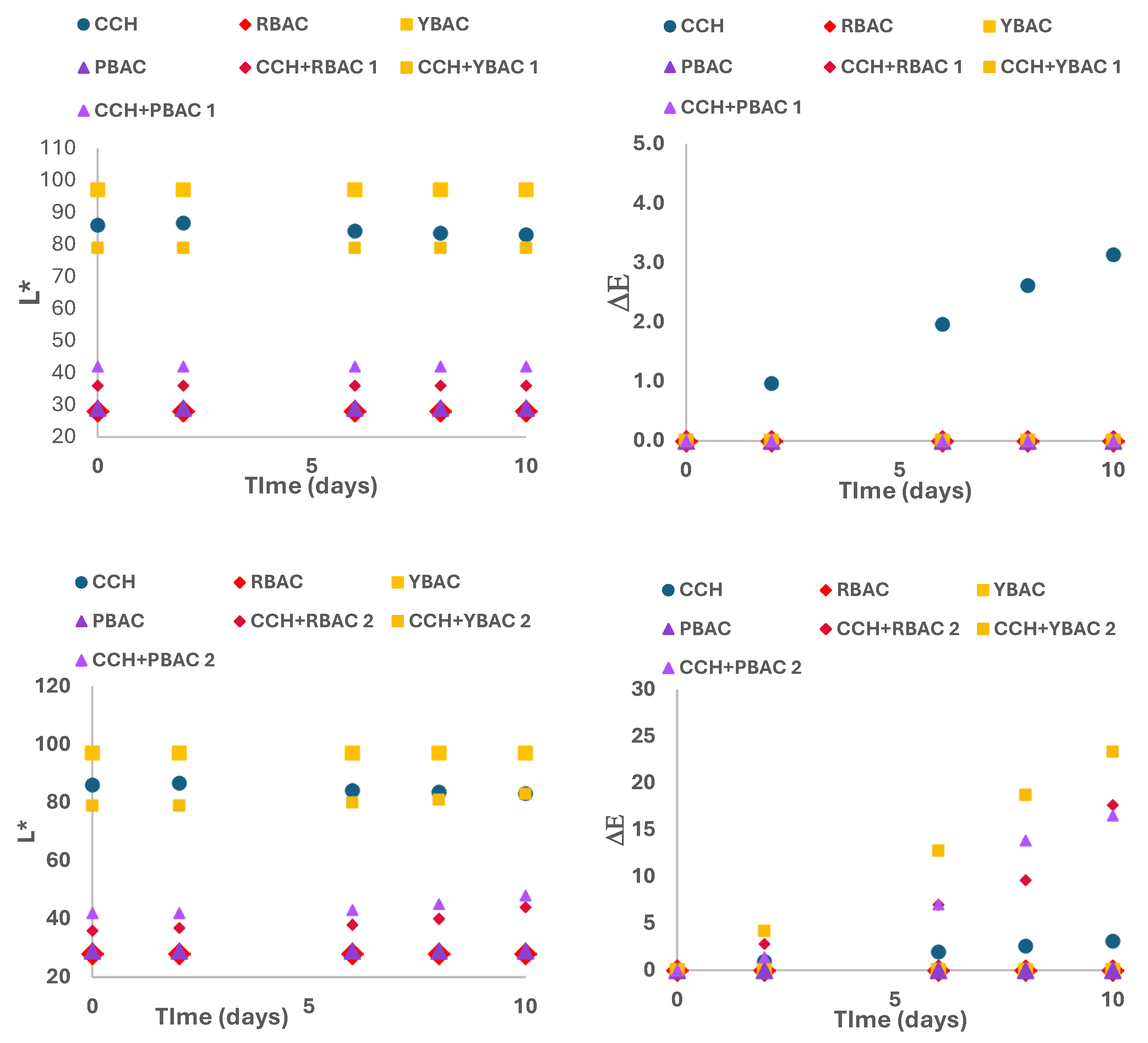

Table 1.
Betalains content and physicochemical characteristics of betalain extracts from red beetroot, golden beetroot and purple prickly pear.
Table 1.
Betalains content and physicochemical characteristics of betalain extracts from red beetroot, golden beetroot and purple prickly pear.
| Betalains Extract | Yield (mL/100 g FW) | pH | Betaxanthins (mg/g) | Betacyanins (mg/g) | Total betalains (mg/g) | °Bx | TDS (g/L) |
|---|---|---|---|---|---|---|---|
| RB | 30 | 6.7±0.01 | 392.3±2.7 | 522.2±6.2 | 914.5±8.9 | 12±0.1 | 94.7±1 |
| RBA | 30 | 4.3±0.01 | 666.73±5.2 | 1068.07±8.8 | 1734.8±14 | 12±0.5 | 94.6±2 |
| RBC | 6 | 6.5±0.02 | 267.11±1 | ND | 267.1±1 | 4±1 | 44±2 |
| RBAC | 6 | 4.3±0.3 | ND | 2866.97±5.04 | 2866.9±5.04 | 61±1 | 243.1±4 |
| YB | 80 | 6.8±0.01 | 86.4±0.63 | ND | 86.4±0.63 | 12±0.1 | 15±1 |
| YBA | 80 | 4.1±0.1 | 105.94±0.29 | ND | 105.9±0.29 | 12±0.1 | 34.2±1 |
| YBC | 16 | 6.8±0.1 | ND | ND | ND | 4±0.1 | 7±1 |
| YBAC | 16 | 4.5±0.2 | 776.38±0.35 | ND | 776.3±0.35 | 61±0.1 | 68.7±1 |
| PB | 44 | 5.7±0.5 | ND | 193.2±13.42 | 193.2±13.42 | 12±0.5 | 111.6±1 |
| PBA | 44 | 4.1±0.3 | ND | 223.9±13.24 | 223.9±13.24 | 11.5±1 | 185.5±3 |
| PBC | 9 | 6.4±0.5 | ND | 83.6±0.43 | 83.6±0.43 | 27.4±1 | 189.2±2 |
| PBAC | 9 | 4.3±1 | ND | 433.9±12 | 433.9±12 | 10±2 | 237.2±4 |
Table 2.
Shelf-life of betalains in extracts of red beetroot, yellow beetroot, and purple prickly pear extracts RBAC, YBAC and PBAC and control extracts.
Table 2.
Shelf-life of betalains in extracts of red beetroot, yellow beetroot, and purple prickly pear extracts RBAC, YBAC and PBAC and control extracts.
| Source | Shelf-life (storage days) | Betalains content (mg/g) | |||
| Red beetroot | RBAC | RB | RBA | RBC | |
| 0 | 2867±5 | 914±9 | 1735±14 | 267±1 | |
| 180 | 2485±1 | 0 | 693.9±14 | 0 | |
| Betalains maintenance % | 87 | 0 | 40 | 0 | |
| ΔE | |||||
| Yellow beetroot | YBAC | YB | YBA | YBC | |
| 0 | 776±1 | 86±1 | 106±1 | 0 | |
| 180 | 791±1 | 0 | 0 | 0 | |
| Betalains maintenance % | 95 | 0 | 0 | 0 | |
| Purple prickly pear | PBAC | PB | PBA | PBC | |
| 0 | 434±12 | 193±13 | 224±13 | 84±0.5 | |
| 180 | 177±5 | 44±2 | 78.5±2 | 0 | |
| Betalains maintenance % | 50 | 23 | 35 | 0 | |
Table 3.
Betalains retention and color difference in extracts RBAC, YBAC and PBAC by pH, temperature, oxygen, and light exposure.
Table 3.
Betalains retention and color difference in extracts RBAC, YBAC and PBAC by pH, temperature, oxygen, and light exposure.
|
Betalain extracts |
RBAC | YBAC | PBAC | |||||||
|
Exposure Factors |
Order |
Betalains (mg/g) |
Betalains retention(%) |
Color difference ΔΕ |
Betalains (mg/g) |
Betalains retention (%) |
Color difference ΔΕ |
Betalains (mg/g) |
Betalains retention (%) |
Color difference ΔΕ |
| pH | 4 | 2867±0.5 | 100 | 0 | 776±0.3 | 100 | 0 | 434±0.3 | 100 | 0 |
| 7 | 1442±0.2 | 50 | 27 | 727±0.5 | 94 | 10 | 420±0.1 | 97 | 10 | |
| 8 | 1021±0.1 | 36 | 60 | 696±0.3 | 90 | 15 | 425±0.6 | 60 | 49 | |
| 9 | 501±0.1 | 18 | 72 | 672±0.8 | 87 | 25 | 421±0.4 | 47 | 57 | |
| Temperature (°C) | 20 | 2801±0.5 | 98 | 8 | 776±0.3 | 100 | 0 | 115±.5 | 91 | 86 |
| 90 | 2437±0.6 | 85 | 38 | 776±0.3 | 100 | 0 | 75±0.3 | 85 | 90 | |
| 100 | 1581±0.5 | 55 | 53 | 776±0.3 | 100 | 0 | 14±0.1 | 50 | >100 | |
| 125 | 433±0.5 | 20 | 74 | 776±0.3 | 100 | 0 | 5±0.1 | 1 | >100 | |
| Oxigen and light (Days) | 0 | 2867±0.2 | 100 | 0 | 776±0.3 | 100 | 0 | 434±0.4 | 100 | 0 |
| 10 | 2181±1.3 | 76 | 35 | 384±0.7 | 50 | 40 | 286±1.6 | 66 | 26 | |
| 20 | 800±1.6 | 250 | 75 | 297±2.9 | 38 | 50 | 286±2.1 | 56 | 32 | |
Table 4.
Colorimetric stability of extracts RBAC, PBAC and YBAC under exposure to pH, temperature, oxygen and light.
Table 4.
Colorimetric stability of extracts RBAC, PBAC and YBAC under exposure to pH, temperature, oxygen and light.
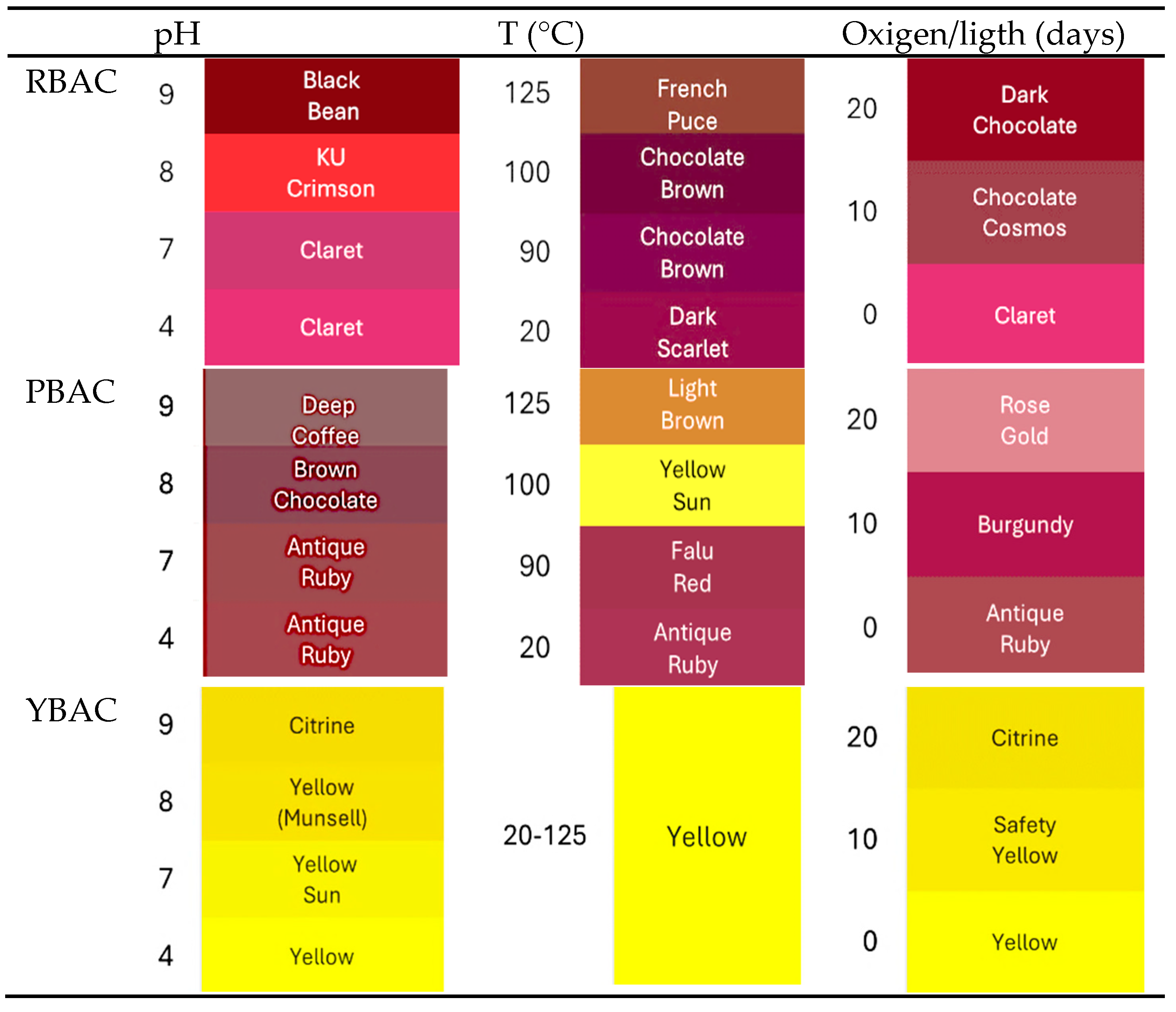 |
Table 5.
Shelf-life of betalain extracts RBAC, YBAC and PBAC on cottage cheese.
 |
Disclaimer/Publisher’s Note: The statements, opinions and data contained in all publications are solely those of the individual author(s) and contributor(s) and not of MDPI and/or the editor(s). MDPI and/or the editor(s) disclaim responsibility for any injury to people or property resulting from any ideas, methods, instructions or products referred to in the content. |
© 2024 by the authors. Licensee MDPI, Basel, Switzerland. This article is an open access article distributed under the terms and conditions of the Creative Commons Attribution (CC BY) license (http://creativecommons.org/licenses/by/4.0/).
Copyright: This open access article is published under a Creative Commons CC BY 4.0 license, which permit the free download, distribution, and reuse, provided that the author and preprint are cited in any reuse.


