

Submitted:
07 December 2024
Posted:
09 December 2024
You are already at the latest version
Abstract
The aim of this study is to assess the level of awareness and readiness of organizations to implement the assumptions of Industry 5.0, as well as to identify the benefits and challenges associated with this process. The study was conducted among Polish companies from five sectors: IT, automotive, industry, services, and banking, using a non-random sampling method and data analysis through techniques such as association rules and hierarchical clustering. The research results indicate that most organizations are familiar with the basics of the Industry 5.0 concept, but only a portion are engaged in the transformation process, which typically takes place gradually. Benefits such as improved product quality, increased production efficiency, and cost optimization are primarily recognized by companies in the IT and industrial sectors. At the same time, challenges such as the need to modernize infrastructure, ensure data security, and implementation costs remain significant barriers, particularly for small and medium-sized enterprises. The research findings have practical significance as they provide companies and decision-makers with guidance on effective planning and implementation of actions related to the implementation of Industry 5.0. The article presents an original model for implementing the assumptions of Industry 5.0, integrating technological, social, and organizational aspects, offering a comprehensive approach to transformation towards sustainable and human-centered development. The paper makes an original contribution by combining empirical analysis with the proposal of a practical model, enabling a better understanding of the technological and social transformation process in Polish organizations.
Keywords:
Industry 5.0
; organization
; association rules
; hierarchical clustering
; technologies
1. Introduction
Industry 5.0 is emerging today as a new paradigm for managing physical, intellectual, and technological resources, becoming the key to harmonious, human-centric development. This concept signifies the skillful integration of technological progress with human well-being and sustainable growth. In Industry 5.0, recognized as a new economic model, the main emphasis is placed on close collaboration between humans, machines, and digital technologies [1,2,3]. The key aspects of this collaboration include: (1) Complementarity – machines should enhance human skills; (2) Security and privacy; (3) Flexibility and adaptability of systems to user needs; (4) Education and training; (5) Humanization of technology; (6) Ethics and responsibility [4]. The technologies driving digital transformation and directly influencing the development of Industry 5.0 include [1,5,6,7,8,9]: (1) Generative Artificial Intelligence (GAI), enabling the creation of new, unique content such as text, images, music, and film; (2) AI and machine learning, along with big data analytics, as tools for analyzing data, predicting trends, and personalizing offerings; (3) The Internet of Things (IoT), enabling automation and remote management of processes in production, logistics, agriculture, and more; (4) Robotics and automation, which take over routine, repetitive tasks, allowing employees to focus on more creative and skill-intensive tasks; (5) Blockchain technology, facilitating secure data exchange and transaction verification, which is crucial in finance, supply chains, and identity management.
The aforementioned technologies are becoming vehicles for economic and social transformation, fostering the emergence of innovative business models, highly personalized services and communication, as well as the detection of trends, customer behaviors, and environmental anomalies and threats [6]. For researchers and practitioners engaged with these topics, this implies the need to develop new business models based on sustainable collaboration between companies, employees, consumers, and other stakeholders in socio-economic life.
Understanding the mechanisms occurring at the intersection of economy, people, machines, and education—hallmarks of Industry 5.0—requires in-depth scientific research. So far, strategies, principles, and guidelines for policymakers, entrepreneurs, and employees on how to leverage advanced technologies for the development of Industry 5.0 have not been developed. The lack of such guidelines may lead to inefficient and fragmented actions as well as potential risks, such as digital exclusion or social inequalities [10].
The theoretical aim of this study is to deepen knowledge about Industry 5.0, a concept that responds to the challenges posed by the dynamic development of technology and societal changes. The empirical aim is to examine the level of awareness regarding the development of Industry 5.0 within organizations, the benefits of its implementation, and the challenges organizations face in this complex process. Achieving these objectives required the application of various research methods, including a critical literature review and conducting surveys among representatives from five sectors: IT, automotive, services, banking, and industry.
The first part of the article presents the key principles of Industry 5.0, taking into account its technological, social, and economic contexts. It then discusses the objectives of the empirical research, the research methodology employed, and the most significant findings and conclusions derived from the study. The empirical section provides detailed results from research conducted on a sample of N=556 selected organizations. These studies illustrate the level of awareness and readiness for the implementation of Industry 5.0 in the examined economic sectors. Finally, the article outlines directions for future research and provides recommendations for implementation strategies in light of the challenges that Industry 5.0 poses for contemporary organizations.
2. Theoretical Foundation and Hypotheses
2.1. The Essence and Concept of Industry 5.0
Industry 5.0, also known as Society 5.0, is a concept that integrates advanced technologies with various aspects of social and economic life, aiming to create harmonious and sustainable development. This idea arose from the need to address the challenges of the modern world, including demographic changes, urbanization, climate change, and growing social and economic inequalities [4,11]. The concept of Industry 5.0 involves leveraging the latest advancements in artificial intelligence (AI), the Internet of Things (IoT), robotics, big data, and blockchain technology to build more integrated, efficient, and inclusive societies. In contrast to Industry 4.0, which focused primarily on automation and digitization of production processes, Industry 5.0 emphasizes the central role of humans in the economic and social ecosystem [3].
An essential element of Industry 5.0 remains the concept of sustainable development, which aims to achieve harmony between economic growth and environmental protection, transitioning from a model where profit and efficiency are the primary goals to one that prioritizes human and environmental well-being [12]. Technology is envisioned as a supporting tool rather than a dominant force, leading to the creation of new business models that integrate social and ecological needs. Industry 5.0 also emphasizes significantly increasing social participation in decision-making processes. Thanks to digital technologies, citizens are expected to have greater influence over shaping policies and development strategies [13]. These principles contribute to increased transparency and accountability in public governance. In this way, Industry 5.0 promotes a more democratic and sustainable approach to social and economic development.
A key principle is also inclusivity, aiming to reduce social and economic inequalities. Within Industry 5.0, technologies are intended to be accessible to all, ensuring equal opportunities for development and participation in the labor market for various social groups, including the elderly and people with disabilities [2]. Industry 5.0 can thus be described as a vision of the future where advanced technologies are employed in service of humanity, promoting sustainable development, inclusivity, and greater social participation. It represents an economic model that seeks the harmonious coexistence of technology, society, and the natural environment, emphasizing human well-being as the central focus of development [10].
The evolution of the concept of Industry 5.0 is a process that reflects the growing role of technology in shaping modern societies. Initially, concepts related to the industrial revolution focused primarily on mechanization (Industry 1.0), electrification (Industry 2.0), automation (Industry 3.0), and digitalization (Industry 4.0) [3,4,12,14]. Each of these stages introduced significant changes in how societies produced goods and services, as well as in social and economic structures [3,15,16,17,18].
Industry 5.0 emerged as a response to these challenges. This concept was formally introduced by the Japanese government as part of its "Society 5.0" policy, which was first outlined in the "Fifth Science and Technology Basic Plan" in 2016. The goal was to create a society that harmonizes technological development with social and environmental needs [14]. Industry 5.0 therefore places significant emphasis on the centrality of humans within the economic ecosystem, striving for sustainable development that not only promotes technological innovation but also integrates social well-being and environmental protection. It represents a more holistic approach, envisioning technologies such as artificial intelligence, the Internet of Things, robotics, big data, and blockchain as tools to address global challenges such as climate change, aging populations, and social and economic inequalities [4].
One of the key elements in the evolution of Industry 5.0 is the idea of smart cities, which leverage modern technologies to enhance the quality of life for residents. These cities are designed to be sustainable and environmentally friendly, using technology to optimize the management of resources, energy, transportation, and urban infrastructure. The central goal of this concept is to create environments that are more integrated, efficient, and resident-friendly [19].
The concept of Industry 5.0 also envisions the development of new business models that integrate sustainability and social responsibility. Companies are encouraged to adopt strategies that not only maximize profits but also contribute to improving societal well-being and protecting the environment. In this way, Industry 5.0 promotes an approach in which sustainable development becomes an integral part of business strategies [12].
The formation of the Industry 5.0 concept reflects a shift from traditional economic models focused on production and efficiency to a more holistic approach that integrates technology with social and environmental needs.
2.2. The Level of Awareness Among Enterprises Regarding the Implementation of Industry 5.0 Principles
Assessing the level of awareness among enterprises regarding the implementation of Industry 5.0 principles forms the foundation for effectively conducting the transformation process. In the literature, awareness is defined as the ability to recognize the potential of new concepts, their possible applications, and the challenges organizations may face during implementation. In the case of Industry 5.0, particular emphasis is placed on understanding its multidisciplinary nature, which encompasses not only technological aspects but also social, environmental, and ethical dimensions [20].
Theoretical foundations suggest that enterprise awareness can be considered at several levels. The first level is basic knowledge of the concept, which includes general information about the principles of Industry 5.0, such as the use of artificial intelligence, robotics, and big data to achieve sustainable development. The second level is an in-depth understanding that enables enterprises to perceive potential benefits, such as improving product quality or optimizing operational processes. The third and highest level is strategic awareness, allowing organizations to formulate long-term transformational plans tailored to the specifics of their activities [15].
The degree of engagement in the transformation process toward Industry 5.0 depends on many factors, including the level of awareness, available resources, and an organization’s readiness to take risks associated with innovation adoption. The literature identifies three stages of enterprise engagement. In the first stage, organizations begin exploring the opportunities offered by Industry 5.0 implementation, often reflected in market research and expert consultations [19]. The second stage involves actively implementing new technologies and processes to integrate innovations into the company’s daily operations. The final stage is the consolidation of changes, including continuous monitoring of outcomes and adaptation to dynamically changing market conditions [13].
The pace of implementing Industry 5.0 in enterprises is another critical aspect discussed in the literature. This pace depends on factors such as the availability of technology, the readiness of management to invest in new solutions, and the organizational structure of the enterprise. A rapid implementation pace can offer advantages like gaining a competitive edge but often comes with greater operational risks. Conversely, a gradual pace of transformation allows for better alignment of actions to the enterprise's specifics and more efficient resource management, though it may delay the realization of the full benefits of the implemented changes [11].
Issues related to awareness, engagement, and the pace of implementing Industry 5.0 in enterprises reveal significant interdependencies between these factors. A higher level of awareness typically leads to greater engagement in the transformation process, which, in turn, influences the efficiency and speed of innovation adoption.
2.3. Hypotheses
Based on the theoretical analysis and preliminary empirical data, a research hypothesis was formulated. The hypothesis posits that the level of awareness, engagement, and pace of implementing Industry 5.0 principles in enterprises depend on factors such as the sector of activity, company size, capital structure, and the year of establishment. This hypothesis assumes that differences in organizational characteristics can influence their approach to transformation toward Industry 5.0, which is reflected in the level of familiarity with the concept, the intensity of implementation efforts, and the dynamics of change.
To verify this hypothesis, the following research questions were formulated: (1) What is the current understanding of the Industry 5.0 concept among Polish enterprises? (2) To what extent are enterprises engaged in the transformation process toward Industry 5.0? (3) What pace of implementation of Industry 5.0 principles can be observed in the studied enterprises? (4) What factors have the greatest impact on awareness, engagement, and the pace of transformation toward Industry 5.0? (5) How do the specifics of the sector of activity and company size affect the effectiveness of implementing Industry 5.0 principles? (6) What benefits and challenges do enterprises identify during the transformation process? (7) What implementation strategies are most effective in increasing the pace and efficiency of transformation toward Industry 5.0?
3. Materials and Methods
3.1. Data Collection and Sample
The objective of the conducted research was to examine the awareness of Industry 5.0 principles, the level of transformation, as well as the challenges and barriers associated with its implementation. The research was carried out among Polish organizations from five sectors: IT, automotive, industry, service, and banking services. The study was conducted between August and October 2024.
A non-random sampling method was applied in the study. The sample included N=600 organizations, of which N=556 completed surveys were valid for analysis. The questionnaire was administered online using the CAWI method. A structured questionnaire was employed in the research, and the majority of respondents were representatives of senior management or middle management. They were invited to answer 16 questions related to topics such as: (1) The level of awareness of the Industry 5.0 concept. (2) Whether the organization is engaged in the transformation process toward Industry 5.0. (3) The pace of Industry 5.0 implementation within the organization. (4) The benefits or improvements associated with Industry 5.0. (5) The challenges encountered during the transformation process toward Industry 5.0 within the organization.
3.2. Data Analysis
To identify specific categories of enterprises linked to comprehensive awareness of the Industry 5.0 concept, engagement in the transformation process, and its implementation, association rules were utilized. An association rule takes the form X->Y, where X (antecedent, left-hand side – LHS) is a set of items, and Y (consequent, right-hand side – RHS) is an item. The implication of the rule is that if all elements in X are present in a particular "basket," Y is "likely" to also appear in the basket. In this context, if an enterprise possesses certain characteristics, it is likely to implement Industry 5.0.
To identify strong rules, metrics such as support, confidence, and lift were used. Support indicates the frequency of occurrence of an itemset, enabling the identification of frequent sets. Confidence represents the conditional probability of the consequent given the antecedent. Lift measures how many times more often X and Y occur together than expected if they were statistically independent. A lift of 1 indicates no dependency between X and Y; lift > 1 suggests that X and Y are likely to occur together, while lift < 1 indicates that X and Y are unlikely to occur together. Lift, therefore, serves as a measure of the "strength" of a rule. A detailed description of association rules can be found in the work of Agrawal et al. [21].
The apriori algorithm was used to extract association rules, leveraging prior knowledge about the properties of frequent itemsets in the rule-generation process. To assess the statistical significance of the generated association rules, Fisher's exact test was applied (assuming p=0.05). Redundant rules—those for which an additional element on the left-hand side did not improve confidence—were removed [22].
To identify patterns and relationships between enterprise categories and the benefits and challenges encountered during the transformation toward Industry 5.0, hierarchical clustering on principal components (HCPC) was employed. Since the variables included in the analysis are qualitative, multiple correspondence analysis (MCA) was first conducted, and then the object coordinates on the principal components were used for hierarchical clustering (HC). MCA was thus used as a preliminary step to transform qualitative variables into continuous variables [23].
4. Results
4.1. Sample Characteristics
Table 1 presents the structure of the surveyed enterprises according to their sector of activity, size, year of establishment, and type of capital. The conducted research indicated that the majority of companies operate in the IT sector (21.9%) and the service sector (21.2%). The vast majority are small enterprises (69.6%). Most of the companies were established between 2000 and 2009 (31.3%) or between 2010 and 2019 (36.0%). Polish capital predominates (89.4%), with a smaller share of foreign capital (4.0%) and mixed capital (6.7%).
4.2. Awareness, Commitment, and Pace of Implementation of Industry 5.0
The surveyed enterprises were asked about their awareness of the Industry 5.0 concept, their commitment to the transformation process toward Industry 5.0, and the pace of implementation of Industry 5.0 within their organizations. A graphical representation of the responses to these three questions is shown in Figure 1.
The majority of enterprises have heard of Industry 5.0 but acknowledge that they lack comprehensive knowledge of the concept (66%). Only one in four enterprises (25%) is fully aware of the Industry 5.0 concept. One in eleven enterprises (9%) is entirely unfamiliar with Industry 5.0.
Among enterprises fully aware of Industry 5.0, almost half actively participate in the transformation (representing 12% of all surveyed enterprises), while the other half (also 12%) are in the early stages of transformation. Among enterprises with incomplete knowledge of Industry 5.0, most are at the beginning of the transformation process (33%), slightly fewer are considering such efforts (28%), and one in twenty-five enterprises is not considering engagement in the transformation process. Enterprises entirely unfamiliar with the Industry 5.0 concept mostly do not engage in the transformation process (6%), as they perceive it as irrelevant, while a smaller portion (3%) considers future involvement.
Overall, the majority of enterprises (59%) are actively involved or in the initial stages of transformation. Nearly one-third of enterprises (31%) are considering engagement in the transformation process toward Industry 5.0. Only 10% of enterprises do not plan to engage in the transformation process, considering it irrelevant to their operations.
Among enterprises actively involved in the transformation process, most describe the pace as gradual (8% of all enterprises), while a significant portion indicates the process is happening quickly (5%). Among enterprises in the early stages of transformation, most report that changes are occurring gradually (35%), although a notable proportion describes the pace as slow (9%). Among enterprises considering the implementation of Industry 5.0, the majority also describe the pace as slow (19%). For enterprises that view the transformation process toward Industry 5.0 as irrelevant, most have no opinion on the pace of implementation within their organization (65%).
Overall, the majority of enterprises characterize the pace of Industry 5.0 implementation as gradual (53%), while about one-third (32%) describe the pace as slow. Nearly equal proportions of enterprises report the pace as fast or have no opinion on the matter (7% and 8%, respectively).
Examining the connection between the categories of enterprises included in the study and full awareness of the Industry 5.0 concept, the apriori algorithm identified three association rules, one of which was removed as redundant. Figure 2 presents a parallel coordinates plot for the two remaining rules. The bold, distinct red line indicates a strong association between a category and a higher probability of full awareness of the Industry 5.0 concept, while weak or almost invisible red lines suggest that the category is unlikely to increase the probability. The x-axis represents the position of each category within the rule.
Two association rules are statistically significant (based on Fisher’s exact test) and are listed with their correspondent lift and confidence values below.
Rule 1: If sector=industrial, size=small, year=2010-2019, Then the probability of fully awareness is 66.67% (lift=2.71).
Rule 2: If sector=industrial, size=medium, capital=mixed, Then the probability of fully awareness is 60% (lift=2.44).
Both of the mentioned rules appeared with the same frequency.
To identify the categories of enterprises associated with active or emerging involvement in the transformation process towards Industry 5.0, the apriori algorithm was used, followed by the elimination of redundant rules. Ultimately, four rules were identified (Figure 3), among which Rule 2 occurred most frequently.
Rule 1: If size=large, capital=mixed, Then the probability of active/starting commitment is 70% (lift=1.54).
Rule 2: If sector=industrial, size=medium, year=2000-2009, capital=Polish, Then the probability of active/starting commitment is 69.23% (lift=1.52).Rule 3: If year=1990-1999, capital=mixed, Then the probability of active/starting commitment is 66.67% (lift=1.47).
Rule 4: If sector=industrial, size=small, year=2010-2019, Then the probability of active/starting commitment is 66.67% (lift=1.47).
It should be emphasized, however, that none of the mentioned rules are statistically significant. This means that, in the case of active or emerging involvement in the transformation process, no discernible pattern can be identified.
The application of the apriori algorithm to determine the categories of enterprises associated with a rapid/gradual pace of implementing Industry 5.0 allowed for the identification of 14 rules, 8 of which were deemed redundant. Among the remaining rules (see Figure 4), all are statistically significant, with Rules 2 and 3 appearing most frequently.
Rule 1: If sector=IT, year=2020_and_after, Then the probability of quickly/gradually pace of implementation of Industry 5.0 is 85.71% (lift=1.63).
Rule 2: If sector=industrial, size=small, Then the probability of quickly/gradually pace of implementation of Industry 5.0 is 83.33% (lift=1.58).
Rule 3: If sector=industrial, year=2000-2009, Then the probability of quickly/gradually pace of implementation of Industry 5.0 is 80.65% (lift=1.53).
Rule 4: If sector=industrial, size=medium, year=2000-2009, Then the probability of quickly/gradually pace of implementation of Industry 5.0 is 88.89% (lift=1.69).
Rule 5: If sector=industrial, size=small, year=2000-2009, Then the probability of quickly/gradually pace of implementation of Industry 5.0 is 90% (lift=1.71).
Rule 6: If sector=industrial, size=small, year=2010-2019, Then the probability of quickly/gradually pace of implementation of Industry 5.0 is 88.89% (lift=1.69).
4.3. Benefits and Challenges
The question regarding the benefits of Industry 5.0 was a multiple-choice question. Most enterprises indicated (Figure 5) that Industry 5.0 contributes to improving the quality of products/services (73%), while approximately half of the surveyed enterprises pointed to increased production efficiency as a benefit (52%). Responses related to flexibility in production adapted to changing market needs (39%) and production cost optimization (30%) were indicated by a smaller percentage.
The question regarding the challenges encountered during the transformation process towards Industry 5.0 was also a multiple-choice question. Most enterprises indicated (Figure 6) that the challenges include the need for staff training (58%), ensuring data and network security (53%), and the necessity of modernizing infrastructure and systems (52%). Slightly less than half of the enterprises stated that acquiring new skills is a challenge (47%), while one-third of the enterprises identified the costs of implementing new technologies as a challenge (35%).
To identify the relationships between the indicated benefits and categories related to enterprise characteristics (sector, employment size, year of establishment, and company capital), an MCA analysis was conducted, and the results of the category projection onto two main axes are presented in Figure 7. Based on the proximity of the categories, it can be concluded that enterprises operating in the IT sector are more likely to recognize the benefit of increased production efficiency, while medium-sized enterprises in the industrial sector with mixed capital more often emphasize the benefit of production cost optimization. It can also be observed that enterprises in the banking/financial sector frequently do not perceive the benefit of increased production efficiency.
Based on the hierarchical clustering conducted using MCA, it can be concluded that all analyzed variables had a statistically significant impact on the composition of the clusters, with the enterprise sector having the greatest influence (Table 2).
Table 3 presents the results of hierarchical clustering obtained from MCA. For clarity of interpretation, only categories with positive v-test values (indicating a stronger association of the given category with the cluster) and p-values less than 0.05 are shown for each cluster. The categories are presented in descending order of v-test values, starting with those most strongly associated with the cluster.
Additionally, the table includes the values of the Cla/Mod and Mod/Cla measures, which refer respectively to the distributions of significant categories within clusters and distributions within clusters themselves. For instance, it can be observed that 91.803% of IT industry enterprises belong to Cluster 1, and 82.353% of cases in Cluster 1 are IT enterprises. In this case, the high values of both indicators point to a strong association of the IT industry with Cluster 1.
Conversely, it can be noted that 27.364% of enterprises with Polish capital belong to Cluster 1, while 100% of cases in Cluster 1 are enterprises with Polish capital. This indicates that enterprises with Polish capital are significant in Cluster 1 but are not exclusively assigned to it, which may suggest their presence in other clusters (as is indeed the case with Cluster 2).
The first cluster consists of small enterprises in the IT sector, established between 2010 and 2019, with Polish capital. These enterprises more frequently than others identified the following benefits of Industry 5.0: increased production efficiency and improved quality of products/services. However, they did not observe benefits related to production cost optimization or flexibility in production adapted to changing market needs.
The second cluster primarily includes small enterprises in the service, automotive, and banking/financial sectors, established between 1990 and 1999, with Polish capital. These enterprises more frequently than others do not recognize benefits associated with increased production efficiency.
The third cluster comprises large and medium-sized enterprises in the industrial sector with mixed capital, established in 1989 or earlier. These enterprises more often than others simultaneously identify benefits related to production cost optimization, flexibility in production adapted to changing market needs, and increased production efficiency. At the same time, they more frequently point to a lack of benefits related to improved quality of products/services.
Figure 8 presents the MCA results (projections of categories onto two main axes), which allowed for the identification of connections between challenges arising during the transformation toward Industry 5.0 and enterprise characteristics. Small IT sector enterprises established between 2010 and 2019 more frequently highlight the challenge of modernizing infrastructure and systems. Automotive sector enterprises recognize challenges associated with acquiring new skills and the costs of implementing new technologies. Service sector enterprises are clearly associated with not perceiving challenges such as the need for staff training, infrastructure and systems modernization, and ensuring data and network security.
Based on the hierarchical clustering conducted using MCA, it can be concluded that all analyzed variables had a statistically significant impact on the composition of the clusters, with the enterprise sector having the greatest influence (Table 4).
In Table 5, the results of hierarchical clustering obtained from MCA are presented. The categories are listed in descending order of the v-test values, additionally providing the p-value and the values of the Cla/Mod and Mod/Cla indices.
Cluster 1 consists of small IT enterprises with Polish capital established between 2010 and 2019. These businesses, more often than others, recognize challenges related to the need for modernizing infrastructure and systems as well as ensuring data and network security. Additionally, they are more likely not to perceive challenges associated with acquiring new skills, the costs of implementing new technologies, and the necessity of staff training. Cluster 2 comprises small enterprises in the service and banking/financial sectors with Polish capital, established between 1990 and 1999. These companies, more often than others, do not perceive challenges related to modernizing infrastructure and systems, ensuring data and network security, staff training, or the costs of implementing new technologies. Cluster 3 includes medium-sized enterprises in the automotive and industrial sectors with Polish capital. These businesses more frequently identify challenges such as the costs of implementing new technologies, acquiring new skills, the need for staff training, modernizing infrastructure and systems, and ensuring data and network security. The final cluster, Cluster 4, comprises large and medium-sized enterprises in the industrial and banking/financial sectors, established in 1989 or earlier, with foreign or mixed capital. These businesses, more often than others, do not recognize challenges related to staff training, acquiring new skills, the costs of implementing new technologies, or modernizing infrastructure and systems. However, it should be noted that the v-test values and Cla/Mod indices for the latter two challenges suggest that their association with Cluster 4 is not particularly strong.
5. Discussion
5.1. Implications
The conducted research confirms that the awareness of the Industry 5.0 concept among Polish enterprises is diverse. Only one in four companies reports a full understanding of this idea, while the majority of respondents acknowledge a fragmented understanding of it. The transition towards Industry 5.0 progresses at varying speeds, with gradual approaches prevailing, particularly in medium- and small-sized enterprises and the industrial sector. The study revealed that the main benefits of implementing this concept include improved product and service quality and enhanced production efficiency, particularly noticeable in technological industries. Identified challenges include the need to modernize infrastructure, ensure data security, and train personnel, with the costs of implementing new technologies posing a significant barrier for smaller companies.
The conducted research on the implementation of the Industry 5.0 concept in Polish enterprises revealed that awareness of this idea is limited, with many companies possessing only a fragmented understanding of the concept. Therefore, it is worth comparing these findings with other studies. Similar conclusions emerge from a report highlighting the need for strategies based on sustainable development while pointing out insufficient actions in this area [28]. Both analyses emphasize the necessity of increasing knowledge and awareness among Polish companies to fully exploit the potential of modern economic solutions.
Benefits such as improving the quality of products and services and enhancing production efficiency are also identified in the analyses as key elements of the transformation towards Industry 5.0 [29]. These solutions address the growing costs and sustainability requirements, making them attractive to Polish enterprises. This research aligns with findings that underline the necessity of investing in modern technologies and employee skill development to meet emerging challenges [30].
Findings related to challenges, such as modernizing infrastructure, ensuring data security, and the costs of technology implementation, are corroborated by analyses indicating that strategically addressing these elements can improve company competitiveness and support adaptation to rapidly changing market conditions [31]. Additionally, this research underscores the importance of a holistic approach to implementing the Industry 5.0 concept, considering technological, social, and environmental aspects. The results of our study also highlight the need for a holistic approach to transformation. It can be observed that the analysis of association rules and hierarchical clustering indicated that IT sector enterprises more frequently achieve production efficiency, while those with mixed capital and medium-sized businesses excel in cost optimization. Conversely, the automotive and industrial sectors face greater challenges in acquiring new skills and managing the costs of technology implementation. Thus, the findings highlight the importance of a holistic approach to transformation that also takes into account the specifics of the sector and the size of the enterprises. They also point to the need for greater educational and technological support for organizations at an early stage of implementing Industry 5.0. The results provide a foundation for further analysis and the development of implementation strategies to support companies in achieving goals aligned with a modern, sustainable economy based on collaboration between humans and technology.
Based on the research, recommendations can be proposed to facilitate the implementation of the Industry 5.0 concept and enhance the efficiency of the transformation. First and foremost, enterprises should invest in raising awareness and knowledge of Industry 5.0 through training sessions, workshops, and industry conferences. It is also essential to develop employee competencies through tailored educational and training programs that enable them to acquire necessary skills in modern technologies and their practical application.
Companies should pay particular attention to modernizing technological infrastructure and implementing systems that ensure data security, which can be crucial in building trust among both employees and customers. Developing partnerships with the IT sector, which can provide technological solutions and support during the transformation process, is also recommended.
For small and medium-sized enterprises, which often face financial constraints, it is advisable to explore opportunities for collaboration with other firms and utilize available funding support, such as technology development grants or innovation subsidies. Additionally, individual sectoral needs should be considered, and the pace of transformation should be tailored to organizational capabilities while monitoring the outcomes of implemented actions.
Enterprises may also consider introducing more flexible work models to better adapt to changing market conditions and increase employee participation in decision-making processes. Promoting interdisciplinary collaboration and creating innovative project teams can further support the development and implementation of advanced technologies. At the strategic level, an integrated approach to Industry 5.0 implementation is recommended, encompassing technological, social, and environmental aspects. Developing long-term strategies that account for sustainable development can contribute to building a competitive advantage and enhancing the company's attractiveness to potential partners and investors.
5.2. Theoretical Model
The essence of the considerations is the construction of an original theoretical model for implementing the assumptions of Industry 5.0 in enterprises. The proprietary model, presented in Figure 9, illustrates a comprehensive approach to integrating advanced technologies with various aspects of organizational operations, emphasizing the harmonious coexistence of technology, people, and the environment. The model includes the key stages of the transformation process and identifies the most critical elements necessary for the effective implementation of Industry 5.0.
In the initial stage, the model focuses on building awareness and understanding of the Industry 5.0 concept among decision-makers and employees. This process involves education, training, and informational activities aimed at increasing knowledge about the potential benefits and challenges of implementing modern technologies. The next step is the analysis of the enterprise's needs and capabilities, including identifying areas requiring modernization and potential barriers to transformation. The model emphasizes the importance of technological and organizational diagnosis, enabling better alignment of the implementation strategy with the company's specifics.
In the third stage, the planning and implementation of advanced technologies take place, including artificial intelligence, the Internet of Things, robotics, big data, and blockchain. This process requires simultaneous consideration of human-centric aspects such as work ergonomics, ethics, and data protection.
The model also highlights the importance of collaboration with external partners, including the IT sector, academic institutions, and non-governmental organizations, which can support enterprises in achieving their transformational goals. The final phase involves monitoring and evaluating the outcomes of the Industry 5.0 implementation. At this stage, it is crucial to measure the benefits achieved, such as increased production efficiency, improved product and service quality, cost optimization, and reduced environmental impact. The model also suggests continuous adaptation of strategies in response to changing market and technological conditions.
The entire concept is based on the premise that Industry 5.0 is not merely a technological transformation but also a cultural and social one, aimed at creating a sustainable, inclusive, and innovative work environment. This model serves as a practical tool to support enterprises in transitioning to a more sustainable and human-centric operational model.
5.3. Limitations
The conducted research encountered certain limitations due to several key factors that may influence the generalization of findings and the interpretation of data. Firstly, the use of a non-random sampling method limits the representativeness of the study group and prevents full generalization of the results to the entire population of enterprises in Poland. The sample focused on organizations from selected industries, such as IT, automotive, industrial, service, and banking sectors, potentially overlooking specific challenges and benefits associated with Industry 5.0 in other economic sectors.
Another limitation involves data collection methods. Utilizing online surveys via the CAWI method may affect the quality of responses, especially in terms of question interpretation and respondent engagement. Additionally, while the questionnaire design was robust, it may not have captured all potential variables influencing the transformation toward Industry 5.0, limiting the comprehensiveness of the analysis.
A significant limitation is also the lack of long-term measurements that could account for changes in awareness and the level of enterprise engagement in the transformation process over time. The research focuses on a static snapshot at a given moment, making it difficult to assess the dynamics and evolution of transformation processes. Finally, despite using advanced analytical methods, such as association rules and hierarchical clustering, the results may be somewhat constrained by the adopted assumptions and statistical parameters, which should be considered in result interpretation.
6. Conclusions
The conducted research provides significant added value and new insights into the practical implementation of the Industry 5.0 concept in Polish enterprises. The analysis highlights tangible benefits, such as improved product and service quality and increased production efficiency, confirming the potential of this concept to enhance companies' competitiveness in the market. Identifying common challenges, such as the need to modernize infrastructure, ensure data security, and manage the costs of technology implementation, enables a better understanding of the barriers slowing the pace of transformation, particularly in small and medium-sized enterprises.
New knowledge also arises from the application of analytical methods such as association rules and hierarchical clustering, which facilitated the identification of specific characteristics of enterprises most advanced in the process of implementing Industry 5.0. These findings provide insights into the relationships between company size, industry, capital structure, and the level of engagement in technological transformation. A particularly valuable contribution is the identification of sectors and types of enterprises that best leverage the potential of modern technologies and those requiring greater support.
The research also offers a fresh perspective on implementation strategies, emphasizing the importance of aligning the pace of transformation with organizational capabilities and industry-specific characteristics. These conclusions can be utilized by policymakers, innovation-supporting organizations, and enterprises themselves to develop more effective and sustainable action plans toward Industry 5.0.
As a result, the research contributes to the development of a new economic paradigm that integrates technological advancement with a human-centric approach and sustainable development.
Future research on implementing Industry 5.0 may include more detailed sectoral analyses focusing on the specific characteristics of individual industries and their adaptive capacities to new technologies. Conducting comparative studies between regions and countries to identify best practices and potential cultural or structural barriers would also be valuable. Further exploration of the social impacts of Industry 5.0, such as reducing inequalities, increasing inclusivity, and promoting sustainable development, is warranted.
Another area of interest could be analyzing interactions between advanced technologies and human capital, including identifying new competencies required in the future economy. Studies could also account for the long-term effects of implementing Industry 5.0, both in terms of economic efficiency and socio-ecological sustainability.
An important direction would involve developing research on integrating a human-centric approach with modern technologies, allowing for a more precise understanding of how technologies can support human well-being. Given the dynamically changing business environment, future studies could also explore the potential of international collaboration and knowledge-sharing networks for implementing this concept. These suggested research directions could contribute to building a more integrated and inclusive economy based on the synergy of people, technology, and the environment.
Author Contributions
Conceptualization, K.B., M.K. and A.S.-P.; methodology, K.B., M.K. and A.S.-P.; software, A.S.-P.; validation, K.B., M.K. and A.S.-P.; formal analysis, A.S.-P.; investigation, K.B.; resources, M.K.; data curation, A.S.-P.; writing—original draft preparation, K.B., M.K. and A.S.-P.; writing—review and editing, K.B., M.K. and A.S.-P.; visualization, A.S.-P.; supervision, A.S.-P.; project administration, A.S.-P.; funding acquisition, K.B., M.K., and A.S.-P. All authors have read and agreed to the published version of the manuscript.
Funding
Co-financed by the Minister of Science under the "Regional Initiative of Excellence" programme.
Institutional Review Board Statement
Not applicable.
Informed Consent Statement
Not applicable.
Data Availability Statement
The data will be made available upon request.
Conflicts of Interest
The authors declare no conflicts of interest.
References
- Maciejewski, R.; Knast, P. Podstawy teoretyczne i praktyczne rewolucji przemysłowej 4.0 i 5.0. Fundacja na rzecz Czystej Energii 2024. [Google Scholar]
- Li, X.; Kim, Y. Technologiczne innowacje i transformacje społeczne w kontekście Gospodarki 5.0. In Nowe horyzonty: Perspektywy na przyszłość gospodarki; Park, S., Ed.; Wydawnictwo Alfa, 2024; pp. 87–102. [Google Scholar]
- Schwab, K. The fourth industrial revolution; Crown Currency, 2017. [Google Scholar]
- Fukuyama, F. Identity: The Demand for Dignity and the Politics of Resentment. Farrar, Straus and Giroux. 2018, https://psipp.itb-ad.ac.id/wp-content/uploads/2020/10/Francis-Fukuyama-Identity_-The-Demand-for-Dignity-and-the-Politics-of-Resentment-0-Farrar-Straus-and-Giroux.pdf.
- Schneider, R.; Smith, J. Gospodarka 5.0: Nowy paradygmat zarządzania zasobami w erze cyfrowej. Journal of Economic Studies 2023, 10, 45–58. [Google Scholar]
- Tawalbeh, L.a.; Muheidat, F.; Tawalbeh, M.; Quwaider, M. IoT privacy and security: challenges and solutions. Appl. Sci. 2020, 4102. [Google Scholar] [CrossRef]
- Moczydłowska J., M. Przemysł 4.0-Ludzie i technologie; Difin: Warszawa, 2023. [Google Scholar]
- Graczyk, M.; Stec, A. Blockchain technology in logistics and supply chain management. In Advances in Intelligent Systems and Computing; Borzemski, L., Grzech, A., Świątek, J., Eds.; Springer, 2018. [Google Scholar]
- Chesbrough, H.; Vanhaverbeke, W.; West, J. (Eds.) New Frontiers in Open Innovation; Oxford University Press, 2020. [Google Scholar]
- Mahmud, K.; Makaju, S.; Ibrahim, R.; Missaoui, A. Current progress in nitrogen fixing plants and microbiome research. Plants 2020, 9, 97. [Google Scholar] [CrossRef]
- Angelini, P. Financial decisions based on zero-sum games: New conceptual and mathematical outcomes. International Journal of Financial Studies 2024, 12, 56. [Google Scholar] [CrossRef]
- Livingston, V.; Jackson-Nevels, B.; Reddy, V.V. Social, cultural, and economic determinants of well-being. Encyclopedia 2022, 2, 1183–1199. [Google Scholar] [CrossRef]
- Jin, Y.; Jeong, S.; Moon, M.; Kim, D. Analysis of the dynamic behavior of multi-layered soil grounds. Applied Sciences 2024, 14, 5256. [Google Scholar] [CrossRef]
- Keidanren, N. Toward Realization of the New Economy and Society. Reform of the Economy and Society by the Deepening of Society, 2016, 5. [Google Scholar]
- Lasi, H.; Fettke, P.; Kemper, H.-G.; Feld, T.; Hoffmann, M. Industry 4.0. Business & Information Systems Engineering 2014, 6, 239–242. [Google Scholar] [CrossRef]
- Rojko, A. Industry 4.0 concept: Background and overview. International Journal of Interactive Mobile Technologies 2017, 11, 77–90. [Google Scholar] [CrossRef]
- Xu, L.D.; Xu, E.L.; Li, L. Industry 4.0: State of the art and future trends. International Journal of Production Research 2018, 56, 2941–2962. [Google Scholar] [CrossRef]
- Lu, Y. Industry 4.0: A survey on technologies, applications and open research issues. Journal of Industrial Information Integration 2017, 1–10. [Google Scholar] [CrossRef]
- Lu, B.; Wang, X.; Hu, C.; Li, X. Rapid and high-performance analysis of total nitrogen in coco-peat substrate by coupling laser-induced breakdown spectroscopy with multi-chemometrics. Agriculture 2024, 14, 946. [Google Scholar] [CrossRef]
- Li, L.; Quintero, J.C.; Yang, Z.; Ono, K. Assessment of user preferences for in-car display combinations during non-driving tasks: An experimental study using a virtual reality head-mounted display prototype. World Electric Vehicle Journal 2024, 15, 264. [Google Scholar] [CrossRef]
- Agrawal, R.; Imieliński, T.; Swami, A. Mining association rules between sets of items in large databases; SIGMOD Rec. 22, 2 June 1; 1993; pp. 207–216. [Google Scholar] [CrossRef]
- Bayardo, R.J.; Agrawal, R.; Gunopulos, D. Constraint-Based Rule Mining in Large, Dense Databases. Data Mining and Knowledge Discovery 2010, 4, 217–240. [Google Scholar] [CrossRef]
- Husson, F.; Josse, J.; Pagès, J. Principal Component Methods Hierarchical Clustering Partitional Clustering: Why Would We Need to Choose for Visualizing Data? Unpublished Data. 2010.
- R Core Team. R: A Language and Environment for Statistical Computing; R Foundation for Statistical Computing: Vienna, Austria, 2024; Available online: https://www.R-project.org/.
- Hahsler, M.; Buchta, C.; Gruen, B.; Hornik, K. arules: Mining Association Rules and Frequent Itemsets. R package version 1.7-8, 2024, https://CRAN.R-project.org/package=arules.
- Hahsler, M. ArulesViz: Visualizing Association Rules and Frequent Itemsets. R package version 1.5.3. 2024. https://CRAN.R-project.org/package=arulesViz.
- IBM Corporation. IBM SPSS Statistics for Windows; Version 29.0.2.0; Armonk, NY, 2023. [Google Scholar]
- SAP Polska. Jakie trendy będą napędzać biznes w 2024 roku? 2024. Available online: https://news.sap.com/poland/2024/01/jakie-trendy-beda-napedzac-biznes-w-2024-roku-dane-i-prognozy-sap/.
- Forbes Polska. Przemysł 4.0 i przemysł 5.0 zmieniają polską gospodarkę, 2024. Available online: https://www.forbes.pl/technologie/przemysl-40-i-przemysl-50-zmieniaja-polska-gospodarka/xzqbjmy.
- ElektroOnline. Przemysł 5.0 w Polsce – czy dogonimy Europę? 2024. Available online: https://elektroonline.pl/news/12402%2CPrzemysl-50-w-Polsce-czy-dogonimy-Europe.
- EY Polska. Business 5.0 – następny krok w biznesowej transformacji firm, 2024. Available online: https://www.ey.com/pl_pl/insights/consulting/business-5-0-nastepny-krok.
Figure 1.
Awareness, commitment, and pace of implementation of Industry 5.0: Sankey diagram. Note: *<0.5%.
Figure 1.
Awareness, commitment, and pace of implementation of Industry 5.0: Sankey diagram. Note: *<0.5%.
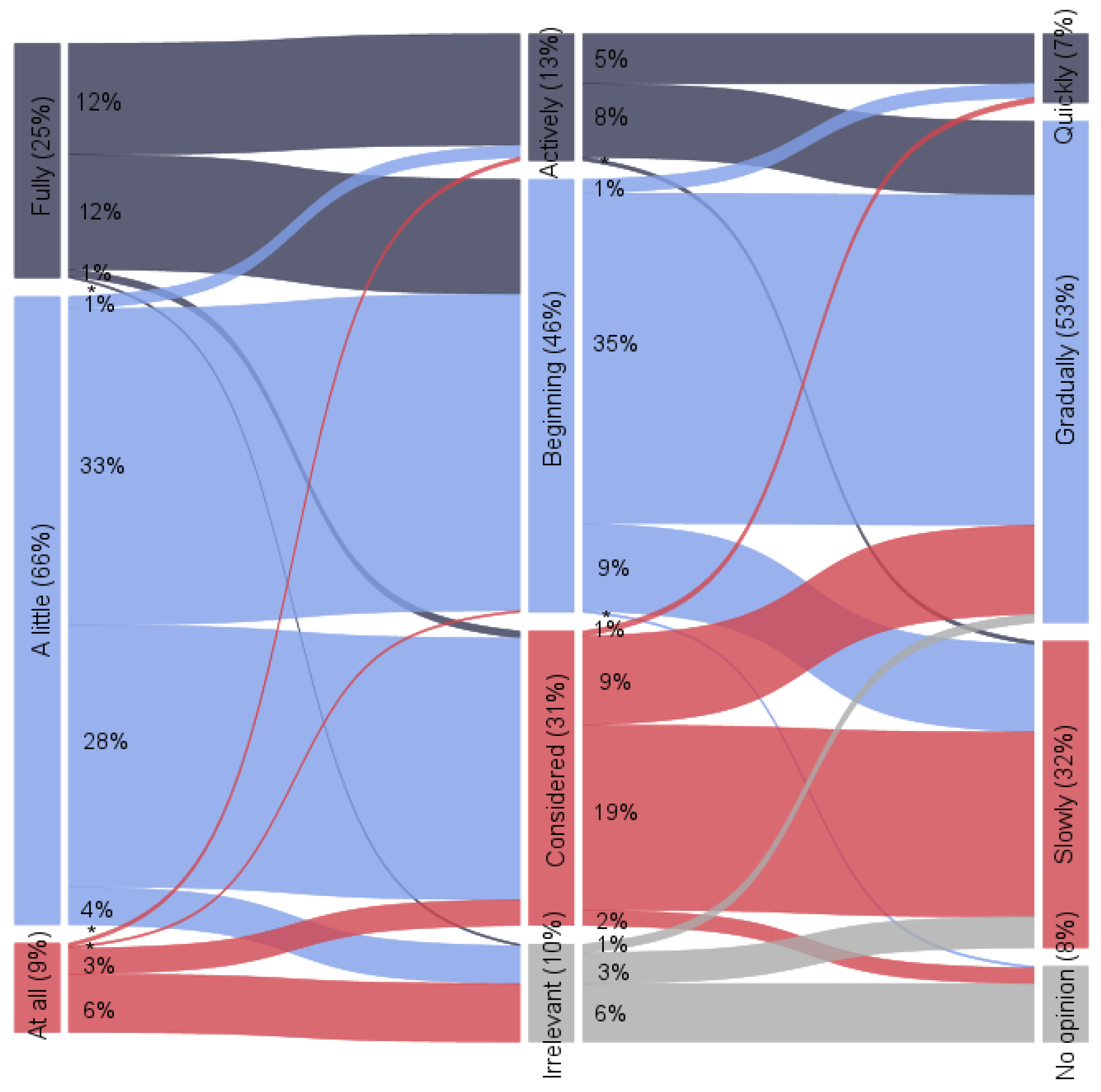
Figure 2.
Fully awareness of Industry 5.0 conception: Parallel coordinates plot of association rules.
Figure 2.
Fully awareness of Industry 5.0 conception: Parallel coordinates plot of association rules.
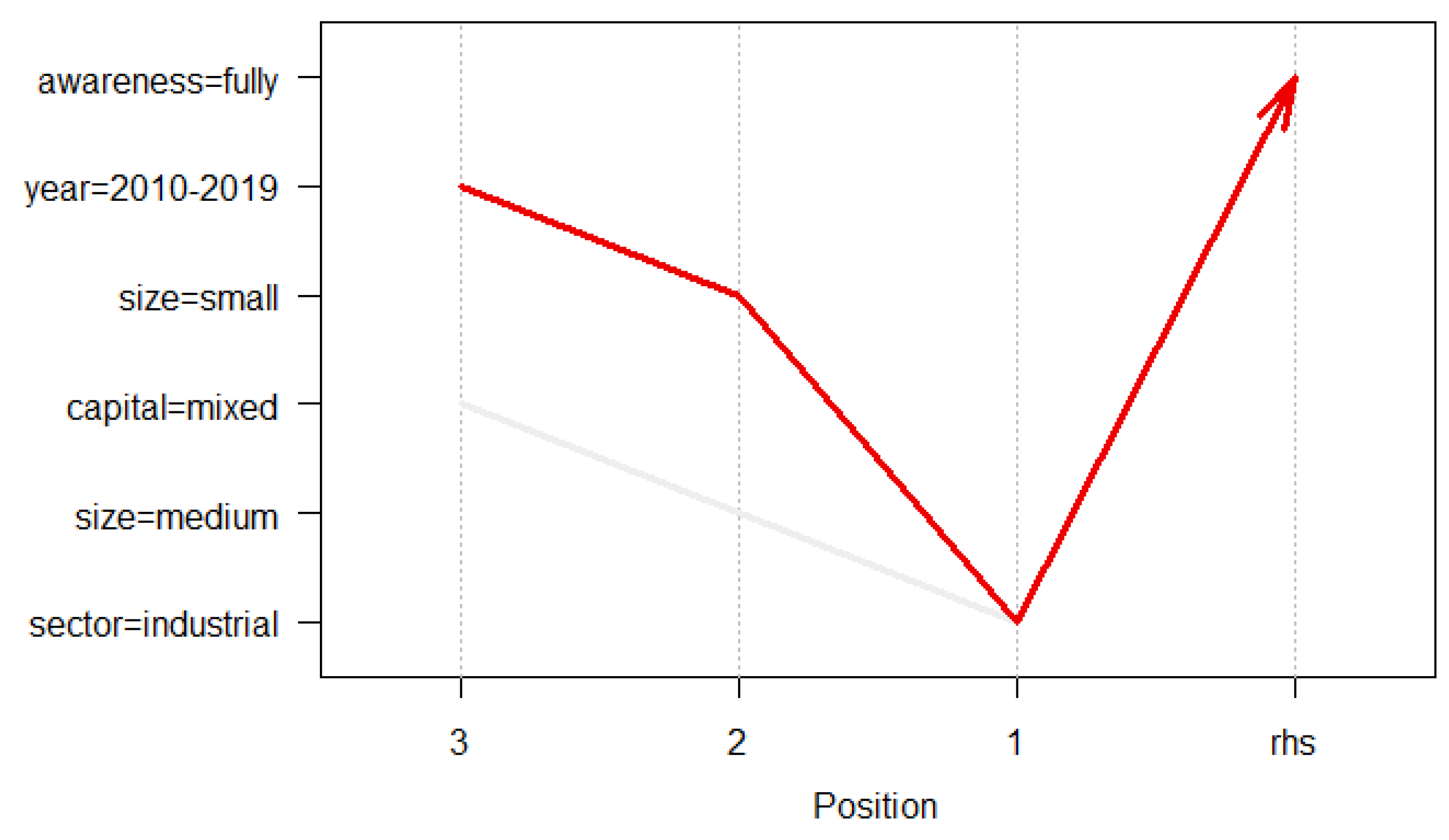
Figure 3.
Active/starting commitment in transformation process towards Industry 5.0: Parallel coordinates plot of association rules.
Figure 3.
Active/starting commitment in transformation process towards Industry 5.0: Parallel coordinates plot of association rules.
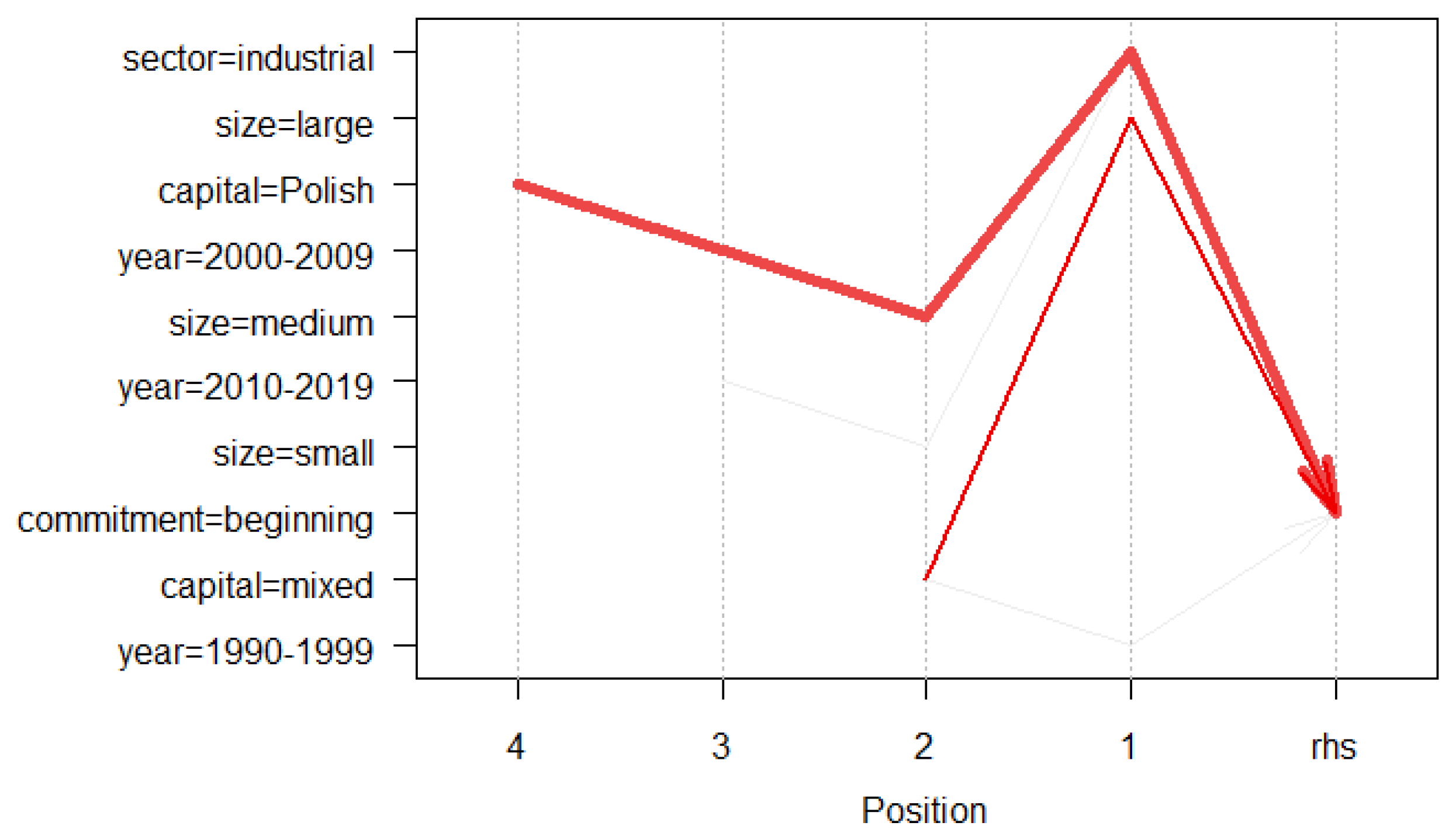
Figure 4.
Quickly/gradually pace of implementation of Industry 5.0: Parallel coordinates plot of association rules.
Figure 4.
Quickly/gradually pace of implementation of Industry 5.0: Parallel coordinates plot of association rules.
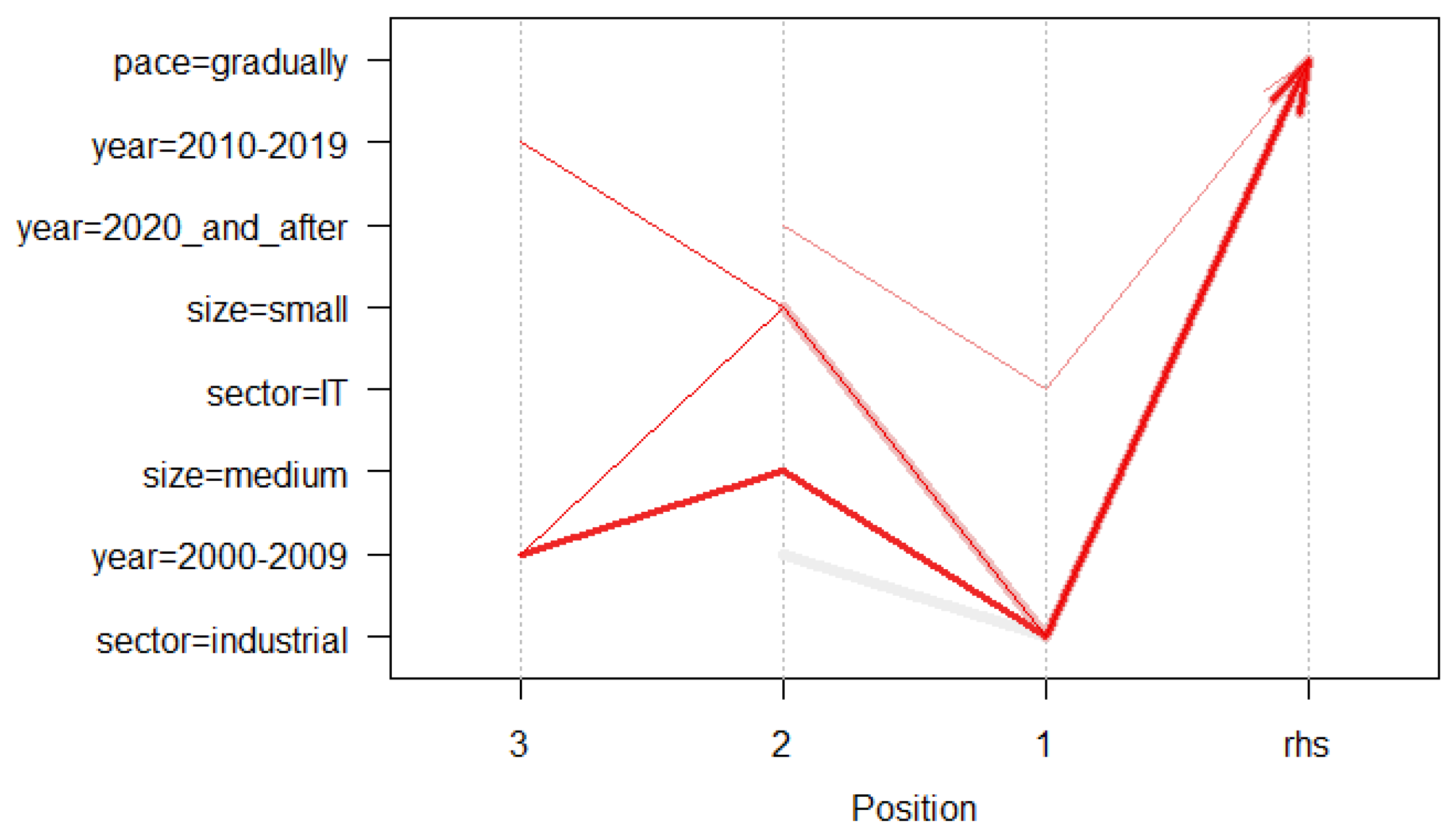
Figure 5.
Benefits of Industry 5.0.
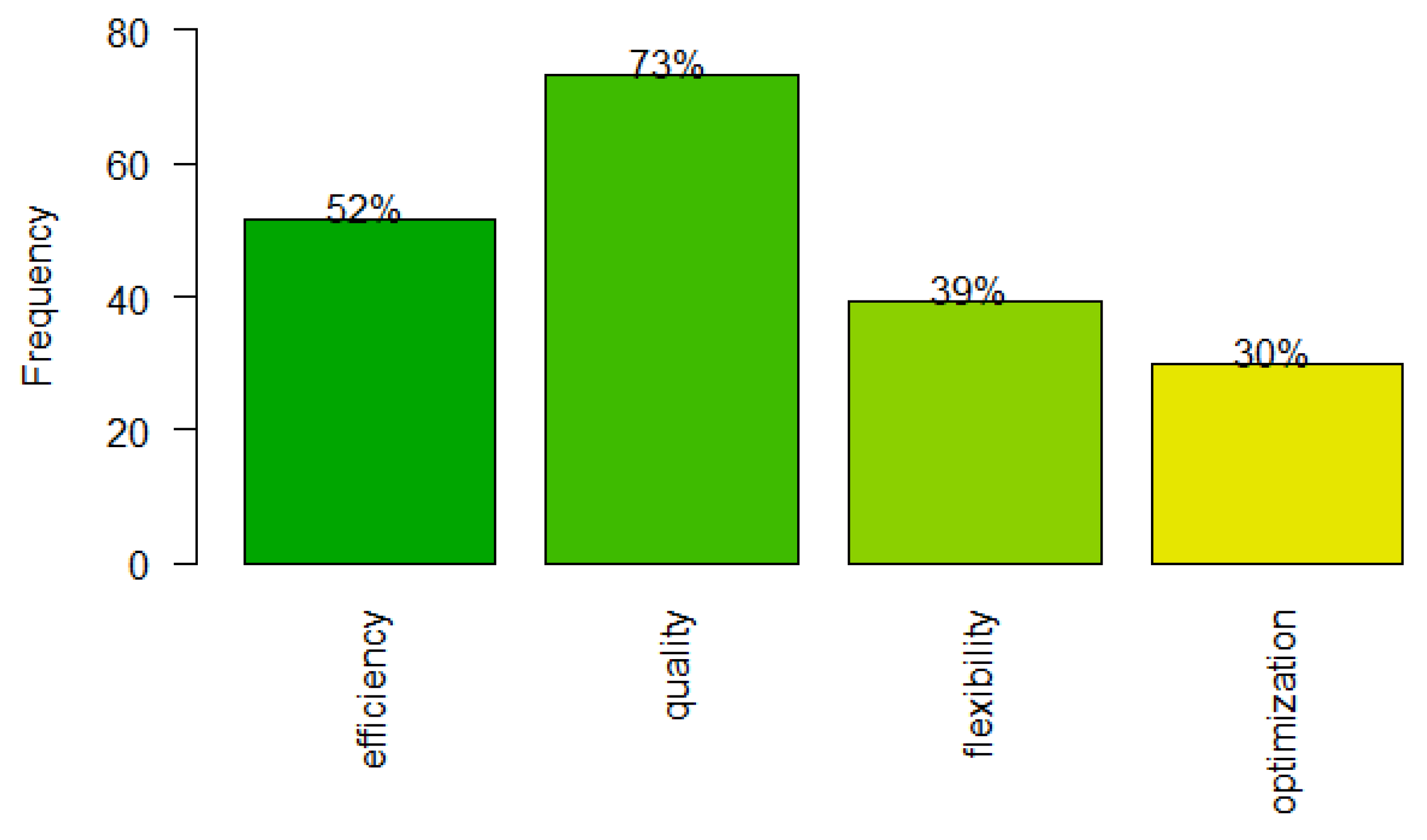
Figure 6.
Challenges during the transformation towards Industry 5.0.
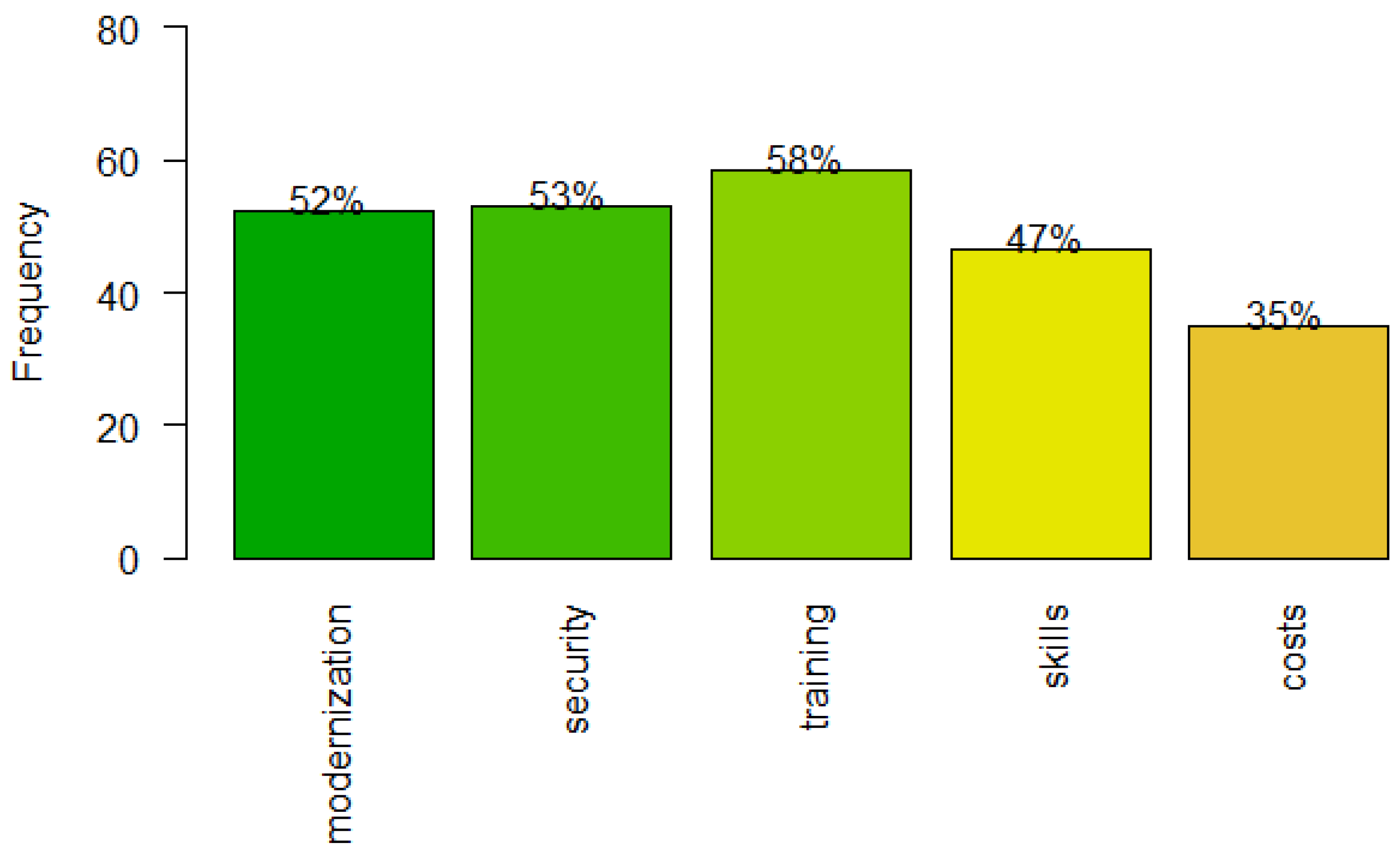
Figure 7.
The biplot of benefits of Industry 5.0.
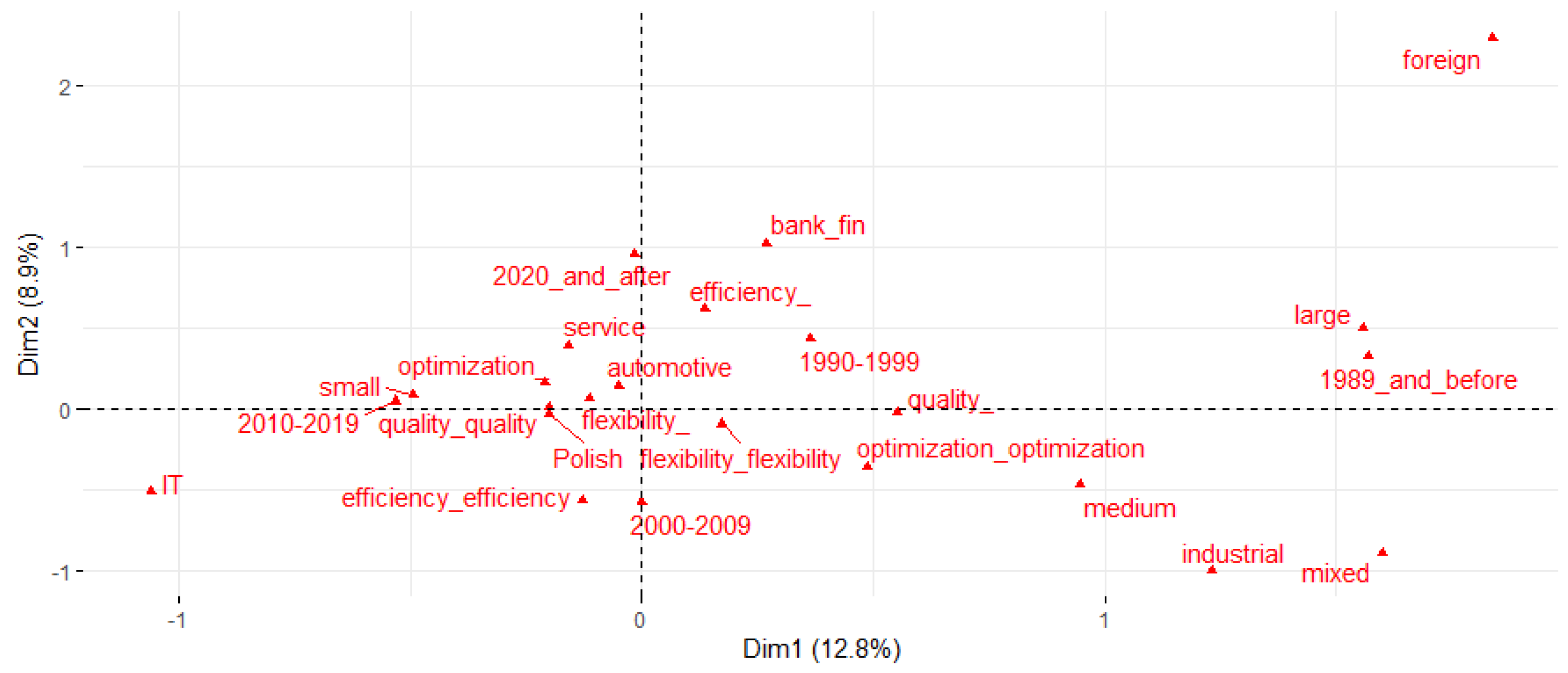
Figure 8.
The biplot of challenges during the transformation towards Industry 5.0.
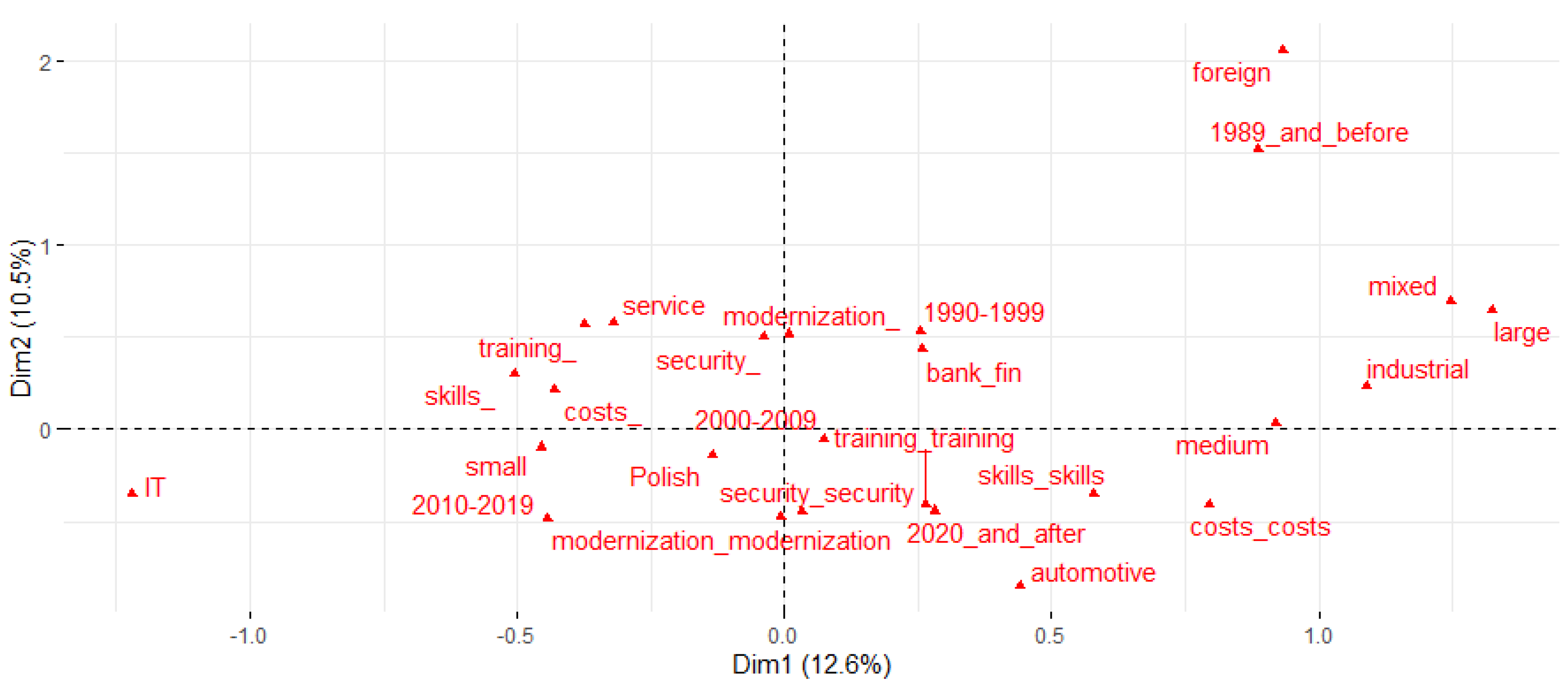
Figure 9.
The Proprietary Model for Implementing the Assumptions of Industry 5.0 in Organizations.
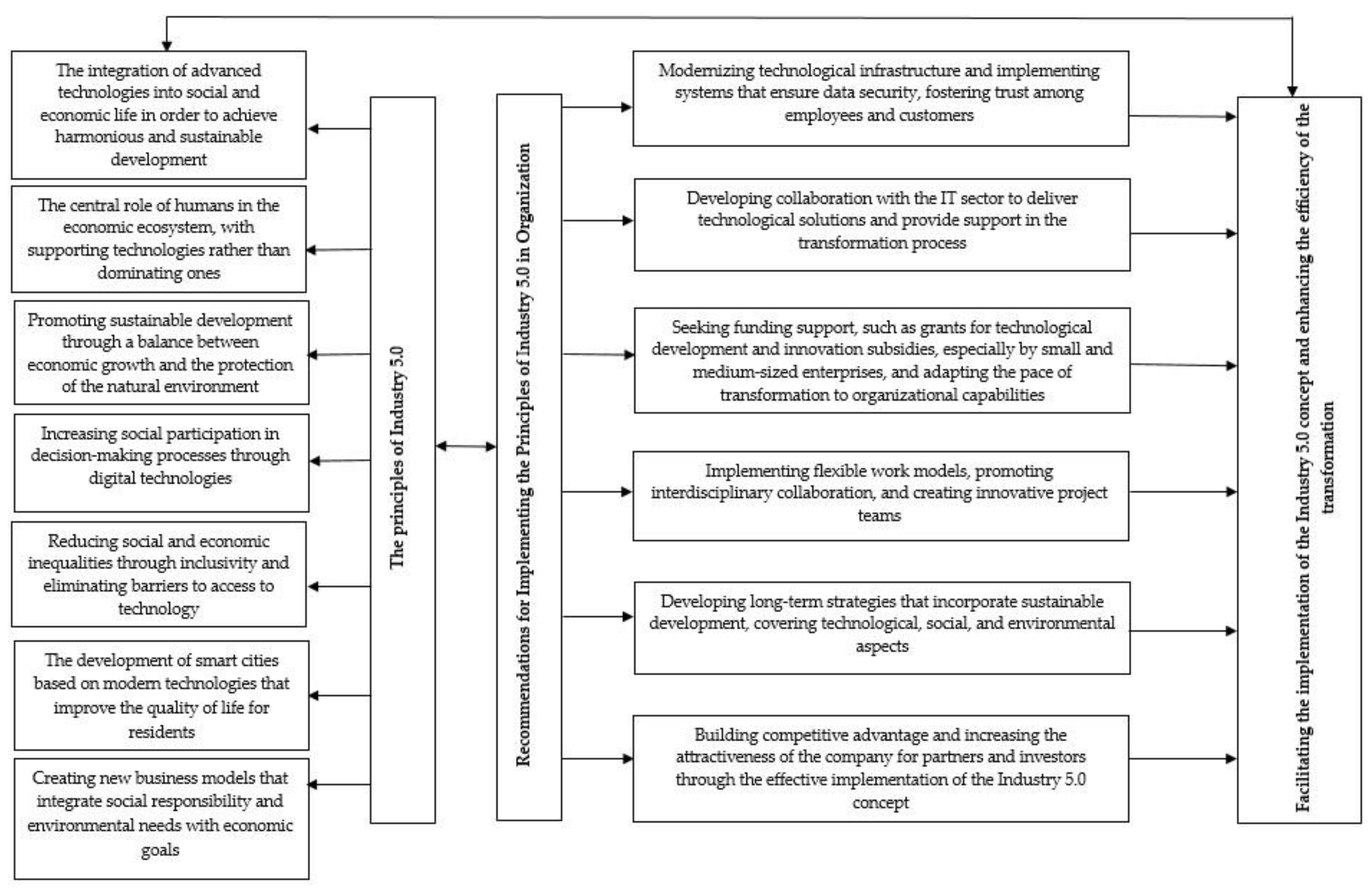

Table 1.
Sample characteristics (N=556).
| Variable | Category | % |
|---|---|---|
| Sector | banking/finance | 18.5 |
| IT | 21.9 | |
| automotive | 20.0 | |
| industrial | 18.3 | |
| service | 21.2 | |
| Size | 10-49 employees (small) | 69.6 |
| 50-249 employees (medium) | 21.2 | |
| 250 and more employees (large) | 9.2 | |
| 1989 and before | 8.1 | |
| Year | 1990-1999 | 18.0 |
| 2000-2009 | 31.3 | |
| 2010-2019 | 36.0 | |
| 2020 and after | 6.7 | |
| Capital | Polish | 89.4 |
| foreign | 4.0 | |
| mixed | 6.7 |
Table 2.
Benefits of Industry 5.0: Description of the clusters by variables.
| Variables | p-value | df |
|---|---|---|
| sector | <0.001 | 8 |
| size | <0.001 | 4 |
| efficiency | <0.001 | 2 |
| capital | <0.001 | 4 |
| year | <0.001 | 8 |
| optimization | <0.001 | 2 |
| quality | <0.001 | 2 |
| flexibility | <0.001 | 2 |
Note: df = degrees of freedom.
Table 3.
Benefits of Industry 5.0: Description of the clusters by categories.
| Cluster | Cla/Mod | Mod/Cla | p-value | v-test |
|---|---|---|---|---|
|
Cluster 1 sector=IT size=small efficiency=efficiency_efficiency optimization=optimization_ year=2010-2019 capital=Polish quality=quality_quality flexibility=flexibility_ |
91.803 34.884 40.070 34.134 41.000 27.364 28.922 29.080 |
82.353 99.265 84.559 91.912 60.294 100.000 86.765 72.059 |
<0.001 <0.001 <0.001 <0.001 <0.001 <0.001 <0.001 0.002 |
18.975 10.125 9.152 6.935 6.668 5.596 4.233 3.172 |
|
Cluster 2 sector=service efficiency=efficiency_ sector=automotive size=small capital=Polish sector=bank_fin year=1990-1999 |
95.763 73.234 79.279 58.398 54.125 67.961 62.000 |
40.357 70.357 31.426 80.714 96.071 25.000 22.143 |
<0.001 <0.001 <0.001 <0.001 <0.001 <0.001 0.010 |
12.028 10.591 6.952 5.759 5.266 3.970 2.564 |
|
Cluster 3 sector=industrial size=large size=medium capital=mixed year=1989_and_before optimization=optimization_optimization capital=foreign flexibility=flexibility_flexibility efficiency=efficieny_efficiency quality=quality_ |
92.157 86.275 59.322 89.190 73.333 38.922 68.182 32.877 31.010 33.108 |
67.143 31.429 50.000 23.571 23.571 46.429 10.714 51.429 63.571 35.000 |
<0.001 <0.001 <0.001 <0.001 <0.001 <0.001 <0.001 <0.001 0.001 0.011 |
16.445 9.679 9.076 8.488 7.065 4.759 4.264 3.331 3.272 2.540 |
Note: Cla/Mod = distribution of significant categories across clusters; Mod/Cla = distribution within-cluster.
Table 4.
Challenges during the transformation towards Industry 5.0: Description of the clusters by variables.
Table 4.
Challenges during the transformation towards Industry 5.0: Description of the clusters by variables.
| Variables | p-value | df |
|---|---|---|
| sector | <0.001 | 12 |
| size | <0.001 | 6 |
| capital | <0.001 | 6 |
| modernization | <0.001 | 3 |
| skills | <0.001 | 3 |
| costs | <0.001 | 3 |
| year | <0.001 | 12 |
| security | <0.001 | 3 |
| training | <0.001 | 3 |
Note: df = degrees of freedom.
Table 5.
Challenges during the transformation towards Industry 5.0: Description of the clusters by categories.
Table 5.
Challenges during the transformation towards Industry 5.0: Description of the clusters by categories.
| Cluster | Cla/Mod | Mod/Cla | p-value | v-test |
|---|---|---|---|---|
|
Cluster 1 sector=IT skills=skills_ costs=costs_ modernization=modernization_modernization size=small year=2010-2019 capital=Polish security=security_security training=training_ |
81.148 40.067 33.518 37.113 30.749 36.000 24.346 29.492 27.707 |
81.818 98.347 100.000 89.256 98.347 59.504 100.000 71.901 52.893 |
<0.001 <0.001 <0.001 <0.001 <0.001 <0.001 <0.001 <0.001 0.005 |
16.955 12.488 10.802 9.677 8.984 5.966 5.197 4.742 2.834 |
|
Cluster 2 modernization=modernization_ sector=service security=security_ size=small capital=Polish year=1990-1999 training=training_ sector=bank_fin costs=costs_ |
67.170 88.983 59.387 49.612 42.455 59.000 47.186 51.456 42.659 |
82.028 48.387 71.429 88.479 97.235 27.189 50.230 24.424 70.968 |
<0.001 <0.001 <0.001 <0.001 <0.001 <0.001 <0.001 0.005 0.017 |
13.328 12.729 9.337 8.056 5.143 4.443 3.307 2.823 2.390 |
|
Cluster 3 costs=costs_costs skills=skills_skills training=training_training modernization=modernization_modernization sector=automotive size=medium security=security_security sector=industrial capital=Polish |
57.949 47.876 39.385 38.488 54.054 51.395 37.288 52.941 26.962 |
80.142 87.943 90.780 79.433 42.553 43.262 78.014 38.298 95.035 |
<0.001 <0.001 <0.001 <0.001 <0.001 <0.001 <0.001 <0.001 0.008 |
12.878 11.802 9.618 7.626 7.331 7.023 7.013 6.675 2.635 |
|
Cluster 4 year=1989_and_before size=large capital=foreign capital=mixed sector=industrial size=medium sector=bank_fin training=training_ skills=skills_ costs=costs_ modernization=modernization_ |
73.333 60.784 90.909 70.270 38.235 28.814 28.155 19.481 17.172 16.066 16.981 |
42.857 40.260 25.974 33.766 50.649 44.156 37.662 58.442 66.234 75.325 58.442 |
<0.001 <0.001 <0.001 <0.001 <0.001 <0.001 <0.001 0.001 0.015 0.038 0.043 |
9.673 8.352 8.283 8.212 7.052 4.904 4.291 3.194 2.430 2.080 2.026 |
Note: Cla/Mod = distribution of significant categories across clusters; Mod/Cla = distribution within-cluster.
Disclaimer/Publisher’s Note: The statements, opinions and data contained in all publications are solely those of the individual author(s) and contributor(s) and not of MDPI and/or the editor(s). MDPI and/or the editor(s) disclaim responsibility for any injury to people or property resulting from any ideas, methods, instructions or products referred to in the content. |
© 2024 by the authors. Licensee MDPI, Basel, Switzerland. This article is an open access article distributed under the terms and conditions of the Creative Commons Attribution (CC BY) license (http://creativecommons.org/licenses/by/4.0/).
Copyright: This open access article is published under a Creative Commons CC BY 4.0 license, which permit the free download, distribution, and reuse, provided that the author and preprint are cited in any reuse.


