

Submitted:
06 December 2024
Posted:
09 December 2024
You are already at the latest version
Abstract
The ionized metal physical vapor deposition (IMPVD), which is operated at a very low pressure to take advantage of the metal sputtering effect on the target surface, has unique properties compared with the conventional DC magnetron sputtering. In this study, we investigated the effect of the rotating magnetic field on the plasma formation of the IMPVD to enhance the deposition uniformity. A two-dimensional particle-in-cell Monte Carlo simulation utilizes the exact cross-section data of the Cu ion collisions and calculates the particle trajectories under specific magnetic field profiles. This new methodology gives guidance for the design of the magnetic field profiles of IMPVD and an understanding of the physical mechanism.
Keywords:
1. Introduction
2. Simulation Procedures
2.1. External Magnetic Field Simulation by Permanent Magnets and Electromagnetic (EM) Coil:
2.2. Inductively Coupled Plasma (ICP) Source Simulation:
2.3. RF Magnetron Sputtering Simulation:
2.4. Yield Calculation:
2.5. Sputtered Target Particle Simulation:
2.6. Deposition Profile Calculation
3. DC Magnetron Sputtering System with a Simple Consideration of the Magnet Configuration
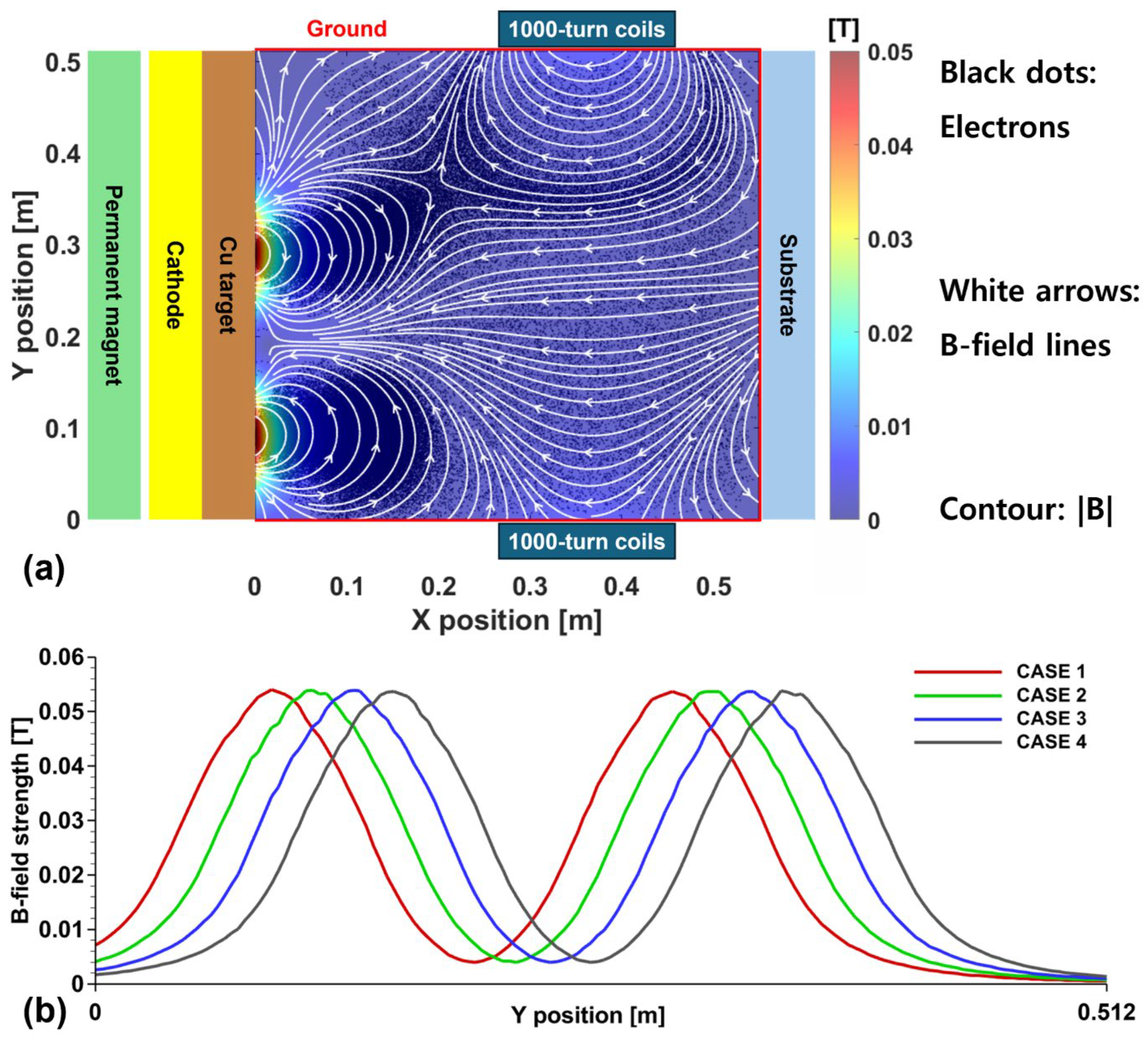
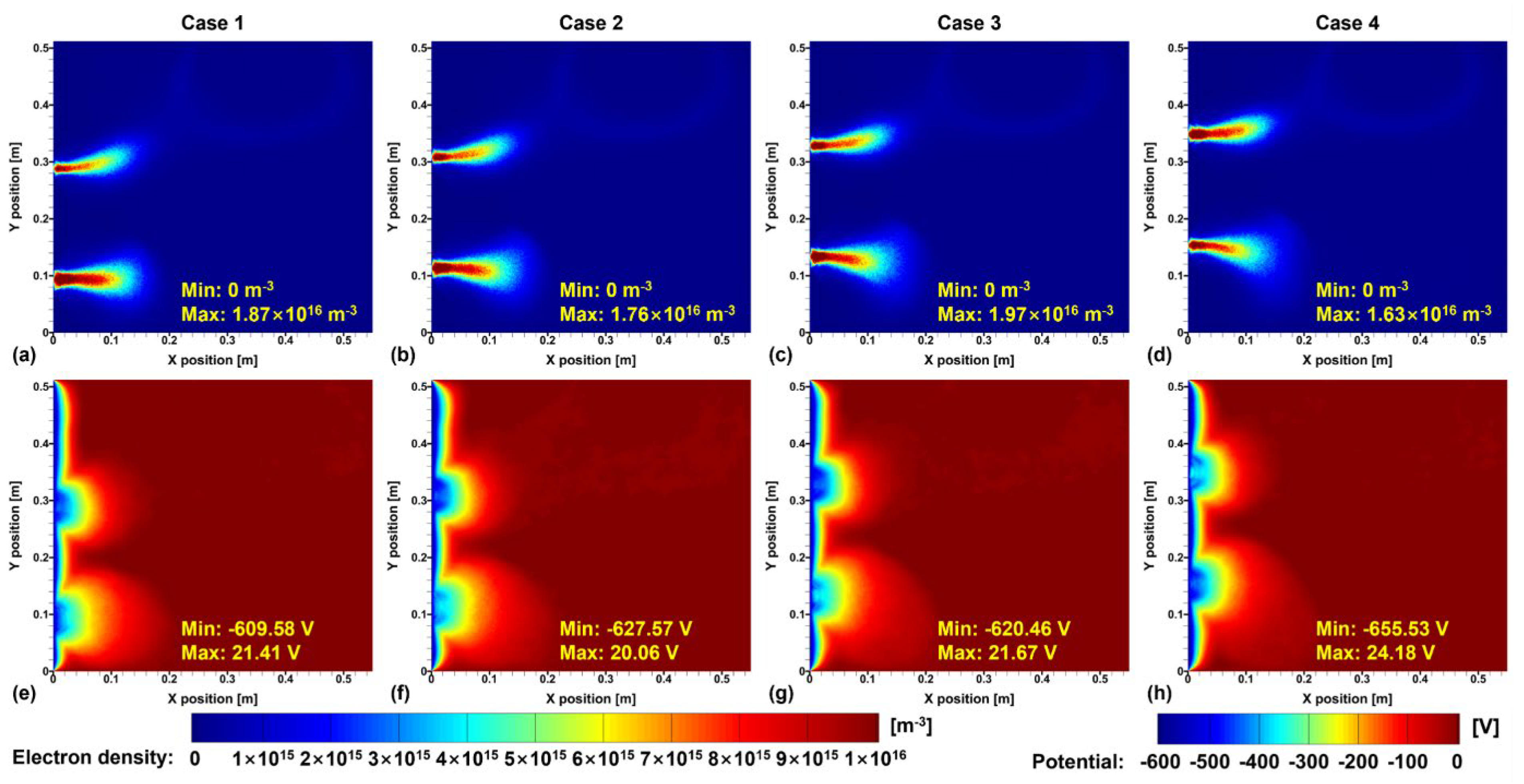
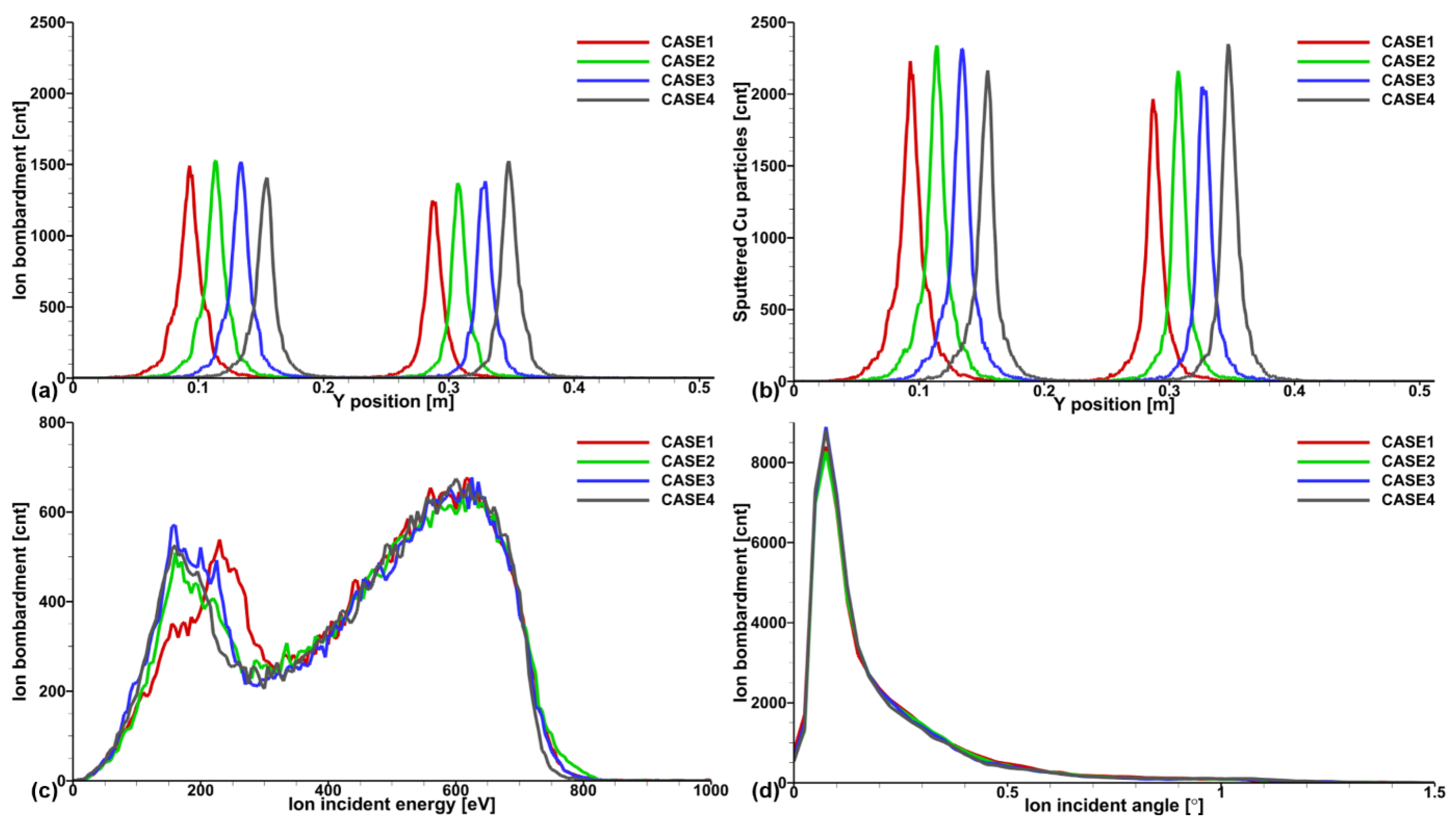
4. RF Magnetron Sputtering System with the Rotating Magnets
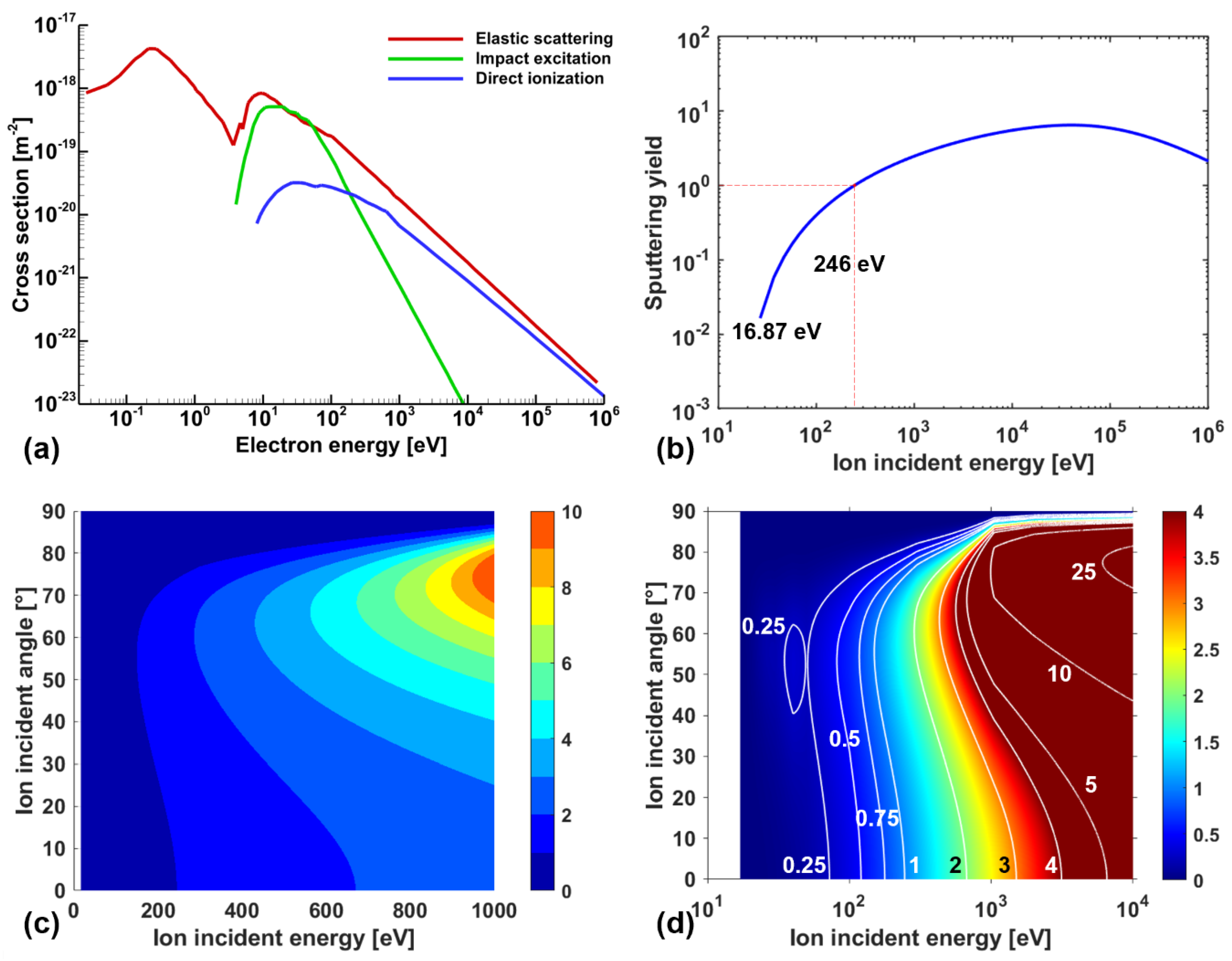

| Reaction Equation | Name | ) | Ref. |
|---|---|---|---|
| Elastic scattering | 1 | [27] | |
| Electron impact excitation | 1 | [27] | |
| Direct ionization | 1 | [27] | |
| Elastic collision | a 2 | ||
| Charge exchange | a 2 | ||
| Charge exchange | [28] | ||
| Elastic collision | a 2 |
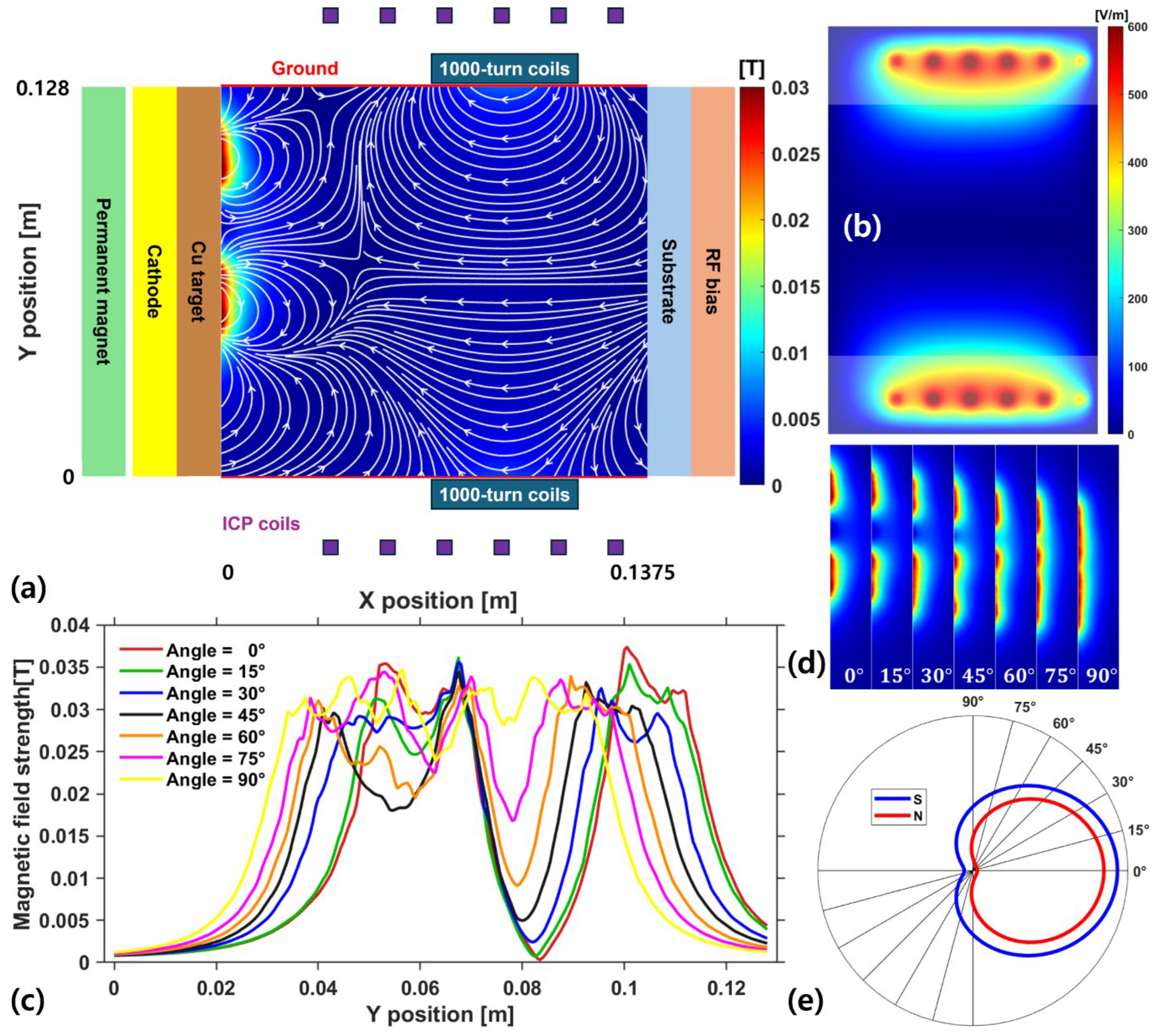
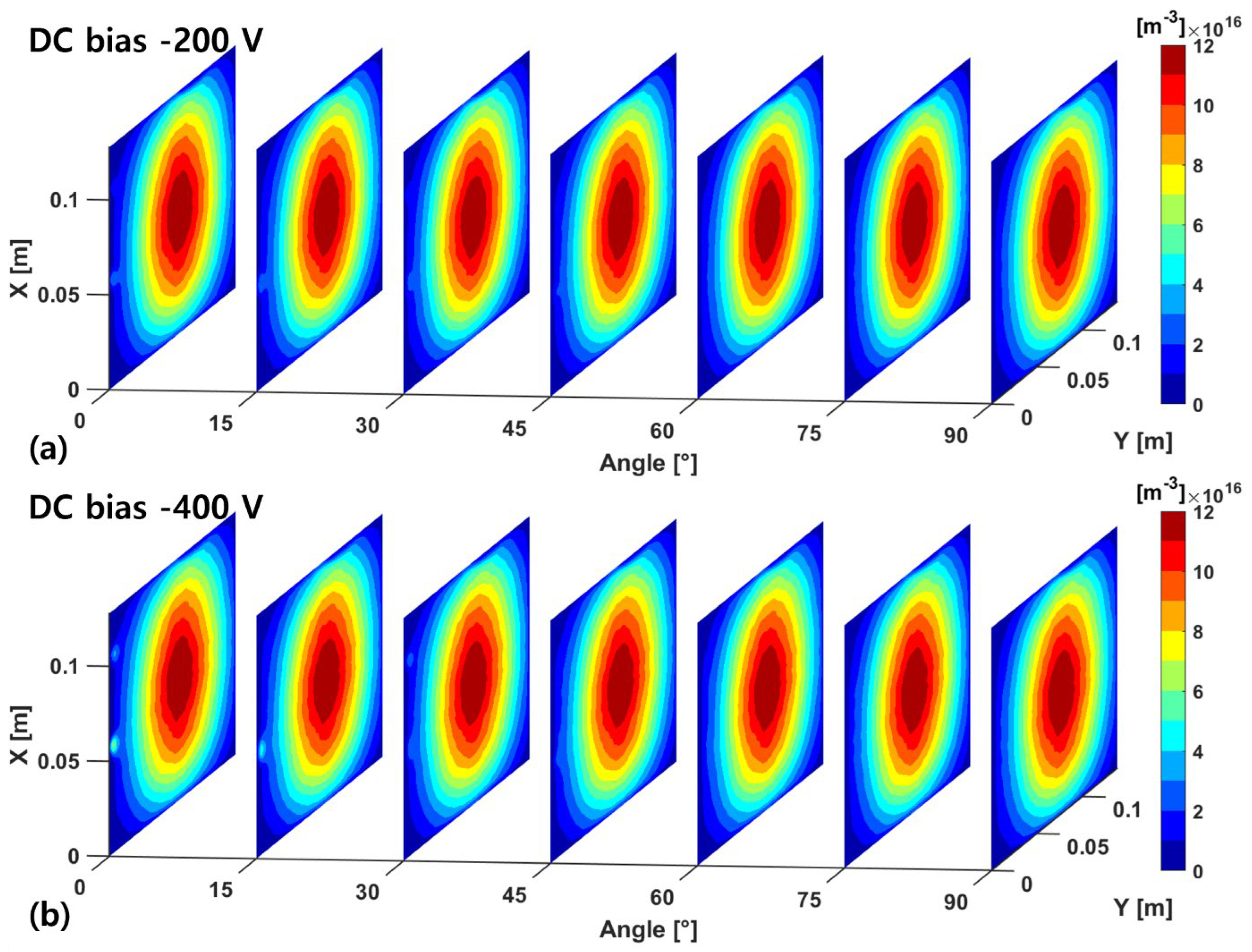
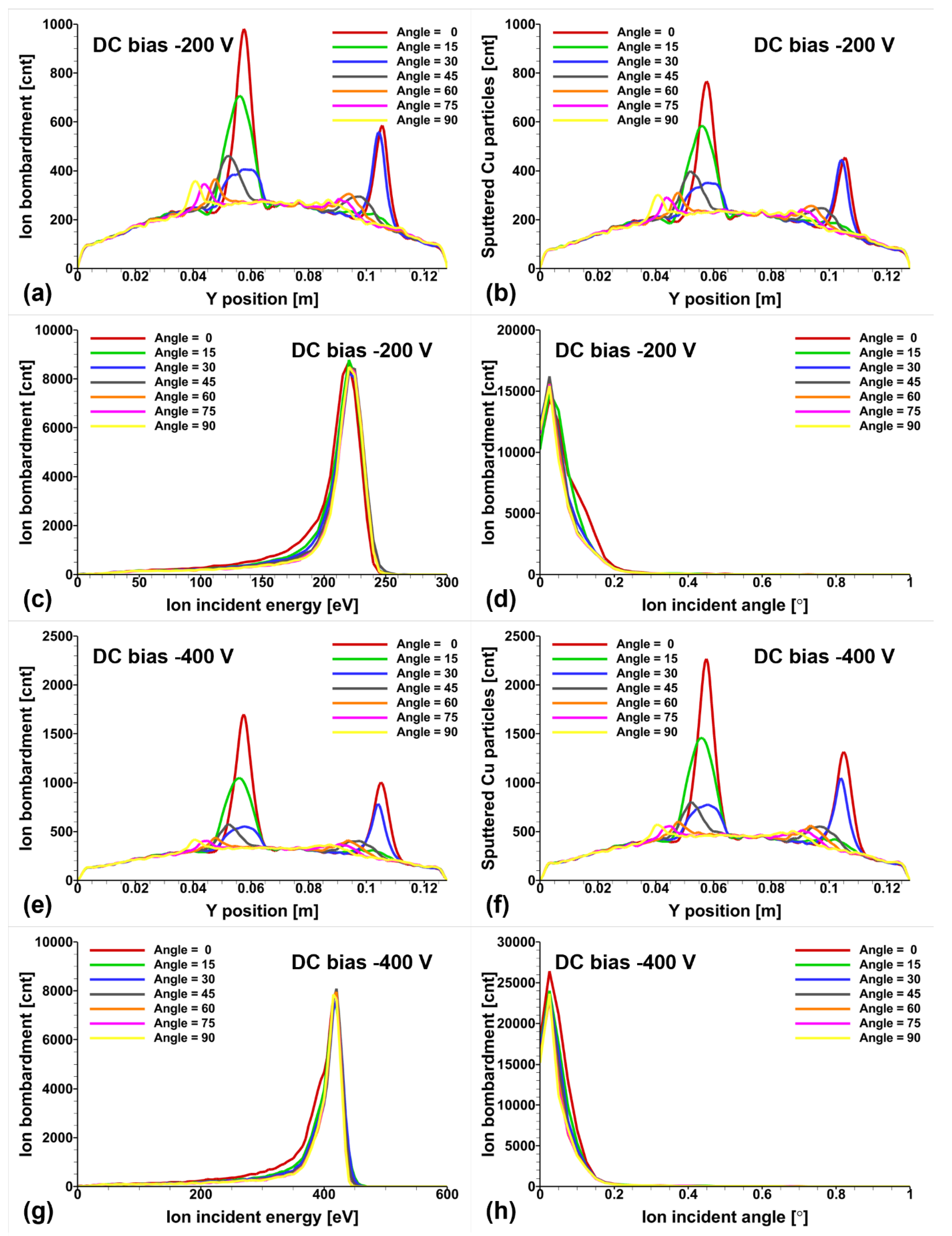
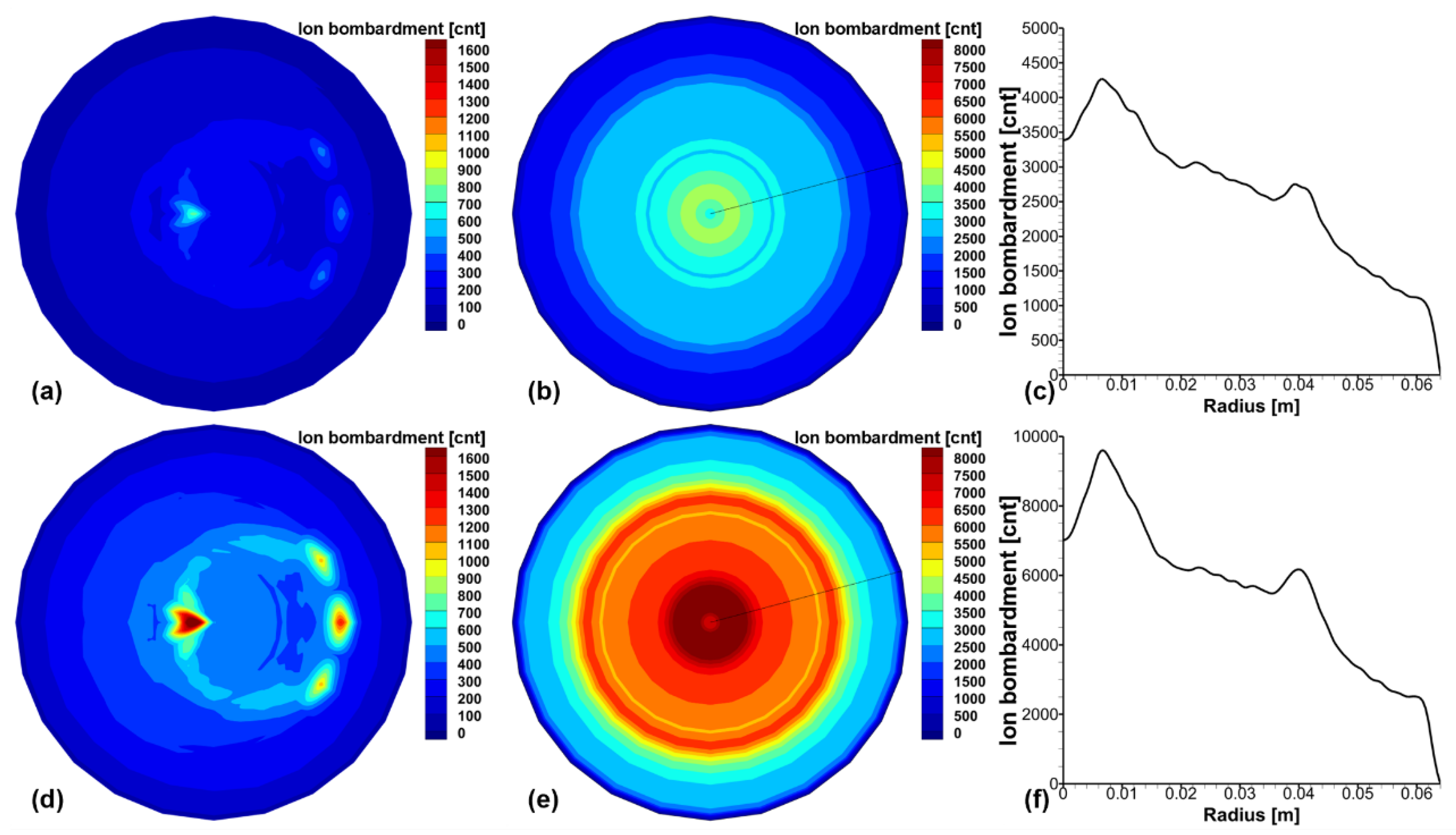
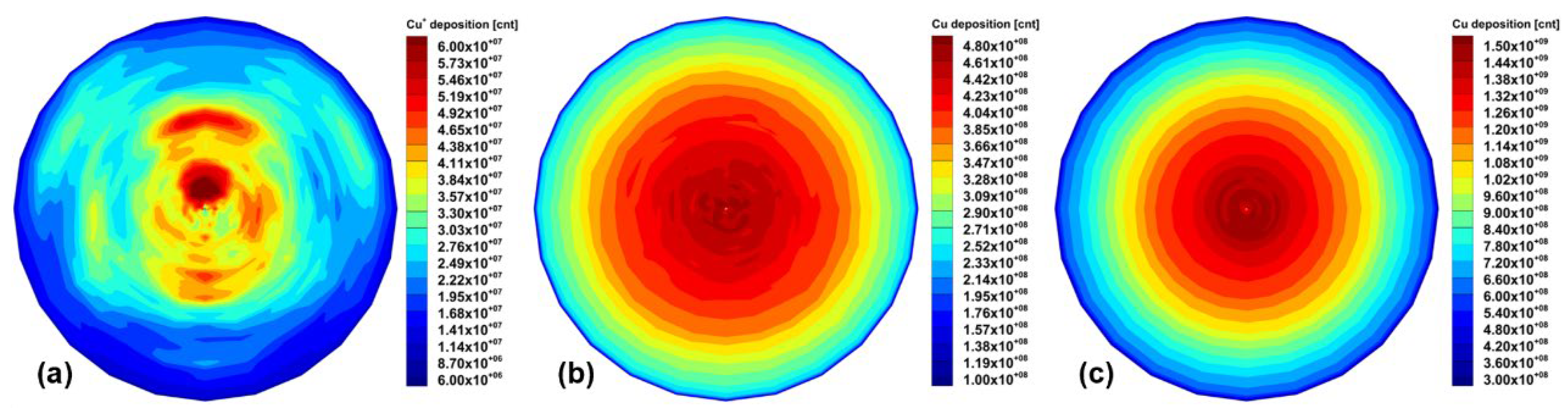
5. Conclusions
Author Contributions
Funding
Institutional Review Board Statement
Informed Consent Statement
Data Availability Statement
Conflicts of Interest
References
- Gudmundsson, J. T. Physics and technology of magnetron sputtering discharge. Plasma sources Sci. Technol. 2020, 29, 113001. [Google Scholar] [CrossRef]
- Anders, A. Tutorial: Reactive high power impulse magnetron sputtering (R-HiPIMS). J. Appl. Phys. 2017, 121, 171101. [Google Scholar] [CrossRef]
- Liu, S.; Li, X.; Hao, Y.; Li, X.; Liu, F. Effect of magnetron sputtering process parameters on the conductivity of thin metal film. AIP Advances 2023, 13, 095326. [Google Scholar] [CrossRef]
- Wang, M.-C.; Chen, C.-Y.; Hsi, C.-S.; Wu, N.-C. Influence of deposition parameters on the dielectric properties of rf magnetron sputtered Ba(Zrx Ti(1−x)O3 thin films. J. Eur. Ceram. Soc. 2003, 23, 2307–2314. [Google Scholar] [CrossRef]
- Torii, K.; Kaga, T.; Takeda, E. Dielectric Properties of RF-Magnetron-Sputtered (Ba,Pb)(Zr,Ti)O3 Thin Films. Jpn. J. Appl. Phys. 1992, 31, 2989–2991. [Google Scholar] [CrossRef]
- Prabakar, K.; Park, A.; Cho, N.; Lee, W. I.; Hwangbo, C. K.; Lee, J. G.; Lee, C. rf-Magnetron sputter deposited ZrO2 dielectrics for metal-insulator-semiconductor capacitors. Vacuum 2008, 82, 1367–1370. [Google Scholar] [CrossRef]
- Zhao, H.; Xie, J.; Mao, A. Effects of Bottom Layer Sputtering Pressures and Annealing Temperatures on the Microstructures, Electrical and Optical Properties of Mo Bilayer Films Deposited by RF/DC Magnetron Sputtering. Appl. Sci. 2019, 9, 1395. [Google Scholar] [CrossRef]
- Helmersson, U.; Lattemann, M.; Bohlmark, J.; Ehiasarian, A. P.; Gudmundsson, J. T. Ionized Physical Vapor Deposition (IPVD): A Review of Technology and Applications. Thin Solid Films 2006, 513, 1–24. [Google Scholar] [CrossRef]
- Lu, J.; Kushner, M. J. Trench filling by ionized metal physical vapor deposition. J. Vac. Sci. Technol. A 2001, 19, 2652–2663. [Google Scholar] [CrossRef]
- Iseki, T. Flat erosion magnetron sputtering with a moving unbalanced magnet. Vacuum 2006, 80, 662–666. [Google Scholar] [CrossRef]
- Fu, C.; Yang, C.; Han, L.; Chen, H. The thickness uniformity of films deposited by magnetron sputtering with rotation and revolution. Surf. Coat. Technol. 2006, 200, 3687–3689. [Google Scholar] [CrossRef]
- Demaray, R. E.; Helmer, J. C.; Anderson, R. L.; Park, Y. H.; Cochran, R. R.; Hoffman, V. E. Rotating sputtering apparatus for selected erosion. United. States Patent, US5252194A, 1993. [Google Scholar]
- Hur, M. Y.; Oh, S.; Kim, H. J.; Lee, H. J. Numerical Analysis of the Incident Ion Energy and Angle Distribution in the DC Magnetron Sputtering for the Variation of Gas Pressure, Appl. Sci. Converg. Technol. 2018, 27, 19–22. [Google Scholar] [CrossRef]
- Hur, M. Y.; Kim, J. S.; Lee, H. J. The effect of negative ions from the target on thin film deposition in a direct current magnetron sputtering system. Thin Solid Films 2015, 587, 3–7. [Google Scholar] [CrossRef]
- Jo, Y. H.; Park, H. S.; Hur, M. Y.; Lee, H. J. Curved-boundary particle-in-cell simulation for the investigation of the target erosion effect of DC magnetron sputtering system. AIP Advances 2020, 10, 125224. [Google Scholar] [CrossRef]
- Jo, Y. H.; Cheon, C.; Park, H.; Hur, M. Y.; Lee, H. J. Multi-dimensional electrostatic plasma simulations using the particle-in-cell method for the low-temperature plasmas for materials processing. J. Korean Phys. Soc. 2022, 80, 787–798. [Google Scholar] [CrossRef]
- Jo, Y. H.; Cheon, C.; Park, H.; Lee, H. J. Particle-in-Cell Simulations for the Improvement of the Target Erosion Uniformity by the Permanent Magnet Configuration of DC Magnetron Sputtering Systems. Coatings 2023, 13, 749. [Google Scholar] [CrossRef]
- Meeker, D. C. Finite Element Method Magnetics, Version 4.2 (28Feb2018 Build), https://www.femm.info.
- CST Studio Suite 2014, CST AG, 2014.
- Hur, M. Y. ; Parallelization of Particle-in-Cell Simulation and Its Applications to Low Temperature Processing Plasmas and Nanopowder Synthesis. PhD Dissertation, Pusan National University, Busan, 2018. [Google Scholar]
- Jo, Y. H. ; 3D Particle-In-Cell Simulation of the Plasma Kinetics and Instabilities in Cross-Field Discharges. PhD Dissertation, Pusan National University, Busan, 2020. [Google Scholar]
- Cheon, C. ; Plasma Instabilities and Coherent Turbulent Structures in the Cross-Field Plasma Devices. PhD Dissertation, Pusan National University, Busan, 2024. [Google Scholar]
- Baxter, J. P.; Schick, G. A.; Singh, J.; Kobrin, P. H.; Winograd, N. Angular distributions of sputtered particles. J. Vac. Sci. Technol. A 1986, 4, 1218–1221. [Google Scholar] [CrossRef]
- Yamamura, Y.; Tawara, H. Energy dependence of ion-induced sputtering yields from monatomic solids at normal incidence. At. Data Nucl. Data Tables 1996, 62, 149–253. [Google Scholar] [CrossRef]
- Eckstein, W.; Preuss, R. New fit formulae for the sputtering yield. J. Nucl. Mater. 2003, 320, 209–213. [Google Scholar] [CrossRef]
- Behrisch, R.; Eckstein, W. Sputtering by Particle Bombardment, Experiments and Computer Calculations from Threshold to MeV Energies, 1st ed.; Springer: Garching, Germany, 2007. [Google Scholar]
- SIGLO database, www.lxcat.net, retrieved on November 20, 2024.
- Grapperhaus, M. J.; Krivokapic, Z.; Kushner, M. J. Design issues in ionized metal physical vapor deposition of copper. J. Appl. Phys. 1998, 83, 35–43. [Google Scholar] [CrossRef]
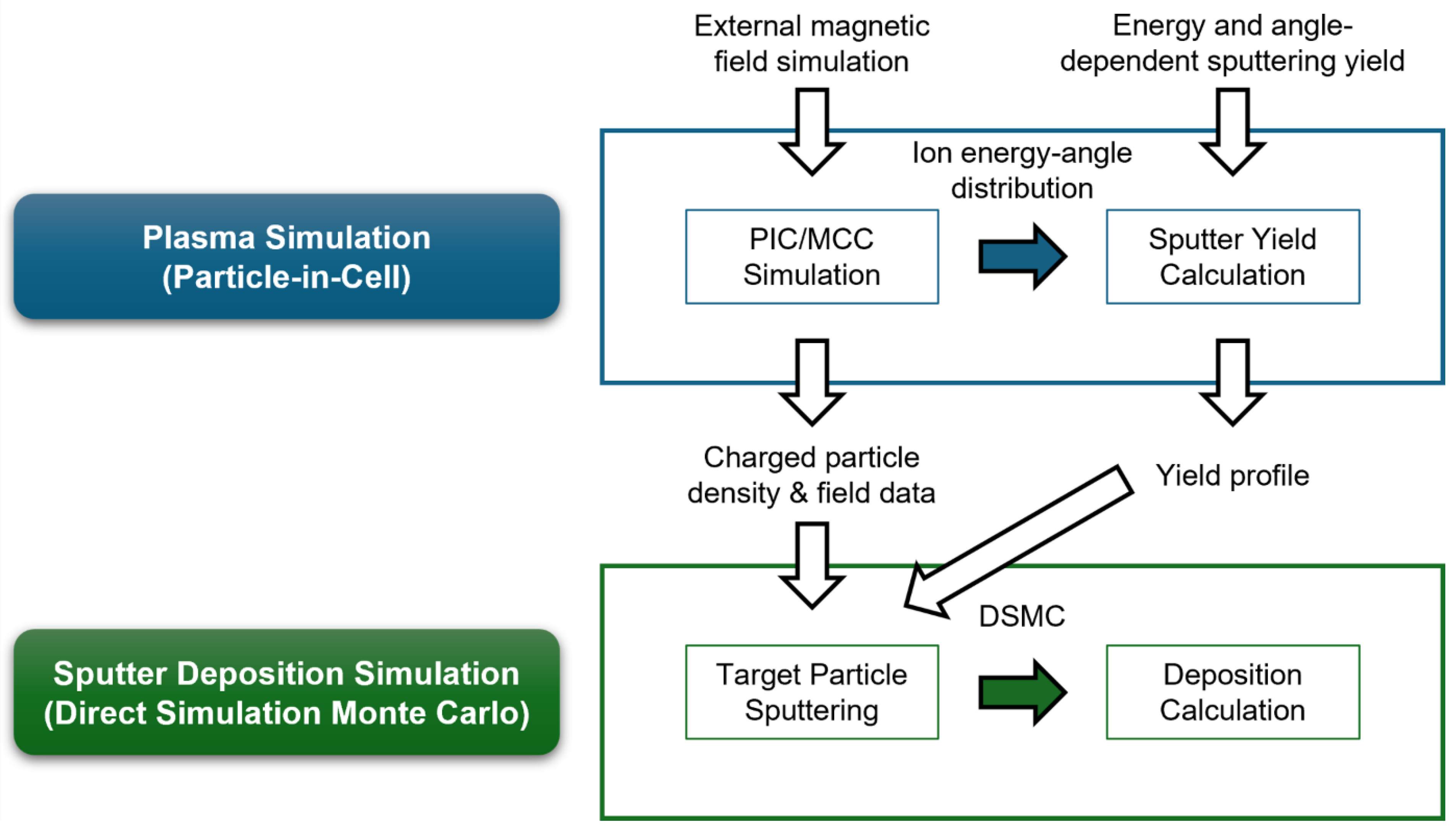
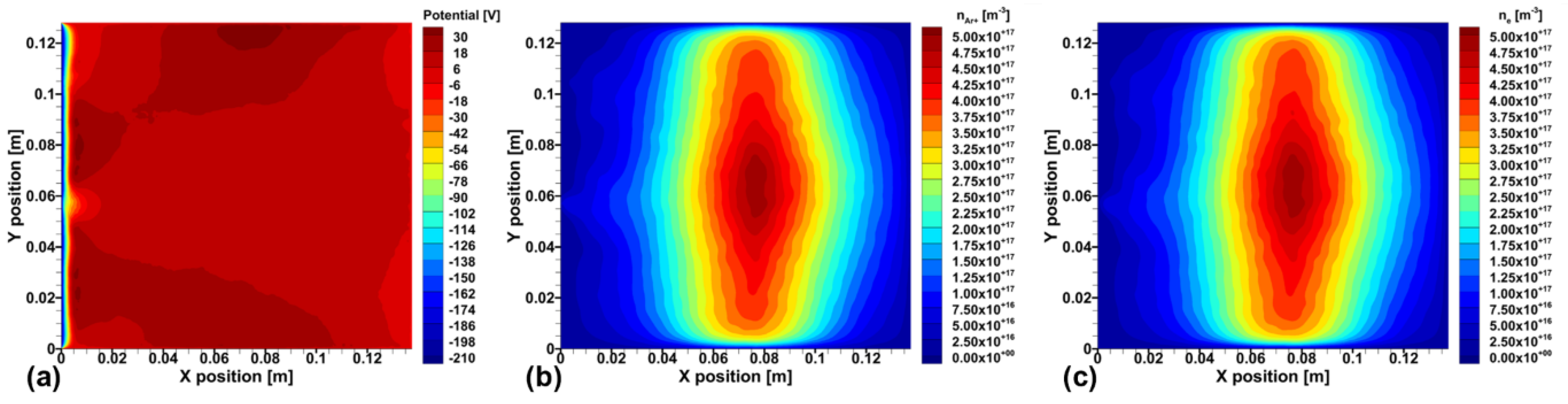
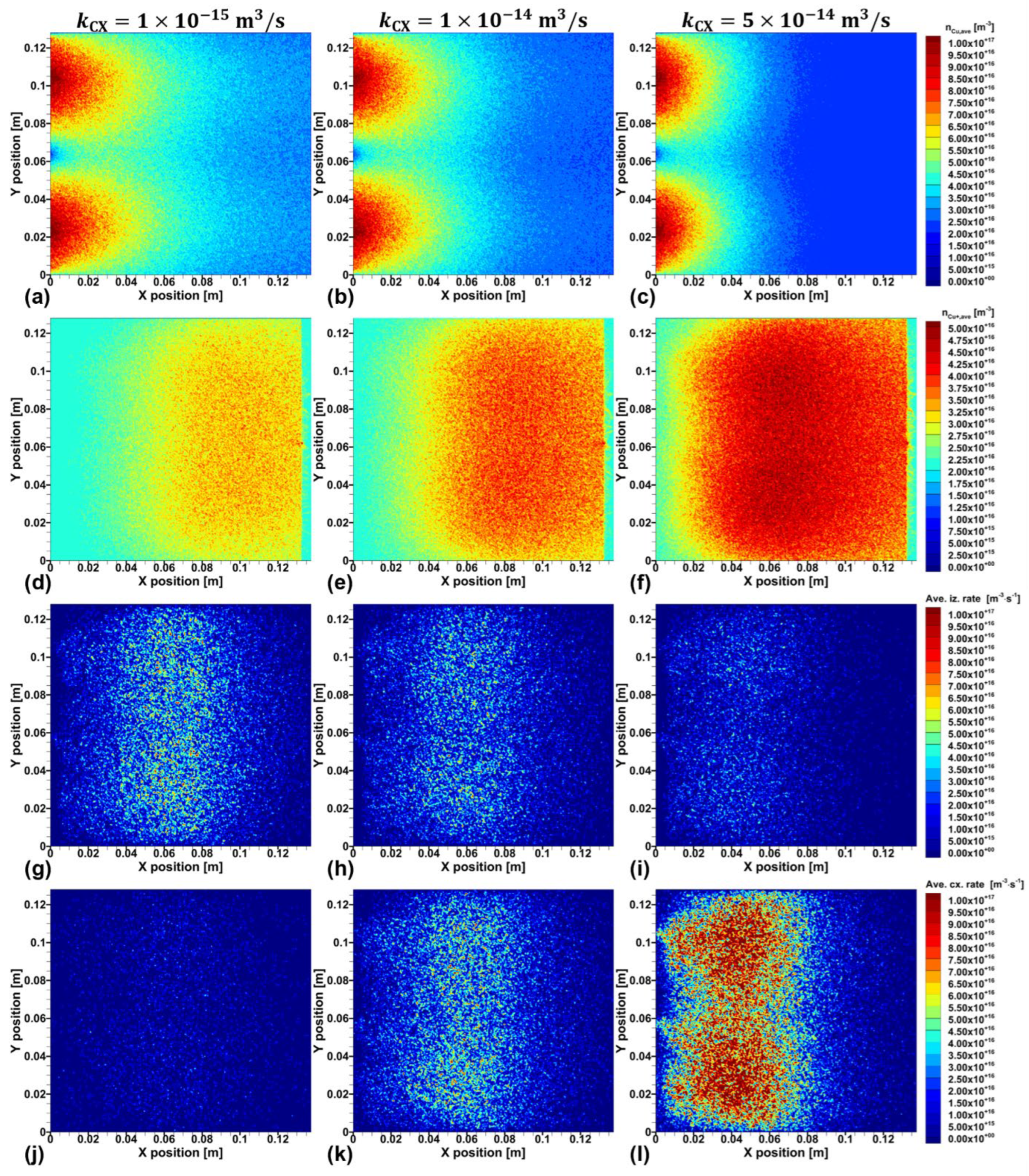
Disclaimer/Publisher’s Note: The statements, opinions and data contained in all publications are solely those of the individual author(s) and contributor(s) and not of MDPI and/or the editor(s). MDPI and/or the editor(s) disclaim responsibility for any injury to people or property resulting from any ideas, methods, instructions or products referred to in the content. |
© 2024 by the authors. Licensee MDPI, Basel, Switzerland. This article is an open access article distributed under the terms and conditions of the Creative Commons Attribution (CC BY) license (https://creativecommons.org/licenses/by/4.0/).


