

Submitted:
04 December 2024
Posted:
05 December 2024
You are already at the latest version
Abstract
Patient-centered care (PCC) as a philosophy is defined as the provision of care with an emphasis on the person. Patient-centered care is important enough to be one part of the coordination and collaboration efforts of the WHO strategy to eradicate tuberculosis. Patient-centered care is concerned with increasing patient empowerment and understanding of the tuberculosis treatment programme. Tuberculosis treatment adherence can be achieved through several strategies using a multicomponent strategy that includes patient and family education, utilising digital health media, and implementing individualised management.
Keywords:
Patient-centered care (PCC)
; Treatment adherence
; Tuberculosis
Introduction
Tuberculosis (TB) is one of the top 10 causes of death and the single leading cause of infectious disease (ahead of HIV/AIDS). According to the latest report on tuberculosis (TB) as many as 8.2 million people were reported as newly diagnosed with TB in 2023, up from 7.5 million in 2022 and 7.1 million in 2019 and well above the levels of 5.8 million in 2020 and 6.4 million in 2021. Those newly diagnosed in 2022 and 2023 may include a sizeable proportion of people who have had TB in previous years, but whose diagnosis and treatment were delayed by COVID-related disruptions (WHO, 2024). TB management is also complex, requiring an understanding of the characteristics of the mycobacterium (such as whether it is resistant to drugs), of the patient (e.g., immune status, co-existing conditions, adherence to treatment, socio-economic status, perceptions and preferences) and his/her community (such as family support or housing quality)(Migliori, 2021) .
In 2022 the WHO published a new strategy to eliminate TB, the strategy includes ABCD’s (Advokasi, blolster and re-energize the respone, Coordination and collaboration across all sector, digitalize). Patient-centred care is important enough to be part of the coordinated and collaborative efforts of the WHO strategy to eradicate tuberculosis. (WHO, 2022). Person-centred care reflects a holistic health model that considers the person at the centre of the care process, and is flexible to individual needs, choices and preferences. (Bruzual, 2018). Patients are placed in their social and biological wholeness, with attention paid to the patient's identity, subjectivity, environment, and social situation. (Isaac KS, 2024). The patient-centred TB care model aims to link affected people to health services and provide support throughout treatment (Jaramillo et al., 2019). It is not just about treating the disease, but also focusing on the patient as a whole, including his or her life experiences and personal traits. (Staden & Werdie, 2023).
Figure 1.
Eigth Principles of Patient Centered Care.
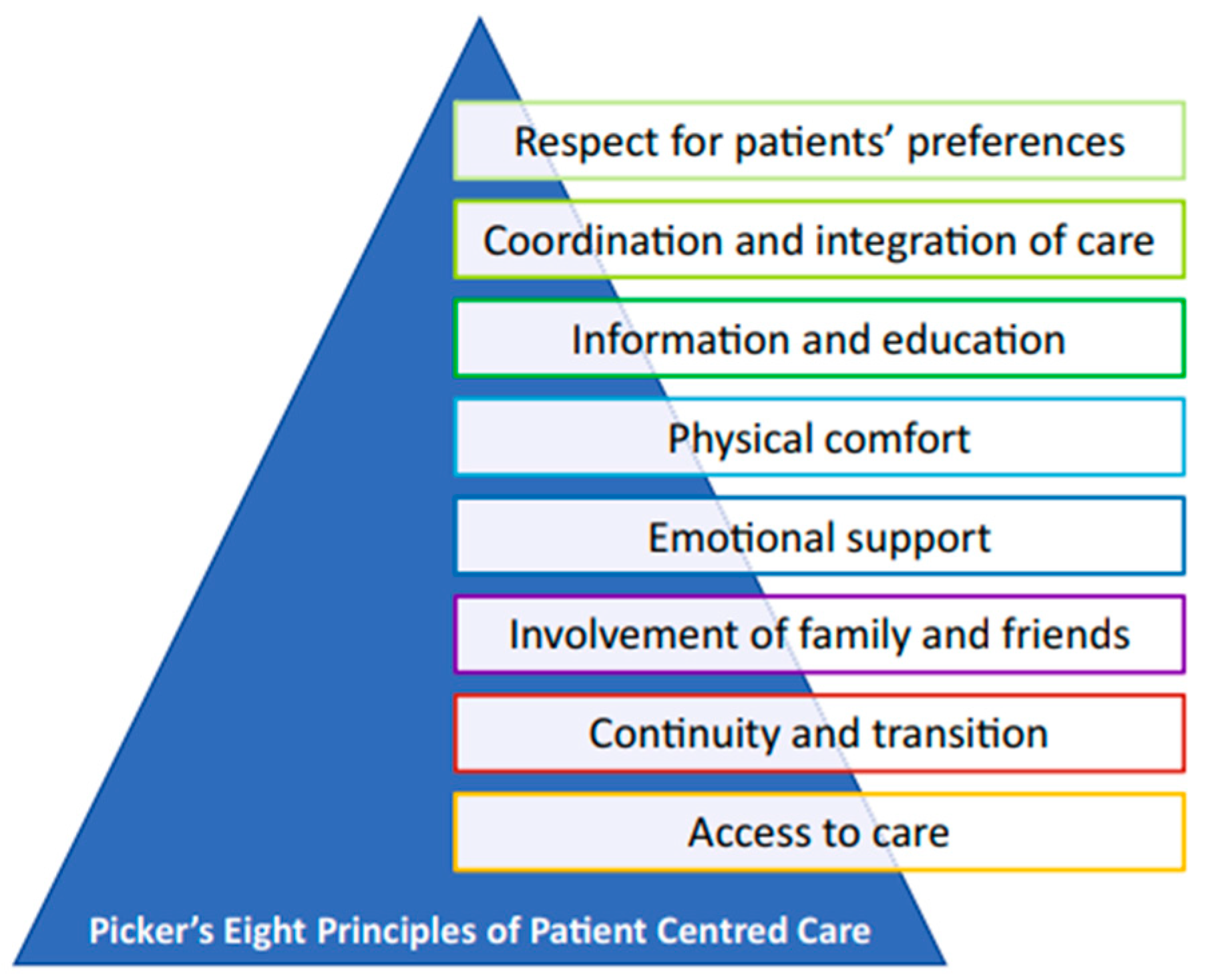
The implementation of care in Patient-centered care hospitals has eight dimensions including: respecting the values, choices and needs expressed by patients (Barrett et al., 2019); coordination and integration of care; information, communication and education; physical care and comfort; emotional support and reduction of fear and anxiety; involvement of family and friends; continuous care and smooth transitions; access to health services (Bachnick et al., 2018)
The implementation of Patient-centered care certainly has challenges and benefits in its implementation. Challenges to Patient-centered care implementation include Barriers to Implementation: PCC implementation faces challenges such as social, economic, and financial factors, as well as the need for proper training for medical personnel and patient education. (Dіachuk et al., 2023), in addition to the need to address the heterogeneity of patients' ability to engage in partnership approaches (Wedemire et al., 2022). Second, Strategies to Overcome Barriers: developing targeted institutional policies that involve both healthcare professionals and patient organisations can improve Patient-centered care implementation (Boyarchuk & Antoniuk, 2023). Training healthcare providers in communication skills and fostering a culture of shared decision-making are also important (Frezza, 2019)
Despite the challenges of Patient-centered care implementation, there are also significant benefits including better patient outcomes, Patient-centered care has been shown to improve patient satisfaction, medication adherence, and overall health outcomes. (Goldfarb et al., 2024). Patient-centered care also contributes to better use of resources and decreased healthcare costs (Gluyas, 2015). The second benefit is a better patient experience, by focusing on patients' individual needs and preferences, Patient-centered care improves the overall patient experience and fosters a more supportive and effective healthcare environment (Walsh et al., 2022).
Patient-centered care implementation according to Epstein & Street ( 2011) First, philosophically, patient-centred care is an approach to care and is considered the right thing to do. With this view, behaviours associated with patient-centred care, such as respecting patients; Second, the impact of communication on health outcomes can be felt indirectly. So it is necessary to understand the key outcomes of patient-centred care by understanding the feelings, beliefs, or motivation to change that contribute most strongly to improved adherence and self-care. Thirdly, it is generally assumed that the patient is the best judge of whether an interaction is patient-centred.
Method
The research methodology used in this study involved a literature review. This review article delved into a philosophical examination of the applicability of Patient-centered care implementation on treatment adherence of tuberculosis patients, exploring aspects related to patient-centred care from the perspective of pragmatism. The researchers utilised the Systematic Review and Meta-Analysis Preferred Reporting Items (PRISMA) guidelines to construct the survey (Page et al., 2021).
This article uses full text and original research, literature search using ProQuest, Pubmed, CINAHL and Scopus databases. Our keyword searches included "patient centered care" OR "patient-centered" OR "patient focus" OR "person-centered" AND "treatment adherence" OR "compliance" OR "medication adherence" OR "treatment compliance" AND "tuberculosis" OR "TB" OR "mycobacterium tuberculosis" AND "health outcomes" OR "treatment outcomes" OR "patient outcomes" OR "clinical outcomes". After looking at the 659 publications generated by the keywords generated from the keyword search. Only articles that met the following inclusion criteria were included in the originality table of the study:

Table 1.
PICOS analysis of literature search study.
| Participants/population | Population limited to patients with tuberculosis |
| Intervention/Interst | Knowing medication adherence |
| Comparison | Research conducted in developed, developing and poor countries |
| Outcomes | Exploring patient-centred care factors in medication adherence |
| Study design | Randomized controlled trail, pra-eksperimental design and observasional study |
Figure 2.
Preferred Reporting Items for Systematic Review and Meta Analisys (PRISMA) flowchart.
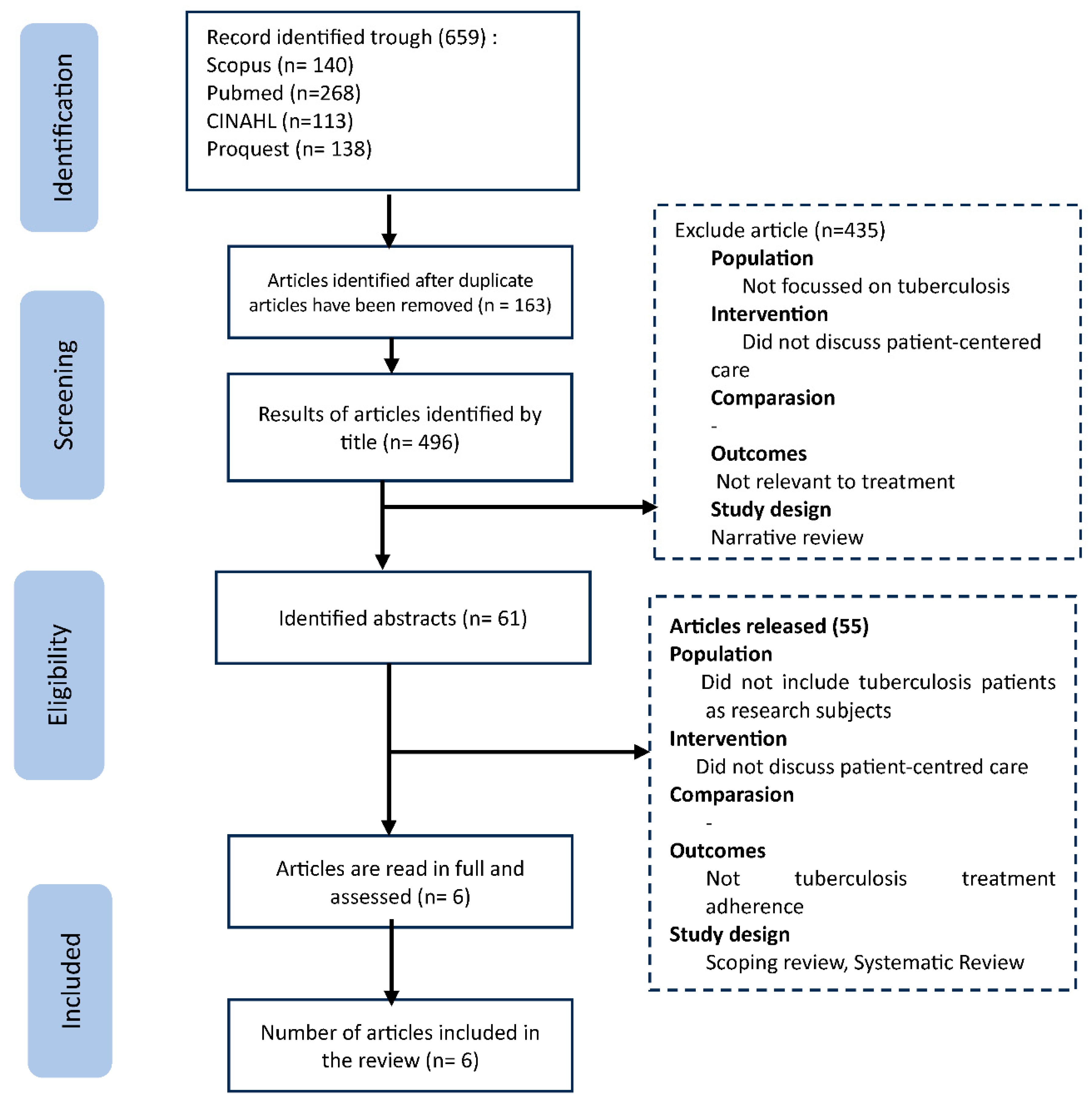
Table 2.
originality of research on the article PCC impact on treatment adherence of tuberculosis patients.
Table 2.
originality of research on the article PCC impact on treatment adherence of tuberculosis patients.
| No | Title and Author | Methods | Hasil Penelitian |
|---|---|---|---|
| 1 |
Effect of a phone reminder system on patient- centered tuberculosis treatment adherence among adults in Northwest Ethiopia: a randomised controlled trial (Gashu, Gelaye, Lester, et al., 2021) |
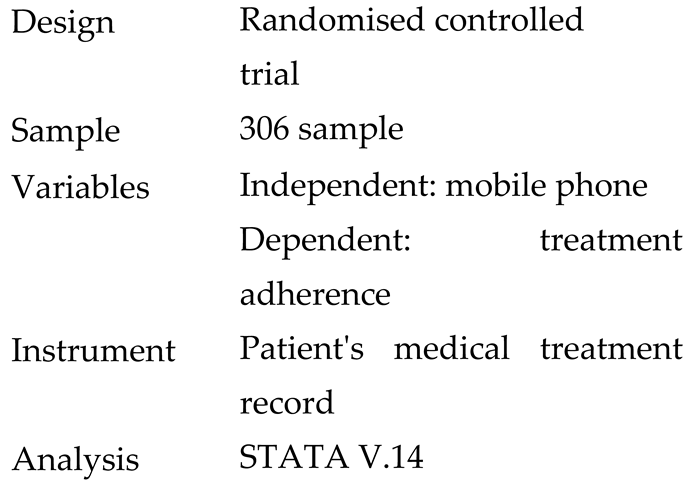 |
The use of a mobile phone with a daily medication reminder system improved adherence to patient-centred TB treatment and provider-patient relationships; however, there was no significant effect on treatment success. |
| 2 |
Patient-centered mobile tuberculosis treatment support tools (TB-TSTs) to improve treatment adherence: A pilot randomized controlled trial exploring feasibility, acceptability and refinement needs (Iribarren et al., 2022) |
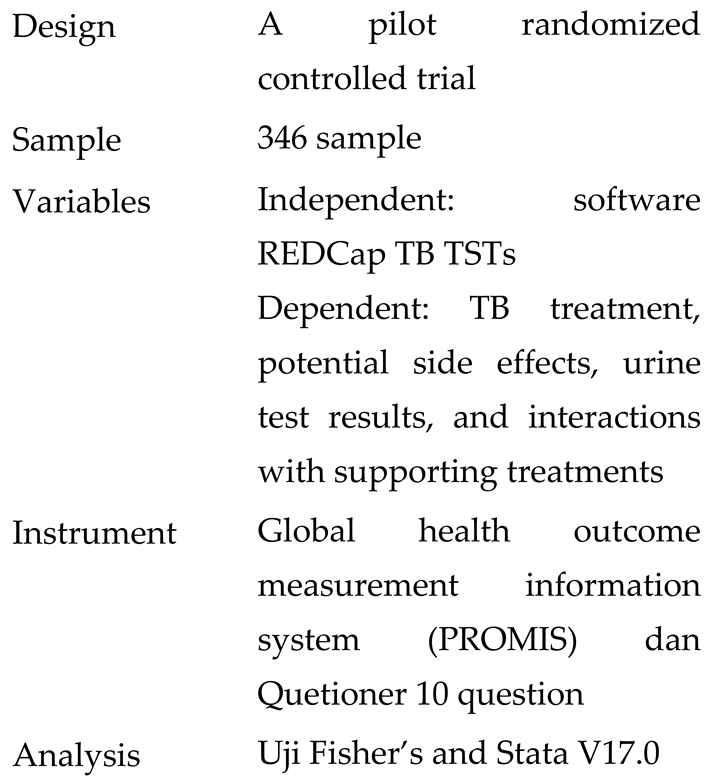 |
The results of this study show that the device is easy to use and can be recommended to support the successful treatment of tuberculosis patients. |
| 3 |
Specific Interventions for Implementing a Patient-Centered Approach to TB Care in Low-Incidence Cities (Pujol-Cruells & Vilaplana, 2019) |
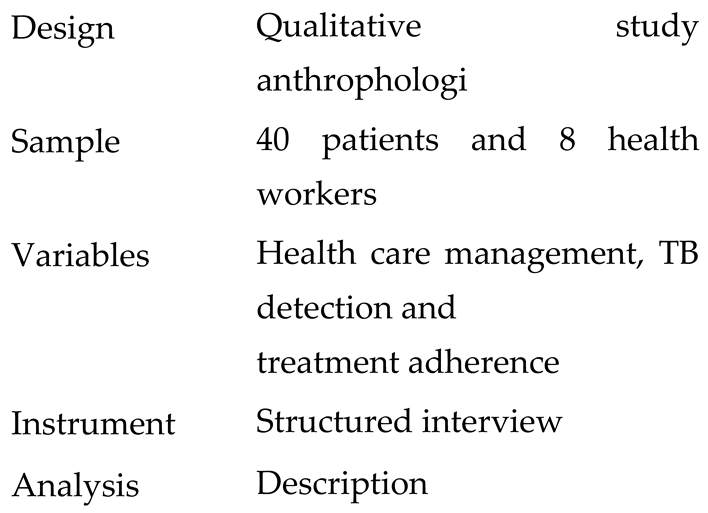 |
Patient-centred management of tuberculosis is recommended by the WHO, but needs to be implemented regularly with a structured work protocol. |
| 4 | Person-centred care in practice: perspectives from a short course regimen for multi-drug resistant tuberculosis in Karakalpakstan, Uzbekistan (Horter et al., 2020) |
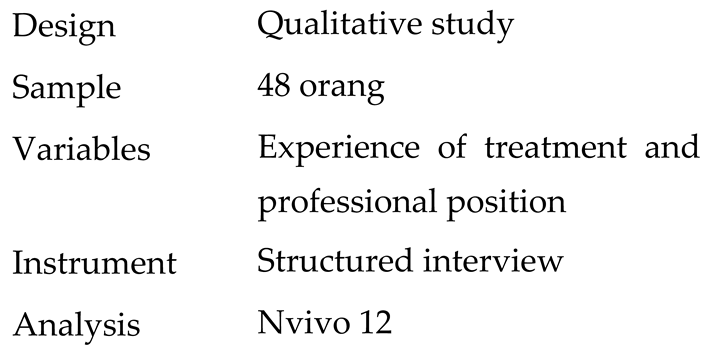 |
Patients with MDR-TB are not used to shared decision-making and feel uncomfortable taking responsibility for their treatment choices. Healthcare professionals are perceived to have greater knowledge and expertise, and patients trust healthcare professionals to act in their best interest, |
| 5 | “A very humiliating illness”: a qualitative study of patient-centered Care for Rifampicin-Resistant Tuberculosis in South Africa (Furin et al., 2020) |
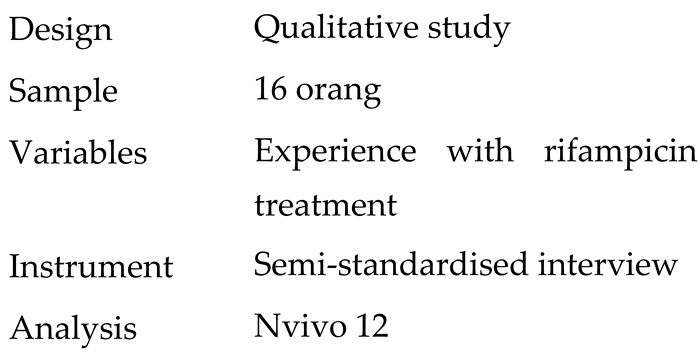 |
Rifampicin-resistant TB robs people of their physical, social, economic, psychological, and emotional well-being far beyond the period when treatment is administered. Efforts to address this issue are as important as new drugs and diagnostics in the fight against TB. |
| 6 | Adherence to TB treatment remains low during continuation phase among adult patients in Northwest Ethiopia (Gashu, Gelaye, & Tilahun, 2021) |
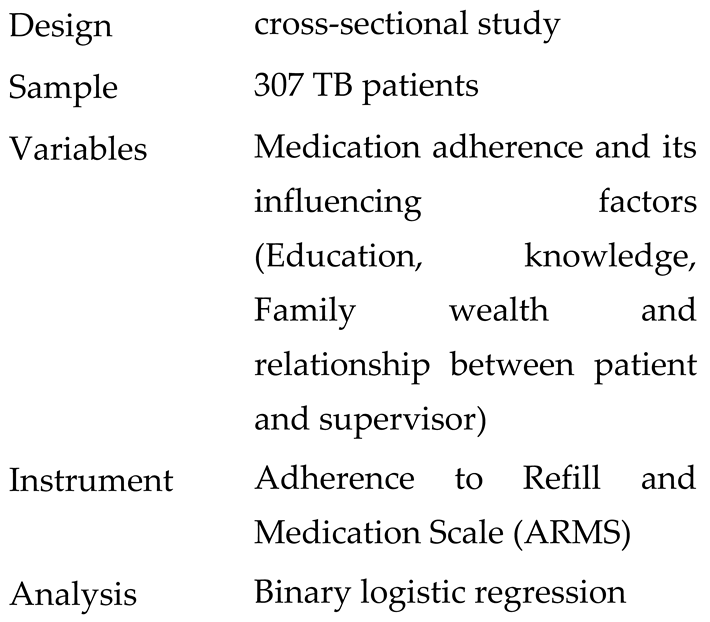 |
Patient adherence to TB treatment remains low during the continuation phase. There was a positive association between education level, knowledge, family wealth, and provider-patient relationship with patient adherence. with patient adherence. Forgetfulness, travelling far, and feeling sick were the main reasons for non-adherence. adherence to TB treatment. |
Results and Discussion
The methodology for conducting research is based on certain methods or methodologies, as well as philosophical paradigms and assumptions. Researchers' methodologies are influenced by their worldview, which consists of their philosophical assumptions and ideas about the nature of reality and how to understand it. (Alele & Aduli, 2023). Patient-centered care in tuberculosis has been one of the pillars in tuberculosis elimination since 2017, a patient-centred integrated care and prevention that includes specific recommendations on patient care and support (Horter et al., 2021).
Ontology of Patient Centered Care on Treatment Adherence Tuberculosis Patients
The study of patient-centred care ontologies plays an important role in improving patient-centred care by organising and describing medical knowledge. Some key points on how ontologies contribute to patient-centred care relate to improving patient empowerment and understanding of tuberculosis treatment programmes (Wildana, 2018). On empowering tuberculosis patients to understand the content of their health records and make decisions on their management, thereby promoting patient empowerment (Guarnier et al., 2021)
Patient-centered care prioritises empowering patients to improve their knowledge of tuberculosis treatment, which takes 6 months, and consolidating factors that influence tuberculosis treatment adherence, thereby assisting in research-based decision-making (Olukunle A et al., 2015). Some research on tuberculosis can bridge the gap between the health system and patient needs, increase understanding of patient experiences and improve service delivery (Martín et al., 2024). Research conducted quantitatively and qualitatively by focusing on patients has proven to be able to improve medication adherence, the use of technology as a medium to support medication adherence from the results of Gashu's research (2021).
Epistemiology of Patient Centered Care on Treatment Adherence Tuberculosis Patients
The direction of tuberculosis treatment refers to a more patient-centred treatment adherence. Patient-centred care in tuberculosis is critical to achieving the goals of the End TB Strategy (Worth Health Organization, 2021). This requires a comprehensive approach that includes understanding the patient pathway, providing high-quality counselling, offering flexible treatment options, and meeting the needs of the whole patient. Continuous efforts to improve healthcare provider attitudes, training, and support systems are needed to bridge the gap between potential and actual performance in TB care (Hanlie Myburgh et al., 2023).
Tuberculosis treatment adherence can be achieved through several strategies using a multicomponent strategy that includes patient and family education, and regular follow-up has been shown to be effective in improving adherence and treatment outcomes (Khachadourian et al., 2015). Digital health technologies, such as mobile health apps, can support treatment adherence by providing reminders, educational content, and platforms for communication with healthcare providers (Eryong et al., 2022). Besides utilising technology, implementing Patient-centered care in tuberculosis by developing individualised management plans based on each patient's specific needs and risks can help retain patients in care. This includes early tracking of patients who discontinue treatment and counselling provided by peers (Snyman et al., 2018)
Aksiologi of Patient Centered Care on Treatment Adherence Tuberculosis Patients
The Patient-centered care intervention is designed to improve adherence to tuberculosis treatment by giving patients choice over treatment location and support systems (Mkopi et al., 2013). Research has shown that giving patients these choices can lead to high adherence rates, as seen in Tanzania where 95.7% of patients adhered to their treatment under the Patient-Centred Medicine approach (Patient-Centered Treatment/PCT) (Mkopi et al., 2012). Patient-centered care includes the provision of socio-economic and psychosocial support to TB patients, which is critical to reducing dropout rates and improving overall treatment success. This support can range from financial assistance for transport to psychological counselling (Hanlie Myburgh et al., 2023).
Patient-centered care is a form of holistic care implementation, which involves recognising and meeting the diverse needs of TB patients, including physical, psychological, social, and informational aspects. This holistic approach ensures that all aspects of a patient's health are considered, leading to better overall health outcomes (Ren et al., 2021). Patient-centered care can also help reduce the negative attitudes and stigma that TB patients often face from healthcare providers. By fostering a kinder and more supportive environment, Patient-centered care improve the patient experience and encourage them to remain engaged in tuberculosis treatment (Jaramillo et al., 2019)
Conclusion
The implementation of nursing care in tuberculosis patients by applying the PCC approach is very necessary in helping patients with tuberculosis treatment compliance. The reasons for the importance of PCC implementation include a holistic form of nursing care and can reduce the stigma received by tuberculosis patients while undergoing treatment by utilising a multicomponent strategy so that it is expected that patients will not drop out of drugs or even develop resistance to tuberculosis drugs.
References
- Alele, F., & Aduli, B. M. (2023). An introduction to research methods for undergraduate health profesional students. James Cook University.
- Bachnick, S., Ausserhofer, D., Baernholdt, M., & Simon, M. (2018). Patient-centered care, nurse work environment and implicit rationing of nursing care in Swiss acute care hospitals: A cross-sectional multi-center study. International Journal of Nursing Studies, 81(November 2017), 98–106. [CrossRef]
- Barrett, M., Boyne, J., Brandts, J., Brunner-La Rocca, H. P., De Maesschalck, L., De Wit, K., Dixon, L., Eurlings, C., Fitzsimons, D., Golubnitschaja, O., Hageman, A., Heemskerk, F., Hintzen, A., Helms, T. M., Hill, L., Hoedemakers, T., Marx, N., McDonald, K., Mertens, M., … Zippel-Schultz, B. (2019). Artificial intelligence supported patient self-care in chronic heart failure: a paradigm shift from reactive to predictive, preventive and personalised care. EPMA Journal, 10(4), 445–464. [CrossRef]
- Boyarchuk, O. R., & Antoniuk, I. M. (2023). A patient-centered care for the management of children with rare diseases: collaboration between physicians, nurses, and patients. Child’s Health, 18(6), 458–464. [CrossRef]
- Bruzual, A. D. (2018). Person-centered medicine. Gaceta Medica de Caracas, 126(1), 40–51.
- Dіachuk, D. D., Moroz, G. Z., Hidzynska, I. M., & Kravchenko, A. M. (2023). Implementation of Patient-Centered Care and Medical Care Improvement: Current State (Review). Clinical and Preventive Medicine, 1(23), 67–77. [CrossRef]
- Epstein, R. M., & Street, R. L. (2011). The Values and Value of Patient-Centered. 9(2), 100–103. [CrossRef]
- Eryong, L., Qinglin, M., Qian, W., Jing, W., & Lin, Z. (2022). Interpretation of WHO Guidelines on tuberculosis care and support. Chinese Journal of Antituberculosis, 44(12), 1449–1259.
- Frezza, E. (2019). Patient-Centered Healthcare: Transforming the Relationship Between Physicians and Patients (1st ed.) (1st Editio). Productivity Press. [CrossRef]
- Furin, J., Loveday, M., Hlangu, S., Dickson-hall, L., Roux, S., Nicol, M., & Cox, H. (2020). “ A very humiliating illness ” : a qualitative study of patient-centered Care for Rifampicin-Resistant Tuberculosis in South Africa. 1–11.
- Gashu, K. D., Gelaye, K. A., Lester, R., & Tilahun, B. (2021). Effect of a phone reminder system on patient-centered tuberculosis treatment adherence among adults in northwest ethiopia: A randomised controlled trial. BMJ Health and Care Informatics, 28(1), 1–10. [CrossRef]
- Gashu, K. D., Gelaye, K. A., & Tilahun, B. (2021). Adherence to TB treatment remains low during continuation phase among adult patients in Northwest Ethiopia. BMC Infectious Diseases, 21(1), 1–11. [CrossRef]
- Gluyas, H. (2015). Patient-centred care: improving healthcare outcomes. Continuing Professional Development, 151, 10–17.
- Goldfarb, M. J., Saylor, M. A., Bozkurt, B., Code, J., Di Palo, K. E., Durante, A., Flanary, K., Masterson Creber, R., Ogunniyi, M. O., Rodriguez, F., & Gulati, M. (2024). Patient-Centered Adult Cardiovascular Care: A Scientific Statement From the American Heart Association. Circulation, 149(20), E1176–E1188. [CrossRef]
- Guarnier, T. S., Das G. Da Silva Teixeira, M., Dos R. Costa, D., Dos Santos, A. S., Bubach, S., Sales, C. M. ., & Das D. Rissino, S. (2021). Tuberculosis diagnosis - An ontology-driven conceptual model. CEUR Workshop Proceedings.
- Hanlie Myburgh, I., Baloyi, D., Id, M. L., Id, S. M., Osman, M., Wademan, D., Hesseling, A., & Hoddinott, G. (2023). PLOS GLOBAL PUBLIC HEALTH A scoping review of patient-centred tuberculosis care interventions : Gaps and opportunities. 1–16. [CrossRef]
- Horter, S., Daftary, A., Keam, T., Bernays, S., Bhanushali, K., Chavan, D., Denholm, J., Furin, J., Jaramillo, E., Khan, A., Lin, Y. D., Lobo, R., Loveday, M., Majumdar, S. S., Mistry, N., Patel, H., Rane, S., Swaminathan, A., Triasih, R., … du Cros, P. (2021). Person-centred care in TB. International Journal of Tuberculosis and Lung Disease, 25(10), 784–787. [CrossRef]
- Horter, S., Stringer, B., Gray, N., Parpieva, N., Safaev, K., Tigay, Z., Singh, J., & Achar, J. (2020). Person-centred care in practice : perspectives from a short course regimen for multi-drug resistant tuberculosis in. 1–11.
- Iribarren, S. J., Milligan, H., Chirico, C., Goodwin, K., Schnall, R., Telles, H., Iannizzotto, A., Sanjurjo, M., Lutz, B. R., Pike, K., Rubinstein, F., Rhodehamel, M., Leon, D., Keyes, J., & Demiris, G. (2022). Patient-centered mobile tuberculosis treatment support tools (TB-TSTs) to improve treatment adherence: A pilot randomized controlled trial exploring feasibility, acceptability and refinement needs. The Lancet Regional Health - Americas, 13, 100291. [CrossRef]
- Isaac KS, N. (2024). Physicians, know thy patient. Journal of the Royal College of Physicians of Edinburgh, 54(1), 84–88.
- Jaramillo, J., Yadav, R., & Herrera, R. (2019). Why every word counts : towards patient- and people-centered tuberculosis care. 23(1100), 547–551.
- Khachadourian, V., Truzyan, N., Harutyunyan, A., Thompson, M. E., Harutyunyan, T., & Petrosyan, V. (2015). People-centered tuberculosis care versus standard directly observed therapy: Study protocol for a cluster randomized controlled trial. Trials, 16(1), 1–7. [CrossRef]
- Martín, D., Barbosa, P., Ramos, J. P., Vieira, M., & Duarte, R. (2024). People first: a participatory community approach on patient-reported outcomes in tuberculosis. Breathe, 20(1). [CrossRef]
- Migliori, G. B. (2021). Essential Tuberculosis (M. C. Raviglione (ed.)). Springer Nature Switzerland AG.
- Mkopi, A., Range, N., Amuri, M., Geubbels, E., Lwilla, F., Egwaga, S., Schulze, A., & Van Leth, F. (2013). Health workers’ performance in the implementation of Patient Centred Tuberculosis Treatment (PCT) strategy under programmatic conditions in Tanzania: A cross sectional study. BMC Health Services Research, 13(1), 1–7. [CrossRef]
- Mkopi, A., Range, N., Lwilla, F., Egwaga, S., Schulze, A., Geubbels, E., & van Leth, F. (2012). Adherence to Tuberculosis Therapy among Patients Receiving Home-Based Directly Observed Treatment: Evidence from the United Republic of Tanzania. PLoS ONE, 7(12), 1–7. [CrossRef]
- Olukunle A, O., Deshendran, M., Anban W, P., & Christopher, S. (2015). An Ontology for Tuberculosis Treatment Adherence Behaviour. ACM International Conference Proceeding Series.
- Pujol-Cruells, A., & Vilaplana, C. (2019). Specific Interventions for Implementing a Patient-Centered Approach to TB Care in Low-Incidence Cities. Frontiers in Medicine, 6(November), 1–8. [CrossRef]
- Ren, J., Han, D., Zhang, J., Wang, Y., Huang, Q., Tian, T., & Li, X. (2021). Development and psychometric testing of the supportive care needs scale for patients with tuberculosis (Scn-tb). Patient Preference and Adherence, 15, 2267–2278. [CrossRef]
- Snyman, L., E., V., Duran, L. T., E., M., V.D., A., X, H., & P., I. (2018). “I didn’t know so many people cared about me”: Support for patients who interrupt drug-resistant TB treatment. International Journal of Tuberculosis and Lung Disease, 22(9), 1023–1030. [CrossRef]
- Staden, V., & Werdie, C. (2023). Holistic framework in person centered medicine. Person Centered Medicin, 83–103.
- Walsh, A., Bodaghkhani, E., Etchegary, H., Alcock, L., Patey, C., Senior, D., & Asghari, S. (2022). Patient-centered care in the emergency department: a systematic review and meta-ethnographic synthesis. International Journal of Emergency Medicine, 15(1), 1–12. [CrossRef]
- Wedemire, C., Brody, R., & Ganzer, H. (2022). Integration of patient-centered care in nutrition support decision-making: A case report. Nutrition in Clinical Practice, 37(1), 209–214. [CrossRef]
- Global Tuberculosis Report.
- WHO. (2024). Global tuberculosis report 2024.
- Wildana, W. (2018). BAB 1 faktor yang berhubungan dengan status gizi pada penderita tuberkulosis paru di. Energies, 6(1), 1–8. http://journals.sagepub.com/doi/10.1177/1120700020921110%0Ahttps://doi.org/10.1016/j.reuma.2018.06.001%0Ahttps://doi.org/10.1016/j.arth.2018.03.044%0Ahttps://reader.elsevier.com/reader/sd/pii/S1063458420300078?token=C039B8B13922A2079230DC9AF11A333E295FCD8.
- Worth Health Organization. (2021). Global Tuberculosis Report. World Health Organization.
Disclaimer/Publisher’s Note: The statements, opinions and data contained in all publications are solely those of the individual author(s) and contributor(s) and not of MDPI and/or the editor(s). MDPI and/or the editor(s) disclaim responsibility for any injury to people or property resulting from any ideas, methods, instructions or products referred to in the content. |
© 2024 by the authors. Licensee MDPI, Basel, Switzerland. This article is an open access article distributed under the terms and conditions of the Creative Commons Attribution (CC BY) license (http://creativecommons.org/licenses/by/4.0/).
Copyright: This open access article is published under a Creative Commons CC BY 4.0 license, which permit the free download, distribution, and reuse, provided that the author and preprint are cited in any reuse.


