Preprint
Article

This version is not peer-reviewed.

In Vitro Toxicity Assessment of Methylmercury, Arsenic (III and V) with a Cell-Based Model

Submitted:

04 December 2024

Posted:

04 December 2024

You are already at the latest version

Abstract

The negative health effects associated with exposure to heavy metals are of global concern, so their toxic mechanisms and potency should be identified to develop effective prevention. In this sense, we analysed the toxicity of arsenic (+3 and +5 valences) and meHg in intestinal epithelial cells (H4) and blood macrophages (TLT). We performed crystal violet, MTT, proliferation, ROS, H2ax, cell cycle arrest, apoptosis and cell shape assays with different concentrations of these elements to determine the potency and mechanism of their toxicity. The potency of the heavy metals differs in both cell types and among each element. In addition, all the selected heavy metals induced ROS formation and histone exposure, but each element had different pathways associated with their toxicity. For example, each element induced cell cycle arrest in different phases of H4 and TLT cells, and suggest that each element induce different cell death pathways in each cell type. Understanding the mechanisms of toxicity may help to implement effective strategies for the prevention or mitigation of the heavy metal toxicity.

Keywords: 
;  ;  ;  ;  ;  ;  

1. Introduction

Heavy metals are found in many regions of the world and there are various sources of exposure, in particular the environment and food [1,2]. Heavy metals have different forms that are strongly influenced depending on the source [3], and so is their toxicity, which depends on several factors (organic or inorganic form, or the valence, f.i.) [4]. This indicates the need to analyse the factors determining the spectrum of adverse health effects associated with exposure to these elements.
There are several ways to measure the toxicity of heavy metals, and subsequently, many studies have been conducted [5,6,7,8,9]. These toxicological studies were based on different models, in vivo, in silico and in vitro. We will focus on in vitro model since is the model that has the less paradoxical effects because the source of the model is taken from the target population (human cells) [10]. In a previous study, Caco-2 cell lines were used to assess the toxicity of different arsenic species [11]. In another study, different cell lines (rat and human hepatocytes, human epidermal keratinocytes and human bronchial epithelial cells) were used to evaluate the toxicity of different arsenic species [5]. The toxicity of methylmercury has also been investigated in other in vitro studies using different cell lines (HT-22 cell line, glioblastoma (U373) and neuroblastoma (B103)) [12,13]. These studies provide valuable information but considering the most common route of exposure of arsenic [1,2], toxicity studies should focus also on arsenic toxicity on intestinal epithelial and blood macrophages. And interestingly, research on the toxicity of these contaminants in intestinal epithelial cells is quite limited.
With this in mind, we evaluated the toxicity of arsenic (trioxide and pentoxide) and methylmercury with two different cell lines (intestinal epithelial cells and blood macrophages) in this manuscript. We performed proliferation test, 3-[4,5-dimethylthiazol-2-yl]-2,5 diphenyl tetrazolium bromide MTT assay, crystal violet and 2'-7'dichlorofluorescin diacetate (DCFH-DA) assay to determine the cytotoxicity, Annexin V/Vybrant/PI combined test to determine apoptotic cells (early and late) and cell morphology, and the H2ax for genotoxicity assessment of the selected compounds in both cell lines. We have observed that the toxicity of these elements varies across the tested compounds and cell types. The following chapters will detail these differences and their implications.

2. Materials and Methods

2.1. Cells

H4 cells are nontransformed epithelial cell line, derived from the small intestine of 20- to 22-wk gestation fetuses and characterized by Sanderson et al. [14]. Human blood macrophages called TLT (CVCL_6C16) were obtained at the University of Maribor (Slovenia) [15].

2.2. Cell Culture Medium

H4 and TLT Cells were cultured in DMEM Advanced (Thermo Fisher Scientific, Waltham, MA, USA) supplemented with 5 wt% fetal bovine serum (FBS) (Gibco, Thermo Fisher Scientific, Waltham, MA USA). Penicillin (100 U mL−1, Sigma), and streptomycin (1 mg*/mL−1, Fluka, Buchs, Switzerland) were also added to the cell culture medium. Cells were cultured in 25 cm2 culture flasks (Corning, New York, USA) at 37 °C and 5% CO2.

2.3. Chemicals

The chemicals 3-(4,5-dimethylthiazole-2-yl)-2,5-phenyl tetrazolium bromide (MTT), sodium arsenate dibasic heptahydrate (as V), methylmercury(II) chloride (meHg) and 2'-7'dichlorofluorescin diacetate (DCFH-DA) were acquired from Sigma-Aldrich (Saint Louis, MO, USA). Vybrant™ DyeCycle™ Green Stain (Vybrant), propidium iodide (PI) and sodium arsenite (as III) were purchased from Thermo Fisher Scientific (Waltham, MA USA). Phycoerythrin and a cyanine dye (PE-CY5) conjugated antibodies against Annexin V were purchased from (BD Biosciences, USA).

2.4. Method Overview

We treated the samples for 24 hours with as III, as V and meHg and analysed their toxicity with different in vitro tests (Figure 1), described below in the following subchapters.

2.5. Cytotoxic Assays

We cultured the cells till they formed a monolayer (100% confluency). We followed the protocol for MTT and crystal violet (CV) described by van Meerloo et al. [16] Peters et al. [17], and Kim and Hue [18], respectively. We measured the absorbance of the samples (570 nm and 590 nm for MTT and CV, respectively) with the VARIOSKAN (Thermo Fisher Scientific, Waltham, MA, USA). We followed the protocol for MTT as described in a previous work [19] (thus, we measured the absorbance at 570 nm) but we seeded substantially fewer number of cells (3,000, in comparison to the 20,000 cells in a monolayer) to observe the toxic effect in proliferating cells. In all three tests, we divided the absorbance of the treated samples with the absorbance of the untreated samples.
We tested various concentrations of as III, as V and meHg in Crystal Violet [1 - 2.5 – 5 – 10 – 25 – 50 - 100 mg/L]. The contaminant concentration in the MTT were in a narrower range [1 – 5 – 10 – 25 – 50 mg/L]. We treated the samples with the lowest contaminant concentrations when analysing the toxicity of contaminants in proliferation cells [0.25 – 0.5 – 1 – 2.5 – 5 – 10 mg/L]. In H4 cells, the range was determined to be [0.25 – 5 mg/L], while the TLT samples were treated within the range [0.5 – 10 mg/L].

2.6. Reactive Oxygen Species (ROS)

We cultured the cells till they formed a monolayer and determine the ROS production of the cells using the DCFH-da method [18]. We inoculated the cells with 50 µM of DCFH-da for an hour and measured the ROS production with the VARIOSKAN. We excited the DCFH at 485 nm and read the emission at 530 nm. We divided the relative fluorescence units (RFU) of the treated samples with the RFU measured in the untreated samples.
We tested various concentrations of as III, as V and meHg [1 – 5 – 10 – 25 – 50 - 100 mg/L].

2.7. H2AX

The assay consists of two directly conjugated antibodies: a phospho-specific ataxia telangiectasia mutated kinase (ATM) (Ser1981) conjugated to PE and a phospho-specific histone H2AX conjugated to PECy5 to measure activation of the DNA damage response. We followed the protocol previously described by Valverde and Sánchez-Brito [20] and measured with the Muse® Cell Analyzer (Luminex, Austin, TX, USA). We then determined the frequency of the presence of the signal from both antibodies (activated cells), the frequency of ATM positive cells (inactivated cells) and the frequency of double negative cells (non-expressing).
We adjusted the concentrations of as III, as V, and meHg based on the toxic effects observed in previous tests. Consequently, we treated the cells with the following concentration ranges according to the contaminants: as III [1 – 6 – 12 mg/L], as V [5 – 15 – 30 mg/L] and meHg [1 – 5 – 10 mg/L].

2.8. Apoptosis/Cell Cycle/Cell Shape

We collected cells and added 100 μL of an Annexin V PE-CY5 with binding buffer mixture (1:20) and incubate them for 15 minutes. We washed the cells with 400 μL PBS and centrifuge them 300g x 5minutes. After discarding the supernatant, we stained the cells with 50 µg/mL of PI and 5 μM of Vybrant and incubated them for additional 20 minutes. We excited the Annexin V PE-CY5, PI and Vybrant dyes with a laser at a wavelength of 488 nm and observed the emission in channel II (Vybrant), channel IV (PI) and channel XI (Annexin V PE-CY5). Additionally we observed the cell morphology in channel IX (brightfield) [21]. We considered the cells where the dye was present in channel IV as late apoptotic cells [6]. In the remaining cells, we determine the cells where the dye was present in channel XI as early apoptotic [22]. We determine the cell cycle considering the fluorescence intensity in channel II [23]. The cell shape was analysed with the IDEAS (Millipore) [24].
To continue with the H2ax analysis, we treated the cells with the same concentration ranges of the selected contaminants: as III ([1 – 6 – 12 mg/L]), as V ([5 – 15 – 30 mg/L]), and meHg ([1 – 5 – 10 mg/L]).

2.9. Statistical Analysis

The statistical analysis and graph designing was made with the R program. We used the ANOVA-tukey HSD test to compare the assessments of the CV, MTT, proliferation and ROS methods. We used Chi-square to test the difference between the frequencies of the treated and untreated cells in H2ax, Cell cycle, Apoptosis and Cell shape tests.

3. Results

3.1. Cytotoxic Assays

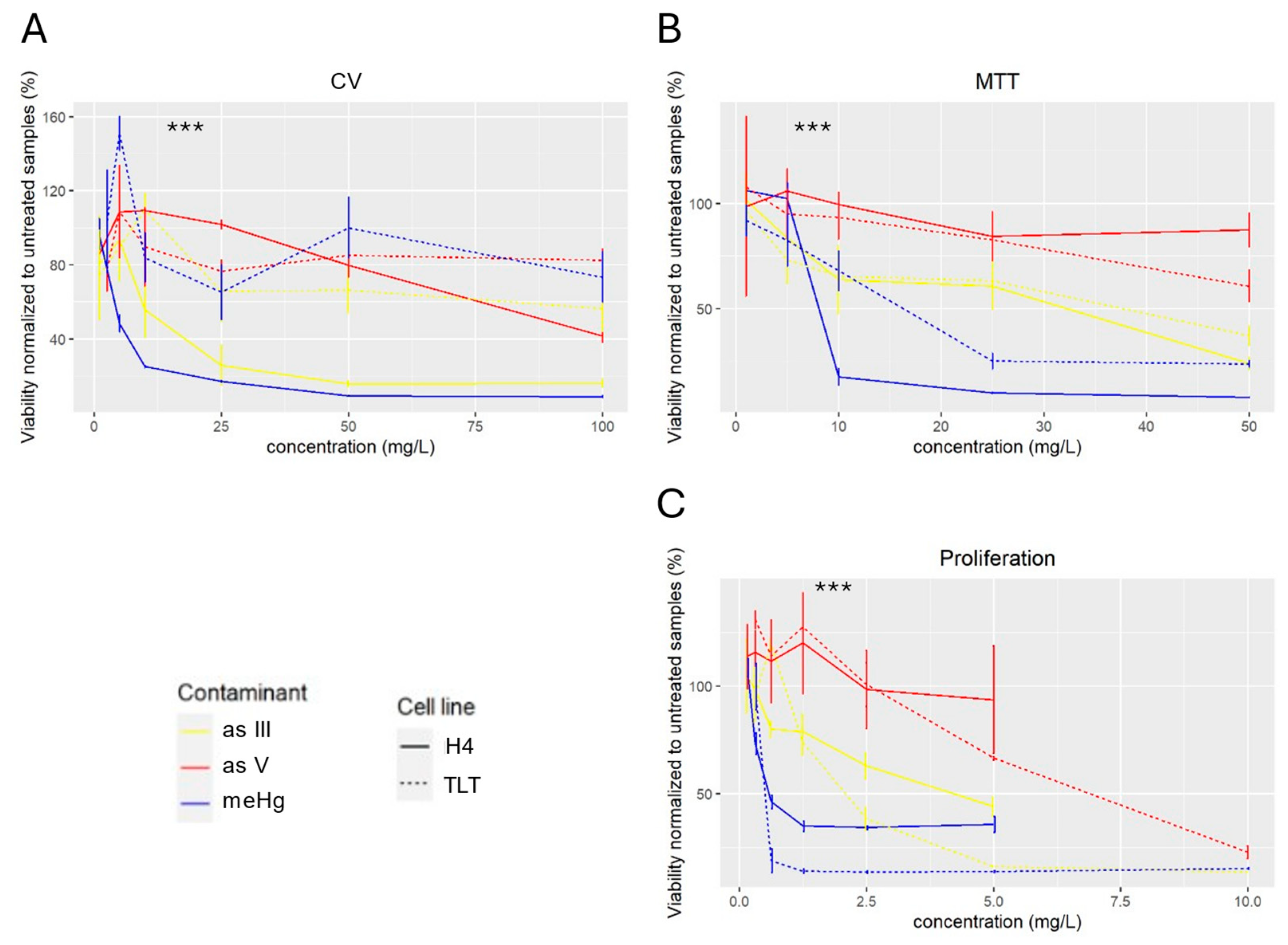
We performed the CV test to initially assess the toxicity of the chosen heavy metals on H4 and TLT cells. We observed significant cytotoxic effect on both cell types when exposing them to concentrations ranging from 10 to 25 mg/L of as III and meHg (Figure 2A). We only observed cytotoxicity on TLT cell when exposing them to 100 mg/L of as V, while we didn’t observe any significant cytotoxicity effect on H4 cells. Noteworthy, there was a significant difference in the viability assessment between the H4 and TLT cells treated with meHg (Figure 2A).
When assessing the toxicity of the heavy metals with the MTT assay we observed cytotoxicity at concentrations between 5-10 mg/L of as III and meHg in both cell lines (Figure 2B). Additionally, TLT cells showed significant viability reduction at 50 mg/L of as III (Figure 2B), while H4 cells exhibited no cytotoxicity at any tested concentration (Figure 1B).
We observed significantly lower viability in proliferating samples treated with 2.5 mg/L of as III and meHg (Figure 2C). Similar to the MTT assay, the cytotoxic effect in proliferative samples on TLT cells was seen at higher concentrations of as V compared to as III and meHg, specifically at 10 mg/L (Figure 2C).

3.2. ROS

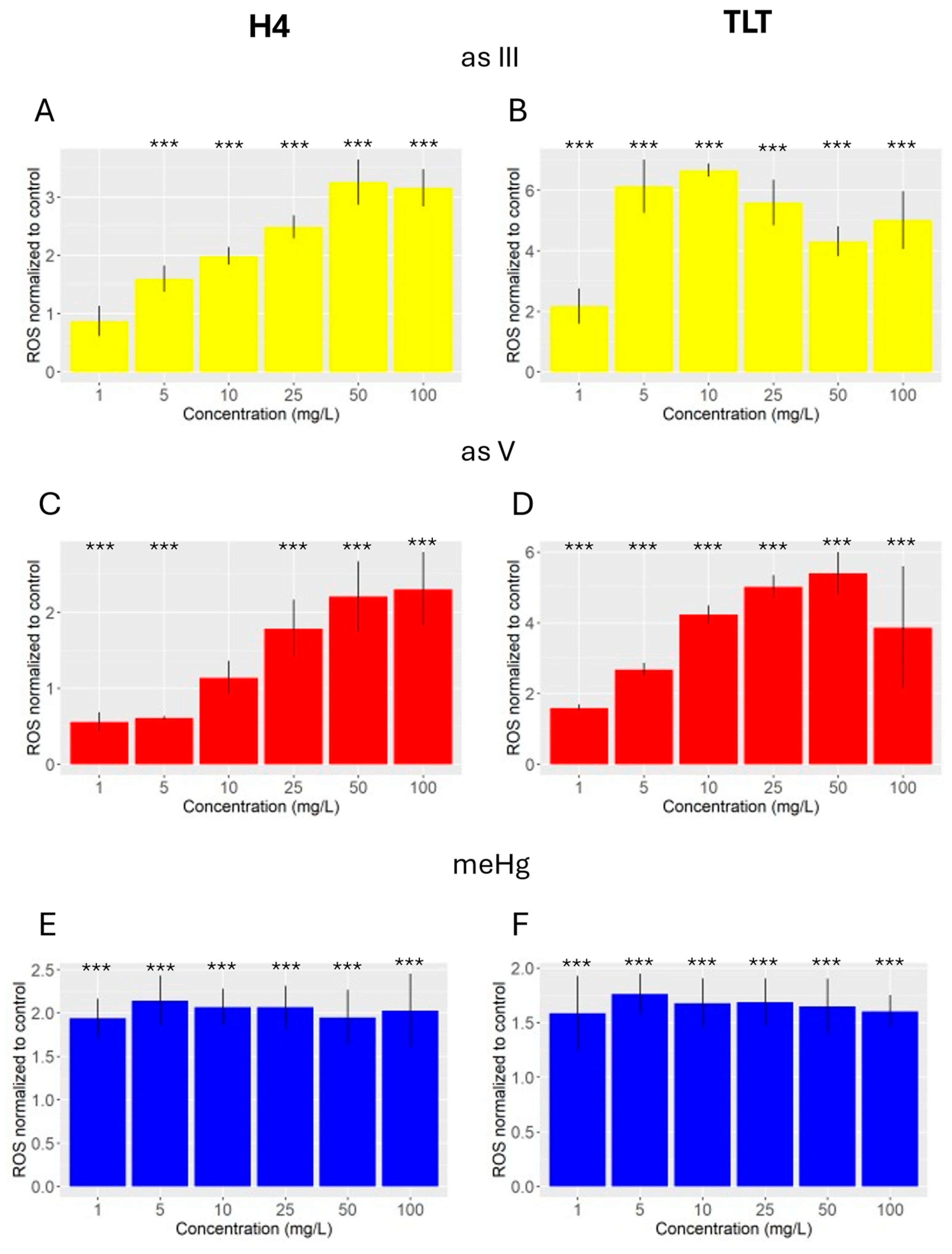
With the exception of two samples (1mg/L as III and 10 mg/L as V), we observed significantly higher ROS production in the rest of the H4 cells treated with the various concentrations of heavy metals. In case of the TLT cells, we observed an increase in ROS production in all the samples, with a higher magnitude to that measured in H4 cells (up to 6-fold in TLT and 3-fold in H4) (Figure 3).
We observed a concentration-response dependence in the samples treated with as III and as V, but not in those treated with meHg.

3.3. H2ax

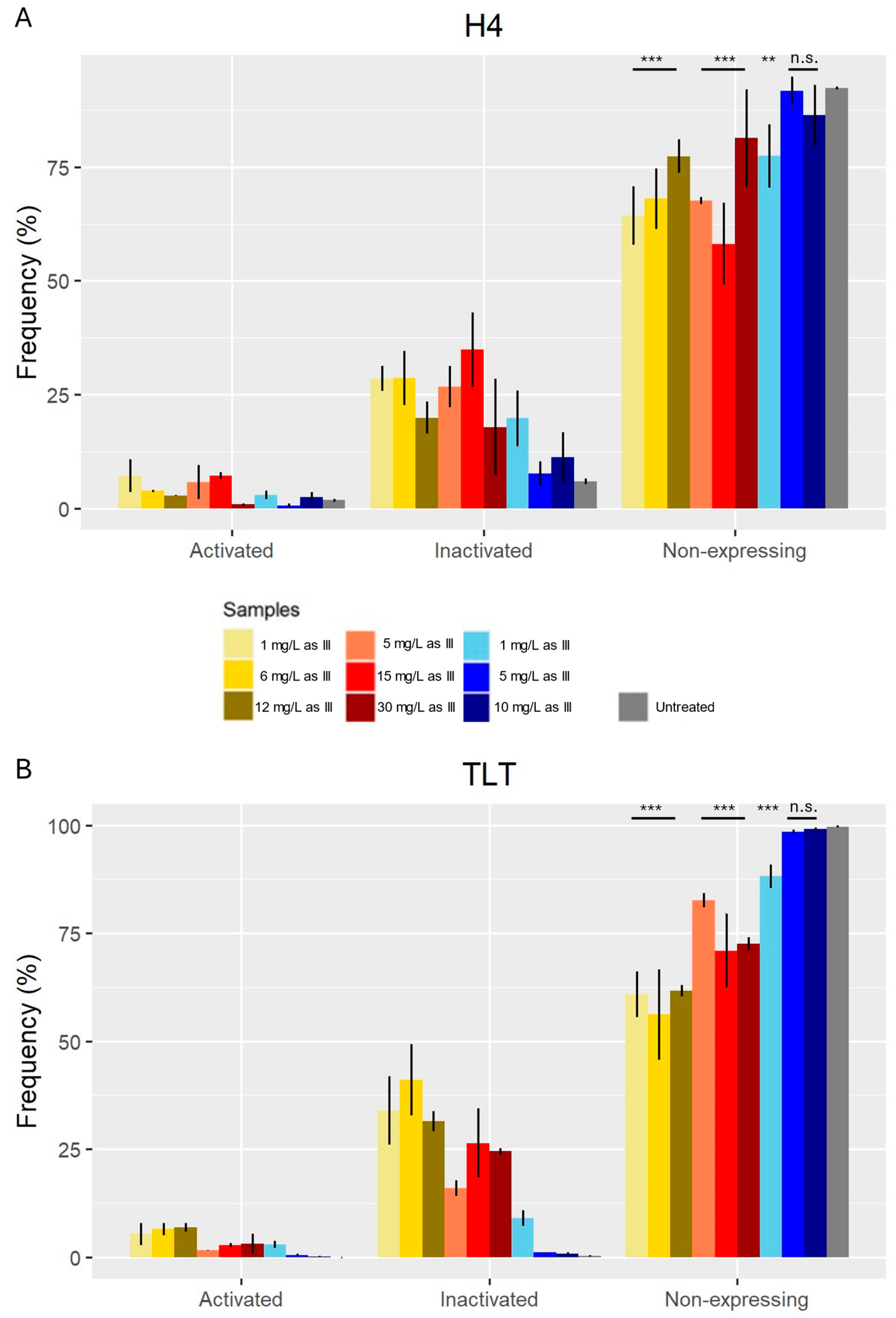
All the treated samples in both cell lines had higher number of exposed histones than the untreated samples with the exception of the samples treated with 5 and 10 mg/L of meHg (Figure 4). The cell number of these samples was lower, which is in line with the previous observations in 3.1 Cytotoxicity, where we observed a significantly higher toxicity of meHg at lower concentrations than in sample treated with arsenic.
There was no significant difference among the different samples in the activated or inactivated forms of γH2ax. Yet the proportion of the inactivated γH2ax form was higher (Figure 4).

3.4. Cell Cycle

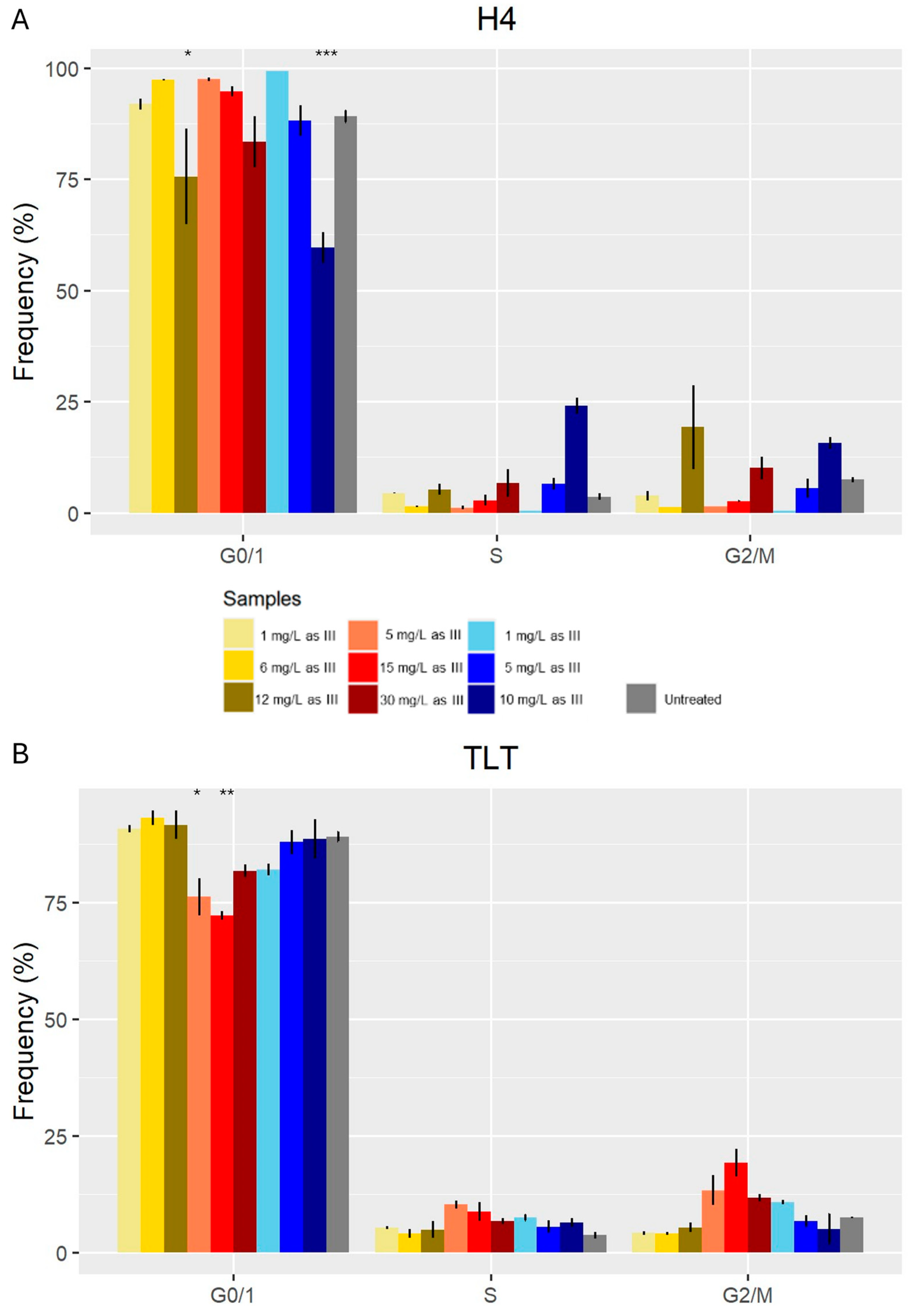
When exposing the H4 cells to 12 mg/L of as III, we measured a significantly higher number of cells in the G2/M phase than in the untreated samples (Figure 5A). While, H4 cells treated with 10 mg/L of meHg had significantly higher number of cells in the S phase and G2/M than in the untreated samples (Figure 5A).
In case of the TLT cells, we observed a significantly higher number of cells in the G2/M phase in samples treated with 5 and 15 mg/L of as V (Figure 5B).
We didn’t observe any other significant changes in the cell cycle of the rest of the treated samples in comparison with the untreated samples.

3.4. Apoptosis

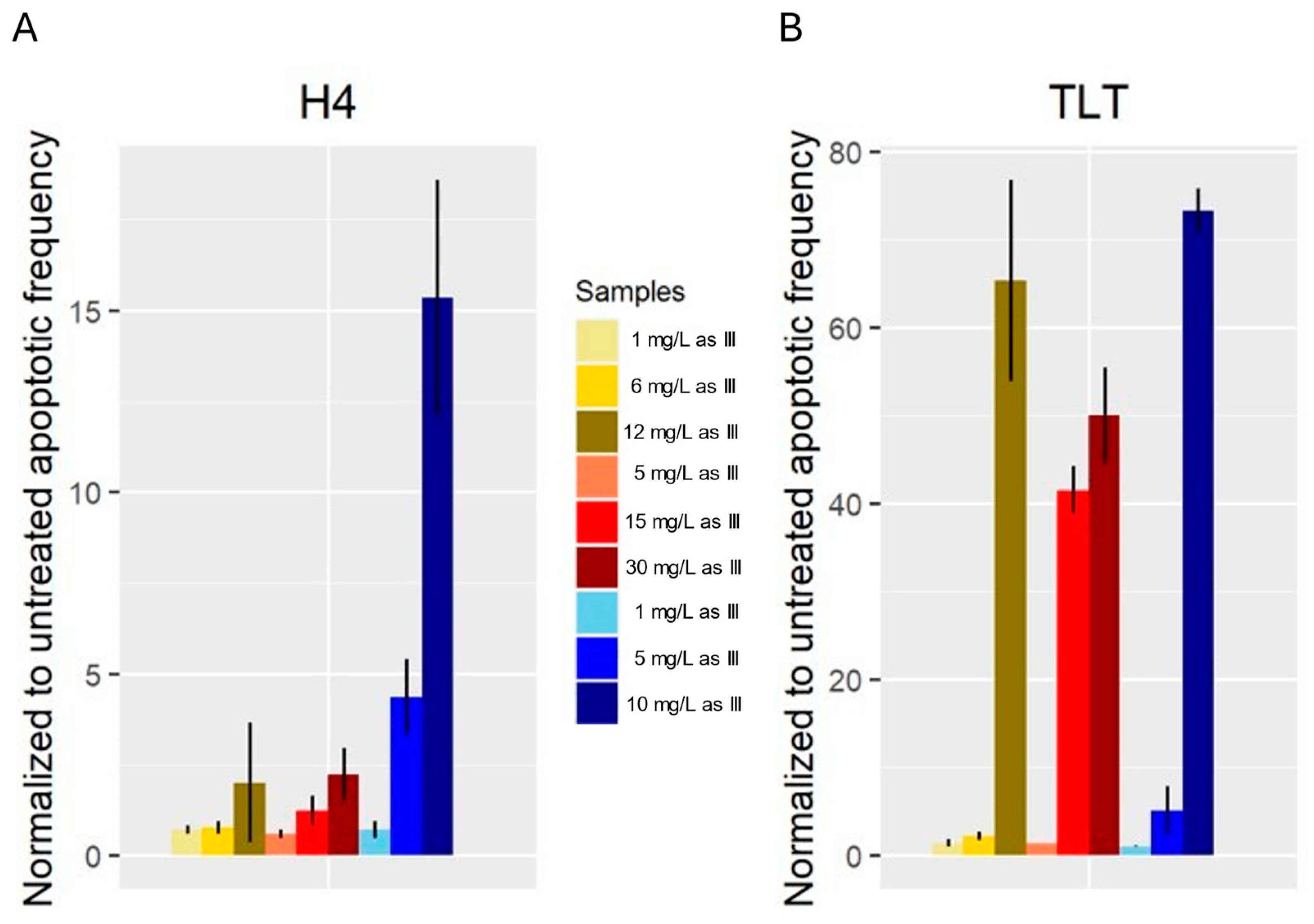
We measured a significantly higher number of H4 cells undergoing apoptosis in samples treated with 10 mg/L of meHg than in the untreated samples (Figure 6A). We observed a characteristic concentration-response relationship between the heavy metal concentration and the number of apoptotic cells.
The apoptotic events were significantly more frequent in TLT cells than in H4 cells (Figure 6A). Samples treated with 12 mg/L of as III, 15 and 30 mg/L of as V, and 10 mg/L of meHg have significantly higher number of apoptotic cells (Figure 6B). TLT cells had also concentration-response relationship between the heavy metal concentration and the number of apoptotic cells.

3.4. Cell Shape

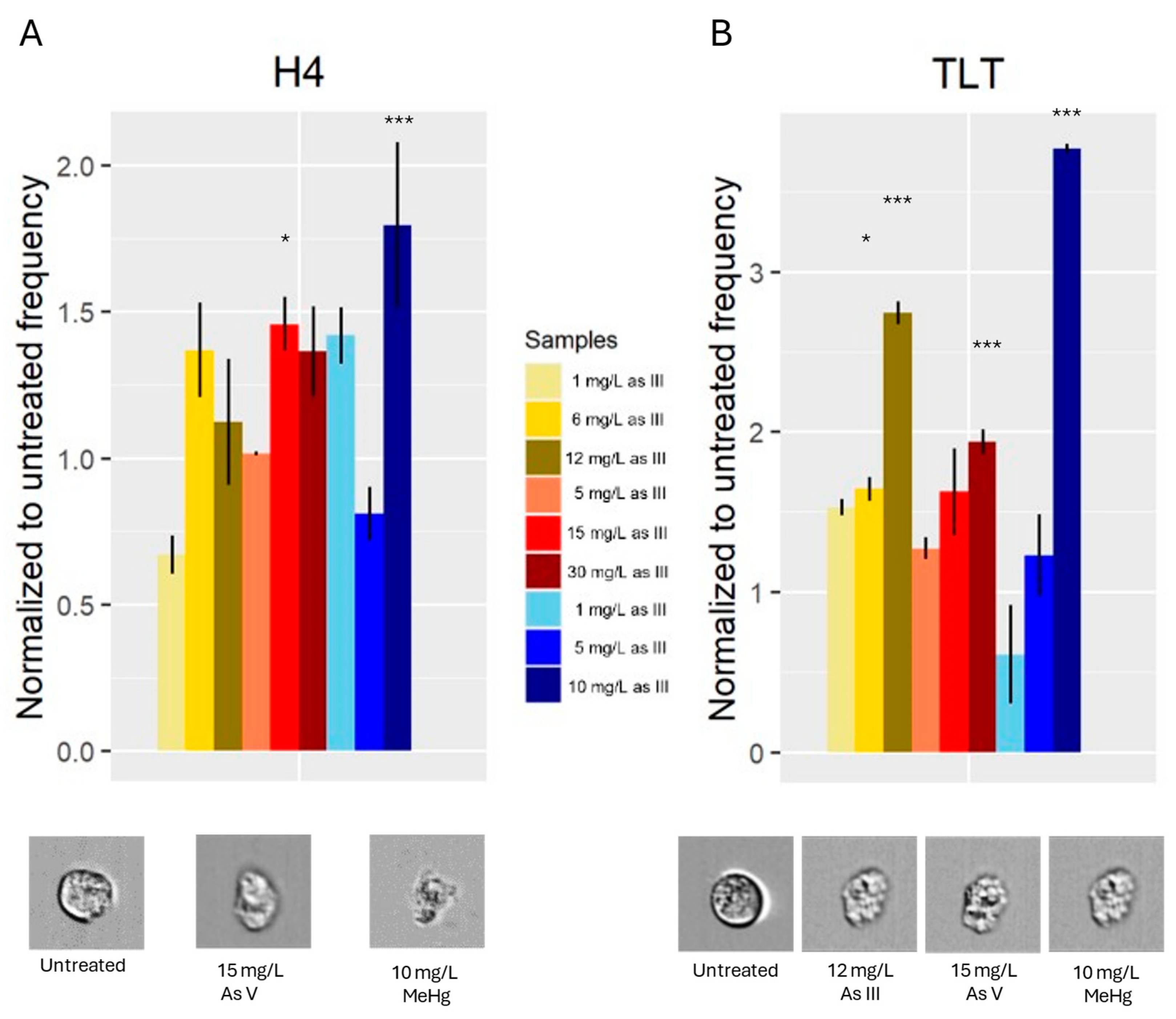
We observed a significantly higher number of H4 cells that change their native shape after treating them with 5 mg/L of as V and 10 mg/L of meHg (Figure 7A).
The change on the cell`s native shape was more pronounced in TLT cells, more concretely, the samples treated with 6 and 12 mg/L of as III, 30 mg/L of as V and 10 mg/L of meHg had significantly higher number of cells with altered native shape (Figure 7B).
Also, in case of the TLT cells we observed a characteristic concentration-response relationship between the heavy metal concentration and the number of cells with altered native shape.

4. Discussion

Authors One of the most common sources for heavy metal exposure is the food, and thus, the most exposed cell types are the intestinal epithelial cells [1,2]. Once the heavy metals enter the bloodstream, blood macrophages are one of the most exposed cell types, since due to their scavenger nature uptake many of these molecules [25]. Within these terms, we selected both cell types to analyse the toxic effect of arsenic III (as III), arsenic V (as V) and methylmercury (meHg).
Previous studies observed that as III, as V and meHg were cytotoxic at different concentrations depending on the experimental setup (from 0.5 mg/L to 750 mg/L) [5,12,26,27,28]. We performed CV, MTT and proliferation tests to observe the cytotoxic response at similar concentrations (from 0.5 mg/L to 100 mg/L). When performing the CV, we observed cytotoxicity in both cell types when exposing them to a range from 10 to 25 mg/L of as III and meHg. Of note, we observed that the cytotoxic effect of both contaminants had a cytotoxic effect of a significantly higher magnitude in the H4 cells (Figure 2A). Also, as III reacts with thiol and sulfhydryl groups, which are major organic components to multiple proteins and enzymes [29]. And considering that intestinal epithelial cells have more enzymes than the blood macrophages [30,31], their impairment may trigger a more toxic response in the intestinal epithelial cells. This observation is of special interest when assessing the risk to their exposure, since intestinal epithelial cells are the most exposed to foodborne contaminants (as explained above). Among all the tested compounds, the toxic potency of as V was lowered as observed in previous studies [29]. We observed that the meHg potency highly differs between cell lines, but this inconsistency was only observed in this test, thus, we attribute this difference to artifacts (lower available meHg concentration because of higher cell density, a higher CV concentration at these concentrations, to name but a few possibilities) [5,12,26,27,28].
When analysing the toxic effect of the compounds with the MTT test we observed more comparable results between the cell types (Figure 2B). In this case, this result was expected since all three heavy metals impair the mitochondrial activity (via glucose-6-arsenate formation in as V [29], via altercation of Pyruvate dehydrogenase in as III [29] and overloading mitochondrial Ca2+ in meHg [32]), which alters the formazan reduction in the mitochondria. We observed that the viability reduction was higher in cells exposed to meHg, since as III and as V mechanism of action is influencing more directly the ATP production, while the meHg mechanism of action is more related to the mitochondrial potential (mitochondrial activity).
We observed that the toxic response in proliferative cells was at lower concentrations due to two main factors (Figure 2C). Proliferative cells need more energy to duplicate, and the heavy metals affect the ATP production [33]. Moreover, when lowering the cell number, there is a higher availability of molecules for each cell (a maximum of 4.2 × 10*13 molecules of contaminants/cell in MTT and 8.4 × 10*13 molecules of contaminants/cell in the proliferation test) [34]. We also observed that as V had the lowest toxic effect among the tested heavy metals which is in accordance with the literature [29,35,36].
To explore further, we investigated the ROS production in a similar concentration range as the previous tests (from 1 mg/L to 100 mg/L) (Figure 3). We observed the ROS production is increased in all the tested samples, similar to was also previously observed in different studies [37,38]. The only two samples where we didn’t observe any significant increase in ROS were (1mg/L in as III and 10 mg/L of as V). Of note are also the samples treated with 1 and 5 mg/L of as V, that have significantly lower ROS production than the untreated sample. This may be related to the mild toxic effect of as V, which triggered the synthesis of superoxide dismutase (SOD) to an extent that surpass the toxic effect, lowering the ROS content within the cells [39]. Within these considerations, the previously named concentrations (1mg/L in as III and 10 mg/L of as V) may reach an equilibrium state between the production of ROS and SOD.
Based on our observations of ROS production and cytotoxicity, we established the heavy metal concentrations for subsequent tests. Since we observed that saturation occurs in samples treated with meHg, we anticipate meHg to be more toxic at lower concentrations than as III and as V in the following tests and we analysed toxicity at lower concentrations than the samples exposed to arsenic. Similarly, we expect as III to exhibit toxicity at lower concentrations than as V.
With this in mind, we determine three concentrations for each heavy metal: 1, 6 and 12 mg/L of as III, 5, 15 and 30 mg/L of as V and 1, 5 and 10 mg/L of meHg. We observed a significantly higher histone exposure in all the test sample, except for samples treated with 5 and 10 mg/L meHg (Figure 4). Considering that the samples treated with meHg in previous tests were the samples with the highest observed cytotoxicity, we conclude that most of the cells within these samples may undergo histone exposure and final apoptotic phase (even lysis) by the time the H2ax test was performed. In this sense, we didn’t observe any significant histone exposure in comparison to the untreated samples because the resulting cells were the ones that survive the exposure. This is corroborated with the ratio of dephosphorylated (inactivated)/phosphorylated (activated) amount of H2ax. Higher amount of dephosphorylated amount of H2ax signifies the completion of the repair process in response to DNA damage [40]. Higher ratio of dephosphorylated imply that the toxicity was triggered and repair by the time the test was performed.
Since most cells were already in the late apoptosis phase (or lysis), cell cycle arrest was observed in only three samples (Figure 5). Anyhow, it is noteworthy that the cells treated with as III and as V have cell cycle arrest in the G2/M phase. While the cells treated with meHg have a cell cycle arrest at S and G2/M phases. Arsenic compounds trigger casitas B-lineage lymphoma (Cbl) to suppress phosphatidyl-inositol 3-kinase (PI3K/Akt) signalling, which in turn regulates p53 activation. [41,42,43,44,45]. Meanwhile, meHg enhances the expression of cell division cycle 25A (CDC25A) and P21, genes that interact with cyclin-dependent kinase (CDK) and proliferating cell nuclear antigen, leading to cell cycle arrest at the S/G2 and G2/M phases. [44,45].
In accordance of what we observed in previous tests, we observed higher rate of late apoptotic frequency in most of the treated samples in comparison to the untreated samples (Figure 6). This frequency was especially high in TLT cells, which suggest that apoptosis is the most common pathway of their programmed cell death, as observed in previous studies [46,47,48]. While in the H4 samples, there were not as frequent, which suggest two possibilities: on the one hand, the H4 cell may already underwent apoptosis considering that the H4 cells were more sensitive to the compounds as it was observed in the rest of the performed tests. On the other hand, it may be possible that the H4 cells exposed to heavy metals underwent an alternative cell death pathway. It is of special interest to investigate these observations as the authors couldn’t find any direct reference related to the matter.
In accordance with our previous observation, TLT cells had higher frequency on cell shape loss in comparison to the untreated cells, than in H4 cells (Figure 7). Considering that the formation of late apoptotic bodies changes the cell native shape dramatically, these results were expected. On the other hand, we didn’t observe such profound change in the shape of the H4 cells, which may be, again, due to the possibilities explained above: cells altered by the compounds already lysed or due to alternative programmed cell death. Although, we couldn’t compare our results to any previous work since we couldn’t find any related to the topic.
Considering all the results discuss above, we now have a clearer understanding of the toxic effect of as III, as V and meHg. In both cell lines, meHg and as III had higher cytotoxic effect than as V, as observed in previous studies [5,12,26,27,28]. All the tested heavy metals induce to increase the ROS production, which results in DNA damage (histone exposure). Yet, the influence of these DNA damage triggered different responses in the cells, as III and meHg induced a cell cycle arrest in cell cycle in phase S and G2/M in intestinal epithelial cells, while as V induced a cell cycle arrest in phase G2/M in blood macrophages. The differences in the toxic effect of the heavy metals between the cell types was even higher when observing the late apoptotic frequency and native cell shape alteration. Blood macrophages have a higher apoptotic frequency and more cell native shape change than the intestinal epithelial cells. Further studies should be needed to discern the most common programmed cell death when exposing the intestinal epithelial cells to heavy metals. Thus, not only the heavy metal influences the toxic effect, but the cell type also has a significant influence in the mechanism of toxicity of the heavy metal.
Limitations
Despite the intestinal epithelial cells are the cell type with the highest exposure to heavy metals through oral intake, there is very little information regarding the toxicity of those contaminants in this cell type. We only find three references related to the toxic effect of arsenic in intestinal epithelial cells [49,50,51]. Further investigation should be encouraged to have a more comprehensive understanding of the mechanism of toxicity of those contaminants, which are not so rare in the food.
These are but only two cell types that are highly exposed to the foodborne contaminants. Considering the different responses observed in both cells with the same heavy metals, further experiments should aid having a more comprehensive understanding of the toxic mechanisms of the heavy metals in alternative cells. Among them, we want to point the neurons, due to the known neurotoxicity of the heavy metals [52] and hepatocytes, which are highly exposed due to their role in metabolizing xenobiotics and their high enzyme content, which are the main target of the heavy metals, as we observed before [29].
Future tests should also be performed in a shorter period after the exposure to corroborate the findings in the H2ax test. Moreover, the most common programmed cell death pathway for the intestinal epithelial cells remains unknown and should be investigated. Likewise, more concentration points should elucidate if the differences observed among cell types were due to cells already lysed or they have an alternative cell death pathway.
Considering the toxic effect, we observed, which are aligned with previous studies, special attention should be driven to understand the cancerogenic effect of these heavy metals, and their prevalence in the population.

5. Conclusions

The heavy metals induce different toxic effect considering their form and the exposed cell type. as III, as V and meHg induce ROS production and histone damage, but the subsequent pathways differ. TLT cells were more susceptible to suffer a cell cycle arrest at the G2/M phase and triggered apoptosis, while the H4 cells were more prone to a cell cycle arrest in the S phase and have an alternative cell death pathway.
Understanding the mechanisms of toxicity may help to implement effective strategies for the prevention or mitigation of the heavy metal toxicity. Thus, further investigation on the toxic effect of these compounds, especially in intestinal epithelial cells, should be performed to close this information gap.

Author Contributions

Conceptualization, E.M.; methodology, E.M.; software, E.M.; validation, E.M.; formal analysis, E.M.; investigation, E.M.; resources, E.M. and I.T.; data curation, E.M.; writing—original draft preparation, E.M.; writing—review and editing, E.M., L.K.Š., M.R., I.T., and M.M. All authors have read and agreed to the published version of the manuscript.

Funding

This research was funded by the European Union's Seventh Framework Programme (FP7/2007-2013) under grant agreement no 311820 (ECsafeSEAFOOD).

Conflicts of Interest

The authors declare no conflicts of interest.

References

  1. Alava, P.; Du Laing, G.; Tack, F.; De Ryck, T.; Van De Wiele, T. Westernized diets lower arsenic gastrointestinal bioaccessibility but increase microbial arsenic speciation changes in the colon. Chemosphere 2015, 119, 757–762. [Google Scholar] [CrossRef]
  2. Chávez-Capilla, T.; Beshai, M.; Maher, W.; Kelly, T.; Foster, S. Bioaccessibility and degradation of naturally occurring arsenic species from food in the human gastrointestinal tract. Food chemistry 2016, 212, 189–197. [Google Scholar] [CrossRef] [PubMed]
  3. Brandon, E.F.A.; Janssen, P.J.C.M.; de Wit-Bos, L. Arsenic: bioaccessibility from seaweed and rice, dietary exposure calculations and risk assessment. Food additives & contaminants. Part A, Chemistry, analysis, control, exposure & risk assessment 2014, 31, 1993–2003. [Google Scholar] [CrossRef]
  4. Tchounwou, P.B.; Yedjou, C.G.; Patlolla, A.K.; Sutton, D.J. Heavy metal toxicity and the environment. Exp Suppl 2012, 101, 133–164. [Google Scholar] [CrossRef]
  5. Styblo, M.; Del Razo, L.M.; Vega, L.; Germolec, D.R.; LeCluyse, E.L.; Hamilton, G.A.; Reed, W.; Wang, C.; Cullen, W.R.; Thomas, D.J. Comparative toxicity of trivalent and pentavalent inorganic and methylated arsenicals in rat and human cells. Archives of Toxicology 2000, 74, 289–299. [Google Scholar] [CrossRef]
  6. Tse, W.P.; Cheng, C.H.; Che, C.T.; Lin, Z.X. Arsenic trioxide, arsenic pentoxide, and arsenic iodide inhibit human keratinocyte proliferation through the induction of apoptosis. The Journal of pharmacology and experimental therapeutics 2008, 326, 388–394. [Google Scholar] [CrossRef] [PubMed]
  7. Fatoki, J.O.; Badmus, J.A. Arsenic as an environmental and human health antagonist: A review of its toxicity and disease initiation. Journal of Hazardous Materials Advances 2022, 5, 100052. [Google Scholar] [CrossRef]
  8. Li, Y.; Wan, R.; Liu, J.; Liu, W.; Ma, L.; Zhang, H. In silico mechanisms of arsenic trioxide-induced cardiotoxicity. Front. Physiol. 2022, 13. [Google Scholar] [CrossRef]
  9. Rao, C.V.; Pal, S.; Mohammed, A.; Farooqui, M.; Doescher, M.P.; Asch, A.S.; Yamada, H.Y. Biological effects and epidemiological consequences of arsenic exposure, and reagents that can ameliorate arsenic damage in vivo. Oncotarget 2017, 8, 57605–57621. [Google Scholar] [CrossRef]
  10. Madorran, E.; Stozer, A.; Bevc, S.; Maver, U. In vitro toxicity model: Upgrades to bridge the gap between preclinical and clinical research. Bosn J Basic Med Sci 2019. [Google Scholar] [CrossRef]
  11. Calatayud, M.; Devesa, V.; Vélez, D. Differential toxicity and gene expression in Caco-2 cells exposed to arsenic species. Toxicology letters 2013, 218, 70–80. [Google Scholar] [CrossRef] [PubMed]
  12. Karri, V.; Kumar, V.; Ramos, D.; Oliveira, E.; Schuhmacher, M. Comparative In Vitro Toxicity Evaluation of Heavy Metals (Lead, Cadmium, Arsenic, and Methylmercury) on HT-22 Hippocampal Cell Line. Biol Trace Elem Res 2018, 184, 226–239. [Google Scholar] [CrossRef]
  13. Crespo-López, M.E.; Lima de Sá, A.; Herculano, A.M.; Rodríguez Burbano, R.; Martins do Nascimento, J.L. Methylmercury genotoxicity: a novel effect in human cell lines of the central nervous system. Environ Int 2007, 33, 141–146. [Google Scholar] [CrossRef] [PubMed]
  14. Sanderson, I.R.; Ezzell, R.M.; Kedinger, M.; Erlanger, M.; Xu, Z.X.; Pringault, E.; Leon-Robine, S.; Louvard, D.; Walker, W.A. Human fetal enterocytes in vitro: modulation of the phenotype by extracellular matrix. Proceedings of the National Academy of Sciences of the United States of America 1996, 93, 7717–7722. [Google Scholar] [CrossRef] [PubMed]
  15. Madorran, E.; Kocbek Šaherl, L.; Rakuša, M.; Takač, I.; Munda, M. Finding a Direct Method for a Dynamic Process: The DD (Direct and Dynamic) Cell-Tox Method. International journal of molecular sciences 2024, 25, 5133. [Google Scholar] [CrossRef]
  16. van Meerloo, J.; Kaspers, G.J.; Cloos, J. Cell sensitivity assays: the MTT assay. Methods in molecular biology (Clifton, N.J.) 2011, 731, 237–245. [Google Scholar] [CrossRef]
  17. Peters, T.; Lindenmaier, H.; Haefeli, W.E.; Weiss, J. Interaction of the mitotic kinesin Eg5 inhibitor monastrol with P-glycoprotein. Naunyn-Schmiedeberg's Archives of Pharmacology 2006, 372, 291–299. [Google Scholar] [CrossRef] [PubMed]
  18. Kim, H.; Xue, X. Detection of Total Reactive Oxygen Species in Adherent Cells by 2',7'-Dichlorodihydrofluorescein Diacetate Staining. Journal of visualized experiments : JoVE 2020. [Google Scholar] [CrossRef]
  19. Wang, P.; Henning, S.M.; Heber, D. Limitations of MTT and MTS-based assays for measurement of antiproliferative activity of green tea polyphenols. PLoS One 2010, 5, e10202. [Google Scholar] [CrossRef] [PubMed]
  20. Valverde, M.; Sánchez-Brito, A. Sustained Activation of TNFα-Induced DNA Damage Response in Newly Differentiated Adipocytes. International journal of molecular sciences 2021, 22. [Google Scholar] [CrossRef] [PubMed]
  21. Zuba-Surma, E.K.; Kucia, M.; Abdel-Latif, A.; Dawn, B.; Hall, B.; Singh, R.; Lillard, J.W.; Ratajczak, M.Z. Morphological characterization of very small embryonic-like stem cells (VSELs) by ImageStream system analysis. Journal of Cellular and Molecular Medicine 2007, 12, 292–303. [Google Scholar] [CrossRef] [PubMed]
  22. Rieger, A.M.; Nelson, K.L.; Konowalchuk, J.D.; Barreda, D.R. Modified annexin V/propidium iodide apoptosis assay for accurate assessment of cell death. Journal of visualized experiments : JoVE 2011. [Google Scholar] [CrossRef]
  23. Rainieri, S.; Conlledo, N.; Langerholc, T.; Madorran, E.; Sala, M.; Barranco, A. Toxic effects of perfluorinated compounds at human cellular level and on a model vertebrate. Food and Chemical Toxicology 2017. [Google Scholar] [CrossRef] [PubMed]
  24. Zuba-Surma, E.K.; Ratajczak, M.Z. Chapter 8 - Analytical Capabilities of the ImageStream Cytometer. In Methods in Cell Biology; Darzynkiewicz, Z., Holden, E., Orfao, A., Telford, W., Wlodkowic, D., Eds.; Academic Press, 2011; Vol. 102, pp. 207–230. [Google Scholar]
  25. Peiser, L.; Gordon, S. The function of scavenger receptorsexpressed by macrophages and their rolein the regulation of inflammation. Microbes and Infection 2001, 3, 149–159. [Google Scholar] [CrossRef]
  26. Shi, Q.; Hu, B.; Yang, C.; Zhao, L.; Wu, J.; Qi, N. ATF3 Promotes Arsenic-Induced Apoptosis and Oppositely Regulates DR5 and Bcl-xL Expression in Human Bronchial Epithelial Cells. International journal of molecular sciences 2021, 22. [Google Scholar] [CrossRef]
  27. Xie, H.; Huang, S.; Martin, S.; Wise, J.P., Sr. Arsenic is cytotoxic and genotoxic to primary human lung cells. Mutat Res Genet Toxicol Environ Mutagen 2014, 760, 33–41. [Google Scholar] [CrossRef]
  28. Abdalla, F.H.; Bellé, L.P.; De Bona, K.S.; Bitencourt, P.E.; Pigatto, A.S.; Moretto, M.B. Allium sativum L. extract prevents methyl mercury-induced cytotoxicity in peripheral blood leukocytes (LS). Food Chem Toxicol 2010, 48, 417–421. [Google Scholar] [CrossRef]
  29. Kuivenhoven, M.; Mason, K. Arsenic Toxicity. StatPearls. Treasure Island (FL) ineligible companies. Disclosure: Kelly Mason declares no relevant financial relationships with ineligible companies. StatPearls Publishing.
  30. Copyright © 2024, StatPearls Publishing LLC.; 2024.
  31. Arike, L.; Seiman, A.; van der Post, S.; Rodriguez Piñeiro, A.M.; Ermund, A.; Schütte, A.; Bäckhed, F.; Johansson, M.E.V.; Hansson, G.C. Protein Turnover in Epithelial Cells and Mucus along the Gastrointestinal Tract Is Coordinated by the Spatial Location and Microbiota. Cell Rep 2020, 30, 1077–1087.e1073. [Google Scholar] [CrossRef]
  32. Manes, N.P.; Calzola, J.M.; Kaplan, P.R.; Fraser, I.D.C.; Germain, R.N.; Meier-Schellersheim, M.; Nita-Lazar, A. Absolute protein quantitation of the mouse macrophage Toll-like receptor and chemotaxis pathways. Scientific data 2022, 9, 491. [Google Scholar] [CrossRef] [PubMed]
  33. Novo, J.P.; Martins, B.; Raposo, R.S.; Pereira, F.C.; Oriá, R.B.; Malva, J.O.; Fontes-Ribeiro, C. Cellular and Molecular Mechanisms Mediating Methylmercury Neurotoxicity and Neuroinflammation. International journal of molecular sciences 2021, 22. [Google Scholar] [CrossRef] [PubMed]
  34. Chandel, N.S. Metabolism of Proliferating Cells. Cold Spring Harb Perspect Biol 2021, 13. [Google Scholar] [CrossRef] [PubMed]
  35. Madorran, E.; Kocbek Šaherl, L.; Rakuša, M.; Munda, M. In Vitro Human Liver Model for Toxicity Assessment with Clinical and Preclinical Instrumentation. Preprints 2024. [Google Scholar] [CrossRef] [PubMed]
  36. Reyes-Becerril, M.; Angulo, C.; Sanchez, V.; Cuesta, A.; Cruz, A. Methylmercury, cadmium and arsenic(III)-induced toxicity, oxidative stress and apoptosis in Pacific red snapper leukocytes. Aquatic Toxicology 2019, 213, 105223. [Google Scholar] [CrossRef] [PubMed]
  37. Sounderajan, S.; Udas, A.C.; Venkataramani, B. Characterization of arsenic (V) and arsenic (III) in water samples using ammonium molybdate and estimation by graphite furnace atomic absorption spectroscopy. Journal of Hazardous Materials 2007, 149, 238–242. [Google Scholar] [CrossRef]
  38. Hu, Y.; Li, J.; Lou, B.; Wu, R.; Wang, G.; Lu, C.; Wang, H.; Pi, J.; Xu, Y. The Role of Reactive Oxygen Species in Arsenic Toxicity. Biomolecules 2020, 10. [Google Scholar] [CrossRef] [PubMed]
  39. Penke, Y.K.; Yadav, A.K.; Malik, I.; Tyagi, A.; Ramkumar, J.; Kar, K.K. Insights of arsenic (III/V) adsorption and electrosorption mechanism onto multi synergistic (redox-photoelectrochemical-ROS) aluminum substituted copper ferrite impregnated rGO. Chemosphere 2021, 267, 129246. [Google Scholar] [CrossRef]
  40. Zheng, M.; Liu, Y.; Zhang, G.; Yang, Z.; Xu, W.; Chen, Q. The Applications and Mechanisms of Superoxide Dismutase in Medicine, Food, and Cosmetics. Antioxidants 2023, 12, 1675. [Google Scholar] [CrossRef] [PubMed]
  41. Podhorecka, M.; Skladanowski, A.; Bozko, P. H2AX Phosphorylation: Its Role in DNA Damage Response and Cancer Therapy. Journal of nucleic acids 2010, 2010. [Google Scholar] [CrossRef] [PubMed]
  42. Medda, N.; De, S.K.; Maiti, S. Different mechanisms of arsenic related signaling in cellular proliferation, apoptosis and neo-plastic transformation. Ecotoxicology and Environmental Safety 2021, 208, 111752. [Google Scholar] [CrossRef] [PubMed]
  43. Li, Y.; Qu, X.; Qu, J.; Zhang, Y.; Liu, J.; Teng, Y.; Hu, X.; Hou, K.; Liu, Y. Arsenic trioxide induces apoptosis and G2/M phase arrest by inducing Cbl to inhibit PI3K/Akt signaling and thereby regulate p53 activation. Cancer letters 2009, 284, 208–215. [Google Scholar] [CrossRef]
  44. Zhang, X.; Jia, S.; Yang, S.; Yang, Y.; Yang, T.; Yang, Y. Arsenic trioxide induces G2/M arrest in hepatocellular carcinoma cells by increasing the tumor suppressor PTEN expression. Journal of cellular biochemistry 2012, 113, 3528–3535. [Google Scholar] [CrossRef] [PubMed]
  45. Liao, Y.; Peng, S.; He, L.; Wang, Y.; Li, Y.; Ma, D.; Wang, Y.; Sun, L.; Zheng, H.; Yang, W. , et al. Methylmercury cytotoxicity and possible mechanisms in human trophoblastic HTR-8/SVneo cells. Ecotoxicology and Environmental Safety 2021, 207, 111520. [Google Scholar] [CrossRef]
  46. Mendoza, M.A.C.; Ponce, R.A.; Ou, Y.C.; Faustman, E.M. p21WAF1/CIP1 Inhibits Cell Cycle Progression but Not G2/M-Phase Transition Following Methylmercury Exposure. Toxicology and Applied Pharmacology 2002, 178, 117–125. [Google Scholar] [CrossRef]
  47. Lemarie, A.; Morzadec, C.; Mérino, D.; Micheau, O.; Fardel, O.; Vernhet, L. Arsenic trioxide induces apoptosis of human monocytes during macrophagic differentiation through nuclear factor-kappaB-related survival pathway down-regulation. The Journal of pharmacology and experimental therapeutics 2006, 316, 304–314. [Google Scholar] [CrossRef]
  48. Stevens, J.J.; Graham, B.; Dugo, E.; Berhaneselassie-Sumner, B.; Ndebele, K.; Tchounwou, P.B. Arsenic Trioxide Induces Apoptosis via Specific Signaling Pathways in HT-29 Colon Cancer Cells. Journal of cancer science & therapy 2017, 9, 298–306. [Google Scholar]
  49. Kuo, T.C. Methylmercury induces alveolar macrophages apoptosis. International journal of toxicology 2008, 27, 257–263. [Google Scholar] [CrossRef]
  50. Chiocchetti, G.M.; Vélez, D.; Devesa, V. Effect of chronic exposure to inorganic arsenic on intestinal cells. J Appl Toxicol 2019, 39, 899–907. [Google Scholar] [CrossRef] [PubMed]
  51. Kellett, M.P.; Jatko, J.T.; Darling, C.L.; Ventrello, S.W.; Bain, L.J. Arsenic exposure impairs intestinal stromal cells. Toxicology Letters 2022, 361, 54–63. [Google Scholar] [CrossRef]
  52. Chiocchetti, G.M.; Vélez, D.; Devesa, V. Inorganic arsenic causes intestinal barrier disruption. Metallomics : integrated biometal science 2019, 11, 1411–1418. [Google Scholar] [CrossRef] [PubMed]
  53. Caito, S.; Aschner, M. Neurotoxicity of metals. Handb Clin Neurol 2015, 131, 169–189. [Google Scholar] [CrossRef] [PubMed]
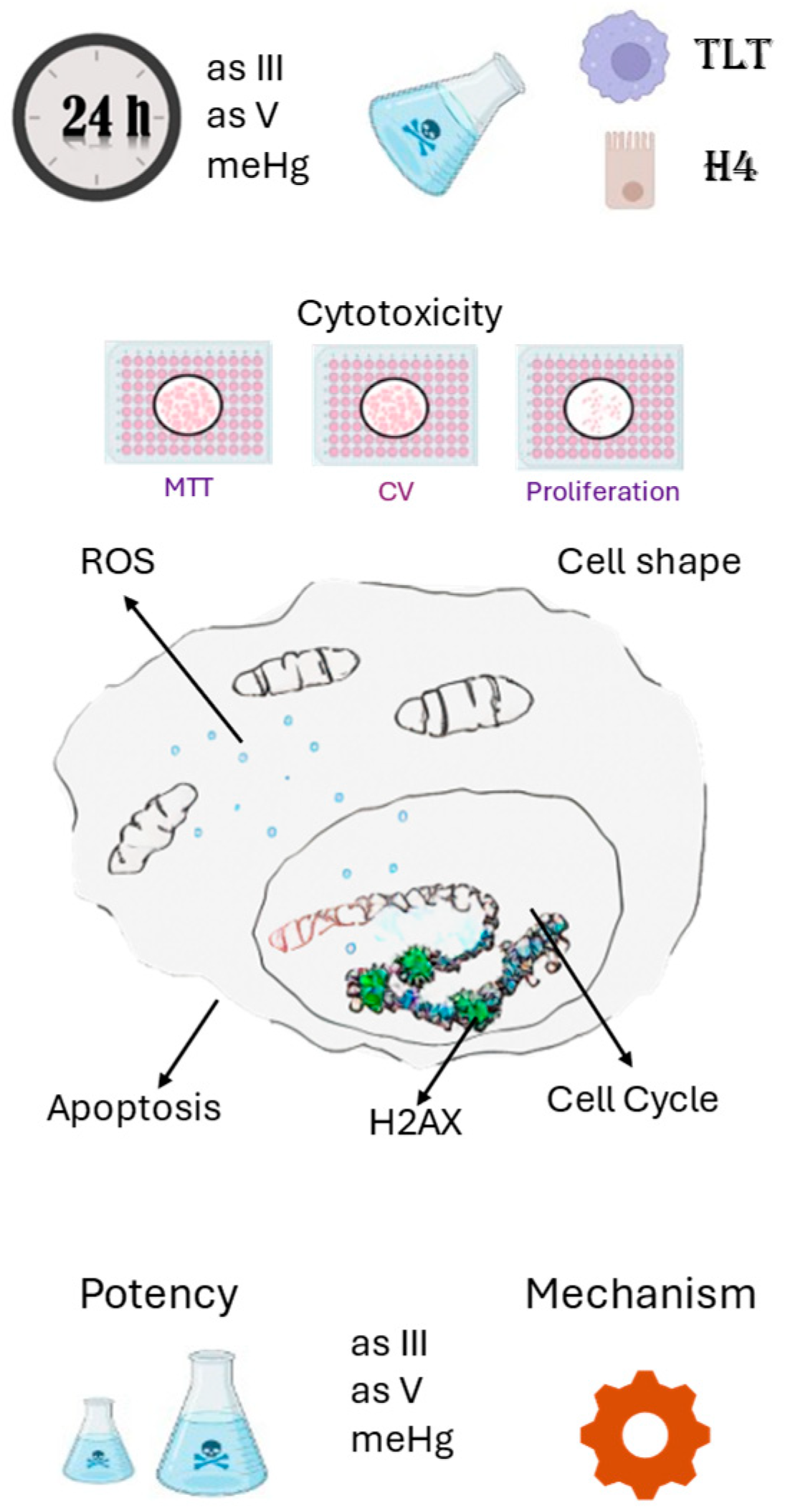
Figure 1. The experimental setup for the analysis In vitro toxicity assessment of methylmercury, arsenic (III and V). TLT and H4 cells were incubated with different concentrations of as III, as V and meHg. We tested this concentration with different cytotoxicity methods and test for reactive oxygen species (ROS) production to determine the potency of the tested compounds in the selected cell types. We limit the concentrations for further tests (H2AX, cell cycle arrest, apoptosis and cell shape). We analyse the results gathered from all the mentioned tests and estimate the compounds potency and mechanism for toxicity.
Preprints 141829 g001
Figure 2. Assessment of the cell viability with CV, MTT and proliferation assays.
Preprints 141829 g002
Figure 3. ROS production.
Preprints 141829 g003
Figure 4. H2ax test on both cell lines.
Preprints 141829 g004
Figure 5. Cell cycle of both cell lines.
Preprints 141829 g005
Figure 6. Apoptotic rate of the various treatments.
Preprints 141829 g006
Figure 7. Cell shape change.
Preprints 141829 g007
Disclaimer/Publisher’s Note: The statements, opinions and data contained in all publications are solely those of the individual author(s) and contributor(s) and not of MDPI and/or the editor(s). MDPI and/or the editor(s) disclaim responsibility for any injury to people or property resulting from any ideas, methods, instructions or products referred to in the content.
Copyright: This open access article is published under a Creative Commons CC BY 4.0 license, which permit the free download, distribution, and reuse, provided that the author and preprint are cited in any reuse.
Prerpints.org logo

Preprints.org is a free preprint server supported by MDPI in Basel, Switzerland.

Subscribe

Disclaimer

Terms of Use

Privacy Policy

Privacy Settings

© 2025 MDPI (Basel, Switzerland) unless otherwise stated