Preprint
Article

This version is not peer-reviewed.

Perception, Trust, and Motivation in Consumer Behavior for Organic Food Acquisition: An Exploratory Study

A peer-reviewed article of this preprint also exists.

Submitted:

03 December 2024

Posted:

04 December 2024

You are already at the latest version

Abstract

A sustainable healthy diet aims to assess human well-being in all life stages at the physical, mental, and social levels, protect environmental resources, and preserve bio-diversity. This work investi-gates the sociodemographic factors, knowledge, trust, and motivations involved in organic food acquisition behavior through a cross-sectional observational study using an online survey via the Google Forms platform, conducted from 01 March to 31 May 2024. The questionnaire was orga-nized into 3 main sections detailing the participants' sociodemographic profile, assessing their perception of organic food, and analyzing eco-food acquisition and consumption behavior. Our findings show that suitably informed people with high educational levels (academic and post-college) report significant satisfaction with organic food consumption (S4 and S5). There is also a considerable correlation between ages 25-65, moderate to high satisfaction (S3-S5), and "yes" for eco-food recommendations. Moderate to high satisfaction levels (S3-S5) are also associated with medium confidence in eco-food labels (C3) and moderate to high income. Our results show that monthly income and residence are not essential factors in higher price perception. Insignificant price variation perception correlated with C4 and weekly acquisition. Similar price perception substan-tially correlates with C5 and daily acquisition. Lower price perception strongly correlates with minimal confidence and monthly acquisition. Organic foods have evident benefits in obesity treatment and BMI diminution; however, obese respondents exhibited minimal satisfaction and opted for "abstention" from eco-food recommendations. The findings suggest that investing in public information, educational campaigns, and other strategies to support local organic food producers is essential for increasing interest in eco-food consumption. The present study could en-rich the current scientific database with data collected and a deep analysis of knowledge, percep-tion, attitude, trust, and motivation involved in Romanian consumer behavior for eco-food acqui-sition. Further exploratory studies will be conducted on older participants with different chronic diseases to investigate all aspects of organic food consumption.

Keywords: 
;  ;  ;  ;  ;  ;  ;  ;  

1. Introduction

Lifestyle substantially influences human physical and mental health [1]. The modern lifestyle - defined by unhealthy diets, sedentarism, smoking, alcohol, medications, and other substance abuse [2], misuse and addiction to various technologies, and neglecting the balance between professional activities, sleep, and recreation – highly correlate with chronic disease burden and mortality worldwide [3,4]. Fortunately, lifestyle is controllable, and rigorously performing healthy measures over time could reverse the harmful effects of risk factors and increase the quality of life. One of the main measures is changing the modern diet, which consists of high-calorie junk foods that are overprocessed, pumped with chemical additives, sugar-loaded, or based on genetically modified organisms (GMO, plants or animals) – with a healthy one, rich in legumes [5], fruits [6,7], vegetables [8,9], whole grains [10], and unsaturated fats [11,12].
A sustainable healthy diet aims to assess human well-being in all life stages at the physical, mental, and social levels, protect environmental resources, and preserve biodiversity [13]. Organic farming practices are designed to responsibly use energy and natural resources, reduce pollution, and conserve water quality and soil fertility. They do not use synthetic pesticides, additives, fertilizers, antibiotics, growth hormones, or modern gene technology to preserve local ecosystems and biodiversity for living plants and animals. However, promoting a healthy food environment requires health literacy [14,15] and the involvement of governments, multiple public and private sectors, and stakeholders [16].
The European Union’s (EU) current regulation on organic farming (Regulation 2018/848) aims to provide a clear structure for producing organic products throughout the EU [17]. It has been developed to meet consumer demand for organic food (eco-food or biological food) they can trust while ensuring a fair market for producers, distributors, and traders. For farmers to feel the benefits of choosing organic farming as a production method, consumers must be sure that the rules for organic production are respected. Therefore, the EU maintains strict control and compliance systems for organic food products. Organic farming is included in a broader supply chain containing food processing, distribution, and retail sectors; these are also subject to control. Each EU country appoints control authorities to inspect operators in the organic food chain annually; manufacturers receive a certificate confirming that their products meet ecological standards. Imported organic foods are also verified to ensure they have been produced and shipped following ecological principles [18].
The EU logo for eco-food provides a coherent visual identity for organic products made in the European Union. It may only be used on products certified as environmentally friendly by an authorized control agency, with strict production, processing, transport, and storage conditions. The EU logo can also be used on products with at least 95% organic ingredients, while the remaining 5% involves other rigorous measures. Using the same ingredient in organic and non-organic forms is not allowed. Next to the EU logo for organic products, the code number of the control commission and the habitat where the agricultural raw materials were cultivated/raised must be displayed [19]. Therefore, consumers can more easily identify organic products, and farmers can promote and sell them throughout the EU.
The total organic farming areas in the EU represent 8.5% (13.8 million hectares) of the total agriculture region. in 2019. The EU countries with substantial-size organic agriculture regions in 2019 were Austria (25.3%), Estonia (22.3%) and Sweden (20.4%), followed by the Czech Republic and Italy (both 15.2%) %), Latvia (14.8%) and Finland (13.5%). All other EU member states had 11% or less, with the lowest proportions observed in the Netherlands (3.7%), Poland (3.5%), Romania (2.9 %), Bulgaria (2.3%), Ireland (1.6%) and Malta (0.5%) [20]
The eco-food control and certification are performed by private control commissions, following the EU rules and national legislation. They are approved by the Ministry of Agriculture and Rural Development (MADR) by Order 312/2021 regarding the organization of the control and certification system, approval of control commissions, and supervision of their activity in organic agriculture, with subsequent amendments and additions. Order 45/2022 provides the rules for registration of the activity of operators/groups of operators in organic agriculture, with subsequent additions and amendments [21]. National and private logos may label, present, and advertise products compliant with EU Regulation 2018/848. The "ae" logo, property of MADR, can be used by the operators/groups of operators of ecologically certified, prepackaged products to identify and promote ecologically certified, prepackaged products and guarantee that the products bearing these logos meet the following conditions: (i) they are produced through organic farming in Romania or contains ingredients that come from organic farming in Romania; (ii) they are certified by a control commission accredited and approved by MADR [22].
The EU European Union’s (EU) quality policy for organic food preserves specific regional food cultures and promotes agricultural diversity and consumer trust [23]. The certification schemes aim to safeguard and provide evidence of the main product characteristics linked to geographical origin and traditional practices. The most notable are the Protected Designation of Origin (PDO), Protected Geographical Indication (PGI), Traditional Specialty Guaranteed (TSG), and Mountain Product [24]
In 2022, organic products represented around 4% of the total EU food market, generating sales worth €45 billion. Between 2014 and 2022, sales of organic products in the EU more than doubled. However, there are still significant differences between Member States regarding the consumption of organic products. These differences highlight both the uneven development of the organic products market in the EU and the link with the purchasing power of the member states. Thus, in 2022, spending on such products ranged, in decreasing order, from 365 euros per capita in Denmark to 2 euros per capita in Romania [25]. However, the ecological agriculture zones increased to 3.5% in 2022 [26], and more than 13,700 certified organic producers or those converting to organic farming from all over the country are recorded [27] and also included in an online map [28]
In the context of growing interest among the population in organic products, we considered it necessary to carry out an online survey to explore the perceptions and preferences of Romanian people. The questionnaire was organized into 3 main sections detailing the participants’ sociodemographic profile, assessing their perception of organic food, and analyzing eco-food acquisition and consumption behavior. The present study could enrich the current scientific database with data collected and a deep analysis of knowledge, perception, attitude, trust, and motivation involved in Romanian consumer behavior for eco-food acquisition.

2. Materials and Methods

The questionnaire, including 30 multiple choice queries, was distributed through online platforms between March and May 2024, and data was collected electronically in a Microsoft 365 Excel v. 2024 workbook. The survey involved voluntary participants ≥ 18 years old residing in Romania. Thirty questions were generated in electronic format on the Google Form platform. The research team members distributed the URL link via email, SMS, or social and professional networks to colleagues, relatives, and personal contacts. Participants were informed about the survey’s aim, the research team involved, and the time required to complete the questionnaire; moreover, they were assured that any email address was collected and that the General Data Protection Regulation (GDPR) guarantees the confidentiality of sensitive personal information. Then, they completed and signed the participation agreement and the individual consent form to enable the publication of research results. 316 Romanian residents responded to all 30 questions.
This study was approved by the Ethics Committee of the Faculty of Pharmacy, Carol Davila University of Medicine and Pharmacy (Document No. 14357, approved on 30 May 2024).

Data Analysis

Extensive data analysis used different tools of XLSTAT Life Sciences v 2024.3.0. 1423 by Lumivero (Denver, CO, USA): descriptive analysis, ANOVA single factor, correlations between variable parameters and heat maps [29]. Following the descriptive statistics, the variable parameters are displayed as absolute frequency (number, N) and relative frequency (percentage) [30]. Statistical significance was established at p < 0.05 [11].

3. Results

The questionnaire was investigated using the Reliability Analysis [31]internal model type from XLSTAT Life Sciences (Figure 1). Cronbach’s alpha index value of 0.926 and Guttman L1-L6 coefficients of 0.895 – 1.000 were calculated.
The questionnaire was structured in three distinct parts. The first questions aim to collect the participants’ sociodemographic data. The second part analyzes their perception and understanding of the eco-food concept. The third part investigates the behavior of acquisition and consumption of eco-food products.

3.1. Sociodemographic Data of Participants

Data from Table 1 show that 62.97% of participants are female and 37.03% are male. 80.70% of the respondents have urban residences, and 19.39% are from rural zones.
42% of respondents are 35-39 years, and 34.81% have 25-34 years. The categories 19-24 and 55-60 have similar percentages (10.13%). 2.22% are over 65 years. Over 80% of participants have a university (48.10%) and post-university (32.91%) studies, while 61.71% are employers, 14.87% are entrepreneurs/owners, 8.23% are homeworkers, 6.33% are students, 5.06% are self-employers, 2,53% pensioners and 1.27% unemployed. 27.22% have income ranged 4001-7000 lei, while 24.37% have over 10,000 lei. 14.87% have 2001-3000 lei, a similar percentage (12.96%) have 3001-4000 and 7001-10000 lei, and 7.59% have under 2000 lei. BMI values show that 42.41% of participants have normal weight, 29.11% are overweight, and similar percentages (14.24%) are obese and underweight.

3.2. Eco-Food Concept Perception and Understanding

This objective was assessed by investigating the participants’ familiarity with eco-food, their perception of quality, their general attitude towards their consumption, trust in the certifications and controls displaying the organic food logo, and the main factors influencing their purchase decision.
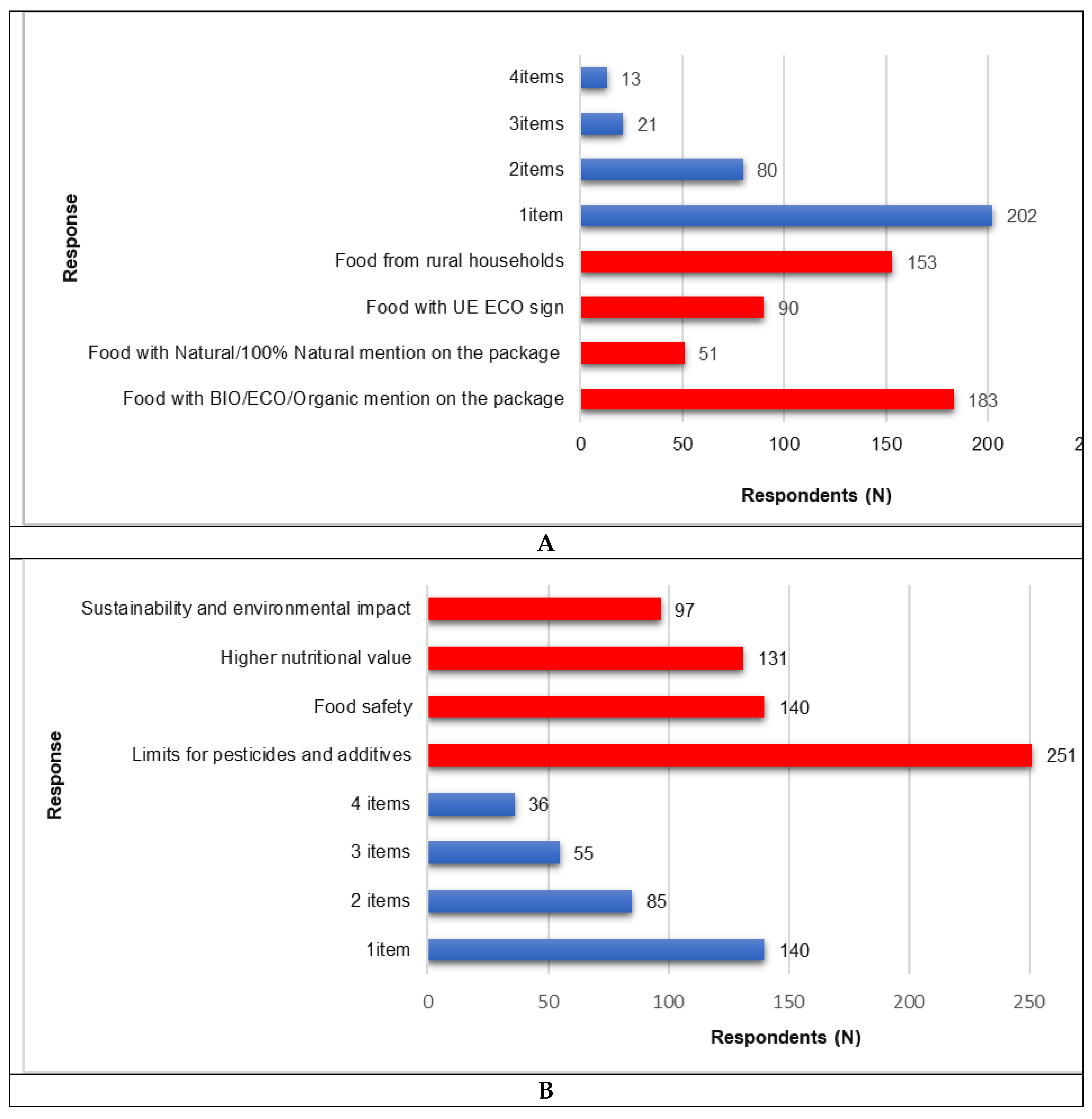
Two questions with four choices available, alone or associated, highlighted the most important aspects regarding the respondents’ perception of the eco-food concept (Figure 2).
Figure 2A shows that most respondents (183, 57.9%) recognize the specific terms BIO, ECO, and Organic as indicators of organic food products, which suggests a high awareness of the official terminology and trust in the regulations associated with these terms. One hundred fifty-three respondents (48.4%) consider that food from rural households is organic. The EU logo for organic products is less prevalent than the terms BIO, ECO, and Organic (90 vs. 183 respondents). Several respondents (N=51, 16.1%) confuse the terms "Natural" or "100% Natural" with organic food products. Moreover, 4.11% of respondents (N=13) define eco-food using all 4 items, 6.64% (N=21) through 3 items, and 25.31% (N=80) through 2 items. Most respondents (63.92%, N=202) selected only 1 item representing the eco-food concept (Figure 2A).
Figure 2B shows evidence that limiting pesticide and additive use is perceived as the most important aspect, indicating a significant concern for food health and safety (N=251, 79,4%). Food safety and higher nutritional value (140 vs. 131 respondents) are also essential. Although sustainability and environmental impact are significant for 97 respondents (30.7%), they are less of a priority than the direct impact on consumers’ health. All aspects are essential for 36 respondents (11.39%), while other 55 (17.40%) and 85 (26.89%) opted for 3 and respectively 2 significant ones. The most numerous participants (140, 44.30%) selected only one main item (Figure 2B).
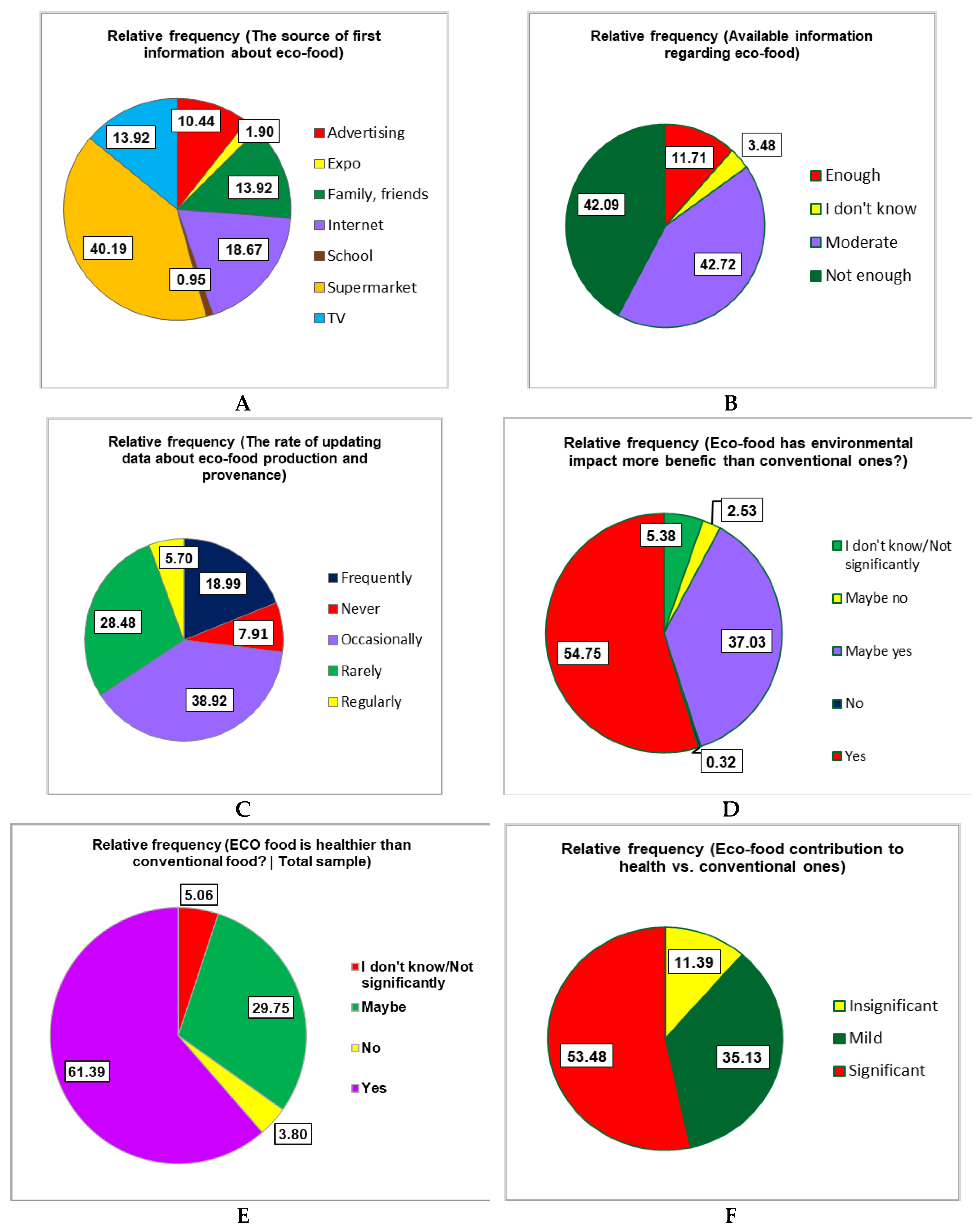
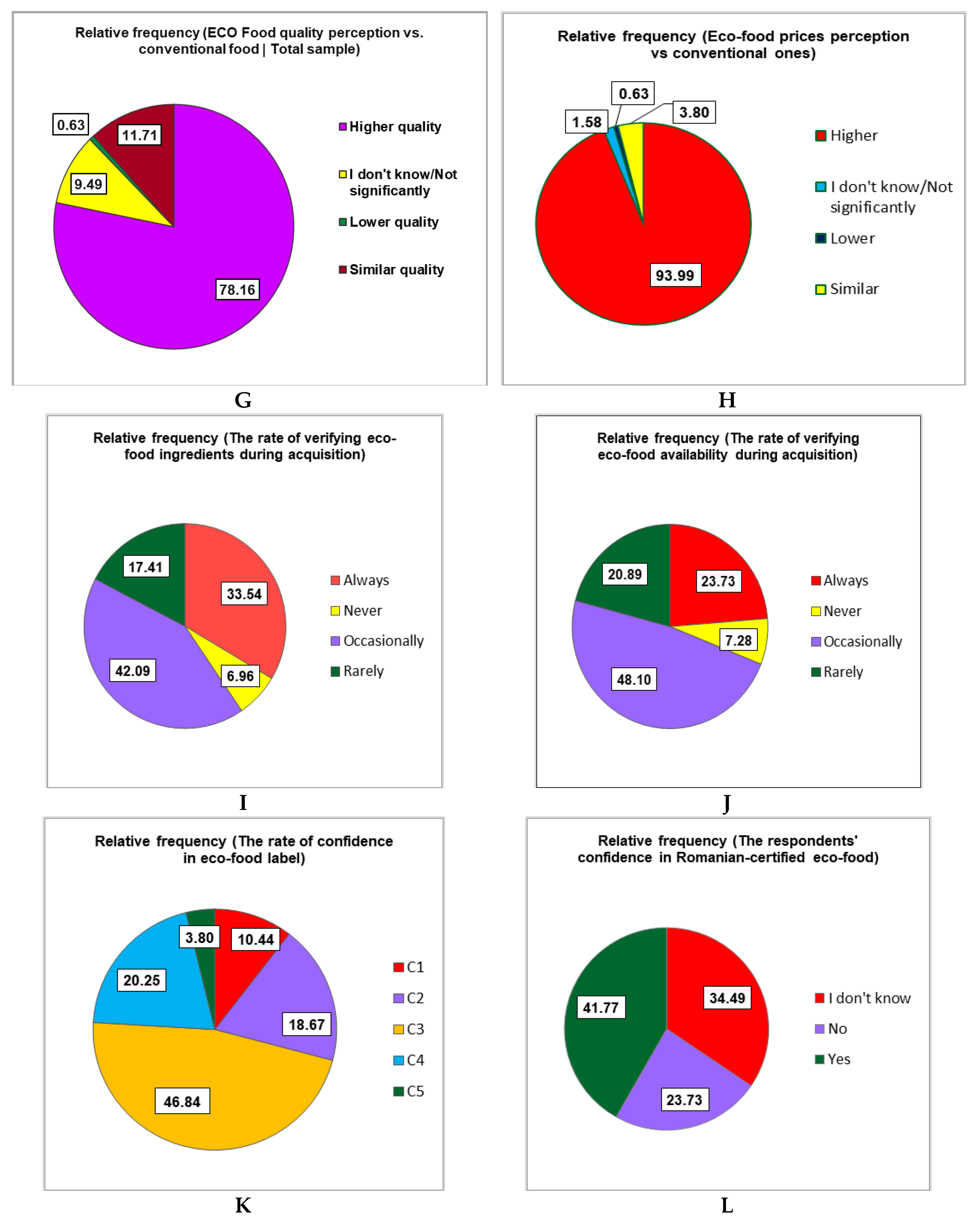
Numerous other aspects were analyzed to investigate the respondents’ knowledge and understanding of eco-food and assess their opinions about its benefits for human health and the environment (Figure 3).
Supermarkets were the primary data source for most respondents (40.19%) about eco-food. Very few participants mentioned organized eco-food expositions and schools as significant places where interested people could find the requested information (1.90% and 0.95%, respectively, Figure 3A). Over 84% of participants believe that the current details on eco-food are insufficient (42.09%) or its availability is moderate (42.72%). Only 11.71% appreciate it as enough (Figure 3B). Despite this, most participants occasionally update their data regarding eco-food production and provenance (38.92%, Figure 3C). Over 50% of respondents appreciated the benefits of eco-food on the environment (54.75%) and human health (61.39%) compared to conventional ones (Figure 3D,E). However, only 53.48% consider that eco-food significantly contributes to human health (Figure 3F), but over 90% remark that they are also more expensive (Figure 3G).
Less than 50% of participants verified eco-food ingredients (42.09%) and their availability (48.10%) during the acquisition (Figure 3H,I). Over 40% of respondents expressed their confidence (C1-C5, C1-minimal, C5-maximal) in Romanian-certified organic food (41.77%) but indicated a medium level one (C3, 46.84%) in an eco-food label (Figure 3J,K).

3.3. Eco-Food Purchasing Behavior

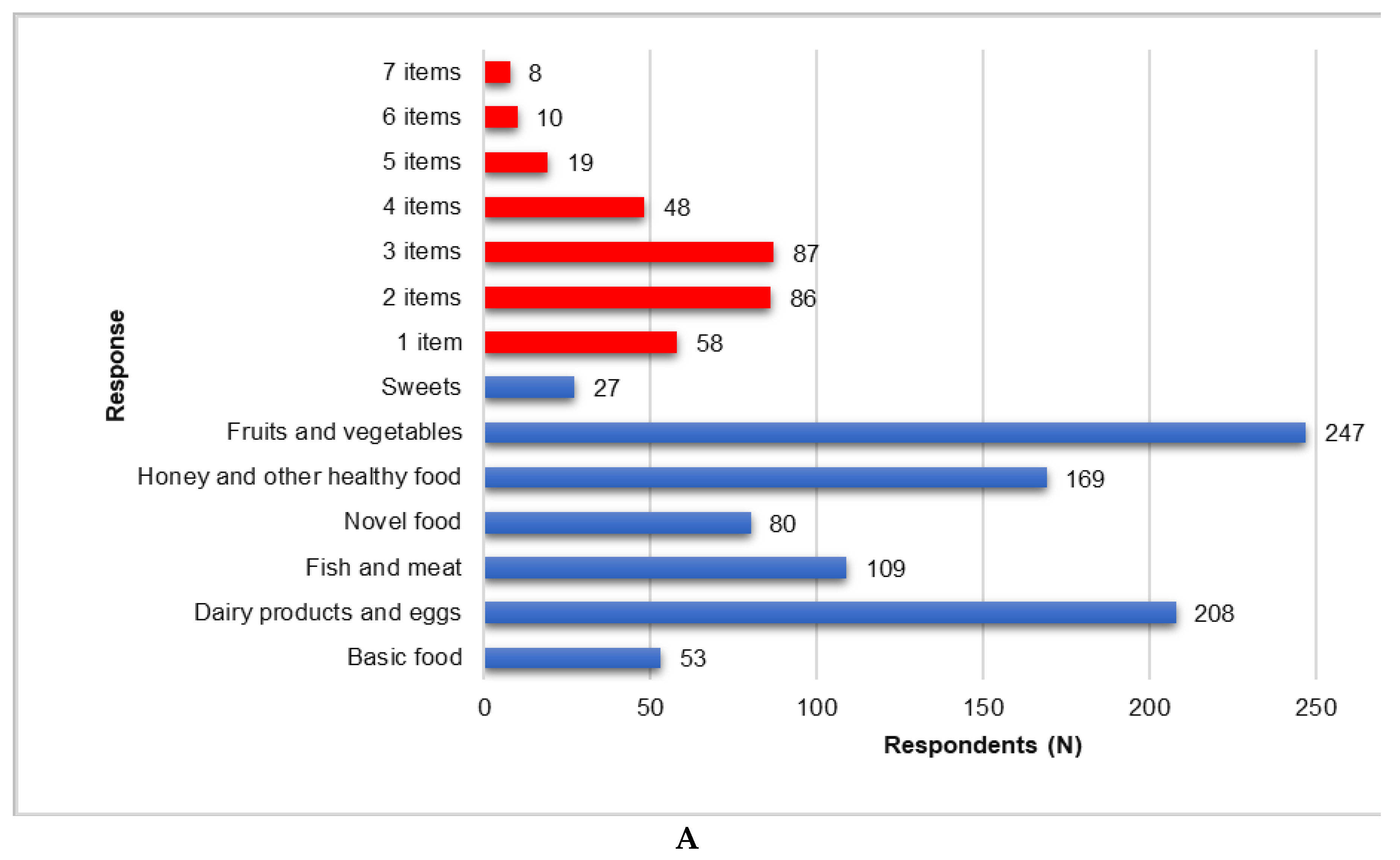
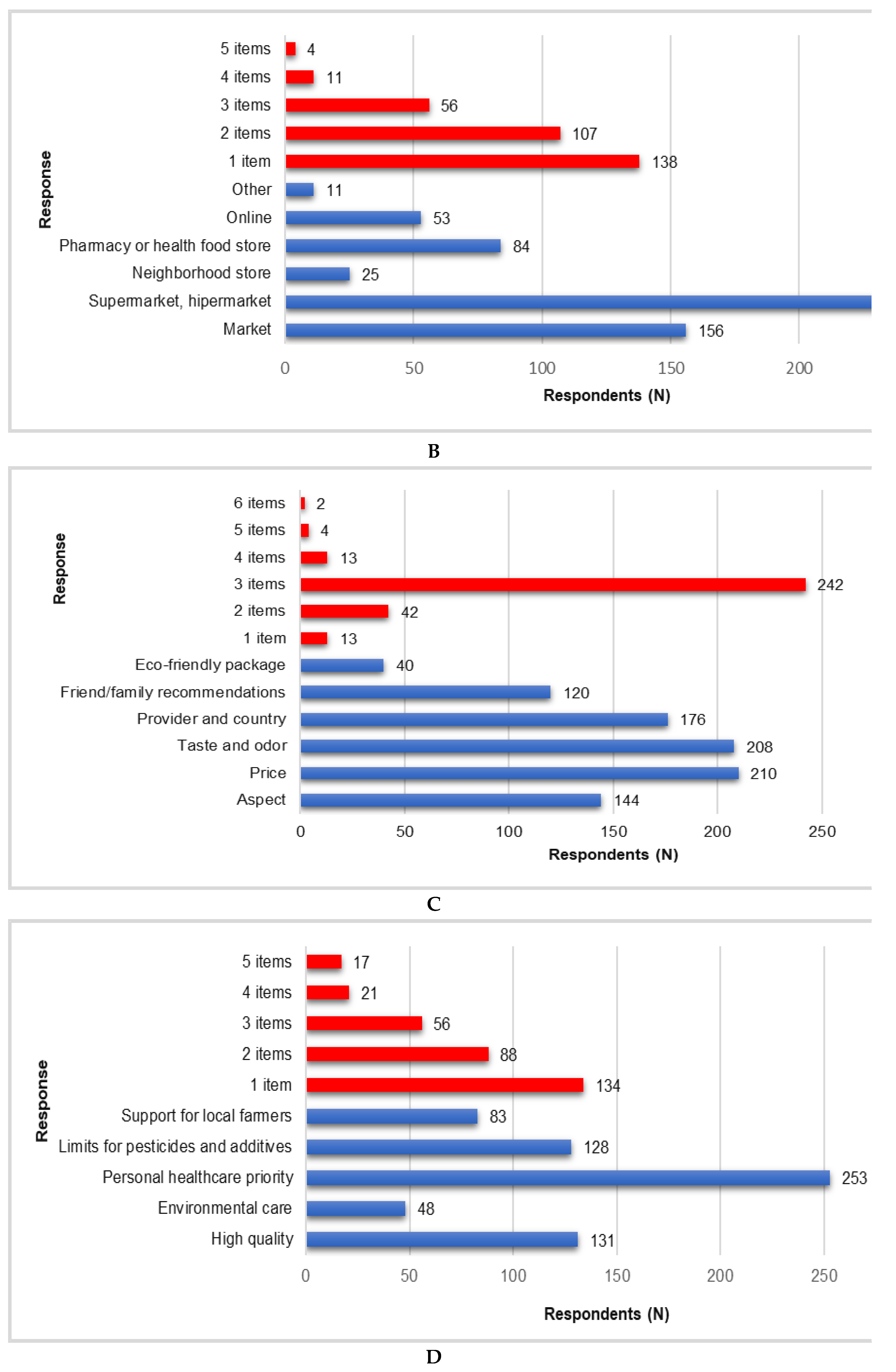
Five queries with multiple choices available, alone or associated, investigated the respondents’ preferences, motivations, and eco-food purchasing behavior (Figure 4).
Fruits and vegetables (N=247, 78.16%) and dairy products and eggs (N=208, 65.82%) are the most frequently purchased organic food categories (Figure 4A).
Honey and other healthy foods (N=169, 53.48%), fish and meat (N=109, 34.49%), and novel foods (chia seeds, protein powders, microalgae, noni, acai, etc., N=80, 25.31%) are also important to consumers. (Figure 4A). Basic foods (oil, vinegar, flour, sugar, bread) and sweets are purchased less often in the eco version (N=53, 14.48% and N=27, 7.37%). Figure 4A also indicates that most respondents selected multiple (2-7) items (N=258, 81.64%); only 18.35% (N=58) opted for only one item.
Figure 4B shows that most respondents prefer eco-food from supermarkets, hypermarkets (N=235, 74.36%), and local markets (N=156, 49.36%). Pharmacies and health food stores are selected by 26.58% of respondents (N=84), neighborhood stores are commonly frequented by 7.91% (N=25), 53 participants (16.77%) opted for online acquisitions, and only 11 (3.48%) indicated other sources. Figure 4B also reports that 178 (56.32%) respondents selected 2-5 items, and 138 (43.67%) marked only one choice.
Price, taste, and odor are the most common criteria for eco-food acquisition (N>200, Figure 4C). They are followed in decreasing order by provider and country (N=176), aspect (N=144), and friend/family recommendations (N=120), while 40 respondents mention eco-friendly packages. Data from Figure 4C also reveal that most participants (N=303) selected multiple choices (2-6), while only 13 opted for 1 item.
Figure 4D displays the main reasons for acquiring eco-food. Concern for their health is the main priority for most attendants. With 253 respondents (80.06%), this aspect significantly outperforms other reasons, indicating that consumers strongly emphasize eco-food benefits on health. The following two essential motivations are eco-food high quality and limiting pesticide and additive use in organic food production (N=131 and 128, Figure 4D). It denotes that many consumers perceive eco-food to be of better quality than conventional ones, namely their concern about reducing exposure to harmful chemicals and artificial additives in their daily diet. The responses of numerous survey participants suggest that there is a tendency to support the local farmers by preferring their eco products (N=83), as well as an awareness and desire to reduce the negative impact on the environment N=48) through sustainable food choices (Figure 4D). Multiple choices (2-5) were recorded for 182 respondents (57.59%), while 134 (42.41%) selected only one item.
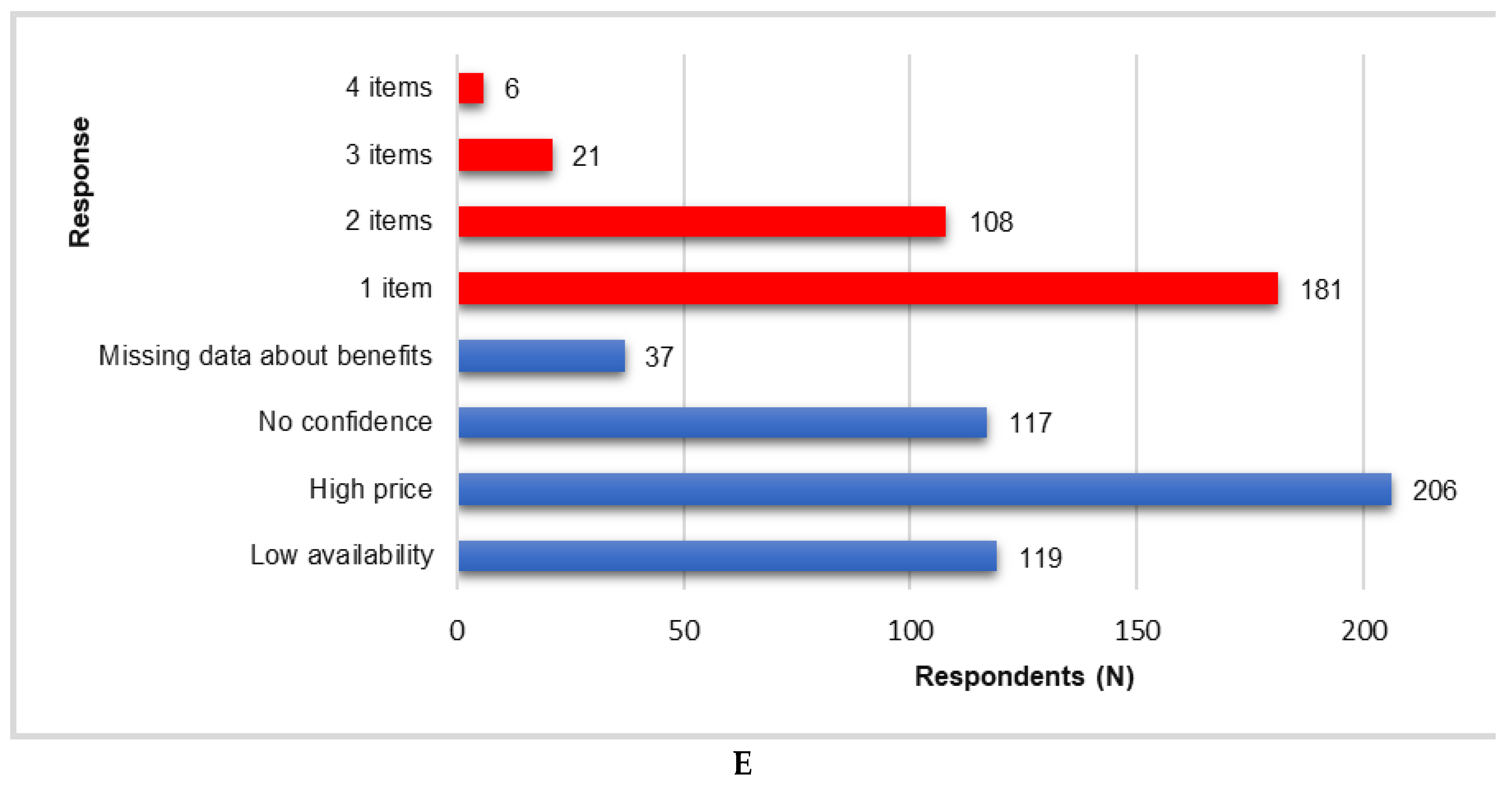
Figure 4E illustrates the substantial motivations to avoid eco-food. More than 65% of respondents cite the high prices of organic food products as the main reason.
Low availability and lack of confidence in eco-food quality are considerable obstacles to purchasing organic food products, according to 119 and 117 respondents, respectively. Thus, limited access to organic food products, either because of geographical location or the reduced offer in stores, represents an important barrier. Also, significant suspicion among consumers regarding the authenticity and incontestable quality of the organic products on the market is a major obstacle. Another remarkable cause is a lack of information about the benefits (N=37). These highlighted the multiple barriers that prevent consumers from purchasing organic food products, especially the importance of economic and reliability aspects. Figure 4E also reports that 181 participants marked one item, while 145 opted for 2-4 choices.

3.4. Sociodemographic Factors Differentiate the Consumers and Influence Perceptions and Motivations for Eco-Food Acquisition

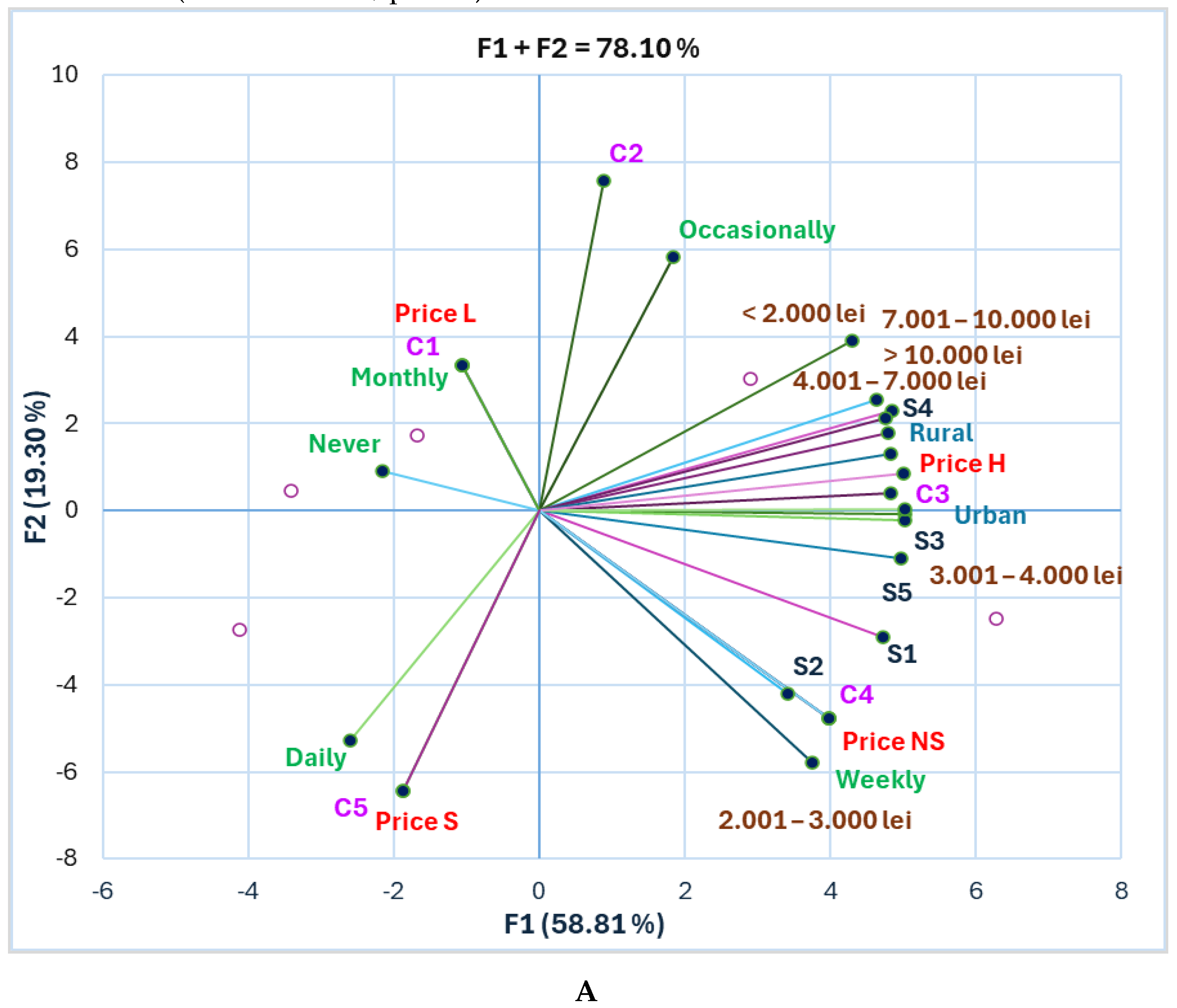
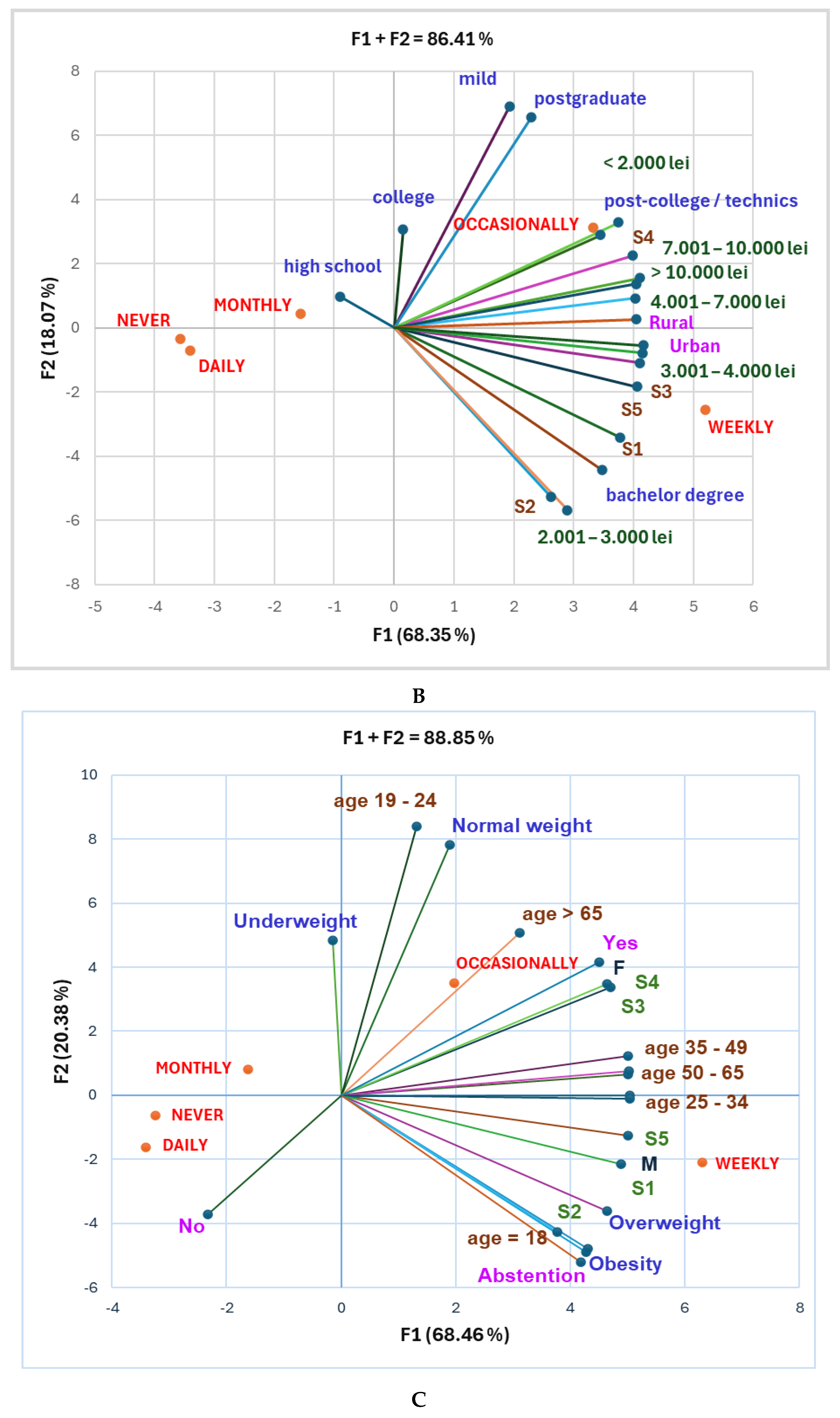
Many factors influence eco-food consumption behavior, leading to various acquisition frequencies, satisfaction levels (S1- S5; S1-minimal, S5-maximal), and potential eco-food recommendations. Figure 5 and the Supplementary Material illustrate their correlations.
Thus, Figure 5A and Supplementary Material (PCA1) show that higher price perception of eco-food is significantly associated with all incomes (excepting 2001- 3000 lei), rural and urban residence, C2 and S1, S3-S5 (r = 0.898 – 0.995, p<0.05). NS price is correlated with C4, S1, S2, weekly acquisition and 2001-3000 lei (r = 0.884 – 0.999, p<0.05). Lower price perception strongly correlates with monthly acquisition and C1 (r = 0.999, p<0.05). Similar price perception substantially correlates with daily acquisition and C5 (r = 0.980-0.999, p<0.05).
No significant (NS) price perception is remarkably linked with income of 2001-3000 lei / monthly, eco-food acquisition weekly, C4, S1, and S2 (r = 0.884-0.999, p<0.05). S3-S5 are considerably associated with C3, rural and urban residence, and income of 3001-4000 lei, 4001-7000 lei, and > 10000 lei (r = 0.914-0.995, p<0.05, Figure 5A).
Figure 5B and Supplementary Material (PCA2) show that a bachelor’s degree highly correlates with income of 2001-3000 lei and 3001-4000 lei /monthly, and S1, S3, and S5 (r = 0.887-0.989, p<0.05), while a post-college degree strongly associates with S4 (r = 0.888, p<0.05).
Figure 5C and Supplementary Material (PCA3) evidence a high correlation between age 25-65 and both sexes, S1, S3-S5, and "yes" for eco-food recommendation (r = 0.892-0.991, p<0.05). Obesity and normal weight are strongly associated with males, age = 18, S1, and "abstention" for eco-food recommendation (r = 0.909-0.999, p<0.05).
Figure 5B and C also display the place of eco-food acquisition frequencies compared to all variable parameters.
Figure 6 displays the most significant aspects of the present study: the frequency of eco-food acquisition, the level of personal satisfaction induced by eco-food consumption, and the potential of eco-food recommendations to other potential consumers.
Most respondents (62.02%) purchase eco-food regularly (daily, weekly, and monthly), while 33.86% claim an occasional acquisition; only 4.11% avoid eco-food due to various reasons (Figure 6A). Figure 6B shows statistically significant differences between occasional and weekly acquisition compared to other frequencies (monthly, daily, and never).
Over 50% of respondents (54.75%) reveal high (S4, 38.24%) and excellent (S5, 15.51%) satisfaction levels regarding eco-food consumption, 39.24% are moderately satisfied (S3 level), while only 6.01% reported minimal satisfaction rates (S2 and S1 levels, Figure 6C).
Figure 6D displays significant differences between S3 and S4 and S1, S2, and S5; pos college education level is strongly associated with S4 (r = 0.888, p<0.05).
Finally, 82.28% of participants confirmed their availability for eco-food recommendations, while only 1.90% disclaimed it (Figure 6E). The heatmap from Figure 6F illustrates the statistically significant differences between variable parameters correlated with these essential aspects.

4. Discussion

Perceived benefits of organic foods, trust in scientists, communicator credibility, preexisting beliefs, and science-related events (e.g., COVID-19) were significant predictors of public perception of scientific information about organic foods.
Human living standards have improved significantly in recent decades, and the continuous demand for a better lifestyle and healthier food has also increased. Organic product consumption is an emerging trend, and consumers want to know the benefits of these foods before making purchasing decisions. The present study had the following main objectives:
Investigating the level of knowledge and familiarity regarding eco-food;
Understanding the respondents’ general attitudes towards organic foods and the factors influencing these attitudes;
Exploring the motivations behind the decision to buy eco-food;
Analyzing the most important factors that determine whether consumers purchase organic food or not;
The level of satisfaction of the respondents towards the ecological products;
Correlation of these data with sociodemographics.

4.1. Eco-Food Concept Perception and Understanding

Two queries investigated the ability of the respondents to differentiate organic food from conventional food and identify essential aspects linked with eco-food production. Our results show a high awareness of official terminology and a strong trust in the regulations associated with these terms: 86.39% of respondents mentioned the EU logo for organic products and correct package inscriptions BIO, ECO, and Organic. 64.55% of participants evidenced an unclear understanding, identifying eco-food with natural/100% natural and organic farms with rural households. It suggests increasing awareness and knowledge of official certifications, illustrating significantly different farming procedures [32,33,34]. Most participants evidenced significant aspects linked with organic farming: it is sustainable, without pesticides and additives (79.43%), and has a positive environmental impact (30.70%). These aspects correlate because synthetic pesticides persist in soil and water, leading to high environmental pollution with harmful effects on human health [35,36,37].
Organic agriculture uses natural or naturally derived pesticides (approved by the EU Organic Regulation 2018/848) with significantly lower toxicity [38].
Therefore, literature data regarding the quality of foods obtained using organic and conventional agriculture confirm the following essential aspects:
Organic foods have a lower risk of synthetic pesticide contamination;
Organic foods positively act on the environment and human health;
No differences were reported regarding heavy metals, mycotoxins, and susceptibility to microbial contamination;
Comparable safety and nutritional value.
Most participants stated that current information about organic food was not enough. Their current information sources are supermarkets, advertising, the internet, and family/friends. Numerous studies have analyzed the important role of consumers’ awareness of organic food products in various settings and conditions [39]. Social media is essential to people’s daily lives and can spread awareness of significant information [40]. Therefore, social media influencers may substantially orient consumer behavior to organic food acquisition, increasing its credibility in eco-food value [41]. Moreover, consumers can communicate with professionals in various domains on social media to clarify their concerns about organic foods, gain confidence in their benefits, and express personal preferences [42,43].
Most respondents know the beneficial impact of eco-food products on the environment (54,75%) due to organic farming [44] and consider that they are healthier (61.39%) than conventional ones [45]. This last statement shows a strong foundation of trust in organic food due to significantly higher levels of pharmacologically active metabolites, vitamins, and minerals [46,47,48,49,50]. However, they are not convinced that organic foods significantly contribute to health compared to conventional ones. This result confirms the previous studies in which the correlation between organic food consumption and health benefits remains insufficiently demonstrated in epidemiological studies [51]
Most respondents perceive organic products to be of higher quality, as numerous studies demonstrated by quantifying bioactive constituents [52]. In addition, eco-foods are considered very expensive, even by participants with substantial incomes. The considerably higher price is justified by the rigorous processes involved in organic farming, low yields, and considerable taxes for eco-food certification [53,54].
Only 3.80% of respondents revealed maximal confidence (C5) in the eco-food label; a moderate level (C3) is predominant (46.84%), while only Romanian-certified organic foods are credible for 41.77% of respondents.

4.2. Eco-Food Purchasing Behavior

Economic, social, and psychological factors could influence organic food consumption and preferences. First is the need for optimal functioning of carbohydrates, fats, and other nutrients (vitamins, proteins, minerals, enzymes, energy, etc.). Second, health problems (obesity, diabetes, heart diseases, cancer, osteoporosis, dental diseases, etc.) impose orientation to a healthier diet. Other factors involve a higher degree of consciousness regarding food’s nutritional and energetic value or the need for spiritual satisfaction after consuming food and dishes, besides the basic vital needs.
Fruits, vegetables (78.16%), dairy products, and eggs (65.82%) are the most frequently purchased organic food categories (p<0.05). Morna et al. reported similar data [55]. Honey and other healthy foods (53.48%), fish and meat (34.49%), and novel foods (chia seeds, protein powders, microalgae, noni, acai, etc., 25.31%) are also important to consumers (p<0.05). In contrast, basic foods (oil, vinegar, flour, sugar, bread) and sweets are purchased less often in the eco version (14.48% and 7.37%, p<0.05). Only 10 Romanian organic products are certified according to EU quality schemes with European recognition (PDO, TSG, and PGI). Romania has many more products recognized under national quality schemes: 732 traditional products, 171 products obtained from consecrated Romanian recipes, and 1,319 mountain products (certified in 2017-2022). In 2023, over 13,000 organic certificates of all ecologically certified producers in Romania were included in the "Register of Agricultural Products and Producers registered in Organic Agriculture," an independent initiative to promote organic farmers and their products. However, due to budgetary constraints, the funding of organic farming in the CAP 2023-2027 remained at the same level as in 2014, only partially covering the income losses and additional costs incurred by organic farmers. Thus, according to official calculations, only 55% and 45% of the losses that come with compliance with commitments to practicing organic agriculture are covered for organic fruit and vegetable growers. Under these conditions, the EU’s objective of achieving 25% organic agriculture by 2030 contradicts the funding decisions. No target has been assumed at the country level to increase this organic agriculture surface percentage until 2027 [27].
The primary sources of purchase of organic food products for most respondents (74.36%) are leading retailers (supermarkets and hypermarkets); however, autochthonous producers cannot access the big retail chains to sell their organic products to customers [56]. The leading supermarkets commonly import vast quantities of food, and various organic products are commercially available. [57] Then, to support the local farmers, other participants (49.36%) opt for local markets (49.36%). Pharmacies and health food stores are selected by 26.58% of respondents; neighborhood stores are commonly frequented by 7.91%, 53.77% opted for online acquisitions, and 48% indicated other sources. Another study suggests similar preferred places for organic product acquisition in Italy [58].
Price, taste, and flavor are the most common criteria for eco-food acquisition. They are followed in decreasing order by provider and country, product appearance, friend/family recommendations, and eco-friendly packages. Numerous studies have analyzed different aspects of organic food packaging (materials, design, size); however, the impact of packaging transparency was less investigated [59]. A recent study explored how transparency in organic food packaging affects consumers’ purchasing intentions. It also suggests practical solutions for companies regarding designing transparency and other aspects related to organic food packaging [57].
Concern for their health is the main priority for most attendants for acquiring eco-food. With numerous respondents (80.06%), this aspect significantly outperforms other reasons, indicating that consumers strongly emphasize eco-food benefits on health. Previously published studies revealed that organic crops have substantial amounts of antioxidant metabolites, reducing the risk of neurodegenerative [46], cardiovascular [60], and other chronic diseases [61,62]. The following essential motivations are eco-food high quality and limiting pesticide and additive use in organic food production. It denotes that many consumers perceive eco-food to be of better quality than conventional ones, namely their concern about reducing exposure to harmful chemicals and artificial additives in their daily diet. The responses of numerous survey participants suggest a tendency to support the local farmers by preferring their eco products and awareness and desire to diminish the negative impact on the environment through sustainable food choices. With 80.06% of respondents, this aspect significantly outperforms other reasons, indicating that consumers strongly emphasize eco-food benefits for health.
The main reasons to avoid organic food acquisition and consumption are decreasing orders, high prices, low availability, lack of confidence in organic food certification and labeling, and missing data about eco-food benefits for human health.
The perception that organic products have significantly higher prices is widespread and can be a significant barrier to consumer acquisition behavior [63]. Organic food production technology needs rigorous management, from raw and subsidiary materials to packaging and labeling. Eco-food yields are lower due to the lack of synthetic fertilizers and other plant protection products. Organic production is more complex than conventional production, requires more knowledge and time from the farmer, and has certain limitations in using fertilizers and other plant protection products [64]. Certified eco-food registration is more expensive than conventional one. Therefore, their higher prices (up to 40% in Danmark and up to 100% in Romania) are justified [65]
Manufacturers and retailers must be aware of this barrier and find ways to address it. Since price is a critical factor, marketing strategies could focus on justifying price differences by highlighting the eco-food benefits, such as superior quality, food safety, positive environmental impact, and health benefits. However, the present study shows that educational level, not monthly income, is essential to eco-food acquisition. Educating consumers about green products’ benefits can help change perceptions regarding eco-food. For example, emphasizing that organic farming benefits the environment, eco-food contributes to long-term health and diminishes medical costs, which could justify the higher price.
Mistrust in the control system and doubt about the authenticity of food sold as organic have a substantial negative impact on self-reported buying behavior [66]. Furthermore, numerous studies investigated the effect of organic labels on consumers’ perception of food products [67]. One of the major concerns of consumers is labeling effectiveness [68], which influences the perception of organic food [69]. Moreover, increasing the percentage of consumers with positive attitudes must supplement the available data associating organic labels with the Nutri-Score. Strong neutrality and skepticism in eco-labels indicate poor consumer education about the certification process and the standards behind eco-labels.
Although the present study evidences a significant trust in organic food labels (40.25%), almost two-thirds of respondents have no confidence or are unsure about organic certifications in Romania. It indicates the need to increase transparency and evidence of the certification process’s complexity to strengthen public confidence [70,71]. Visits to organic farms can be organized so consumers can evaluate the practices themselves [47].
Respondents who do not know or do not see significant differences between organic and conventional products must clarify them. Almost half of the respondents consider the information available only moderate, and a large percentage consider it insufficient, suggesting that current information efforts are not sufficiently effective or pervasive. This aspect could be improved if people could easily access detailed educational materials such as guides, brochures, interactive websites, informative videos, and collaboration with nutritionists, doctors, and influencers to explain the benefits of organic food in a clear and accessible way.
Our results reveal significant interest of participants in eco-food because about 65% of respondents purchase them frequently (daily, weekly, and monthly). The satisfaction level of organic food consumption is moderate (S3). Most consumers are satisfied, but a significant segment remains neutral, offering opportunities to increase satisfaction through improving the current organic products and sharing their benefits.
Organic food products are well regarded by consumers and are recommended with confidence. However, a segment of the population does not feel sufficiently informed or convinced to make a clear recommendation, representing an opportunity for manufacturers and distributors to improve public information and education. The organic food market in Romania is constantly developing, and trends indicate an increase in demand as more and more consumers become aware of the benefits of these products. It is expected that in the future, higher accessibility and diversification of supply will lead to broader market penetration.

4.3. Sociodemographic Factors Differentiate the Consumers and Influence Perceptions and Motivations for Eco-Food Acquisition

Literature data shows that gender, age, and education differentiate the criteria influencing purchasing functional food [72]. Women, older people (35–60 years), and those with a university education highlight the greatest importance of food safety, quality, and nutritional value. Significant differences between sexes appear in the field of bioactive compounds, which are more important for women than for men. Young consumers are familiar with high technology and more receptive to its food processing applications. Motivations are differentiated by age and gender. Young men consider psychological consequences less important than women and older men, whore more interested in organic food safety and are more responsible for their health [73].
Our findings show that suitably informed people with high educational levels (academic and post-college) report significant satisfaction with organic food consumption (S4 and S5). There is also a high correlation between ages 25-65, moderate-high satisfaction (S3-S5), and "yes" for eco-food recommendations. Moderate to high satisfaction levels (S3-S5) are also associated with moderate confidence in eco-food labels (C3) and moderate to high income. Our results show that monthly income and residence are not essential factors in higher price perception. Insignificant price variation perception correlated with C4 and weekly acquisition. Similar price perception substantially correlates with C5 and daily acquisition. Lower price perception strongly correlates with minimal confidence and monthly acquisition. Organic foods have evident benefits in obesity treatment and BMI diminution [74,75]. However, obese respondents exhibited minimal satisfaction and opted for "abstention" from eco-food recommendations.

4.4. Limitations and Further Directions

Our study has several limitations. The study database consists of self-reported information on organic foods collected as survey responses. The cohort does not represent the Romanian population due to the probabilistic selection of individuals who wanted to fill in an online form.
The findings suggest that investing in public information, educational campaigns, and other strategies to support local organic food producers is essential for increasing interest in eco-food consumption. Further exploratory studies will be conducted on older participants with different chronic diseases to investigate all aspects of organic food consumption.

Supplementary Materials

The following supporting information can be downloaded at the website of this paper posted on Preprints.org, Principal Component Analysis

Author Contributions

Conceptualization, E.M., and V.P. methodology, E.M., V.P.; software, V.P.; validation, E.M.., V.P., and M.N; formal analysis, V.P.; investigation, I.A.P., and A.D..; resources, E.M., V.P., I.A.P., A.D., O.K., L.M.M., M.L., A.R., L.M.E.C., S.O., E.I.I., A.S., and M.N..; data curation, E.M., V.P., I.A.P., A.D., O.K., L.M.M., M.L., A.R., L.M.E.C., S.O., E.I.I., A.S., and M.N.; writing—original draft preparation, E.M. and V.P..; writing—review and editing, V.P; visualization, E.M., V.P., I.A.P., A.D., O.K., L.M.M., M.L., A.R., L.M.E.C., S.O., E.I.I., A.S., and M.N.; supervision, E.M. and M.N.; project administration, E.M., and M.N..; funding acquisition, E.M., V.P. and M.N. All authors have read and agreed to the published version of the manuscript.

Funding

This research received no external funding.

Institutional Review Board Statement

This study was conducted following the Declaration of Helsinki and approved by the Ethics Committee of the Faculty of Pharmacy, Carol Davila University of Medicine and Pharmacy (Document No. 14357, approved on 30 May 2024) for studies involving humans.

Data Availability Statement

Data are available in the manuscript and Supplementary Material.

Conflicts of Interest

The authors declare no conflicts of interest.

References

  1. Suresh Kashinath Ghatge Impact of Modern Lifestyle on Health. PriMera Scientific Surgical Research and Practice 2023, 16–19. [CrossRef]
  2. Negreş, S.; Chiriţǎ, C.; Moroşan, E.; Arsene, R.L. Experimental Pharmacological Model of Diabetes Induction with Aloxan in Rat. Farmacia 2013, 61, 313–322. [Google Scholar]
  3. Krokstad, S.; Ding, D.; Grunseit, A.C.; Sund, E.R.; Holmen, T.L.; Rangul, V.; Bauman, A. Multiple Lifestyle Behaviours and Mortality, Findings from a Large Population-Based Norwegian Cohort Study - The HUNT Study. BMC Public Health 2017, 17, 58. [Google Scholar] [CrossRef] [PubMed]
  4. Oster, H.; Chaves, I. Effects of Healthy Lifestyles on Chronic Diseases: Diet, Sleep and Exercise. Nutrients 2023, 15, 4627. [Google Scholar] [CrossRef] [PubMed]
  5. Moroșan, E.; Lupu, C.; Mititelu, M.; Musuc, A.; Rusu, A.; Răducan, I.; Karampelas, O.; Voinicu, I.; Neacșu, S.; Licu, M.; et al. Evaluation of the Nutritional Quality of Different Soybean and Pea Varieties: Their Use in Balanced Diets for Different Pathologies. Applied Sciences 2023, 13, 8724. [Google Scholar] [CrossRef]
  6. Jassim, R.A.; Mihele, D.; Dogaru, E. Study Regarding the Influence of Vitis Vinifera Fruit (Muscat of Hamburg Species) on Some Biochemical Parameters. Farmacia 2010, 58, 332–340. [Google Scholar]
  7. Moroșan, E.; Secăreanu, A.A.; Musuc, A.M.; Mititelu, M.; Ioniță, A.C.; Ozon, E.A.; Dărăban, A.M.; Karampelas, O. Advances on the Antioxidant Activity of a Phytocomplex Product Containing Berry Extracts from Romanian Spontaneous Flora. Processes 2022, 10, 646. [Google Scholar] [CrossRef]
  8. Moroșan, E.; Mititelu, M.; Drăgănescu, D.; Lupuliasa, D.; Ozon, E.A.; Karampelas, O.; Gîrd, C.E.; Aramă, C.; Hovaneț, M.V.; Musuc, A.M.; et al. Investigation into the Antioxidant Activity of Standardized Plant Extracts with Pharmaceutical Potential. Applied Sciences 2021, 11, 8685. [Google Scholar] [CrossRef]
  9. Hovaneţ, M.V.; Ancuceanu, R.V.; Dinu, M.; Oprea, E.; Budura, E.A.; Negreş, S.; Velescu, B.Ş.; Duţu, L.E.; Anghel, I.A.; Ancu, I.; et al. Toxicity and Anti-Inflammatory Activity of Ziziphus Jujuba Mill. Leaves. Farmacia 2016, 64, 802–808. [Google Scholar]
  10. Moroșan, E.; Secareanu, A.A.; Musuc, A.M.; Mititelu, M.; Ioniță, A.C.; Ozon, E.A.; Raducan, I.D.; Rusu, A.I.; Dărăban, A.M.; Karampelas, O. Comparative Quality Assessment of Five Bread Wheat and Five Barley Cultivars Grown in Romania. Int J Environ Res Public Health 2022, 19, 11114. [Google Scholar] [CrossRef]
  11. Streba, L.; Popovici, V.; Mihai, A.; Mititelu, M.; Lupu, C.E.; Matei, M.; Vladu, I.M.; Iovănescu, M.L.; Cioboată, R.; Călărașu, C.; et al. Integrative Approach to Risk Factors in Simple Chronic Obstructive Airway Diseases of the Lung or Associated with Metabolic Syndrome—Analysis and Prediction. Nutrients 2024, 16, 1851. [Google Scholar] [CrossRef]
  12. Hovanet, M.V.; Dociu, N.; Dinu, M.; Ancuceanu, R.; Morosan, E.; Oprea, E. A Comparative Physico-Chemical Analysis of Acer Platanoides and Acer Pseudoplatanus Seed Oils. Revista de Chimie 2015, 66, 987–991. [Google Scholar]
  13. Alexandropoulou, I.; Goulis, D.G.; Merou, T.; Vassilakou, T.; Bogdanos, D.P.; Grammatikopoulou, M.G. Basics of Sustainable Diets and Tools for Assessing Dietary Sustainability: A Primer for Researchers and Policy Actors. Healthcare 2022, 10, 1668. [Google Scholar] [CrossRef] [PubMed]
  14. Liu, C.; Wang, D.; Liu, C.; Jiang, J.; Wang, X.; Chen, H.; Ju, X.; Zhang, X. What Is the Meaning of Health Literacy? A Systematic Review and Qualitative Synthesis. Fam Med Community Health 2020, 8. [Google Scholar] [CrossRef] [PubMed]
  15. Platter, H.; Kaplow, K.; Baur, C. The Value of Community Health Literacy Assessments: Health Literacy in Maryland. Public Health Reports 2022, 137. [Google Scholar] [CrossRef]
  16. Carvalho, G.P.; Costa-Camilo, E.; Duarte, I. Advancing Health and Sustainability: A Holistic Approach to Food Production and Dietary Habits. Foods 2024, 13, 3829. [Google Scholar] [CrossRef]
  17. Schmidt, H.; Haccius, M. Analysis of Regulation (EU) 2018/848 on Organic Food: New Rules for Farming, Processing, and Organic Controls. European Food and Feed Law Review 2020, 15, available online at www.ec.europa.eu/agriculture/organic/home_ro accessed on 20 November 2024.
  18. Tittarelli, F. Organic Greenhouse Production: Towards an Agroecological Approach in the Framework of the New European Regulation—A Review. Agronomy 2020, 10, 72. [Google Scholar] [CrossRef]
  19. Bostan, I.; Onofrei, M.; Gavriluţă (Vatamanu), A.F.; Toderașcu, C.; Lazăr, C.M. An Integrated Approach to Current Trends in Organic Food in the EU. Foods 2019, 8, 144. [Google Scholar] [CrossRef]
  20. Green Report available online at https://green-report.ro/eurostat-doar-29-din-suprafata-agricola-a-romaniei-reprezinta-culturi-ecolo accessed on 20 November 2024.
  21. Agricultura ecologica available online at https://www.srac.ro/ro/agricultura-ecologica accessed on 10 November 2024.
  22. Agricultura ecologica available online at https://www.madr.ro/agricultura-ecologica.html accessed on 20 November 2024.
  23. Glogovețan, A.-I.; Pocol, C.B. The Role of Promoting Agricultural and Food Products Certified with European Union Quality Schemes. Foods 2024, 13, 970. [Google Scholar] [CrossRef]
  24. Rey, R. ’ Mountain Product’, of High- Biological Quality. Meadows’ Poliflora, Organic Fertilizer and a Sustainable Mountain Economy. Procedia Economics and Finance 2014, 8, 622–631. [Google Scholar] [CrossRef]
  25. Statistica available online at https://www.statista.com/outlook/cmo/food/eu-27#volume accessed on 20 november 2024.
  26. Eurostat available online at https://ec.europa.eu/eurostat/databrowser/view/org_cropar/default/table?lang=en, accessed on 20 November 2024.
  27. Certified organic producers in Romania available at https://www.agriculturaecologica.ro/ accessed on 20 November 2024.
  28. Online Map of Romanian Organic Producers available online at https://www.google.com/maps/d/u/0/viewer?mid=1vjnzHRgaJTwOlmOLmb1fHV-YxqKIjZc&ll=45.86943922040263%2C24.65654153816237&z=7 accessed on 20 November 2024.
  29. Neagu, R.; Popovici, V.; Ionescu, L.-E.; Ordeanu, V.; Biță, A.; Popescu, D.M.; Ozon, E.A.; Gîrd, C.E. Phytochemical Screening and Antibacterial Activity of Commercially Available Essential Oils Combinations with Conventional Antibiotics against Gram-Positive and Gram-Negative Bacteria. Antibiotics 2024, 13, 478. [Google Scholar] [CrossRef]
  30. Mititelu, M.; Popovici, V.; Neacșu, S.M.; Musuc, A.M.; Busnatu, Ștefan, S.; Oprea, E.; Boroghină, S.C.; Mihai, A.; Streba, C.T.; Lupuliasa, D.; et al. Assessment of Dietary and Lifestyle Quality among the Romanian Population in the Post-Pandemic Period. Healthcare 2024, 12, 1006. [CrossRef]
  31. Moroșan, E.; Dărăban, A.; Popovici, V.; Rusu, A.; Ilie, E.I.; Licu, M.; Karampelas, O.; Lupuliasa, D.; Ozon, E.A.; Maravela, V.M.; et al. Sociodemographic Factors, Behaviors, Motivations, and Attitudes in Food Waste Management of Romanian Households. Nutrients 2024, 16, 2738. [Google Scholar] [CrossRef] [PubMed]
  32. Montgomery, D.R.; Biklé, A. Soil Health and Nutrient Density: Beyond Organic vs. Conventional Farming. Front Sustain Food Syst 2021, 5. [Google Scholar] [CrossRef]
  33. Ostandie, N.; Giffard, B.; Bonnard, O.; Joubard, B.; Richart-Cervera, S.; Thiéry, D.; Rusch, A. Multi-Community Effects of Organic and Conventional Farming Practices in Vineyards. Sci Rep 2021, 11, 11979. [Google Scholar] [CrossRef] [PubMed]
  34. Kumar, S.; Das, A.; Kasala, K.; Ridoutt, B.; Patan, E.K.; Bogard, J.; Ravula, P.; Pramanik, S.; Lim-Camacho, L.; Swamikannu, N. Assessing the Rural Food Environment for Advancing Sustainable Healthy Diets: Insights from India. J Agric Food Res 2023, 12. [Google Scholar] [CrossRef]
  35. Jallow, M.; Awadh, D.; Albaho, M.; Devi, V.; Thomas, B. Pesticide Knowledge and Safety Practices among Farm Workers in Kuwait: Results of a Survey. Int J Environ Res Public Health 2017, 14, 340. [Google Scholar] [CrossRef]
  36. Mahmood Ali, I. The Harmful Effects of Pesticides on the Environment and Human Health: A Review. Diyala Agricultural Sciences Journal 2023, 15, 114–126. [Google Scholar] [CrossRef]
  37. Dehghani, M.H.; Ahmadi, S.; Ghosh, S.; Khan, M.S.; Othmani, A.; Khanday, W.A.; Gökkuş, Ö.; Osagie, C.; Ahmaruzzaman, Md.; Mishra, S.R.; et al. Sustainable Remediation Technologies for Removal of Pesticides as Organic Micro-Pollutants from Water Environments: A Review. Applied Surface Science Advances 2024, 19, 100558. [Google Scholar] [CrossRef]
  38. IFOAM Organics Europe PESTICIDES IN CONVENTIONAL AND ORGANIC FARMING, available online at https://www.organicseurope.bio/events/online-press-conference-conventional-and-organic-pesticides-compared-23-february/ accessed on 20 November 2024.
  39. Muhammad, S.; Fathelrahman, E.; Tasbih Ullah, R. The Significance of Consumer’s Awareness about Organic Food Products in the United Arab Emirates. Sustainability 2016, 8, 833. [Google Scholar] [CrossRef]
  40. Dudziak, A.; Kocira, A. Preference-Based Determinants of Consumer Choice on the Polish Organic Food Market. Int J Environ Res Public Health 2022, 19, 10895. [Google Scholar] [CrossRef]
  41. Wang, P.; McCarthy, B.; Kapetanaki, A.B. To Be Ethical or to Be Good? The Impact of ’Good Provider’ and Moral Norms on Food Waste Decisions in Two Countries. Global Environmental Change 2021, 69, 102300. [Google Scholar] [CrossRef]
  42. Hilverda, F.; Kuttschreuter, M.; Giebels, E. The Effect of Online Social Proof Regarding Organic Food: Comments and Likes on Facebook. Front Commun (Lausanne) 2018, 3. [Google Scholar] [CrossRef]
  43. Masih, J.; Deshpande, M.; Singh, H.; Deutsch, J. Study of Public Sentiment Using Social Media for Organic Foods in Pre-Covid and Post-Covid Times Worldwide. In Proceedings of the Lecture Notes in Networks and Systems; 2023; Vol. 557.
  44. Leifeld, J. How Sustainable Is Organic Farming? Agric Ecosyst Environ 2012, 150, 121–122. [Google Scholar] [CrossRef]
  45. Smith-Spangler, C.; Brandeau, M.L.; Hunter, G.E.; Bavinger, J.C.; Pearson, M.; Eschbach, P.J.; Sundaram, V.; Liu, H.; Schirmer, P.; Stave, C.; et al. Are Organic Foods Safer or Healthier Than Conventional Alternatives? Ann Intern Med 2012, 157, 348. [Google Scholar] [CrossRef] [PubMed]
  46. Dziuba, S.; Cierniak-Emerych, A.; Klímová, B.; Poulová, P.; Napora, P.; Szromba, S. Organic Foods in Diets of Patients with Alzheimer’s Disease. Sustainability 2020, 12, 1388. [Google Scholar] [CrossRef]
  47. Gumber, G.; Rana, J. Who Buys Organic Food? Understanding Different Types of Consumers. Cogent Business & Management 2021, 8. [Google Scholar] [CrossRef]
  48. Goetzke, B.; Nitzko, S.; Spiller, A. Consumption of Organic and Functional Food. A Matter of Well-Being and Health? Appetite 2014, 77, 96–105. [Google Scholar] [CrossRef]
  49. Kahl, J.; Załęcka, A.; Ploeger, A.; Bügel, S.; Huber, M. Functional Food and Organic Food Are Competing Rather than Supporting Concepts in Europe. Agriculture (Switzerland) 2012, 2. [Google Scholar] [CrossRef]
  50. Migliore, G.; Rizzo, G.; Bonanno, A.; Dudinskaya, E.C.; Tóth, J.; Schifani, G. Functional Food Characteristics in Organic Food Products—the Perspectives of Italian Consumers on Organic Eggs Enriched with Omega-3 Polyunsaturated Fatty Acids. Organic Agriculture 2022, 12, 149–161. [Google Scholar] [CrossRef]
  51. Mie, A.; Andersen, H.R.; Gunnarsson, S.; Kahl, J.; Kesse-Guyot, E.; Rembiałkowska, E.; Quaglio, G.; Grandjean, P. Human Health Implications of Organic Food and Organic Agriculture: A Comprehensive Review. Environmental Health 2017, 16, 111. [Google Scholar] [CrossRef]
  52. Çakmakçı, S.; Çakmakçı, R. Quality and Nutritional Parameters of Food in Agri-Food Production Systems. Foods 2023, 12, 351. [Google Scholar] [CrossRef]
  53. Liang, R.-D. Predicting Intentions to Purchase Organic Food: The Moderating Effects of Organic Food Prices. British Food Journal 2016, 118, 183–199. [Google Scholar] [CrossRef]
  54. Organic food is more expensive, available at https://navitasorganics.com/blogs/navitaslife/5-reasons-organic-food-is-more-expensive accessed on 20 November 2024.
  55. Aurelia MORNA.; Monica BRATA.; Paula TIRPE.; Florina FORA.; Ioana CHEREJI.; Anda MILIN.; Vasilica BACTER ANALYSIS OF THE FACTORS AND BARRIERS INFLUENCING THE CONSUMPTION OF ORGANIC PRODUCTS. CASE OF BIHOR COUNTY, ROMANIA. Scientific Papers Series Management, Economic Engineering in Agriculture and Rural Development 23, 2023.
  56. Giucă, A.D.; Gaidargi Chelaru, M.; Kuzman, B. The Market of Organic Agri-Food Products in Romania. In Geopolitical perspectives and technological challenges for sustainable growth in the 21st century; 2023.
  57. Popa, I.D.; Dabija, D.-C. Developing the Romanian Organic Market: A Producer’s Perspective. Sustainability 2019, 11, 467. [Google Scholar] [CrossRef]
  58. NASPETTI, S.; ZANOLI, R. DO CONSUMERS CARE ABOUT WHERE THEY BUY ORGANIC PRODUCTS? A MEANS-END STUDY WITH EVIDENCE FROM ITALIAN DATA. In Marketing Trends For Organic Food In The 21st Century; 2004; pp. 239–255.
  59. Liang, S.; Yuan, X.; Han, X.; Han, C.; Liu, Z.; Liang, M. Is Seeing Always Good? The Influence of Organic Food Packaging Transparency on Consumers’ Purchase Intentions. Int J Food Sci Technol 2023, 58. [Google Scholar] [CrossRef]
  60. Barański, M.; Rempelos, L.; Iversen, P.O.; Leifert, C. Effects of Organic Food Consumption on Human Health; the Jury Is Still Out! Food Nutr Res 2017, 61, 1287333. [Google Scholar] [CrossRef] [PubMed]
  61. Limbu, Y.B.; McKinley, C.; Ganesan, P.; Wang, T.; Zhang, J. Examining How and When Knowledge and Motivation Contribute to Organic Food Purchase Intention among Individuals with Chronic Diseases: Testing a Moderated Mediation Model. Sustainability 2023, 15, 14584. [Google Scholar] [CrossRef]
  62. Poulia, K.-A.; Bakaloudi, D.R.; Alevizou, M.; Papakonstantinou, E.; Zampelas, A.; Chourdakis, M. Impact of Organic Foods on Health and Chronic Diseases: A Systematic Review of the Evidence. Clin Nutr ESPEN 2023, 58, 506–507. [Google Scholar] [CrossRef]
  63. Bernabéu, R.; Brugarolas, M.; Martínez-Carrasco, L.; Nieto-Villegas, R.; Rabadán, A. The Price of Organic Foods as a Limiting Factor of the European Green Deal: The Case of Tomatoes in Spain. Sustainability 2023, 15, 3238. [Google Scholar] [CrossRef]
  64. Smoluk-Sikorska, J.; Śmiglak-Krajewska, M.; Rojík, S.; Fulnečková, P.R. Prices of Organic Food—The Gap between Willingness to Pay and Price Premiums in the Organic Food Market in Poland. Agriculture 2023, 14, 17. [Google Scholar] [CrossRef]
  65. Rahman, S.M.E.; Mele, M.A.; Lee, Y.T.; Islam, M.Z. Consumer Preference, Quality, and Safety of Organic and Conventional Fresh Fruits, Vegetables, and Cereals. Foods 2021, 10. [Google Scholar] [CrossRef]
  66. Nuttavuthisit, K.; Thøgersen, J. The Importance of Consumer Trust for the Emergence of a Market for Green Products: The Case of Organic Food. Journal of Business Ethics 2017, 140. [Google Scholar] [CrossRef]
  67. Kun, A.I.; Kiss, M. On the Mechanics of the Organic Label Effect: How Does Organic Labeling Change Consumer Evaluation of Food Products? Sustainability 2021, 13, 1260. [Google Scholar] [CrossRef]
  68. Tapas, P.; Desai, K. Study of Consumer Perception about Organic Food Labels. International Review of Business and Economics 2020, 4, 1–12. [Google Scholar] [CrossRef]
  69. Kuchler, F.; Bowman, M.; Sweitzer, M.; Greene, C. Evidence from Retail Food Markets That Consumers Are Confused by Natural and Organic Food Labels. J Consum Policy (Dordr) 2020, 43, 379–395. [Google Scholar] [CrossRef]
  70. Liu, M. The Effects of Organic Certification on Shoppers’ Purchase Intention Formation in Taiwan: A Multi-Group Analysis of Structural Invariance. Sustainability 2021, 14, 55. [Google Scholar] [CrossRef]
  71. Lim, S.A.H.; Priyono, A.; Ming, C.H. An Exploratory Study of Integrated Management System on Food Safety and Organic Certifications. International Journal of Academic Research in Business and Social Sciences 2020, 10. [Google Scholar] [CrossRef]
  72. Oliveira, J. de S.C.; de Faria, C.P.; de São José, J.F.B. Organic Food Consumers and Producers: Understanding Their Profiles, Perceptions, and Practices. Heliyon 2024, 10, e31385. [CrossRef]
  73. Bhattacharjee, S.; Reddy, K.P.; Sharma, V. Covid Stimulating Organic Food Consumption: Exploring Factors of Consumer Buying Behaviour. Indian Journal of Ecology 2021, 48. [Google Scholar]
  74. Bhagavathula, A.S.; Vidyasagar, K.; Khubchandani, J. Organic Food Consumption and Risk of Obesity: A Systematic Review and Meta-Analysis. Healthcare 2022, 10, 231. [Google Scholar] [CrossRef]
  75. Gosling, C.J.; Goncalves, A.; Ehrminger, M.; Valliant, R. Association of Organic Food Consumption with Obesity in a Nationally Representative Sample. British Journal of Nutrition 2021, 125, 703–711. [Google Scholar] [CrossRef]
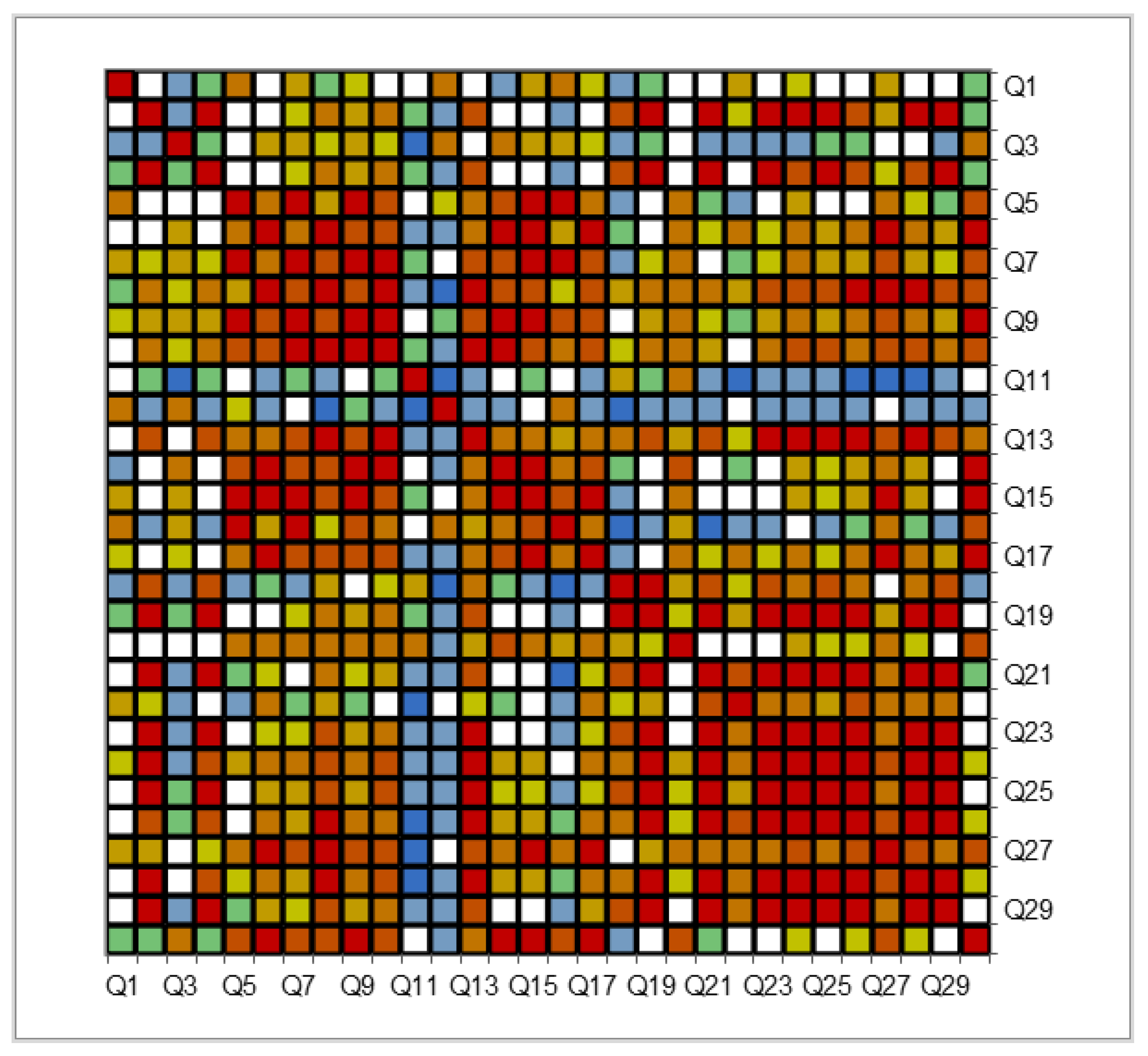
Figure 1. Reliability Analysis of the Questionnaire: The correlation map of all 30 multiple-choice queries (Q1-Q30) was included in the online survey, which had 316 respondents.
Preprints 141721 g001
Figure 2. A. Eco-food differentiation. B. Essential aspects linked with eco-food production.
Preprints 141721 g002
Figure 3. Descriptive analysis of the participant’s responses to the following queries: A. The first source of information about eco-food; B. Available information regarding eco-food; C. The rate of updating data about eco-food production and provenance; D. Eco-food’s beneficial environmental impact; E. Eco-foods are healthier than conventional ones? F. Eco-food’s contribution to human health; G, H. Eco-food quality and prices vs conventional food ones; I. The rate of verifying eco-food ingredients during acquisition; J. The rate of verifying eco-food availability during acquisition; K. Confidence level in eco-food labels (C1-C5). L. Confidence level in Romanian-certified eco-food; The results are expressed as relative frequency (%).
Preprints 141721 g003aPreprints 141721 g003b
Figure 4. A. The eco-food types preferences. B. The place of eco-food acquisition. C. The main criteria in selective eco-food acquisition. D. The main reasons for eco-food acquisition; E. The main reasons to avoid eco-food.
Preprints 141721 g004aPreprints 141721 g004bPreprints 141721 g004c
Figure 5. A. The correlations between the eco-food price perception, level of confidence in eco-food labels, eco-food satisfaction level, monthly income, residence, and eco-food acquisition frequency. B. The correlations between monthly income, education level, satisfaction level, and eco-food acquisition frequency. C. The correlations between BMI, age group, sex, satisfaction level, eco-food acquisition frequency, and recommendation. Price (L = lower, H = high, S = similar, NS = no significant).
Preprints 141721 g005aPreprints 141721 g005b
Figure 6. A, C, E. The frequency of eco-food acquisition (A); The level of personal satisfaction induced by eco-food consumption (C); The potential of eco-food recommendations to other potential consumers (E). B, D, F. Statistically significant differences between variable parameters correlated with all essential aspects.
Preprints 141721 g006aPreprints 141721 g006bPreprints 141721 g006cPreprints 141721 g006d
Table 1. Sociodemographic data of all 316 respondents.
Parameter Total F M p
N % N % N %
Sex 316.00 100.00 199.00 62.97 117.00 37.03 < 0.05
Residence Rural 61.00 19.39 41.00 20.60 20.00 17.09
Urban 255.00 80.70 158.00 79.40 97.00 82.91
Age age 19 - 24 32.00 10.13 24.00 12.06 8.00 6.84 <0.05
age 25 - 34 110.00 34.81 77.00 38.69 33.00 28.21
age 35 - 49 134.00 42.41 79.00 39.70 55.00 47.01
age 50 - 65 32.00 10.13 13.00 6.53 19.00 16.24
age = 18 1.00 0.32 1.00 0.50 0.00 0.00
age > 65 7.00 2.22 5.00 2.51 2.00 1.71
Study level bachelor degree 152.00 48.10 90.00 45.23 62.00 52.99 <0.05
college 40.00 12.66 26.00 13.07 14.00 11.97
high school 2.00 0.63 2.00 1.01 0.00 0.00
mild 1.00 0.32 1.00 0.50 0.00 0.00
post-college / technics 17.00 5.38 12.00 6.03 5.00 4.27
postgraduate 104.00 32.91 68.00 34.17 36.00 30.77
Occupation employer 195.00 61.71 123.00 61.81 72.00 61.54 <0.05
entrepreneur / owner 47.00 14.87 31.00 15.58 16.00 13.68
homeworker 26.00 8.23 14.00 7.04 12.00 10.26
pensioner 8.00 2.53 6.00 3.02 2.00 1.71
self-employer 16.00 5.06 10.00 5.03 6.00 5.13
student 20.00 6.33 13.00 6.53 7.00 5.98
unemployed 4.00 1.27 2.00 1.01 2.00 1.71
Incomes 2001 – 3000 lei 47.00 14.87 27.00 13.57 20.00 17.09 <0.05
3001 – 4000 lei 41.00 12.97 21.00 10.55 20.00 17.09
4001 – 7000 lei 86.00 27.22 61.00 30.65 25.00 21.37
7001 – 10000 lei 41.00 12.97 27.00 13.57 14.00 11.97
< 2.000 lei 24.00 7.59 15.00 7.54 9.00 7.69
> 10000 lei 77.00 24.37 48.00 24.12 29.00 24.79
BMI Normal weight 134.00 42.41 92.00 46.23 42.00 35.90 <0.05
Obesity 45.00 14.24 16.00 8.04 29.00 24.79
Overweight 92.00 29.11 60.00 30.15 32.00 27.35
Underweight 45.00 14.24 31.00 15.58 14.00 11.97
F – female, M – male, p-value < 0.05 indicates significant statistical differences, BMI – Body mass index value and its significance expressed as normal weight, obesity, underweight, and overweight.
Disclaimer/Publisher’s Note: The statements, opinions and data contained in all publications are solely those of the individual author(s) and contributor(s) and not of MDPI and/or the editor(s). MDPI and/or the editor(s) disclaim responsibility for any injury to people or property resulting from any ideas, methods, instructions or products referred to in the content.
Copyright: This open access article is published under a Creative Commons CC BY 4.0 license, which permit the free download, distribution, and reuse, provided that the author and preprint are cited in any reuse.
Prerpints.org logo

Preprints.org is a free preprint server supported by MDPI in Basel, Switzerland.

Subscribe

Disclaimer

Terms of Use

Privacy Policy

Privacy Settings

© 2025 MDPI (Basel, Switzerland) unless otherwise stated