1. Introduction
Stroke is characterized by high rates of morbidity, mortality, and disability, posing a significant threat to public health and individual well-being[
1]. In China, stroke has emerged as a major public health concern. The resulting impairments, particularly upper limb dysfunction, severely hinder the ability to perform daily tasks, such as maintaining proper oral hygiene. Residual tooth roots, often caused by cavities or injury, are difficult to clean, increasing the risk of fly infestations and subsequent infections, especially in unsanitary conditions.Myiasis is a disease caused by the larvae of certain flies parasitizing on the human or animal body. These maggots feed on the host's necrotic or living tissue, body substances, or ingested food. Human myiasis is generally the infection of living human tissues by dipteran larvae [
2,
3]. The most commonly infected sites in the human body are the skin, nose, vagina, and mouth [
4,
5], in which Oral myiasis are mostly related to the local medical level, poor awareness of oral hygiene, mouth breathing and insufficiency of the lips[
6]. Individuals who have experienced upper limb dysfunction after a stroke often face challenges in self-care, particularly those with dental issues in the older population who struggle with effective cleaning. The Emergency Medicine Department of our hospital admitted an elderly critically ill patient infected with oral fly maggots in April 2024. he aim of this case report is to emphasize oral hygiene challenges faced by stroke patients, particularly thosewithupper limb dysfunction in their home environment and raise attention to community healthcare workers.
2. Patient
We report a case of a 65-year-old female patient who was admitted to the Emergency Department of the Tenth People's Hospital of Shenyang, Liaoning Province, China, on April 24, 2024, due to "loss of consciousness for 30 minutes and respiratory and cardiac arrest for 10 minutes." According to the patient’s family, the patient vomited twice—once the night before admission and once on the first day of hospitalization. After losing consciousness for approximately 30 minutes, the family called emergency services (120). Upon arrival, the medical emergency team measured a blood glucose level of 1.6 mmol/L (normal fasting blood glucose: 3.9-6.1 mmol/L). The patient was immediately treated with an intravenous injection of 20 ml of 50% glucose. Approximately 5 minutes later, she regained consciousness.
Ten minutes before arriving at the hospital, the patient lost consciousness again and experienced respiratory and cardiac arrest. The emergency team immediately performed chest compressions, cardiopulmonary resuscitation (CPR), tracheal intubation for assisted ventilation, and administered 1 mg of epinephrine (repeated three times). Upon arrival at the hospital, the LUCAS resuscitation pump was used for continuous chest compressions, while the tracheal tube was connected to a ventilator (V-AC mode, tidal volume 450 ml, PEEP 5 cmH2O, respiratory rate 13 breaths/min, FiO2: 100%). ECG monitoring, blood oxygen saturation, and blood pressure were continuously monitored, and the patient was given cardiotonic drugs, blood pressure management, and fluid resuscitation. During resuscitation, the patient experienced two episodes of ventricular fibrillation, which were treated with 150J asynchronous DC cardioversion defibrillation. Blood samples were urgently collected for arterial and venous blood tests. After 11 minutes of resuscitation in the emergency room, the patient regained sinus rhythm.
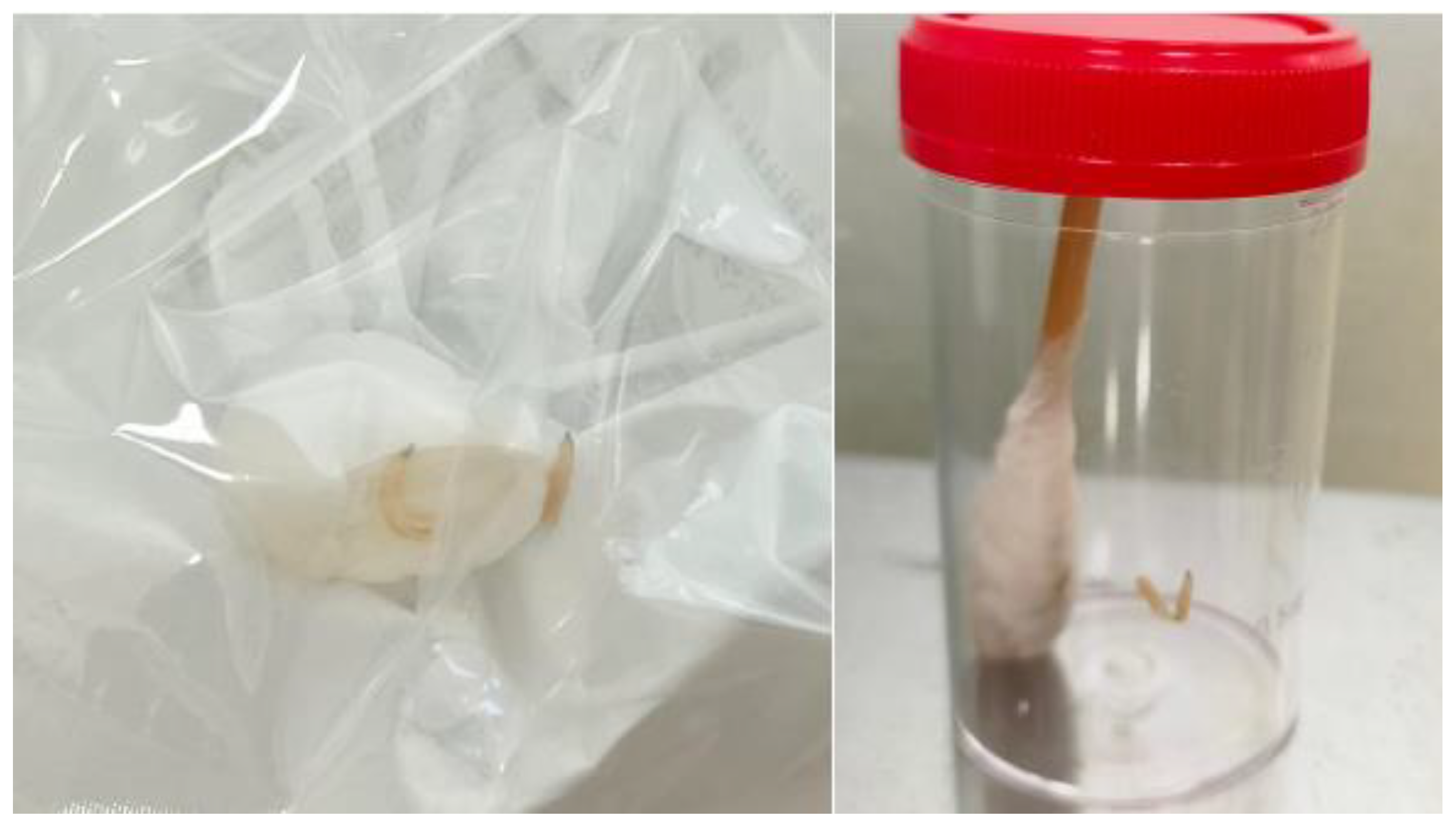
During physical examination, the patient was noted to have poor oral hygiene, with a large number of live maggots present in the mouth (
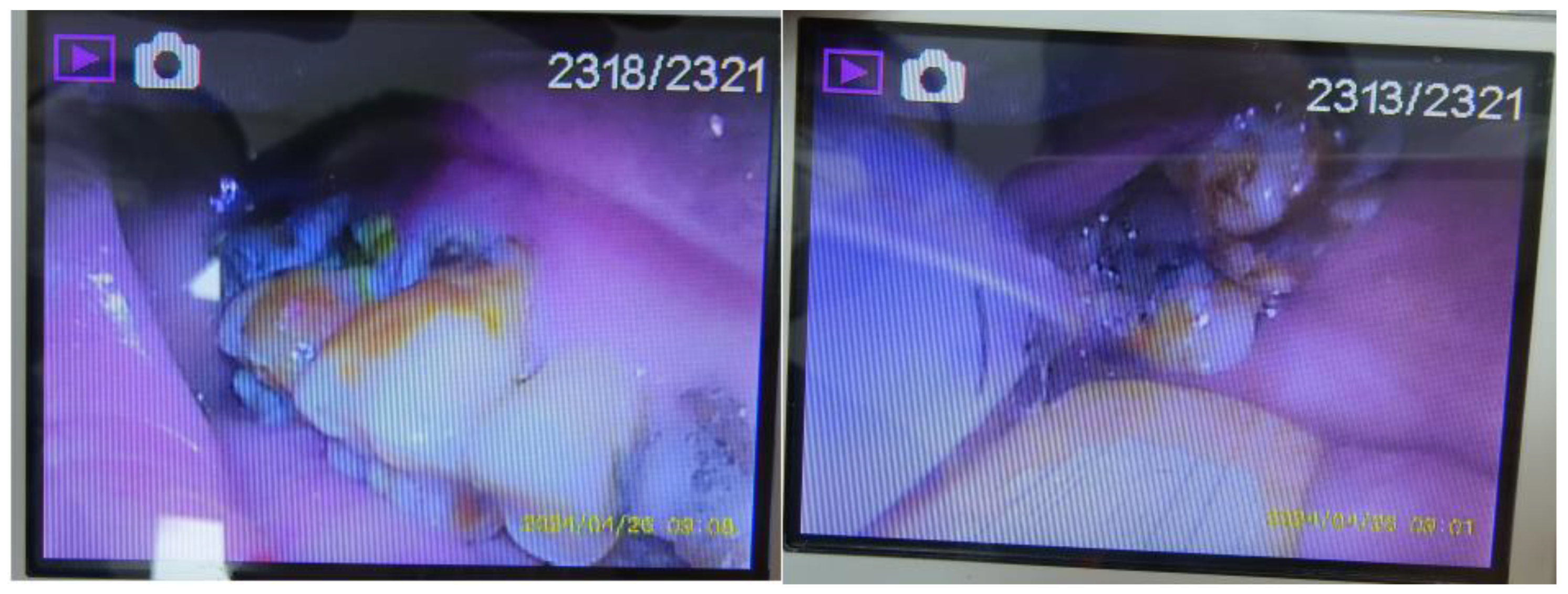
Figure 1). A significant number of white maggots, approximately 3-5 mm in size, were observed actively crawling in carious lesions at teeth positions 16, 17, 18, 45, 36, 37, and 38. Additionally, heavy calculus, soft plaque, and blackened and softened carious lesions were observed in the affected areas (
Figure 2). The larvae were examined with the naked eye and under an optical microscope (OLYMPUS BX3, OLYMPUS Corporation). The larvae were cylindrical, measuring 3-8 mm in length and 1-1.5 mm in width, with a gray-white dorsal surface, a dark brown cone-shaped head, and a white oval tail. Based on morphological characteristics and comparison with existing literature[
7,
8,
9,
10], these larvae were identified as Clogmia albipunctata (Diptera: Psychodidae).
The patient’s medical history included diabetes, rheumatic heart disease, mitral and tricuspid valve insufficiency, heart failure, cerebral infarction, and brainstem infarction. The family also reported right-sided hemiplegia and recent toothache. Due to upper limb dysfunction, the patient had not been able to brush her teeth regularly. During further discussion with the family, it was revealed that the patient had been vomiting frequently prior to admission. However, no proper oral hygiene was performed after vomiting, creating an environment conducive to fly infestation.
3. Follow-up
After the patient was admitted to the EICU, thorough oral care was provided. Three nurses worked together to clean the oral cavity. Nurse A secured the tracheal tube and kept the mouth open with a mouth opener. Nurse B managed the central suction tube, while Nurse C performed the cleaning, removing a total of seven live maggots from the carious lesions. The teeth were rinsed alternately with 3% hydrogen peroxide and saline, and the softened carious tissue was removed, leaving only the root segments. Oral care was continued at 3, 6, and 9 hours after admission, and while live maggots were still observed during each session, the number gradually decreased. By the third day, all maggots had been removed, and no new infestations were found.
In this case, ideal conditions for the hatching of parasite eggs were present: the patient’s inability to perform oral hygiene due to upper limb dysfunction caused by stroke, severe dental caries, softened tissues, and a moist oral environment. These factors contributed to the hatching of the eggs and the growth of larvae, ultimately leading to the maggot infestation.
4. Discussion
Stroke is a main cause of disability, affecting approximately 1% of the global population. Among the various functional impairments experienced by stroke patients, upper limb dysfunction is prevalent, accounting for at least 70% of cases[
11,
12,
13]. This dysfunction significantly impacts the patient’s daily quality of life.Tooth root stumps often result from dental caries and trauma. These remnants pose a challenge for proper oral hygiene due to their difficulty in cleaning. Neglecting can lead to fly infestations and subsequent infections, especially when overall sanitary conditions decline.
Clogmia albipunctata, a synanthropic cosmopolitan fly of tropical origin, is an aquatic species typically found in moisturerich environments such as homes, sewage treatment plants, and hospitals.C. albipunctata can cause urogenital, intestinal, and even nasopharyngeal accidental myiasis under non-hygienic conditions[
14].
We recommend the following steps for oral disinfection and irrigation for such patients: Ensure the care area is clean and well-lit, and prepare the necessary instruments such as a mouth opener, suction tubes, disinfectant, 3% hydrogen peroxide, saline solution, and sterile forceps. Disinfect the skin around the mouth, lay sterile towels to maintain a sterile environment. Nurse A secures the endotracheal tube, Nurse B prepares the central suction tube, and Nurse C uses sterile forceps to alternately irrigate the periodontal pockets and carious areas with 3% hydrogen peroxide and saline, while removing softened carious tissue. Suction the irrigation fluid, and after completion, rinse the mouth again with saline to ensure no residue remains. Inspect the mouth, remove maggots and decayed tissue. Document the care process, schedule follow-up care, and monitor oral health.
As community health care providers, we should prioritize the daily living abilities in stroke patients, particularly addressing their hygiene needs at home. Monitoring andidentifyingproblem timely, can preventoral myiasis and reduce psychological impacts on both patients and their families.
Author Contributions
Writing—Review and Editing, Bao Bingli; Dental Diagnosis, Zhuang Zhinuò; Disease Control, Ren Xinyi; Disease Guidance, Liu Hongdan; Writing Guidance, Liu Chang; Corresponding Author, Du Guichun. All authors have read and agreed to the published version of the manuscript.
Institutional Review Board Statement
This study was approved by the Clinical Trial Ethics Committee of Shenyang Tenth People’s Hospital, and informed consent was obtained from the patient.
Informed Consent Statement
Written informed consent has been obtained from the patient(s) to publish this paper.
Acknowledgement
I affirm that We have no financial affiliation , or involvement with any commercial organization with direct financial interest in the subject or materials discussed in this manuscript, nor have any such arrangements existed in the past three years.
Public Involvement Statement
No public involvement in any aspect of this research.
Conflicts of Interest
The authors declare no conflicts of interest.
References
- Lou M, Ding J, Hu B, et al. Chinese Stroke Association guidelines for clinical management of cerebrovascular disorders: executive summary and 2019 update on organizational stroke management. Stroke Vasc Neurol. 2020;5(3):260-269. [CrossRef]
- Droma EB, Wilamowski A, Schnur H, Yarom N, Scheuer E, Schwartz E. Oral myiasis: a case report and literature review. Oral Surg Oral Med Oral Pathol Oral Radiol Endod. 2007;103:92-96. [CrossRef]
- Francesconi F, Lupi O. Myiasis. Clin Microbiol Rev. 2012;25(1):79-105. [CrossRef]
- Gunbay S, Bicacki N, Canda T, Canda S. A case of myiasis gingiva. J Periodontol. 1995;66(10):892-895. [CrossRef]
- Vasanthakumar V, Varalakshmi PR, Vanmathi R. Oral myiasis of maxilla (Palatal Gingiva). Contemp Clin Dent. 2020;11(2):162-164. [CrossRef]
- Chen J, Liu J, Liu Y, et al. A rare case of residual root myiasis caused by Clogmia albipunctata larvae (Diptera: Psychodidae). BMC Infect Dis. 2022;22(1):374. [CrossRef]
- Farrag HMM, Huseein EAM, Almatary AM, Othman RA. Morphological and initial molecular characterization of Clogmia albipunctata larvae (Diptera: Psychodidae) causing urinary myiasis in Egypt. PLoS Negl Trop Dis. 2019;13(12):e0007887.
- Mokhtar AS, Braima KAO, Chin HP, Jeffery J, Zain SNM, Rohela M, Lau YL, Jamaiah I, Wilson JJ, Abdul-Aziz NM. Intestinal myiasis in a Malaysian patient caused by larvae of Clogmia albipunctata (Diptera: Psychodidae). J Med Entomol. 2016;53(4):957-960.
- Hjaija D, Sawalha SS, Amr ZS, Katbeh-Bader A, Hassoon RAH. Urinary myiasis caused by Clogmia albipunctata from the Palestinian Territories. Bull Soc Pathol Exot. 2018;111(3):148-151.
- El-Dib NA, Ali MI, Hamdy DA, Wahab WMAE. Human intestinal myiasis caused by Clogmia albipunctata larvae (Diptera: Psychodidae): First report in Egypt. J Infect Public Health. 2020;13(4):661-663.
- GBD 2016 Stroke Collaborators. Global, regional, and national burden of stroke, 1990-2016: a systematic analysis for the Global Burden of Disease Study 2016. Lancet Neurol. 2019;18(5):1-11. [CrossRef]
- Broeks JG, Lankhorst GJ, Rumping K, et al. The long-term outcome of arm function after stroke: results of a follow-up study. Disabil Rehabil. 1999;21(8):357-364. [CrossRef]
- Di Bari C, Venkateswaran N, Fastl C, Gabriël S, Grace D, Havelaar AH, Huntington B, Patterson GT, Rushton J, Speybroeck N, Torgerson P, Pigott DM, Devleesschauwer B. The global burden of neglected zoonotic diseases: Current state of evidence. One Health. 2023;17:100595. [CrossRef]
- El Omri G, Taghouan A, Rais H, et al. Human urinary myiasis due to larvae of Telmatoscopus (Clogmia) albipunctata in Morocco: a case report. SAGE Open Med Case Rep. 2024;12:2050313X241272711. [CrossRef]
|
Disclaimer/Publisher’s Note: The statements, opinions and data contained in all publications are solely those of the individual author(s) and contributor(s) and not of MDPI and/or the editor(s). MDPI and/or the editor(s) disclaim responsibility for any injury to people or property resulting from any ideas, methods, instructions or products referred to in the content. |
© 2024 by the authors. Licensee MDPI, Basel, Switzerland. This article is an open access article distributed under the terms and conditions of the Creative Commons Attribution (CC BY) license (https://creativecommons.org/licenses/by/4.0/).