

Submitted:
03 December 2024
Posted:
03 December 2024
You are already at the latest version
Abstract
This study explores the application of output - oriented interval reliability theory in eval-8 uating the landscape bridge design ability of students in bridge aesthetics courses. With the contin-9 uous improvement in the aesthetic requirements for bridges and the increasing emphasis on sus-10 tainable development, accurate evaluation of students' landscape bridge design ability is crucial. 11 The output - oriented concept emphasizes guiding students' learning outcomes. Interval reliability 12 theory provides a scientific and quantitative evaluation method. The evaluation index system for 13 landscape bridge design capability now includes design creativity, structural rationality, aesthetic 14 expression, coordination with the environment, and sustainable features such as material recycla-15 bility and energy - efficiency. Using the output - oriented principle, students' design works are the 16 core basis, focusing on their quality and how well they meet sustainable goals. Interval reliability 17 theory analyzes the uncertainty of design ability. By considering the range of indicators and factors 18 like the durability of sustainable materials, the reliability of designs in different situations can be 19 evaluated. This comprehensive approach reflects the true design ability better. In practical applica-20 tions, the multidimensional evaluation of students' works combined with interval reliability analy-21 sis considering sustainability provides teaching feedback. Teachers can adjust content and methods 22 based on results to improve quality and better cultivate students' landscape bridge design abilities 23 with a sustainable vision. Overall, output - oriented interval reliability theory with sustainability 24 offers an effective evaluation approach.
Keywords:
1. Introduction
2. Bridge Aesthetics Course Content
2.1. Theoretical Basis
2.2. Design Elements
2.3. Design Method
3. Goal of Cultivating Output-Oriented Ability
3.1. Professional Knowledge and Skills
3.2. Innovative Thinking and Design Ability
3.3. Practical Ability and Professional Ethics
4. Evaluation System for Landscape Bridge Design Capability
4.1. Design Creativity
4.2. Structural Rationality
4.3. Aesthetic Expression
4.4. Environmental Coordination
4.5. Plan Expression
5. Fuzzy Analytic Hierarchy Process Based on Interval Reliability Theory
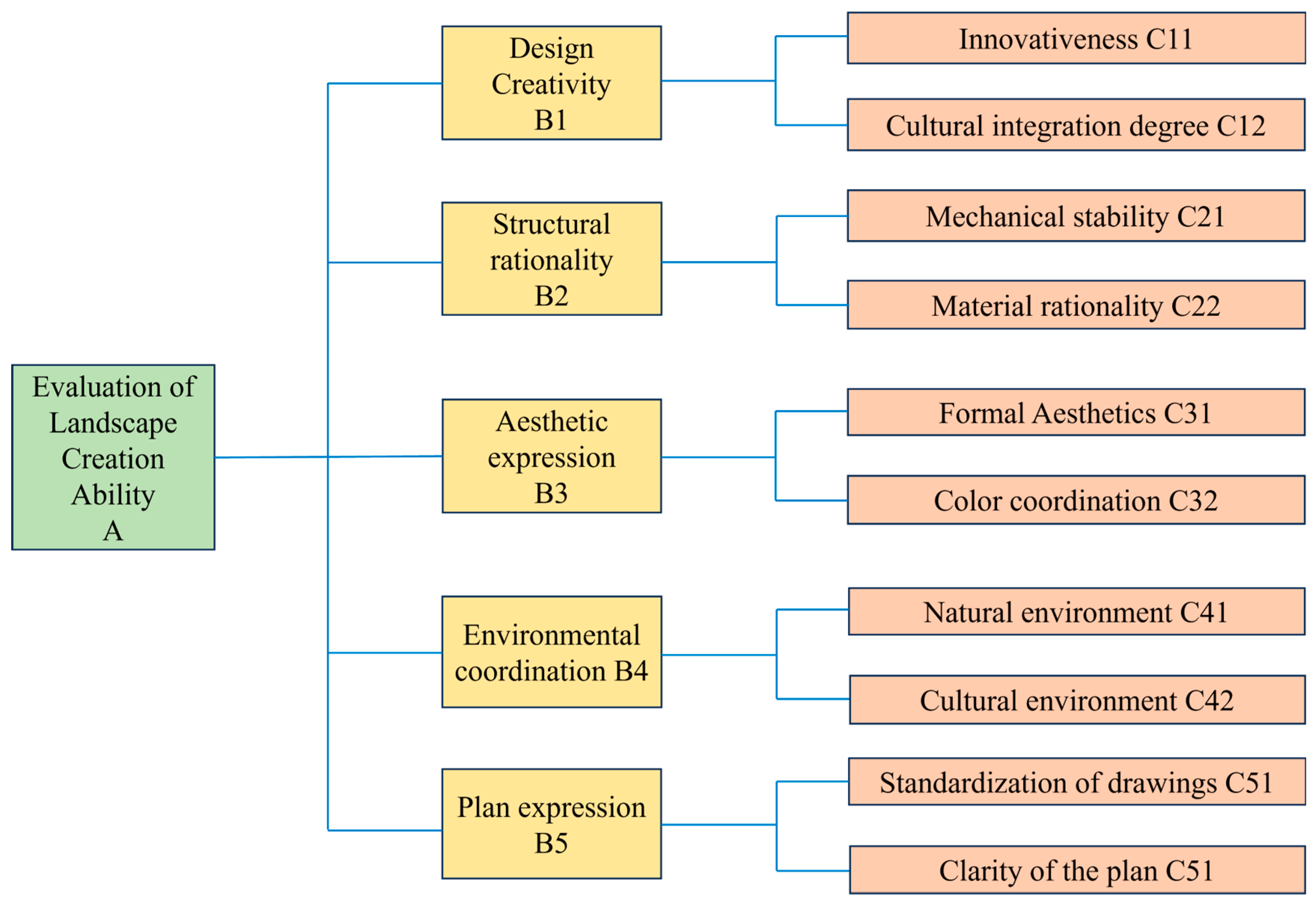
5.1. Establishment of the Evaluation Index System
5.2. Indicator Weight
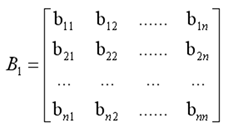
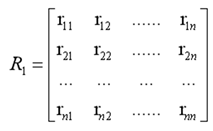
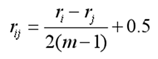

5.3. Determination of the Single-Factor Evaluation Matrix
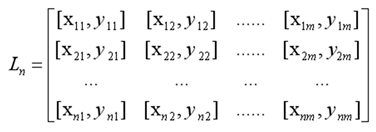
5.4. Calculation of the Evaluation and Ranking Results

6. Evaluation Process for Landscape Bridge Design Ability
6.1. Determine the Evaluation Index System
6.2. Build a Hierarchical Structure Model
6.3. Determine the Interval Number Fuzzy Judgment Matrix
6.4. Calculate the of Indicator Weights
6.5. Student Work Evaluation
6.6. Result Analysis and Feedback
7. Application
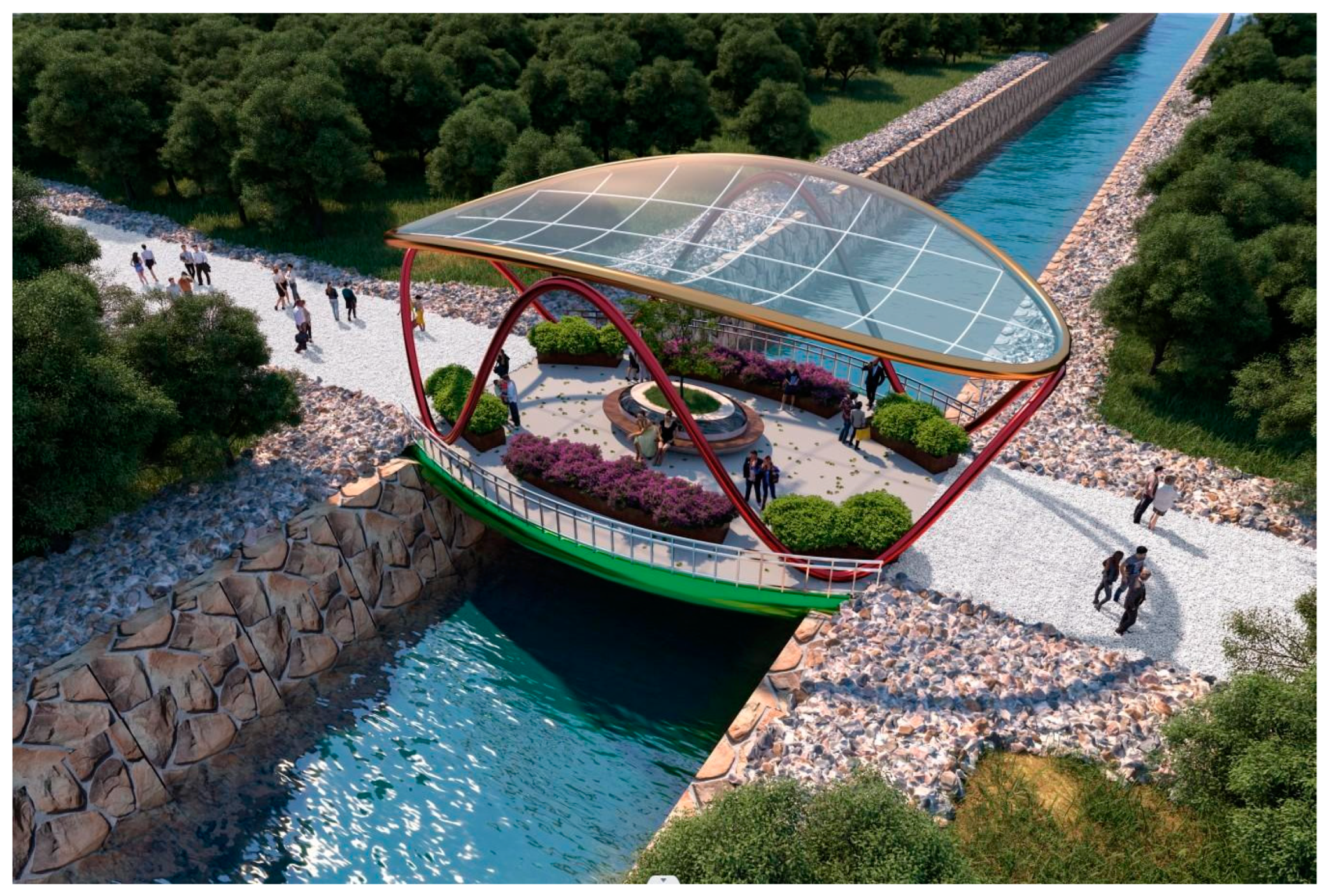
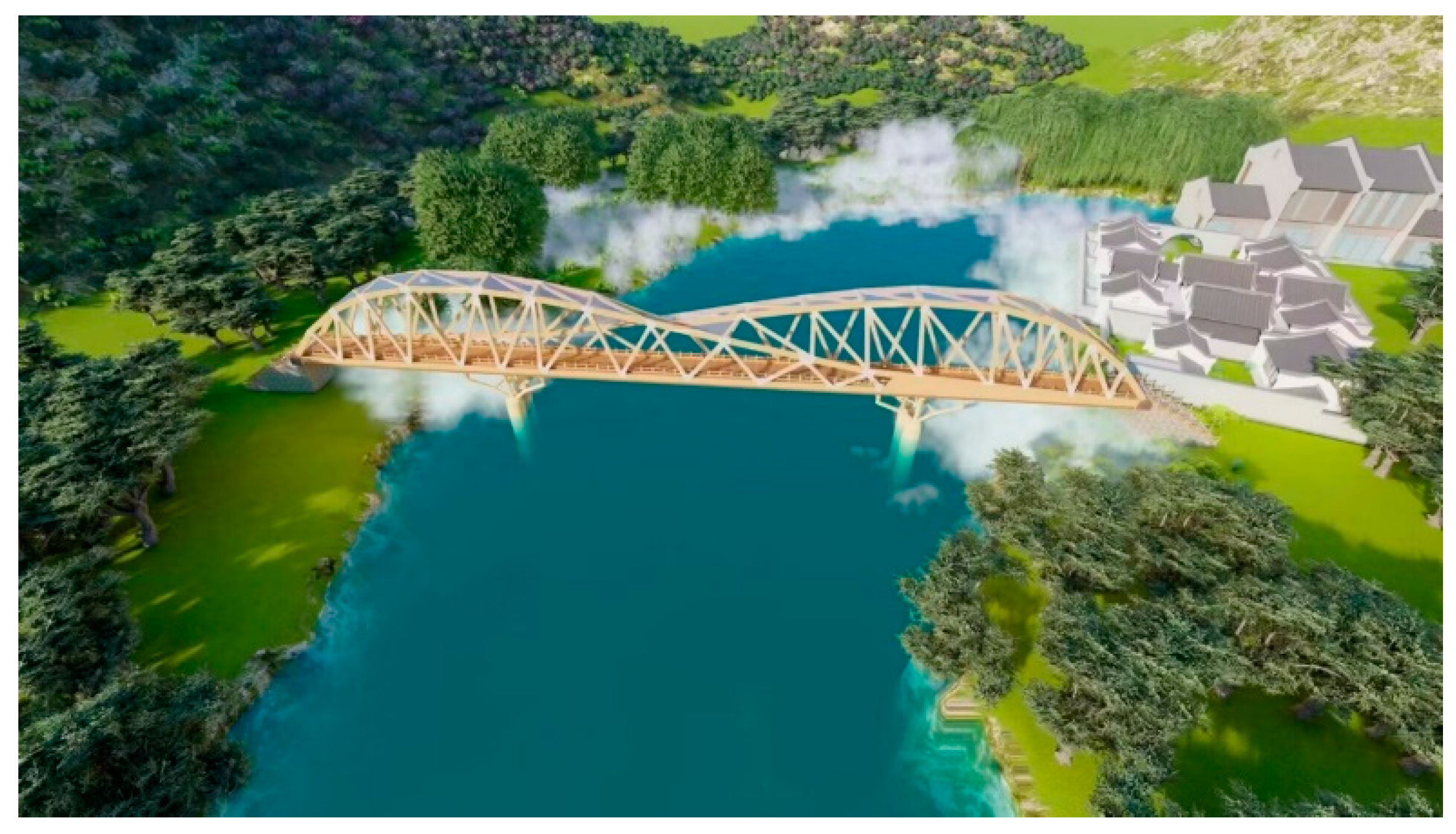
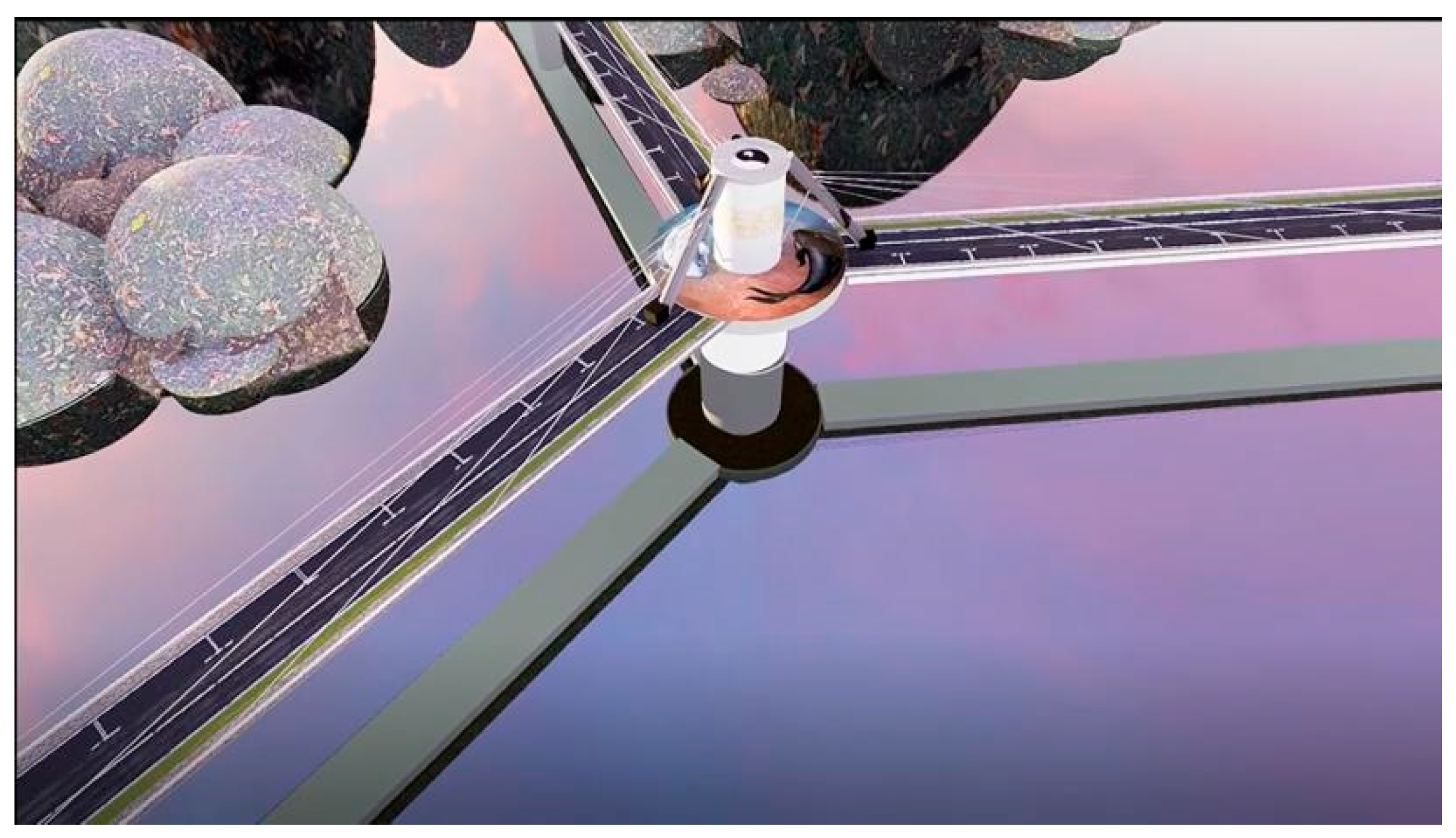
7.1. Design Cases
7.2. Construct a Judgment Matrix
7.3. Calculate the Weight Vector
7.4. Perform a Consistency Check
7.5. Evaluate the Results of Landscape Creation Ability
7.6. Discussion
8. Conclusion
Declaration of Conflicting Interests
Data Availability Statement
Acknowledgments
References
- Xu Fengyun, Zhao Yong, Chen Qixin, et al. Introduction to Bridge Landscape [J]. Bridge Construction, 2003(4):4. DOI:CNKI:SUN:QLJS.0.
- Ding Hao. Reflection and Practice on Landscape Aesthetics of Urban Bridges [D]. Zhejiang University,2007.
- Xu Liping. Discussing Urban Landscape Bridges [C]// Proceedings of the 21st National Bridge Academic Conference (Volume One). Chinese Society of Civil Engineering, 2014. DOI:ConferenceArticle/ 5af16f66c095d71bc8c 2473a.
- Liang Yan, He Wei, Tang Maolin. Research Progress on Bridge Aesthetics in 2019 [J]. Journal of Civil and Environmental Engineering, 2021, 43(S01):8. [CrossRef]
- Jiang Yu, Sun Jun. The Inspiration of Traditional Chinese Aesthetic Thought on Bridge Landscape Aesthetics [J]. Highway, 2020, 65(3):5.
- Zhang Zhenxue. Theoretical analysis and research on a new type of thrust free space steel mesh arch bridge [D]. Hebei University of Technology, 2013. [CrossRef]
- Jiang Yu, Sun Jun. Reflection on Bridge Landscape Aesthetics Based on Ecological Aesthetics Principles [J]. Highway, 2017, 62(11):4. DOI:CNKI:SUN:GLGL. 0.2017-11-040.
- Yan Xu, Wang Jiangbo. A Brief Discussion on the Reasonable Aesthetic Design and Economy of Bridges [J]. Journal of Anhui University of Architecture and Technology: Natural Science Edition, 2012, 20(5):5. [CrossRef]
- Chen Xia. Research on Aesthetics and Landscape Design of Mountain Environment Bridges [D]. Southwest Jiaotong University,2022.
- Wang Yijuan, Guo Yanping. Research on Modern Bridge Aesthetics and Landscape Design [J]. Journal of Beijing Institute of Architecture and Civil Engineering, 2004, 20(3):4. [CrossRef]
- Jiang Chengjie, Ding Hao, Lin Zhenpao. Aesthetic Design of Composite Landscape for Canal Bridges [J]. Technology Innovation Report, 2009(24):2. [CrossRef]
- Li Yan. Exploration of Ecological Aesthetics of Bridges in Mountainous Cities [M]. Chongqing University Press,2020.
- Sun Yu, Wang Yitong, Zhang Yanhong. Research on the Coordination between Bridge Aesthetics and Environment [J]. Technology Innovation Report, 2020, 17(17):2. [CrossRef]
- Sheng Yong. Research on Landscape Design and Evaluation in Bridge Aesthetics [D]. Chang'an University,2001. [CrossRef]
- Sun Rui. Research on Landscape Design and Evaluation Method of Cable stayed Suspension Cooperation System Bridge [D]. Chang'an University,2007. [CrossRef]
- Wang Hui, Mu Jiyuan. Aesthetic evaluation of bridge landscape in the Old Town of Lijiang based on beauty evaluation method and semantic analysis method [J]. Journal of Southwest Forestry University: Social Sciences Edition, 2022, 6(1):70-77.
- Cheng Shengjie. Research on Comprehensive Evaluation Method of Pedestrian Landscape Bridge Based on Uncertain AHP [D]. Taiyuan University of Science and Technology,2020.
- Liu Zhanliang, Hao Jianjun, Liu Shuxia, et al. Application of Analytic Hierarchy Process in Evaluating and Diagnosing Curriculum Teaching Ability [J]. Journal of Hebei Agricultural University: Agriculture and Forestry Education Edition, 2003, 5(1):2. [CrossRef]
- Zhang Lei. Comprehensive Evaluation of Innovation Ability of Engineering Students Based on Analytic Hierarchy Process [J]. Innovation and Entrepreneurship Education, 2010, 1(5):3. [CrossRef]
- Yang Hua, Wang Ning, He Yunfeng, et al. Research on Innovation Ability of College Students Based on Analytic Hierarchy Process (AHP) [J]. Journal of Inner Mongolia Normal University: Education Science Edition, 2018, 31(3):4. [CrossRef]

| Course Modules | Content |
|---|---|
| Theoretical basis | Principles of Aesthetics (Essence of Beauty, Laws of Formal Beauty, etc.), Introduction to Bridge Engineering (Bridge Types, Structural Forms, Development History), Art history and design history (referencing art styles and design concepts from different periods). |
| Design elements | Form and proportion (the influence of lines, shapes, and proportions on aesthetics); Color and Material (the impact of color and material selection on aesthetic effects); Landscape and environment (coordination with surrounding landscape and environment). |
| Design Method | Creativity and ideation (cultivating innovative thinking and design creativity); Hand drawing and model making (improving design expression ability); Computer aided design (mastering relevant software such as CAD, 3DMAX, etc.). |
| Cases analysis | Classic cases at home and abroad (analyzing successful experiences of famous bridge aesthetic design cases); Failure case analysis (summarizing lessons learned to avoid similar problems). |
| Practical teaching | Field investigation (observing the aesthetic characteristics of actual bridges and their relationship with the environment); Course design (applying theoretical knowledge to practical design to enhance practical skills). |
| Evaluation Dimension | Evaluating Indicator | Weight | Scoring Criteria |
|---|---|---|---|
| Design Creativity | Innovative nature | 20% | Highly innovative and uniquely designed (81–100 points), Has a certain degree of innovation (61–80 points), Lack of innovation (41–60 points), Lack of innovation (0–40 points) |
| Cultural integration degree | 15% | Perfectly integrates regional culture and rich connotations (81–100 points), Good integration (61–80 points), The fusion degree is average (41–60 points), Poor fusion (0–40 points) | |
| Structural rationality | Mechanical stability | 20% | Stable structure, accurate calculation, fully compliant with requirements (81–100 points); Relatively stable, basically in line with (61–80 points); There are certain stability issues (41–60 points); Unstable structure (0–40 points) |
| Reasonable material selection | 10% | Scientific and reasonable material selection, high cost-effectiveness (81–100 points); Relatively reasonable (61–80 points); Reasonable (41–60 points); Unreasonable (0–40 points) | |
| Aesthetic expression | Formal Aesthetics | 15% | The form is highly aesthetically pleasing and has a strong visual impact (81–100 points), Has a certain level of aesthetic appeal (61–80 points), Lack of aesthetic appeal (41–60 points), Lack of aesthetic appeal (0–40 points) |
| Color coordination | 10% | Color coordination and high integration with the environment (81–100 points), Relatively coordinated (61–80 points), Coordination is average (41–60 points), Inconsistent (0–40 points) | |
| Environmental coordination | Coordination with the surrounding natural environment | 15% | Perfect integration with the natural environment (81–100 points), Good integration (61–80 points), The fusion degree is average (41–60 points), Poor fusion (0–40 points) |
| Coordination with the surrounding cultural environment | 15% | Highly coordinated with the cultural environment to enhance the regional cultural atmosphere (81–100 points), Good coordination (61–80 points), The coordination level is average (41–60 points), Poor coordination (0–40 points) | |
| Design expression | Standardization of drawings | 10% | The drawings are standardized, clear, accurate, and the annotations are complete (81–100 points); More standardized (61–80 points); Normative average (41–60 points); Not standardized (0–40 points) |
| Clarity of scheme explanation | 10% | The plan is clearly explained, logically rigorous, and expressed fluently (81–100 points); Clear (61–80 points); Average clarity (41–60 points); Unclear (0–40 points) |
| Factor set | Scheme set | |||
| f1 | f2 | …… | fm | |
| C1 | l11 | l12 | …… | l1m |
| C2 | l21 | l21 | …… | L2m |
| … | … | … | … | … |
| Cn | Ln1 | Ln2 | …… | Lnm |
Disclaimer/Publisher’s Note: The statements, opinions and data contained in all publications are solely those of the individual author(s) and contributor(s) and not of MDPI and/or the editor(s). MDPI and/or the editor(s) disclaim responsibility for any injury to people or property resulting from any ideas, methods, instructions or products referred to in the content. |
© 2024 by the authors. Licensee MDPI, Basel, Switzerland. This article is an open access article distributed under the terms and conditions of the Creative Commons Attribution (CC BY) license (http://creativecommons.org/licenses/by/4.0/).