Preprint
Review

This version is not peer-reviewed.

Relationship Between Left Atrial Strain and Atrial Fibrillation: The Role of Stress Echocardiography

A peer-reviewed article of this preprint also exists.

Submitted:

03 December 2024

Posted:

04 December 2024

You are already at the latest version

Abstract

Interest in advanced echocardiographic imaging methods is growing. The left atrial strain (LAS) is among the recently developed echocardiographic parameters. LAS represents an index of tissue deformation of the left atrium (LA). This parameter is an expression of the LA function. Several arrhythmias depend on the impaired LA function. LAS can be assessed with a resting echocardiogram. The evaluation of LAS during stress echocardiography represents another model for assessing LA function. The development of altered LAS during physical or pharmacological stress is a predictor of early LA disease. Our review aims to evaluate the relationship between the alterations of the LAS and the development of atrial fibrillation (AF), and the diagnostic and prognostic role of the stress echocardiogram in clinical practice.

Keywords: 
;  ;  ;  ;  

1. Introduction

Atrial fibrillation (AF) is the most common sustained cardiac arrhythmia, with significant implications for morbidity, mortality, and healthcare costs. AF is a supraventricular arrhythmia characterized by uncoordinated electrical activity in the atria, leading to a loss of effective atrial contraction. The surface electrocardiogram (ECG) shows the absence of regular and discernible P waves and irregular ventricular activation [1]. Clinical presentation may vary from completely asymptomatic patients to severe acute heart failure (HF) presentation and could include several complications, particularly cerebral and systemic embolic events. Thus, the early detection and management of AF, as well as its associated structural and functional changes in the atria, are critical to improving clinical outcomes [2].
Multimodality imaging techniques should be used individually for each patient presenting with AF [3]. Echocardiography has a central role in AF management and has a class I recommendation for guiding treatment decisions, as it's an unavoidable tool in all the four domains of the Atrial Fibrillation-Comorbidities; Avoidance Stroke and Thromboembolism; Heart Rate and Rhythm Control; Evaluation and Re-Evaluation (AF-CARE) approach suggested by the latest European guidelines [1] Traditional echocardiographic techniques, although valuable, may be limited in their ability to assess subtle atrial dysfunction, particularly in the context of AF. In this regard, echocardiographic atrial strain imaging has emerged as a promising tool for evaluating atrial function with greater sensitivity, allowing for early detection of individuals with high risk of AF incidence or recurrence and identification of those exposed to increased risk of stroke and systemic thromboembolism, even when in sinus rhythm [4,5,6].
Atrial strain, derived from speckle-tracking echocardiography (STE), provides a quantitative assessment of atrial deformation and reservoir function, reflecting atrial compliance, contractility, and overall performance [7,8]. Hence, this technique is crucial for evaluating diastolic function and characterization of so-called "atrial myopathy” [9,10] This advanced imaging modality has shown potential not only in resting conditions but also under stress, where the hemodynamic demands on the heart are altered [11,12]. Exercise and pharmacological Stress Echocardiography (SE) have a pivotal role in detecting diastolic dysfunction and in the diagnostic algorithm of HF with preserved ejection fraction (HFpEF), conditions that are strictly linked to AF [13,14,15]. Therefore, using left atrial strain (LAS) during SE might add important information, since it can unmask latent atrial dysfunction that may not be evident at rest, offering further insights into the burden of AF and the risk of its recurrence.
This review aims to explore the evolving role of atrial strain imaging, particularly in the context of exercise and pharmacological SE, and its clinical relevance in assessing and managing patients with AF. The integration of atrial strain into SE protocols holds promise for improving the detection of atrial dysfunction, refining risk stratification, and guiding therapeutic strategies in this challenging population.

2. Speckle Tracking and Left Atrial Strain

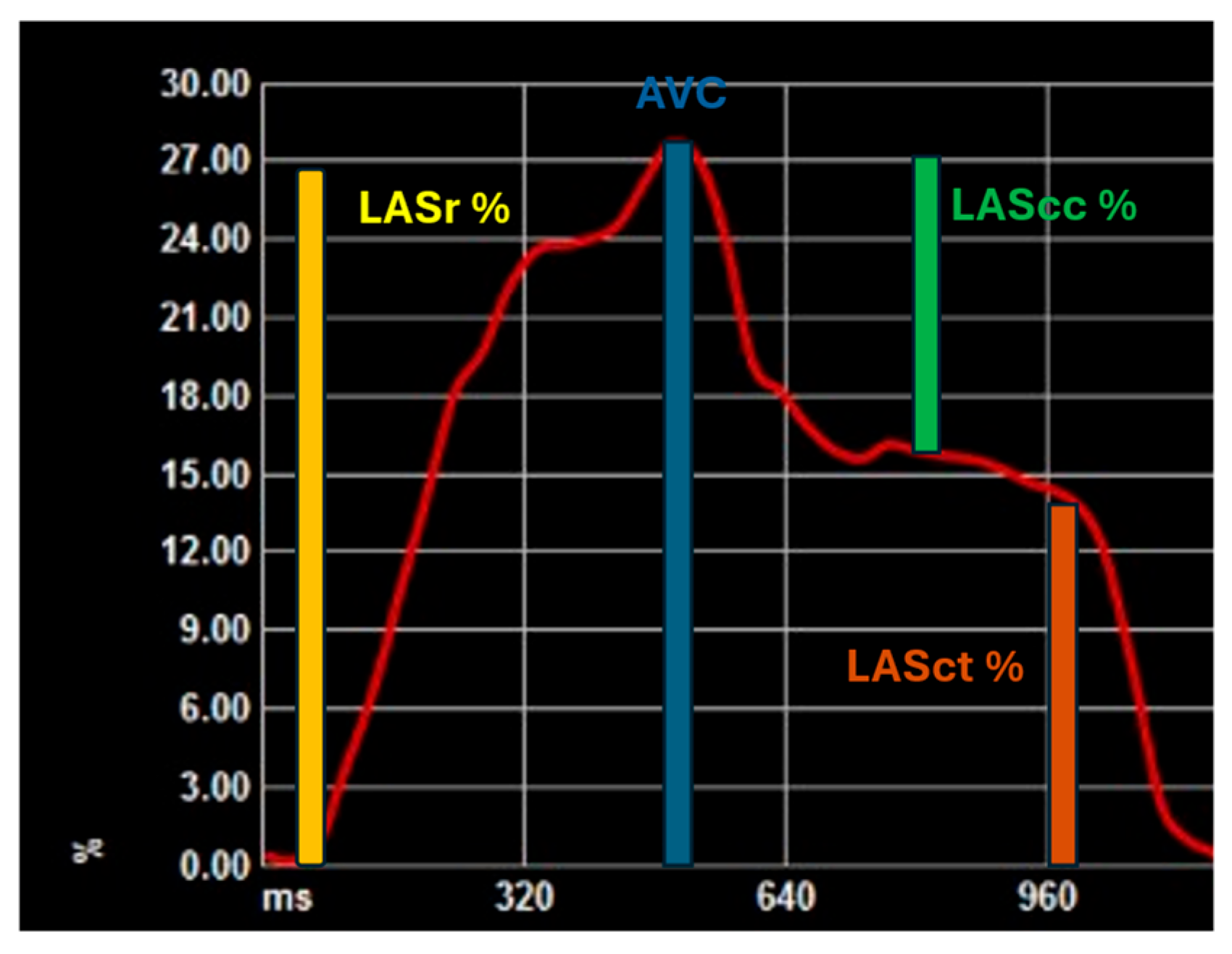
STE represents a significant advancement in cardiac imaging, offering a non-invasive and highly accurate method for assessing left atrial (LA) mechanical function. In contrast to conventional imaging techniques, STE eliminates the angle dependence observed in tissue Doppler, thereby establishing it as a robust tool for the assessment of atrial mechanics, particularly in patients with conditions such as AF [16]. STE enables the quantification of LAS by tracking "speckles" within the myocardium throughout the cardiac cycle. This technique provides a comprehensive evaluation of LA function, encompassing the three primary phases of atrial activity: reservoir, conduit, and contractile [17,18]. During the reservoir phase, reservoir strain reflects the LA capacity to store blood during ventricular systole, as the atrium fills with blood returning from the pulmonary veins [19]. The conduit phase, assessed by conduit strain, occurs in early diastole. During this phase, the atrium acts as a passive conduit, allowing blood to flow from the pulmonary veins into the left ventricle in preparation for the next contraction [19]. Lastly, the booster-pump phase occurs during late diastole, when the atrium contracts to provide additional blood flow into the left ventricle. The booster strain phase is of particular importance in ensuring that the left ventricle has an adequate preload, particularly during periods of increased physiological demand [19]. Figure 1 and Figure 2 represent different phases of LA’s function and LAS during the cardiac cycle.
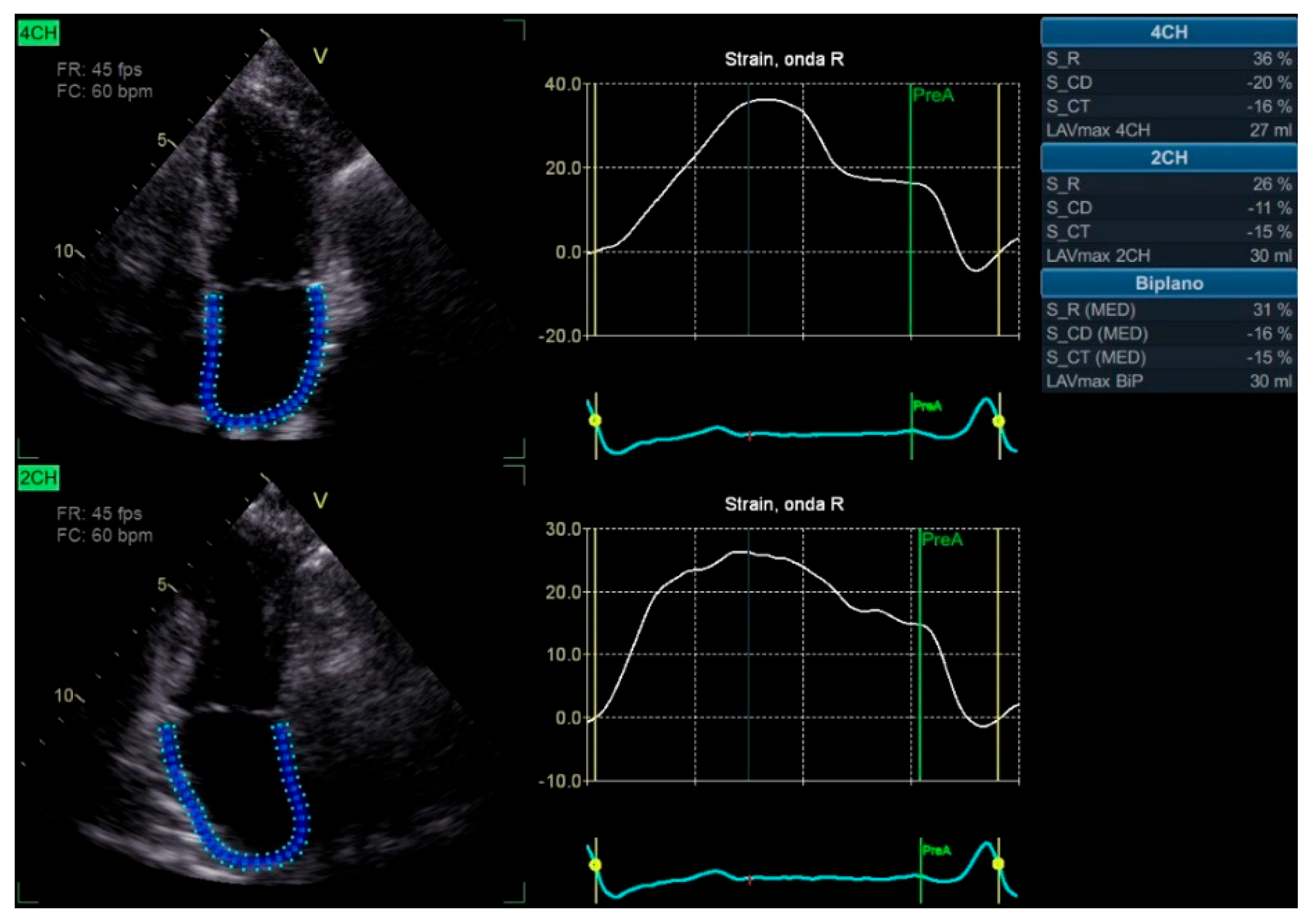
STE allows for assessing these strain parameters with remarkable accuracy, providing a detailed picture of LA’s functional status. However, due to the technical challenges inherent in measuring LAS, such as the difficulty delineating the atrial walls in the far field of transthoracic imaging, these parameters have not yet become routine in clinical practice. Additionally, variability between different ultrasound machines further complicates the standardization of LAS measurements [20]. Figure 3 shows an example of LAS.
While there is considerable variation in the measurements of LAS due to differences in study design, patient populations, and imaging technologies, general reference values for LA function have been reported in the literature. For example, the reservoir function of LA has been observed to average approximately 39.4% [95%, confident interval (CI) 38.0%-40.8%] across 40 studies [21]. The conduit function has an average value of 23.0% (95%, CI 20.7% - 25.2%), as reported in 14 studies [21]. Finally, the booster function has an average value of 17.4% (95%, CI 16.0% - 19.0%), as reported in 18 studies [21].
These reference values provide a useful framework for interpreting LAS. Still, they highlight the challenges in achieving consistent and reproducible measurements, especially given the variability across different ultrasound machines and clinical settings. Technical difficulties arise from acquiring accurate strain parameters for the left atrium, which is farther from the ultrasound probe and has less clearly defined walls than the left ventricle. This makes measurements more prone to variability.
Despite the technical challenges, the LAS has attracted considerable interest in clinical research due to its potential to provide valuable prognostic and diagnostic information, particularly concerning AF, a prevalent arrhythmia associated with significant morbidity and mortality [22]. A reduction in LAS is a common finding in patients with AF and is associated with atrial structural remodelling, including fibrosis, loss of compliance, and reduced contractile function [23,24,25]. These structural alterations impair the LA's capacity to effectively regulate pressure and volume changes, thereby contributing to the pathogenesis of AF [24,25].
The available evidence indicates that reduced LAS may serve as an early indicator of AF onset, recurrence, and progression. Specifically, lower baseline LAS in patients with paroxysmal AF is associated with an increased likelihood of developing persistent AF, reflecting progressive atrial fibrosis and dysfunction [26,27]. This indicates that LAS may serve as a valuable predictor of AF and may assist in identifying patients at elevated risk for disease progression [28].
In the context of AF management, LAS has been demonstrated to predict outcomes following therapeutic interventions, including catheter ablation and antiarrhythmic drug therapy [22]. The results of several studies have demonstrated that patients with higher pre-ablation LAS tend to have better procedural outcomes and lower recurrence rates [22]. This suggests that LAS could serve as a useful biomarker for guiding treatment decisions [22,29]. This makes LA strain a promising tool for predicting AF recurrence and evaluating the effectiveness of interventions to restore sinus rhythm.
In addition to its role in AF, LAS has been demonstrated to be a valuable tool for evaluating other cardiac pathologies, particularly those that involve structural heart disease. For example, patients with severe organic mitral regurgitation exhibit abnormalities in LA reservoir function, with impaired peak longitudinal strain correlating with worse surgical outcomes [30]. Similarly, patients with mitral stenosis demonstrate impaired conduit function, which reflects the reduced capacity of the LA to fill the left ventricle [31].
As the technology and techniques for measuring LAS improve, STE will likely become a more widely adopted tool in clinical cardiology. The potential of LAS as a biomarker for identifying patients at high risk of AF and other arrhythmias, and monitoring the progression of atrial remodelling over time, is a topic of ongoing research. Incorporating LAS into routine clinical practice may ultimately facilitate the personalization of treatment strategies for patients with AF and other atrial disorders. This could inform decisions regarding rhythm control, anticoagulation therapy and interventional procedures.
Given its predictive value and ability to provide a detailed assessment of LA function, LAS holds promise as an essential component of future cardiovascular care. It offers predictive insights and monitoring capabilities for patients with atrial arrhythmias and other structural heart diseases.

3. Atrial Fibrillation: Not Just a Question of Enlargement

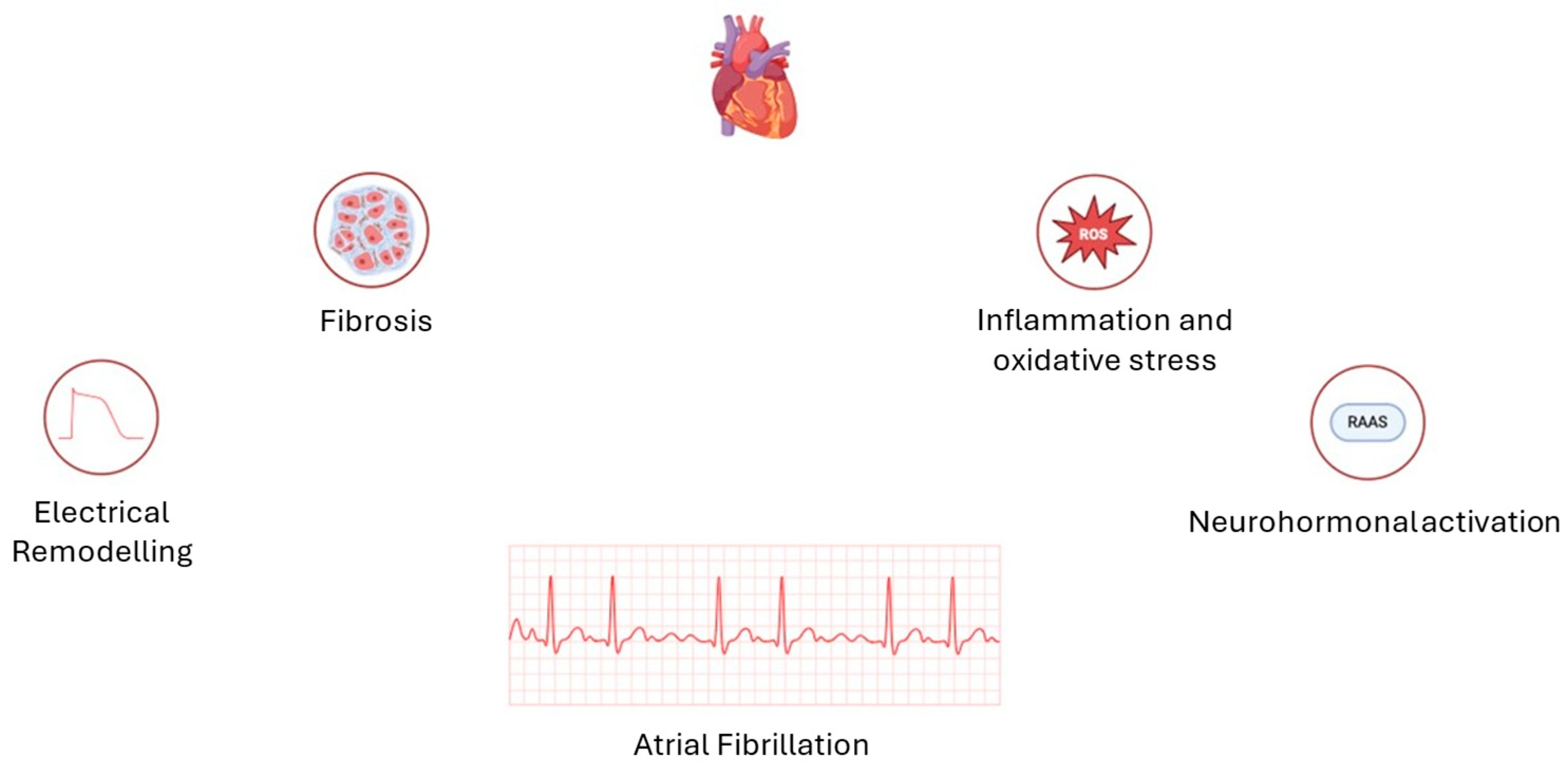
AF is not merely a consequence of atrial enlargement; it is a complex condition encompassing structural, electrical, and biochemical remodelling within the atrial myocardium. Although atrial dilation is frequently observed in chronic AF, this enlargement is more a consequence than a cause. It arises from underlying pathological changes that progressively compromise atrial function and contribute to the arrhythmia's persistence. A central element of the pathophysiology of AF is atrial fibrosis, a structural remodelling process characterized by excessive deposition of extracellular matrix proteins within the atrial walls [32]. Fibrotic tissue reduces the compliance and elasticity of the atria, impairing their reservoir and contractile functions. Furthermore, it disrupts electrical conduction pathways, creating conduction delays and re-entry circuits that sustain the arrhythmia [33,34]. The fibrotic areas act as non-conductive regions, promoting disorganized electrical activity and thus perpetuating AF by generating chaotic and irregular impulses. In addition to structural remodelling, AF is driven by electrical remodelling, whereby ion channel function and calcium handling contribute to the atrial myocardium's propensity for rapid and irregular firing. Alterations in calcium dynamics promote triggered activity through spontaneous sarcoplasmic reticulum calcium release, leading to ectopic beats and further arrhythmic activity [35]. Ion channel remodelling, including the downregulation of specific potassium and sodium channels, reduces the atrial refractory period, thereby facilitating the formation of re-entrant circuits and increasing the susceptibility of the atrium to the development of AF episodes [36]. Over time, these electrical changes become self-reinforcing, a phenomenon that is often summarized as "AF begets AF". With each episode of AF, the atrial myocardium undergoes further structural and electrical changes, increasing the likelihood of future episodes and promoting the transition from paroxysmal (intermittent) to persistent and permanent forms of AF [37]. Figure 4 summarizes the most important mechanism of pathogenesis of AF.
It is becoming increasingly clear that AF is a systemic disease that is influenced by several factors, including inflammation, oxidative stress, and neurohormonal activation. The elevation of inflammatory markers, such as C-reactive protein and interleukin-6, in patients with AF, suggests that inflammation plays a role in both the initiation and progression of AF. This is thought to occur by promoting atrial fibrosis and oxidative damage to cardiac cells [38,39]. Oxidative stress, an imbalance between reactive oxygen species (ROS) and antioxidants, further damages atrial tissue and contributes to fibrosis and ion channel dysfunction, thereby exacerbating AF. Furthermore, neurohormonal factors, including the activation of the renin-angiotensin-aldosterone system (RAAS), have been identified as a contributing factor in the progression of AF. The RAAS activation promotes fibrosis and increases atrial pressure and volume overload, thereby contributing to further structural remodel [40].
This complex interplay between structural, electrical, and biochemical factors has led to a shift in perspective regarding AF, moving away from the traditional view that the condition is primarily caused by atrial enlargement. Instead, there is a greater recognition of the pivotal roles played by metabolic, autonomic, and systemic influences. The recognition of AF as a multifactorial disease has significant implications for treatment. It emphasizes the necessity for comprehensive strategies that address the electrical component of AF and the underlying structural and systemic contributors. For example, therapies targeting fibrosis, anti-inflammatory agents, and drugs that modulate neurohormonal pathways are being investigated as supplementary approaches to conventional antiarrhythmic therapies and catheter ablation [34,37]. This comprehensive approach may result in more effective AF management, helping prevent disease progression and improve outcomes for patients with this complex and challenging arrhythmia. Given these mechanisms underlying atrial dysfunction, diagnostic approaches, such as LAS, that can detect early alteration of atrial function play an important role.

4. Role of Physical Exercise in Atrial Dysfunction

Physical exercise causes morphological and functional changes to the heart, so much so that it is called an ‘athlete’s heart' [41] The LA also has repercussions; physical effort causes an enlargement of the LA due to increased pressure in the left ventricle. Some observational studies have shown that in athletes, regardless of the type of physical exercise, there is an enlargement of the dimensions of the LA (2-dimensional and volume) [42,43]. However, atrial volumes normalized for total heart volume do not differ between athletes and controls, indicating that LA enlargement is balanced with the total heart volume enlargement. A retrospective study by D'Andrea et al. demonstrated that power exercise was associated, albeit with an enlargement of the LA, with an improvement in atrial function expressed as LAS [44]. LA enlargement has raised concerns about the risk of AF. Sport-related AF may occur in a middle-aged male athlete with a history of long-term regular endurance sport practice, especially one involved in high-endurance training [45]. Given these premises, there is a relationship between LA function and increased left ventricular filling pressures, with different results if the pressure increase is acute or chronic.

5. Role of Pharmacological and Exercise Stress Echocardiography in the Left Atrial Strain

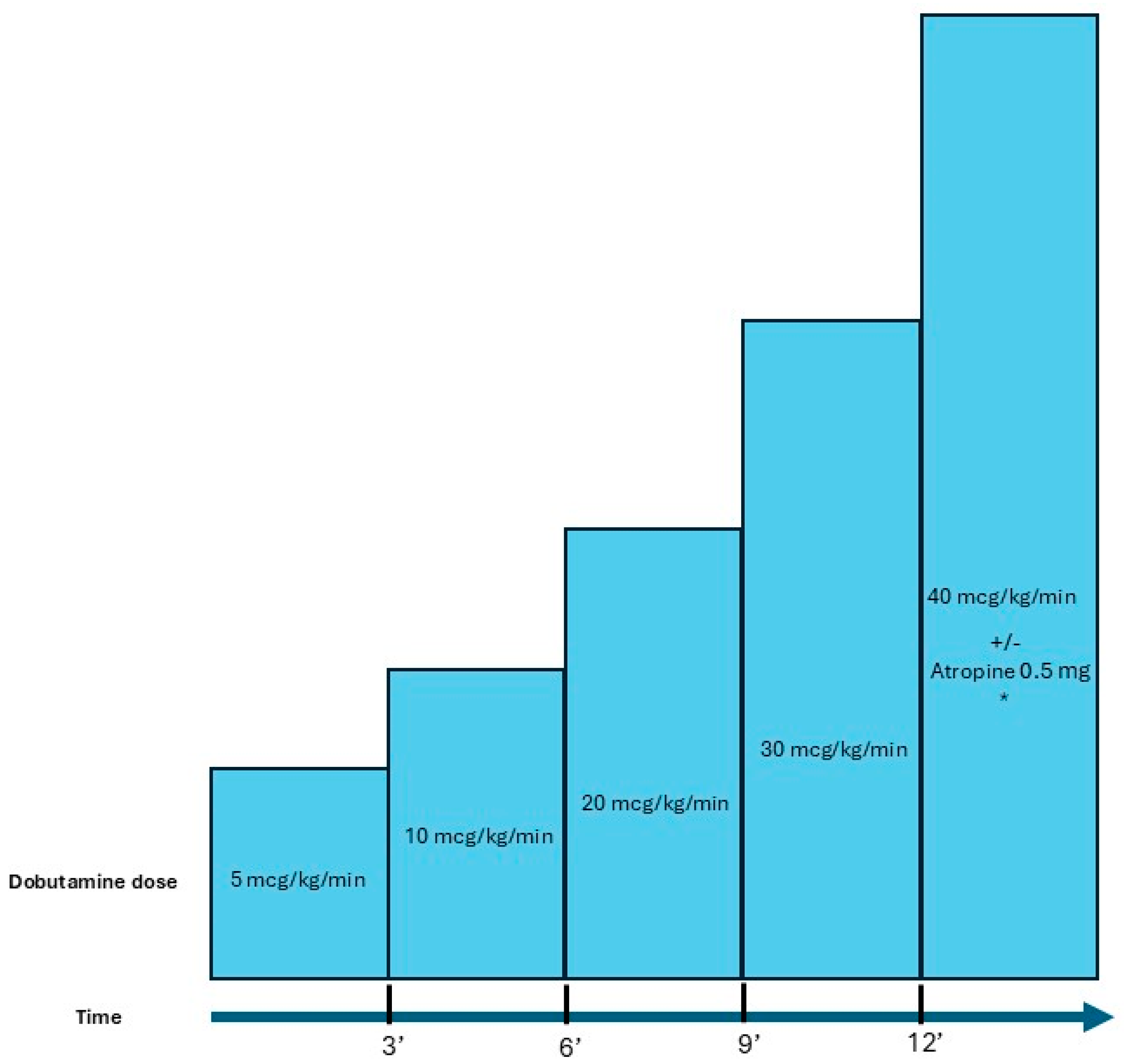
SE has traditionally been used to evaluate known or suspected chronic coronary syndrome (CCS), where stress-induced ischemia leads to new or worsening regional wall motion abnormalities (RWMA), with excellent accuracy [46,47,48]. However, SE is now recognized as a valuable tool for assessing a broader range of conditions beyond ischemic heart disease, including systolic and diastolic HF, non-ischemic cardiomyopathy, valvular heart disease, pulmonary hypertension, athletes' hearts, congenital heart disease, and in patients post-heart transplantation [13]. Generally, SE aims to create hemodynamic conditions that reveal structural or functional cardiac abnormalities that remain occult at rest and, at the same time, match patients’ symptoms with a particular cardiac condition. This could be done both with physical exercise and with pharmacological stressor administration. Exercise is preferred for most SE applications because it preserves the body's natural and complex electromechanical response and provides crucial information about the patient’s functional capacity. In contrast, pharmacological stress testing does not fully mimic the complex hemodynamic and neurohormonal effects of exercise, including psychological motivation and responses from the nervous, pulmonary, and circulatory systems, as well as skeletal muscle. Dobutamine is the primary pharmacological alternative for evaluating contractile and flow reserve, in both ischemic and non-ischemic heart diseases. Conversely, vasodilator stress is useful for combining assessments of wall motion and coronary flow reserve and for this reason, is limited to the detection of inducible ischemia [13] Thus, for the scope of this review, we will refer only to Exercise and Dobutamine SE (ESE and DSE, respectively). ESE can be performed using a treadmill or bicycle, with semi-supine cycling being easier for assessing multiple parameters at peak exertion. Incremental workload protocols are typically used, starting at 25 watts and increasing by 25 watts every 2-3 minutes until peak exertion is reached. After that, the workload for the recovery phase is reduced. Semi-supine cycling exercise is advantageous since it allows image acquisition in each phase [13] DSE is typically performed starting the infusion at 5 mcg/kg/min, increasing by 2.5–5 mcg/kg/min every 5–8 minutes, with a 2–3 minutes delay before imaging to allow for the hemodynamic response, until 20 mcg/kg/min dose is reached. When used for detecting coronary artery disease (CAD) it is possible to get 40 mcg/kg/min infusion, eventually adding atropine administration to recruit the inotropic and chronotropic reserve fully. However, this is usually not necessary for non-ischemic indication (Figure 5) [13].
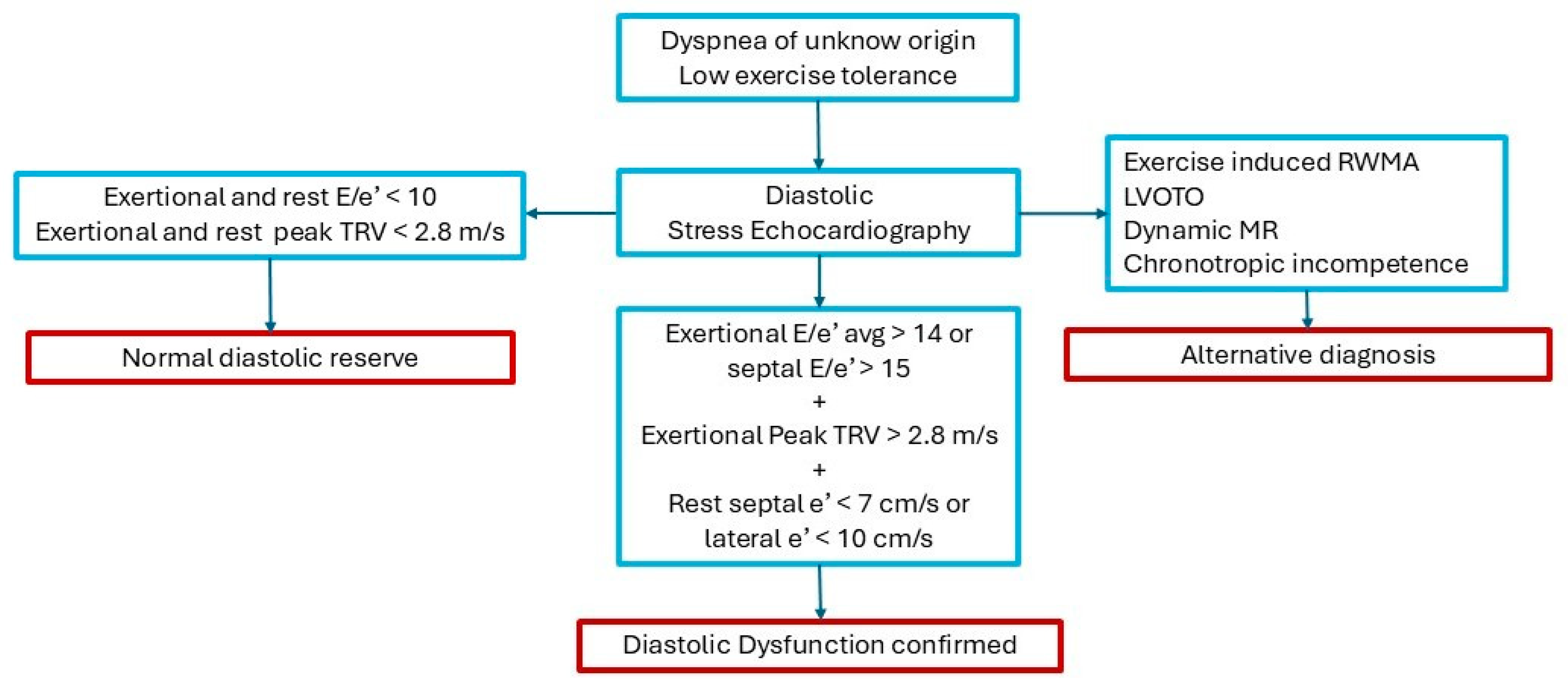
Diastolic SE is primarily used to evaluate left ventricular (LV) diastolic function reserve and detect elevated LV filling pressures. This is one of the most relevant non-ischemic indications for SE, as it’s crucial for the evaluation of patients with unexplained dyspnea or subclinical diastolic dysfunction, such as those with diabetic cardiomyopathy or arterial hypertension [49]. It is precoius in patients with suspected HFpEF and borderline diastolic abnormalities at rest, as a non-invasive alternative to cardiac catheterization [13,50]. The presence of diastolic dysfunction in all these conditions is strictly linked to atrial structural and functional abnormalities and AF. Therefore, the timely detection of latent diastolic dysfunction is pivotal because it could lead to the initiation of therapies that might potentially reduce the burden of atrial arrhythmias [51]. The preferred method for diastolic SE is exercise on a supine bicycle, allowing continuous Doppler recording during the test to assess exercise-induced diastolic function reserve. Of note, in diastolic SE low workload exercise, and low doses of dobutamine, are usually sufficient to get enough information for clinical management and, thus are often suitable for patients with limited exercise capacity. Traditionally, Doppler parameters such as mitral E and A velocity (the latter is detectable only during sinus rhythm), E/A ratio, e' velocity, E/e' ratio, and systolic pulmonary artery pressure (SPAP) constituted the most powerful indicators for diastolic function analysis. Those parameters are recorded at baseline, during low-level and peak exercise, and in recovery. Recordings are taken from an apical four-chamber view over 5–10 cardiac cycles [13]. In healthy middle-aged individuals, the E/e' ratio typically remains stable during exercise, as mitral inflow and annular velocities increase proportionally. This reflects a normal diastolic response. Conversely, if latent diastolic dysfunction exists there is an exaggerated increase in mitral E velocity due to the rapid rise of LA pressure, but minimal change in e’ velocity during exercise, reflecting LV stiffness. The increase in E/e' ratio and/or SPAP during exercise correlates with elevated LV end-diastolic pressure, as confirmed by invasive methods [13]. Figure 6 shows how to interpret a diastolic SE, according to expert consensus [52], [13]. In the Heart Failure Association Pretest Assessment, Echocardiographic and Natriuretic Peptide Score, Functional Testing in Case of Uncertainty, and Final Aetiology (HFA-PEFF) diagnostic score for HFpEF suggested by the European Society of Cardiology (ESC) expert consensus, stress-induced average E/e’ > 15 counts 2 points if considered alone and 3 points when associated to exercise-induced tricuspid regurgitation (TR) velocity > 3.4 m/s [50]. Markers of poor outcomes include an exercise E/septal e' ratio over 13, limited changes in diastolic velocities, and exercise-induced pulmonary hypertension with SPAP ≥ 50 mmHg [13].
This approach, although valid, has some limitations. First, similarly to what occurs in the study of diastolic function at rest, also in diastolic SE there is a “grey zone” between physiological values and what is considered definitively pathological. Moreover, the evaluation of diastolic parameters is even more complicated in patients with AF during the SE, due to the variability of the cardiac cycle and the usually elevated heart rate during ESE and DSE [53]. These limitations may at least in part be overcome using advanced echocardiographic techniques, such as atrial strain by STE. Indeed, as already mentioned, LAS is a relatively simple technique that detects atrial and diastolic dysfunction with excellent sensitivity and accuracy. Several studies have demonstrated that performing LAS is feasible during ESE and DSE and could provide clinicians with relevant diagnostic and prognostic information for clinicians, particularly in the context of AF and HFpEF (Table 1). The basic principle for the utility of LAS during stress tests is that in initial phases, subtle forms of LA dysfunction, LA volume, and function abnormalities could be absent at rest but are potentially detectable during stress as a reduced functional LA reserve [18] In contrast, in some patients, abnormalities present at rest can be normalized by stress administration eliciting an atrial functional reserve not utilized at rest and better outcomes [11].
Zagatina et al. conducted a multicenter observational study involving 3042 patients undergone SE for known or suspected CCS divided into three groups based on the history of AF: none (group 1), paroxysmal (group 2) or permanent (group 3). The analysis showed that LAS in reservoir phase (LASr) progressively decreased from Group 1 to 3, both at rest (Group 1 = 26.0 ± 8.5%, Group 2 = 23.2 ± 11.2%, Group 3 = 8.5 ± 6.5%, p < 0.001) and at peak stress (Group 1 = 26.9 ± 10.1, Group 2 = 23.8 ± 11.0 Group 3 = 10.7 ± 8.1%, p < 0.001). There was a linear inverse relationship between left atrial volume index (LAVi) and LASr, both at rest and during stress, both in ESE (n = 252, at rest, r = -0.387, p < 0.001, at peak stress: r = -412, p < 0.001) and pharmacological stress (n = 234, at rest: r = -0.409, p < 0.001, at peak stress: r = -0.269, p < 0.001). Therefore, this study demonstrates that atrial dysfunction at rest and during stress, defined as LASr < 24%, is more frequent and severe in patients with AF than in patients with sinus rhythm, even when the arrhythmia is absent during the test, with worse values in patients with permanent AF compared to those with paroxysmal AF. Moreover, the impairment of LASr during stress was related to more severe signs of pulmonary congestion quantified using lung ultrasounds (LUS) B-lines. Lastly, this work highlighted the importance of performing LAS during SE, since it led to a reclassification of LA function relative to the rest evaluation (from normal to abnormal, or vice-versa) in 25.9% of cases, although performed only in 16% of the study population [11].
More recently, Prota et al. demonstrated a high feasibility and success rate of LAS during pharmacological SE in 252 patients with CCS. Moreover, although most patients showed a “normal” atrial response during SE with LASr enhancement at stress peak with values ≥ 24% some patients develop an abnormal response to stressors with LASr impairment coupled to LAVi and LUS B-lines increase. Namely, the study showed an inverse linear correlation between LASr and LAVi (r = –0.304, p < 0.001 at rest; r = –0.289, p < 0.001 at peak stress) and between LUS B-lines and LASr at peak stress (r = –0.234, p < 0.001). Most importantly, the results revealed an inverse relationship between the New York Heart Association (NYHA) functional class and LASr both at rest and during SE (r= -0.159, p 0.01 and r=-0.263, p < 0.001 respectively). Taken together these findings highlight the importance of atrial dysfunction, particularly during physical activity, in the pathophysiology of pulmonary congestion, and exercise limitation are key clinical elements in patients with AF and/or HFpEF [12].
Yoshii et al. retrospectively analyzed 74 consecutive hypertrophic cardiomyopathy (HCM) patients with EF > 50% undergone ESE. They found that LASr at peak workload was significantly associated with new-onset AF during follow-up in AF-naïve patients (HR 1.08, 95 % CI 1.01–1.18, p = 0.027). Indeed, peak-LASr ≤15.5 % was predicted with a sensitivity of 55.6 % and specificity of 91.8 % [area under the curve (AUC) 0.71] new-onset AF. The event-free survival rate for the occurrence of new-onset AF was lower in patients with a peak-LASr ≤15.5 % than in those with a peak-LASr >15.5 % (44.4 % vs. 91.8 % at 2 years, log-rank p < 0.001). Moreover, lower peak-LASr was found in the subset of patients with low exercise tolerance (< 75W) (31.2±15.3 vs 24.7±13.6%, p=0.033) [54].
Cheng et al. prospectively performed LAS in 100 subjects with dyspnea (74 had HFpEF, and 26 non-cardiac dyspnea). They found an interesting statistically significant inverse relationship between stress peak LAS in the conduit phase (LAScd) and both exercise post-capillary wedge pressure (PCWP) (r = − 0.659; p < 0.001) and ΔPCWP (difference between rest and exercise PCWP) (r = − 0.707, p < 0.001) invasively measured during right heart catheterization (RHC). Several echocardiographic parameters were associated with ΔPCWP, but exercise LAScd was the only one with a correlation coefficient > 0.7. Moreover, there also examined the ability of exercise LAScd and other traditional echocardiographic criteria (LAVi > 34 mL/m2, E/e′ > 15, septal e′ < 7 cm/s) to distinguish between HFpEF and non-cardiac dyspnea and LAScd had the largest area-under-the-curve (AUC 0.69, 95% confidence interval [CI], 0.548–0.831), with a cut-off value of 14.25% providing a sensitivity of 0.64 and a specificity of 0.68. Therefore, adding exercise LAScd to conventional echocardiographic criteria seems to slightly improve the diagnostic accuracy for HFpEF, a condition strongly related to AF [55].
A small retrospective study assessed the predictive value of LAS on exercise tolerance in HCM patients using treadmill stress echocardiography. 70 HCM patients were categorized into two groups based on their E/e’ ratio (HCM1 E/e’ > 14; HCM2 E/e’ 8-14), with a normal control group included for comparison. The study found that both HCM group had significantly lower peak LASr (20.28 ± 7.21 vs 66.61 ± 10.90, p<0.05), LAScd (–12.77 ± 8.74 vs -38.32 ± 7.47, p<0.05) and LAS in the contraction phase (LASct) (–6.44 ± 1.41 vs –28.28 ± 9.20, p<0.05) and lower LAS reserve during stress compared to normal group (ΔLaSr% –0.05 ± 0.27 vs 0.51 ± 0.18, p<0.05; ΔLaScd% 0.09 ± 0.80 vs 0.40 ± 0.27, p=0.044; ΔLaSct% –0.12 ± 1.08 vs 0.74 ± 0.54, p < 0.05), with HCM2 showing a better peak-LASr (17.59 ± 6.99 vs 23.13 ± 6.36, p =0.001), peak-LAScd (–10.12 ± 1.59 vs –15.58 ± 1.16, p= 0.008) and LAS contraction reserve (ΔLASct% –10.12 ± 1.59 vs –15.58 ± 1.16, p=0.028) compared to HCM1 group. The HCM2 group also had higher exercise tolerance (measured in metabolic equivalents, METS) than the HCM1 group (7.91 ± 2.76 vs 10.25 ± 2.00, p<0.05) and METS was positively correlated with LAS parameters. Therefore, the higher exercise tolerance of the HCM2 group was attributed to a better LA function, particularly in reservoir and contraction strain, which helped compensate for reduced diastolic function [56].
The HFpEF Stress Trial prospectively enrolled 75 patients with exertional dyspnea and echocardiographic signs of diastolic dysfunction (E/e' > 8) who underwent simultaneous rest and ESE and right heart catheterization (RHC). They found that LA compliance, defined as LASr / E/e’ ratio was decreased in HFpEF patients diagnosed invasively during RHC both at rest (2.0 vs 3.2, p < 0.001) and during exercise-stress (1.4 vs 2.6, p = 0.004) compared to individuals with non-cardiac dyspnea. Similarly, HFpEF patients diagnosed non-invasively according to the HFA-PEFF score (≥5 points) showed impaired LA compliance at rest (1.7 vs 2.8, p < 0.001) and during exercise stress (1.3 vs 2.2, p = 0.022). Interestingly, both LA compliance at rest (HR 1.86 95% CI 1.11–3.13, p = 0.019) and LASr at rest (HR 1.09, 95% CI 1.02–1.16, p = 0.008) were predictors for cardiovascular hospitalizations independently of a history for atrial fibrillation. However, this study does not support the additional value of exercise stress for the assessment of LA compliance, probably due to technical difficulties caused by the deterioration of image quality during SE [57].
In a similar study, Harada et al. enrolled 225 HFpEF patients and 262 controls with non-cardiac dyspnea undergone ergometry ESE to assess LA function. HFpEF diagnosis was based on the HFA-PEFF algorithm or exercise right heart catheterization. STE evaluation was feasible both at rest and during stress test (performed in 95% and 89% patients, respectively), showing that HFpEF patients had significantly lower LAS values and LA compliance at rest (LASr 31.8 ± 13.2 vs 19.7 ± 11.3, p<0.0001; LAScd 16.1 ± 8.9 vs 10.6 ± 6.3, p<0.0001; LASct 16.7 ± 7.8 vs 12.2 ± 6.9, p<<0.0001; LA compliance 3.7 ± 2.1 vs 1.7 ± 1.3,p<0.0001) and during exercise (LASr 38.9 ± 15.5 vs 22.7 ± 13.1,p<0.0001;LAScd 15.4 ± 9.9 vs 11.1 ± 7.1, p <0.0001; LASct 26.4 ± 12.8 vs 15.9 ± 10.2, p<0.0001; LA compliance 3.8 ± 1.81. vs ± 1.2, p<0.0001) compared to non-cardiac dyspnea. Both LA compliance and peak-LASr had the strongest diagnostic ability to differentiate HFpEF from non-cardiac dyspnea (AUC 0.87, 0.83–0.90, p<0.0001 and AUC 0.82, 0.67–0.91, p<0.0001, respectively) outperforming the exercise E/e' ratio (DeLong p=0.005). The optimal LA compliance cutoff value was 2.2%, providing 81% sensitivity and 85% specificity for HFpEF diagnosis, while the optimal peak-LASr cutoff value was 31% with 78% sensitivity and 70% specificity [58].
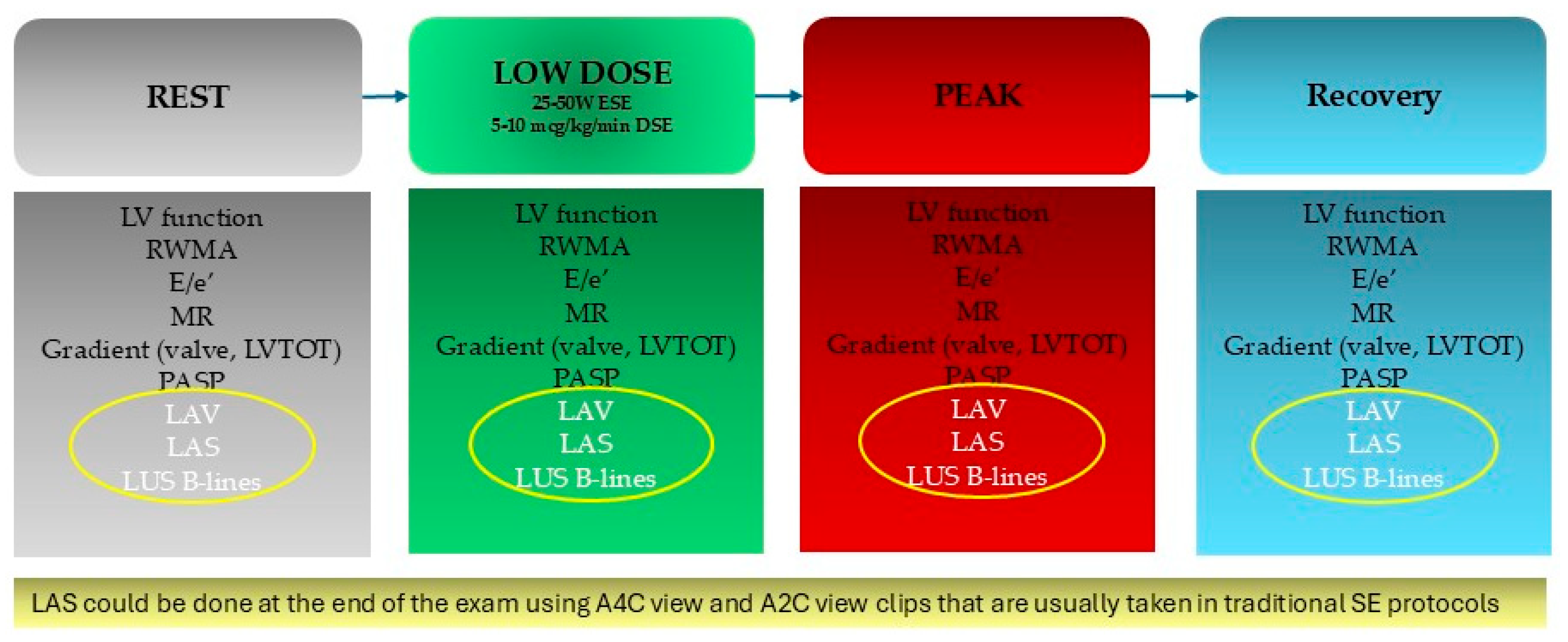
In conclusion, this data suggests that SE traditional protocols could easily be enriched by the inclusion of LA morphological and functional evaluation, as well as the assessment of LUS B-lines in an ABCDE+ SE protocol (Figure 7) [59]. This is particularly indicated in patients undergoing SE due to dyspnea of unknown origin since atrial dysfunction is a key pathophysiological element in HFpEF and LA evaluation during stress may allow the detection of an incipient LA myopathy that predisposes the development of AF and pulmonary congestion. Among all LAS reserve parameters during SE, peak-LASr is probably the most simple and useful in predicting AF onset and recurrence. Indeed, LASr is the most extensively studied among LAS measurements in the context of rest and stress echocardiography. We believe the peak-LASr cutoff value of 24% should be used, while a more stringent cutoff of < 15.5% has greater specificity, but at the cost of lower sensitivity. The 24% threshold aligns well also with the findings of most studies focused on LAS in rest echocardiography (Table 2) [7].

6. What Do Guidelines on AF Say? Actual Evidence and Future Perspectives

The ESC guidelines for the management of AF have recently been published. Although numerous studies have been published on the predictive role of the decrease in atrial function detected as a modification of the atrial strain value, the guidelines do not include this echocardiographic parameter [60]. However, the guidelines may come very close to considering diastolic function as a determinant to be evaluated in patients with FA. The guidelines introduce an approach based on the AF-CARE algorithm [60]. Comorbidities are associated with the recurrence and progression of AF. Managing comorbidities is also central to the success of other aspects of care for patients with AF, with evidence available for hypertension, HF, diabetes mellitus (DM), obesity, and sleep apnoea, along with lifestyle changes that improve physical activity and reduce alcohol intake. A correlation between the risk factors mentioned and numerous studies has demonstrated an alteration in atrial strain.
  • Arterial Hypertension: Miljković et al. in a cross-sectional study that considered 180 patients with systemic arterial hypertension, it was shown that LAS represents a predictive factor of diastolic HF in patients with systemic arterial hypertension (p < 0.0001) [61].
  • HF: Barki et al. in a prospective study of 85 consecutive patients with reduced, moderately reduced, and HFpEF, demonstrated that in acute HF of any LV ejection fraction, LA dynamics are highly predictive of rehospitalization compared to nt-pro-brain natriuretic peptide (P = 0.01) [62].
  • DM: Thiele et al. in a prospective, placebo-controlled exploratory study, evaluated how the use of empagliflozin 10 mg daily associated with an improvement in glycated haemoglobin was associated with a significant improvement in LA after 3 months of treatment, as assessed by an increase in LASr and LASct values (from 26.4±8.0% to 29.0±7.4%; P = 0.011 and from 10.9±5.7% to 12.5±6.0%; P = 0.008) compared to placebo [63].
  • Obesity: Aga et al. showed that in a prospective study, that enrolled 77 obesity patients compared with 46 non-obese controls, there was a significantly decreasing LA function compared with non-obese individuals (LASr 32.2% ± 8.8% vs. 39.6% ± 10.8%, p < 0.001; LAScd 20.1% ± 7.5% vs. 24.9% ± 8.3%, p = 0.001; LASct 12.1% ± 3.6% vs. 14.5% ± 5.5%, p = 0.005). One year after bariatric surgery, LASr improved (32.1% ± 8.9% vs. 34.2% ± 8.7%, p = 0.048). In the multivariable linear regression analysis, body mass index (BMI) was associated with LASr, LAScd, and LASct (β = - 0.34, CI - 0.54 to - 0.13; β = - 0.22, CI - 0.38 to - 0.06; β = - 0.10, CI - 0.20 to - 0.004) [64].
  • Sleep apnoea: there aren’t studies about the relationships between LAS and sleep apnoea
  • Alcohol intake: Alam AB et al. in a randomized trial, have enrolled 503 participants. They showed that higher alcohol consumption (per 1 drink/day increases) was associated with lower LASct (−0.44% [95% CI, −0.75 to −0.14]) [65].
However, current studies evaluate LAS in patients with comorbidities with a resting echocardiogram. By analogy, assessing changes in the LAS through SE execution could represent an important prognostic factor in patients with comorbidities. Therefore, large population studies would be needed to evaluate the predictive role of SE in patients with comorbidities at risk for AF.
In addition, an important prognostic role, in the construction of risk scores, could be played by artificial intelligence (AI). Recently, Sannino and Delgado evaluated the role of AI in the study of atrial function as a LAS value [66]. Their editorial evaluates the study performed by Carluccio et al. It is the first study that includes LASr in a machine-learning algorithm to define clusters of LV diastolic dysfunction and evaluate the prognostic implications [27]. They evaluated the predictive value of a novel machine learning-based algorithm that includes conventional echocardiographic variables and LASr. The machine learning-based approach was trained in 864 patients with HF and sinus rhythm and validated in 189 outpatients with HF. By using a LASr cut-off value of 19%, a total of 3 specific clusters of LV diastolic dysfunction were identified [27]. This study represents a milestone for the use of AI in the evaluation of LAS. In addition to being able to use AI in echocardiogram images at rest, in the future nothing detracts from using these protocols for images acquired during stress echocardiography. These images could be useful for developing predictive and risk scores of AF.

7. Conclusions

Currently, SE represents an important diagnostic and prognostic tool in CCS. In clinical practice, SE is used to evaluate valvular defects and the evaluation of diastolic function. LAS represents one of the echocardiographic parameters of diastolic function, but it also means a parameter of atrial function. Therefore, its diagnostic and prognostic role could benefit clinical practice for diseases dependent on an LA dysfunction, such as AF. Large clinical studies are needed to demonstrate the LAS dysfunction's diagnostic and predictive role of LAS dysfunction during SE, paying attention to categories of people, such as athletes, where LAS seems to improve despite an enlargement of the LA.

Author Contributions

For research articles with several authors, a short paragraph specifying their individual contributions must be provided. The following statements should be used “Conceptualization, A.M. and A.D.A.; validation, A.M., A.D.A. and V.R.; formal analysis, A.M.; data curation, A.M.; writing—original draft preparation, A.M., A.C., A.A., G.E.D.V., G.B., F.I., M.L., A.M., G.E.M., M.C.P., S.S.; writing—review and editing, A.M., A.C., A.A., G.E.D.V.; supervision, A.M. All authors have read and agreed to the published version of the manuscript.” Please turn to the CRediT taxonomy for the term explanation. Authorship must be limited to those who have contributed substantially to the work reported.

Funding

This research received no external funding.

Institutional Review Board Statement

Not applicable.

Informed Consent Statement

Not applicable.

Conflicts of Interest

The authors declare no conflicts of interest.

References

  1. Van Gelder, I.C.; Rienstra, M.; Bunting, K. V; Casado-Arroyo, R.; Caso, V.; Crijns, H.J.G.M.; De Potter, T.J.R.; Dwight, J.; Guasti, L.; Hanke, T.; et al. 2024 ESC Guidelines for the Management of Atrial Fibrillation Developed in Collaboration with the European Association for Cardio-Thoracic Surgery (EACTS). Eur Heart J 2024, 45, 3314–3414. [Google Scholar] [CrossRef] [PubMed]
  2. Mauriello, A.; Ascrizzi, A.; Roma, A.S.; Molinari, R.; Caturano, A.; Imbalzano, E.; D’Andrea, A.; Russo, V. Effects of Heart Failure Therapies on Atrial Fibrillation: Biological and Clinical Perspectives. Antioxidants 2024, 13, 806. [Google Scholar] [CrossRef] [PubMed]
  3. Donal, E.; Lip, G.Y.H.; Galderisi, M.; Goette, A.; Shah, D.; Marwan, M.; Lederlin, M.; Mondillo, S.; Edvardsen, T.; Sitges, M.; et al. EACVI/EHRA Expert Consensus Document on the Role of Multi-Modality Imaging for the Evaluation of Patients with Atrial Fibrillation. Eur Heart J Cardiovasc Imaging 2016, 17, 355–383. [Google Scholar] [CrossRef]
  4. Serenelli, M.; Cantone, A.; Dal Passo, B.; Di Ienno, L.; Fiorio, A.; Pavasini, R.; Passarini, G.; Bertini, M.; Campo, G. Atrial Longitudinal Strain Predicts New-Onset Atrial Fibrillation. JACC Cardiovasc Imaging 2023, 16, 392–395. [Google Scholar] [CrossRef] [PubMed]
  5. Olsen, F.J.; Møgelvang, R.; Jensen, G.B.; Jensen, J.S.; Biering-Sørensen, T. Relationship Between Left Atrial Functional Measures and Incident Atrial Fibrillation in the General Population. JACC Cardiovasc Imaging 2019, 12, 981–989. [Google Scholar] [CrossRef]
  6. Alhakak, A.S.; Biering-Sørensen, S.R.; Møgelvang, R.; Modin, D.; Jensen, G.B.; Schnohr, P.; Iversen, A.Z.; Svendsen, J.H.; Jespersen, T.; Gislason, G.; et al. Usefulness of Left Atrial Strain for Predicting Incident Atrial Fibrillation and Ischaemic Stroke in the General Population. Eur Heart J Cardiovasc Imaging 2022, 23, 363–371. [Google Scholar] [CrossRef]
  7. O’Neill, T.; Kang, P.; Hagendorff, A.; Tayal, B. The Clinical Applications of Left Atrial Strain: A Comprehensive Review. Medicina (B Aires) 2024, 60, 693. [Google Scholar] [CrossRef] [PubMed]
  8. Cameli, M.; Pastore, M.C.; Mandoli, G.E. Left Atrial Strain: A Key Element for the Evaluation of Patients with HFpEF. Int J Cardiol 2021, 323, 197–198. [Google Scholar] [CrossRef] [PubMed]
  9. Mandoli, G.E.; Sisti, N.; Mondillo, S.; Cameli, M. Left Atrial Strain in Left Ventricular Diastolic Dysfunction: Have We Finally Found the Missing Piece of the Puzzle? Heart Fail Rev 2020, 25, 409–417. [Google Scholar] [CrossRef] [PubMed]
  10. Shen, M.J.; Arora, R.; Jalife, J. Atrial Myopathy. JACC Basic Transl Sci 2019, 4, 640–654. [Google Scholar] [CrossRef] [PubMed]
  11. Zagatina, A.; Rivadeneira Ruiz, M.; Ciampi, Q.; Wierzbowska-Drabik, K.; Kasprzak, J.; Kalinina, E.; Begidova, I.; Peteiro, J.; Arbucci, R.; Marconi, S.; et al. Rest and Stress Left Atrial Dysfunction in Patients with Atrial Fibrillation. J Clin Med 2023, 12, 5893. [Google Scholar] [CrossRef]
  12. Prota, C.; Cortigiani, L.; Campagnano, E.; Wierzbowska-Drabik, K.; Kasprzak, J.; Colonna, P.; Merli, E.; Manganelli, F.; Gaibazzi, N.; D’Andrea, A.; et al. Left Atrium Stress Echocardiography: Correlation between Left Atrial Volume, Function, and B-Lines at Rest and during Stress. Exploration of Cardiology 2024, 2, 19–30. [Google Scholar] [CrossRef]
  13. Lancellotti, P.; Pellikka, P.A.; Budts, W.; Chaudhry, F.A.; Donal, E.; Dulgheru, R.; Edvardsen, T.; Garbi, M.; Ha, J.W.; Kane, G.C.; et al. The Clinical Use of Stress Echocardiography in Non-Ischaemic Heart Disease: Recommendations from the European Association of Cardiovascular Imaging and the American Society of Echocardiography. Journal of the American Society of Echocardiography 2017, 30, 101–138. [Google Scholar] [CrossRef]
  14. Popescu, B.A.; Beladan, C.C.; Nagueh, S.F.; Smiseth, O.A. How to Assess Left Ventricular Filling Pressures by Echocardiography in Clinical Practice. Eur Heart J Cardiovasc Imaging 2022, 23, 1127–1129. [Google Scholar] [CrossRef]
  15. Pieske, B.; Tschöpe, C.; de Boer, R.A.; Fraser, A.G.; Anker, S.D.; Donal, E.; Edelmann, F.; Fu, M.; Guazzi, M.; Lam, C.S.P.; et al. How to Diagnose Heart Failure with Preserved Ejection Fraction: The HFA–PEFF Diagnostic Algorithm: A Consensus Recommendation from the Heart Failure Association (HFA) of the European Society of Cardiology (ESC). Eur Heart J 2019, 40, 3297–3317. [Google Scholar] [CrossRef] [PubMed]
  16. Abawi, D.; Rinaldi, T.; Faragli, A.; Pieske, B.; Morris, D.A.; Kelle, S.; Tschöpe, C.; Zito, C.; Alogna, A. The Non-Invasive Assessment of Myocardial Work by Pressure-Strain Analysis: Clinical Applications. Heart Fail Rev 2022, 27, 1261–1279. [Google Scholar] [CrossRef] [PubMed]
  17. Thomas, L.; Levett, K.; Boyd, A.; Leung, D.Y.C.; Schiller, N.B.; Ross, D.L. Compensatory Changes in Atrial Volumes with Normal Aging: Is Atrial Enlargement Inevitable? J Am Coll Cardiol 2002, 40, 1630–1635. [Google Scholar] [CrossRef]
  18. Thomas, L.; Marwick, T.H.; Popescu, B.A.; Donal, E.; Badano, L.P. Left Atrial Structure and Function, and Left Ventricular Diastolic Dysfunction. J Am Coll Cardiol 2019, 73, 1961–1977. [Google Scholar] [CrossRef]
  19. Javadi, N.; Bismee, N.N.; Abbas, M.T.; Scalia, I.G.; Pereyra, M.; Ali, N.B.; Esfahani, S.A.; Awad, K.; Farina, J.M.; Ayoub, C.; et al. Left Atrial Strain: State of the Art and Clinical Implications. Journal of Personalized Medicine 2024, Vol. 14, Page 1093 2024, 14, 1093. [Google Scholar] [CrossRef]
  20. Vieira, M.J.; Teixeira, R.; Gonçalves, L.; Gersh, B.J. Left Atrial Mechanics: Echocardiographic Assessment and Clinical Implications. Journal of the American Society of Echocardiography 2014, 27, 463–478. [Google Scholar] [CrossRef] [PubMed]
  21. Pathan, F.; D’Elia, N.; Nolan, M.T.; Marwick, T.H.; Negishi, K. Normal Ranges of Left Atrial Strain by Speckle-Tracking Echocardiography: A Systematic Review and Meta-Analysis. J Am Soc Echocardiogr 2017, 30, 59–70.e8. [Google Scholar] [CrossRef] [PubMed]
  22. Yu, Z.X.; Yang, W.; Yin, W.S.; Peng, K.X.; Pan, Y.L.; Chen, W.W.; Du, B.B.; He, Y.Q.; Yang, P. Clinical Utility of Left Atrial Strain in Predicting Atrial Fibrillation Recurrence after Catheter Ablation: An up-to-Date Review. World J Clin Cases 2022, 10, 8063. [Google Scholar] [CrossRef]
  23. Wałek, P.; Roskal-Wałek, J.; Dłubis, P.; Wożakowska-Kapłon, B. Echocardiographic Evaluation of Atrial Remodelling for the Prognosis of Maintaining Sinus Rhythm after Electrical Cardioversion in Patients with Atrial Fibrillation. J Clin Med 2023, 12, 5158. [Google Scholar] [CrossRef]
  24. Ma, J.; Chen, Q.; Ma, S. Left Atrial Fibrosis in Atrial Fibrillation: Mechanisms, Clinical Evaluation and Management. J Cell Mol Med 2021, 25, 2764. [Google Scholar] [CrossRef] [PubMed]
  25. Lu, S.; Liu, H.; Sun, J.; Zhang, J.; Li, L.; Tang, Q.; Liu, Y.; Deng, Y. Evaluation of Left Atrial and Ventricular Remodeling in Atrial Fibrillation Subtype by Using Speckle Tracking Echocardiography. Front Cardiovasc Med 2023, 10, 1208577. [Google Scholar] [CrossRef]
  26. Gan, G.C.H.; Ferkh, A.; Boyd, A.; Thomas, L. Left Atrial Function: Evaluation by Strain Analysis. Cardiovasc Diagn Ther 2018, 8, 29. [Google Scholar] [CrossRef] [PubMed]
  27. Carluccio, E.; Cameli, M.; Rossi, A.; Dini, F.L.; Biagioli, P.; Mengoni, A.; Jacoangeli, F.; Mandoli, G.E.; Pastore, M.C.; Maffeis, C.; et al. Left Atrial Strain in the Assessment of Diastolic Function in Heart Failure: A Machine Learning Approach. Circ Cardiovasc Imaging 2023, 16, E014605. [Google Scholar] [CrossRef] [PubMed]
  28. Nogueira, P.; Jorge, C.A.C.; Zerlotto, D.S.; Moraes, F.C.A. De; Donadon, I.B.; Souza, M.E.C.; Aziri, B.; Serpa, F. PROGNOSTIC VALUE OF LEFT ATRIAL STRAIN FOR THE INCIDENCE OF ATRIAL FIBRILLATION: A SYSTEMATIC REVIEW AND META-ANALYSIS OF MULTIVARIABLE ADJUSTED ANALYSES. J Am Coll Cardiol 2024, 83, 1509. [Google Scholar] [CrossRef]
  29. Chollet, L.; Ur Rehman Iqbal, S.; Wittmer, S.; Thalmann, G.; Madaffari, A.; Kozhuharov, N.; Galuszka, O.; Küffer, T.; Gräni, C.; Brugger, N.; et al. Impact of Atrial Fibrillation Phenotype and Left Atrial Volume on Outcome after Pulmonary Vein Isolation. Europace 2024, 26. [Google Scholar] [CrossRef]
  30. Saraiva, R.M.; Demirkol, S.; Buakhamsri, A.; Greenberg, N.; Popović, Z.B.; Thomas, J.D.; Klein, A.L. Left Atrial Strain Measured by Two-Dimensional Speckle Tracking Represents a New Tool to Evaluate Left Atrial Function. J Am Soc Echocardiogr 2010, 23, 172–180. [Google Scholar] [CrossRef]
  31. Ji, M.; He, L.; Gao, L.; Lin, Y.; Xie, M.; Li, Y. Assessment of Left Atrial Structure and Function by Echocardiography in Atrial Fibrillation. Diagnostics 2022, 12, 1898. [Google Scholar] [CrossRef] [PubMed]
  32. Mauriello, A.; Correra, A.; Molinari, R.; Del Vecchio, G.E.; Tessitore, V.; D’Andrea, A.; Russo, V. Mitochondrial Dysfunction in Atrial Fibrillation: The Need for a Strong Pharmacological Approach. Biomedicines 2024, 12, 2720. [Google Scholar] [CrossRef]
  33. Nattel, S.; Burstein, B.; Dobrev, D. Atrial Remodeling and Atrial Fibrillation: Mechanisms and Implications. Circ Arrhythm Electrophysiol 2008, 1, 62–73. [Google Scholar] [CrossRef] [PubMed]
  34. Dzeshka, M.S.; Shantsila, A.; Shantsila, E.; Lip, G.Y.H. Atrial Fibrillation and Hypertension. Hypertension 2017, 70, 854–861. [Google Scholar] [CrossRef]
  35. Beneke, K.; Molina, C.E. Molecular Basis of Atrial Fibrillation Initiation and Maintenance. Hearts 2021, 2, 170–187. [Google Scholar] [CrossRef]
  36. Qiu, D.; Peng, L.; Ghista, D.N.; Wong, K.K.L. Left Atrial Remodeling Mechanisms Associated with Atrial Fibrillation. Cardiovasc Eng Technol 2021, 12, 361–372. [Google Scholar] [CrossRef]
  37. Vijayakumar, R.; Faddis, M.N.; Cuculich, P.S.; Rudy, Y. Mechanisms of Persistent Atrial Fibrillation and Recurrences within 12 Months Post-Ablation: Non-Invasive Mapping with Electrocardiographic Imaging. Front Cardiovasc Med 2022, 9, 1052195. [Google Scholar] [CrossRef] [PubMed]
  38. Corban, M.T.; Toya, T.; Ahmad, A.; Lerman, L.O.; Lee, H.C.; Lerman, A. Atrial Fibrillation and Endothelial Dysfunction: A Potential Link? Mayo Clin Proc 2021, 96, 1609–1621. [Google Scholar] [CrossRef]
  39. Goette, A.; Kalman, J.M.; Aguinaga, L.; Akar, J.; Cabrera, J.A.; Chen, S.A.; Chugh, S.S.; Corradi, D.; D’Avila, A.; Dobrev, D.; et al. EHRA/HRS/APHRS/SOLAECE Expert Consensus on Atrial Cardiomyopathies: Definition, Characterization, and Clinical Implication. EP Europace 2016, 18, 1455–1490. [Google Scholar] [CrossRef] [PubMed]
  40. Băghină, R.M.; Crișan, S.; Luca, S.; Pătru, O.; Lazăr, M.A.; Văcărescu, C.; Negru, A.G.; Luca, C.T.; Gaiță, D. Association between Inflammation and New-Onset Atrial Fibrillation in Acute Coronary Syndromes. Journal of Clinical Medicine 2024, Vol. 13, Page 5088 2024, 13, 5088. [Google Scholar] [CrossRef]
  41. D’Andrea, A.; Formisano, T.; Riegler, L.; Scarafile, R.; America, R.; Martone, F.; di Maio, M.; Russo, M.G.; Bossone, E.; Galderisi, M.; et al. Acute and Chronic Response to Exercise in Athletes: The “Supernormal Heart.” In; 2017; pp. 21–41.
  42. Pelliccia, A.; Maron, B.J.; Di Paolo, F.M.; Biffi, A.; Quattrini, F.M.; Pisicchio, C.; Roselli, A.; Caselli, S.; Culasso, F. Prevalence and Clinical Significance of Left Atrial Remodeling in Competitive Athletes. J Am Coll Cardiol 2005, 46, 690–696. [Google Scholar] [CrossRef]
  43. D’Andrea, A.; Riegler, L.; Cocchia, R.; Scarafile, R.; Salerno, G.; Gravino, R.; Golia, E.; Vriz, O.; Citro, R.; Limongelli, G.; et al. Left Atrial Volume Index in Highly Trained Athletes. Am Heart J 2010, 159, 1155–1161. [Google Scholar] [CrossRef]
  44. D’Andrea, A.; De Corato, G.; Scarafile, R.; Romano, S.; Reigler, L.; Mita, C.; Allocca, F.; Limongelli, G.; Gigantino, G.; Liccardo, B.; et al. Left Atrial Myocardial Function in Either Physiological or Pathological Left Ventricular Hypertrophy: A Two-Dimensional Speckle Strain Study. Br J Sports Med 2008, 42, 696–702. [Google Scholar] [CrossRef]
  45. D’Andrea, A.; Mele, D.; Palermi, S.; Rizzo, M.; Campana, M.; Di Giannuario, G.; Gimelli, A.; Khoury, G.; Moreo, A.; a nome dell’Area Cardioimaging dell’Associazione Nazionale Medici Cardiologi Ospedalieri (ANMCO). [Grey Zones in Cardiovascular Adaptations to Physical Exercise: How to Navigate in the Echocardiographic Evaluation of the Athlete’s Heart]. G Ital Cardiol (Rome) 2020, 21, 457–468. [Google Scholar] [CrossRef] [PubMed]
  46. Pellikka, P.A.; Arruda-Olson, A.; Chaudhry, F.A.; Chen, M.H.; Marshall, J.E.; Porter, T.R.; Sawada, S.G. Guidelines for Performance, Interpretation, and Application of Stress Echocardiography in Ischemic Heart Disease: From the American Society of Echocardiography. Journal of the American Society of Echocardiography 2020, 33, 1–41.e8. [Google Scholar] [CrossRef] [PubMed]
  47. Sicari, R.; Cortigiani, L. The Clinical Use of Stress Echocardiography in Ischemic Heart Disease. Cardiovasc Ultrasound 2017, 15, 7. [Google Scholar] [CrossRef]
  48. Mauriello, A.; Marrazzo, G.; Del Vecchio, G.E.; Ascrizzi, A.; Roma, A.S.; Correra, A.; Sabatella, F.; Gioia, R.; Desiderio, A.; Russo, V.; et al. Echocardiography in Cardiac Arrest: Incremental Diagnostic and Prognostic Role during Resuscitation Care. Diagnostics 2024, 14, 2107. [Google Scholar] [CrossRef]
  49. Kim, K.-H.; Kane, G.C.; Luong, C.L.; Oh, J.K. Echocardiographic Diastolic Stress Testing: What Does It Add? Curr Cardiol Rep 2019, 21, 109. [Google Scholar] [CrossRef]
  50. Pieske, B.; Tschöpe, C.; de Boer, R.A.; Fraser, A.G.; Anker, S.D.; Donal, E.; Edelmann, F.; Fu, M.; Guazzi, M.; Lam, C.S.P.; et al. How to Diagnose Heart Failure with Preserved Ejection Fraction: The HFA–PEFF Diagnostic Algorithm: A Consensus Recommendation from the Heart Failure Association (HFA) of the European Society of Cardiology (ESC). Eur Heart J 2019, 40, 3297–3317. [Google Scholar] [CrossRef]
  51. Fauchier, L.; Bisson, A.; Bodin, A. Heart Failure with Preserved Ejection Fraction and Atrial Fibrillation: Recent Advances and Open Questions. BMC Med 2023, 21, 54. [Google Scholar] [CrossRef] [PubMed]
  52. Ha, J.-W.; Andersen, O.S.; Smiseth, O.A. Diastolic Stress Test. JACC Cardiovasc Imaging 2020, 13, 272–282. [Google Scholar] [CrossRef]
  53. Bouzas-Mosquera, A.; Peteiro, J.; Broullon, F.J.; Alvarez-Garcia, N.; Mosquera, V.X.; Rodriguez-Vilela, A.; Casas, S.; Castro-Beiras, A. Prognostic Value of Exercise Echocardiography in Patients with Atrial Fibrillation. European Journal of Echocardiography 2010, 11, 346–351. [Google Scholar] [CrossRef]
  54. Yoshii, T.; Amano, M.; Moriuchi, K.; Nakagawa, S.; Nishimura, H.; Tamai, Y.; Mizumoto, A.; Koda, A.; Demura, Y.; Jo, Y.; et al. Usefulness of Exercise Stress Echocardiography for Predicting Cardiovascular Events and Atrial Fibrillation in Hypertrophic Cardiomyopathy. J Cardiol 2024. [Google Scholar] [CrossRef] [PubMed]
  55. Cheng, J.-F.; Huang, P.-S.; Chen, Z.-W.; Huang, C.-Y.; Lan, C.-W.; Chen, S.-Y.; Lin, L.-Y.; Wu, C.-K. Post-Exercise Left Atrial Conduit Strain Predicted Hemodynamic Change in Heart Failure with Preserved Ejection Fraction. Eur Radiol 2023, 34, 1825–1835. [Google Scholar] [CrossRef]
  56. Su, Y.; Li, C.; Yin, L. Assessment the Predictive Value of Left Atrial Strain (LAS) on Exercise Tolerance in HCM Patients with E/e’ between 8 and 14 by Two-Dimensional Speckle Tracking and Treadmill Stress Echocardiography. Rev Cardiovasc Med 2023, 24, 167. [Google Scholar] [CrossRef] [PubMed]
  57. Backhaus, S.J.; Schulz, A.; Lange, T.; Schmidt-Schweda, L.S.; Hellenkamp, K.; Evertz, R.; Kowallick, J.T.; Kutty, S.; Hasenfuß, G.; Schuster, A. Prognostic and Diagnostic Implications of Impaired Rest and Exercise-Stress Left Atrial Compliance in Heart Failure with Preserved Ejection Fraction: Insights from the HFpEF Stress Trial. Int J Cardiol 2024, 404, 131949. [Google Scholar] [CrossRef]
  58. Harada, T.; Kagami, K.; Shina, T.; Sorimachi, H.; Yuasa, N.; Saito, Y.; Naito, A.; Yoshida, K.; Kato, T.; Wada, N.; et al. Diagnostic Value of Reduced Left Atrial Compliance during Ergometry Exercise in Heart Failure with Preserved Ejection Fraction. Eur J Heart Fail 2023, 25, 1293–1303. [Google Scholar] [CrossRef]
  59. Picano, E.; Ciampi, Q.; Arbucci, R.; Cortigiani, L.; Zagatina, A.; Celutkiene, J.; Bartolacelli, Y.; Kane, G.C.; Lowenstein, J.; Pellikka, P. Stress Echo 2030: The New ABCDE Protocol Defining the Future of Cardiac Imaging. European Heart Journal Supplements 2023, 25, C63–C67. [Google Scholar] [CrossRef] [PubMed]
  60. Van Gelder, I.C.; Rienstra, M.; Bunting, K. V; Casado-Arroyo, R.; Caso, V.; Crijns, H.J.G.M.; De Potter, T.J.R.; Dwight, J.; Guasti, L.; Hanke, T.; et al. 2024 ESC Guidelines for the Management of Atrial Fibrillation Developed in Collaboration with the European Association for Cardio-Thoracic Surgery (EACTS). Eur Heart J 2024. [Google Scholar] [CrossRef]
  61. Miljković, T.; Ilić, A.; Milovančev, A.; Bjelobrk, M.; Stefanović, M.; Stojšić-Milosavljević, A.; Tadić, S.; Golubović, M.; Popov, T.; Petrović, M. Left Atrial Strain as a Predictor of Left Ventricular Diastolic Dysfunction in Patients with Arterial Hypertension. Medicina (B Aires) 2022, 58, 156. [Google Scholar] [CrossRef] [PubMed]
  62. Barki, M.; Losito, M.; Caracciolo, M.M.; Sugimoto, T.; Rovida, M.; Viva, T.; Arosio, R.; Alfonzetti, E.; Bandera, F.; Moroni, A.; et al. Left Atrial Strain in Acute Heart Failure: Clinical and Prognostic Insights. Eur Heart J Cardiovasc Imaging 2024, 25, 315–324. [Google Scholar] [CrossRef] [PubMed]
  63. Thiele, K.; Rau, M.; Grebe, J.; Korbinian Hartmann, N.-U.; Altiok, E.; Böhm, M.; Keszei, A.P.; Marx, N.; Lehrke, M. Empagliflozin Improves Left Atrial Strain in Patients With Type 2 Diabetes: Data From a Randomized, Placebo-Controlled Study. Circ Cardiovasc Imaging 2023, 16. [Google Scholar] [CrossRef] [PubMed]
  64. Aga, Y.S.; Kroon, D.; Snelder, S.M.; Biter, L.U.; de Groot-de Laat, L.E.; Zijlstra, F.; Brugts, J.J.; van Dalen, B.M. Decreased Left Atrial Function in Obesity Patients without Known Cardiovascular Disease. Int J Cardiovasc Imaging 2022, 39, 471–479. [Google Scholar] [CrossRef] [PubMed]
  65. Alam, A.B.; Toledo-Atucha, E.; Romaguera, D.; Alonso-Gómez, A.M.; Martínez-Gonzalez, M.A.; Tojal-Sierra, L.; Mora, M.N.; Mas-Llado, C.; Li, L.; Gonzalez-Casanova, I.; et al. Associations of Alcohol Consumption With Left Atrial Morphology and Function in a Population at High Cardiovascular Risk. J Am Heart Assoc 2024, 13. [Google Scholar] [CrossRef] [PubMed]
  66. Sannino, A.; Delgado, V. Left Atrial Reservoir Strain and Machine Learning: Augmenting Clinical Care in Heart Failure Patients. Circ Cardiovasc Imaging 2023, 16. [Google Scholar] [CrossRef]
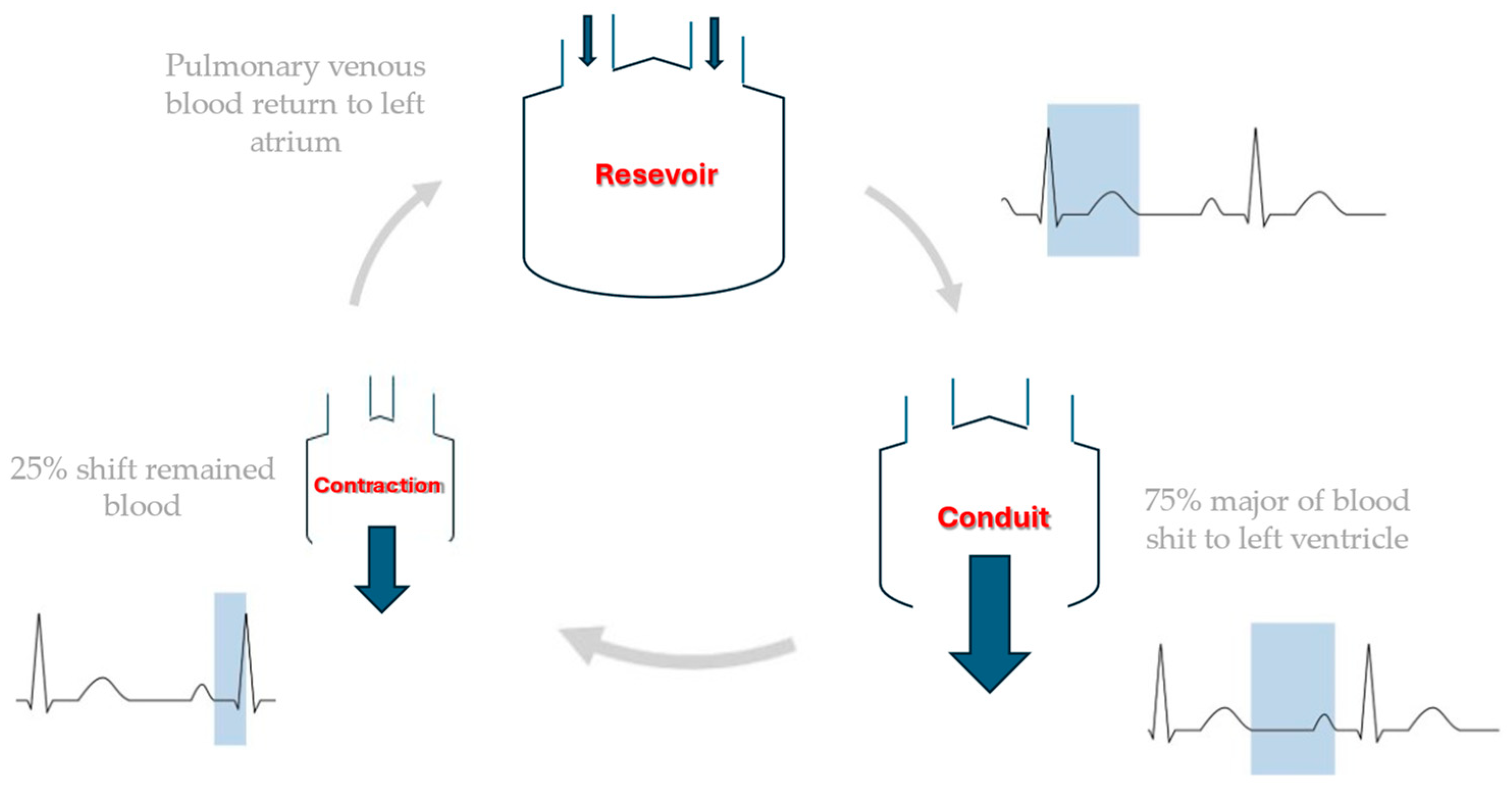
Figure 1. Different phases of LA during the cardiac cycle.
Preprints 141661 g001
Figure 2. Different phases of LAS during the cardiac cycle. AVC: aortic valve closure; LAScc: left atrial strain conduction; LASct: left atrial strain contraction; LASr: left atrial strain reservoir.
Preprints 141661 g002
Figure 3. Speckle Tracking Left Atrial Strain. 2CH: apical two chambers view 4CH: apical four chambers view; LAVmax: left atrial maximum volume; S_CD: Left atrial strain in conduct phase; S_CT: Left atrial strain in contraction phase; S_R: Left atrial strain in reservoir phase.
Preprints 141661 g003
Figure 4. The most important mechanism of pathogenesis of atrial fibrillation.
Preprints 141661 g004
Figure 5. Dobutamine stress echocardiography protocol according to consensus documents of the American Society of Echocardiography (ASE) [13]. * atropine may be administered at an early stage and the administration may be repeated with a dose of 0.25 mg every minute.
Preprints 141661 g005
Figure 6. Indication and interpretation of diastolic stress echocardiography. LVOTO: left ventricular outflow tract obstruction; MR: mitral regurgitation; RWMA: regional wall motion abnormalities; TRV: tricuspid regurgitation velocity.
Preprints 141661 g006
Figure 7. Stress Echocardiography protocol includes evaluation of left atrial function and pulmonary congestion. A2C: apical 2-chamber; A4C: apical 4-chamber; DSE: dobutamine stress echocardiography; ESE: exercise stress echocardiography; LAS: left atrial strain; LAV: left atrial volume; LV: left ventricle; LVOT: left ventricle outflow tract; LUS: lung ultrasounds; MR: mitral regurgitation; PASP: pulmonary artery systolic pressure; RWMA: regional wall motion abnormalities; SE: stress echocardiography.
Preprints 141661 g007
Table 1. Most important studies about the use of left atrial strain during stress echocardiography.
Author Design Population Results
Zagatina et al. [11] Multicenter prospective observational study 3042 pts undergone SE for CCS
(group 1: no AF; group 2: paroxysmal AF; group 3: permanent AF)
LAS during SE performed in 16% of cases;
Peak-LASr group 3 < LASr group 2 < LASr group 3 (Group 1 = 26.9 ± 10.1, Group 2 = 23.8 ± 11.0 Group 3 = 10.7 ± 8.1%, p < 0.001)
Prota et al. [12] Single centre prospective observational study 252 pts undergoing pharmacological SE for CCS LAS during SE performed in 95.5% of cases;
Inverse linear correlation between peak-LASr and LAVi (r = –0.289, p < 0.001);
Inverse linear correlation between LUS B-lines peak- LASr (r = –0.234, p < 0.001);
Inverse correlation between peak-LASr and NYHA class (r=-0.263, p < 0.001 respectively)
Yoshii et al. [54] A single center retrospective study 74 HCM pts with EF > 50% undergoing ESE Peak-LASr associated with new-onset AF (HR 1.08, 95 % CI 1.01–1.18, p = 0.027);
Peak-LASr ≤15.5 % predicted with a sensitivity of 55.6 % and specificity of 91.8 % (AUC 0.71) new-onset AF;
Lower peak-LASr correlated to low exercise tolerance (< 75W) (31.2±15.3 vs 24.7±13.6 %, p=0.033).
Cheng et al. [55] Single centre prospective observational study 100 pts with dyspnea
(74 HFpEF and 26 NCD)
Inverse correlation between peak-LAScd and PCWP (r = − 0.659; p < 0.001) and ΔPCWP (r = − 0.707, p < 0.001);
Peak-LAScd < 14.25% detect HFpEF with 64% sensitivity and 68% specificity (AUC 0.69)
Su et al. [56] A single center retrospective study 70 HCM pts + 30 control
(HCM1 group E/e' > 14; HCM2 group E/e' 8-14)
HCM group had significantly lower peak LASr, LAScd and LASct and lower LAS reserve during stress compared to controls (p < 0.05);
HCM2 had a better peak-LASr (p =0.001), peak-LAScd (p= 0.008) and ΔLASct% (p=0.028) compared to the HCM1 group.
The HCM2 group had higher exercise tolerance (METS) than the HCM1 group and METS was positively correlated with LAS parameters
Backhaus et al. [57] Single centre prospective observational study 75 pts with exertion dyspnea and rest E/e’ >8 undergoing ESE LASr / E/e’ ratio during stress decreased in HFpEF patients diagnosed invasively (1.4 vs 2.6, p = 0.004) compared to individuals with NCD.
LASr / E/e’ ratio during stress decreased in HFpEF patients diagnosed non-invasively (1.3 vs 2.2, p = 0.022)
Harada et al. [58] A single center retrospective study 487 pts undergone ESE (225 HFpEF pts + 262 controls with NCD) LAS during SE performed in 89% of cases.
Exercise LAS and LASr / E/e’ ratio lower in HFpEF compared to NCD;
Exercise LASr / E/e’ ratio and peak-LASr had the strongest diagnostic ability to differentiate HFpEF from NCD (AUC 0.87, 0.83–0.90, p<0.0001 and AUC 0.82, 0.67–0.91, p<0.0001, respectively) ;
Exercise LASr / E/e’ ratio < 2.2%, 81% sensitivity and 85% specificity for HFpEF diagnosis.
AF: atrial fibrillation; AUC: area under the curve; CCS: chronic coronary syndrome; CI: confidence intervals; ΔLASct%: left atrial strain contraction reserve during stress; ΔPCWP: difference between rest and stress PCWP; EF: ejection fraction; ESE: exercise stress echocardiography; HCM: hypertrophic cardiomyopathy; HFpEF: heart failure with preserved ejection fraction; HR: hazard ratio; LAS: left atrial strain; LAScd: left atrial strain conduit phase; LASct: left atrial strain contraction phase; LASr: left atrial strain reservoir phase; LAVi: left atrial volume index; LUS: lung ultrasound; METS: metabolic equivalent of task; NCD: non-cardiac dyspnea; NYHA: New York Heart Association; PCWP: post capillary wedge pressure; Pts: patients; SE: stress echocardiography.
Table 2. Abnormal values of LAS parameters during SE.
Author Sample Size LAS Parameters During SE and Abnormal Values
Zagatina et al. [11] 3042 pts Peak-LASr < 24%
Prota et al. [12] 252 pts Peak-LASr ≤ 24%
Yoshii et al. [54] 74 pts Peak-LASr ≤15.5 %
Cheng et al. [55] 100 pts Peak-LAScd <14.25%
Harada et al. [58] 487 pts Peak-LASr < 31 % (protocol 1) or < 33.4% (protocol 2)
Exercise LASr / E/e’ ratio < 2.2% (protocol 1) or < 2% (protocol 2)
LAS: left atrial strain; LAScd: left atrial strain conduit phase; LASr: left atrial strain reservoir phase; Pts: patients; SE: stress echocardiography.
Disclaimer/Publisher’s Note: The statements, opinions and data contained in all publications are solely those of the individual author(s) and contributor(s) and not of MDPI and/or the editor(s). MDPI and/or the editor(s) disclaim responsibility for any injury to people or property resulting from any ideas, methods, instructions or products referred to in the content.
Copyright: This open access article is published under a Creative Commons CC BY 4.0 license, which permit the free download, distribution, and reuse, provided that the author and preprint are cited in any reuse.
Prerpints.org logo

Preprints.org is a free preprint server supported by MDPI in Basel, Switzerland.

Subscribe

Disclaimer

Terms of Use

Privacy Policy

Privacy Settings

© 2025 MDPI (Basel, Switzerland) unless otherwise stated