
Submitted:
01 May 2025
Posted:
06 May 2025
You are already at the latest version
Abstract
Polyphenols are known as secondary metabolites, which are crucial bioactive compounds that enhance human health. Chromatographic methods typically identify polyphenols after food extraction. The extraction methods are fundamental; however, they can be used with any differences, including extractant type, according to the food. Polyphenols are mostly found in some foods, including grapes, olives, cherries, and apples. Foods have divergent polyphenols, which differentiate according to the food types. Moreover, they have flavonols, flavanols, flavones, flavanones, isoflavones, and anthocyanins as various subgroups of polyphenols that can change in terms of quantity and quality with several factors, including types, growing region, germination time, and harvest season of food. The consumption of polyphenols is crucial for human health owing to their anti-cancer effect, anti-tumor effect, anti-inflammatory effect, cardiometabolic risk management, antimicrobial effect, immunomodulatory activity, and antioxidant activity. These are given attention by researchers who detect the effects of polyphenols. In the valorization of polyphenols, the consumption dose is also important to effectively benefit from the polyphenols of plant-based foods. Several in vitro and in vivo studies have tested the polyphenols’ digestion ability and preservation ability in gut microbiota and their effect on the microbiota to determine the benefits and effects of polyphenols in several areas. According to these studies, polyphenols can be used to fight against the disease. In addition, divergent applications, including encapsulation and polyphenol coating, are used to stabilize, preserve, and improve the bioaccessibility of the polyphenols. Even though polyphenol-rich foods are consumed for nutrition in daily life, they are also used as nutritional ingredients in the food industry to produce functional foods, and functional foods are enriched with food by-products to enhance their nutritional value, especially in terms of polyphenols. Especially, waste food by-products are used to enrich the functional foods, which are preferred in healthy life diets, especially because of the diversity and amount of bioactive ingredients, including polyphenol types of the waste food by-products. Furthermore, polyphenols also provide the preservation ability of storage and improve the bioaccessibility of bioactive ingredients in the digestion of functional foods.
Keywords:
polyphenols
; functional food
; antioxidant activity
; valorization
Sercan Karav 1,*
1. Introduction
Polyphenols are crucial plant-based compounds in several fields, including the food industry, pharmacology, and medicine [1,2]. Flavonoids, phenolic acids, polyphenolic amides, lignans, stilbenes, tannins, and curcuminoids are varieties of polyphenols [3,4,5]. These varieties have subtypes, such that the flavonoids have six subtypes involving flavonols, flavanols, flavones, flavanones, isoflavones, and anthocyanins, which are most frequently detected in most foods [6,7]. Specifically, some foods, including onions, grapes, cherries, and apples, have high polyphenols [8,9,10,11]. They are used in the food industry due to their health-beneficial effects [12].
Polyphenols have divergent properties, including cardiometabolic risk management, antimicrobial effect, anti-inflammatory effect, antioxidant activity, anti-cancer effect, anti-tumor effect, prebiotic and immunomodulatory activity, essential for human and other living health [13,14,15,16]. There are several polyphenol consumption-related health studies [17,18]. In a study, catechin, a polyphenol obtained from green tea, exhibited a preventive property in obesity and related diseases, including hypercholesterolemia and hyperglycemia, when in vivo studies were applied to rats [19]. Also, polyphenols improve cardiometabolic risk management to avoid the risks of obesity and cholesterol by limiting insulin and cholesterol [19]. Also, apple polyphenols improved gut microbiota health and decreased appetite due to these, preventing the unstable put-on weight of the mice in vivo studies by applying the diet that used the high simple carbohydrate diet with polyphenols of the apple [20]. Extracted polyphenols from raspberry were used together with prebiotic fructooligosaccharides to prevent nonalcoholic fatty liver diseases by avoiding the accumulation of fats in the liver of Zucker rats [21]. In another in vivo study, apple polyphenols preserved the rats from neural injury, which was induced by chronic ethanol exposure [22]. This study was conducted by pursuing the daily body weight, intake of food and fluid, and consumption of ethanol. Polyphenols also demonstrate antimicrobial and anti-inflammatory effects that prevent diseases [23]. Apple polyphenols, especially phloretin, showed these effects on the respiratory pathogens that cause chronic obstructive pulmonary disorders that are bacterial-induced problems. In addition to these, blueberry has antioxidant, antimicrobial, anti-inflammatory, and anticancer activities due to its polyphenol contents [24]. In another study, blueberries’ antitumor effects and immunomodulatory activities were detected, and these properties came from the polyphenols of blueberries [25].
In mice, blueberry polyphenols exhibited prebiotic activity and prevented obesity by improving fat metabolism and remodeling the gut microbiota, especially in the fecal stage mice [26]. Also, blueberry polyphenols extracted from fruit and leaves inhibit the neuroinflammatory response in microglia, and they can be preventive for neurological diseases, including Parkinson’s and Alzheimer’s disorders, that could be concluded [27]. Furthermore, the number of polyphenols can exhibit an alternative according to where they were obtained from food [28]. Polyphenol concentrations obtained from different areas, including seed, pulp, and whole fruit of the red raspberry, demonstrated diversity. In this study, different polyphenol concentrations affected the different organisms’ improvement in microbiota, and also, the high-fat diet-induced obesity was balanced and inhibited by polyphenols.
Blueberries are also polyphenol-rich fruit, and several blueberries were used to obtain different polyphenols and determine divergent properties, including anti-inflammatory, antioxidant activity, and miRNA regulation or inhibition ability of the polyphenols, with several methods containing 2,2-Diphenyl-1-picrylhydrazyl (DPPH) assays for antioxidant activity [29]. Even though several polyphenols were identified in the study, phenolic acid was the most frequently detected polyphenol group. Phenolic acids affect the properties of blueberries including antioxidant activity which comes from polyphenols. However, in miRNA regulation, other compounds of the blueberries without phenolic acids were effective. Plant-based polyphenols can be combined with polyphenols obtained from other plants to enhance antioxidant activity [30]. In a study, blackberry polyphenols were combined with tea polyphenols to improve the oxidative stability of lard and olive oil [31]. The content of blackberry anthocyanins and the effect of different antioxidants on the acid degrees of lard and olive oil were determined. Also, a comparison of the anti-lipid-oxidant efficiency of several antioxidants and antioxidant capacity was searched by detecting the scavenging capacity of 2,2-Diphenyl-1-picrylhydrazyl (DPPH)-free radicals and 2,2’-Azino-bis(3-ethylbenzothiazoline-6-sulfonic acid) (ABTS) cation radicals.
Polyphenol-rich foods can be added to another feed to manufacture healthy and enriched products [32,33,34]. In the food industry, polyphenol-rich foods are dried to use as ingredients in other feed, but the amount of the bioactive compounds in foods can degrade during drying [35]. As an example, blueberries were dried to enhance the nutritional value of the black tea [35]. In the study, iron-polyphenol complex formation, polyphenol profile, antioxidant activity, and sensory properties of the blueberry-added black tea were affected by drying. Also, these results not only came from drying but were also affected by fruit concentration and infusion temperature. Even though the degradation of bioactive compounds of blueberries, black tea was nutritionally enhanced with blueberries.
Polyphenols may be degraded or inhibited in their bioavailability during digestion or storage [36]. Different methods are used to preserve polyphenols, including encapsulation and microencapsulation. Encapsulation is a method to improve the stability and bioaccessibility of polyphenols in food by applying any material [37]. In a study, strawberry juice was encapsulated by freeze drying, which is a drying method that used pea protein and okra mucilage as encapsulating material [38]. At the end of the study, the polyphenols of strawberries and their antioxidant activity were preserved, and the bioaccessibility and stability of the polyphenols were increased. In another study, green tea was encapsulated by spray drying to enhance the efficiency assessment of the polyphenols. Another encapsulation method, microencapsulation, is an application to increase the shelf life of foods, especially in the food industry [39]. It can be used to preserve the bioactive ingredients of foods, including polyphenols. In a study, green tea leaf extract was extracted with supercritical fluid extraction, and then encapsulated by spray drying, which used carrier materials such as maltodextrin, gum arabic, and chitosan with different ratios [39]. The encapsulation was applied due to the sensitivity of green tea to environmental conditions containing high temperature, pH, and oxygen. As a result, the encapsulation efficiency was 71.41%–88.04% for total phenolic content and 29.52%–38.05% for antioxidant activity. It also preserved the total catechin, total phenolic content, and antioxidant activity at a temperature determined for this study (below 25 °C).
Divergent extraction methods and processes are used to obtain polyphenols according to the conformation and ingredients of foods [40,41]. Blueberries were extracted using natural deep eutectic and conventional solvents as extractants [42]. The most successful solvents were determined to be natural deep eutectic solvents due to the high obtaining capacity of the total phenolic content, total flavonoid content, total anthocyanin content, anti-radical activity, reducing power, and metal chelating activity of the blueberries. In another study, different extraction solvents were used, and optimum conditions were determined to obtain high levels of antioxidant phenolic compounds and antioxidant activity in strawberry fruits [43]. The solvents that have different polarities were used to determine the best one, and the best usable solvent was chosen as acetone for strawberries. Also, optimum extraction conditions containing extraction time, temperature, and liquid/solid ratio were detected. Additionally, the optimum extraction conditions were determined for raspberry leaves with different extraction methods or extractants, and the study also determined that steam explosion pretreatment was suitable to improve the accessibility of the polyphenols of the food [44].
The consumption dose of polyphenols is an important determinant to demonstrate the divergent properties of polyphenols containing antioxidant activity, antimicrobial activity, and anti-inflammatory effect [45,46]. In a study applied to the rats, three different doses of blueberries were fed to rats, and dose-dependent polyphenol concentrations were obtained. In the rats’ colons after different dose intakes, a high amount of cinnamic and hippuric acids and a low amount of phenolic acids, flavonols, and anthocyanins were obtained according to the dose of blueberry polyphenols. Also, some polyphenols among these arrived at saturation degrees while different doses of polyphenols were taken. In another study, saturated fat was applied to rats with polyphenol intake [47]. In conclusion, cecal microbiota activity, lipid metabolism, and inflammation degrees were divergent when two different doses of raspberry polyphenols were taken. While lipid metabolism was provided with two different doses, the health-promoting effect of the polyphenols was obtained with high doses fed.
Moreover, polyphenol-rich food products are used to preserve other foods by using these products as packaging material [48]. In a study, chitosan-based apple peel polyphenols were used as a protective material for strawberries by coating, and it preserved the strawberries during the storage period [49]. The coating was prepared by applying chitosan, which was dissolved in acetic acid solution (1.0%, v/v) and stirred, then glycerol (30%, w/w) was added to the solution. Additionally, apple peel polyphenols were integrated into the solution. After that, the strawberries were disinfected with a 2% NaClO solution and dried slowly. After these, prepared strawberries coated with the solution containing the apple polyphenols were drained and dried. Finally, the strawberries were packaged in polypropylene plastic trays and stored at 20 °C. In conclusion, the application preserved the strawberries in terms of bioactive compounds, and it decreased the degradation of the properties and ingredients of the food.
This review article examines the polyphenol ingredients of several types of food used in the food industry. It explains the effective factors that affect the amount and type of food and determines the impact of polyphenols on polyphenol-enriched products and functional foods. Also, the valorization of waste polyphenol-rich foods is briefly exemplified with functional food production.
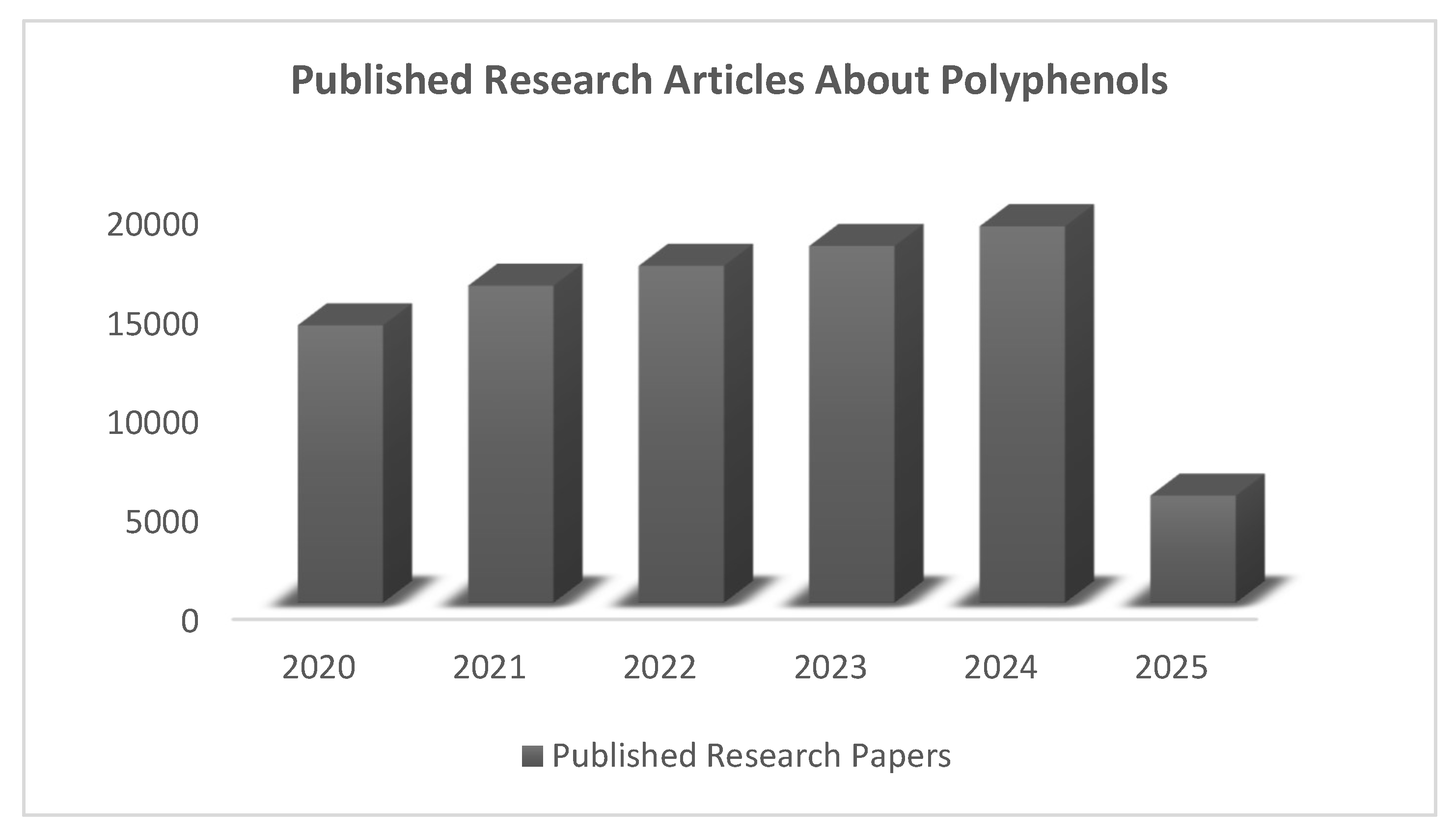
Furthermore, several studies are present in the literature on polyphenolic ingredients of food (Graph 1). The graph demonstrates the research articles in 2020, 2021, 2022, 2023, 2024, and 2025. There are several different studies that deal with polyphenols but the polyphenol topic is very crucial for future studies, especially in pharmacology, medicine or the functional food industry. Also, more studies are required for this topic.
Graph 1.
According to the datas of google scholor platform graphical chart of research article about polyphenols in recent years.
Graph 1.
According to the datas of google scholor platform graphical chart of research article about polyphenols in recent years.
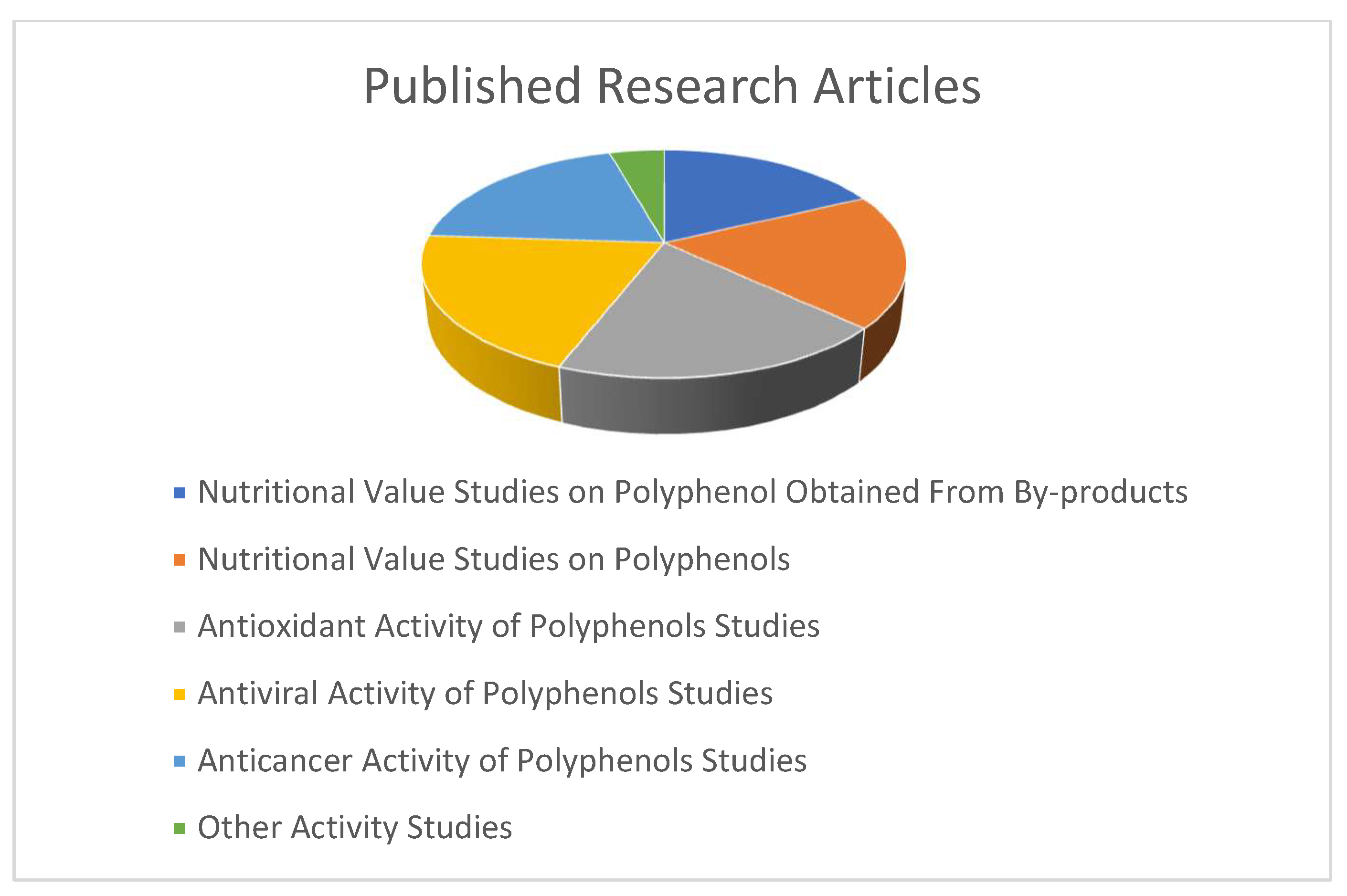
Polyphenols have several nutritional values and health-promoting effects, including antioxidant activity, antiviral activity, and anticancer activity (Graph 2). Additionally, the polyphenols can be extracted from waste by-products. This is very important for the economy. The graph demonstrates that recent research articles have which topic about polyphenols. In the graph, the research articles about nutritional value studies of foods and their by-products, their antioxidant activity, antiviral activity, and anticancer activity were shown.
Graph 2.
Demostrated the research articles that deals with health-promoting effects and nutritional values of consumed foods and their by-products on the platform of google scholor.
Graph 2.
Demostrated the research articles that deals with health-promoting effects and nutritional values of consumed foods and their by-products on the platform of google scholor.
2. Polyphenols in Foods
There has been enhanced demand for research and consumption of functional foods [50,51,52]. Food polyphenols are used in several industries, including medicine and the food industry, thanks to their divergent effects and properties. These are antimicrobial properties, antioxidant activity, anti-inflammatory effects, anti-cancer effects, etc. [53,54]. When compared with other food ingredients, food polyphenols exhibit a variety of polyphenol types, including anthocyanins, and flavonoids [55,56]. Also, according to food types, several extraction methods and solvents are used to obtain divergent polyphenol types (Table 1) [57].
Fruits are polyphenol-rich foods, and they are used to obtain the polyphenols. Several different methods and solvents similar to each other are applied to obtain polyphenols from food. In a study, blueberries were freeze-dried, and their polyphenols were extracted and determined [65,80]. Firstly, blueberries were frozen with liquid nitrogen, and freeze-dried powder was obtained. Then, acidified methanol (0.3% HCl [v/v]) was used as the main extractant, which was used to wash the powder, and the extractant was evaporated. Anthocyanin was obtained with lower layer separation of the previous process, ethyl acetate addition, supernatant separation, supernatant drying, powder obtained from the previous step, and freeze drying, respectively. Also, an AB-8-type macroporous adsorption resin and the eluent were especially used to purify the anthocyanins. Blueberry polyphenols were obtained with partially different pathways. Initially, dry blueberries were washed with anhydrous ethanol and filtered to completely mix polyphenols and extractants. After that, the extracted liquid was evaporated, and the dried substance was washed with petroleum ether to distract the lipids. Then, ethyl acetate was added, and other future pathways were the same as anthocyanin extraction and purification, except for the eluent type of purification. Identification of polyphenols was performed with high-performance liquid chromatography and mass spectrometry. At the end of the study, delphinidin-3-glucoside, quercetin 3-O-galactoside, pelargonidin-3-O-galactoside, malvidin-3-O-glucose, phenylpropanoid compound chlorogenic acid isomers, flavonoid substance epicatechin gallate, and kaempferol-3-rhamnoside were especially obtained. Additionally, the antioxidant activity, antitumor activity, and immune function of anthocyanins and other polyphenols were studied and characterized.
The solvent or extractant used can demonstrate differences even in the same types of food. For instance, in research on blueberries, acetone was used as an extractant, different from the previous study [79]. Also, in this study, the total polyphenol fraction, anthocyanin-enriched fraction, and proanthocyanidin-enriched fraction of blueberries were applied separately using different solvents. At the endpoint, these polyphenols’ antimicrobial and anti-inflammatory effects were studied. In a study about blackberry polyphenols, several polyphenols, including anthocyanins, cyanidin-3-O-glucoside, cyanidin-3-O-rutinoside, ellagitannins, catechins, etc., were extracted with 70% acetone [81]. Flash chromatography and mass spectrometry were used to identify polyphenols, and the antioxidant activity of polyphenols was determined and searched in this study.
Moreover, in another study, strawberry polyphenols, including total polyphenol fraction, anthocyanin-enriched fraction, and proanthocyanidin-enriched fraction, were detected, and the antioxidant activity of these polyphenols was determined [82]. The determination was acquired using the pH differential method for total monomeric anthocyanin content, high-performance liquid chromatography-diode array detection for anthocyanins, and the Folin-Ciocalteu method for total phenolic content. Polyphenols in black raspberries were detected in another study [60]. Methanol, acetone, and ethanol with 30% water were used as extractants to obtain polyphenols, and ultra-high-performance liquid chromatography quadrupole time-of-flight mass spectrometry/ mass spectrometry was used to identify polyphenols. As a consequence, divergent polyphenols containing cyanidin-based anthocyanins, multiple ellagitannins, free ellagic acid, gallic acid, 3,4-dihydroxybenzoic acid, 4-hydroxyphenyl acetic acid, ferulic acid, rutin, and quercetin were detected, and their health-promoting activity on gut microbiota was determined in an in vitro study. Polyphenols were also detected in apple fruits [20]. The effect of apple polyphenols on the microbiota and appetite was studied. The ameliorated high-carbohydrate diet-induced body weight gain of the mice was decreased with polyphenol consumption by regulating the microbiota and appetite.
Furthermore, vegetables are polyphenol-rich foods. In a study about artichokes, high-performance liquid chromatography methanol was used as an extractant, and high-performance liquid chromatography/electrospray ionization tandem mass spectrometry was applied to identify the polyphenol types [73]. Divergent polyphenols, including luteolin, luteolin-O-glycoside, luteolin-7-O-rutinoside, apigenin, etc., were obtained and characterized. Deals with these polyphenols and the hepatoprotective activity of these were searched. In a study, polyphenols were extracted with 70% v/v ethanol, and antioxidant activity was determined from Welsh onion (Allium fistulosum) leaves [62]. Total phenolic and anthocyanin contents, especially cyanidin and quercetin-3-glucoside, were obtained by applying ultra-high-performance liquid chromatography-electrospray ionization positive mode-orbitrap mass spectrometry analysis. Red onions were extracted to obtain their polyphenols, including benzoic acid, rosmarinic acid, quercetin, rutin, pyrogallol, quercetin, quercetin derivatives, and ρ-Coumaric acid [10]. Identification and determination were provided with high-performance liquid chromatography analysis and ultrasound- and enzyme-assisted extractions with 80% ethanol. In addition, the antioxidant activity of polyphenols was even detected. In another study, Hettiarachchi et al. determined the total phenolic content and total flavonoid content, including gallic acid, quercetin-3-glucoside, quercetin-3-rhamnoside, and myricetin-3-galactoside, of eggplant and spinach varieties, and their antioxidant activity was exhibited [74]. This result was obtained with methanolic extraction by methanol/water (80%, v/v) as an extractant.
Legumes have several polyphenolic ingredients, including black beans, lentils, and chickpeas. In a study, black beans were used to extract polyphenols, which were used to determine their antioxidant activity and anti-aging potential [66]. The extractant of this study especially was ethanol-water (50:50 v/v) in supercritical fluid extraction. Folin-Ciocalteu’s method was used for polyphenols, the pH differential method (AOAC Official Method 2005.02) for total anthocyanins and electrospray ionization mass spectrometry analysis to identify phenolic compounds. Malvidin-3-glucoside, cyanidin-3-glucoside, delphinidin-3-glucoside, petunidin-3-O-β glucoside, catechin, delphinidin 3-Glucoside, myricetin, sinapic acid, etc. were determined at the end of the study with several extraction methods. Chickpea hull as a legume was extracted with acetone, water, and acetic acid (70:29.5:0.5, v/v/v) [67]. Ultra-high-performance liquid chromatography was used to identify the polyphenols, and gallic acid and rutin were especially determined. Also, the antioxidant and anti-inflammatory potentials of the polyphenols were determined.
Nuts and seeds are rich in polyphenols and are used in several functional foods due to their beneficial properties for humans. In a study, the walnuts were searched in terms of polyphenols and extracted with 100% hexane (1:10 w/v) [58]. The Folin-Ciocalteu method was used to determine total polyphenol content, and the identification of polyphenols was provided by reverse-phase high-performance liquid chromatography and high-resolution Fourier transform mass spectrometry. In conclusion, ellagic acid, strictinin, 3-methoxy-5,7,3′,4′-tetrahydroxy-flavone, gallic acid, ellagic acid pentoside, etc. were determined, and these polyphenols of walnuts inhibited human intestinal glucose transport, human α-glucosidase activities, and human salivary and pancreatic α-amylases. In another study, the polyphenols of hazelnut skin were determined, and their antioxidant activity was detected [61]. Hazelnut skins were roasted before extraction by pure ethanol was applied, and several types of polyphenols, including gallic acid, protocatechuic acid, catechin, epicatechin, and quercetin, were identified with high-performance liquid chromatography. Also, the total polyphenolic content was determined by spectrophotometry, and the antioxidant activity of specified polyphenols was detected. According to a study, pecan polyphenols inhibit the enzyme activity that deals with starch digestion [63]. In the survey, acetone/deionized water/acetic acid (70:29.5:0.5, v/v/v) at a ratio of 6:10 (w/v) solution was used as extractant and total phenolic content was detected by Folin-Ciocaulteu’s method. Furthermore, in vitro studies were applied for scratch digestion and the polyphenols of pecan controlled blood glucose. In addition, flax (Linum usitatissimum L.) seeds were used to obtain polyphenols, and antidiabetic and anti-inflammatory effects of the polyphenols were determined in a study [83]. For extraction of the seeds, 70% methanol was applied, and liquid chromatography with tandem mass spectrometry analysis identified the polyphenols of the seeds, including oleocanthal, oleuropein, hesperetin, ursolic acid, amentoflavone, quercetin-3-O-glucoside, quercetin-3-O-glucuronic acid, kaempferol-3-O-glucose, quercetin-3-O-hexose-deoxyhexoside, etc. For this research, in vitro and in vivo experiments were applied, and the effects of polyphenols were determined. Particularly, some enzyme activities, including α-Amylase inhibitory activity and α-Glucosidase inhibitory activity, were examined.
Additionally, herbs and spices have polyphenols, and these are used in several functional foods due to their various properties [84]. In a study, the antioxidant and antibacterial activity of clove (Syzygium aromaticum) and thyme (Thymus vulgaris) extracts were determined [75]. 95% ethyl alcohol was used as an extractant. The folic-Ciocalteu method was applied to determine total phenolic compounds, and the aluminum chloride colorimetric method was used to determine the total flavonoid compounds of the clove and thyme. Another food in this part is star anise. Star anise (Illicium verum) was extracted with distilled water, and high-performance liquid chromatography was used to determine polyphenols including gallic acid, 4-Hydroxybenzoic acid, catechin, chlorogenic acid, caffeic acid, syringic acid, vanillic acid, p-Coumaric acid, salicylic acid, rutin, etc. [64]. Also, antioxidant, anti-obesity, and hypolipidemic effects were detected in the research with a high-fat-sugar diet-induced obesity rat model. In another study, oregano leaves were extracted with ethanol (100%), and the bioactive components were determined by gas chromatography-mass spectrometry; total polyphenol content was detected with the Folin-Ciocalteu method; and total flavonoid content was determined with the process based on aluminum chloride [71]. Also, antioxidant activity and the internal and immunobiological effects of oregano bioactive ingredients, especially polyphenols, were examined and obtained. In another study, the polyphenols of sweet basil leaves (Ocimum basilicum L.) were extracted with 70% ethanol, and phytochemical analysis was applied to detect secondary metabolites including tannins and flavonoids as polyphenols [72]. The Folin-Ciocalteu method for total polyphenol content and the process based on aluminum chloride for total flavonoid content were utilized.
3. Several Influencing Factors to Polyphenol Contents of Foods
Several parameters, including growing region, seasons, maturity, and obtained stage of plant-based food, change polyphenol quantities and types. The polyphenol concentration can change with the foods’ ripening and maturity stages [85]. The growth process of the food was divided into several parts. The highest level of the polyphenols, especially flavan-3-ol derivatives, was determined in the early improvement stage of the food. In conclusion, the polyphenol quantity of the food decreased towards the end of the ripening. In a study, the maturity period of the blackberries was divided into three stages [86]. Total phenolic content and total flavonoid content diminished, while total anthocyanin content and soluble solids rose from the first stage to the final stage of the maturity of blackberries.
The concentration of plant polyphenols can demonstrate differences according to the growing and maturity environment [87]. In a study, red raspberries were cultivated in several conditions by changing temperature, light intensity, and wavelength. Blue light was chosen as the best environment in which to obtain maximum polyphenol contents, especially flavan-3-ol derivatives of red raspberries. In another study, the divergent maturity stage at the harvest of gariguette strawberries affects the bioactive compounds, especially polyphenols [88]. These maturity stages were chosen as the turning stage and fully ripe. At the end of the study, fully ripe harvested food had more polyphenols, especially hydroxycinnamic acids, than the turning stage. Additionally, several bioactive properties of the strawberries, including vitamin C, organic acids, and volatiles, were detected in divergent amounts by different maturity stages.
Despite using the same food, the polyphenols vary depending on the growing region [89]. In a study, ripened wild strawberry (Arbutus unedo L.) was used to determine the effects of different growing regions on the polyphenolic ingredients [89]. The strawberries were taken from three forests: Achakar, Qsar Kbir, and Chaoun-Qalaa. As a result of this study, some polyphenols, including tannins, anthocyanins, catechic tannins, gallic tannins, coumarins, and anthraquinones, did not show any differentiation related to growing regions. However, Quinones polyphenol exhibited that the strawberry obtained from the Achakar forest did not have this polyphenol compared to other strawberries from the Qsar Kbir and Chaoun-Qalaa forests. Also, the strawberries’ total polyphenol, flavonoid, anthocyanin, tannin, and antioxidant activity were differentiated with growing regions. The best results were demonstrated with the strawberries obtained from the Chaoun-Qalaa forest when paying attention to total polyphenol content and flavonoid content; with Achakar forest strawberries when paying attention to antioxidant activity and tannin content; and with partial Qsar Kbir forest strawberries dealing with the anthocyanin content of the strawberries. In another study, strawberry tree fruits (Arbutus unedo L.) obtained from five divergent areas (Chefchaouen, Moulay Driss Zerhoun, Laanoucer, El Ksiba, and Tahnaout) were examined based on their antioxidant activity, organic acid, and phenolic composition [78]. As a result, total phenols were determined in the trees that were taken from the Laanoucer, Moulay Driss Zerhoun, Chefchaouen, Thnaout, and El Ksiba; total flavonoids of the trees in the Thnaout, Moulay Driss Zerhoun, Laanoucer, Chefchaouen, and El Ksiba; and total anthocyanins of the trees in the Moulay Driss Zerhoun, Thnaout, Chefchaouen, Laanoucer, and El Ksiba with decreasing, respectively. Also, antioxidant activity was significantly high in the tree obtained from the Moulay Driss Zerhoun region.
Ingredients of the foods, especially polyphenols, change according to seasons, which have different environmental conditions [90]. In a study, the biological activity, aroma, and polyphenols of white strawberries changed according to the climate condition and growth location of the fruit [90]. Also, the growing year of foods is an effective parameter for obtaining polyphenols [82]. Researchers used strawberries harvested in 2014 and 2015 to extract the polyphenols. The total anthocyanin and phenolic content of the strawberries harvested in 2015 was higher than that of 2014. Still, the lower content of cyanidin-based forms was obtained in strawberries harvested in 2015.
The food types demonstrate differentiation deals with their polyphenol ingredients compared with each other [82]. In a study, several cultivars of the strawberry were used to obtain the polyphenols [82]. According to the results, each cultivar gave a different total phenolic content, total anthocyanin content, and antioxidant activity, despite all cultivars being strawberries. Additionally, eleven different Spanish almonds with specific genotypes were extracted for their polyphenols in another study [91]. In conclusion, the number and types of polyphenols, including (+)-Catechin, (−)-Epicatechin, isorhamnetin-3-O-glucoside, kaempferol-3-O-rutinoside, isorhamentin-3-O-rutinoside, sum Flavan-3-ols, sum Flavanols of the Spanish almonds were different from each other due to their divergent genotypes. In another study, divergent polyphenols were obtained from several blackberries (Rubus spp.) fruit cultivars, including Cheste, Triple Crown, Navaho, Loch Ness, Thornfree, and Ouachita (10.3390/horticulturae9050556). As a result of the study, several anthocyanins, including cyanidin-3-glucoside, cyanidin-3-O-arabinoside, cyanidin-3-O-(malonyl)glucoside, cyanidin-3-O-(dioxalyl)glucoside, and cyanidin-3-rutinoside, exhibited alternative concentrations in each cultivar when compared with others. According to these results, foods from the same types could have different types and concentrations of polyphenols.
The polyphenolic compounds can vary with extraction types, including ultrasound-assisted and conventional solvent extractions [76]. In a study, turmeric (Curcuma longa) was extracted using divergent extraction methods, including ultrasound-assisted and conventional solvent extractions [76]. In conclusion, the concentration of gallic acid, protocatechuic acid, catechin, chlorogenic acid, epicatechin, ferulic acid, coumarin, and rutin was detected more in ultrasound-assisted extraction than in conventional solvent extraction, even though some of these polyphenols were not detected in conventional solvent extraction. Despite these, some polyphenols, including curcumin, myricetin, cinnamic acid, genistein, and quercetin, were determined in ultrasound-assisted extraction non or less than in conventional solvent extraction. In another study, garden blackberries (Rubus fruticosus L.) were extracted with different extraction solvents, including 80% (v/v) ethanol, 70% (v/v) acetone + 2% (v/v) acetic acid, 60% (v/v) methanol + 3% (v/v) formic acid, and 90% (v/v) acetonitrile + 10% (v/v) 6 molar HCl [92]. At the end of the study, the maximum anthocyanin, flavonoid, and polyphenol contents of garden blackberries were extracted with 90% (v/v) acetonitrile + 10% (v/v) 6 molar HCl.
Foods have different sizes and shapes, despite the same food, and the size of foods is effective on the achievement of polyphenols [75]. In a study, clove and thyme were prepared as a whole, and powder and different extracts were used to obtain polyphenols [75]. As a result, whole and powdered versions of these foods showed differentiation in terms of the phenolic and flavonoid compounds. Generally, the powder of these foods had more phenolic and flavonoid compounds than the whole. Also, extracts were effective in the concentration of phenolic and flavonoid compounds in the foods. While ethanolic extract was the best extraction to obtain these compounds from thyme, essential oil extract was the best to get from clove among ethanolic extract, aqua extract, and essential oil extracts.
The germination day is another parameter to obtain maximum polyphenolic ingredients [93]. Separately, ten days of germinated Egyptian chia seeds (Salvia hispanica L.) were examined to understand the importance of the germination day on the polyphenols [70]. The total phenolic and flavonoid contents increased from 0 to 7 germination days; however, these contents decreased from 7 to 10 days.
4. Application of Polyphenols in the Food Industry
Polyphenols in plant-based foods are used in the food industry to enhance functional foods, food preservation and stability, and food packaging (Figure 1) [94,95]. Also, they increase the shelf life of the foods and their beverages or functional food processing and the bioaccessibility of the food ingredients [96,97]. The effects of polyphenols are degraded by digestion, and this digestion activity on antioxidant activity and bioaccessibility of polyphenols were examined [98]. This accessibility problem could be prevented by several methods, including microencapsulation or only encapsulation [39,99]. Also, the nano-chitosan and chitosan coating were used to preserve the polyphenol ingredients of the foods [100]. These preventive studies, which are applied to the polyphenols of foods, can be used in functional food and polyphenol-rich product manufacturing due to the positive effect of these methods on the preservation of polyphenols [101]. Also, polyphenols were used for the packaging and preservation of food, including strawberries, besides their own highly bioactive ingredients [49]. Additionally, for the industrial usage of the food polyphenols, divergent technologies, including freezing, thermal treatments, and high-pressure processing, were used, and the effects of the technologies on the apple and strawberries were determined [102]. Different technologies provide several results that differ according to the fruits and their bioactive ingredients, especially polyphenols. As a result of the study, these technologies could be used in the food industry to produce effective foods.
4.1. Functional Foods and Polyphenol-Enriched Products
Polyphenols have several health-promoting properties including anti-aging effect, anti-inflammatory, and anti-cancer effects [103,104,105]. For these reasons, functional foods and polyphenol-enriched products are manufactured in diets (Table 2) [52,106,107]. In a study, raspberry polyphenols were added to probiotic dairy products fortified with oat bran, and a functional food was produced for effective diets [107]. Also, this study examined and reported the effect of oat bran and probiotics on polyphenolic ingredients. Antioxidant activity and polyphenols were preserved at the specific storage conditions determined in the study. In another functional food production, fermented mango (Mangifera indica) and spinach flour (Amaranthus) were used to enrich probiotic drinks in terms of polyphenols [108]. Lactobacillus paracasei was incubated for 60 hours in anaerobic conditions at a temperature of 30-32 °C. The polyphenol ingredients of the functional drink were determined by high-performance liquid chromatography. As a result of the study, the ability of lipid profile improvement and stabilization of the blood sugar fluctuation of the functional drink as anti-diabetic properties were searched and determined.
Different compositions of the added material to polyphenols are important for maximum accessibility to these in functional foods or polyphenol-enriched products [110]. In a study, several milk compositions, including full-fat, semi-skimmed, skimmed, or high-protein milk, were used to produce functional sport-supported beverages enhanced with blackberry polyphenols [110]. Adding the milk to polyphenols preserved the polyphenols in digestion and increased the bioaccessibility of these due to the preservation ability of the milk fat from degradation in digestion. Full fat exhibited the best preservation at the end of the study with in vitro digestion. In another study about milk and polyphenol interaction, bioaccessibility and antioxidant activity were increased in digestion, which was determined with an in vitro study [48]. Blackcurrant polyphenols were bonded with milk proteins, including whey protein and especially casein, to improve bioaccessibility and antioxidant activity. This interaction showed the best bioaccessibility and antioxidant activity compared to alone milk and blackcurrant digestion. Also, the polyphenol-protein interaction lowered the degradation of milk and increased the resistance of the milk.
Functional yogurts can also be produced with polyphenols to enhance the activity and preservation of the yogurt [109]. Firstly, yogurt is fermented with probiotic culture and purple tea polyphenols extracted. The polyphenols did not have any effect on the probiotics in yogurt, while they increased the beneficial bacteria, including Lactobacillus and Bifidobacterium genera, and decreased the pathogens, including Staphylococcus, Helicobacter, Mycoplasma, and Aerococcus, in the gut microbiota.
Several waste products and by-products are manufactured in the food industry [114]. These should be used in alternative ways, including functional food production [116]. In a study about grape seeds, which are waste products, muffins produced with different flours were enriched with grape seed extract to enhance the nutritional value of the products [116]. Whole wheat flour, whole siyez wheat flour, and whole oat flour were used to produce muffins, and better antioxidant activity and total phenolic content were best in the muffins prepared with whole oat flour.
In a study, blackberry juice was encapsulated with apple fibers to carry the polyphenols [111]. The effect of different amounts of fiber on polyphenols was detected, and a high amount of fiber demonstrated a negative effect on the polyphenol carry and preservation. The functional food was produced with apple fibers and blackberries. The antioxidant activity and inhibition of α-amylase were determined in the food. In another study, pomegranate (Punica granatum L.) peel extract was used as a natural polyphenol source to enrich the sponge cake [115]. In the analysis, pomegranate peel extract showed high yeast α-glucosidase and α-amylase inhibitory effects, and a decrease in the GI and starch hydrolysis index of the cake was determined. Also, the digestibility of the cake increased with polyphenol enrichment in this study.
The gluten-free bread is a functional food, especially in diet, and the bread can be improved with polyphenol-rich foods [113]. In a study, gluten-free bread was prepared with apple pomace to enhance the nutritional value of the food [113]. The identification of the polyphenols was applied to the bread, and several types of flavonols, phenolic acids, flavan-3-ols, and dihydrochalcones were determined, and the gluten-free bread was improved in terms of antioxidant activity and polyphenolic contents.
5. Waste Product Including High Polyphenol Valorization in Food Industry
Waste food by-products that contain high polyphenol types, which change according to the used materials, are valorized by industrial foundations; they manufacture several types of functional food [113,117]. These functional foods are chosen by people because they are important for their health [118,119].
Divergent functional food has been presented in the food industry, including dietary meat, bread, and cake production [30,120,121]. In a study, gluten-free breadsticks are enriched with olive by-products containing high polyphenol ingredients [30]. Olive leaf extract was prepared by an ultrasound-assisted method, and olive mill wastewater extract was prepared by another method including acidic and hexane washing. Olive leaf extract was stored at -20°C after freeze-drying, while olive mill wastewater extract was stored at 4°C as flour. Antioxidant activity and total phenolic content of olive by-product extract flours were determined before the manufacturing of the functional food. Olive leaf extract had more total phenolics and antioxidant activity compared to olive mill wastewater extract. Additionally, similar results were obtained after baking when compared to the breadsticks they prepared separately with olive leaf extract and olive mill wastewater extract flours. The flours were used in baking breadsticks, and their water activity, moisture level, color, and textural properties were determined after production. At the end of the study, a functional food with high polyphenol ingredients, shelf life ability, preserved color, and textural properties was obtained. Instead of the best results coming from olive leaf extract, it had a slightly low shelf life compared to other olive by-products. All of these results showed that olive leaf extract was more usable than olive mill wastewater extract in functional breadstick production. In a similar study, another olive by-product was used to prepare the enriched wheat bread production [122]. Fermented green olive pulp was used for the fortification of the wheat bread, and after the manufacturing of the bread, bioactive compounds, antioxidant activities, phenolic compounds, fatty acids, and sensory properties were detected. Experiments showed that fortified wheat bread had high phenolic ingredients, especially gallic acid and rutin, and antioxidant activity and protection of textural properties when compared with the control sample, which had not applied any fortification.
Furthermore, functional food bioactive ingredients and activities can change with the percentage of added waste by-products [123]. Tomato waste by-products, including seeds and skins, were used to enrich bread in terms of carotenoids, ascorbic acid, total phenolic content, antioxidant activity, and mineral and trace element contents [123]. First, these by-product extracts were dehydrated, and 6% and 10% tomato wastes were used for fortifying bread. Different percentages affected the results of the bread in terms of bioactive properties. The lower percentage of the waste by-products gave more effective results, especially in lycopene and carotenoids, and also less in total phenolic ingredients. Additionally, biscuit doughs were fortified with pomegranate peel powder as a waste food by-product material [124]. Similar to the previous study, different concentrations of waste food by-products were used, and different results were obtained. The HPLC method was used to determine polyphenolic ingredients, and remarkable tannin types were determined in the study. At the end of the study, experiments showed that fortification with pomegranate peel powder contributed to biscuit doughs in terms of the bioactive ingredients, especially phenolic contents, antioxidant activity, and textural and sensorial properties.
Hodgsonia heteroclita oilseed cake, which was enriched with oilseed by-products, was examined in the shape of powder and in terms of antioxidant activity and presentation of bioactive compounds, including polyphenols [120]. In this study, health benefits and antioxidant activities of the fortified cake were determined. In liquid chromatography-electrospray ionization tandem mass spectrometry analysis, 4-hydroxybenzoic acid and ferulic acid, which are polyphenols, were particularly identified. The crucial enzyme inhibitory activities, including lipase in obesity, α-amylase, α-glucosidase, and dipeptidyl peptidase IV in diabetes activities, are important for the human body and were studied. As a conclusion, oil seeds contributed to the bioactive ingredient, enzyme inhibitory, and antioxidant activities of the cake.
6. Conclusion
Plant-based foods have been used for nutrition for several, even more than millions, of years. They are rich in bioactive components that have several different effects and activities, including anti-cancer effects, anti-tumor effects, anti-inflammatory effects, cardiometabolic risk management, antimicrobial effects, immunomodulatory activity, antioxidant activity, and antiradical activity. The most common bioactive compound of plants is polyphenols, and they have been used for several reasons to improve human health and food quality. They also have several subgroups, including anthocyanins and flavonols, and several types of polyphenols, including rutin and quercetin, are found in food. Moreover, the amount and type of the polyphenols demonstrate divergent results according to the type of food, and some factors of polyphenols differentiate the polyphenols, including germination day, harvested year, ripening, and growing region. Also, the effects of polyphenols on diseases and gut microbiota are investigated in vivo, in vitro, or in any other experiments. Also, the stability and bioaccessibility of the polyphenols were searched and detected, and alternative ways, including encapsulation and coating, were enhanced. The extraction of polyphenols is a basic process; however, it exhibits inconsistencies for several characteristic processes, including extractant type. In addition, the characterization of polyphenols is applied with chromatographic methods, which are discrepancies according to the types of food and the region that polyphenols will be obtained from, including seeds or skins of food. In addition, polyphenols are used in the food industry, especially in functional food production, and functional food enrichment is provided by polyphenol-rich foods and their by-products. Also, enhanced functional food achievements the stability, bioaccessibility, and especially high nutritional value to consume in any field containing diets.
Author Contributions
Conceptualization, S.K., S.S., M.B., and N.C.; writing—original draft preparation, N.C., M.B., and S.S.; writing—review and editing, S.K., S.S., M.B., and N.C.; visualization, N.C., S.S., and S.K. All authors have read and agreed to the published version of the manuscript.
Funding
This article received no external funding.
Institutional Review Board Statement
Not applicable.
Informed Consent Statement
Not applicable.
Data Availability Statement
Not applicable.
Conflicts of Interest
The authors declare no conflicts of interest.
References
- Yang, J.; Hao, Y.; Li, N.; Wang, C.; Liu, Y. Metabolic and Microbial Modulation of Phenolic Compounds from Raspberry Leaf Extract under in Vitro Digestion and Fermentation. Int. J. Food Sci. Technol. 2021, 56, 5168–5177. [Google Scholar] [CrossRef]
- Żary-Sikorska, E.; Fotschki, B.; Jurgoński, A.; Kosmala, M.; Milala, J.; Kołodziejczyk, K.; Majewski, M.; Ognik, K.; Juśkiewicz, J. Protective Effects of a Strawberry Ellagitannin-Rich Extract against Pro-Oxidative and Pro-Inflammatory Dysfunctions Induced by a High-Fat Diet in a Rat Model. Molecules 2020, 25, 5874. [Google Scholar] [CrossRef] [PubMed]
- Fan, R.; You, M.; Toney, A.M.; Kim, J.; Giraud, D.; Xian, Y.; Ye, F.; Gu, L.; Ramer-Tait, A.E.; Chung, S. Red Raspberry Polyphenols Attenuate High-Fat Diet–Driven Activation of NLRP3 Inflammasome and Its Paracrine Suppression of Adipogenesis via Histone Modifications. Mol. Nutr. Food Res. 2020, 64, 1900995. [Google Scholar] [CrossRef]
- Pavez-Guajardo, C.; Ferreira, S.R.S.; Mazzutti, S.; Guerra-Valle, M.E.; Sáez-Trautmann, G.; Moreno, J. Influence of In Vitro Digestion on Antioxidant Activity of Enriched Apple Snacks with Grape Juice. Foods 2020, 9, 1681. [Google Scholar] [CrossRef]
- Zhong, S.; Sandhu, A.; Edirisinghe, I.; Burton-Freeman, B. Characterization of Wild Blueberry Polyphenols Bioavailability and Kinetic Profile in Plasma over 24-h Period in Human Subjects. Mol. Nutr. Food Res. 2017, 61, 1700405. [Google Scholar] [CrossRef]
- Caponio, G.; Noviello, M.; Calabrese, F.; Gambacorta, G.; Giannelli, G.; De Angelis, M. Effects of Grape Pomace Polyphenols and In Vitro Gastrointestinal Digestion on Antimicrobial Activity: Recovery of Bioactive Compounds. Antioxidants 2022, 11, 567. [Google Scholar] [CrossRef] [PubMed]
- Castaldo, L.; Lombardi, S.; Gaspari, A.; Rubino, M.; Izzo, L.; Narváez, A.; Ritieni, A.; Grosso, M. In Vitro Bioaccessibility and Antioxidant Activity of Polyphenolic Compounds from Spent Coffee Grounds-Enriched Cookies. Foods 2021, 10, 1837. [Google Scholar] [CrossRef]
- Faisal, K.; Mosammad, S.S.; Heri, K. Antimicrobial Activities of Grape (Vitis Vinifera L.) Pomace Polyphenols as a Source of Naturally Occurring Bioactive Components. Afr. J. Biotechnol. 2015, 14, 2157–2161. [Google Scholar] [CrossRef]
- Gong, T.; Yang, X.; Bai, F.; Li, D.; Zhao, T.; Zhang, J.; Sun, L.; Guo, Y. Young Apple Polyphenols as Natural α-Glucosidase Inhibitors: In Vitro and in Silico Studies. Bioorganic Chem. 2020, 96, 103625. [Google Scholar] [CrossRef]
- Hammad, K.S.M.; Hefzalrahman, T.; Morsi, M.K.S.; Morsy, N.F.S.; Abd El-Salam, E.A. Optimization of Ultrasound- and Enzymatic-Assisted Extractions of Polyphenols from Dried Red Onion Peels and Evaluation of Their Antioxidant Activities. Prep. Biochem. Biotechnol. 2024, 54, 247–259. [Google Scholar] [CrossRef]
- Średnicka-Tober, D.; Ponder, A.; Hallmann, E.; Głowacka, A.; Rozpara, E. The Profile and Content of Polyphenols and Carotenoids in Local and Commercial Sweet Cherry Fruits (Prunus Avium L.) and Their Antioxidant Activity In Vitro. Antioxidants 2019, 8, 534. [Google Scholar] [CrossRef] [PubMed]
- Torghabe, S.Y.; Alavi, P.; Rostami, S.; Davies, N.M.; Kesharwani, P.; Karav, S.; Sahebkar, A. Modulation of the Ubiquitin-Proteasome System by Curcumin: Therapeutic Implications in Cancer. Pathol. - Res. Pract. 2025, 265, 155741. [Google Scholar] [CrossRef] [PubMed]
- Jalili Safaryan, M.; Ahmadi Gavlighi, H.; Udenigwe, C.C.; Tabarsa, M.; Barzegar, M. Associated Changes in the Structural and Antioxidant Activity of Myofibrillar Proteins via Interaction of Polyphenolic Compounds and Protein Extracted from Lentil (Lens Culinaris). J. Food Biochem. 2023, 2023, 1–13. [Google Scholar] [CrossRef]
- Kobori, R.; Doge, R.; Takae, M.; Aoki, A.; Kawasaki, T.; Saito, A. Potential of Raspberry Flower Petals as a Rich Source of Bioactive Flavan-3-Ol Derivatives Revealed by Polyphenolic Profiling. Nutraceuticals 2023, 3, 196–209. [Google Scholar] [CrossRef]
- Su, J.; Jin, L.; Yang, R.; Liang, Y.; Nile, S.H.; Kai, G. Comparative Studies on Selection of High Polyphenolic Containing Chinese Raspberry for Evaluation of Antioxidant and Cytotoxic Potentials. J. Agric. Food Res. 2023, 12, 100603. [Google Scholar] [CrossRef]
- Cruz Neto, J.P.R.; De Luna Freire, M.O.; De Albuquerque Lemos, D.E.; Ribeiro Alves, R.M.F.; De Farias Cardoso, E.F.; De Moura Balarini, C.; Duman, H.; Karav, S.; De Souza, E.L.; De Brito Alves, J.L. Targeting Gut Microbiota with Probiotics and Phenolic Compounds in the Treatment of Atherosclerosis: A Comprehensive Review. Foods 2024, 13, 2886. [Google Scholar] [CrossRef]
- Koch, W.; Zagórska, J.; Michalak-Tomczyk, M.; Karav, S.; Wawruszak, A. Plant Phenolics in the Prevention and Therapy of Acne: A Comprehensive Review. Molecules 2024, 29, 4234. [Google Scholar] [CrossRef]
- Research Group for the Development and Evaluation of Cancer Prevention Strategies in Japan. Abe, S.K.; Saito, E.; Sawada, N.; Tsugane, S.; Ito, H.; Lin, Y.; Tamakoshi, A.; Sado, J.; Kitamura, Y.; et al. Green Tea Consumption and Mortality in Japanese Men and Women: A Pooled Analysis of Eight Population-Based Cohort Studies in Japan. Eur. J. Epidemiol. 2019, 34, 917–926. [Google Scholar] [CrossRef]
- Ahmad, R.S.; Butt, M.S.; Sultan, M.T.; Mushtaq, Z.; Ahmad, S.; Dewanjee, S.; De Feo, V.; Zia-Ul-Haq, M. Preventive Role of Green Tea Catechins from Obesity and Related Disorders Especially Hypercholesterolemia and Hyperglycemia. J. Transl. Med. 2015, 13, 79. [Google Scholar] [CrossRef]
- Wang, X.; Liu, F.; Cui, Y.; Yin, Y.; Li, S.; Li, X. Apple Polyphenols Extracts Ameliorate High Carbohydrate Diet-Induced Body Weight Gain by Regulating the Gut Microbiota and Appetite. J. Agric. Food Chem. 2022, 70, 196–210. [Google Scholar] [CrossRef]
- Fotschki, B.; Sójka, M.; Kosmala, M.; Juśkiewicz, J. Prebiotics Together with Raspberry Polyphenolic Extract Mitigate the Development of Nonalcoholic Fatty Liver Diseases in Zucker Rats. Nutrients 2023, 15, 3115. [Google Scholar] [CrossRef]
- Wang, F.; Li, J.; Li, L.; Gao, Y.; Wang, F.; Zhang, Y.; Fan, Y.; Wu, C. Protective Effect of Apple Polyphenols on Chronic Ethanol Exposure-Induced Neural Injury in Rats. Chem. Biol. Interact. 2020, 326, 109113. [Google Scholar] [CrossRef]
- Birru, R.L.; Bein, K.; Bondarchuk, N.; Wells, H.; Lin, Q.; Di, Y.P.; Leikauf, G.D. Antimicrobial and Anti-Inflammatory Activity of Apple Polyphenol Phloretin on Respiratory Pathogens Associated With Chronic Obstructive Pulmonary Disease. Front. Cell. Infect. Microbiol. 2021, 11, 652944. [Google Scholar] [CrossRef] [PubMed]
- Gil-Martínez, L.; Mut-Salud, N.; Ruiz-García, J.A.; Falcón-Piñeiro, A.; Maijó-Ferré, M.; Baños, A.; De La Torre-Ramírez, J.M.; Guillamón, E.; Verardo, V.; Gómez-Caravaca, A.M. Phytochemicals Determination, and Antioxidant, Antimicrobial, Anti-Inflammatory and Anticancer Activities of Blackberry Fruits. Foods 2023, 12, 1505. [Google Scholar] [CrossRef]
- Kou, X.; Han, L.; Li, X.; Xue, Z.; Zhou, F. Antioxidant and Antitumor Effects and Immunomodulatory Activities of Crude and Purified Polyphenol Extract from Blueberries. Front. Chem. Sci. Eng. 2016, 10, 108–119. [Google Scholar] [CrossRef]
- Jiao, X.; Wang, Y.; Lin, Y.; Lang, Y.; Li, E.; Zhang, X.; Zhang, Q.; Feng, Y.; Meng, X.; Li, B. Blueberry Polyphenols Extract as a Potential Prebiotic with Anti-Obesity Effects on C57BL/6 J Mice by Modulating the Gut Microbiota. J. Nutr. Biochem. 2019, 64, 88–100. [Google Scholar] [CrossRef] [PubMed]
- Debnath-Canning, M.; Unruh, S.; Vyas, P.; Daneshtalab, N.; Igamberdiev, A.U.; Weber, J.T. Fruits and Leaves from Wild Blueberry Plants Contain Diverse Polyphenols and Decrease Neuroinflammatory Responses in Microglia. J. Funct. Foods 2020, 68, 103906. [Google Scholar] [CrossRef]
- Xian, Y.; Fan, R.; Shao, J.; Mulcahy Toney, A.; Chung, S.; Ramer-Tait, A.E. Polyphenolic Fractions Isolated from Red Raspberry Whole Fruit, Pulp, and Seed Differentially Alter the Gut Microbiota of Mice with Diet-Induced Obesity. J. Funct. Foods 2021, 76, 104288. [Google Scholar] [CrossRef]
- Su, X.; Zhang, J.; Wang, H.; Xu, J.; He, J.; Liu, L.; Zhang, T.; Chen, R.; Kang, J. Phenolic Acid Profiling, Antioxidant, and Anti-Inflammatory Activities, and miRNA Regulation in the Polyphenols of 16 Blueberry Samples from China. Molecules 2017, 22, 312. [Google Scholar] [CrossRef]
- Conte, P.; Pulina, S.; Del Caro, A.; Fadda, C.; Urgeghe, P.P.; De Bruno, A.; Difonzo, G.; Caponio, F.; Romeo, R.; Piga, A. Gluten-Free Breadsticks Fortified with Phenolic-Rich Extracts from Olive Leaves and Olive Mill Wastewater. Foods 2021, 10, 923. [Google Scholar] [CrossRef]
- Chen, H.; Zhao, H.; Meng, X.; Chen, J.; Wu, W.; Li, W.; Lü, H. Effect of Blackberry Anthocyanins and Its Combination with Tea Polyphenols on the Oxidative Stability of Lard and Olive Oil. Front. Nutr. 2023, 10, 1286209. [Google Scholar] [CrossRef]
- Dasdemir, Y.; Findik, B.T.; Yildiz, H.; Birisci, E. Blueberry-Added Black Tea: Effects of Infusion Temperature, Drying Method, Fruit Concentration on the Iron-Polyphenol Complex Formation, Polyphenols Profile, Antioxidant Activity, and Sensory Properties. Food Chem. 2023, 410, 135463. [Google Scholar] [CrossRef] [PubMed]
- Kostić, A.Ž.; Milinčić, D.D.; Stanisavljević, N.S.; Gašić, U.M.; Lević, S.; Kojić, M.O.; Lj. Tešić, Ž.; Nedović, V.; Barać, M.B.; Pešić, M.B. Polyphenol Bioaccessibility and Antioxidant Properties of in Vitro Digested Spray-Dried Thermally-Treated Skimmed Goat Milk Enriched with Pollen. Food Chem. 2021, 351, 129310. [Google Scholar] [CrossRef]
- Ozleyen, A.; Cinar, Z.O.; Karav, S.; Bayraktar, A.; Arslan, A.; Kayili, H.M.; Salih, B.; Tumer, T.B. Biofortified Whey/Deglycosylated Whey and Chickpea Protein Matrices: Functional Enrichment by Black Mulberry Polyphenols. Plant Foods Hum. Nutr. 2022, 77, 51–61. [Google Scholar] [CrossRef] [PubMed]
- Pollini, L.; Blasi, F.; Ianni, F.; Grispoldi, L.; Moretti, S.; Di Veroli, A.; Cossignani, L.; Cenci-Goga, B.T. Ultrasound-Assisted Extraction and Characterization of Polyphenols from Apple Pomace, Functional Ingredients for Beef Burger Fortification. Molecules 2022, 27, 1933. [Google Scholar] [CrossRef] [PubMed]
- Samaratunga, R.; Kantono, K.; Kam, R.; Gannabathula, S.; Hamid, N. Microencapsulated Asiatic Pennywort ( Centella Asiatica) Fortified Chocolate Oat Milk Beverage: Formulation, Polyphenols Content, and Consumer Acceptability. J. Food Sci. 2024, 89, 5395–5410. [Google Scholar] [CrossRef]
- Seke, F.; Adiamo, O.Q.; Sultanbawa, Y.; Sivakumar, D. In Vitro Antioxidant Activity, Bioaccessibility, and Thermal Stability of Encapsulated Strawberry Fruit (Fragaria × Ananassa) Polyphenols. Foods 2023, 12, 4045. [Google Scholar] [CrossRef]
- Belščak-Cvitanović, A.; Lević, S.; Kalušević, A.; Špoljarić, I.; Đorđević, V.; Komes, D.; Mršić, G.; Nedović, V. Efficiency Assessment of Natural Biopolymers as Encapsulants of Green Tea (Camellia Sinensis L.) Bioactive Compounds by Spray Drying. Food Bioprocess Technol. 2015, 8, 2444–2460. [Google Scholar] [CrossRef]
- Zokti, J.; Sham Baharin, B.; Mohammed, A.; Abas, F. Green Tea Leaves Extract: Microencapsulation, Physicochemical and Storage Stability Study. Molecules 2016, 21, 940. [Google Scholar] [CrossRef]
- Cedola, A.; Palermo, C.; Centonze, D.; Del Nobile, M.A.; Conte, A. Characterization and Bio-Accessibility Evaluation of Olive Leaf Extract-Enriched “Taralli. ” Foods 2020, 9, 1268. [Google Scholar] [CrossRef]
- Czaja, A.; Czubaszek, A.; Wyspiańska, D.; Sokół-Łętowska, A.; Kucharska, A.Z. Quality of Wheat Bread Enriched with Onion Extract and Polyphenols Content and Antioxidant Activity Changes during Bread Storage. Int. J. Food Sci. Technol. 2020, 55, 1725–1734. [Google Scholar] [CrossRef]
- Zannou, O.; Koca, I. Greener Extraction of Anthocyanins and Antioxidant Activity from Blackberry (Rubus Spp) Using Natural Deep Eutectic Solvents. LWT 2022, 158, 113184. [Google Scholar] [CrossRef]
- Koraqi, H.; Petkoska, A.T.; Khalid, W.; Sehrish, A.; Ambreen, S.; Lorenzo, J.M. Optimization of the Extraction Conditions of Antioxidant Phenolic Compounds from Strawberry Fruits (Fragaria x Ananassa Duch.) Using Response Surface Methodology. Food Anal. Methods 2023, 16, 1030–1042. [Google Scholar] [CrossRef]
- Yang, J.; Wu, L.; Wang, T.; Zhao, Y.; Zheng, X.; Liu, Y. An Integrated Extraction–Purification Process for Raspberry Leaf Polyphenols and Their In Vitro Activities. Molecules 2023, 28, 6321. [Google Scholar] [CrossRef]
- Cladis, D.P.; Debelo, H.; Lachcik, P.J.; Ferruzzi, M.G.; Weaver, C.M. Increasing Doses of Blueberry Polyphenols Alter Colonic Metabolism and Calcium Absorption in Ovariectomized Rats. Mol. Nutr. Food Res. 2020, 64, 2000031. [Google Scholar] [CrossRef] [PubMed]
- Sarıtaş, S.; Portocarrero, A.C.M.; Miranda López, J.M.; Lombardo, M.; Koch, W.; Raposo, A.; El-Seedi, H.R.; De Brito Alves, J.L.; Esatbeyoglu, T.; Karav, S.; et al. The Impact of Fermentation on the Antioxidant Activity of Food Products. Molecules 2024, 29, 3941. [Google Scholar] [CrossRef] [PubMed]
- Fotschki, B.; Cholewińska, E.; Ognik, K.; Sójka, M.; Milala, J.; Fotschki, J.; Wiczkowski, W.; Juśkiewicz, J. Dose-Related Regulatory Effect of Raspberry Polyphenolic Extract on Cecal Microbiota Activity, Lipid Metabolism and Inflammation in Rats Fed a Diet Rich in Saturated Fats. Nutrients 2023, 15, 354. [Google Scholar] [CrossRef]
- Mao, T.; Akshit, F.; Matiwalage, I.; Sasidharan, S.; Alvarez, C.M.; Wescombe, P.; Mohan, M.S. Preferential Binding of Polyphenols in Blackcurrant Extracts with Milk Proteins and the Effects on the Bioaccessibility and Antioxidant Activity of Polyphenols. Foods 2024, 13, 515. [Google Scholar] [CrossRef]
- Riaz, A.; Aadil, R.M.; Amoussa, A.M.O.; Bashari, M.; Abid, M.; Hashim, M.M. Application of Chitosan-based Apple Peel Polyphenols Edible Coating on the Preservation of Strawberry ( Fragaria Ananassa Cv Hongyan) Fruit. J. Food Process. Preserv. 2021, 45. [Google Scholar] [CrossRef]
- Sarıtaş, S.; Duman, H.; Karav, S. Nutritional and Functional Aspects of Fermented Algae. Int. J. Food Sci. Technol. 2024, 59, 5270–5284. [Google Scholar] [CrossRef]
- Sarıtaş, S.; Duman, H.; Pekdemir, B.; Rocha, J.M.; Oz, F.; Karav, S. Functional Chocolate: Exploring Advances in Production and Health Benefits. Int. J. Food Sci. Technol. 2024, 59, 5303–5325. [Google Scholar] [CrossRef]
- Ziaei, R.; Shahdadian, F.; Bagherniya, M.; Karav, S.; Sahebkar, A. Nutritional Factors and Physical Frailty: Highlighting the Role of Functional Nutrients in the Prevention and Treatment. Ageing Res. Rev. 2024, 101, 102532. [Google Scholar] [CrossRef]
- Fotirić Akšić, M.; Nešović, M.; Ćirić, I.; Tešić, Ž.; Pezo, L.; Tosti, T.; Gašić, U.; Dojčinović, B.; Lončar, B.; Meland, M. Polyphenolics and Chemical Profiles of Domestic Norwegian Apple (Malus × Domestica Borkh.) Cultivars. Front. Nutr. 2022, 9, 941487. [Google Scholar] [CrossRef] [PubMed]
- Pandey, P.; Grover, K.; Dhillon, T.S.; Kaur, A.; Javed, M. Evaluation of Polyphenols Enriched Dairy Products Developed by Incorporating Black Carrot (Daucus Carota L.) Concentrate. Heliyon 2021, 7, e06880. [Google Scholar] [CrossRef]
- Bolat, E.; Sarıtaş, S.; Duman, H.; Eker, F.; Akdaşçi, E.; Karav, S.; Witkowska, A.M. Polyphenols: Secondary Metabolites with a Biological Impression. Nutrients 2024, 16, 2550. [Google Scholar] [CrossRef] [PubMed]
- Pigni, N.B.; Aranibar, C.; Lucini Mas, A.; Aguirre, A.; Borneo, R.; Wunderlin, D.; Baroni, M.V. Chemical Profile and Bioaccessibility of Polyphenols from Wheat Pasta Supplemented with Partially-Deoiled Chia Flour. LWT 2020, 124, 109134. [Google Scholar] [CrossRef]
- Bustos, M.C.; Vignola, M.B.; Paesani, C.; León, A.E. Berry Fruits-enriched Pasta: Effect of Processing and in Vitro Digestion on Phenolics and Its Antioxidant Activity, Bioaccessibility and Potential Bioavailability. Int. J. Food Sci. Technol. 2020, 55, 2104–2112. [Google Scholar] [CrossRef]
- Farazi, M.; Houghton, M.J.; Nicolotti, L.; Murray, M.; Cardoso, B.R.; Williamson, G. Inhibition of Human Starch Digesting Enzymes and Intestinal Glucose Transport by Walnut Polyphenols. Food Res. Int. 2024, 189, 114572. [Google Scholar] [CrossRef]
- Tzima, K.; Putsakum, G.; Rai, D.K. Antioxidant Guided Fractionation of Blackberry Polyphenols Show Synergistic Role of Catechins and Ellagitannins. Molecules 2023, 28, 1933. [Google Scholar] [CrossRef]
- Chan, Y.-T.; Huang, J.; Wong, H.-C.; Li, J.; Zhao, D. Metabolic Fate of Black Raspberry Polyphenols in Association with Gut Microbiota of Different Origins in Vitro. Food Chem. 2023, 404, 134644. [Google Scholar] [CrossRef]
- Seif Zadeh, N.; Zeppa, G. Recovery and Concentration of Polyphenols from Roasted Hazelnut Skin Extract Using Macroporous Resins. Foods 2022, 11, 1969. [Google Scholar] [CrossRef] [PubMed]
- Medina-Jaramillo, C.; Gomez-Delgado, E.; López-Córdoba, A. Improvement of the Ultrasound-Assisted Extraction of Polyphenols from Welsh Onion (Allium Fistulosum) Leaves Using Response Surface Methodology. Foods 2022, 11, 2425. [Google Scholar] [CrossRef] [PubMed]
- Feng, J.; Kong, F. Enzyme Inhibitory Activities of Phenolic Compounds in Pecan and the Effect on Starch Digestion. Int. J. Biol. Macromol. 2022, 220, 117–123. [Google Scholar] [CrossRef] [PubMed]
- Iftikhar, N.; Hussain, A.I.; Kamal, G.M.; Manzoor, S.; Fatima, T.; Alswailmi, F.K.; Ahmad, A.; Alsuwayt, B.; Abdullah Alnasser, S.M. Antioxidant, Anti-Obesity, and Hypolipidemic Effects of Polyphenol Rich Star Anise (Illicium Verum) Tea in High-Fat-Sugar Diet-Induced Obesity Rat Model. Antioxidants 2022, 11, 2240. [Google Scholar] [CrossRef]
- Yang, S.; Wang, C.; Li, X.; Wu, C.; Liu, C.; Xue, Z.; Kou, X. Investigation on the Biological Activity of Anthocyanins and Polyphenols in Blueberry. J. Food Sci. 2021, 86, 614–627. [Google Scholar] [CrossRef]
- Fonseca-Hernández, D.; Lugo-Cervantes, E.D.C.; Escobedo-Reyes, A.; Mojica, L. Black Bean (Phaseolus Vulgaris L.) Polyphenolic Extract Exerts Antioxidant and Antiaging Potential. Molecules 2021, 26, 6716. [Google Scholar] [CrossRef]
- Mahbub, R.; Francis, N.; Blanchard, ChristopherL.; Santhakumar, AbishekB. The Anti-Inflammatory and Antioxidant Properties of Chickpea Hull Phenolic Extracts. Food Biosci. 2021, 40, 100850. [Google Scholar] [CrossRef]
- Moreno Gracia, B.; Laya Reig, D.; Rubio-Cabetas, M.J.; Sanz García, M.Á. Study of Phenolic Compounds and Antioxidant Capacity of Spanish Almonds. Foods 2021, 10, 2334. [Google Scholar] [CrossRef]
- Mechchate, H.; Es-safi, I.; Conte, R.; Hano, C.; Amaghnouje, A.; Jawhari, F.Z.; Radouane, N.; Bencheikh, N.; Grafov, A.; Bousta, D. In Vivo and In Vitro Antidiabetic and Anti-Inflammatory Properties of Flax (Linum Usitatissimum L.) Seed Polyphenols. Nutrients 2021, 13, 2759. [Google Scholar] [CrossRef]
- Abdel-Aty, A.M.; Elsayed, A.M.; Salah, H.A.; Bassuiny, R.I.; Mohamed, S.A. Egyptian Chia Seeds (Salvia Hispanica L.) during Germination: Upgrading of Phenolic Profile, Antioxidant, Antibacterial Properties and Relevant Enzymes Activities. Food Sci. Biotechnol. 2021, 30, 723–734. [Google Scholar] [CrossRef]
- Reyes-Becerril, M.; Gijón, D.; Angulo, M.; Vázquez-Martínez, J.; López, M.G.; Junco, E.; Armenta, J.; Guerra, K.; Angulo, C. Composition, Antioxidant Capacity, Intestinal, and Immunobiological Effects of Oregano (Lippia Palmeri Watts) in Goats: Preliminary in Vitro and in Vivo Studies. Trop. Anim. Health Prod. 2021, 53, 101. [Google Scholar] [CrossRef]
- Nguyen, V.T.; Nguyen, N.Q.; Thi, N.Q.N.; Thi, C.Q.N.; Truc, T.T.; Nghi, P.T.B. Studies on Chemical, Polyphenol Content, Flavonoid Content, and Antioxidant Activity of Sweet Basil Leaves (Ocimum Basilicum L.). IOP Conf. Ser. Mater. Sci. Eng. 2021, 1092, 012083. [Google Scholar] [CrossRef]
- Hussein, S.; Elmosallamy, A.; Abdel-Hamid, N.; Srour, L. Identification of Polyphenolic Compounds and Hepatoprotective Activity of Artichoke (Cynara Scolymus L.) Edible Part Extracts in Rats. Egypt. J. Chem. 2020, 63, 6–9. [Google Scholar] [CrossRef]
- Hettiarachchi, H.A.C.O.; Gunathilake, K.D.P.P.; Jayatilake, S. Evaluation of Antioxidant Activity and Polyphenolic Content of Commonly Consumed Egg Plant Varieties and Spinach Varieties in Sri Lanka. Asian J. Res. Biochem. 2020, 7, 70–79. [Google Scholar] [CrossRef]
- El-Refai, A.A.; Sharaf, A.M.; Azzaz, N.A.E.; El-Dengawy, M.M. Antioxidants and Antibacterial Activities of Bioactive Compounds of Clove (Syzygium Aromaticum) and Thyme (Tymus Vulgaris) Extracts. J. Food Dairy Sci. 2020, 11, 265–269. [Google Scholar] [CrossRef]
- Yang, Q.-Q.; Cheng, L.-Z.; Zhang, T.; Yaron, S.; Jiang, H.-X.; Sui, Z.-Q.; Corke, H. Phenolic Profiles, Antioxidant, and Antiproliferative Activities of Turmeric (Curcuma Longa). Ind. Crops Prod. 2020, 152, 112561. [Google Scholar] [CrossRef]
- Dzhanfezova, T.; Barba-Espín, G.; Müller, R.; Joernsgaard, B.; Hegelund, J.N.; Madsen, B.; Larsen, D.H.; Martínez Vega, M.; Toldam-Andersen, T.B. Anthocyanin Profile, Antioxidant Activity and Total Phenolic Content of a Strawberry (Fragaria × Ananassa Duch) Genetic Resource Collection. Food Biosci. 2020, 36, 100620. [Google Scholar] [CrossRef]
- Zitouni, H.; Hssaini, L.; Ouaabou, R.; Viuda-Martos, M.; Hernández, F.; Ercisli, S.; Ennahli, S.; Messaoudi, Z.; Hanine, H. Exploring Antioxidant Activity, Organic Acid, and Phenolic Composition in Strawberry Tree Fruits (Arbutus Unedo L.) Growing in Morocco. Plants 2020, 9, 1677. [Google Scholar] [CrossRef]
- Polewski, M.A.; Esquivel-Alvarado, D.; Wedde, N.S.; Kruger, C.G.; Reed, J.D. Isolation and Characterization of Blueberry Polyphenolic Components and Their Effects on Gut Barrier Dysfunction. J. Agric. Food Chem. 2020, 68, 2940–2947. [Google Scholar] [CrossRef]
- Coşkun, N.; Sarıtaş, S.; Jaouhari, Y.; Bordiga, M.; Karav, S. The Impact of Freeze Drying on Bioactivity and Physical Properties of Food Products. Appl. Sci. 2024, 14, 9183. [Google Scholar] [CrossRef]
- Buljeta, I.; Pichler, A.; Šimunović, J.; Kopjar, M. Polyphenols and Antioxidant Activity of Citrus Fiber/Blackberry Juice Complexes. Molecules 2021, 26, 4400. [Google Scholar] [CrossRef]
- Dzhanfezova, T.; Barba-Espín, G.; Müller, R.; Joernsgaard, B.; Hegelund, J.N.; Madsen, B.; Larsen, D.H.; Martínez Vega, M.; Toldam-Andersen, T.B. Anthocyanin Profile, Antioxidant Activity and Total Phenolic Content of a Strawberry (Fragaria × Ananassa Duch) Genetic Resource Collection. Food Biosci. 2020, 36, 100620. [Google Scholar] [CrossRef]
- Mechchate, H.; Es-safi, I.; Conte, R.; Hano, C.; Amaghnouje, A.; Jawhari, F.Z.; Radouane, N.; Bencheikh, N.; Grafov, A.; Bousta, D. In Vivo and In Vitro Antidiabetic and Anti-Inflammatory Properties of Flax (Linum Usitatissimum L.) Seed Polyphenols. Nutrients 2021, 13, 2759. [Google Scholar] [CrossRef] [PubMed]
- Kumar, M.; Kaushik, D.; Shubham, S.; Kumar, A.; Kumar, V.; Oz, E.; Brennan, C.; Zeng, M.; Proestos, C.; Çadırcı, K.; et al. Ferulic Acid: Extraction, Estimation, Bioactivity and Applications for Human Health and Food. J. Sci. Food Agric. 2024, jsfa.13931. [Google Scholar] [CrossRef] [PubMed]
- Kobori, R.; Yakami, S.; Kawasaki, T.; Saito, A. Changes in the Polyphenol Content of Red Raspberry Fruits during Ripening. Horticulturae 2021, 7, 569. [Google Scholar] [CrossRef]
- Samaniego, I.; Brito, B.; Viera, W.; Cabrera, A.; Llerena, W.; Kannangara, T.; Vilcacundo, R.; Angós, I.; Carrillo, W. Influence of the Maturity Stage on the Phytochemical Composition and the Antioxidant Activity of Four Andean Blackberry Cultivars (Rubus Glaucus Benth) from Ecuador. Plants 2020, 9, 1027. [Google Scholar] [CrossRef]
- Kobori, R.; Hashimoto, S.; Koshimizu, H.; Kawasaki, T.; Saito, A. Changes in Polyphenol Content in Raspberry by Cultivation Environment. MATEC Web Conf. 2021, 333, 07013. [Google Scholar] [CrossRef]
- Aubert, C.; Bruaut, M.; Chalot, G.; Cottet, V. Impact of Maturity Stage at Harvest on the Main Physicochemical Characteristics, the Levels of Vitamin C, Polyphenols and Volatiles and the Sensory Quality of Gariguette Strawberry. Eur. Food Res. Technol. 2021, 247, 37–49. [Google Scholar] [CrossRef]
- El Cadi, H.; El Cadi, A.; Kounnoun, A.; Oulad El Majdoub, Y.; Palma Lovillo, M.; Brigui, J.; Dugo, P.; Mondello, L.; Cacciola, F. Wild Strawberry (Arbutus Unedo): Phytochemical Screening and Antioxidant Properties of Fruits Collected in Northern Morocco. Arab. J. Chem. 2020, 13, 6299–6311. [Google Scholar] [CrossRef]
- Noriega, F.; Mardones, C.; Fischer, S.; García-Viguera, C.; Moreno, D.A.; López, M.D. Seasonal Changes in White Strawberry: Effect on Aroma, Phenolic Compounds and Its Biological Activity. J. Berry Res. 2021, 11, 103–118. [Google Scholar] [CrossRef]
- Moreno Gracia, B.; Laya Reig, D.; Rubio-Cabetas, M.J.; Sanz García, M.Á. Study of Phenolic Compounds and Antioxidant Capacity of Spanish Almonds. Foods 2021, 10, 2334. [Google Scholar] [CrossRef] [PubMed]
- Albert, C.; Codină, G.G.; Héjja, M.; András, C.D.; Chetrariu, A.; Dabija, A. Study of Antioxidant Activity of Garden Blackberries (Rubus Fruticosus L.) Extracts Obtained with Different Extraction Solvents. Appl. Sci. 2022, 12, 4004. [Google Scholar] [CrossRef]
- Atuna, R.A.; Mensah, M.-A.S.; Koomson, G.; Akabanda, F.; Dorvlo, S.Y.; Amagloh, F.K. Physico-Functional and Nutritional Characteristics of Germinated Pigeon Pea (Cajanus Cajan) Flour as a Functional Food Ingredient. Sci. Rep. 2023, 13, 16627. [Google Scholar] [CrossRef]
- Correa-Betanzo, J.; Allen-Vercoe, E.; McDonald, J.; Schroeter, K.; Corredig, M.; Paliyath, G. Stability and Biological Activity of Wild Blueberry (Vaccinium Angustifolium) Polyphenols during Simulated in Vitro Gastrointestinal Digestion. Food Chem. 2014, 165, 522–531. [Google Scholar] [CrossRef] [PubMed]
- Corsetto, P.A.; Montorfano, G.; Zava, S.; Colombo, I.; Ingadottir, B.; Jonsdottir, R.; Sveinsdottir, K.; Rizzo, A.M. Characterization of Antioxidant Potential of Seaweed Extracts for Enrichment of Convenience Food. Antioxidants 2020, 9, 249. [Google Scholar] [CrossRef]
- Jiao, X.; Li, B.; Zhang, Q.; Gao, N.; Zhang, X.; Meng, X. Effect of in Vitro -simulated Gastrointestinal Digestion on the Stability and Antioxidant Activity of Blueberry Polyphenols and Their Cellular Antioxidant Activity towards HepG2 Cells. Int. J. Food Sci. Technol. 2018, 53, 61–71. [Google Scholar] [CrossRef]
- Naumovski, N.; Blades, B.; Roach, P. Food Inhibits the Oral Bioavailability of the Major Green Tea Antioxidant Epigallocatechin Gallate in Humans. Antioxidants 2015, 4, 373–393. [Google Scholar] [CrossRef]
- Sejbuk, M.; Mirończuk-Chodakowska, I.; Karav, S.; Witkowska, A.M. Dietary Polyphenols, Food Processing and Gut Microbiome: Recent Findings on Bioavailability, Bioactivity, and Gut Microbiome Interplay. Antioxidants 2024, 13, 1220. [Google Scholar] [CrossRef]
- Sánchez-Velázquez, O.A.; Mulero, M.; Cuevas-Rodríguez, E.O.; Mondor, M.; Arcand, Y.; Hernández-Álvarez, A.J. In Vitro Gastrointestinal Digestion Impact on Stability, Bioaccessibility and Antioxidant Activity of Polyphenols from Wild and Commercial Blackberries ( Rubus Spp.). Food Funct. 2021, 12, 7358–7378. [Google Scholar] [CrossRef]
- Nguyen, H.; Nguyen, D. Effects of Nano-Chitosan and Chitosan Coating on the Postharvest Quality, Polyphenol Oxidase Activity and Malondialdehyde Content of Strawberry (Fragaria x Ananassa Duch.). J. Hortic. Postharvest Res. 2019. [Google Scholar] [CrossRef]
- Kaderides, K.; Mourtzinos, I.; Goula, A.M. Stability of Pomegranate Peel Polyphenols Encapsulated in Orange Juice Industry By-Product and Their Incorporation in Cookies. Food Chem. 2020, 310, 125849. [Google Scholar] [CrossRef] [PubMed]
- Salazar-Orbea, G.L.; García-Villalba, R.; Bernal, M.J.; Hernández, A.; Tomás-Barberán, F.A.; Sánchez-Siles, L.M. Stability of Phenolic Compounds in Apple and Strawberry: Effect of Different Processing Techniques in Industrial Set Up. Food Chem. 2023, 401, 134099. [Google Scholar] [CrossRef]
- Chen, B.-T.; Li, W.-X.; He, R.-R.; Li, Y.-F.; Tsoi, B.; Zhai, Y.-J.; Kurihara, H. Anti-Inflammatory Effects of a Polyphenols-Rich Extract from Tea ( Camellia Sinensis ) Flowers in Acute and Chronic Mice Models. Oxid. Med. Cell. Longev. 2012, 2012, 1–7. [Google Scholar] [CrossRef]
- D’Antuono, I.; Carola, A.; Sena, L.M.; Linsalata, V.; Cardinali, A.; Logrieco, A.F.; Colucci, M.G.; Apone, F. Artichoke Polyphenols Produce Skin Anti-Age Effects by Improving Endothelial Cell Integrity and Functionality. Molecules 2018, 23, 2729. [Google Scholar] [CrossRef] [PubMed]
- Yathzamiry, V.-G.D.; Cecilia, E.-G.S.; Antonio, M.-C.J.; Daniel, N.-F.S.; Carolina, F.-G.A.; Alberto, A.-V.J.; Raúl, R.-H. Isolation of Polyphenols from Soursop (Annona Muricata L.) Leaves Using Green Chemistry Techniques and Their Anticancer Effect. Braz. Arch. Biol. Technol. 2021, 64, e21200163. [Google Scholar] [CrossRef]
- Antonini, E.; Torri, L.; Piochi, M.; Cabrino, G.; Meli, M.A.; De Bellis, R. Nutritional, Antioxidant and Sensory Properties of Functional Beef Burgers Formulated with Chia Seeds and Goji Puree, before and after in Vitro Digestion. Meat Sci. 2020, 161, 108021. [Google Scholar] [CrossRef]
- Savas, B.S.; Akan, E. Oat Bran Fortified Raspberry Probiotic Dairy Drinks: Physicochemical, Textural, Microbiologic Properties, in Vitro Bioaccessibility of Antioxidants and Polyphenols. Food Biosci. 2021, 43, 101223. [Google Scholar] [CrossRef]
- Mayulu, N.; Assa, Y.A.; Kepel, B.J.; Nurkolis, F.; Rompies, R.; Kawengian, S.; Natanael, H. Probiotic Drink from Fermented Mango ( Mangifera Indica ) with Addition of Spinach Flour ( Amaranthus ) High in Polyphenols and Food Fibre. Proc. Nutr. Soc. 2021, 80, E67. [Google Scholar] [CrossRef]
- Mucheru, P.; Chege, P.; Muchiri, M. The Potential Health Benefits of a Novel Synbiotic Yogurt Fortified with Purple-Leaf Tea in Modulation of Gut Microbiota. Bioact. Compd. Health Dis. 2024, 7, 170–184. [Google Scholar] [CrossRef]
- Van De Langerijt, T.M.; O’Callaghan, Y.C.; Tzima, K.; Lucey, A.; O’Brien, N.M.; O’Mahony, J.A.; Rai, D.K.; Crowley, S.V. The Influence of Milk with Different Compositions on the Bioavailability of Blackberry Polyphenols in Model Sports Nutrition Beverages. Int. J. Dairy Technol. 2023, 76, 828–843. [Google Scholar] [CrossRef]
- Buljeta, I.; Nosić, M.; Pichler, A.; Ivić, I.; Šimunović, J.; Kopjar, M. Apple Fibers as Carriers of Blackberry Juice Polyphenols: Development of Natural Functional Food Additives. Molecules 2022, 27, 3029. [Google Scholar] [CrossRef] [PubMed]
- Pandey, P.; Grover, K.; Dhillon, T.S.; Kaur, A.; Javed, M. Evaluation of Polyphenols Enriched Dairy Products Developed by Incorporating Black Carrot (Daucus Carota L.) Concentrate. Heliyon 2021, 7, e06880. [Google Scholar] [CrossRef]
- Gumul, D.; Ziobro, R.; Korus, J.; Kruczek, M. Apple Pomace as a Source of Bioactive Polyphenol Compounds in Gluten-Free Breads. Antioxidants 2021, 10, 807. [Google Scholar] [CrossRef]
- Balli, D.; Cecchi, L.; Innocenti, M.; Bellumori, M.; Mulinacci, N. Food By-Products Valorisation: Grape Pomace and Olive Pomace (Pâté) as Sources of Phenolic Compounds and Fiber for Enrichment of Tagliatelle Pasta. Food Chem. 2021, 355, 129642. [Google Scholar] [CrossRef] [PubMed]
- Mirab, B.; Ahmadi Gavlighi, H.; Amini Sarteshnizi, R.; Azizi, M.H.; C. Udenigwe, C. Production of Low Glycemic Potential Sponge Cake by Pomegranate Peel Extract (PPE) as Natural Enriched Polyphenol Extract: Textural, Color and Consumer Acceptability. LWT 2020, 134, 109973. [Google Scholar] [CrossRef]
- Yalcin, E.; Ozdal, T.; Gok, I. Investigation of Textural, Functional, and Sensory Properties of Muffins Prepared by Adding Grape Seeds to Various Flours. J. Food Process. Preserv. 2022, 46. [Google Scholar] [CrossRef]
- Mildner-Szkudlarz, S.; Zawirska-Wojtasiak, R.; Szwengiel, A.; Pacyński, M. Use of Grape By-product as a Source of Dietary Fibre and Phenolic Compounds in Sourdough Mixed Rye Bread. Int. J. Food Sci. Technol. 2011, 46, 1485–1493. [Google Scholar] [CrossRef]
- Upadhyay, S.; Tiwari, R.; Kumar, S.; Gupta, S.M.; Kumar, V.; Rautela, I.; Kohli, D.; Rawat, B.S.; Kaushik, R. Utilization of Food Waste for the Development of Composite Bread. Sustainability 2023, 15, 13079. [Google Scholar] [CrossRef]
- García, P.; Bustamante, A.; Echeverría, F.; Encina, C.; Palma, M.; Sanhueza, L.; Sambra, V.; Pando, M.E.; Jiménez, P. A Feasible Approach to Developing Fiber-Enriched Bread Using Pomegranate Peel Powder: Assessing Its Nutritional Composition and Glycemic Index. Foods 2023, 12, 2798. [Google Scholar] [CrossRef]
- Inthachat, W.; Thangsiri, S.; Khemthong, C.; On-Nom, N.; Chupeerach, C.; Sahasakul, Y.; Temviriyanukul, P.; Suttisansanee, U. Green Extraction of Hodgsonia Heteroclita Oilseed Cake Powder to Obtain Optimal Antioxidants and Health Benefits. Foods 2023, 12, 4281. [Google Scholar] [CrossRef]
- Tarasevičienė, Ž.; Čechovičienė, I.; Paulauskienė, A.; Gumbytė, M.; Blinstrubienė, A.; Burbulis, N. The Effect of Berry Pomace on Quality Changes of Beef Patties during Refrigerated Storage. Foods 2022, 11, 2180. [Google Scholar] [CrossRef] [PubMed]
- Al-Juhaimi, F.; Mohamed Ahmed, I.A.; Özcan, M.M.; Albakry, Z. Effect of Enriching with Fermented Green Olive Pulp on Bioactive Compounds, Antioxidant Activities, Phenolic Compounds, Fatty Acids and Sensory Properties of Wheat Bread. Int. J. Food Sci. Technol. 2024, 59, 3860–3869. [Google Scholar] [CrossRef]
- Nour, V.; Ionica, M.E.; Trandafir, I. Bread Enriched in Lycopene and Other Bioactive Compounds by Addition of Dry Tomato Waste. J. Food Sci. Technol. 2015, 52, 8260–8267. [Google Scholar] [CrossRef] [PubMed]
- Nuzzo, D.; Picone, P.; Lozano Sanchez, J.; Borras-Linares, I.; Guiducci, A.; Muscolino, E.; Giacomazza, D.; Sanfilippo, T.; Guggino, R.; Bulone, D.; et al. Recovery from Food Waste—Biscuit Doughs Enriched with Pomegranate Peel Powder as a Model of Fortified Aliment. Biology 2022, 11, 416. [Google Scholar] [CrossRef]
Figure 1.
Functional foods containing common polyphenol sources and the main types of polyphenols they contain.
Figure 1.
Functional foods containing common polyphenol sources and the main types of polyphenols they contain.
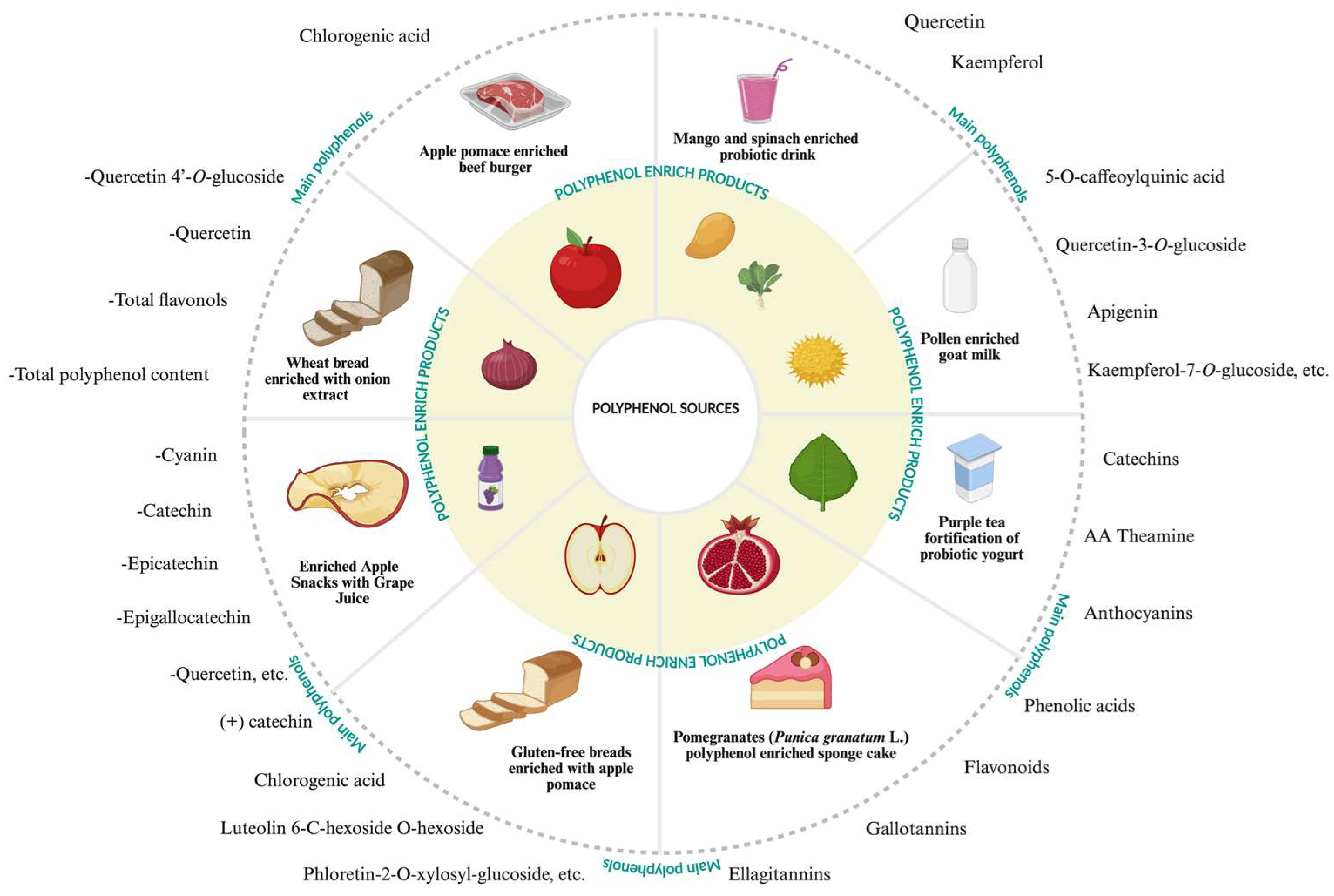

Table 1.
Polyphenols extraction methods and properties of polyphenol food sources.
| Food | Polyphenols | Extraction methods | Studied effect or property of food polyphenols | References |
|---|---|---|---|---|
|
Walnut |
-Ellagic acid -strictinin -3-Methoxy-5,7,3′,4′-tetrahydroxy-flavon -gallic acid -ellagic acid pentoside, etc,. |
-Folin–Ciocalteu method for total phenolic content -Reverse-phase high-performance liquid chromatography high-resolution Fourier transform mass spectrometry to identify polyphenols -100 % hexane (1:10 w/v) as extractant |
Exhibit inhibition of human intestinal glucose transport, human α-glucosidase activities, and human salivary and pancreatic α-amylases | [58] |
|
Blackberry |
-Anthocyanins -Cyanidin-3-O-glucoside, -cyanidin-3-O-rutinoside -Ellagitannins -Catechins etc. |
-Flash chromatography and mass spectrometry - 70% acetone as extractant |
Exhibit antioxidant activity | [59] |
| Black raspberry |
-Cyanidin-3, 5-O-diglucoside -Pedunculagin/casuariin -Caffeoyl-hexoside -Sanguiin H-6, etc. |
-Ultra-high-performance liquid chromatography quadrupole time-of-flight mass spectrometry/ mass spectrometry -The divergent percentage of Methanol, acetone, and ethanol with 30% water |
Exhibit health-promoting effect on gut microbiota | [60] |
| Red Onion Peels |
-Benzoic acid -Rosmarinic acid -Quercetin -Rutin -Pyrogallol -Quercetin -Quercetin derivatives -ρ-Coumaric acid |
-High-performance liquid chromatography analysis -Ultrasound- and enzymatic-assisted extractions with 80% ethanol |
Exhibit antioxidant activity | [10] |
|
Lentil (Lens culinaris) |
-Total phenolic compounds | -Folin–Ciocalteu for total phenolic content -Acetone: water (80 : 20 v/v) as an extractant |
Exhibit antioxidant activity | [13] |
|
Raspberry Flower Petals |
-(+)-catechin -(−)-epicatechin -Procyanidin B4 -Procyanidin C3 -Sanguiin H-6 -Lambertianin C -(−)-epicatechin-3,5-di-O-gallate -Kaempferol-7-O-glucoside -Naringenin-7-O-glucoside, etc,. |
-High-performance liquid chromatography and liquid chromatography-mass spectrometry to identify polyphenols -The Folin–Ciocalteu method for total polyphenol content -Methanol as an extractant |
Exhibit antioxidant activity, lipid peroxidation inhibitory activity, and inhibitory activity against cervical cancer (HeLa S3) cells |
[14] |
|
Chinese raspberry |
-Gallic acid -Epicatechin -Ellagic acid -Rutin -Quercetin 3-O-glucoside -Avicularin -Kaempferol-7-O-glucuronide -Quercetin-7-O-glucuronide, etc,. |
-High-performance liquid chromatography to identify polyphenols -A method that used acidic methanol (1% [v/v] HCl) for total anthocyanin content -The Al (NO3)3–NaOH assay for total flavonoid content -Folin-Ciocalteu’s total polyphenol content colorimetric method for -70% (V/V) ethanol solution as extractant |
Exhibit antioxidant activity and cytotoxic effect |
[15] |
| Roasted hazelnut skin | -Gallic acid -Protocatechuic acid -Catechin -Epicatechin -Quercetin |
-Spectrophotometry for total polyphenolic content -High-performance liquid chromatography to identify polyphenols -Pure ethanol as an extractant |
Exhibit antioxidant activity | [61] |
|
Welsh Onion (Allium fistulosum) leaves |
-Total phenolic content -Total anthocyanin content -Especially Cyanidin and quercetin-3-glucoside |
-Ultra-high-performance liquid chromatography-electrospray ionization positive mode-orbitrap mass spectrometry analysis -70% v/v ethanol as extractant |
Exhibit antioxidant activity | [62] |
|
Pecan |
-Total phenolic content | -Folin-Ciocaulteu’s method for total phenolic content -Acetone/deionized water/acetic acid (70:29.5:0.5, v/v/v) at a ratio of 6:10 (w/v) as extractant |
Exhibit α-Amylase inhibitory, and α-Glucosidase inhibitory effects in starch digestion |
[63] |
| Star anise (Illicium verum) | -Gallic acid -4-Hydroxybenzoic acid -Catechin -Chlorogenic acid -Caffeic acid -Syringic acid -Vanillic acid -p-Coumaric acid -Salicylic acid -Rutin, etc. |
-High-performance liquid chromatography to identify polyphenols -Distilled water as an extractant |
Exhibit antioxidant, anti-Obesity, and hypolipidemic effects |
[64] |
| Domestic Norwegian Apple (Malus × domestica Borkh.) | -Chlorogenic acid -3-O-caffeoylquinic acid -Phlorizin -Quercetin 3-O-glucoside -Quercetin 3-O-rhamnoside -5-O-caffeoylquinic acid -phloretin |
-Ultra-high-performance liquid chromatography system-linear trap quadrupole to identify polyphenols -Acidified methanol/water solution (70/30 with 0.1% hydrochloric acid to pH 2) as extractant |
Exhibit antioxidant activity | [53] |
| Blueberry (Vaccinium spp.) | -Delphinidin-3-glucoside -Quercetin 3-O-galactoside -Pelargonidin-3-O-galactoside -Malvidin-3-O-glucose -Phenylpropanoid com-pound chlorogenic acid isomers -Flavonoid substance epicatechin gallate -Kaempferol-3-rhamnoside |
-High-performance liquid chromatography analysis and mass spectrometry -Acidified methanol (0.3% HCl [v/v]) as the main extractant |
Exhibit antioxidant activity, antitumor activity, and immune function of anthocyanins | [65] |
|
Black Bean (Phaseolus vulgaris L.) |
-Malvidin-3-glucoside -Cyanidin-3-glucoside -Delphinidin-3-glucoside -petunidin-3-O-β glucoside -Catechin -Delphinidin 3-Glucoside -Myricetin -Sinapic acid, etc. |
-Folin–Ciocalteu’s method for polyphenols -pH differential method (AOAC Official Method 2005.02) for total anthocyanins -Electrospray Ionization Mass Spectrometry analysis to identify phenolic compounds -Ethanol-water (50:50 v/v) as an extractant in supercritical fluid extraction |
Exhibit antioxidant activity and anti-aging potential |
[66] |
|
Chickpea hull |
- Gallic acid - Rutin, etc. |
-Ultra-high-performance liquid chromatography to identify polyphenols -Acetone, water, and acetic acid (70:29.5:0.5, v/v/v) as extractant |
Exhibit anti-inflammatory and antioxidant properties. | [67] |
|
Spanish Almonds |
-(+)-Catechin -(−)-Epicatechin -Isorhamnetin-3-O-glucoside -Kaempferol-3-O-glucoside -Isorhamnetin-3-O-rutinoside -Sum Flavan-3-ols -Sum Flavanols |
-Spectrophotometric techniques with the modified Folin-Ciocalteu method for total polyphenol determination -Zhishen, Meng Cheng, and Jianming method that was modified by Jahanbani-Esfahlan and Jamei for total flavonoid determination -Ribéreau-Gayon and Stonestreet for total proanthocyanidin determination -Hydrochloric acid, water, and methanol (3.7:46.3:50, v/v/v) solution as extractant |
Exhibit the antioxidant activity | [68] |
|
Flax (Linum usitatissimum L.) Seed |
-Oleocanthal -Oleuropein -Hesperetin -Ursolic acid -Amentoflavone -Quercetin-3-O-glucoside -Quercetin-3-O-glucuronic acid -Kaempferol-3-O-glucose -Quercetin-3-O-hexose-deoxyhexose, etc,. |
-Liquid chromatography with tandem mass spectrometry analysis to identify polyphenols -70% methanol as extractant |
Exhibit antidiabetic effect, anti-inflammatory effect, α-Amylase inhibitory activity, and α-Glucosidase inhibitory activity. |
[69] |
| Egyptian chia (Salvia hispanica L.) seeds | -Gallic acid -Protocatechuic acid -p-hydroxybenzoic acid -Chlorogenic acid -Catechin -Quercetin -Apigenin -Kaempferol |
-Distilled water, NaNO2, 10% AlCl3, and 1.0 M NaOH in a method used for total flavonoid content -Folin-Ciocalteu method for total phenolic content -High-performance liquid chromatography to identify polyphenols -80% methanol as extractant |
Exhibit antimicrobial effect and antioxidant activity | [70] |
| Oregano (Lippia palmeri Watts) | -Total polyphenol content -Total flavonoid content |
-The Folin-Ciocalteu method for total polyphenol content -The method based on aluminum chloride for total flavonoid content -Ethanol (100%) as extractant |
Exhibit antioxidant activity, intestinal and immunobiological effects | [71] |
| Sweet basil leaves (Ocimum basilicum L.) | -Tannins -Flavonoids |
-Phytochemical analysis to detect secondary metabolites -The Folin-Ciocalteu method for total polyphenol content -The method based on aluminum chloride for total flavonoid content -Ethanol 70% as an extractant |
Exhibit antioxidant activity | [72] |
|
Raspberry leaf |
-Quercetin -Kaempferol -Procyanidin B1 -Catechin -Epicatechin -Gallic acid -Chlorogenic acid -p-Coumaric acid -Protocatechuic acid -Caffeic acid, etc. |
-High-performance liquid chromatography-mass spectrometer to identify polyphenols -60% ethanol as extractant with ultrasonic power |
Exhibit anti-pathogen activity and intestinal health | [1] |
|
Artichoke |
-Luteolin -Luteolin-O-glycoside -Luteolin-7-O-rutinoside -Apigenin, etc. |
-High-performance liquid chromatography/electrospray ionization tandem mass spectrometry -High-Performance Liquid Chromatography, methanol as extractant |
Exhibit hepatoprotective activity |
[73] |
|
Egg Plant Varieties and Spinach Varieties |
-Total phenolic content -Total flavonoid content |
-Methanolic extraction by using methanol/water (80%, v/v) as an extractant | Exhibit antioxidant activity | [74] |
| Clove (Syzygium aromaticum) and Thyme (Thymus vulgaris) | -Total phenolic content -Total flavonoid compounds |
-Folin-Ciocalteu method for total phenolic compounds -Aluminum chloride colorimetric method for total flavonoid compounds -95% ethyl alcohol as extractant |
Exhibit antioxidant and antibacterial activities. | [75] |
| Turmeric (Curcuma longa) | -Gallic acid -Epicatechin -Protocatechuic acid -Catechin -Chlorogenic acid -Ferulic acid -Coumarin -Rutin, etc. |
-The Folin-Ciocalteu method for total phenolic content -High-performance liquid chromatography to identify polyphenols - Ethanol (80%) as an extractant in ultrasound-assisted and conventional solvent extraction |
Exhibit antioxidant and antiproliferative activities | [76] |
| Strawberry | -Pelargonidin 3-O-glucoside and Pelargonidin-derivative -Cyanidin 3-O-glucoside and cyanidin-derivative -Gallic acid |
-pH differential method for total monomeric anthocyanin content -High-performance liquid chromatography-diode array detection for anthocyanins -Folin-Ciocalteu method for total phenolic content -70% ethanol as extractant |
Exhibit antioxidant activity | [77] |
| Young apple | -Procyanidin B1 -(-)-Epigallocatechin -(+)-Catechin -Procyanidin B2 -Chlorogenic acid -4-p-coumaroylquinic acid -(-)-Epicatechin -Caffeic acid -Quercetin, etc. |
-High-performance liquid chromatography to identify polyphenols -The Folin-Ciocalteu method for total polyphenol content -70% ethyl alcohol solution as extractant |
Exhibit α-glucosidase inhibitory effect | [9] |
| Strawberry Tree Fruits (Arbutus unedo L.) | -Rutin -Cyanidin-3-glucoside -Quercetin-3-Xylosidase -Cyanidin-30.5-diglucoside -Quercetin-3-galactoside, etc,. |
-High-performance liquid chromatography to identify polyphenols -The method based on aluminum chloride for total flavonoid content -Folin-Ciocalteu method for total phenol content -pH differential method for total anthocyanins -Acetone/water (70:30, v/v) as extractant |
Exhibit antioxidant activities |
[78] |
| Highbush blueberries | -Total polyphenol fraction -Anthocyanin-enriched fraction -Proanthocyanidin-enriched fraction | -High-performance liquid chromatography -70% (v/v) acetone as main extractant After acetone extraction - Methanol for the total polyphenol fraction - 50% (v/v) ethanol for anthocyanin-enriched fraction -80% (v/v) acetone for proanthocyanidin-enriched fraction |
Exhibit antimicrobial and anti-inflammatory effects. | [79] |
| Red Raspberry | -Quercetin -Myricetin -Ellagic acid -(+)-Catechin -(−)-Epicatechin -Cyanidin 3-O-β-d-glucoside -Cyanidin 3-O-β-d-glucoside equivalent |
-High-performance liquid chromatography to identify polyphenols -Folin-Ciocalteu method for total phenolic content -Acidified methanol (0.5% acetic acid) as an extractant |
Exhibit the inhibition of NLRP3 inflammasome activation | [3] |
Table 2.
Polyphenol usage outcomes discrepanciesin the food industry.
| Product types | Polyphenols | Outcome | References |
|---|---|---|---|
| Purple tea fortification of probiotic yogurt | -Polyphenols -Catechins -AA Theamine -Anthocyanins |
-The tea polyphenols did not affect the probiotics in storage -Increased the beneficial bacteria -Decreased the pathogens in gut microbiota |
[109] |
| Microencapsulated Asiatic Pennywort (Centella asiatica) fortified chocolate oat milk beverage | -Asiatic acid -Asiaticoside -Benzoic acid -Caffeic acid -Catechin -Chlorogenic acid -Gallic acid -Kaempferol -Luteolin -Madecassic -p-Coumaric acid -Quercetin -Rutin |
-Preserved the polyphenolic ingredients of the food | [36] |
| Polyphenol enriched milk | -Rutin -Cyanidin-3-rutinoside -Procyanidin B1 -Delphinidin-3-rutinoside -Gallic acid, etc. |
-Increased the bioaccessibility and antioxidant activity of food ingredients | [48] |
| Sports nutrition milk enriched with blackberry | -Phenolics -Flavonoids -Anthocyanins |
-Enhanced the bioaccessibility of the polyphenols of the blackberry and the protection of anthocyanins in digestion | [110] |
| Blackberry juice with apple fibers | -Anthocyanins -Flavanols -Phenolic acids -Dihydrochalcones |
-Showed high antioxidant activity and inhibition of α-amylase enzymes | [111] |
| Apple pomace enriched beef burger | -Chlorogenic acid -Quercetin-3-O-glucoside -Phloridzin |
-Demonstrated the high total phenol content, antioxidant activity, and antioxidant compounds, including quercetin derivatives, chlorogenic acid, and phloridzin in the enriched beef burger | [35] |
| Oat bran fortified raspberry probiotic dairy drinks | -Phenolic acids -Flavonoids -Phytic acid, etc. |
-Did not cause any negative effect on the polyphenolic ingredients of functional food in storage | [107] |
| Fermented mango (Mangifera indica) and spinach flour (Amaranthus) enriched probiotic drink | -Quercetin -Kaempferol |
-Improved lipid profiles -Stabilized blood sugar fluctuations so that they can be anti-diabetics |
[108] |
| Polyphenols enriched ice cream, yogurt, and buttermilk with black carrot (Daucus carota L.) concentrate | -Total phenols -Total flavonoids -Anthocyanins |
-Enhanced the mineral content (Mg and Fe), polyphenols, and antioxidant activity of dairy products | [112] |
| Gluten-free breads enriched with apple pomace | -Luteolin 6-C-hexoside O-hexoside -Chlorogenic acid -(+) catechin -Phloretin-2-O-xylosyl-glucoside, etc. |
-Improved the nutritional value of the bread in terms of especially polyphenols -Demonstrated high antioxidant activity and polyphenolic ingredients |
[113] |
| Spent Coffee Grounds-Enriched Cookies | -Melanoidins -Chlorogenic acid -5-caffeoylquinic acid -Phenolic acids, etc. |
-Improved the polyphenolic ingredients of the food -Enhanced the bioaccessibility and antioxidant activity of the cookies |
[7] |
| Pollen-enriched goat milk | -5-O-caffeoylquinic acid -Quercetin-3-O-glucoside -Apigenin -Kaempferol-7-O-glucoside, etc. |
-Enhanced the antioxidant activity and bioaccessibility in digestion | [33] |
| Olive leaves and olive mill wastewater-enriched gluten-free breadsticks | -Total polyphenol content | -Demonstrated antioxidant activity and high polyphenol bioaccessibility in the breadsticks | [30] |
| Grape pomace and olive pomace enriched tagliatelle pasta | -Quercetin -Kaempferol -Delphinidin-3-O-glucoside -Petunidin-3-O-glucoside, etc. |
-Improved the nutritional value of the food | [114] |
|
Functional beef burgers formulated with chia seeds and goji pure
e |
-Carotenoids -Chlorogenic acid -Caffeic acids -Quercetin -Kaempferol |
-Enhanced bioaccessibility of polyphenols | [106] |
| Pomegranate (Punica granatum L.) polyphenol-enriched sponge cake | -Phenolic acids -Flavonoids -Gallotannins -Ellagitannins |
-Enhanced the nutritional value and total phenolic ingredient -Inhibition of α-Glucosidase and α-amylase -Showed high digestibility ability |
[115] |
| Rye snacks enriched with seaweed extract | -Total phenolic content | -Enriched antioxidant activity, oxidative stability ability, and preventive effect from diseases -Promoted the enhancement of the nutritional value and preservation of convenience food |
[95] |
| Enriched Apple Snacks with Grape Juice |
-Cyanin -Catechin -Epicatechin -Epigallocatechin -Quercetin, etc. |
-Improved the polyphenolic ingredients of the product -Demonstrated high antioxidant capacity and bioaccessibility of the polyphenols in the digestion of the snacks |
[4] |
| Olive leaf extract-enriched taralli | -Total Phenols -Total Flavonoids -Oleuropein, etc. |
-Increased the bioaccessibility of the nutritional contents and antioxidant activity of the food | [40] |
| Partially deoiled chia flour-enriched wheat pasta | -Quinic acid -Caffeic acid -Ferulic acid -Methylquercetin, etc. |
-Improved nutritional value -Enhanced bioaccessibility in digestion |
[56] |
| Wheat bread enriched with onion extract | -Quercetin 4’-O-glucoside -Quercetin -Total flavonols -Total polyphenol content |
-Demonstrated the high antioxidant activity and polyphenolic ingredients in storage | [41] |
| Berry fruits-enriched pasta | -Total polyphenol content -Anthocyanins |
-Enhanced the nutritional value, bioaccessibility, antioxidant activity, and bioavailability of the pasta | [57] |
Disclaimer/Publisher’s Note: The statements, opinions and data contained in all publications are solely those of the individual author(s) and contributor(s) and not of MDPI and/or the editor(s). MDPI and/or the editor(s) disclaim responsibility for any injury to people or property resulting from any ideas, methods, instructions or products referred to in the content. |
© 2025 by the authors. Licensee MDPI, Basel, Switzerland. This article is an open access article distributed under the terms and conditions of the Creative Commons Attribution (CC BY) license (http://creativecommons.org/licenses/by/4.0/).
Copyright: This open access article is published under a Creative Commons CC BY 4.0 license, which permit the free download, distribution, and reuse, provided that the author and preprint are cited in any reuse.


