
Submitted:
02 December 2024
Posted:
03 December 2024
You are already at the latest version
Abstract
Vehicle diagnostics, as an independent professional and scientific field, began to develop in the 1970s. This field of research has experienced a paradigm shift on the average every 20 years. Today, an epochal shift is taking place, with the development and spread of alternative propulsion systems (e.g. electric, hydrogen, gas) and autonomous vehicles being the main areas of focus. The changes in vehicle technology must be followed by vehicle diagnostics too. Some of the already known diagnostic methods (e.g. for internal combustion engines) can be included in this category, but new methods are also needed to enable economical and environmentally friendly operation of vehicles.
These facts make it important and urgent to define and research this area. Research in this area is particularly important for public transport vehicles and transport fleets. It is not enough to develop energy-efficient and environmentally friendly technologies: they must be operated in the right technical condition and with the right driving techniques for the intended purpose.
This will help large transport companies to achieve significant cost savings and contribute to the environmentally friendly transport of passengers and goods.
A major new area in vehicle diagnostics needs to be introduced and expanded. ECO-Diagnostics is a new category that has not been used before, and it also marks a new area of research and development.
The article presents the basics of categorisation and its support with own research results and application examples. As an introduction, a systematic overview of vehicle diagnostics as a whole is also provided. This is important (and novel) as no such systematic overview is available in the technical and scientific literature. The new category should also be included in this scheme.
In parallel with the development of vehicles and diagnostic procedures, the methods and their context covered by the umbrella term ECO-diagnostics (in ecological and economic terms) should of course be constantly expanded. Artificial intelligence can play an important role in this process.
In the future, there is a strong demand for the development of procedures in the field of ECO-diagnostics. For both economic and environmental reasons, it is urgent and important to research and develop procedures in this category. This fact will also influence the work of researchers in the future.
Keywords:
vehicle diagnostics
; artificial intelligence
; ecology
; economy
1. Introduction
The trends set by current environmental impacts (climate change) and their economic effects strongly emphasise the development and implementation of new ECO-diagnostic procedures for sustainable economic and environmentally conscious vehicle operation, [1,2] The use of fossil and biofuels is still relevant, depending on the intended use. For this reason, ECO-diagnostic procedures should also cover this issue area [3,4].
1.1. Literature Review
Automotive diagnostics started to develop in the 1970s, but has taken a new direction, especially since the early 1990s, with the proliferation of on-board diagnostic systems [20]. In recent years, the need for environmental (climate) protection and economical operation have emerged as the main trends in diagnostics.
Figure 1.
The development of vehicle diagnostics1.
Figure 1.
The development of vehicle diagnostics1.
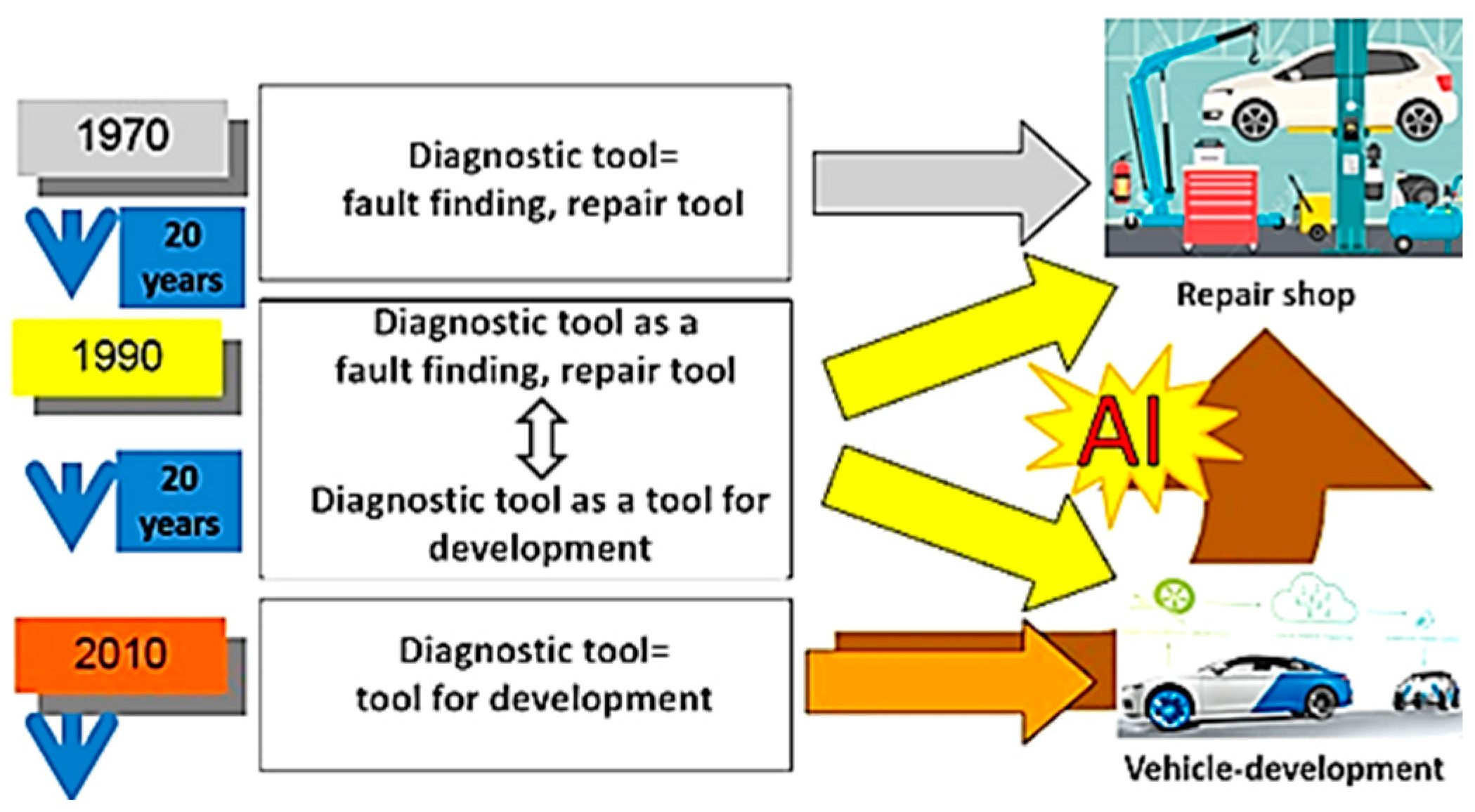
Diagnostics procedures and trends in the automotive industry are constantly and dynamically changing. New trends bring with them new types of faults and test procedures. With the rise of electric and hybrid and autonomous technologies, the vehicles to be tested are becoming increasingly diverse. Some parts of vehicles with different powertrains need to be tested similarly, and others need to be in different ways.
The aim is to develop a diagnostic framework that allows users to benefit from the best options from both an economic and a diagnostic (technical/professional) point of view Eco diagnostics is an extended diagnostic procedure. It includes diagnostic procedures related to various vehicles (e.g., buses, commercial vehicles, passenger cars, etc.) that, in addition to traditional tests, also extend to the field of economic operation testing. Empirical methods and manufacturer's recommendations play a significant role in the choice of the right process. The main considerations in choosing the right approach are:
The main data are:
- cost-effectiveness (economy),
- time (price) and
- quality.
Unfortunately, in most cases, these three conditions cannot be met at the same time, so some kind of weighting procedure is used to decide what is recommended to use. Artificial intelligence, machine learning, and fuzzy decision support considerations also play a major role in the selection of the vehicle and its diagnostics. The sequence (planning) of the diagnostic steps is also essential to economically determining the vehicle's fault and emissions. Another significant aspect is the feedback on the results of the diagnostics.
Building a database that contains all relevant data related to the diagnostics will support the above processes:
-
Name of diagnostic procedure
- ○
- Type of vehicle tested,
- ○
- cost,
- ○
- emission limit.
-
Success rate by vehicle type
- ○
- cost,
- ○
- emissions,
- ○
- success rate in %.
- The final indicator is emissions/cost, which determines the emissions and cost of the diagnostics used. This can be used as a basis for weighting.
The following areas of vehicle diagnostics can form the basis for the development of ECO diagnostic procedures.
For road vehicles, aircraft-related diagnostic procedures can also provide a valuable starting point, e.g. in the field of diagnostics and condition monitoring of aircraft flight control actuation systems [1,5].
Reviewing and systematizing the different architectures that will gradually create an efficient, robust, and safe system of connected autonomous vehicles (AVs) using IoT technology is important. In this case, ECO diagnostics methods are also needed [6].
On-board diagnostic data and machine learning are used to generate corrective data for autonomous driving, which is also a key future direction [7].
The second generation on-board diagnostics (OBD-II, EOBD) is ideal for detecting and collecting driving data from passenger cars and light buses. This data can then be used to predict fuel consumption and emissions in real-time for both large and small cars using deep learning methods and a fuel efficiency driving analysis system [8].
One application could be the development of a soot sensor for on-board diagnostics (OBD) to check the diesel particulate filter and detect failure [9].
The scope of ECO-diagnostics includes a system designed for real-time vehicle diagnostics and early fault estimation, consisting of an on-board unit (OBU) and a vehicle diagnostic server (VDS). The vehicle OBU can receive real-time vehicle operating data such as speed, engine speed (revolutions per minute), accelerator pedal, brake, coolant temperature, battery voltage, instantaneous fuel consumption, etc. from the CAN bus and OBD. The expert system built into the VDS then analyses this vehicle operating data and performs real-time vehicle diagnostics or early warning of a fault. Once abnormal conditions are detected, the VDS informs users or the manufacturer about the need for vehicle maintenance or repair [10].
Jaguar Land Rover (JLR) has developed a system for automated on-board vehicle diagnostic testing to implement services, communications and software downloads. The software architecture and interface developed for this purpose is the basis for performing diagnostic service testing [11].
An equally important aspect is implementing state-of-the-art DPF technologies, new catalyst formulas, and control strategy, into the on-board diagnostics (OBD) of the PM to help predict DPF soot load [12].
The driving style choice support system is also based on ECO-diagnostics, using economical and environmentally friendly solutions [13].
In addition to emissions, the impact of climate change on cities is also affected by humidity and moisture. Analysing this using diagnostic tools is also an important task [14].
The economic approach requires the use of an intelligent diagnostic system based on the monitoring of the remaining lifetime of vehicle units and components [15].
Another important area of ECO diagnostics is monitoring the energy demand of urban freight transport using electric vehicles.
The importance of relevant data (and appropriate measurement technologies) has been recognized and addressed by the European Union [16]. The concept and measurement technology of RDE, the Worldwide Harmonized Light Vehicles Test Procedure (WLTP), was thus developed. In this area, NOx emissions from diesel engines are given priority and CO2 emissions and fuel consumption of internal combustion engines are rightly treated in a harmonized way [16]. The concept of diagnostics analyzing environmental and economic aspects is therefore already present (although not highlighted as a separate diagnostic branch). Although the RDE test procedure was developed by the EU, it was introduced in the UK in 2017 [17]. The importance of this professional field is of course equally high and important in the developed countries of the world (e.g. USA, Japan).
The proper technical condition of fuel supply systems is of great importance for all combustion engine vehicles [18]. Their condition can be assessed and maintained to the required technical standard by diagnostic tools.
Failure of these systems can lead to a significant increase in emissions and fuel consumption, but also to a deterioration of several other parameters (e.g. power, CO and HC emissions). Portable emission measurement systems (PEMS) are a good example of a diagnostic tool. Expert-based diagnostics systems [1] are suitable for improving the accuracy of diagnostic tests.
1.2. Need for a New Concept: ECO-ECO-Diagnostics
Their application cost is high, but they are effective for increasingly complex systems and can therefore pay for themselves more quickly in ECO diagnostic applications.
On-board diagnostic systems [19,20,21,22] provide effective monitoring of environmental indicators and economic operation, even allowing continuous condition monitoring during operation.
Properly deployed expert diagnostics can effectively manage the ever-widening range of network functions and keep track of the proliferation of updates through improvements. Relying on this, in turn, can save unnecessary component replacements.
Short definition of ECO-Diagnostics:
ECO-Diagnostics has a dual meaning:
- Ecology: diagnostic tests to maintain a balance between the transport ecosystem, the environment and living beings.
- Economy: diagnostic tests for economical vehicle operation.
Figure 2.
(ECO-)Diagnostic Lifecycle Model2 .
Figure 2.
(ECO-)Diagnostic Lifecycle Model2 .
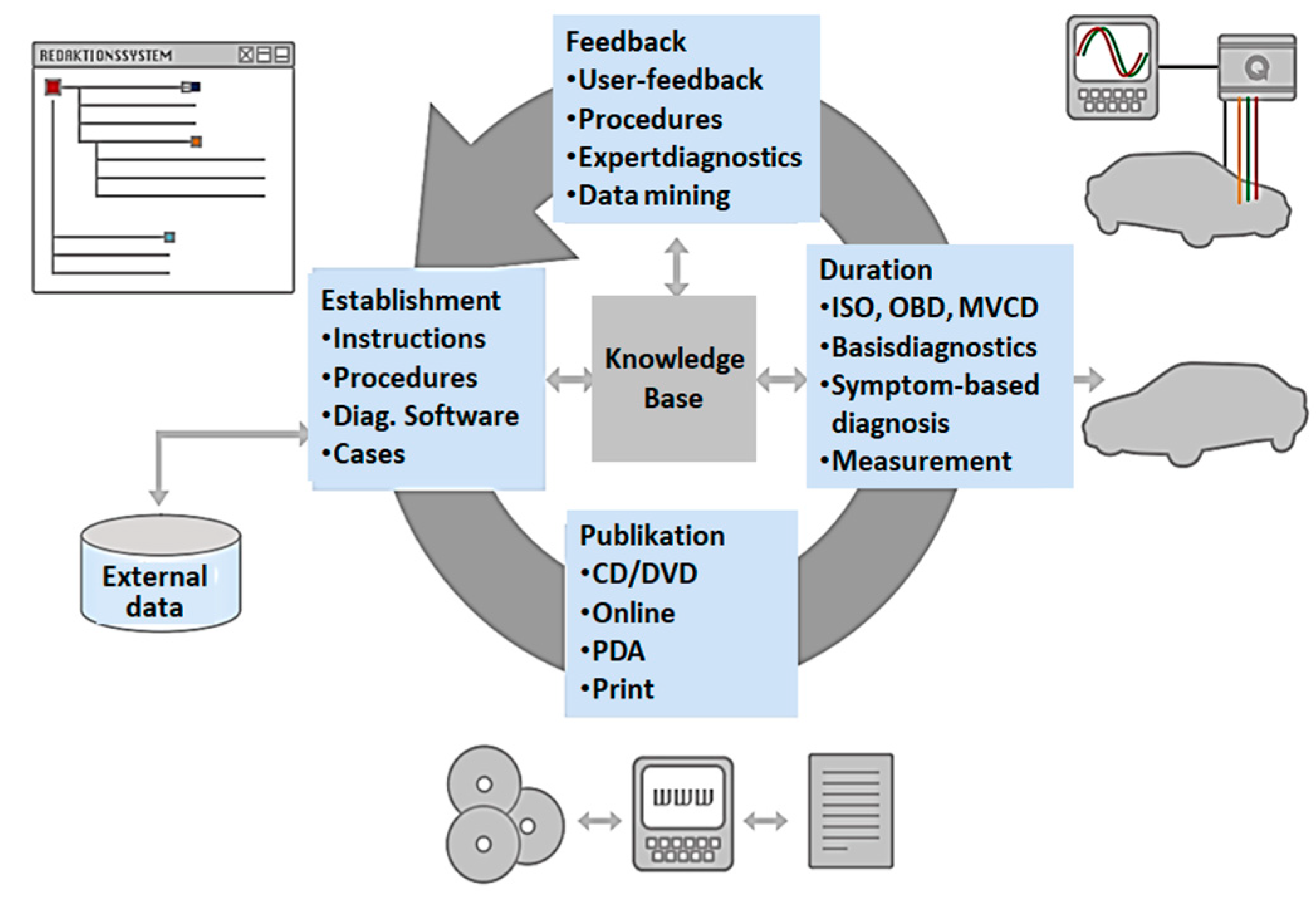
Based on the importance of expertise, 3 categories can be established [23]:
1: normal specialist
2: Specialist with specific training (technician)
3: diagnostics with manufacturer support
Environmental and Economic Operation (ECO-Diagnostics) methods are mostly in categories 2 and 3.
2. Modern Vehicle Diagnostics
A detailed classification of diagnostics as a discipline is important for the precise positioning of ECO-diagnostics.
Diagnostic tests can be grouped and organized in several ways3 . In the following, I present my multi-criteria classification.
2.1. Systematization of Vehicle Diagnostics
Vehicle diagnostics:
-
Two main directions of vehicle diagnostics
- Off-board
- On-board
-
Vehicle diagnostics levels
- Deep diagnostics
- Selective diagnostics
-
Accessing diagnostic information
- Global interface
- Subsysteme interface
2.1.1. Main Directions of Vehicle Diagnostics
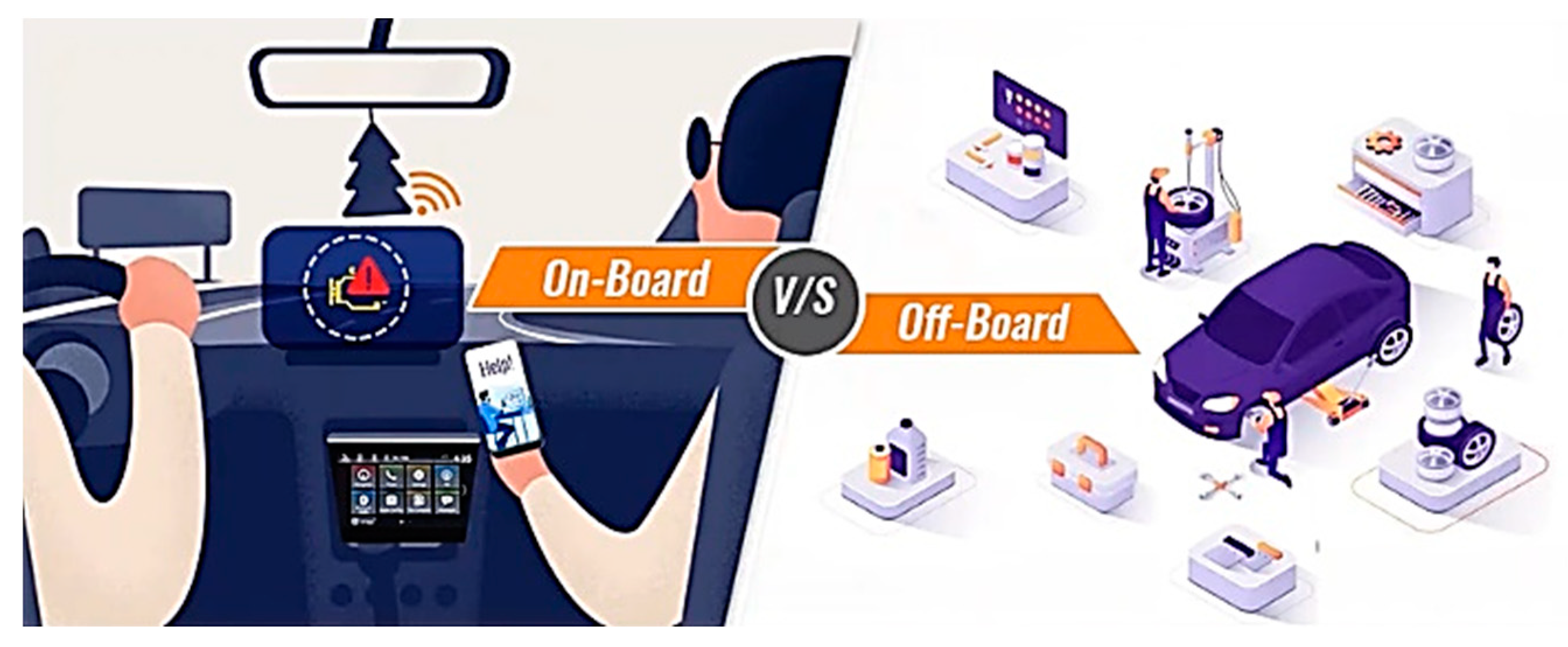
Vehicle diagnostics can be divided into so-called off-board and on-board tests:
- OFF-BOARD DIAGNOSTICS:
The hardware and software components required for the diagnostic condition test (measuring instrument and transmitter, measurement control, measured data evaluation) are not integrated components of the vehicle (vehicle sub-systems). The measuring instruments must be connected to the system during diagnostics.
- ON-BOARD DIAGNOSTICS:
Diagnostic condition testing is a function of the vehicle’s-controlled systems. The hardware components and software required for the diagnostic condition test (measuring instrument and transmitter, measurement control, measured data evaluation, information storage) are integrated components of the vehicle (vehicle sub-systems). Measurements in the system take place continuously or periodically, and the measurement data are processed and evaluated at intervals. The ID of the detected error (error code) is stored in the error storage for later reading. The system tester accesses the vehicle's control units via a common diagnostic connector.
Figure 3.
On-board vs. off-board diagnostics4 .
Figure 3.
On-board vs. off-board diagnostics4 .
2.1.2. Diagnostic Levels
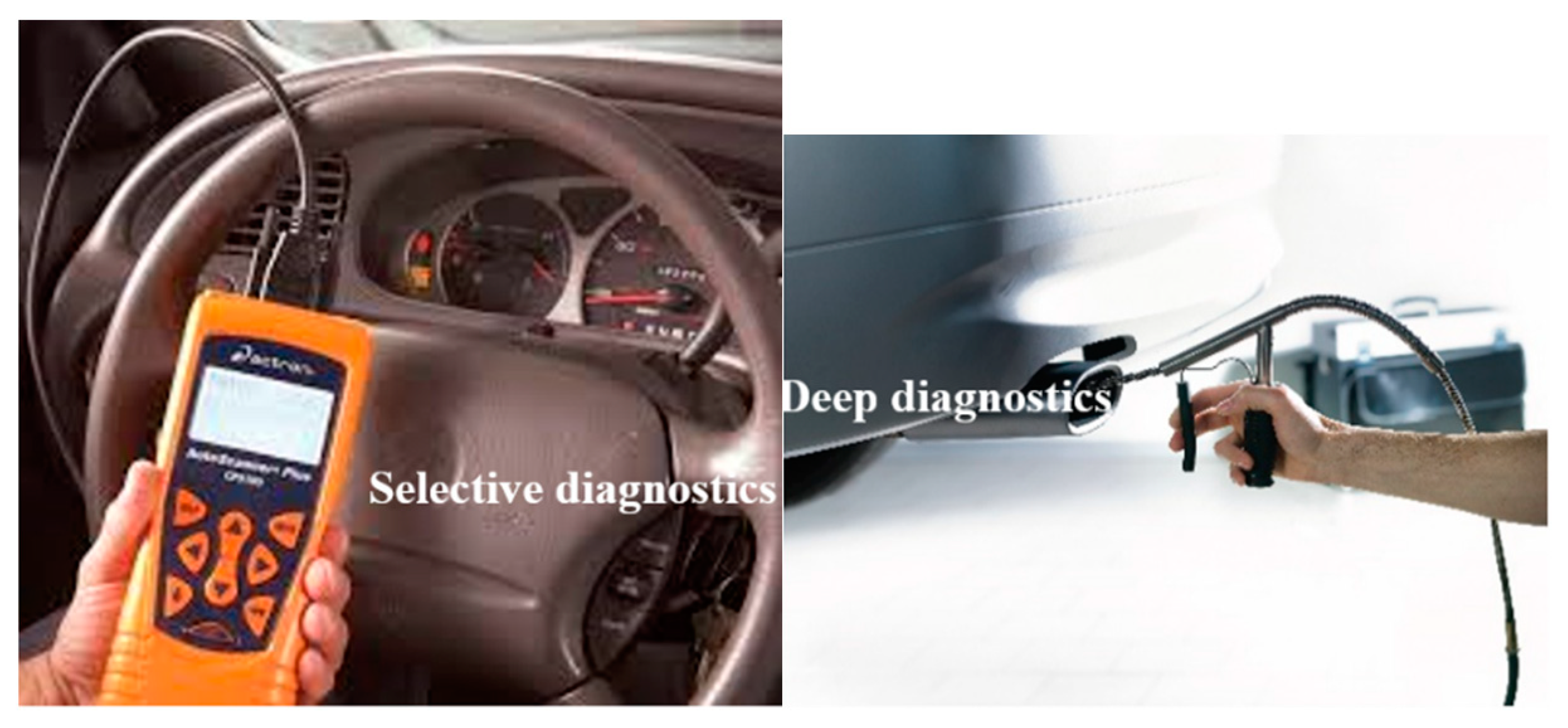
Based on the purpose and procedure of the diagnostic test, two groups of diagnostic methods are distinguished:
- selective procedure and method,
- in-depth diagnostic procedure and method.
The two procedures are sequential in relation to each other and can be separated in time and space in terms of their purpose and technology.
- Selective method
The purpose of a selective test is to determine whether the operational characteristics and vehicle technical properties of a given unit are within or outside the nominal (acceptable, still acceptable) range. Based on the results of the selective test, in most cases a decision has to be taken for further testing. If the condition is not acceptable, further diagnostic or non-diagnostic tests are required to identify the specific cause of the failure.
A significant part of the technical inspection of an official vehicle involves selective diagnostic measurements. The technical characteristics of the vehicle are tested to determine whether the concentration of pollutants in the brake, shock absorber or exhaust gas is within or outside the limits. A decision is taken on whether to allow the vehicle to continue to be used on the road.
The selective test does not reveal the cause of the non-compliance. In the subsequent repair process, further tests and in-depth diagnostic methods must be used to find the cause of the defect.
The failure message of the electronic management system is also selective information.
- Deep diagnostic method
The deep diagnostic procedure is a fault detection process, which results in the identification of the cause of the fault. In electronic systems, the technological sequence of deep diagnostic fault detection is now determined by an algorithm. This is controlled by the system tester program.
The knowledge set from previous repair experience can be incorporated into diagnostic debugging and this can extend the so-called guided debugging mentioned above to the level of a new debugging program. The relevant knowledge repositories, such as brand forums, are on different servers, and a link to them needs to be established.
Figure 4.
Selective and deep diagnostics methods.
In the systematization of diagnostics, it is worth introducing the concept of ECO-Diagnostics. Thus, the grouping by purpose can be as follows:
-
ECO-Diagnostics
- ▪
- Emission Diagnostics
- ▪
- Energy consumption diagnostics (e.g., fuel consumption measurement, electrical consumption measurement)
-
Traffic safety diagnostics
- ▪
- Chassis diagnostics
- ▪
- Brake diagnostics
- ▪
- Shock absorber diagnostics
- ▪
- Lighting diagnostics
- ▪
- ADAS diagnostics
-
Other operational diagnostics
- ▪
- General engine diagnostics
- ▪
- Gearbox diagnostics
2.2. Access Diagnostic Information
In a diagnostic test, the necessary information is obtained from the interface of the system or subsystem under test.
Global interface
The global interface is the surface that covers the whole vehicle. In the global interface, geometric (wheel and axle positions), kinetic (wheel traction, braking force, lateral force) and emission (gaseous and particulate emissions, noise emissions) characteristics can be measured.
Subsystem interface
Within the global interface (vehicle) boundary space, a nested subsystem interface can be defined.
The information can be taken from the interface of each subsystem if they have independent test connectors, measurement connectors: e.g. for the EBS (Electronic Braking System) air brake system, the diagnostic condition monitoring should cover several circuits: e.g. brake pad wear sensor, brake temperature warning in the brake system.
2.3. Complexity of Diagnostics and Artificial Intelligence
Another important factor from a diagnostic point of view is that different types of vehicles require different diagnostic procedures. In most cases, one procedure will be used for an internal combustion engine ([24,25]) bus and another for an electric car. However, in all cases the aim is to use the same economical and rapid diagnostic procedure to identify the vehicle's condition and fault. However, this is not always a simple procedure.
Two key areas have recently emerged, one being the importance of reducing emissions. On the other hand, with energy prices rising dramatically, increasing energy efficiency is an important aspect. Both areas fall within the scope of ECO-Diagnostics.
The process of fault detection and repair also varies, with empirical repair playing a major role in most cases ([26,27]). Dealerships have a great experience with the faults of a particular type of vehicle, but in most of these case they are industrial and professional secrets and are very rarely available. Furthermore, only in very rare cases is a database available to help select the correct procedure
In-service diagnostic tasks are becoming increasingly complex and require a renewable set of tools.
The production-side feedback of operation / service information has become an important element in the development and diagnostics.
This already raised the need for remote diagnostics. However, this expectation is further reinforced by the need for the immediate transmission of information for authorities on technical deterioration in vehicles. It means it is not only possible to provide feedback during periodic official roadworthiness tests, but in cases involving road safety and vehicle emissions.

Table 1.
Diagnostic operations depending on workshop size and vehicle category5 .
Table 1.
Diagnostic operations depending on workshop size and vehicle category5 .
| Workshop size | Small workshops / brand-independent car repair shops | Large workshops / brand services | |
|---|---|---|---|
| Vehicle category | |||
| Premium category upper category | 20% of the tasks are diagnostics, 14% are complex cases | 26% of the tasks are diagnostics, 18% are complex cases | |
| Medium category small (compact) category | 12,5% of the tasks are diagnostics, 6% are complex cases | 16% of the tasks are diagnostics, 8% are complex cases | |
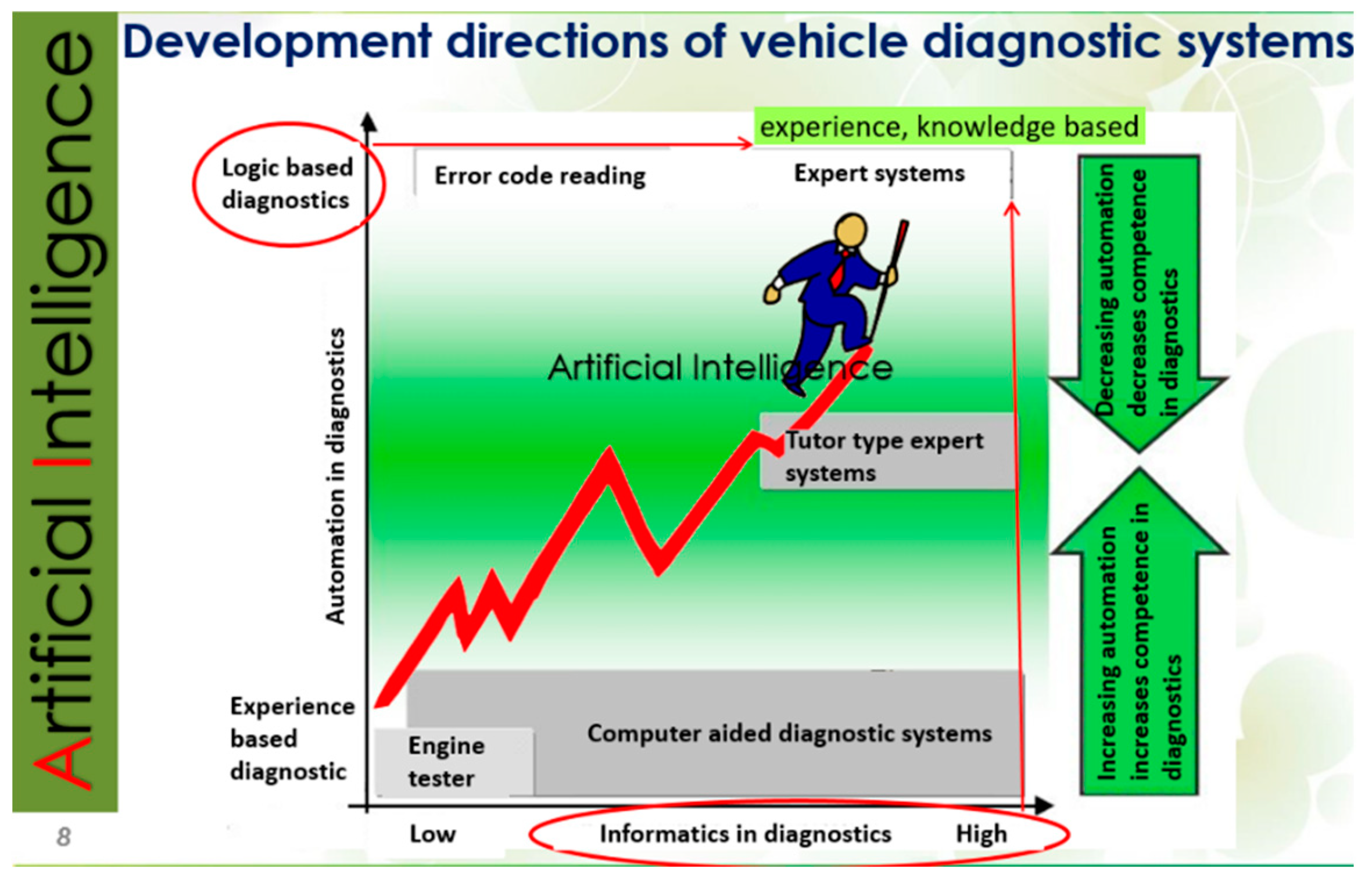
Another important trend we must reckon with is that artificial intelligence is spreading more and more in vehicles. The diagnostics must also keep up with this trend.
Figure 5.
Development directions of vehicle diagnostics systems6 .
Figure 5.
Development directions of vehicle diagnostics systems6 .
3. Methodology: ECO-DIAGNOSTICS as a New Concept
ECO-Diagnostics has a dual meaning:
- Ecology: diagnostic tests to maintain a balance between the transport ecosystem, the environment and living beings.
- Economy: diagnostic tests for economical vehicle operation.
Table 2.
ECO-Diagnostics concept7 .
Table 2.
ECO-Diagnostics concept7 .
| ECOLOGY | ECONOMY |
|---|---|
| Emission | Fuel consumption |
|
|
| Abrasion | Traffic safety |
|
|
| Noise-emission | Lifetime |
|
Naturally, the concept also includes diagnostic tests in the field of road safety.
3.1. Ecology
Nowadays the environmental impacts of cars are very important. Automobiles have a big footprint, from tailpipe emissions to road infrastructure.
Cars consume a lot of energy before they ever make it to the open road. Similarly, the end of a car’s life doesn’t mark the end of its environmental impact.
Fuel consumption and emissions of air pollution and greenhouse gases that climate scientists say are driving global warming. These harmful processes can be monitored by diagnostic tests and controlled by regulations.
Vehicles are in the world biggest air quality compromisers, producing about one-third of all air pollution. The smog, carbon monoxide, and other toxins emitted by vehicles.
There is a new concept today: green vehicle, clean vehicle, eco-friendly vehicle, that produces less harmful impacts to the environment. But this vehicle also needs diagnostics. This is a new technical and research area.
Green vehicles can be powered by alternative fuels and advanced vehicle technologies.
In the following, I present examples from my own field of research in the topic of ECO-Diagnostics.
3.2. Example of Economy Diagnostics
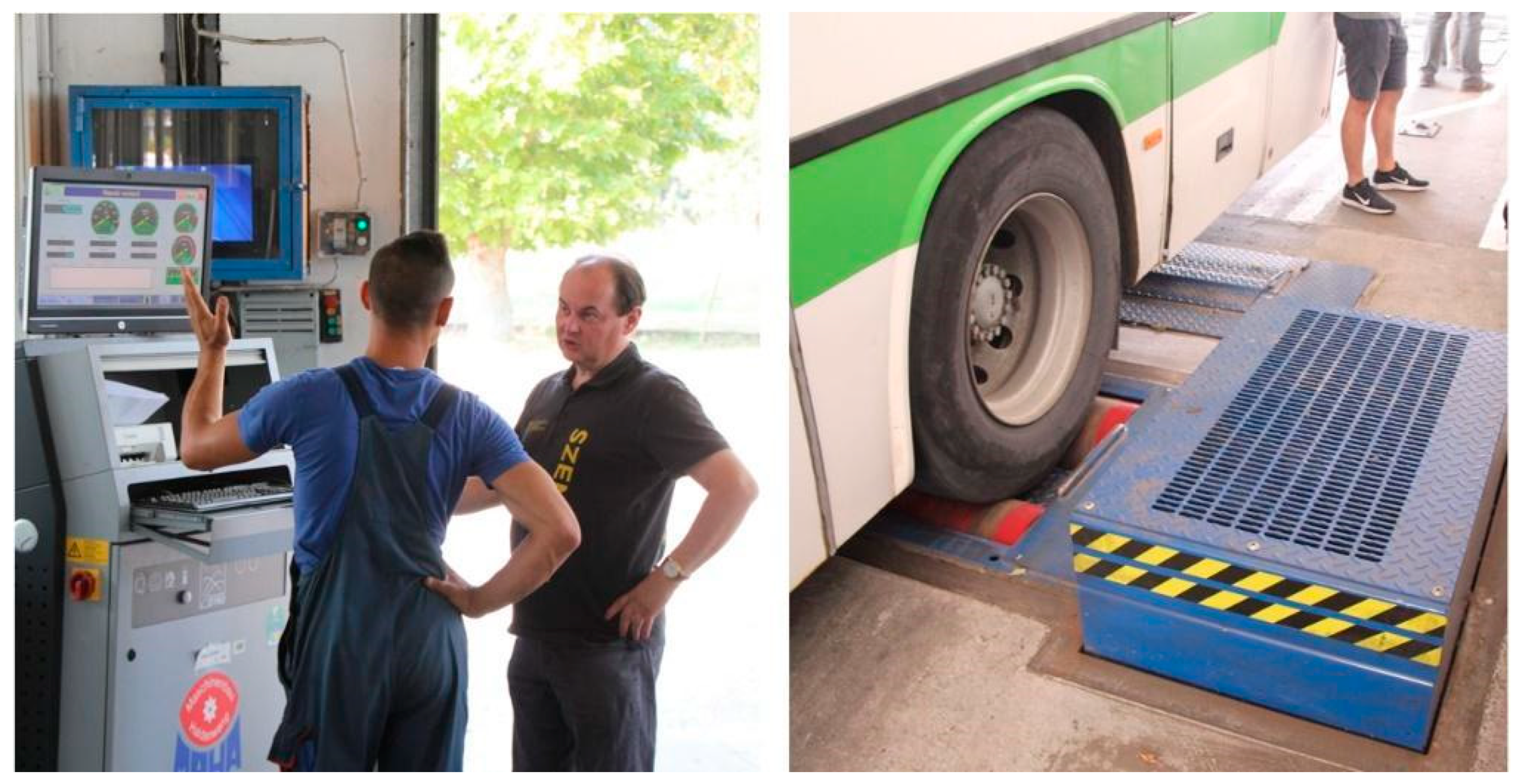
To protect the environment and save fuel costs, the diesel-LPG mixed operation of the buses (Kravtex Credo EC12) of the southern Hungarian transport company is being studied.
The operating points of the measurement have been set on the MAHA LPS 3000 LKW roller test bench.
The measurements of emission have been accomplished with the help of a MAHA MET 6.3 combined gas Analyzer, whereas that of the gas oil consumption with a DWF-E diesel consumption meter (with differential output), the output of which has been analysed with the help of a P300 two-channel universal frequency transmitter with impulse input.
Figure 6.
During the measurement (ECO-diagnostic measurement of buses)8 .
Figure 6.
During the measurement (ECO-diagnostic measurement of buses)8 .
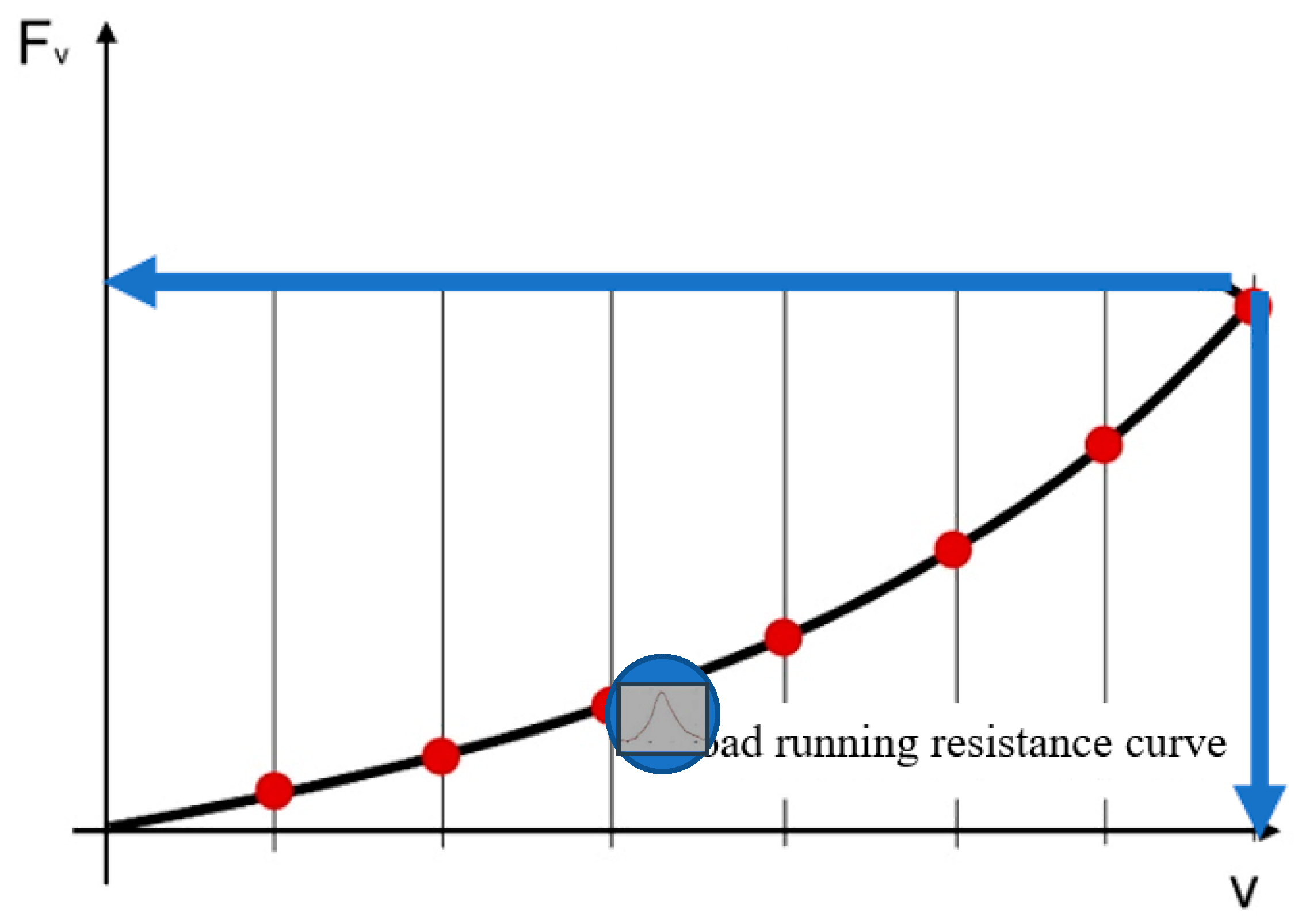
The measurements have been conducted at the operating points of the road running resistance curve (stationary operating state). The coordinates of the measuring points have been set without exception. In practice, they are (v, Fv) value pairs.
Due to the reproductivity of the measuring points, the operating points were set during the comparative measurement as follows: The speed coordinate of the operating point was set with the help of the roller test bench characteristic v=constant, whereas the value of traction (Fv) was laid down with the help of the accelerator pedal after setting the given characteristic gear.
Figure 7.
Operating points of the measurement.
- Each bus was measured twice:
- in diesel mode (sign NG in the chart headings)
- in diesel-LPG mode (sign G in the chart headings)
- The measurements were carried out after the stabilization of the operating point.
- Measured values:
- vehicle speed, v (km/h)
- traction, Fv (N)
- wheel power, (Pk)
- gear
- emission
- CO (%(v/v))
- CO2 (%(v/v))
- HC (ppm)
- O2 (%(v/v))
- NOx (ppm)
- smoking, k, (m-1)
- diesel oil consumption, (l/min)
- gas consumption (l/min)
Table 3.
Fuel consumption figures (Kravtex Credo EC12).
| Target speed of the vehicle[km/h] | Speed range | Total fuel cost[HUF/100 km] | Monthly travelled [km] |
Monthly cost change [Ft] |
|---|---|---|---|---|
| 20 | 2 | 1 400 | 5679 | 79 526 |
| 30 | 3 | 3 693 | 5679 | 209 717 |
| 40 | 4 | 1 372 | 5679 | 77 900 |
| 50 | 4 | 1 447 | 5679 | 82 173 |
| 60 | 5 | 2 664 | 5679 | 151 306 |
| 70 | 5 | 319 | 5679 | 18 118 |
| 80 | 6 | 1 214 | 5679 | 68 942 |
The emission of buses has improved as regards NOx and HC emissions. Moreover, due to the reduced gas oil consumption and the combustion of LPG, the CO2 emission of the engines has also become better. This is very important because this gas - known as a greenhouse gas - is one of the main cause of climate change.
The main advantage of the project is that it significantly decreases
- CO2-emission,
- NOx emission and
- diesel smoke,
which are much criticized in the case of diesel engines.
As a result of LPG injection, the CO and HC emissions are slightly increasing (in case of the careful setting of the mixing ratio). It can be decreased with the help of a retrofitted fluid catalytic converter.
The positive environmental effects are mainly significant in the case of lower EURO category buses.
International experience and our own measurements have also demonstrated that the diesel-LPG mixed operation is promising significant results, in respect of cheaper operation, and smaller degree of the pollution of our environment (it can be also seen on following figures).
The true extent of the savings cannot be interpreted using steady-state measurements, as vehicles on the routes in question are constantly changing their speed profile. However, it can be concluded that significant savings can be achieved for a given working point (the value shown in the table is the value as if the bus were to complete the month at such a working point) if the amount of LPG added is correctly determined. For those duty points where there is a positive sign of change, fine tuning of the LPG dispensing system is required.
In the case of everyday use, of course, the savings are strongly influenced by the driver's driving technique.
A significant improvement in highly toxic NOx emissions is a major achievement.
An example of the evaluation method recommended for ECO-diagnosis procedures
We note that for the mathematical determination of individual function relationships, we can also use regression analysis.
These functions can be univariate or multivariate functions.
In the case of the univariate real characteristic f(x,a), where is the real parameter vector, the following regression method is used:
assuming, that the partial derivatives of the function F according to ai exist:
a = [a1, a2, …, ak] =?
a =? (j = 1, 2, …, k)
Then the solutions of the following system of equations provide the coordinates of the parameter vector "a"
In the case of three-dimensional regression, the regression procedure can apply to two different physical phenomena in space (e.g. in the cylinder space).
I. Scalar-vector function
E.g. when the selected by vector point has temperature assigned to it.
Then the regression task is to:
f(x, y, z, a) should fit the measured ρi values with the smallest cumulative error
at the points given by coordinates xi, yi, zi
a = [a1, …, ak, …, an]; and all ρi >0
M [f(xi, yi, zi, a) - ρi)2] → Min!
II. Vector-vector function regression
E.g. when the selected by vector point has force (pressure) assigned to it.
Requires the following calculations
In this case the regression calculation requires the following steps:
a = [a1, a2, …, ak,
… an]
f(r, a) = f1(x, y, z, a) i + f2(x, y, z, a) j + f3(x, y, z, a) k
f(r, a) = f1(x, y, z, a) i + f2(x, y, z, a) j + f3(x, y, z, a) k
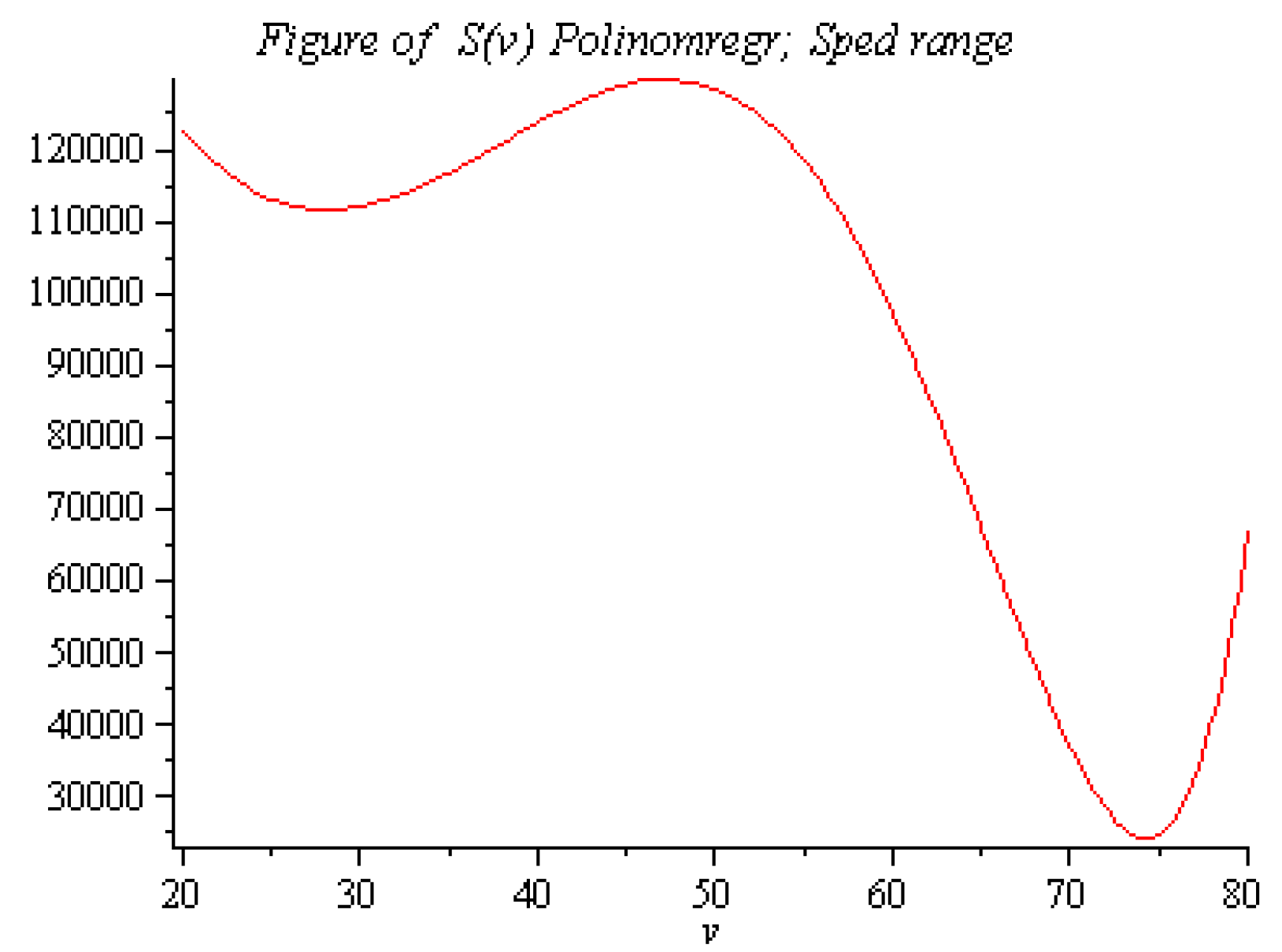
Based on the data in Table 10, we performed a regression analysis taking into account 4 independent variables.
The independent variable is vehicle speed [km/h]
The 4 dependent variables:
- Speed range,
- Total fuel cost [HUF/100 km],
- Monthly travelled [km]
- Monthly cost change [HUF]
The mathematical method we use is n-th degree polynomial regression. The specific calculations were performed using a 10th degree polynomial.
f (x, a) = a1 + a2x + a3x2 + a4x3 + … + an+1xn
a = [a1, a2, a3, …, an+1] =? (k = 1, 2, 3, …, n+1)
Figure 8.1.
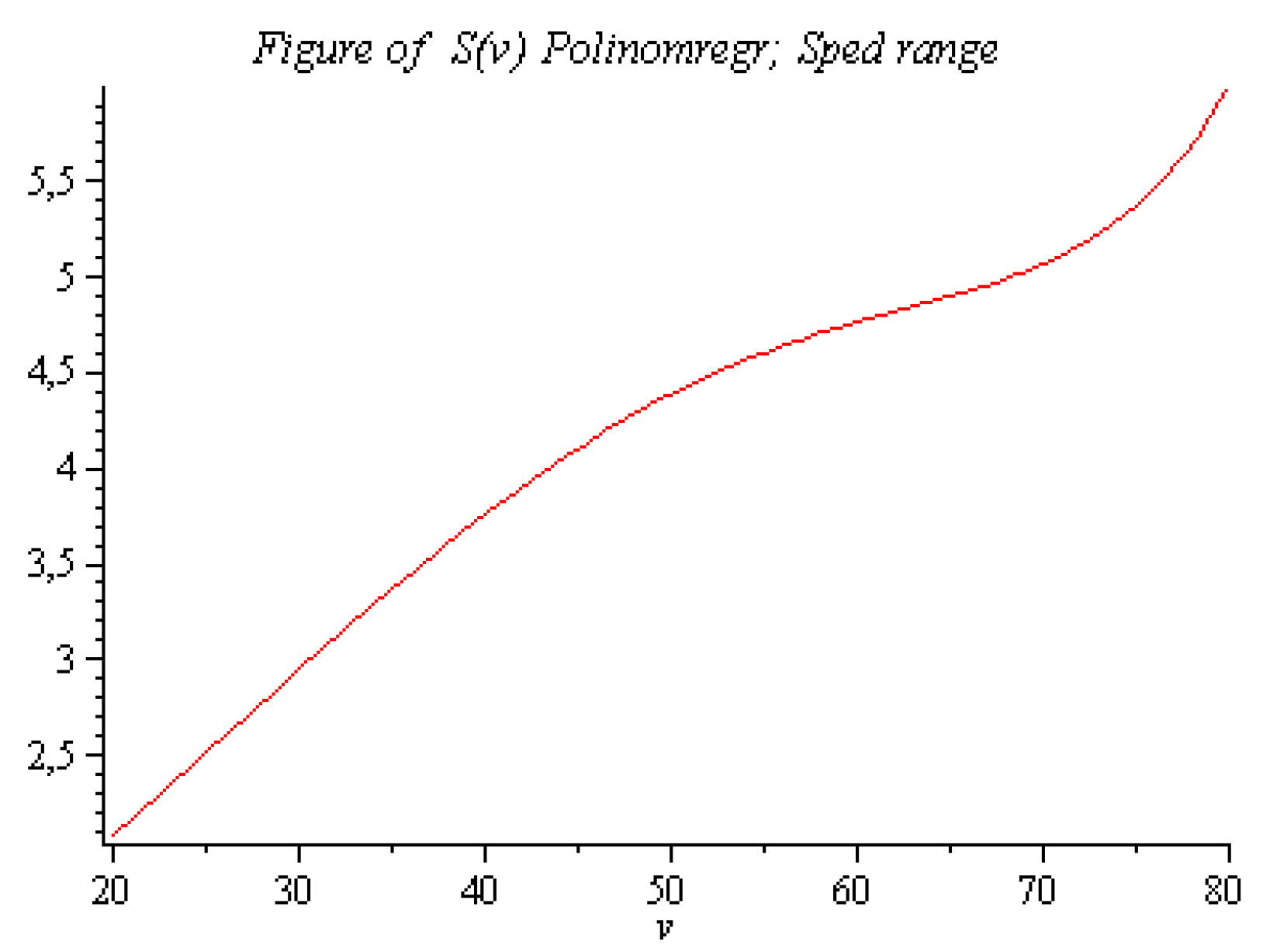
Figure 8.2.
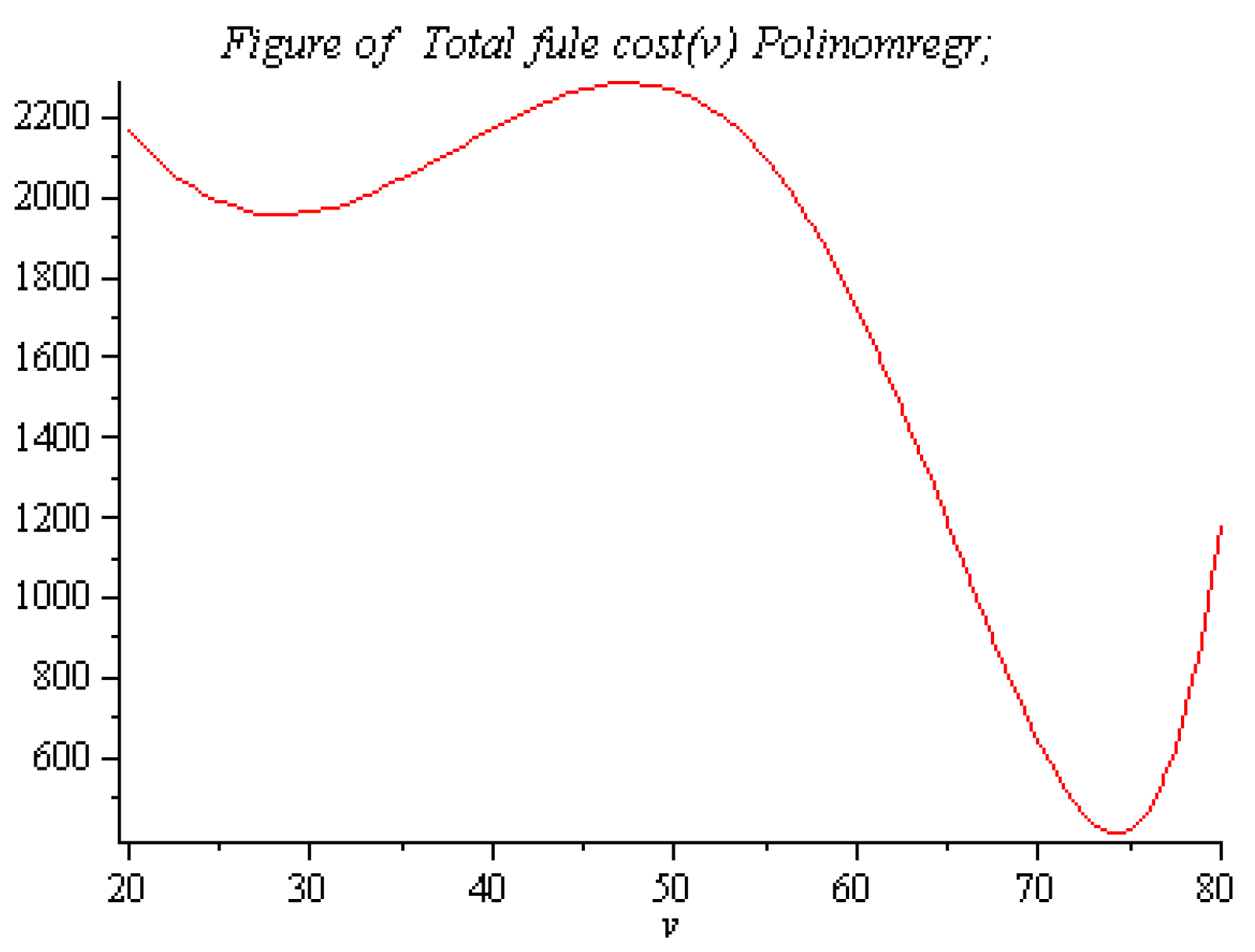
Figure 8.3.
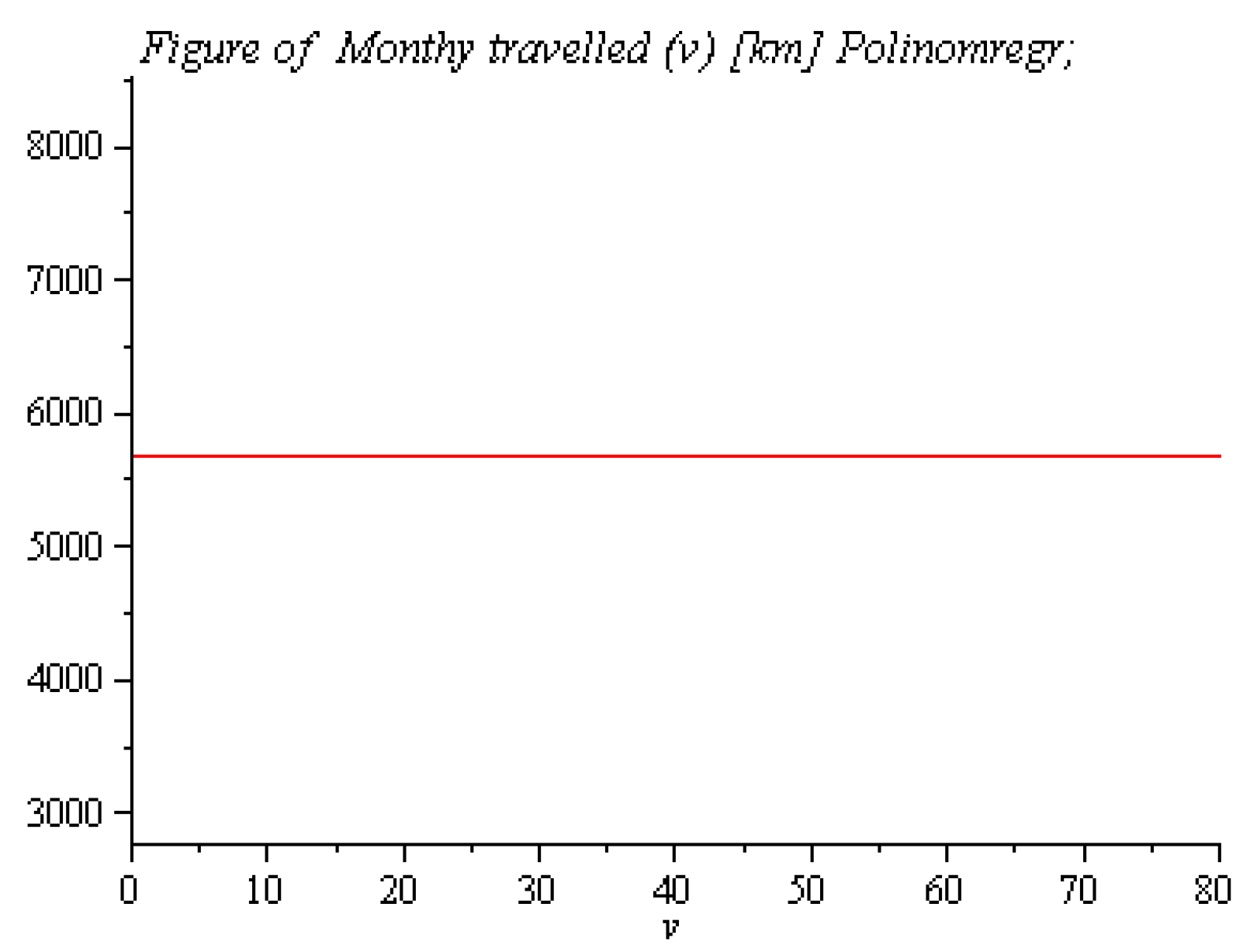
Figure 8.4.
3.3. Economy
3.3.1. Example of Economy Diagnostics
Petroleum products raise environmental red flags even before they are burned. Extracting them from the earth is an energy-intensive process that can damage local ecosystems.
The proper condition of the vehicle factory is very important in this respect. Diagnostic performance measurement is a tool for this, suitable benches, however, are available in only a few workshops due to high costs.
A cost-effective roller bench can offer a solution for this problem.
The starting point of the measurement method is to accelerate and decelerate the powertrain of the tested vehicle on free rotating (brake equipment not required) rollers in the unloaded state. Since we want to measure external characteristics, the measurement must be performed in full load operation ([28,29]).
The measurement procedure is the following:
- ACCELERATION PHASE: Accelerate the vehicle’s powertrain and power bench rollers at full load (full throttle) in free acceleration to rated engine speed in the gear to be tested.
- ROLLING-OUT STAGE: Release the clutch, leaving the transmission in the given gear, allow the vehicle to decelerate to a stop
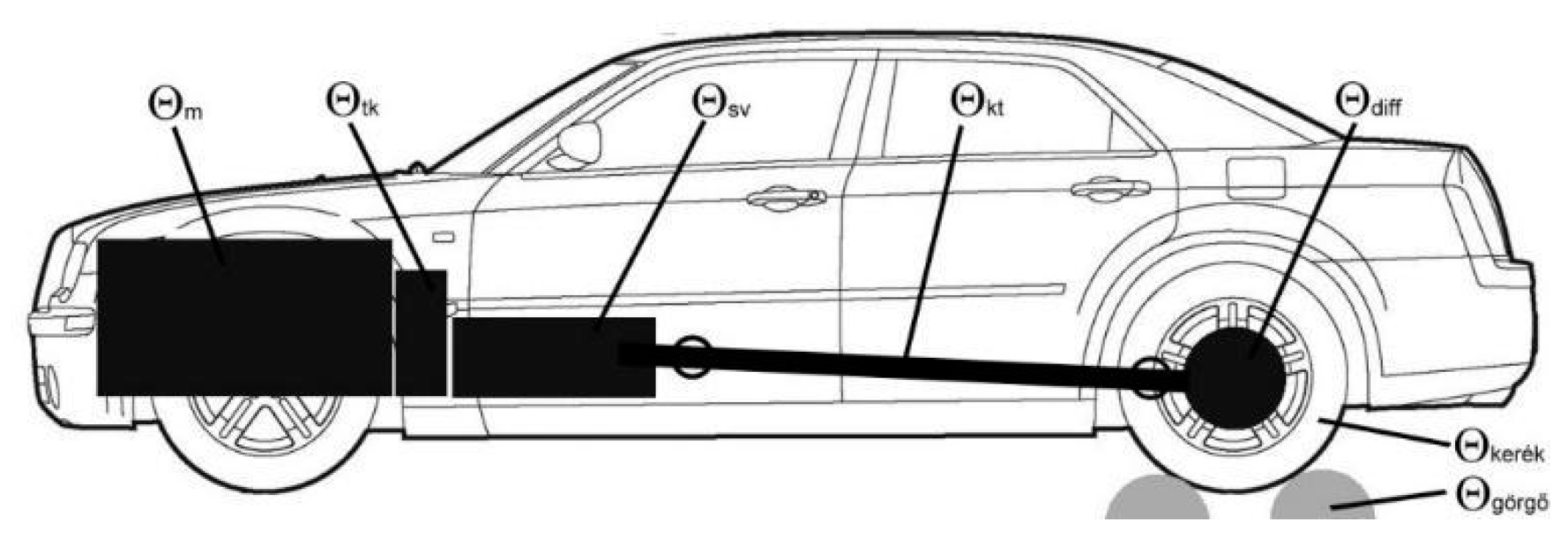
During the measurement, since there is no external load, the motor must accelerate the moments of inertia shown in the figure below. During the run, the moment of inertia of the motor was disconnected, so the effect of the other moment of inertias slows down the system.
Figure 9.
Vehicle powertrain on free rolling rollers.
During the measurement, we need a single encoder to measure the shaft speed (n) of the rollers (roller radius: rg). From this the following data can be formed:
In Eq. 1 is the angular speed, is the angle, t is the time, n is the RPM
In Eq 2 is the angular acceleration, t is the time
- vehicle speed (the circumferential speed of the wheel or roller):
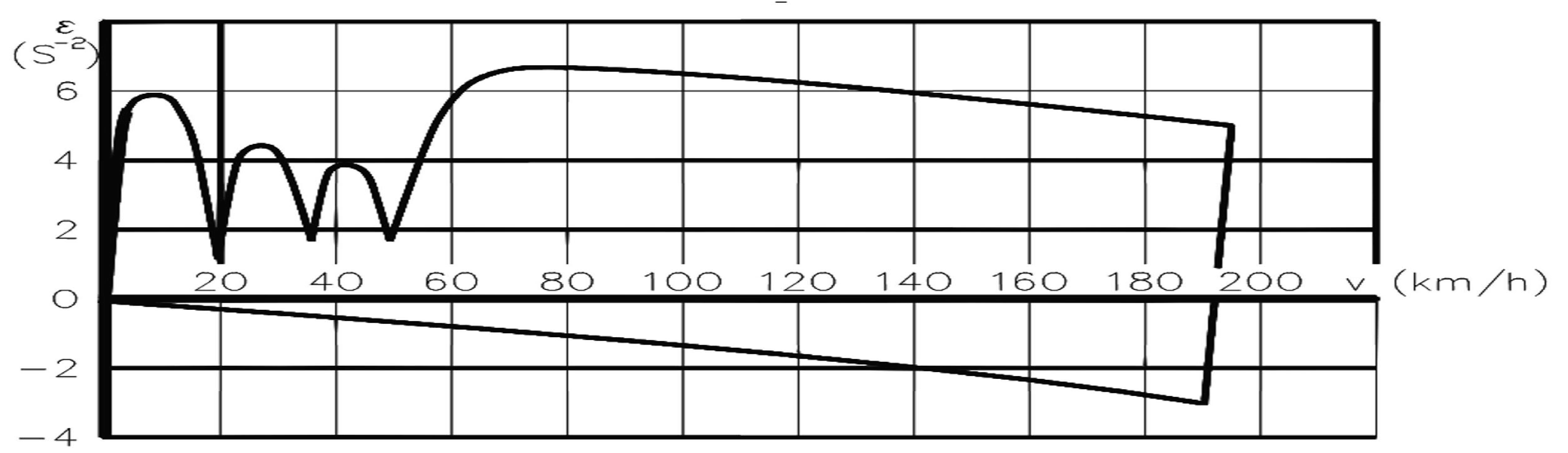
Knowing the above, we can record the diagram shown in the figure below during the measurement.
Figure 10.
Characteristic curve recorded during the measurement.
The following basic mechanical equations provide a basis for further consideration:
and
In the case of the above equations, Θ means the reduced moment of inertia (Θred) on the roller shaft, since the speed is also measured on the roller shaft. Based on the above, the following conclusions can be made:
The characteristics of function ε in respect of vehicle speed (wheel rotational speed) equals to full load curve, while function (ω.ε) equals to performance curve.
- Practical considerations for measurement
The power-proportional functions are shown in Figure 13. To move on, we need to interpret this:
ACCELERATION PHASE: the roller is accelerated by the vehicle wheel, so the function recorded by the measurement (ω, ε) is proportional to the wheel power.
RUNNING PHASE: the roller and the powertrain are slowed down by the losses of the units after the engine, i.e. the loss power.
So that:
Rearranged:
where:
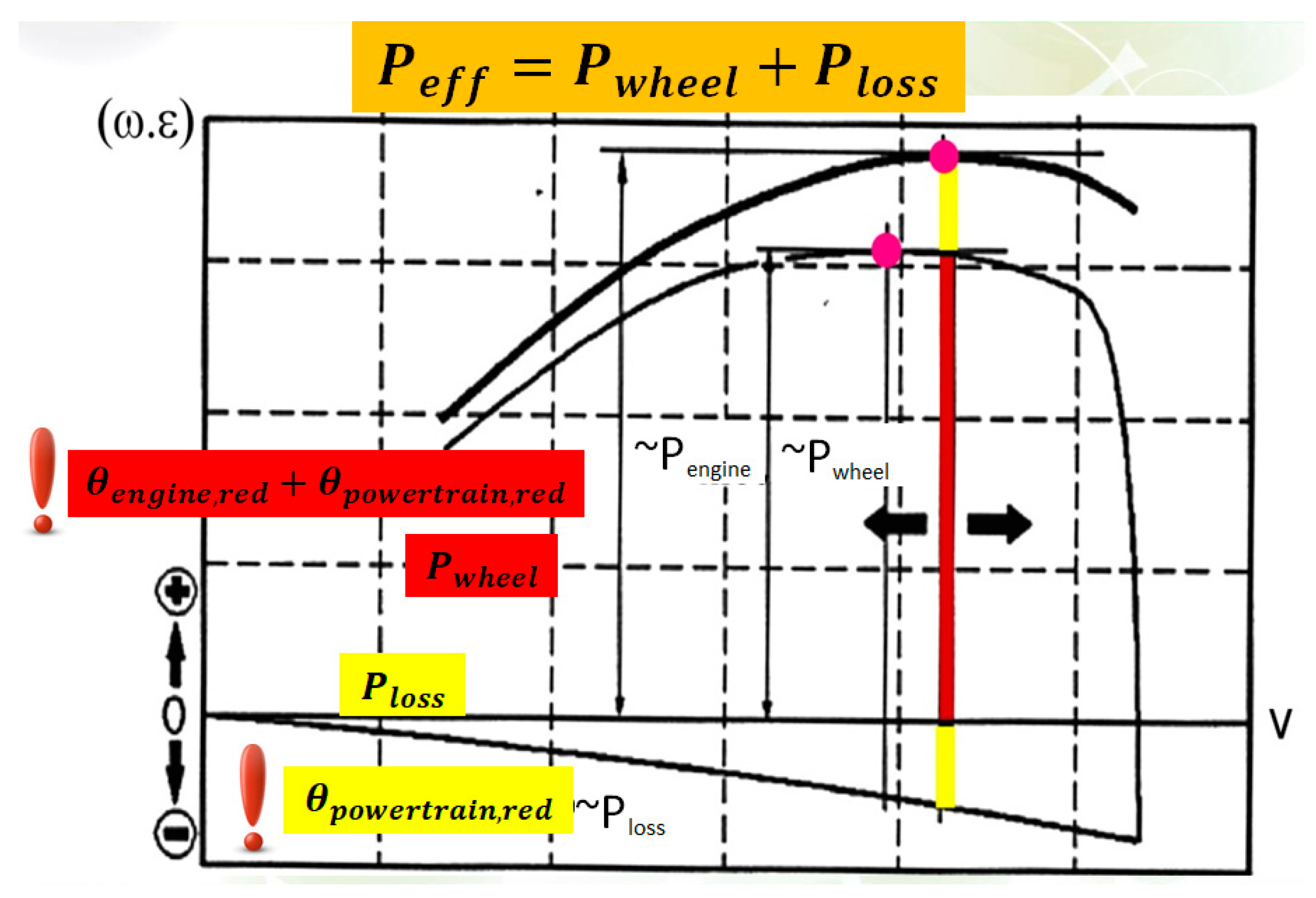
- Peff effective power of the engine
- Ploss loss of the powertrain
- Pwheel power delivered to the wheel
The practical implementation of the latter equation can be seen in Figure 11. where the sum of the functions proportional to the absorbed wheel power and the powertrain loss is shown. The resulting function is a curve proportional to the (effective) power of the engine.
Figure 11.
Measurement of effective power of the engine.
For specialist workshops, the new method described offers an available option for determining diagnostic engine power with sufficient accuracy. This makes it possible to determine the performance of the vehicle’s engine with accurate diagnostic tools.
4. Discussion
The article introduced a new concept, ECO-diagnostics. It combines and addresses the challenges of our time (climate change, energy scarcity, economic and supply problems) and the application of diagnostic methods to enable the corresponding operation. The new diagnostic terminology is supported by the author's own measurements and studies. Of course, these are not the only methods that can be used, nor is it certain that more appropriate methods cannot be used. The methods used will always be determined by the balance between the objective and the possibilities available. It is very important that in the future the various ECO diagnostic methods are brought together in a knowledge base and allow the use of expert methods and artificial intelligence, so that they are even more available to users as economical and applicable tools. The following example is of relevance to climate protection:
Among the results of the research carried out at the Southern Hungary Transport Company, CO2 emissions are relevant for several reasons. On the one hand, it characterizes energy use (economy), and on the other hand, as a climate gas, it is important for the protection of our environment (ecology).
The share of carbon dioxide emissions from passenger transport varies significantly between modes of transport. Passenger cars are the most polluting, accounting for 60.7% of total carbon dioxide emissions from road transport in Europe.
There are two ways to reduce carbon emissions from cars: make vehicles more efficient or change the fuel used.
Conventional fossil-fuel vehicles will be on our roads for a long time to come, and not just the latest versions with the latest emissions technology.
It is therefore of great importance to carry out diagnostics (ECO-Diagnostics) and regular maintenance and repairs based on the results of measurements.
To this end, it is worth reviewing the operational context.
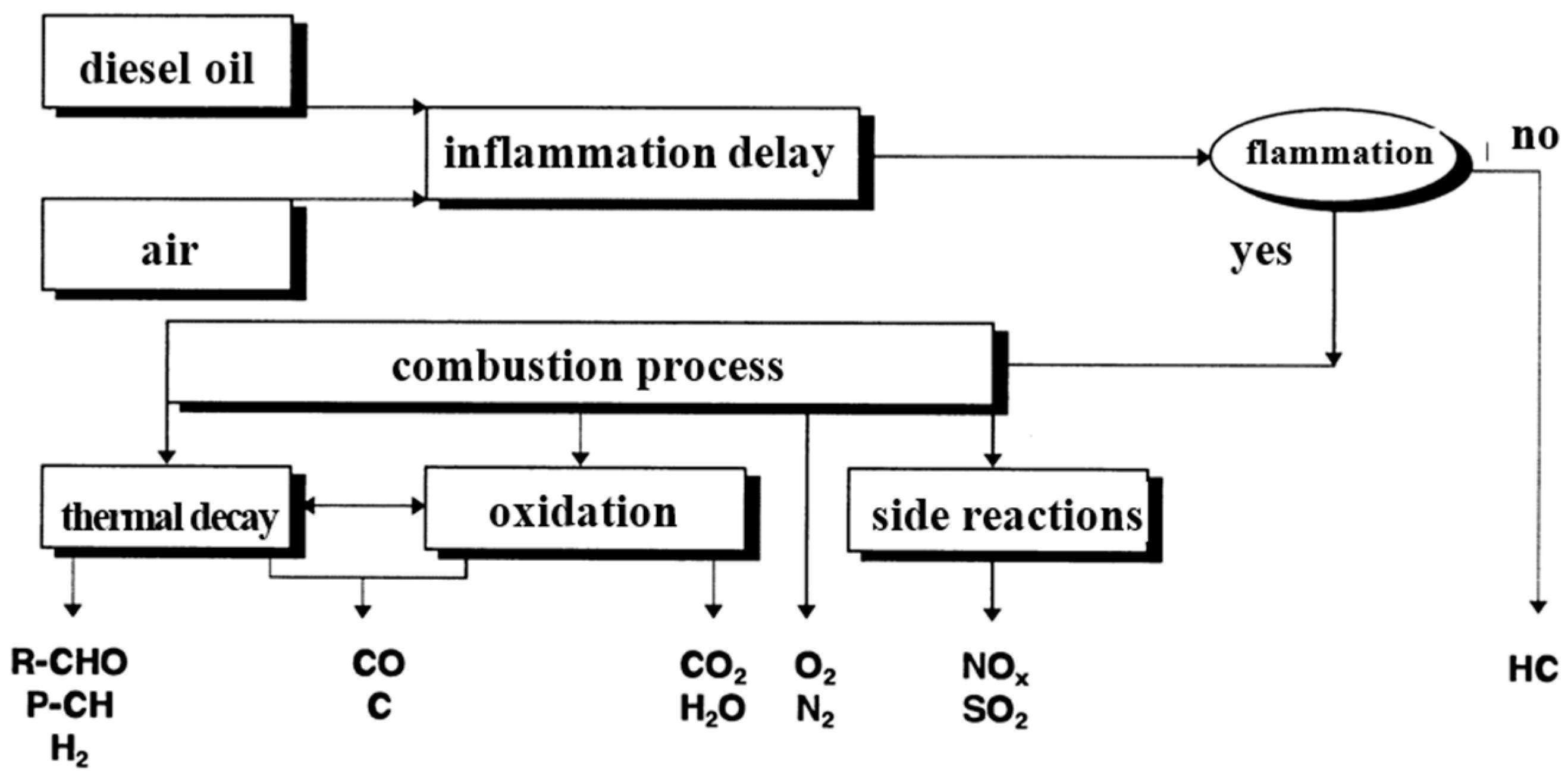
The equation for the perfect combustion of fuels (hydrocarbons: petrol, diesel):
From the above, it can be seen that CO2 emissions from internal combustion engine vehicles depend solely on the amount of fuel used (i.e., fuel consumption). In this case, the two meanings of ECO-diagnostics are intertwined since economy is also a means of protecting the environment.
Of course, environmental protection is also important from the point of view of pollutants, and ECO-diagnostics should therefore also cover this.
By correcting the diagnosed faults or, for example, by using the diesel-LPG mix mentioned in the article, we can improve the emission characteristics.
From a pollutant point of view, the components shown in the figures below should be considered.
Figure 12.
Characteristic curve recorded during the measurement.
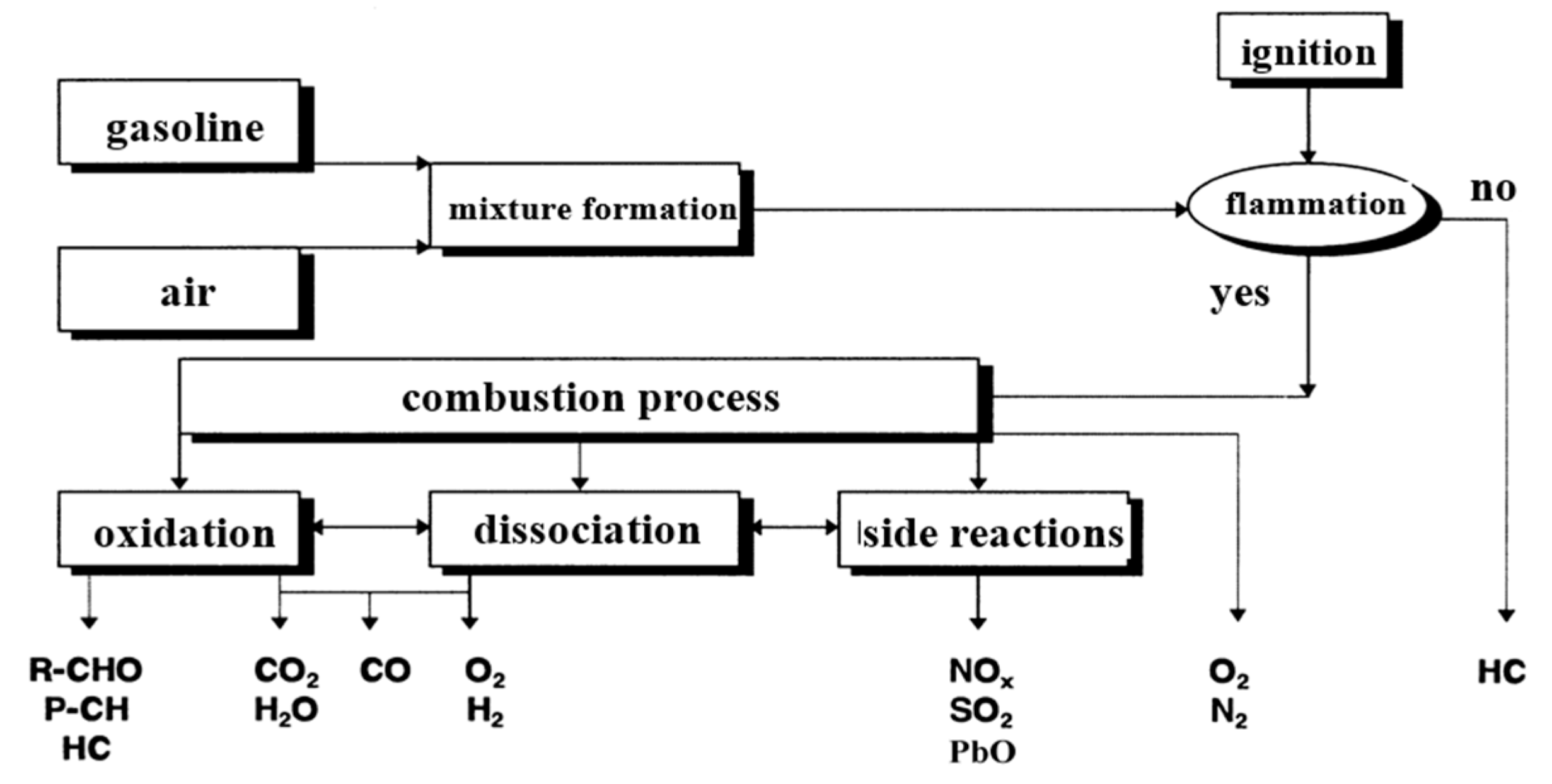
Figure 13.
Characteristic curve recorded during the measurement.
ECO-Diagnostics is a modern field of technical science that is constantly evolving with the spread of alternative propulsion vehicles.
Its key aspects are environmental awareness and cost savings. In addition, of course, the operation of vehicles in accordance with traffic safety aspects is also a priority.
ECO-Diagnostics offers instrumental, reproducible, and documentable measurement technology for both on-board and off-board platforms.
Of course, the rapid development of vehicle technology also requires related research and development in this area.
My second example showed an example of a diagnostic solution for engine power measurement using a cost-effective roller bench (economy). This was part of my habilitation work. The bench is an excellent tool to perform measurements to assess the impact of interventions on the engine by analysing the measured characteristics (power, torque, consumption). Thus, the tests carried out obviously fall within the scope of ECO-Diagnostics. In the future, it will be very important to extend the scope of ECO-Diagnostics with new measurement techniques.
5. Conclusions
The article introduces an important new diagnostic category. ECO diagnostics includes all existing and future diagnostic procedures that are relevant from an environmental and/or economic point of view. The article explains the criteria for classification through several examples. An environmentally aware and resource-conscious society needs these diagnostic methods, as their results provide feedback on the operational quality of our vehicles in compliance with standards.
ECO-diagnostics combines and applies diagnostic methods to address climate change, energy scarcity, economic and supply problems. ECO-diagnostics is a modern field of technical science that provides instrumental, reproducible, and documentable measurement technology for both on-board and off-board platforms.
Acknowledgments
Project no. TKP2021-NKTA-48 has been implemented with the support provided by the Ministry of Innovation and Technology of Hungary from the National Research, Development, and Innovation Fund, financed under the TKP2021-NKTA funding scheme.
References
- Yuanyuan GUO, Xunjie GOU, Zeshui XU, Marinko SKARE: Carbon Pricing Mechanism for the Energy Industry: A Bibliometric Study of Optimal Pricing Policies, Acta Montanistica Slovaca, Volume 27 (2022), 1. [CrossRef]
- Marcin RABE, Wojciech DROŻDŻ, Katarzyna WIDERA, Agnieszka ŁOPATKA, Piotr LEŻYŃSKI, Dalia STREIMIKIENE, Yuriy BILAN: Assessment of energy storage for energy strategies development on a regional scale, Acta Montanistica Slovaca, Volume 27 (2022), 1. [CrossRef]
- Marek Vochozka, Marek Vochozka, Jakub Horák,Jakub Horák, Tomáš Krulický, Tomáš Krulický, Pedro Pardal, Pedro Parda: Predicting future Brent oil price on global markets, January 2020, Acta Montanistica Slovaca 25(3):375-392. [CrossRef]
- Josef MaroušekJosef MaroušekOtakar StruneckýVojtěch BartošMarek VochozkaMarek Vochozka: Revisiting competitiveness of hydrogen and algae biodiesel, November 2022 Fuel 328(4):125317. [CrossRef]
- Iyaghigba, S.D.; Ali, F.; Jennions, I.K. A Review of Diagnostic Methods for Hydraulically Powered Flight Control Actuation Systems. Machines 2023, 11, 165. [CrossRef]
- Sharma, N.; Habibullah, P.S. A Review of IoT Technology for the Connected Autonomous Vehicles Ecosystem. Trends in Sciences 2022, 19. [CrossRef]
- Flores Fernández, A.; Sánchez Morales, E.; Botsch, M.; Facchi, C.; García Higuera, A. Generation of Correction Data for Autonomous Driving by Means of Machine Learning and On-Board Diagnostics. Sensors 2023, 23. [CrossRef]
- Chen, C.C.; Tian, S.L.; Teng, C.C.; Yang, C.W.; Yen, M.H. Integration of Second-Generation On-Board Diagnostics Data via Deep Learning to Develop Eco-Driving Analysis System Applicable to Large and Small Cars. Sensors and Materials 2022, 34, 2467–2478. [CrossRef]
- Kamimoto, T. A Review of Soot Sensors Considered for On-Board Diagnostics Application. International Journal of Engine Research 2017, 18, 631–641. [CrossRef]
- Chen, S.H.; Wang, J.F.; Wei, Y.R.; Shang, J.; Kao, S.Y. The Implementation of Real-Time on-Line Vehicle Diagnostics and Early Fault Estimation System. In Proceedings of the Proceedings - 2011 5th International Conference on Genetic and Evolutionary Computing, ICGEC 2011; 2011; pp. 13–16.
- Mouzakitis, A.; Muniyappa, N.; Parker, R.; Puthiyapurayil, S. Advanced Automated Onboard Vehicle Diagnostics Testing;
- Guan, B.; Zhan, R.; Lin, H.; Huang, Z. Review of the State-of-the-Art of Exhaust Particulate Filter Technology in Internal Combustion Engines. J Environ Manage 2015, 154, 225–258. [CrossRef]
- Han’guk T’ongsin Hakhoe.; Hanʼguk Chŏnja Tʻongsin Yŏnʼguso. ICTC 2012 : 2012 International Conference on ICT Convergence : “Global Open Innovation Summit for Smart ICT Convergence,” October 15-17, 2012, Ramada Plaza Jeju Hotel, Jeju Island, Korea; IEEE, 2012; ISBN 9781467348287.
- Cai, D.; Fraedrich, K.; Guan, Y.; Guo, S.; Zhang, C.; Zhu, X. Urbanization and Climate Change: Insights from Eco-Hydrological Diagnostics. Science of the Total Environment 2019, 647, 29–36. [CrossRef]
- Tsybunov, E.; Shubenkova, K.; Buyvol, P.; Mukhametdinov, E. Interactive (Intelligent) Integrated System for the Road Vehicles’ Diagnostics. In Proceedings of the Lecture Notes of the Institute for Computer Sciences, Social-Informatics and Telecommunications Engineering, LNICST; Springer Verlag, 2018; Vol. 222, pp. 195–204.
- Peter Mock, John German: The future of vehicle emissions testing and compliance, How to align regulatory requirements, customer expectations, and environmental performance in the European Union, International Council on Clean Transportation, Berlin, 2015.
- Vehicle Emissions Testing Programme Moving Britain Ahead, Department for Transport, Crown, 2016, ISBN 978147431308.
- Le Liu, Lihui Wang, Liyun Qian, Peilin Geng, Wei Zhao, and Jingyuan Li: Experimental study on the emission influence of the fuel system faults for light-duty vehicle, E3S Web of Conferences 268, 01051 (2021), VESEP2020. [CrossRef]
- Giorgio Rizzoni, Simona Onori, Matteo Rubagotti: Diagnosis and Prognosis of Automotive Systems: motivations, history and some results, Proceedings of the 7th IFAC Symposium on Fault Detection, Supervision and Safety of Technical Processes, Barcelona, Spain, June 30 – July 3, 2009.
- Helmut Frank, Uwe Schmidts: Vehicle Diagnostics – The whole Story, Diagnostics_Congress_Elektronik Automotive, 2007- 03_Press Article Florian Schwarz: Entwicklung und Einsatz innovativer HMI-Software zur Diagnose elektronischer Steuergeräte in der Automobilindustrie, Dissertation, Passau, 2008.
- Marko Rešetar: INNOVATIVE APPROACH TO VEHICLE DIAGNOSTICS, UDC 629.054, Doktorski studij na FSB: Uvod u znanstveno istraživački rad 2015/2016 1.
- Salama A. Mostafa, Mohd Sharifuddin Ahmad, Mazin Abed Mohammed and Omar Ibrahim Obaid Implementing an Expert Diagnostic Assistance System for Car Failure and Malfunction, IJCSI International Journal of Computer Science Issues, Vol. 9, Issue 2, No 2, March 2012, ISSN (Online): 1694-0814.
- Dipl.-Ing. Tobias Carsten Müller: Neuronale Modelle zur Offboard-Diagnostik in komplexen Fahrzeugsystemen, genehmigte Dissertation, Coburg, 2011.
- Dr. Lakatos István, Ádám Titrik, Tamás Orbán: Data determination of an internal combustion engine for model set-up, HUNGARIAN JOURNAL OF INDUSTRIAL CHEMISTRY 39: pp. 35-40. (2011), Veszprém, Pannon Egyetem, 2011. 08.29-09.01.
- Dr. István Lakatos: Neue auf Zylinderdruckindizierung basierende motordiagnostische Prüfungsmethode, Acta Technica Jauriensis, Győr, 2013, pp 9, ISSN 1789-6932 (9 pages).
- Dr. István Lakatos: Development of a new method for comparing the cold start- and the idling operation of internal combustion engines, Periodica Polytechnika Transportation Engineering, Budapest, 2013, ISSN 1587-3811 (online version) ISSN 0303-7800 (paper version) (19 pages).
- Dr. István Lakatos: Elaboration of a new method for developing a diagnostic procedure for motor vehicles based on a model, Periodica Polytechnika Transportation Engineering, Budapest, 2013, ISSN 1587-3811 (online version) ISSN 0303-7800 (paper version), ISSN 1785-8860 (14 pages).
- Dr. István Lakatos: Diagnostic measurement for the effective performance of motor vehicles, Acta Polytechnica Hungarica, Budapest, 2013 (12 pages).
- Martyushev, N. v.; Malozyomov, B. v.; Khalikov, I.H.; Kukartsev, V.A.; Kukartsev, V.V.; Tynchenko, V.S.; Tynchenko, Y.A.; Qi, M. Review of Methods for Improving the Energy Efficiency of Electrified Ground Transport by Optimizing Battery Consumption. Energies (Basel) 2023, 16. [CrossRef]
| 1 | Own edition |
| 2 | [14] |
| 3 | Dr. Iván Nagyszokolyai, Dr. István Lakatos: Automotive diagnostics, University Course Material, ISBN 978-963-279-661-1, Typotex, Budapest. 2011 |
| 4 | Source: Embitel Technologies |
| 5 | Own research and editing |
| 6 | Own research and editing |
| 7 | Own research and editing |
| 8 | Own measurement and research (Southern Hungary Transport Company) |
Disclaimer/Publisher’s Note: The statements, opinions and data contained in all publications are solely those of the individual author(s) and contributor(s) and not of MDPI and/or the editor(s). MDPI and/or the editor(s) disclaim responsibility for any injury to people or property resulting from any ideas, methods, instructions or products referred to in the content. |
© 2024 by the authors. Licensee MDPI, Basel, Switzerland. This article is an open access article distributed under the terms and conditions of the Creative Commons Attribution (CC BY) license (http://creativecommons.org/licenses/by/4.0/).
Copyright: This open access article is published under a Creative Commons CC BY 4.0 license, which permit the free download, distribution, and reuse, provided that the author and preprint are cited in any reuse.


