
Submitted:
01 December 2024
Posted:
02 December 2024
You are already at the latest version
Abstract
Public transport systems often face significant revenue losses due to fare evasion, affecting operational efficiency and service quality. Traditional methods of detecting fare evasion, such as manual inspections, are often ineffective because of the high volume of passengers and limited staff availability. This study presents a new approach to fare evasion detection by combining behavioural AI, reinforcement learning, IoT sensors, and privacy-conscious technologies. The system incorporates multi-zone ticket validation, AI-powered cameras, and features in a mobile app to monitor passenger behaviour in real-time, ensuring continuous ticket compliance without compromising privacy.Key components of the system include motion sensors, pressure sensors, NFC readers, and a federated learning framework, which help create a seamless and accurate detection system. This system is expected to reduce fare evasion by 15-20%, recovering millions of pounds in lost revenue annually. Additionally, the system will enhance the passenger experience by making ticket validation easier and reducing congestion. Overall, this solution offers a scalable, efficient, and ethical way to improve the performance and sustainability of public transport systems.
Keywords:
Fare Evasion Detection
; Behavioural AI
; Privacy-Preserving Technologies
; IoT Sensors
; Reinforcement Learning
1.0. Introduction
Public transport companies are the backbone of urban transport networks and provide essential mobility services to the general public. As these services are of great importance to most people, private companies and provincial and state governments are normally responsible for financing infrastructure networks and, at least in part, for the maintenance of the services.
According to statistics from the UK Department for Transport, public transport, especially light rail and tram usage, increased from 172 million passenger journeys in March 2022 to 212 million in March 2023, increased from 172 million passenger journeys in March 2022 to 212 million in March 2023.
Figure 1.
Light rail and tram passenger journeys (millions): England, annually from the year ending March 1984 to year ending March 2023 (UK Department for Transport, 2023).
Figure 1.
Light rail and tram passenger journeys (millions): England, annually from the year ending March 1984 to year ending March 2023 (UK Department for Transport, 2023).
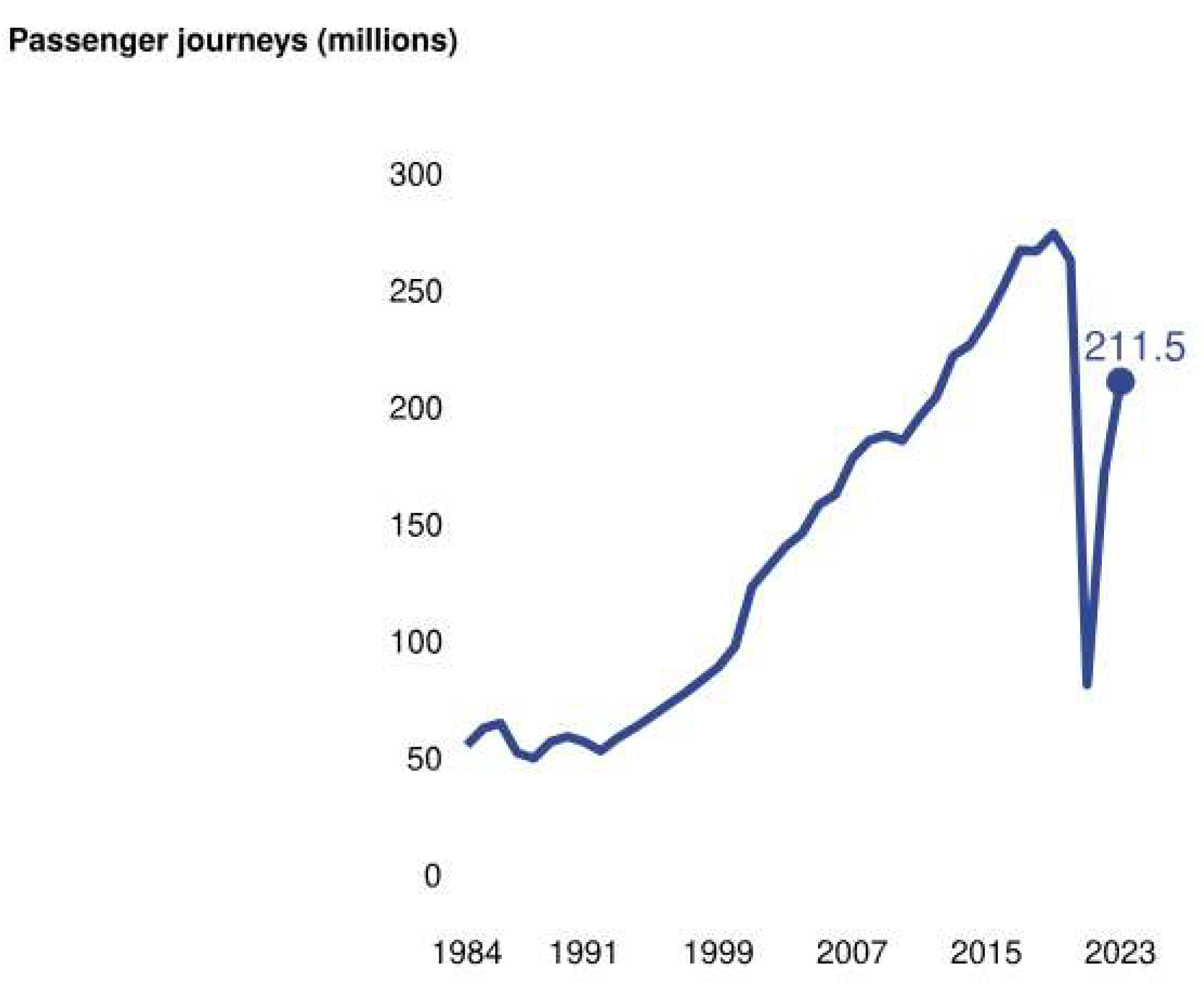
Also, the report shows that light rail and tram passenger revenue increased by £329 million, representing a 30% rise from the year ending March 2022 to the year ending March 2023. This significant increase reflects the higher number of passengers during this period (UK Department for Transport, 2023).
Fare evasion can be a critical issue for public transport performance in many contexts worldwide due to its financial impact on the operation. Specifically, in the UK, it affects the quality of service offered, given the tight budget constraints that many public transports systems face (Cantillo et al., 2022). A single percentage point in fare evasion can lead to losses of several millions of Pounds (£) in annual revenues for public transport systems. Fare evasion can also be a process in which a passenger does not have a ticket or owns an incorrect one. There are cases where a passenger owns a genuine ticket for a 2 km journey, intends to board for 5 km intentionally and pretends to forget where to drop due to the number of crowd boarding. Such cases threaten the economic sustainability of Transit Authorities/Public Transport Companies (TAs/PTCs) (Barabino et al., 2020).
According to BBC News (2023), Nottingham Express Transit (NET) generates about £20m annually from ticket sales, but an estimated 8% to 10% of passengers are not buying tickets, totaling a loss of £2m annually.
Also, Transport for London reported that Fare evasion costs them an estimated £130m a year in lost income, enough to enable fares to be frozen annually (BBC News, 2023). Similarly, the report also shows that Hucknall and Bulwell tram operator posted £57m loss in 2023 due to fare evasion. A study by Bonfanti and Wagenknecht (2010) examined fare evasion in a sample of 800 million passengers worldwide. The authors measured an average of 4.2% fare evaders. Lee (2011) reported that for the San Francisco Municipal Transportation Agency, these losses amount to an estimated $19 million annually in uncaptured revenue on the basis of 2009 fares. Further, Currie & Delbosc (2017) reported that in Melbourne, Australia, losses amounted to €35 million annually (average 2005–2011), corresponding to 11.6% of the ridership (Cools et al., 2016).
Despite these losses, the current system in the UK depends mostly on ticket inspectors to check ticket evaders and, most often, issue fines. However, this traditional method is limited, as many evaders go unchecked due to limited staff strength (ticket inspectors) or high passenger volumes. Given the considerable economic impact of fare evasion, our proposed system aims to curb this menace to a large extent, leveraging AI, the Internet of Things (IoT), and privacy-preserving Technologies.
2.0. Literature Review
Several studies have developed fare evasion detection systems.
Burgos-Prada et al. (2021) propose a control system using image recognition with an IoT and Cloud computing approach to detect possible real-time bus fare evasions. Claiborne & Gupta (2018) developed various machine learning models using random forests, support vector machines, and artificial neural networks to effectively classify transit fare media fraud into binary groups and compare their relative model performance. They found that random forests and neural networks outperformed support vector machines for transit fraud detection. Nicodeme (2022) proposes a framework to detect fraudsters at ATCG by first detecting and segmenting the ATCG using Mask-RCNN to crop out and focus the area of interest only on control gates. The algorithm studies human postures based on skeletal extraction with OpenPose on this new image. The author used pose classification to determine if the posture is fraudulent or not. Huang et al. (2022) proposed a tailgating recognition method that uses videos as input. The authors first obtained the estimated human pose data in each frame, of which incomplete skeletons are retained. Also, the multiple persons appearing in adjacent frames are matched, after which a sequence of skeleton data is generated for each pedestrian. Finally, the authors used a time series of the positional relationship between passengers, extracted the ticket barrier gate, and defined the passing interval of passengers as the indicator for detecting tailgating. Their result showed that tailgaters could be distinguished effectively from fare-paying passengers, and the time series can cope with missing joints caused by occlusion or misidentification in a few frames.
Huang et al. (2022) proposed an approach to detecting individual fare evasion behaviours. Using the OpenPose algorithm, they first estimated human pose to obtain human skeleton information and conducted multi-target tracking using the Pose Flow algorithm to obtain human skeleton sequences. It then extracts features from the human pose, followed by adopting the relative distance, the angle and Random Forests to establish a fare evasion behaviour detection model. Their results showed that human status and individual fare evasion behaviours, including jumps and squats, can effectively be recognised and detected.
The current or traditional system of fare evasion detection mostly depends on ticket inspectors to check ticket evaders. This method is limited, as many evaders go unchecked. Also, existing fare evasion detection systems rely on static methods, such as IoT-based image recognition (Burgos-Prada et al., 2021), machine learning classifiers (Claiborne & Gupta, 2018), and human pose estimation with OpenPose and Random Forests (Nicodeme, 2022; Huang et al., 2022). These approaches need more adaptability, multi-zone validation, and real-time contextual monitoring. The novelty of this research lies in integrating behavioural AI, which will dynamically predict fare evasion using real-time passenger behaviour and reinforcement learning. This study also introduces multi-zone ticket validation for continuous monitoring and employs context-aware monitoring to adjust detection based on environmental factors. Also, the research uses a Privacy-preserving design to ensure compliance with data protection regulations.
3.0. Developed System Framework
The critical components of the proposed system include:
3.1. Behavioural AI:
Behavioral AI refers to a subset of artificial intelligence that focuses on understanding and predicting actions and sequences of actions rather than just static data. In this study, behavioural AI monitors passenger behaviour throughout the tram using reinforcement learning to identify suspicious activities such as avoiding ticket validation points or lingering near exits. Reinforcement Learning is a machine learning technique that finds the agents' optimal learning policy while interacting with an unknown environment (Sutton & Barto, 1998).
Figure 2.
Real-Time Recurrent Reinforcement Learning Network (Lemmel & Grosu, 2023).
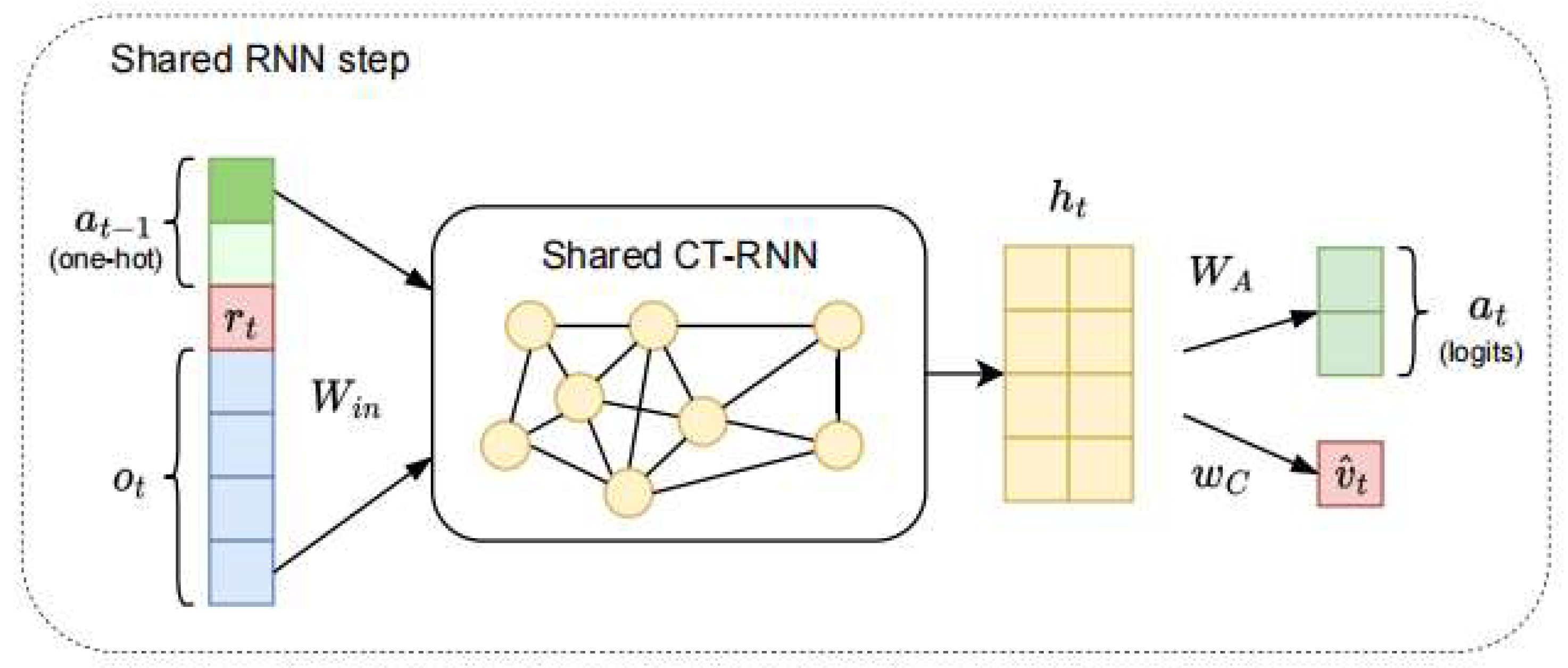
RTRRL recurrent network architecture implements the Meta-RL framework by feeding the past action at−1 to the CT-RNN alongside the current reward rt and the current observation ot. The latent state ht which is computed by the CT-RNN, is then used to produce the next action at and the next value estimate vˆt through linear mappings.
3.2. Meta Reinforcement Learning
The objective in meta-RL is to maximise the cumulative reward over the entire interaction (or adaptation) period with a Markov decision process (MDP), which may span multiple episodes, to optimise the exploration-exploitation tradeoff (Bhatia et al, 2023). The meta-RL is given as;
where the meta-RL policy is interpreted as a ‘fast’ or ‘inner’ RL algorithm that maps the experience sequence (s0, a0, r0, ..., st) within an MDP Mi to an action at using either a recurrent neural network or a transformer network (Bhatia et al, 2023). is the state-action occupancy induced by the meta-RL policy in MDP Mi, and H is the length of the adaptation period, or interaction budget. The objective is maximized using a conventional ‘slow’ or ‘outer’ deep RL algorithm, given the reformulation of the interaction period with an MDP as a single (meta-)episode in the objective function, which maximizes the cumulative reward throughout this period (Bhatia et al, 2023). We will use the term ‘experience history’, denoted by , refer to the state-action-reward sequence within a metaepisode, which spans across multiple episodes {τ0, τ1, ...τn}.
3.3. Multi-Zone Ticket Validation:
IoT sensors will be installed at multiple locations inside the tram, allowing passengers to tap their tickets at various zones throughout the ride. Thus, ensuring continuous validation and reducing the chances of fare evasion.
3.4. Privacy-Preserving AI:
Privacy-preserving AI protects personal data privacy during machine learning processes. It allows gaining insights from data without revealing sensitive information, respecting individual privacy rights. Privacy-preserving AI minimises data collection and processing risks. It incorporates privacy into AI models, balancing AI benefits with protecting personal privacy. In this study, using federated learning, the AI system will process passenger behaviour in an anonymous and privacy-respecting manner. FL is an algorithmic framework for developing ML models where Two or more parties are interested in working together to create an ML model (Wahab et al., 2021). Each side has data that would be needed to contribute to the model's training. During the model-training process, each party's data remains with that party. The model can be partially transmitted from one party to another using an encryption strategy that prevents other parties from re-engineering the data at any particular party (Singh et al., 2023).
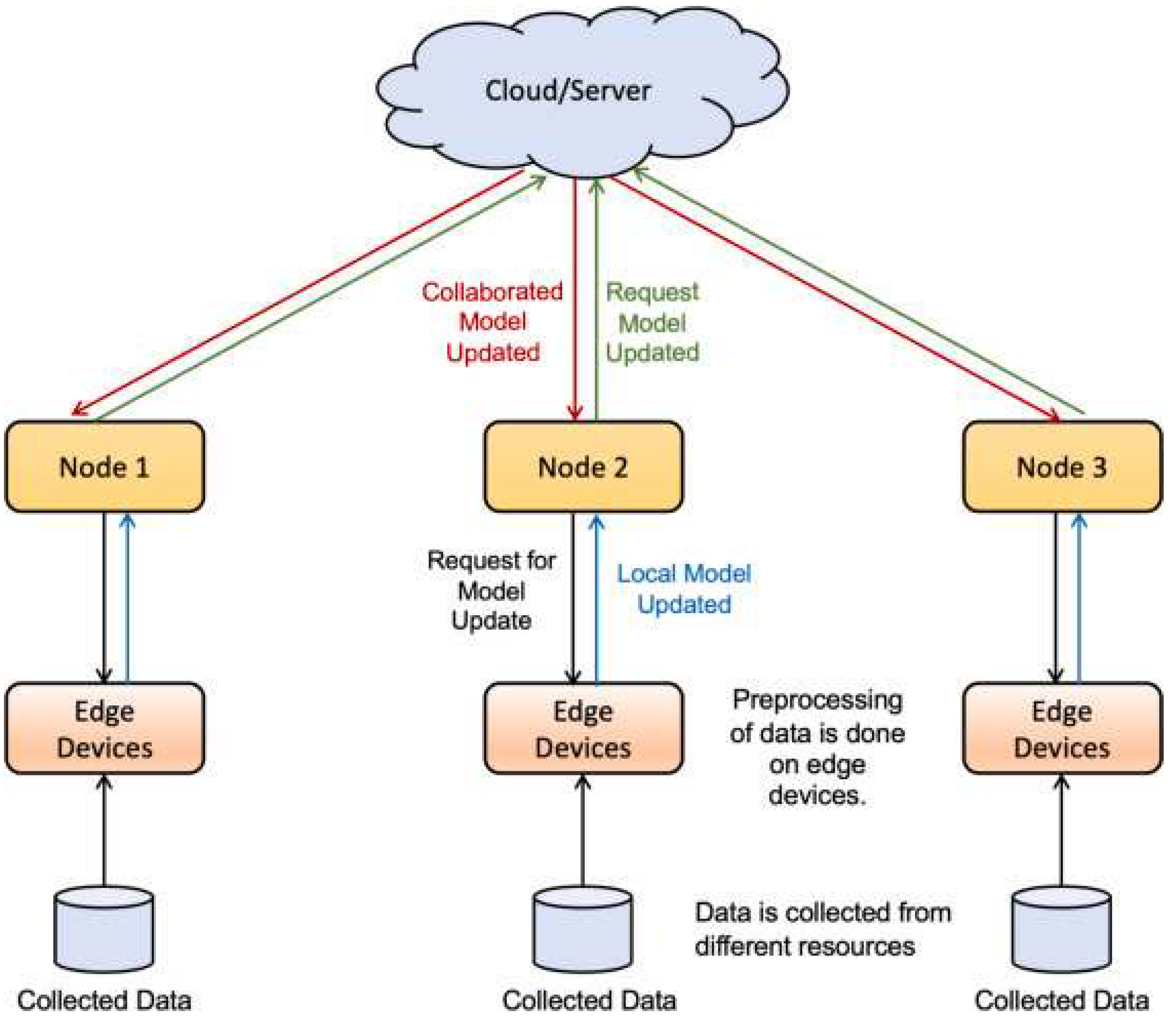
The resulting model's performance is a close approximation of an ideal model developed with all data transferred to a single party (Khalid et al., 2023). In FL, there are two processes: model training and model inference. Information, but not data, can be transferred between parties throughout the model training process (Li et al., 2020; Khalid et al., 2023).
Figure 3.
Privacy Preservation Using Federated Learning (Khalid et al., 2023).
4.0. Methodology
This section outlines the technical approach for the design, and it shows how it integrates into the Wolverhampton tram network.
4.1. System Design:
i. IoT Sensors
Motion sensors will be placed at tram doors. The purpose is to detect and count individuals boarding and alighting. It will also give real-time insights into passenger movement. NFC readers will be used for ticket validation when passengers tap their NFC-enabled cards when they are about to enter. The pressure sensors that will be installed on the tram floors measure passengers' weight distribution to give an estimate of the number of passengers onboard. Synchronising this technology will create a system that identifies mismatches between validated tickets and passenger counts. This will help create real-time alerts for fare evasion. NFC sensors will be installed near the tram's boarding doors and standing areas. The sensors will track passenger movement and validate tickets entering, moving around, or exiting the tram.
Figure 4.
Motion Sensor. (https://railway-displays.com/en/product/train-movement-sensor/)
Figure 4.
Motion Sensor. (https://railway-displays.com/en/product/train-movement-sensor/)
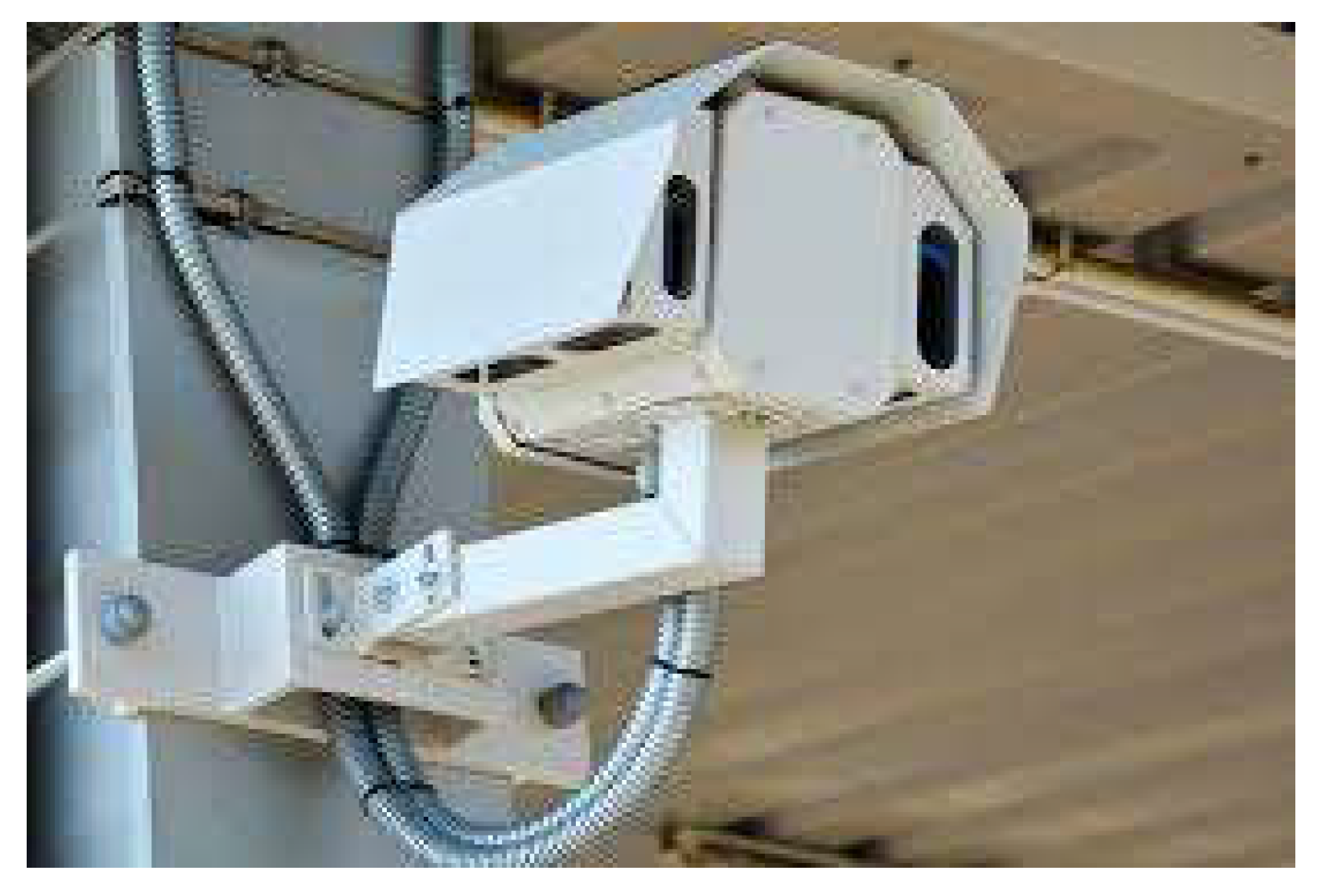
Figure 5.
Pressure Sensor (https://www.variohm.com/products/pressure-sensors/pressure-sensors/ept3100r).
Figure 5.
Pressure Sensor (https://www.variohm.com/products/pressure-sensors/pressure-sensors/ept3100r).
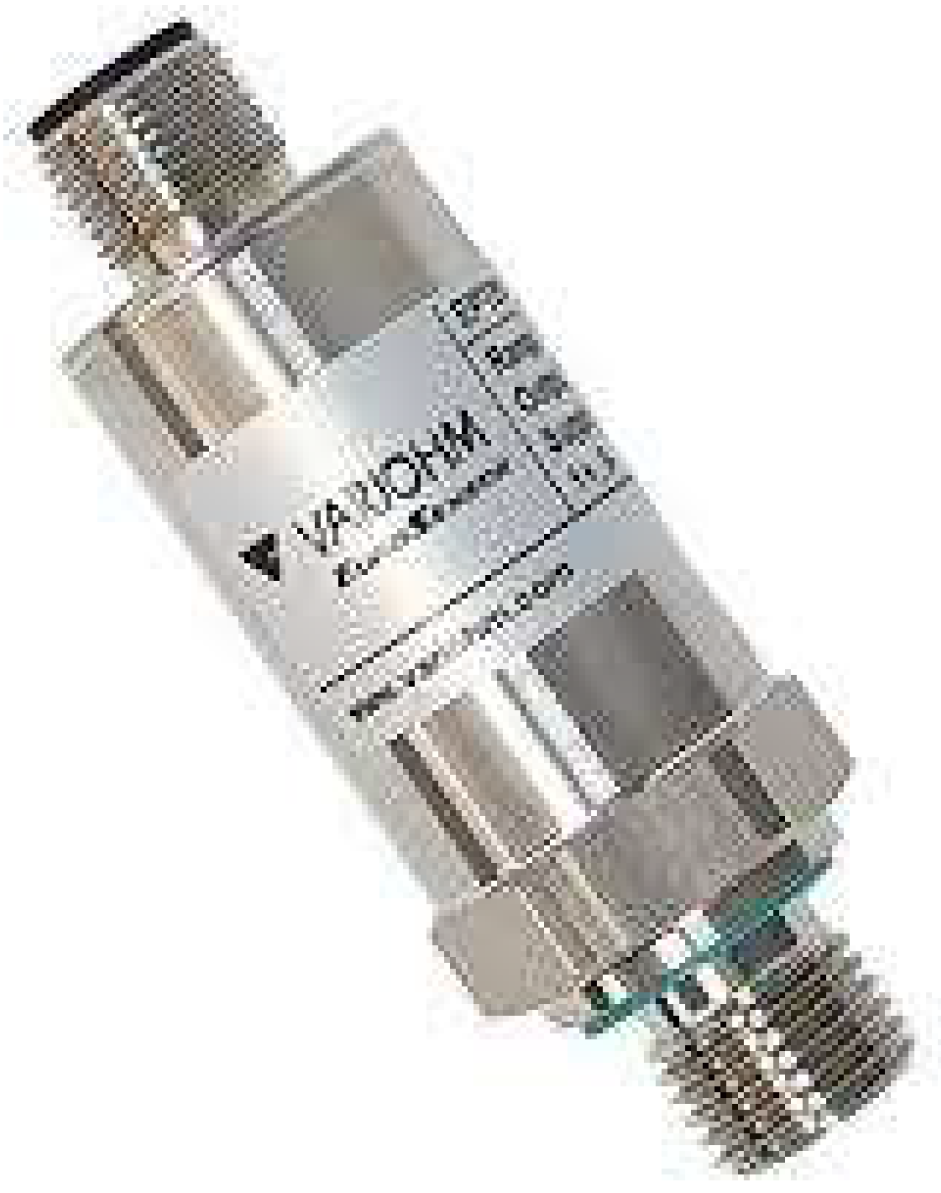
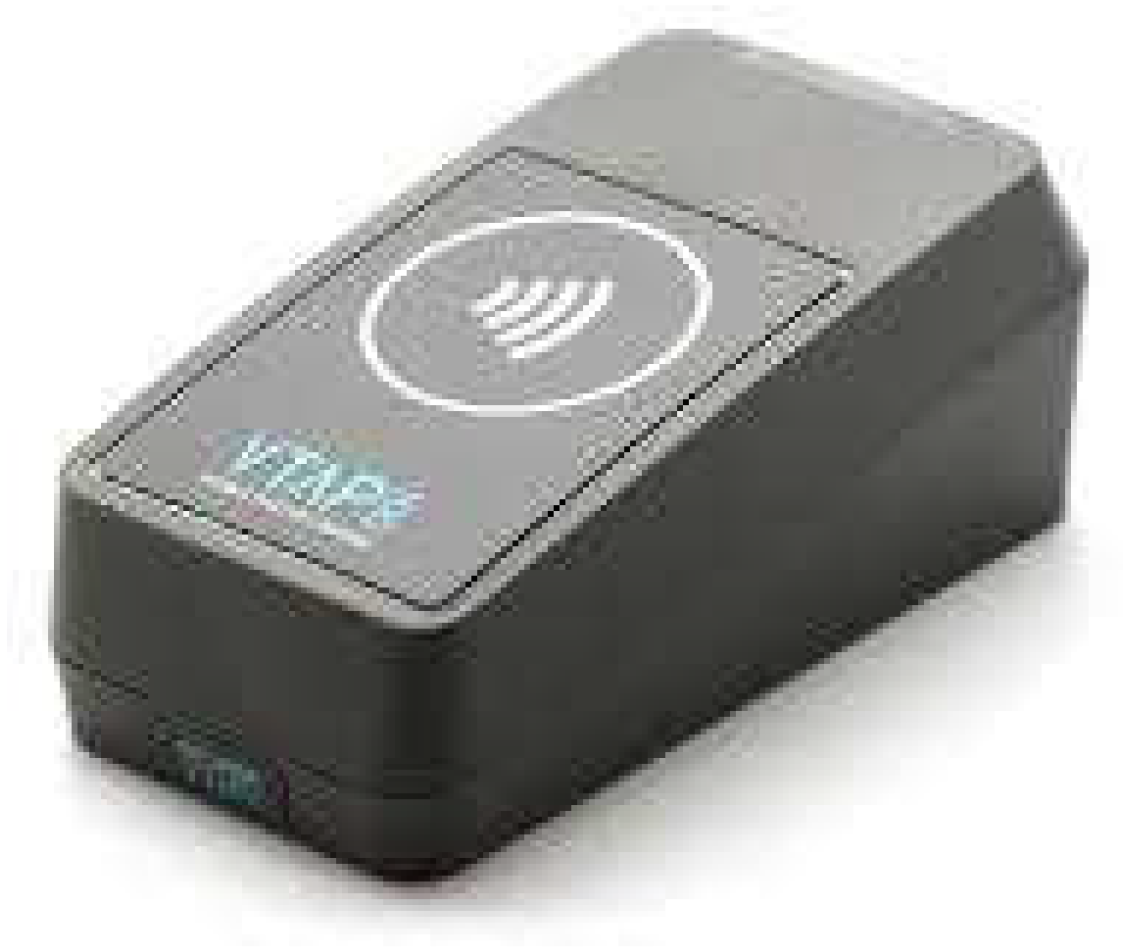
Figure 6.
NFC-enabled cards (https://shop.vtapnfc.com/product/vtap100-mobile-wallet-nfc-reader-usb/).
Figure 6.
NFC-enabled cards (https://shop.vtapnfc.com/product/vtap100-mobile-wallet-nfc-reader-usb/).
ii. AI Cameras
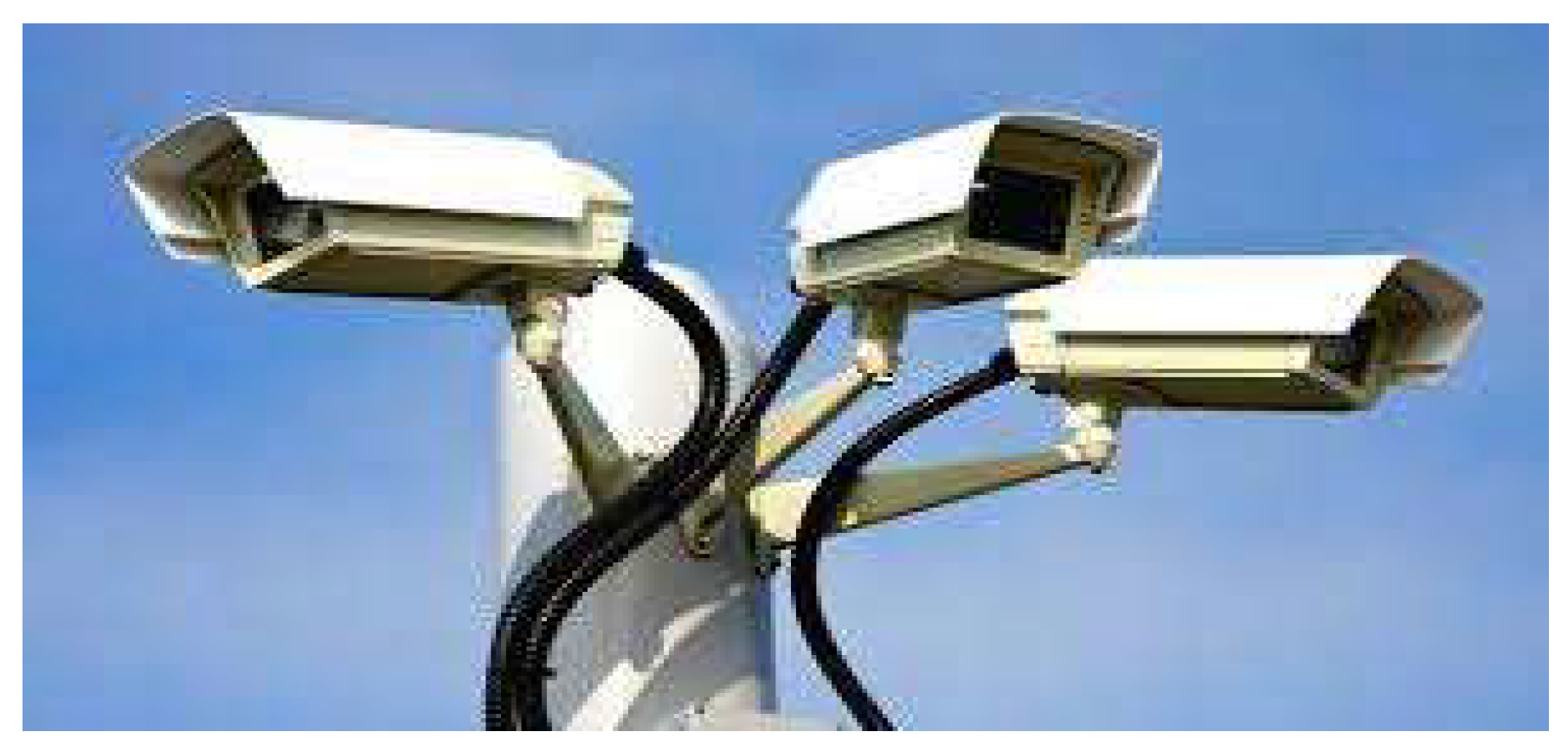
The AI camera will be used to identify patterns that indicate evasion, such as standing near exits, bypassing entry points, wearing face caps, and posture. Cameras will analyse passenger behaviour in real time to detect patterns of evasion (e.g., passengers avoiding ticket validators). The cameras will be placed in strategic locations such as entrances and exits, near ticket validation points. The AI system will detect suspicious behaviours, such as passengers avoiding ticket validators and clustering near the tram exit without validating or bypassing sensors.
Figure 7.
AI Camera (.
iii. Mobile App Integration:
Passengers can validate tickets using NFC cards or QR codes on their mobile phones and validate tickets at multiple points inside the tram during the journey.
4.2. Data Collection
1. Sensor Data
- i.
- Motion Sensors: This will track boarding and alighting patterns.
- ii.
- Pressure Sensors: Will monitor weight distribution to estimate passenger counts.
- iii.
- NFC Sensors: Capture ticket validation attempts.
2. Behavioral Data
- i.
- Patterns like clustering near exits, avoiding ticket validators, and prolonged loitering in specific tram zones.
- ii.
- Real-time data from AI cameras analysing human postures, gestures, and movements (lingering near exit doors or bypassing validation points).
5.0. Case Study
AI-Powered Fare Evasion Detection on the Wolverhampton to Birmingham Tram Network
Tram Network
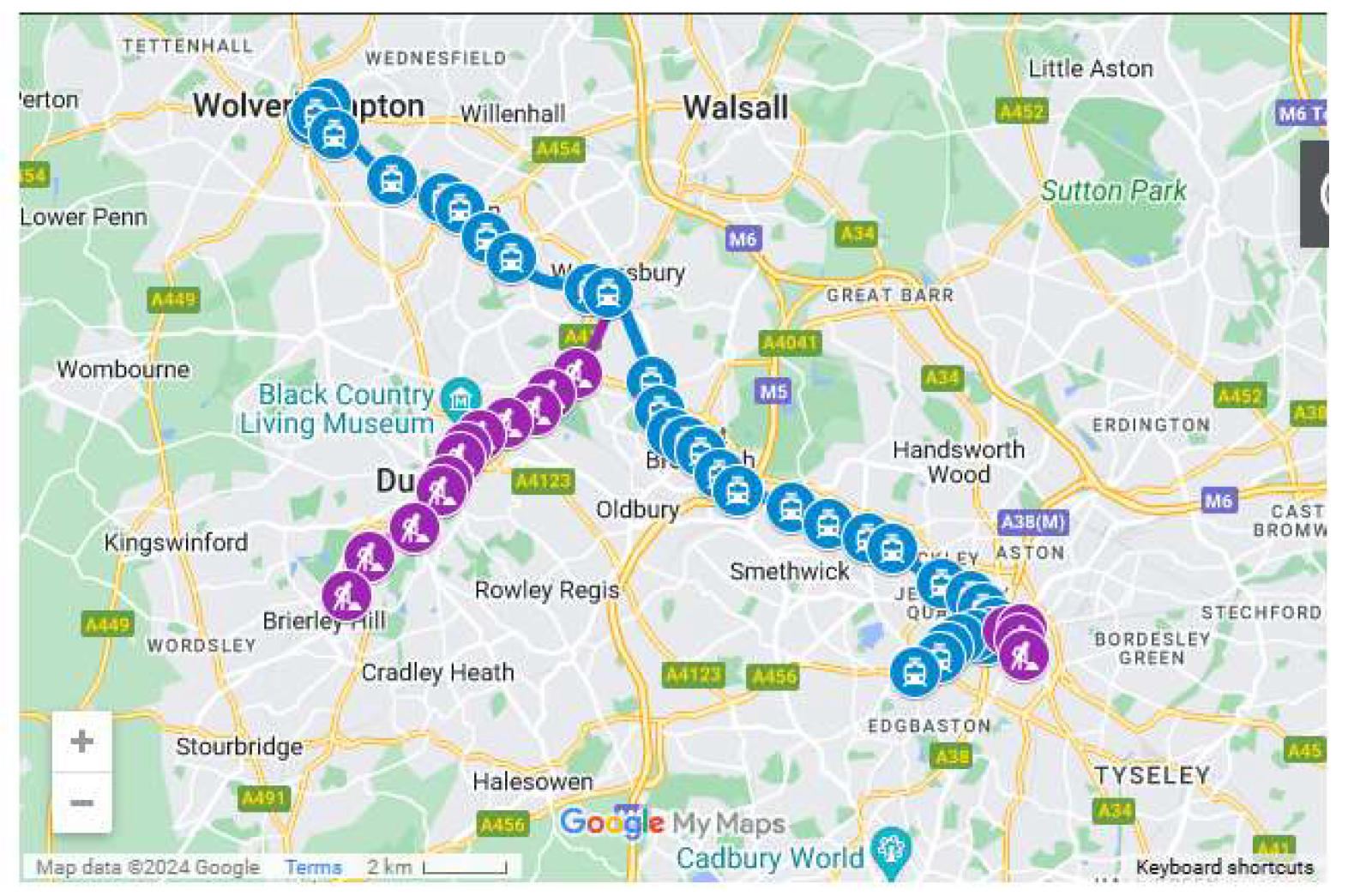
The tram network between Wolverhampton to Birmingham is operated by West Midlands Metro which is a light rail system. Midland Metro Limited operates services on behalf of Transport for West Midlands (TfWM) (West Midlands Metro, nd). It connects two major cities, Wolverhampton and Birmingham, with a total route spanning 14.9 miles (24.0 km) with 28 stops, carrying over 6 million passengers annually. West Midlands Metro is planning an expansion to serve over 80 tram stops and more than 20 transport interchanges and link Wolverhampton, Birmingham, Dudley, Brierley Hill, Digbeth, North Solihull, Birmingham Airport, the NEC and HS2.
Figure 8.
Map Showing West Midlands Metro Proposed Expansion (Google Maps).
5.1. Problem:
According to reports, Hucknall and Bulwell tram operators posted a £57m loss last year in 2023 due to fare evasion. This shows that the tram network faces significant fare evasion, especially during peak hours, mainly because of the open boarding system it uses. Passengers often bypass ticket validation, contributing to revenue losses. However, the manual inspection system is limited to local inspectors who check and issue fines. Due to high passenger volumes, many evaders go unchecked. The present system is ineffective during rush hour and time-consuming.
5.2. The Proposed Solution: AI-Powered Fare Evasion Detection and Multi-Zone Validation
5.2.1. System Overview
The proposed system leverages AI (Behavioral AI) that monitors passenger behaviour throughout the tram journey to identify evasion features like avoiding ticket validation points, lingering near exits, and using face caps and nose masks.
The Meta-Reinforcement Learning (Meta-RL) will be trained in an environment designed to mimic real-world scenarios of fare evasion on trams. This involves the following.
5.2.2. Passenger behaviours:
which include both compliant and non-compliant actions, such as avoiding ticket validation points, lingering near exits, and using a face cap and nose mask. The AI will employ Real-Time Recurrent Reinforcement Learning (RTRRL) to process sequential data, such as passenger movements, and learn from the temporal context (Lemmel & Grosu, 2023). Meta-RL optimises decision-making policies by balancing exploration (detecting new fare evasion patterns) and exploitation (using learned policies to reduce evasion) (Li, 2023). The model will adapt to new behaviours by continuously integrating real-time data from IoT sensors, AI cameras, and historical passenger interactions, updating its policy using gradient-based optimisation methods. Other detected behaviours flagged by inspectors will be used as feedback to refine the model's decision-making accuracy.
5.2.3. IoT using Multi-Zone Ticket Validation:
IoT sensors will be installed at multiple locations inside the tram, allowing passengers to tap their tickets at various points. This will ensure continuous validation and also reduce the chances of fare evasion.
5.2.4. Privacy-preserving Technologies:
Federated Algorithm will be used to create an efficient, automated fare compliance framework. The AI system will process passenger behaviour in an anonymous and privacy-respecting manner without violating data protection regulations. Using the Federated Algorithm, each pattern, such as boarding times, movement near exits, and ticket validation behaviours, will be analysed. FL ensures that no raw data, such as video footage or NFC logs, is shared externally. Only insights such as updated model weights will be used to improve detection algorithms. Also, FL ensures that passenger data, such as images and specific validation timestamps, never leaves the tram. The AI can learn to detect behaviours like clustering near exits without associating this behaviour with particular individuals. Further, FL will ensure that location-specific validation data (e.g., where and when passengers validate tickets) is processed locally. This prevents revealing sensitive geolocation details while still allowing the system to identify trends like zone-specific fare evasion. In view of the above, FL enables the system to comply with strict data protection laws, which require that personally identifiable information remains secure and is not shared.
5.3. System Deployment
IoT Sensors and Cameras: NFC sensors will be installed near the tram's boarding doors and standing areas. AI-powered cameras will be placed strategically (e.g., entrances and exits near ticket validation points). These sensors will track passenger movement and validate tickets as they enter, move around, or exit the tram. The Cameras will analyse passenger behaviour in real-time to detect evasion patterns using Meta-Reinforcement learning (Beck et al., 2022).
5.3.1. Data Security Measures
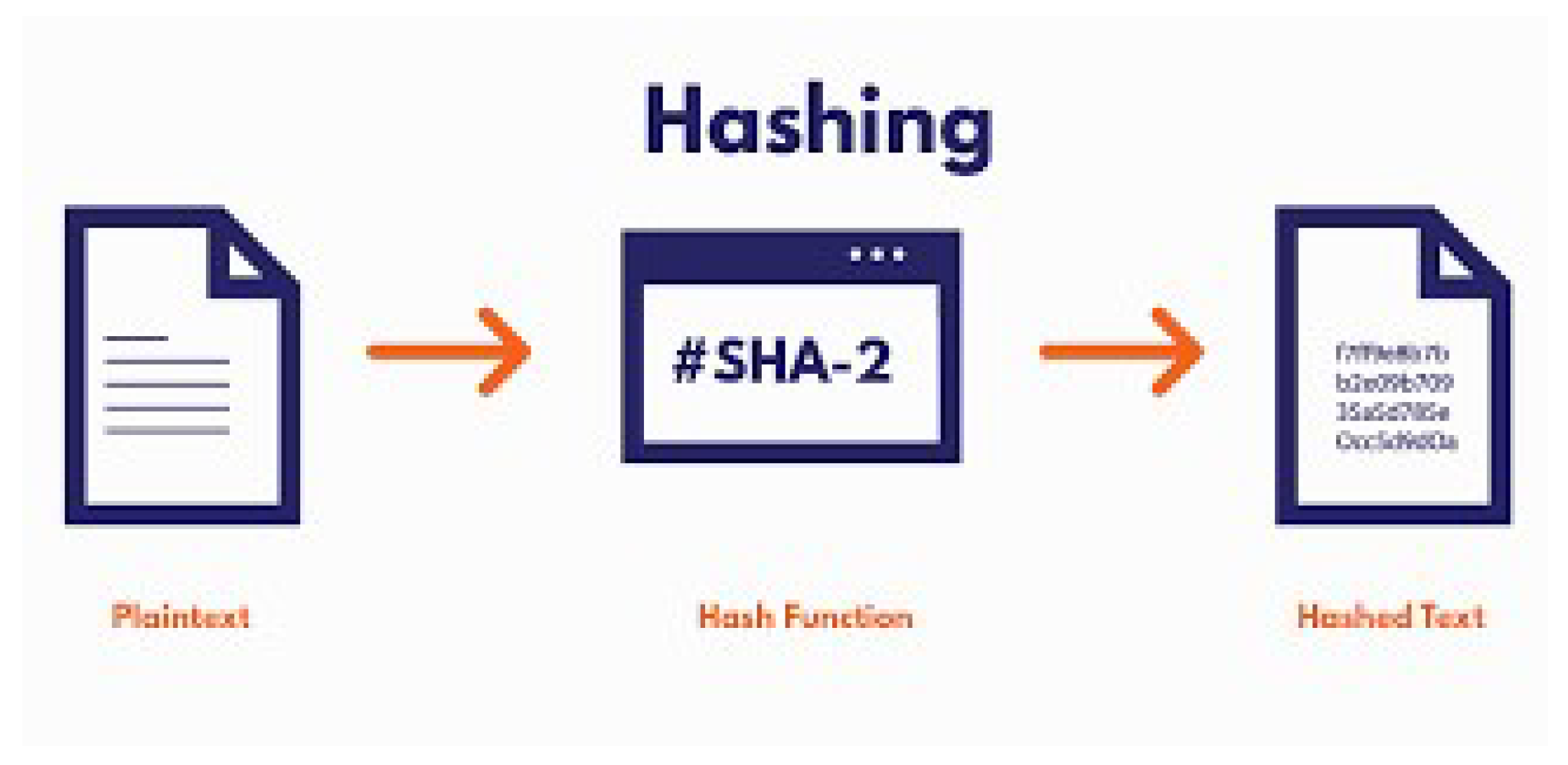
The system will employ end-to-end encryption (E2EE) to protect data transmitted between IoT sensors, cameras, and the backend AI system. This will ensure that Data collected by IoT devices (e.g., motion sensors, pressure sensors, NFC readers, and AI cameras) is encrypted at the source. Also, during transmission, data will be secured with TLS (Transport Layer Security) protocols to protect it from interception or unauthorised access. On the receiving end (backend AI system), the data will be decrypted only after reaching its intended destination, ensuring it remains protected during the transmission process. Further, the system will incorporate cryptographic hash functions to ensure the integrity of transmitted data. The backend system recalculates the hash upon receipt to verify that the data has not been altered or tampered with during transmission. If discrepancies are detected, the data is flagged as compromised and rejected.
Figure 9.
Cryptographic hash functions (Manyorock, 2023).
5.3.2. Mobile App Integration
Passengers can use mobile apps or their NFC-enabled cards to tap and validate tickets at multiple points inside the tram during the journey, making fare validation seamless and unobtrusive.
Figure 10.
Mobile App Integration.

Figure 11.
NFC-enabled integration (Google images).

5.3.3. AI-Driven Behavioral Analysis
The developed system will detect suspicious behaviours, such as passengers avoiding ticket validators, clustering near the tram exit without validating, and bypassing sensors. The AI will be able to learn using M-RL from real-time data and historical behaviour, allowing it to improve accuracy and reduce false positives over time.
6.0. Expected Outcomes and Impact
6.1. Revenue Recovery
- i.
- Reduction in Fare Evasion: The system is projected to reduce fare evasion by 15-20% over the first six months of operation.
- ii.
- Revenue Impact: Assuming a fare evasion reduction of 15-20%, the Hucknall and Bulwell tram operator's £57m loss could recover an estimated £8.55 million to £11.4million in additional revenue annually.
6.2. Operational Efficiency
6.2.1. Reduction in Manual Inspections: The automated monitoring system will reduce the need for manual inspectors by 30-40%, leading to significant cost savings on staff expenses. Inspectors only need to intervene when the system flags a passenger as a potential evader.6.2.1. Improved Boarding Speed:
The multi-zone ticket validation ensures that passengers can board quickly without the delays caused by ticket barriers, enhancing the passenger experience and reducing congestion at entry points.
6.2. Improved Passenger Experience
6.3.1. Seamless Fare Validation:
Passengers will experience a smooth and easy boarding process without barriers or queues. The continuous validation system will ensure that passenger’s who forget to validate at one point can do so at another without delays.
6.3.2. Reduced Crowding:
With automated checks and no barriers, passengers will spend less time in queues, improving the system's overall efficiency.
7.0. Conclusion
The proposed AI-powered fare evasion detection system provides a transformative solution to the persistent issue of revenue losses and operational inefficiencies in public transportation. By leveraging advanced technologies such as behavioural AI, reinforcement learning, IoT sensors, and privacy-preserving frameworks, the system demonstrates its potential to significantly reduce fare evasion, recover lost revenue, and enhance the overall passenger experience. Its adaptability and compliance with data privacy regulations ensure that it meets the needs of modern smart city initiatives while addressing ethical considerations. The system's global potential lies in its scalability and versatility, enabling its application across diverse public transport networks worldwide. Furthermore, its emphasis on ethical data processing ensures that passengers' privacy is safeguarded, setting a precedent for future AI-driven solutions in urban infrastructure. Policy-makers, transport authorities, and AI companies should collaborate in adopting and enhancing such innovative technologies, thereby making AI-powered fare evasion detection systems the standard in smart city initiatives and driving sustainable and efficient urban transportation systems globally.
8.0. Future Research
The research on fare evasion detection using behavioural AI, reinforcement learning, IoT sensors, and privacy-preserving technologies is still in its early stages. While the proposed system demonstrates significant potential to address current challenges in public transportation, it also opens up avenues for further exploration and enhancement in various domains. Future studies could build upon the foundation laid by this research to expand the capabilities of AI-driven solutions in transportation systems. The reinforcement learning model that was developed could be extended to tackle other critical challenges in urban transport. The model can be applied to traffic flow optimisation by dynamically adjusting tram schedules, rerouting vehicles, or managing passenger loads during peak hours to minimise congestion. Additionally, the system can improve the passenger experience by predicting travel demand in real time. Another area for expansion is predictive maintenance, where the model could analyse operational data from trams and other vehicles to predict mechanical failures, schedule timely repairs, and reduce downtime.
Moreover, the system can be integrated with smart city technologies to create a more interconnected and sustainable urban infrastructure. Similarly, the AI system could support public safety monitoring by detecting unusual or potentially threatening behaviours in tram stations and aboard vehicles, thereby improving passenger security. Future research could also focus on enhancing the privacy-preserving features of the system. This includes refining federated learning algorithms to ensure even more excellent protection of passenger data while maintaining high performance across distributed AI systems. Additionally, studies could explore the scalability of the system to other forms of public transport, such as buses or metro networks, and assess its effectiveness in diverse geographical and cultural contexts.
References
- Barabino, B., Di Francesco, M., & Ventura, R. (2023). Evaluating fare evasion risk in bus transit networks. Transportation Research Interdisciplinary Perspectives, 20, 100854.
- BBC News. (2023). Fare evasion costs TfL £130m a year in lost income. Retrieved November 20, 2024, from https://www.bbc.com/news/uk-england-london-67125173.
- Beck, J., Vuorio, R., Liu, E. Z., Xiong, Z., Zintgraf, L., Finn, C., & Whiteson, S. (2023). A survey of meta-reinforcement learning. arXiv preprint. arXiv:2301.08028.
- Burgos-Prada, E. S., Rosero-Sanchez, L. A., Velásquez Martínez, N., Bermudez, D., Marentes, L. A., Rojas, J. D., & Herrera-Quintero, L. F. (2021). BRT Station Door Fare Evasion Control Through Image Recognition Using IoT Approaches. In AETA 2019-Recent Advances in Electrical Engineering and Related Sciences: Theory and Application (pp. 670-680). Springer International Publishing.
- Cantillo, A., Raveau, S., & Muñoz, J. C. (2022). Fare evasion on public transport: Who, when, where and how?. Transportation Research Part A: Policy and Practice, 156, 285-295.
- Claiborne, J., & Gupta, A. (2018). Machine learning classifiers for predicting transit fraud.
- Cools, M., Fabbro, Y., & Bellemans, T. (2018). Identification of the determinants of fare evasion. Case studies on transport policy, 6(3), 348-352.
- https://www.linkedin.com/pulse/behavioral-ai-defined-learning-from-actions-just-data-sreenu-pasunuri-wdohc/.
- https://www.variohm.com/products/pressure-sensors/pressure-sensors/ept3100r.
- Huang, S., Liu, X., Chen, W., Song, G., Zhang, Z., Yang, L., & Zhang, B. (2022). A detection method of individual fare evasion behaviours on metros based on skeleton sequence and time series. Information Sciences, 589, 62-79.
- Huang, S., Song, G., Chen, W., Qin, J., Liu, X., Zhang, B., & Zhang, Z. (2022). Time Series–Based Detection on Tailgating Fare Evasions Using Human Pose Estimation. Journal of Transportation Engineering, Part A: Systems, 148(7), 04022035.
- Hucknall and Bulwell tram operator posts £57m loss in last year (hucknalldispatch.co.uk).
- Light rail and tram statistics, England: year ending March 2023 - GOV.UK (www.gov.uk).
- Nicodeme, C. (2022, October). Fare-evasion detection at ticket gates using posture analysis. In 2022 IEEE 25th International Conference on Intelligent Transportation Systems (ITSC) (pp. 1128-1132). IEEE.
- Nottingham: Tram fare dodging costs £2m a year, says operator (bbc.com).
- Transport for West Midlands. (n.d.). Tram services. Retrieved November 20, 2024, from https://community-engagement-tfwm.hub.arcgis.com/pages/tram-services.
- UK Department for Transport. (2023). Light rail and tram statistics, England: Year ending March 2023. Retrieved November 20, 2024, from https://www.gov.uk/government/statistics/light-rail-and-tram-statistics-england-year-ending-march-2023/light-rail-and-tram-statistics-england-year-ending-march-2023.
- West Midlands Metro. (n.d.). Expansion. Retrieved November 20, 2024, from https://www.westmidlandsmetro.com/about/expansion/.
- West Midlands Metro. (n.d.). Expansion. Retrieved November 20, 2024, from https://www.westmidlandsmetro.com/about/expansion/.
- Bhatia, A., Nashed, S. B., & Zilberstein, S. (2023). RL $^ 3$: Boosting Meta Reinforcement Learning via RL inside RL $^ 2$ arXiv preprint. arXiv:2306.15909.
- Lemmel, J., & Grosu, R. (2023). Real-time recurrent reinforcement learning. arXiv preprint. arXiv:2311.04830.
- Li, S. E. (2023). Reinforcement learning for sequential decision and optimal control (pp. 1-449). Berlin/Heidelberg, Germany: Springer.
- Li, L., Fan, Y., Tse, M., & Lin, K. Y. (2020). A review of applications in federated learning. Computers & Industrial Engineering, 149, 106854.
- Wahab, O. A., Mourad, A., Otrok, H., & Taleb, T. (2021). Federated machine learning: Survey, multi-level classification, desirable criteria and future directions in communication and networking systems. IEEE Communications Surveys & Tutorials, 23(2), 1342-1397.
- Singh, G., Violi, V., & Fisichella, M. (2023). Federated learning to safeguard patients data: A medical image retrieval case. Big Data and Cognitive Computing, 7(1), 18.
- Railway Displays. (n.d.). Train movement sensor. Retrieved November 21, 2024, from https://railway-displays.com/en/product/train-movement-sensor/.
- Variohm. (n.d.). EPT3100R - Pressure sensor for railway. Retrieved November 21, 2024, from https://www.variohm.com/products/pressure-sensors/pressure-sensors/ept3100r.
- Tribune Online. (n.d.). CCTV. Retrieved November 21, 2024, from https://tribuneonlineng.com/tag/cctv/.
- Manyorock. (2023). Cryptographic hash function and the blockchain. Retrieved November 21, 2024, from https://dev.to/manyorock/cryptographic-hash-function-and-the-blockchain-56de.
Disclaimer/Publisher’s Note: The statements, opinions and data contained in all publications are solely those of the individual author(s) and contributor(s) and not of MDPI and/or the editor(s). MDPI and/or the editor(s) disclaim responsibility for any injury to people or property resulting from any ideas, methods, instructions or products referred to in the content. |
© 2024 by the authors. Licensee MDPI, Basel, Switzerland. This article is an open access article distributed under the terms and conditions of the Creative Commons Attribution (CC BY) license (http://creativecommons.org/licenses/by/4.0/).
Copyright: This open access article is published under a Creative Commons CC BY 4.0 license, which permit the free download, distribution, and reuse, provided that the author and preprint are cited in any reuse.


