
Submitted:
25 November 2024
Posted:
27 November 2024
You are already at the latest version
Abstract
Agricultural systems face increasing global pressure to address sustainability challenges, particularly regarding land use and environmental protection. In Romania, where traditional diets are heavily dependent on animal-based products, optimizing land use is critical. This study investigates the potential of plant-based diets to reduce agricultural land use, examining scenarios of partial and complete replacement of animal protein with plant protein sources (soy, peas, and potatoes). The research modeled three dietary transition scenarios – replacing 33%, 50%, and 100% of animal protein with plant-based protein – using data from the Romanian National Institute of Statistics, FAO, and international sources. Land use was calculated for each scenario using formulas that take into account protein content and land use intensity for animal and plant protein sources. The simulations quantify the reduction in agricultural land use at the per capita and national levels. The study reveals significant land-saving potential across all scenarios. At the national level, land use reductions ranged from 84,020 hectares (33% replacement) to 1,067,443 hectares (100% replacement). High-impact products such as beef and dairy continue to dominate land use, even in partial replacement scenarios. Conversely, replacing pork and chicken proteins shows substantial savings. The findings highlight the inefficiency of animal-based protein production and the ecological benefits of transitioning to plant-based diets. A dietary shift towards plant-based protein in Romania could achieve significant reductions in agricultural land use, contributing to the Sustainable Development Goals. This transition not only supports environmental conservation and resource optimization, but also provides public health benefits by reducing consumption of red and processed meat. These results provide a basis for policies to promote sustainable and nutritionally balanced food systems.
Keywords:
plant-based diet
; agricultural land use
; sustainability
; protein source replacement
; Sustainable Development Goals (SDGs)
1. Introduction
This research was originally presented at The 4th International Electronic Conference on Nutrients, where the abstract was published as part of the conference materials [1].
In recent decades, agriculture has faced increasing pressure from global demands for sustainability and environmental protection. As the world's population grows, the need for agricultural land for food production intensifies, and current agricultural practices are increasingly challenged from the perspective of the impact on natural resources. In this context, plant-based diets have become a central solution in global discussions about sustainability. Adopting such a diet, which requires fewer resources for protein production, could bring significant benefits in terms of land use, environmental protection, and climate change mitigation.
Romania, a country with predominantly traditional agriculture, has considerable potential to adopt such sustainable strategies, especially in the context where the agricultural sector represents an important part of the national economy. Currently, a large part of the agricultural land in Romania is dedicated to raising animals and growing fodder for them, which contributes to an intensive and inefficient use of land. International studies indicate that the production of protein from meat, especially from beef, requires up to ten times more land than the production of protein from cereals or legumes [2,3,4]. This makes plant-based diets much more efficient from a land-use perspective.
Worldwide, adopting a plant-based diet has become a priority in resource conservation strategies [5,6]. International organizations such as the Food and Agriculture Organization of the United Nations (FAO) and the Lancet Commission have emphasized the urgent need to reduce dependence on meat and other animal products to limit environmental impact and protect biodiversity. In addition, plant-based food production is less resource-intensive, making it a viable solution for countries trying to optimize agricultural land use and reduce greenhouse gas emissions [7,8].
For Romania, aligning with these international trends represents an opportunity to reduce the agricultural footprint and contribute to national and global sustainability goals. Although the country has a long history of high consumption of animal products, there is a growing interest among the public and policymakers for solutions to address environmental challenges [9]. Studies from other European countries show that a transition to plant-based diets could reduce agricultural land use by up to 75% [10]. These data are also relevant for Romania, which faces similar pressures in terms of land use and the need to preserve natural ecosystems.
International research on the impact of plant-based diets on land use is well documented and supported by clear evidence. FAO studies have shown that diets high in meat, especially beef, have a disproportionate impact on agricultural land. For every gram of protein produced from beef, it takes much more land than to produce the same amount of grams of protein from legumes or cereals. Similarly, the Lancet Commission emphasized the importance of adopting a healthier, plant-based diet as part of a global effort to reduce the impact of agriculture on the environment [7,8].
However, research in Romania on this subject remains limited. While there are some studies exploring the impact of intensive agriculture on the land and environment, few focus on the potential for transitioning to plant-based diets. This knowledge gap is particularly important, considering Romania's agricultural specifics and the importance of agriculture for its economy. The present study aims to fill this gap, providing a detailed analysis of the impact that such a dietary change would have on the use of agricultural land in Romania.
We also investigated how adopting a plant-based diet can help reduce agricultural land use in Romania. The main goal is to quantify the land savings that could be achieved by replacing animal protein sources with plant sources such as legumes and cereals. The study is based on data provided by government and international sources and examines the efficiency of land use in protein production. The models used in this study are inspired by previous research conducted for the transition from animal-based to plant-based food production in other countries, which were never adapted to the Romanian context [11,12,13].
The research also explores the impact of such a dietary transition on the long-term sustainability of Romanian agriculture. It is estimated that a transition to a predominantly plant-based diet could reduce the use of agricultural land by up to 75%, a result that would have significant implications not only for the land used, but also for the protection of natural resources and biodiversity. In addition, the transition to more sustainable diets could help reduce emissions from agriculture and improve public health [10].
Romania has a vast agricultural area, occupying almost 60% of the national territory, and is one of the largest producers of cereals, such as corn and wheat, in the European Union [14]. However, much of this land is devoted to livestock and fodder cultivation, leading to an intensive and sometimes inefficient use of resources.
The fragmentation of agricultural land, the predominance of small farms and the lack of modern technology contribute to low productivity in many rural areas. Romanian agriculture is also vulnerable to climate change, due to high dependence on weather conditions and aging irrigation infrastructure. Animal husbandry plays a central role, but meat and dairy production exerts significant pressure on agricultural land [15].
In this context, the adoption of a plant-based diet could have a significant impact on Romanian agriculture, freeing up land used for livestock and fodder, contributing to the optimization of the use of agricultural resources. The transition to plant-based food production, such as legumes and cereals, could not only reduce the pressure on the land, but also support Romania's sustainability goals, aligned with European strategies [7,16]. Such a change could stimulate the modernization of the agricultural sector, encouraging the implementation of more efficient and sustainable practices, as well as the adoption of new technologies.
Therefore, a plant-based diet would not only contribute to reducing the use of agricultural land, but would also create opportunities for increased sustainability in agriculture, providing solutions for the current challenges facing Romania [14].
The implementation of a dietary transition of this type could have substantial benefits for Romania. In addition to reducing pressure on agricultural land, this change could support the adoption of more sustainable and greener agricultural practices. In addition, the release of significant areas of agricultural land would allow their use for reforestation or other activities aimed at supporting the conservation of natural ecosystems [17,18,19].
From a public policy perspective, the study provides a possible basis for formulating sustainable strategies in the field of food and agriculture. As Romania faces major challenges in terms of natural resource management and environmental protection, adopting a plant-based diet may be a viable solution to reduce the negative impact of agriculture on the environment. Using the data provided by this study, policymakers can develop educational programs and awareness campaigns that encourage the public to adopt healthier and more environmentally friendly eating habits.
Therefore, this research demonstrates that a transition to a plant-based diet in Romania has the potential to bring significant ecological, economic and health benefits. This change could serve as a model applicable not only at the national level, but also in other countries facing similar challenges related to agricultural land use and food sustainability.
2. Materials and Methods
2.1. Data and Sources
To carry out this study on reducing agricultural land use through plant-based diets in Romania, we collected and analyzed external data from relevant international and national institutions. Statistical data comes from Our World in Data (Oxford, Great Britain), FAO, and the Romanian National Institute of Statistics (INSEE). In parallel, we analyzed the scientific literature from major international databases such as Web of Science, Scopus, PubMed, ScienceDirect, and gray literature. The literature selection process involved the use of keywords such as "land use for animal products," "protein land footprint," "plant-based protein sustainability," and "animal vs. plant protein environmental impact." We identified 36 relevant bibliographic references, 7 of which are from the authors of the present study, addressing the consumption of animal products, their impact on agricultural land use and recommended dietary patterns, providing a diversified and up-to-date basis for analysis. The selection of these sources was made based on direct relevance to land use comparisons between animal and plant protein sources but also on the accessibility and authority of these data.
To assess the impact of a plant-based diet on agricultural land use in Romania, this study adopted a modelling-based approach, combining data from governmental and international sources with models adapted to Romanian agricultural specificity. The models were built to quantify the potential agricultural land savings resulting from the transition to a plant-based diet, making comparisons between the agricultural land required to produce animal-based products versus plant-based products. These models have been adjusted to reflect average agricultural production conditions in Romania, using data provided by FAO and Our World in Data.
In this research, we chose to focus on the protein content of foods as a central element of comparison between animal and vegetable products. This decision was made based on the fundamental importance of protein in the diet and its essential role in ensuring a balanced nutrition [20]. Proteins are essential macronutrients required for many vital functions, such as tissue repair, enzyme and hormone production, and muscle mass maintenance. Comparing protein content is also essential to assess the ecological impact of different food sources, given that animal products are particularly valued for their high protein content.
Replacing animal protein with plant protein requires careful consideration to ensure nutritional equivalence and to identify the most efficient plant sources in terms of resource use. Protein content is a suitable indicator for assessing the sustainability of a diet, as it allows direct comparison of different protein sources according to the land required for their production [20,21]. Although there are other important nutrients in food (such as carbohydrates and fats), protein was chosen as the main comparator because it provides a concrete and critical measure of nutritional intake and agricultural land use efficiency. Thus, focusing on protein allows us to assess the ecological impact of changing protein sources, providing a solid basis for understanding how a transition to a plant-based diet can contribute to saving agricultural resources without compromising the nutritional needs of the population [22,23,24].
2.2. Applied Formulas
In this research, we decided to analyze the impact on land use by simulating the gradual replacement of animal protein with vegetable protein. To provide a clear and detailed picture of the land economy, we set three replacement scenarios: 33%, 50% and 100%. These rates were chosen to reflect different levels of dietary transition and to progressively analyze how the adoption of plant-based diets could reduce pressure on agricultural land.
- (a)
- The 33% replacement scenario. This rate was selected because it represents a moderate reduction and easier to achieve in practice. Replacing a third of animal protein with plant-based protein can be an affordable first step for the population, providing a balance between nutritional intake and reducing the impact on agricultural land. This scenario provides a realistic perspective on a partial transition to more sustainable diets.
- (b)
- The 50% replacement scenario. This scenario represents a significant reduction in animal protein consumption and marks an intermediate transition to a largely plant-based diet. The choice of the 50% rate allows for a detailed assessment of the effects of a more ambitious change in agricultural land use, providing a picture of how such a regime can influence the sustainability of food systems.
- (c)
- 100% replacement scenario. This represents an extreme scenario where all animal proteins are replaced by vegetable proteins. Although such a complete change may seem less realistic to some consumers, it is important to evaluate the maximum possible impact of switching to a completely plant-based diet. This scenario highlights the maximum land savings that could be achieved by completely eliminating animal products from the diet.
Through these three replacement scenarios, our analysis provides insight into how different degrees of dietary change can reduce agricultural land use. These scenarios reflect both gradual changes, which might be easier to implement among the population, and a complete change, to show the maximum potential for sustainability.
To assess the impact on land use following the replacement of animal proteins with vegetable proteins, we used the following three formulas.
The first calculates the agricultural land use for currently consumed animal proteins (Land Use initial), the second calculates the use of land for vegetable proteins that replace animal proteins (Land Use with replaced proteins), and the third (Land Use final) reveals the difference between the first two, related to the three scenarios of replacing animal protein with vegetable protein (33%, 50%, and 100%).
Formula for Land Use Initial:
C - Annual per capita consumption of the product of animal origin (kg)
P - Percentages of protein per 100 g of food of animal origin (%)
LUanimal - Land use per 100 g of animal protein (m2)
Formula for Land Use with Replaced Proteins:
C- Annual per capita consumption of the product of animal origin (kg)
P - Amount of protein per 100 g of food of animal origin (g)
Rx - Percentage of animal protein replaced
n - Number of plant-based protein sources
i - Order number of the plant-based protein source in the replacement group
wi - Proportion of plant-based protein that contributes to the replacement
LUvegetal,i - Land use per 100 g of protein from plant-based source i (m²).
Formula for Land Use Final:
This difference reflects the economy of agricultural land following the substitution of animal proteins for vegetable proteins for each reduction scenario (33%, 50%, 100%).
2.3. Simulations and Scenarios
In our research, the structure of replacing animal proteins with vegetable proteins plays a central role. We chose three essential plant sources - soy, peas, and potatoes - to simulate different replacement rates, taking into account both the food preferences of the Romanian population and the efficiency of these foods in terms of agricultural land use [25,26,27].
This combination is used to analyze the impact on the agricultural areas needed to support the Romanian diet, which is currently heavily dependent on meat and dairy products. By using 50% soybeans, 30% peas, and 20% potatoes, we evaluate the ability of these foods to meet the protein needs of the population, but with a low ecological impact.
This approach also allows us to model different scenarios of partial or total replacement of animal protein and see how each scenario affects the use of land resources. Thus, our research not only proposes a sustainable alternative to the traditional diet, but also provides concrete data to support a viable transition to a greener food system.
We ran simulations to estimate the effects of different scenarios for reducing the consumption of animal products. The simulations included scenarios of a gradual transition to an exclusively plant-based diet, that is, from reducing the consumption of animal products to a full transition to a vegan diet.
The calculation was applied for each type of food of animal origin, in three replacement stages , related to the three scenarios:
- (a)
- 33% of animal proteins were replaced by plant-based proteins;
- (b)
- 50% of animal proteins were replaced by plant-based proteins;
and
- (c)
- 100% of animal protein were replaced by plant-based protein.
These scenarios were used to assess the impact on agricultural land and to analyze how the released land can be redistributed for alternative ecological or agricultural purposes. This approach provides a clear picture of the impact that switching to plant-based diets can have on agricultural land use, highlighting the potential land savings for each level of reduction.
2.4. Analysis of the Results
The data obtained from the model simulations were analyzed to highlight the agricultural land savings and the implications for the sustainability of agriculture in Romania. The review included an assessment of the potential to reduce pressure on agricultural land as well as the impact on food production. We also investigated the ecological benefits of releasing agricultural land, such as the possibility of reforestation or restoration of natural ecosystems.
The methodology of this study provides a basis for understanding the impact of a major dietary change on agricultural land in Romania and can serve as a reference for future research in the field of agricultural sustainability.
3. Results
In Romania, products of animal origin, especially meat and milk, together with their derivatives, such as sausages and dairy products, constitute a significant part of the daily diet of the population [15,24]. The high consumption of meat, especially pork, chicken, and beef, but also dairy products, reflects the traditional and cultural preferences of Romanians, who have a long history of eating foods rich in animal proteins. These products are associated with culinary habits that emphasize satiety and their constant presence in the main meals of the day. [20,21]
However, the negative impact on the environment and natural resources, caused by the intensive use of land to produce these foods, led us to explore more sustainable alternatives based on plant sources [28,29,30]. Thus, in this research, we chose to simulate the replacement of part of the animal proteins with proteins of plant origin, in order to analyze the potential land savings.
We opted for the following plant sources in our simulations:
- -
- Soy - 50% of the replacement. We chose soy because of its high protein profile and health benefits. Soy is a complete protein source, containing all the essential amino acids, making it an excellent alternative to animal protein. In addition, soy consumption is associated with cardiovascular health benefits and reduced risk of chronic disease [31,32]. Compared to beans, soybeans are more efficient in providing quality protein with low land impact.
- -
- Peas - 30% of replacement. Peas are highly valued vegetable in Romania and are frequently consumed, both fresh and canned. It is rich in proteins and fibers, being easy to integrate into various traditional culinary preparations. Peas also provide high-quality protein, although their content of essential amino acid is lower than that of soy, which is why we allocated a lower percentage to this source [33,34].
- -
- Potatoes - 20% of replacement. Potatoes are a staple food in the Romanian diet and one of the most consumed vegetables [35,36]. Although they are not very rich in protein, potatoes complete the caloric intake and are extremely versatile in Romanian cuisine [37,38]. Therefore, we thought it appropriate to include potatoes in our simulation given their popularity and relatively low impact on farmland.
Through this replacement structure, we wanted to maintain a balance between quality proteins and the foods preferred by Romanians, while also analyzing the impact on the use of agricultural land. Of course, this replacement structure is only created for the purpose of this study, as an example. In practice, the replacement structure can be modified according to consumer preferences, both with plant-based protein sources shown in Figure 1, as well as many others, not included in the study, because they are not specific to the cultivation conditions, nor are they traditionally cultivated in Romania (e.g. cassava) [39].
Comparing land use for the production of 100 g of protein, we see major differences between animal and plant-based products. Based on the collected data, we analyzed the annual per capita consumption of animal products, which is composed of meat, fish and seafood, and milk. The meat and milk groups also include equivalent processed products (sausages and dairy products). We collected data on the protein content presented in Table 1, which provides a detailed look at the protein content for various animal products, expressed in grams of protein per 100 grams of product. Data are extracted from an FAO reference source and reflect average protein values for types of meat, fish and seafood, eggs, and milk [17].
Table 2 presents the annual per capita consumption of animal products in Romania in 2021, including both meat and its equivalents in the form of meat preparations. Also, milk data includes the consumption of equivalent dairy products. The information reported by Our World in Data is related to per capita consumption and provides a clear picture of the food preferences of the Romanian population [18].
Pork and chicken predominate in the diet, reflecting a culinary tradition that favors these types of meat. The raising and exploitation of pigs in Romania is traditional, and consumption of pork meat is high, which is associated with various traditional events [24]. At the same time, the consumption of dairy products is particularly high, indicating a significant dependence on milk and its derivatives. These data reflect the traditional preferences of Romanians for pork and dairy products, which have a major presence in the daily diet [42]. Fish and beef consumption remain low, in line with trends seen in Eastern Europe [43].
We modeled the three land use scenarios for meat, milk and egg proteins production compared to plant-based sources, such as legumes and cereals, and applied Formulas 1, 2 and 3. The results for the three scenarios are reproduced below.
3.1. Scenario 1 – 33% of Animal Protein Replaced by Plant-Based Protein
In the first scenario, we simulate the impact of a 33% reduction in animal protein consumption, replaced by vegetable protein sources (soy 50% replacement, peas 30% replacement and potatoes 20% replacement). Table 3 shows the initial land use for each category of animal product, as well as the decrease in land use after applying this 33% partial replacement of animal protein with vegetable protein.
In this scenario, the impact on land use varies depending on the share of each food in per capita consumption. Milk, which has a very high consumption in Romania (599.32 kg per capita), and beef, although consumed in smaller quantities compared to other types of meat, continue to have a high ecological footprint due to the large land resources required for their production. Also, products with lower consumption, such as eggs and fish, contribute less to total land savings, clearly showing that reducing the consumption of heavy products such as milk can have a significantly greater impact on land use. The 33% reduction in consumption of animal protein in favor of plant-based protein results in a modest but significant decrease in land use for food production. The total land use for animal products, before replacement, is 8164.59 m² per capita. After the 33% reduction, this drops to 8108.35 m² per capita, which means a saving of 56.24 m² per capita. This reduction, although seemingly small, is significant in the context of a high consumption of animal products.
Beef remains the product with one of the largest ecological footprints, for an average consumption of 5.05 kg per capita using approximately 1528.39 m² before replacement and only marginally decreasing to 1518.70 m² after the 33% reduction. This highlights the disproportionate impact of cattle on agricultural land use, even in a partial reduction scenario.
Milk, another product with a significant impact, initially requires 5363.91 m² per capita and decreases to 5158.72 m² after replacement. Although milk has a high ecological impact, it remains an essential element of Romanians' diet, contributing to a large extent to land use.
In contrast, chicken and pork, although consumed in large quantities, show a more significant reduction in land use. Land use for chicken decreases from 267.96 m² to 228.55 m², while pork decreases from 435.50 m² to 393.39 m², showing that even a partial change in the consumption of these products can have a greater impact.
Eggs and fish, although they have a relatively low consumption in Romania, also contribute to the total land use, with a decrease of approximately 14.25 m² and 9.15 m² respectively.
This scenario demonstrates that a partial reduction in animal protein consumption can generate significant agricultural land savings, especially for the pork and chicken categories. However, products such as milk and beef continue to dominate land use, suggesting that a more drastic change would be needed to see significant reductions in the ecological footprint. This scenario sets the stage for the following simulations, where we explore the impact of 50% and 100% reductions.
3.2. Scenario 2 – 50% of Animal Protein Replaced by Plant-Origin Protein
In this scenario, we simulate a more substantial reduction by replacing 50% of the animal protein consumed with plant sources. Table 4 shows land use before and after replacement, highlighting the economy of agricultural land for each product category.
In Scenario 2, a 50% replacement of animal protein with vegetable protein generates a considerable reduction in land use. The total land use for animal products decreases from 8164.59 m² to 7941.34 m², which represents a total saving of 223.25 m² per capita. This scenario demonstrates that as the percentage of replacement increases, the impact on land resources becomes more significant.
Different consumption shares have a critical effect on the results of this scenario as well. Milk, having a very high consumption, continues to dominate land use, and reducing the consumption of this product contributes substantially to the total land savings. On the other hand, foods such as beef, although they have a lower consumption per capita, have a high ecological impact per unit of product. Therefore, reducing the consumption of heavy products such as milk and pork has a much more pronounced effect on land savings. Beef continues to have a high ecological impact, with land use falling only slightly from at 1528.39 m² at 1513.71 m² after the 50% reduction. This is primarily due to the relatively low consumption of beef in Romania, of only 5.05 kg per capita, compared to the much higher consumption of pork and chicken. Although the ecological footprint of beef per unit is high, the low consumption means that the absolute impact of substitution is less significant compared to other types of meat.
Milk is also an important source of land use, although a 50% reduction in consumption of animal protein replaced by plant-based protein decreases land use from 5363.91 m² to 5053.01 m², representing a saving of 310.90 m². This reflects the significant contribution of dairy products to the ecological footprint.
Pork and chicken are the categories that benefit from the largest land use reductions. For pork, land use decreases from 435.50 m² to 371.69 m², and for chicken it drops from 267.96 m² to 208.26 m². These reductions reflect the positive impact that a shift in consumption of these types of meat to plant-based sources would have.
Eggs and fish, while consuming less than pork and chicken, also contribute to land savings, with a reduction of 21.60 m² for eggs and 13.86 m² for fish and seafood.
This scenario clearly illustrates that a 50% reduction in animal protein consumption and replacing it with vegetable protein can generate considerable land savings. However, products such as beef and milk continue to be large consumers of land, even after such a reduction. On the other hand, pork and chicken show more substantial savings, suggesting that through a balanced dietary change more favorable results can be achieved in terms of agricultural resource management. This scenario brings us closer to understanding the full impact of a wider dietary transition, which we will explore in detail in the next scenario, where we look at the complete replacement of animal protein.
3.3. Scenario 3 – 100% of Animal Proteins Replaced by Plant-Origin Proteins
In this scenario, all animal proteins are completely replaced by plant sources (soy, peas and potatoes). This radical transition requires a careful analysis of how each category of animal products contributes differently to land use, both before and after replacement. The transition affects food categories differently due to their specificities in per capita consumption and impact on land resources.
This scenario reflects a complete transition to plant-based protein sources, where all animal proteins are eliminated from consumption. After replacement, final land use (LUfinal) is the only protein impact outcome (Table 5).
Chicken meat is one of the most consumed sources of animal protein in Romania, with an annual consumption of 22.21 kg per capita. Although the ecological impact of chicken per unit of protein is relatively low compared to other types of meat (with an initial use of 267.96 m²), the high share of total consumption makes land use relevant. Total replacement of chicken protein with plant-based protein sources reduces land use to 148.55 m², showing that, in the context of a full transition, even products with a lower impact per unit can significantly contribute to land savings due to their high volume of consumption.
Beef, although it has a relatively low consumption in Romania, of only 5.05 kg per capita, remains one of the most intensive in land use, with an initial value of 1528.39 m² per capita. The complete replacement of beef protein with plant-based protein reduces this use to 1499.02 m², but remains high even after the transition. This highlights the inefficiency of beef production in terms of land resources, making its replacement essential to any strategy to reduce pressure on agricultural land.
Sheep and goats have a small share of per capita consumption (2.8 kg), but are known for their large ecological footprint, initially using 724.47 m² per capita. Their complete replacement with plant sources causes a decrease in land use to 712.14 m². Even for products with a low share in the diet, their replacement can contribute to a more efficient management of resources, due to the high requirements for the production of sheep and goat meat.
Pork is one of the main sources of animal protein in Romania, with a consumption of 36.9 kg per capita, and the use of land for its production is moderate (435.50 m² initially). However, due to the high volume of consumption, its impact on land use is significant. The complete replacement of pork protein with plant-based sources reduces land use to 307.89 m², highlighting that substantial savings can be achieved through a dietary transition targeting products consumed in high volumes.
The "other types of meat" category, which includes less consumed products (turkey, rabbit etc.), contributes marginally to land use, with an initial value of 2.16 m² per capita. The complete replacement of these sources with plant proteins provides a decrease in land use of 1.20 m², which, although modest at the level of national consumption, brings additional savings that add up to the overall decrease in pressure on agricultural land.
The consumption of fish and seafood is relatively low in Romania (8.09 kg per capita), and the ecological footprint associated with them is relatively small (32.52 m² initially). However, completely replacing fish protein with plant-based sources brings land use to 4.80 m² per capita. Although the benefits are less pronounced than in other categories, any transition to vegetable proteins contributes to a cumulative decrease in ecological impact.
Eggs, with a consumption of 12.84 kg per capita, have a moderate impact on land use (77.63 m² initially), but their complete replacement with plant-based sources causes a reduction in land use to 34.44 m². The transition to plant-based proteins in this category contributes significantly to land savings, especially in the context of moderate consumption.
Milk and dairy products have an extremely large share in the diet of Romanians, with an annual consumption of 599.32 kg per capita, which makes them responsible for one of the largest ecological footprints, with an initial use of 5363.91 m² per capita. The complete replacement of milk proteins with plant-based sources reduces land use to 4742.11 m², but the impact remains considerable due to the high volume of consumption.
So, completely replacing animal protein with plant-based sources in this scenario reduces total land use from 8164.59 m² to 7450.14 m², which represents a total saving of 714.45 m² per capita. High-consumption products such as pork and milk continue to significantly influence resource use even after full replacement, while lower-consumption categories such as fish and other meats have a lower environmental impact but offer additional opportunities for savings by switching to plant-based proteins.
3.4. The Impact of Food Transition Scenarios on the Use of Agricultural Land in Romania
This research applies a model to evaluate the impact that reducing the consumption of animal protein and replacing it with plant-baced protein would have on the use of agricultural land in Romania. Focusing on the data on the adult resident population of Romania from 2021, the reporting year of animal food consumption, which was 14,940,830 people, we apply the calculations to understand the impact at the national level. [43] (Table 6).
In this context, we consider three reduction scenarios: 33%, 50% and 100%. Scenario 1 assumes a 33% replacement of animal protein, with an estimated impact of reducing the agricultural land needed per capita, extrapolated to the entire adult resident population in Romania, providing an image of the reduction of agricultural land used. Scenario 2 increases this replacement to 50%, providing insight into greater land saving potential. Scenario 3 explores the impact of a full (100%) transition to plant-based proteins, illustrating the most optimistic scenario for reducing agricultural land use.
Each of these scenarios is calculated by multiplying per capita land use by the total adult population, thus providing concrete data on total land savings at the national level. The obtained results underline the significant potential of reducing Romania's ecological footprint through dietary changes, providing a solid foundation for sustainable natural and food resource management policies.
Figure 2 shows the impact of the simulations to reduce the consumption of animal products on the use of agricultural land in Romania, expressed in hectares (ha).
We note that initially, for 14,940,830 Romanian adult residents, the total land area used is 12,198,570 ha. With the reduction of 33%, the area drops with 84,020 ha, which represents more of the utilized agricultural area (UAA) of Ilfov County (61,987.41 ha) [44].
With the reduction of 50%, the area drops further to 11,865,024 ha, with an additional decrease of 249,525 ha from the previous scenario, totaling a saving of 333,545 ha from the baseline, which represents almost all the UAA of the medium county in Romania, Galati County (332,030.23 ha) [44].
With the reduction of 100%, the largest decrease is observed, with a total of 11,131,127 ha, reducing by 733,898 ha compared to the 50% scenario and a total of 1,067,443 ha compared to the baseline. This represents almost the cumulative UAA of two large-sized counties in Romania, Arad and Timis (1,113,352.75 ha) [44] (Figure 3).
It is emphasized that the gradual reduction in the consumption of animal products leads to a significant decrease in the need for agricultural land, with a direct impact on the conservation of natural resources and the reduction of the ecological footprint. Reducing 1,067,443 hectares in the use of agricultural land, by fully switching to a plant-based diet is not just a statistical victory, it's a statement of possibility. It shows that through informed and courageous choices in food policy and our personal preferences, we can contribute to a greener landscape and a healthier future [44,45].
4. Discussion
The global distribution of agricultural land use for food production highlights a significant imbalance between the areas dedicated to food for human consumption and those used for animal feed [46,47]. Of the total 2.89 billion hectares of agricultural land, only 704 million hectares are directly allocated to human food, while 538 million hectares are dedicated to animal feed production. This reality highlights the inefficiency of animal-based food systems, which require much larger amounts of resources for a relatively small contribution to global caloric intake. Adopting plant-based diets can address this inefficiency, offering significant opportunities to save land and reduce the impact on ecosystems, in the context of a growing global population and the urgent need for sustainable solutions [10] (Figure 4).
Referring to the total impact of replacing animal proteins with plant-based proteins, one of the major aspects highlighted by the results is the significant potential for saving agricultural land when animal protein is gradually replaced by plant sources. From savings of 84,020 hectares in Scenario 1 (33%), to 333,546 hectares in Scenario 2 (50%) and finally a substantial reduction of 1,067,443 hectares in Scenario 3 (100%), moving to a plant-based diet demonstrates that a major improving of land sustainability is possible by changing eating habits.
Interpretation of this reduction shows that as the replacement rate of animal protein increases, land savings become more and more apparent. Although a full change (100%) generates the greatest impact, even a modest 33% reduction can have considerable benefits for reducing land pressure.
In terms of the efficiency of the different categories of food of animal origin, meat categories with the greatest land-use impact, such as beef and dairy, remain problematic even after 33% or 50% replacements. For example, in the case of beef, land use is reduced by only 9.69 m² in Scenario 2, which underlines the inefficiency of this protein source from an ecological perspective. Also, dairy products, while generating significant savings in the intermediate replacement scenarios, continue to have a massive land footprint.
This finding suggests that to achieve real sustainability benefits, reducing the consumption of high-impact products such as beef and dairy products is essential. In contrast, poultry and fish proteins show considerable savings, indicating greater land use efficiency if their consumption was partially or totally replaced by vegetable proteins.
It is important to note that all our scenarios involved substitutions with a specific combination of plant sources (50% soy, 30% peas and 20% potato), but this combination can be changed and adapted to both consumer preferences and the usage needs of the land. Romanians have a high preference for potatoes, whose land needed for 100 g of protein is almost comparable to eggs (potatoes 5.18 m²/100 g protein, eggs 5.65 m²/100 g protein), but potatoes can be replaced by corn, which has only 3.09 m²/100 g protein, or with wheat or rye, which have only 3.16 m²/100 g protein. This adjustment in the choice of replacement source can not only improve land use efficiency but also better align the transition with local dietary preferences and long-term SDGs.
Looking at the benefits of plant-based diets, research results confirm that a diet based on plant-based proteins, either partial (33%, 50%) or total (100%), can help reduce pressure on agricultural land, which would allow for more efficient resource management. Soybeans, peas, and potatoes, the plant sources selected to replace animal proteins, have been shown to be effective in saving land, especially compared to animal products such as beef, pork, and dairy products. This finding is particularly important in the context of climate change and global population growth, where the sustainability of food systems plays a crucial role in reducing the ecological footprint [48,49].
Related to the relevance of the results for Romania, these results are particularly for Romania as a country with a strong tradition in the consumption of red meat and dairy products, reconfirmed over time, independent of socio-political conditions [50,51]. The proposed dietary changes, even partial ones, could significantly contribute to reducing the pressure on agricultural land, thereby freeing up spaces for other uses, such as reforestation or biodiversity protection.
The transition to more sustainable diets in Romania, although it may seem challenging from a cultural and economic point of view, could bring significant benefits not only for the environment but also for the health of the population. Reducing the consumption of animal protein, especially high-impact products such as beef, could help achieve national and international goals related to sustainability and resource management [52,53].
Assessing the challenges of transition scenarios, each of the three scenarios analyzed demonstrates that a gradual transition can have clear benefits. However, the complete replacement (100%) of animal proteins with plant-based proteins, although it generates the greatest land savings, could encounter difficulties in adoption, given the traditional dependence of Romanians on animal products. Therefore, intermediate scenarios, such as 33% or 50% replacement, may be more achievable and may constitute a first step towards wider change.
The limitations and shortcomings of the research, which should be covered by future research directions, are based of the fact that in practice, the decrease is not proportional to the reduction scenarios, indicating the complexity of the production system and possible limitations in the complete substitution of animal products with plant alternatives. The reasons for this phenomenon are multiple:
- -
- Different efficiency of plant sources. The replacement of animal protein with vegetable protein is not linear in terms of land use. For example, soybeans have a much smaller land use than peas or potatoes, and the substitution is made with a mix of plant products, not with a single source [17,41]. Thus, depending on the plant sources selected for replacement, the decrease in land use may not be directly proportional to the percentage reduction in consumption of animal products.
- -
- Differences in land use intensity between animal products. For example, beef has a much greater impact on land use than chicken or eggs [17,41]. Therefore, reducing beef consumption will have a greater impact on saving land than reducing egg consumption. If a small percentage of beef is replaced, it will generate a relatively greater decrease in land use than a similar amount of eggs or fish.
- -
- Local and specific factors for Romania. Agricultural conditions in Romania, including farming practices and types of crops grown, can influence land use efficiency [2,3]. For example, some crops may have lower yields due to local soil or climate, which limits total land reduction even when replacing animal protein.
In the context of Romania, recent research on the impact of diets on the use of agricultural land has highlighted the need to change dietary habits in order to reduce the national ecological footprint [9]. Romania, a country with a strong agricultural tradition, uses a large part of its agricultural area to raise animals and grow the food they need. Globally, data show that around 83% of agricultural land is dedicated to livestock, while animal products contribute only 18% of global caloric intake. The same trend can be observed in Romania, where the high consumption of meat, especially pork and beef, has a significant impact on the environment [9,48].
Animal products such as beef and lamb are much more resource-intensive, including agricultural land, compared to vegetable foods. For example, to produce 100 grams of beef protein, about 70 times more land is needed than for the same amount of soy protein. This highlights the inefficiency of animal protein production, both globally and nationally [16,18].
Adopting a plant-based diet would have a significant impact on agricultural land use in Romania. If the population switched to a plant-based diet, the use of agricultural land could decrease considerably, helping to free up vast areas of land that could be used for reforestation or other environmentally beneficial activities. This would also help combat biodiversity loss and restore damaged natural ecosystems [9,16].
Crops such as cereals and legumes are excellent sources of protein and energy and are much more land-use efficient than animal products. Wheat and rice, for example, have a significantly smaller ecological footprint than beef or lamb, and legumes such as peas and soy provide quality protein with minimal environmental impact [10].
In Romania, technological progress in agriculture led to increased crop yields, which allowed the reduction of land needed for food production. On the other hand, advances in the livestock sector have been more limited, maintaining inefficiencies in the use of land for animal husbandry [15,24]. Reducing meat consumption, especially beef and lamb, in favor of a plant-based diet could make a significant contribution to reducing Romania's ecological footprint, at the same time supporting national and international environmental protection objectives and combating climate change.
At the same time, it is very important to highlight the aspects related to the health of the Romanian population, regarding the consumption of proteins of animal origin. In Romania, the prevalence of cardiovascular diseases and nutritional problems, such as diabetes and obesity, has increased significantly in recent decades, affecting more and more adults. One of the main factors contributing to this alarming trend is a diet high in animal products, especially red and processed meat, high-fat dairy products, and ultra-processed foods [54,55].
Studies show that diets high in saturated fat and cholesterol, mainly from beef, pork, and dairy products, are strongly linked to the development of cardiovascular disease. Excessive consumption of such products leads to an increase in the level of LDL ("bad") cholesterol and, implicitly, to a higher risk of hypertension, atherosclerosis, and heart attack [56,57] (Figure 5). In addition, these diets contribute significantly to obesity, an increasingly widespread problem in Romania, which, in turn, is a major risk factor for type 2 diabetes.
In contrast, plant-based foods such as legumes, whole grains, fruits and vegetables have demonstrated significant health benefits. They are rich in fiber, vitamins and antioxidants, and plant-based diets are associated with a reduced risk of chronic diseases, including cardiovascular disease and diabetes. Eating more plant-based foods can improve your lipid profile and help manage your body weight, thereby reducing the risk of many diet-related conditions.
Statistical data suggest that in Romania, a large part of the adult population suffers from cardiovascular diseases, and type 2 diabetes is becoming more and more widespread. In addition, obesity rates are increasing, especially among middle-aged adults. These health problems can be directly correlated with a diet rich in animal products and poor in plant foods, thus contributing to the burden of chronic diseases in Romania.
By adopting a plant-based diet, the positive impact would not only be on the environment, but also on public health. Reducing the consumption of red and processed meat in favor of plant-based proteins could help reduce the incidence of cardiovascular diseases, obesity, and diabetes, thus offering a viable solution for improving the health of the Romanian population. This dietary change should become a priority for both the population and the health authorities in order to reduce the incidence of chronic diseases and improve the quality of life.
5. Conclusions
Dietary changes have become a central theme in sustainability debates, particularly in the context of agriculture and natural resource use. The present study explores the potential of a plant-based diet in Romania, demonstrating that a transition to plant-based protein sources can have a significant impact on agricultural land use. In a country with a strong agricultural tradition and a food culture based on animal products, these scenarios of replacing animal proteins with plant proteins open a viable perspective for optimizing resources and reducing pressure on land.
The results of our research highlight that by reducing the consumption of proteins of animal origin, even partially, Romania could save considerable areas of agricultural land. The analyzed scenarios with 33%, 50%, and 100% replacements show a clear trend of land saving, with the highest benefits in the full replacement scenario. For example, in the scenario of 100% replacement of animal protein with plant-origin sources, land use could be reduced from 0.816 ha per capita, up to 0.745 ha per capita and a cumulative reduction of 1,067,443 ha land use. This reduction could generate significant benefits not only for the protection of agricultural resources but also for the conservation of biodiversity and the fight against climate change.
In addition, this study shows that different types of animal feed have varying impacts on land use. Beef and dairy continue to dominate land use, even in partial reduction scenarios. These product categories have a much larger ecological footprint compared to other types of meat or plant-based products, suggesting that a significant reduction in beef and dairy consumption would be necessary to maximize land savings.
The study emphasizes the importance of integrating a more sustainable diet into the eating habits of Romanians, both to protect natural resources and to improve public health. In Romania, the prevalence of cardiovascular diseases and nutritional problems such as diabetes and obesity has increased significantly in recent decades, largely due to a high consumption of animal products [58,59]. A plant-based diet rich in fiber and antioxidants can help reduce health risks, providing a viable solution to reducing the incidence of chronic disease and improving quality of life.
This research provides solid evidence that adopting a plant-based diet in Romania could bring major benefits in terms of agricultural land use, environmental protection and population health. The transition to such a diet is not only an ecological option but also a necessity in the context of global challenges related to natural resources and public health [53,54]. Public policies should support this change through education and awareness initiatives, promoting a sustainable and nutritionally balanced lifestyle.
It is important to emphasize the contribution that the transition to a plant-based diet can bring to the achievement of Sustainable Development Goal 12 (SDG 12), which aims to ensure sustainable patterns of consumption and production. SDG 12 aims to reduce the negative impact of human activities on the environment by promoting responsible and efficient consumption of natural resources, as well as by reducing food waste and emissions generated by the food chain [58,59].
In the context of agriculture in Romania, where a large part of agricultural land is dedicated to meat and dairy production, reducing the consumption of animal products by adopting a plant-based diet would directly contribute to achieving a positive impact on several aspects [15,24]. This change could facilitate the reduction of intensive land use, water consumption and greenhouse gas emissions associated with animal food production, thus contributing to the protection of ecosystems and biodiversity.
Adopting more sustainable food patterns, such as those based on plant-based foods, aligns perfectly with the principles of SDG 12, which promote resource efficiency and reduced ecological impact. In addition, this transition could also support other global goals related to health (SDG 3) and combating climate change (SDG 13), by reducing the incidence of chronic diseases and carbon emissions generated by the agricultural sector.
Therefore, achieving SDG 12 requires a reassessment of how we consume and produce food. Our research demonstrates that a significant dietary change in Romania, from an animal-based diet to a plant-based one, would bring substantial benefits not only in terms of sustainable agricultural land use but also for public health and environmental protection.
This change does not just mean reduced agricultural land; it means restored habitat for wildlife, less carbon emissions from more extensive agriculture, and a better balance between our needs and those of the planet we share [60,61]. Behind every hectare of land saved are hundreds of species of plants and animals that benefit from a healthier environment, and every step towards reducing the use of agricultural land is a step towards ensuring that future generations inherit a world where the diversity of life continues to thrive.
Every decision we make, from policies to personal consumption choices, shapes this land use map. In the face of global ecological challenges, the graph invites us to be the heroes of our own future, to make choices that write not just numbers on a graph but the story of a sustainable future.
Author Contributions
Conceptualization, I.M.B., and T.I.T.; methodology, I.M.B., and T.I.T.; validation, I.M.B., and T.I.T.; formal analysis, I.M.B., and T.I.T.; investigation, I.M.B., and T.I.T.; resources, I.M.B. and T.I.T.; data curation, I.M.B., and T.I.T.; writing-original draft preparation, I.M.B., and T.I.T.; writing—review and editing, I.M.B. and T.I.T.; visualization, I.M.B. and T.I.T.; supervision, I.M.B. and T.I.T.; project administration, I.M.B. and T.I.T.; funding acquisition, T.I.T. All authors have read and agreed to the published version of the manuscript.
Funding
APC is founded by University of Agronomic Sciences and Veterinary Medicine of Bucharest (USAMVB), Romania.
Institutional Review Board Statement
Not applicable.
Data Availability Statement
Data were obtained from the National Institute of Statistics Romania and are available at https://www.recensamantromania.ro/rezultate-rpl-2021/rezultate-definitive/ and https://insse.ro/cms/sites/default/files/field/publicatii/anuarul_statistic_al_romaniei_carte_ed_2023_0.pdf, with open access to the National Institute of Statistics Romania (https://insse.ro/cms/en/content/information-services-0, all accessed on 1st September 2024).
Conflicts of Interest
The authors declare no conflicts of interest.
References
- Balan, I.; Trasca, T. Reducing Agricultural Land Use through Plant-Based Diets: A Case Study of Romania. In Proceedings of the 4th International Electronic Conference on Nutrients 16–18 October 2024, MDPI: Basel, Switzerland. https://sciforum.net/paper/view/18586.
- Tudor, M.M. Small scale agriculture as a resilient system in rural Romania. Studies in Agricultural Economics 2015, 117, 27–34. [Google Scholar] [CrossRef]
- Tudor, M.M. Utilization of land resources in agriculture–opportunity or risk for Romanian agri-food sector competitiveness. Procedia Economics and Finance 2014, 8, 720–728. [Google Scholar] [CrossRef]
- Nadathur, S.; Wanasundara, J.P.; Marinangeli, C.P.F.; Scanlin, L. Proteins in Our Diet: Challenges in Feeding the Global Population. In Sustainable Protein Sources, Publisher: Academic Press, 2024, pp. 1-29. [CrossRef]
- Abe-Inge, V.; Aidoo, R.; Moncada de la Fuente, M.; Kwofie, E.M. Plant-based dietary shift: Current trends, barriers, and carriers. Trends in Food Science & Technology 2023, 143, 104292. [Google Scholar] [CrossRef]
- Fehér, A.; Gazdecki, M.; Véha, M.; Szakály, M.; Szakály, Z. A Comprehensive Review of the Benefits of and the Barriers to the Switch to a Plant-Based Diet. Sustainability 2020, 12(10), 4136. [Google Scholar] [CrossRef]
- FAO; Sustainable diets and biodiversity. Directions and solutions for policy, research and action. Burlingame, A., Dernini, S., Eds.; ISBN 978-92-5-107311-7, 2012;pp.116-222 https://www.fao.org/fileadmin/templates/food_composition/documents/upload/i3022e.pdf.
- Willett, W.; et al. Food in the Anthropocene: the EAT–Lancet Commission on healthy diets from sustainable food systems. The Lancet Commissions 2019, 393(10170), pp. 447 – 492. [CrossRef]
- Trasca, T.I.; Ocnean, M.; Gherman, R.; Lile, R.A.; Balan, I.M.; Brad, I.; Tulcan, C.; Firu Negoescu, G.A. Synergy between the Waste of Natural Resources and Food Waste Related to Meat Consumption in Romania. Agriculture 2024, 14, 644. [Google Scholar] [CrossRef]
- Ritchie, H. If the world adopted a plant-based diet, we would reduce global agricultural land use from 4 to 1 billion hectares. Published online at OurWorldinData.org. 2021; Retrieved from: https://ourworldindata.org/land-use-diets [Online Resource]. https://ourworldindata.org/land-use-diets#article-citation.
- Prag, A.A.; Henriksen, C.B. Transition from animal-based to plant-based food production to reduce greenhouse gas emissions from agriculture—the case of Denmark. Sustainability 2020, 12(19), 8228. [Google Scholar] [CrossRef]
- Espinosa-Marrón, A.; Adams, K.; Sinno, L.; Cantu-Aldana, A.; Tamez, .;, Marrero, A.; Bhupathiraju, S..;, Mattei, J. Environmental impact of animal-based food production and the feasibility of a shift toward sustainable plant-based diets in the United States. Frontiers in Sustainability 2022, 3, 841106. [CrossRef]
- Sun, Z.; Scherer, L.; Zhang, Q.; Behrens, P. Adoption of plant-based diets across Europe can improve food resilience against the Russia–Ukraine conflict. Nature Food. 2022, 3(11), pp. 905-910. [CrossRef]
- Popescu, A.; Stanciu, M.; Serban, V.; Ciocan, H.N. Cereals Production and Price in the European Union. Scientific Papers. Series Management, Economic Engineering in Agriculture and Rural Development 2022, 22(4), pp. 565-578. https://managementjournal.usamv.ro/index.php/scientific-papers/3070-cereals-production-and-price-in-the-european-union.
- Petroman, C.; Balan, I.M.; Petroman, I.; Orboi, M.D.; Banes, A.; Trifu, C.; Marin, D. National grading of quality of beef and veal carcasses in Romania according to “EUROP” system. J. Food Agric. Environ 2009, 7, pp. 173-174. https://www.researchgate.net/profile/Ioan Petroman/publication/267687113_National_grading_of_quality_of_beef_and_veal_carcasses_in_Romania_according_to_EUROP_system/links/54967f5d0cf20f487d2f5d9b/National-grading-of-quality-of-beef-and-veal-carcasses-in-Romania-according-to-EUROP-system.pdf.
- Balan, I.M.; Gherman, E.D.; Gherman, R.; Brad, I.; Pascalau, R.; Popescu, G.; Trasca, T. I. Sustainable nutrition for increased food security related to Romanian consumers’ behavior. Nutrients 2022, 14(22), 4892. [CrossRef]
- FAO. Food Consumption Tables Food composition in terms of the retail weight ("as purchased") in 100 grams. For international use, In Food Balance Sheet. A handbook. 2001; Annex I. https://www.fao.org/4/x9892e/X9892E00.htm#TopOfPage.
- Ritchie, H.; Rosado, P.; Roser, M. (2023) – Meat and Diery Productioin, I Published online at OurWorldinData.org. 2023; Retrieved from: https://ourworldindata.org/agricultural-production [Online Resource] https://ourworldindata.org/meat-production.
- Balan, I.M.; Trasca, T.I.; Brad, I.; Belc, N.; Tulcan, C.; Radoi, B.P.; Rinovetz, A.E.; 2023. Approaches to Limiting Food Loss and Food Waste. In Transitioning to Zero Hunger.; Delwende Innocent Kiba, Ed.; Publisher: MDPI Books, 2023, pp. 215–244. [CrossRef]
- Trasca, T.I.; Groza, I.; Rinovetz, A;, Rivis, A.; Radoi, B.. The study of the behaviour of polytetrafluorethylene dies for pasta extrusion comparative with bronze dies. Revista de Materiale Plastice 2007, 44(4), pp. 307-309. https://revmaterialeplastice.ro/pdf/TTrasca.pdf.
- Drewnowski, A.. Analyzing the affordability of the EAT-Lancet diet. The Lancet Global Health 2020, 8(1), e6-e7. [CrossRef]
- FAO. 2023. World Food and Agriculture – Statistical Yearbook 2023. Rome. [CrossRef]
- Gencia, A.D.; Balan, I.M. Reevaluating Economic Drivers of Household Food Waste: Insights, Tools, and Implications Based on European GDP Correlations. Sustainability 2024, 16(16), 7181. [Google Scholar] [CrossRef]
- Petroman, I.; Caliopi Untaru, R.; Petroman, C.; Orboi, M.D.; Banes, A.; Marin, D.; Balan, I.; Negruţ, V. 2011. The influence of differentiated feeding during the early gestation status on sows prolificacy and stillborns. J of Food, Agric and Environm 2011, 9(2), pp. 223-224. https://www.wflpublisher.com/Abstract/2093.
- Voinea, L.; Popescu, D.V.; Negrea, T.M.; Dina, R. 2020. Nutrient Profiling of Romanian Traditional Dishes—Prerequisite for Supporting the Flexitarian Eating Style, Information 2020, 11(11), 514. [CrossRef]
- Ghinea, C.; Prisacaru, A.E. Romanian traditional dishes and certified food products. Food & Environment Safety 2023, 22(2).
- Petrescu-Mag, R.M.; Vermeir, I.; Petrescu, D.C.; Crista, F.L.; Banatean-Dunea, I. Traditional Foods at the Click of a Button: The Preference for the Online Purchase of Romanian Traditional Foods during the COVID-19 Pandemic. Sustainability 2020, 12(23), 9956. [CrossRef]
- Balan, I.M.; Gherman, E.D.; Brad, I.; Gherman, R.; Horablaga, A.; Trasca, T.I. 2022. Metabolic food waste as food insecurity factor—causes and preventions. Foods 2022, 11(15), 2179. [CrossRef]
- Balan, I.M.; Trasca, T.I.; Iancu, T.; Belc, N.; Radulov, I.; Tulcan, C. Food safety in the Sustainable Food Industry. In Smart Food Industry: The Blockchain for Sustainable Engineering, Jacob Lopes, E., Queiroz Zepka, L., Costa Deprá, M., Eds.; CRC Press: Boca Raton, 2024; pp. 218–239. [CrossRef]
- Lile, R.; Ocnean, M.; Balan, I M.; KIBA, D. I. 2023. Challenges for Zero Hunger (SDG 2): Links with Other SDGs. In Transitioning to Zero Hunger; Delwende Innocent Kiba, Ed.; Publisher: MDPI Books, 2023, pp. 9–66. [CrossRef]
- Qin, P.; Taoran, W.; Yangchao, L. A review on plant-based proteins from soybean: Health benefits and soy product development. Journal of Agriculture and Food Research 2022, 7:100265. [CrossRef]
- Hu, S.; Caiyu, L.;, Xinqi, L.. 2023. The Beneficial Effects of Soybean Proteins and Peptides on Chronic Diseases. Nutrients 2023, 15(8): 1811. [CrossRef]
- Sá GA, A.; Wan, Z.; Jha B, A.; Gali K, K.; Warkentin D, T.; House D, J. Influence of different amino acid scoring patterns on the protein quality of field peas. Journal of Food Composition and Analysis 2024, 127: 105938. [CrossRef]
- Boukid, F.; Rosell M, C.; Castellari, M. . Pea protein ingredients: A mainstream ingredient to (re) formulate innovative foods and beverages. Trends in Food Science & Technology 2021, 110, 729–742. [Google Scholar] [CrossRef]
- Stefan, F.M.; Chiru ,S.C.; Iliev, P.; Ilieva, I.; Zhevora, S.V; Oves, E.V.; Polgar, Z.; Balogh, S.. Potato production in Eastern Europe (Romania, Republic of Moldova, Russia and Hungary). In Potato Production Worldwide, Çalişkan, M.E., Bakhsh, A., Khawa, J., Eds.; Academic Press 2023; pp. 381-395. [CrossRef]
- Dumitru, E.A.; Ilie, D.M.; Dragomir, V.; Turek-Rahoveanu, A.P.; Chetroiu, R. Trends in potato consumption under the influence of socio-economic factors. Acta Horti. 2023, 1391; pp. 779-786. [CrossRef]
- Noreen, S.; Khan Niazi, M.; Shehzadi, S.; Ikram, A.; Tayyab Arshad, M.; Gnedeka, K.T. Extend the emphasis to encompass sweet potatoes health advantages, industrial applications, and nutritional qualities. CyTA-Journal of Food 2024; 22(1): 2390994. [CrossRef]
- Calıskan, M.E.; Bakhsh, A.; Khawar, J. Eds. Potato production worldwide. Academic Press 2022. https://books.google.ro/books?hl=en&lr=&id=x748EAAAQBAJ&oi=fnd&pg=PP1&dq=Potatoes+are+not+very+rich+in+protein,+potatoes+complete+the+caloric+intake+and+are+extremely+versatile+in+Romanian+cuisine.+&ots=9KTBlJzt9P&sig=xxNgVIIwA9RVBROCii6Gq6L6Sxc&redir_esc=y#v=onepage&q&f=false.
- Cock, J.H.; Connor J., D. In Chapter 19 - Cassava, Crop Physiology Case Histories for Major Crops, Sadras O., V., Calderini F., F., Ed.,; Academic Press 2021, pp. 588-633. [CrossRef]
- Our World in Data. Land use per 100 grams of protein. Poore, J., Nemecek, T.; 2018; Reducing food’s environmental impacts through producers and consumers. Science – processed by Our World in Data. https://ourworldindata.org/grapher/land-use-protein-poore.
- Our World in Data. FAO; EAT-Lancet Commission 2020; Processed by Our World in Data. https://ourworldindata.org/grapher/eat-lancet-diet-comparison?country=EAT-Lancet~ROU~HUN~BGR~MDA~SRB~UKR.
- Kmetkova, D.; Scasny, M.; Zverinova, I.;, Vojtech, M.. Exploring the link between diet and sustainability in Europe: A focus on meat and fish consumption. IES Working Paper 2023, N26.. https://www.econstor.eu/handle/10419/286355.
- National Institute of Statistics Romania. Final Results: Demographic Characteristics 1.1. Population at the 1948, 1956, 1966, 1977, 1992, 2002, 2011 and 2021 Censuses (Average Counties of Residence). Available online: https://www.recensamantromania.ro/rezultate-rpl-2021/rezultate-definitive/ (accessed on 25 August 2024).
- National Institute of Statistics Romania. 2020. Agricultural holdings and area, by categories of use of agricultural area used, by counties 2J - https://insse.ro/cms/files/RGA2010/Rezultate%20definitive%20RGA%202010/Volumul%20I/Tab2J-judete.pdf.
- Bornioli, A.; Subiza-Pérez, M. Restorative urban environments for healthy cities: A theoretical model for the study of restorative experiences in urban built settings. Landscape research 2023, 48(1); pp. 152-163. [CrossRef]
- Lin, W.; Nayga Jr. M, R.. Green identity labeling, environmental information, and pro-environmental food choices. Food Policy 2022,106: 102187. [CrossRef]
- Mora, O.; Le Mouël, C.; de Lattre-Gasquet, M.; Donnars, C.; Dumas, P.; Réchauchère, O.; Brunelle, T.; Manceron, S.; Marajo-Petitzon, E.; Moreau, C.; Barzman, M.; Forslund, A.; Marty, P.. 2020. Exploring the future of land use and food security: A new set of global scenarios. PloS one 2020, 15(7), p.e0235597. [CrossRef]
- Silver, W. L.; Perez, T.; Mayer, M.; Jones, A.R.. The role of soil in the contribution of food and feed. Philosophical Transactions of the Royal Society B 2021, 376, 1834: 20200181. [CrossRef]
- Mateoc Sirb, N.; Otiman, P.I.; Mateoc, T., Salasan, C.; Balan, I.M.. Balance of Red Meat in Romania - Achievements and Perspectives. in From Management of Crisis to management in a Time of Crisis. Book Series Review of Management and Economic Engineering International Management Conference 2016. pp. 388-394. https://www.webofscience.com/wos/woscc/full-record/WOS:000385997200048.
- Mengistu M., M.; Samuel F., A... The impact of population growth on natural resources and farmers’ capacity to adapt to climate change in low-income countries. Earth Systems and Environment 2021, 5(2), pp. 271-283. [CrossRef]
- Wijerathna-Yapa, A.; Ranjith, P.. Sustainable Agro-Food Systems for Addressing Climate Change and Food Security; Agriculture 2022, 12(10: 1554. [CrossRef]
- Voinea, L.; Popescu, D.V.; Bucur, M.; Negrea, T.M.; Dina, R.; Enache, E.. Reshaping the Traditional Pattern of Food Consumption in Romania through the Integration of Sustainable Diet Principles. A Qualitative Study Sustainability 2020, 12(14): 5826. [CrossRef]
- Ziane da Conceição das, M.; Maldaner Salvadori, N.; Melo Evangelista, S.; Barbieri Cochlar, T.; Strasburg, V.; Lima da Silva, V.; Ruffo de Oliveira., V. Effectiveness, Challenges, and Environmental Impacts of New Food Strategies with Plant and Animal Protein Products Foods 2024, 13(20): 3217. [CrossRef]
- Giorgio A., B.; Schwarzmueller, F.; Kastner, T.. A global multi-indicator assessment of the environmental impact of livestock products. Global Environmental Change 2024, 87: 102853. [CrossRef]
- Ianițchi, D.; Poșan, P.; Maloș, I.G.; Nistor, L.; Maftei, M.L.; Nicolae, C.G.; Hodoșan, C.. Effects of meat consumption on cunsumers’ health Scientific Papers. Series D. Animal Scienc 2024, e 67(1). https://animalsciencejournal.usamv.ro/pdf/2024/issue_1/Art59.pdf.
- Petcu, C.D.; Mihai, O.D.; Tăpăloagă, D.; Gheorghe-Irimia, R.A.; Pogurschi, E.N.; Militaru M.; Borda, C.; Ghimpețeanu, O.M.. Effects of Plant-Based Antioxidants in Animal Diets and Meat Products: A Review Foods 2023, 12(6): 1334. [CrossRef]
- Sacks, F.M.; Lichtenstein H., A.; Wu HY, J.; Appel J., L.; Creager A., M.; Kris-Etherton M., P.; Miller, M.; et al. Dietary fats and cardiovascular disease: a presidential advisory from the American Heart Association Circulation 2017, 136(3): e1-e23. [CrossRef]
- Hu, F.B.; Willett, W.C..The relationship between consumption of animal products (beef, pork, poultry, eggs, fish and dairy products) and risk of chronic diseases: a critical review Cambridge, MA: Harvard School of Public Health 1998. https://documents1.worldbank.org/curated/en/178531468762622434/pdf/296130Consumption0of0animals01public1.pdf.
- Bogueva, D.; Marinova, D. Chapter 22 - Facilitating flexitarian approaches with plant-based meat analogs in line with the UN Sustainable Development Goals (SDGs), Editor(s): Gokare A. Ravishankar, Ambati Ranga Rao, Reza Tahergorabi, Anand Mohan. Handbook of Plant-Based Meat Analogs, Academic Press, 2024, pp. 449-468. [CrossRef]
- Sylvester, O... Sustainable Development Goal 12: Sustainable consumption and production patterns. In Handbook on Public Policy and Food Security 2024, Edward Elgar Publishing, pp. 289-298. [CrossRef]
- Benayas, R.; José, M.; Bullock M., J.. Restoration of biodiversity and ecosystem services on agricultural land Ecosystems 15 2012, pp. 883-899. [CrossRef]
- Lamb, A.; Green, R.; Bateman, I.; Broadmeadow, M.; Bruce, T.; Burney, J.; Carey, P. et al. The potential for land sparing to offset greenhouse gas emissions from agriculture Nature Climate Chang 2016, e 6(5): pp. 488-492. [CrossRef]
Figure 1.
Land use per 100 g protein for various food categories (m²) Source: Original by authors after [40].
Figure 1.
Land use per 100 g protein for various food categories (m²) Source: Original by authors after [40].
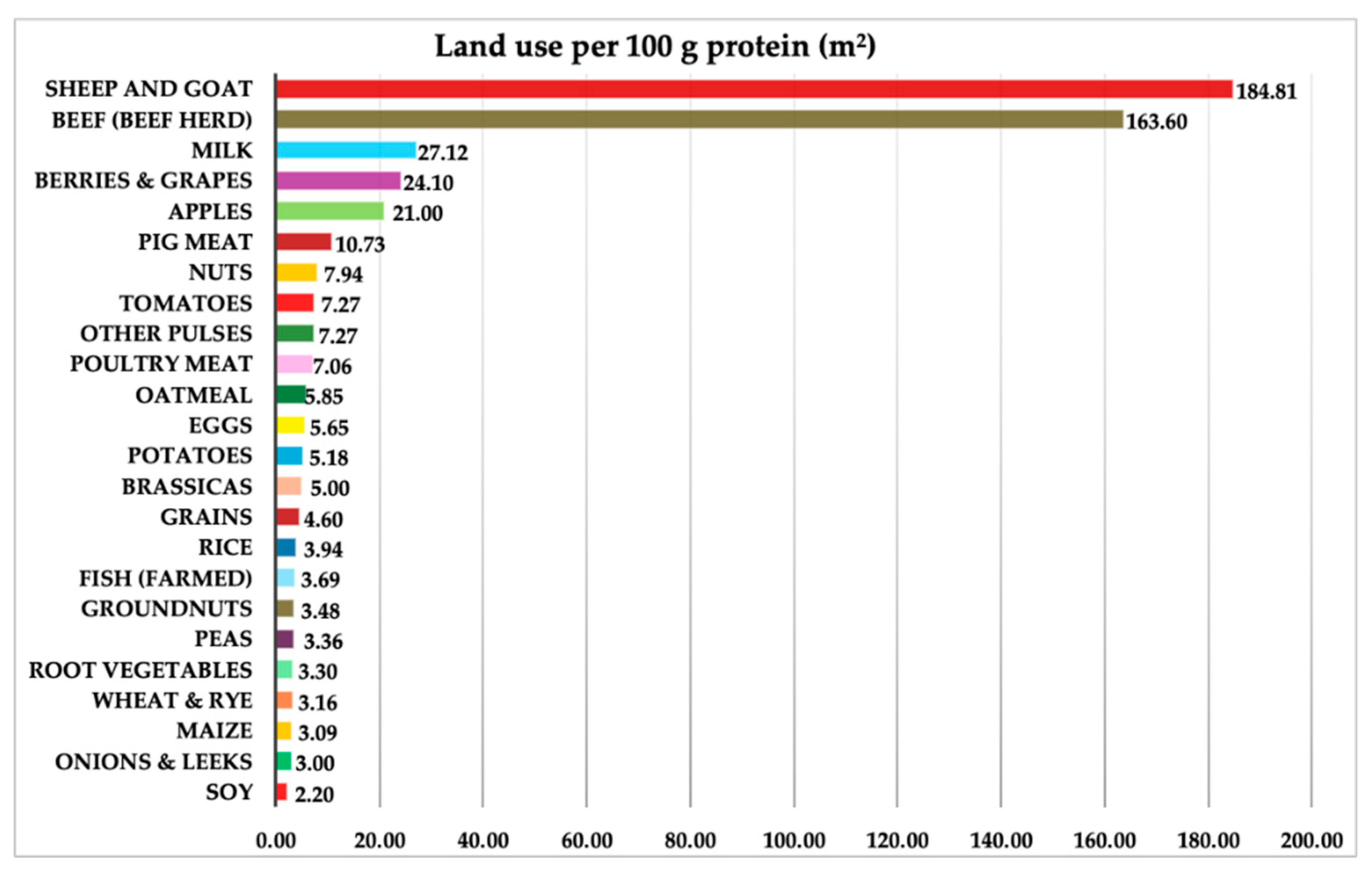
Figure 2.
Impact of protein replacement scenarios on total land use in Romania Source: Original by authors.
Figure 2.
Impact of protein replacement scenarios on total land use in Romania Source: Original by authors.
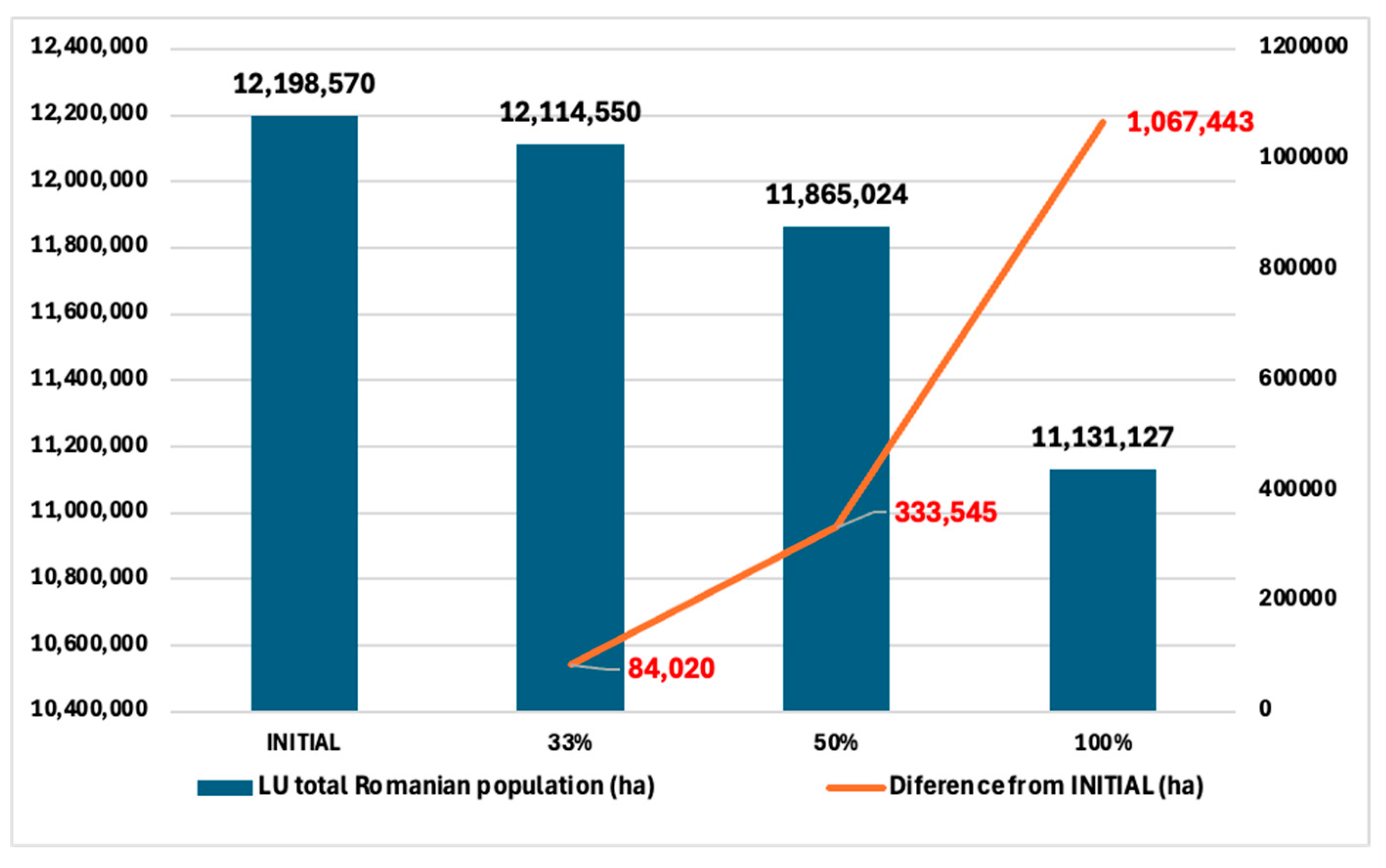
Figure 3.
Equivalent utilized agricultural area (UAA) by counties in Romania for land use reduction scenarios applied to the entire adult population Source: Original by authors.
Figure 3.
Equivalent utilized agricultural area (UAA) by counties in Romania for land use reduction scenarios applied to the entire adult population Source: Original by authors.
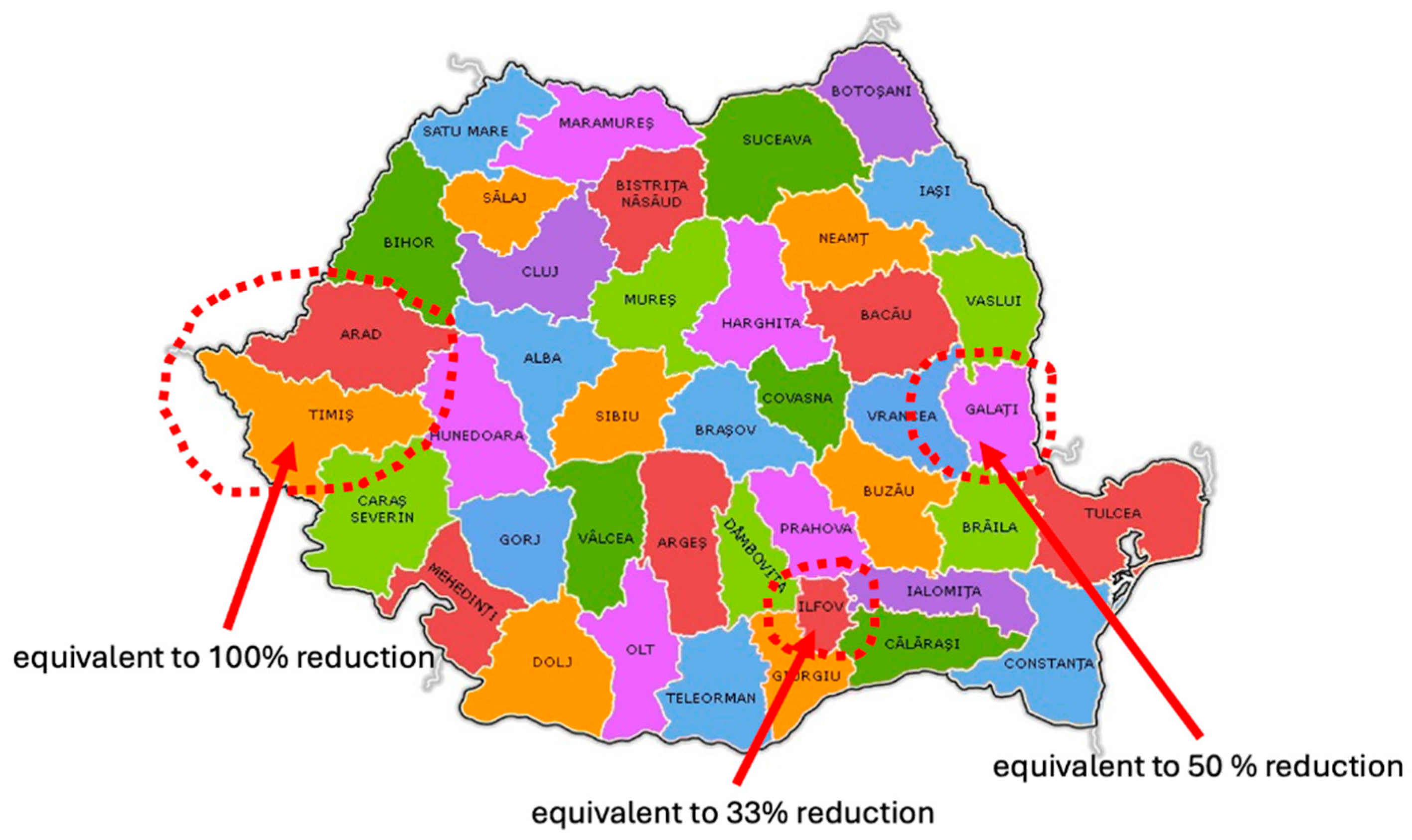
Figure 4.
Global agricultural land use distribution for food production Source: Original adapted by authors after [10].
Figure 4.
Global agricultural land use distribution for food production Source: Original adapted by authors after [10].
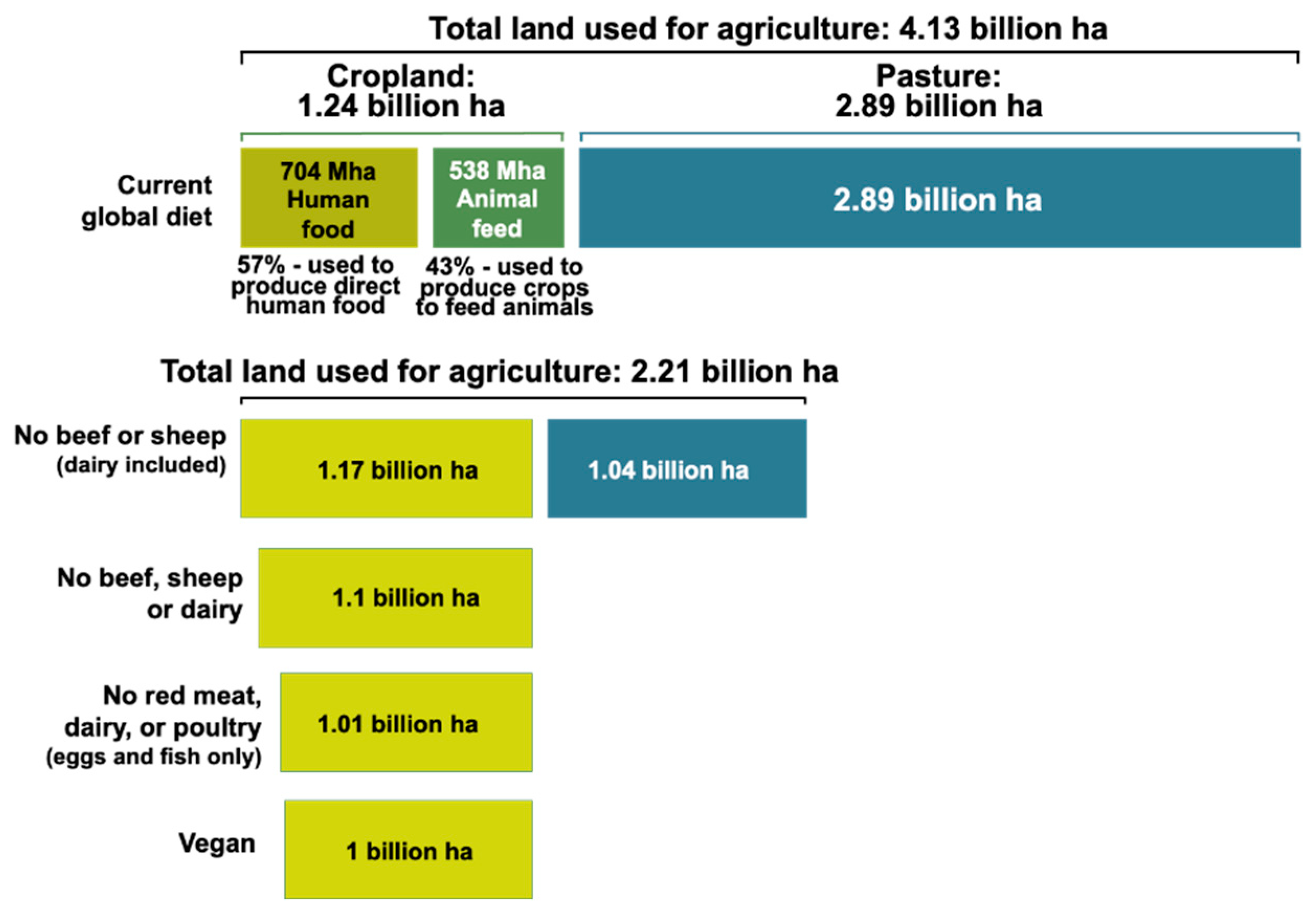
Figure 5.
Health impacts associated with the consumption of animal-based proteins Source: Original by authors.
Figure 5.
Health impacts associated with the consumption of animal-based proteins Source: Original by authors.
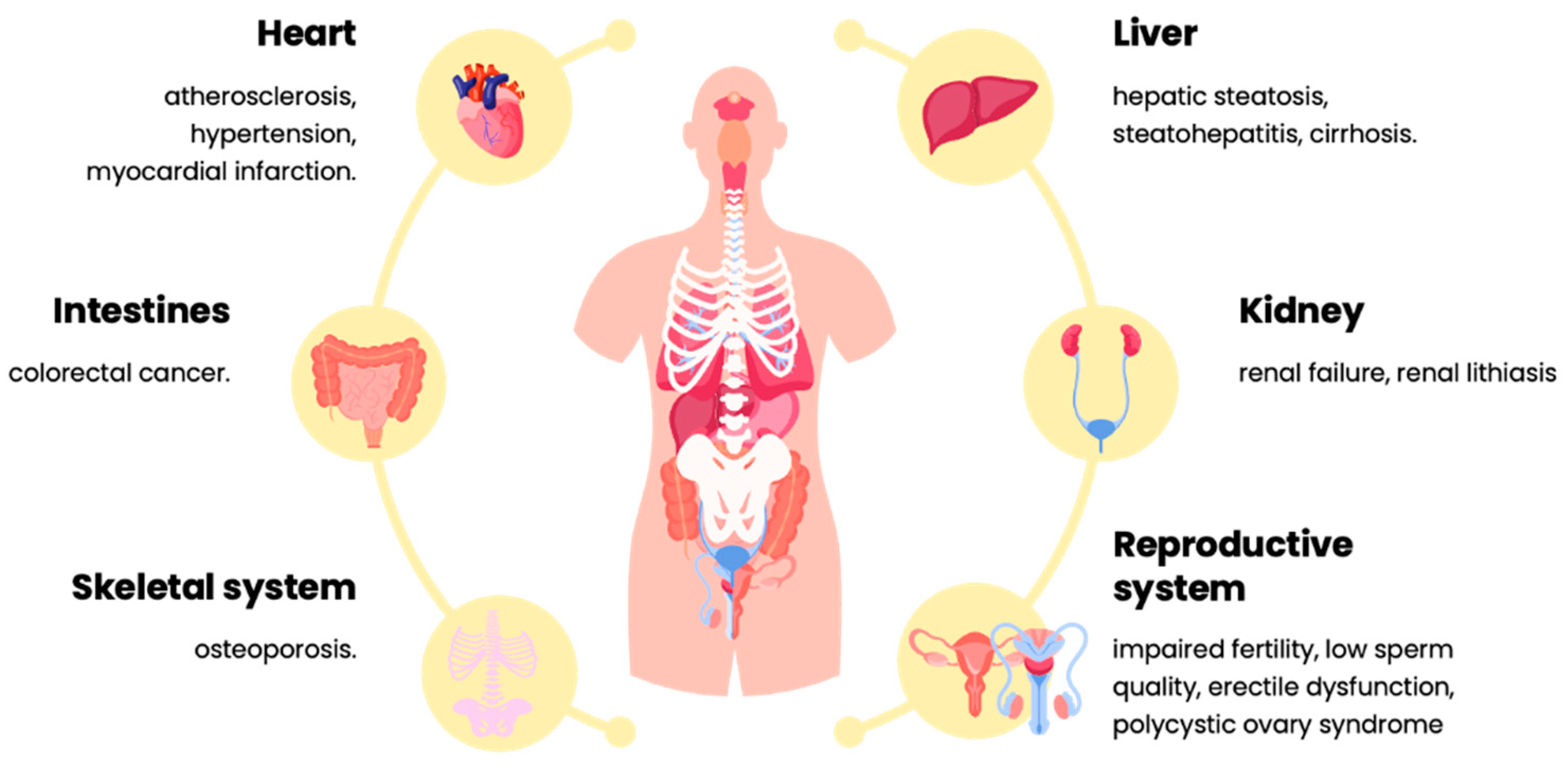

Table 1.
Protein content of food of animal-origin [17].
Table 1.
Protein content of food of animal-origin [17].
| Entity | Poultry | Boneless beef |
Sheep & goat |
Pig | Meat other* |
Fish & seafood |
Eggs | Milk |
|---|---|---|---|---|---|---|---|---|
| Protein g/100 g | 17.1 | 18.5 | 14 | 11 | 16.1 | 10.9 | 10.7 | 3.3 |
*turkey, rabbit.
Table 2.
Annual per capita consumption of animal products in Romania [18].
Table 2.
Annual per capita consumption of animal products in Romania [18].
| Meat and fish & seafood* kg/year/capita |
Eggs kg/year/capita |
Milk kg/year/capita |
|||||
| 75.24 of which: | |||||||
| Poultry | Beef | Sheep & goat |
Pig meat | Meat other | Fish & seafood |
12.84 | 599.32 |
| 22.21 | 5.05 | 2.8 | 36.9 | 0.19 | 8.09 | ||
Table 3.
Land use for 33% replacement of animal protein with plant-based protein sources.
| Specification | C (kg) | P (%) | LUanimal (m2) | LUinitial (m2) | replaced P (kg) | LUreplaced (m2) | LUfinal (m2) |
|---|---|---|---|---|---|---|---|
| Poultry | 22.21 | 17.1 | 7.06 | 267.96 | 12.53 | 39.40 | 228.55 |
| Beef | 5.05 | 18.5 | 163.60 | 1528.39 | 3.08 | 9.69 | 1518.70 |
| Sheep and goat | 2.8 | 14 | 184.81 | 724.47 | 1.29 | 4.07 | 720.40 |
| Pig meat | 36.9 | 11 | 10.73 | 435.50 | 13.39 | 42.11 | 393.39 |
| Meat other | 0.19 | 16.1 | 7.06 | 2.16 | 0.10 | 0.32 | 1.84 |
| Fish and seafood | 8.09 | 10.9 | 3.69 | 32.52 | 2.91 | 9.15 | 23.37 |
| Eggs | 12.84 | 10.7 | 5.65 | 77.63 | 4.53 | 14.25 | 63.38 |
| Milk | 599.32 | 3.3 | 27.12 | 5363.91 | 65.27 | 205.20 | 5158.72 |
| TOTAL m2 | 8164.59 | 8108.35 | |||||
| TOTAL ha | 0.816 | 0.811 | |||||
Table 4.
Land use for 50% replacement of animal protein with plant-based protein sources.
| Specification | C (kg) |
P (%) | LUanimal (m2) | LUinitial (m2) | replaced P (kg) | LUreplaced (m2) | LUfinal (m2) |
|---|---|---|---|---|---|---|---|
| Poultry | 22.21 | 17.1 | 7.06 | 267.96 | 18.99 | 59.70 | 208.26 |
| Beef | 5.05 | 18.5 | 163.60 | 1528.39 | 4.67 | 14.69 | 1513.71 |
| Sheep and goat | 2.8 | 14 | 184.81 | 724.47 | 1.96 | 6.16 | 718.30 |
| Pig meat | 36.9 | 11 | 10.73 | 435.50 | 20.30 | 63.81 | 371.69 |
| Meat other | 0.19 | 16.1 | 7.06 | 2.16 | 0.15 | 0.48 | 1.68 |
| Fish and seafood | 8.09 | 10.9 | 3.69 | 32.52 | 4.41 | 13.86 | 18.66 |
| Eggs | 12.84 | 10.7 | 5.65 | 77.63 | 6.87 | 21.60 | 56.04 |
| Milk | 599.32 | 3.3 | 27.12 | 5363.91 | 98.89 | 310.90 | 5053.01 |
| TOTAL m2 | 8164.59 | 7941.34 | |||||
| TOTAL ha | 0.816 | 0.794 | |||||
Table 5.
Land use for 100% replacement of animal protein with plant-based protein sources.
| Specification | C (kg) | P (%) | LUanimal (m2) | LUinitial (m2) | replaced P (kg) | LUreplaced (m2) | LUfinal (m2) |
|---|---|---|---|---|---|---|---|
| Poultry | 22.21 | 17.1 | 7.06 | 267.96 | 37.98 | 119.41 | 148.55 |
| Beef | 5.05 | 18.5 | 163.60 | 1528.39 | 9.34 | 29.37 | 1499.02 |
| Sheep and goat | 2.8 | 14 | 184.81 | 724.47 | 3.92 | 12.32 | 712.14 |
| Pig meat | 36.9 | 11 | 10.73 | 435.50 | 40.59 | 127.61 | 307.89 |
| Meat other | 0.19 | 16.1 | 7.06 | 2.16 | 0.31 | 0.96 | 1.20 |
| Fish and seafood | 8.09 | 10.9 | 3.69 | 32.52 | 8.82 | 27.72 | 4.80 |
| Eggs | 12.84 | 10.7 | 5.65 | 77.63 | 13.74 | 43.19 | 34.44 |
| Milk | 599.32 | 3.3 | 27.12 | 5363.91 | 197.78 | 621.81 | 4742.11 |
| TOTAL m2 | 8164.59 | 7450.14 | |||||
| TOTAL ha | 0.816 | 0.745 | |||||
Table 6.
Resident population in Romania [43].
Table 6.
Resident population in Romania [43].
| Category | Total resident population | Resident population % |
|---|---|---|
| 0 - 18 y.o. | 4,112,985 | 21.59 |
| 18 - > 85 y.o. | 14,940,830 | 78.41 |
| Total | 19,053,815 | 100 |
Disclaimer/Publisher’s Note: The statements, opinions and data contained in all publications are solely those of the individual author(s) and contributor(s) and not of MDPI and/or the editor(s). MDPI and/or the editor(s) disclaim responsibility for any injury to people or property resulting from any ideas, methods, instructions or products referred to in the content. |
© 2024 by the authors. Licensee MDPI, Basel, Switzerland. This article is an open access article distributed under the terms and conditions of the Creative Commons Attribution (CC BY) license (http://creativecommons.org/licenses/by/4.0/).
Copyright: This open access article is published under a Creative Commons CC BY 4.0 license, which permit the free download, distribution, and reuse, provided that the author and preprint are cited in any reuse.


