

Submitted:
26 November 2024
Posted:
27 November 2024
You are already at the latest version
Abstract
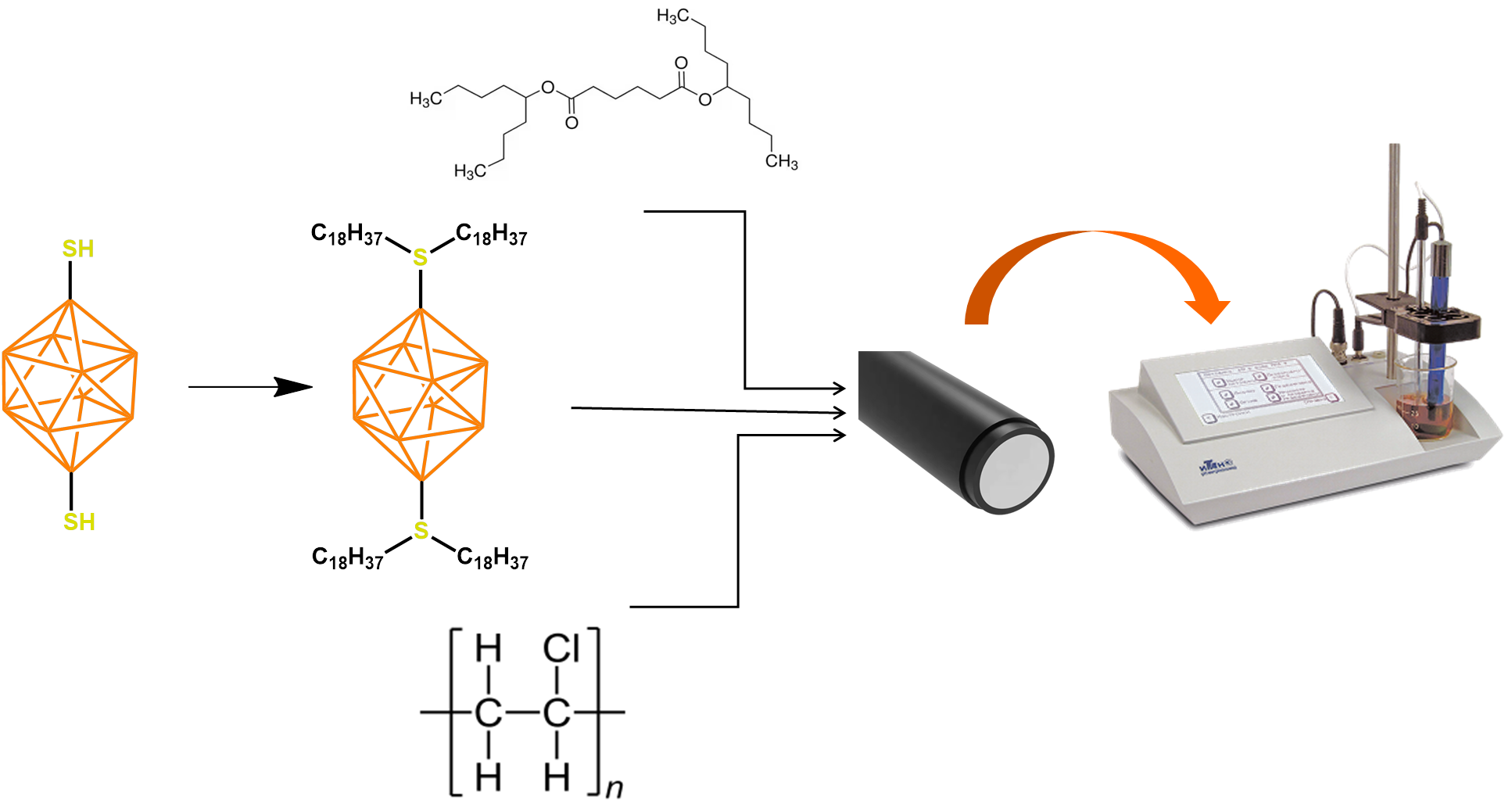
This paper presents a methodology for the preparation of a new active component for ion-selective membranes, based on a di-substituted sulfonium derivative of the closo-decaborate anion at the apical vertices with octadecylalkyl substituents 1,10-B10H8(S(C18H37)2)2. This approach is characterised by physicochemical methods of analysis (11B, 1H, 13C NMR spectroscopy, IR spectroscopy and elemental analysis). The compound obtained was used as an active component of a PVC-membrane selective to terbinafine hydrochloride. The sensor developed is highly selective to the drug to be detected, and has a linearity range of 4.0 × 10⁻⁸ – 1.0 × 10⁻² and a detection limit of 1.0 × 10⁻⁸, and can detect terbinafine hydrochloride in the pH range of 3 to 6.
Keywords:
polymers
; ion-selective membrane
; boron clusters
; sulfanyl derivative
; terbinafine
1. Introduction
The availability and purification of water resources is a basic priority for humanity in general, and for the scientific community in particular. According to the UN [1], 2.2 billion people do not have access to clean drinking water, 3.5 billion people do not have access to safe sanitation and 80% of wastewater is returned to the ecosystem without treatment. The issue of water resources is particularly acute in Africa, in arid climate zones [2], where there is also a steady and continuous population growth [3], as well as a significant requirement for water resources for the extraction of numerous minerals [4].
Anthropogenic nitrogen [5,6,7], which is contained in fertilisers, herbicides and fungicides, is an important factor in hydrosphere pollution, especially in water bodies located in the agricultural zone. Nitrogen-containing compounds play an important role in the modern world, but their content should be controlled.
Potentiometry is one of the best methods of control. Due to its rapidity, simplicity and low cost, the ionometric method can be implemented in field conditions, treatment plants and in analytical laboratories [8]. There is, however, a limited set of ions that can be determined by potentiometry [9]. Recently, the search for new active components for selective membranes has been re-emphasised [10]. The combination of the potentiometric method of analysis with other methods, such as HPLC [11], allows the design of highly accurate analytical systems with wide customisability and high application potential. The development of synthetic chemistry and materials science has made it possible to create complex macromolecular systems that are selective towards organic ions with a delocalised charge [12]. Such sensors are highly selective to a particular ion and enable analysis of systems consisting of similar molecules.
It has previously been shown that closo-decaborates with exopolyhedral functional substituents can be used in ion-selective membranes for the detection of various classes of organic compounds, such as local anesthetics, hormones and quaternary ammonium bases, including biodegradable compounds that can accumulate in aqueous media [13].
Terbinafine is an antifungal drug, first produced in 1984 [14] and tested in 1989 [15], which has shown promising results; its structure is shown in Figure 1. Included in the WHO list of essential drugs, it belongs to the class of derivatives of allylamine [16]. Its principle of action is to disrupt the integrity of the cytoplasmic membrane of fungi and block the synthesis of membrane sterols [17]. In tablet or ointment form, it is used for the treatment of variegated shingles, fungal infections of the nails and ringworm, and for addressing itching and mycosis. Terbinafine is an effective fungicidal agent that causes minimal adverse reactions [18,19], and is effectively used for the treatment of both humans and animals [20]. Many studies are currently underway to expand the use of this drug [21,22].
For the analytical determination of Terbinafine, HPLC [23] with a detection limit of up to 1.0 × 10⁻⁸M is mainly used. In the literature, a limit of quantification up to 2.7 × 10⁻⁷M [24] is indicated. The measurement uncertainty in the determination of Terbinafine by HPLC with UV detection was evaluated in [25]. Other methods used for the qualitative and quantitative analysis of terbinafine hydrochloride, in the form of tablets, creams, plasma and other biological samples, have included UV, LC/MS, UPLC, HPLC, GC/MS, HPTLC, GC, Ion pair Electrophoresis, Micellar chromatography and UFLC [26]. In 2013, for the first time, a potentiometric sensor based on tetraphenylborate was reported to have successfully determined Terbinafine in pharmacological preparations [27]. Since then, the electrochemical analysis of Terbinafine has been actively developed [28]. Potentiometric determination appears to be the most promising approach, due to its rapidity, portability, simplicity, low cost of analysis and low limit of detection [29].
As can be seen from Table 1, the ion-pair complex of the Terbinafine cation and tetraphenyl borate anion is the main active component for the potentiometric determination of Terbinafine. It has previously been shown that lipophilic boron cluster anions have greater selectivity to organic cations [31]. Therefore, the question of the functionalisation of boron cluster anions and the investigation of the electroanalytical properties of membranes with them in their composition remain relevant.
This study describes the synthesis of a new closo-borate compound, 1,10-B10H8(S(n-C18H37)2)2 – 1,10-di-(bis-octodecylsulfonio)-closo-decaborate, and investigates its physicochemical characteristics. Membranes selective to Terbinafine ions were obtained on the basis of the new compound, and their potentiometric parameters and operational characteristics were studied.
2. Materials and Methods
2.1. Analyzes and Reagents
Elemental analysis for carbon, hydrogen and sulfur was performed using a Carlo ErbaCHNS-3 FA 1108 automated elemental analyser.
1H, 11B and 13C NMR spectra of samples dissolved in CDCl3 were recorded on a QOne AS400 (China) spectrometer, (at the Shared Facility Center for Physical Research Methods of the Kurnakov Institute of General and Inorganic Chemistry of the Russian Academy of Sciences), operating at a frequency of 399.88, 128.29 and 100.55 MHz, respectively, using an internal deuterium lock. Tetramethylsilane and boron trifluoride etherate were used as external references. NMR spectra of compound 1 are shown in Figures S1–S4.
IR spectra of complexes were recorded on a Lumex Infralum FT-02 Fourier-transform spectrophotometer in the range of 4,000–400 cm–1, at a resolution of 1 cm–1. Samples were prepared as pressed tablets with KBr. IR spectra of compound 1 are shown in Figure S5.
All reagents and chemicals used throughout this work were of analytical reagent grade and solutions were prepared with redistilled water. High molecular weight poly(vinyl chloride) (PVC), tetrahydrofuran (THF), dichloromethane (CH2Cl2), petroleum ether, bis(1-butylpentyl)adipate (BBPA), terbinafine hydrochloride, 1-bromooctadecane (C18H37Br), cesium carbonate (CsCO3) and dimethylformamide (DMF) were purchased from Merck KGaA and used without prior purification. Cesium 1,10-bis(sulfanyl)-closo-decaborate Cs[1,10-B10H9(SH)2] was synthesised and identified in the laboratory of the chemistry of light elements and clusters of the N.S. Kurnakov Institute of General and Inorganic Chemistry of RAS [32]. Stock standard solutions of terbinafine hydrochloride (0.1 M and 1,000 μg mL− 1) were prepared by dissolving precise amounts of each compound in water, 0.1 M HCl–NaOH or acetate buffer solutions. Working standard solutions were prepared daily from stock solutions by serial dilution. All stock solutions were refrigerated between uses. The commercial pharmaceuticals analysed in this study were purchased at a local pharmacy. Test samples of terbinafine hydrochloride were prepared by diluting 100–500 μL of each injectable solution up to 100.0 mL with 0.1 M acetate buffer solution (pH 4.67). These model solutions were subjected to the multiple standard additions procedure for determination.
2.2. Synthesis of 1,10-B10H8(S(n-C18H37)2)2
The salt Cs2[1,10-B10H8(SH)2] (200 mg, 0.45 mmol) was dissolved in 10 mL DMF in a 50-mL round bottom flask, after which 1-bromooctadecane (625 mg, 1.87 mmol) and cesium carbonate (307.9 mg, 0.95 mmol) were added. The reaction solution was heated at 80°C for 8 hours, with constant stirring, in an argon atmosphere. The mixture was then evaporated using a rotary evaporator and dried from residual DMF in a deep vacuum using a rotary vane pump. 10 mL of dichloromethane was added to the resulting residue, followed by treatment in an ultrasonic bath for 10 minutes. Then, the suspended mixture was centrifuged from the residue of cesium carbonate, so that cesium bromide was formed. The organic fraction was collected and evaporated again using a rotary evaporator. The residual octadecyl bromide was removed by flash chromatography on silica gel. For this, the substance was homogenised in 50 ml of petroleum ether and 1 gram of SiO2 silica gel in a 100 ml flask. It was then carefully evaporated and the resulting powder was placed on a chromatographic column pre-filled with pure silica gel. Petroleum ether was used as a washing eluent. The substance was collected from silica gel using a CH2Cl2/petroleum ether 1:1 mixture. The second organic fraction was collected and evaporated using a rotary evaporator and dried in a deep vacuum. 1,10-B10H8(S(n-C18H37)2)2 (440.7 mg, 0.37 mmol) was obtained (yield 82%).
Calcd. for C72H156B10S2, %: C, 72.41; H, 13.17; S, 5.37. Found, %: C, 72.29; H, 13.08; S, 5.32.
11B{1H} NMR (СDCl3, ppm): 9.2 (s, 2B, B1, B10), -24.4 (d, 8B, B2-B9).
1H NMR (CDCl3, ppm): 3.26 (dm, 8H, SCH2), 2.02 (m, 8H, SCH2CH2), 1.54 (m, 8H, C3H2), 1.26 (m, 112H, C4H2-C17H2), 0.89 (t, 12H, CH3), 1.80-0.20 (m, 8H, B10H8).
13С NMR (CDCl3, ppm): 43.67 (SCH2), 32.07 (SCH2CH2), 29.85, 29.80, 29.75, 29.66, 29.54, 29.51, 29.15, 28.82, 26.34 (C3-C16), 22.83 (CH2CH3), 14.26 (CH3).
IR (KBr, cm-1): 2955, 2918, 2850, 2505, 1467, 1417, 1378, 1314, 1263, 1247, 1227, 1177, 1129, 1097, 1067, 990, 963, 923, 890, 874, 852, 823, 795, 755, 721.
2.3. Manufacturing Membranes
In order to fabricate the sensor with the best potentiometric response characteristics, several membrane compositions were used; these are specified in Table 2. The components were dissolved in distilled THF. Each resulting cocktail solution was carefully mixed and degassed for 5 minutes by sonication, then transferred into a glass ring (28 mm i.d.) located on a smooth glass surface. After total THF evaporation at room temperature for ~72 hours, a transparent polymeric membrane with an average thickness of ~0.3 mm was obtained. The reproducibility of membrane performance was ensured by thoroughly mixing the membrane ingredients and by controlling both the evaporation rate of the solvent and the resulting membrane thickness. The «master membrane» manufactured was separated from the glass plate, and disks of an appropriate diameter (≈6 mm) were cut. Then, the membrane disk was mounted in an electrode body (Type IS 561, Philips, Eindhoven, Netherlands) filled with the inner solution 1.0 mM terbinafine hydrochloride. Before use, the sensors were conditioned by being soaked in 1.0 mM solution of terbinafine hydrochloride, for 1 day, to establish the membrane–solution equilibrium. In the case of trace analysis, a faster response was obtained if the PVC membrane was conditioned in a solution that had a similar composition to that of the sample. Between measurements, the sensors constructed were washed with deionised distilled water and blotted with tissue paper. The electrodes were kept dry in an opaque closed vessel while not in use. The performance characteristics of the sensors were evaluated according to IUPAC recommendations [33]. Potentiometric selectivity coefficients were determined by using the separate solution method (SSM) and the matched-potential method (MPM), thus avoiding the limitations of the non-Nernstian behaviour of interfering ions [34].
2.4. Potentiometric Measurements
All potentiometric measurements were carried out, while stirring the test solutions at room temperature (25 ± 2°C), using a pH/ion analyser (Radelkis OP-300, Hungary). An electrochemical cell can be represented by the following diagram:
| Ag/AgCl | 1.0 mM terbinafine hydrochloride | PVC-membrane | Sample solution | AgClsatd, 3M KCl | AgCl/Ag |
A Philips IS-561 electrode body was used to manufacture the potentiometric sensor and a silver chloride electrode (Radelkis OP-0820) was used as an external reference electrode. pH measurements were carried out with a Radelkis OP-0808R combined electrode, using Mettler Toledo calibration solutions.
3. Results
3.1. Synthesis of the Active Ingredient
The preparation of the disubstituted sulfonium derivative of closo-decaborate anion with octadecylalkyl substituents 1,10-B10H8(S(n-C18H37)2)2 can be carried out using a similar procedure to that used for the mono-substituted sulfonyl derivative [2-B10H9SH]2- [35]. Due to the presence of two functional groups, however, a longer reaction time is needed. The general scheme of preparation is presented below (Figure 2).
The progress of the reaction can be monitored using 11В NMR spectroscopy. In the 11В NMR spectrum (Figure S2), all signals relative to the parent compound Cs2[B10H8(SH)2] [32] shifted to the weak field: from the apical vertices by 4.7 ppm, whereas from the equatorial ones by 0.6 ppm and are at 9.2 and -24.4 ppm, respectively. In addition, the shape of the signals changed significantly and a strong broadening of the signals was observed. The width of the signal at half its height was 586 Hz for apical vertices and 134 Hz for equatorial vertices; (for the anion [1,10-B10H8(SH)2]2-, these values were 4.7 and 5.6 Hz, respectively).
According to 1H NMR spectroscopy data for the final product, several signals relating to the organic part of the target compound can be observed. The signal at 3.26 ppm refers to methylene groups bound to the sulfur atom; these groups were diastereotopic and were located at the prochiral S-centre, resulting in the shape of this signal being a doublet of doublet triplets with constants J1 = 91.5 Hz, J2 = 12.8 Hz and J3 = 7.2 Hz, with the presence of a roof effect (Figure S1). The signals at 2.02, 1.54, 1.35 and 1.26 ppm can be attributed to the remaining methylene groups in the alkyl substituent, with the signal at 0.89 ppm relating to the C18 methyl group. In the 13C NMR spectrum, a group of signals related to the octadecylalkyl substituent can also be observed. The signal at 43.67 ppm refers to the methylene group bonded to the sulfur atom.
3.2. Ion Sensor Development
According to fundamental considerations [36,37], the potentiometric behaviour of membrane sensors based on the ion-exchange mechanism depends on the selectivity of ion exchange processes at the membrane–test solution interface, the mobility of the respective ions in the membrane phase and hydrophobic interactions between ions and the organic membrane. The membrane potential of the ion sensor (Em) can be represented by the following equation:
where caqX is the concentration of the Terbinafine cation (X) in the test aqueous solution; zX is the charge of the Terbinafine cation; cmX, cmY and cmXY represent the concentrations of the anesthetic cation (X), counter-anion (Y) and their ion-pair complex (XY) in the membrane, respectively; KassXY is the association constant of the ion-pair complex; F, R and T are the Faraday constant, the gas constant and absolute temperature, respectively. This means that the lipophilicity of a primary ion (X) and a counter-ion (Y), and the association degree of their ion-pair complex in the membrane phase are the main factors affecting the electroanalytical characteristics of the sensor.
Another very important parameter that should be considered to achieve the best performance of ionic sensors is the nature of a plasticizer (solvent mediator) employed in the membrane composition. The plasticizer provides the mobility of the membrane-forming compounds, and the dielectric and mechanical properties of the polymeric membrane.
As it was shown earlier, the best potentiometric parameters are shown by membranes with low dielectric constant plasticizer according [12] to the Igen-Denison-Ramsey-Fuoss equation (T = 293 K) [38], so we've chosen aliphatic BBPA (εr = 5.3).
The potentiometric curve characterising the response of the sensor based on the PVC-membrane containing 1,10-B10H8(S(n-C18H37)2)2 in BBPA to the Terbinafine ion selected is shown in Figure 3. As can be seen, the sensor showed Nernstian response slopes of (57.2 ± 0.3) mV/decade over a wide linear concentration range, for all tested solutions.
The Terbinafine ion-selective membrane sensors were calibrated, and the potentiometric selectivity coefficients were determined. The potentiometric response characteristics of the sensor were found to be dependent on the amount of the Terbinafine salt in the membrane composition, (see Table 2).
As follows from the results obtained, the sensor based on membrane No. 5 had the best content. This sensor showed a Nernstian response in the concentration range of 4.0 × 10⁻⁸ – 10-2 mol/L and a lower detection limit (LOD) of 1.0 × 10⁻⁸ mol/L. In addition, the sensor showed stability, good reproducibility and a fast response. The interference of some common cations in some sensors’ response was studied using the mixed solution method. Potentiometric measurements were carried out using test solutions containing the constant concentration of an interfering ion (0.01 mol/L). Calculated selectivity coefficient values are shown in Table 3. These values clearly indicate that the Terbinafine sensor was fairly selective towards Terbinafine cations, for different ions tested.
The active component 1,10-B10H8(S(n-C18H37)2)2 is a neutral carrier, but the membranes obtained showed no response to inorganic anions; this may have been because the boron backbone [B10H8]2- has a constant negative charge. Due to their structure, the lipophilic S+(n-C18H37)2 groups were embedded in the polymer matrix of PVC and the charge on the sulfur atom was partially shielded. It can be observed from Table 3 that the more lipophilic cations (TBA+) had a greater interfering effect.
Dynamic response time is the time required for the electrode to achieve values within ± 1 mV of the final equilibrium potential, after successive immersions in the sample solutions [39]. Its calculation involved varying and recording Terbinafine concentration in a series of solutions from 1.0 × 10⁻² to 1.0 × 10⁻⁸M. Sensors were able to quickly reach their equilibrium response, in the whole concentration range. The time of this for the PVC membrane electrode was about 20 seconds, in the concentrated solutions.
To examine the effect of pH on electrode responses, potential was measured at specific concentrations of the Terbinafine solution (1.0 × 10⁻⁴ M) for pH values ranging from 1.0 to 9.0, (concentrated NaOH or HCl solutions were used for pH adjustment), for each of the PVC membrane electrodes. The results have shown that potential remained constant despite pH changes within the range of 3 to 6, which indicates the applicability of this electrode in the specified pH range. Some quite noteworthy fluctuations in the behaviour of potential as pH changed were observed below and above the aforementioned pH limits. Specifically, fluctuations above a pH value of 6 might be justified by removing the positive charge on the drug molecule. Fluctuations below a pH value of 3 were caused by the removal of the membrane ingredients or the analyte in the solution. Figure 4
4. Conclusions
In summary, a new compound, 1,10-di-(bis-octodecylsulfonio)-closo-decaborate - 1,10-B10H8(S(C18H37)2)2, was obtained and a selective potentiometric sensor for terbinafine hydrochloride was obtained based on the new boron cluster compound. The sensor demonstrated advanced performance with a fast response time, a lower detection limit of 1.0 × 10⁻⁸ M for the PVC membrane electrode and potential responses across the range of 4.0 × 10⁻⁸ – 1.0 × 10⁻² M. The new active component has better characteristics than sodium tetraphenylborate, which provides great opportunities for modification of the sensor obtained. The study of potentiometric sensors with closo-borate compounds has contributed to the search for an effective rapid method for monitoring nitrogen-containing compounds in water resources.
Supplementary Materials
The following supporting information can be downloaded at the website of this paper posted on Preprints.org, Figure S1: 11B{1H} NMR spectra of 1,10-B10H8(S(n-C18H37)2)2; Figure S2. 11B NMR spectra of 1,10-B10H8(S(n-C18H37)2)2; Figure S3. 1H NMR spectra of 1,10-B10H8(S(n-C18H37)2)2; Figure S4. 13С NMR spectra of 1,10-B10H8(S(n-C18H37)2)2; Figure S5. IR spectra of 1,10-B10H8(S(n-C18H37)2)2.
Author Contributions
Conceptualization, Eugeniy S. Turyshev and Konstantin Y. Zhizhin; methodology, Eugeniy S. Turyshev and Alexey V. Golubev; software, Aleksandr Y. Bykov; validation, Aleksandr Y. Bykov; formal analysis, Alexey V. Golubev; investigation, Eugeniy S. Turyshev; resources, Nikolay T. Kuznetsov.; data curation, Konstantin Y. Zhizhin; writing—original draft preparation, Eugeniy S. Turyshev and Alexey V. Golubev; writing—review and editing, Konstantin Y. Zhizhin; visualization, Aleksandr Y. Bykov; supervision, Nikolay T. Kuznetsov; project administration, Nikolay T. Kuznetsov; funding acquisition, Konstantin Y. Zhizhin. All authors have read and agreed to the published version of the manuscript.
Funding
The article was prepared within the project “The “Clean Water” project as the most important component of cooperation between the Russian Federation and the countries of the Global South: socio-economic and technological dimensions” supported by the grant from Ministry of Science and Higher Education of the Russian Federation program for research projects in priority areas of scientific and technological development (Agreement № 075-15-2024-546).
Institutional Review Board Statement
Not applicable
Data Availability Statement
Data are contained within the article.
Acknowledgments
This research was performed using the equipment of the JRC PMR IGIC RAS
Conflicts of Interest
The authors declare no conflicts of interest. The funders had no role in the design of the study; in the collection, analyses, or interpretation of data; in the writing of the manuscript; or in the decision to publish the results.
References
- https://www.un.org/ru/global-issues/water.
- Agnew, C.; Anderson, E. Water Resources in the Arid Realm; Routledge: London, 2024; ISBN 9781003463917. [Google Scholar]
- Abramova, I.O. The Population of Africa under the Conditions of Transformation of the World Order. Her Russ Acad Sci 2022, 92, S1306–S1315. [Google Scholar] [CrossRef]
- Abramova, I.O.; Sharova, A.Yu. Geostrategic Risks in the Transition to Green Energies (Using the Example of Africa). Geology of Ore Deposits 2023, 65, 449–462. [Google Scholar] [CrossRef]
- Yan, X.; Xia, Y.; Ti, C.; Shan, J.; Wu, Y.; Yan, X. Thirty Years of Experience in Water Pollution Control in Taihu Lake: A Review. Science of The Total Environment 2024, 914, 169821. [Google Scholar] [CrossRef] [PubMed]
- Qin, B.; Zhang, Y.; Zhu, G.; Gao, G. Eutrophication Control of Large Shallow Lakes in China. Science of The Total Environment 2023, 881, 163494. [Google Scholar] [CrossRef]
- Yu, S.; Du, X.; Lei, Q.; Wang, X.; Wu, S.; Liu, H. Long-Term Variations of Water Quality and Nutrient Load Inputs in a Large Shallow Lake of Yellow River Basin: Implications for Lake Water Quality Improvements. Science of The Total Environment 2023, 900, 165776. [Google Scholar] [CrossRef]
- Zdrachek, E.; Bakker, E. Potentiometric Sensing. Anal Chem 2021, 93, 72–102. [Google Scholar] [CrossRef]
- Cuartero, M.; Colozza, N.; Fernández-Pérez, B.M.; Crespo, G.A. Why Ammonium Detection Is Particularly Challenging but Insightful with Ionophore-Based Potentiometric Sensors – an Overview of the Progress in the Last 20 Years. Analyst 2020, 145, 3188–3210. [Google Scholar] [CrossRef] [PubMed]
- Ding, J.; Qin, W. Recent Advances in Potentiometric Biosensors. TrAC Trends in Analytical Chemistry 2020, 124, 115803. [Google Scholar] [CrossRef]
- Gil, R.L.; Amorim, C.G.; Montenegro, M.C.B.S.M.; Araújo, A.N. HPLC-Potentiometric Method for Determination of Biogenic Amines in Alcoholic Beverages: A Reliable Approach for Food Quality Control. Food Chem 2022, 372, 131288. [Google Scholar] [CrossRef]
- Turyshev, E.S.; Kopytin, A. V.; Zhizhin, K.Y.; Kubasov, A.S.; Shpigun, L.K.; Kuznetsov, N.T. Potentiometric Quantitation of General Local Anesthetics with a New Highly Sensitive Membrane Sensor. Talanta 2022, 241, 123239. [Google Scholar] [CrossRef]
- Turyshev, E.S.; Kubasov, A.S.; Golubev, A. V.; Zhizhin, K.Yu.; Kuznetsov, N.T. Potentiometric Method for Determining Biologically Non-Degradable Antimicrobial Substances. Russian Journal of Inorganic Chemistry 2023, 68, 1841–1847. [Google Scholar] [CrossRef]
- Stuetz, A.; Petranyi, G. Synthesis and Antifungal Activity of (E)-N-(6,6-Dimethyl-2-Hepten-4-Ynyl)-N-Methyl-1-Naphthalenemethanamine (SF 86-327) and Related Allylamine Derivatives with Enhanced Oral Activity. J Med Chem 1984, 27, 1539–1543. [Google Scholar] [CrossRef] [PubMed]
- GOODFIELD, M.J.D.; ROWELL, N.R.; FORSTER, R.A.; EVANS, E.G.V.; RAVEN, A. Treatment of Dermatophyte Infection of the Finger- and Toe-Nails with Terbinafine (SF 86-327, Lamisil), an Orally Active Fungicidal Agent. British Journal of Dermatology 1989, 121, 753–757. [Google Scholar] [CrossRef] [PubMed]
- Petranyi, G.; Ryder, N.S.; Stütz, A. Allylamine Derivatives: New Class of Synthetic Antifungal Agents Inhibiting Fungal Squalene Epoxidase. Science (1979) 1984, 224, 1239–1241. [Google Scholar] [CrossRef]
- Ryder, N.S. Specific Inhibition of Fungal Sterol Biosynthesis by SF 86-327, a New Allylamine Antimycotic Agent. Antimicrob Agents Chemother 1985, 27, 252–256. [Google Scholar] [CrossRef]
- Joly-Tonetti, N.; Legouffe, R.; Tomezyk, A.; Gumez, C.; Gaudin, M.; Bonnel, D.; Schaller, M. Penetration Profile of Terbinafine Compared to Amorolfine in Mycotic Human Toenails Quantified by Matrix-Assisted Laser Desorption Ionization–Fourier Transform Ion Cyclotron Resonance Imaging. Infect Dis Ther 2024, 13, 1281–1290. [Google Scholar] [CrossRef] [PubMed]
- Nakamura, T.; Yoshinouchi, T.; Okumura, M.; Yokoyama, T.; Mori, D.; Nakata, H.; Yasunaga, J.; Tanaka, Y. Antifungal Potency of Terbinafine as a Therapeutic Agent against Exophiala Dermatitidis in Vitro 2024.
- Viana, P.G.; Figueiredo, A.B.F.; Gremião, I.D.F.; de Miranda, L.H.M.; da Silva Antonio, I.M.; Boechat, J.S.; de Sá Machado, A.C.; de Oliveira, M.M.E.; Pereira, S.A. Successful Treatment of Canine Sporotrichosis with Terbinafine: Case Reports and Literature Review. Mycopathologia 2018, 183, 471–478. [Google Scholar] [CrossRef] [PubMed]
- Pinto, Â.V.; Oliveira, J.C.; Costa de Medeiros, C.A.; Silva, S.L.; Pereira, F.O. Potentiation of Antifungal Activity of Terbinafine by Dihydrojasmone and Terpinolene against Dermatophytes. Lett Appl Microbiol 2021, 72, 292–298. [Google Scholar] [CrossRef]
- Li, M.; Chen, X.; Su, X.; Gao, W. The Preparation and Evaluation of a Hydrochloride Hydrogel Patch with an Iontophoresis-Assisted Release of Terbinafine for Transdermal Delivery. Gels 2024, 10, 456. [Google Scholar] [CrossRef]
- Cox, S.; Hayes, J.; Hamill, M.; Martin, A.; Pistole, N.; Yarbrough, J.; Souza, M. Determining Terbinafine in Plasma and Saline Using HPLC. J Liq Chromatogr Relat Technol 2015, 38, 607–612. [Google Scholar] [CrossRef]
- Matysová, L.; Solich, P.; Marek, P.; Havlíková, L.; Nováková, L.; Šícha, J. Separation and Determination of Terbinafine and Its Four Impurities of Similar Structure Using Simple RP-HPLC Method. Talanta 2006, 68, 713–720. [Google Scholar] [CrossRef] [PubMed]
- Separovic, L.; Lourenço, F.R. Measurement Uncertainty Evaluation of an Analytical Procedure for Determination of Terbinafine Hydrochloride in Creams by HPLC and Optimization Strategies Using Analytical Quality by Design. Microchemical Journal 2022, 178, 107386. [Google Scholar] [CrossRef]
- Https://Www.Ijnrd.Org/Papers/IJNRD2401092.Pdf.
- Faridbod, F.; Ganjali, M.R.; Norouzi, P. Potentiometric PVC Membrane Sensor for the Determination of Terbinafine. Int J Electrochem Sci 2013, 8, 6107–6117. [Google Scholar] [CrossRef]
- El-Beshlawy, M.; Arida, H. Modified Screen-Printed Microchip for Potentiometric Detection of Terbinafine Drugs. J Chem 2022, 2022, 1–8. [Google Scholar] [CrossRef]
- El-Rahman, M.K.A.; Sayed, R.A.; El-Masry, M.S.; Hassan, W.S.; Shalaby, A. Development of Potentiometric Method for In Situ Testing of Terbinafine HCl Dissolution Behavior Using Liquid Inner Contact Ion-Selective Electrode Membrane. J Electrochem Soc 2018, 165, B143–B149. [Google Scholar] [CrossRef]
- Alterary, S.S.; Mostafa, G.A.E.; El-Tohamy, M.F.; Elhadi, A.M.; AlRabiah, H. A Novel Potentiometric Coated Wire Sensor Based on Functionalized Polymeric CaO/ZnO Nanocomposite Synthesized by Lavandula Spica Mediated Extract for Terbinafine Determination. ChemistrySelect 2024, 9. [Google Scholar] [CrossRef]
- Kubasov, A.S.; Turishev, E.S.; Kopytin, A.V.; Shpigun, L.K.; Zhizhin, K.Yu.; Kuznetsov, N.T. Sulfonium Closo-Hydridodecaborate Anions as Active Components of a Potentiometric Membrane Sensor for Lidocaine Hydrochloride. Inorganica Chim Acta 2021, 514, 119992. [Google Scholar] [CrossRef]
- Golubev, A. V.; Baltovskaya, D. V.; Kubasov, A.S.; Bykov, A.Yu.; Zhizhin, K.Yu.; Kuznetsov, N.T. Synthesis of 1,10-Disulfanyl-Closo-Decaborate Anion and Its Disulfonium Tetraacetylamide Derivative. Russian Journal of Inorganic Chemistry 2024. [Google Scholar] [CrossRef]
- Buck, R.P.; Lindner, E. Recommendations for Nomenclature of Ionselective Electrodes (IUPAC Recommendations 1994). Pure and Applied Chemistry 1994, 66, 2527–2536. [Google Scholar] [CrossRef]
- Gadzekpo, V.P.Y.; Christian, G.D. Determination of Selectivity Coefficients of Ion-Selective Electrodes by a Matched-Potential Method. Anal Chim Acta 1984, 164, 279–282. [Google Scholar] [CrossRef]
- Kubasov, A.S.; Turishev, E.S.; Polyakova, I.N.; Matveev, E.Yu.; Zhizhin, K.Yu.; Kuznetsov, N.T. The Method for Synthesis of 2-Sulfanyl Closo -Decaborate Anion and Its S -Alkyl and S -Acyl Derivatives. J Organomet Chem 2017, 828, 106–115. [Google Scholar] [CrossRef]
- Ion-Selective Electrodes in Analytical Chemistry; Freiser, H. , Ed.; Springer US: Boston, MA, 1978; ISBN 978-1-4684-2594-9. [Google Scholar]
- Bobacka, J.; Ivaska, A.; Lewenstam, A. Potentiometric Ion Sensors. Chem Rev 2008, 108, 329–351. [Google Scholar] [CrossRef] [PubMed]
- J. Gordon Organic Chemistry of Electrolytes Solutions; Mir: Moscow, 1979. [Google Scholar]
- Morf, W.E.; Lindner, Ernoe. ; Simon, Wilhelm. Theoretical Treatment of the Dynamic Response of Ion-Selective Membrane Electrodes. Anal Chem 1975, 47, 1596–1601. [Google Scholar] [CrossRef]
Figure 1.
Chemical structure of terbinafine hydrochloride.
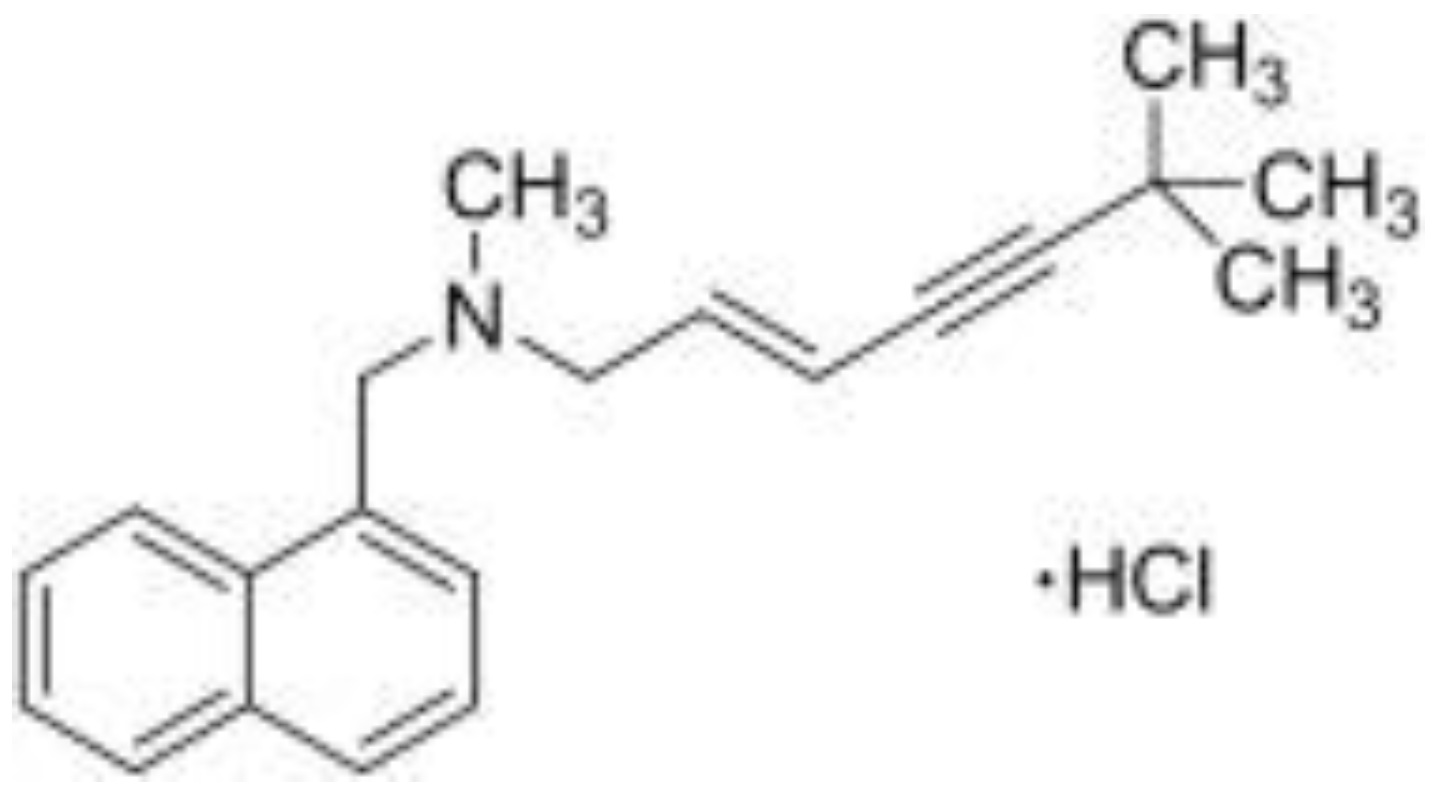
Figure 2.
Scheme of synthesis 1,10-B10H8(S(n-C18H37)2)2.
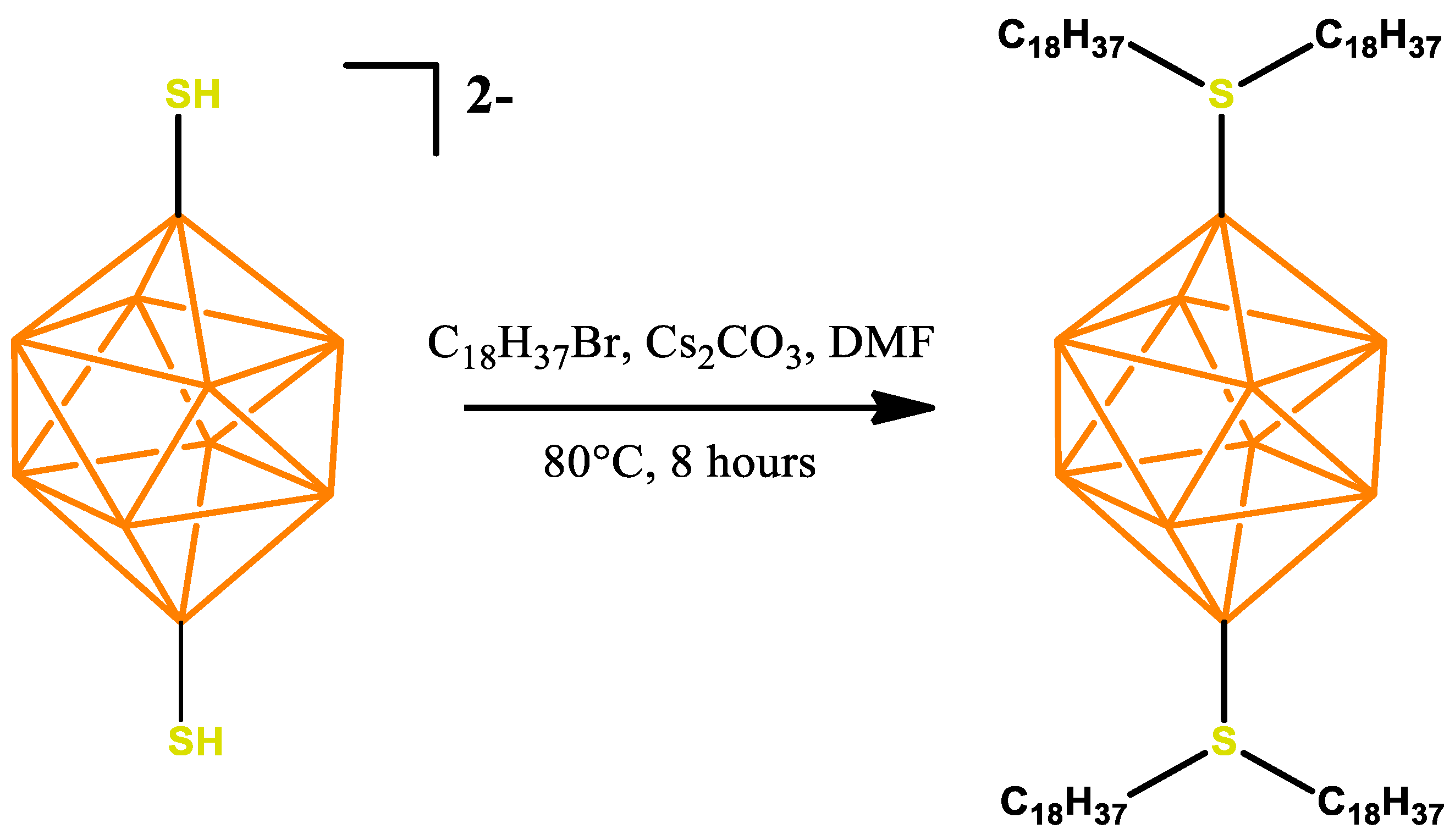
Figure 3.
Potentiometric curve for the determination of terbinafine hydrochloride.
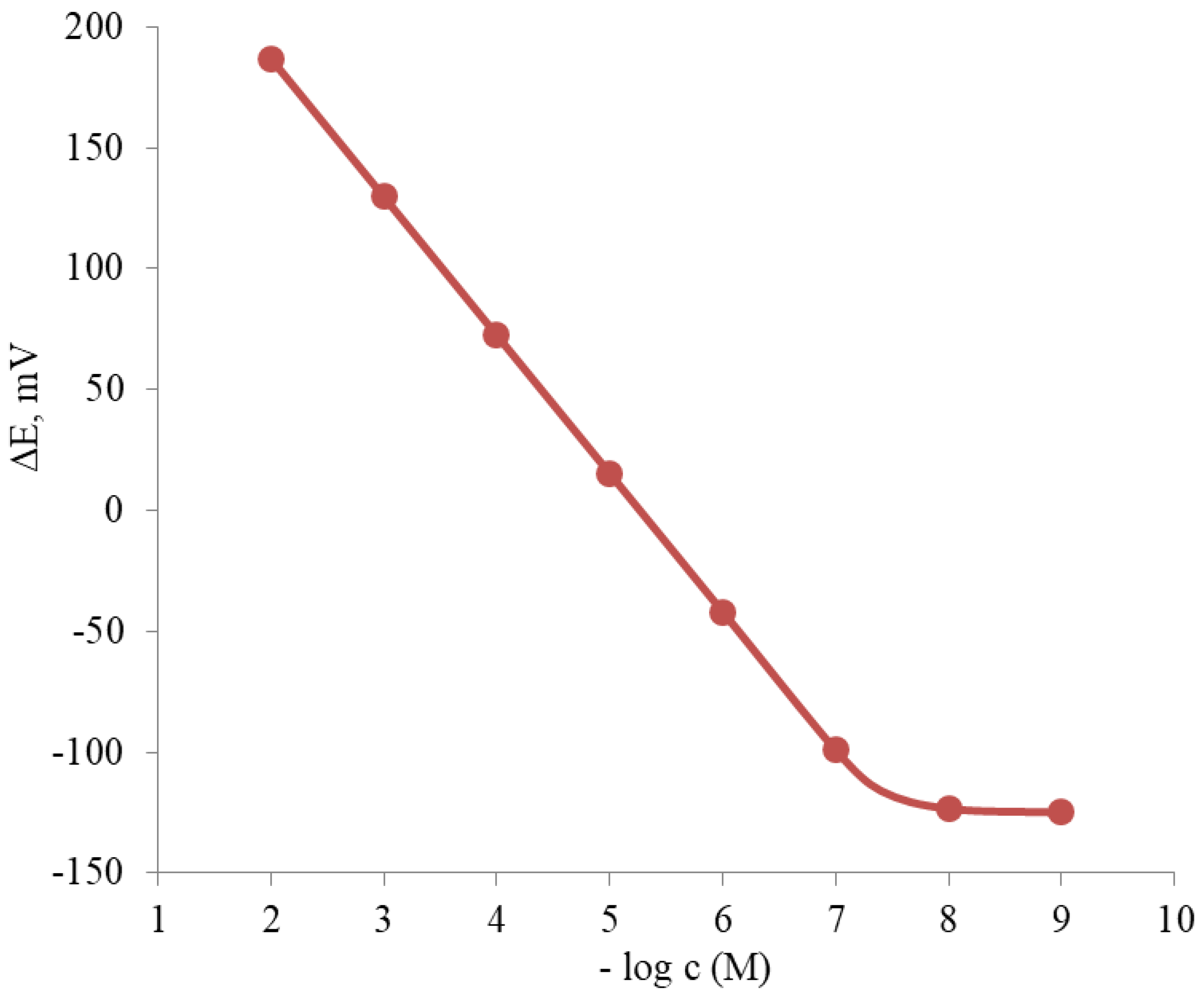
Figure 4.
The pH effect of the test solution (1.0 × 10⁻⁴ M) on the potential response of terbinafine hydrochloride.
Figure 4.
The pH effect of the test solution (1.0 × 10⁻⁴ M) on the potential response of terbinafine hydrochloride.
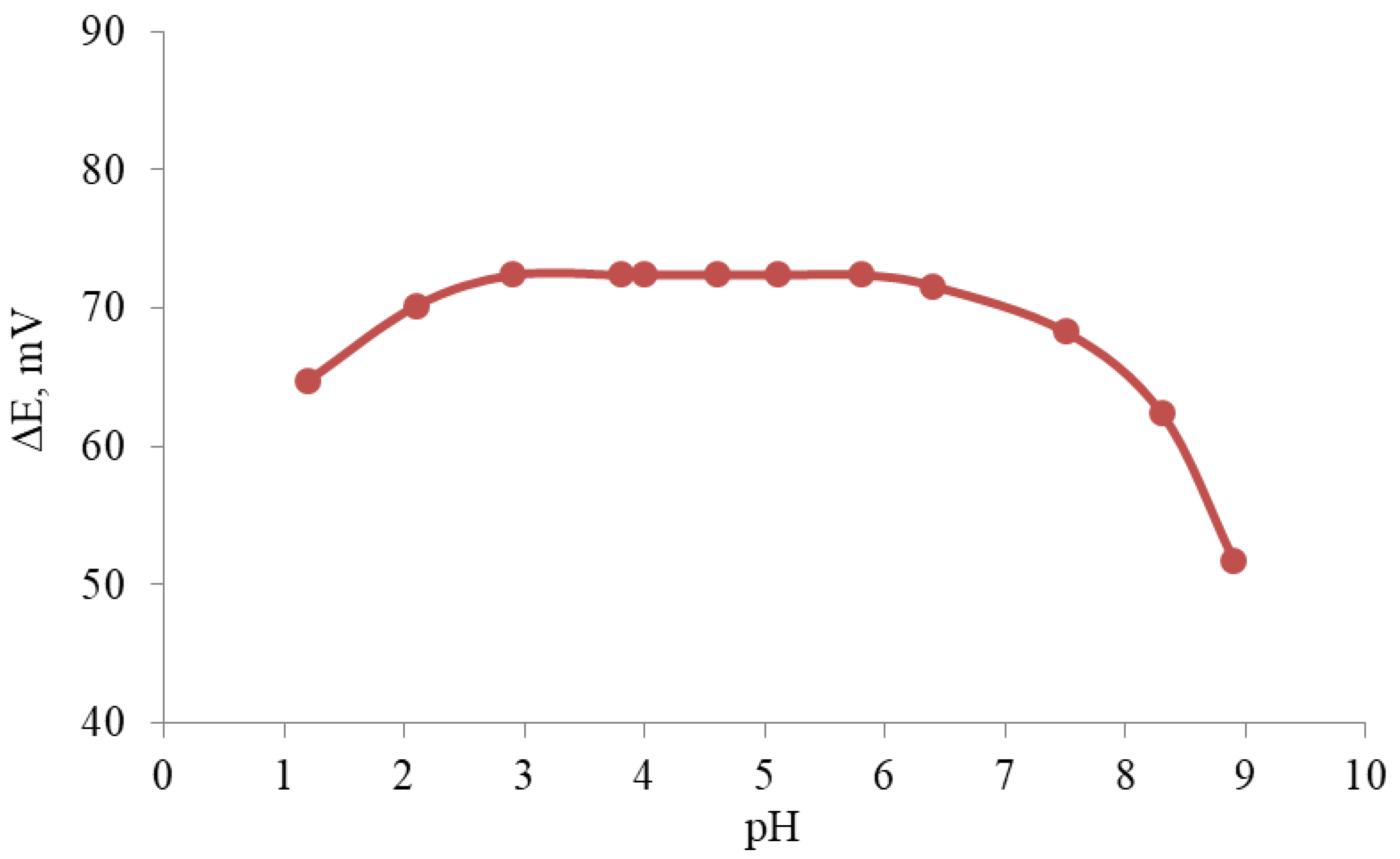

Table 1.
Some potentiometric sensors detecting terbinafine hydrochloride.
| Active membrane ingredient | Linear range, M | LOD, M | References |
|---|---|---|---|
| Terbinafine screen-printed microchip modified with MWCNTs | 1.0 × 10⁻² – 1.0 × 10⁻⁸ | 5.0 × 10⁻⁹ | [28] |
| Ion-pair Terbinafine and tetraphenyl borate functionalised CaO/ZnO | 1.0 × 10⁻² – 7.0 × 10⁻⁶ | 6.5 × 10⁻⁶ | [27] |
| Sodium tetraphenylborate | 1.0 × 10⁻² – 1.0 × 10⁻⁶ | 7.9 × 10⁻⁷ | [29] |
| Ion-pair Terbinafine and tetraphenyl borate functionalised CaO/ZnO | 1.0 × 10⁻² – 5.0 × 10⁻⁹ | 2.5 × 10⁻¹⁰ | [30] |
Table 2.
Parameters of sensors containing different levels of active components.
| № | Membrane composition, % wt | Linear range, mol/L | Lower detection limit, mol/L | Slope, mV/decade | ||
|---|---|---|---|---|---|---|
| 1,10-B10H8(S(n-C18H37)2)2 | BBPA | PVC | ||||
| 1 | 1.0 | 70.0 | 29.0 | ≈10-8 – 10-2 | ≈5.0 × 10⁻⁹ | 60 ± 2 |
| 2 | 1.2 | 69.8 | 29.0 | ≈10-8 – 10-2 | ≈6.0 × 10⁻⁹ | 59 ± 1 |
| 3 | 1.4 | 69.6 | 29.0 | ≈2.0 × 10⁻⁸ – 10-2 | ≈7.0 × 10⁻⁹ | 58.2 ± 0.5 |
| 4 | 1.6 | 69.4 | 29.0 | ≈3.0 × 10⁻⁸ – 10-2 | ≈8.0 × 10⁻⁹ | 57.7 ± 0.3 |
| 5 | 1.8 | 69.2 | 29.0 | 4.0 × 10⁻⁸ – 10-2 | 1.0 × 10⁻⁸ | 57.2 ± 0.2 |
| 6 | 2.0 | 69.0 | 29.0 | 8.0 × 10⁻⁸ – 10-2 | 3.0 × 10⁻⁸ | 55.9 ± 0.2 |
| 7 | 2.2 | 68.8 | 29.0 | 10-7 – 10-2 | 5.0 × 10⁻⁸ | 53.6 ± 0.2 |
| 8 | 2.4 | 68.6 | 29.0 | 3.0 × 10⁻⁷ – 10-2 | 7.0 × 10⁻⁸ | 52.3 ± 0.2 |
Table 3.
Selectivity coefficients.
| Interfering cation | lgKpot Terbinafine/cation |
|---|---|
| Li+ | -4.12 |
| Na+ | -3.85 |
| K+ | -3.91 |
| Rb+ | -3.96 |
| Cs+ | -4.18 |
| Ca2+ | -4.64 |
| Sr2+ | -4.73 |
| Ba2+ | -5.02 |
| NH4+ | -3.29 |
| Glycine | -3.72 |
| Valine | -3.68 |
| β-Alanine | -3.52 |
| L, D- Tyrosine | -3.21 |
| tetrabutylammonium+ (TBA+) | -3.01 |
| Glucose | -4.75 |
| Fructose | -4.78 |
| Sucrose | -4.82 |
Disclaimer/Publisher’s Note: The statements, opinions and data contained in all publications are solely those of the individual author(s) and contributor(s) and not of MDPI and/or the editor(s). MDPI and/or the editor(s) disclaim responsibility for any injury to people or property resulting from any ideas, methods, instructions or products referred to in the content. |
© 2024 by the authors. Licensee MDPI, Basel, Switzerland. This article is an open access article distributed under the terms and conditions of the Creative Commons Attribution (CC BY) license (http://creativecommons.org/licenses/by/4.0/).
Copyright: This open access article is published under a Creative Commons CC BY 4.0 license, which permit the free download, distribution, and reuse, provided that the author and preprint are cited in any reuse.


